The Gobi Desert is one of the world’s most misunderstood deserts. When people hear desert they tend to imagine an endless sea of sand like the Sahara. But the Gobi is very different. In fact, only about 5% of the Gobi is covered by sand dunes and the rest consists of vast gravel plains, rocky plateaus, dry valleys, salt flats and isolated mountain ranges.
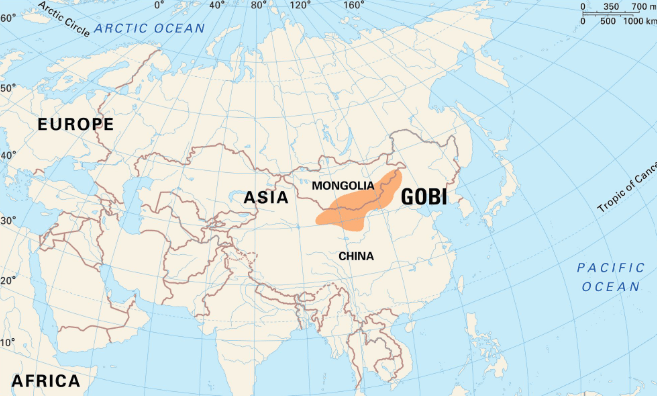
It is the largest desert in Asia and the largest cold desert on earth. Which feels ironic to be typing as having spent 3 days here so far I’m not sure where the cold aspect comes into play – its been sweltering hot, even at night. It covers around 1.3 million square km across southern Mongolia and northern China and exists because the Himalayas and the Tibetan plateau block moisture from the Indian Ocean, leaving very little rainfall. Much of the Mongolian Gobi receives only 50-200mm of rain each year. The diversity of landscapes we are seeing on our journey through the Gobi, really does feel extremely different to other deserts I have been to, like the Sahara.
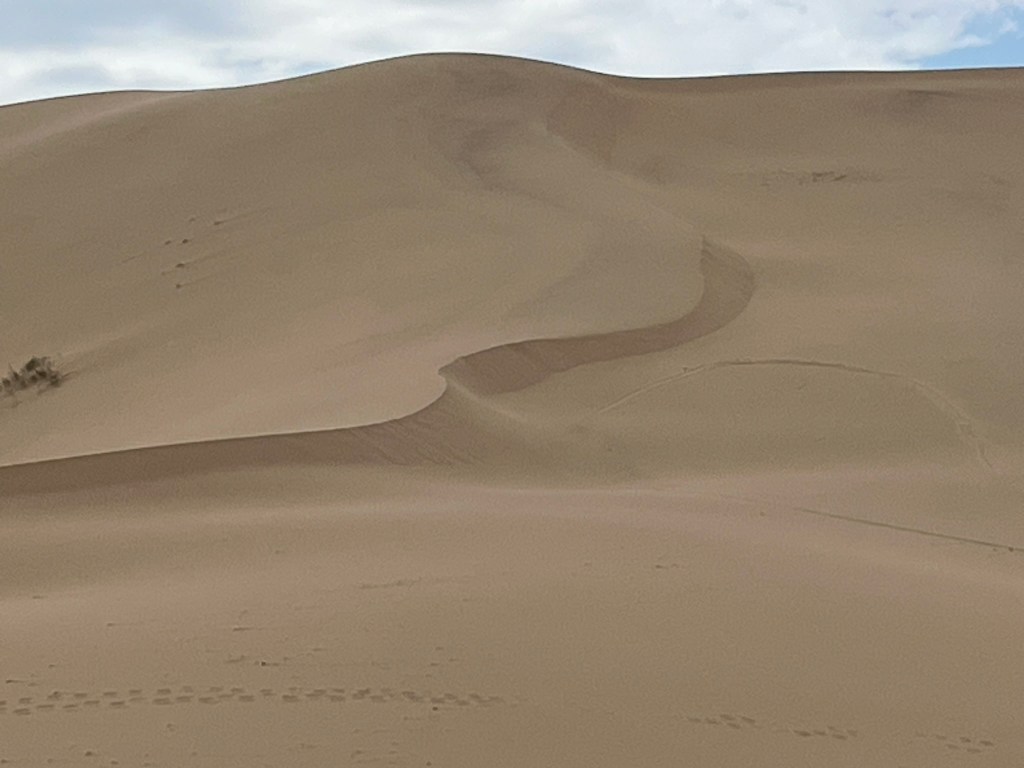
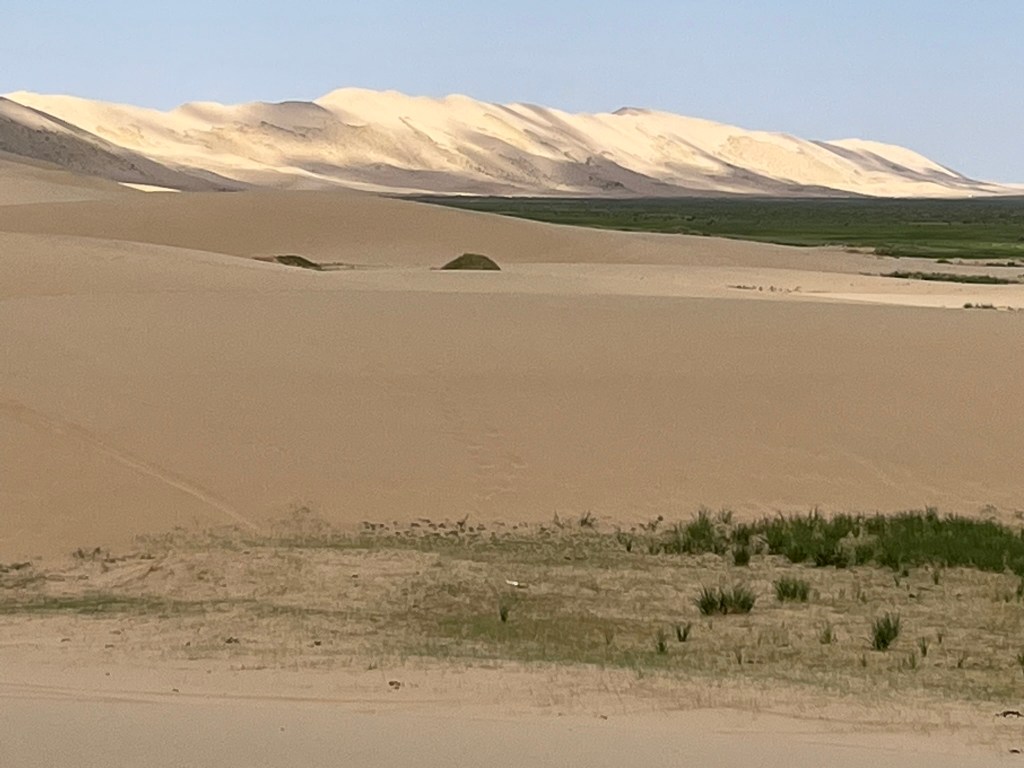
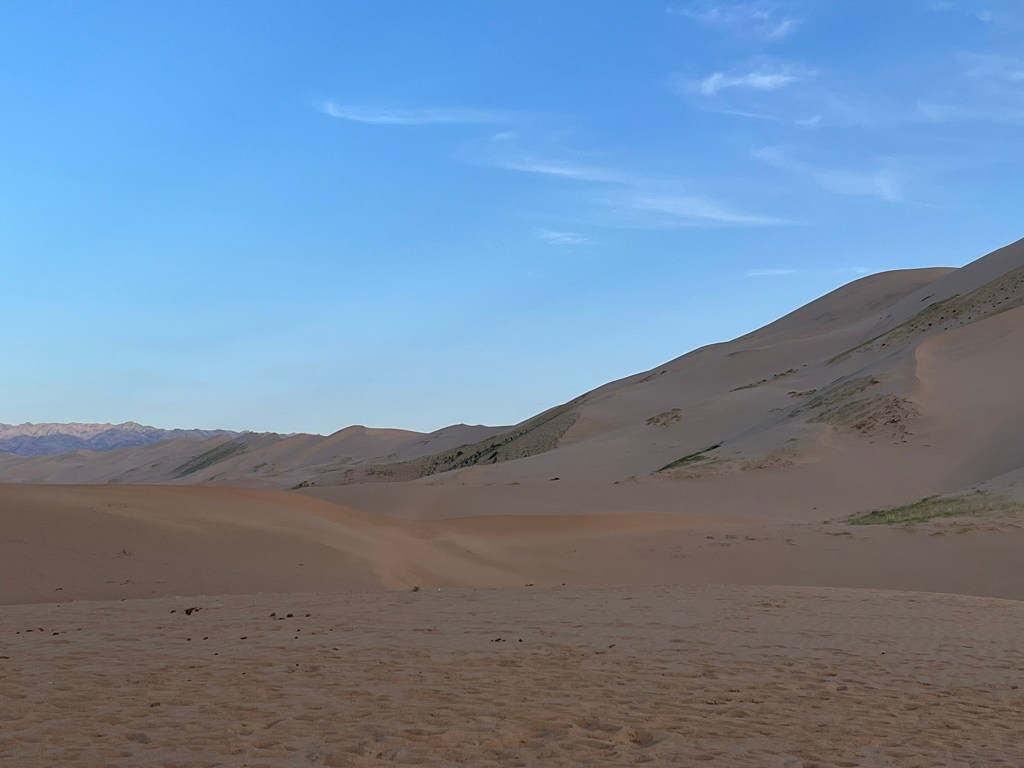
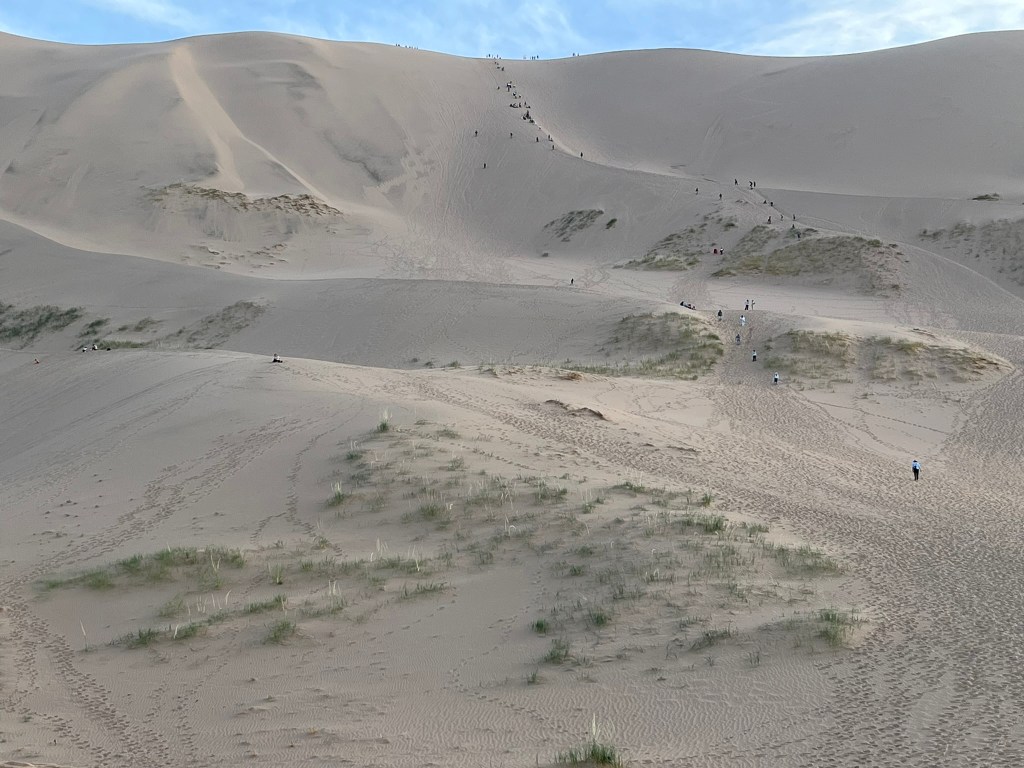
The Khongoryn Els or Khongor Sands are the most famous dunes in Mongolia and are a 3-4 hour drive from the Flaming Cliffs. They form a long ribbon of sand around 150km long but only 3-5km wide and reach heights of nearly 300m. Rather than spreading across the landscape like an ocean of sand (aka the Sahara and what most folks imagine when they are thinking of sand dune), these dunes resemble a giant golden wall running across the desert.
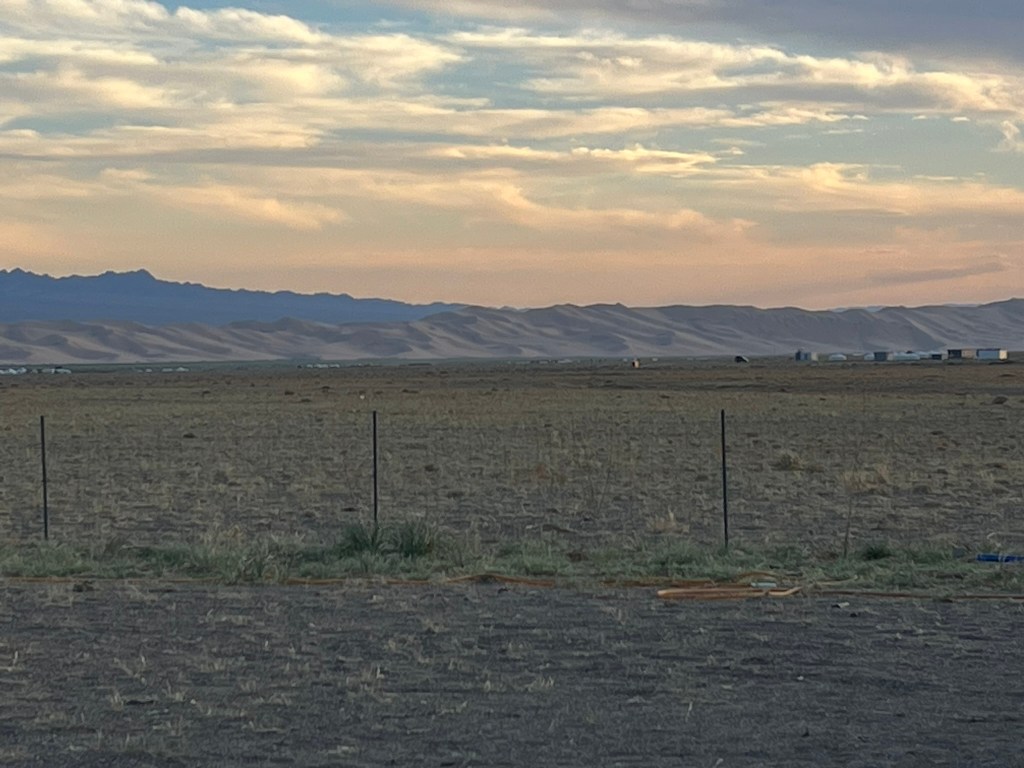
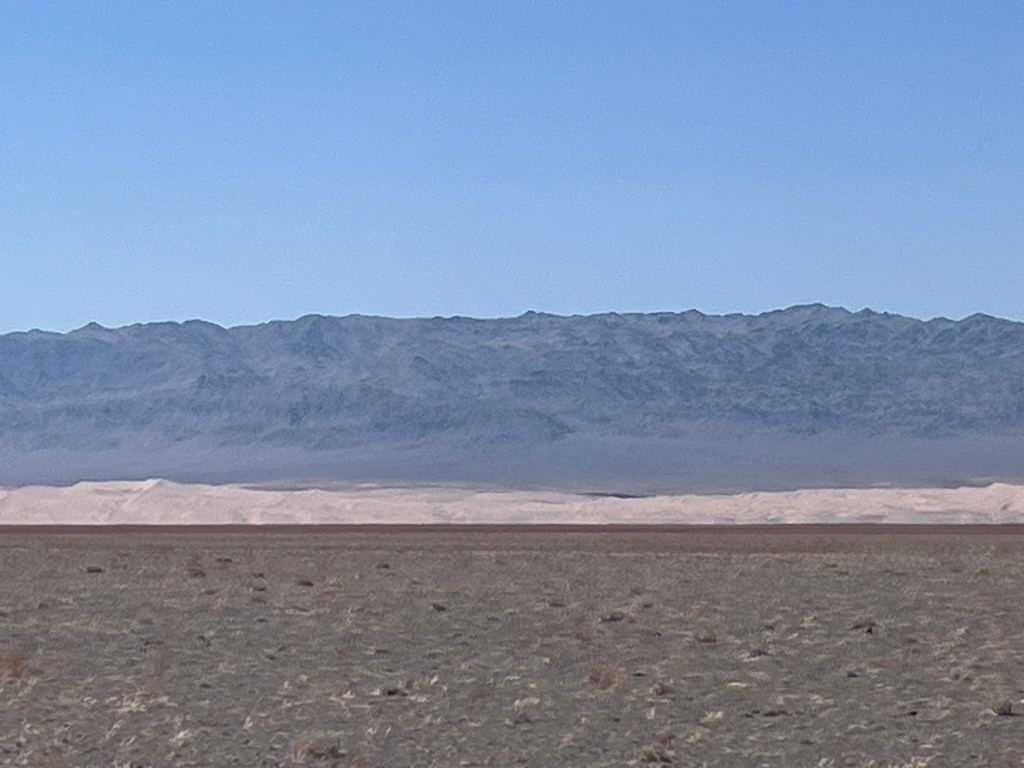
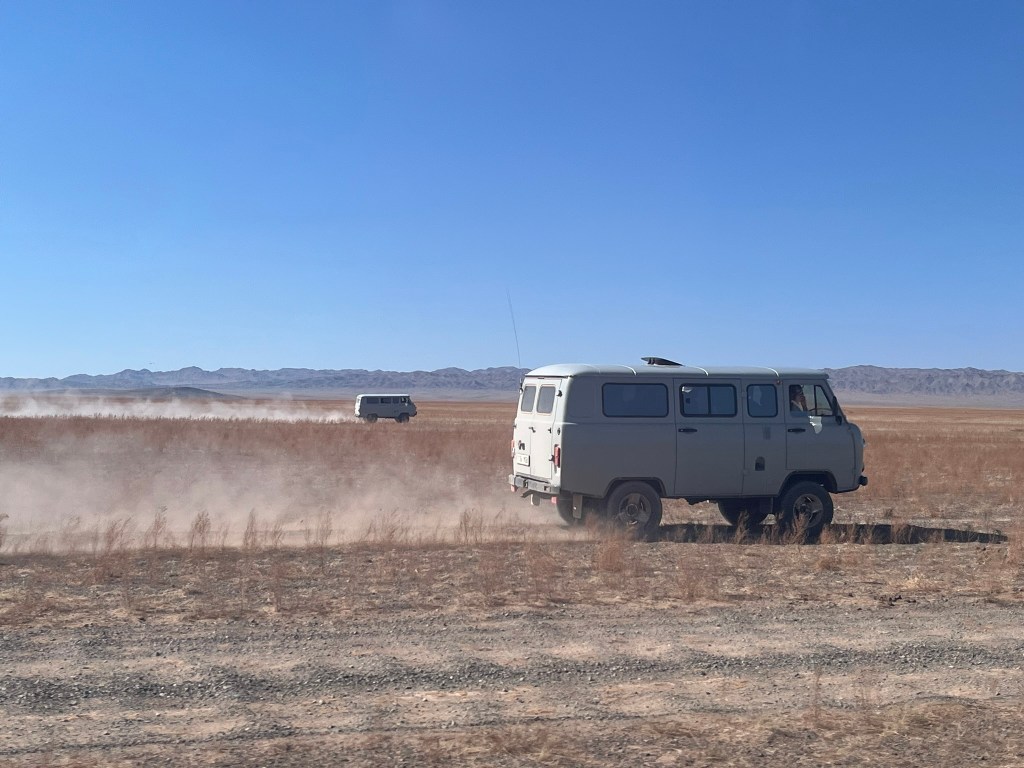
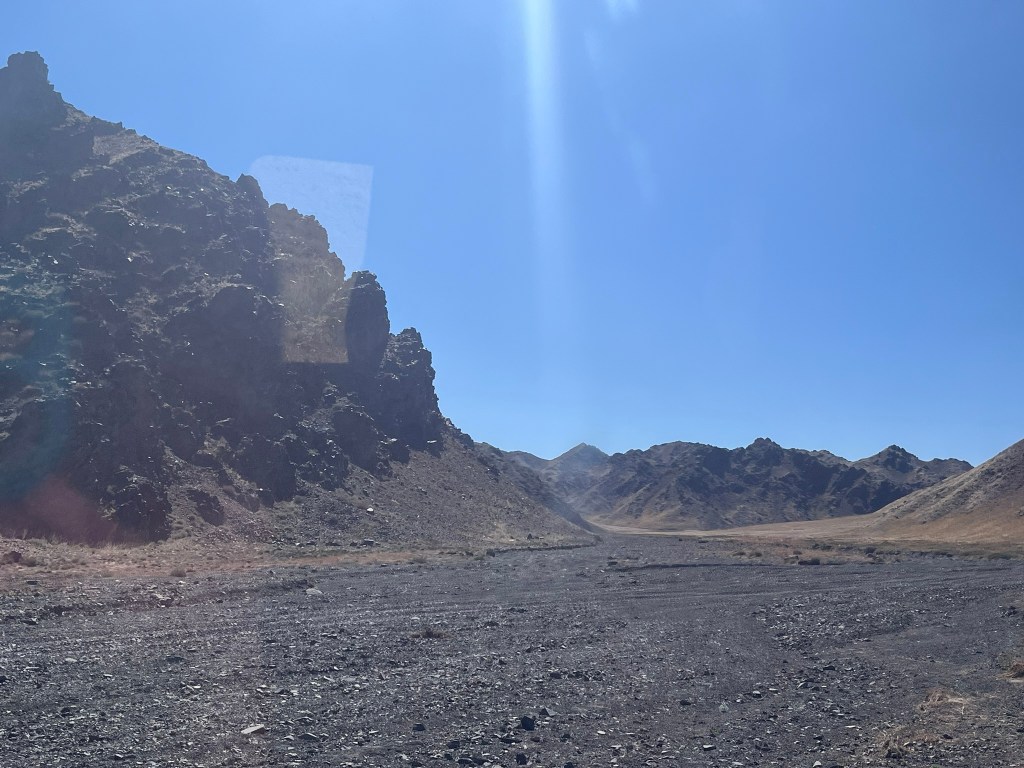
As we left behind the dramatic red sandstone of the Bayanzag, the landscape quickly changes into open desert and you start to feel like you are on the moon, with muted colors or grey, pale browns and muted greens. There are no roads, just a web of tire tracks criss-crossing the broad gravel plains. The drivers always no where they are going though.
Just before arriving in the area of the sand dunes the landscape changes once again – passing through the foothills of the Gobi Gurvansaikhan National Park. Geologically these are the eroded front of the Gobi Altai Mountains, made of harder rocks that have survived millions of years of erosion. Freeze-thaw cycles, earthquakes and wind have slowly broken them down into jagged tores, boulder fields and cliffs. As we weaved our way through the pass, we kept ours eyes peeled for Siberian Ibex, which lives on the steep rocky slopes where predators cannot easily follow.
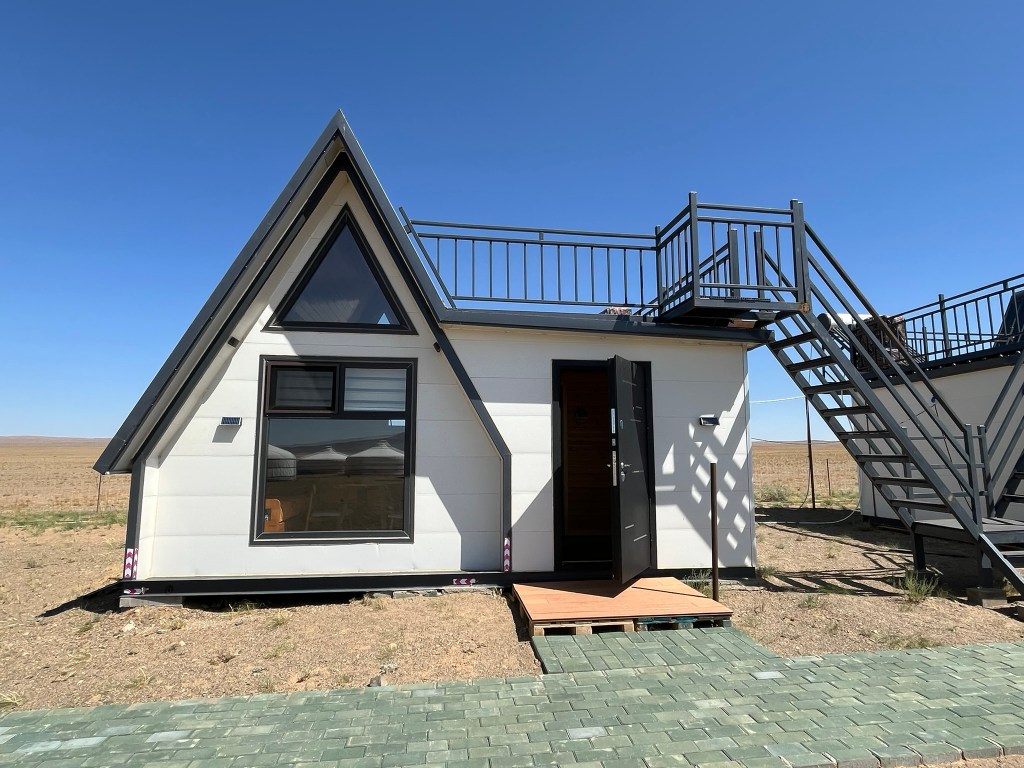
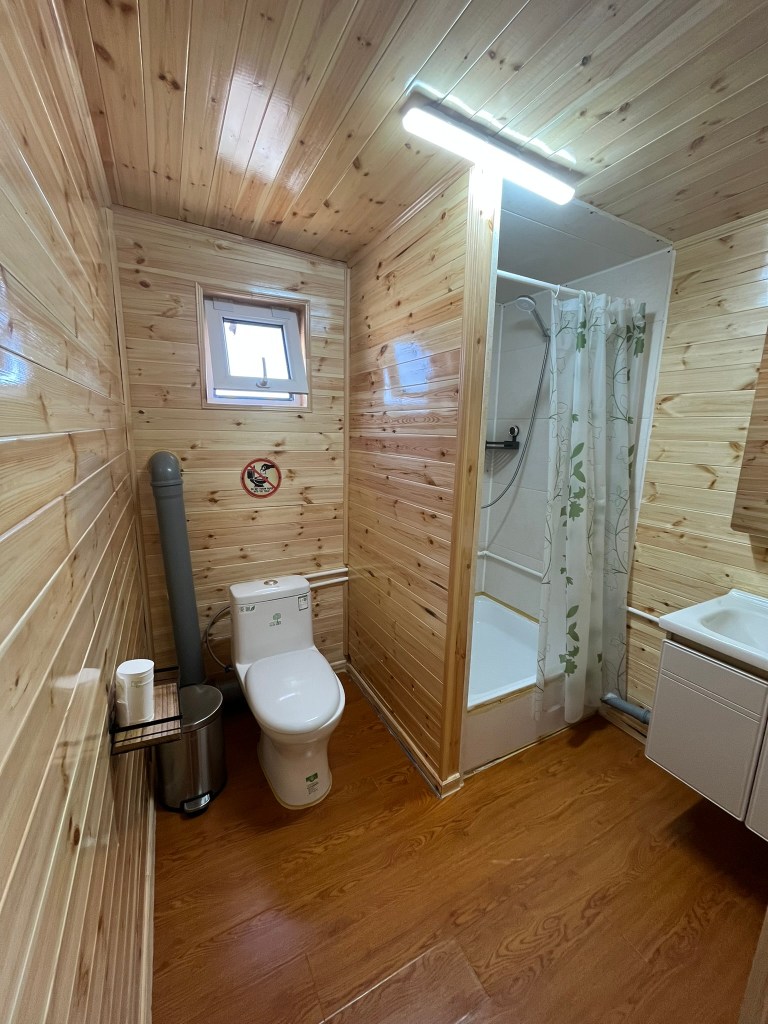
Exiting the foothills, an immense flat expand of gravel desert plain opens up – this is the result of millions years by sediments washed out of the mountains. Geologists called this a desert pavement. This is where all the tourist ger camps are based and out of sheer lucky for the next 2 nights we have been designated a little house with its own bathroom – absolute luxury! In the distance the Khongor dunes stretch from east to west as a thin golden ribbons in the distance. Its difficult to tell how far away they are and whether it is walkable but our guide has confidently told us it is 5km away. And behind the dunes like the Gobi Altai Mountains, whose erosion supplies much of the sand that eventually formed the dunes.
So why did the dunes form in this specific location? The dunes exist because four factors have come together in exactly the right place. The Gobi Altai Mountains supply the sand. Over millions of years, freezing winters, hot summers and occasional floods have broken down granite and other rocks into sand-sized grains. Flash floods wash out fresh sediment onto the plain. The second factor is the Khongoryn Gol – an unusual stream that is fed by groundwater emerging from the mountains. During wetter periods and seasonal floods it transports and sorts sediments, washing away fine dust and leaving behind clean, uniform sand. This sorting process is crucial as the wind can easily move well-sorted sand.
Strong prevailing northwesterly winds then pick up this loose sand. Normally sand would continue to travel but the mountains behind block the wind. The long valley between mountain ranges creates a natural corridor, where airflow slows and changes direction slightly. The wind loses energy and it drops much of its sand. Over thousands of years, the deposited sand has built up into larger and larger dunes. And as more sand arrives the sand slowly migrates whilst remaining trapped in the natural corridor. This is what creates this long narrow belt and mega dunes approaching 300m, rather than a broad desert.
Geological studies have show repeated cycles of dune building and occasional flooding over at least the last 27,000 years, with much of of the present dune sequence accumulating during the end of the last Ice Age.
We planned to visit the dunes twice during our stay – firstly in the morning as it was cloudy and the cool weather was perfect for a visit. And the second time at sunset. The middle of the day was time for chilling and avoiding the worst of the roasting heat.
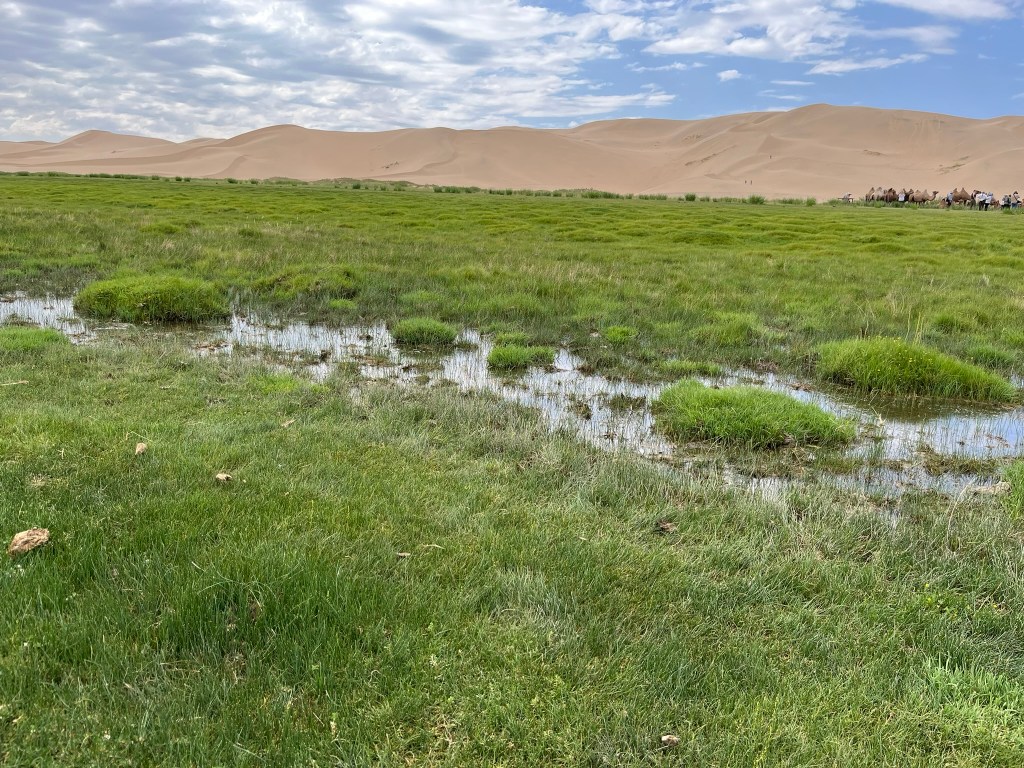
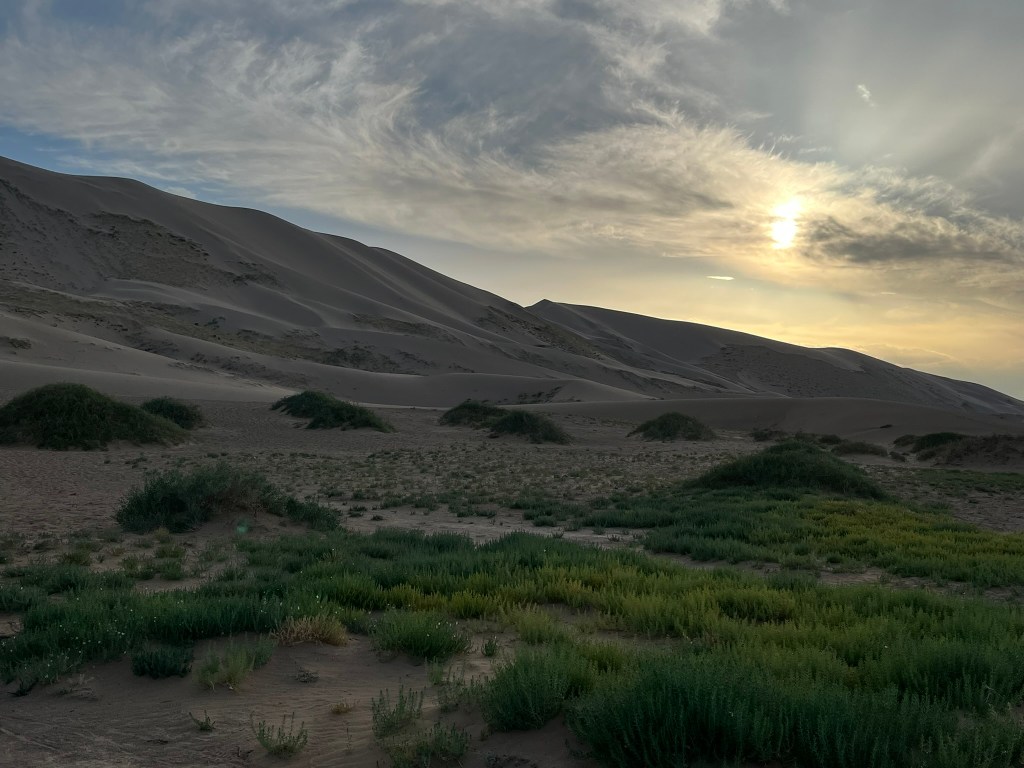
As you drive closer to the dunes, the oasis that hugs the dunes becomes visible. This narrow strip of green grassland is surprising and exists because groundwater springs feed the valley. It’s a sharp ecological transition and one of the reasons nomadic families have lived here for centuries. You can park right in the oasis and then it’s just a few minutes walk over boardwalks that cross marshy land to reach the edge of the dunes. The vegetation is a mixture of grasses, sedges (recall the bumpy mounds I have seen earlier in the trip in wetter areas), reeds in the wetter areas and patches of wildflower.
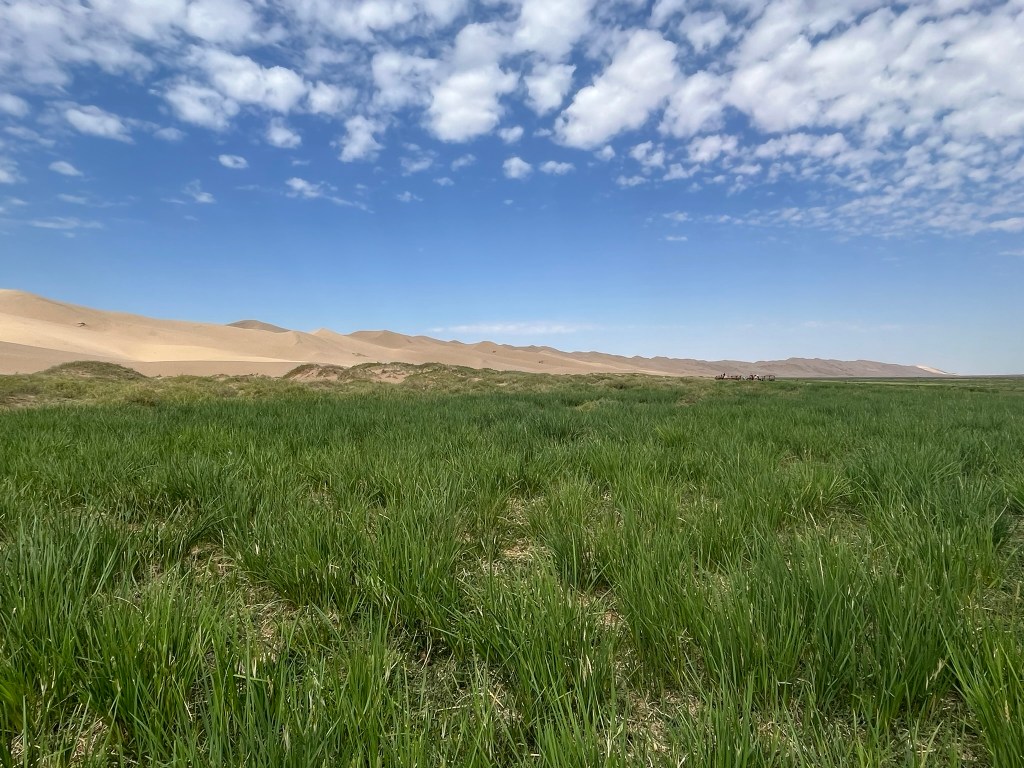
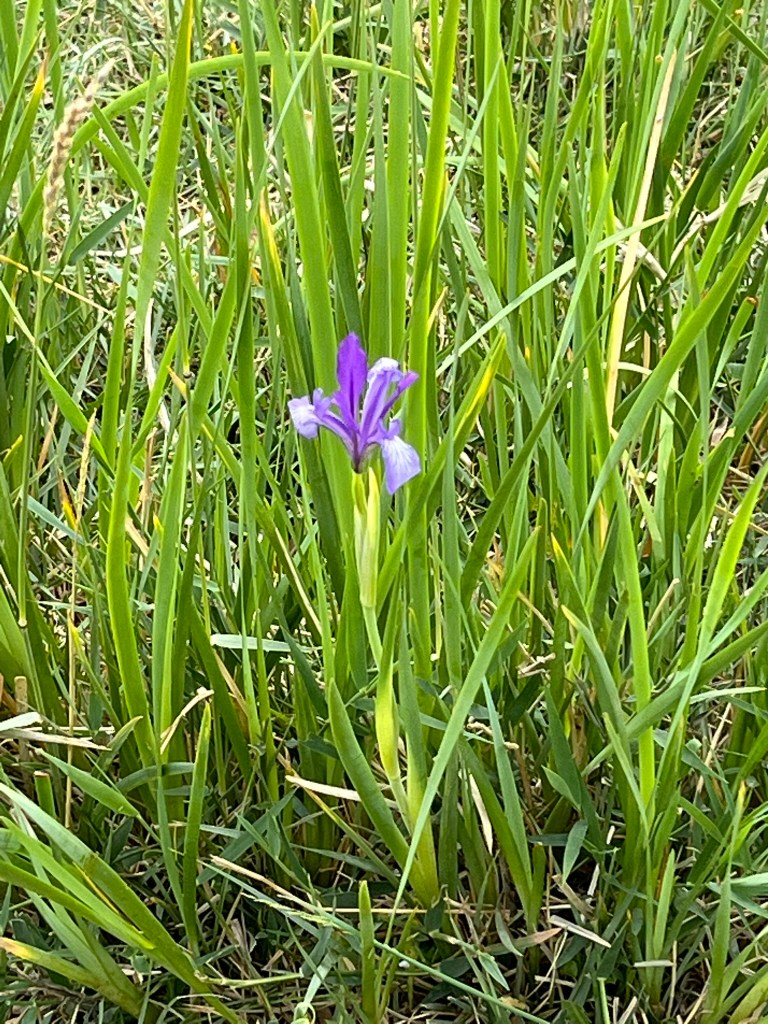
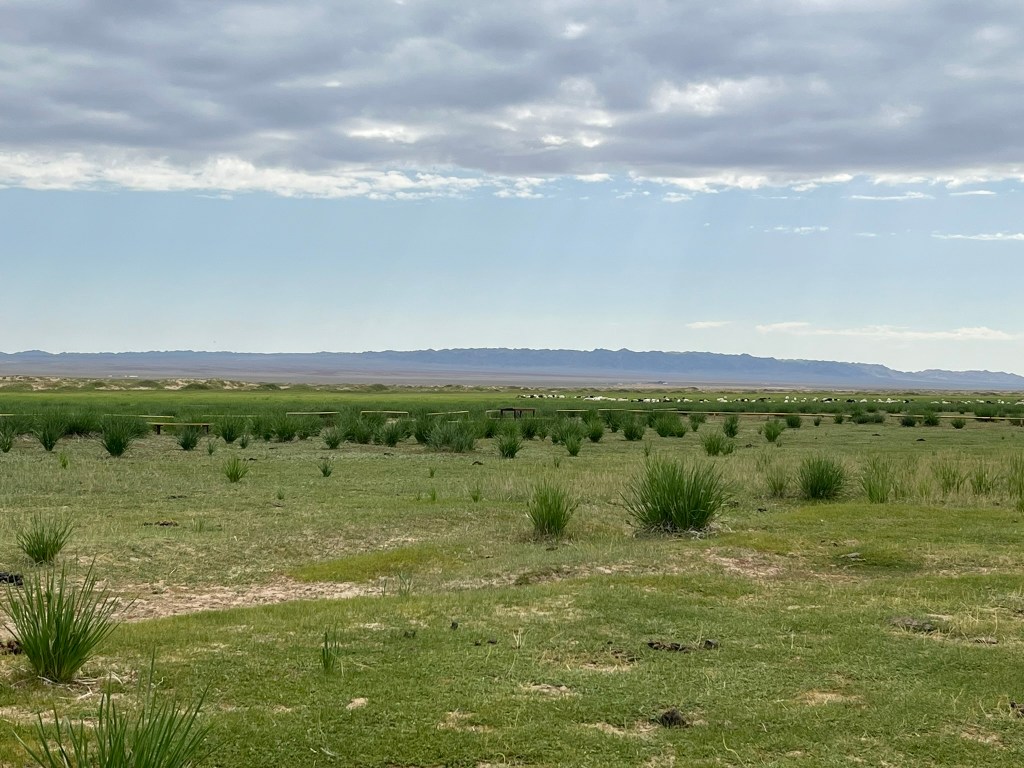
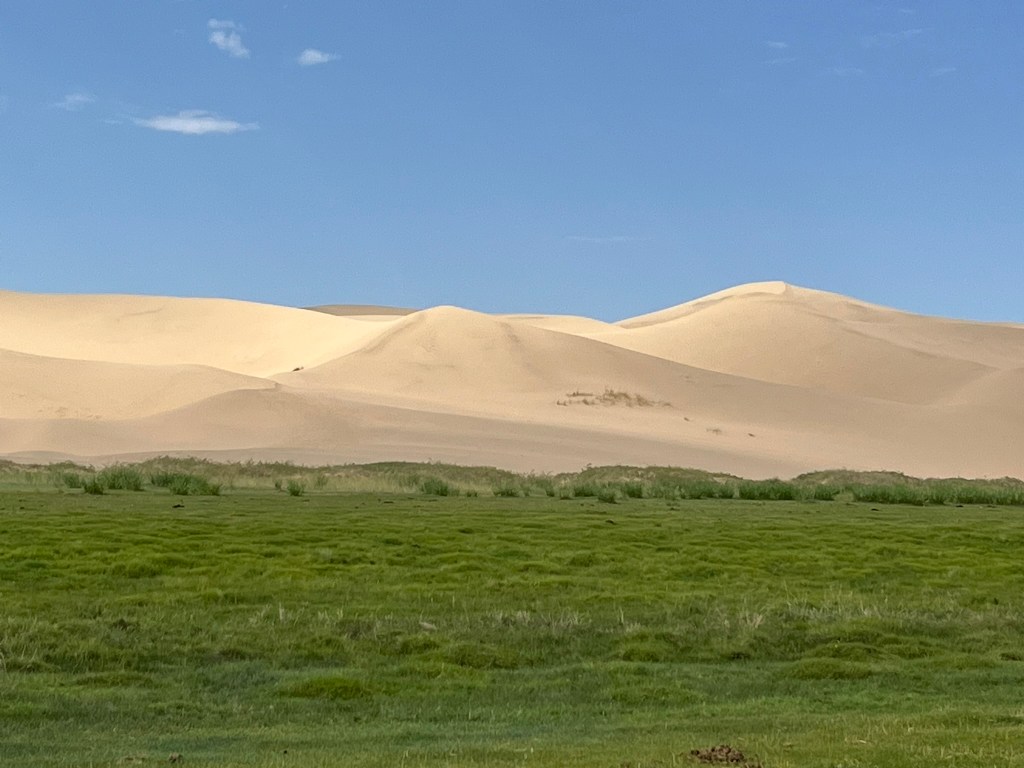
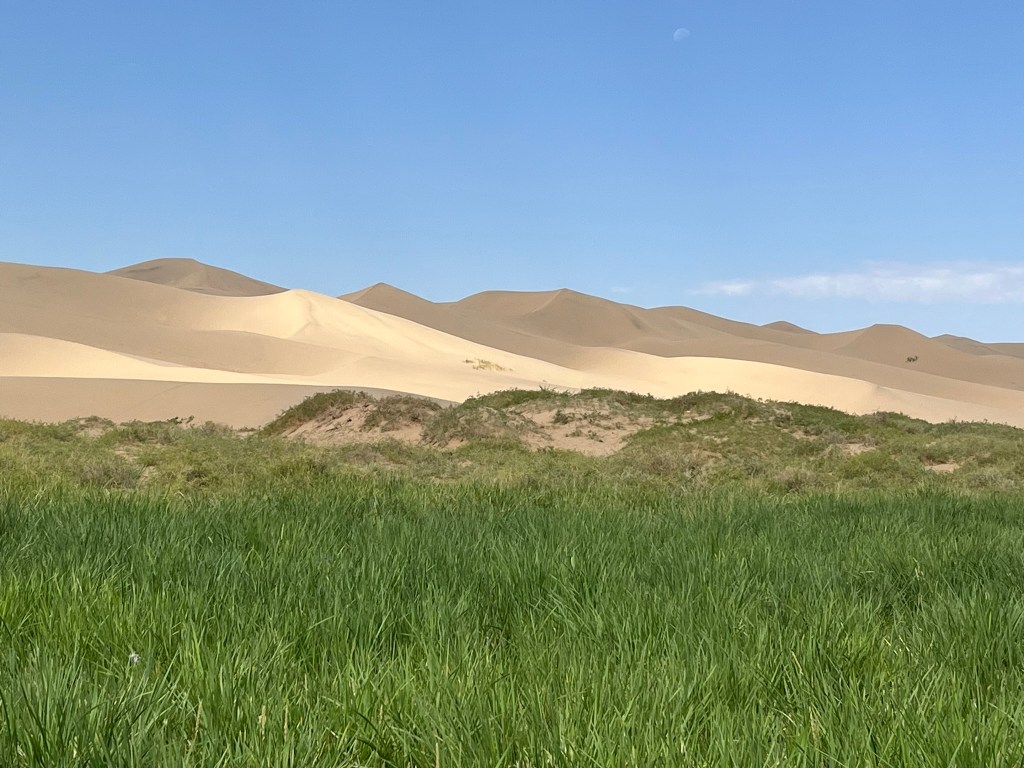
The Mongolian’s call these dunes Duut Mankhan – or Singing Sands. This comes from the deep humming sounds that the dunes produce when dry sand avalanches slip down the steep slopes of the dunes. Under the right conditions, thousands of grains move together, vibrating in synchrony. It is supposed to sound like the low notes of an organ or distant aircraft.
We spent about an hour at the dunes this morning. Some chose to climb up to the top and get a bird’s eye view. Others (like myself) chose to just climb up a little to take photos and enjoy the atmosphere.
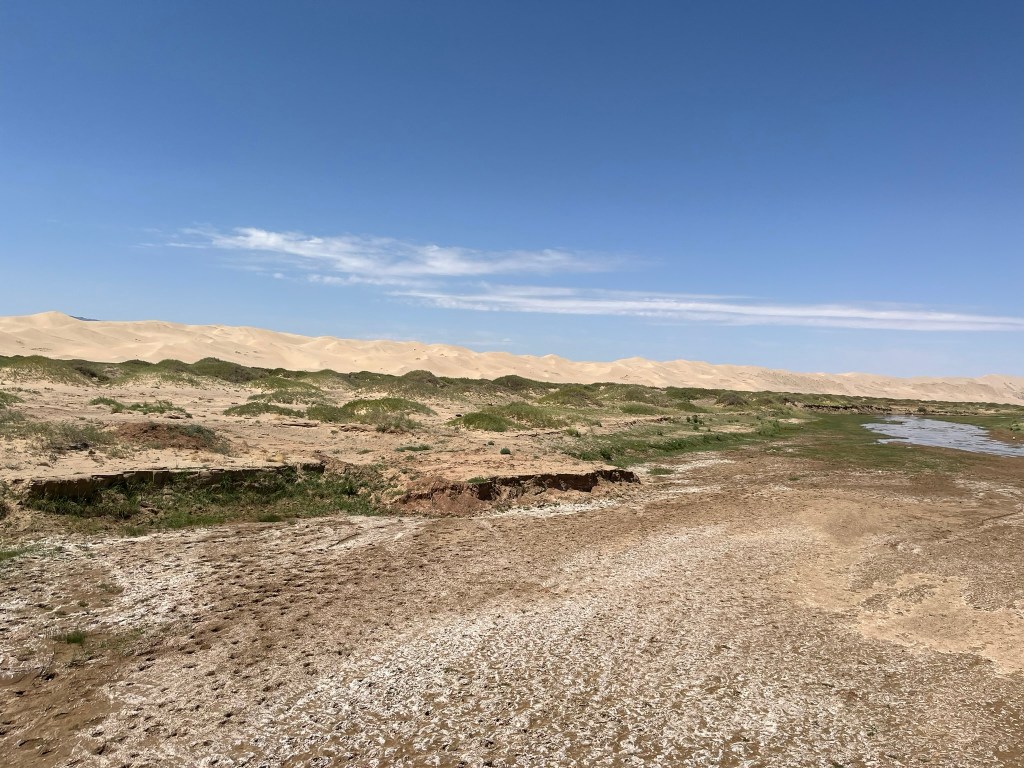
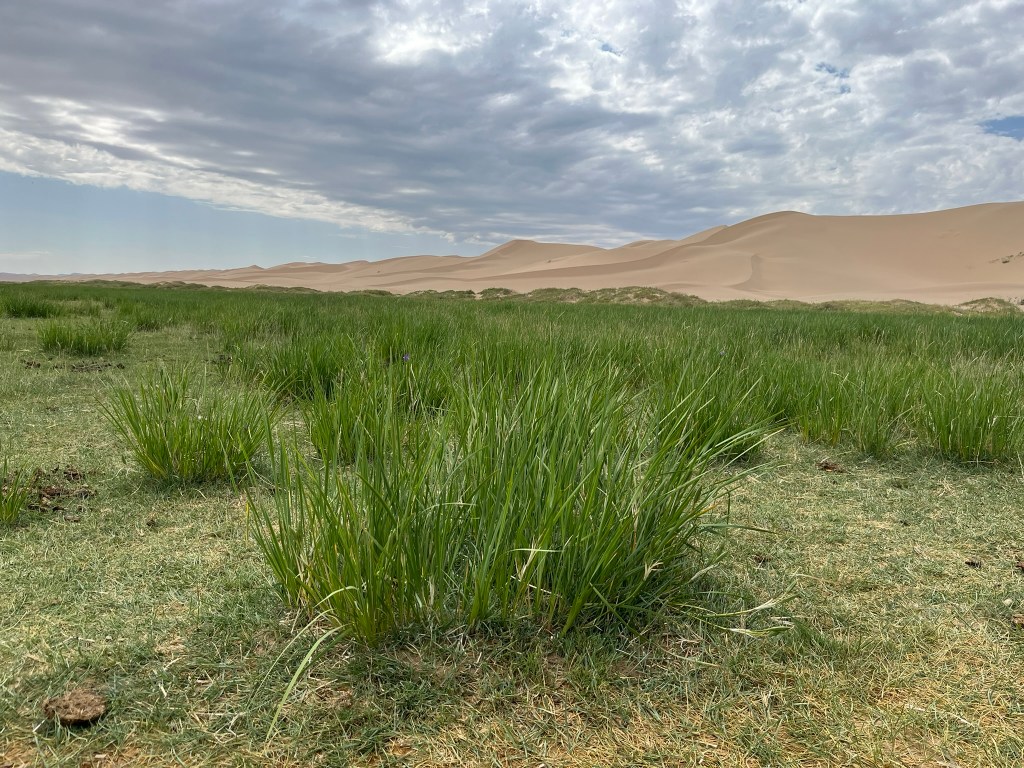
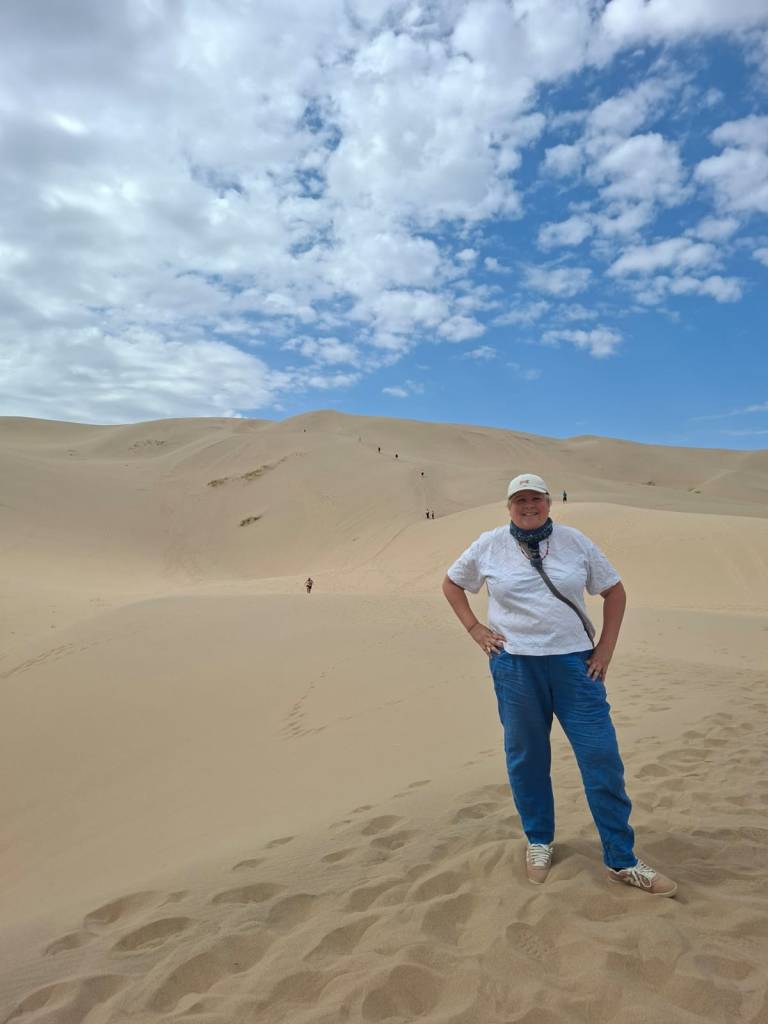
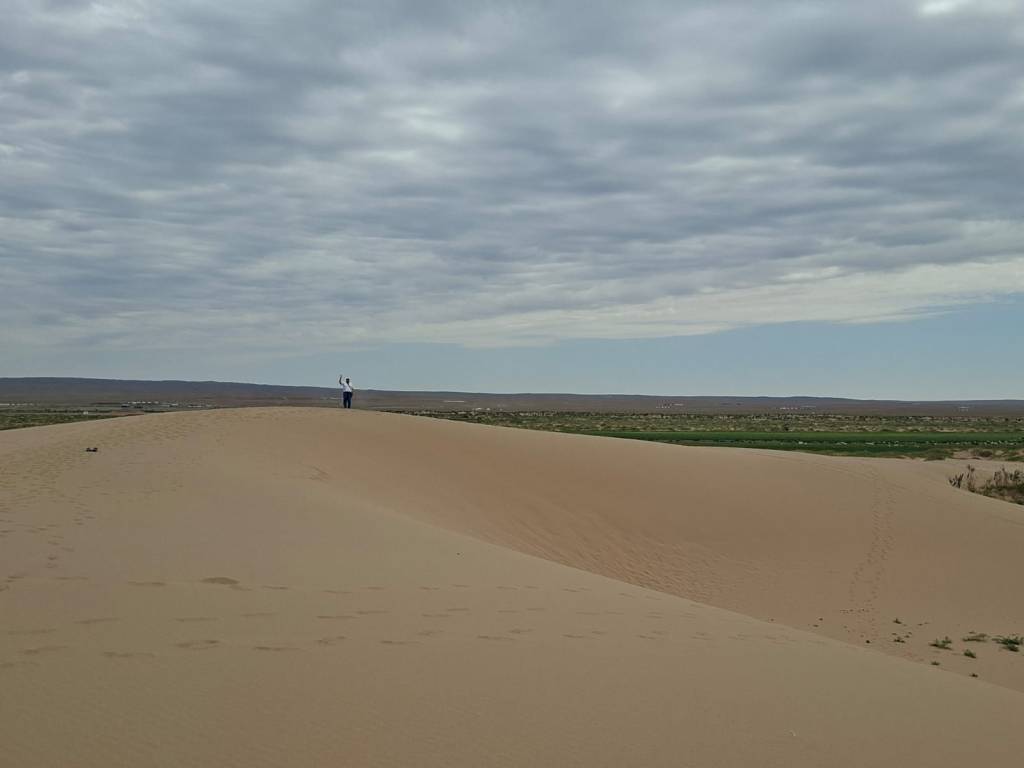
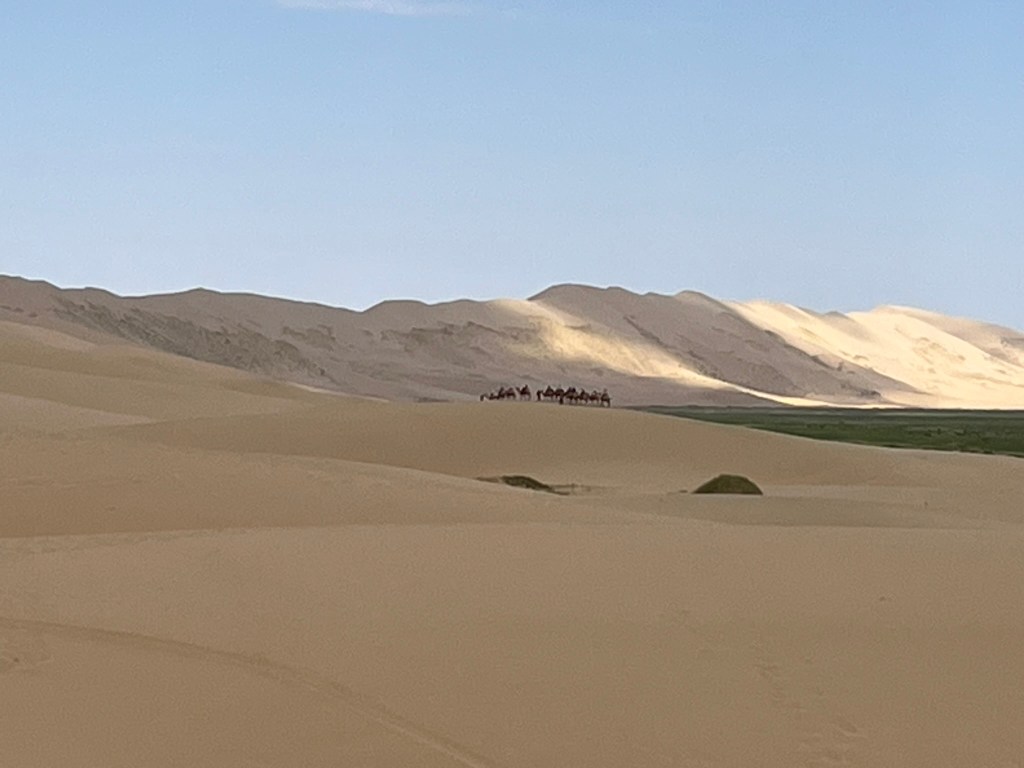
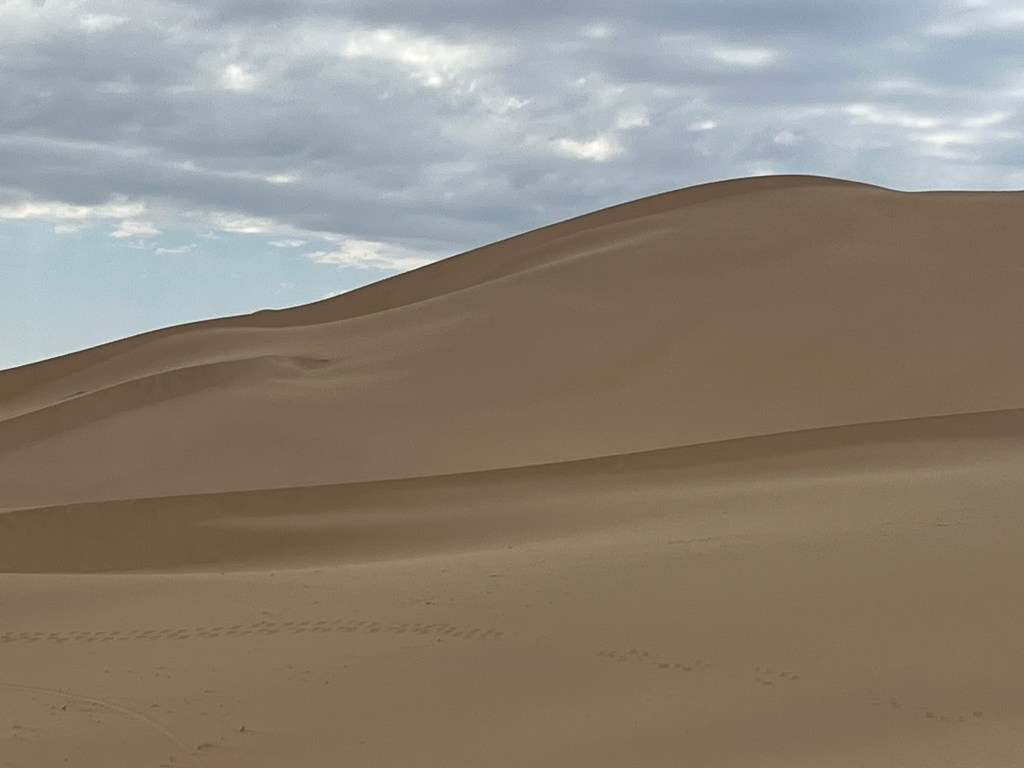
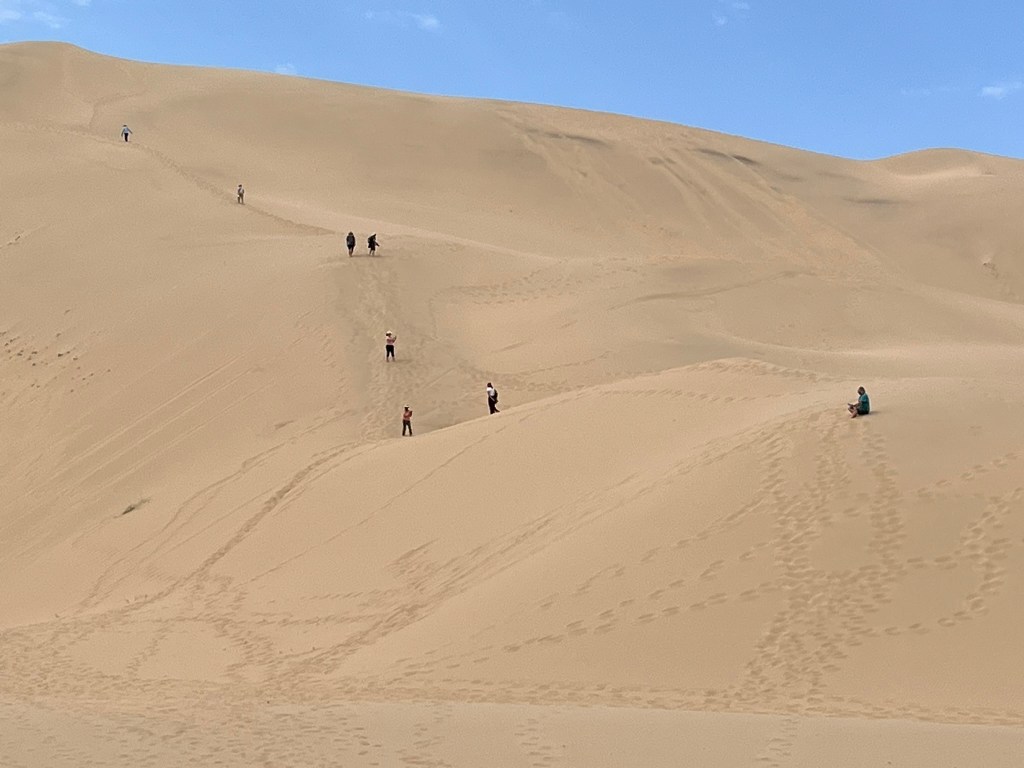
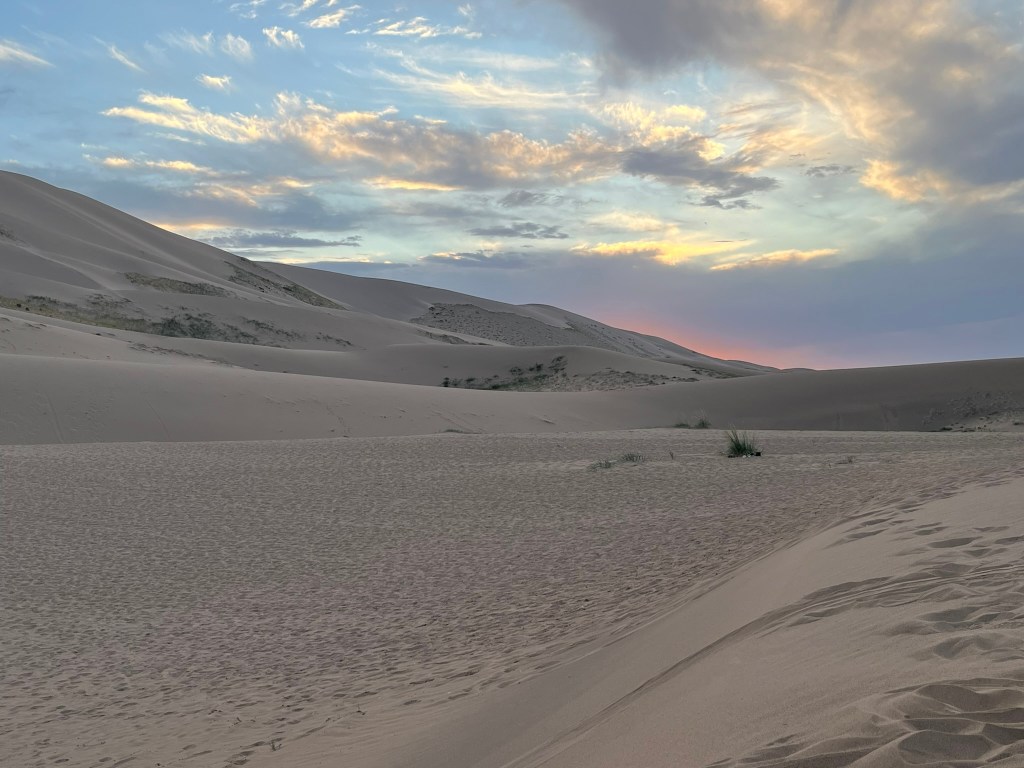
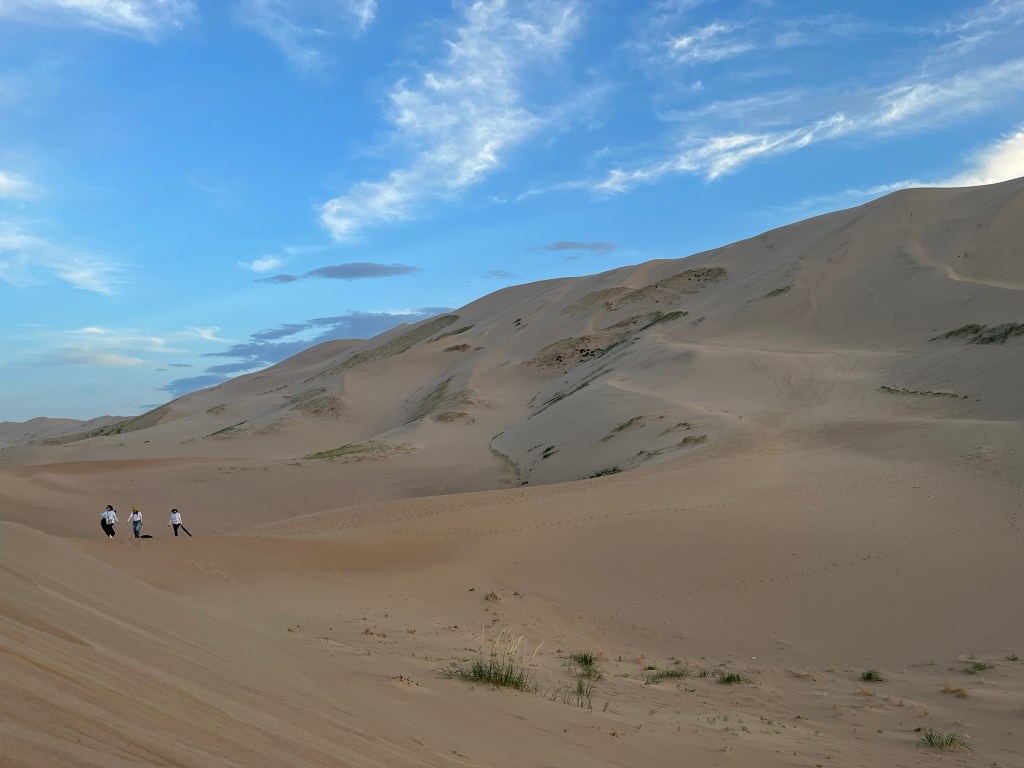
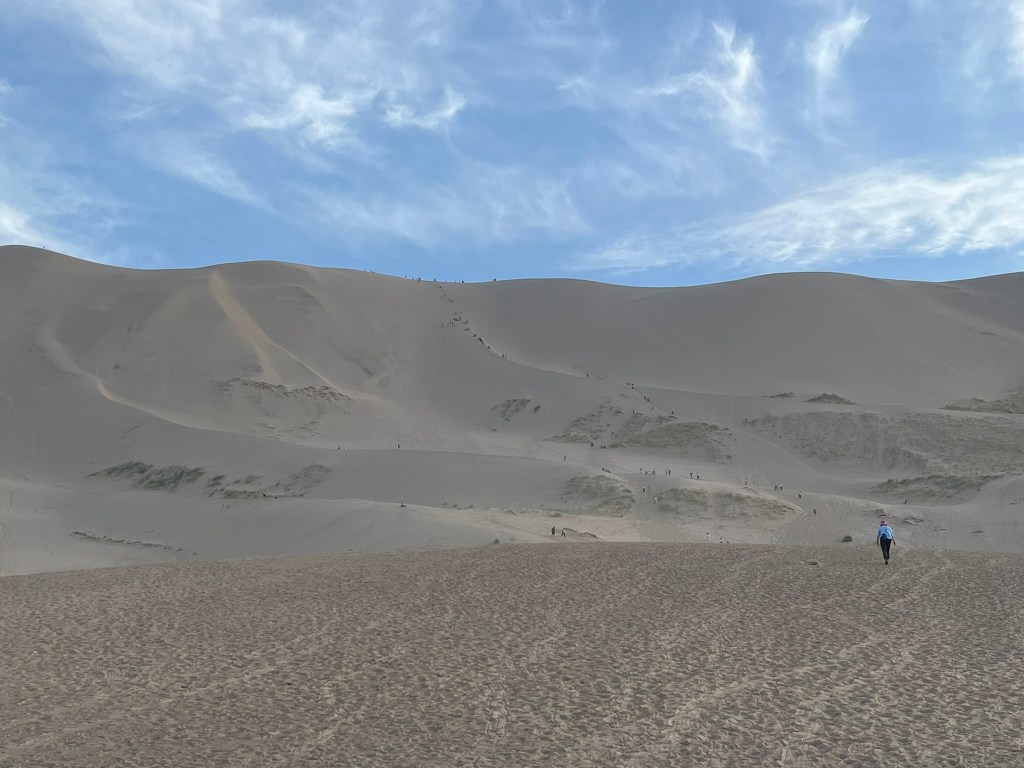
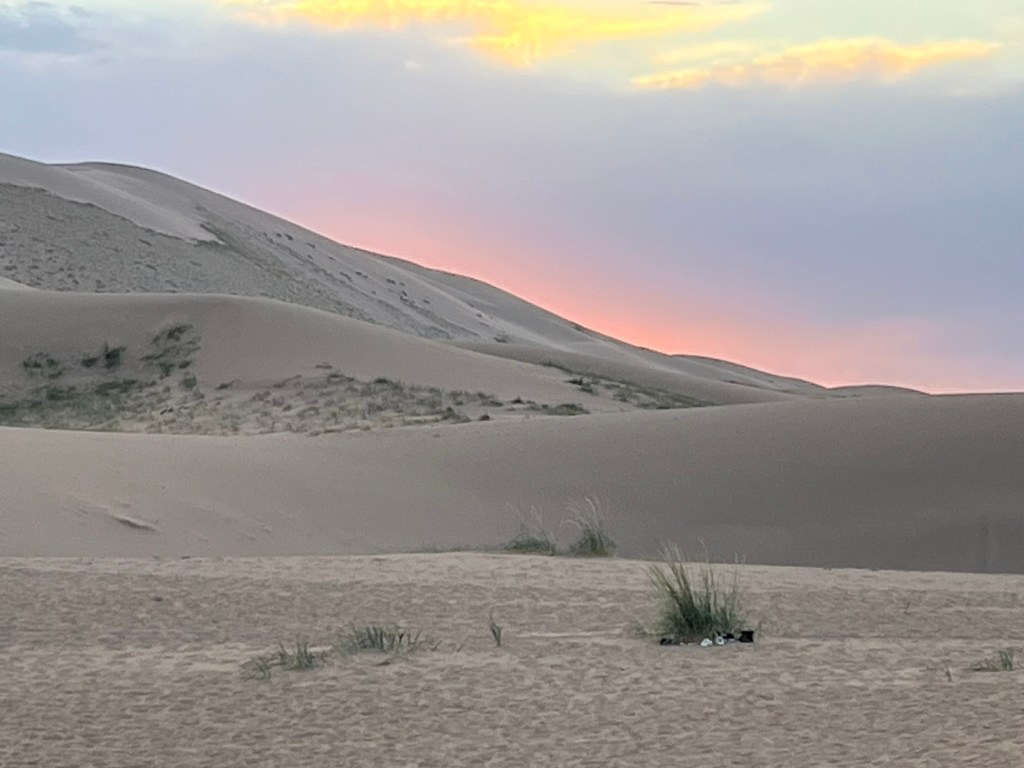
We then returned to a different part of the dunes after dinner for sunset. This particular part of the dunes rises up to 300m and as people climb to the top they look like tiny ants. Many folks had brought along plastic toboggans to whizz back down to the bottom. I stayed near the bottom to enjoy the views and atmosphere once again with half the group whilst the other half of the group made the grueling trip to the top. All in all another great day exploring Mongolia.
 Colette's Grand Detour
Leave a comment