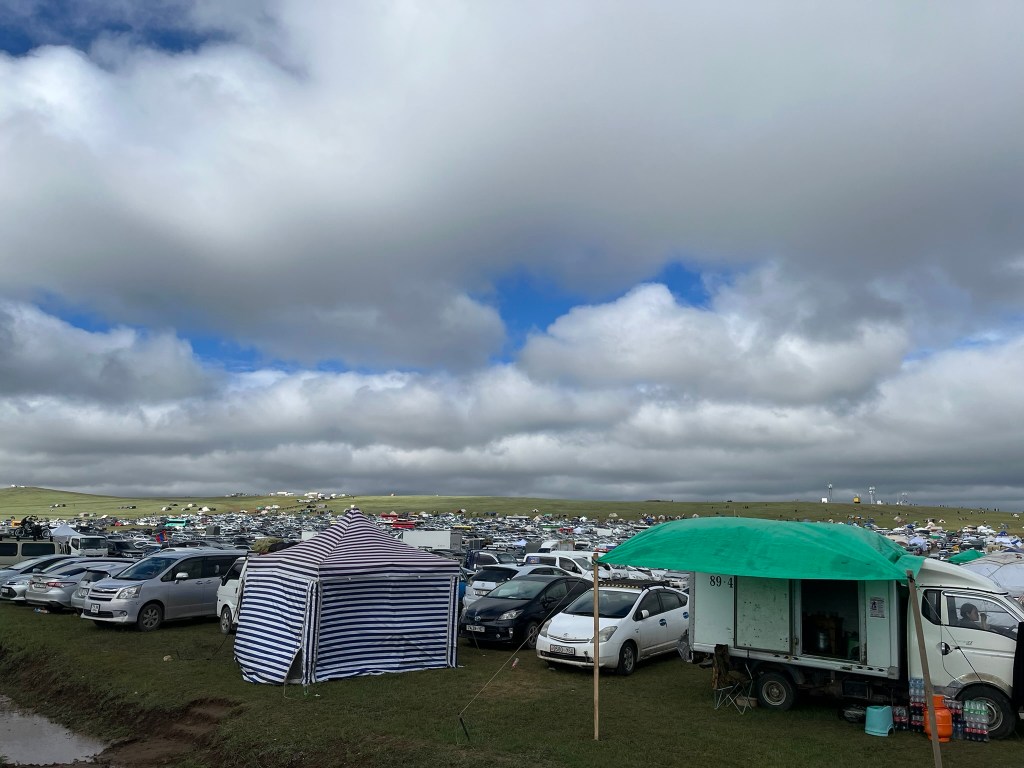
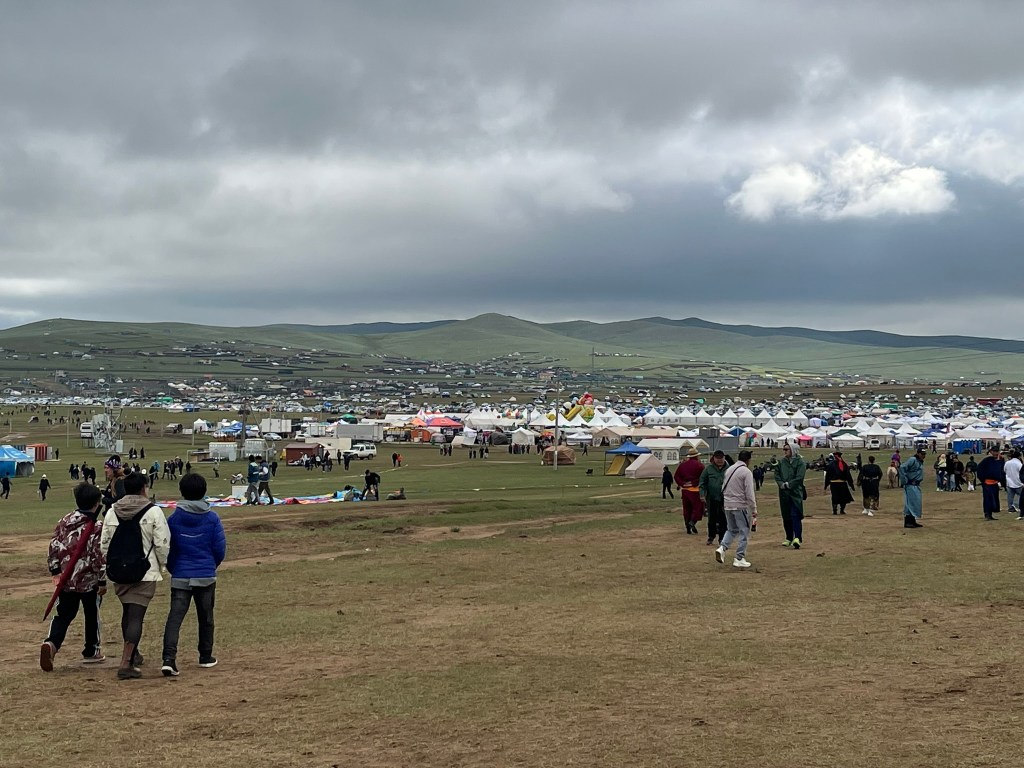
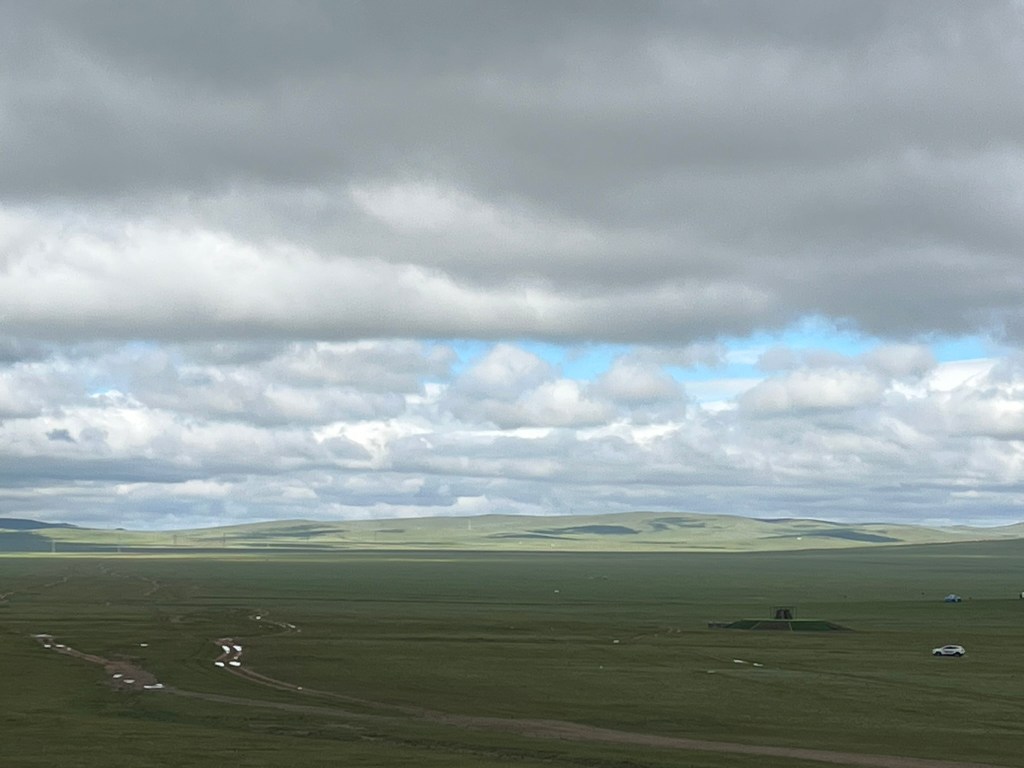
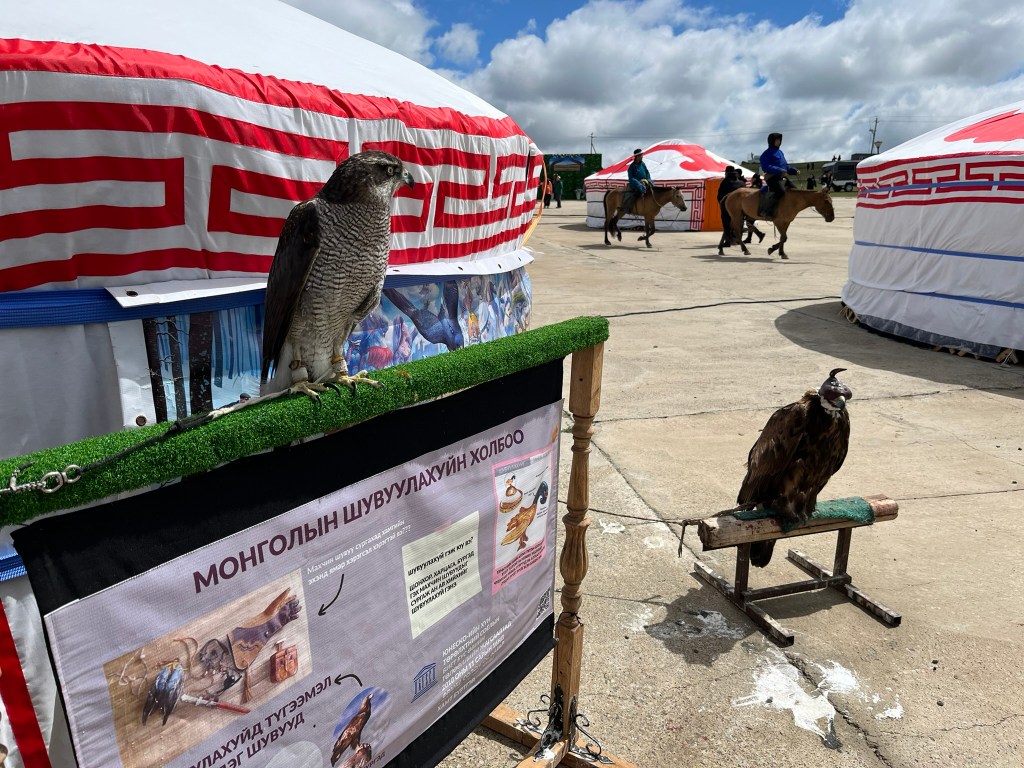
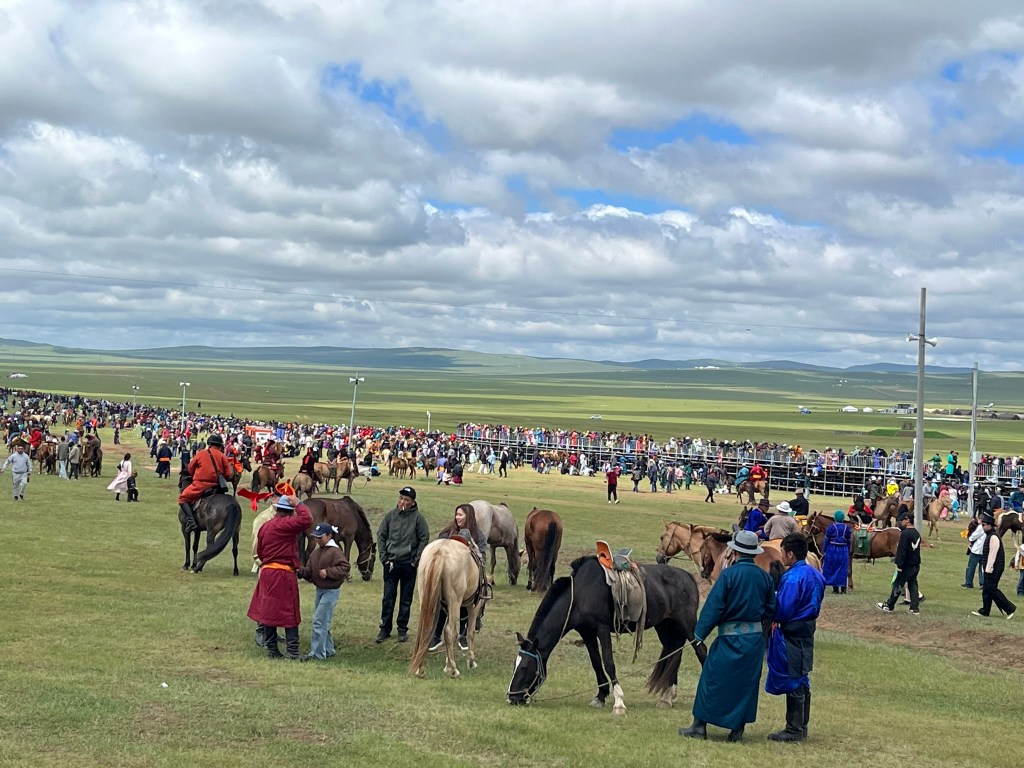
The Naadam horse racing is held at Khui Doloon Khudhag valley – a vast open steppe about 30km west of Ulaanbaatar. This is not a race track, just an natural open landscape turned into a temporary festival grounds every July. We arrived in the valley at about 9am after slowly making our way through the traffic leading to the festival grounds. My first reaction as we were parking in the vast sea of cars parked on one side of the valley was ‘wow’. This was a much bigger event than I had imagined. As far as the eye could see across the valley there were ger camps and white festival tents set up to celebrate Naadam. And even a cultural festival with a stage and performers. Tens of thousands of people, maybe even one hundred thousand people on the busiest days of the festival. And thousands upon thousands of horses.
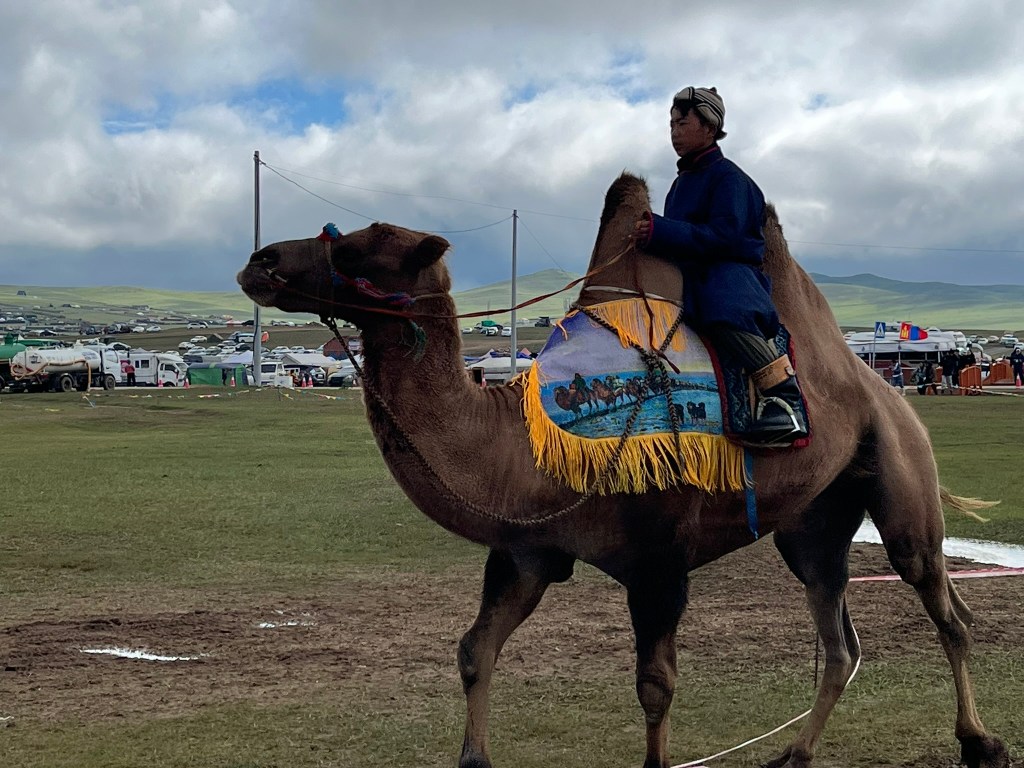
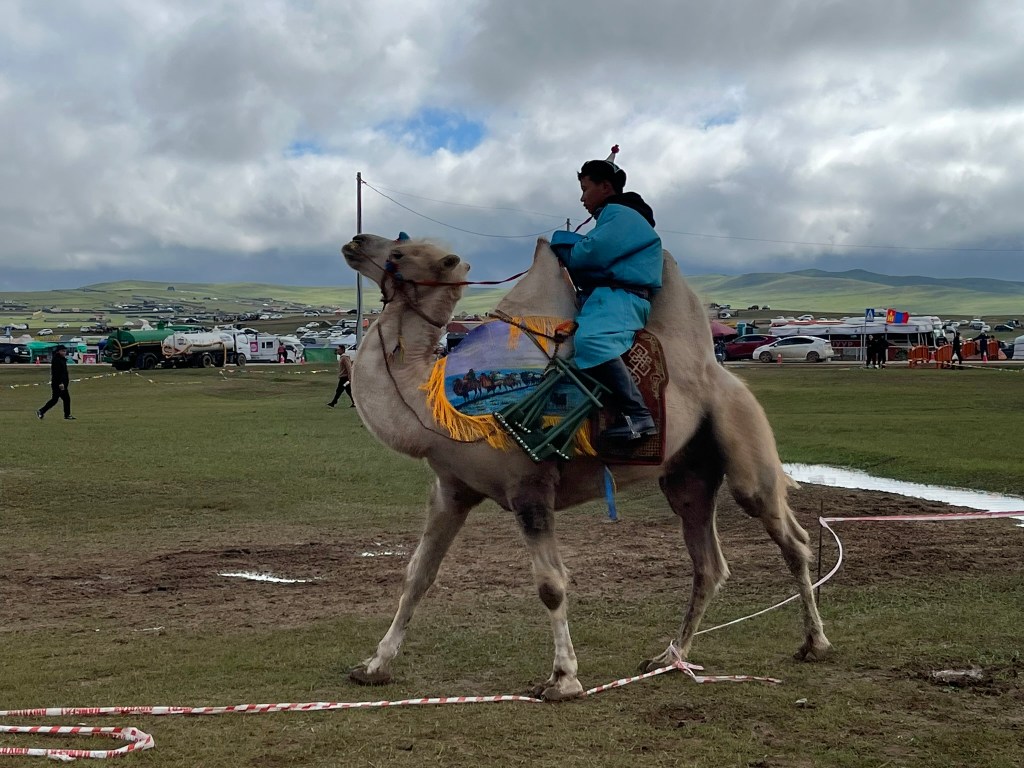
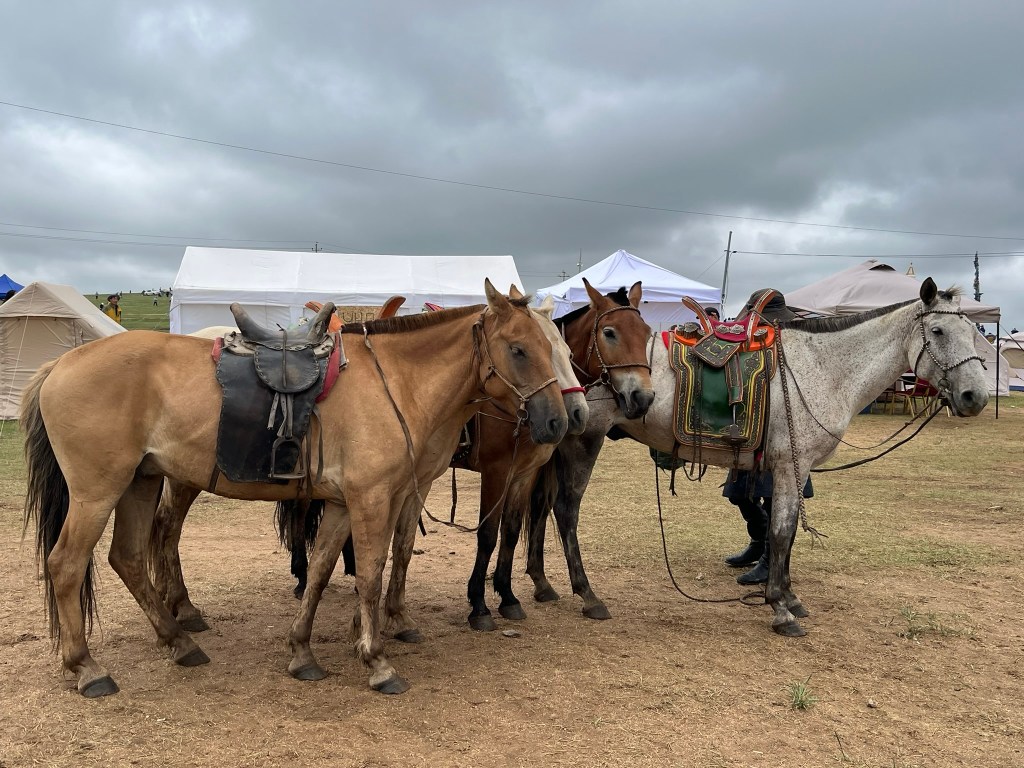
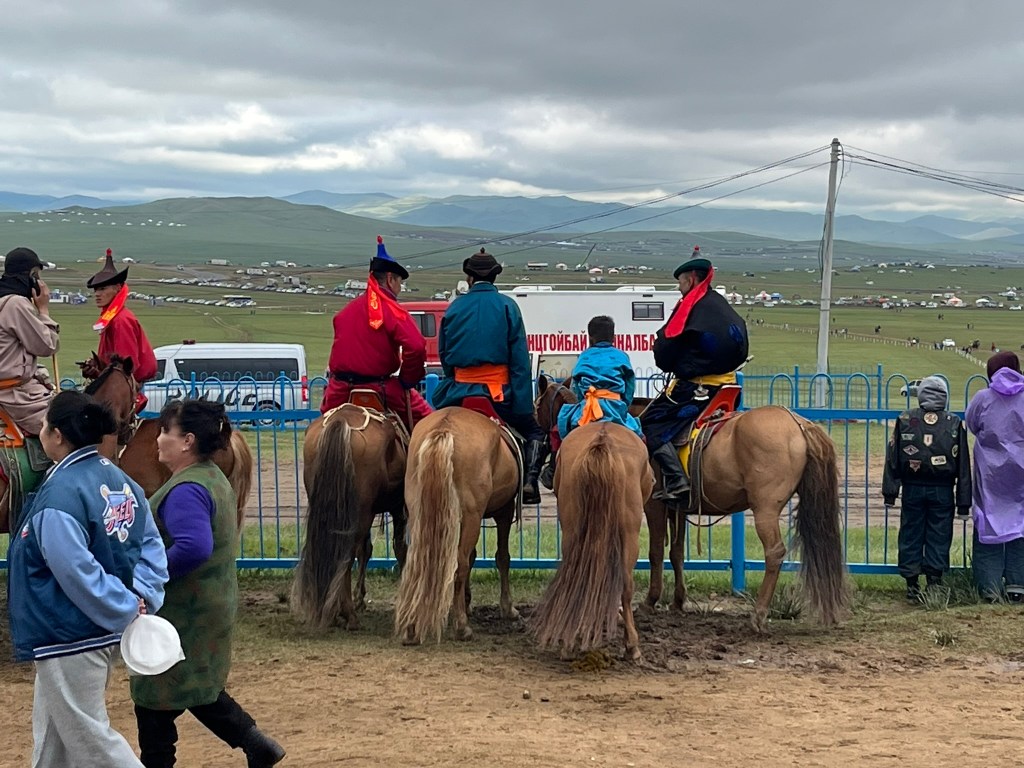
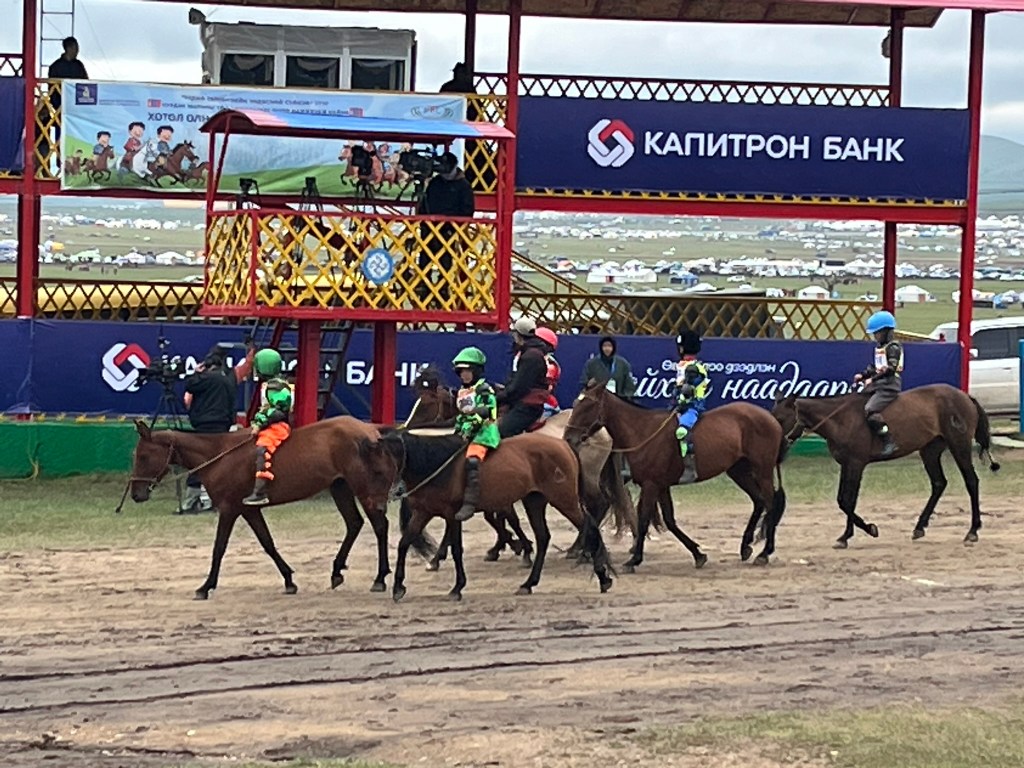
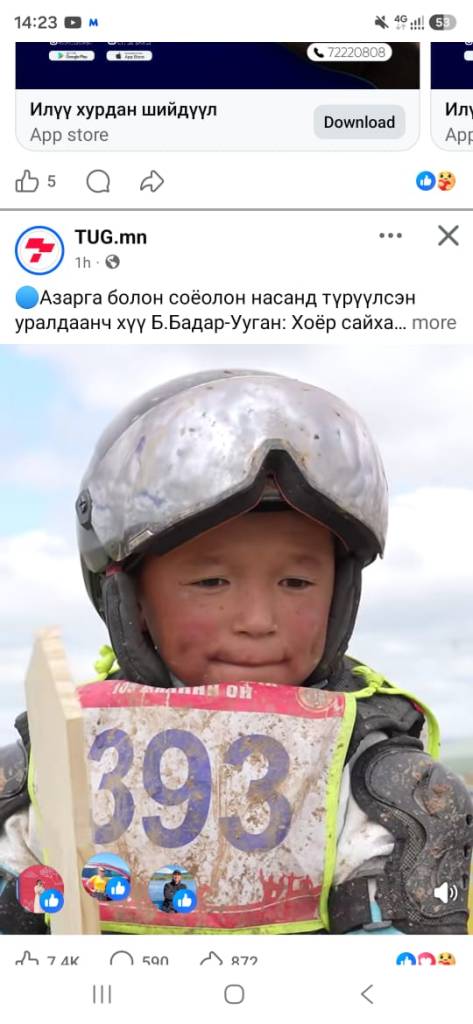
Unlike western horse racing, Naadam is considered a contest between horses and trainers, not between jockeys. Horses are grouped by age, with the two-year olds racing 10-12km, categories for 3, 4, 5 year olds and the longest race of 25-30km run by the six-year olds. The other distinctive aspect of Mongolian horse racing is the age of the jockeys. Most jockeys are between 5 and 13 years old. There are both practical and cultural reasons for this. Children are lighter, and less weight allowing the horse to perform better over longer distances. And riding skills are learnt from a young age in nomadic families. Nowadays helmets and protective gear are are required, albeit a number of the children were no longer wearing theirs by the end of the race we saw.
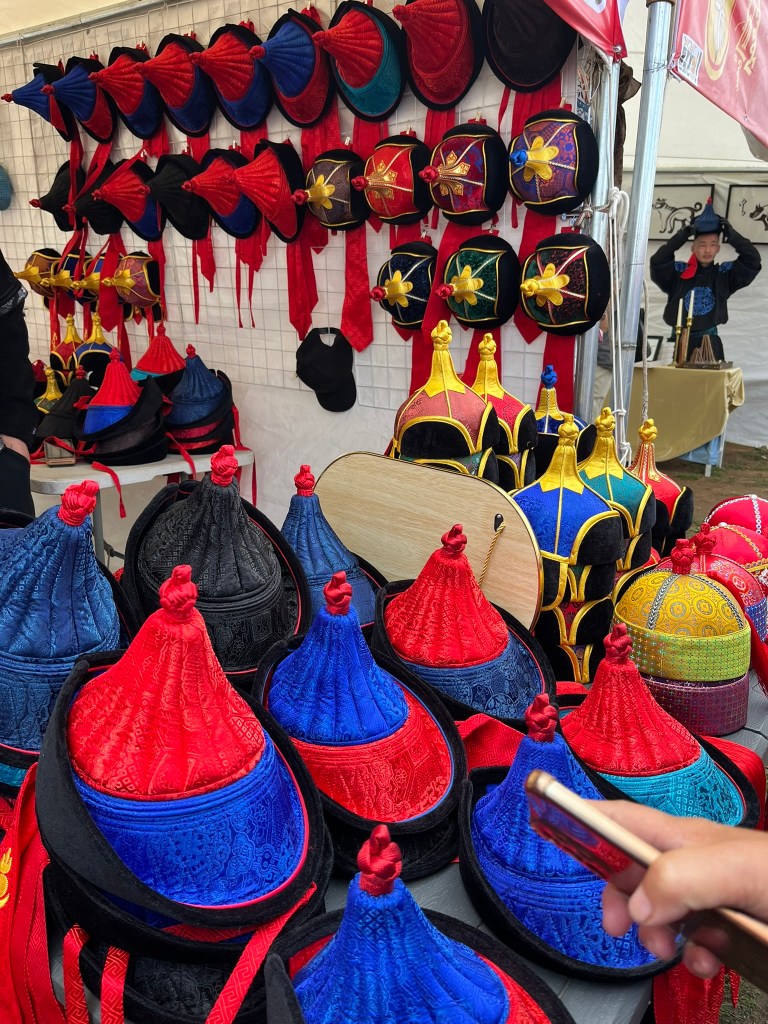
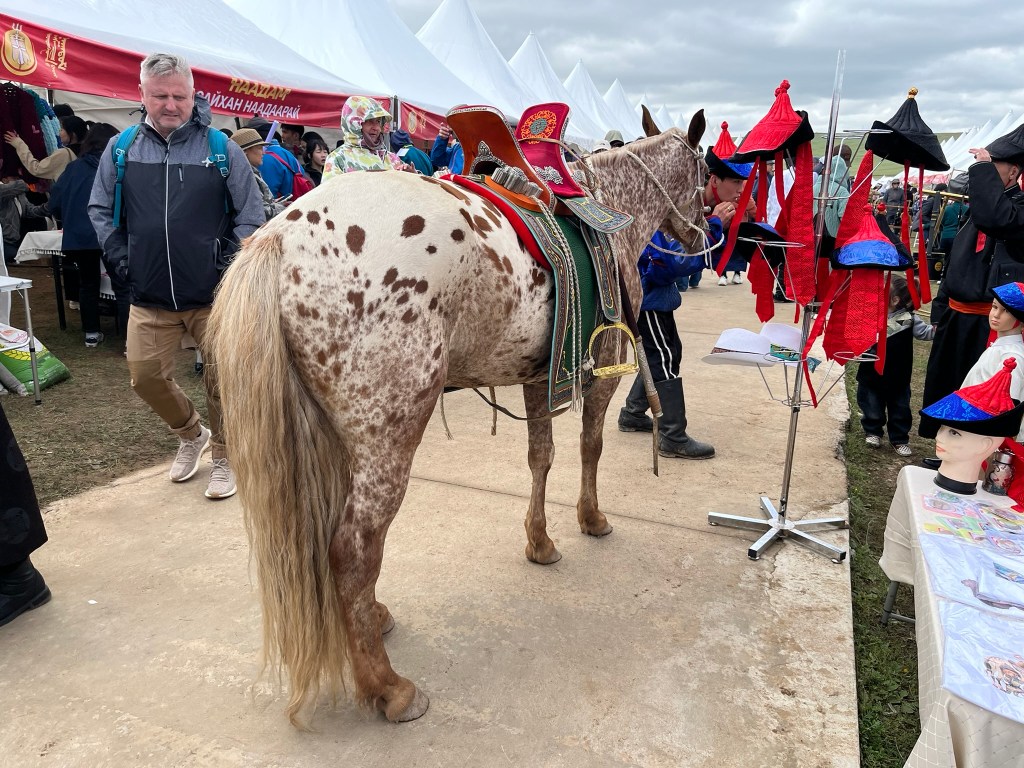
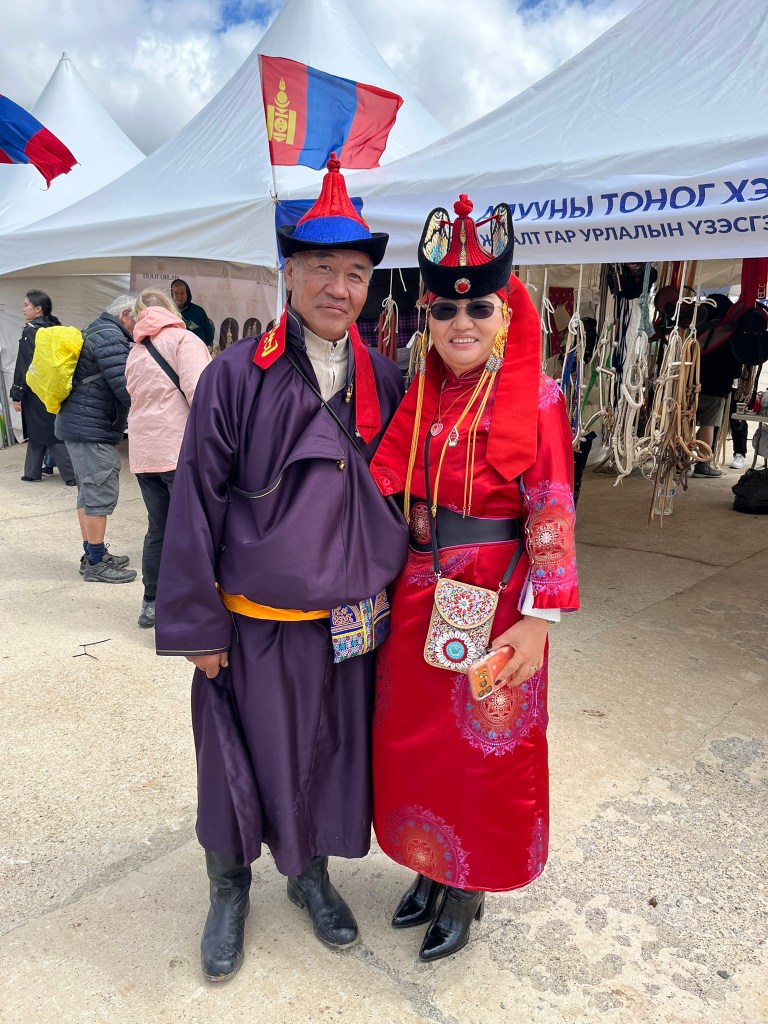
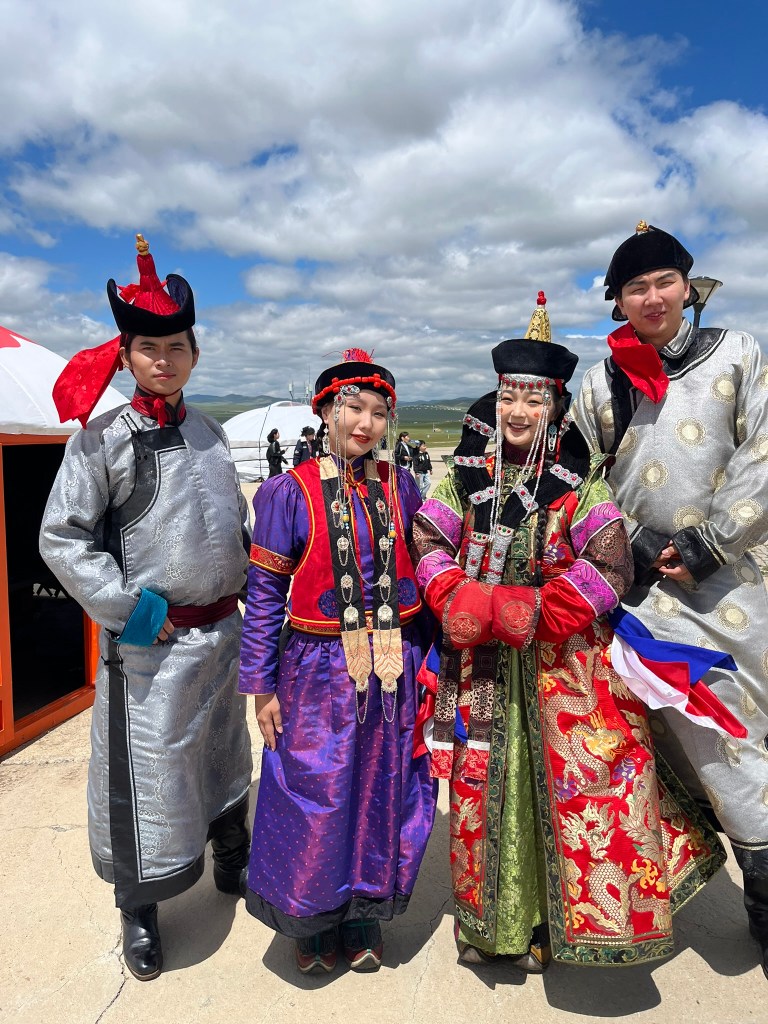
The most famous horse race (and the one we would be seeing this morning) is the Ikh Nas (Adult horse) race. This is a race of endurance of up to 30km. We wove our way through the festival, between stalls selling food, carnival games, temporary shops and the crowd, many of whom were traversing the festival on horseback in their best deels. My favourite moment was having to manoeuvre around a man on a horse, meandering his way down one of the shopping lanes trying on hats. We arrived at the small set of spectator stands, early enough that it was still easy to squeeze past the crowds trying to get in, waving our tickets and finding our designated seats.
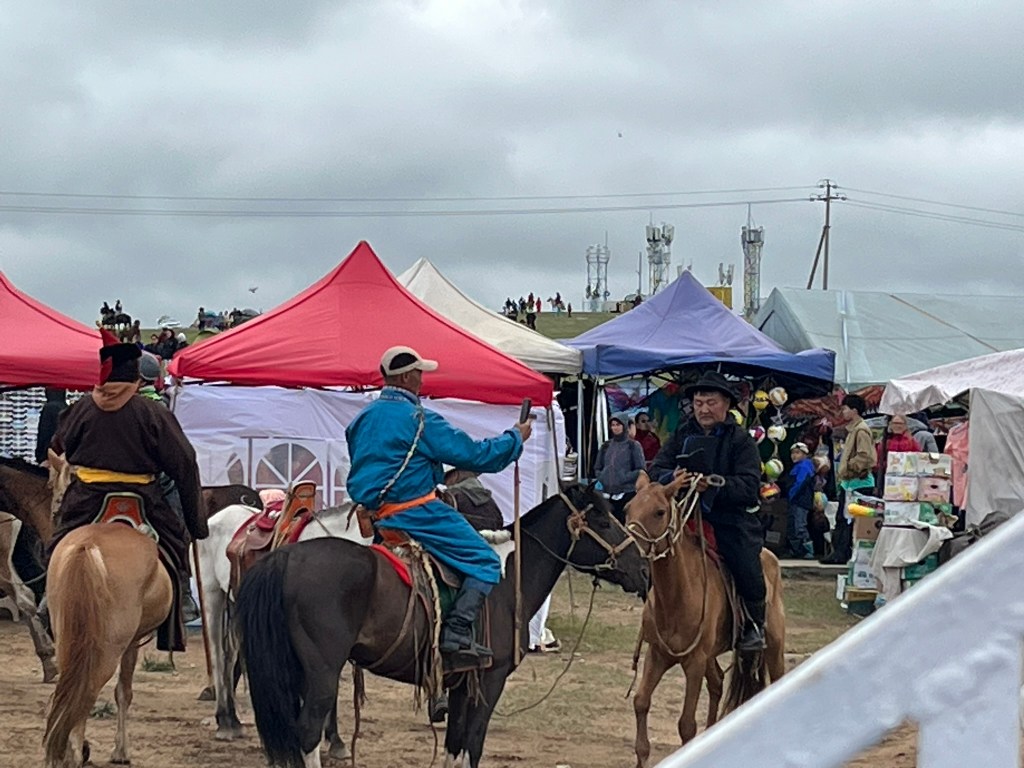
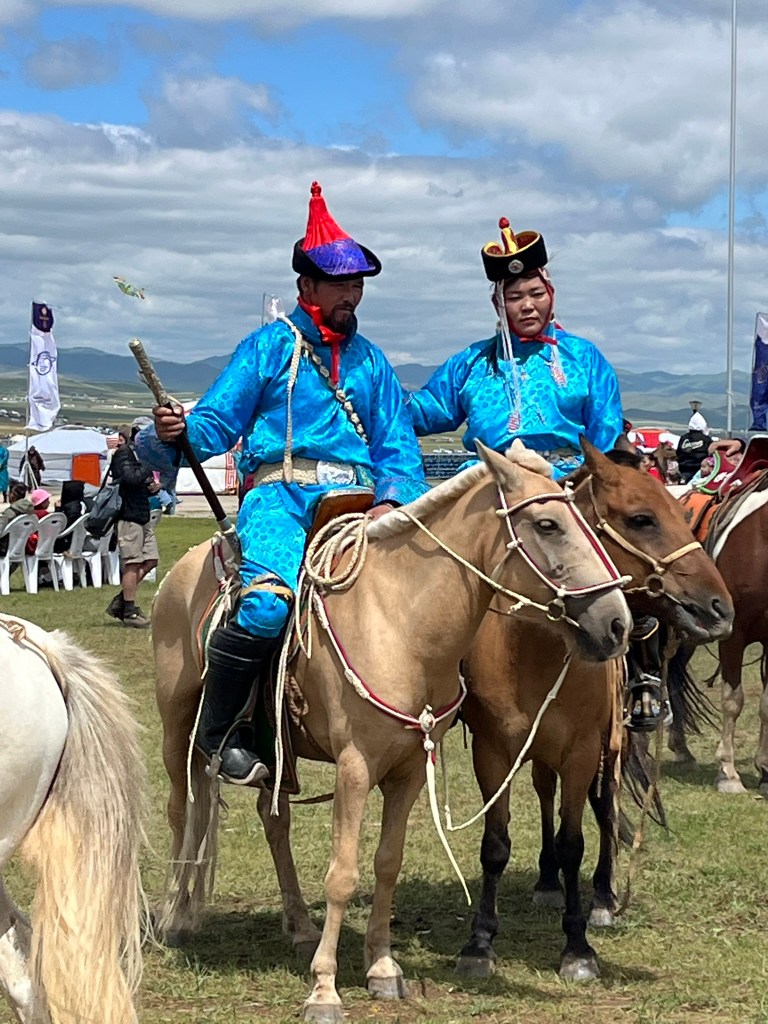
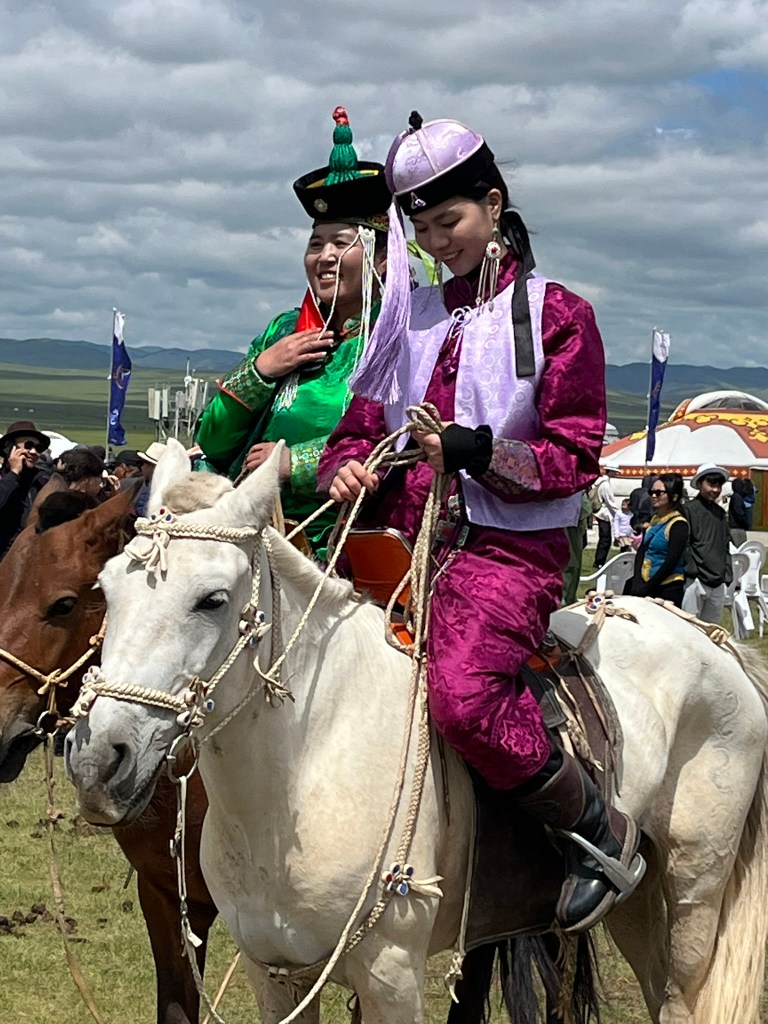
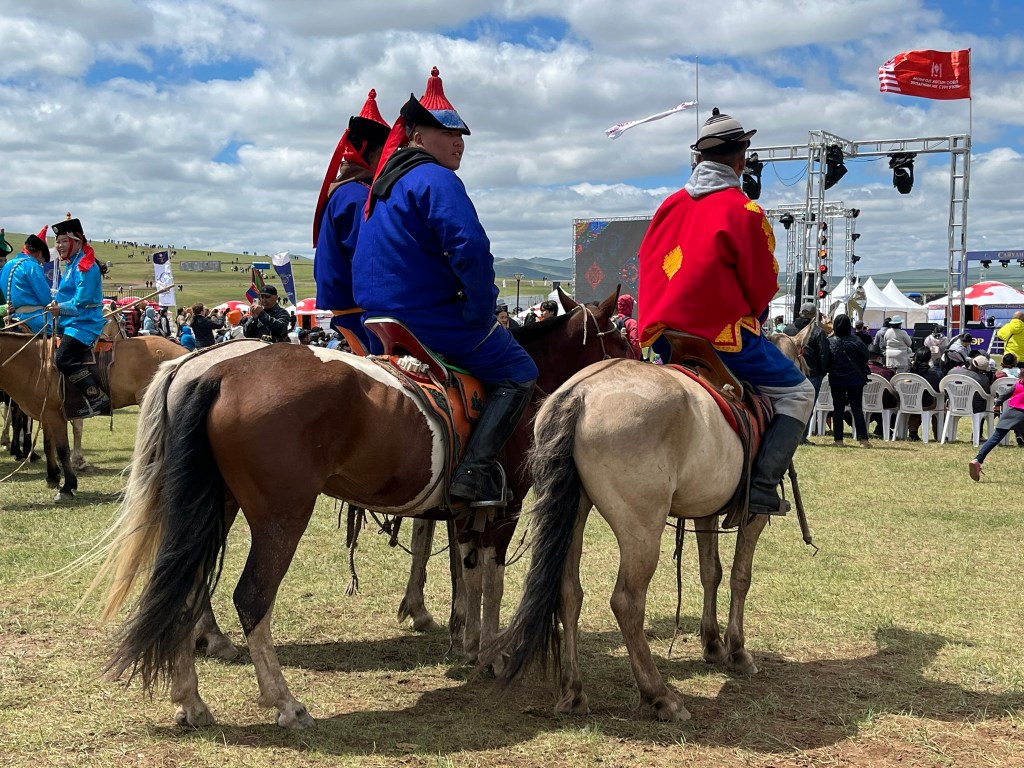
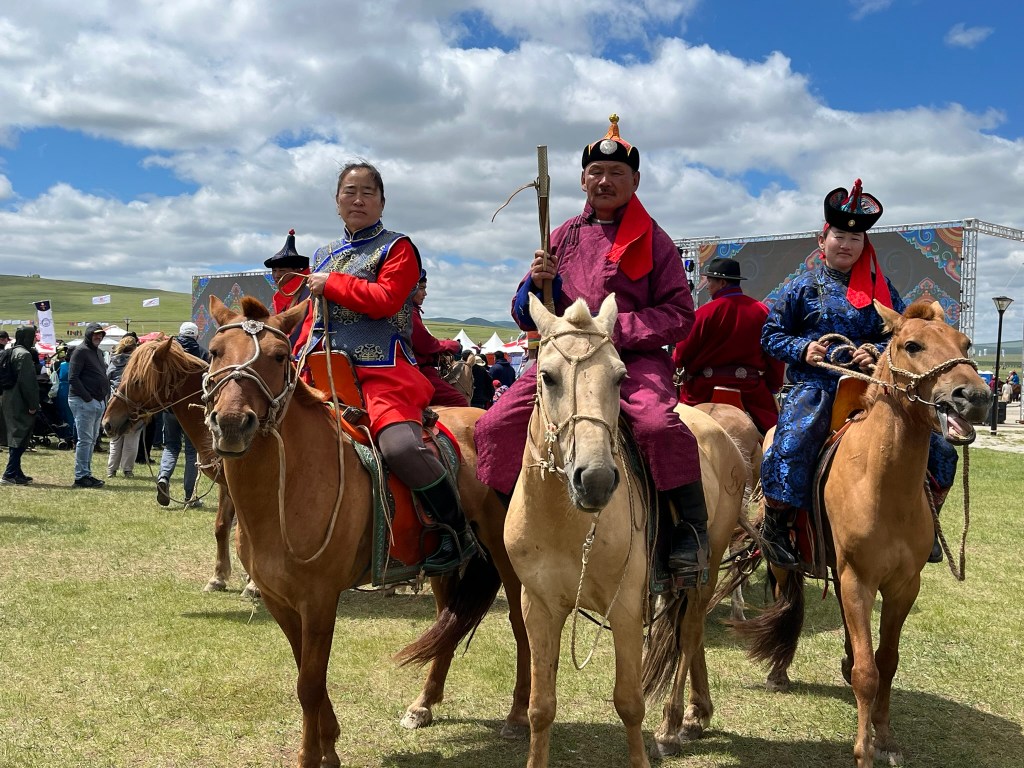
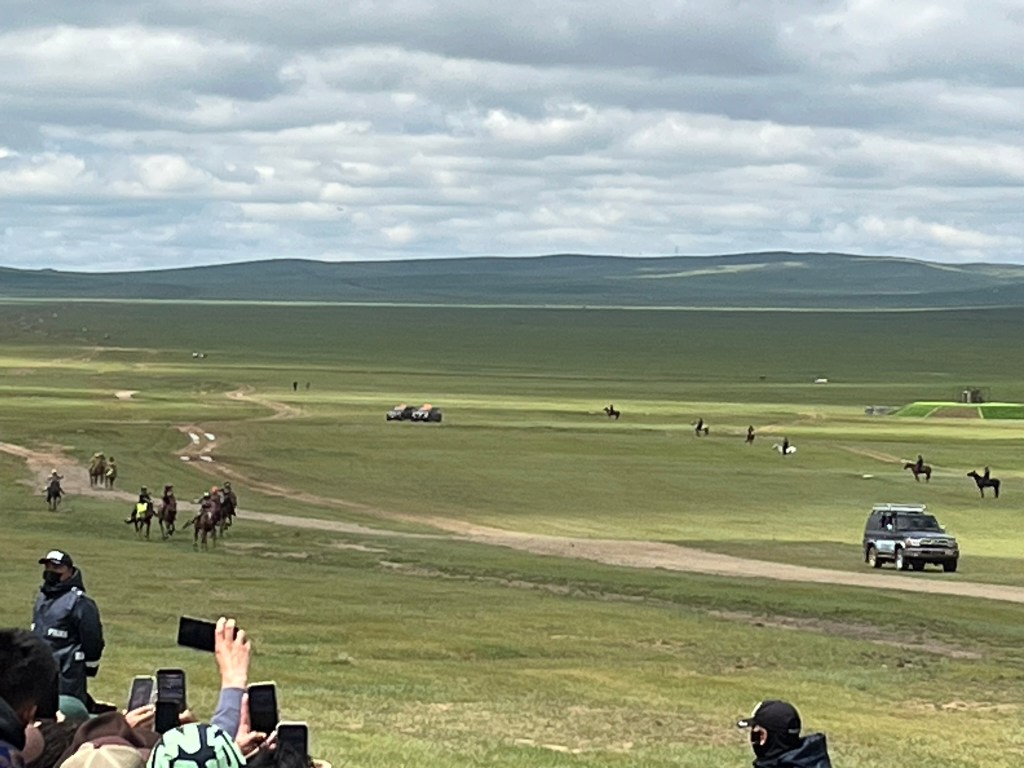
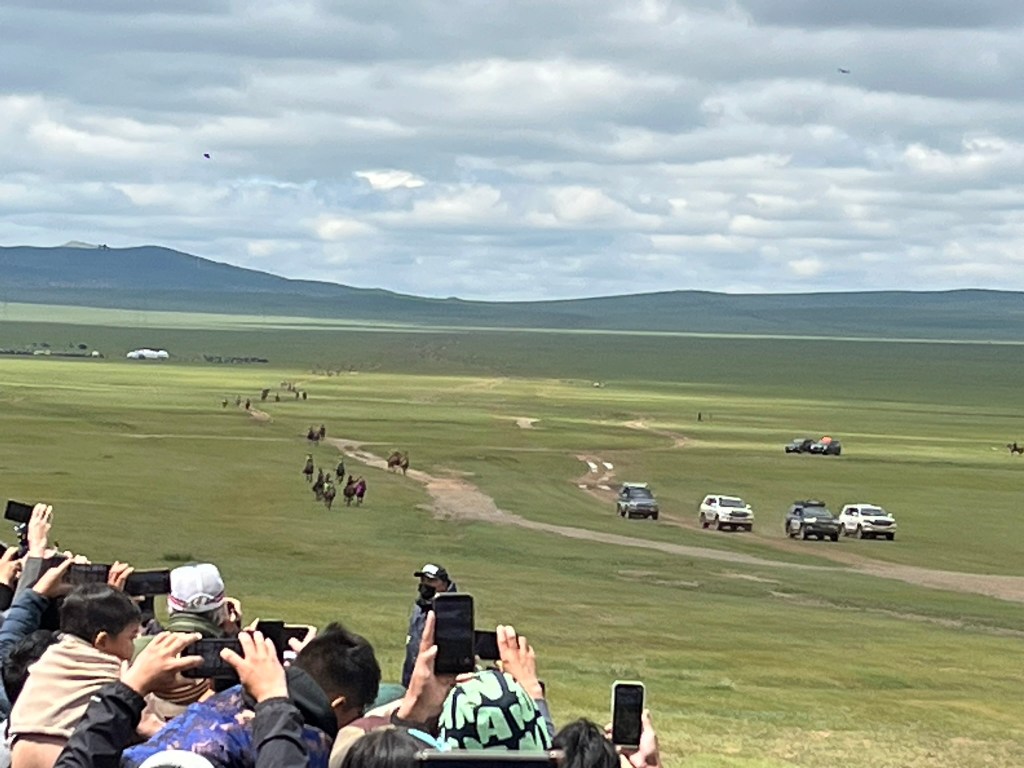
At this stage, the jockeys and their horses were still making their way down to the starting area. And with a fierce wind, we were freezing cold. Our guide kindly went off in search of warm drinks and returned with hot raisin juice – which is actually really delicious and just what we needed. The race itself was a bit confusing to following, primarily because it doesn’t start how a western horse race typically would. There are no starting stalls. Instead hundreds (I think about 300 in this case) of horses are ridden out from the finish line to a starting point 30ish km away. The horses then line up across the steppe and the race starts, heading back to the finish line. Because the course is so wide, the horses spread out quickly and the leaders may be kilometers ahead of the slower horses.
Why is it like this? Well, you have to look at it from the perspective of how horses were traditional tested by nomadic families. They were not interested in who could win a short sprint around a set track. They needed to know which horse could cover the greatest distance, which horse could handle natural terrain, which had endurance and which bloodline produced the toughest horses.
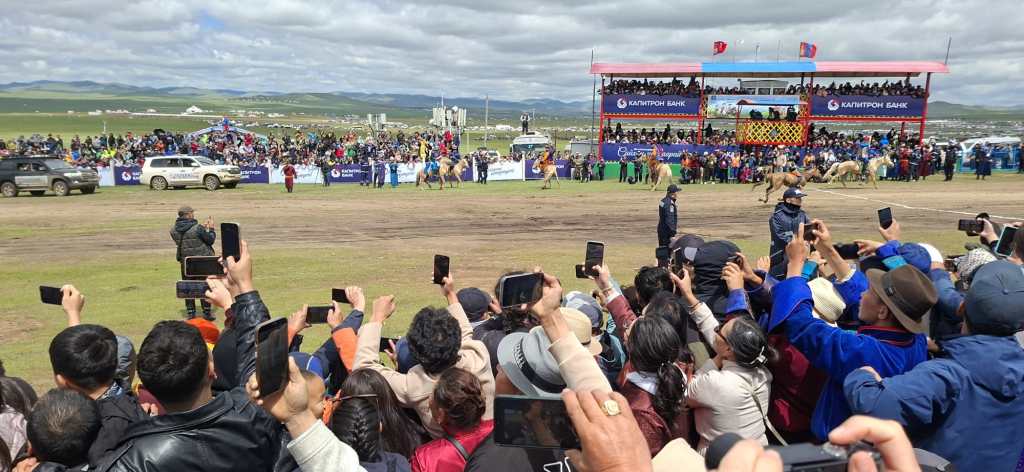
When the race finally started, it was over a ridge. Luckily the race is shown on tv, with cars and motorbikes racing along side the horses to keep the national informed of who was leading the race. Everyone in the crowd at the finish line was glued to their phones watching the race unfold.
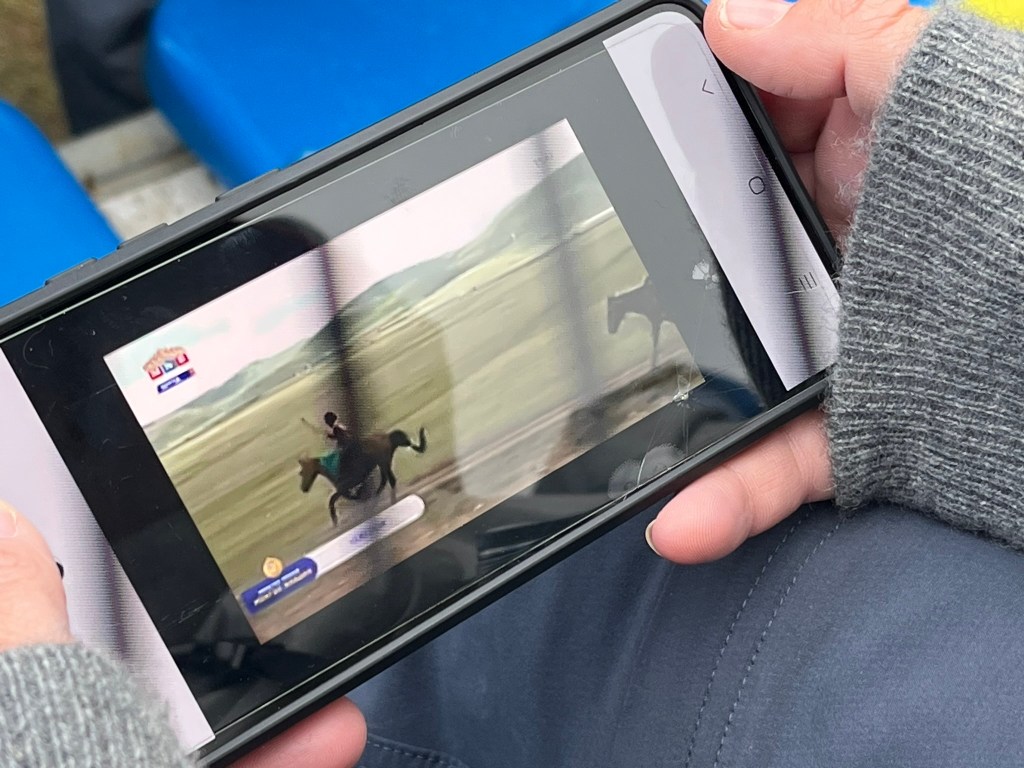
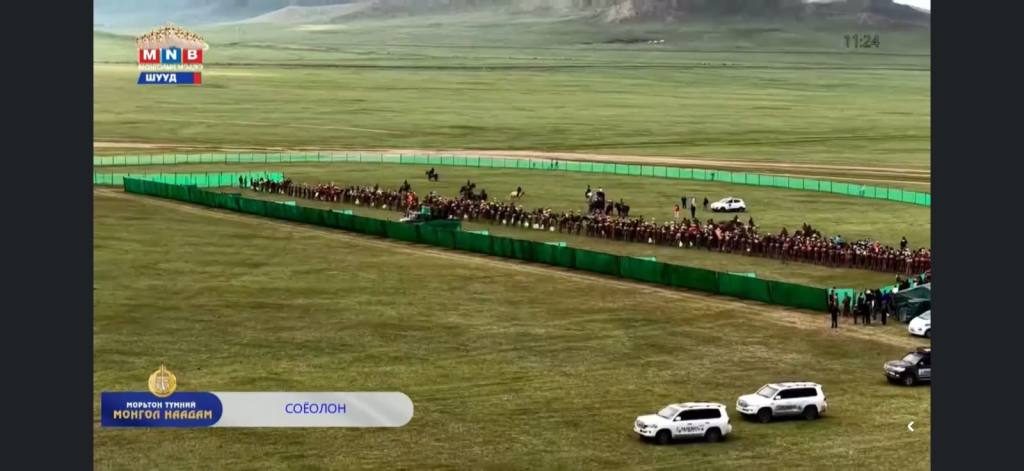
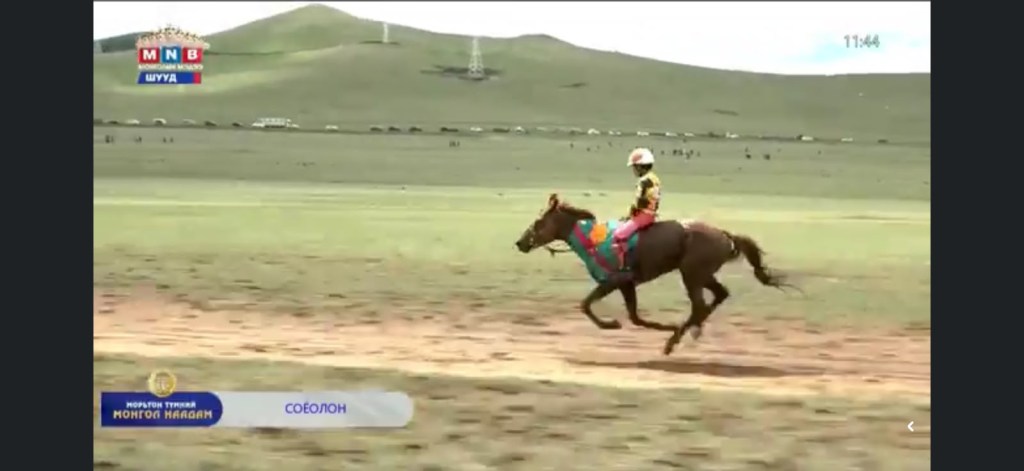
It was only in the last 10 minutes of the race that we could start to see tiny specks appear on the ridge, racing down into the valley. By this point, the crowds were packed up against the barriers stretching out into the open steppe, in some place 10-15 people deep. And folks had climbed up the back of the spectator seating behind us to get a chance to see the winning horse. It is seen as good luck in Mongolia to be covered in the dust and sweat of the winning horse!
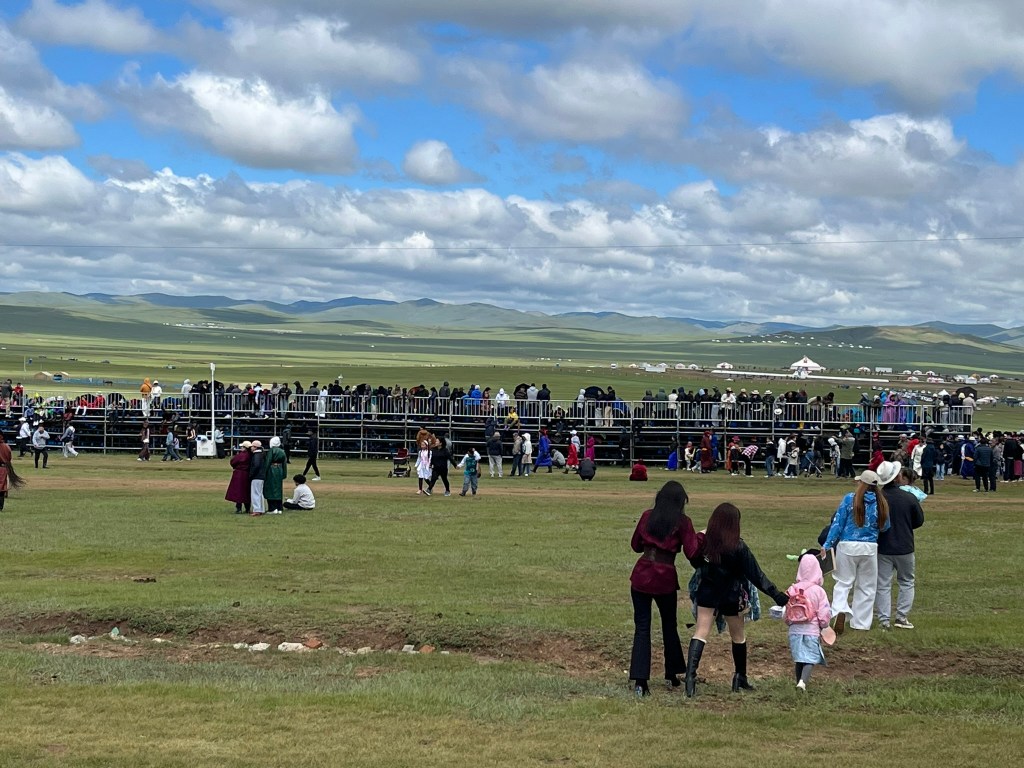
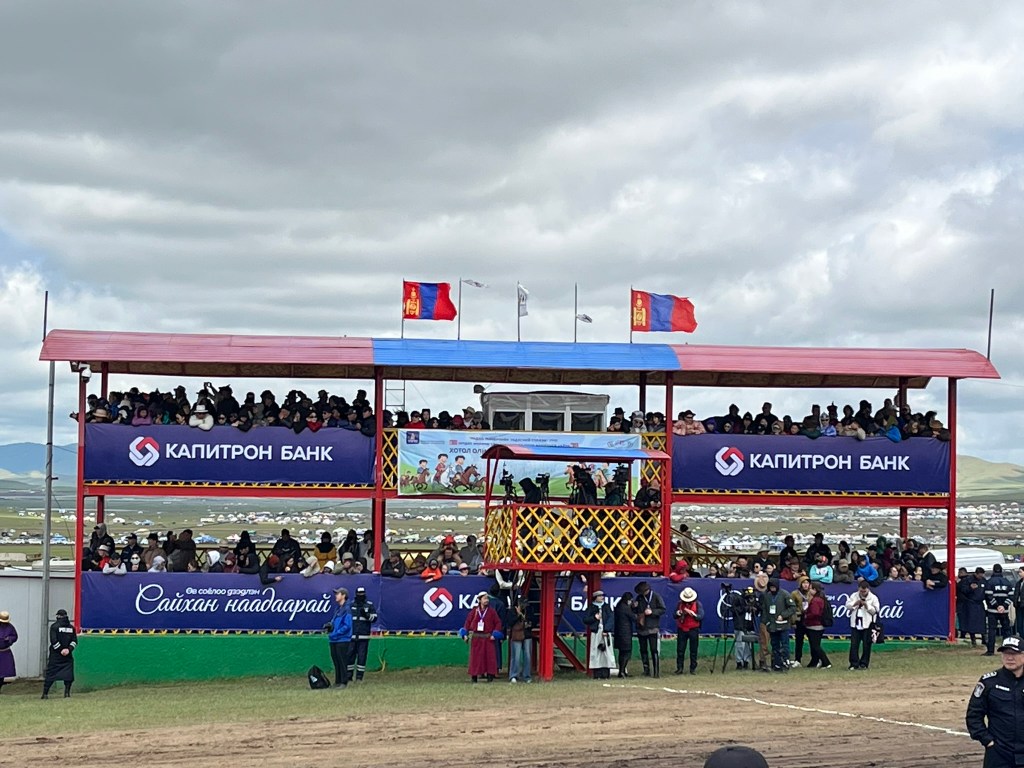
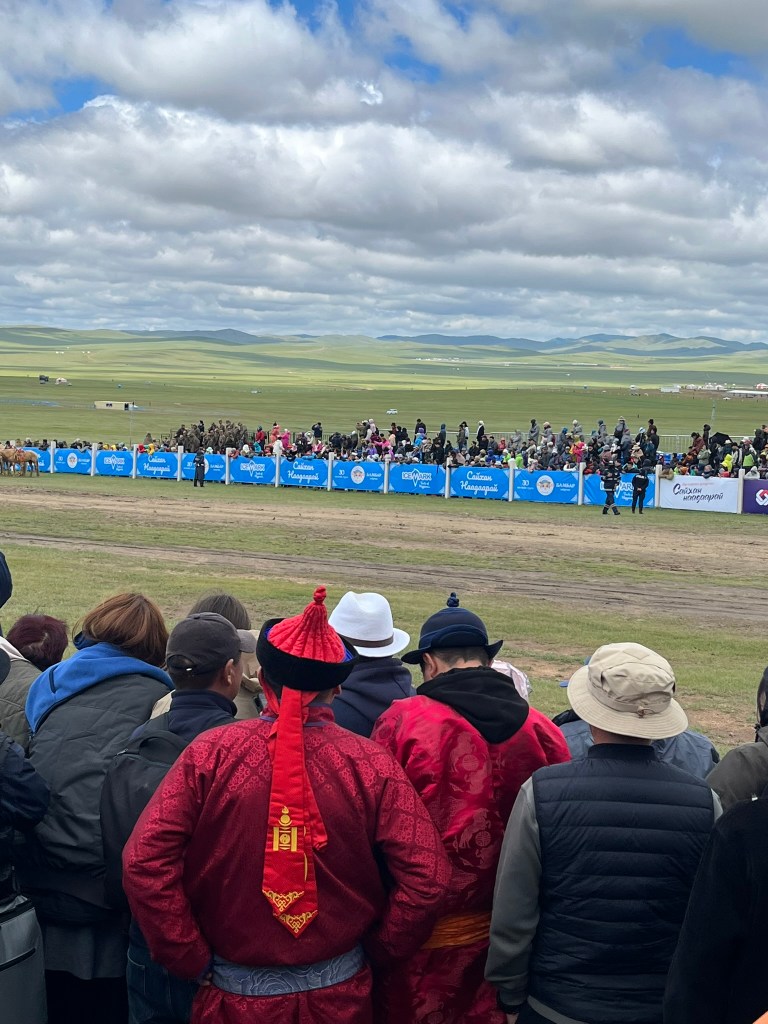
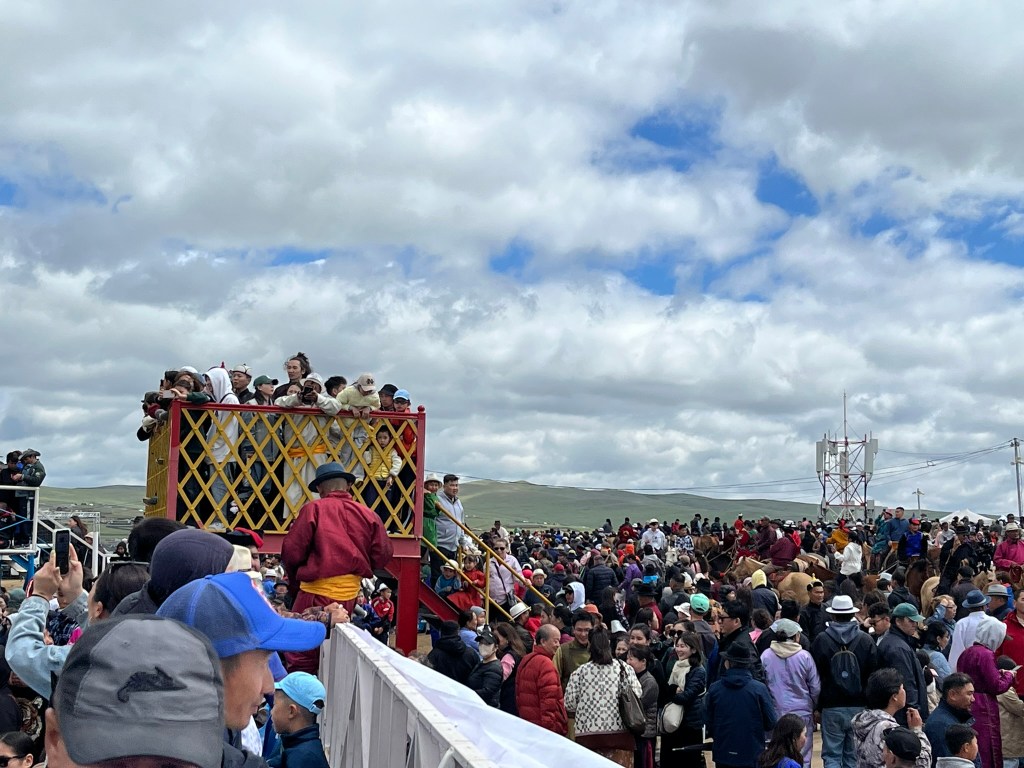
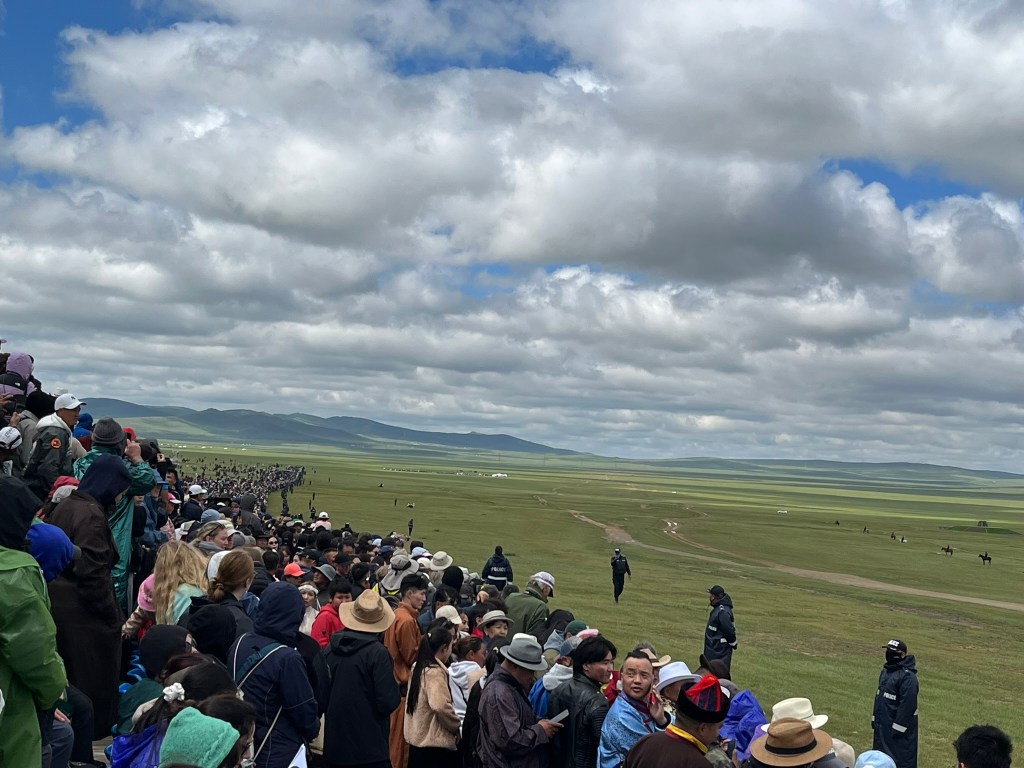
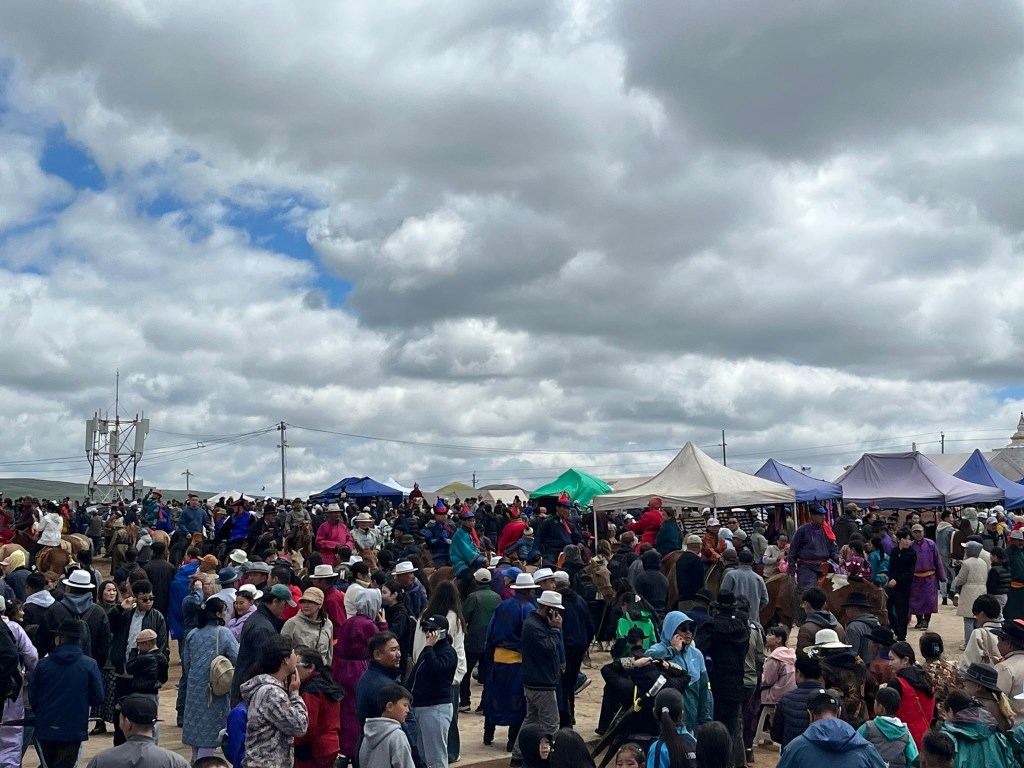
As the horses and their jockeys came into the final 300m stretch you could get a sense of just how fast the horses were going and just how little the jockeys were. The winner came in at least 50m in front of the next horse to roaring cheers from the crowd. The top 5 horses in each race get honors and as soon as the winners were past the finish line, the crowd start shifting, all heading down to the winners area to get as much good luck as possible from the horses. Our group stayed, cheering on the remaining 200+ horses and jockeys that arrived over the next 15 minutes until the very last competitor crossed the line. The last in the race is called the ‘full stomach’, and is given this honorary title with wishes that it will become the champion the next year.
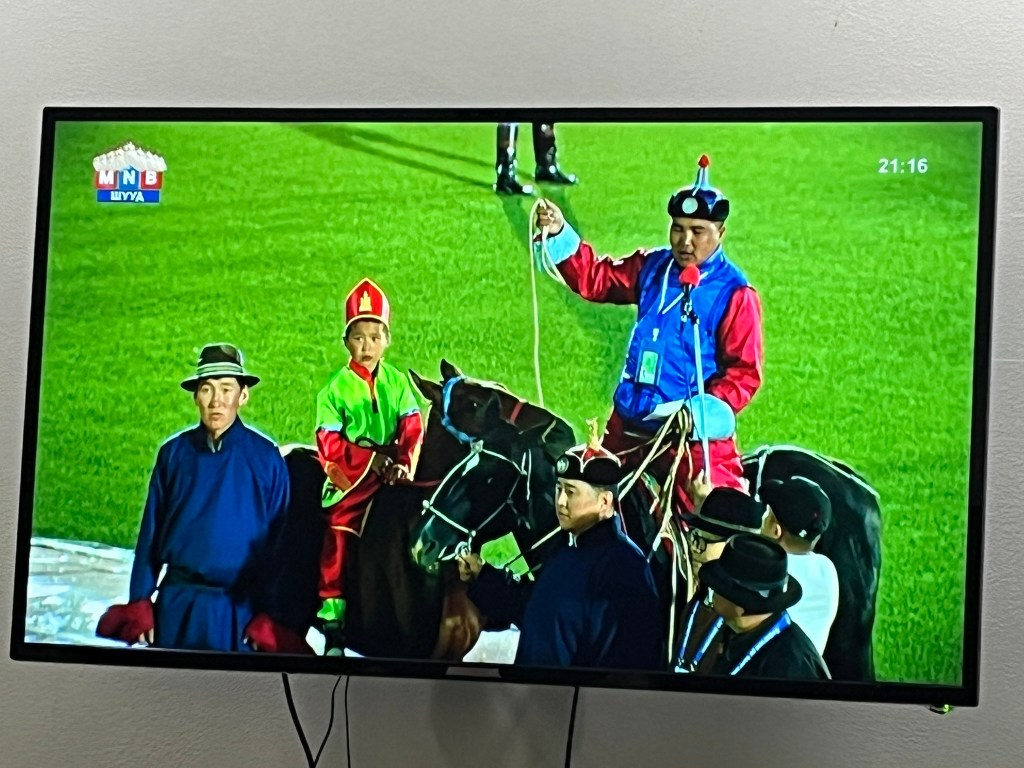
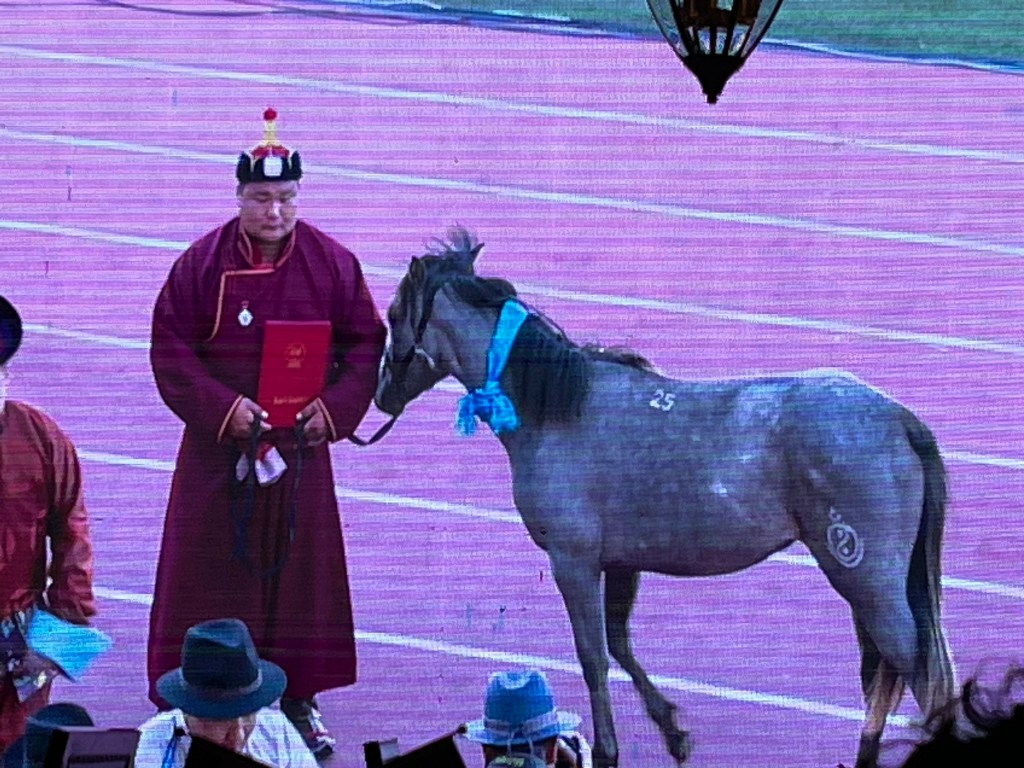
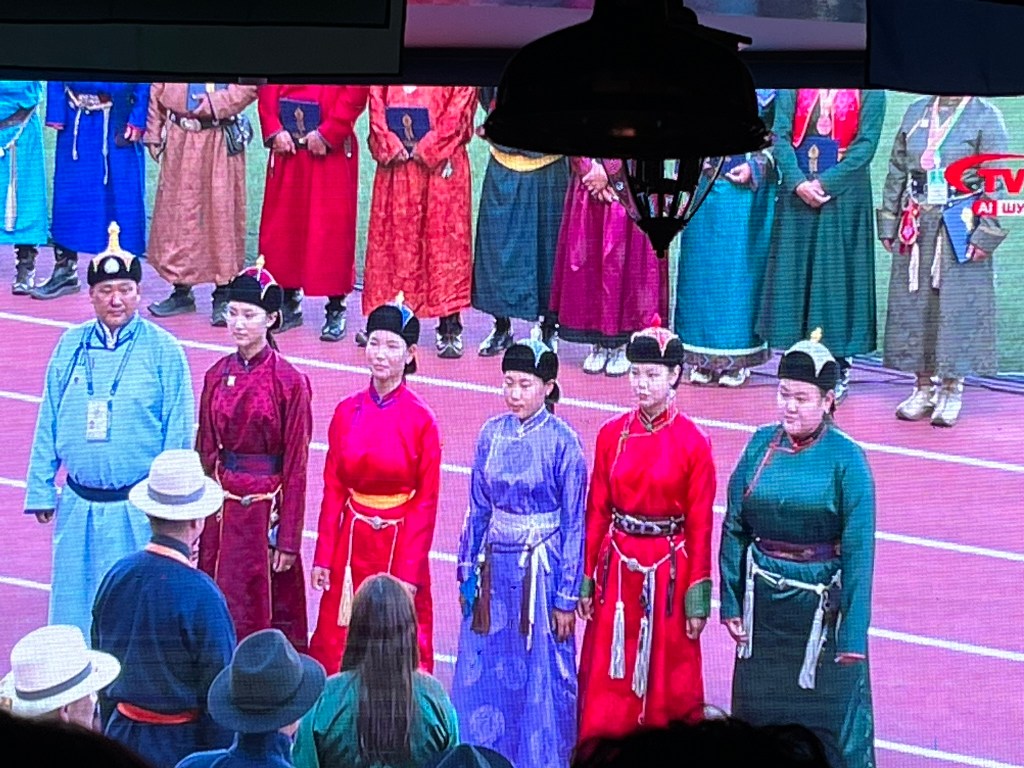
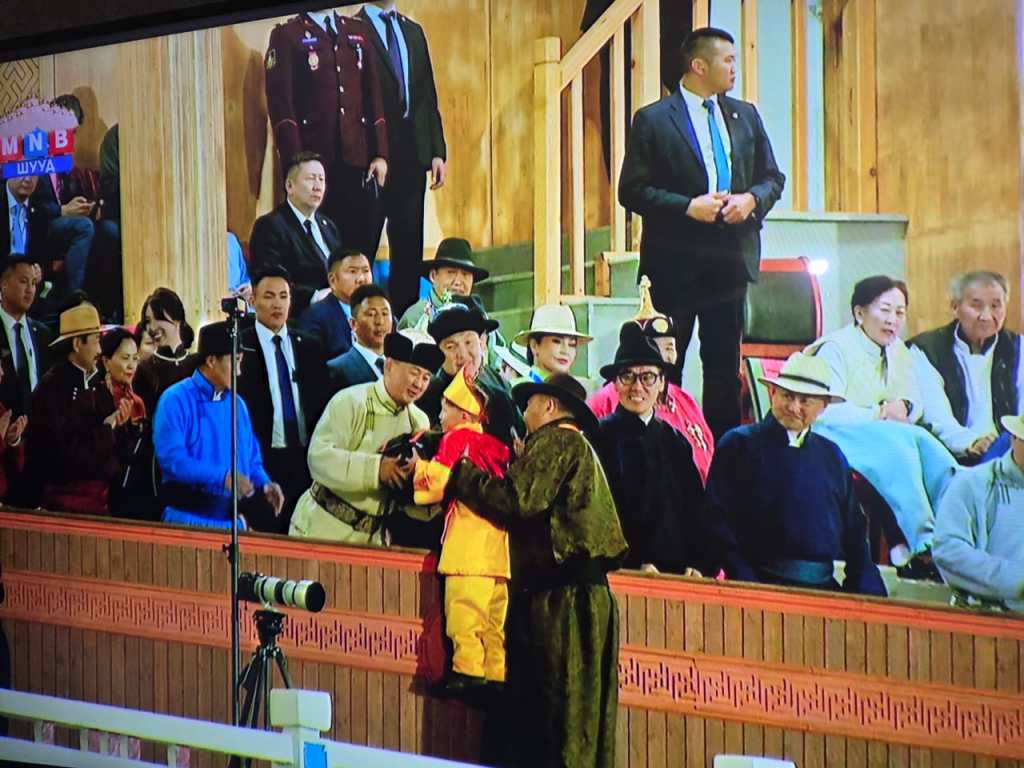
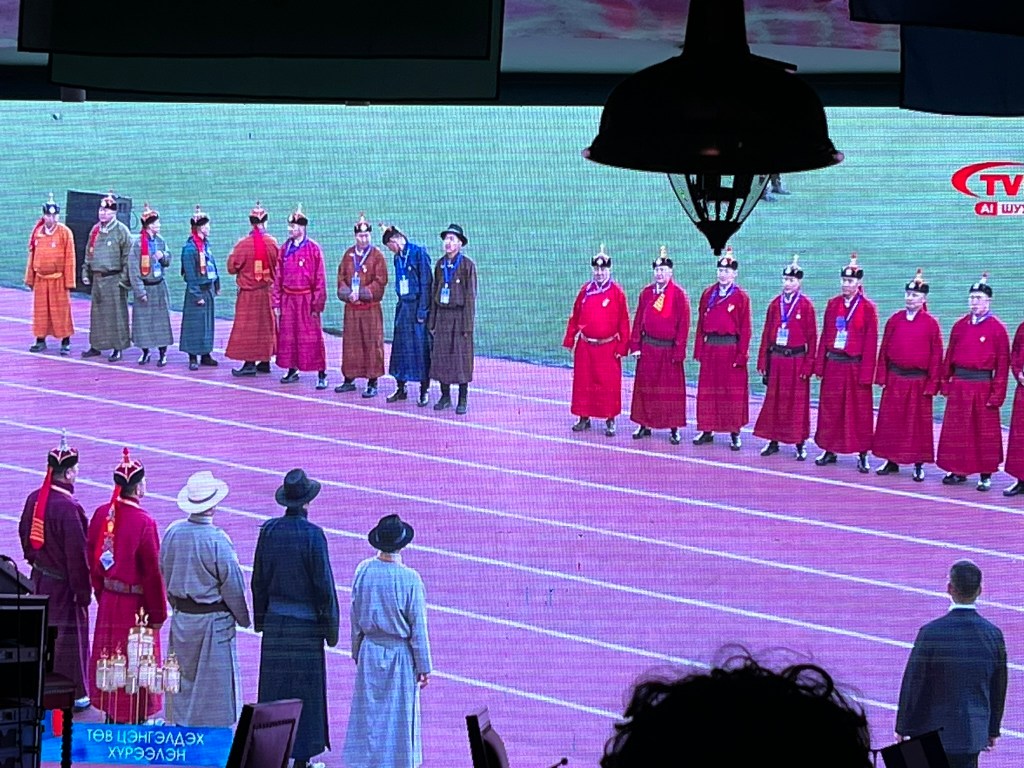
Amazingly the winning jockey was just 7 years old and actually won 2 races on two different horses at the Naadam – which is exceptionally rare. Later that evening we were able to see the jockeys, horses and trainers presented with their state honors at the stadium on tv.
Another fantastic day at Naadam – a totally different experience than the stadium, feeling much more like a county fair, but equally brilliant. I cannot recommend going to the Naadam more.
And so that’s a wrap…just over 2 weeks in Mongolia has flown by and I have had a brilliant time. The culture, people, landscapes and history have all been fantastic and exceeded my expectations. I would definitely return, perhaps next time to explore the west of the country to attend the annual Eagle Festival.
 Colette's Grand Detour
Leave a comment