Iguazu Falls is one of those places that when you visit, you think ‘I can’t believe this exists’. It is an absolutely massive fractured system of waterfalls surrounded by lush subtropical rainforest, straddling the border of Argentina and Brazil. Iguazu is not just one waterfall, but 275 individual falls stretching across almost 3km. And it is jaw-dropping. Not just because of the number of falls but the incredible volume of water passing over them every second. The average flow rate is about 1,800 cubic meters per second. And during floods, that can increase to over 12,000 cubic meters of water flowing over Iguazu Falls a second. To provide some perspective that is over 5 Olympic-sized swimming pools of water a second.
The falls are a product of millions of years of volcanic activity, river erosion and tectonic shifts. The story begins during the breakup of the ancient continent of Gondwana, when South America and Africa were pulling apart, around 135 millions years ago. This rifting triggered one of the largest volcanic events on earth – the Parana-Etendeka flood basalts. Enormous fissures opened up in the crust and lava poured out for hundreds of thousands of years. Spreading across Brazil, Argentina, Uruguay and Paraguay. Over time, layers of basalt built up like a geological layer cake, some thousands of meters thick.
When the lava cooled it formed a thick layer of basalt – a hard, erosion-resistant rock. But the basalt is not uniform, and some layers are harder and some softer. After the lava cooled, the area was uplifted and stretched by tectonic forces. This created fault lines, a tilted plateau and a sharp escarpment, creating a steep break in the landscape. One of these faults runs through the area where Iguazu Falls is today.
Around 2-5 million years ago, the Iguazu River began flowing across the basalt plateau towards what is now the Parana River. When the river reached the fault line it encountered a sudden drop – a natural cliff. And Iguazu Falls was born. As the river flowed over the cliff it began cutting the softer layers of basalt causing undercutting, rock collapse and the cliff edge began retreating upstream.
This is the same process that has shaped other world famous falls like Victoria Falls and Niagara Falls. But because the basalt at Iguazu is fractured into many blocks, the retreat hasn’t been uniform. Instead of a single waterfall, the cliff has broken up into dozens of small steps and ridges, zig-zagging across the irregular cliff line.
The falls sit on the Iguazu River, which marks the border between Misiones Province in Argentina and Parana State in Brazil. We flew in from Ushuaia (via Buenos Aires) to Puerto Iguazu on the Argentinian side. You can visit the falls on both the Argentinian side and the Brazil side and many people opt to do both, with one day in each, which I highly recommend. You can visit independently, but if you can I would recommend getting a private guide. Our guide, Pedro, was excellent, not only with the information he provided us about the falls, but more importantly he knew how to get us the best possible experience, avoiding the huge crowds that build up by mid-morning.
The falls get their name – Iguazu – from the Guarani language, spoken by the indigenous communities who lived in the region long before Europeans arrived. The ‘I’ which is actually pronounced as a ‘y’ means water and guasu means big or great. So Iguazu literally means big water. The falls are entirely fed by the Iguazu river which originates in the Serra do Mar mountains in Brazil and travels around 1300km westward until it suddenly drops off the Parana Plateau, creating the spectacular cascading water system. After the falls, the Iguazu river continues for only a short distance (about 23km) before joining the Parana River – one of the most important river systems in South America. The Parana River is the second longest river in South America and eventually merges into the Rio de la Plata near Buenos Aires. This forms the massive La Plata Basin which drains a huge portion of the continent.
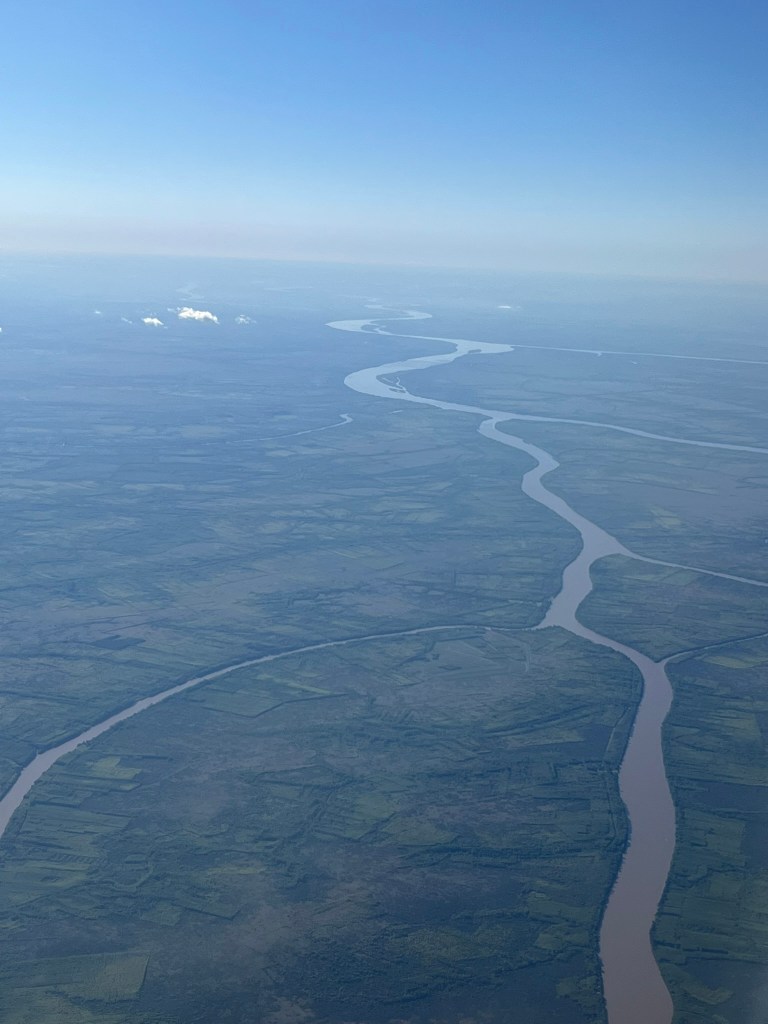
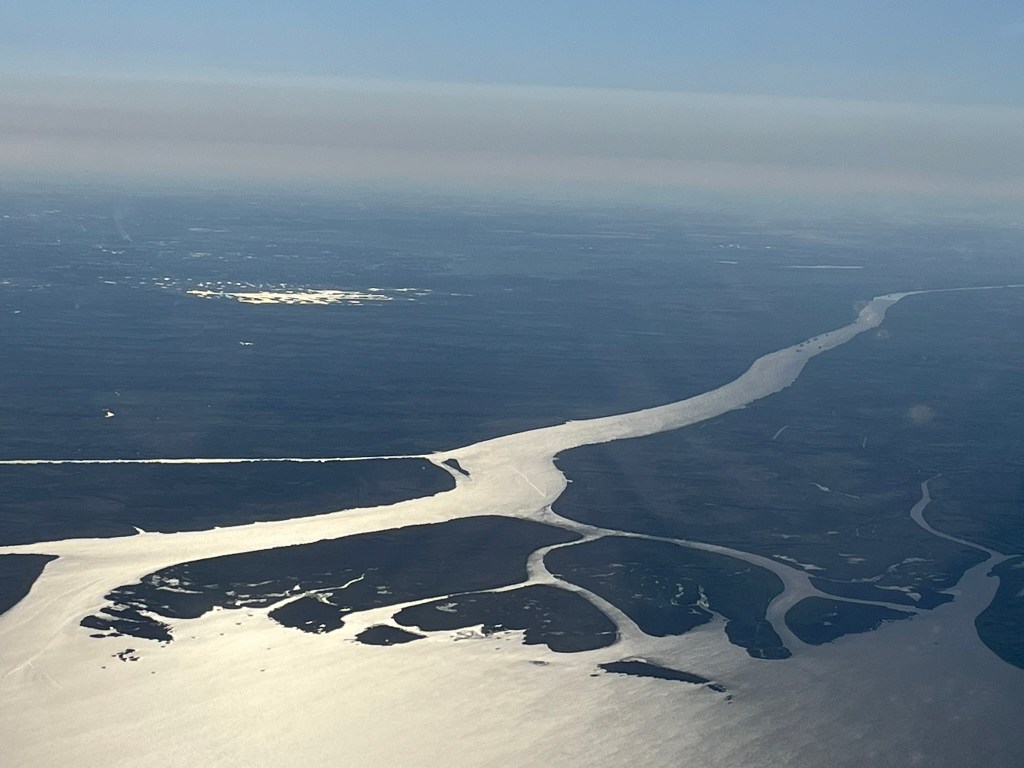
The meeting point of the Iguazu and Parana Rivers is actually one of the most unique geopolitical spots in the world. A place where three countries meet at a single point: Argentina, Brazil and Paraguay. It is known as the Triple Frontier. There are other places in the world with tri-country borders but none so easily accessible.
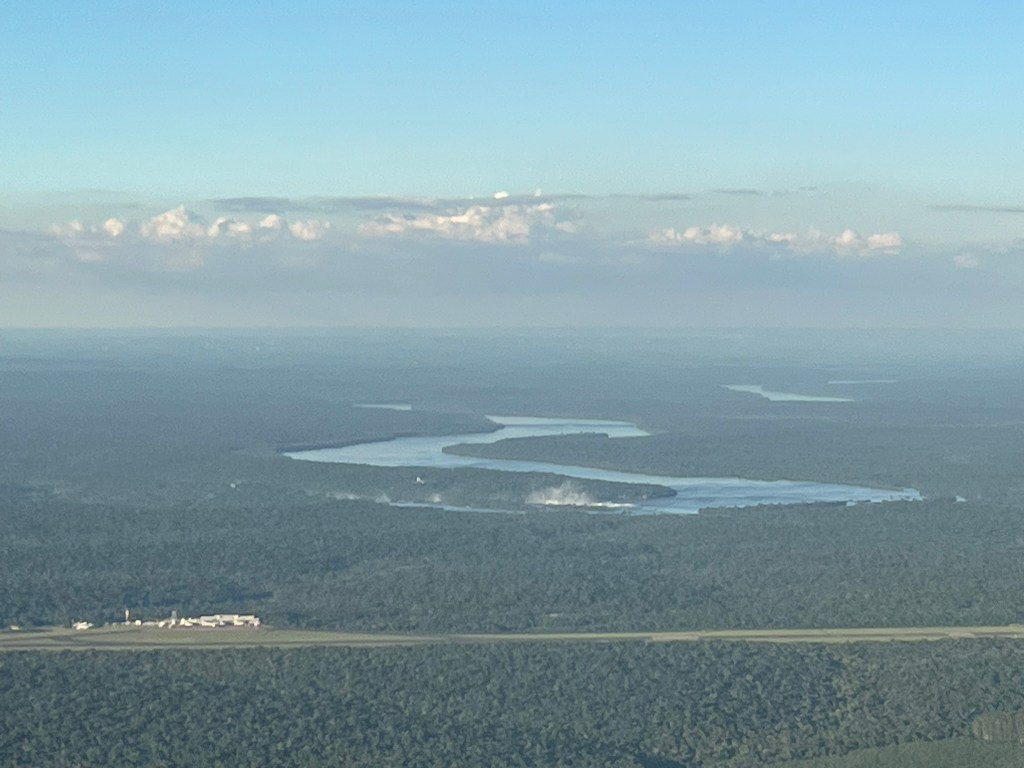
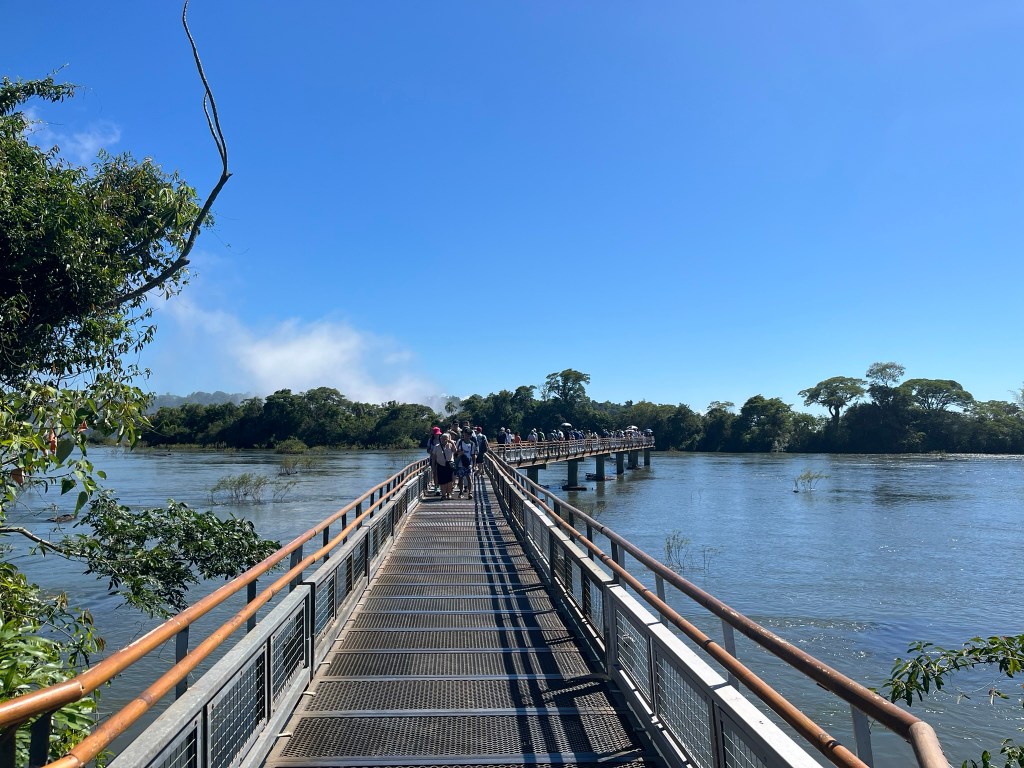
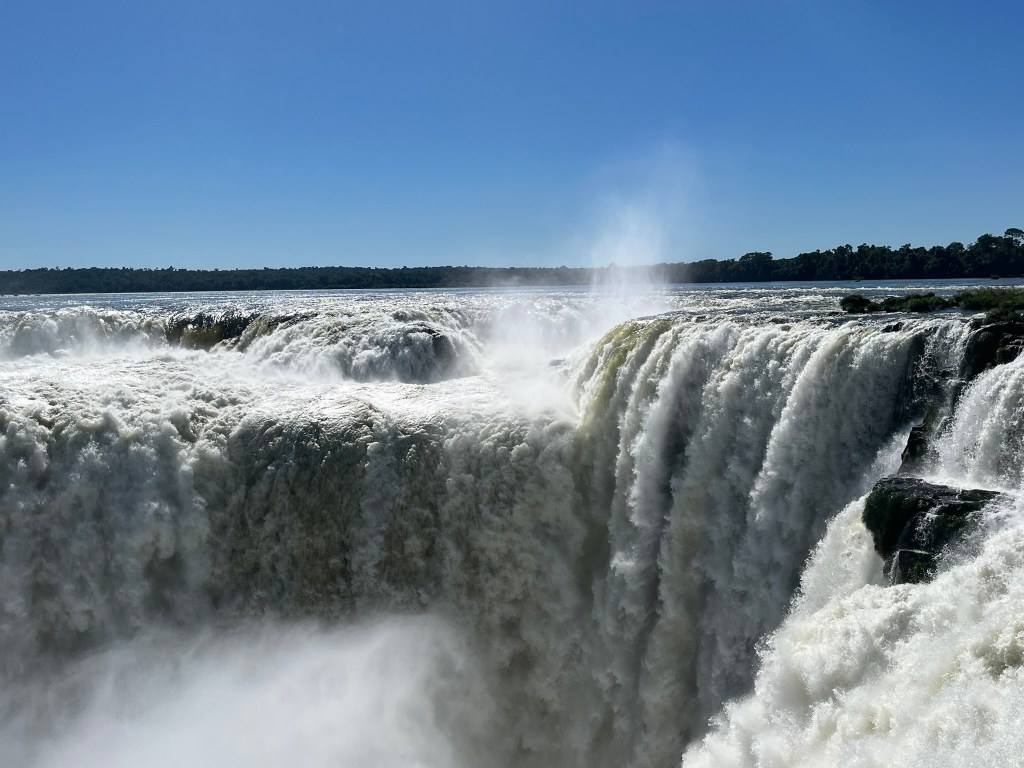
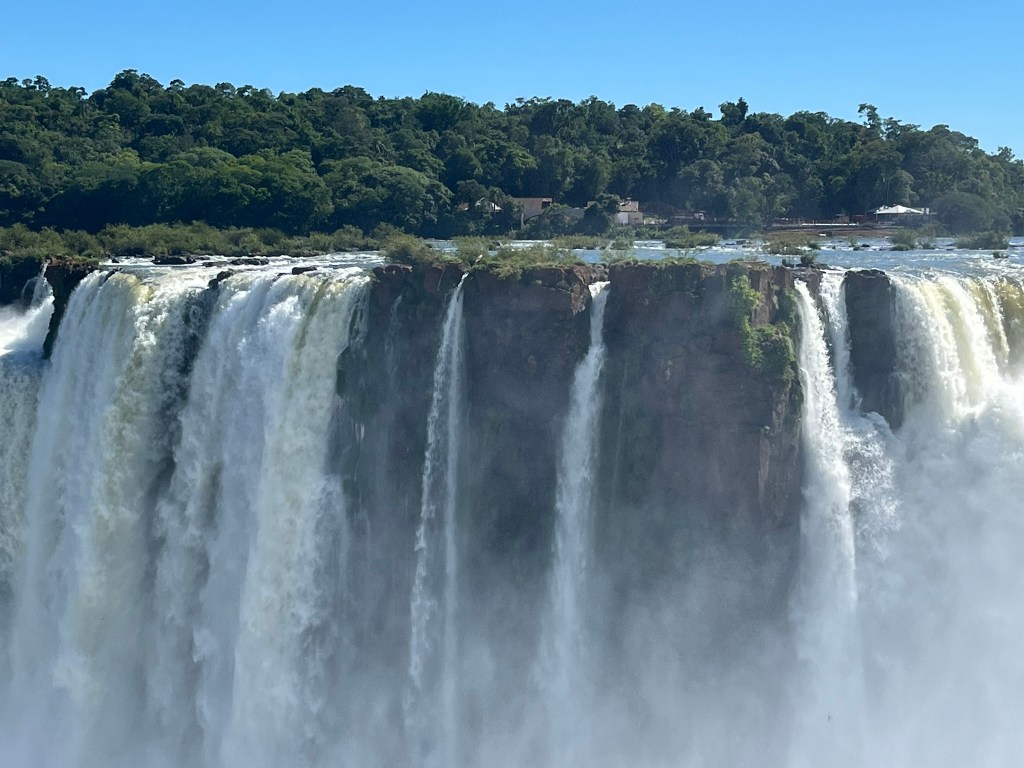
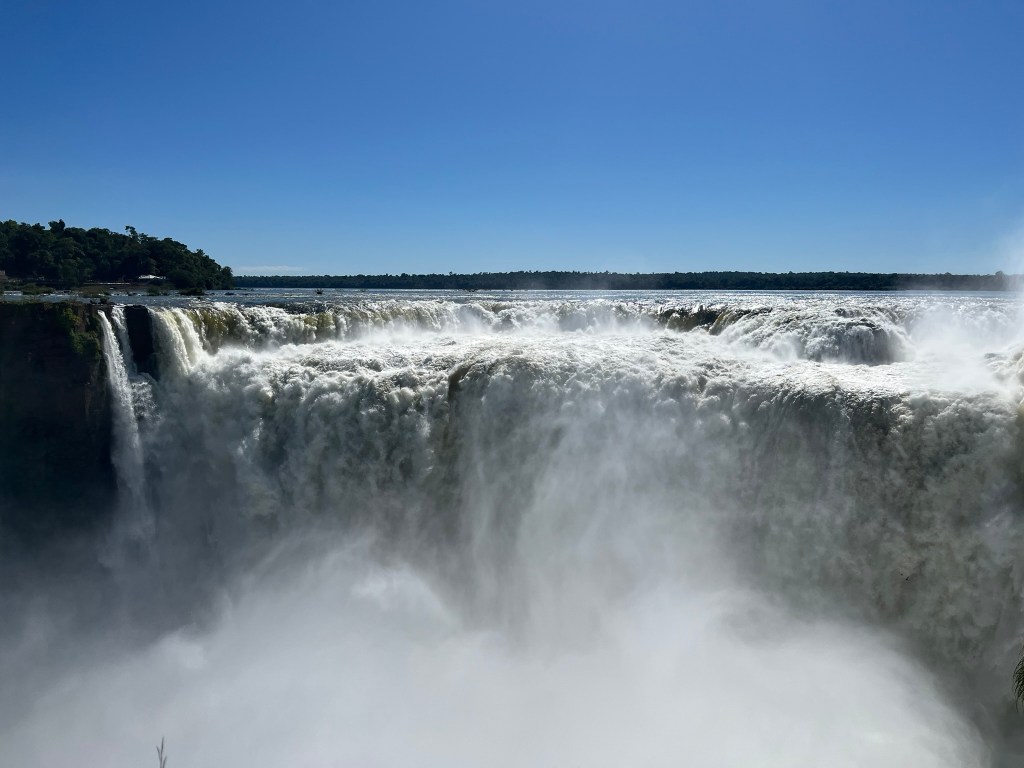
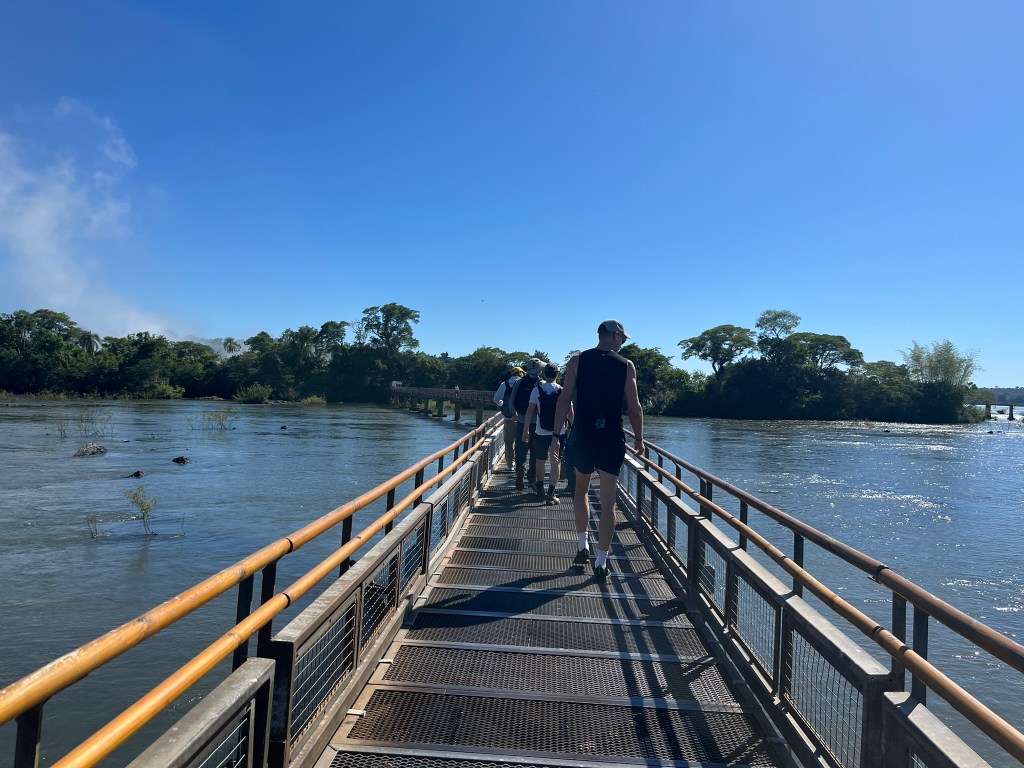
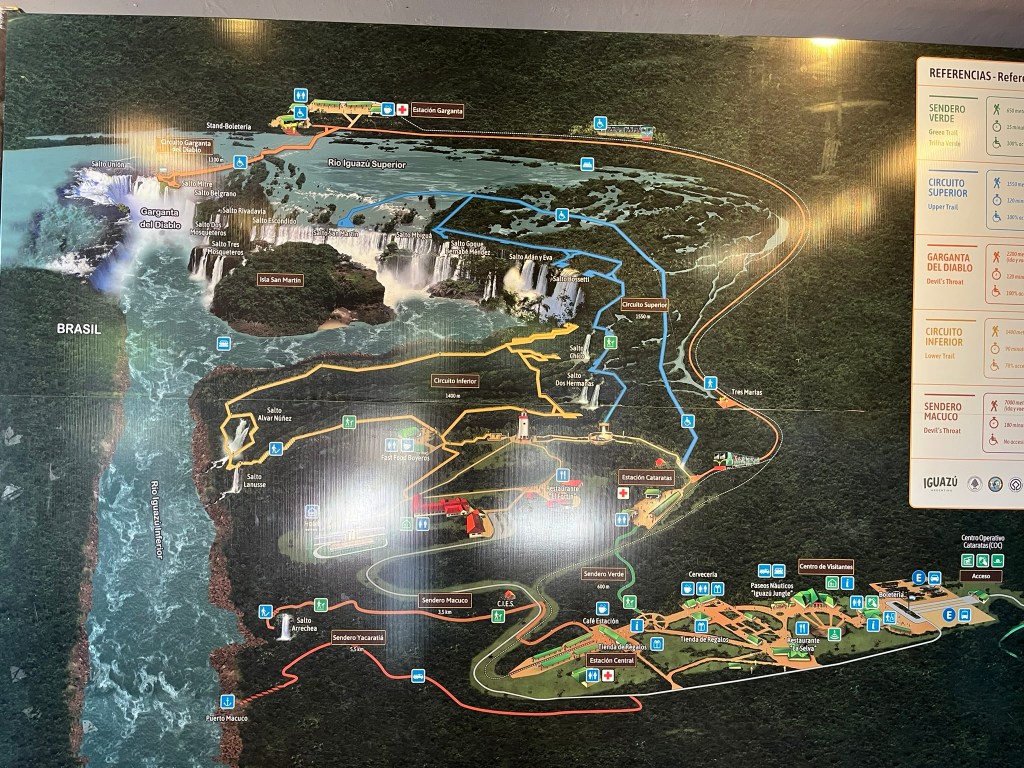
We started our time in Iguazu on the Argentinian side and stayed about 25 minutes drive from Parque Nacional Iguazu. On Pedro’s recommendation we started early and departed our hotel at 7.15am with the goal that we would be one of the first to arrive at the viewing platform of the iconic ‘Garganta del Diablo’ or ‘Devil’s Throat’, a giant horse-shoe shaped chasm that is a highlight of any visit to the falls. We arrived at the gates before the park opened and became one of the first in the queue. By the time the gates opened there were hundreds of people queuing behind us. Our next goal was to then get to the train tickets queue, to grab tickets for the jungle train which transports visitors around the park. Pedro secured tickets for the first carriage of the first train, which would mean we would be the first walking out onto the 1.1km metal walkway raised above the river. This walkway takes you literally out into the river to a viewing platform that sits on the edge of Devil’s Throat.
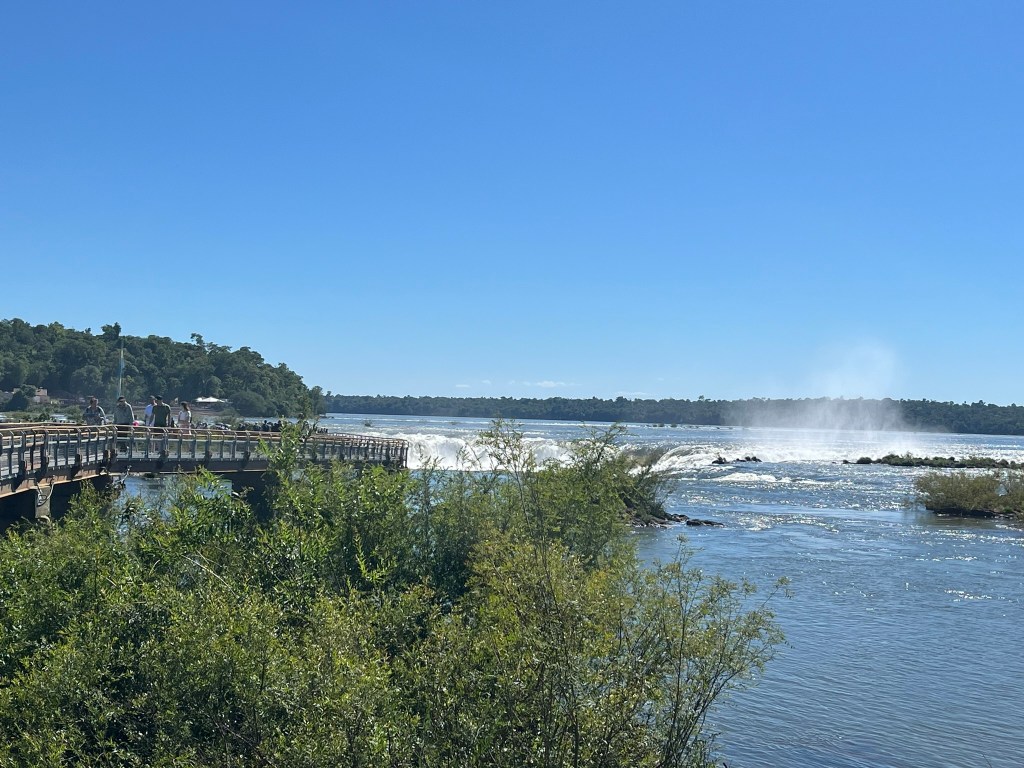
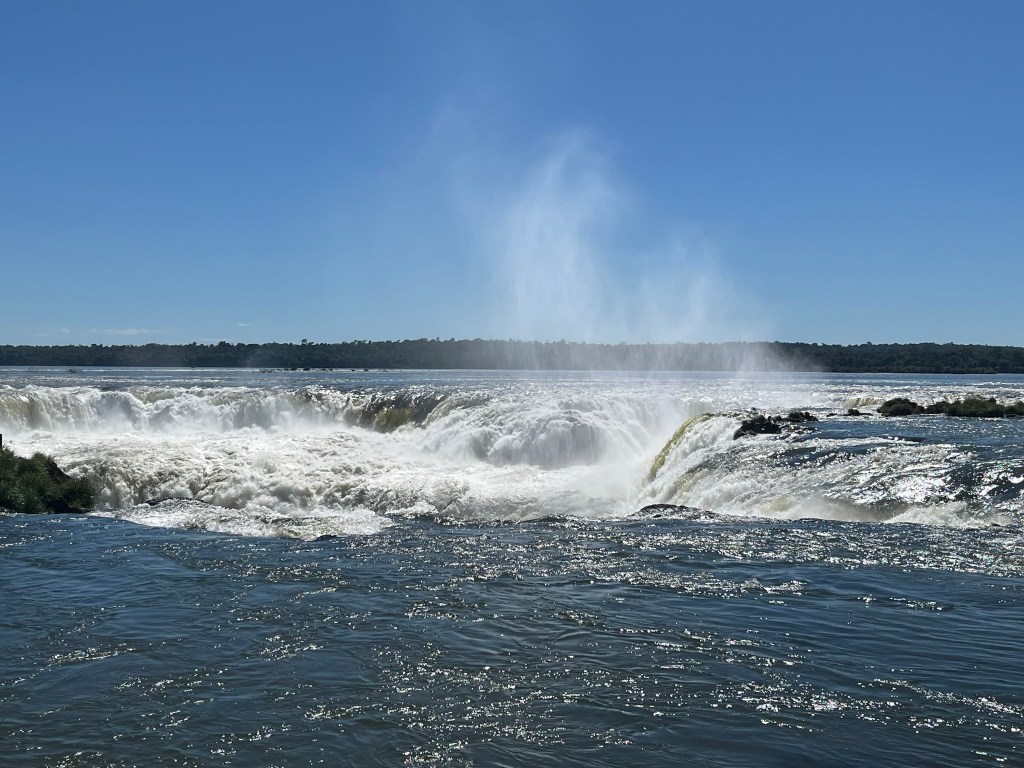
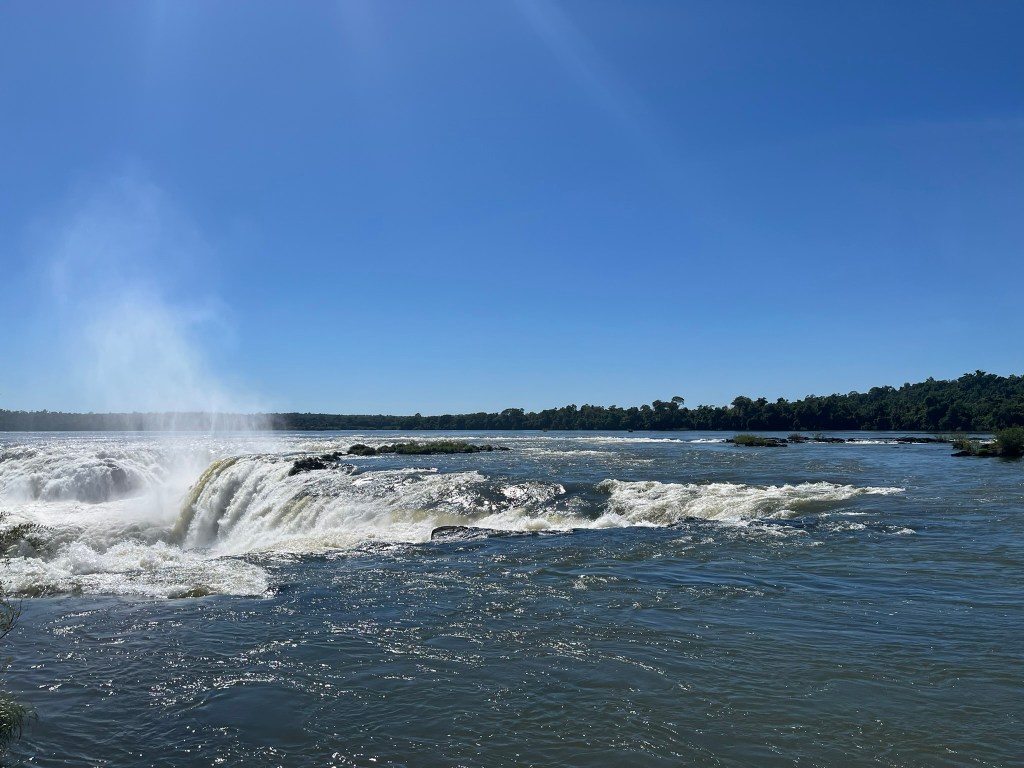
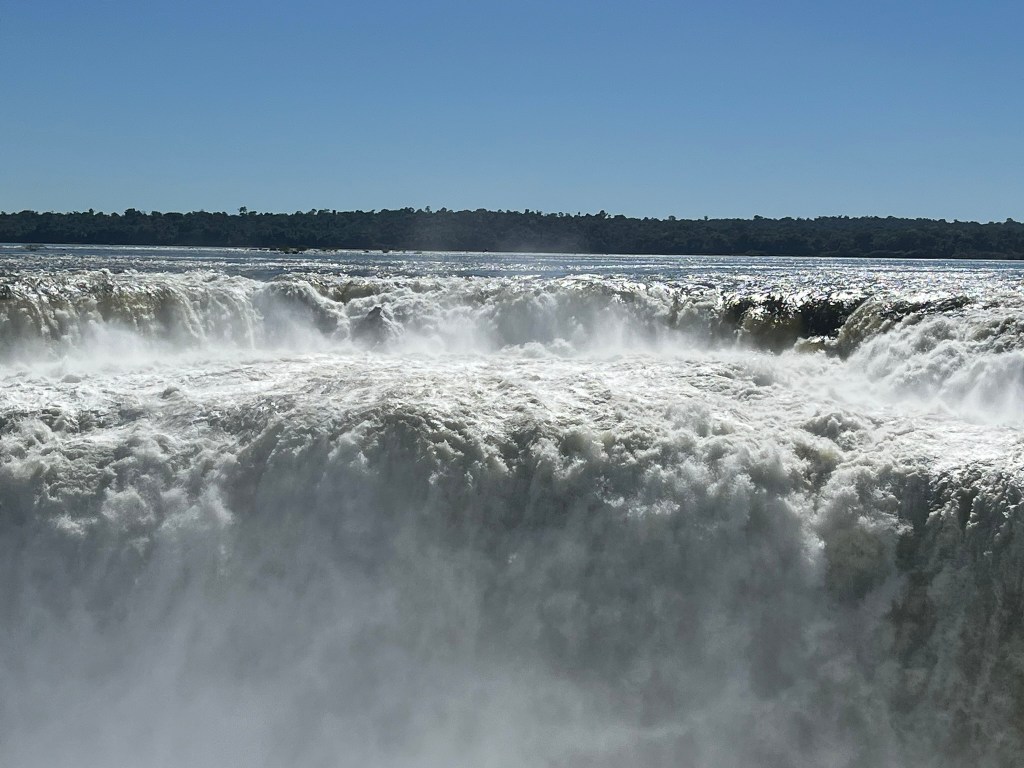
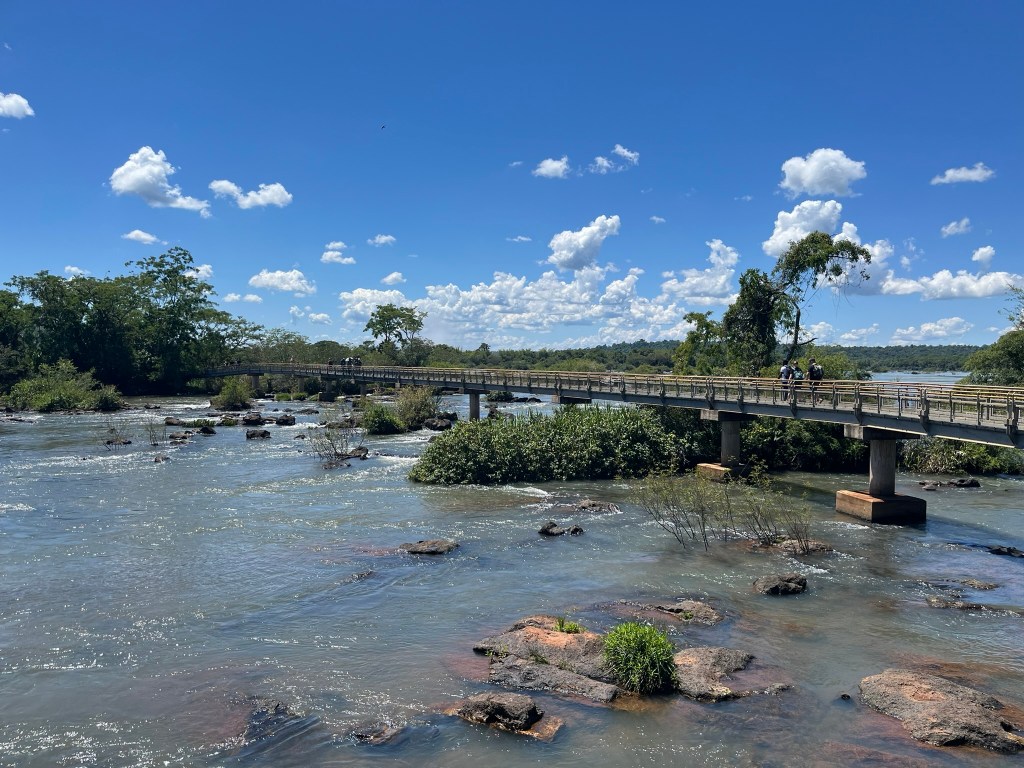
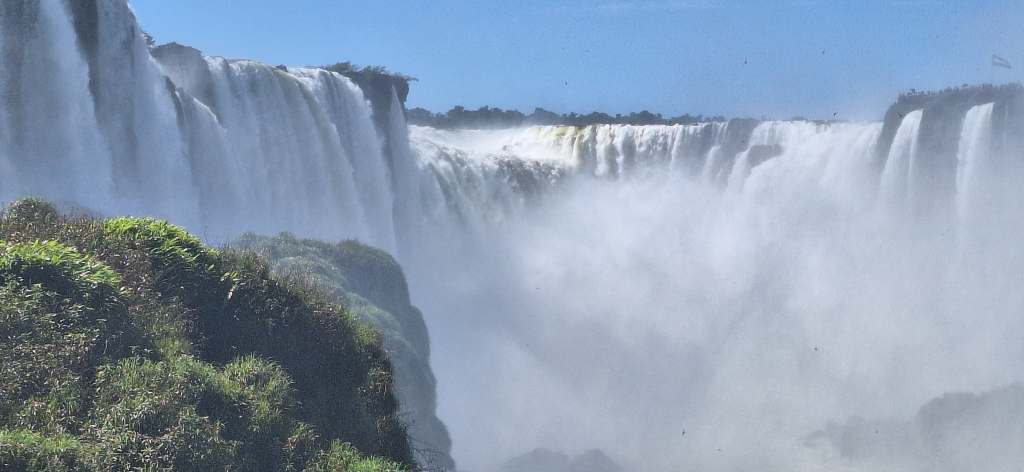
The walk itself is pretty special. You’re not walking beside the river, you’re literally walking over it and at a brisk pace it takes about 15 minutes. If you have managed to go early, before the crowds, walk fast and don’t take pictures of the river until you are walking back. This gives you the best chance of seeing the falls without the crowds. The river splits into numerous channels, meandering towards one of the 275 waterfalls. It is calm and peaceful, but you can see in the distance the mist forming clouds that permanently hang over the biggest waterfall of the entire system Devil’s Throat. This chasm formed where the basalt cracked deeply, and softer internal layers eroded extremely quickly. The water undercuts the rock so dramatically that a massive section of the cliff collapsed and the river carved a deep U-shaped canyon. About half of the river’s total flow plunges into this single abyss, crashing 82m from top to bottom.
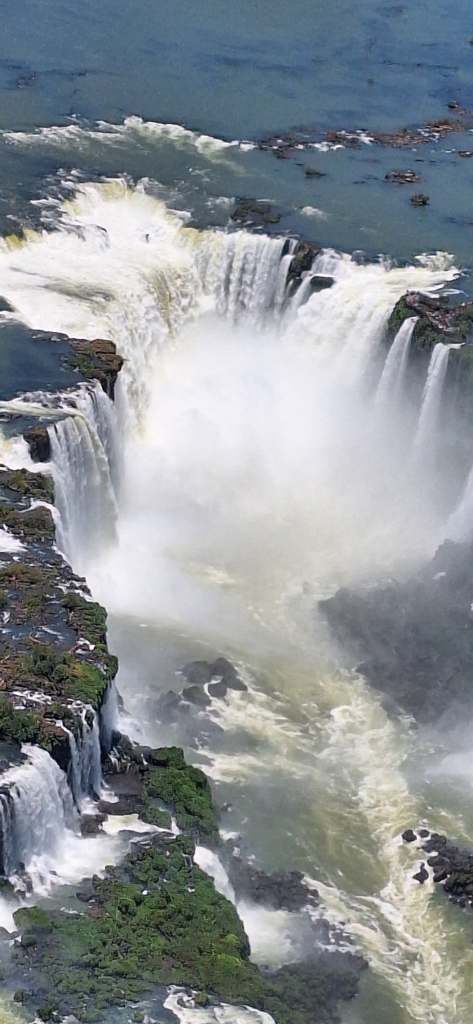
At the viewing platform there is a constant roar as water endlessly crashes down the waterfall. It is so big and there is so much water, that it starts to no longer look like moving water at all, but rather a big cloudy blanket. And its impossible to get the entire thing into a single photo. It is simply jaw-dropping.
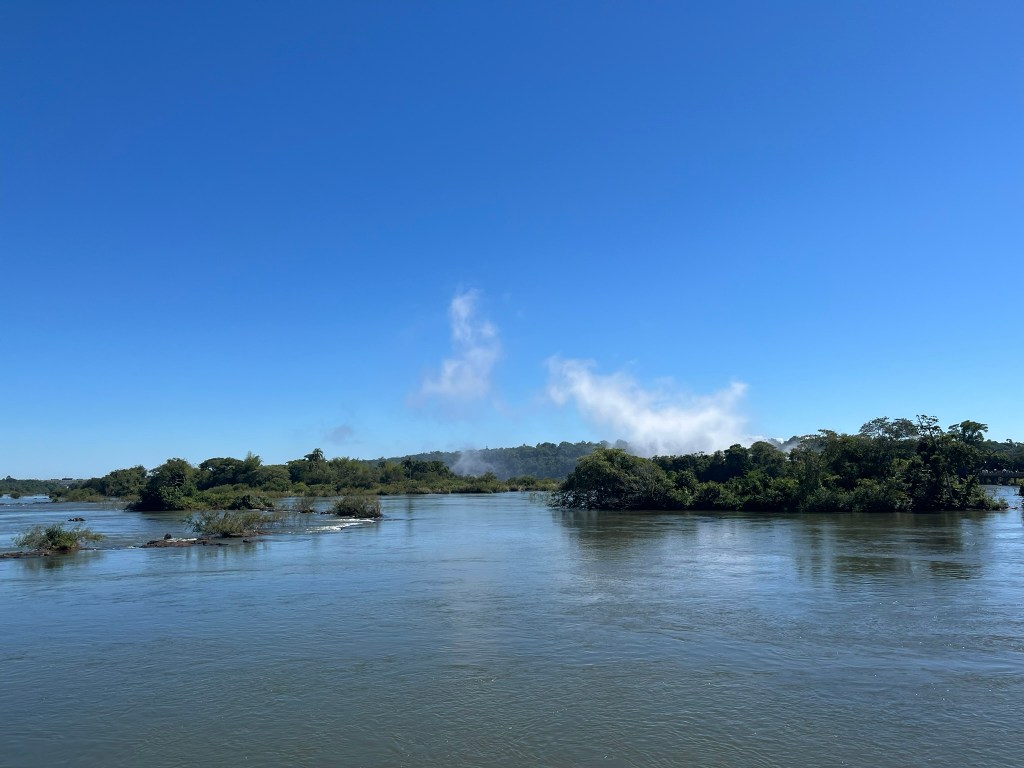
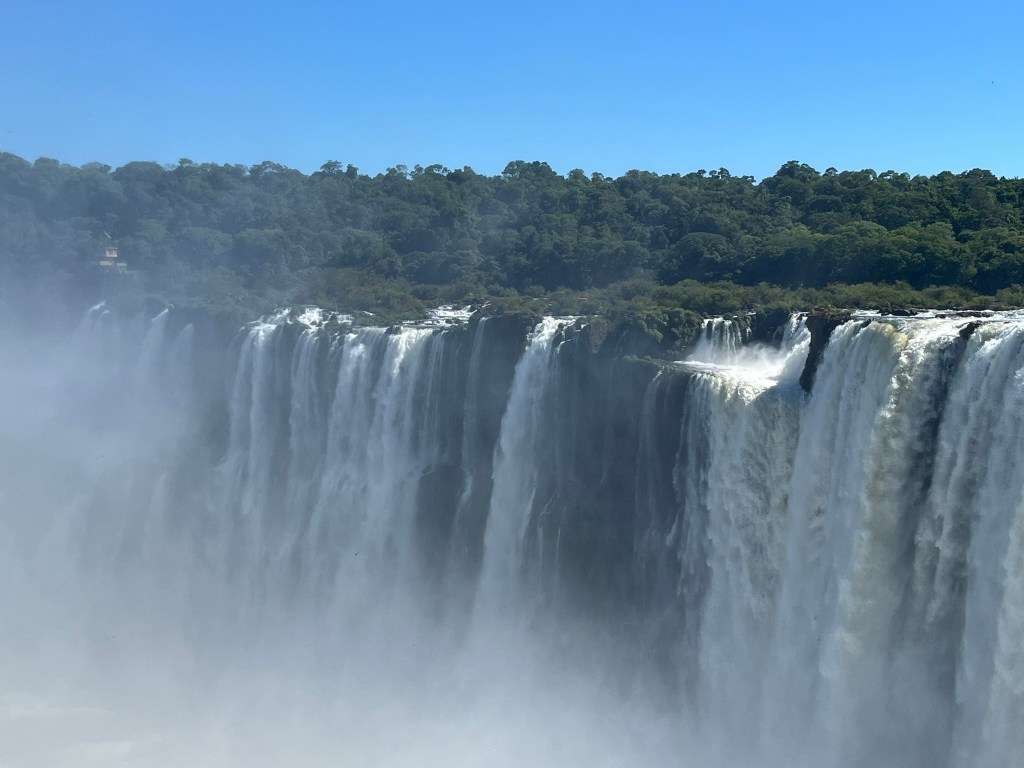
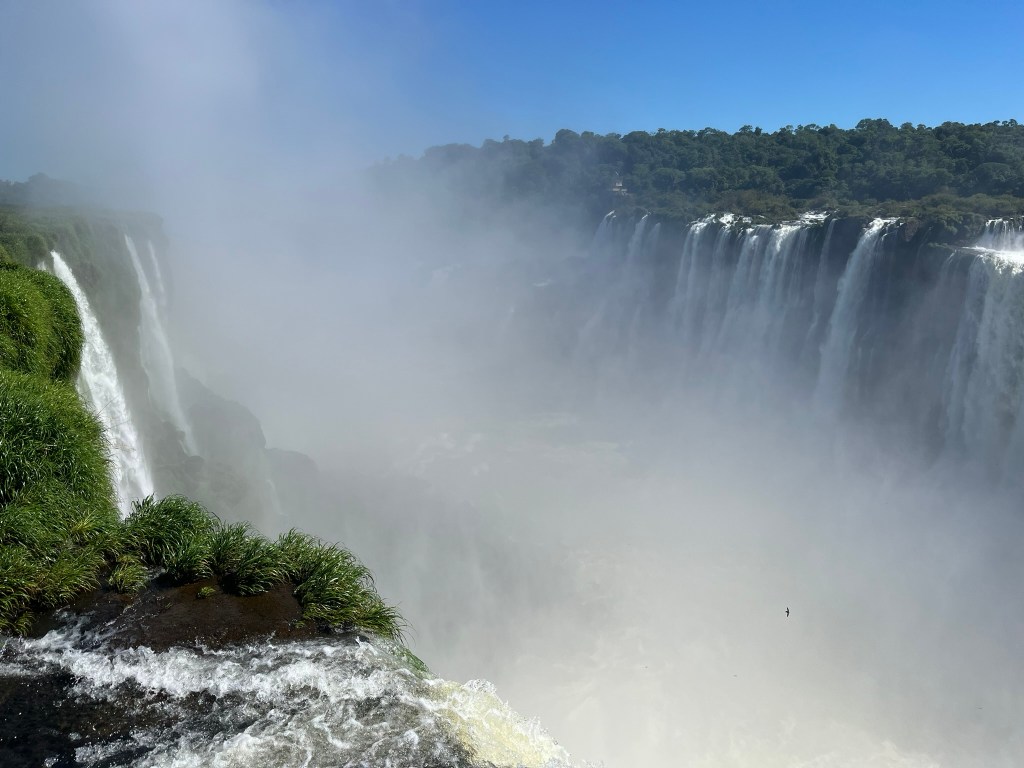
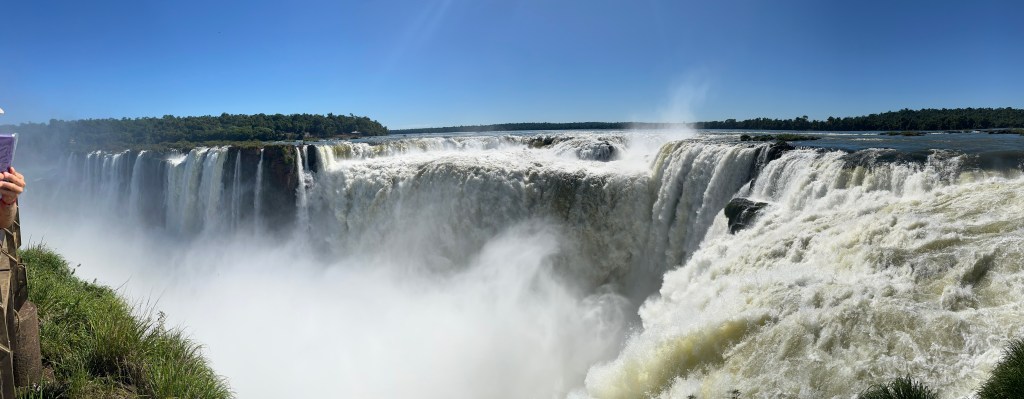
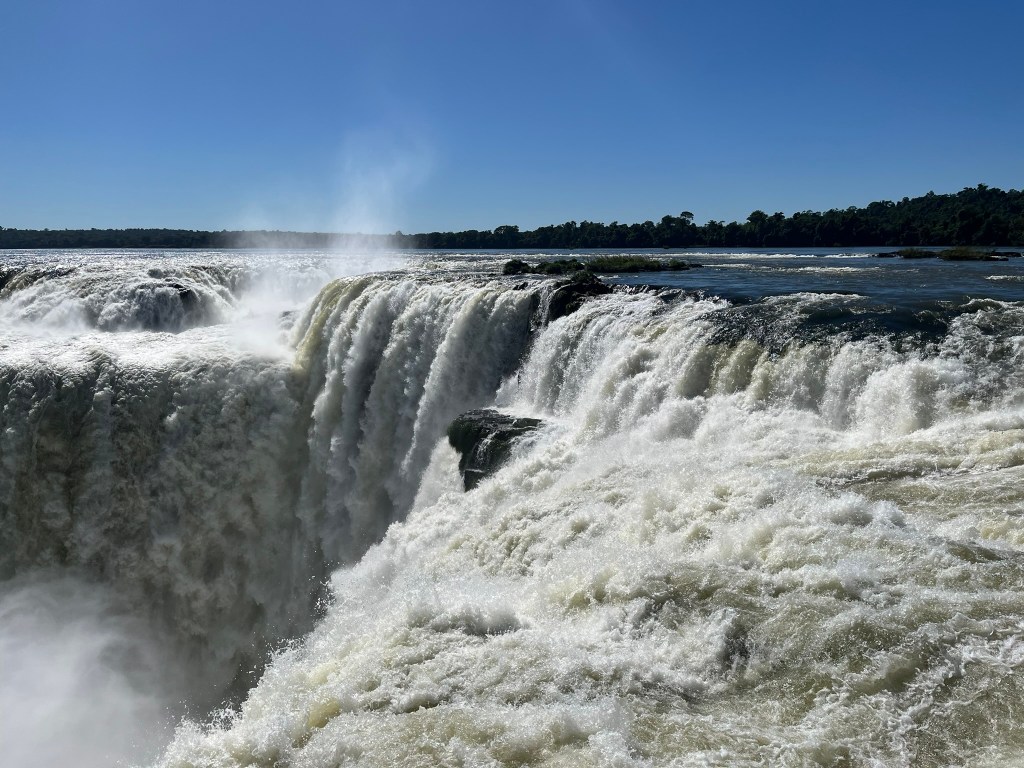
By the time we left, the crowds were starting to grow. When we had arrived we could walk around and pick any spot along the railing to stand and enjoy the view. 20 minutes later, as we departed the wall of people up against the railing was three-deep.
Back at the train station we were super lucky to encounter a family of Coatis, a member of the racoon family with long-ringed tails and pointed snouts.

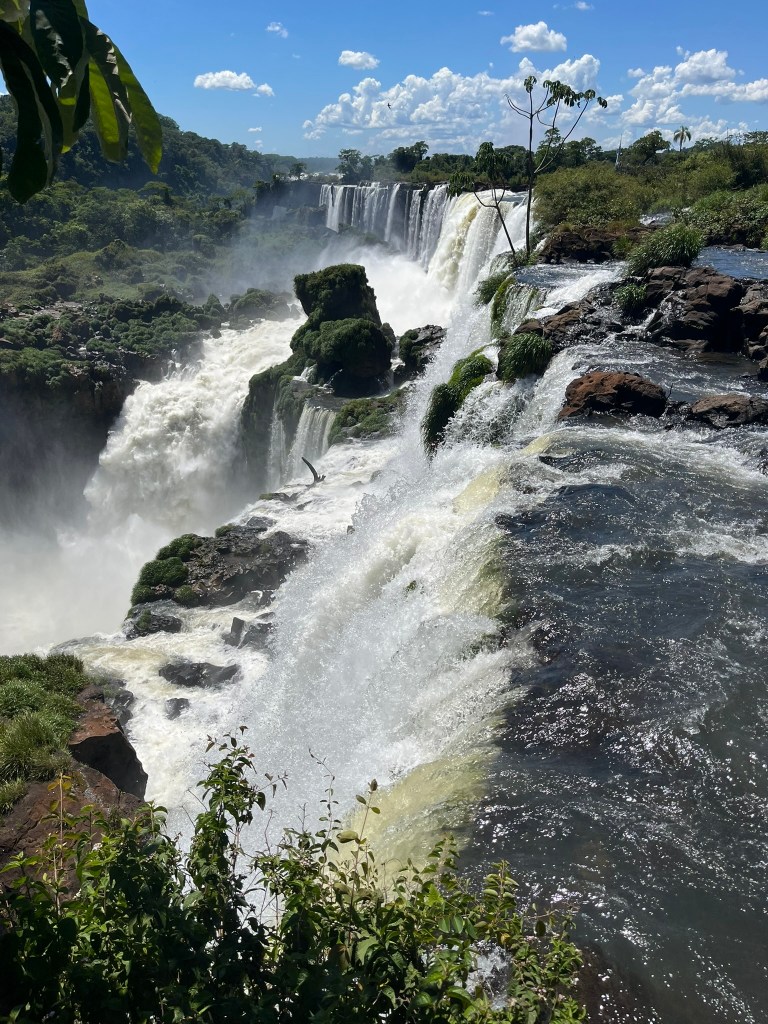
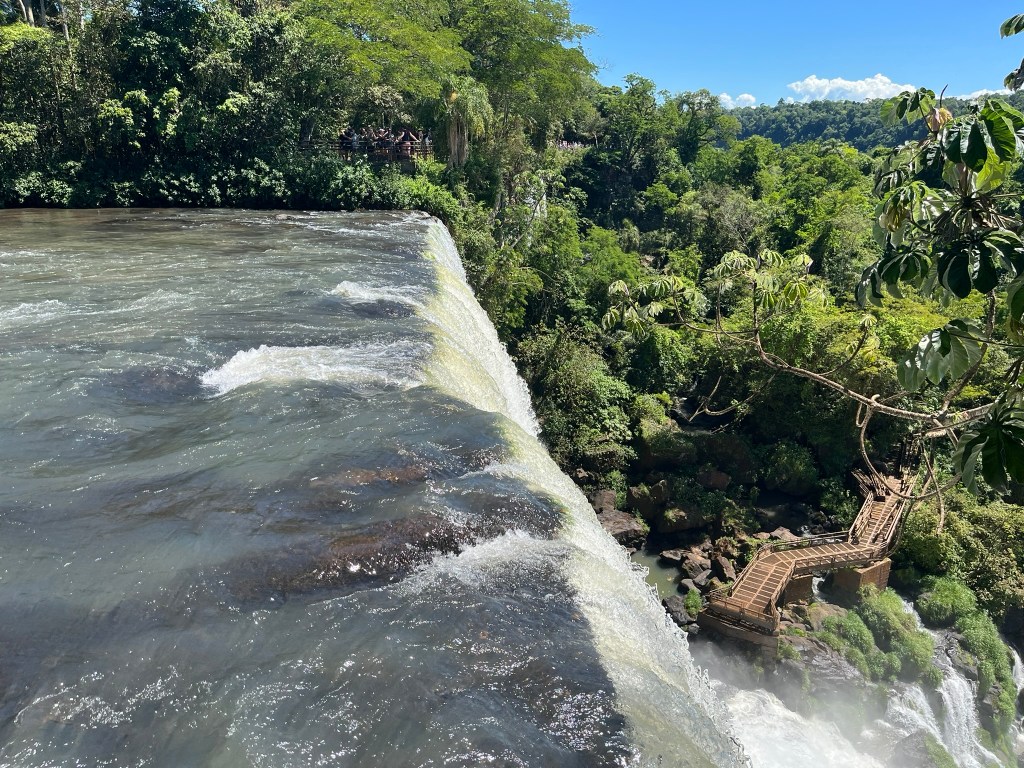
‘Our next stop was the Upper Circuit. This is another series of walkways that takes you on a 1.75 km loop along the top edge of the waterfalls that sit further along from Devil’s Throat. At the entrance of the Upper Circuit the river is calm and you walk along the walkways shaded by the surrounding forest. The big reveal comes at the Two Sisters Falls, the first of many waterfalls that you literally walk over the top of on the circuit. Its only here, away from Devil’s Throat (which you can’t even see – that’s how big an area the waterfalls covers) that you realise how many individuals water falls make up the Iguazu system.
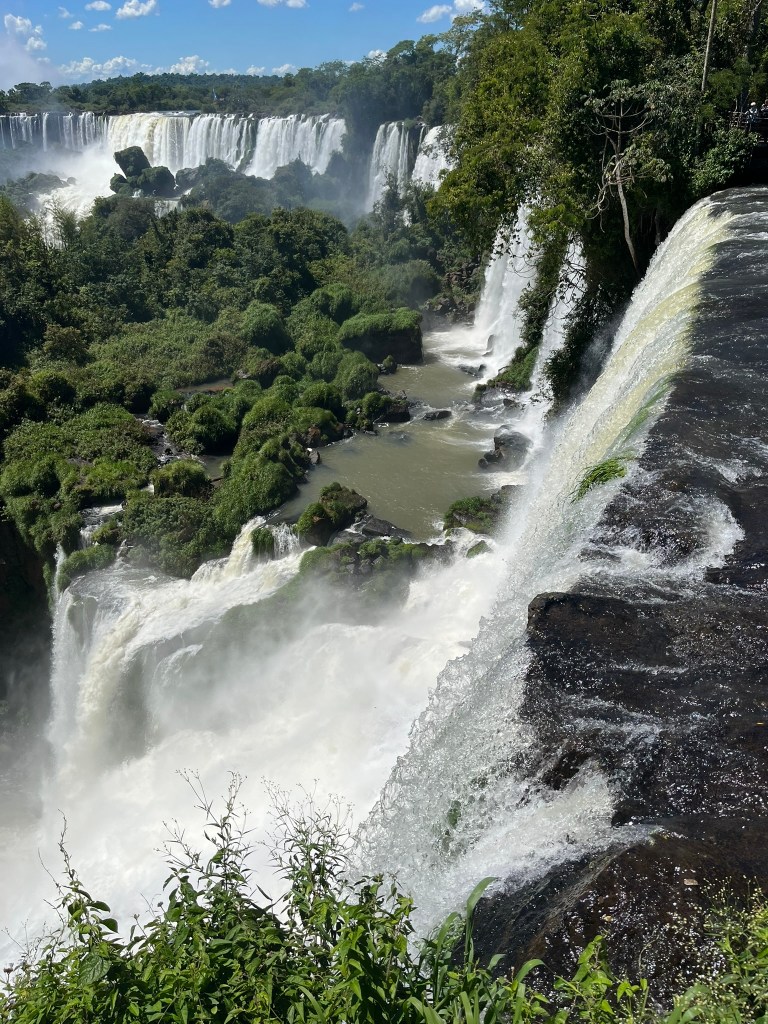
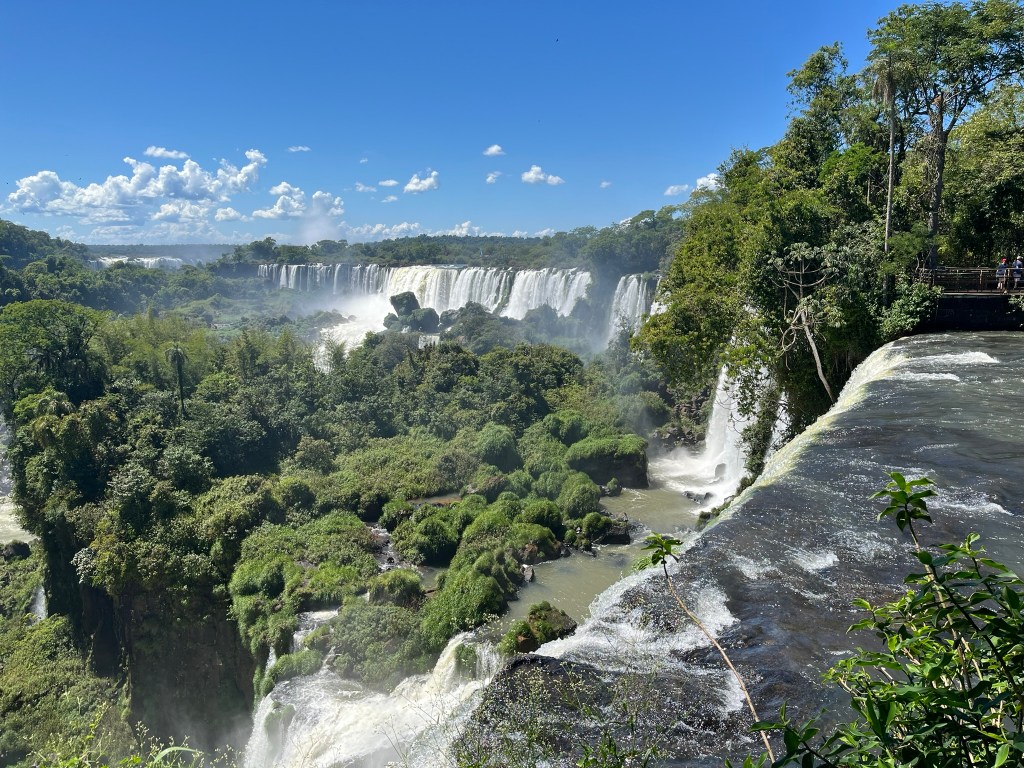
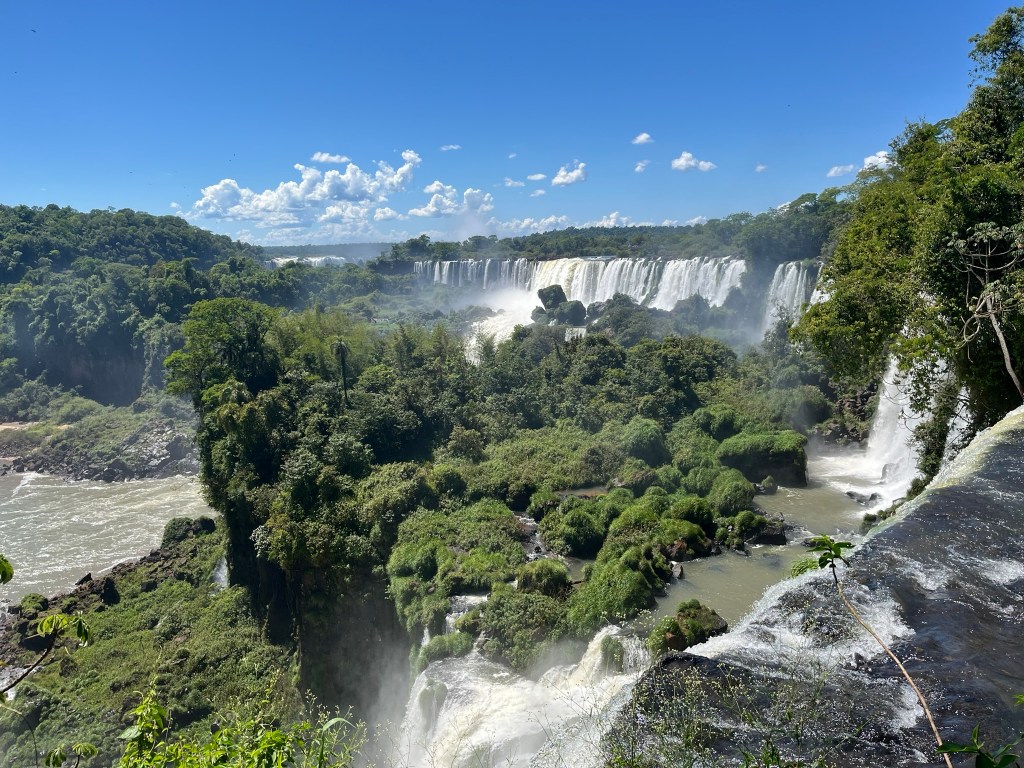
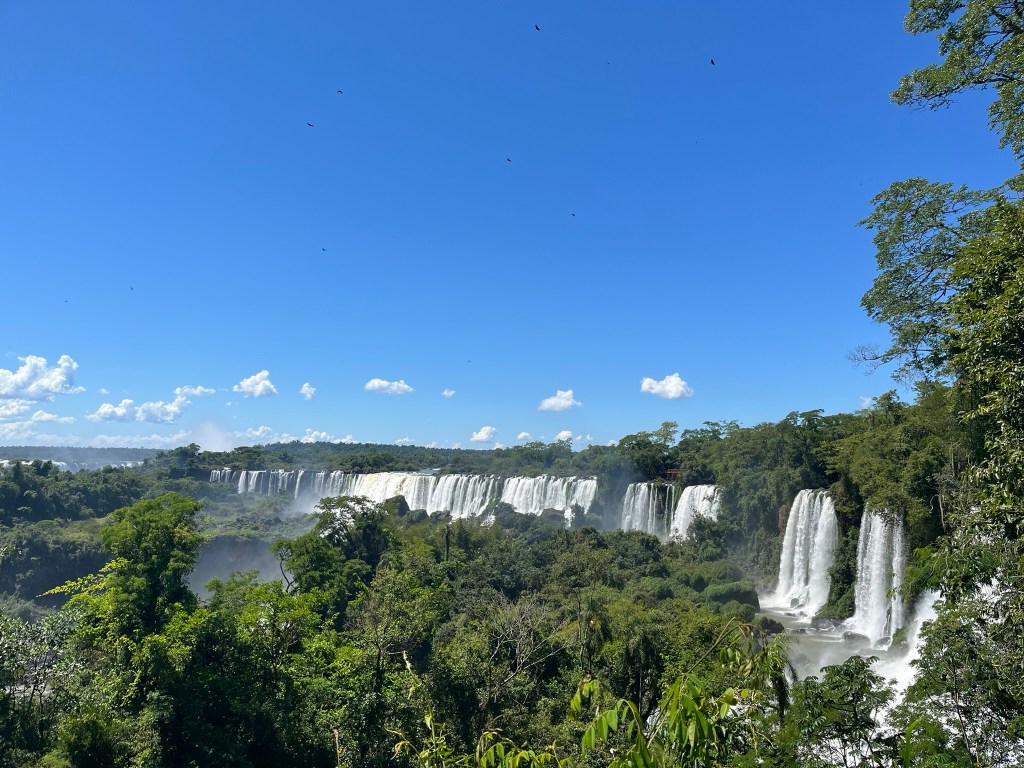
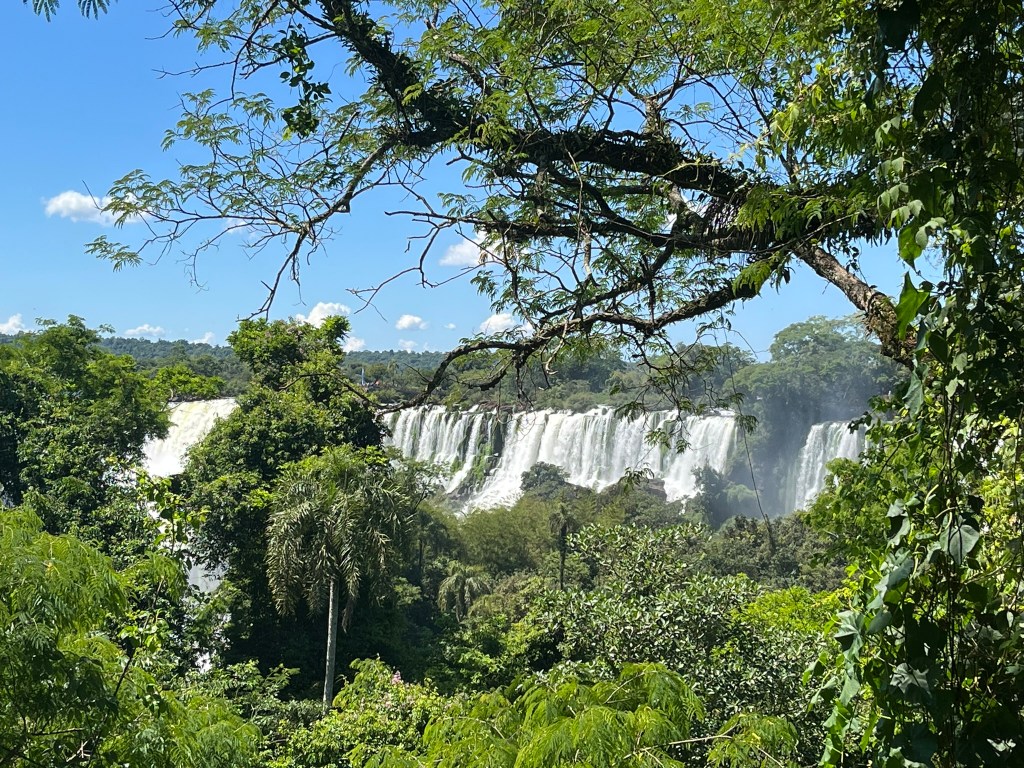
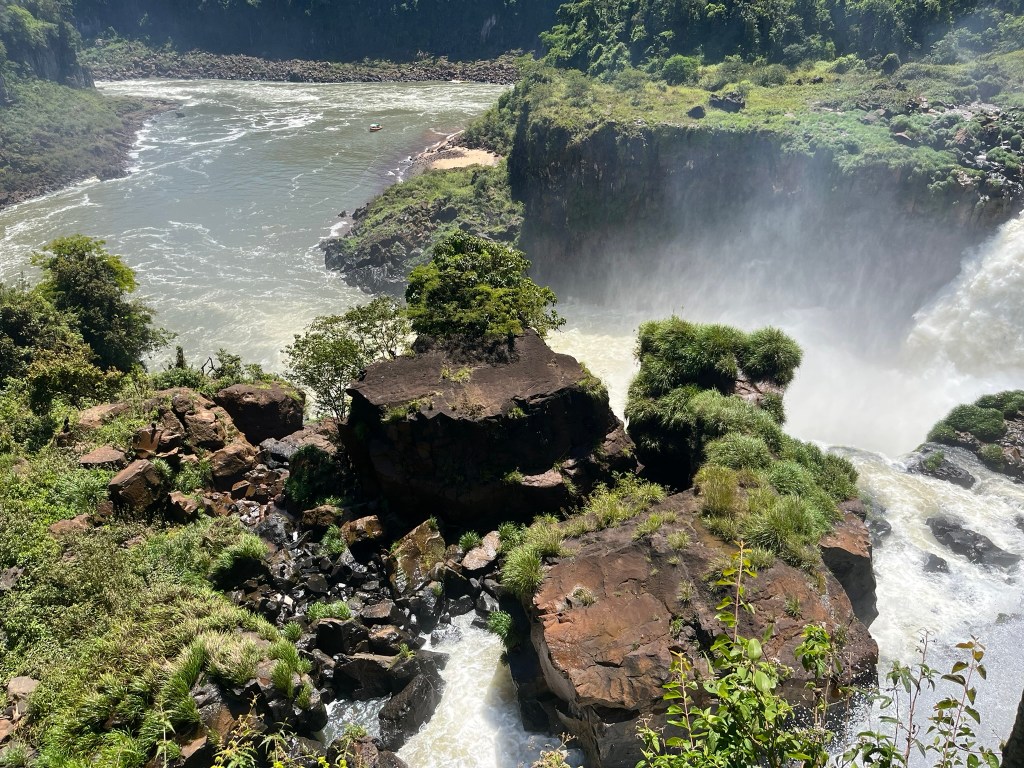
From the Two Sisters, the circuit takes you to a number of viewpoints including Salto Bosetti, Salto San Martin, Salto Chico and Salto Ramirez. Each one is different. Some are wide curtains of water, others are more delicate and ribbon-like. Some fall the full 82m in one go, others appear as a series of giant steps down to the bottom. And near the end of the trail you come to the widest panoramic of the falls that you can get on the Argentinian side, with the Devil’s Throat in the distance and the waterfalls of the Upper Circuit visible to your left and right. It’s here you experience the enormous scale of the falls.
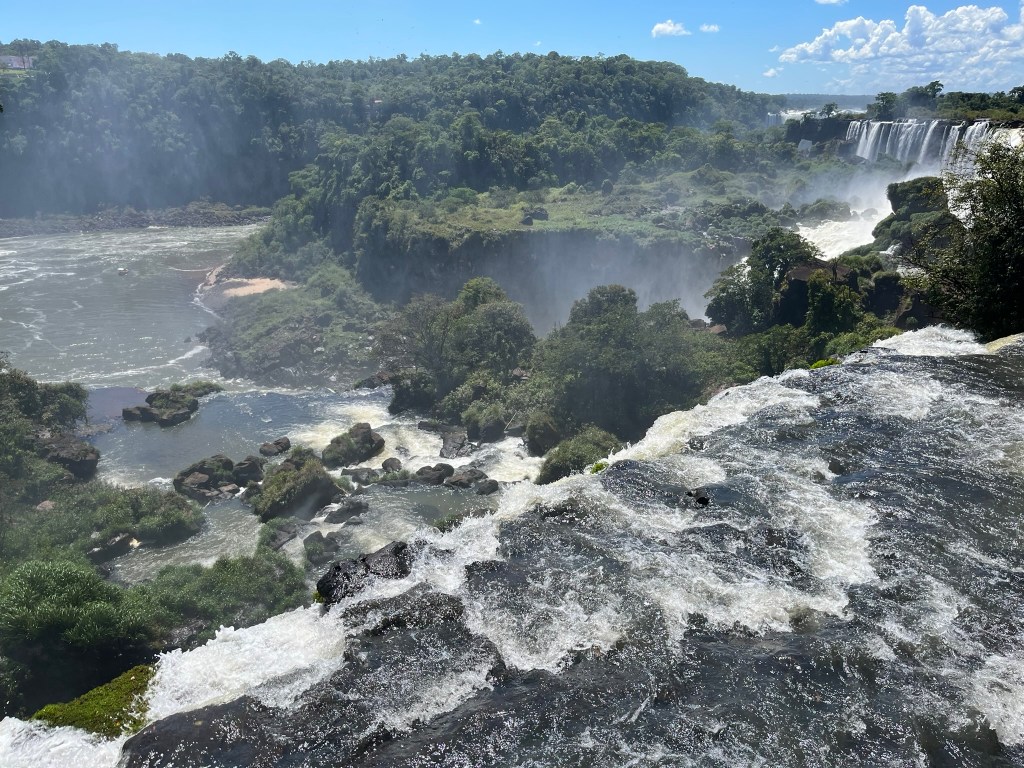
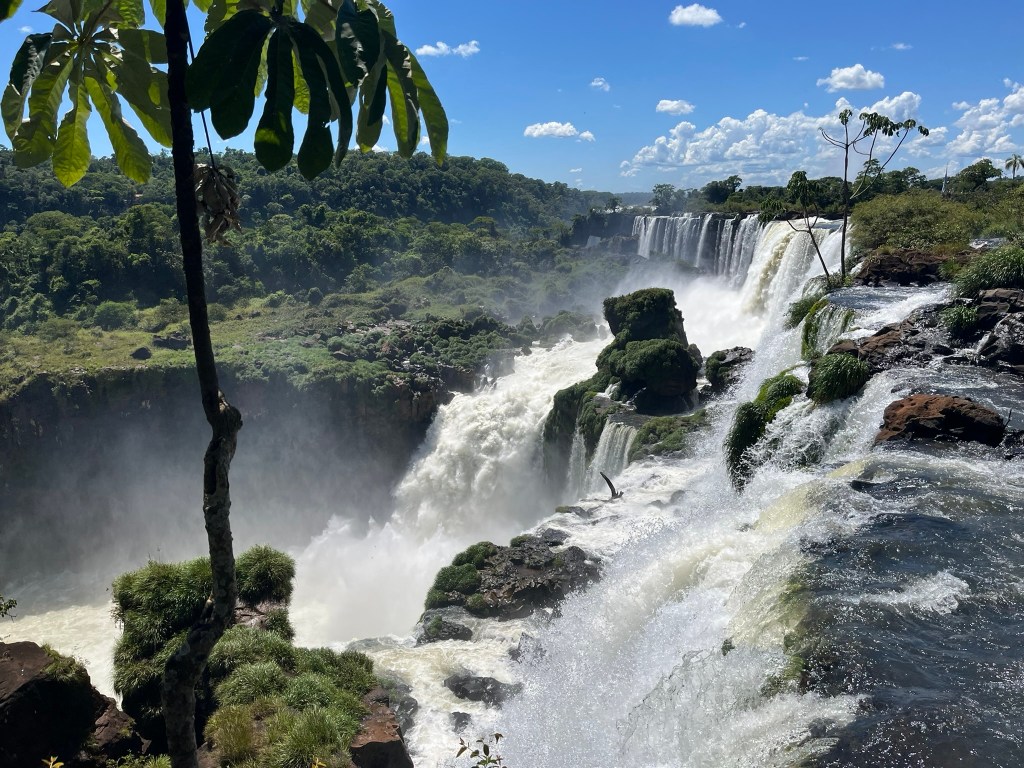
After a quick hydration stop, we headed over to Gran Adventure boat ride, which we had pre-booked the day before, with the idea that it would be great to see the falls actually on the river itself. We were warned we would get wet, and had come prepared with ponchos. But I must emphasise – you get absolutely soaked. The boat departs about 20 minutes drive from the boat ride ticket office and you ride a large open-sided 4×4 truck through a protected section of the Atlantic Rainforest. From getting off the truck, it is about 150 steps down to the bank of the river, where you are given life jackets and a dry bag to stuff your belongings in and hop on the large speed boat. Initially I thought, ‘oh this isn’t so bad, it’s just a bit of spray and mist, we won’t get that wet’. The boat gets really up close to waterfalls that we had, an hour earlier, been walking along the top of on the Upper Circuit. But this was the calm before the chaos. The captain positioned the boat near the base of the San Martin waterfall, which I thought was great to get so close and then suddenly accelerated straight into the wall of water. You are literally in the waterfall! Everyone on the boat was shrieking and screaming and it was impossible to see anything at all. And we repeated the same on at least 2 other waterfalls.
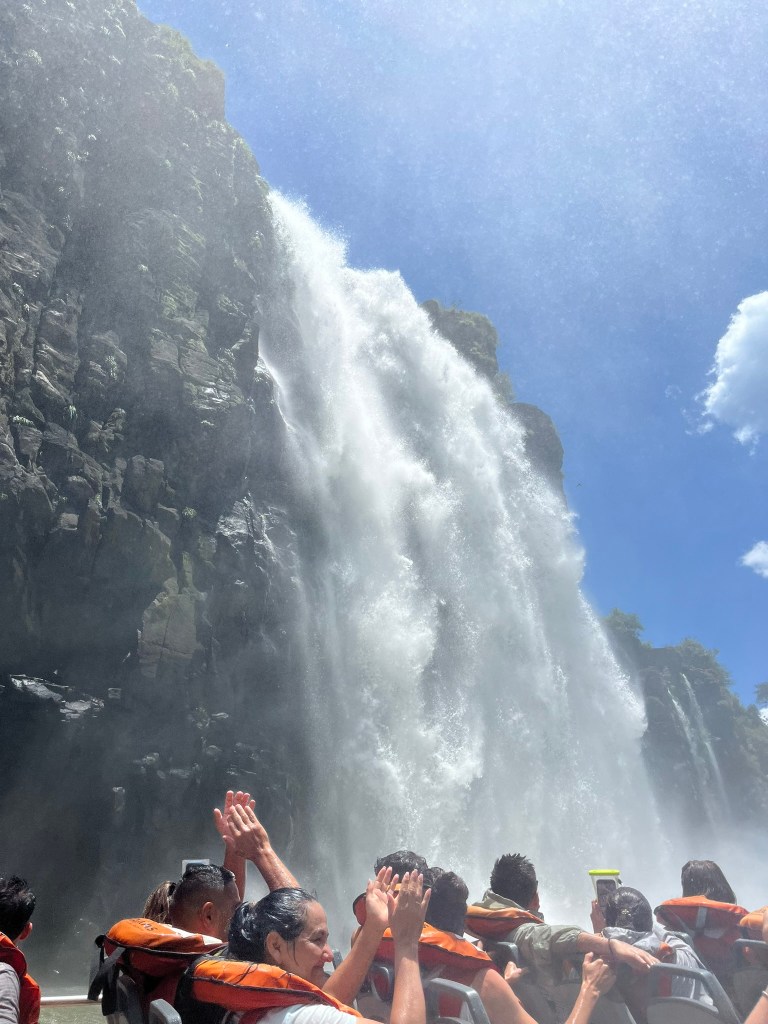
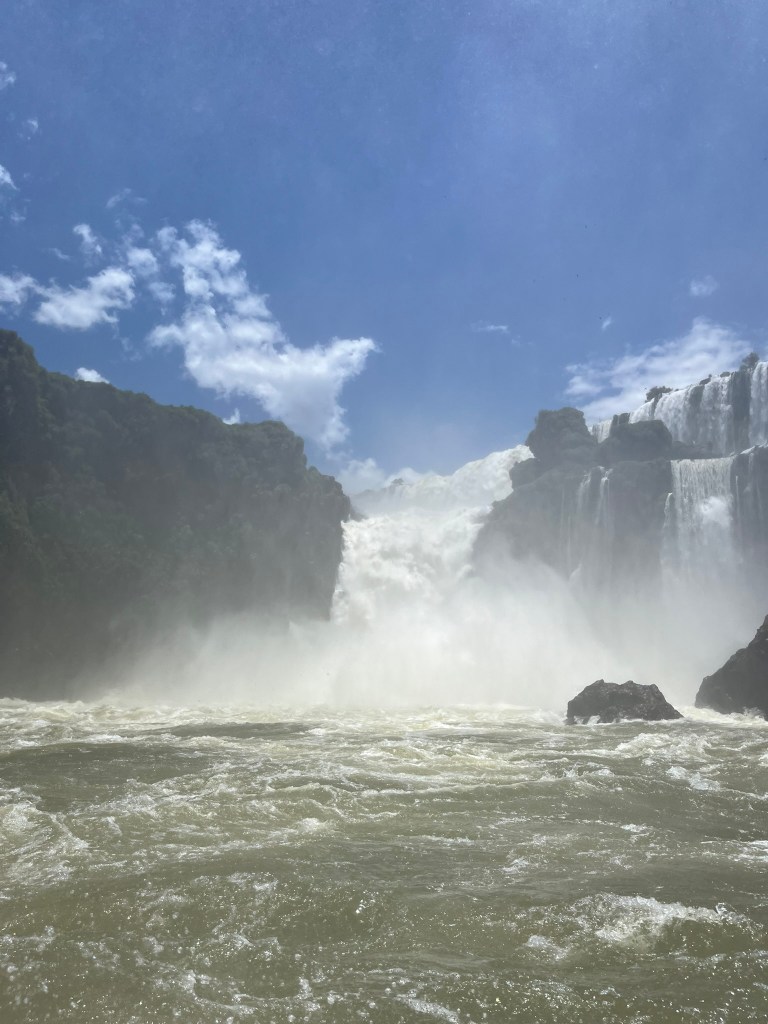
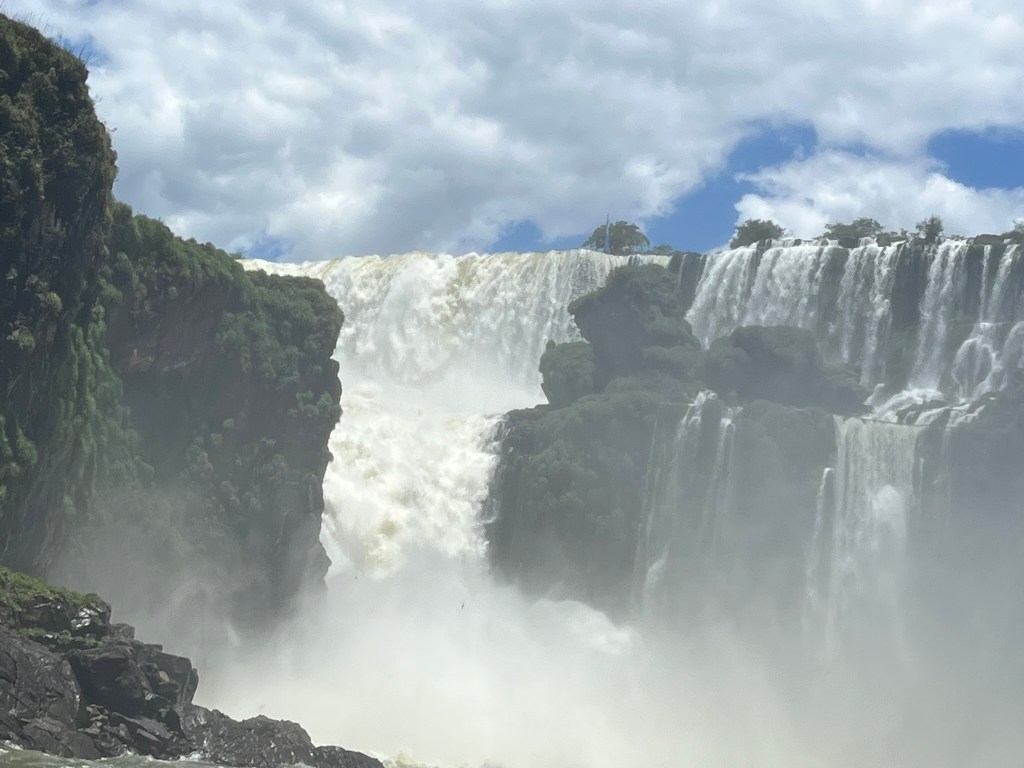
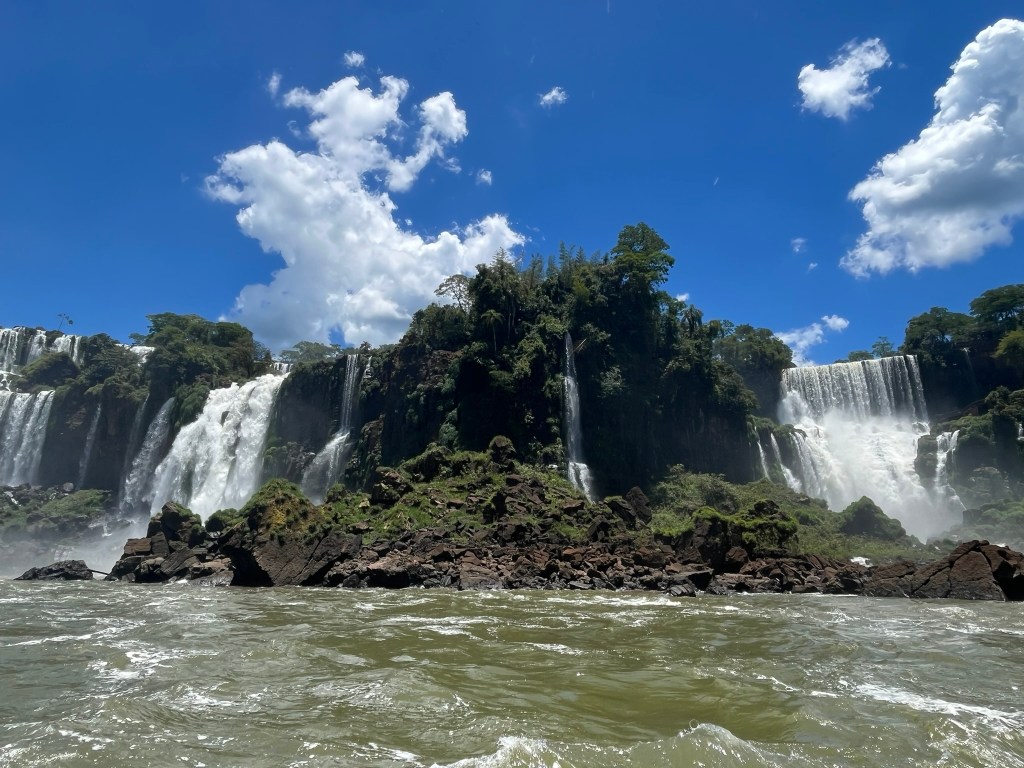
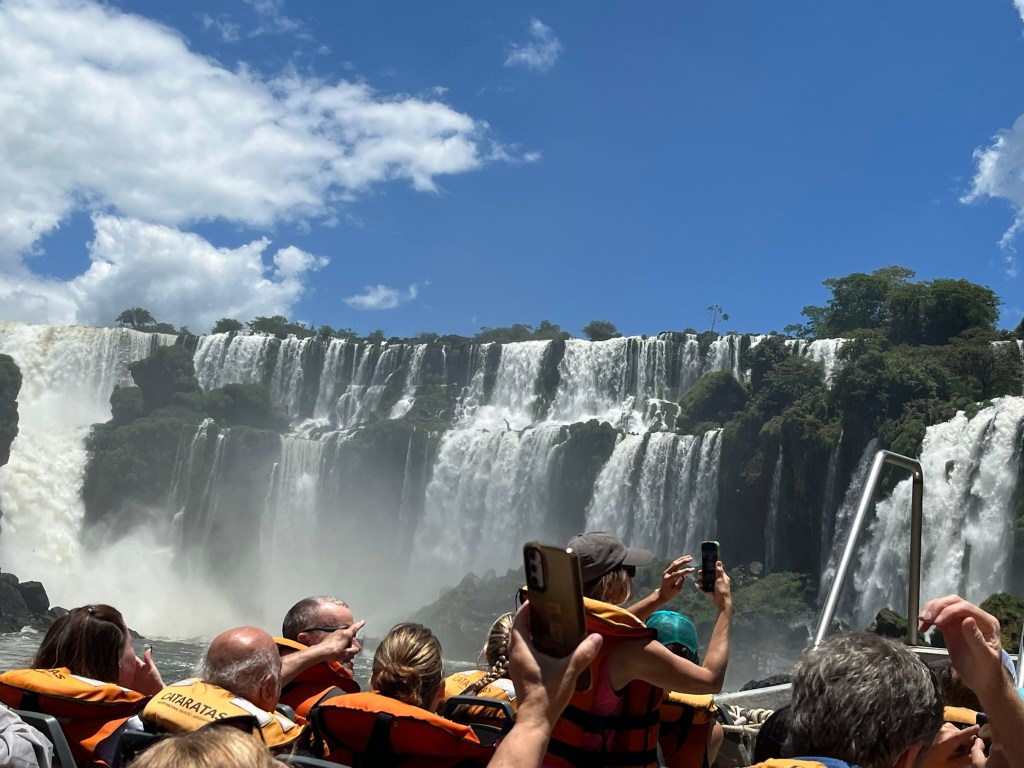
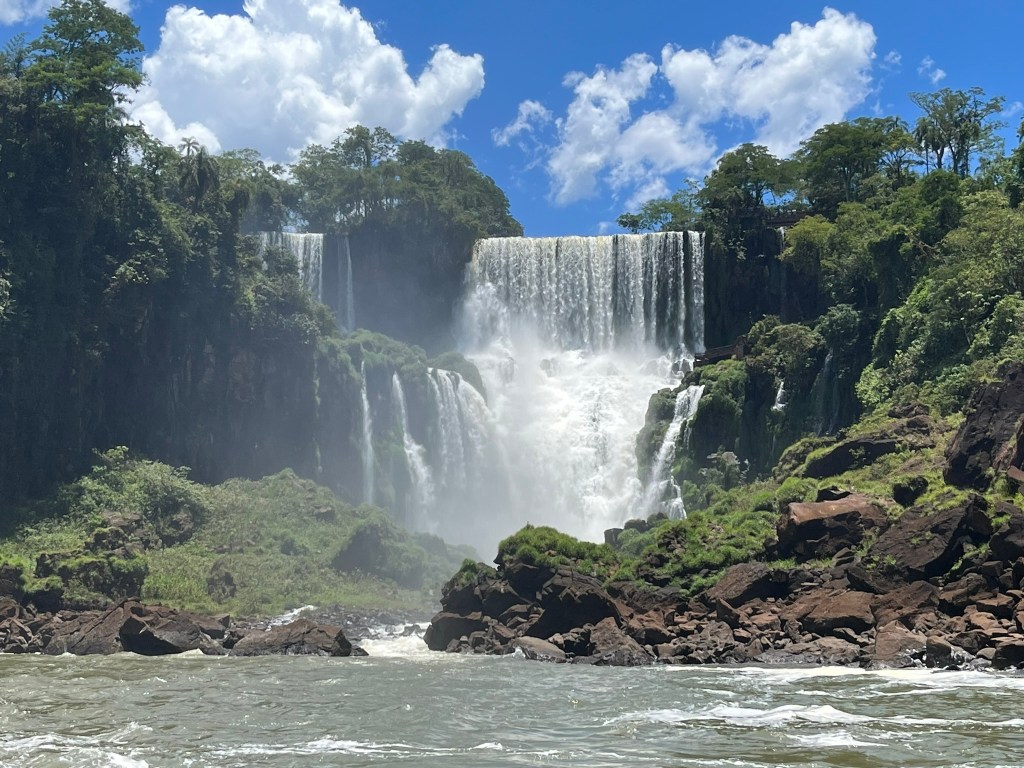
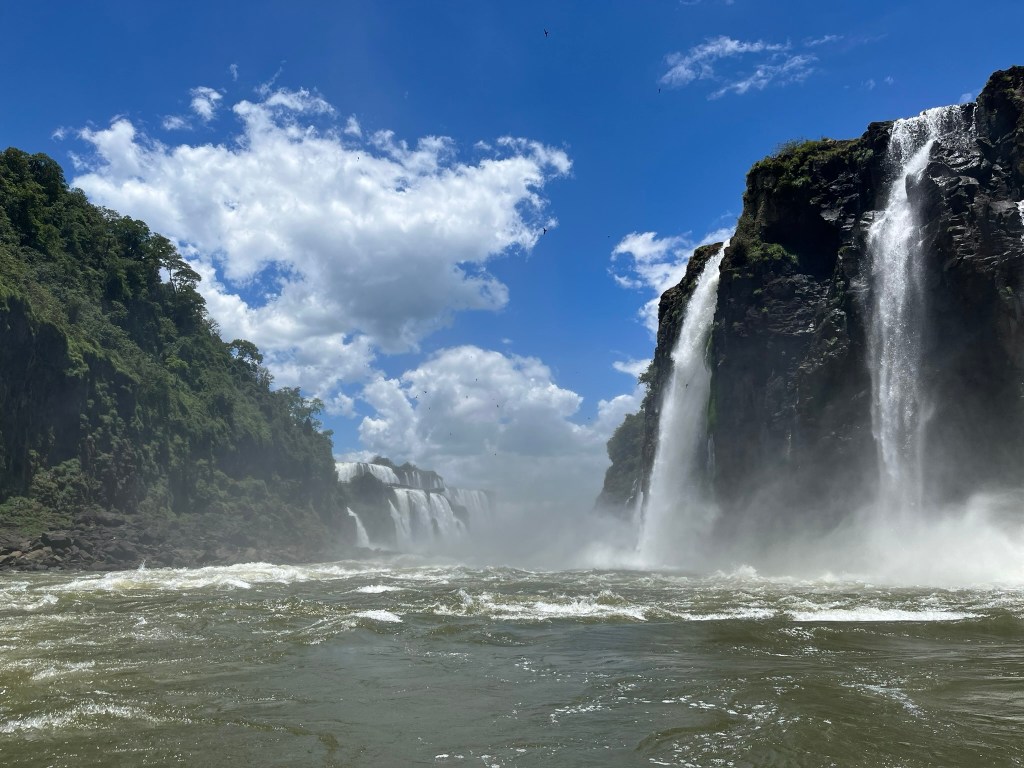
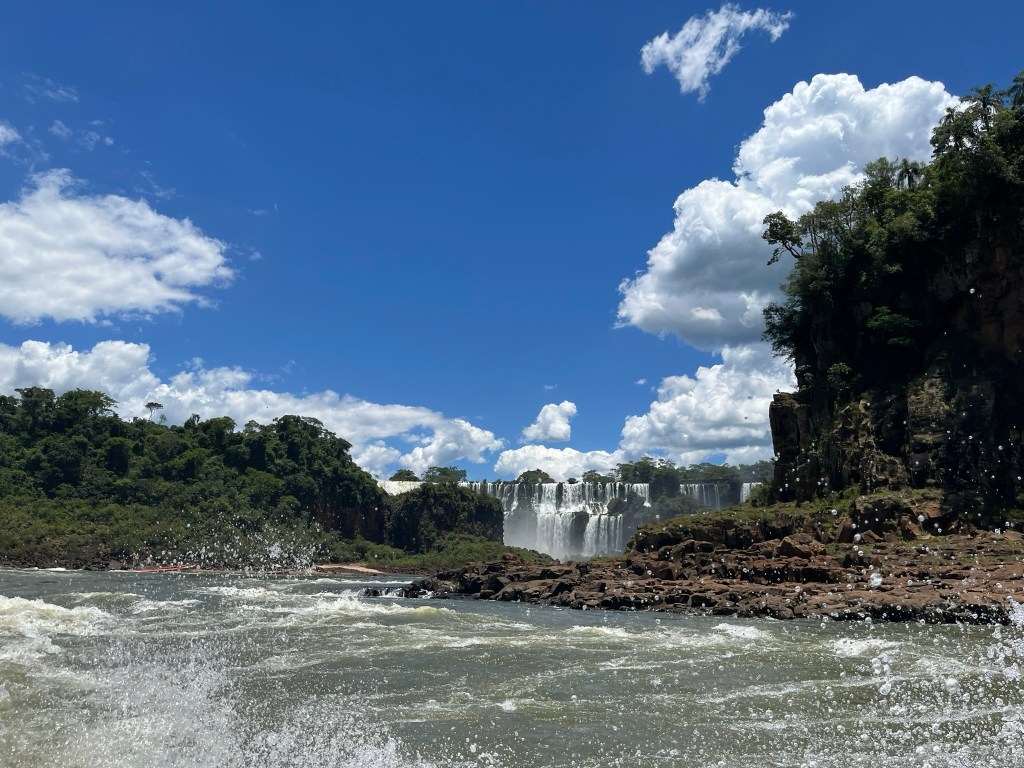
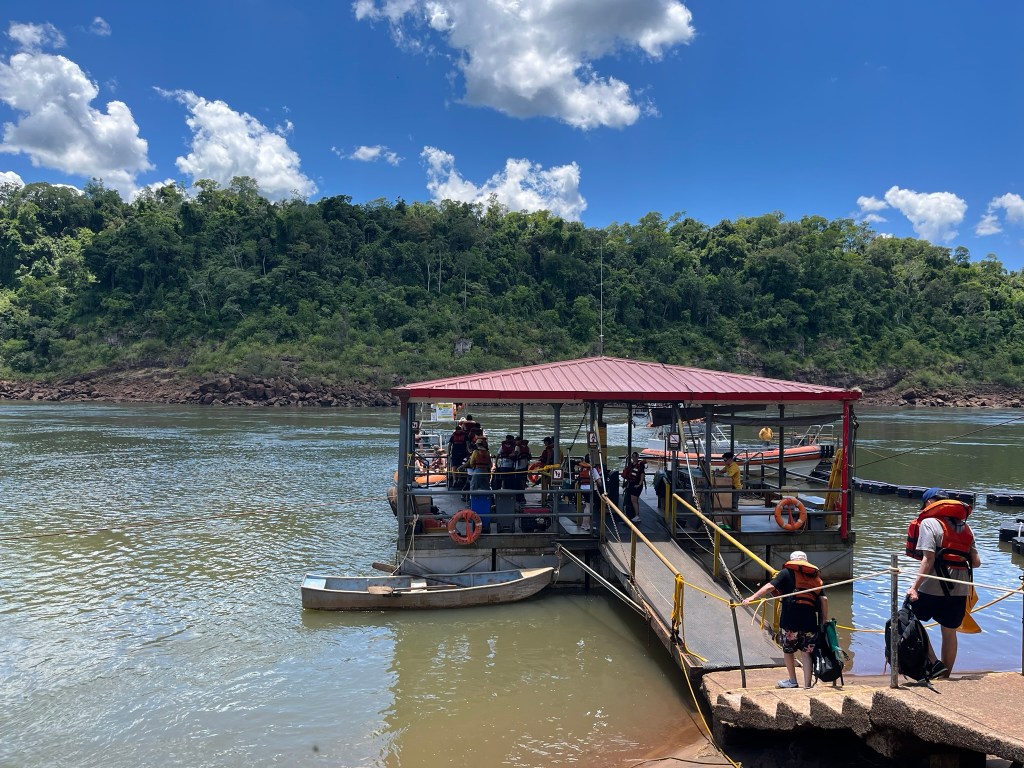
It was absolutely hilarious, because you are not simply a little wet. You are absolutely and totally drenched. Thankfully I had taken my shoes and socks off and stuffed them in the dry bag! But the poncho was totally useless and not an inch of my clothes was dry. My advice – either bring a set of clothes to change into or like we did – let this be you last activity of the day before you head back to your hotel. The company advertise the boat ride as ‘pure adrenaline’ and it certainly lives up to its name – I have never done anything like it and it was a fantastic experience.
The plan for our second day at the falls, was to head over to the Brazilian side. I wasn’t sure what to expect, since we had such as fantastic time the day before, but figured there was no harm in seeing the waterfalls from a different angle and it would likely be just as good. However, after our day in Brazil I would say that seeing the falls from the Brazilian is an absolute must. You get much much better panoramic views of the falls. So Argentina is really for getting up close and personal with the water falls. And Brazil is for getting the big picture panoramic views. Neither can be missed.
Our guide, once again suggested we start early to try and get to the best viewing platforms before the crowds. And we agreed. Heading off at 7.15am again, we exited Argentina quickly and drove straight into Brazil without even going through immigration. Apparently they accept that tour groups are crossing back and forth all day long just to spend the day on the Brazilian side of Iguazu and so they just do random checks of cars being used for tourist services. Today, because Pedro was Brazilian and had a tourist licence he could drive his car directly into the park which saved us tons of time. We queued up separately and then as soon as the park opened we were let through and he picked us up. This meant we didn’t have to wait for the park bus service that ferries folks from the entrance, 20 minutes up the road to the walking circuit.
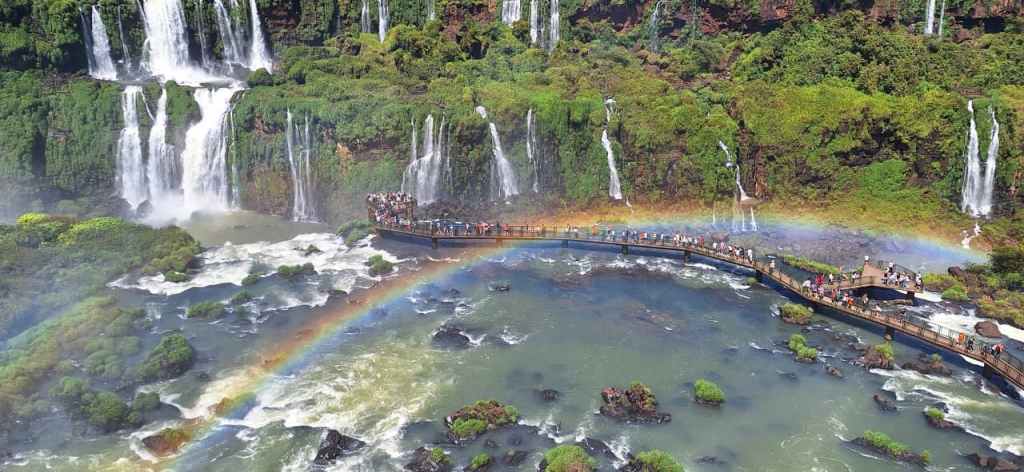
There is one main walking trail on the Brazilian side that runs for 1.2 km along the opposite side of the river to where we were yesterday. As you walk along you can see the entirety of Iguazu falls stretching for 3km. It is sensational.
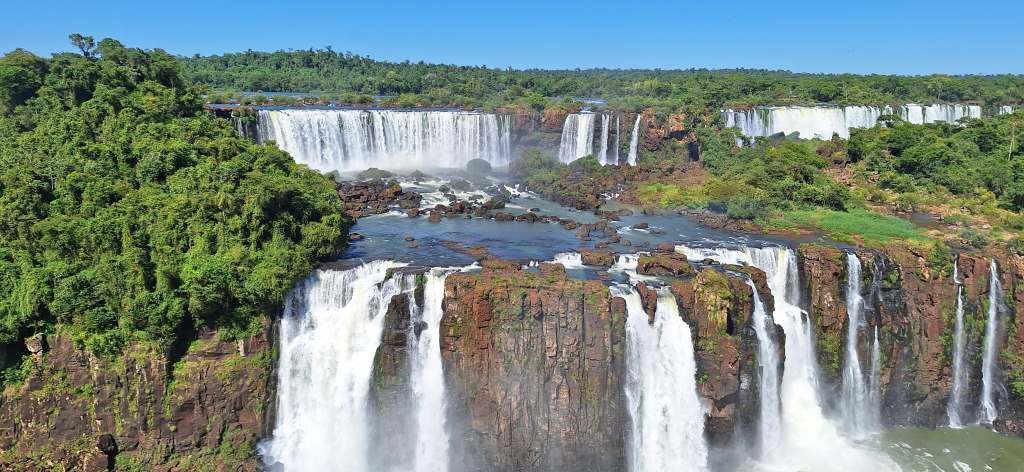
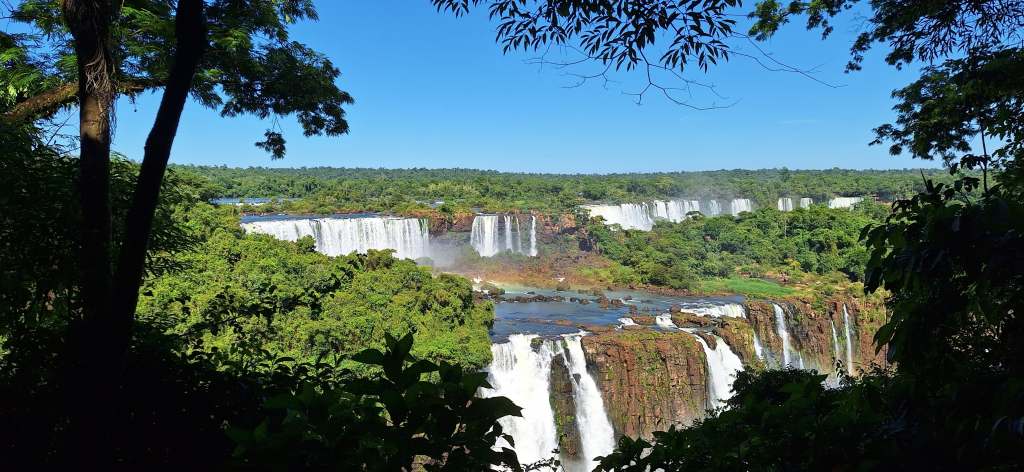
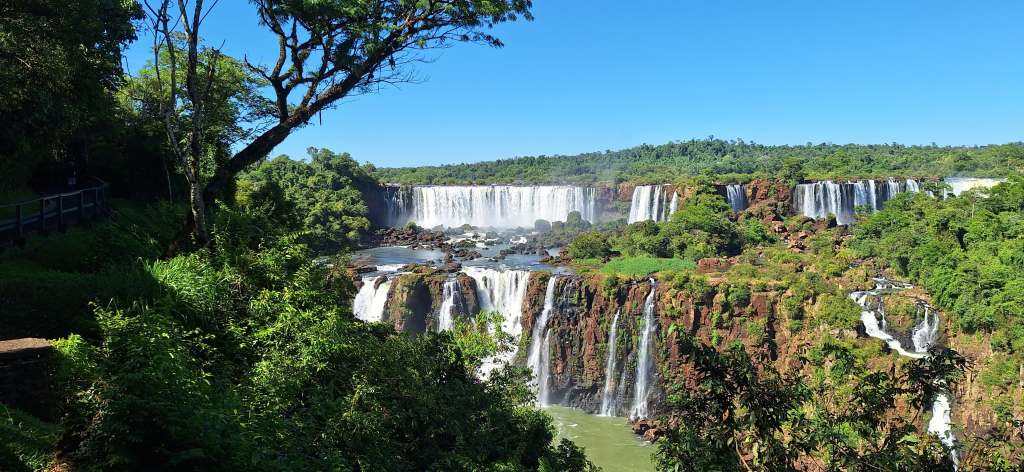
The end of the walk leads you out to the lower boardwalk which extends right out into the river. It feels like you are right in the middle of the waterfall. Here you get a much better view into the Devil’s Throat and how it extends out much further into the Brazilian side, which wasn’t visible on the Argentinian side due to the huge clouds of mist and spray. I would say that this view point was the highlight of the our entire trip to Iguazu. You can do a 360 spin out on that viewing platform and its is waterfalls in almost every direction. The bonus was that our early start had paid off and we enjoyed about 15 minutes at the platform with just a couple of other people.
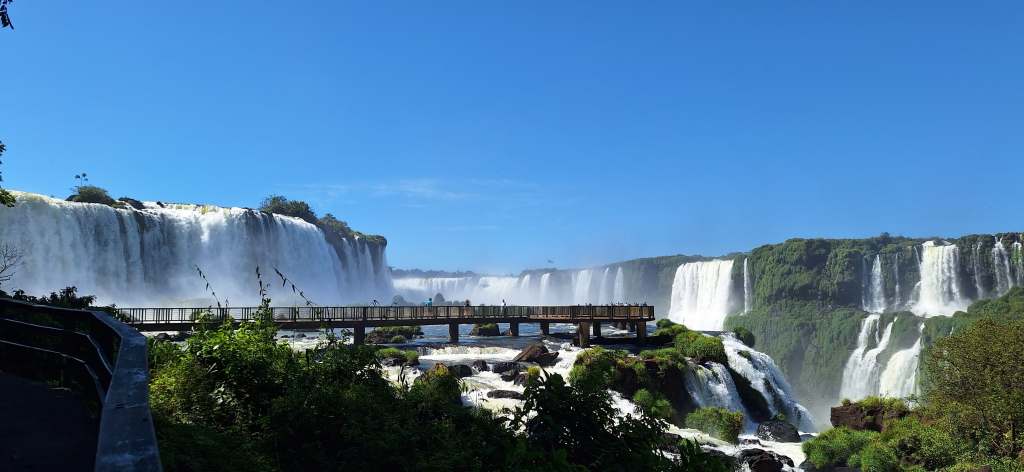
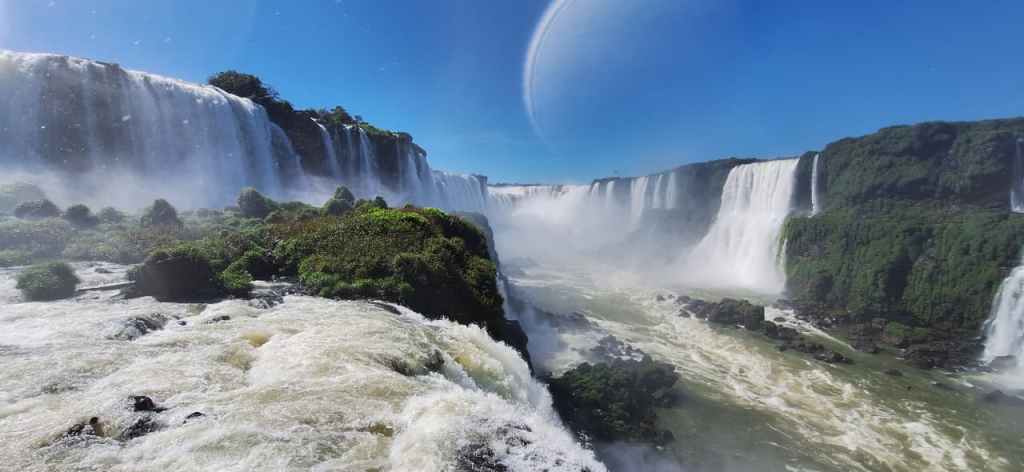
From here we got the lift up to the upper viewing platform where we got to spend more time enjoying this incredible natural phenomenon. The Brazilian side of the park is much more compact so you only need around 2 hours to complete the circuit at a leisurely pace.
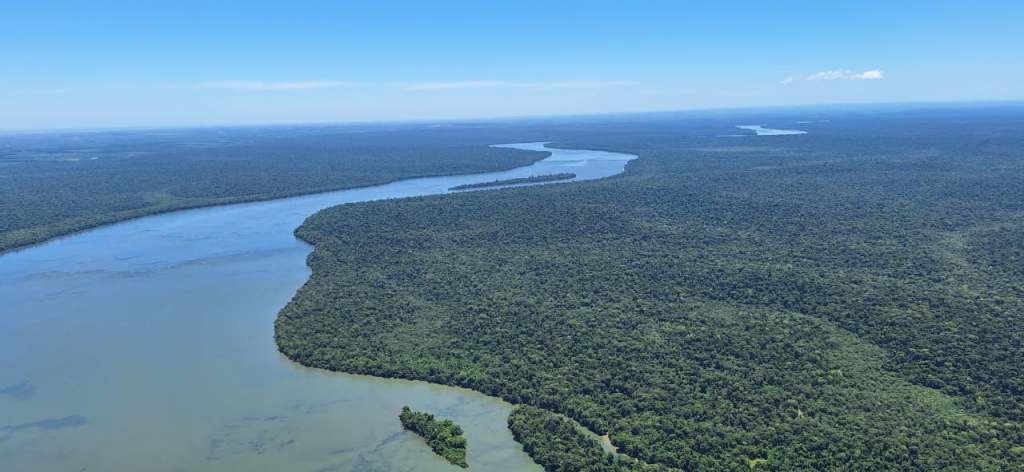
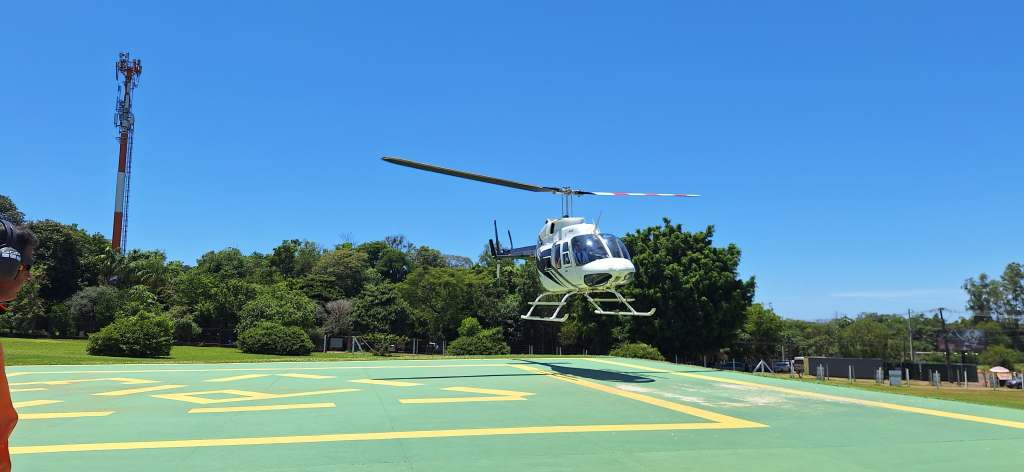
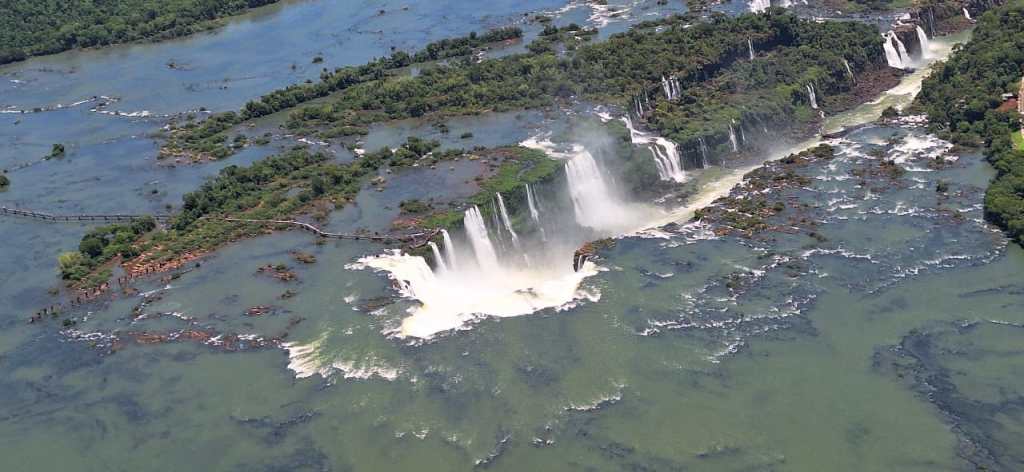
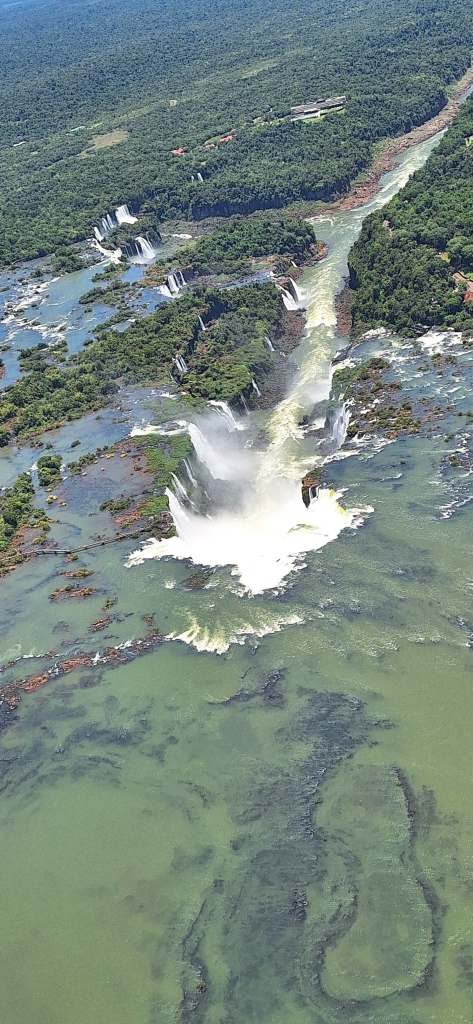
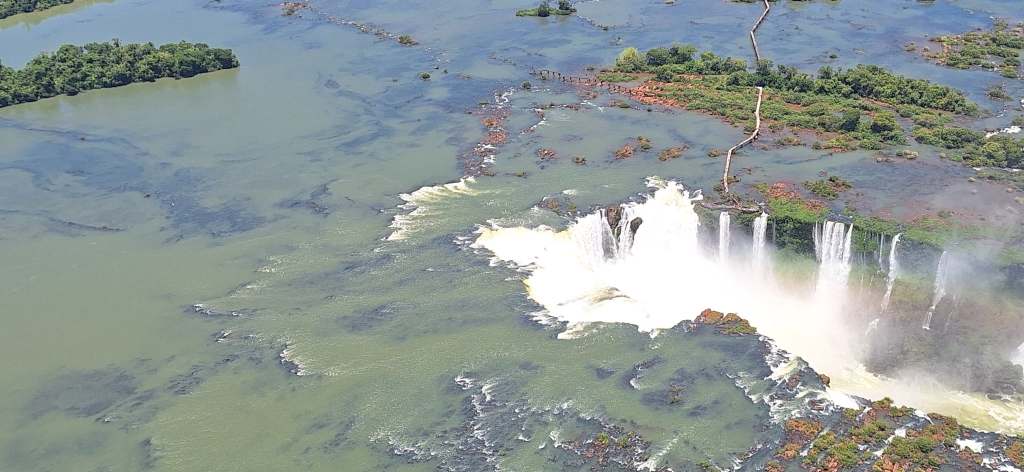
Now for our final adventure in Iguazu. We had made the last minute decision to take the 10-minute helicopter ride that takes you right over the falls. We figured – we had seen it from the viewing platforms and we had been in it (literally) on yesterday’s boat ride – why not get a view overhead. The company that runs the helicopter rides is on the Brazilian side and runs a first-come first-served basis, so there is no need to book ahead. Just rock up and wait your turn. And after about 45 minutes we were up in the air. The view was absolutely fantastic – the cherry on the already fabulous cake. You get a full aerial view of the entire waterfall system – it is like someone gouged out a bit of the earth and left a scar ripping through the landscape.
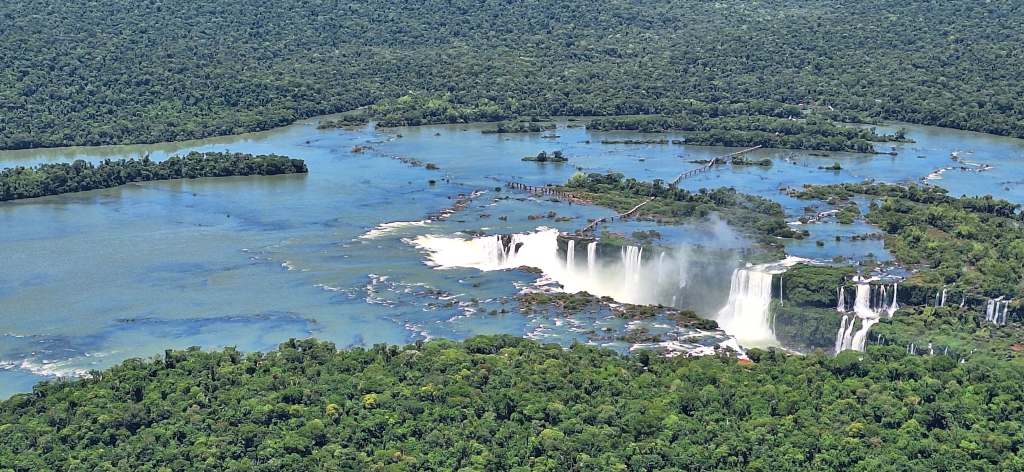
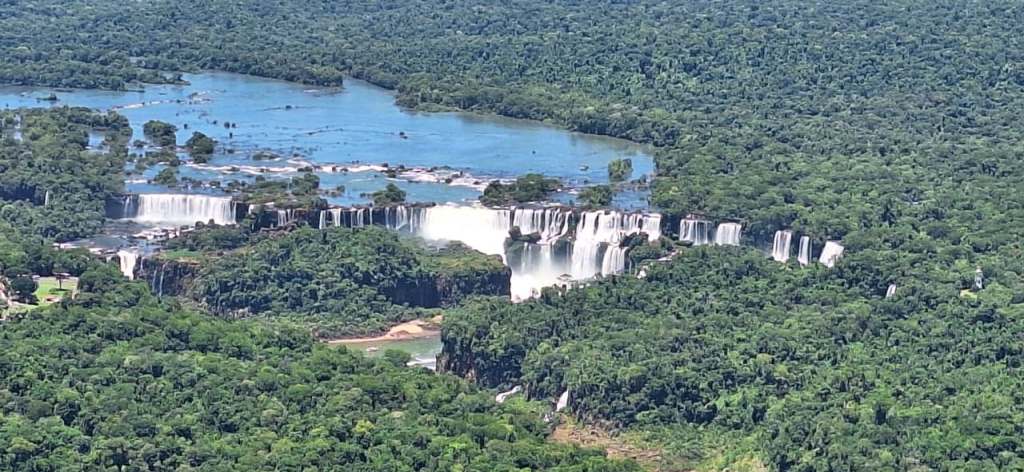
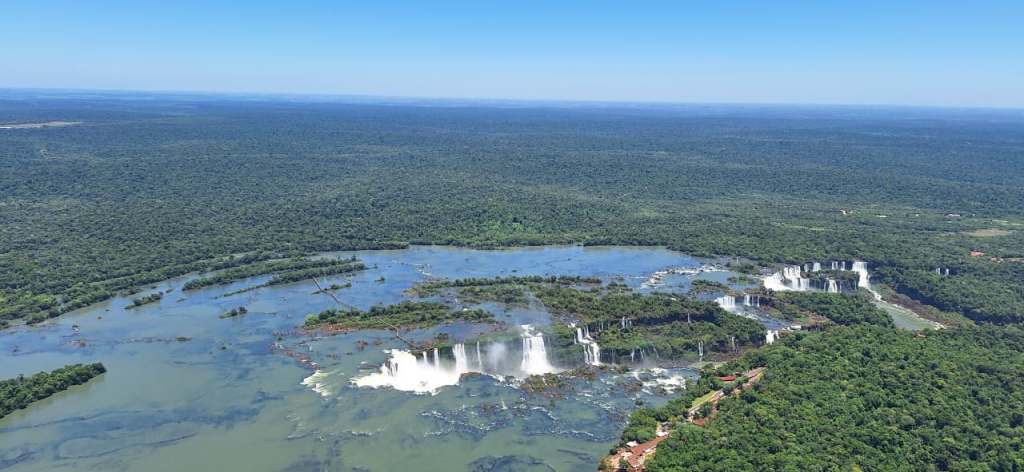
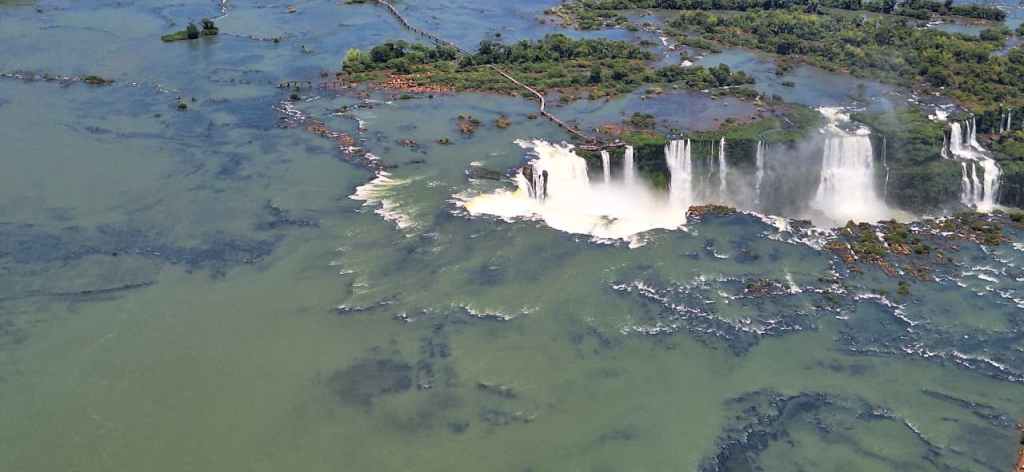
After lunch at a traditional Brazilian churrasco house we headed back over the border to Argentina. Our 5-hour trip to Brazil was over, but in that short window we had a fantastic time. Iguazu Falls, in both countries on foot, by boat and by helicopter was breathtaking and far exceeded the already high expectations I had built-up. It wholeheartedly deserves its designation as one of the seven natural wonders of the world – the hype is real.


Leave a Reply