Naadam is Mongolia’s national festival and the country’s most important cultural celebration. It is much more than a sporting event and more of a celebration of Mongolian identity, history and the enduring nomadic way of life. Every July, families travel from across the country to gather, compete, reunite and celebrate traditions that have been passed down through the centuries. My expectation were high – this is a world-famous festival that garners attention from travelers all of the world. And I can confirm it doesn’t disappoint – it is a truly outstanding event and something that Mongolian’s should be incredibly proud of. Without a doubt – coming to Mongolia for the festival alone would be worth it.
The origins of Naadam stretch back well over 2000 years. Long before Mongolia became a unified empire, nomadic tribes held festivals where warriors demonstrated the skills needed for survival on the steppe: horse riding, wrestling, archery. These were not simply sports but military training. When Chinggis Khan united the Mongol tribes in 1206, these competitions became even more important. His armies relied on exceptional horsemen, powerful wrestlers and highly skilled archers. So the festivals helped identify the strongest warriors while strengthening unity among different tribes. Following the fall of the Mongol Empire, Naadam continued as a local celebration and later became closely associated with Buddhist monasteries. Monasteries often organised annual festivals where communities gathered to worship, trade and compete. After the 1921 People’s revolution the new government transformed Naadam into Mongolia’s national festival, celebrating both independence and Mongolian identity.
It is very clear from being in Mongolia during Naadam, that the festival means an awful lot to the people of Mongolia. It represents their national identity, pride in their nomadic heritage, respect for their ancestors and a celebration of their nation’s independence. Think of it like the Olympics, Independence Day, a county fair and a family reunion all rolled into one. Children spend months preparing to race horses. Families travel 100s of km from the countryside to attend. And many people were their finest deel (the traditional Mongolian robe), which has often been handed down through generations or specially made for the festival. For example our guide wore a deel her mother had made her for the opening ceremony.
Traditionally Naadam centers around three sports – known as Eriin Gurvan Naadam or the The Three Manly Games. Wrestling (bokh) is regarded as the most prestigious of the three events. Unlike Olympic wrestling there are no weight classes, no time limits and no wrestling ring. Victory is simple – if any part of the body except the hands or the feet touches the ground, the wrestler loses. Horse racing is perhaps the most uniquely Mongolian event. Unlike Western racing, races take place across open steppe, distances range from 10-30km depending on the horses age, endurance matters more than speed and the jockeys are children aged between 5 and 13 years old. Archery reflects one of the greatest strengths of the Mongol Empire and unlike modern target archery, archers shoot at small leader cylinders called sur and the targets are arranged on the ground.
We are now back in Ulaanbaatar and have 2 busy days planned experiencing every aspect of Naadam. Early on Saturday morning, in the absolutely torrential rain we headed to Sukhbaatar Square to see one of the most symbolic and solemn parts of the festival. The appearance of the Nine White Banners links Mongolia directly to the era of Chinggis Khan. The Nine White Banners are among Mongolia’s most sacred national symbols. Each banner consists of a tall speer topped with a trident and decorated with white horse tails. The banners are believed to represent peace and prosperity, the unity of the Mongolian people, the legacy of Chinggis Khan and the authority of the Mongolian state. When Chinggis Khan unified the tribes in 1206 it is said that he was enthroned beneath nine white horsehair banners. Horsehair also reflects the central place of the horse in Mongolian civilization, used as transportation, military power, wealth and companions across the steppe. The central banner is larger than the other 8, representing the Great Khan and the Mongolian state itself.
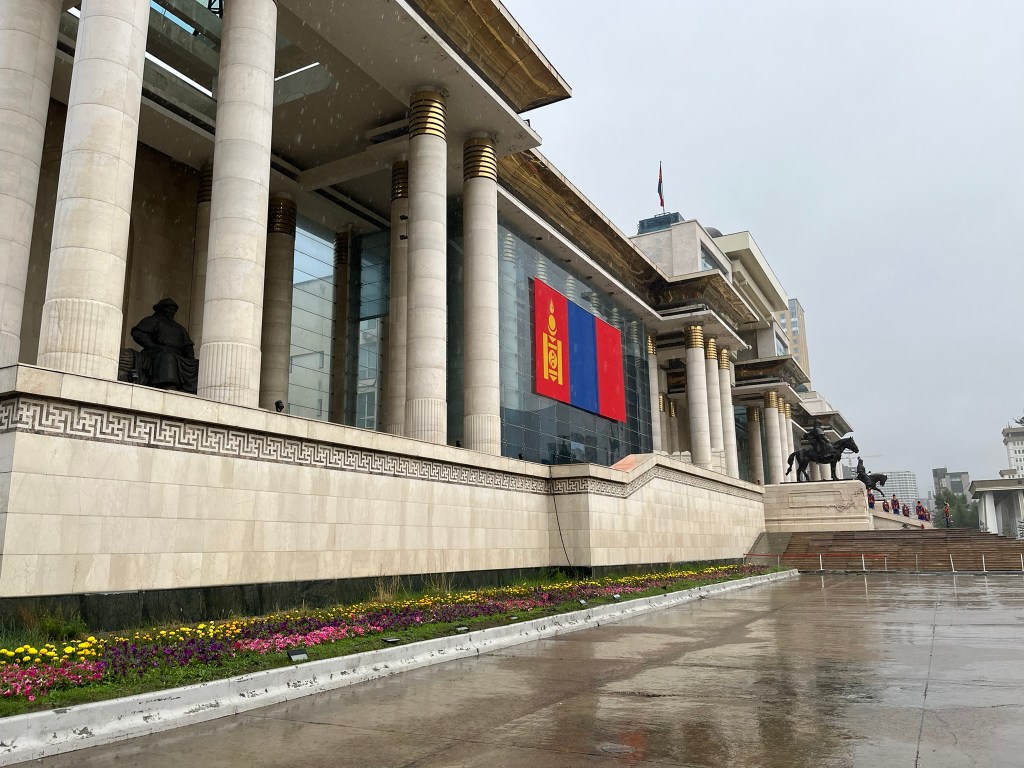
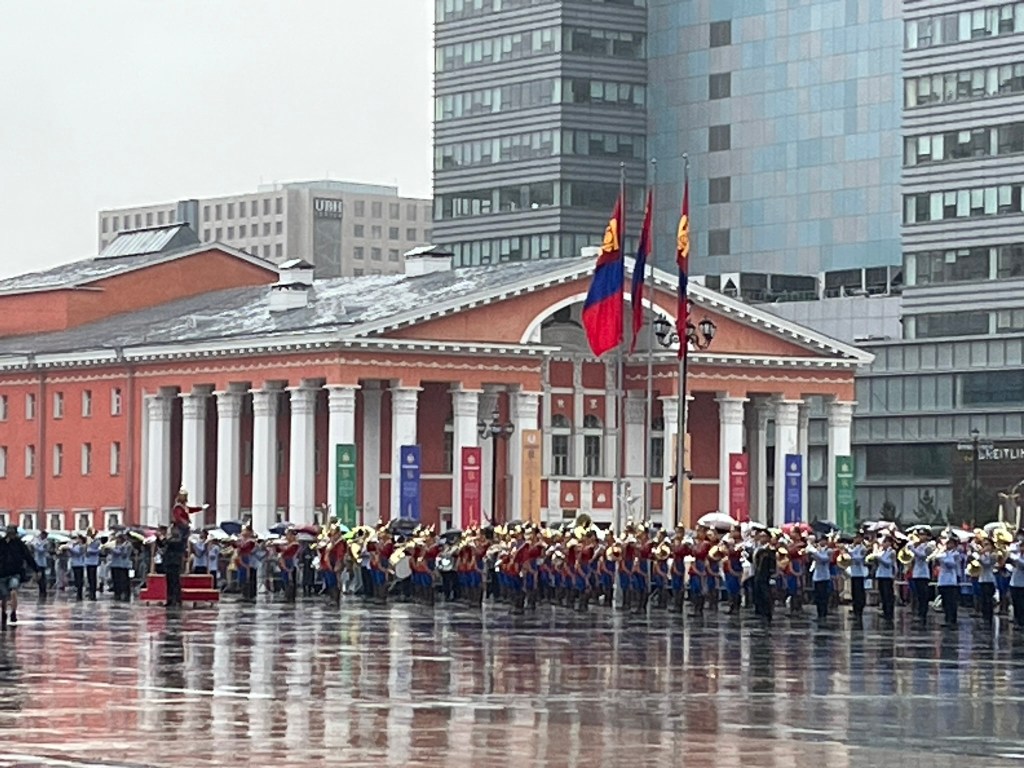
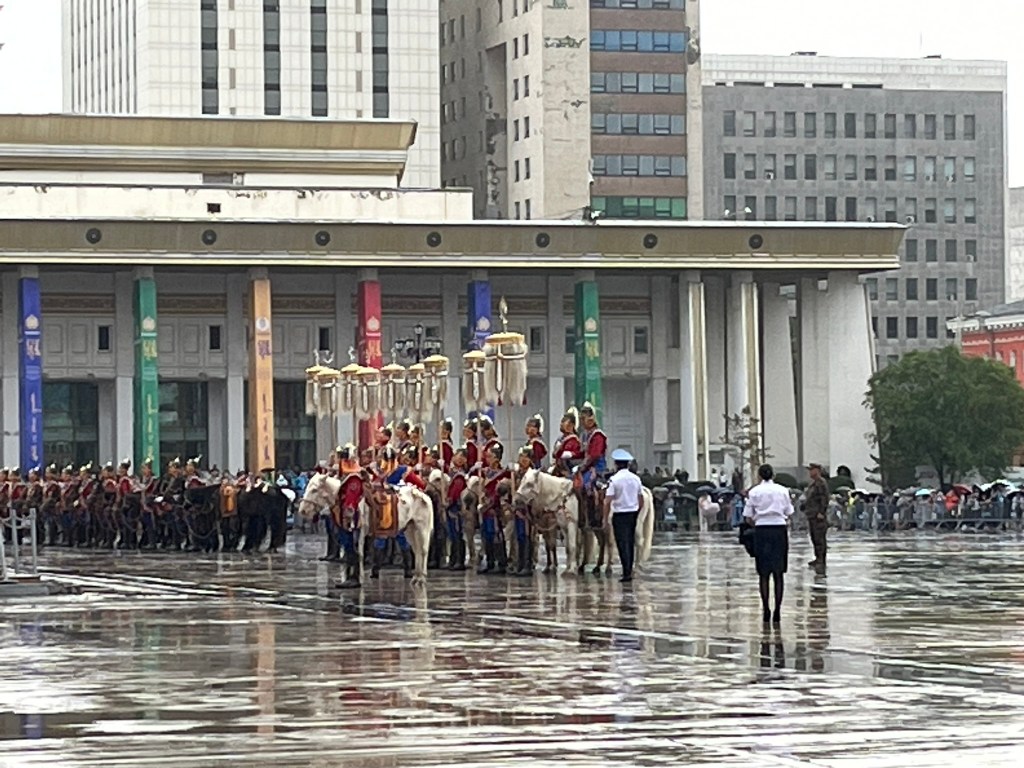
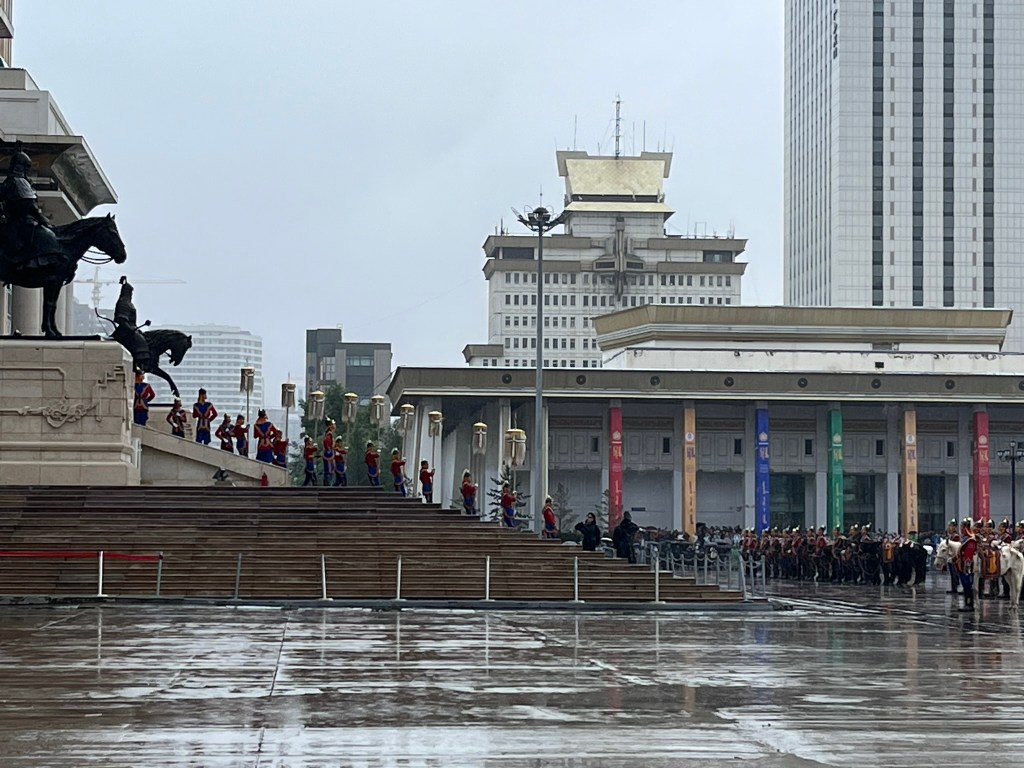
The ceremony begins at the State Palace, on the north side of the square as members of the State Honor Guard dressed in ceremonial uniforms carefully carry out the Nine White Banners. Mounted guards, military musicians and traditional performers accompany the procession, giving it an almost medieval feel. The music alone, which our guide shared comes from the time of the Mongol Empire was so exceptionally dramatic that it was the centerpiece of the whole experience. From the square the procession slowly makes its way to the national stadium where the opening ceremony is held. The procession is reasonable slow so there was plenty of time for us to get back to our bus and head over to the stadium in the heavy-traffic and get in our seats for the opening ceremony. What we also learnt from the morning is that the capital is absolutely not equipped for rain whatsoever and with no drains, many roads quickly flooded.
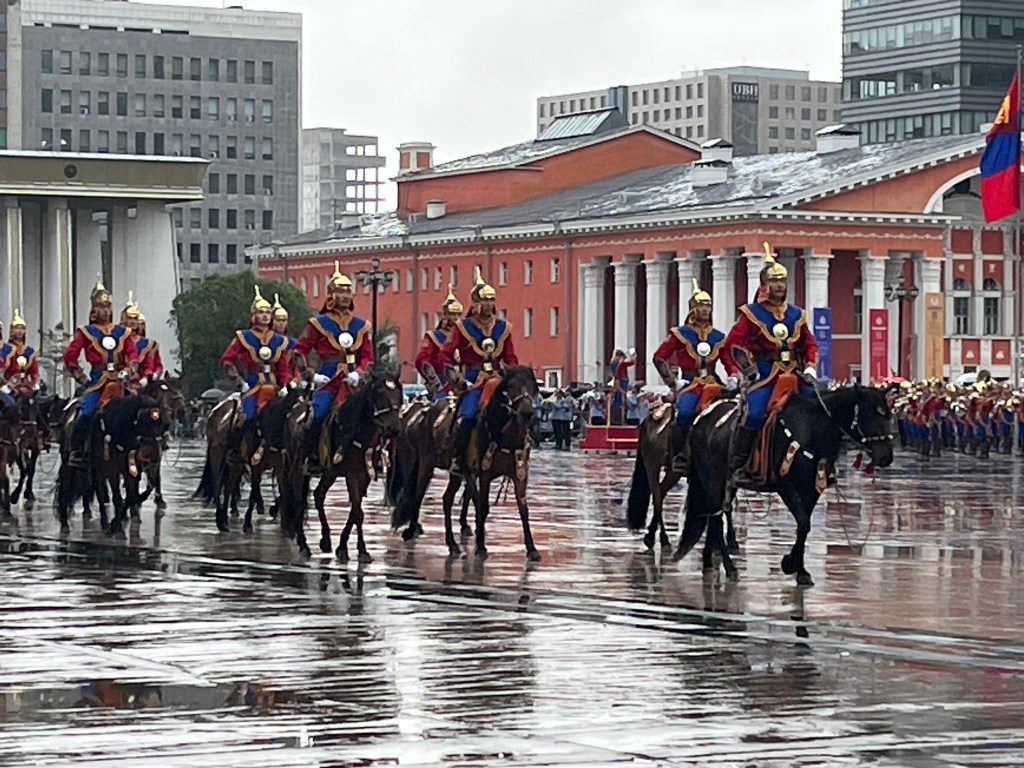
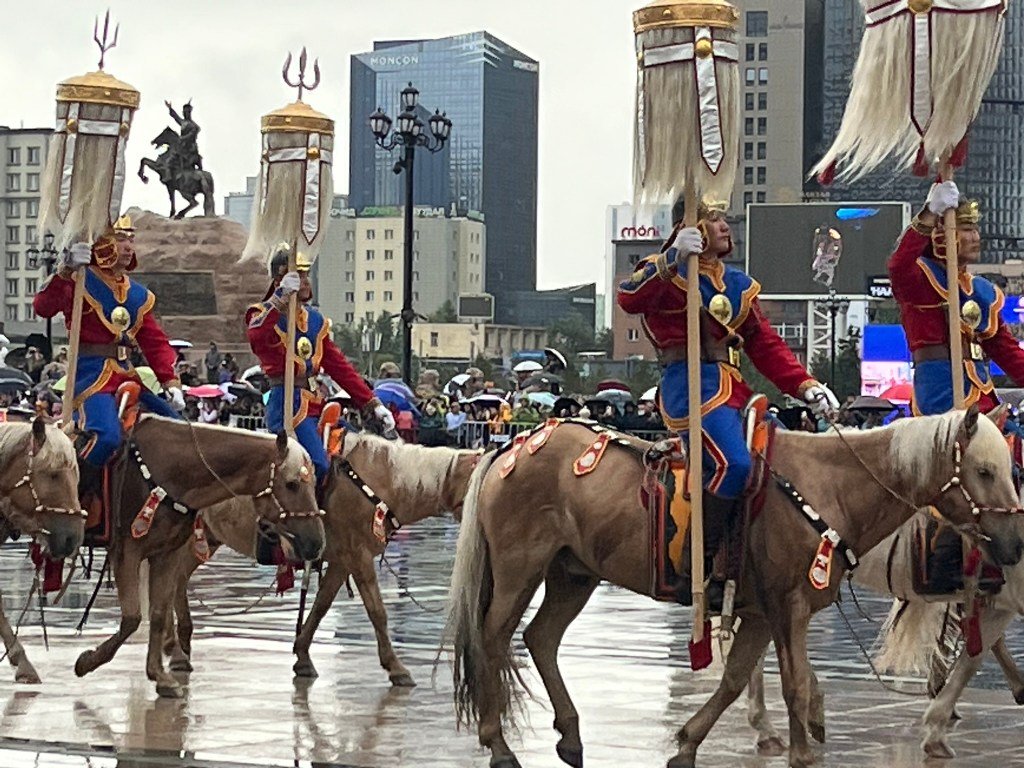
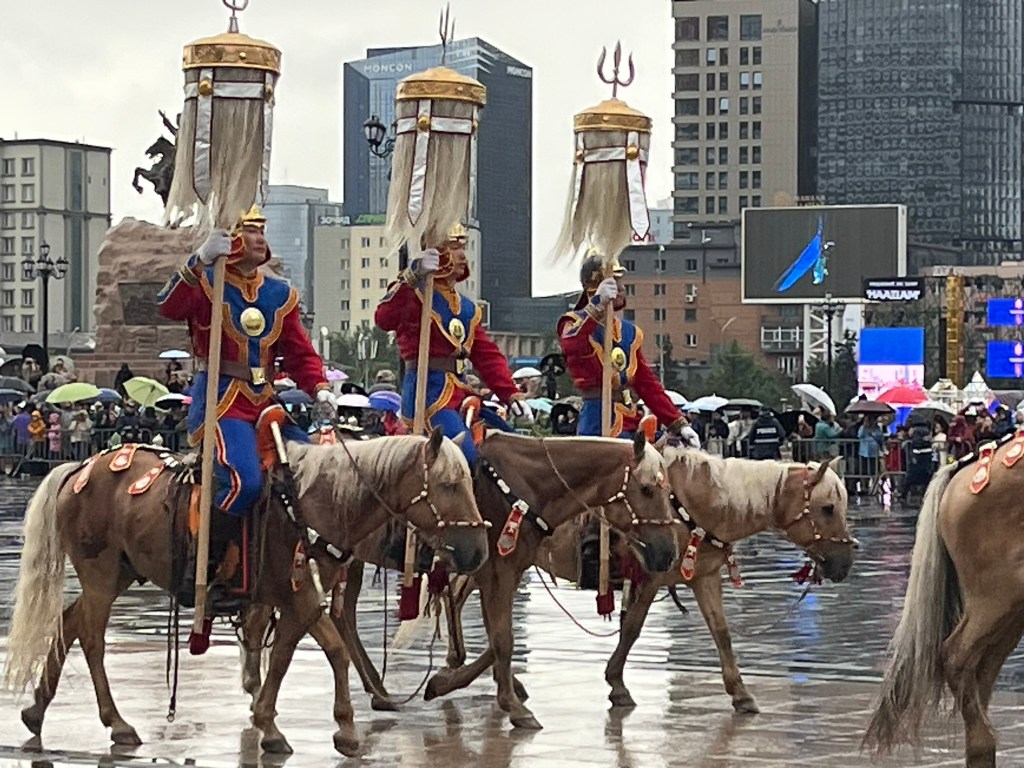
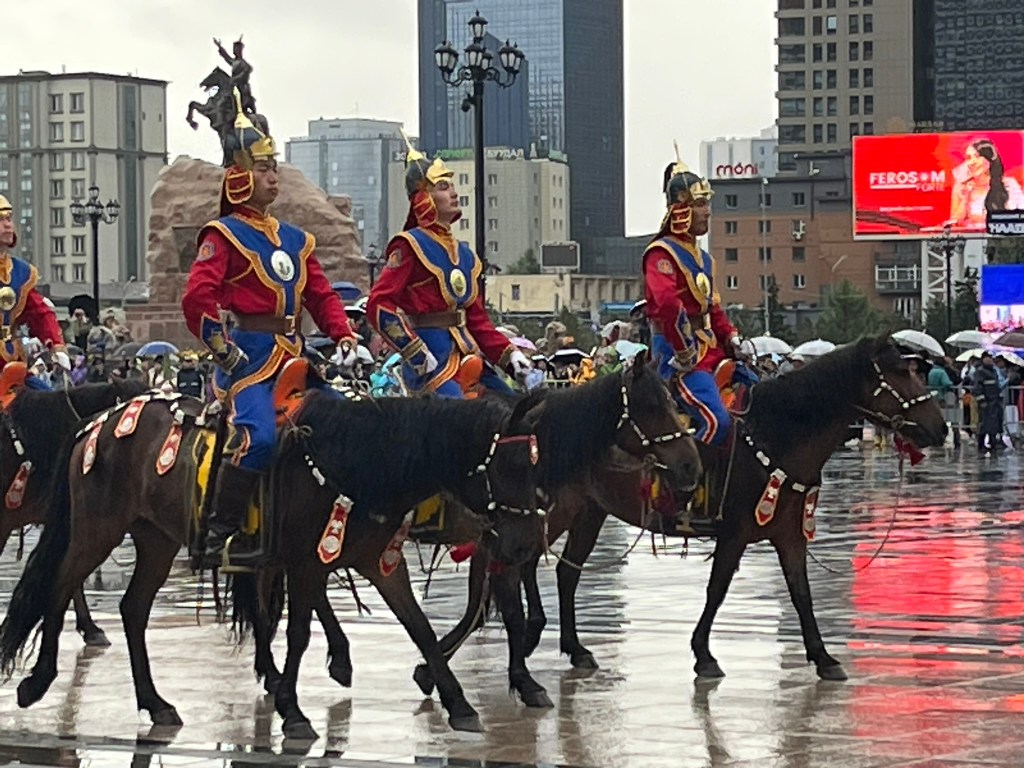
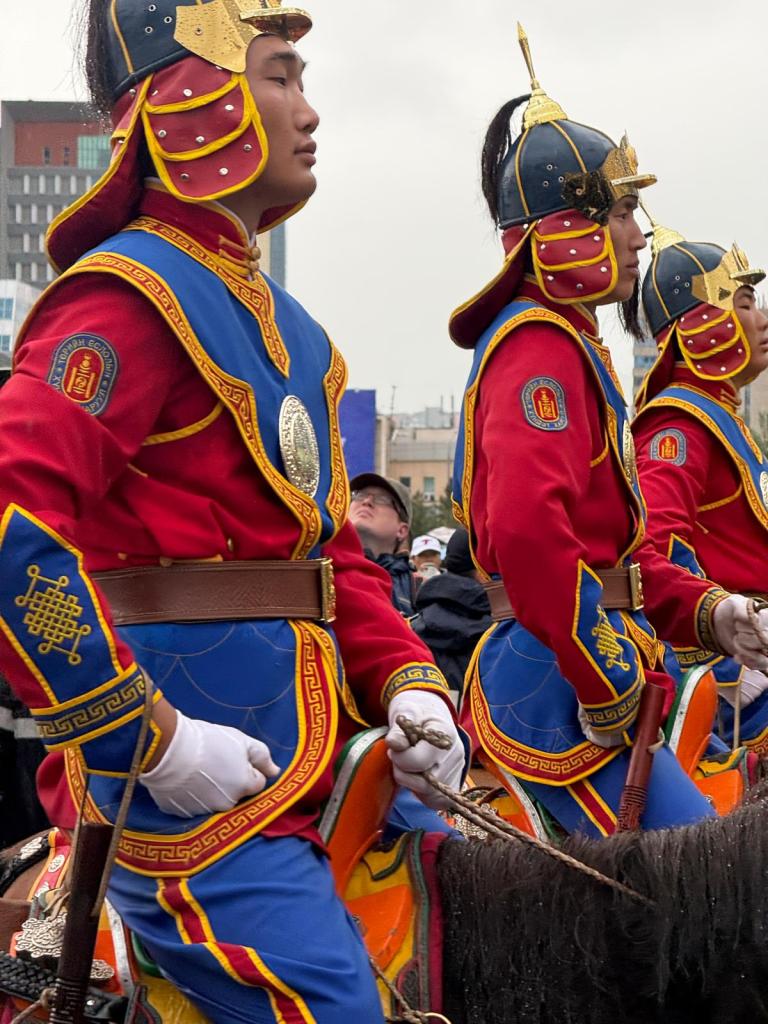
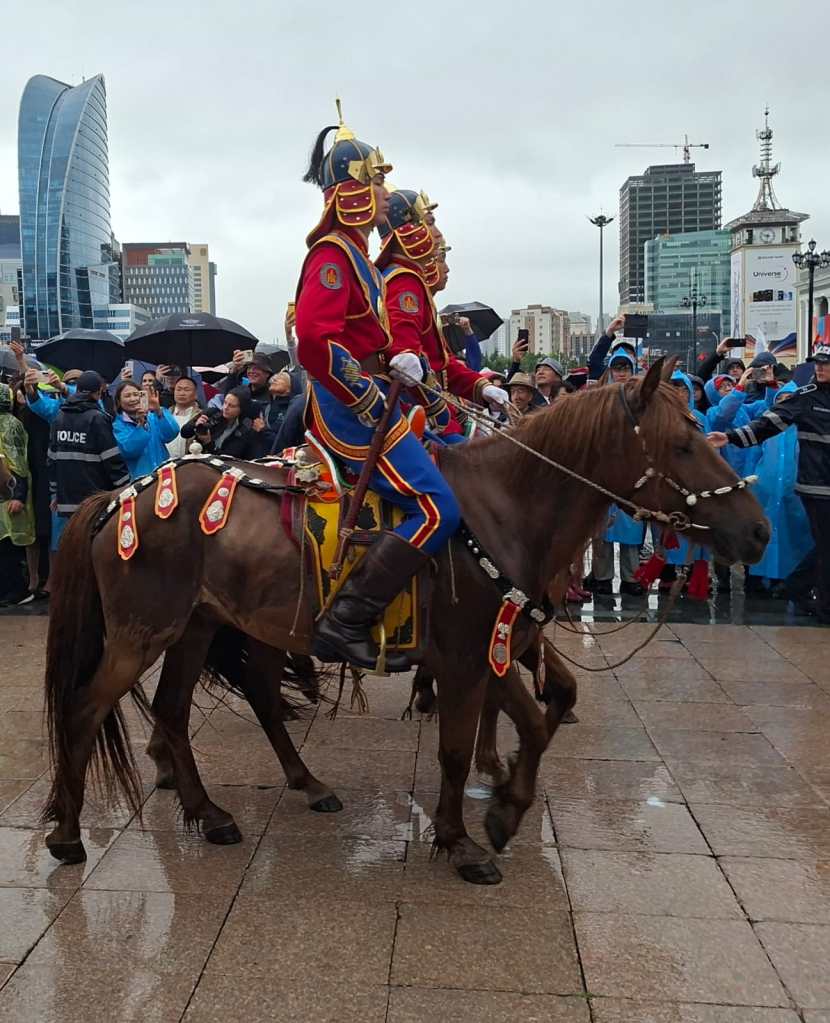
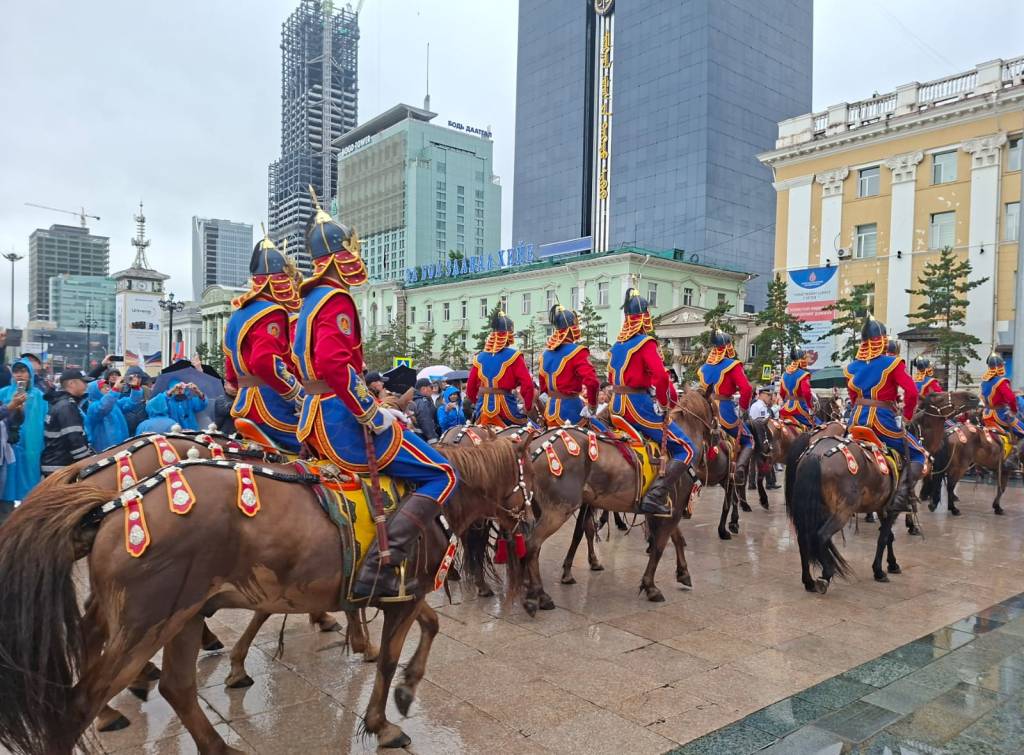
The Nine White Banners are not simply flags or military standards, they are regarded as the spiritual embodiment of the Mongolian nation and the continuity of the state itself. Today’s Mongolian constitution recognizes the banners as an object of state veneration and they are only brought out for the country’s most important ceremonies.
The Nine Banners Ceremony was a great taster for things to come at the opening ceremony and the whole group was excited to be in stadium awaiting the party to kick off. In terms of numbers of tourists at the event, there are quite a few, which is expected – this is a world renowned festival – but they are still swamped by the vast numbers of Mongolians in attendance. And it still feels like very much an event for locals that tourists happen to be at rather than a tourist attraction.
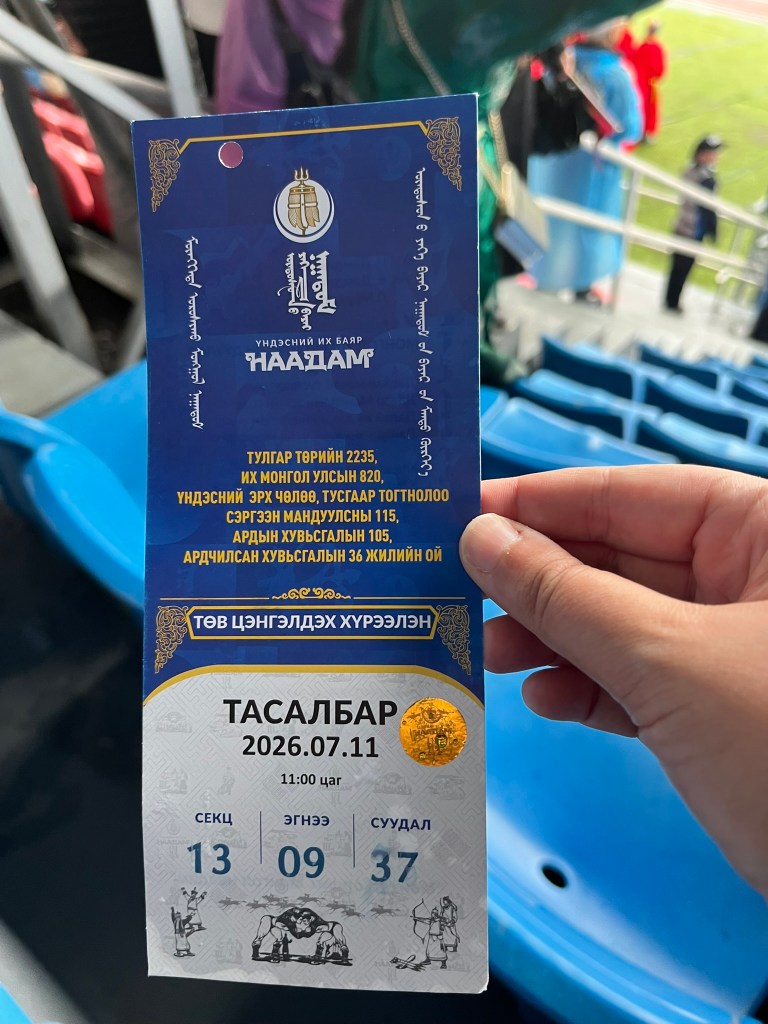
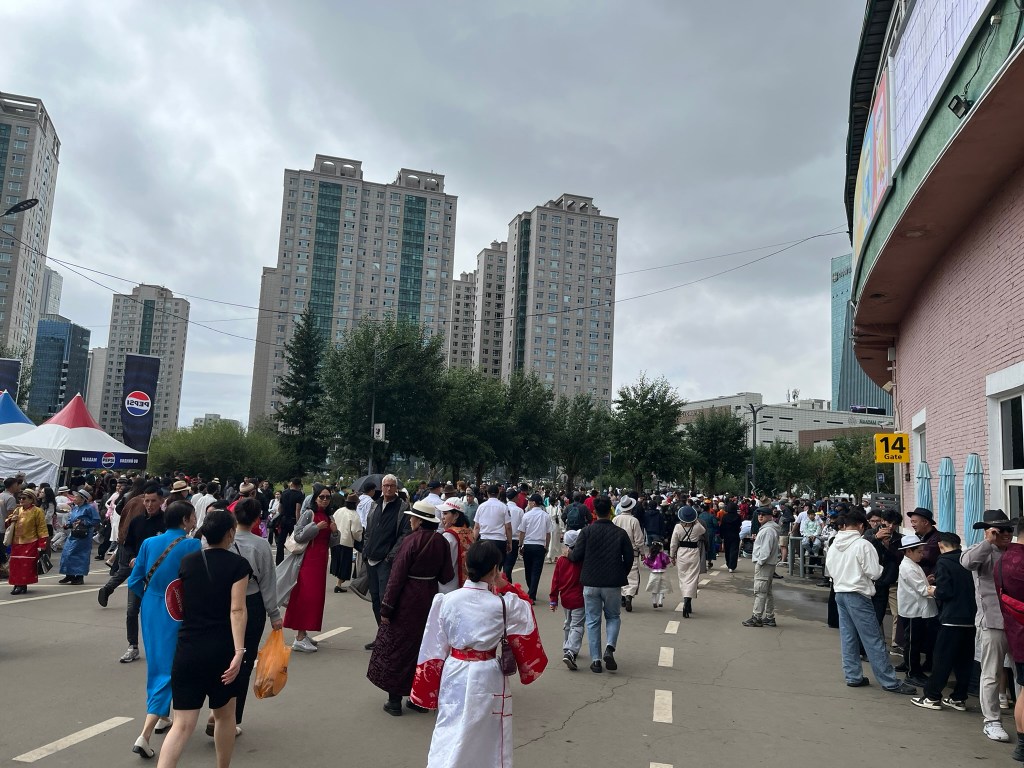
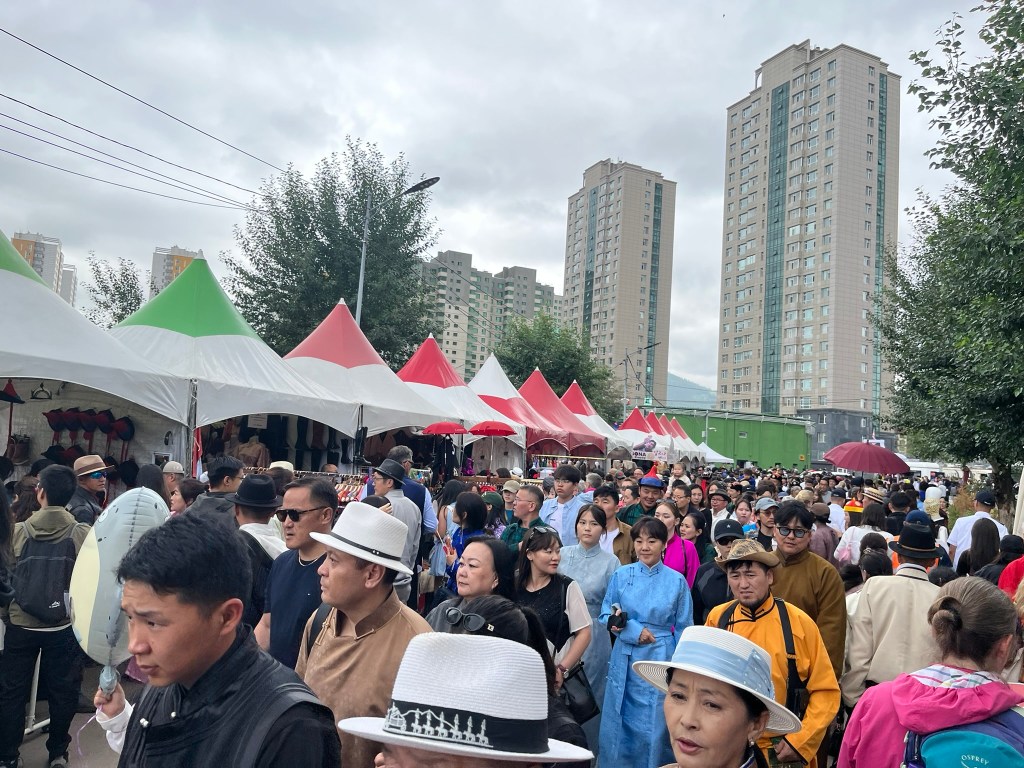
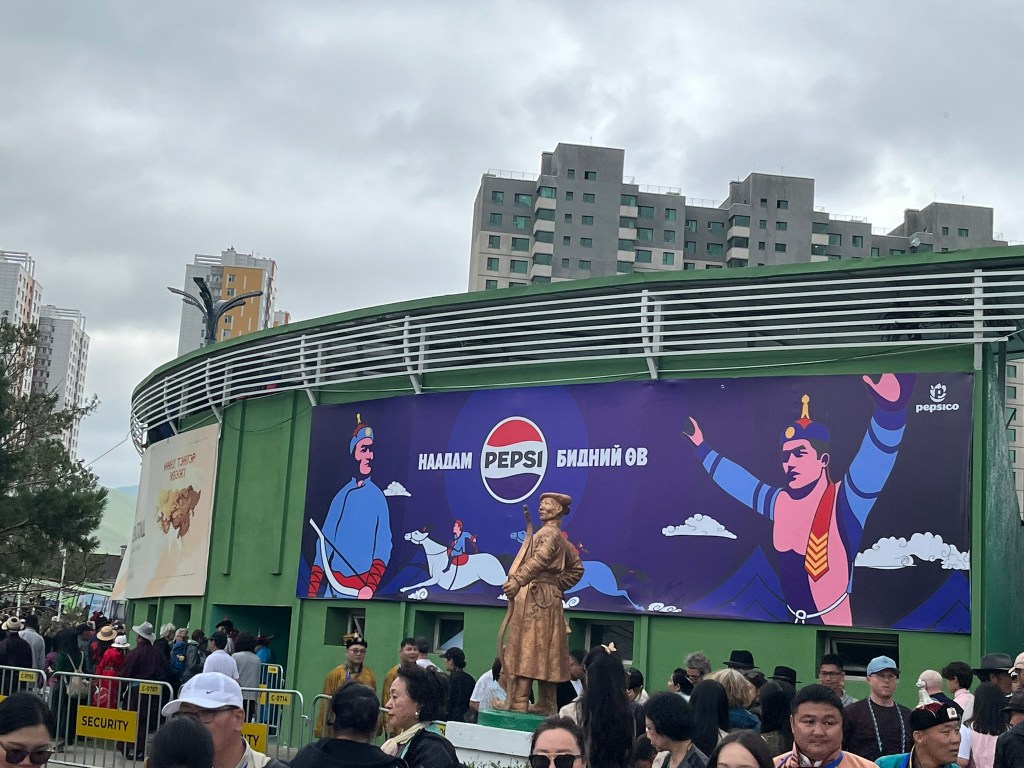
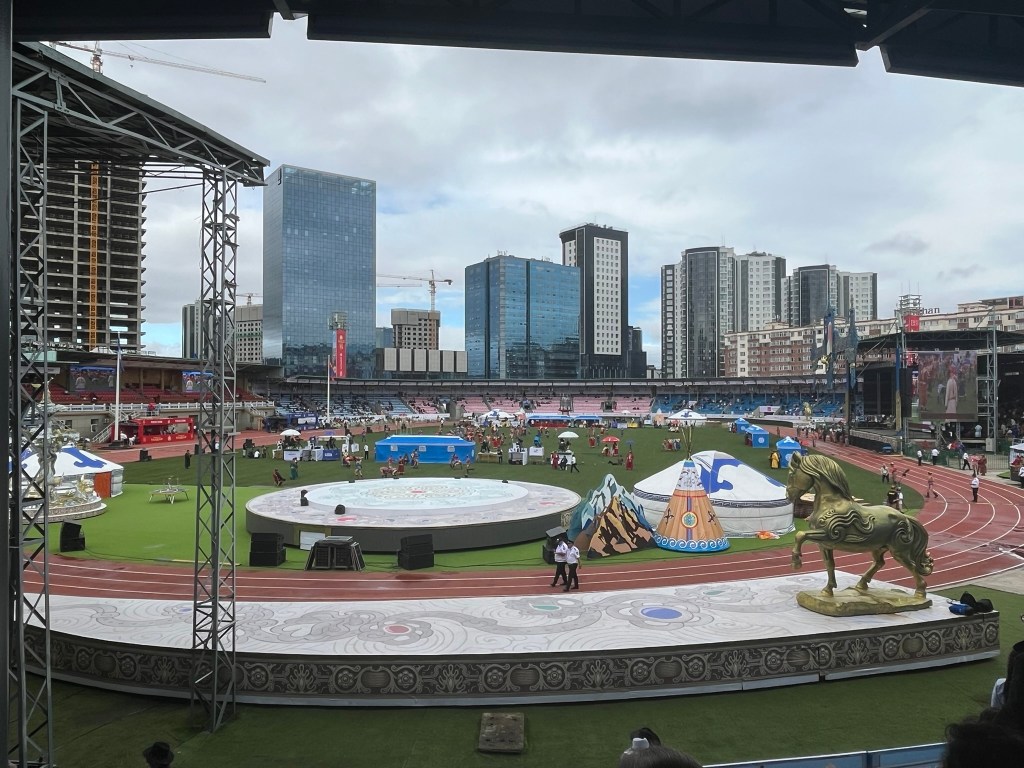
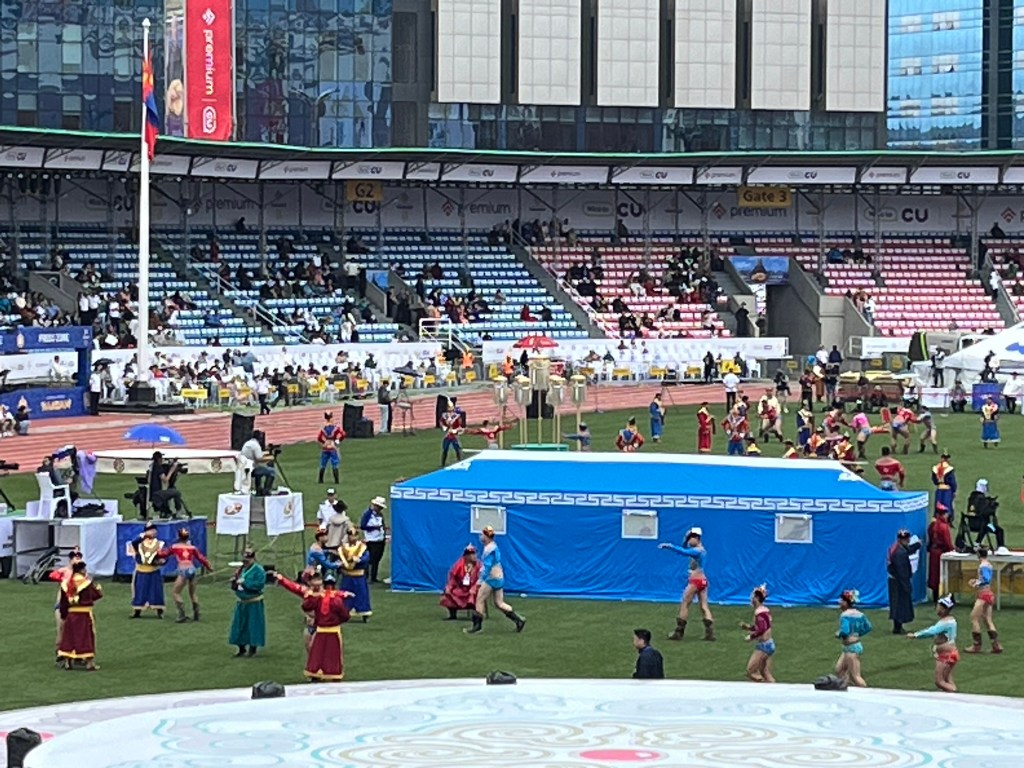
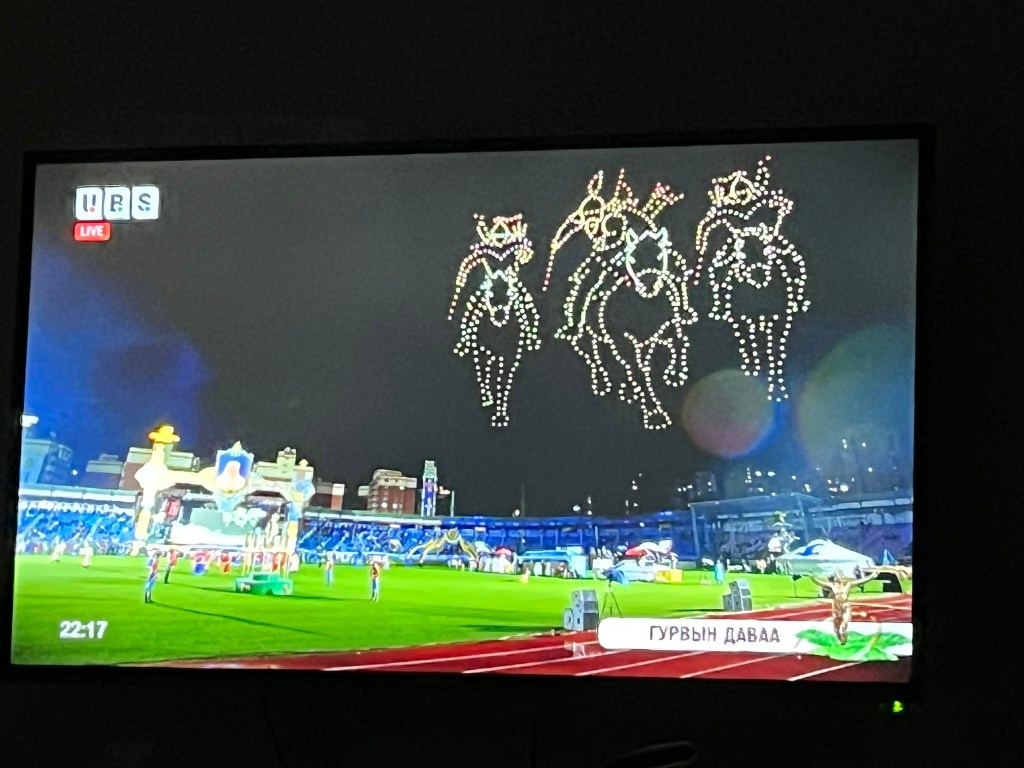
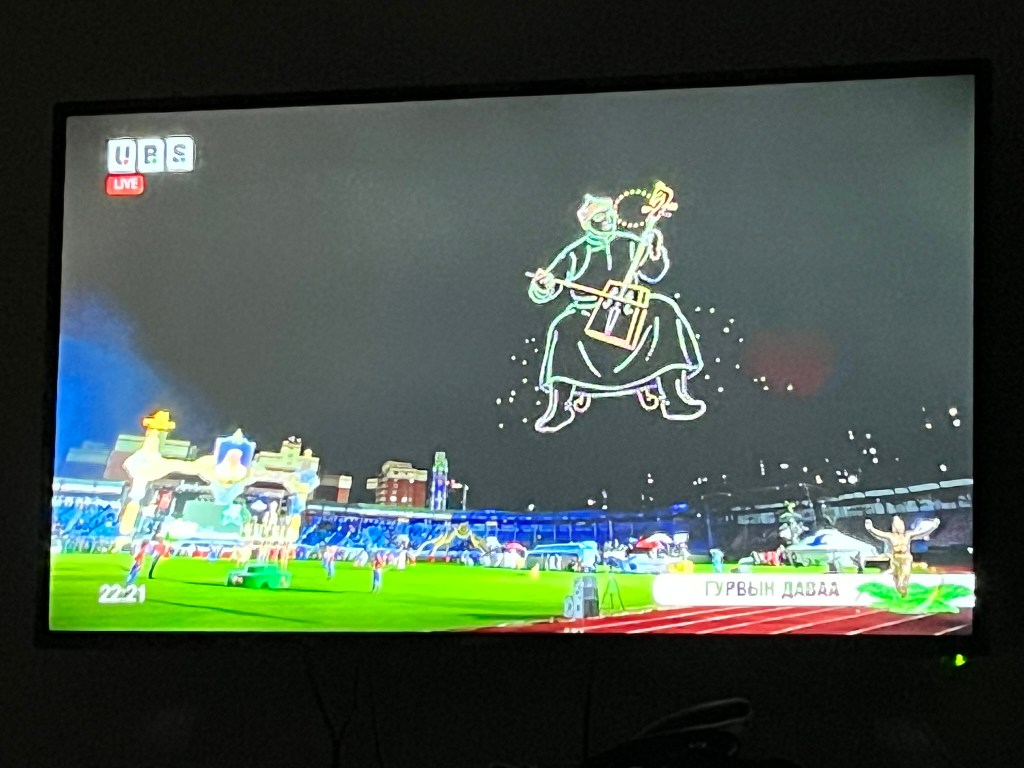
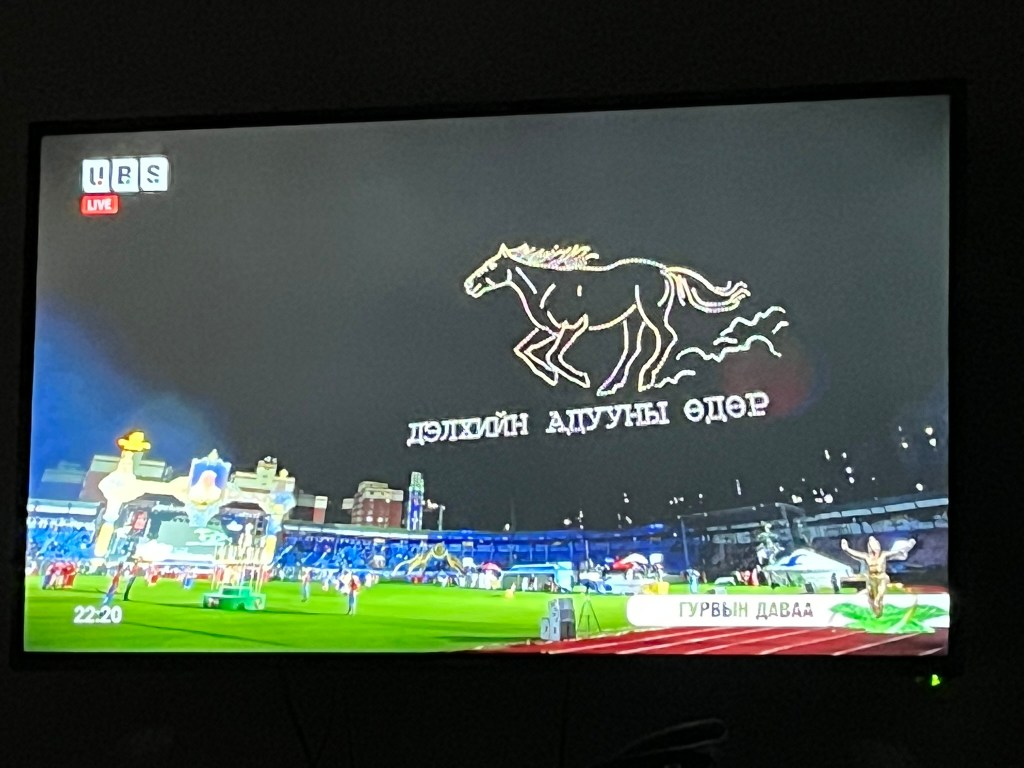
The opening ceremony is spectacular. We arrived with about 30 minutes to spare, walking with crowds of Mongolians to find our seats in the small stadium. The ceremony lasts about 2 hours and tells the story of Mongolia – from the vast steppe and nomadic life to the rise of the Mongol Empire and the modern nation. Every year a new performance is choreographed. And there was so much going on, it was often hard to know where to look. There were thousands of performers, dancers, singers, musicians, horse riders, athletes and soldiers all taking part wearing beautiful costumes and representing different regions and ethnic groups of the country. The ceremony typically involves more than 2500 performers – some professional and some volunteers. There are even local families who get to parade around the stadium who have won the great honor via a lottery.
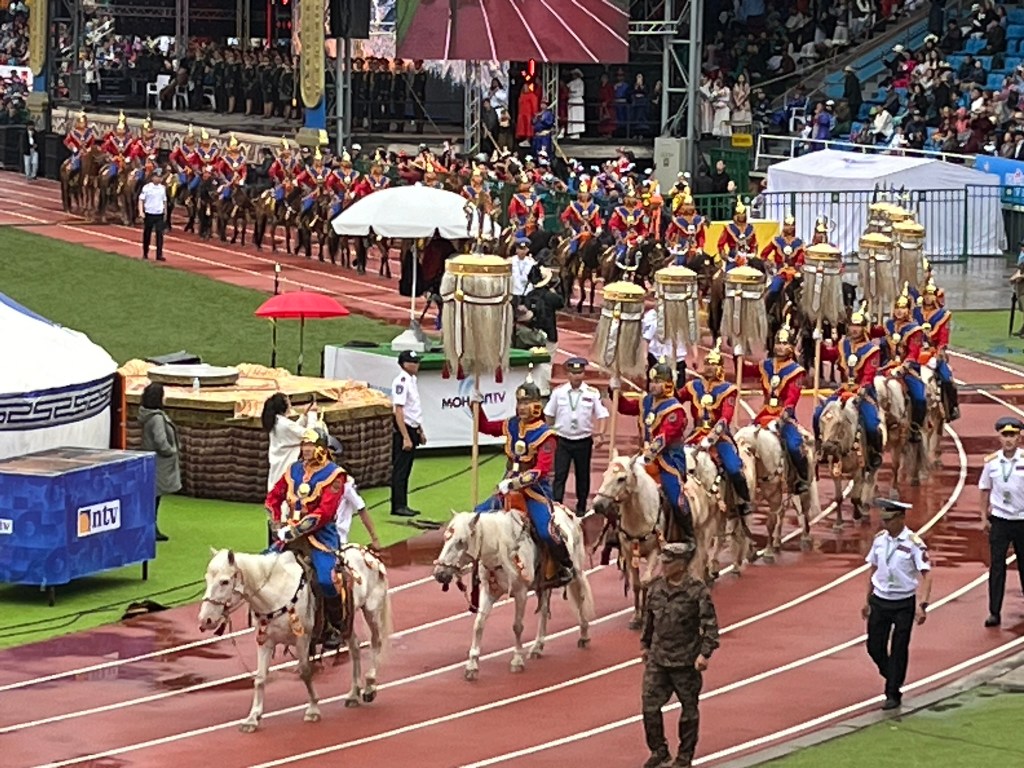
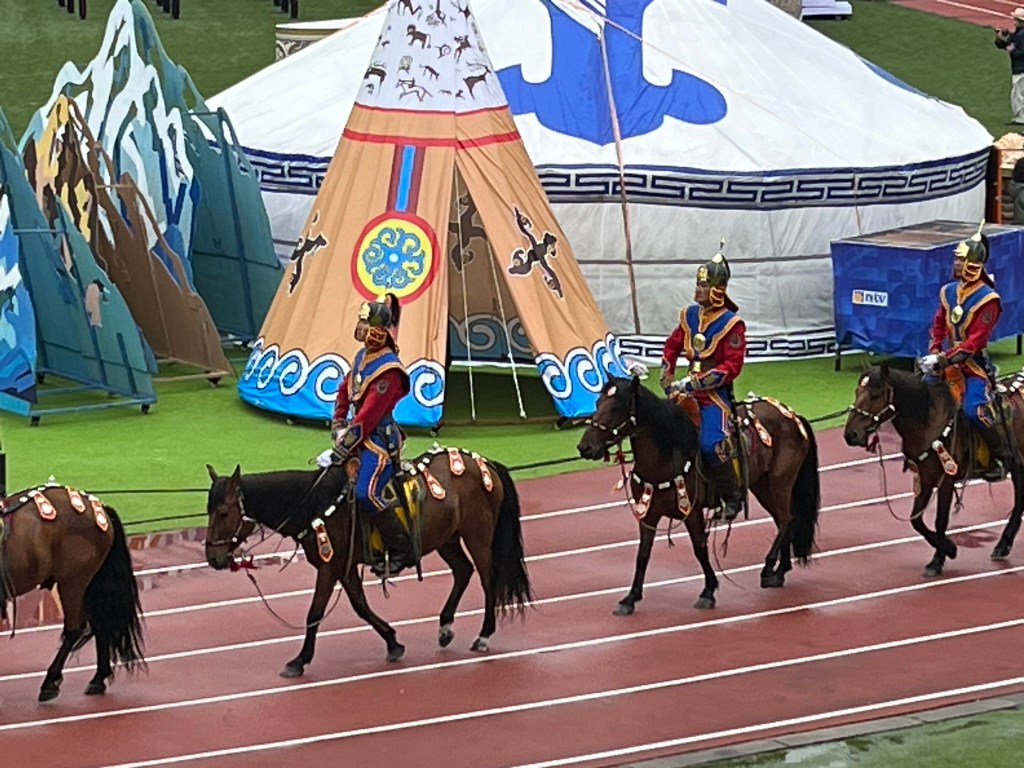
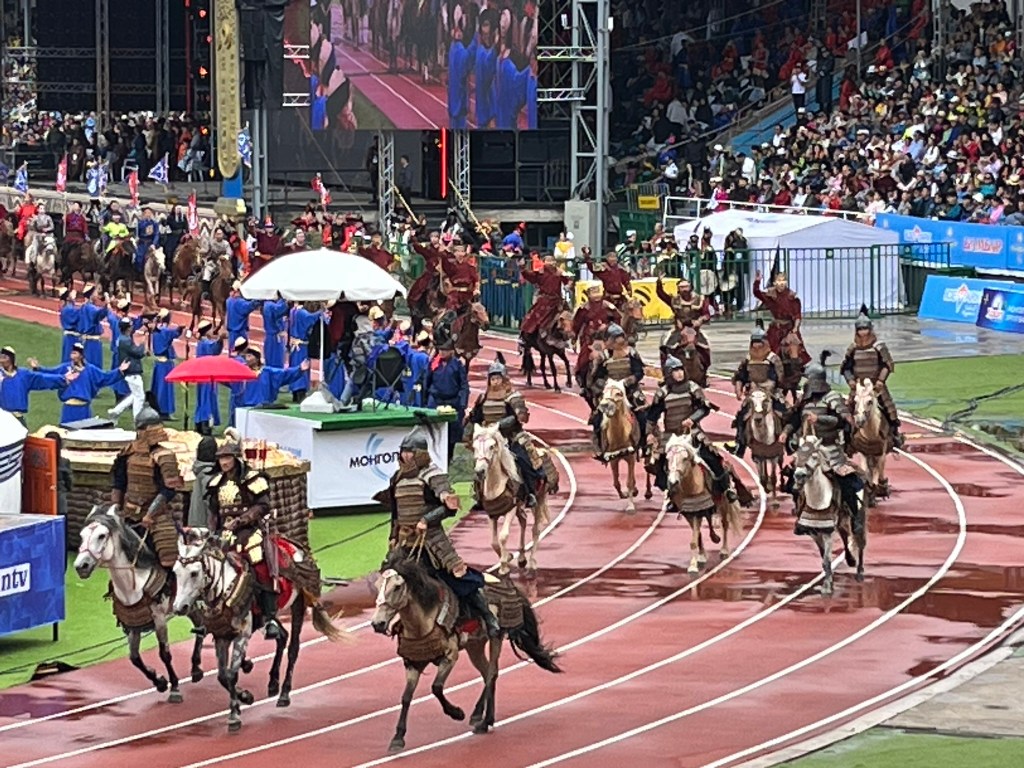
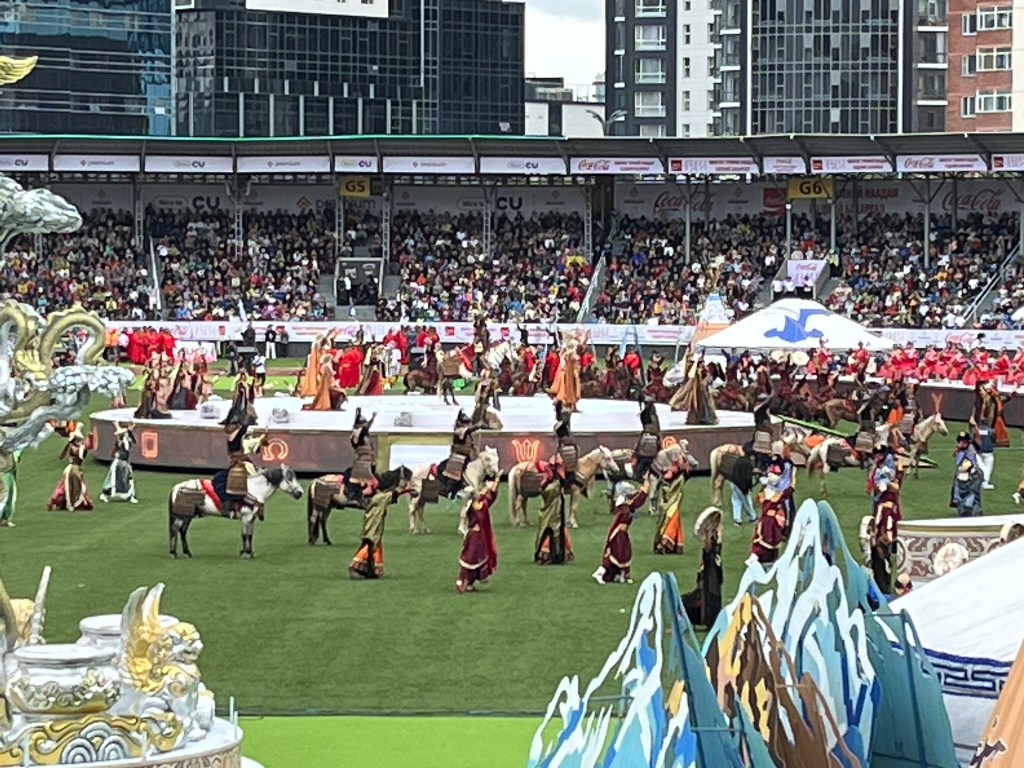
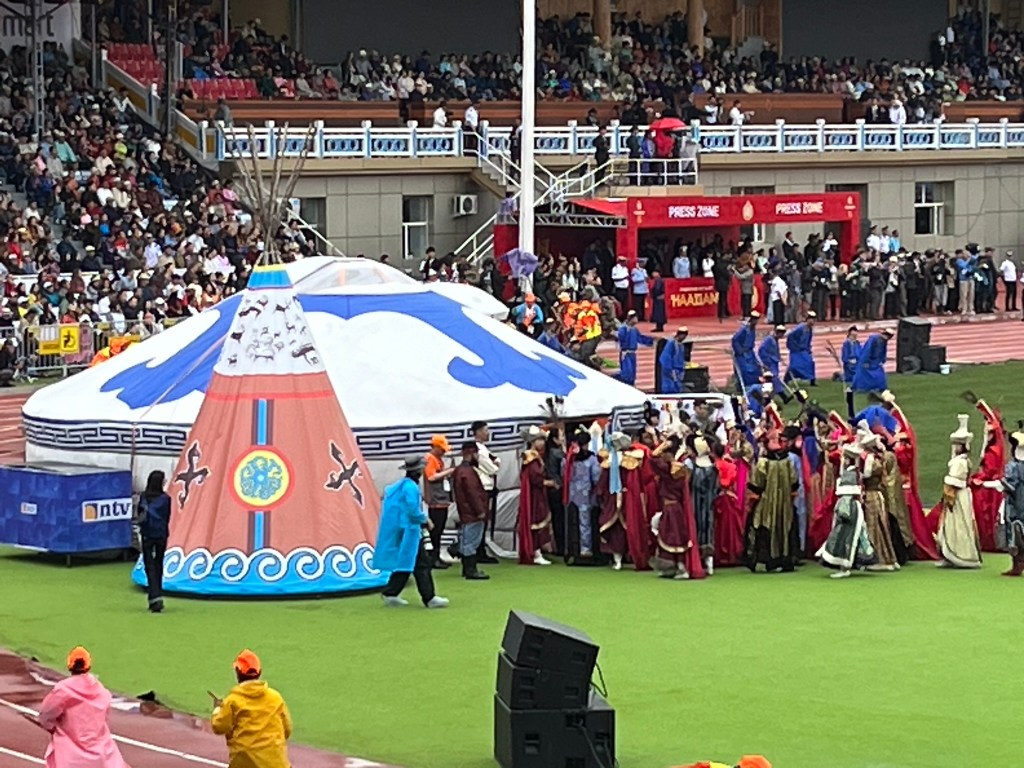
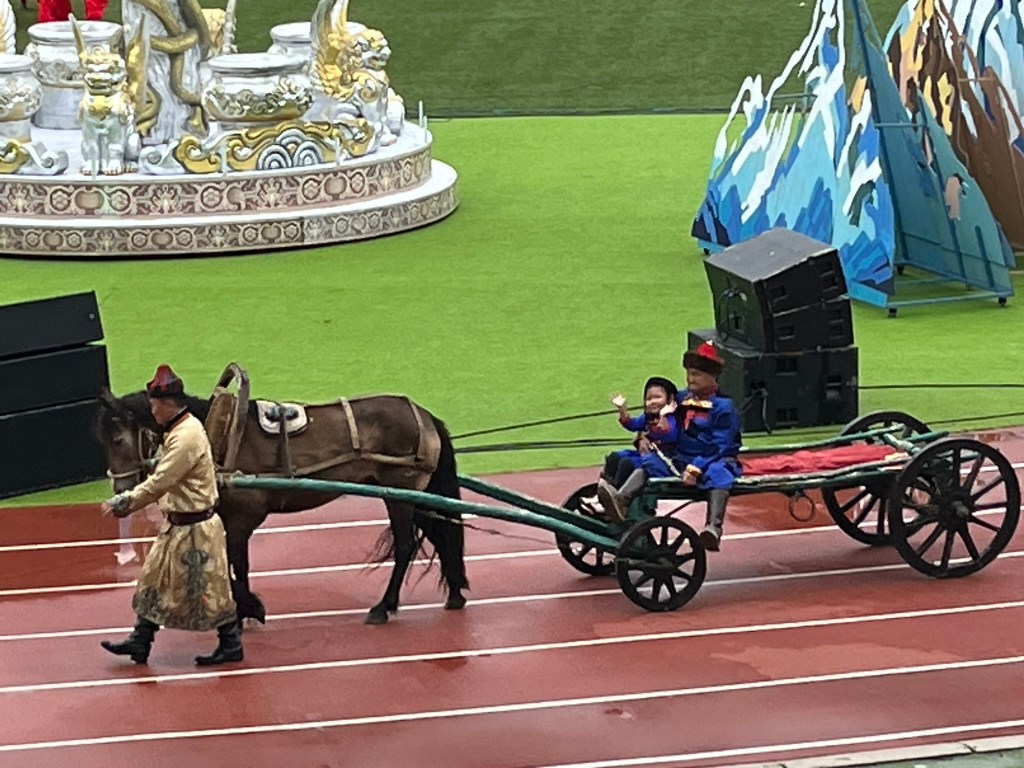
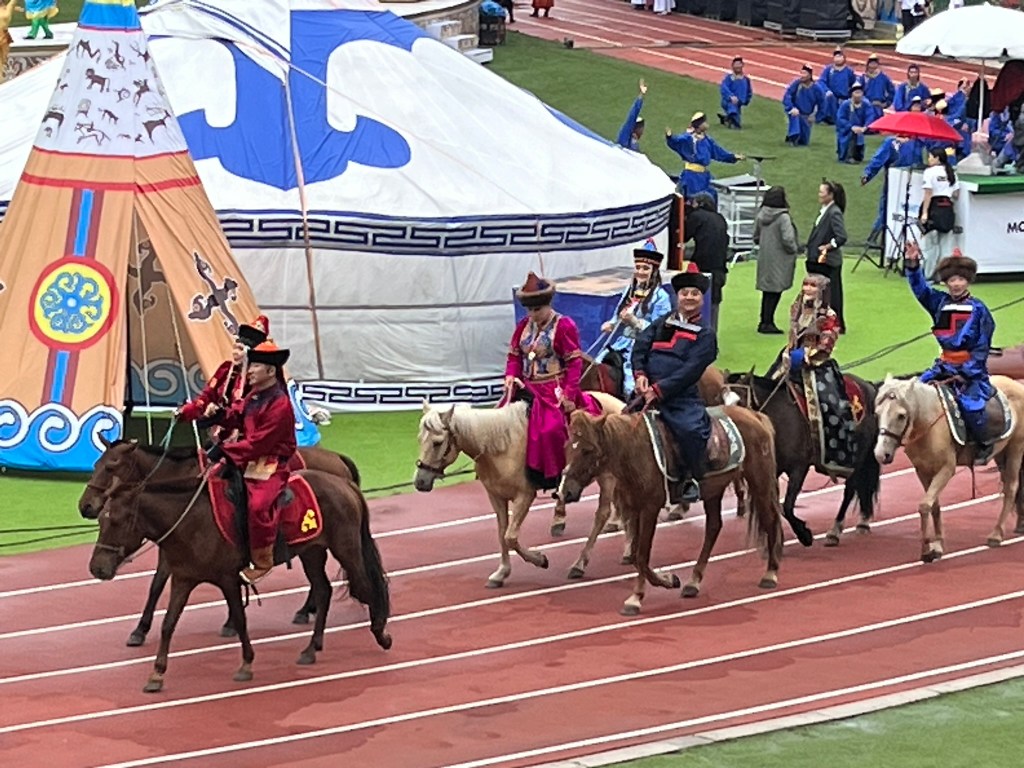
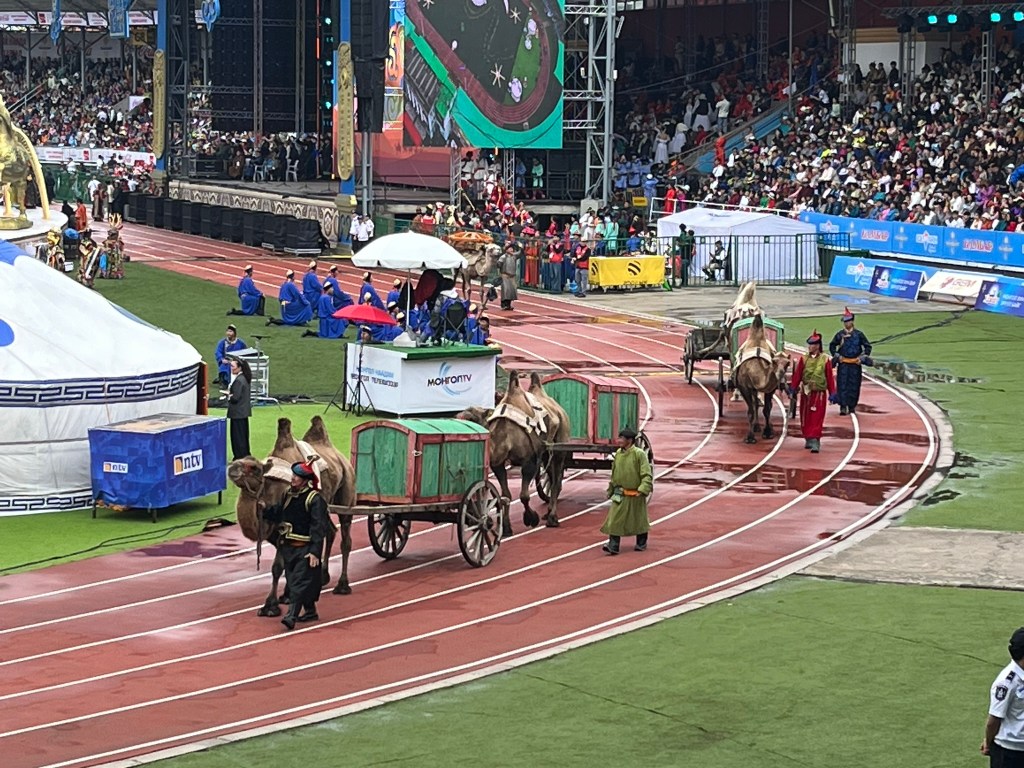
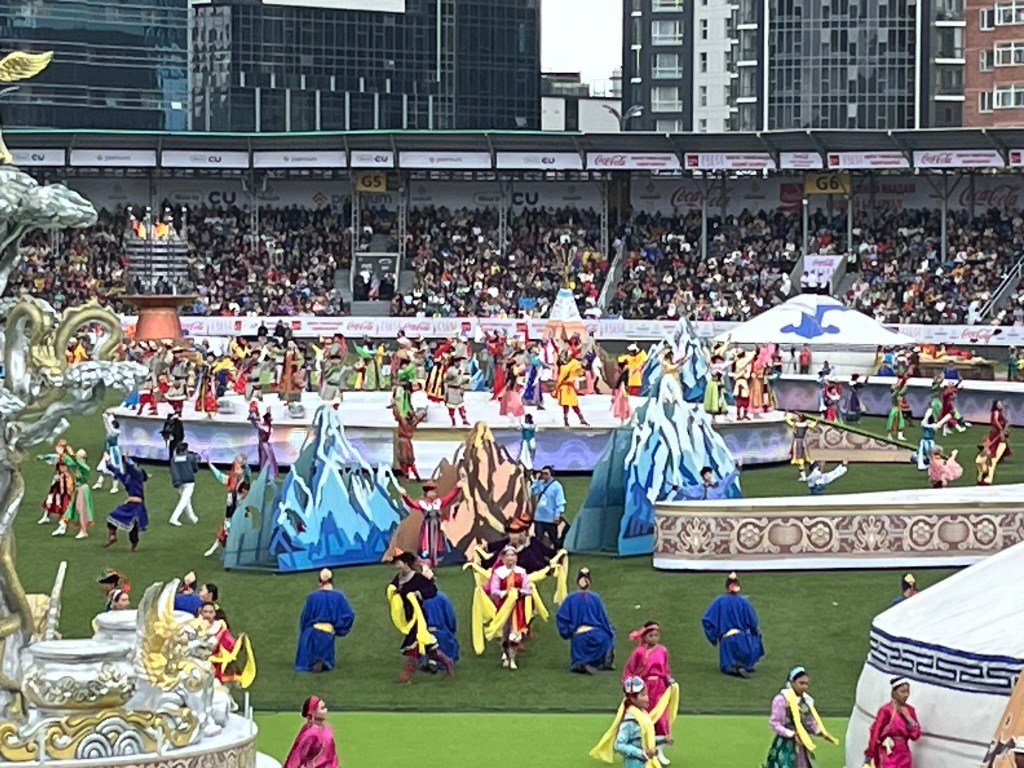
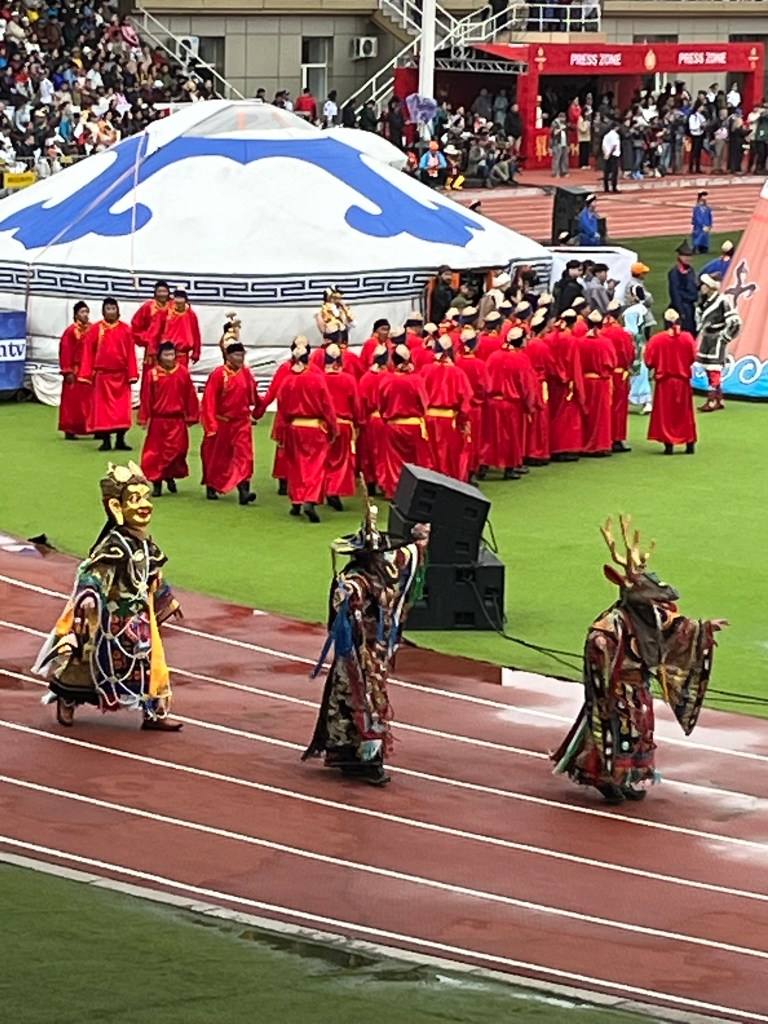
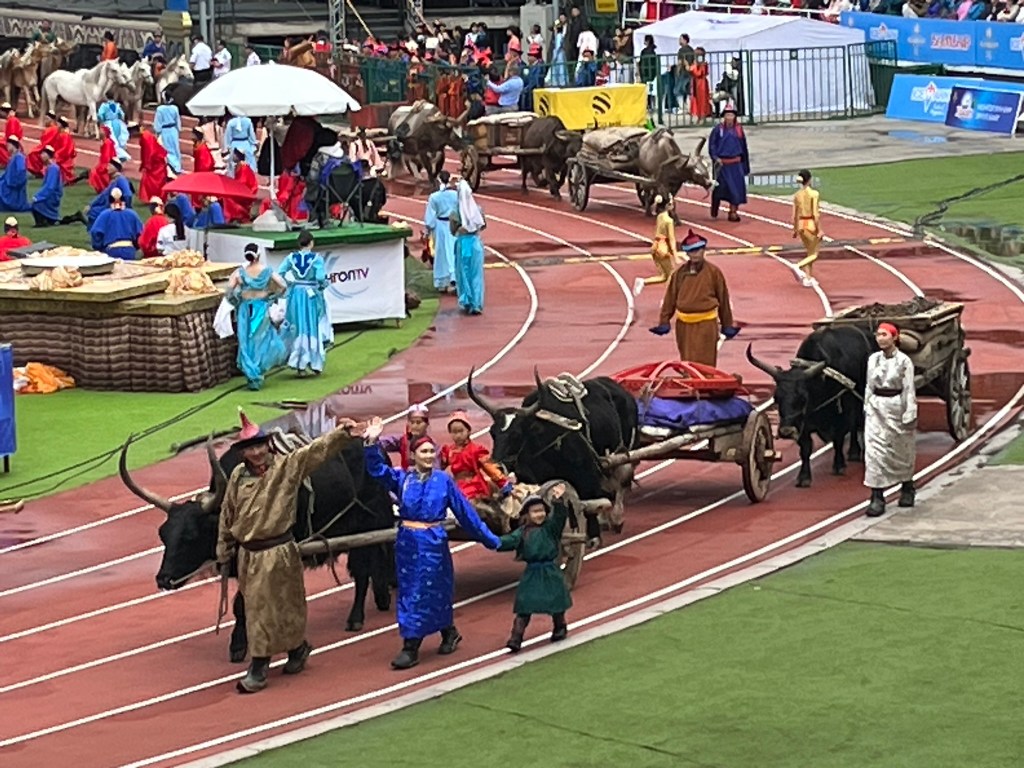
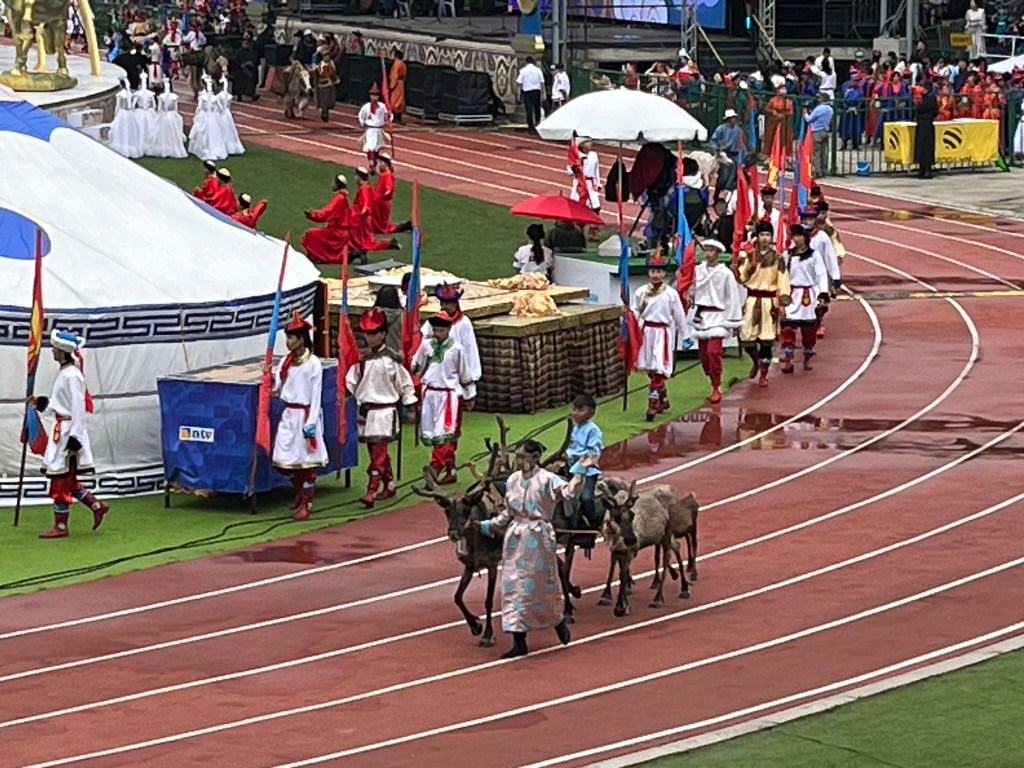
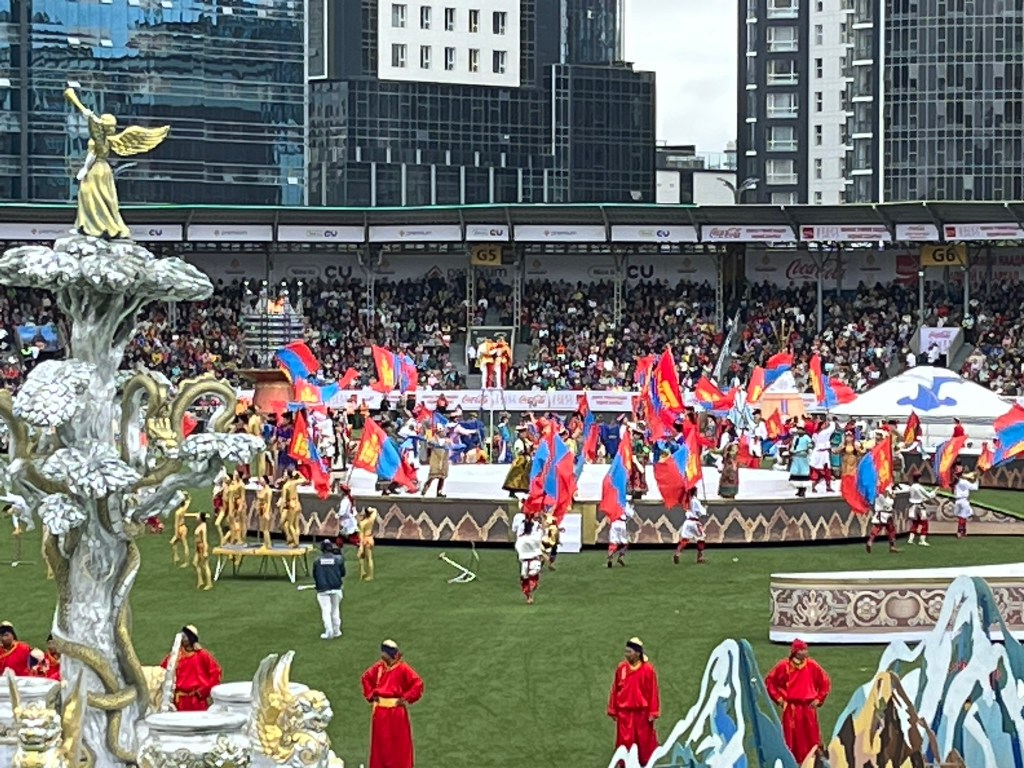
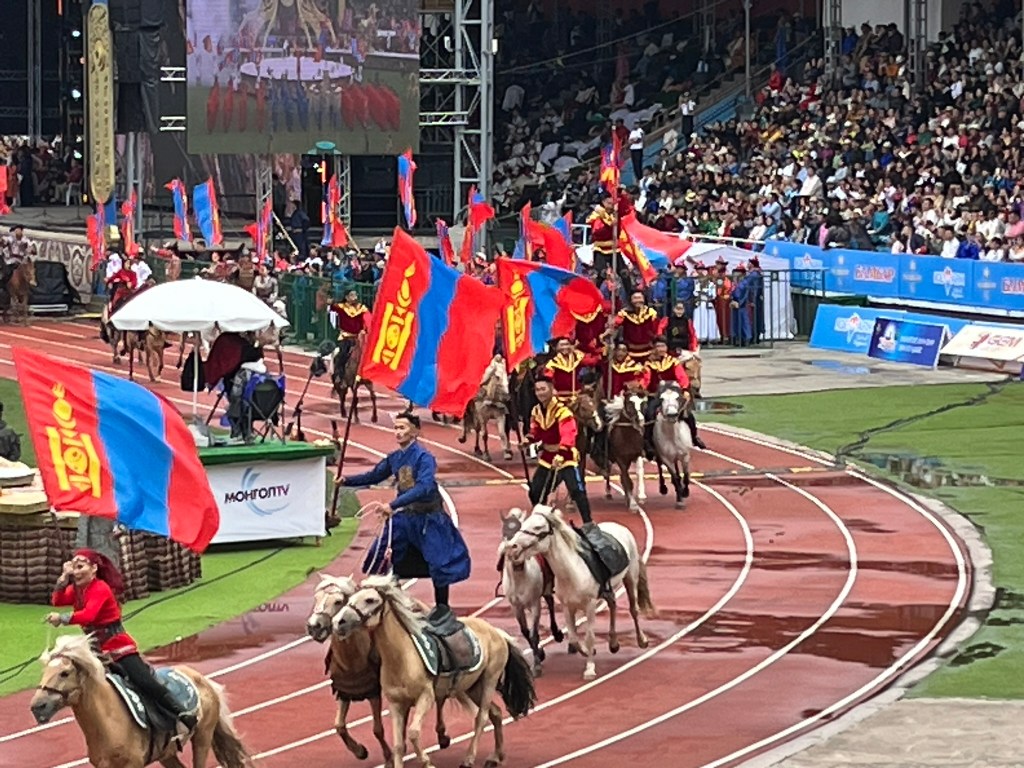
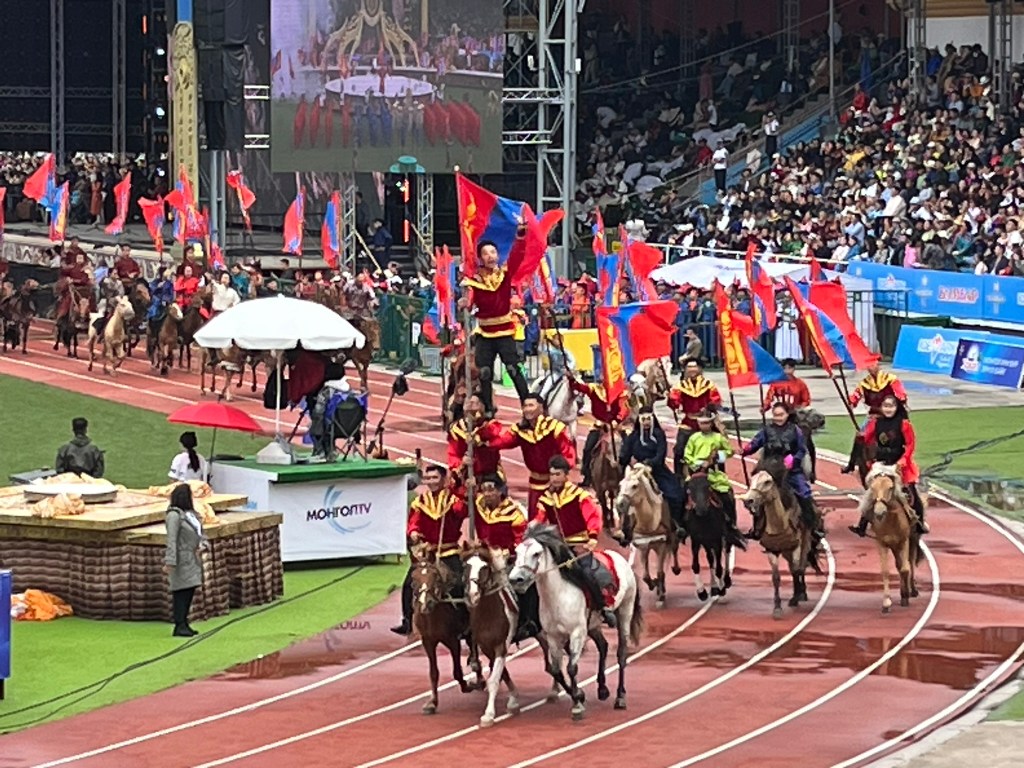
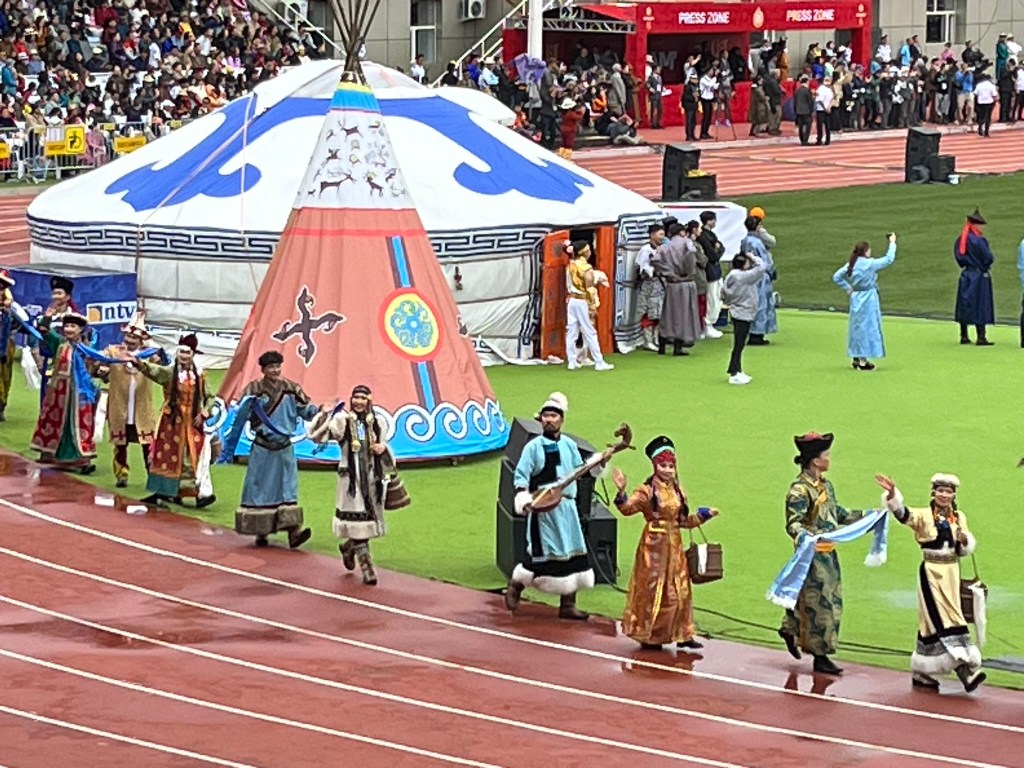
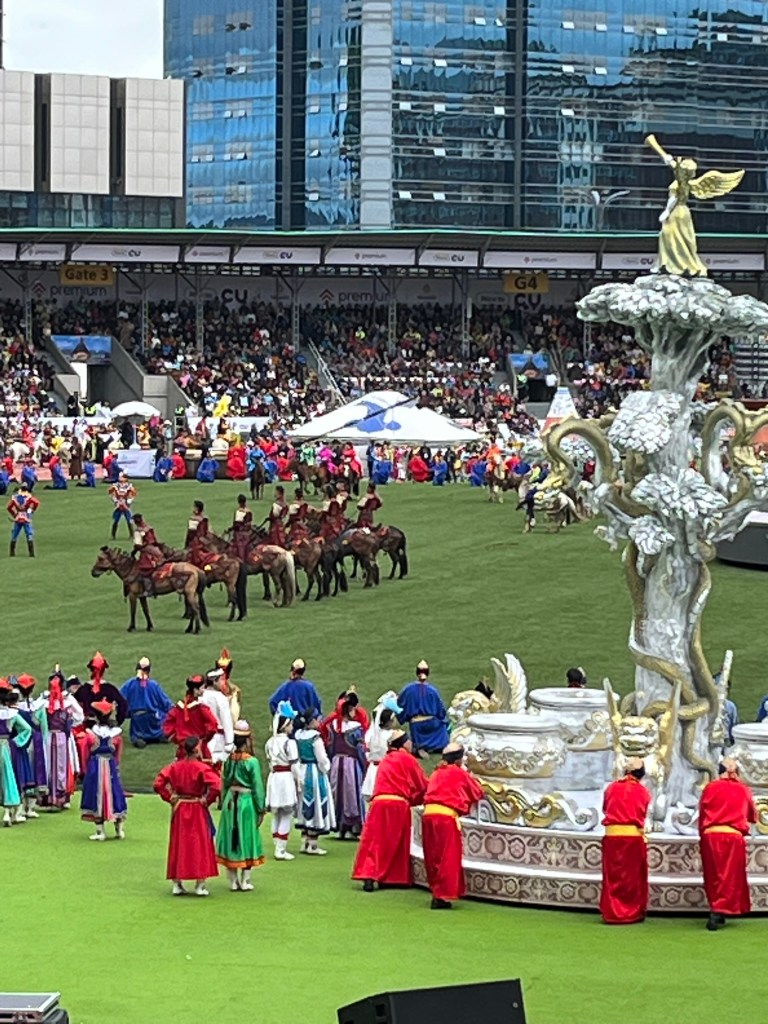
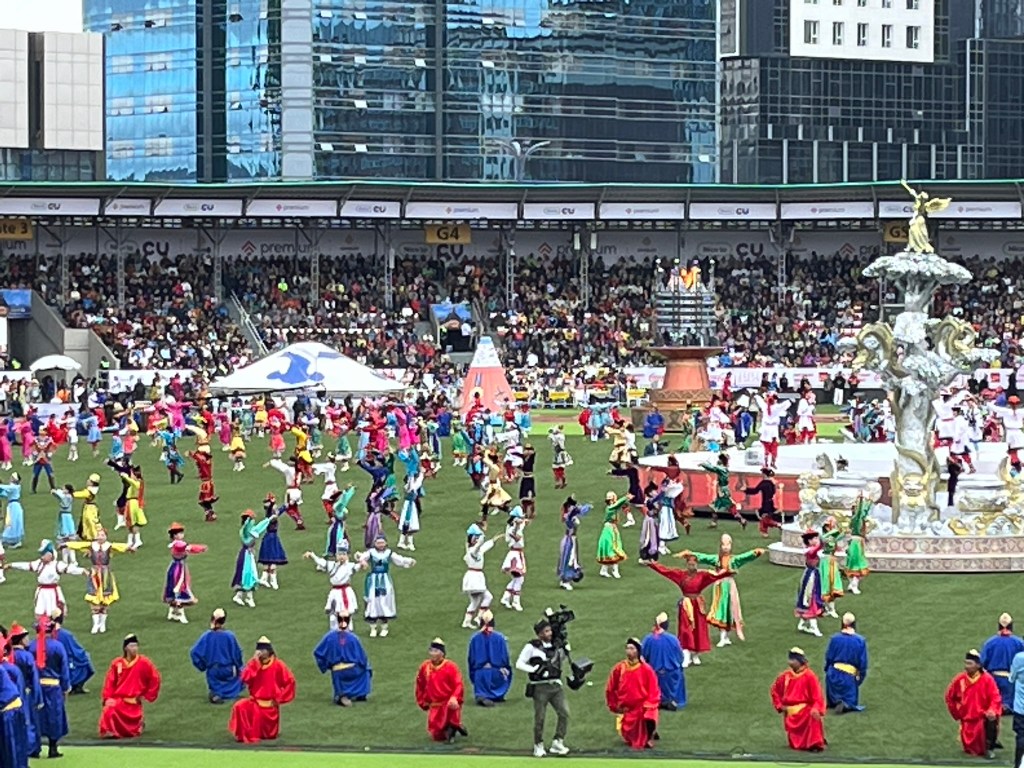
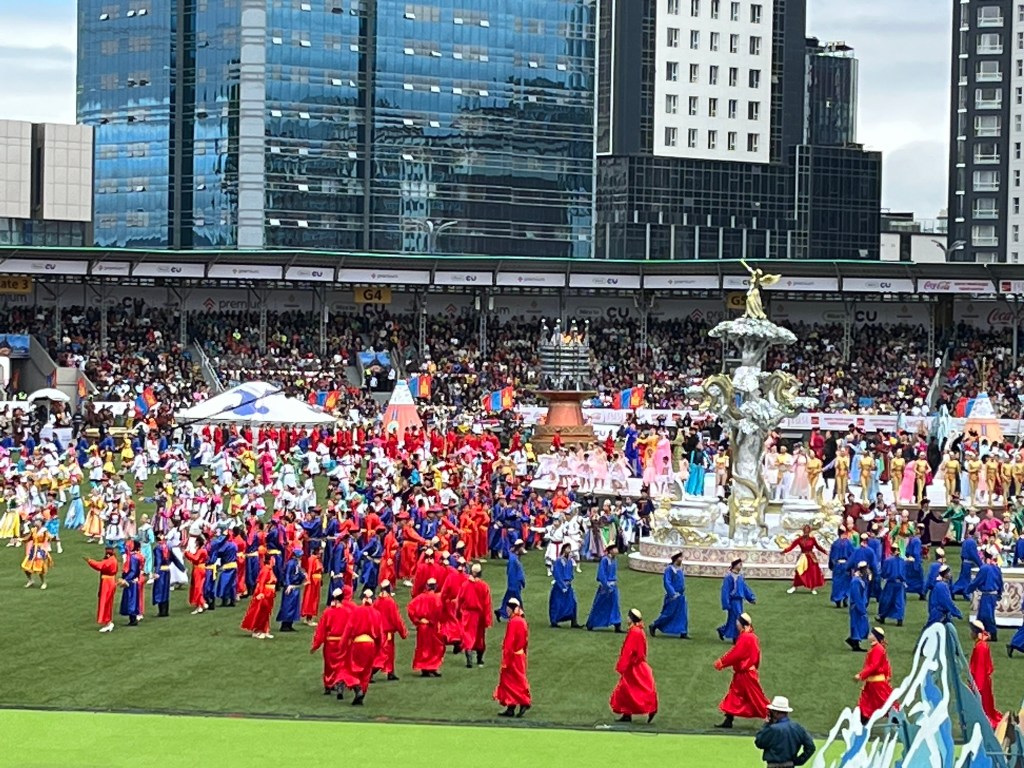
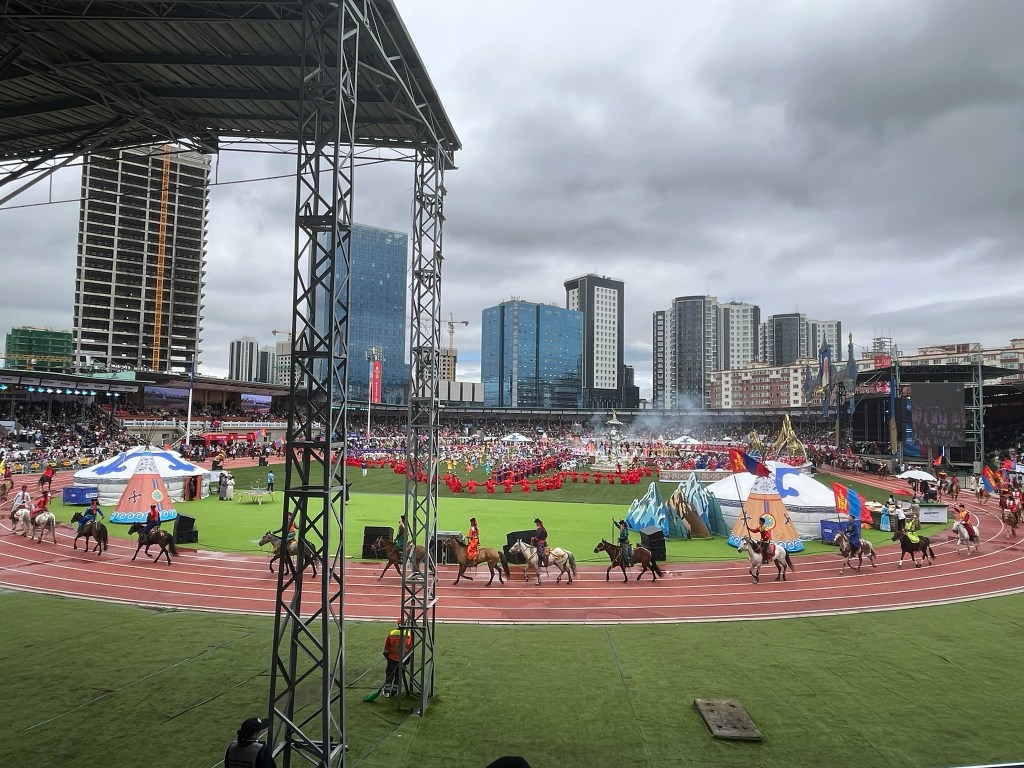
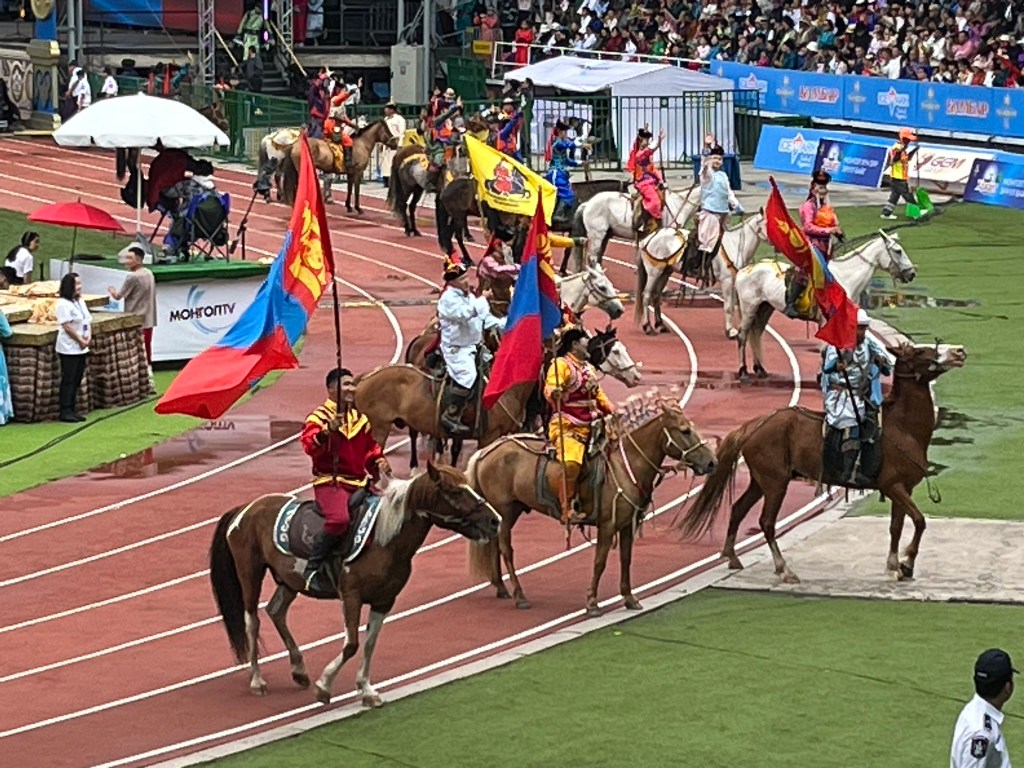
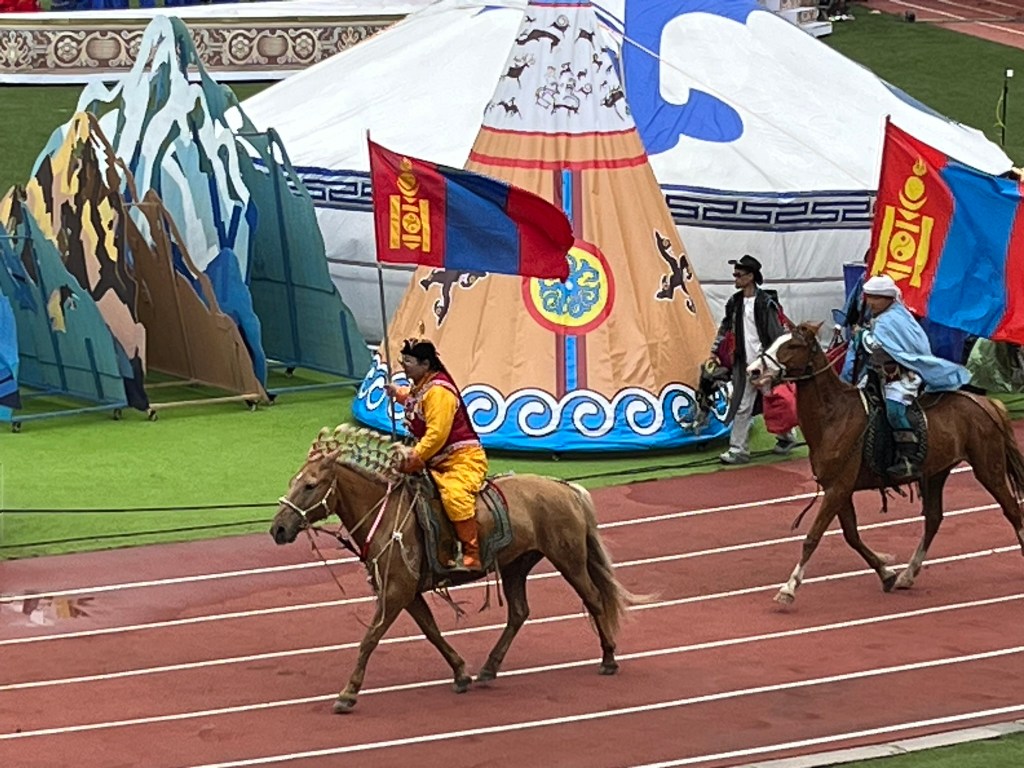
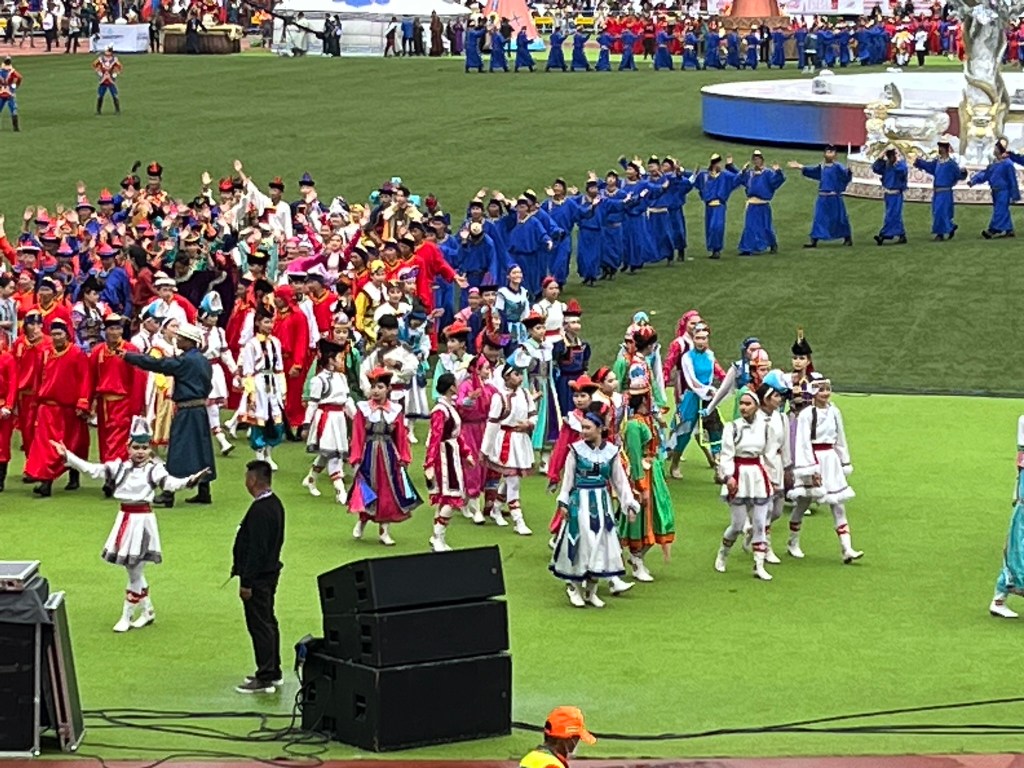
It’s difficult to provide a full overview of the show. So I will just focus on my favourite bits. The band with the Chinggis Khan military music kicked things off, as the Nine White Banners arrived in the stadium on horse back and was put front and center to the shower. And than military guard to protect the banners was positioned. We then had a speech from the President of Mongolia, which obviously we couldn’t follow, although it was clear Chinggis Khan was mentioned a number of times. And then the show got going. I especially liked the people travelling around the edge of the running track – we had families with horse and cart, reindeers, camels carrying packed up gers, yaks and their ownerss all representing the east, south, west and north of the country. There were horse gymnasts doing tricks, soldiers dressed in olden-day Mongol outfits, others waving big Mongolian flags and even a pyramid of people racing around on the back of three horses. There was a traditional orchestra, alongside modern Mongolian pop stars, contortionists, ballerinas, and hundreds of dancers.
The funniest part was actually watching the change overs from one musical number to another. The performers all hid/changed costumes in 4 gers positioned at the four corners of the grounds. And it was absolutely incredible how many people were going in and coming out of each ger. Hundreds! There must not have been much space to move around at all. I also enjoyed watching the volunteers positioned near our end of the stadium who had helped move around different parts of the set and form a big flag out of people, get given their participation certifications…mid-show. Which seemed a little odd. But I imagine it is a great honor to participate for a Mongolian. The show alone made the trip to Mongolia worth it – the other two weeks travelling around the country was just the icing on the cake.
After a quick khuushuur (a delicious flat fried lamb dumpling that is specially eaten at Naadam) break, the stadium had been reset ready for Round 3 of the wrestling. The tournament starts with 1024 contenders from across Mongolia, champions already in their own provinces. The number of contenders halves each round until Round 10 on the Sunday evening. I had a very specific idea of what the wrestling would look like. One match at a time, with some sort of circle you can’t step out of. And a referee. This is absolutely the opposite of Mongolian wrestling.
There are multiple matches going on simultaneously – and I don’t just mean a few. 25+ at any one time. As soon as one match finishes, the commentator announces new contenders who jog onto the grass and join the chaos. And there is no boundary where each match is played – you can move about anywhere on the field, regardless if you are moving into another matches way. It sounds like it would be chaotic, and when you first start watching your eyes don’t know who to follow or where to look. However, the wrestlers elegantly step out of each others ways and seem to know who they are fighting. My idea of what it would be like was a bit silly to be honest – how were they going to get through 128 matches in Round 3 in one afternoon with 7 more rounds to go!
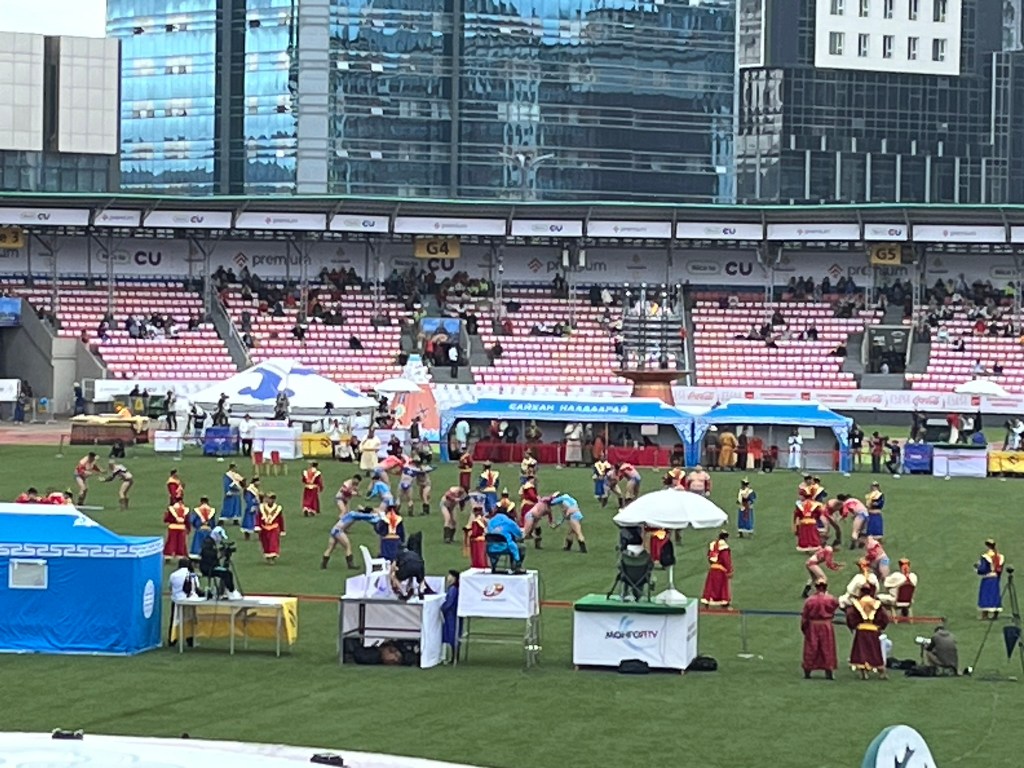
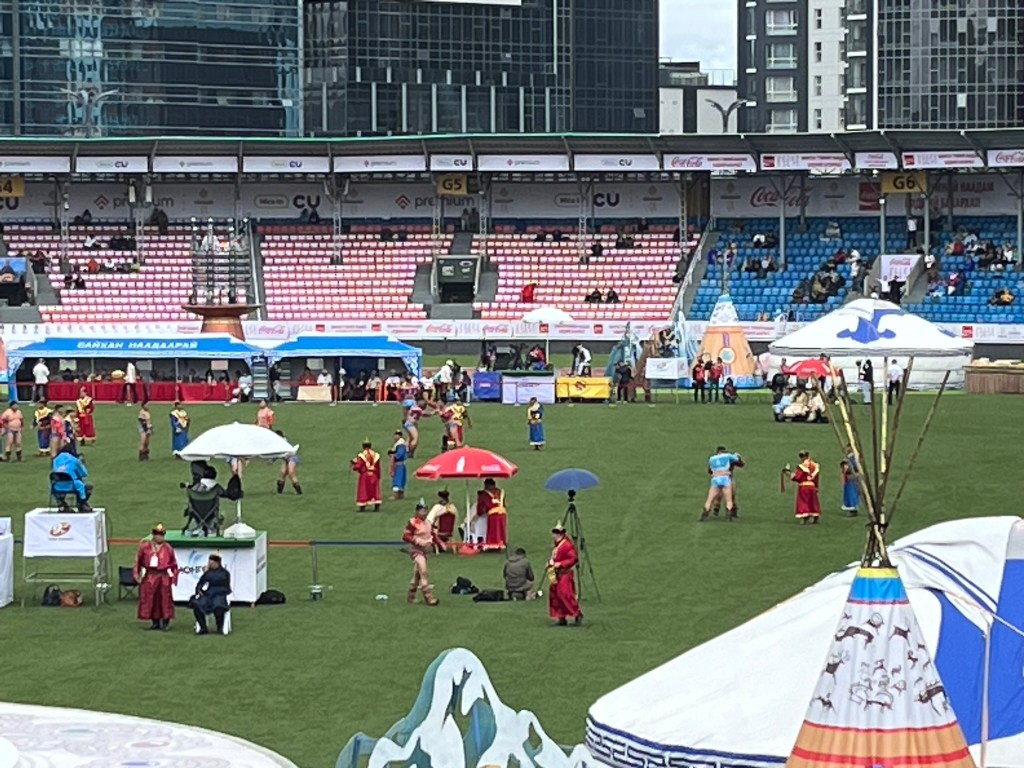
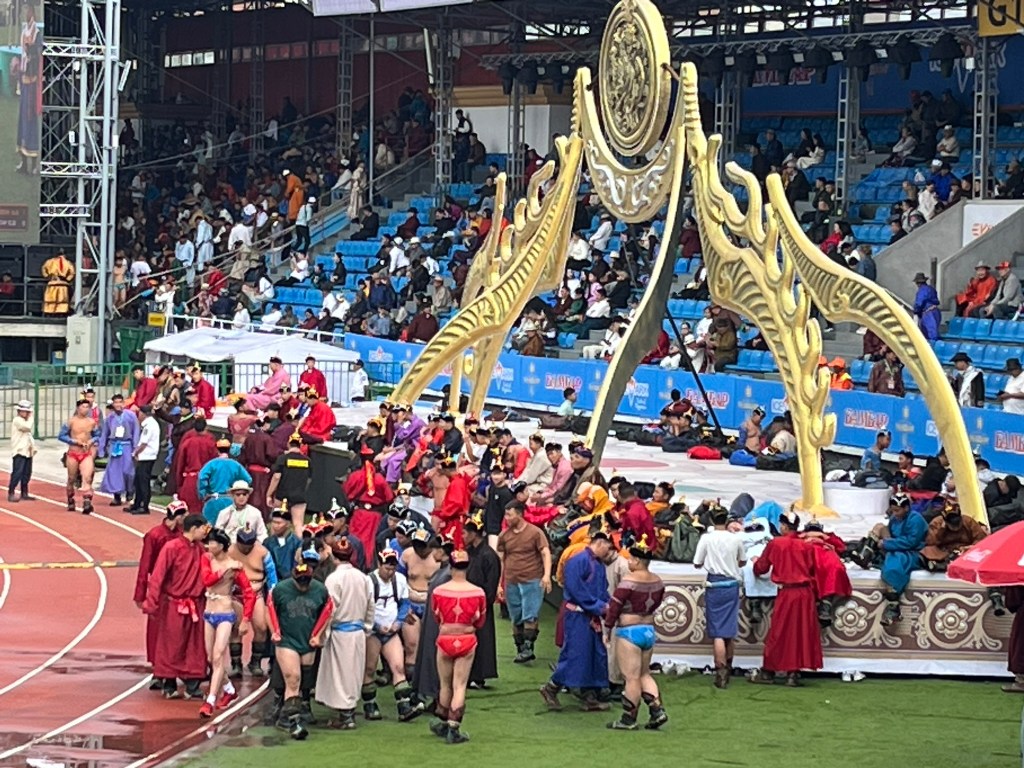
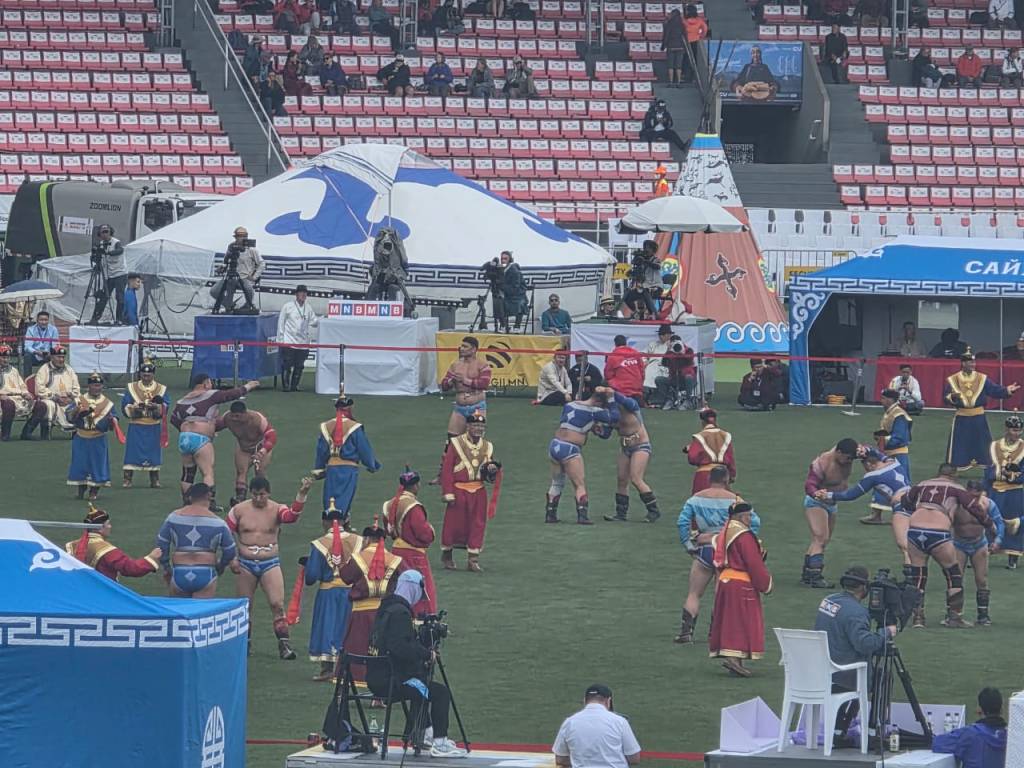
I’m super glad we got to go to the training camp before the festival as it felt like it was much easier to jump into these unfamiliar sports – but seeing the competition live made so many other things clear. Firstly – there is genuinely no time limit – the match lasts as long as it needs to, although after 20 minute there does seem to be a transition to a more formal ‘pants pulling’ setup. Some of the matches in later rounds ran 45 minutes plus and the two wrestlers looked exhausted. Secondly, the 2 folks dressed in blue and red respectively, who I thought were the referees are actually more like ‘encouragers’, giving their respective contender words of encouragement whilst holding their ‘pointy hat’ (yes this is the official name of the hat).
The pointy hat is very important – the wrestlers wear it when they jog onto the field and pass it to their ‘encourager’ after which they go and do their eagle dance before starting the contest. Once there is a winner, there is some sort of exchange between contestants where the winner pats the loser on the bum, then has their hat place backed on their head before heading off to do an eagle dance around the Nine White Banners. The top referees sit at 4 corners of the field and watch across all the matches, only getting involved if a match goes over 20 minutes and pants pulling must begin. The other thing that is really impressive is the grace of each wrestler. This is obviously a violent sport, however throughout the entire competition we did not see a single argument break out, and every loser lost graciously. Other sports could probably learn a thing or two from the Mongolians.
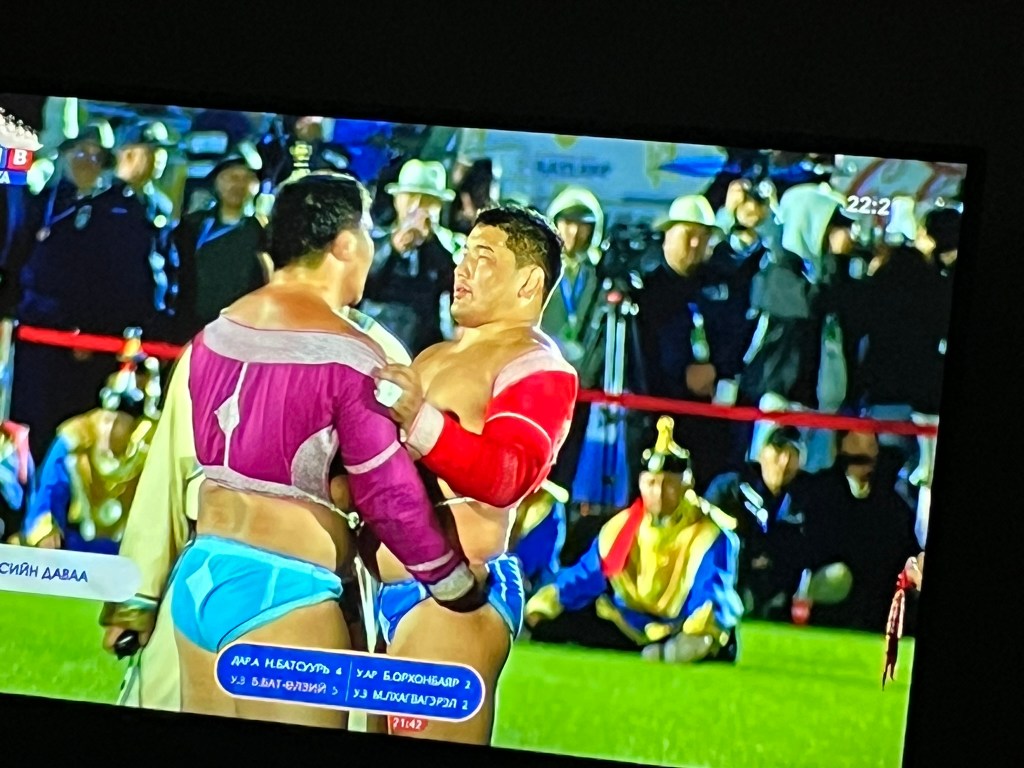
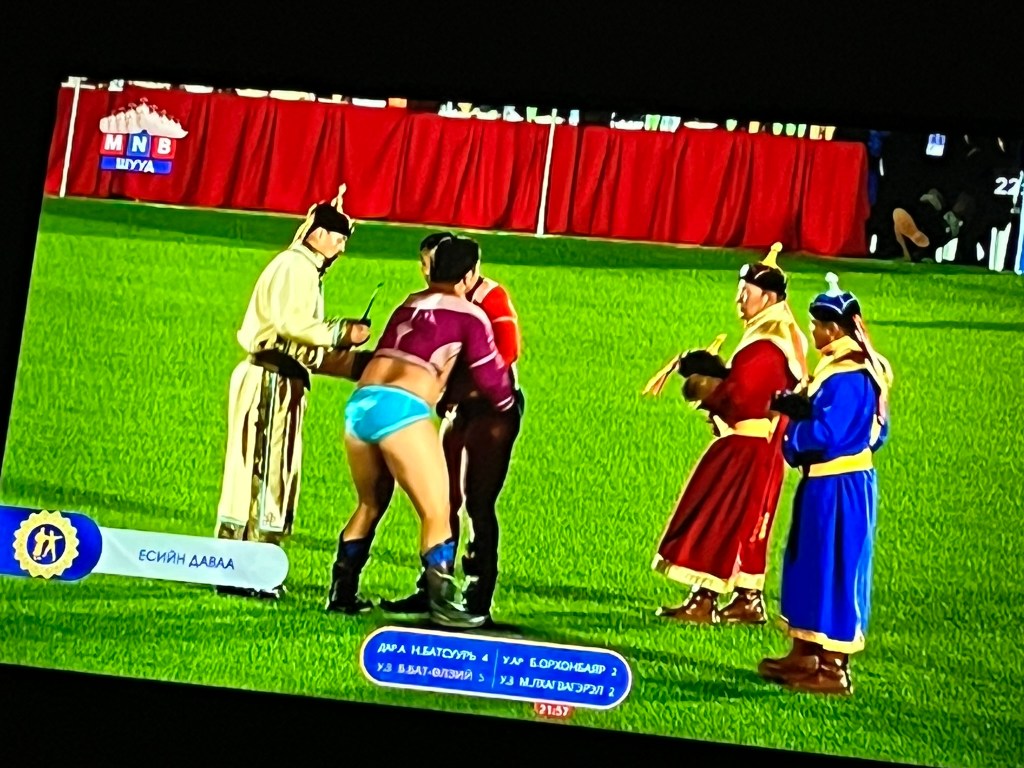
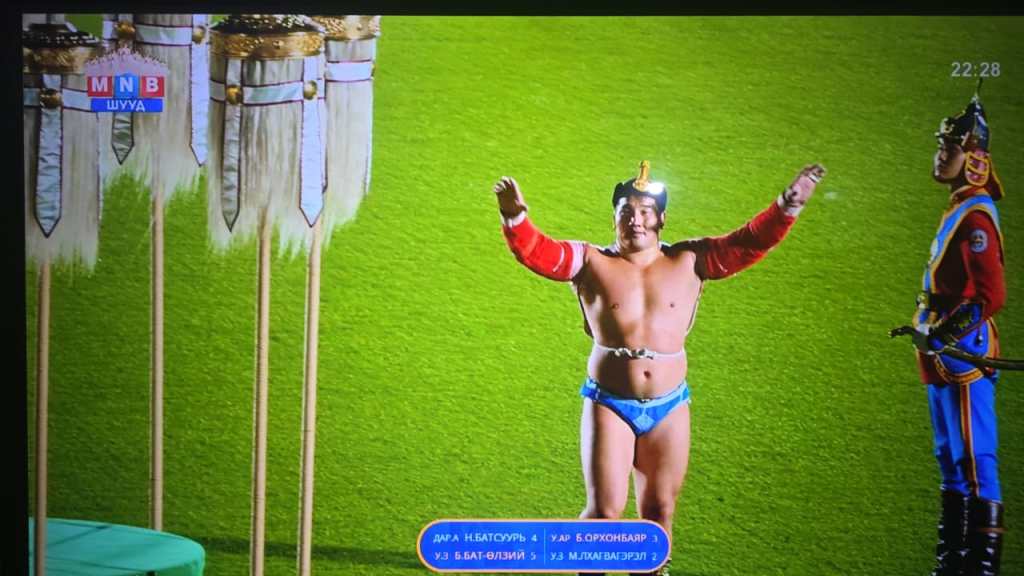
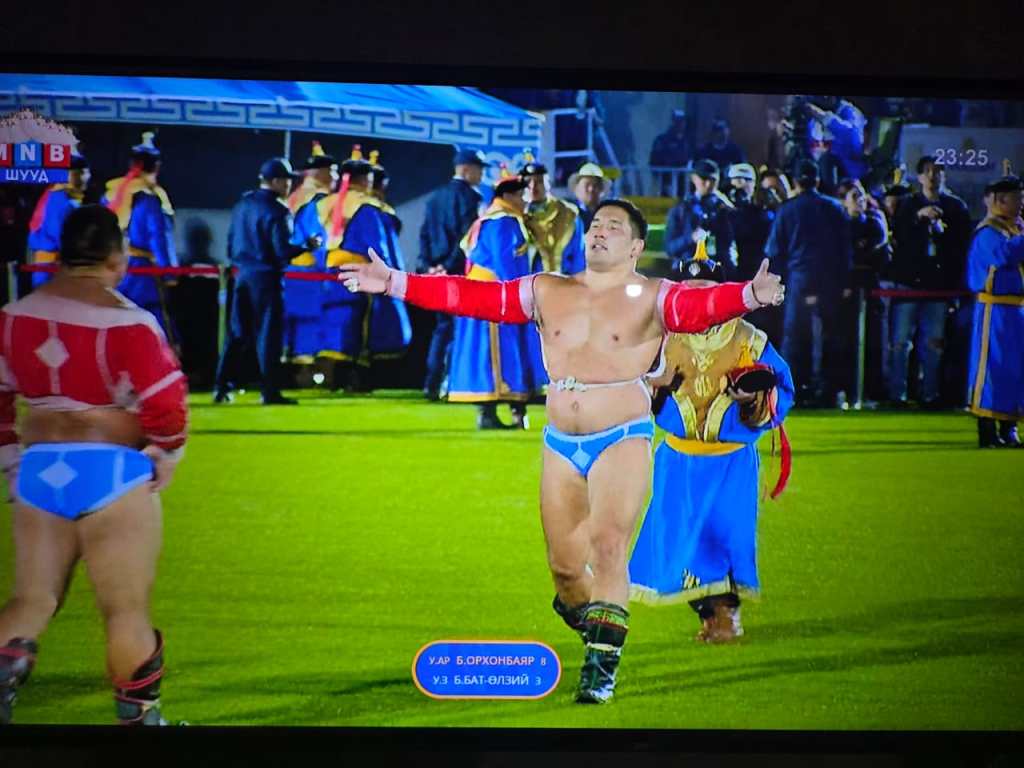
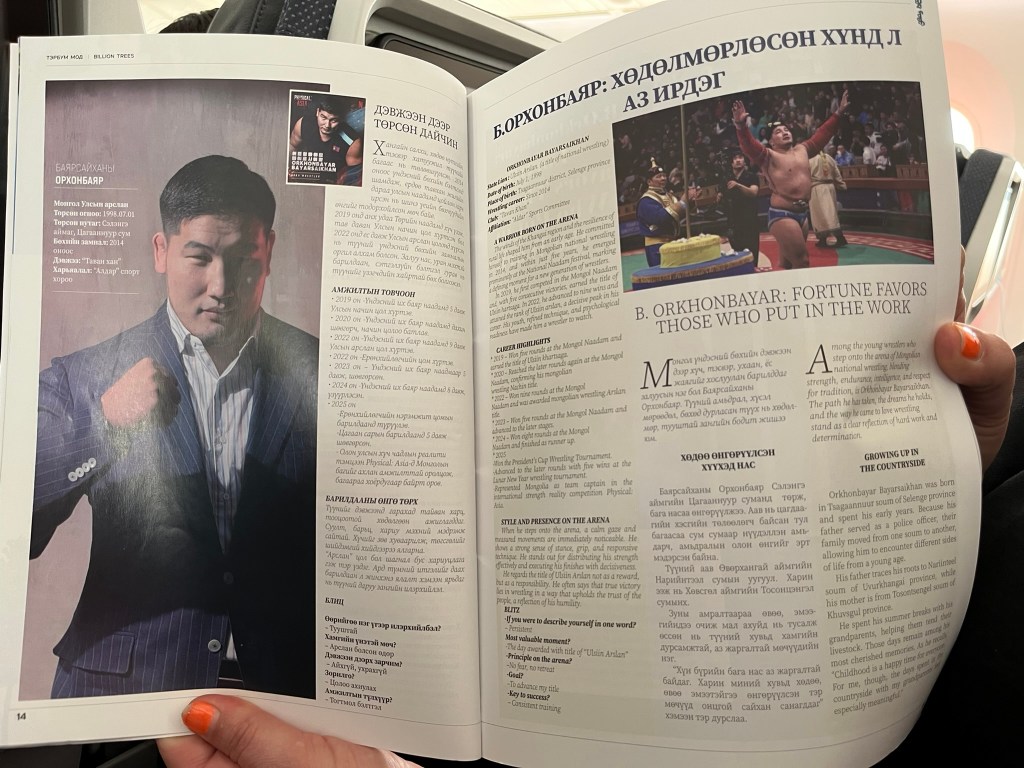
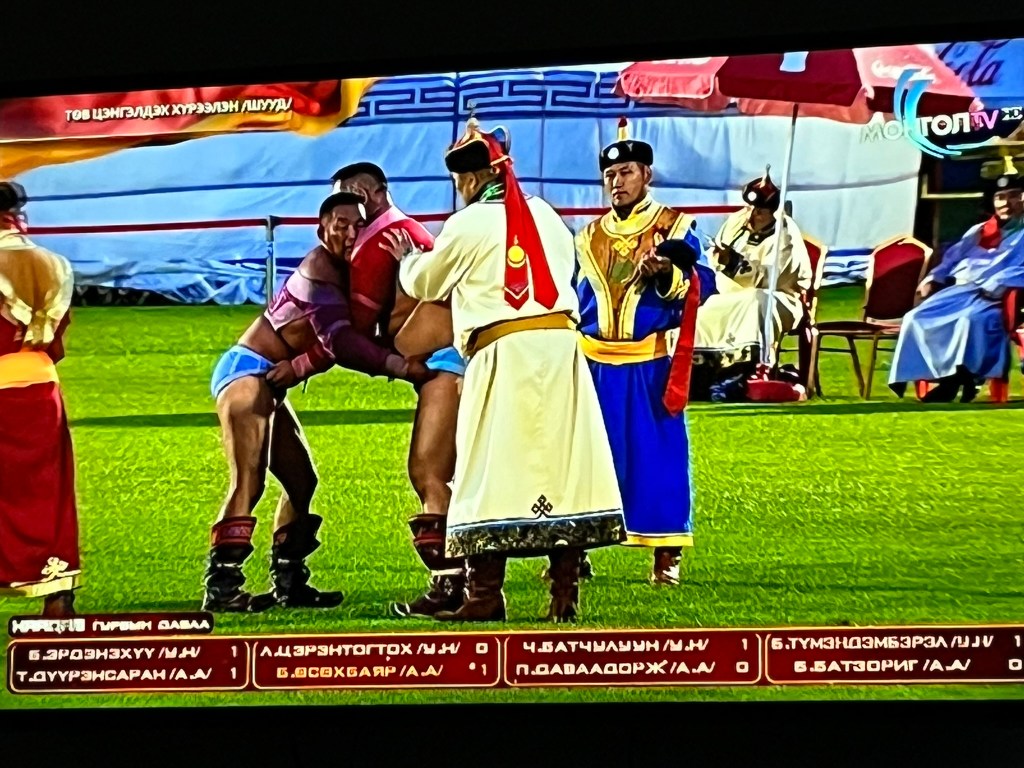
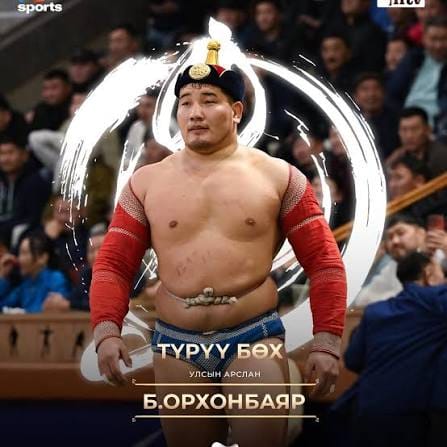
We caught a number of the later wrestling rounds back at the hotel on the tv. This was a good contrast. At a stadium you got the big picture view of everything going on, but on TV you could watch the matches much more closely and appreciate the skill of the contestants. The eventual winner was our guides favourite and from her home province – Orkhonbayar Bayarsaikhan – winning all 10 rounds and securing the prestigious State Lion title for the first time.
After Round 3 of the wrestling we went exploring – to watch the archery and knuckle bone shooting, just a 5 minute walk away from the stadium. These (and the early wrestling rounds) are all free for anyone to visit and watch without a ticket – which is pretty incredible. It’s only the Opening and Closing Ceremony plus the later rounds of the wrestling that require a paid ticket.
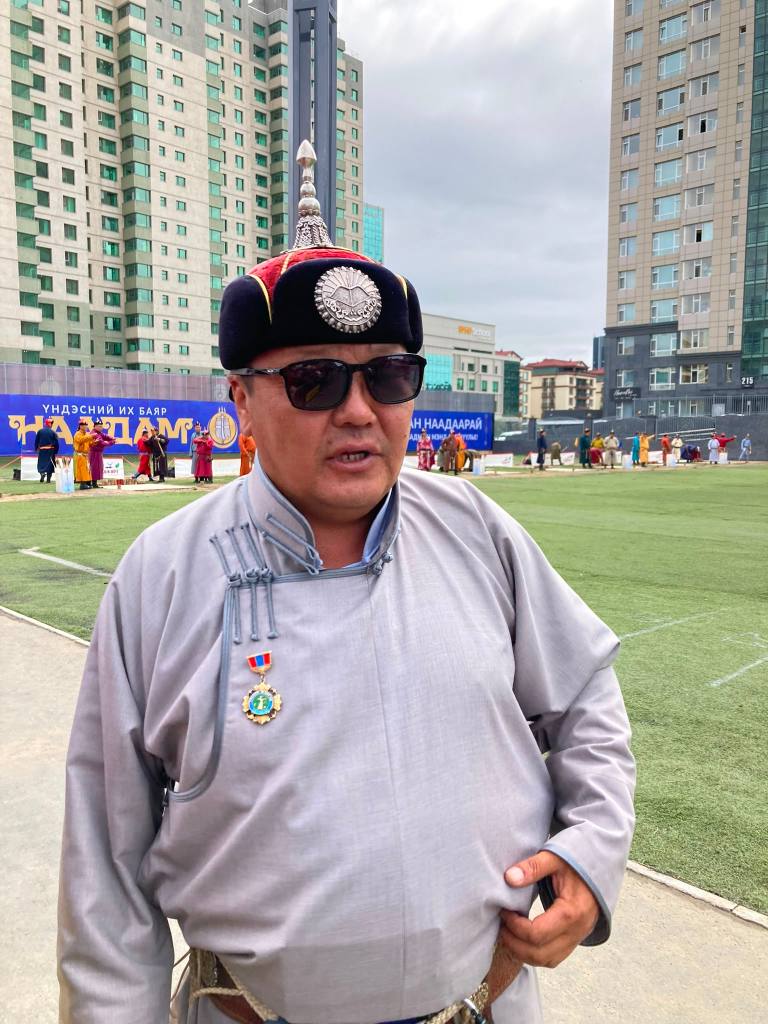
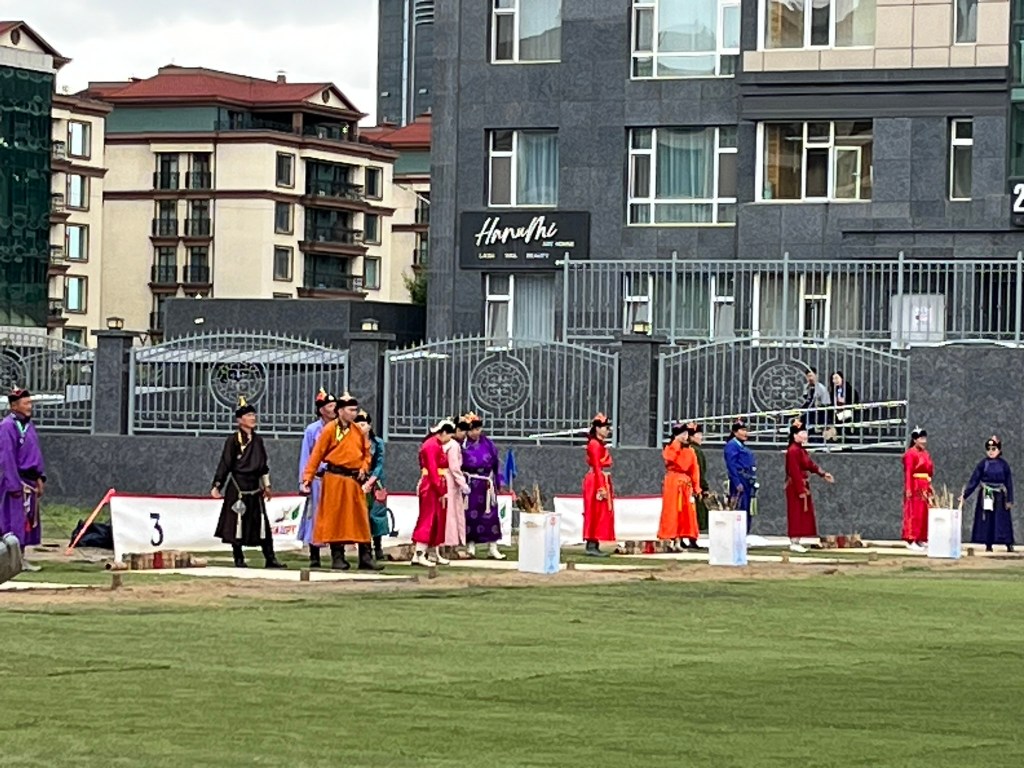
The archery was set up on a long strip of astro turf, with spectators behind and down both sides all the way up to the targets 70m away. Our groups first reaction was to think that there must very few places in the world where you could be a spectator literally beside the target. I guess that’s how confident the archers are. We watched for a little while with groups of 15 coming out to shoot their arrows, alternating between men and women. Our aim to was to find the archer – Daashkaa – whose training camp we had visited, and finally after much debate we spotted him with a grey deel and sunglasses heading towards us. He was kind enough to speak to us for a few minutes and take a selfie with the group, like we were super fans. I wonder if other tourists thought it was strange as a bunch of us started waving frantically as he walked towards us to catch his attention and perhaps even stranger that he stopped and chatted with us, before taking his turn at the target to sing and chant back to his competitors. Unfortunately Daashkaa did not win a medal this year, but one of his team came third in the men’s competition.
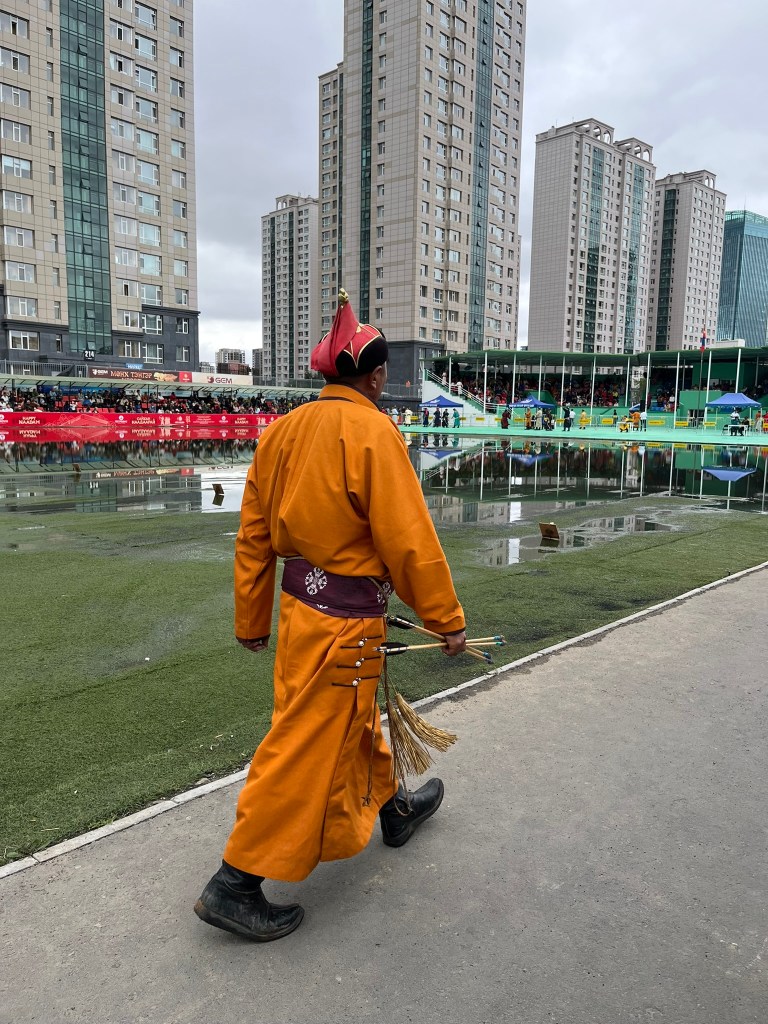
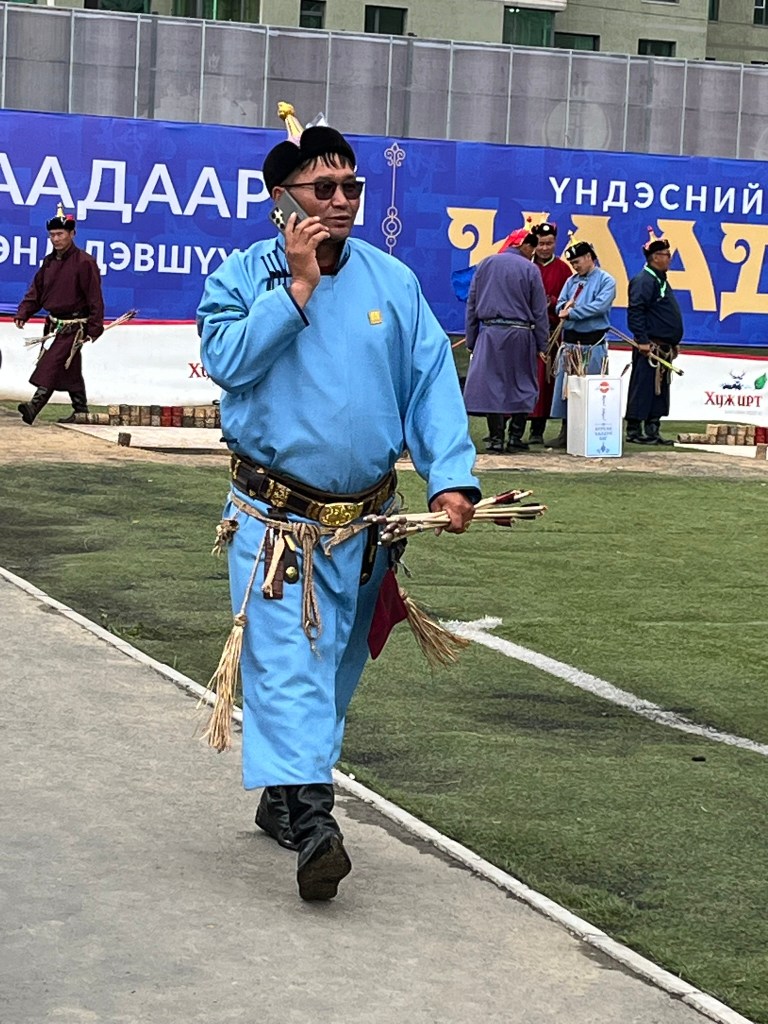
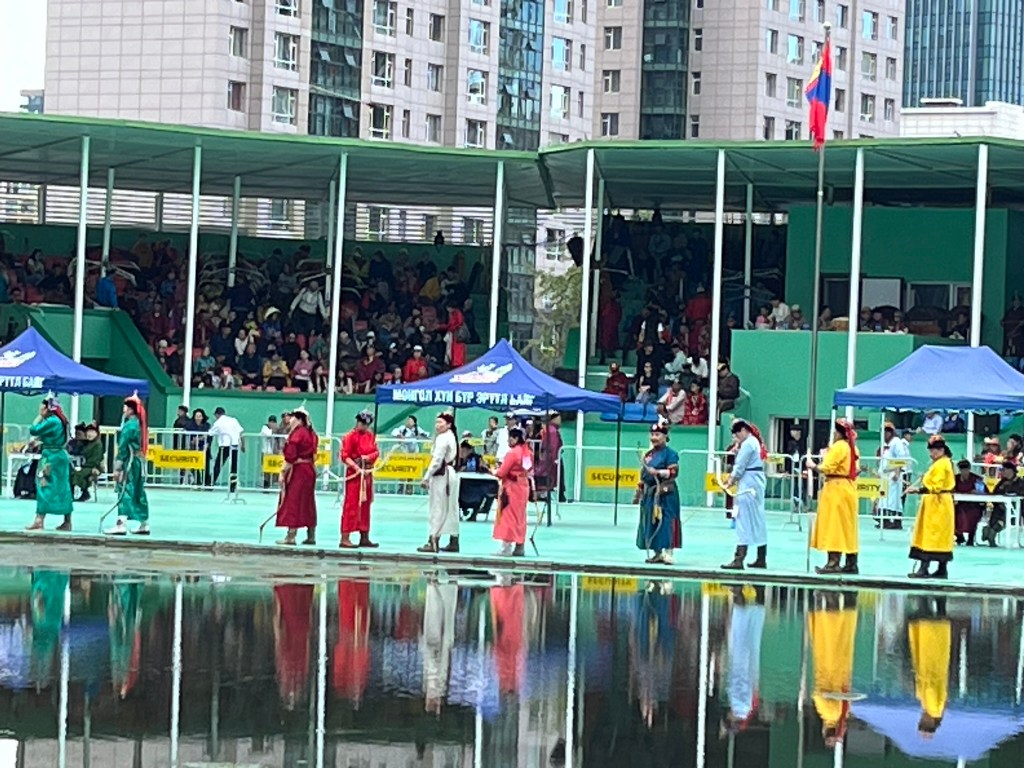
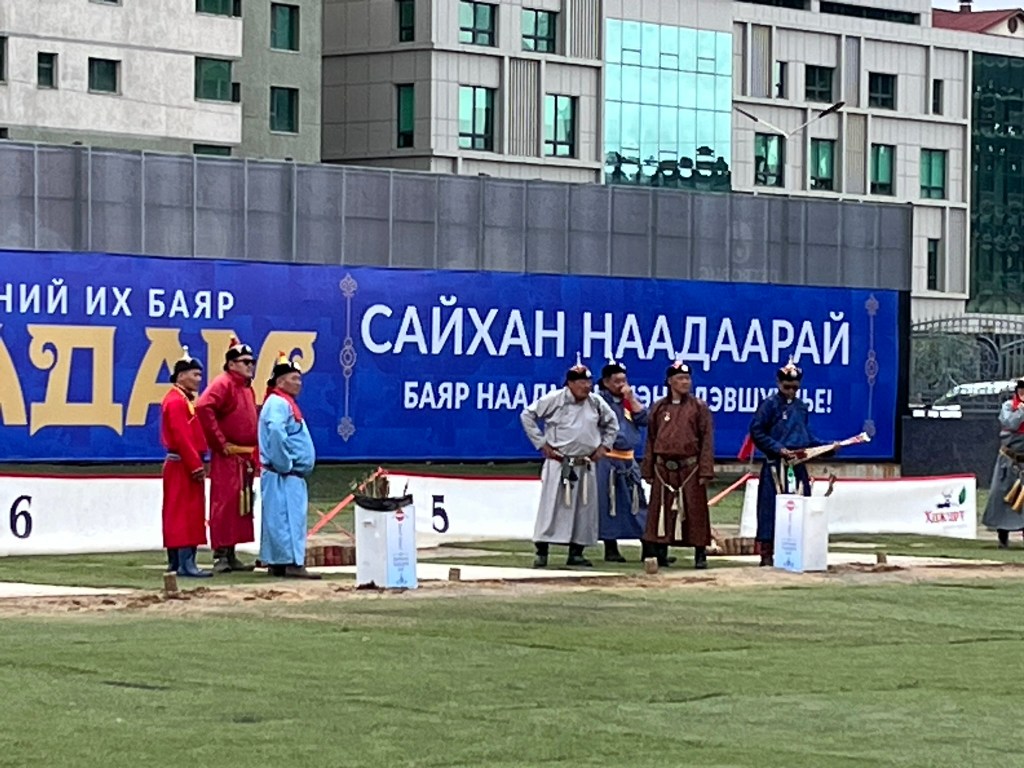
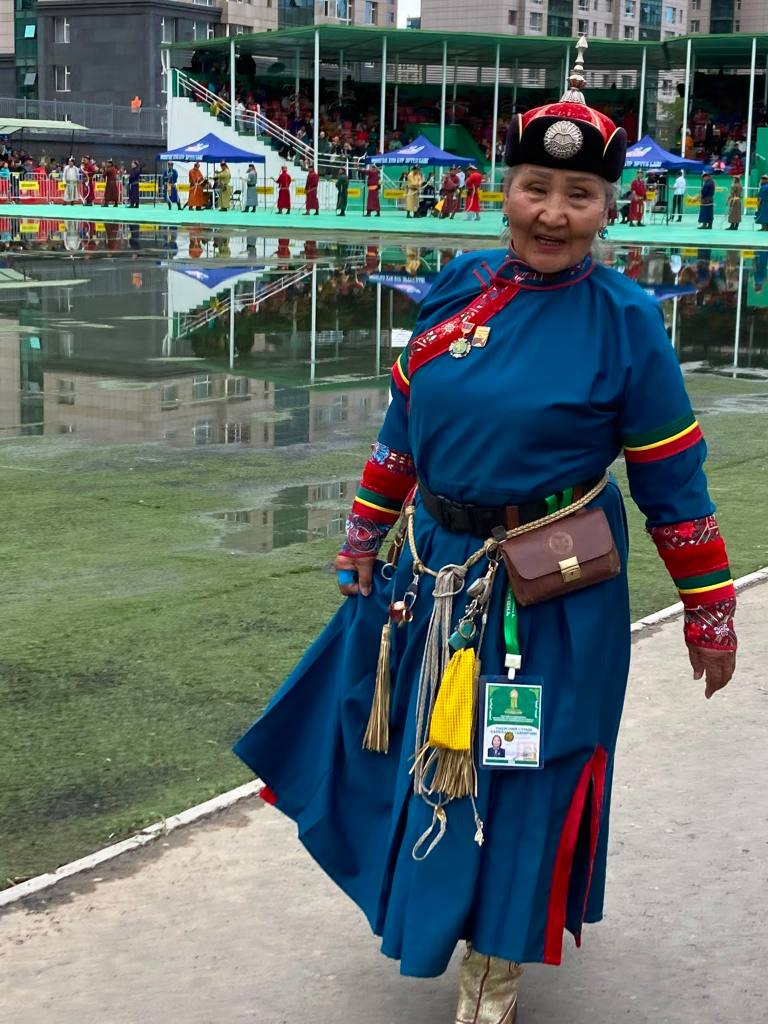
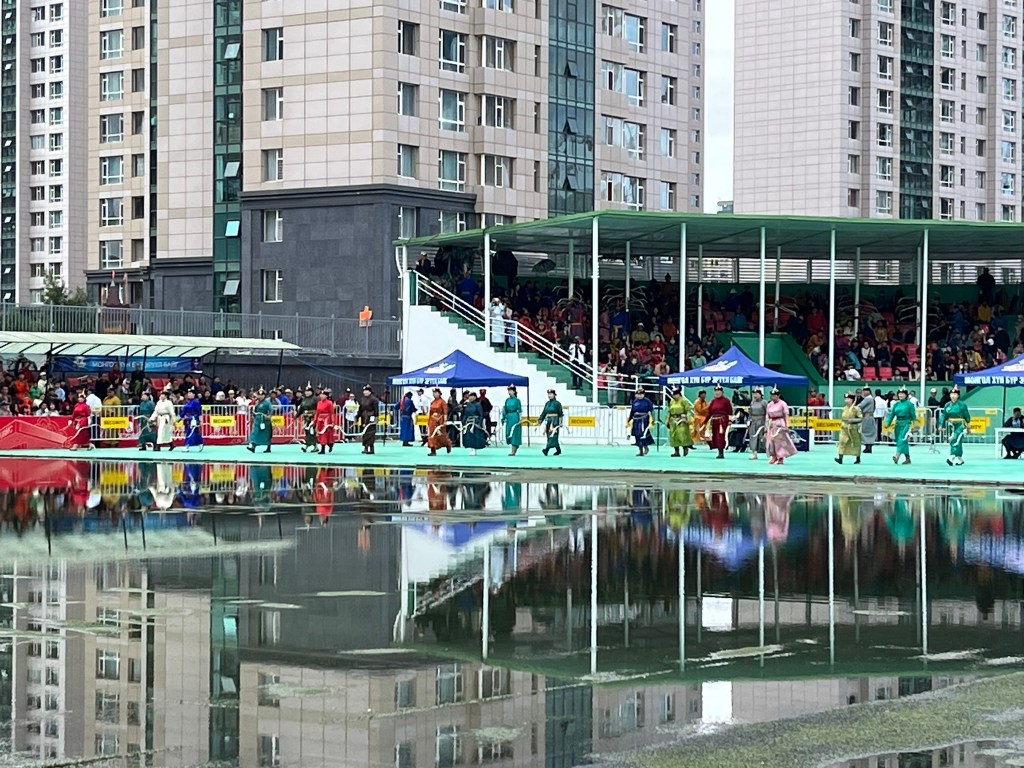
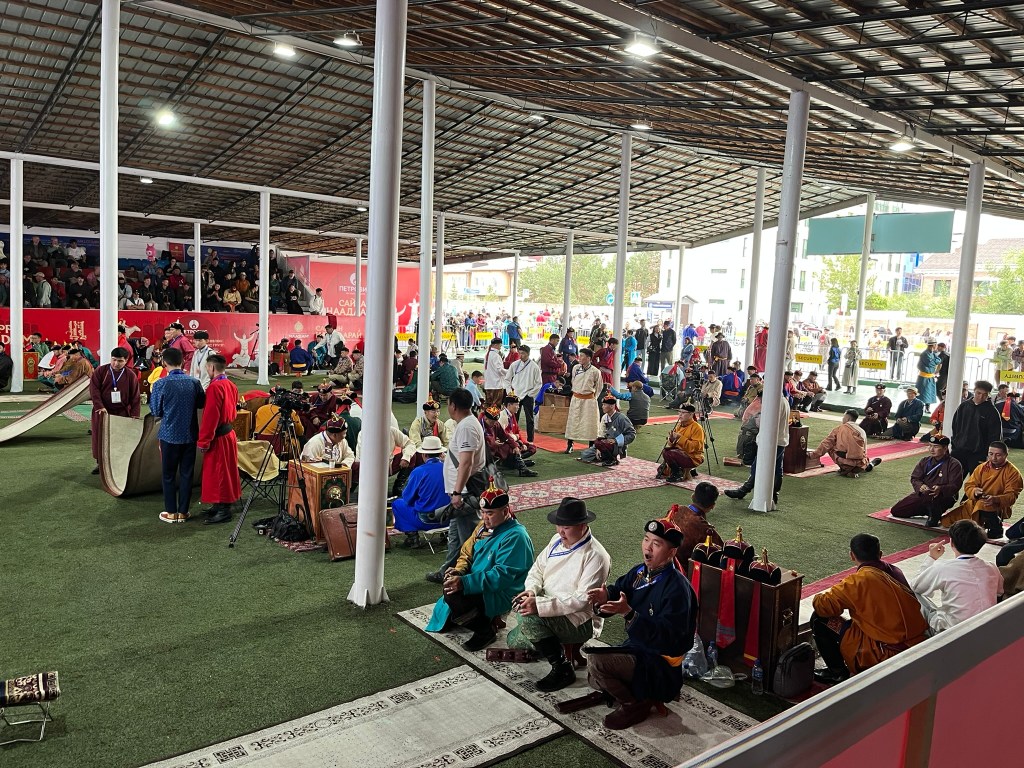
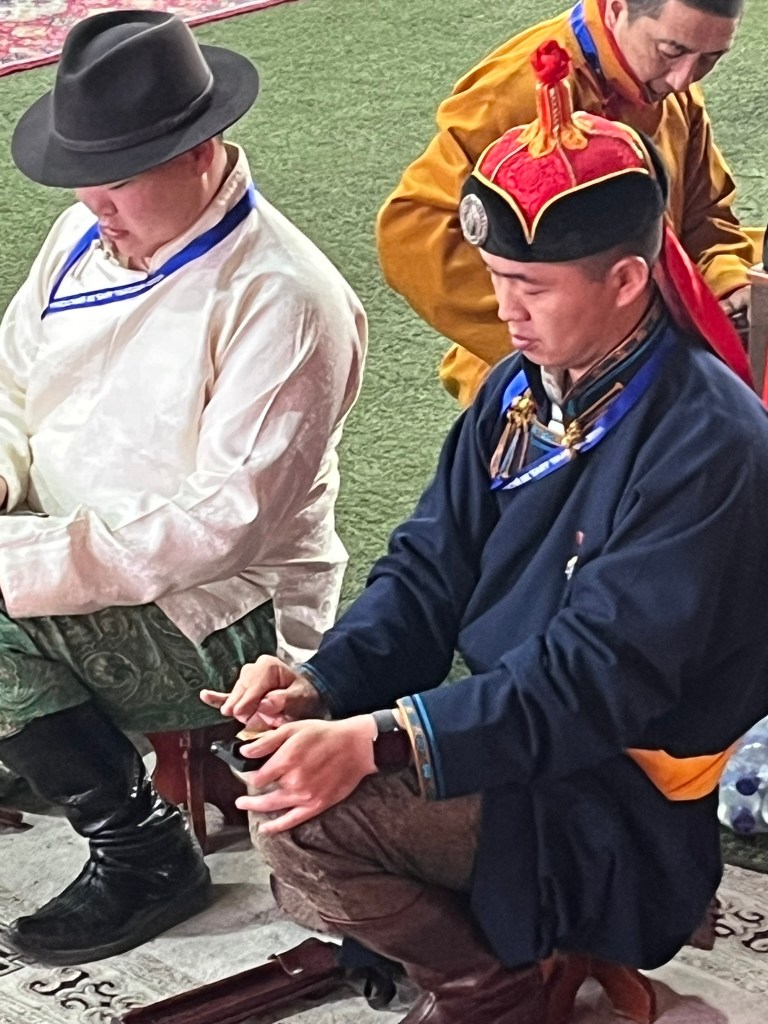
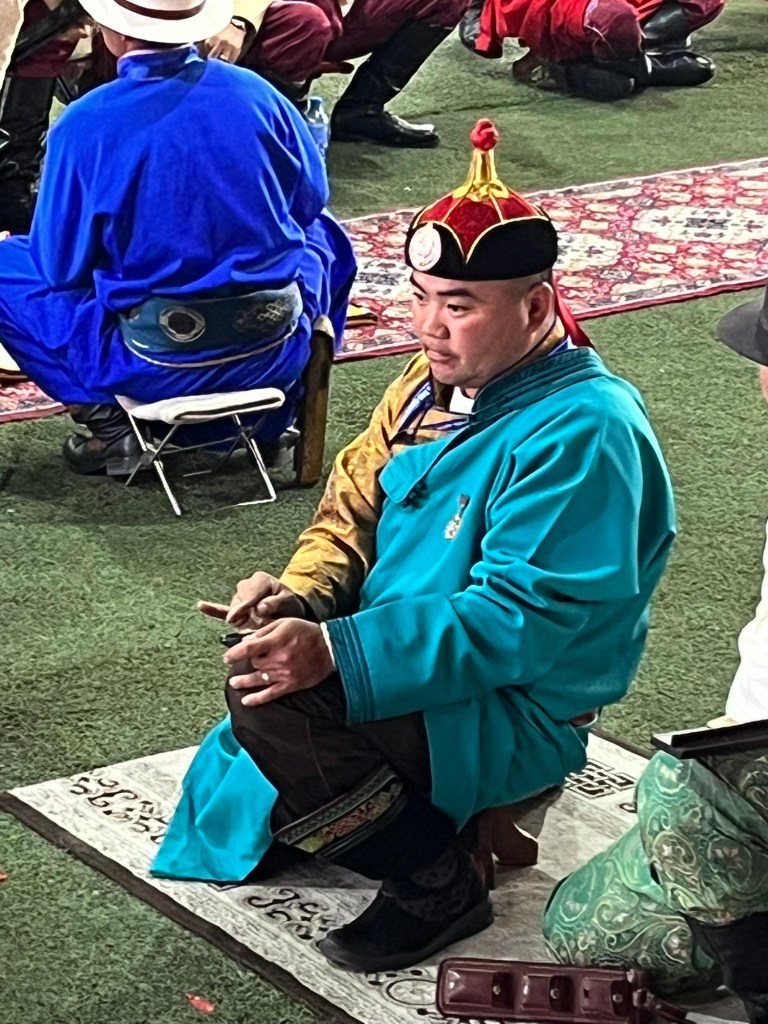
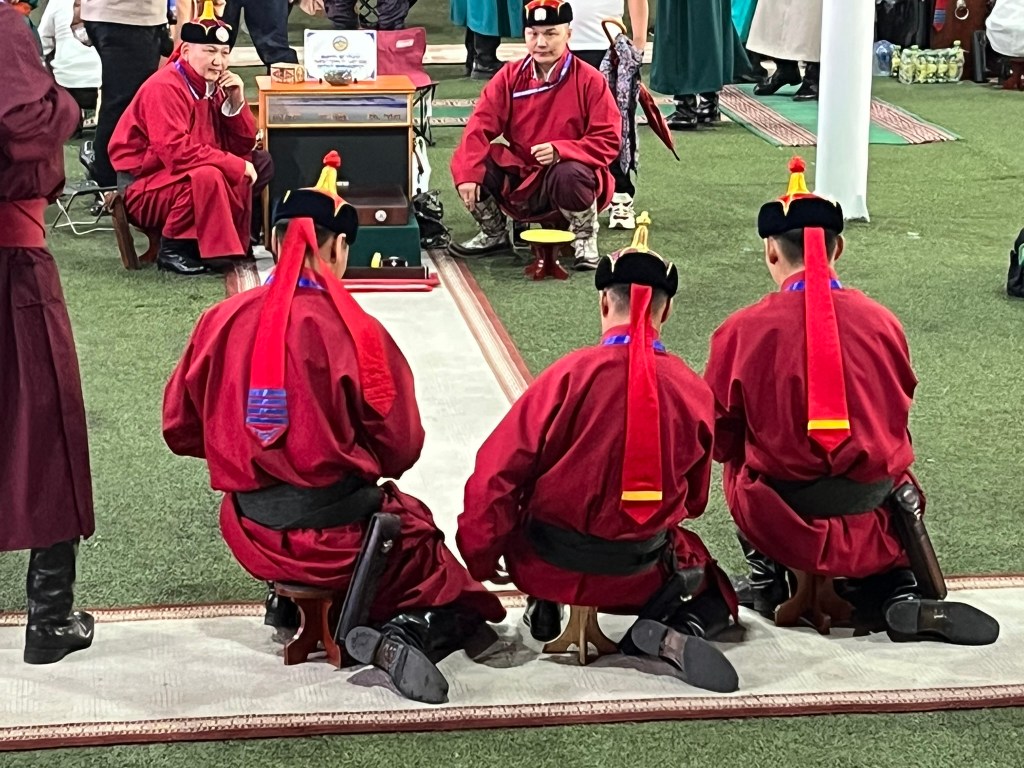
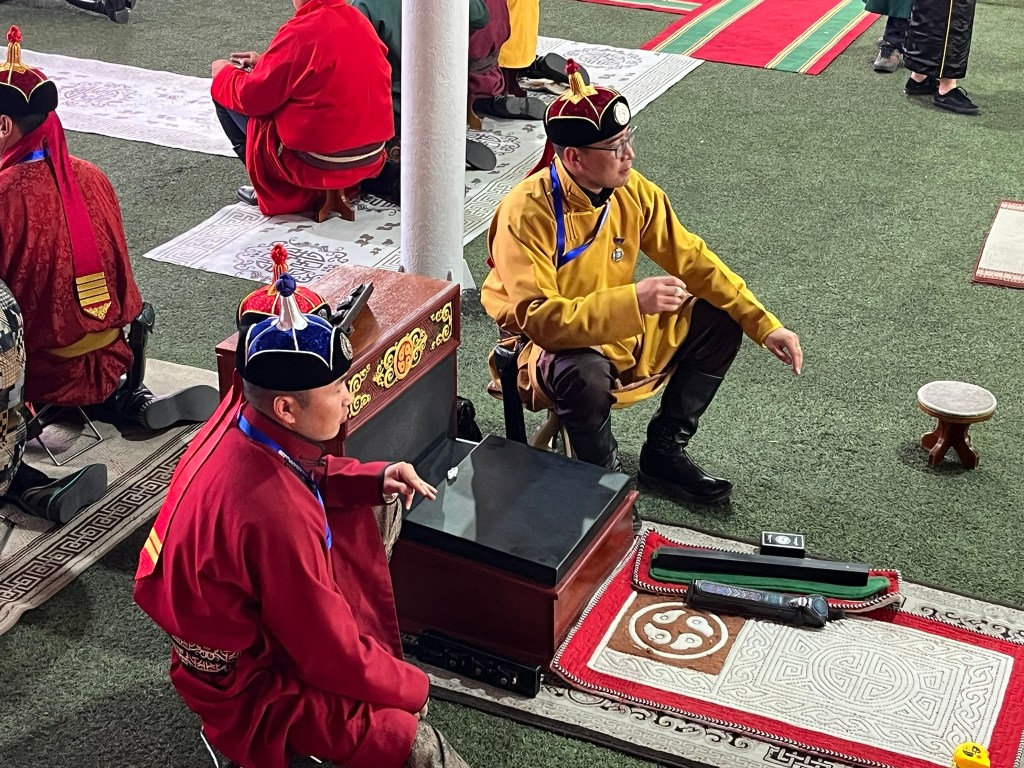
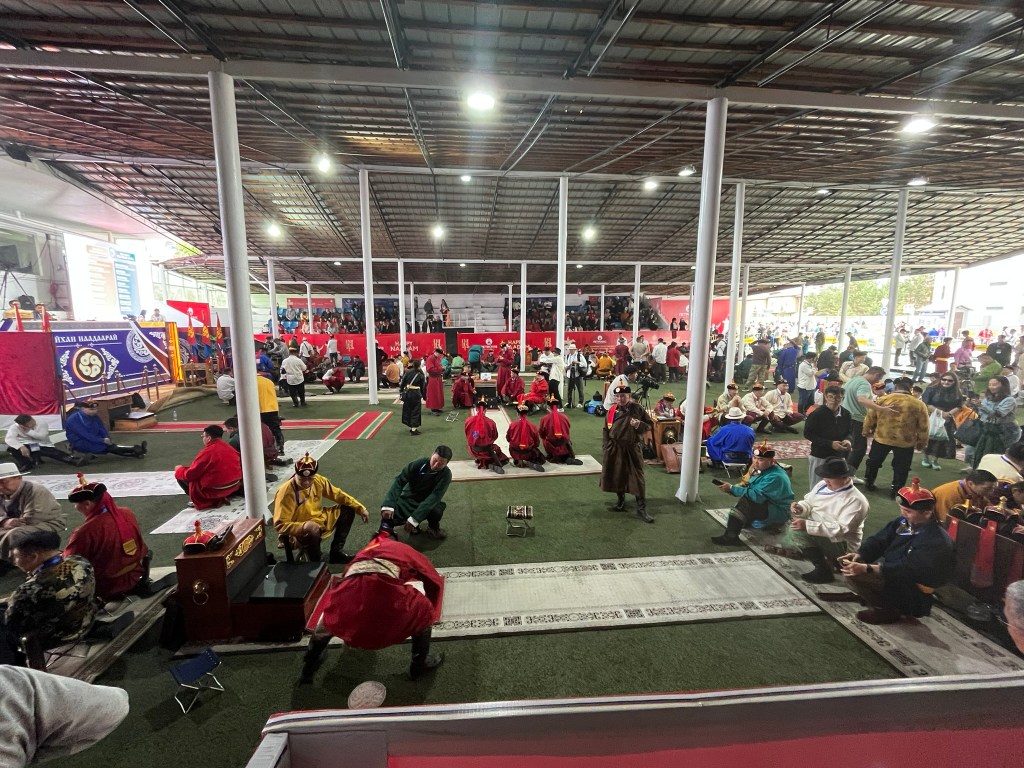
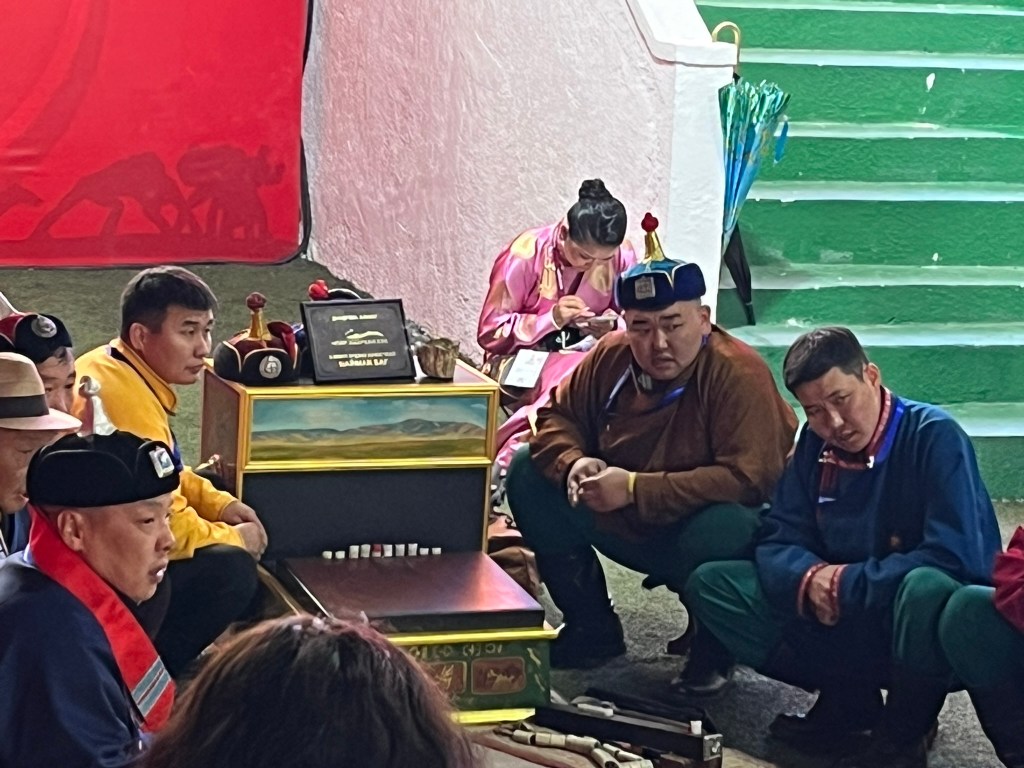
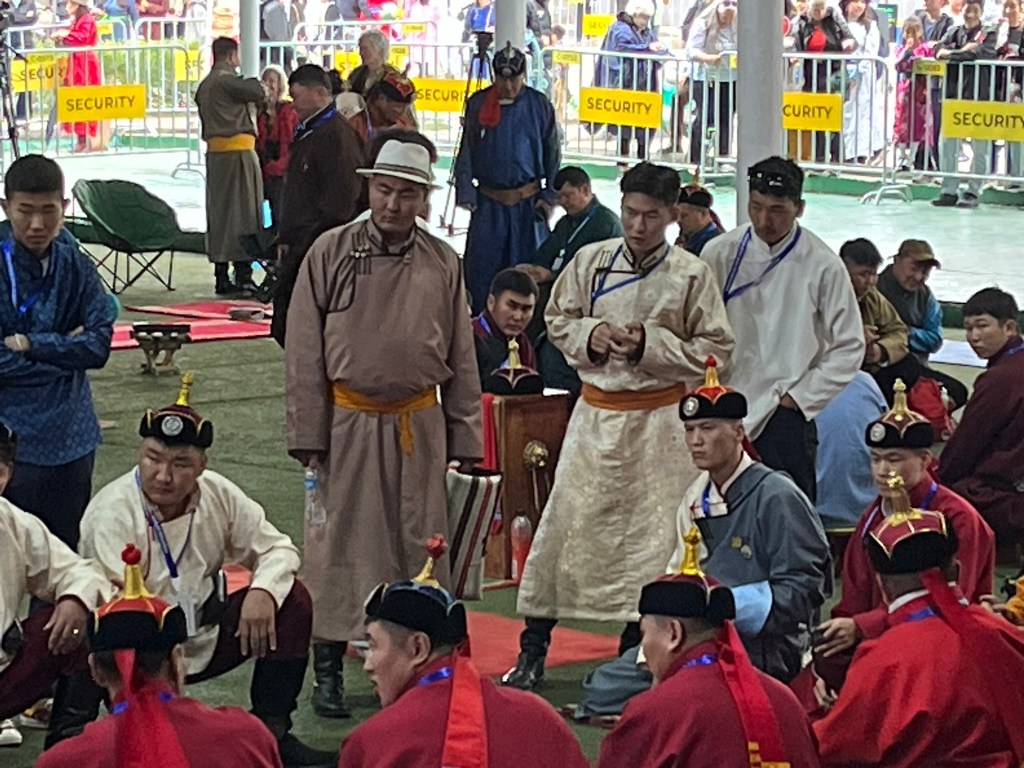
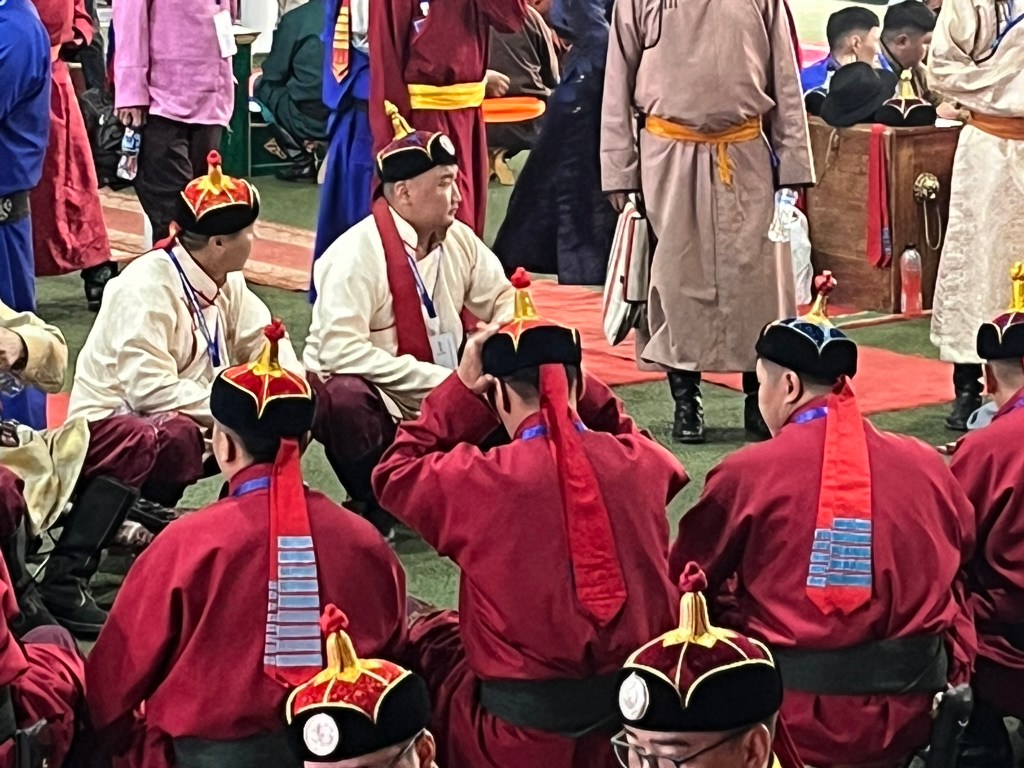
The final sport of the day was knuckle bone shooting, being held under a small covered arena just next to the archery. The atmosphere was just an energetic in here than outside, with cheering with successful shots on target and chanting for team mates. I watched for about 30 minutes, not necessarily following everything that was going on but just absorbing the atmosphere, the spirit and the fantastic outfits. One of the more fun things to do is to look at the silk streamers that sit at the back of all the competitors hats. The number of stripes on the streamer tells you how much success the person has had at their sport – more stripes means they have won more. So even as an outsider you can quickly spot the champions.
And that was day 1 complete at the Naadam. An absolutely fantastic experience and one difficult to articulate on paper other than to say this is one of the great festivals of the world and is the epitome of Mongolian culture. It’s super impressive how strong Mongolian nationality identity and pride is and Naadam is a fantastic way to celebrate this.
On to day 2 – horse racing!


Leave a Reply