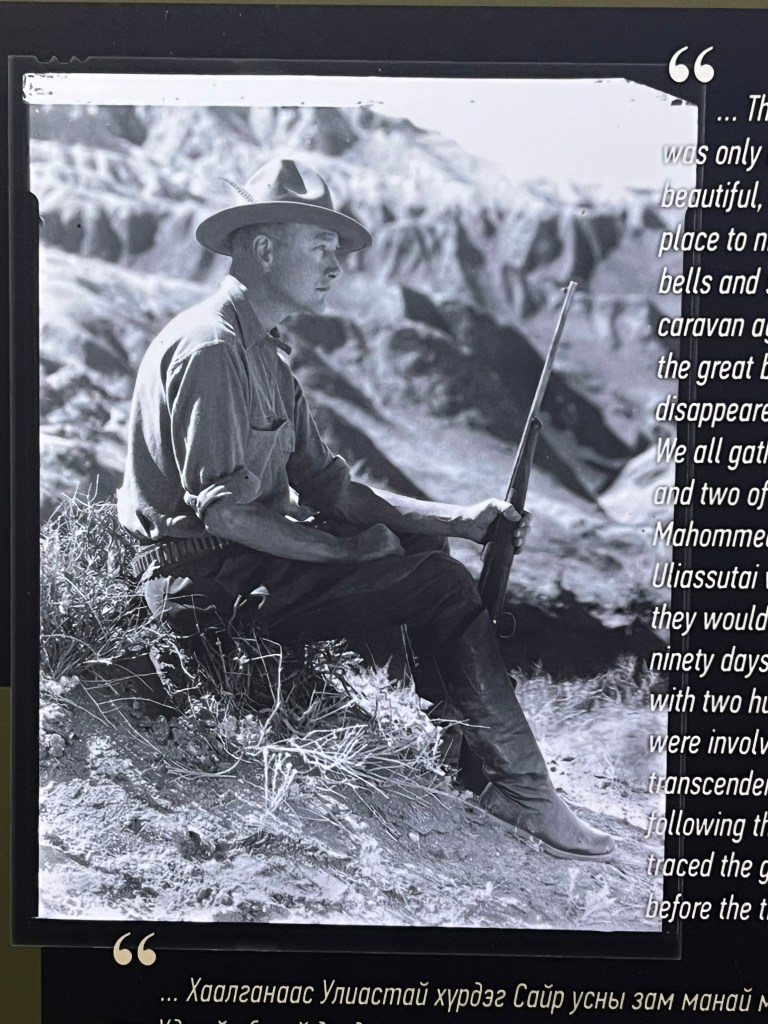
The Flaming Cliffs (aka Bayanzag) are one of the most important fossil sites ever discovered. They are located in Mongolia’s southern Gobi Desert and are not technically cliffs, but rather red-orange sandstone buffs that glow brilliantly at sunrise and sunset. They were given the name the Flaming Cliffs by American explorer Roy Chapan Andrews during his expeditions in the 1920s.
The cliffs are spectacular both in their appearance and in what hides beneath them – fantastically preserved dinosaur fossils. Looking around at the barren landscape surrounding the cliffs, the first question you ask is – why does Bayanzag look so different to everything around it? Well, the Gobi wasn’t always a desert. About 75 million years ago during the Late Cretaceous period, this area consisted of sandy river channels, dunes and seasonal floodplains with scattered vegetation. It was a semi-arid landscape inhabited by an extraordinary diversity of dinosaurs, early mammals, lizards and birds. Wind-blown sand rapidly buried dead animals and nests, preserving them in remarkable detail. This rapid burial is why fossils from Bayanzag are often preserved almost intact rather than scattered bones.
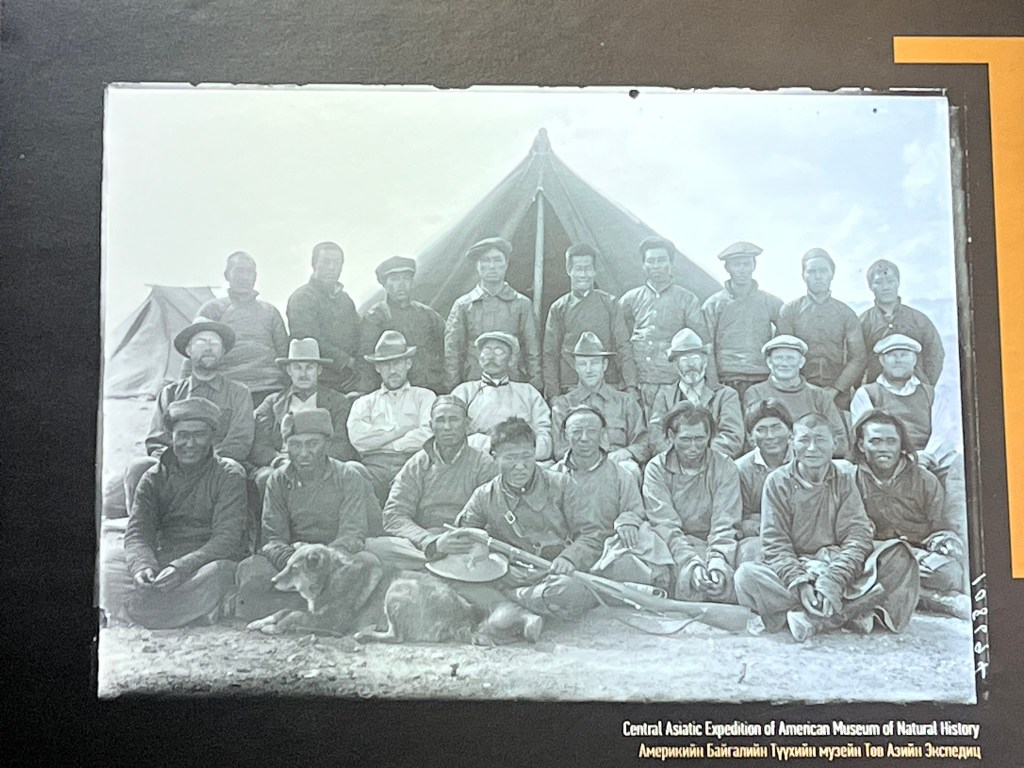
In 1922, Andrews led the American Museum of Natural History Central Asiatic Expeditions into Mongolia. His original goal wasn’t actually dinosaurs – it was to search for ancestors of humans, because some scientists believed Central Asia might have been humanity’s birthplace. Instead his team made one of the greatest discoveries in history.
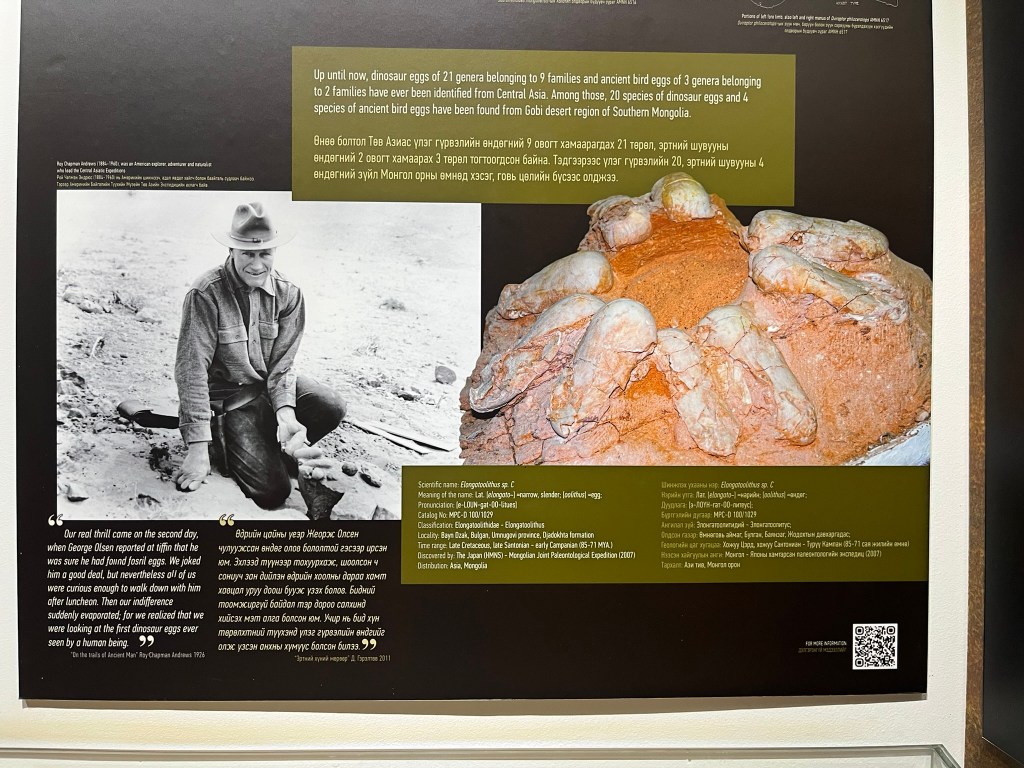
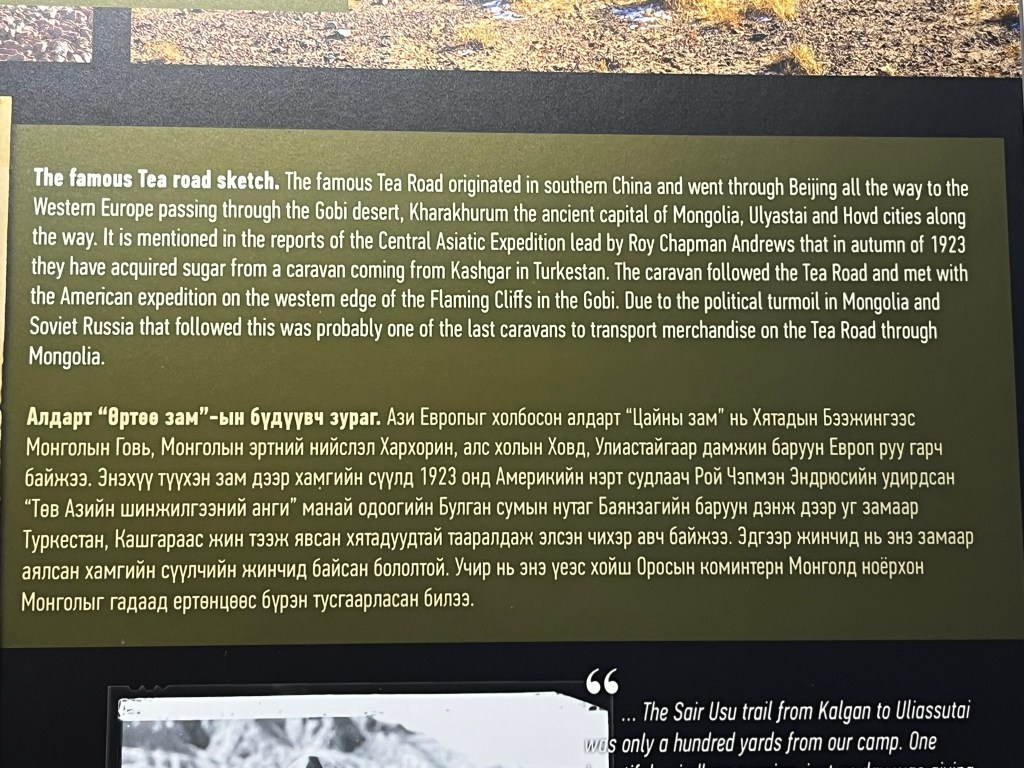
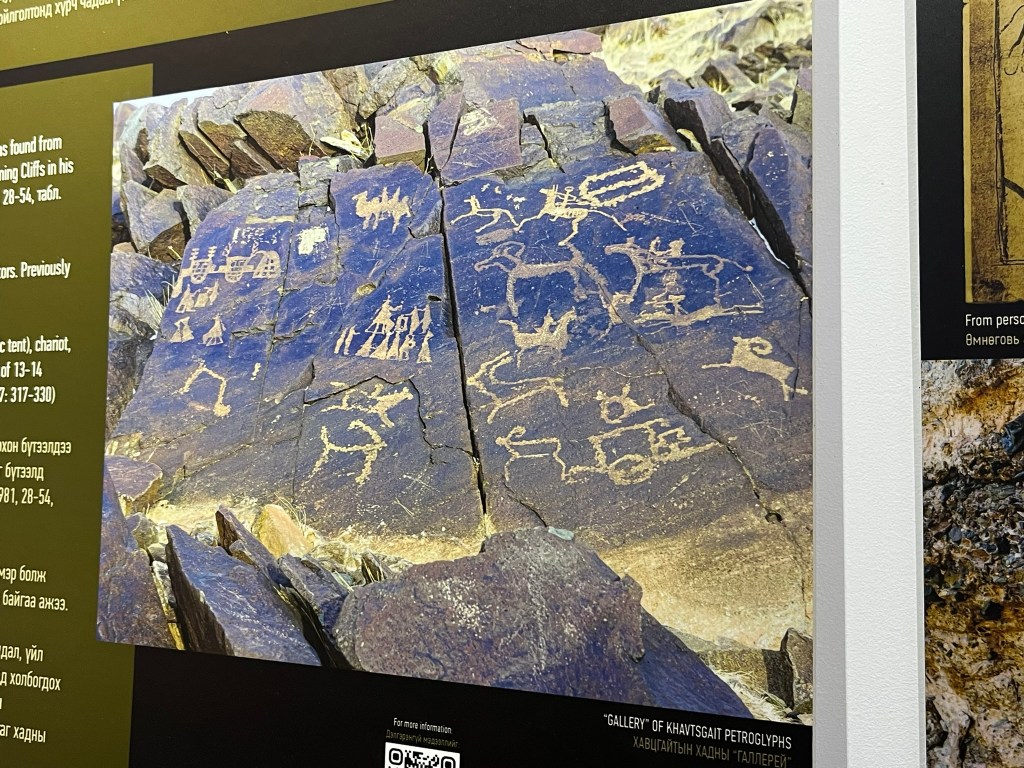
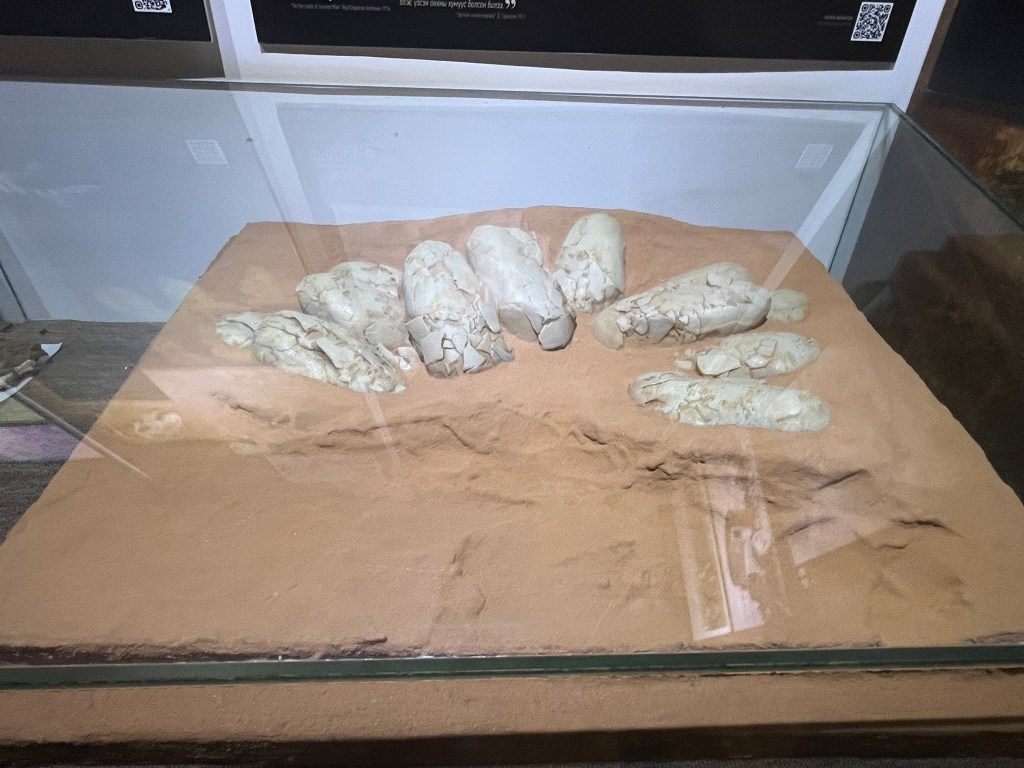
In 1923, the expedition uncovered the first scientifically recognised dinosaur eggs ever discovered. Before then it was assumed dinosaurs laid eggs, but no fossil evidence had been found. The discovery transformed humanity’s understanding of dinosaur biology. Since then, 100s of scientifically significant dinosaur fossils have been excavated from the Flaming Cliffs. And across the wider Mongolian Gobi, paleontologists have discovered more than 80 dinosaur genera from over 60 fossil sites. However, its not the just quantity at Bayanzag that makes it special – it’s the quality. The site has yielded complete skeletons, articulated skeletons (bones still joined together), nests, eggs, embryos, hatchlings and animals preserved in life-like positions. More astonishingly paleontologists believe that the vast majority of fossils are still buried and only a fraction have been excavated.
So why exactly are there so many fossils in the Gobi? When an animal dies, several things happened in the Gobi that favoured fossilization. Rapid burial from sandstorms and collapsing dunes could bury a carcass in hours or days protecting it from scavengers. The dry conditions meant that there were fewer bacteria and fungi than in wetter environments so bodies decayed more slowly. And the mineral-rich groundwater meant that over millions of year, minerals replaced the bones turning them into fossils. The region has little geological disturbance so fossils remained intact.
And why are they so easy to find today? The modern desert is almost as important as the ancient one. There is very little vegetation or soil covering the ground and wind steadily erodes away the sandstone of the bluff, exposing fossils that have been buried for over 70 million years. For Late Cretaceous dinosaurs the Mongolian Gobi is among the world’s greatest fossil regions.
Today when you visit the Flaming Cliffs you enter via the Visitors Center a few km away from the escarpment itself. Here there is a small display hall explaining the special history of the Flaming Cliffs and a room to watch an excellent video explaining Roy Chapan Andrews’ famous expedition in the 1920s. The video is simple but special because it uses original black and white footage filmed throughout the expedition including capturing the very moment the famous dinosaur eggs were discovered. The video is worth a watch on YouTube.
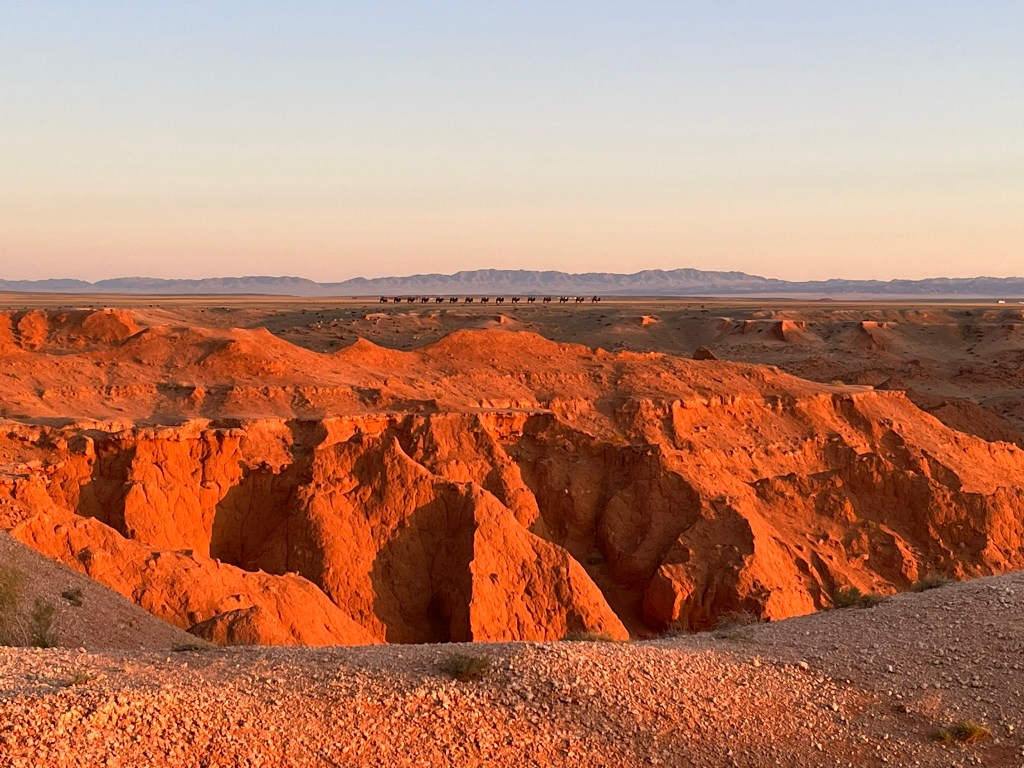
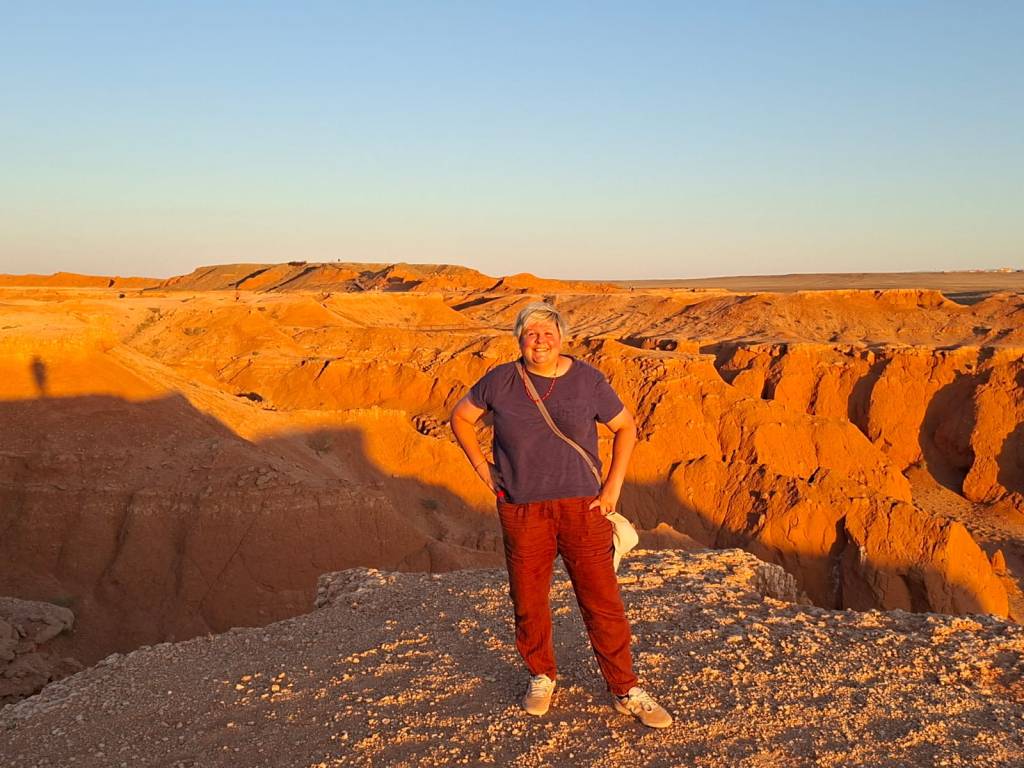
After the Visitors Center it is a short drive to the site where surprisingly you can walk freely around. In some parts boardwalks and stairs have been constructed, but in other parts you must navigate around the natural features of the escarpment. Overall its a pretty easy walk.
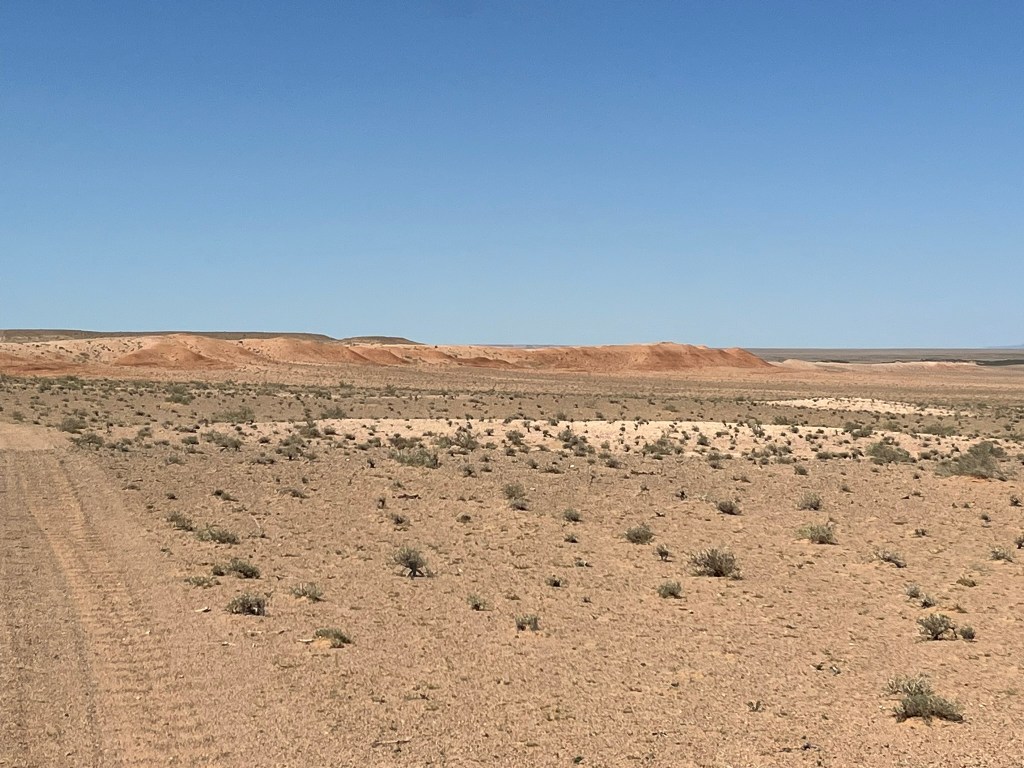
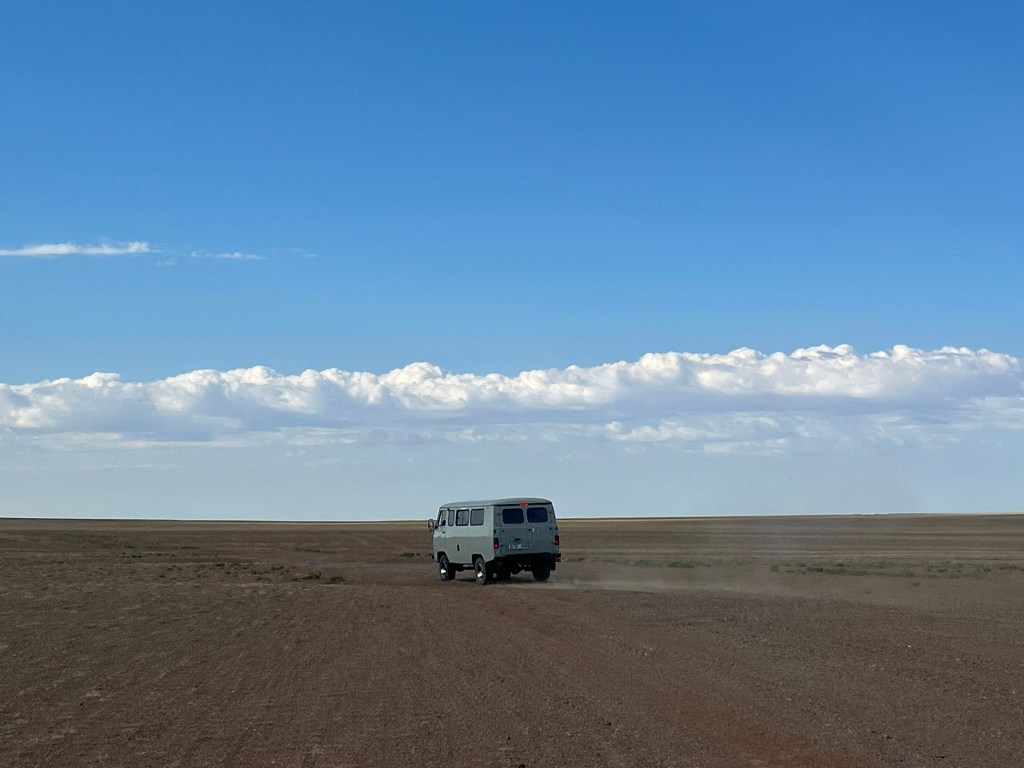
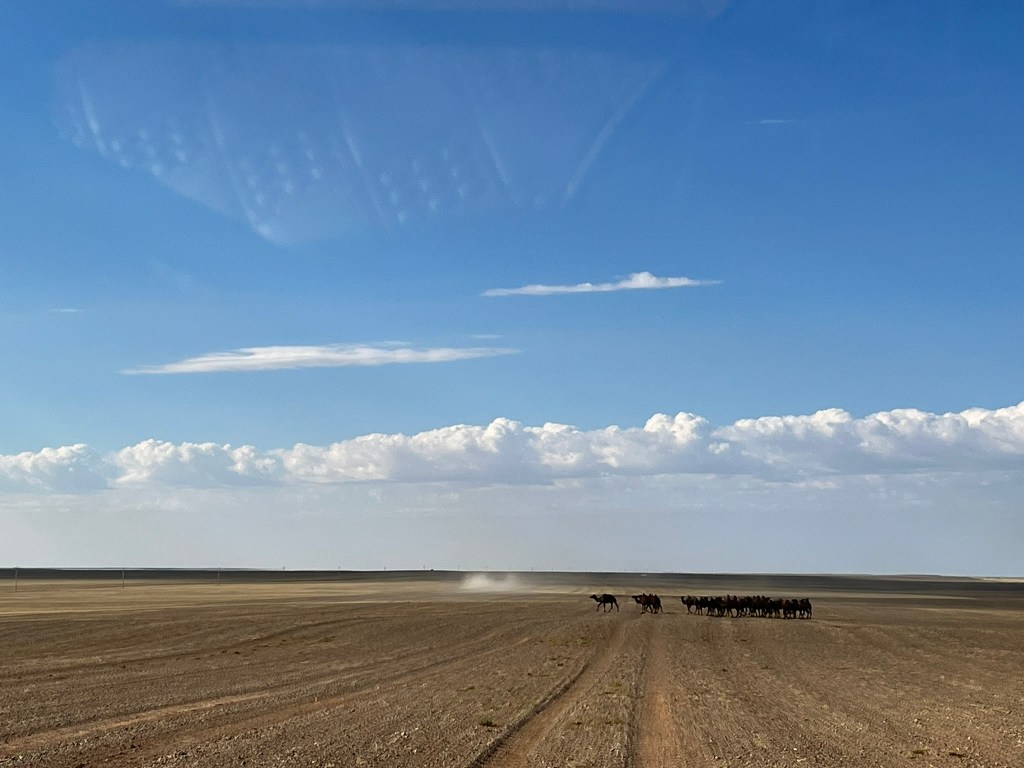
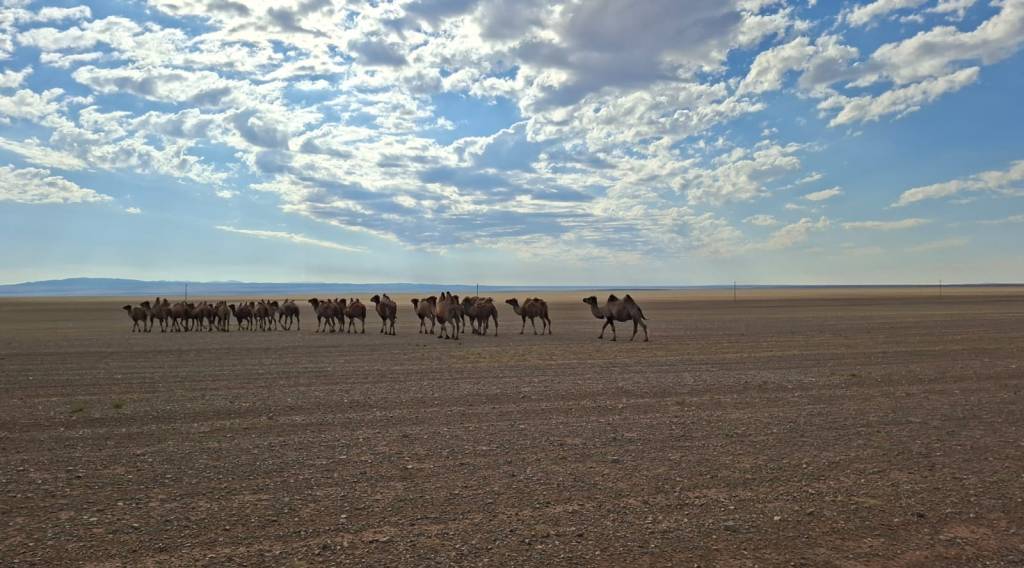
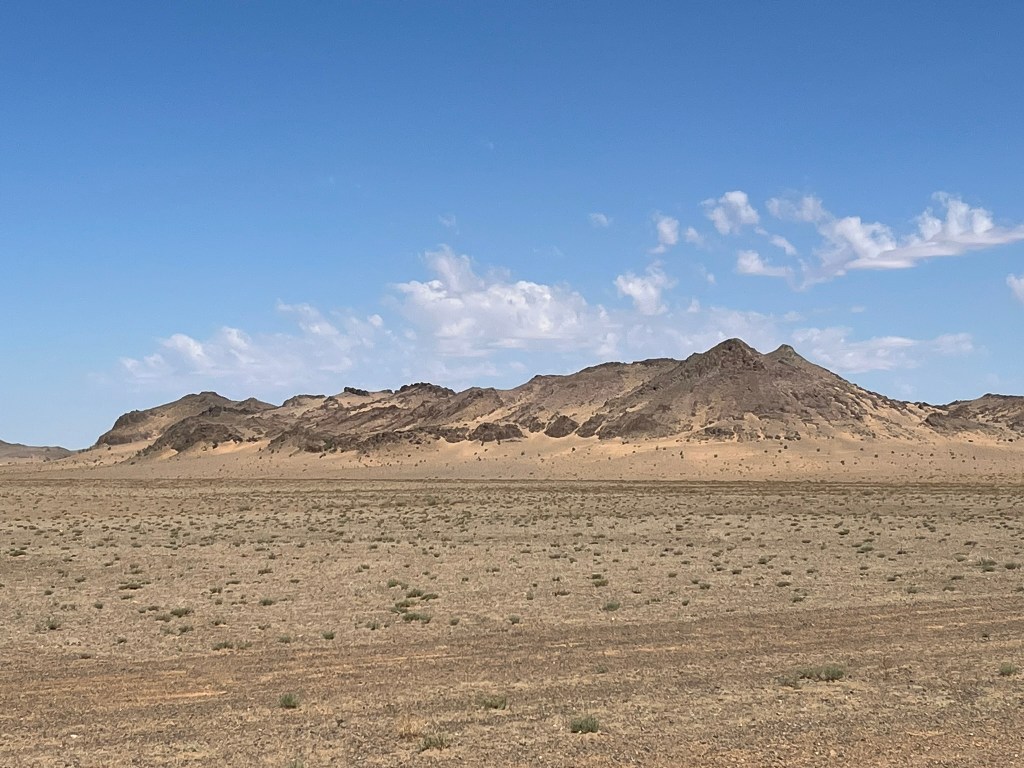
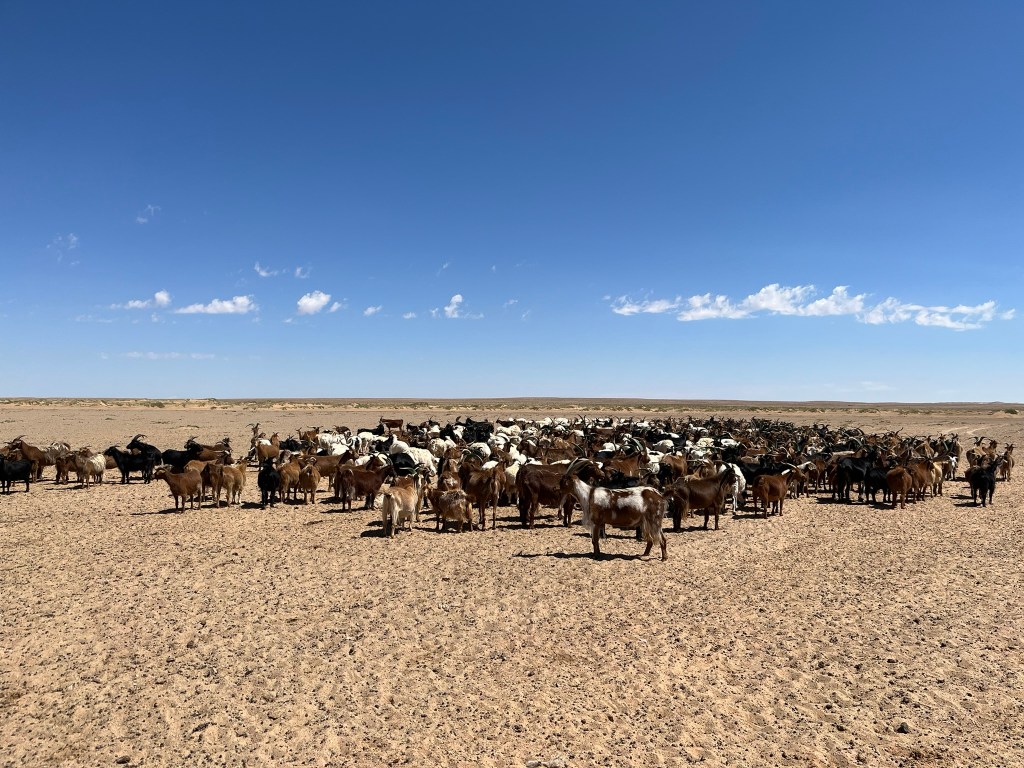
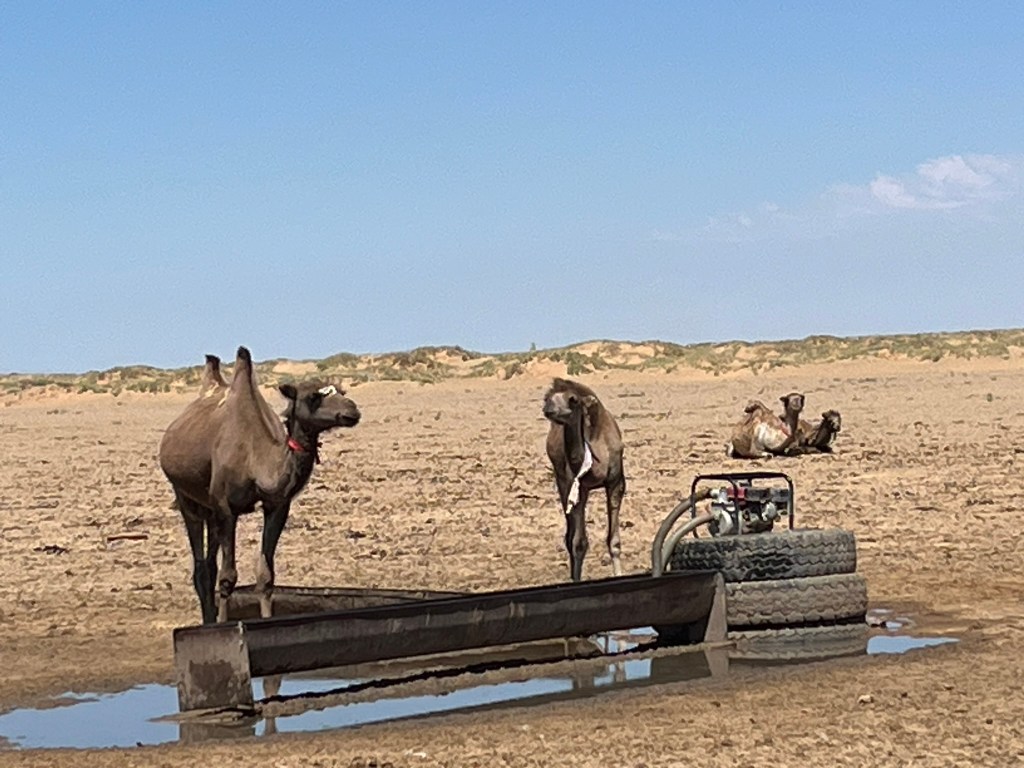
When you are driving from across the desert to the cliffs they seem to appear out of nowhere. The surrounding landscape is almost completely flat and suddenly a band of brilliant red sandstone appears on the horizon. The cliffs (well it’s really an escarpment) aren’t a huge canyon or mountain range – but rather a relatively modest escarpment with heights ranging from 20-40m. As you walk on top of the buff you see layers of all sorts of red sandstone, steep gullies carved by rain and wind-sculpted cliffs. Scattered around are saxual shrubs from which the Mongolian name Bayanzag meaning ‘rich in minerals’ comes from.
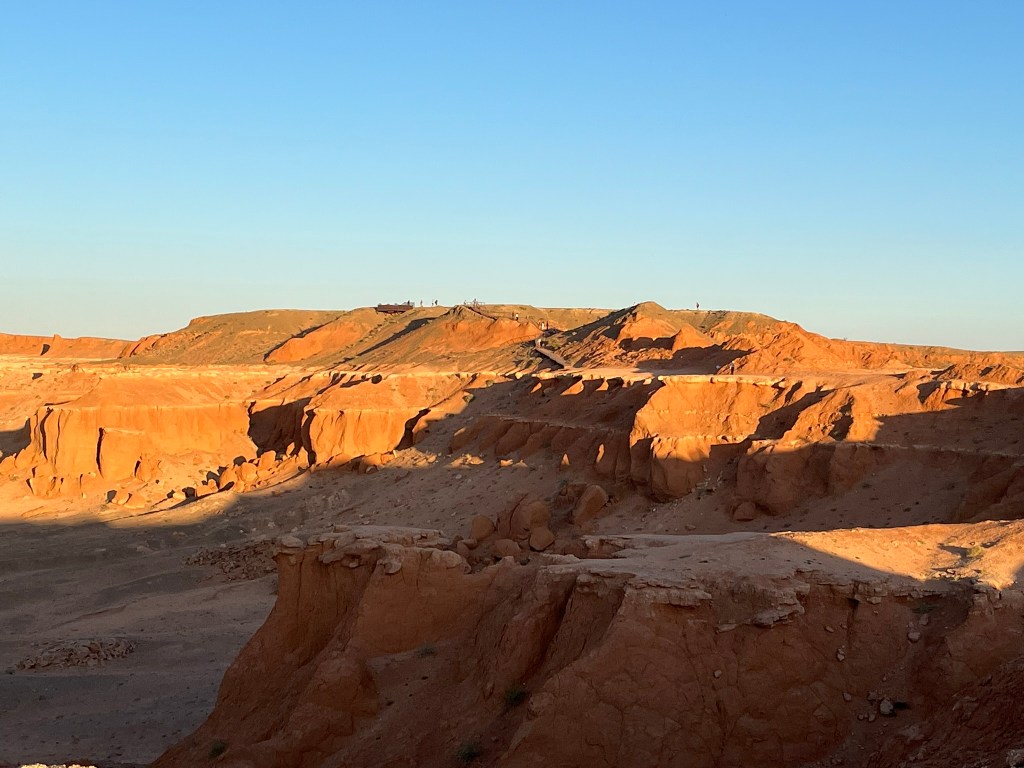
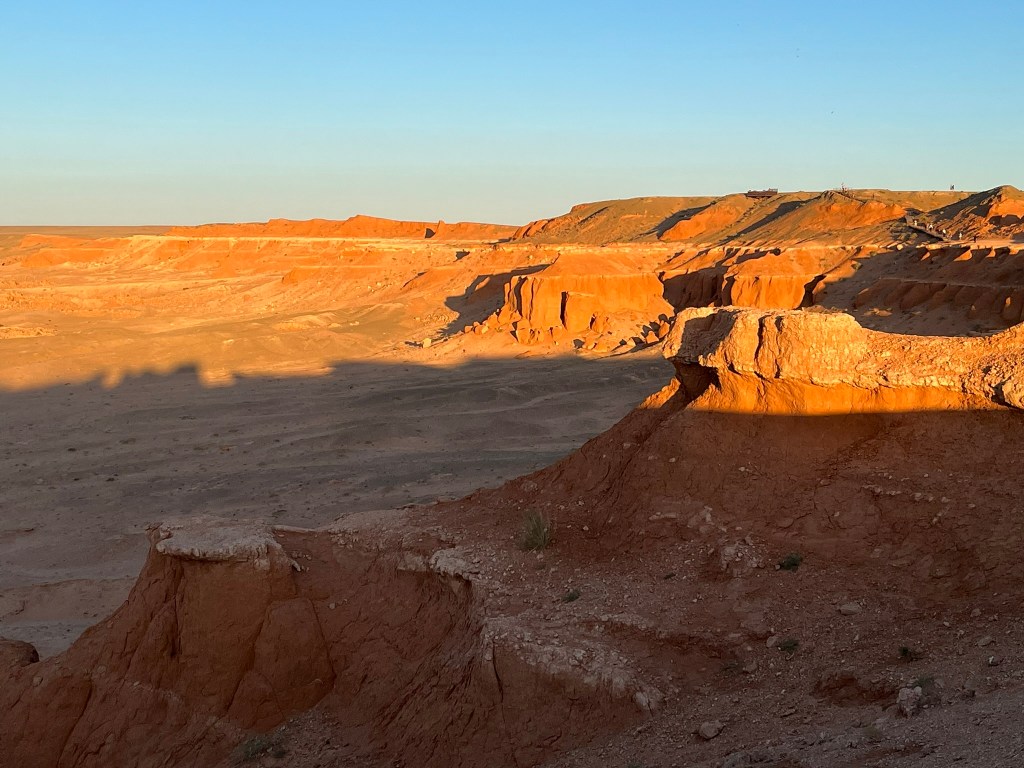
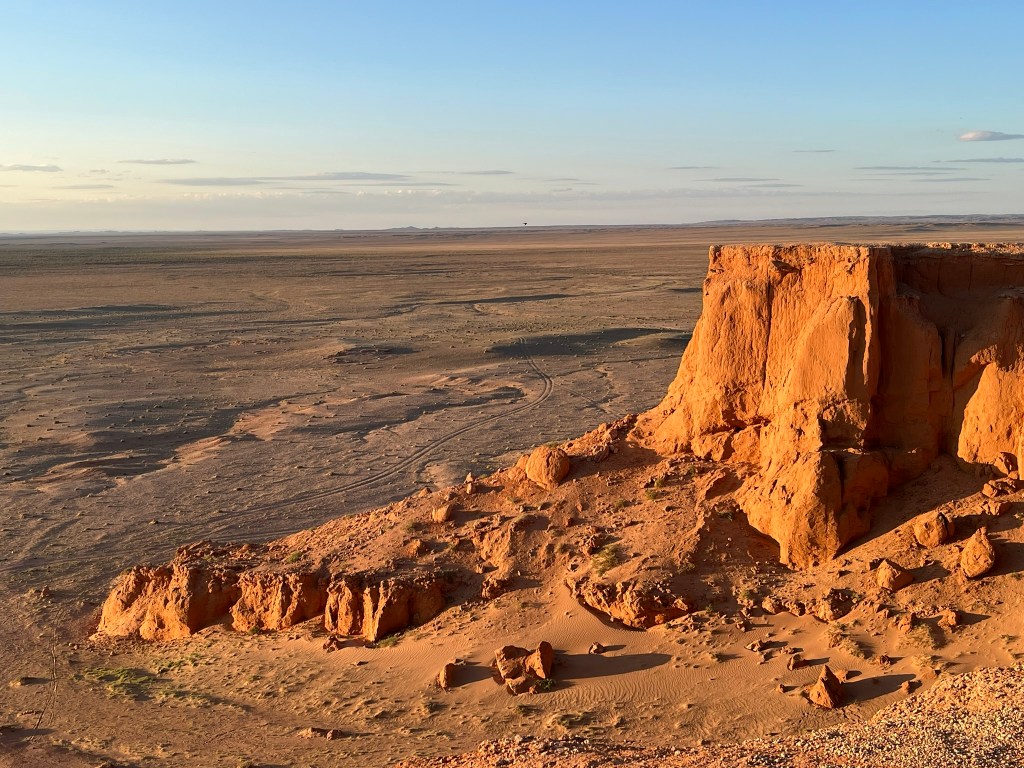
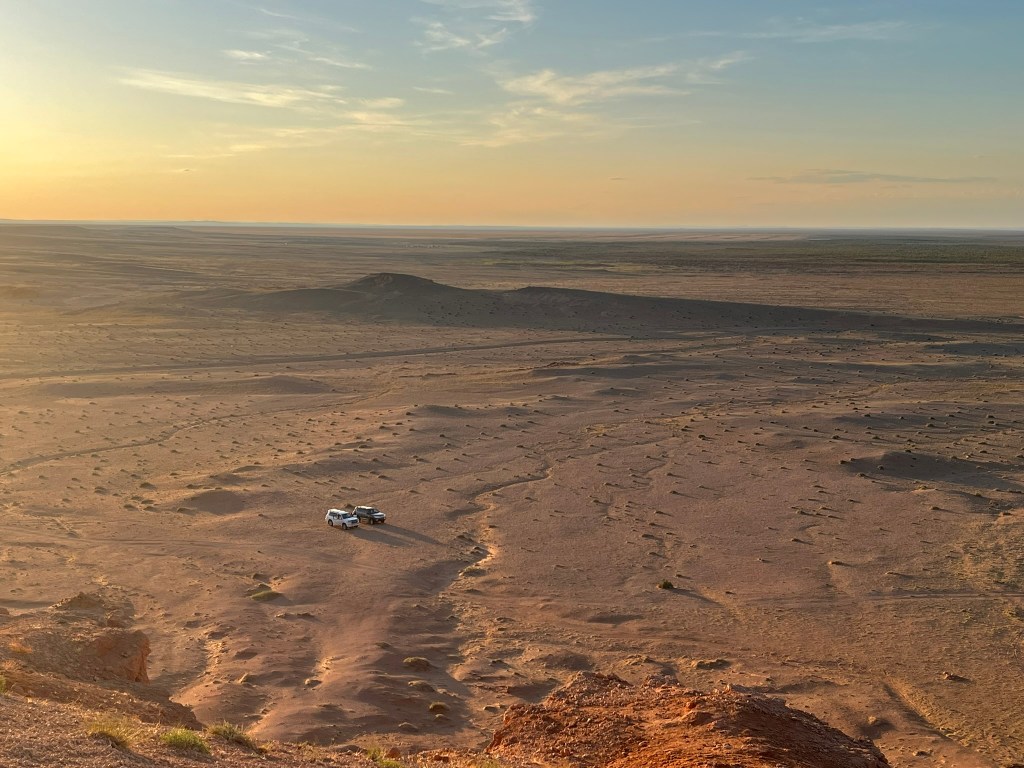
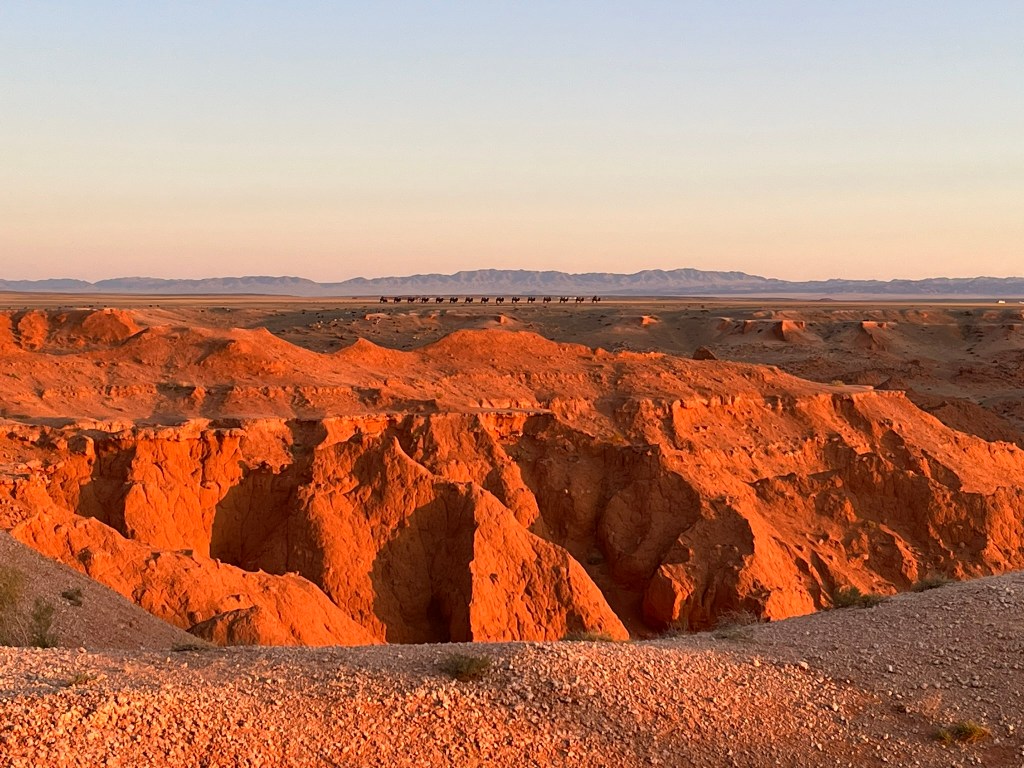
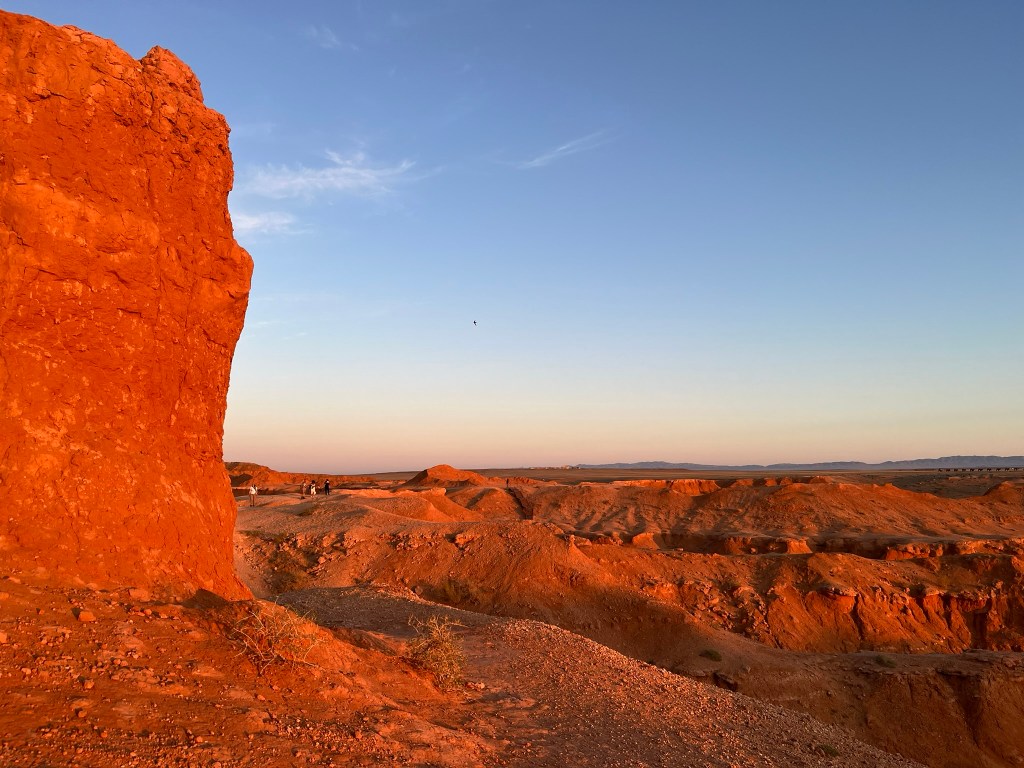
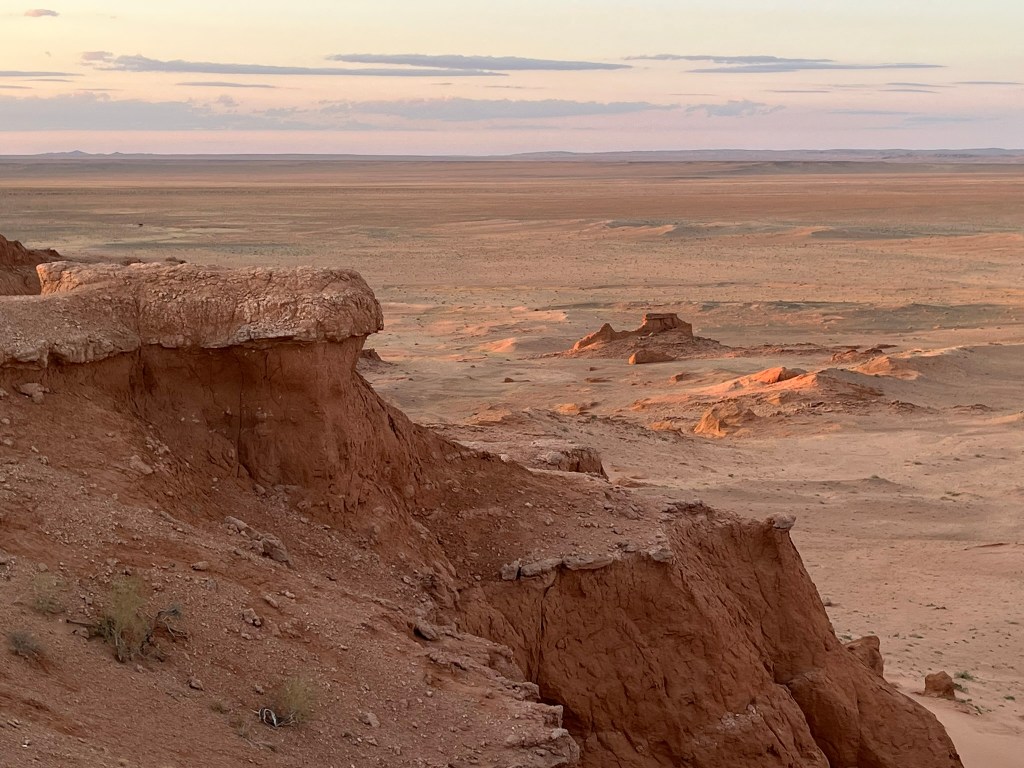
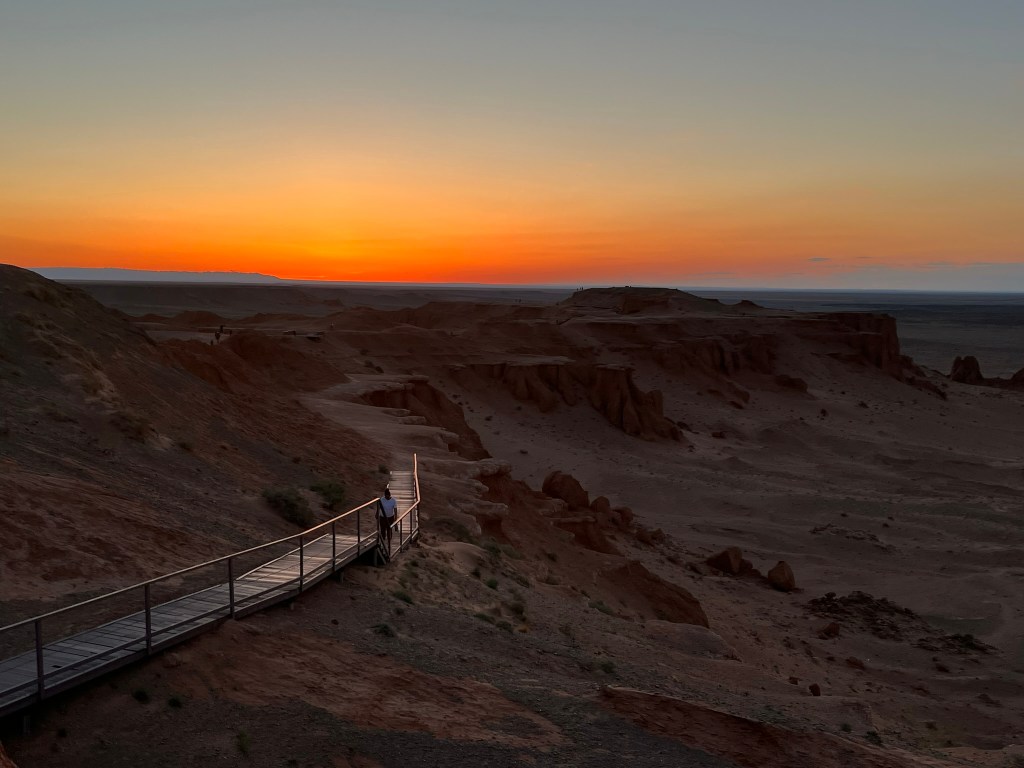
We arrived at the cliffs at around 7.30pm after dinner when the heat of the day had mostly dissipated and stayed exploring the cliffs until the sun had set around 9.30pm. The colors, shadows and atmosphere were pretty magical – especially looking out towards the great expanse of the Gobi.
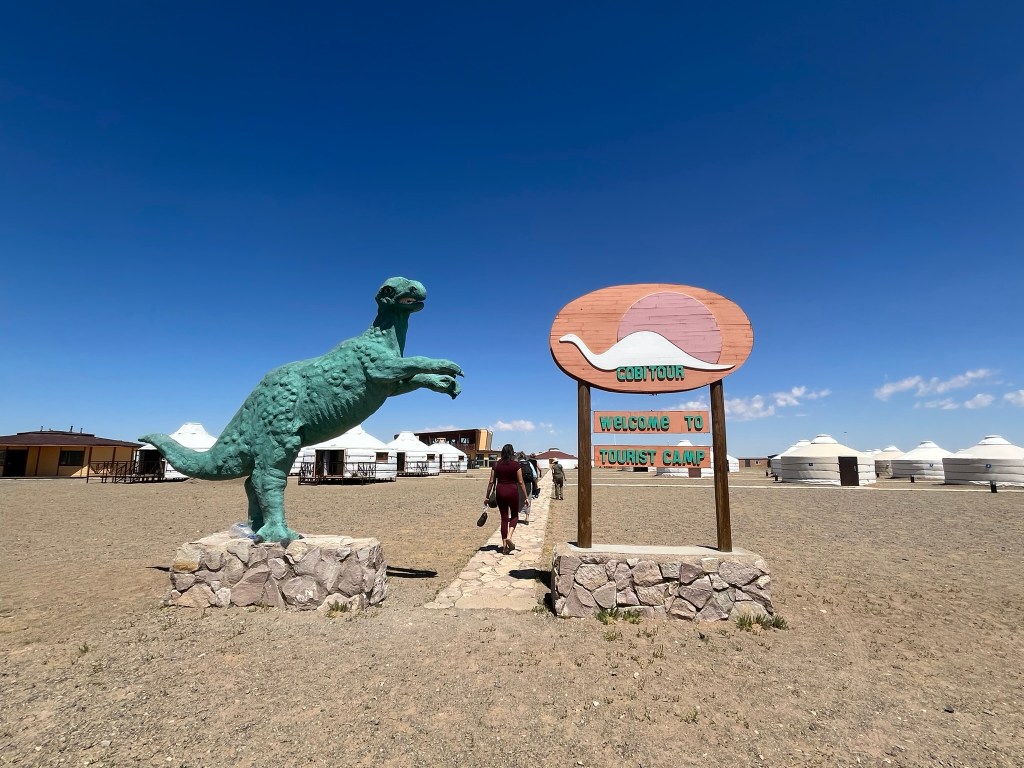
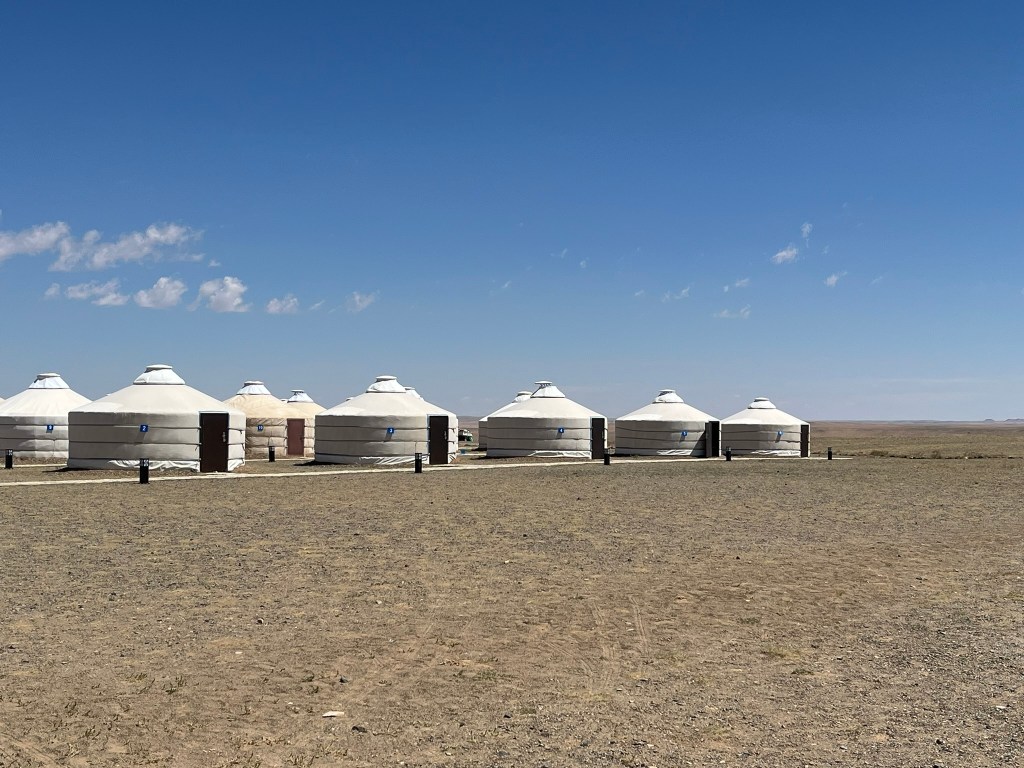

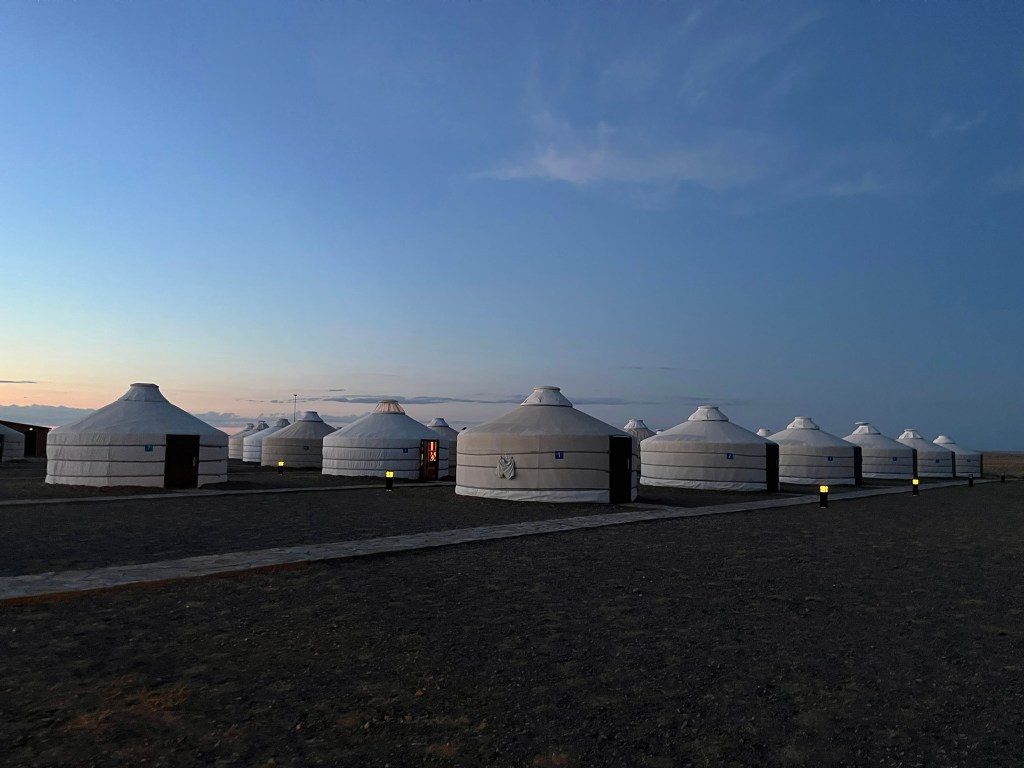
Our tourist ger camp is right by the cliffs and has a great shower and restroom block!


Leave a Reply