One of the most distinctive traditions in Mongolia is shagai – a family of games played using the ankle bones of sheeps or goats. Otherwise known as knuckle bones. These small bones are far more than toys – they are symbols of Mongolia’s nomadic heritage and used for games, fortune-telling, friendship gifts and even lucky charms. For thousands of years, nomadic families have raised sheep, goats, horses and camels and every part of the animal is used – including the ankle.
During some of our free time in the Gobi desert our guide has kindly showed us how to read our fortunes and play 2 different types of games with knuckle bones. The most important thing you need to know when doing anything with the knuckle bones is how each side represents a different animal important to Mongolian life. There is horse (the luckiest), camel, sheep and goat. Depending on how the knuckle bone lands when you roll it, you get a different animal. Think of it like nomadic pass the pigs.
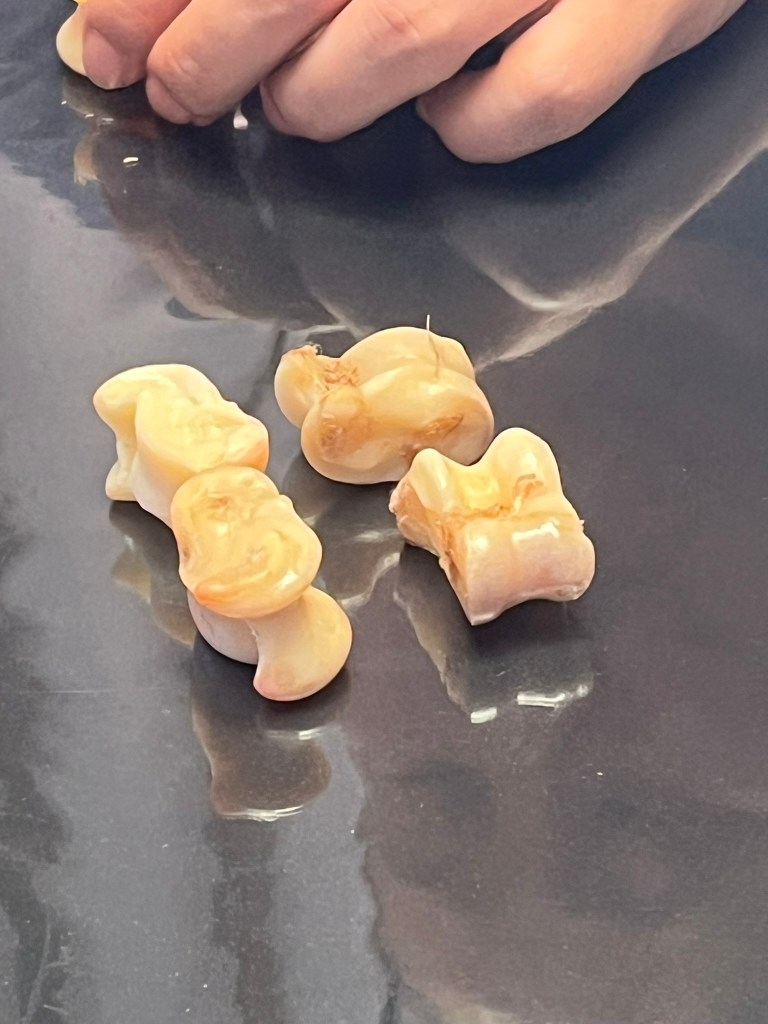
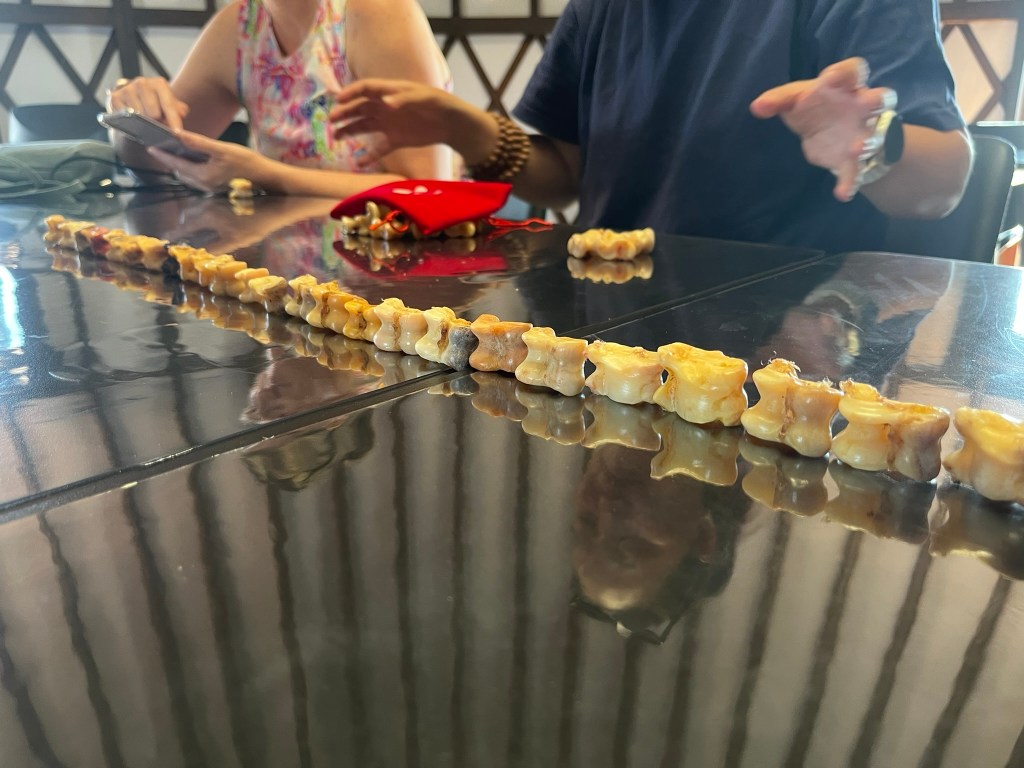
We learnt the horse racing game and the flicking game. Horse racing is the easiest game to start with. A line of knuckle bones are lined up in a row – this is the race track and each bone represents one move forward. Each person picks up a knuckle bone to represent their horse and lines them up on the start line. Then each player takes turns rolling 4 knuckle bones onto the table. For each horse you roll you move your piece forward one place on the race track. And if you roll 4 unique animals in one go you get to move four places. There is little skill to this game – you just roll and hope. And unsurprisingly the horse is by far the hardest to roll.
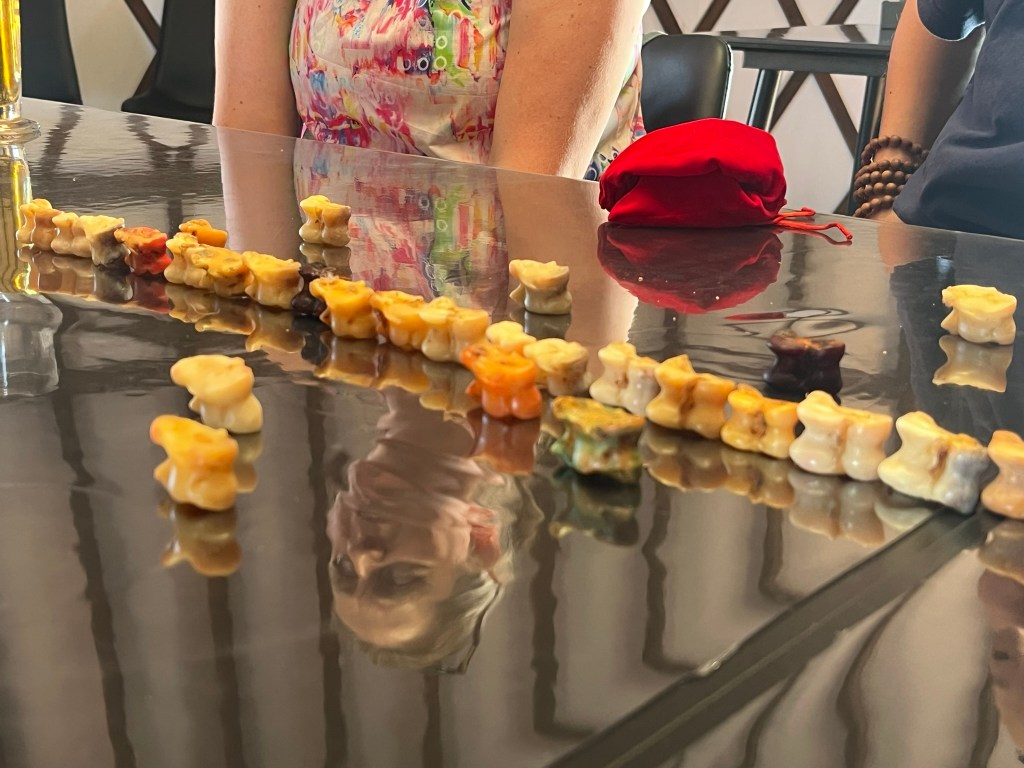
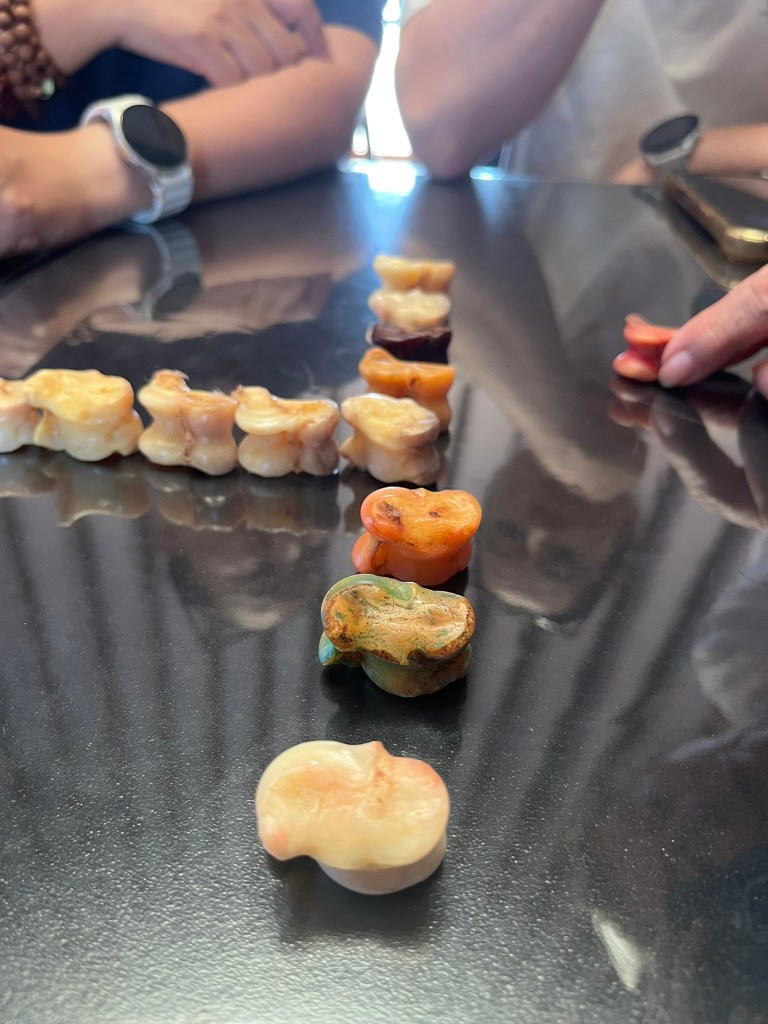
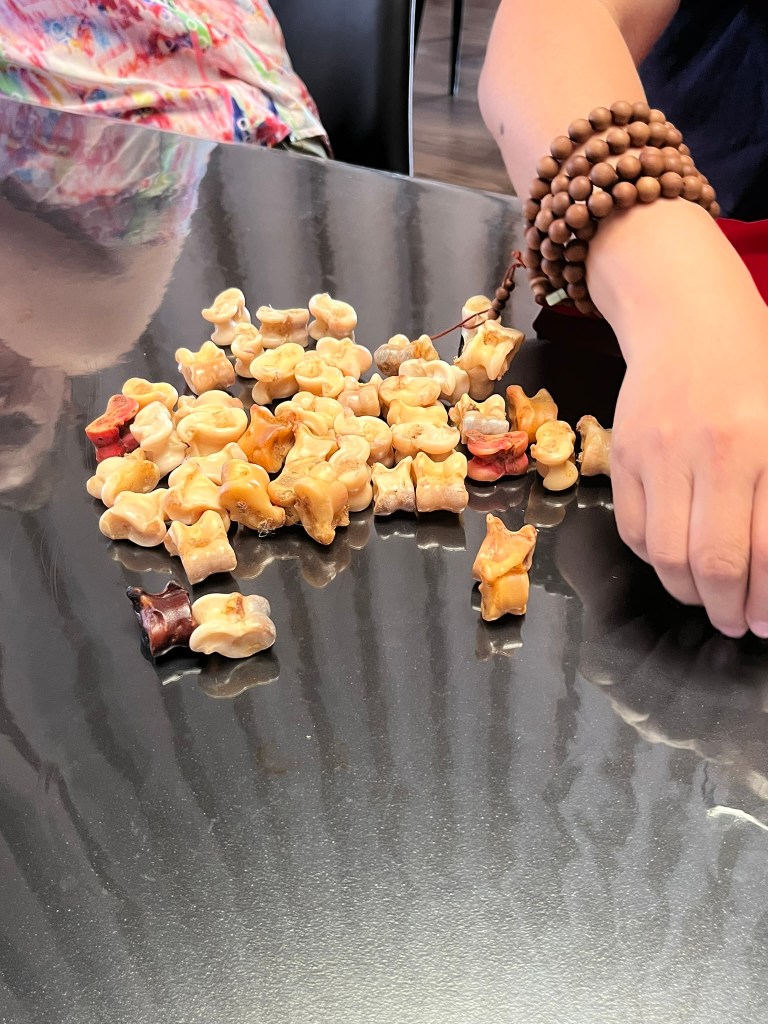
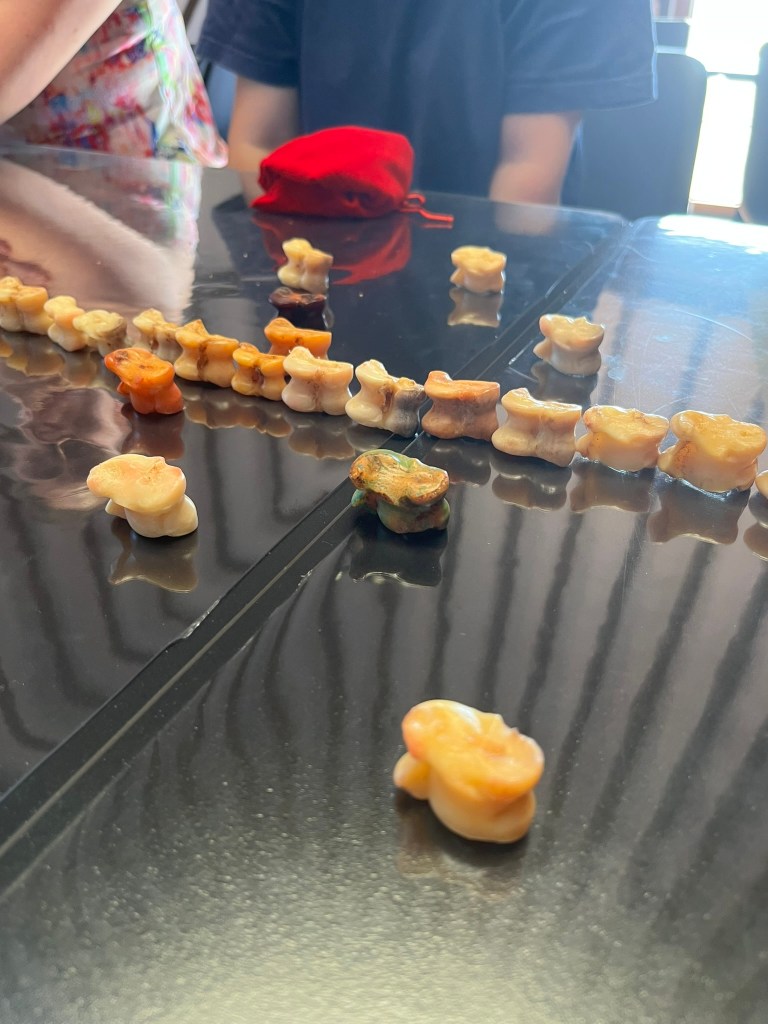
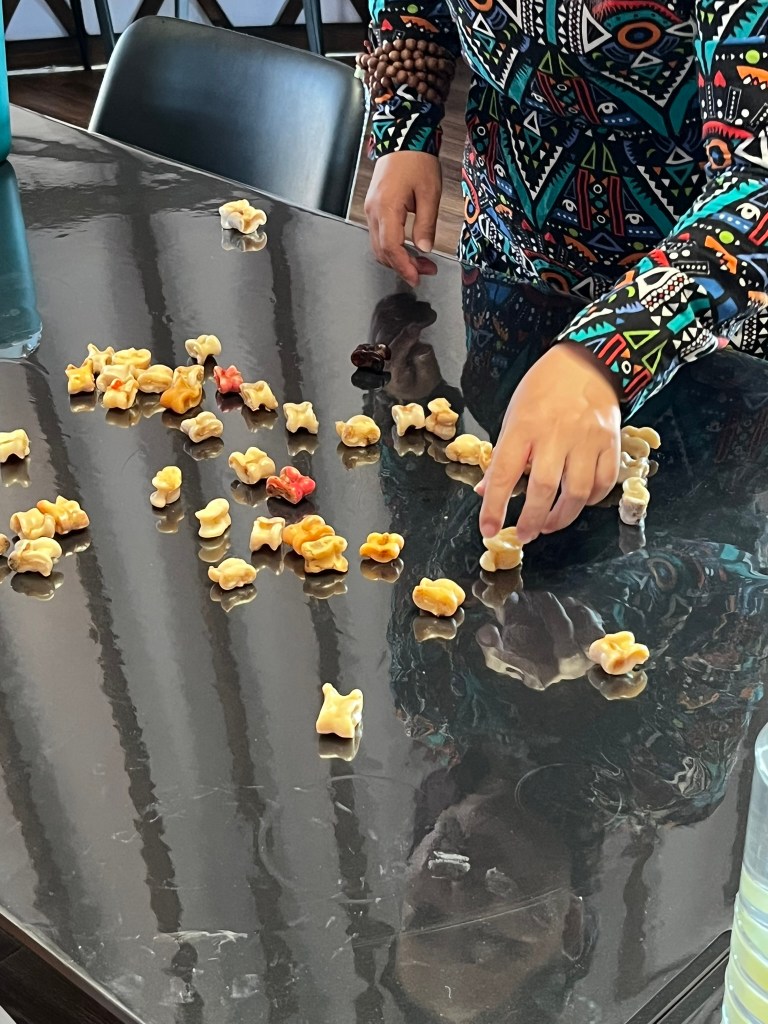
The flicking game is a little more involved. In turns each person picks up a pile of knuckle bones and scatters them (on the floor or a table). Any horses rolled immediately get picked up and put into the players pile. The player must then try to collect more knuckle bones by identifying pairs close to each other and flicking one knuckle bone so it touches its pair. For every successful flick you get to add the knuckle bone to your pile. A failed flick results in the end of your turn and what is left over is passed to the next player. The tricky thing here is that the pile available to score points from gets smaller and smaller as it gets passed around – leaving the players who have turns later in the round struggling to get points. A round finishes when there are just 2 knuckle bones left and everyone must put back into the main pile either 1 or 2 of their won bones for the next round. If you don’t have anything to contribute to the main pile you are out.
The most competitive game is knuckle bone shooting. We didn’t give this a try but I have read that it is more like a sport. Teams of 6-8 players compete, with a line of knuckle bones arranged as a target. Players then sit around 3m away and flick polished wooden or marble shooters along a smooth board. The goal is to knock the target bones into a scoring zones. What makes this particular game atmospheric is that teammates chant rhythmic songs while each shooter takes their turn. This form of the game was added to the UNESCO Representative List of the Intangible Cultural Heritage of Humanity in 2014.
Knuckle bones are woven into Mongolian culture. Children often collect hundreds of bones. Families exchange them as tokens of friendship. And large collections traditionally symbolised prosperity because it reflected healthy livestock herds.
This was such a fun thing to learn about and I really appreciated our guide taking the time to teach us such an important part of her culture.


Leave a Reply