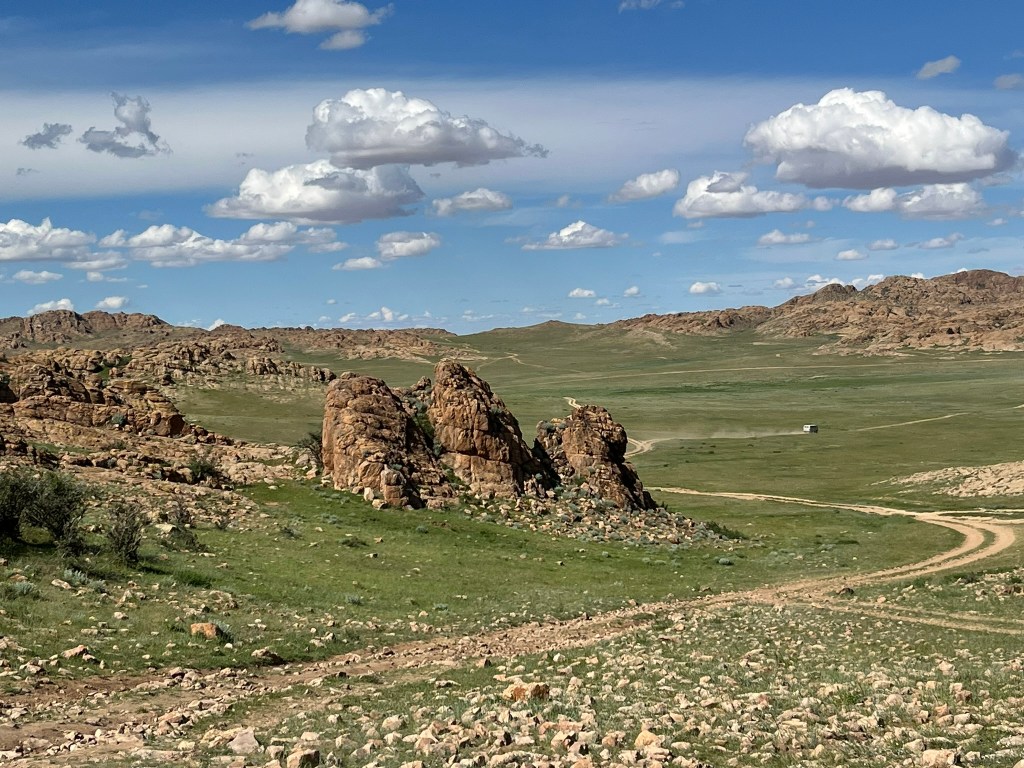
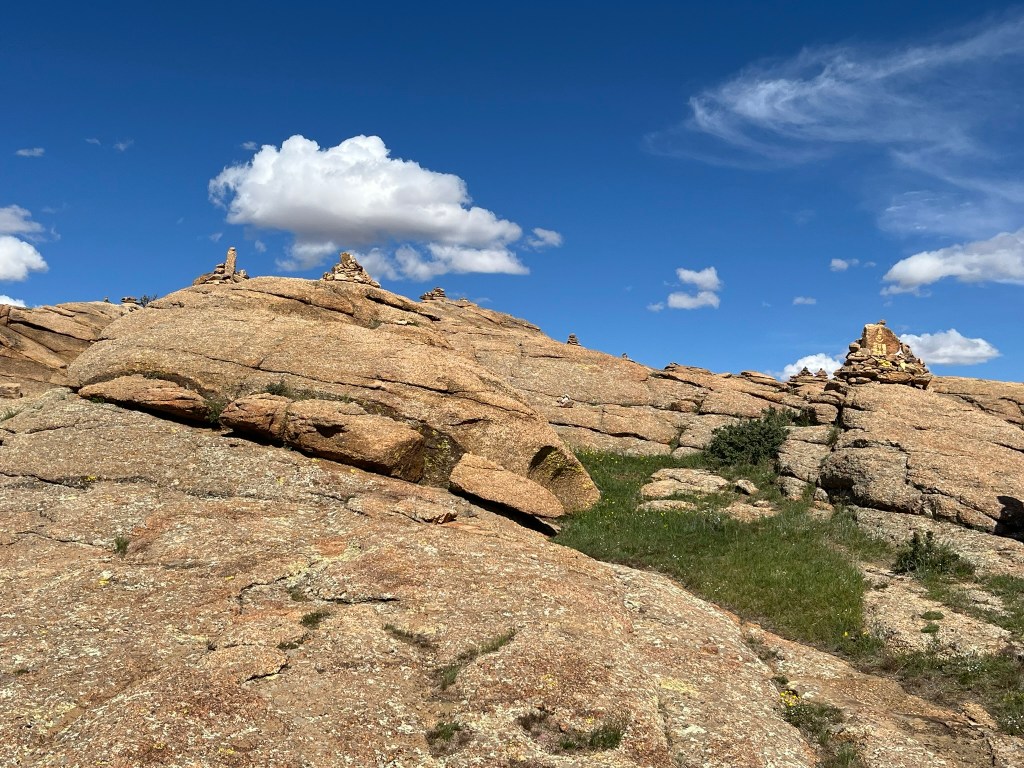
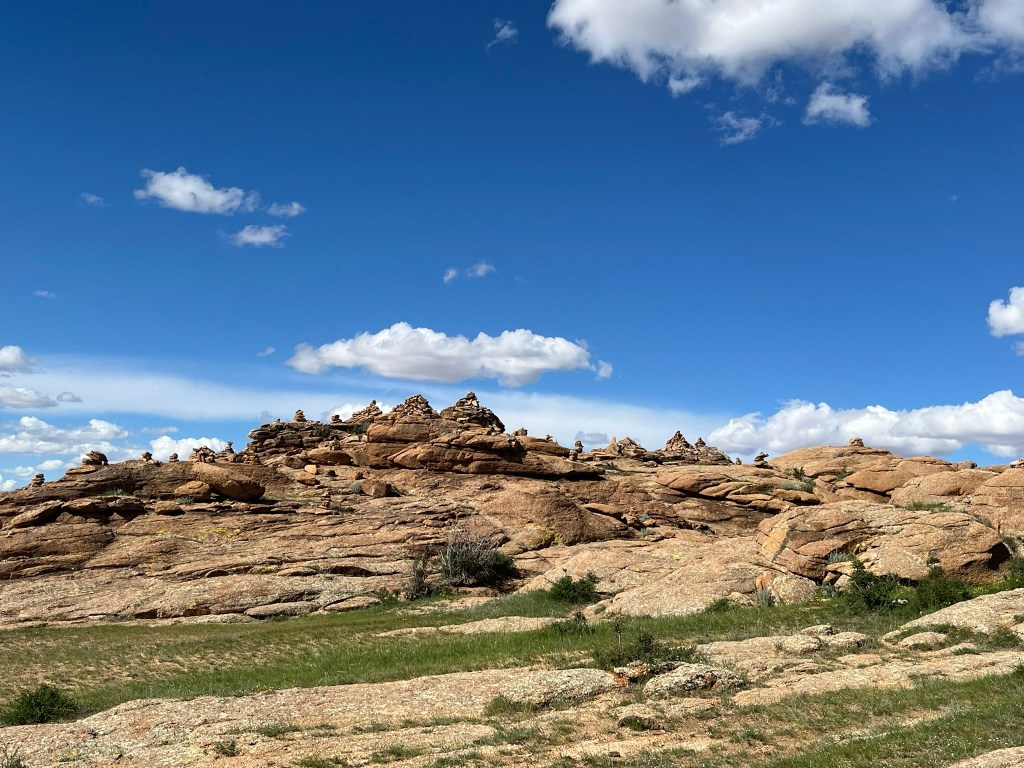
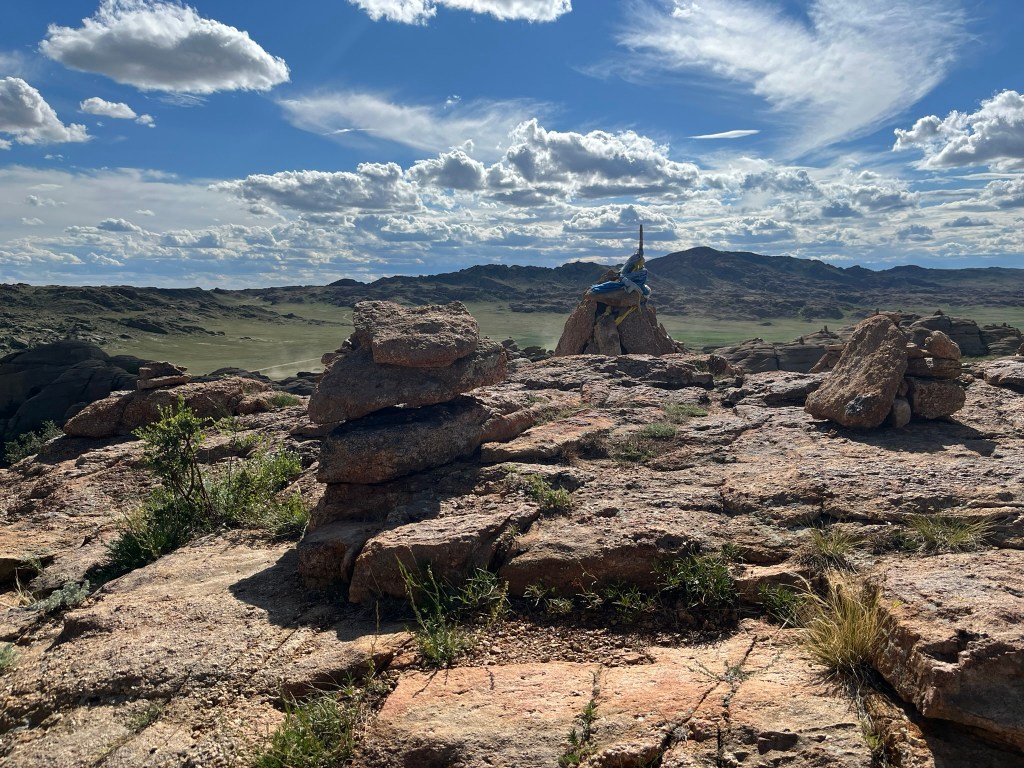
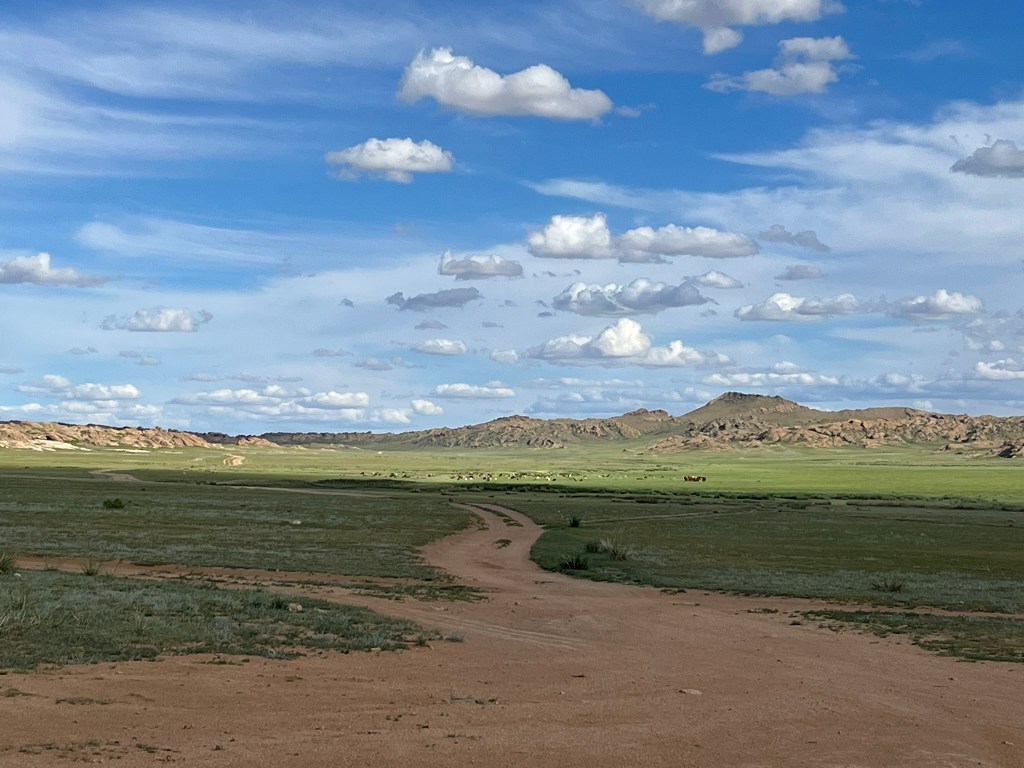
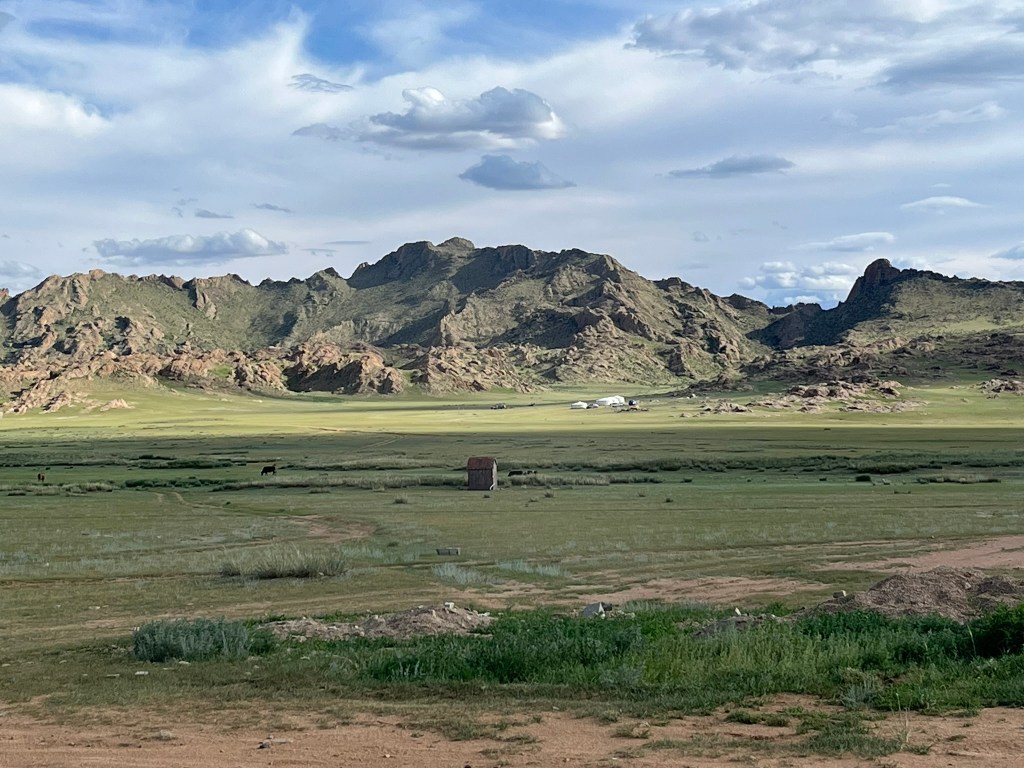
The granite mountains of Baga Gazriin Chuluu are one of the most distinctive landscapes in central Mongolia. After hours of driving across endless steppe with almost perfect flat land, the cluster of granite mountains rises from the plain like an island.
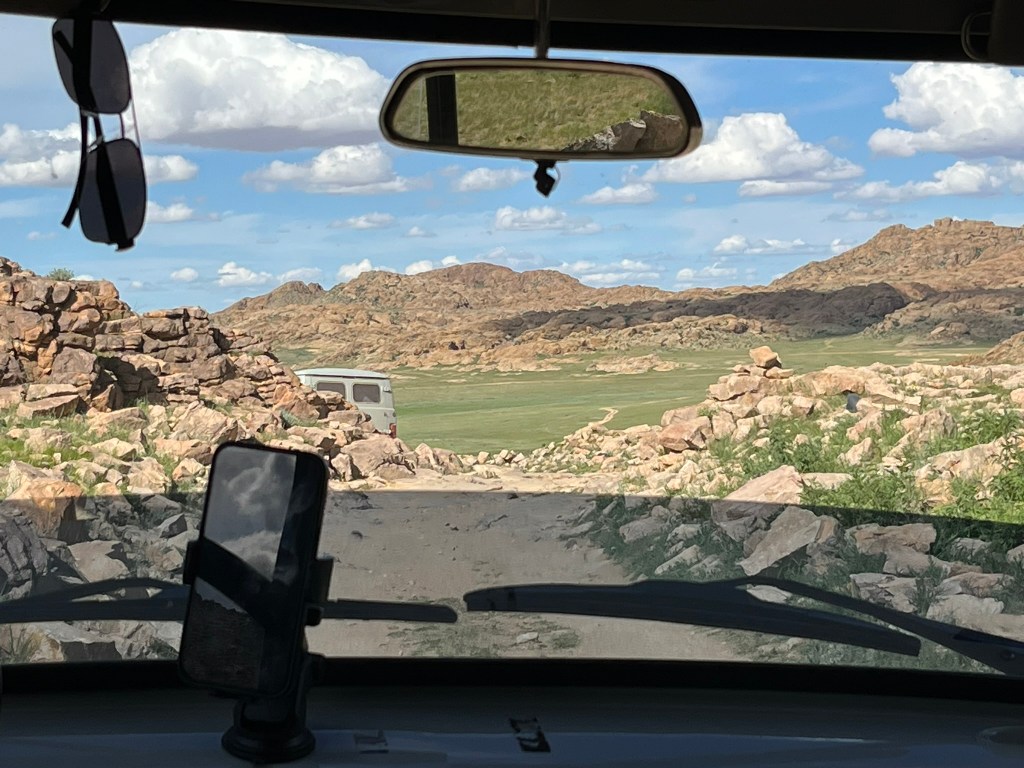
The granite massif is about15 km long and 6 km wide with its highest summit around 1700m. Although they are called mountains, they are really an eroded granite dome broken into cliffs, towers, narrow valleys and enormous rounded boulders.
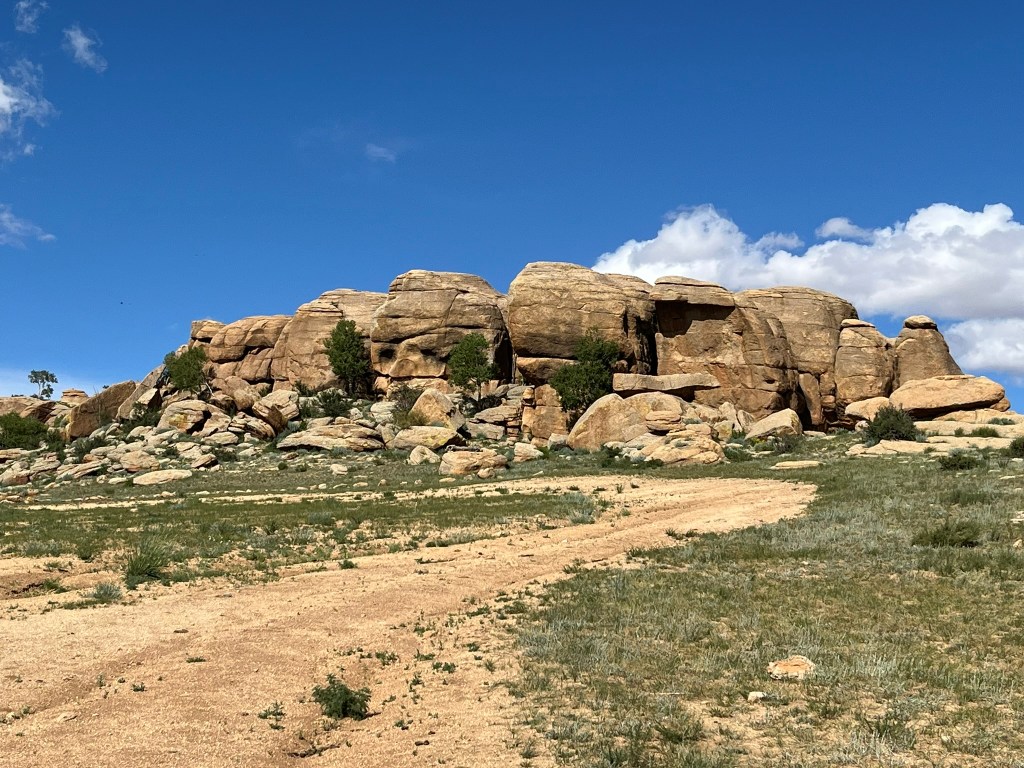
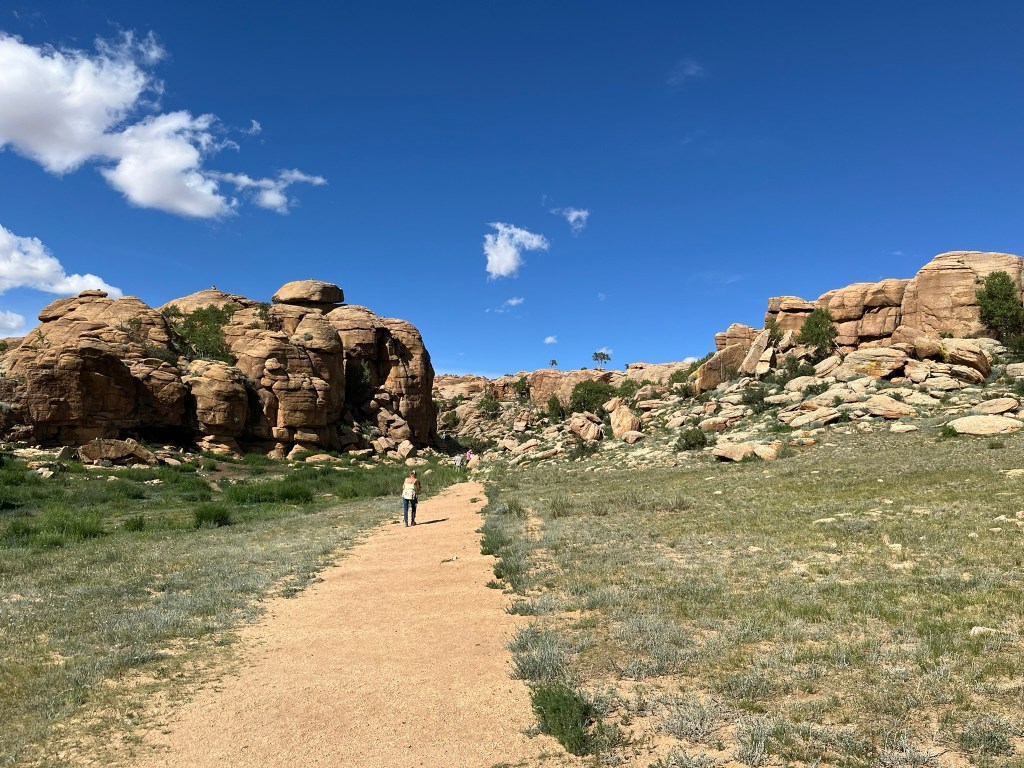
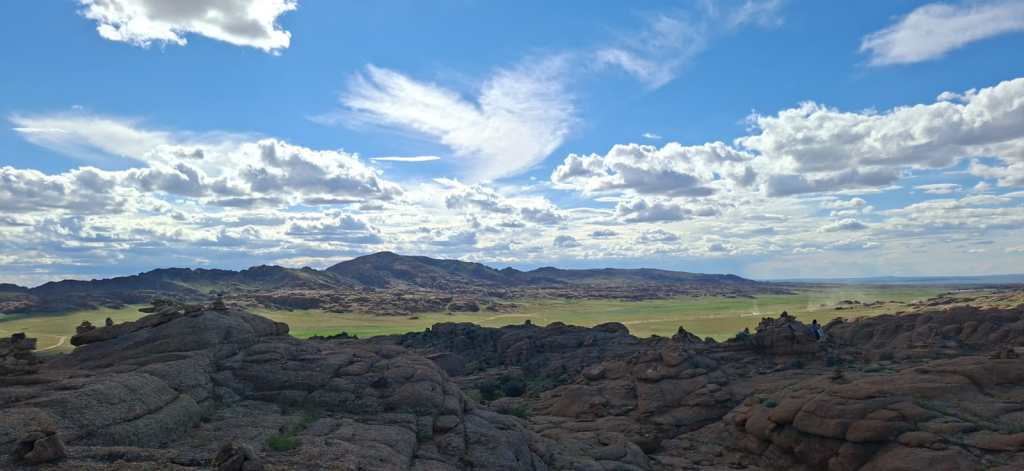
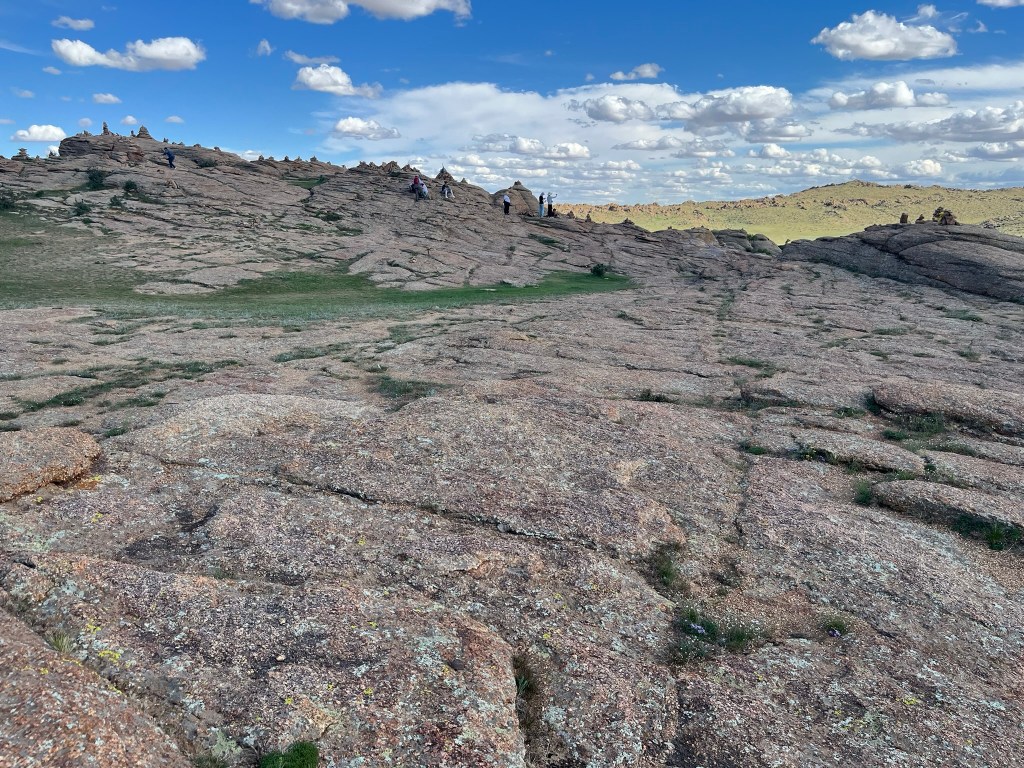
How did this granite massif form? Deep underground molten magma slowly cooled to form coarse-grained granite. Over millions of years, the softer rocks above were eroded away exposing the granite. As pressure from the rocks above was released the granite expanded causing large curved fractures known as sheet joints. It is the same geological process as we saw at the Del Uul petroglyphs. However, the granite at Baga Gazriin Chuluu looks quite different. The blocks are bigger with less obvious mineral bands and are broken into huge rounded blocks as opposed to the delicate paper thin sheets at the petroglyphs.
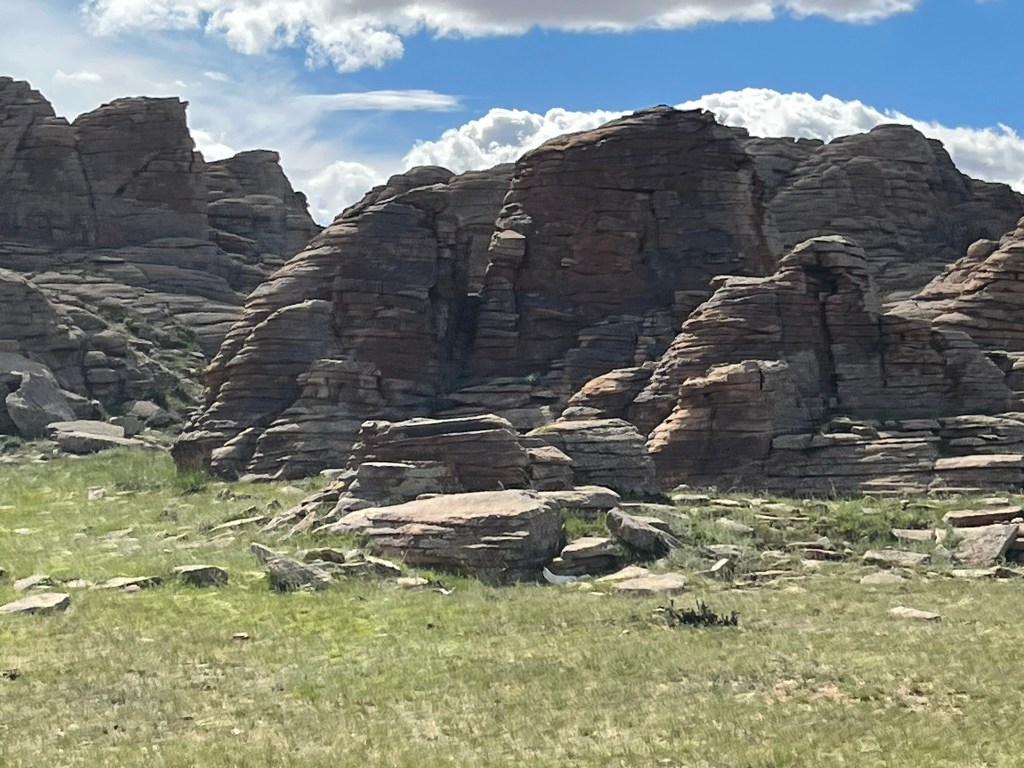
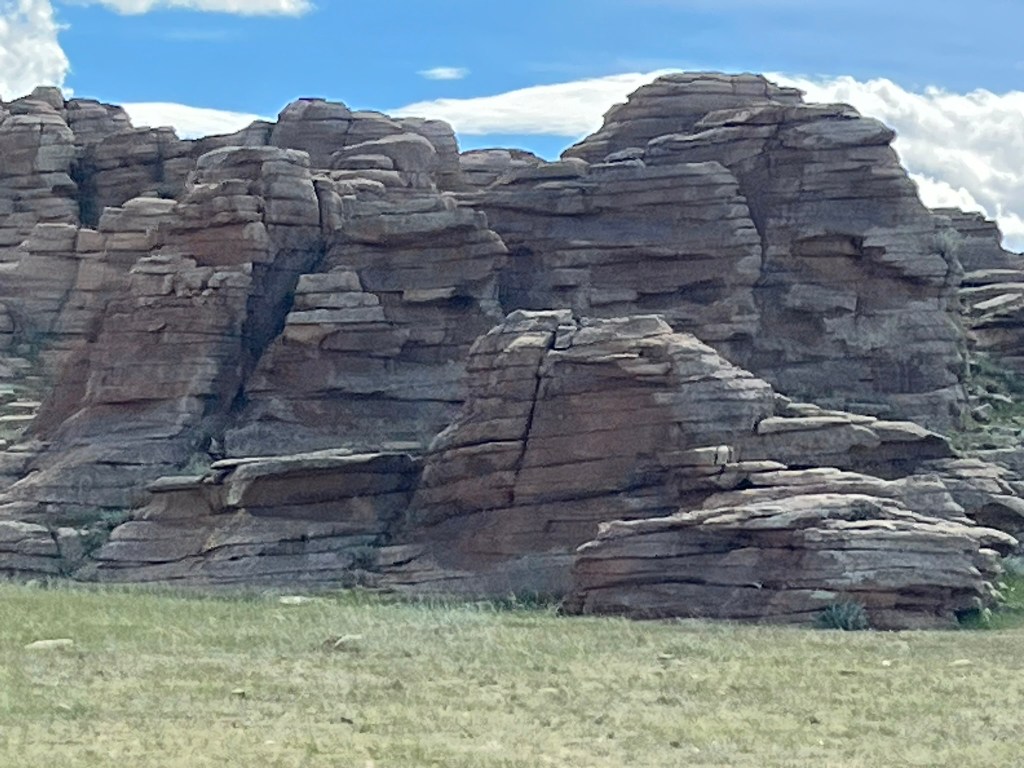
The difference is because of several factors. Although both rocks crystallized deep underground, they may have been exposed at different depths within their original granite bodies. Granite near the roof of an intrusion often develops more closely spaced fractures than granite at deeper levels. The spacing of the natural joints varies a lot across different granite intrusions. At Baga Gazriin Chuluu the joints are relatively widely spaced producing enormous blocks. And finally they are exposed to different weathering environments. Baga Gazriin Chuluu stands as an isolated mountain, with water running off steep slopes allowing large blocks to remain in tact.
People have been visiting these rocks for millenia, since the granite provided shelter from Mongolia’s fierce winds, making it a natural place for hermits and monasteries. Tucked into the granite canyon there are the ruins of a small stone monastery known as the ‘rock temple’ that was built in the 17th century. This wasn’t a big monastery like Erdene Zuu, but rather a quiet retreat where only a small numbers of monks lived and studied.
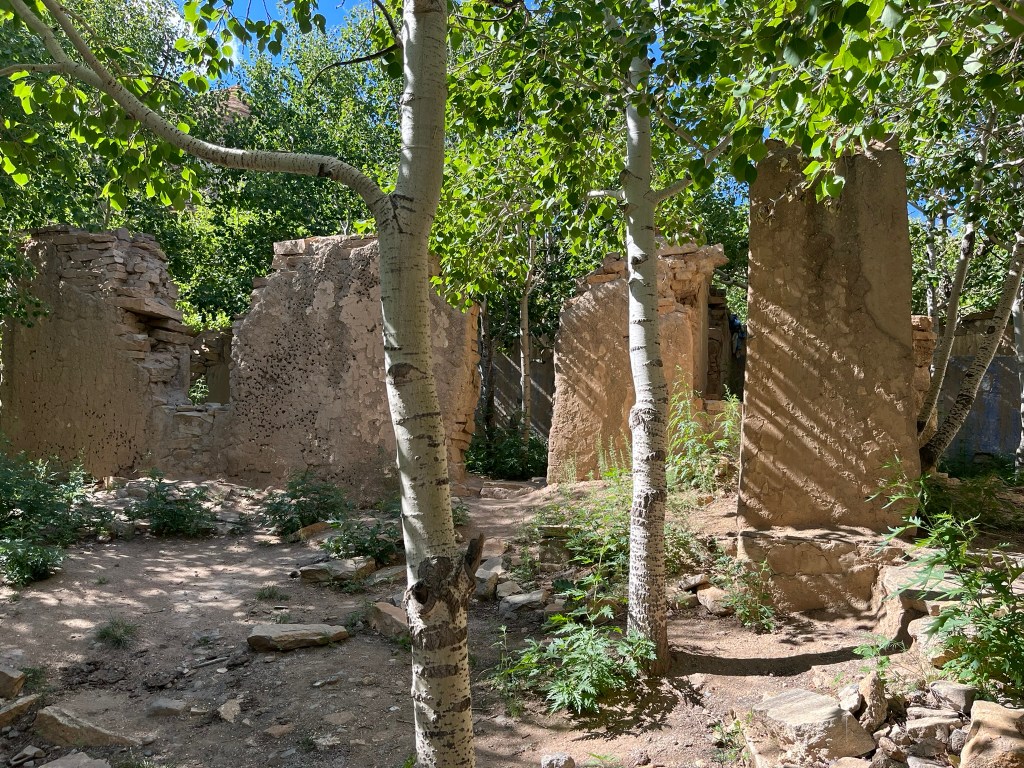
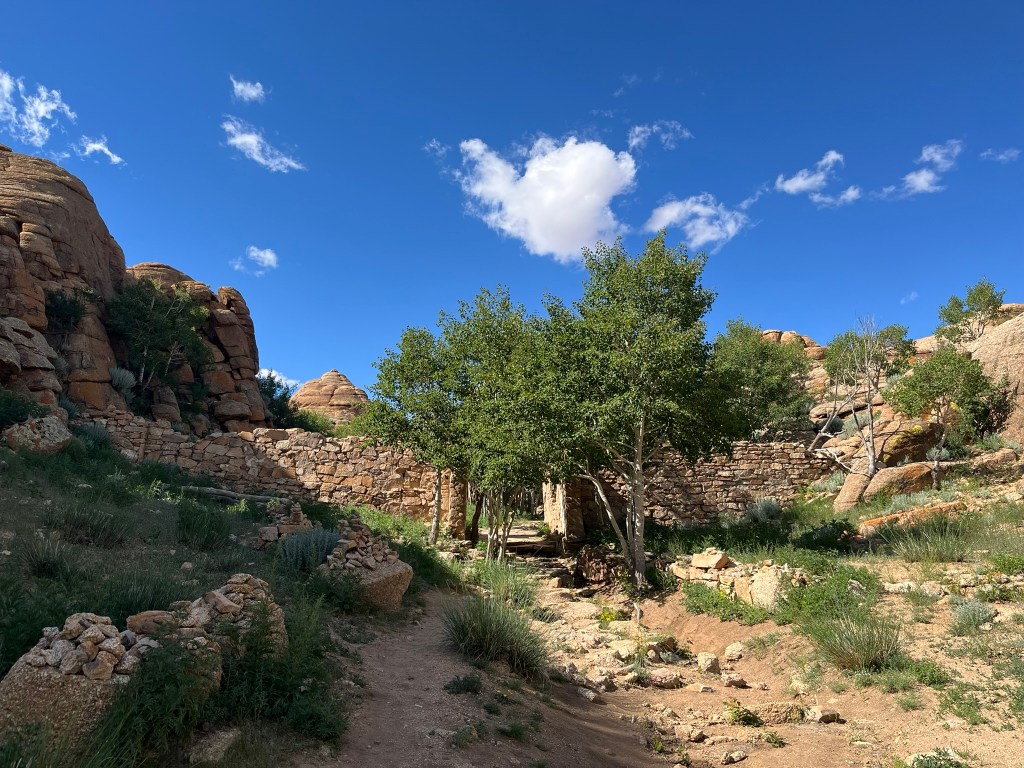
We arrived at the site in the late afternoon after another few hours of our lead driver trying to take a shortcut that turned out to be completely wrong. We could tell that the our driver was getting frustrated with the route being taken and there were a number of stops for the 3 drivers to discuss the choices the lead driver was making. Our van decided we wanted to start a revolution and vote our driver the new leader of our van gang. After arriving, we took the short walk up through the gorge, past the destroyed monastery to a fabulous view point on top of the rocks above.
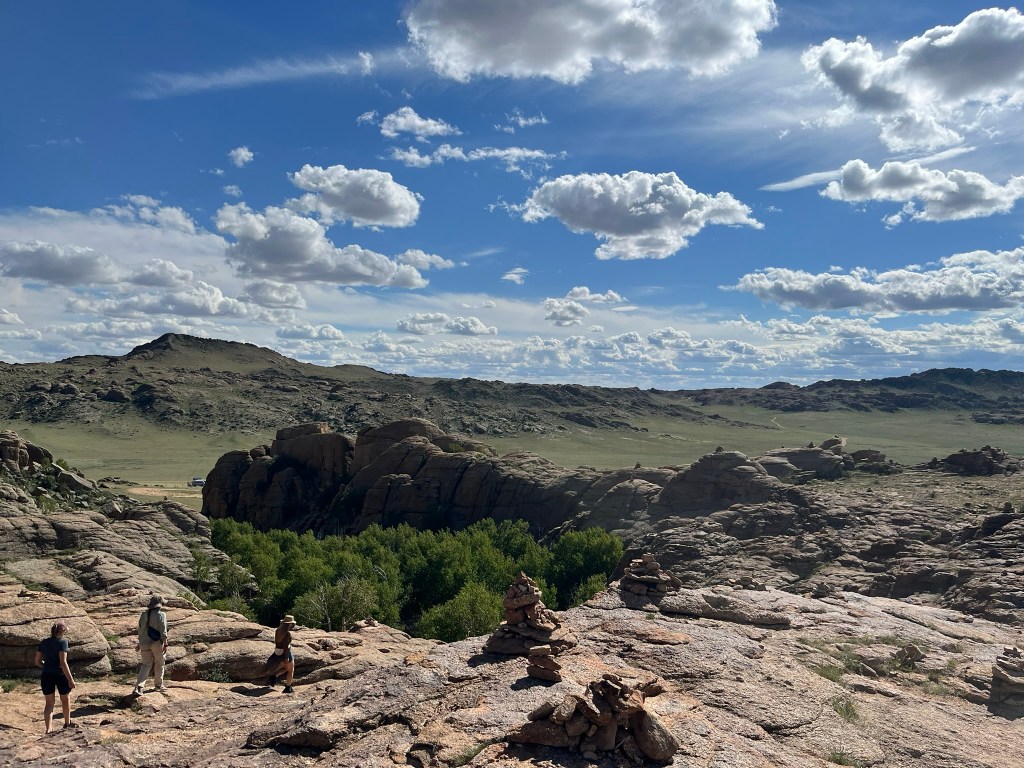
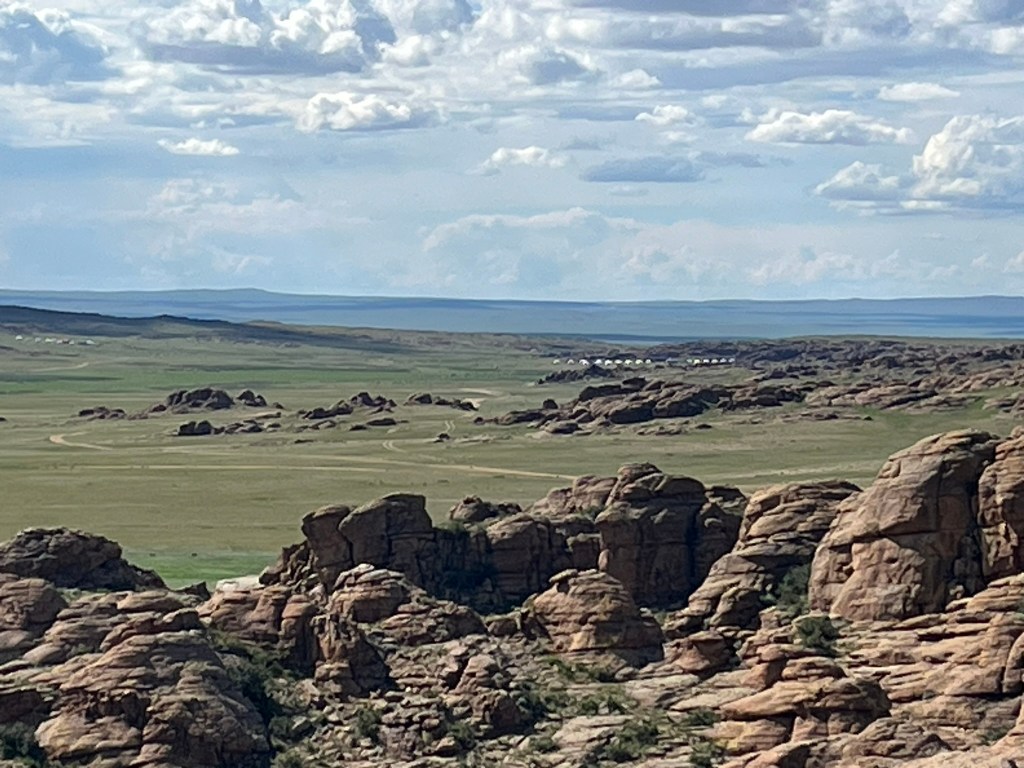
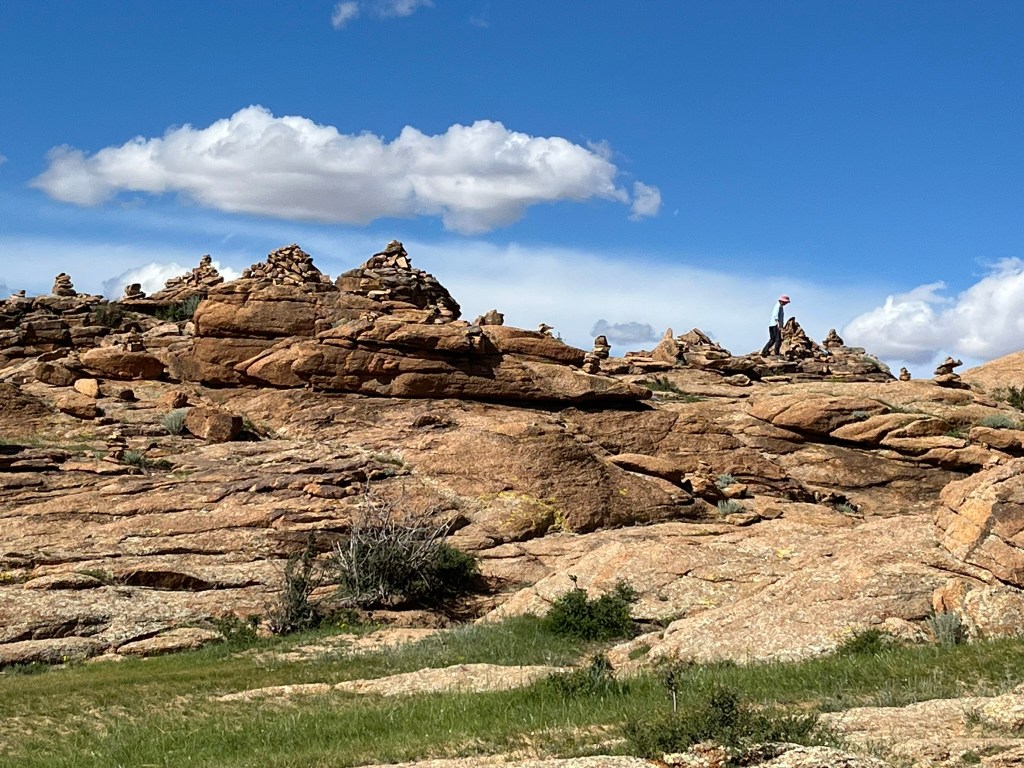
We are now in our final tourist ger camp of the trip as tomorrow night we will be back in Ulaanbaatar. It’s in another stunning location, looking across the granite massif.


Leave a Reply