Today our planned itinerary was to head from Yol Valley to the northern Gobi transition zone to see the ‘White stupa’ cliff formations. Our guide had suggested we add an unplanned stop to our plans – either the Natural History Museum in Dalanzagad or the Bronze Age petroglyphs out in the desert. We all quickly voted for the latter. With the assumption that our guide and drivers knew how to get to them…
From the National Park we quickly descended from the mountains into the open Gobi plain – a vast gravel and stony desert. You immediately get the feeling of endless space, being able to see up to 50km to the horizon on a clear day. In the distance we could see that we were approaching what looked like a large city, with multi-story buildings. Surely not in the middle of the Gobi desert? This is in fact Dalanzagad – the capital of Omnogovi Province, transport hub for mining and tourism, and service center for surrounding nomadic communities. With a population of over 30,000 and even an airport, this desert civilisation takes you a bit by surprise when all you have seen is ger camps for the past week. As most cities in Mongolia, the suburbs still consist of ger districts, with local communities mixing the old and new way of living seamlessly.
After a short supermarket stop for both the toilet and snacks we headed back out (still on lovely tarmacked roads) for another lunch stop – this time at what seemed to be a truckers stop. And then we were off to find petroglyphs…and were back on the dirt roads.
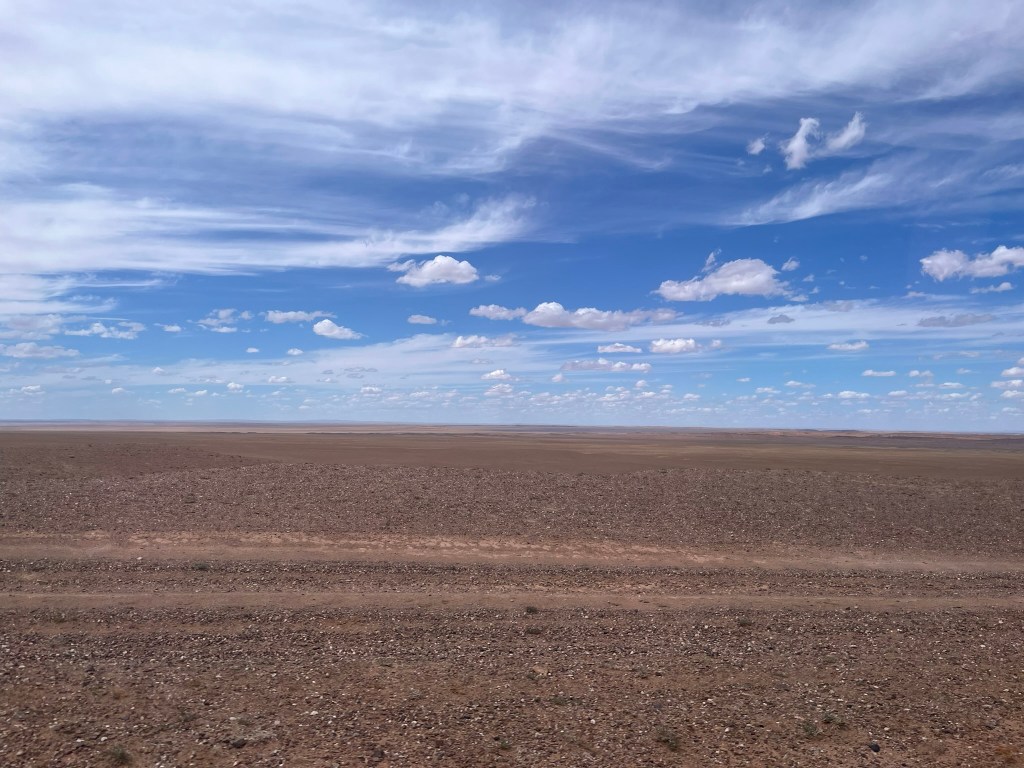
Four and a half hours later…after much back-tracking, many discussions between our drivers, the occasional local nomadic herder pointing us vaguely in a directly and the use of at least 4 different mapping apps on various phones we miraculously found the Del Uul petroglyphs.
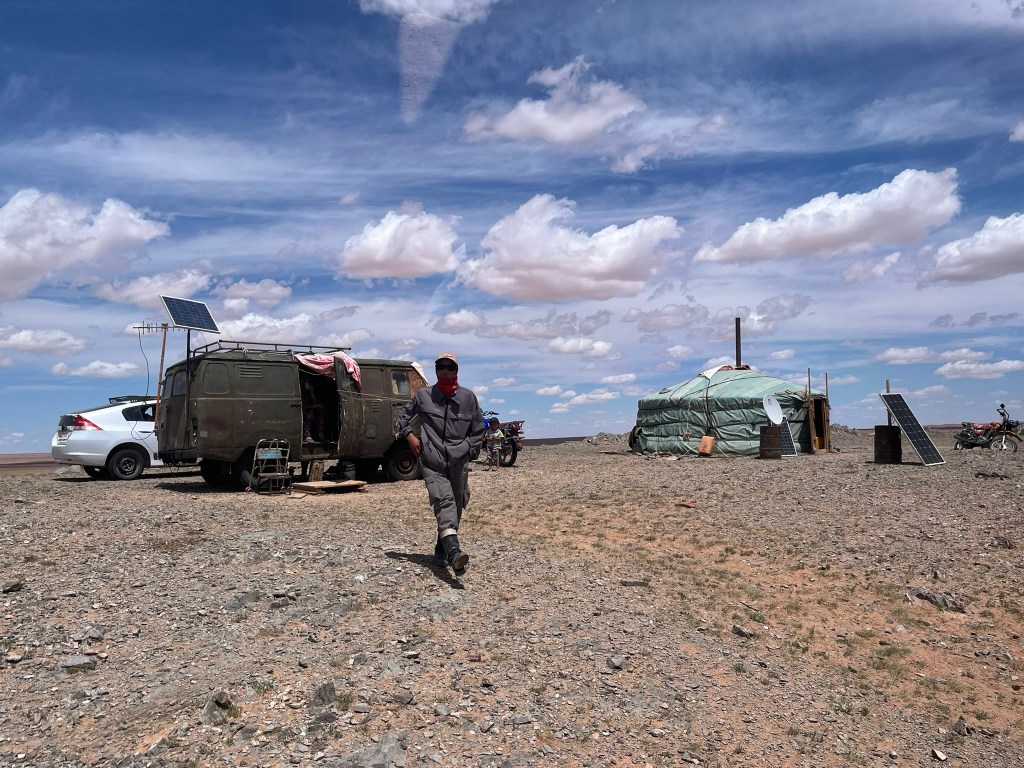
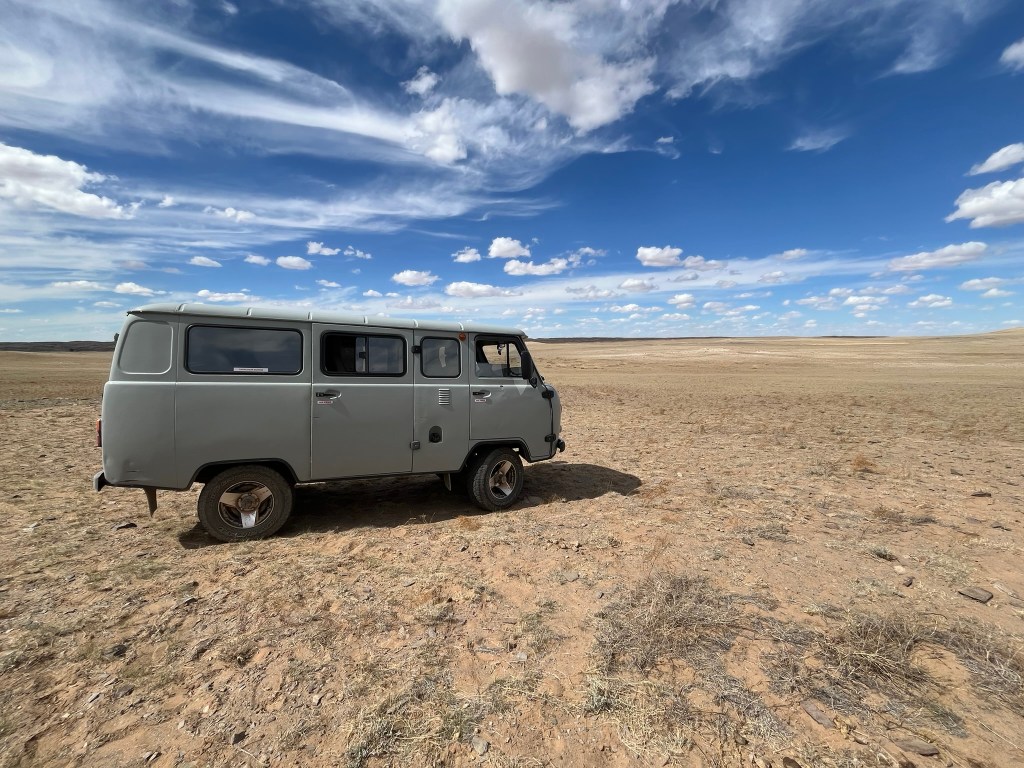
We had almost given up after driving through kilometers of rocky shallow valleys that all looked the same, covered in granite outcrops. Although Del Uul is one of Mongolia’s most significant rock art sites and is part of the proposed Petroglyphs Complexes in the Mongolian Gobi nomination for UNESCO, it receives very few tourists…because it turns out it is super hard to find.
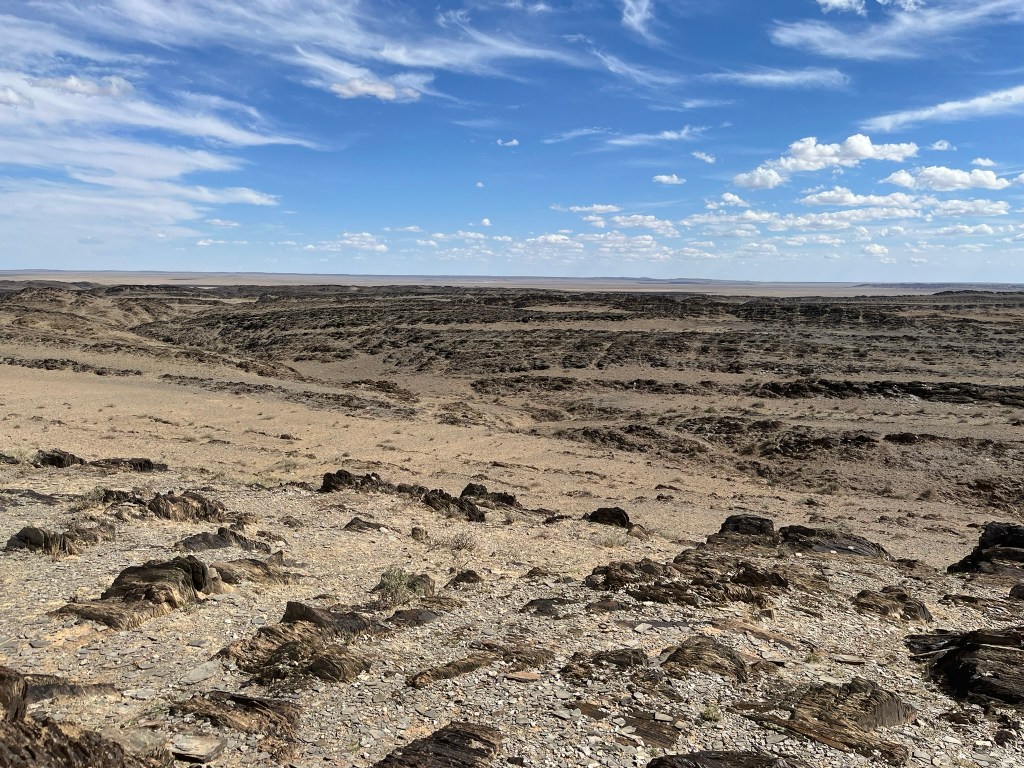
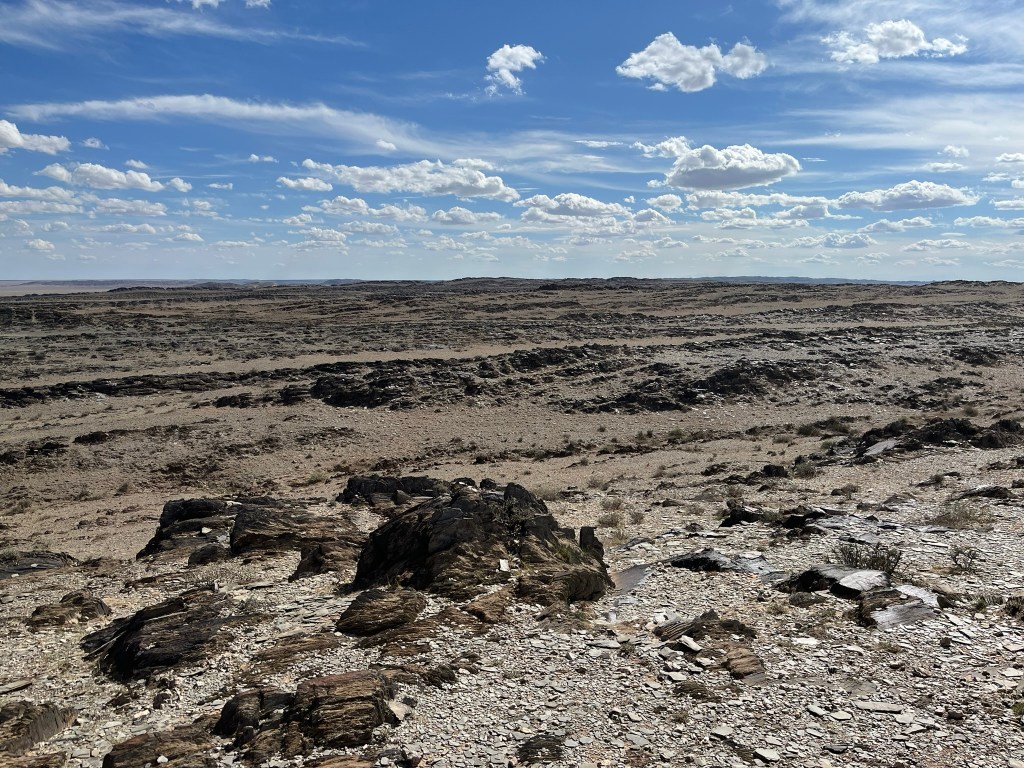
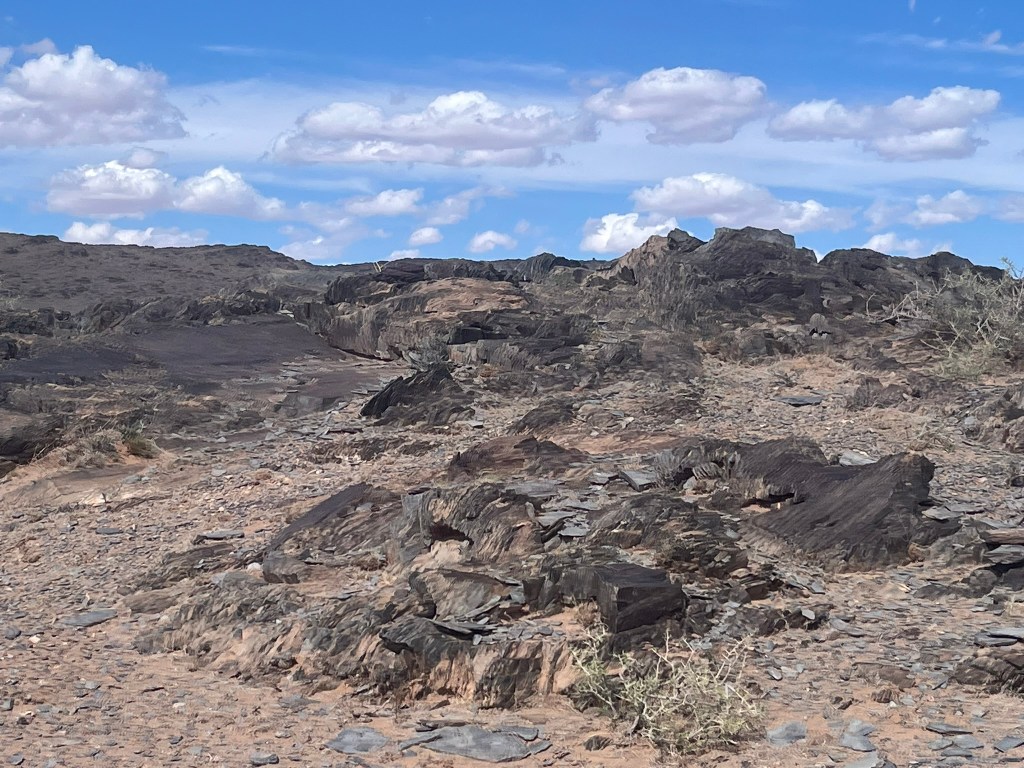
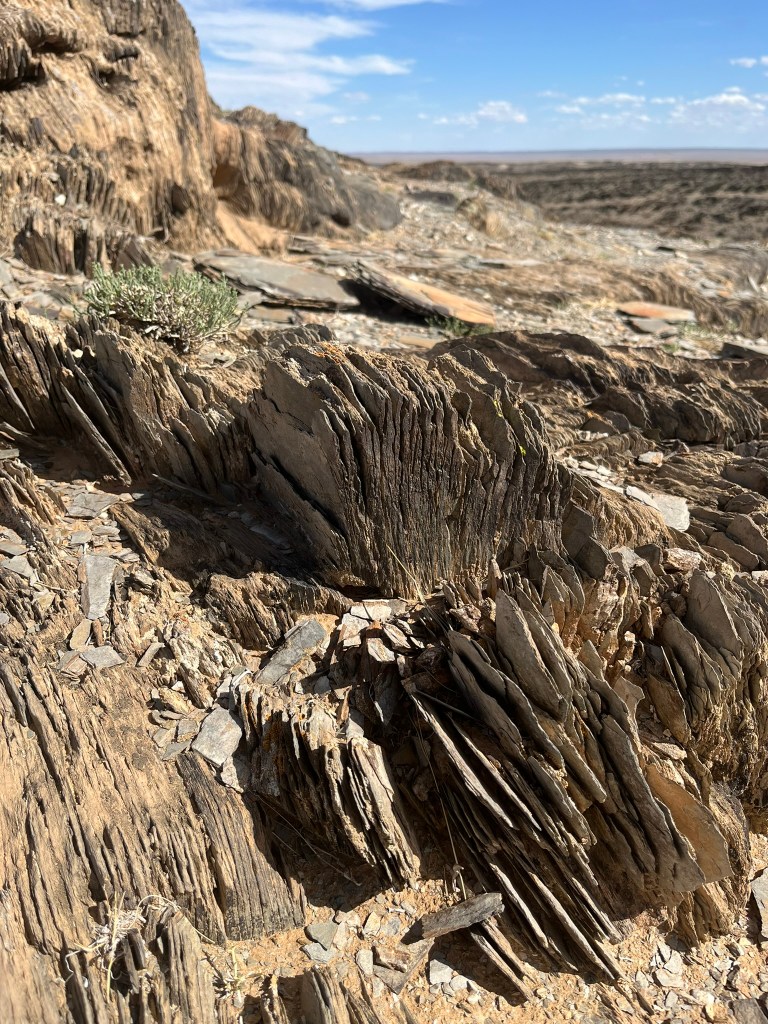
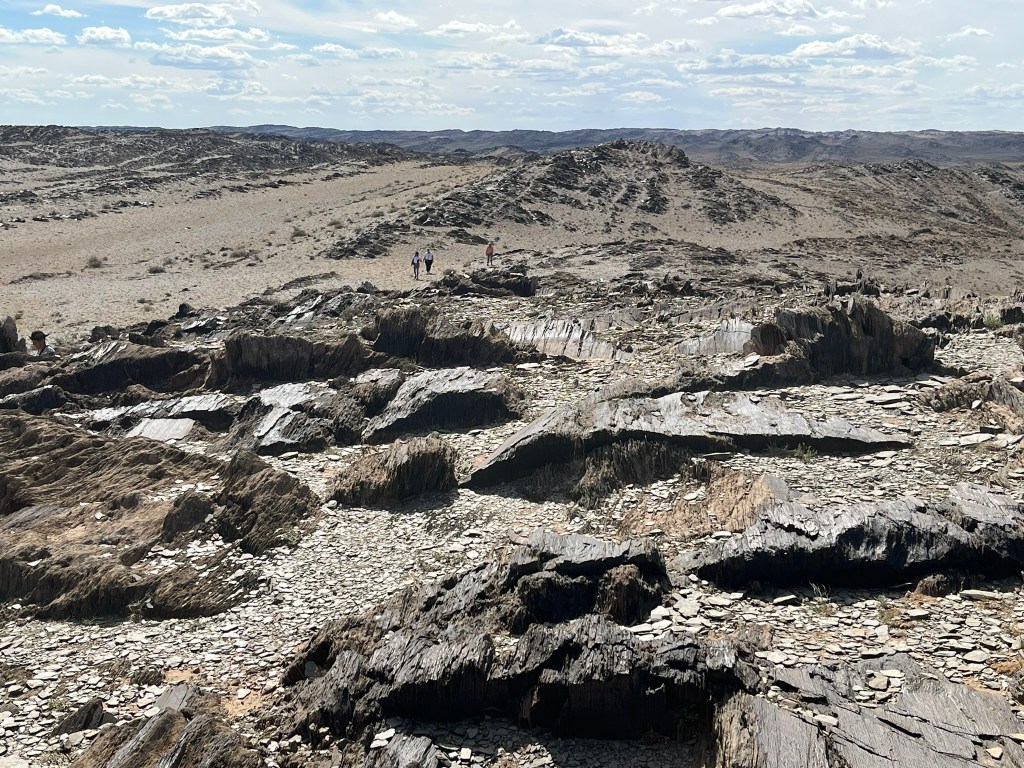
The geological landscape of the Del Uul petroglyphs is spectacular and super interesting. The granite outcrops we had see driving around are very curious looking and almost look like the laminated layers of puff pastry. I’d not seen anything like it before and thought it might be some sort of slate. After a bit of research I can confirm it is primarily dark granitic and granodioritic bedrock. When, how and what does this mean? The granitic rocks are part of the ancient crystalline basement of southern Mongolia, which formed during the assembly of the Central Asian Orogenic Belt.
Around 300-250 million years ago, during the late Paleozoic Era, Mongolia looked nothing like it does today. Instead of a vast desert, this region lay near the edge of an ancient ocean. Small continents, volcanic island arcs and pieces of oceanic crust were gradually colliding as tectonic plates converged. Think of it like modern day Indonesia or Japan, where volcanoes and earthquakes occur because plates are colliding.
As one plate descended beneath another parts of the crust melted at the subduction zone, generating large bodies of magma several kilometers beneath the earth’s surface. These magma chambers cooled very slowly allowing large mineral crystals time to grow. This is why granite contains visible crystals of quartz, feldspar, mica and sometimes hornblende. If the magma had erupted as lava instead, it would have cooled rapidly and formed fine-grained volcanic rock instead of coarse granite.
The rocks at Del Uul were probably never exposed as volcanos – rather they crystallized 5-20km below the surface as huge underground bodies called batholiths. Imagine a giant blob of molten rock frozen inside the crust.
Over the next 250 million years, mountain ranges rose, rivers carried away enormous amounts of rock and wind eroded the landscape. Eventually kilometers of overlying rock were stripped away and only then were these ancient granites exposed at the surface. These granites are extremely durable and hard-wearing – which helps explain how the petroglyphs carved into them have survived for so long.
So why does this granite have such a distinct look? As if it were thousands of sheets of paper stacked up and slowly peeling away from each other. This is the classic way that granite weathers known as sheeting or exfoliation. Although it looks like the sheets are stacked up on top of each other, they are actually one continuous mass of granite. When the ancient granite was finally exposed, it expanded slightly as the weight of overlying rocks was removed. Although this weight change was only a tiny fraction of a percent, this slight expansion was enough to create fractures roughly parallel to the ground surface called sheet joints. Once exposed, Mongolia’s extreme climate can take over, further widening the gaps. Huge temperature swings between Summer and Winter, and water seeping into cracks, freezing and expanding all slowly pries the sheet joints apart. Wind then removes loosened fragments. It truly looks man-made in some ways because it is so neatly stacked.
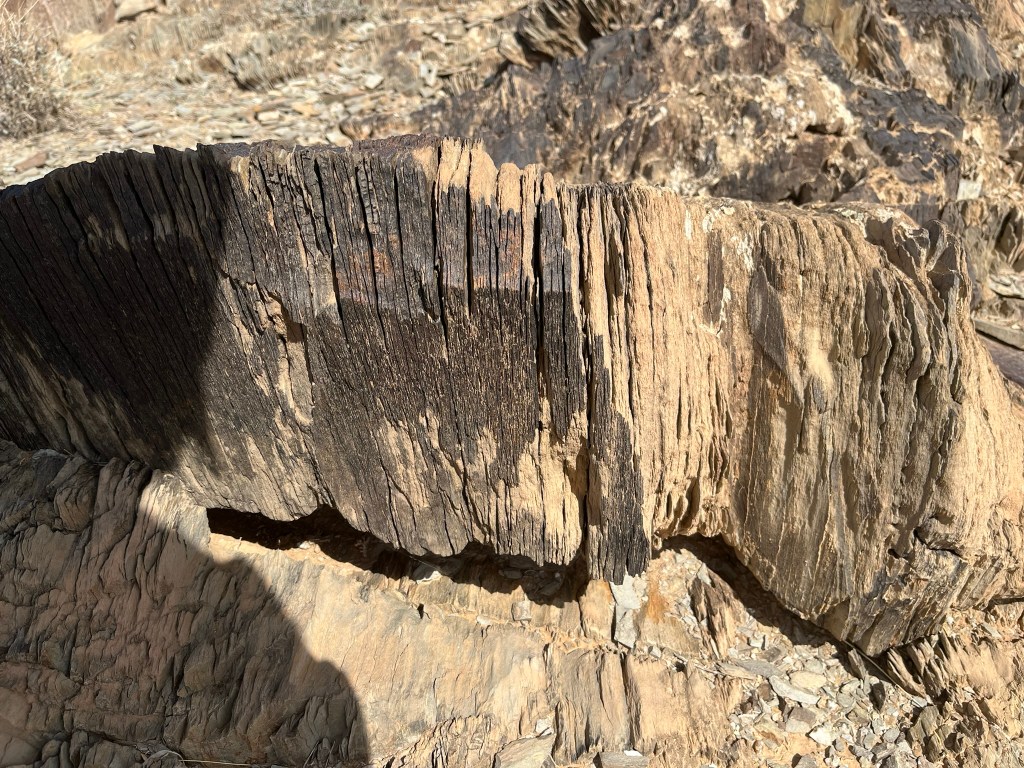
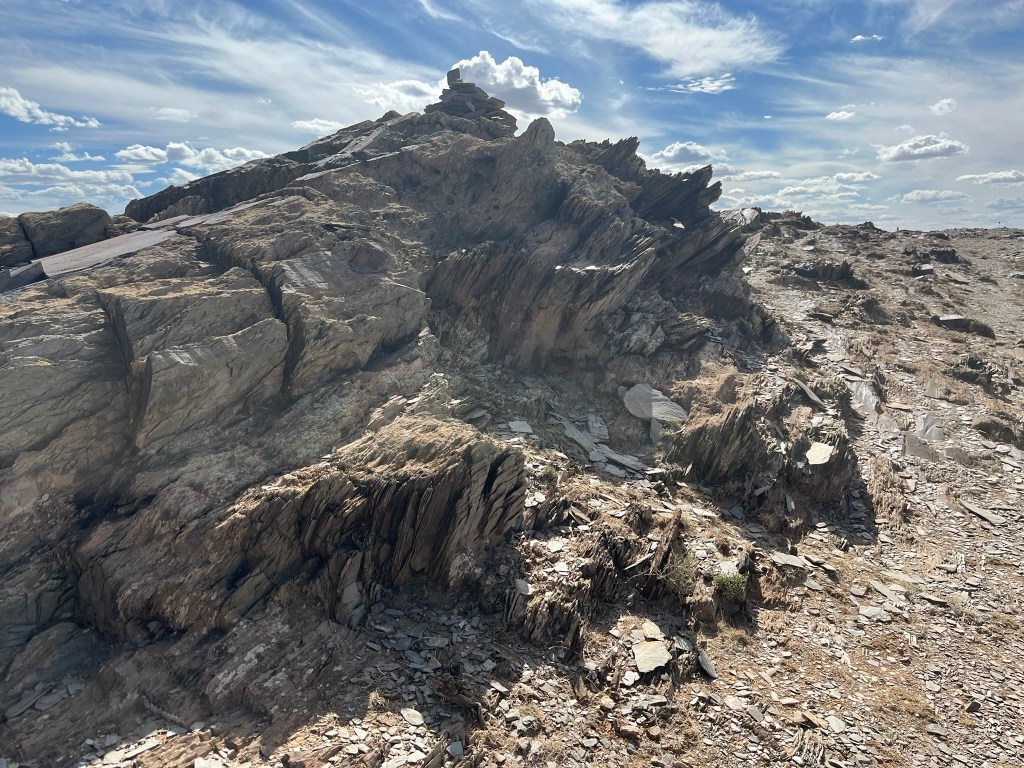
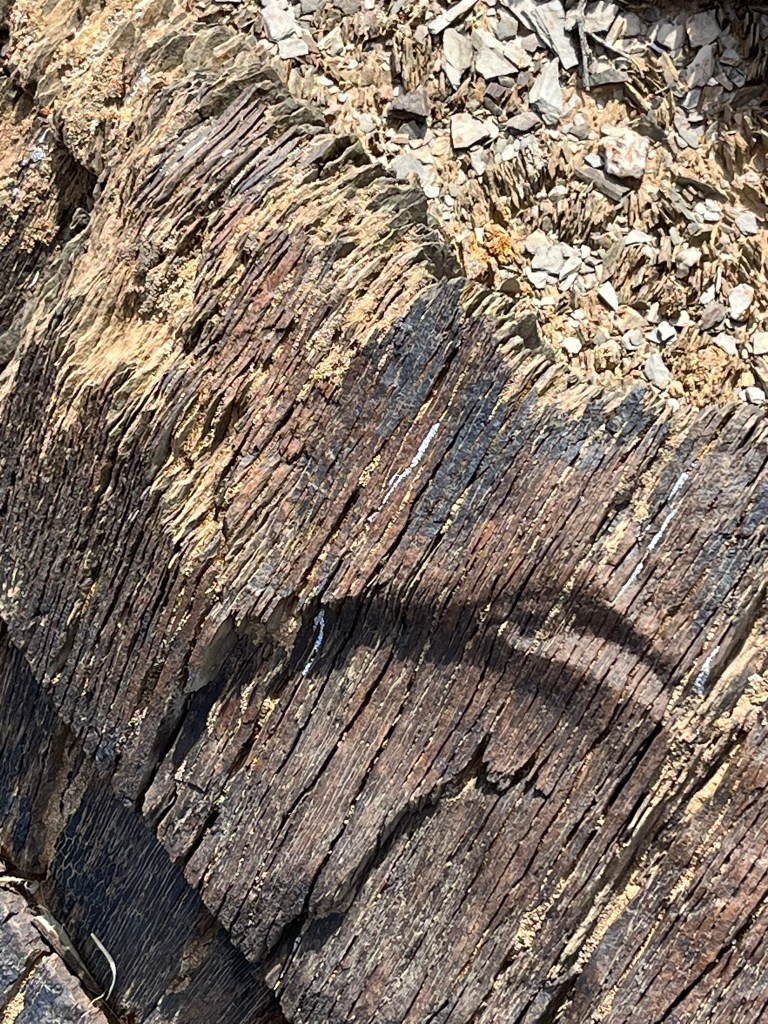
The rocks at Del Uul have a dark, weathered outer surface – this is called desert varnish or a weathering patina and contrasts with the much lighter rock underneath. This thin coating on the rocks has developed over thousands of years, and is made up of clay particles, mixed with manganese and iron oxides deposited by wind, rain and microorganisms. It turns the rock a deep grey to black, giving it the same color as slate. This dark patina is perfect for marking with petroglyphs.
The petroglyphs were not the work of a single culture or even a single generation. Instead it was a special place that successive peoples returned to for around 5000 years, from the Late Neolithic and Bronze Age through the Iron Age and into the Turkic Period around the 8th century AD. The oldest carvings were probably made by Bronze Age pastoralists, prehistoric people who herded and moved seasonally across the steppe. Why did they carve into the rocks? Archeologists think it was for a number of purposes; recording everyday life and capturing images of things that mattered to them like ibex, horses, hunting and herding, as well as ritual and spiritual meanings. The granite hills would have stood out in the landscape and may have been regarded as sacred places. Del Uul also overlooks a natural travel route through the Gobi and the carvings may have acted as a way of marking seasonal camps, gathering places and ceremonial sites. Later visitors throughout the ages respected the location and added their own markings in a place that was already ancient and meaningful rather than somewhere new.
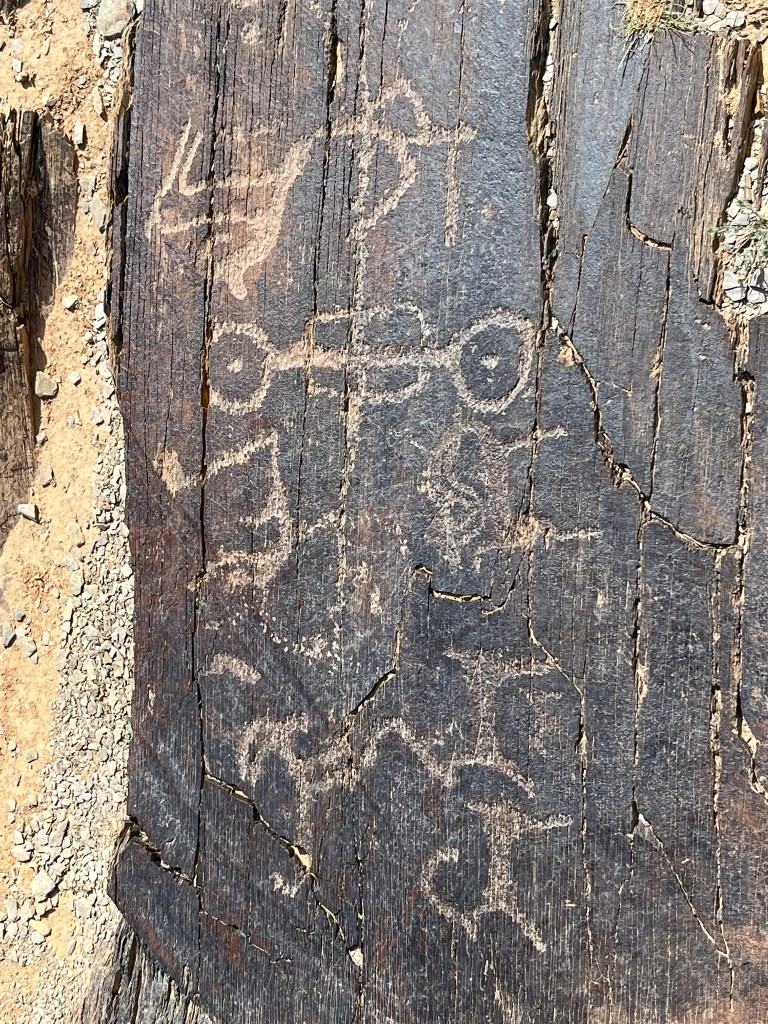
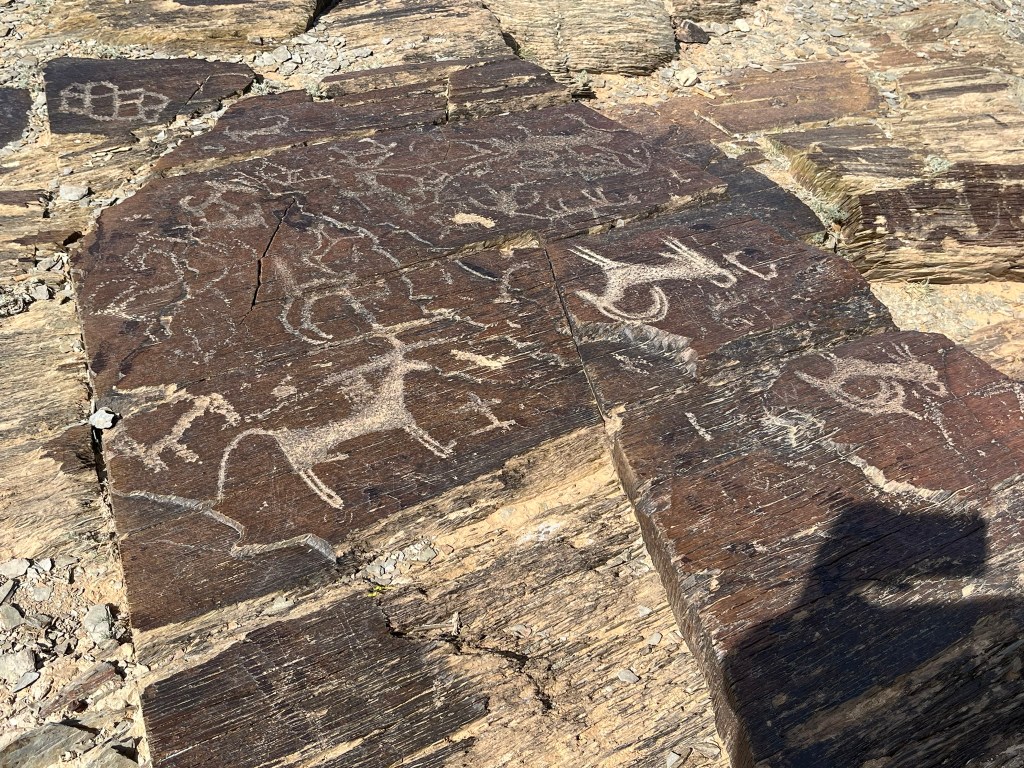
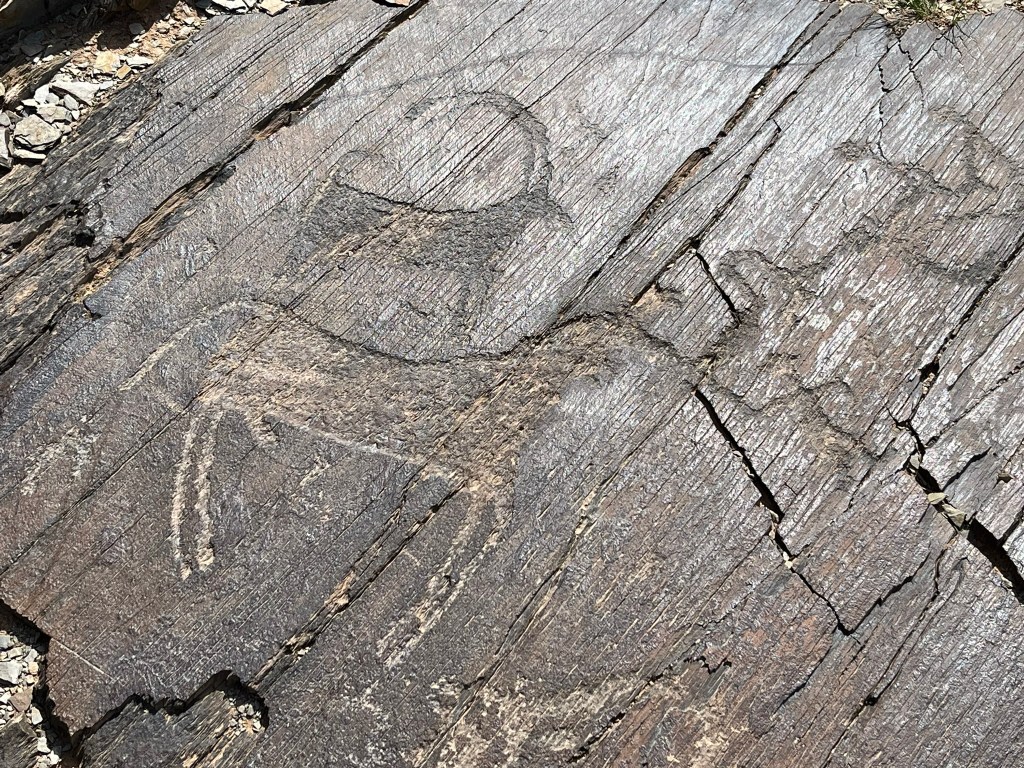
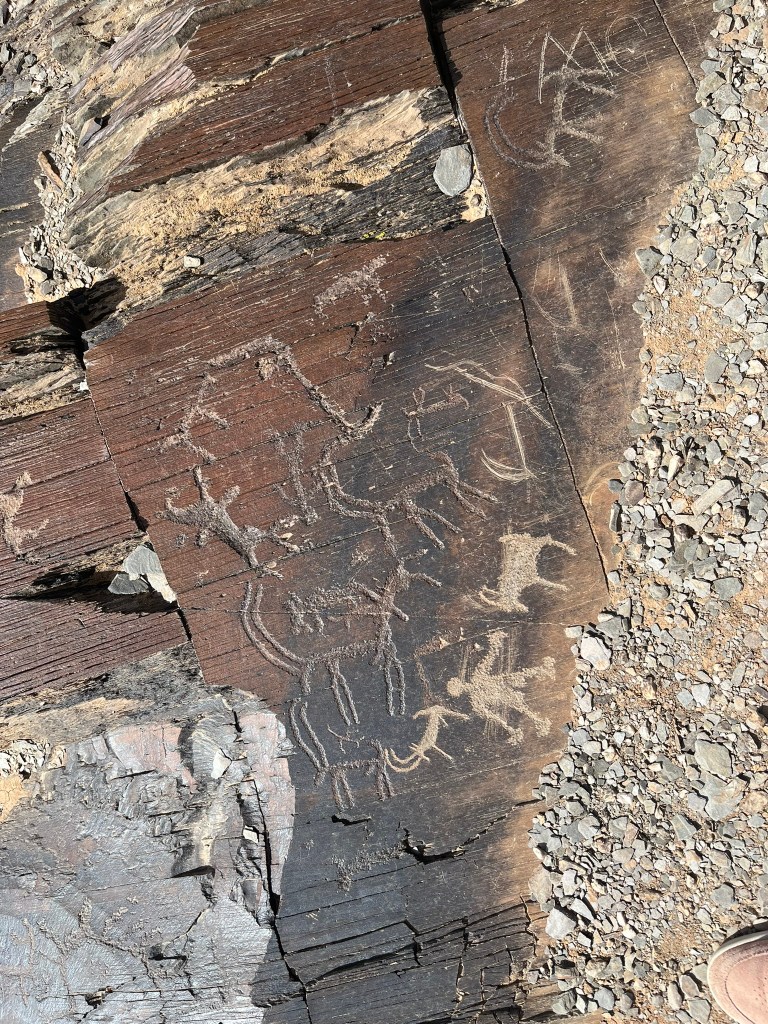
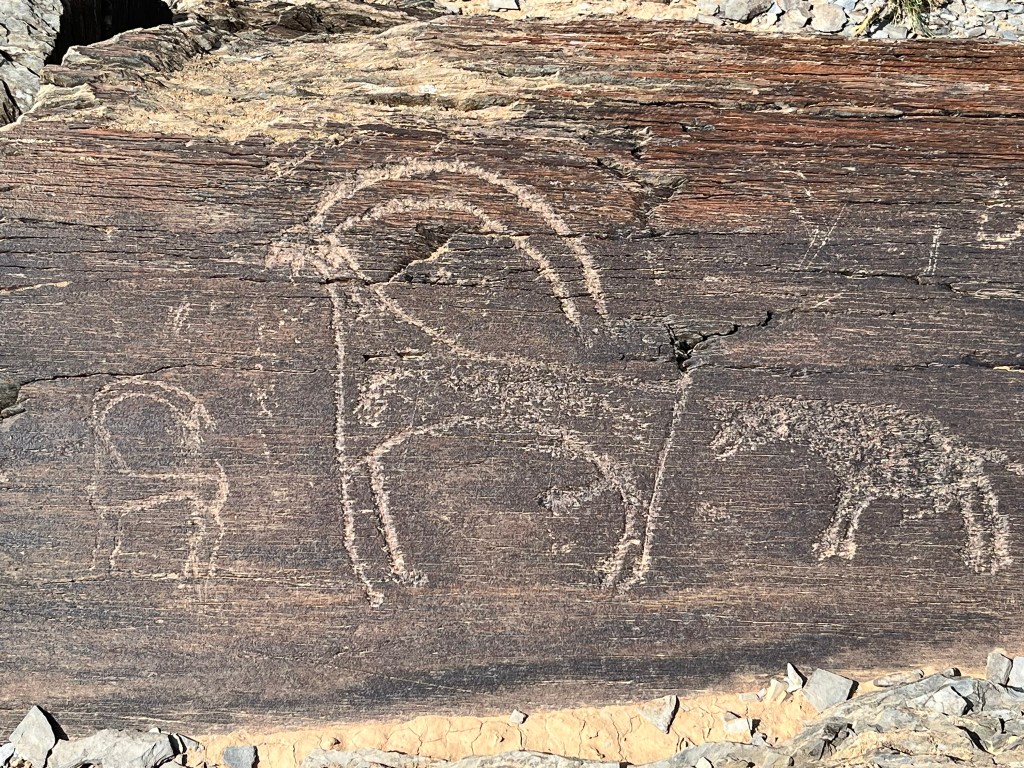
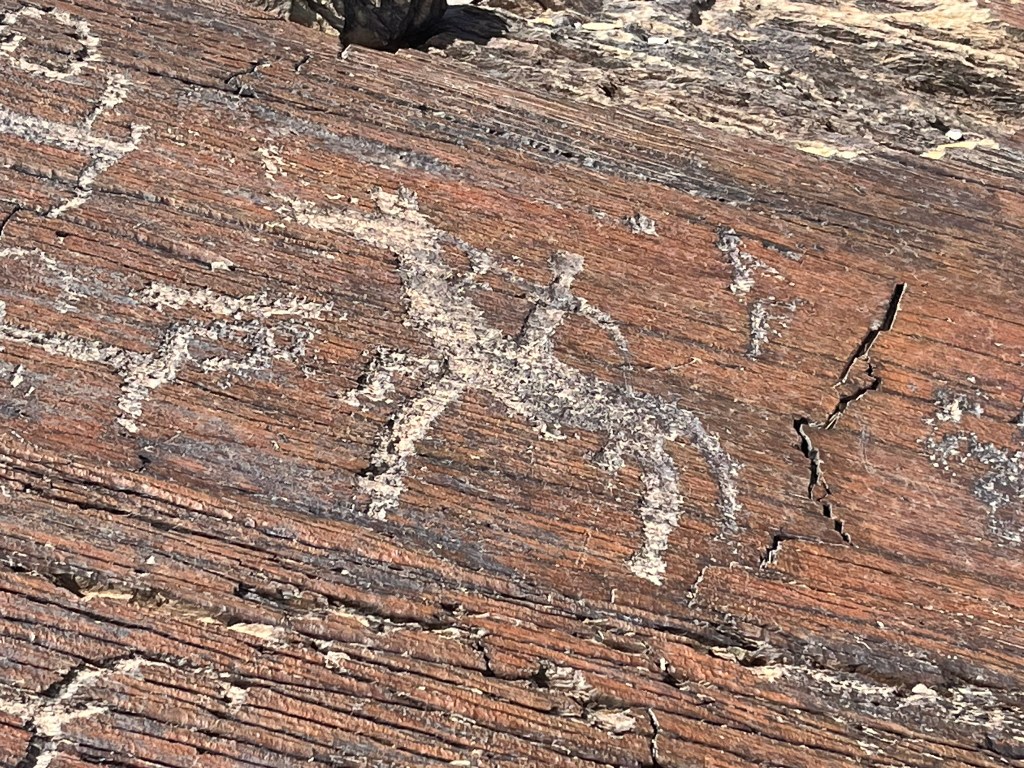
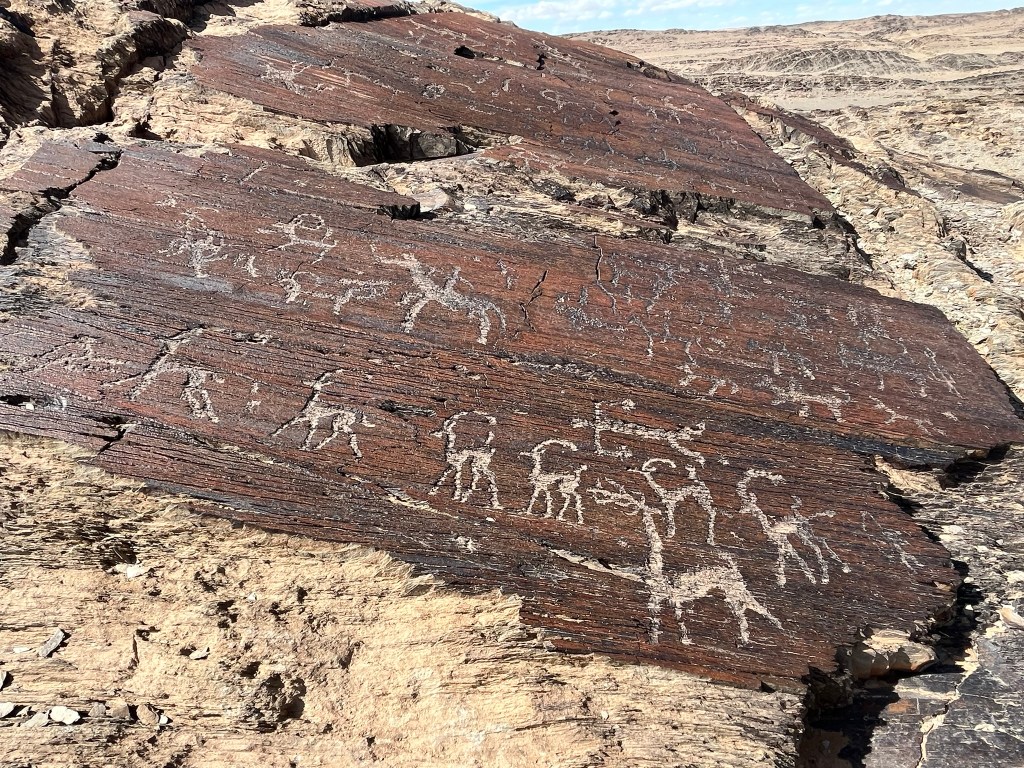
So why have some parts of the petroglyphs survived and others worn away? It almost looks random when you are exploring the hills as even on the same rock face, some petroglyphs are crisp whilst others are barely visible. Several processes have been acting on the petroglyphs for thousands of years. Firstly, different parts of the rock are weathering at different rates. Granite is not perfectly uniform and some areas contain tiny fractures or slightly different mineral compositions. Water gets into these weak spots, allowing a freeze-thaw cycle to gradually break down small flakes of rock. Exfoliation of the outer few millimeters of the granite, results in the rock peeling away – when this happens the entire carved surface disappears. Orientation also matters – carvings on different sides of the same rock experience different conditions. A south-facing surface receives more intense sunlight and larger daily temperature swings and surfaces exposed to prevailing winds are blasted more by dust. Over thousands of years these small differences add up. Water runoff will follow predictable paths down the rocks and carving directly beneath these channels are repeatedly wetted, promoting chemical weathering.
We spent about 45 minutes exploring Del Uul, clambering up to the top of the granite outcrop and slowly moving from one petroglyph site to another, clearly marked by small metal pegs. It was a really brilliant experience to explore something so old and honestly hard to get to. It felt like we had found ancient treasure. Albeit we all agreed we wished it hadn’t taken us quite so long to find!
We never did get to the white stupa cliffs, as by the time we had finished exploring Del Uul it was time to head to the ger camp as our drivers had been driving around at that point for close to 11 hours. We would do the white stupa tomorrow instead.


Leave a Reply