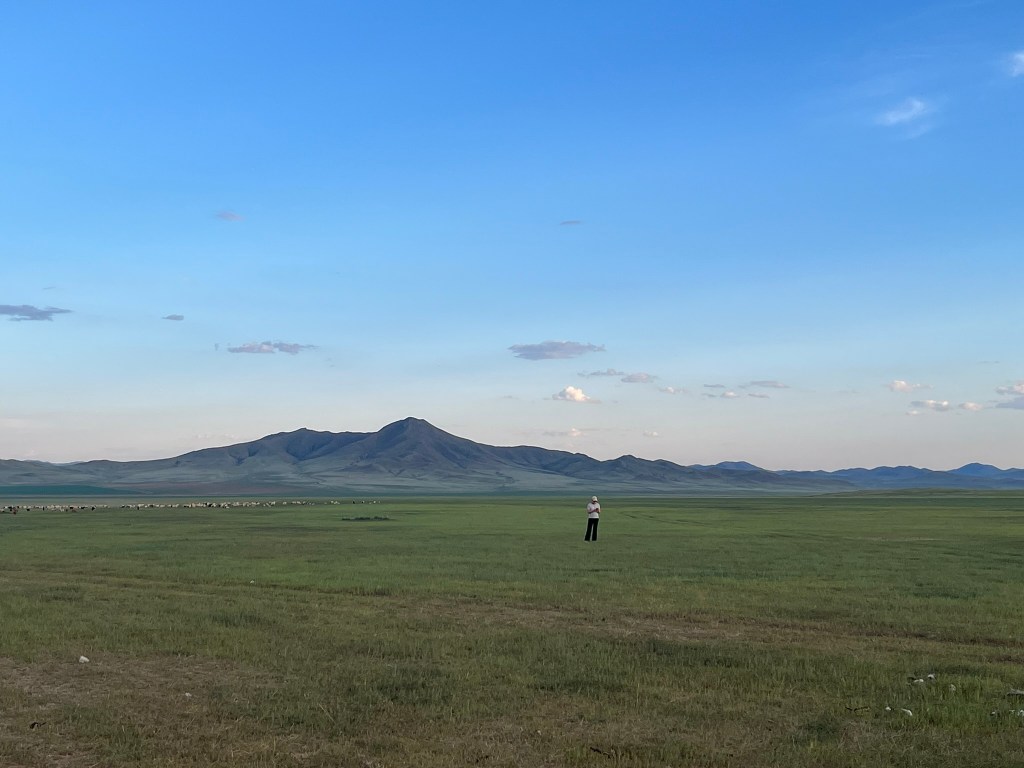
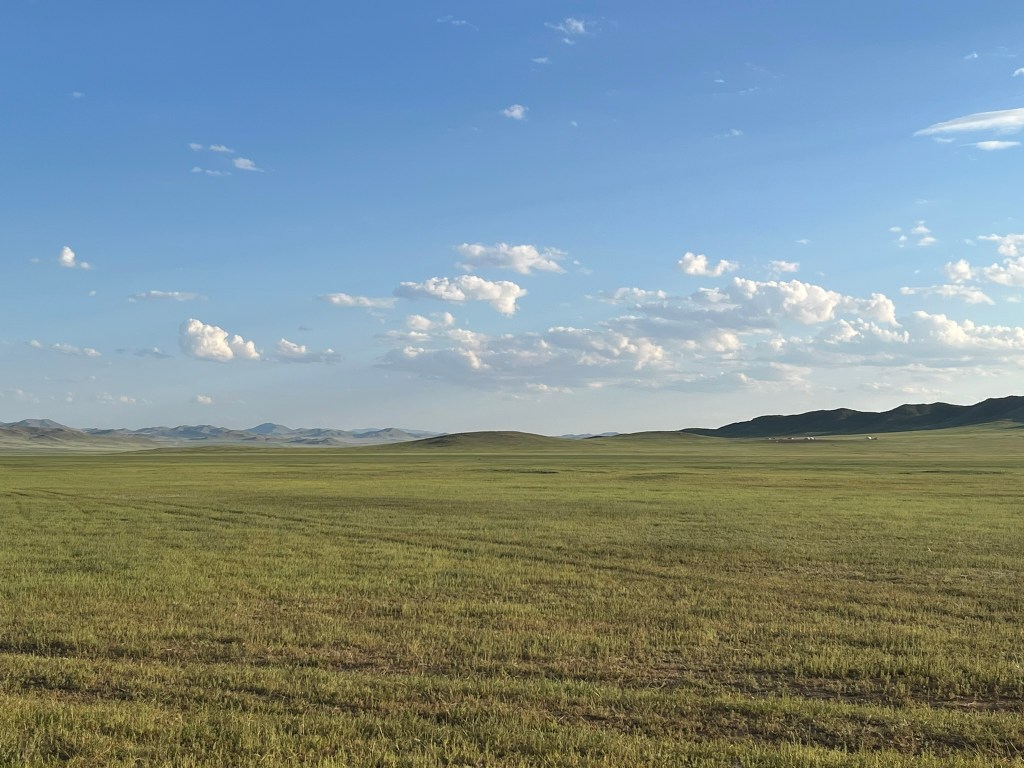
Our final training camp stop was to the home of a nomadic horse trainer and his family. The camp was very simple (and I believe is simplest we will stay in throughout the trip) with no bathroom, no running water, no electricity and just 1 guest ger for 15 of us to sleep in. Even our guide was a bit surprised there was not a designated hole in the ground for the bathroom and we were informed that the method would be to walk out into the steppe in any direction and hope no one looked.
We were warmly greeted into the horse trainers home. Hospitality is one of the defining values of Mongolian culture and there is a traditional sequence to greet a guest that has changed very little over the centuries. All 15 of us were offered a seat in the main ger and offered refreshments by the horse trainers wife – refusing is impolite even if you only take a small sip or bite. The first offering is salty milk tea (suutei tsai), followed by cookies and fried dough pastries (boortsog). The host will present the bowl with both hands and the guest should receive it in the same way. The exchange of snuff bottles is also common between men. A snuff bottle was passed around the group and the ritual involves admiring the bottle, opening it, taking a sniff and returning it carefully. In return we presented the gifts that we had bought in Carrefour earlier in the day to the family – this included lots of vodka, fruit and candies.
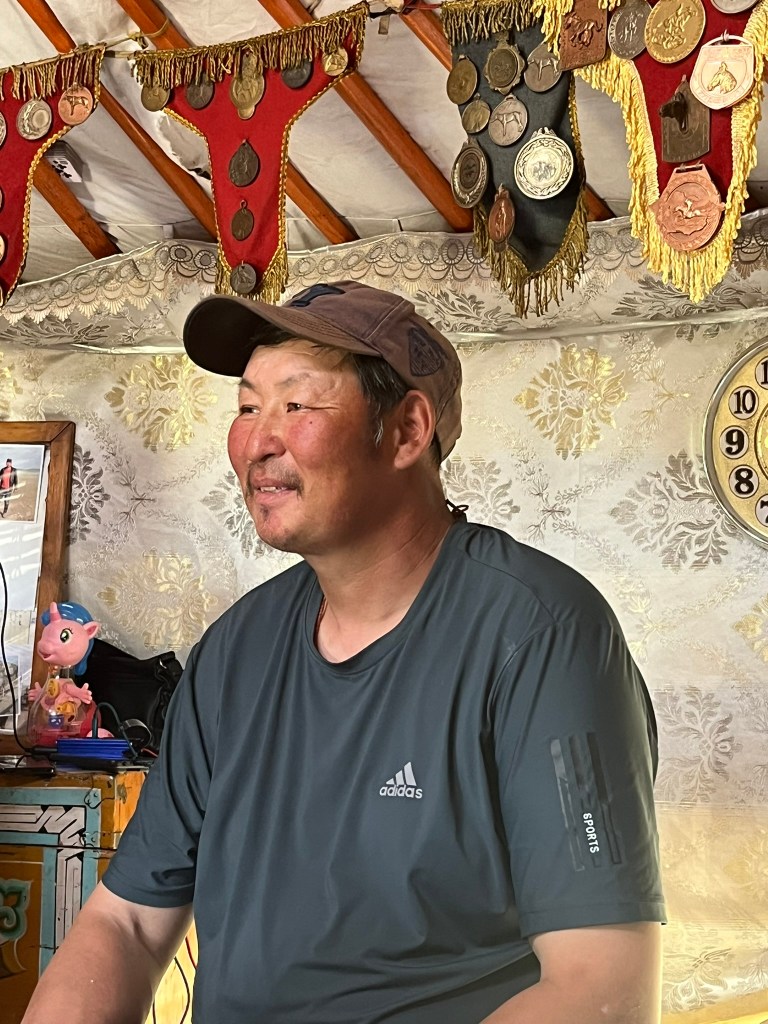
We then had a good chat (with our guide acting as a translator) with the family. The husband told us about his life as a horse trainer. He started as a young jockey and then when he turned 13 began training as a horse trainer. He is a champion horse trainer and the medals he has won at festivals adorned the family’s ger. Alongside horse training, he is a nomadic herder and had 500 sheep, 300 goats, 50 cattle and I think around 100 horses. We asked him how he keeps track of all these animals when there are no fences on the grasslands. He explained that his animals will roam as far as 20km in any direction. The location of their current camp was their summer spot, but they would move with each season. And even in winter the herds roam free and eat from the land. To manage the herd it was just him, his wife, his 16-year old boy (who is also now training as a horse trainer), motorbikes and 4 dogs! He also has 3 three other kids – 2 girls and a young boy training to be a horse-racing jockey at just 7 years old! Herding using motorbikes and even cars is pretty common!
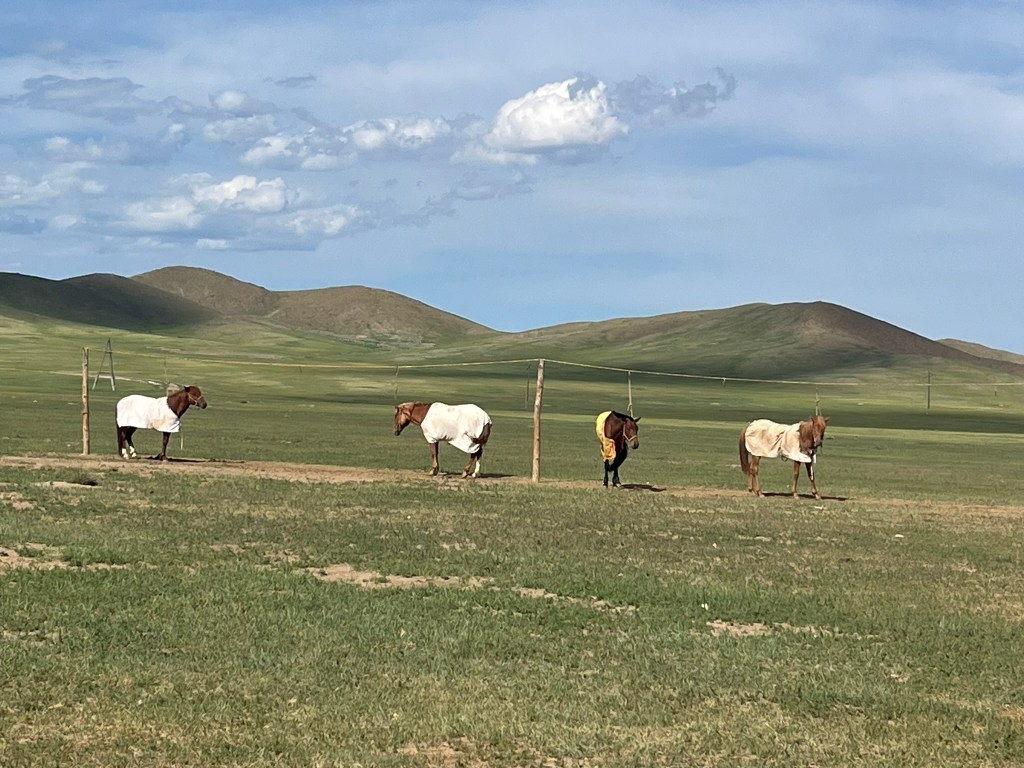
Horse racing in Mongolia is a celebration of horse and of the families who have spent generations breeding and training them. The stars of the Naadam are often not the jockeys, but the horse trainers – in Mongolian these are known as uyaach. A uyaach is usually a nomadic herder who spends much of the year raising horses on the open steppe. Training a racehorse is considered both an art and a science, with knowledge passed from parents to children over generations. Many families can trace bloodlines of horses and training methods back decades, sometimes centuries. Unlike trainers at a racetrack, a uyaach lives with the horses everyday. The best trainers are highly respected throughout Mongolia and having your horse prepared by a renowned uyaach is a source of enormous pride.
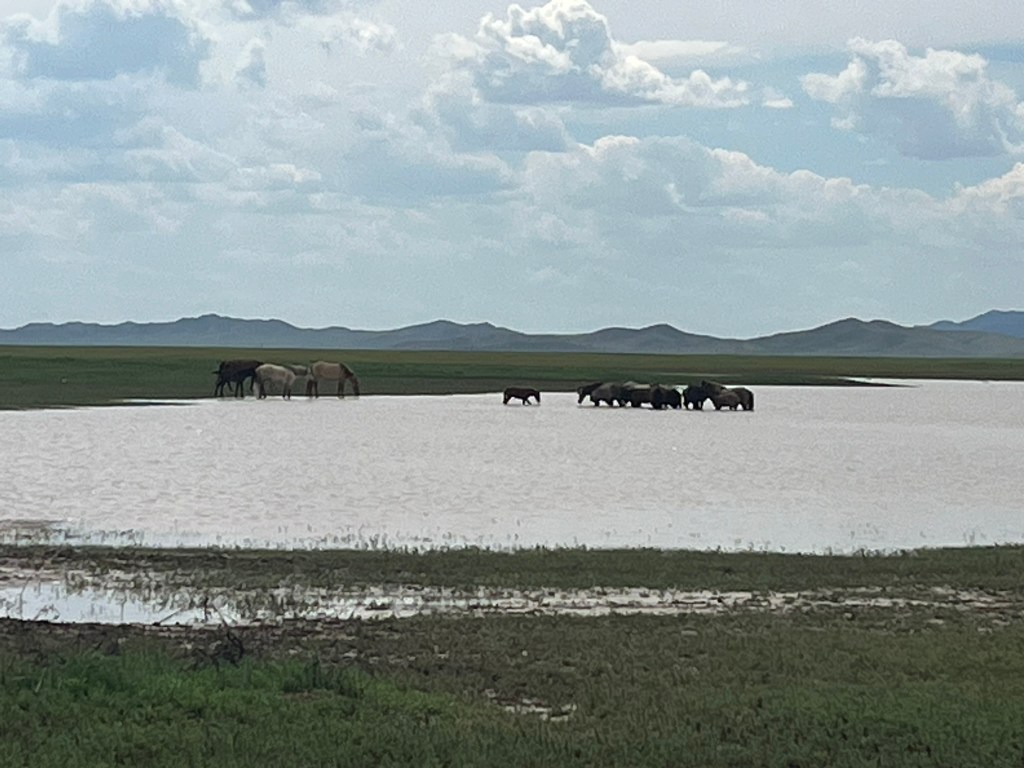
Training begins weeks before the festival. The horses remain living naturally on the steppe, but their routine significantly changes. They are ridden over progressively longer distances, their diet is carefully managed and the trainers monitor weight and fitness by instinct. Experienced trainers pay attention not only to physical condition but also to the horse’s mood.
Naadam races take place across the open steppe. There are no rails, grandstands or manicured turf. Horses gallop over natural grassland for between 15 and 30km, depending on their age. These are endurance races that test stamina as much as speed. The horses are grouped by age rather than by the ability of the riders. Younger horses run shorter distances, while mature horses race the longest courses. One of the most striking aspects of Naadam is that the jockeys are children, typically between 5 and 13 years old. The race is considered a test of the horse rather than the rider. Children are chosen because they are light, allowing the horse to perform at its best.
After a walk around the area the horses were being kept in we went back to our ger to try and figure out how to configure our sleeping mats so that we could all fit in their for the night. At least 5 people had already decided that it would be warm enough to sleep outside by the bus which made figuring out the sleeping plans a lot easier! Whilst this was going on, some of the group had headed off to the nearest town (where, I do not know as it felt like we were in the middle of nowhere) in search of vegetables for our dinner.
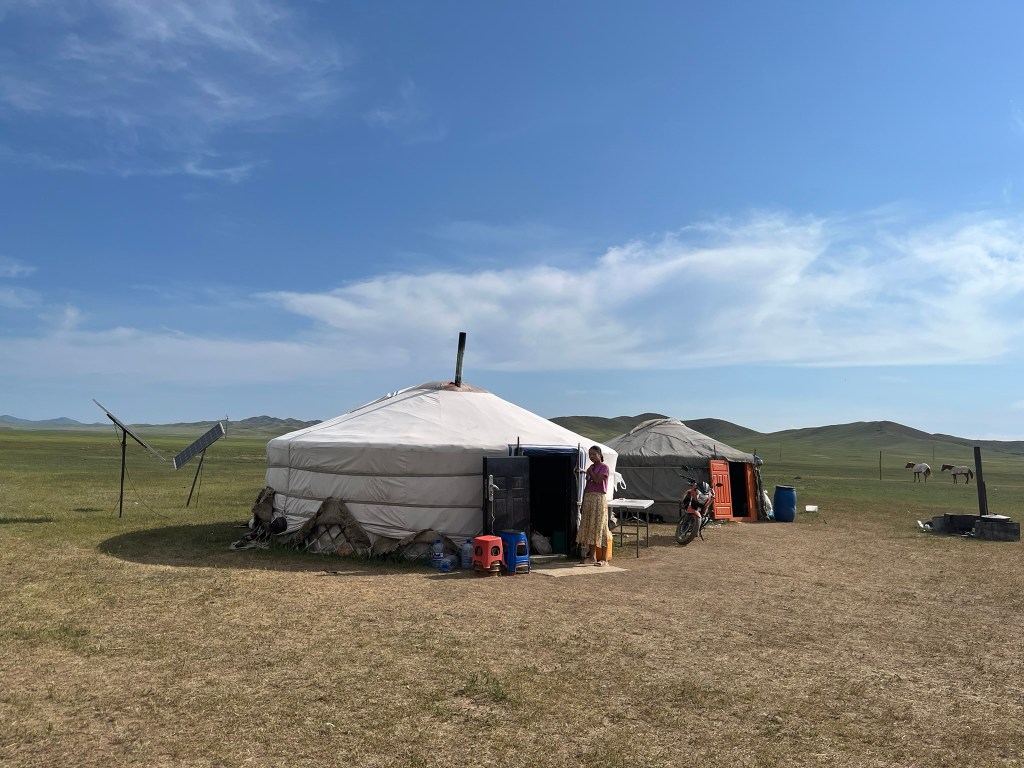
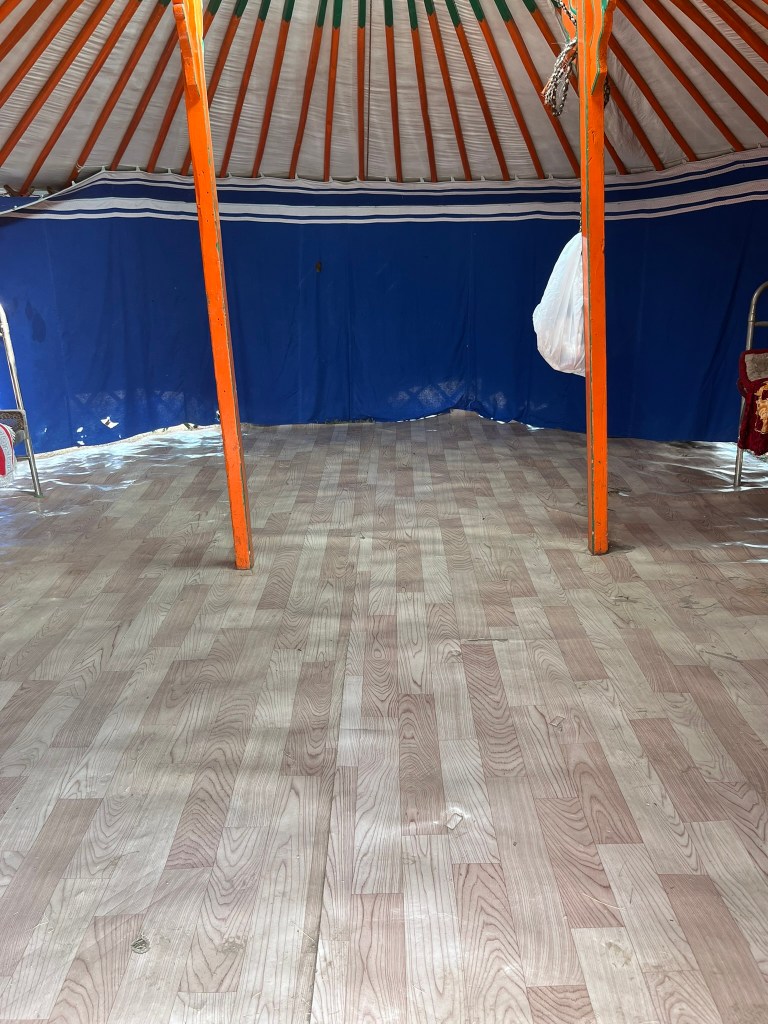
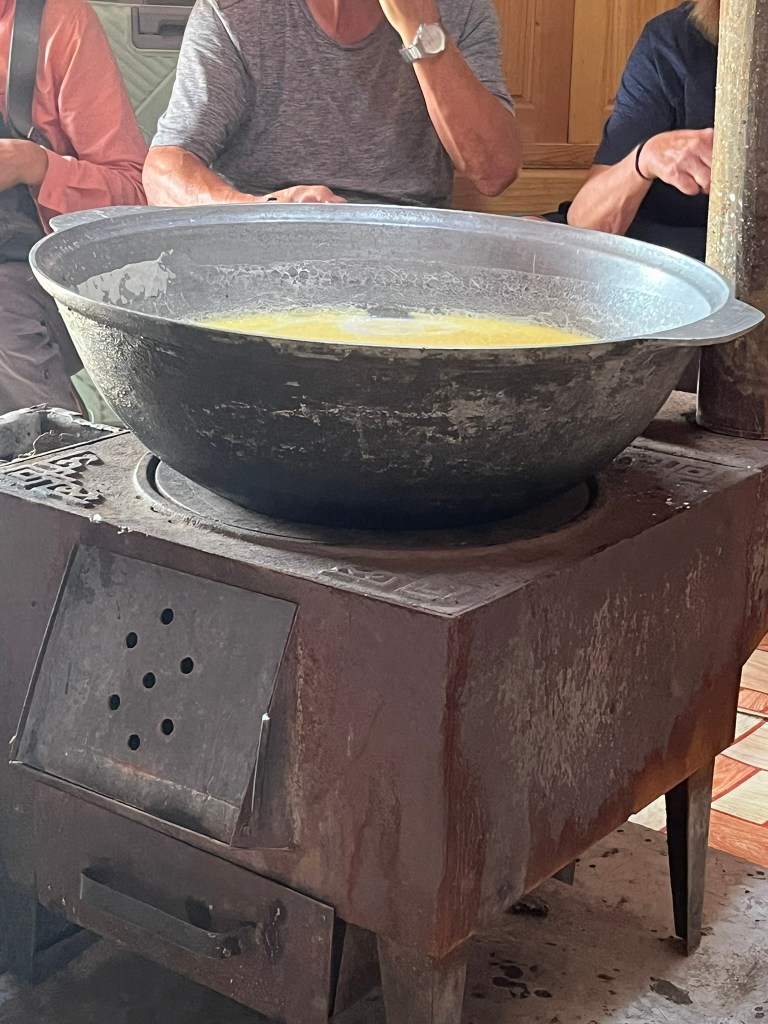
The Mongolian nomadic diet is very meat-centric and the plan for tonight was to have a traditional bbq prepared by our kind hosts. The dish that is known in the West as mongolian bbq is not actually Mongolian at all and most Mongolians have never eaten it unless they have been abroad! Real mongolian bbq out in the open steppe involves chucking a huge amount of meat (in this case mutton) along with some cabbage, carrots and potatoes (that I think might have been added for our benefit) into a large cast-iron pots over a stove alongside with hot stones that had been pre-heated and a little hot water. No spices or sauce is used – it is a very functional dish. And one that is typically prepared when celebrating or having guests. In this case we were the guests and it was also their son’s 16th birthday. After putting the lid on the pot and shoving a bunch of dried horse dung into the fire we waited patiently for our dinner.
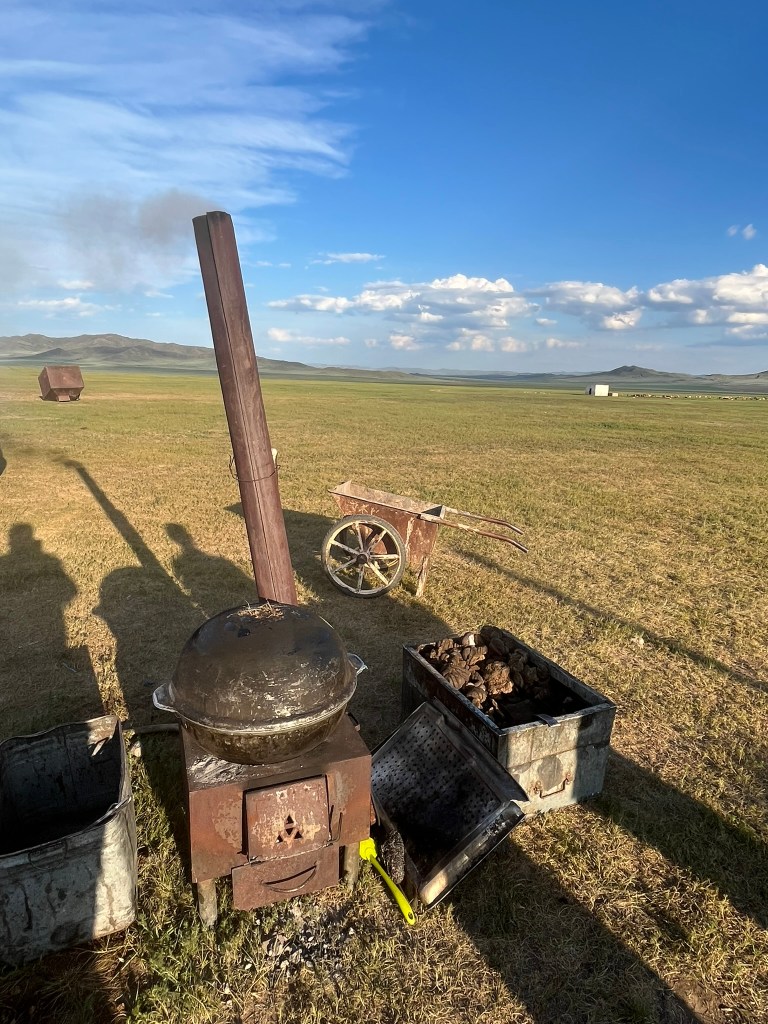
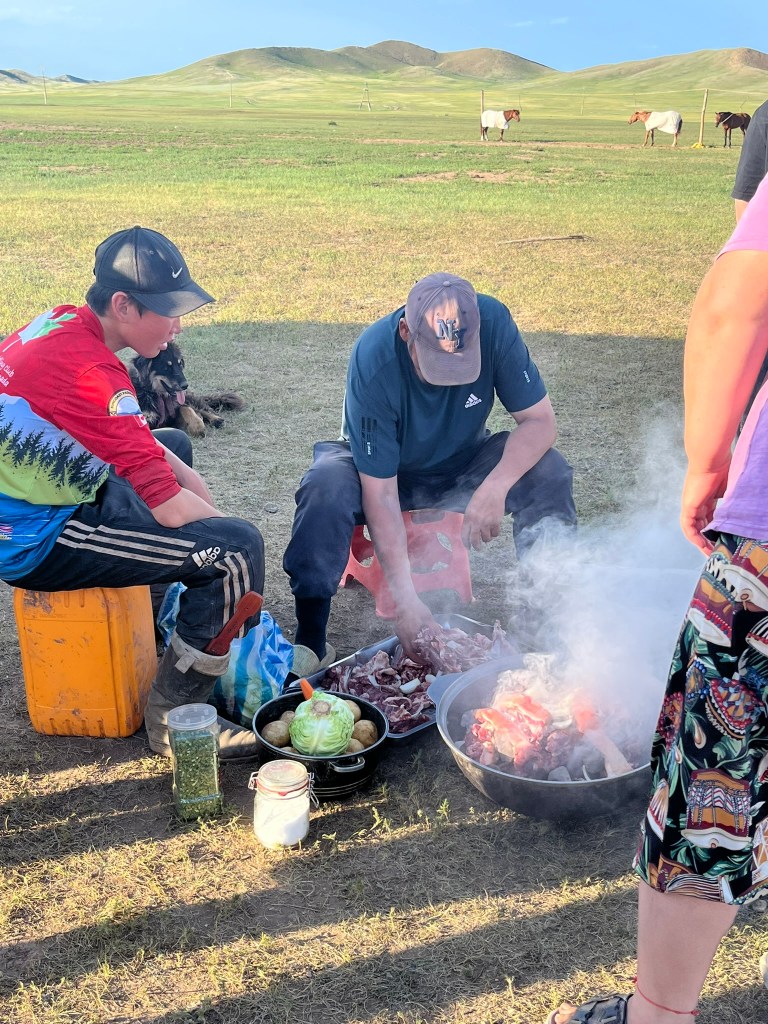
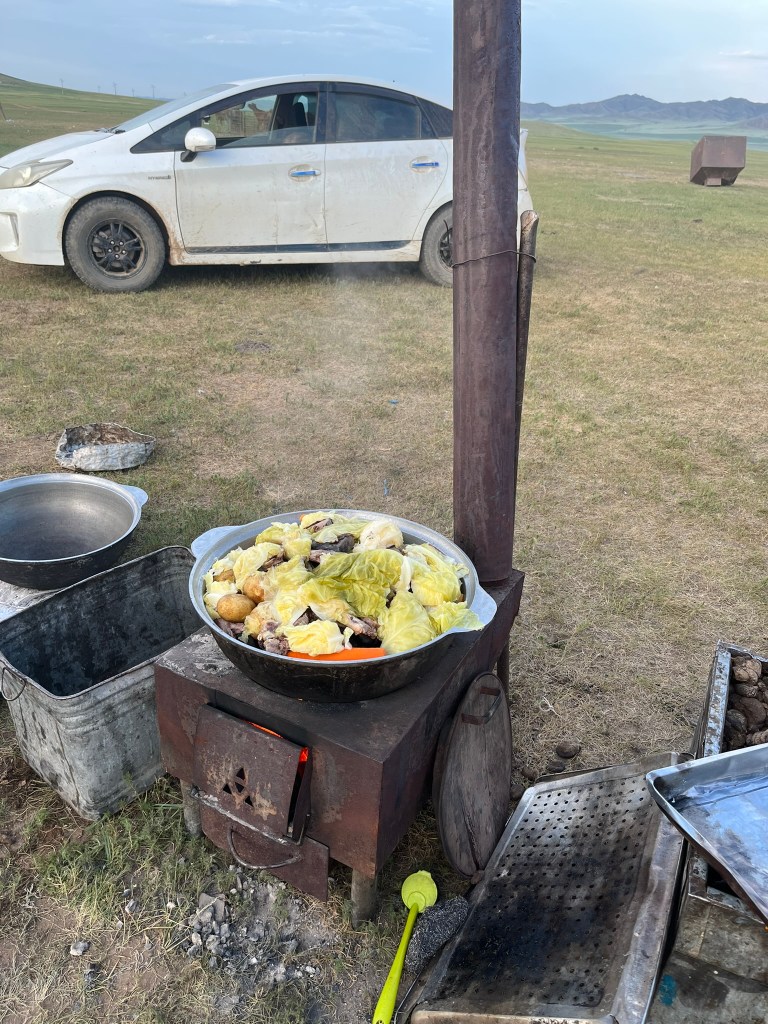
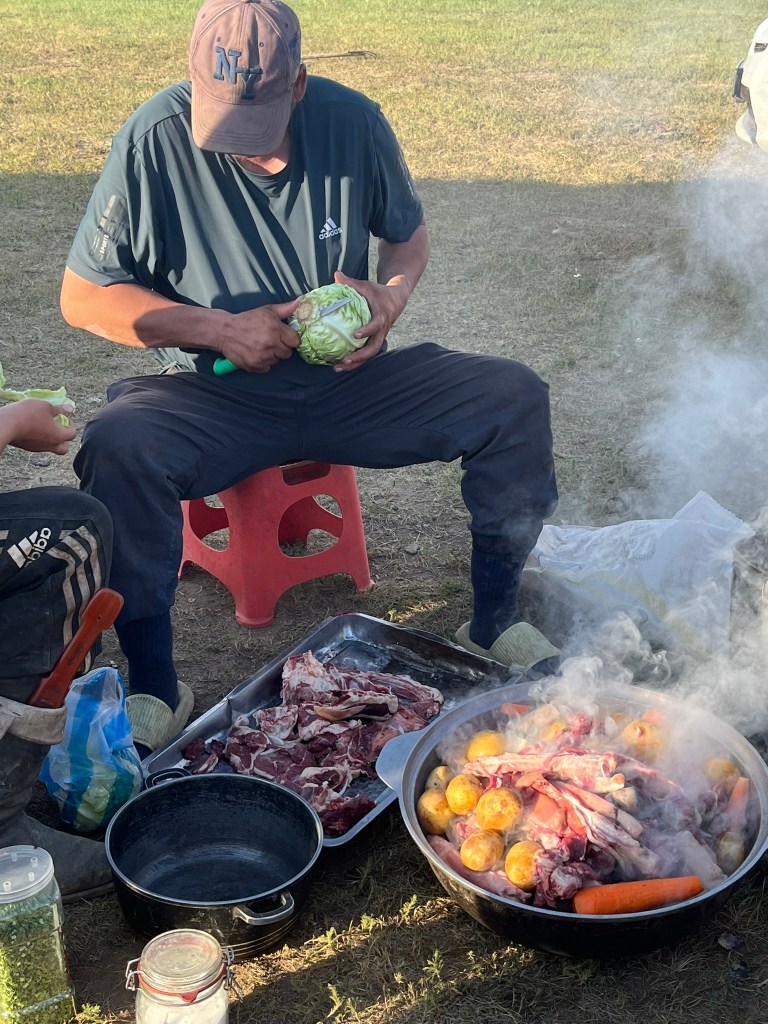
Dinner was about as farm-to-table as you can get! The sheep had been slaughtered that morning. It was nice, but a strong lamb taste that I’m not used to. The best bit was the bowl of the ‘good meat’ that was passed around and we each took a small piece. Initially I thought this might be one of those moments where you get given part of the animal you aren’t used to eating but have to politely accept. However, it turned out it genuinely was a bowl of the best cuts of meat and by passing it around it meant that everyone got a taste. The lamb in that bowl was absolutely delicious!
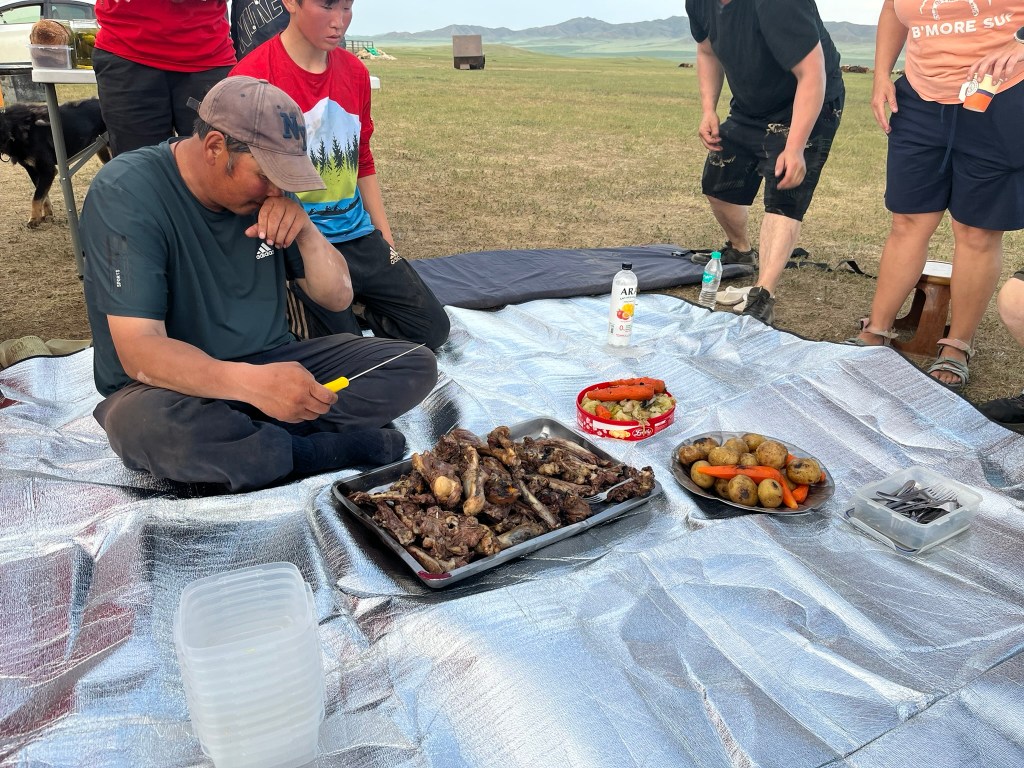
After a delicious dinner prepared by our hosts, singing happy birthday to their son and a short karaoke party with a blue tooth speaker, flashing lights and a microphone (why did they have these things but not a hole in the ground!) everyone started preparing for bed by heading out for short walks into the steppe to conduct ablutions.
Personally I slept ok, as I had brought my blow up mattress with me on this trip (alongside a travel pillow and sleeping bag) for just this situation. However, many of the group did not sleep well at all. A great experience to stay with a family, and experience their way of life. I just wished there had been a loo!


Leave a Reply