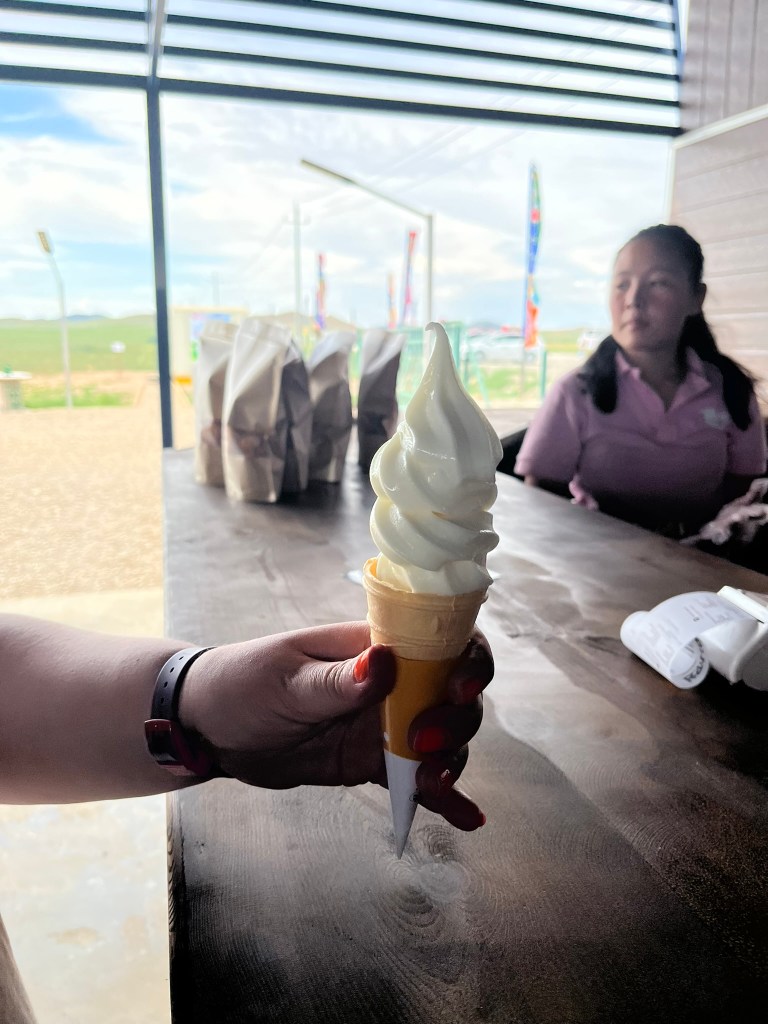
Before I start writing about Karakorum I need to give an honorable mention to the ice cream we had enroute to the city, about 30 minutes from our home stay. The ice cream shop is directly on the dairy farm and sells soft-serve, frozen yoghurt, fresh milk, coffee and doughnuts. It is owned by Harumafuji Kohei – a superstar sumo wrestler from the late 90s who reached the highest ranks of sumo in Japan and invested his money back home in Mongolia. The ice cream is absolutely fantastic – and again about as close to farm-to-table as you can get. You can tell this isn’t simple a tourist attraction as we had to queue up with lots of Mongolians who were also buying ice creams and milk at 9.30 in the morning!
After this much needed ice cream/toilet stop it was onward to Karakorum, via a number of lovely rest stops with some of the nicest bathrooms I have had the pleasure to visit on my travels. I’m sure once we go off road later in the trip there will be no more rest stops!
Karakorum is one of the most historically important places in Eurasia. Although today it is a quiet archeological site surrounding by grasslands, in the 13th century it was the political heart of the largest contiguous land empire in history.
After uniting the Mongol tribes, Chinggis Khan established a military headquarters in the Orkhon Valley around 1220. His son, Ogedei Khan transformed it into a permanent imperial capital in 1235 by constructing walls, a palace and administrative buildings. The location wasn’t chosen because it was the richest farmland. Instead it occupied the traditional heartland of the steppe, where early Turkic and Uygher empires had also based themselves. The Orkhon Valley has long been regarded as the symbolic center of power on the Mongolian steppe.
Its easy to assume that Karakorum was a city of Mongol horseman but it was a surprisingly international city back in the 11th century. At its peak it was a city of Chinese craftsmen, Persian merchants, Muslim traders, Nestorian Christians, Buddhist monks and European diplomats. Famously the Flemish monk, William of Rubruck visited in 1254 and described a bustling city with four gates, separate merchant quarters, two mosques, a Christian church, numerous Buddhist temples and a busy market selling goods from across Eurasia. This religious diversity reflected Mongol policy. The Great Khans cared less about what people believed than whether they paid taxes and remained loyal.
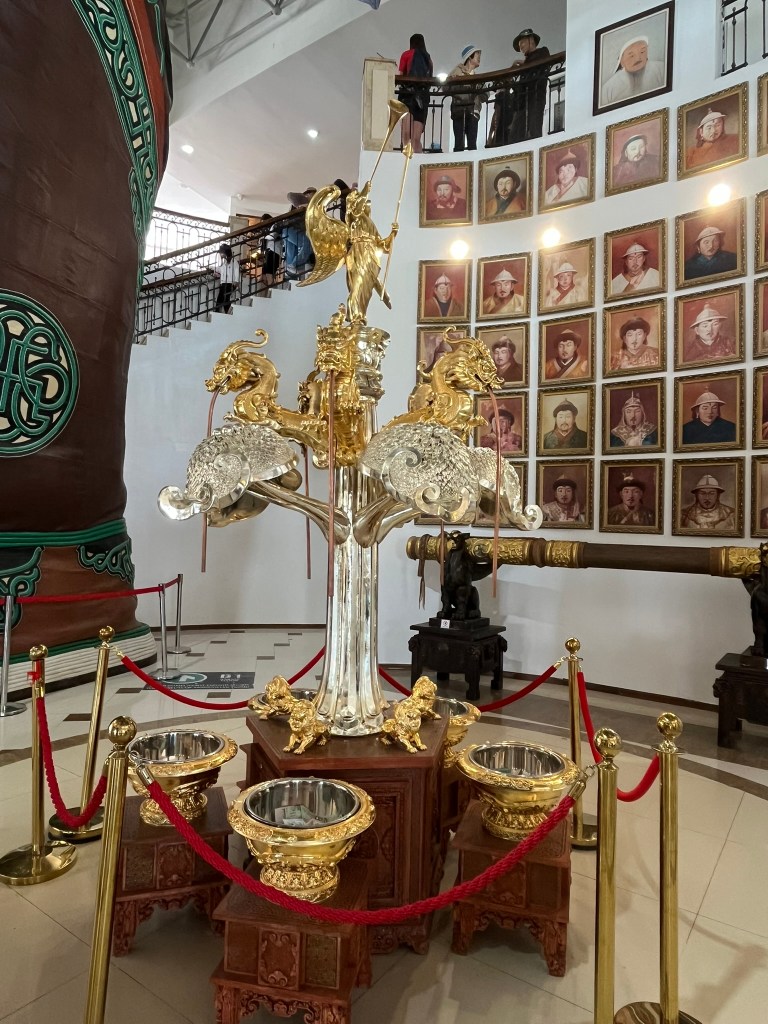
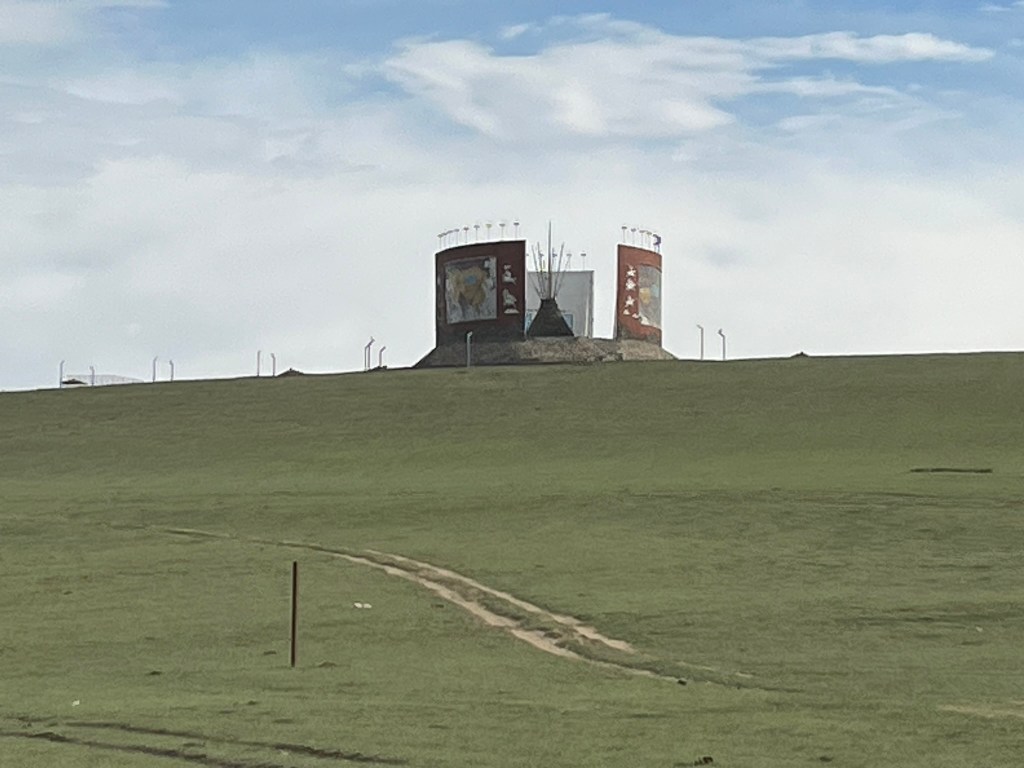
One of Karakorum’s most extraordinary sights was a giant silver tree standing near the palace. We have seen replica’s of this tree in a number of places in Mongolia – including at the giant Chinggis statue and a restaurant. According to Rubruck it was designed by a Parisian goldsmith captured during the Mongol conquests and was an elaborate mechanical fountain from which different drinks flowed from different outlets – including fermented mare’s milk, wine, rice wine and mead. And an angel sat on top blowing a trumpet.
Karakorum was only the capital for about 30 years. When Kublai Khan became the Great Khan after the civil war in 1260, he shifted the center of power to Beijing (then called Khanbaliq). Karakorum remained important but gradually declined. And was largely destroyed by Ming forces in the late 14th century.
Interestingly much of what was destroyed was then repurposed to build the Erdene Zuu Monastery in 1586, built immediately beside the old city. The remains of this monastery are what it is possible to visit today in Karakorum. At least what was left of it after the communist purges of the 1930s. Builders reused stones, bricks and carved architectural elements from the abandoned imperial capital.
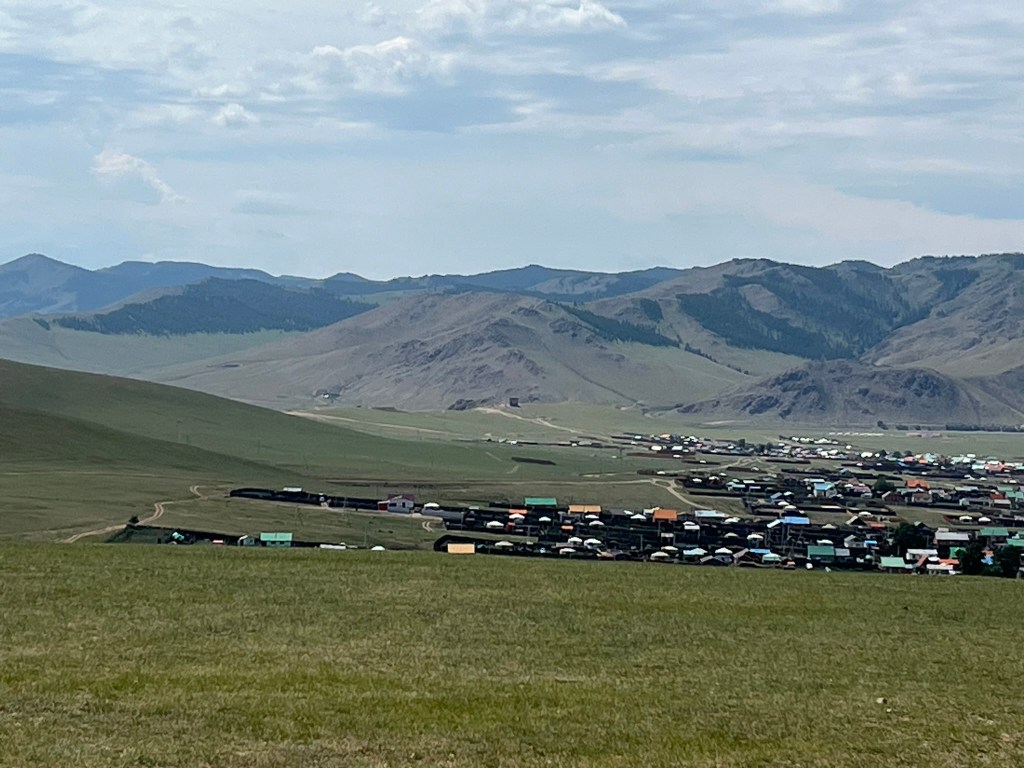
We started our visit to Karakorum by getting a bird’s eye view of Orkhon Valley from the hills behind the monastery. Looking down, the walls punctuated by white stupas of the monastery cannot be missed. It is difficult to imagine that the grassland around the monastery was once filled with the Great Khan’s palace, markets, foreign embassies, temples and mosques.
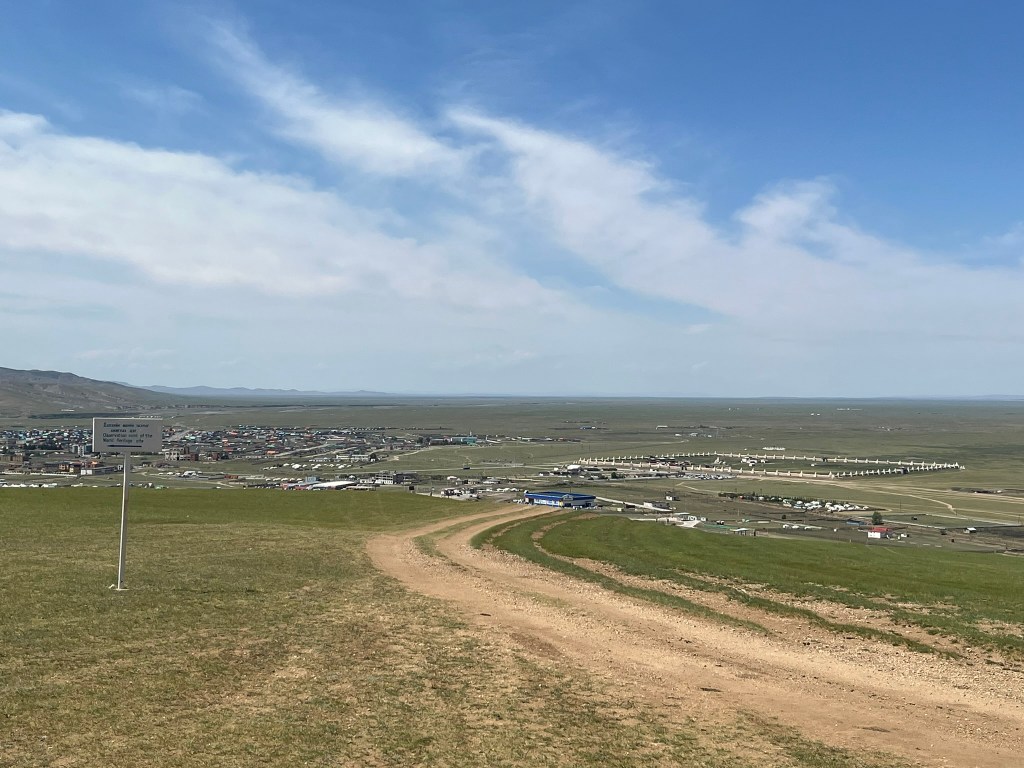
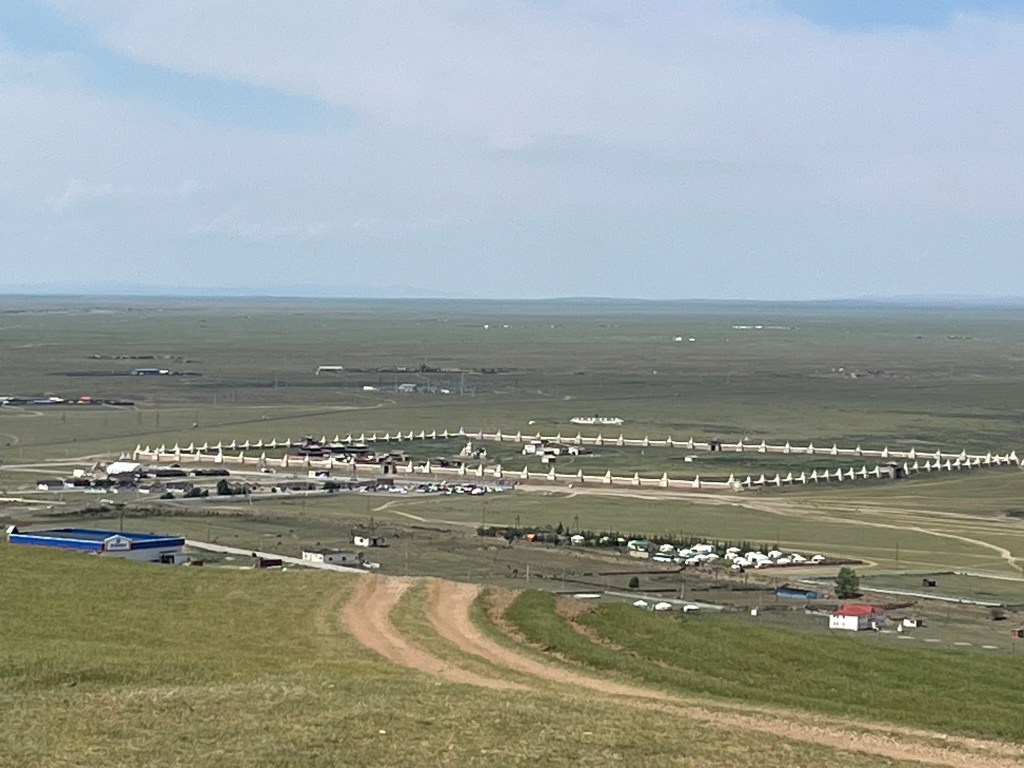
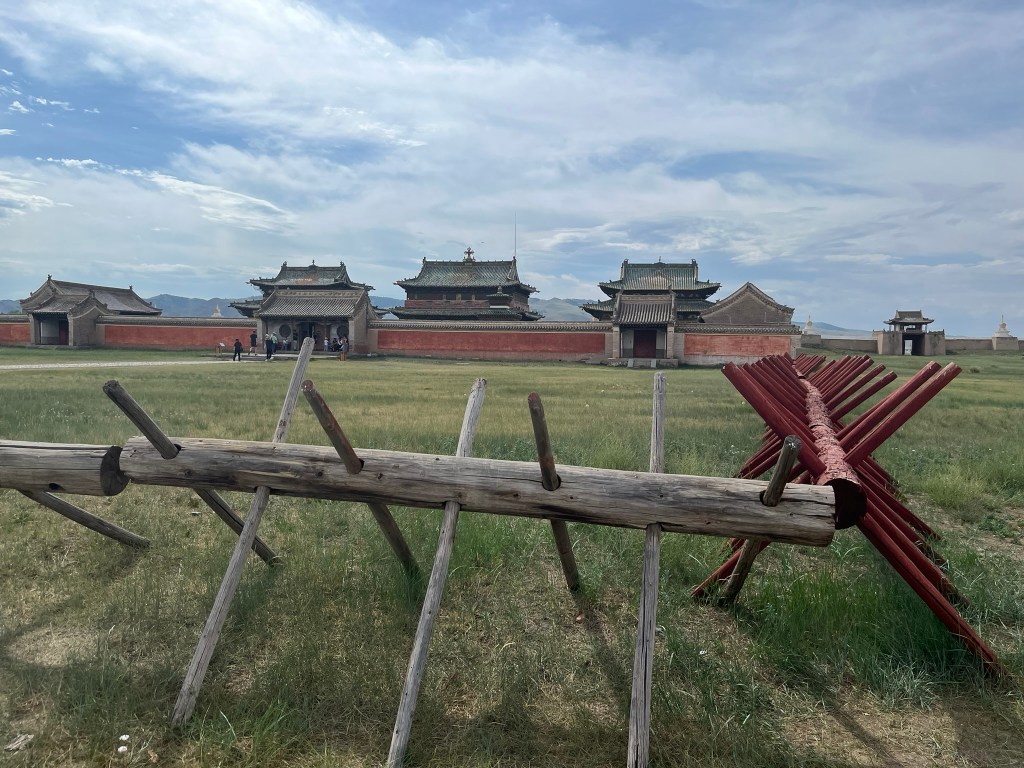
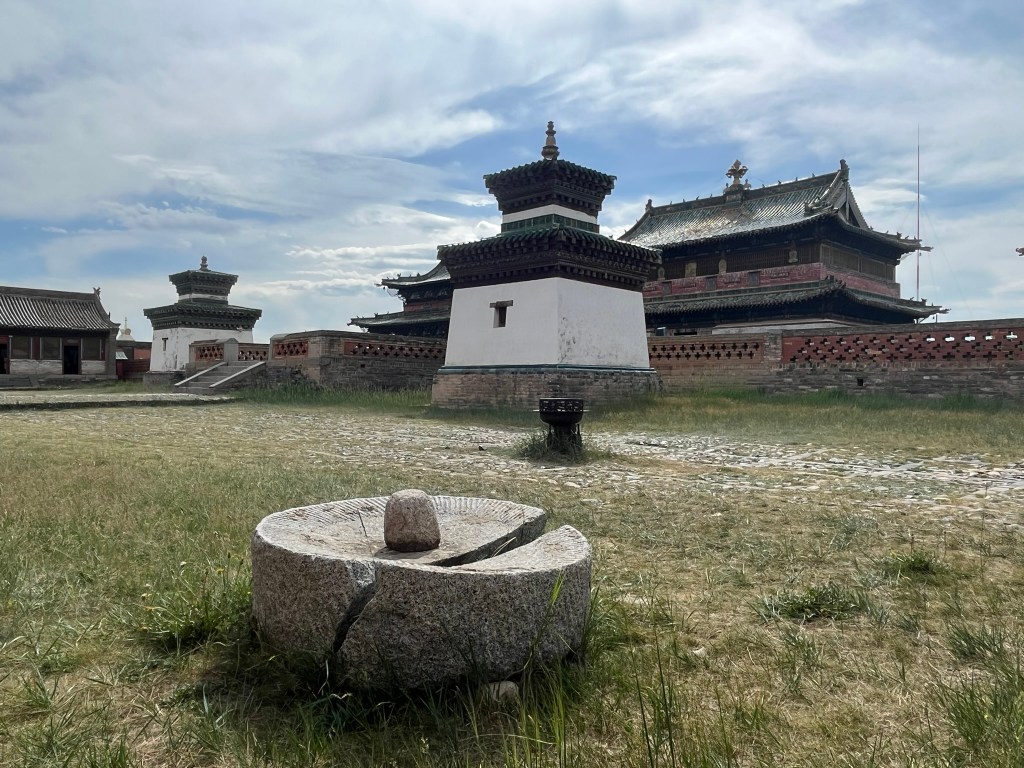
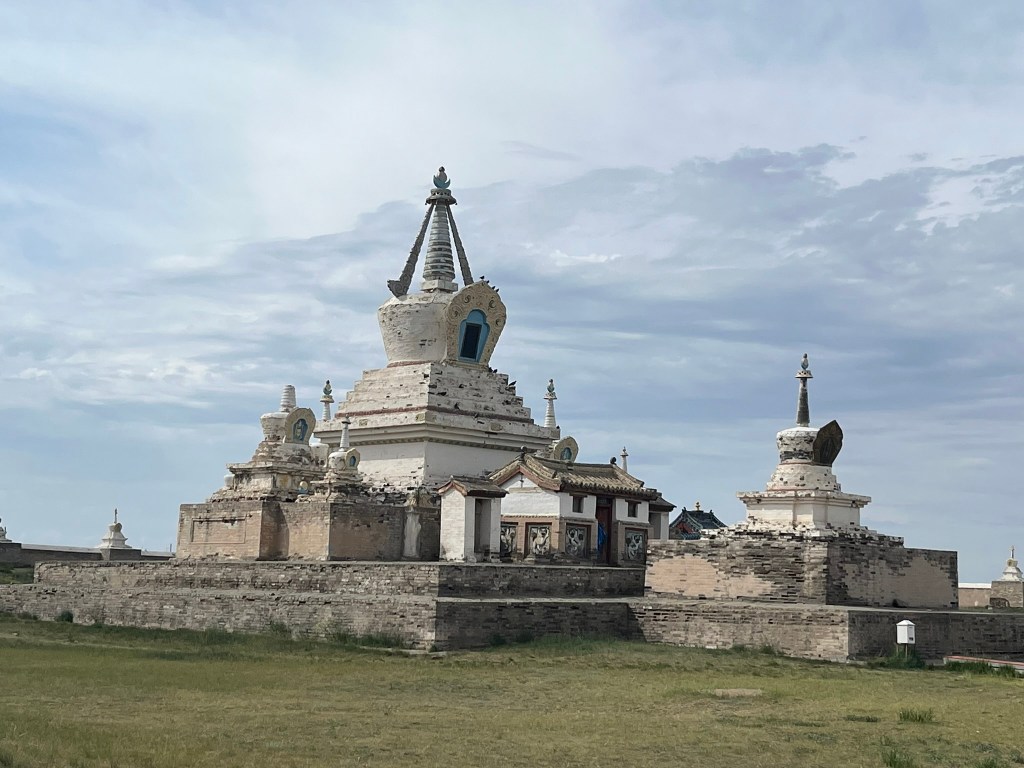
We then headed down into the town to explore the monastery. It is the oldest surviving monastery in Mongolia, founded in 1586. The white stupas that surround the monastery are extremely striking with the full enclosure measuring roughly 400x400m. Standing up close it really does feel spectacular.
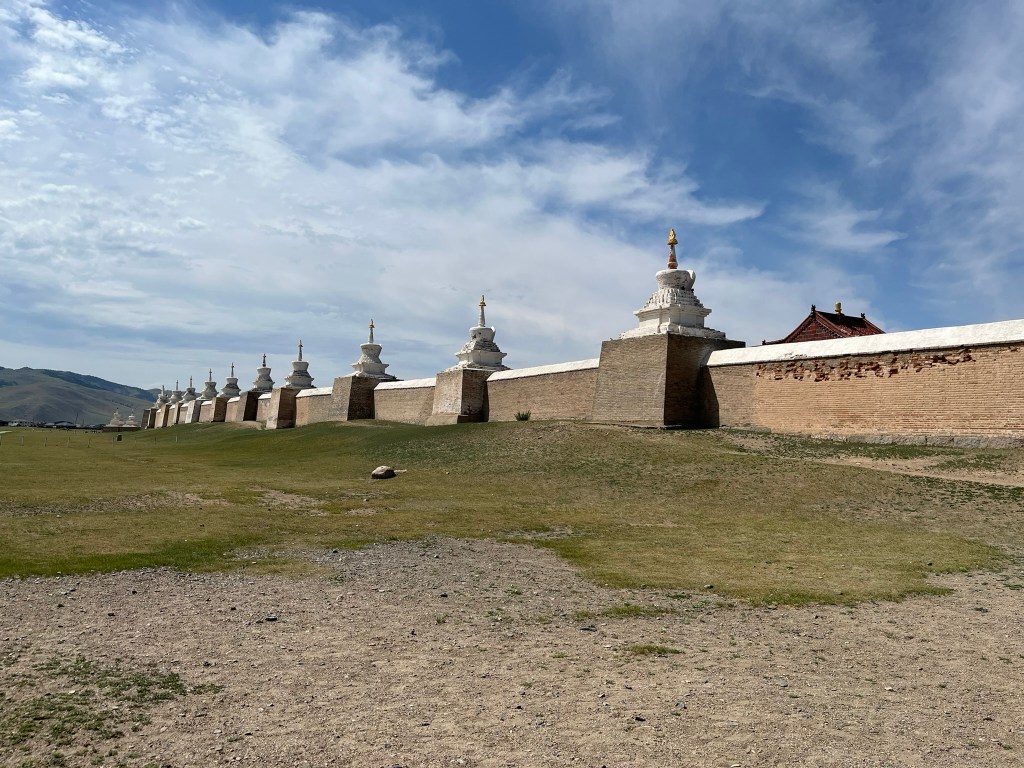
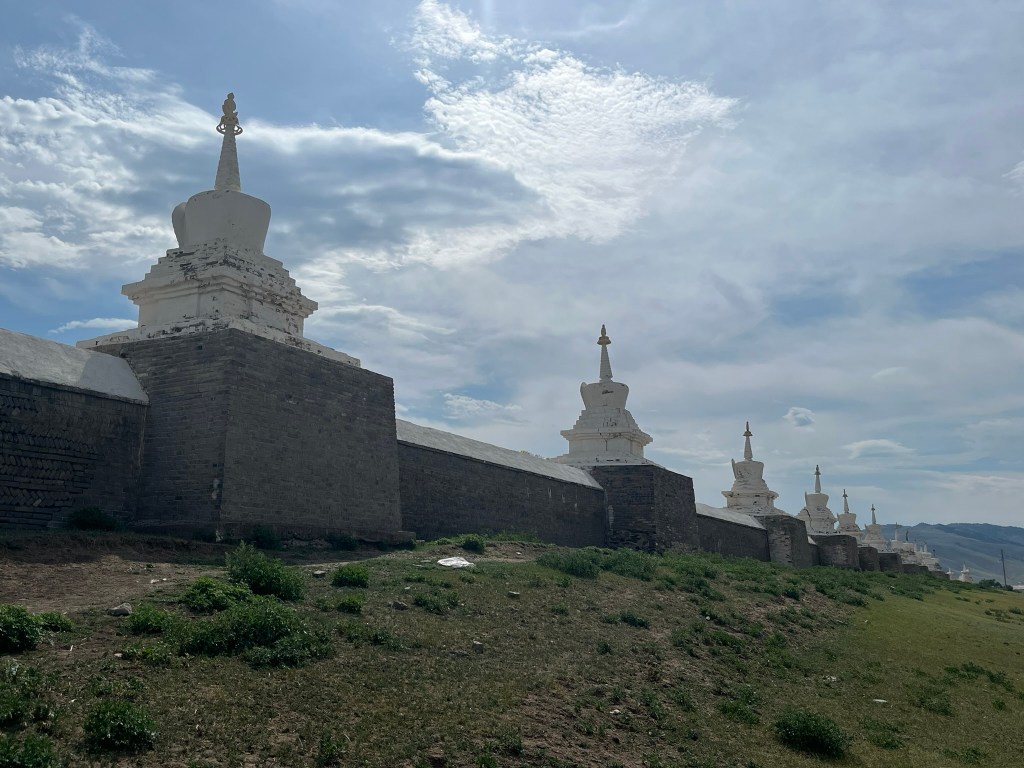
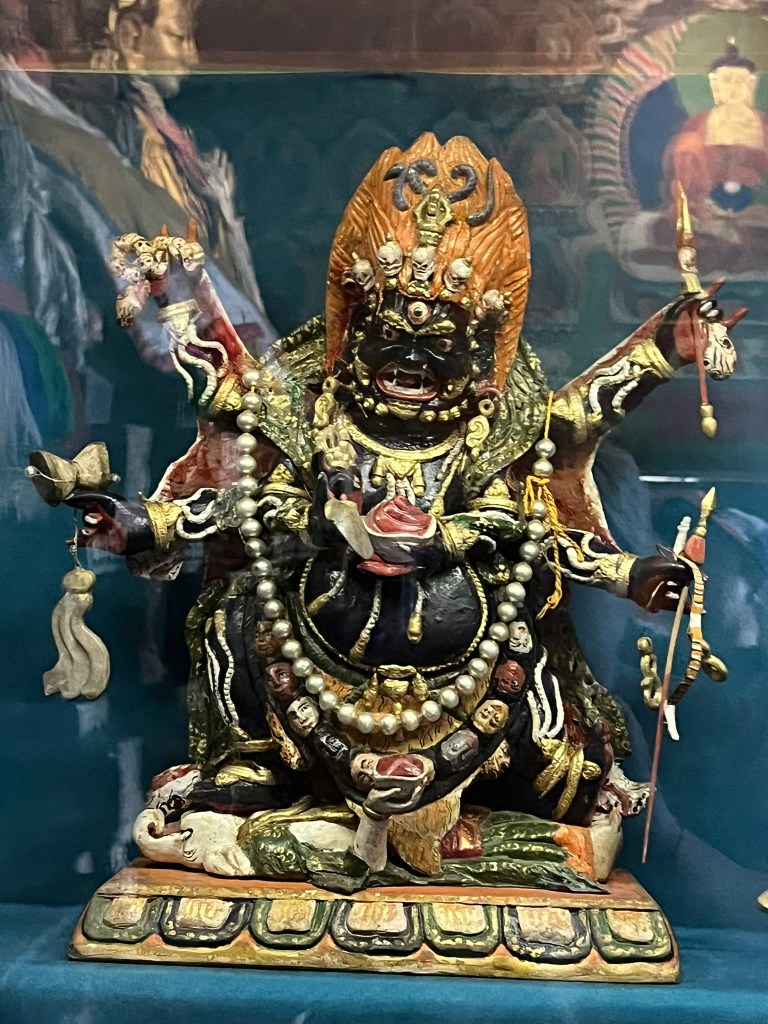
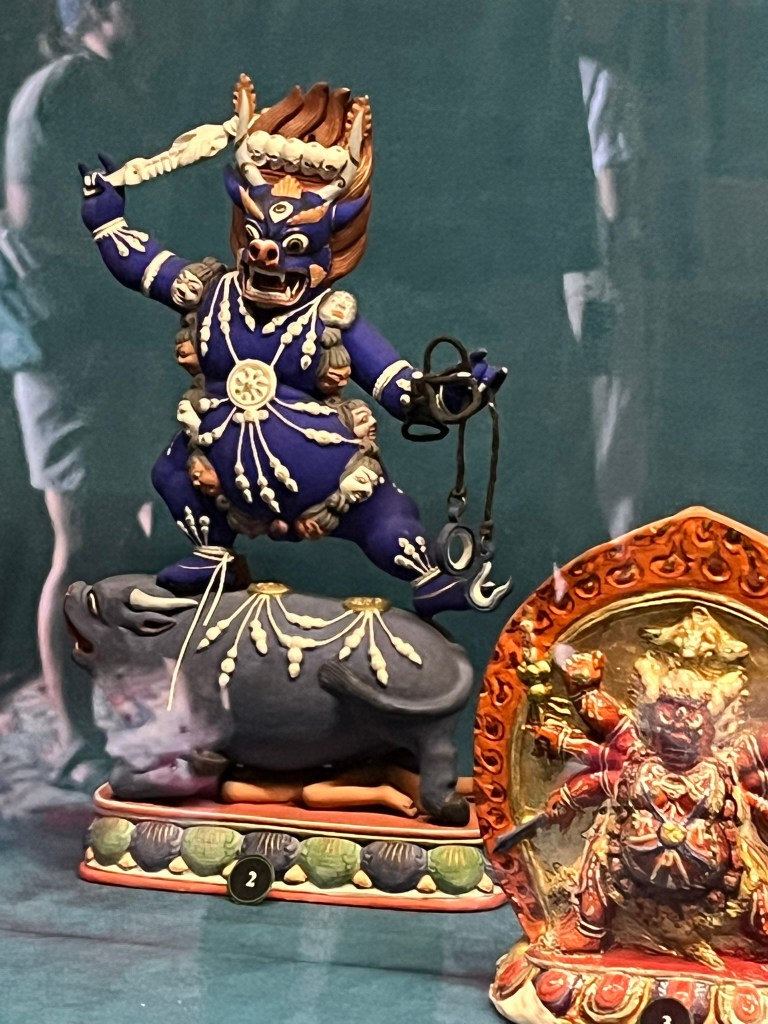
Today there are only three major temples and the surrounding walls surviving – only a fraction of the original complex. Back at its peak in the early 20th century the monastery contained more than 60 temples and around 1000 monks. Surrounding the monastery there were hundreds of gers, housing monks and workers. It was not simply a monastery but a religious town and one of Mongolia’s major centers of learning. Unfortunately the monastery was victim of the communist purges under Khorloogiin Choibalsan in 1939. Local people quietly resisted the destruction and many statues, masks, manuscripts and sacred objects were hidden in nearby mountains or buried beneath the ground.
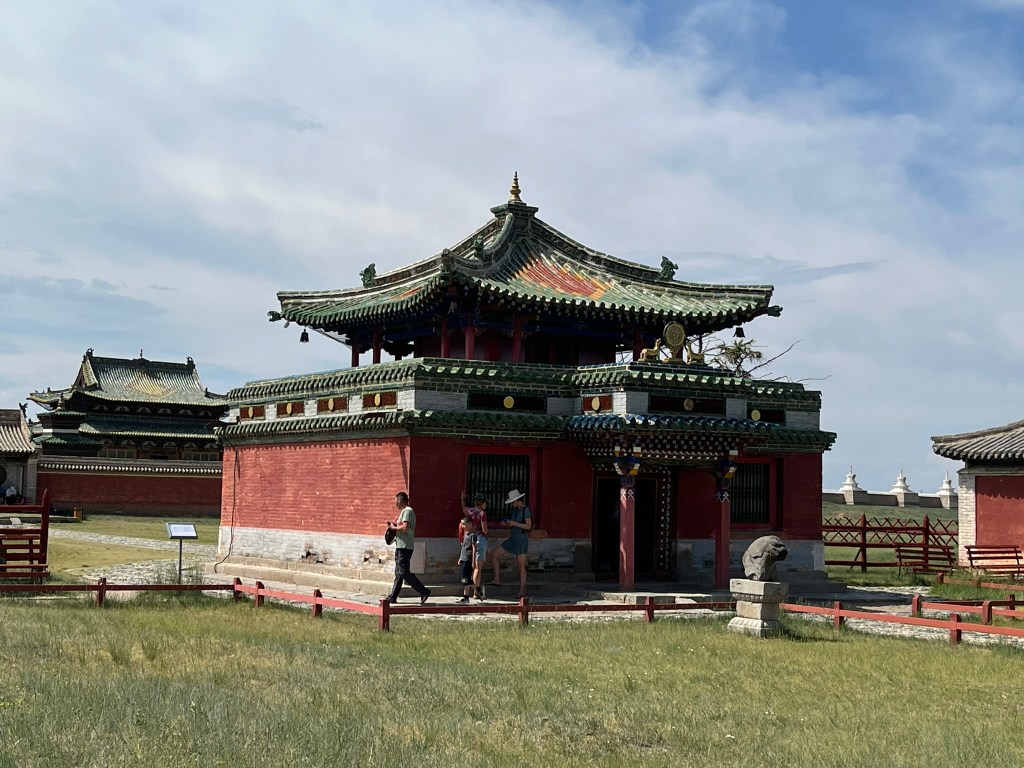
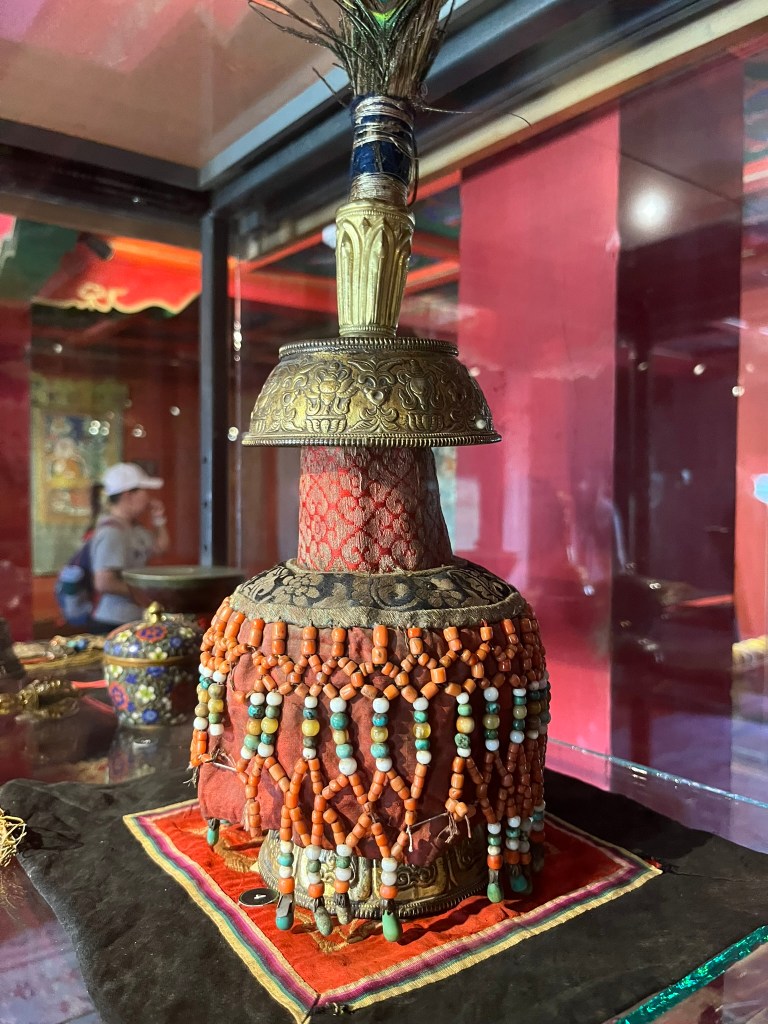
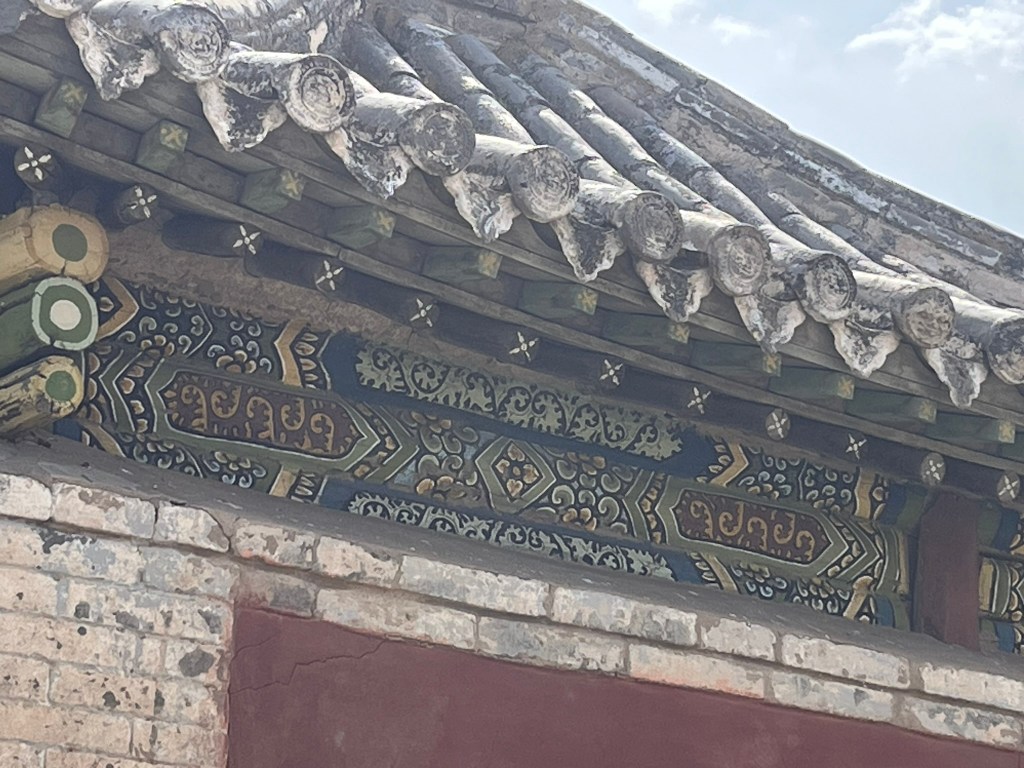
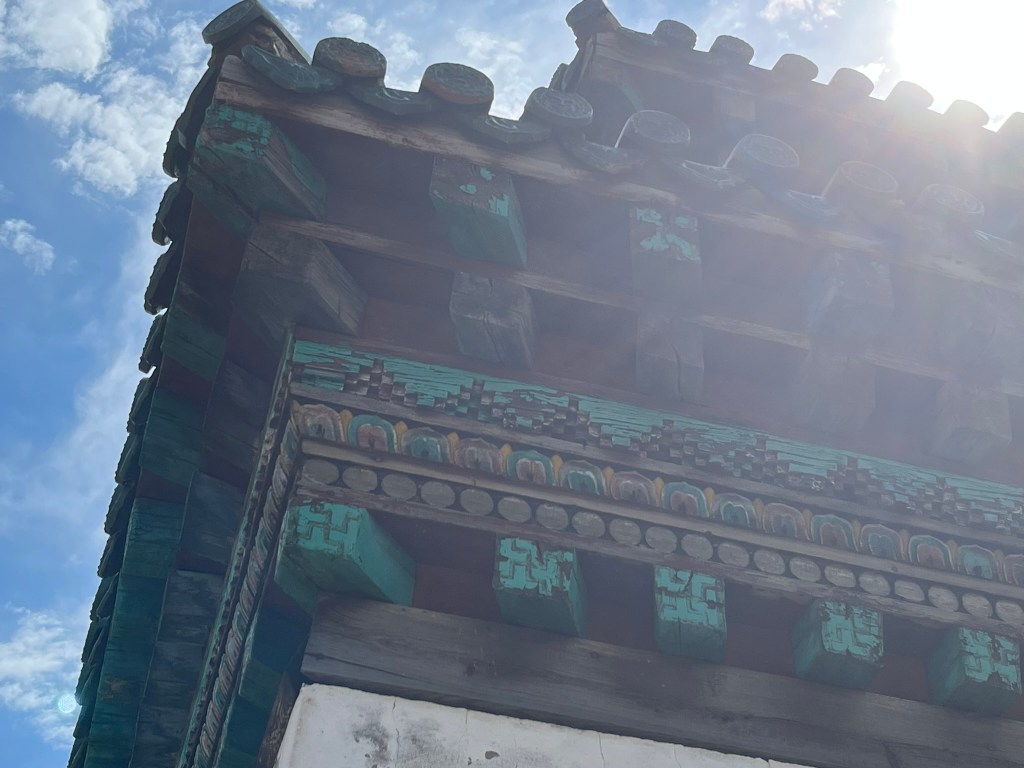
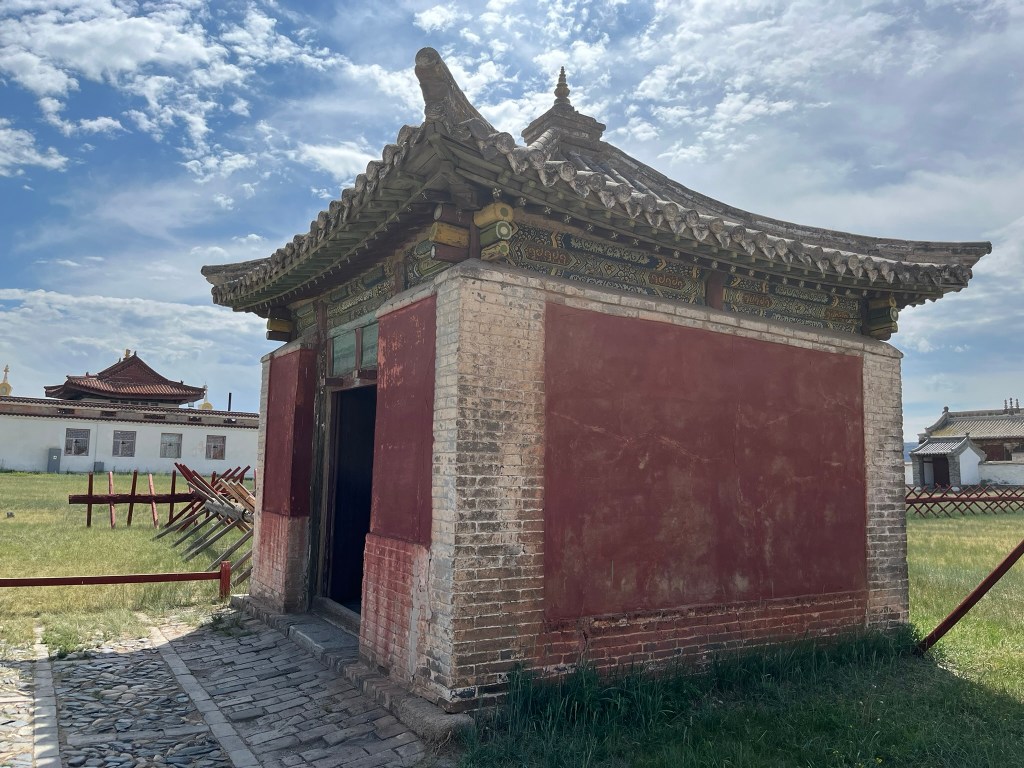
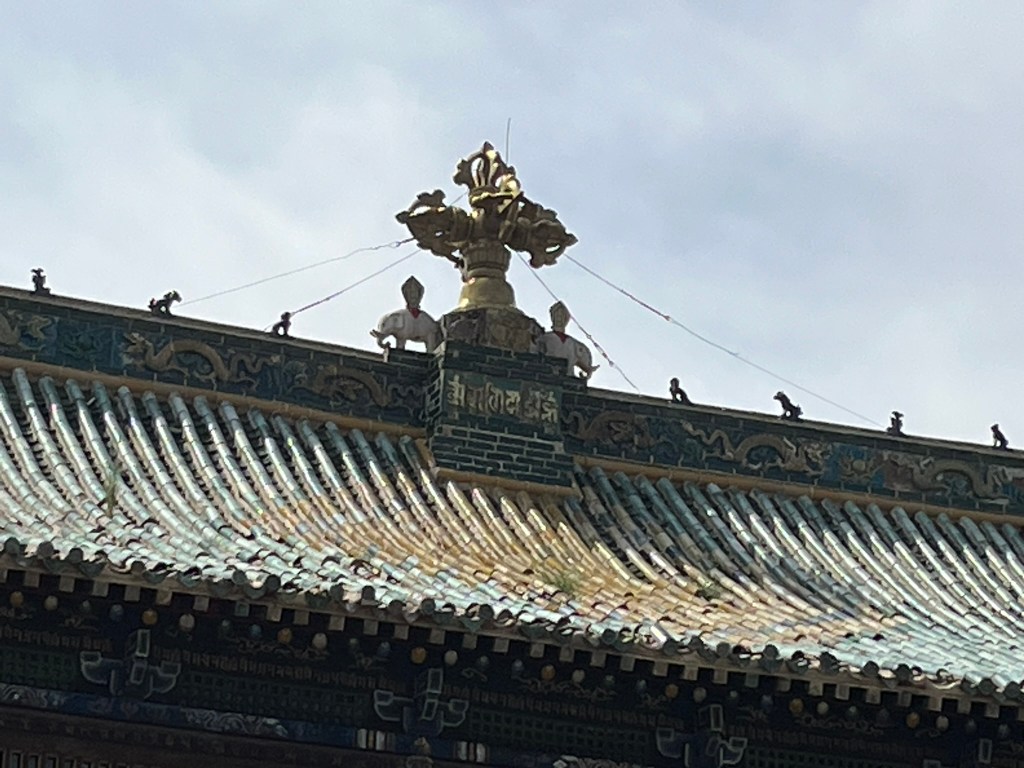
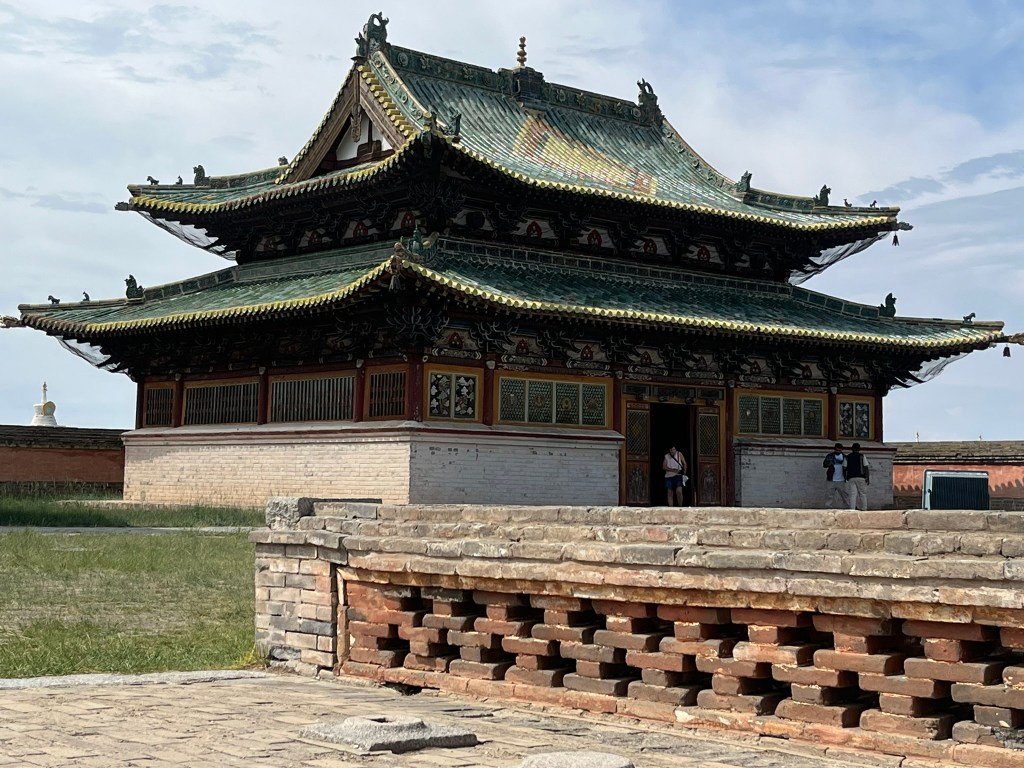
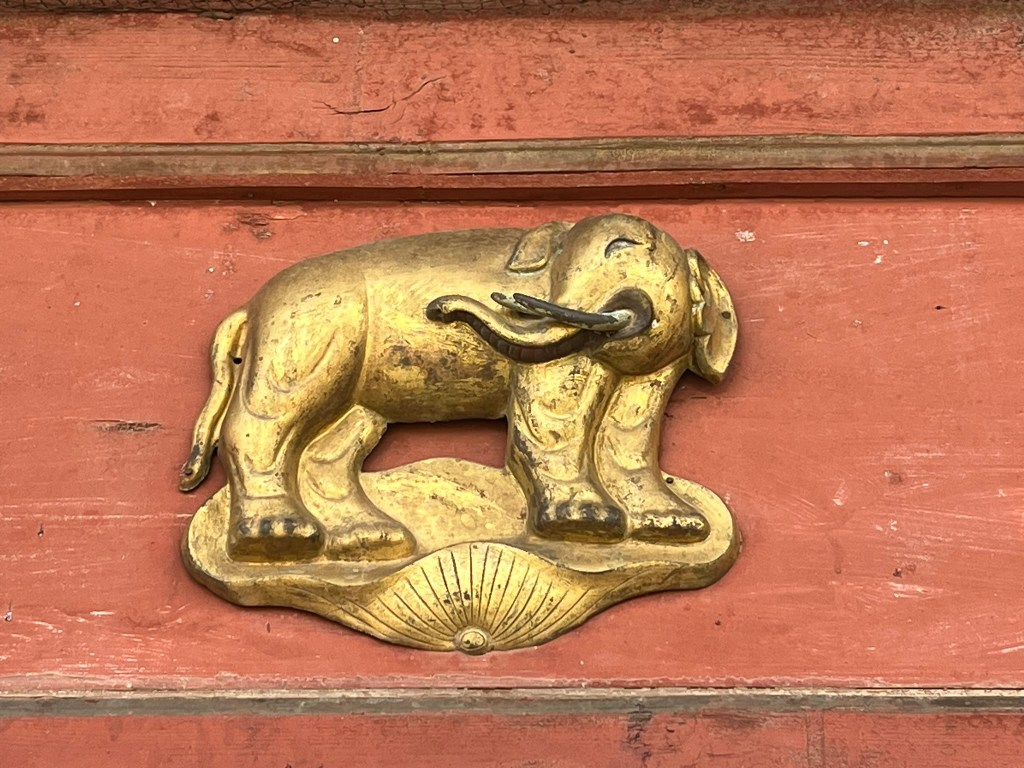
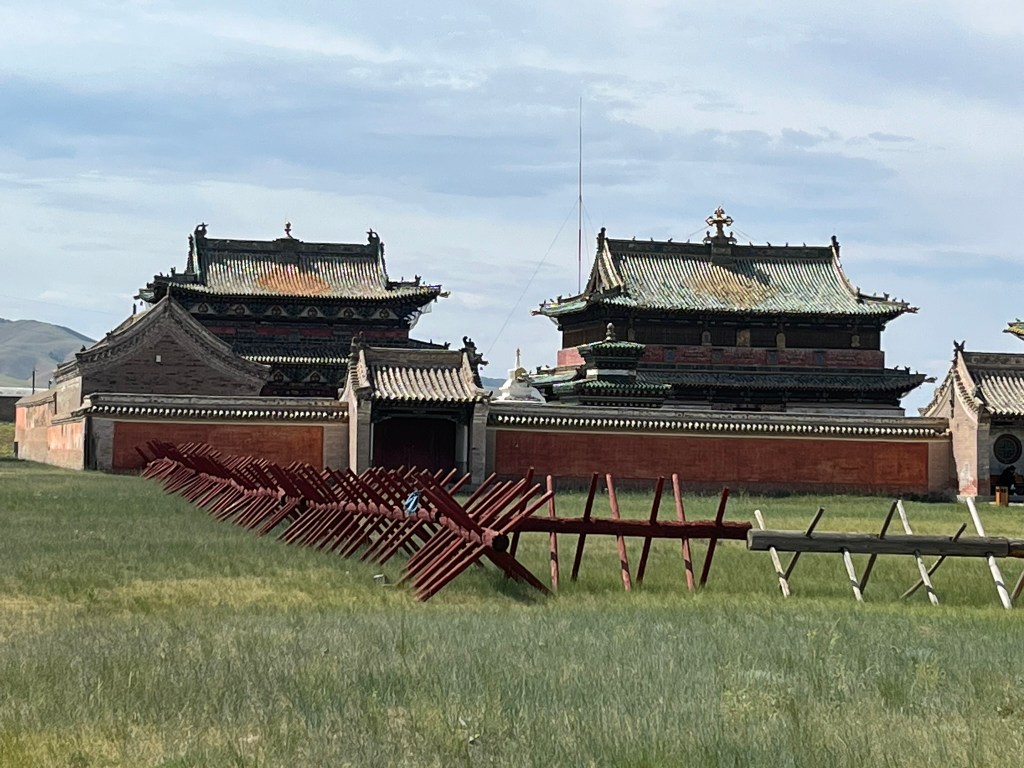
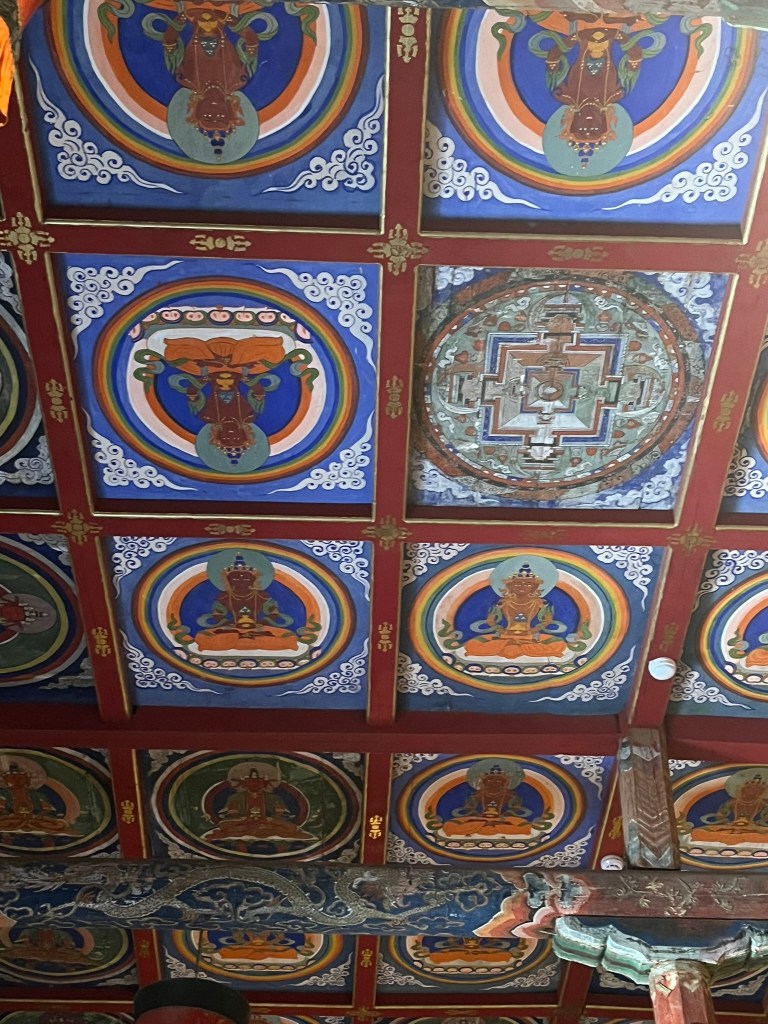
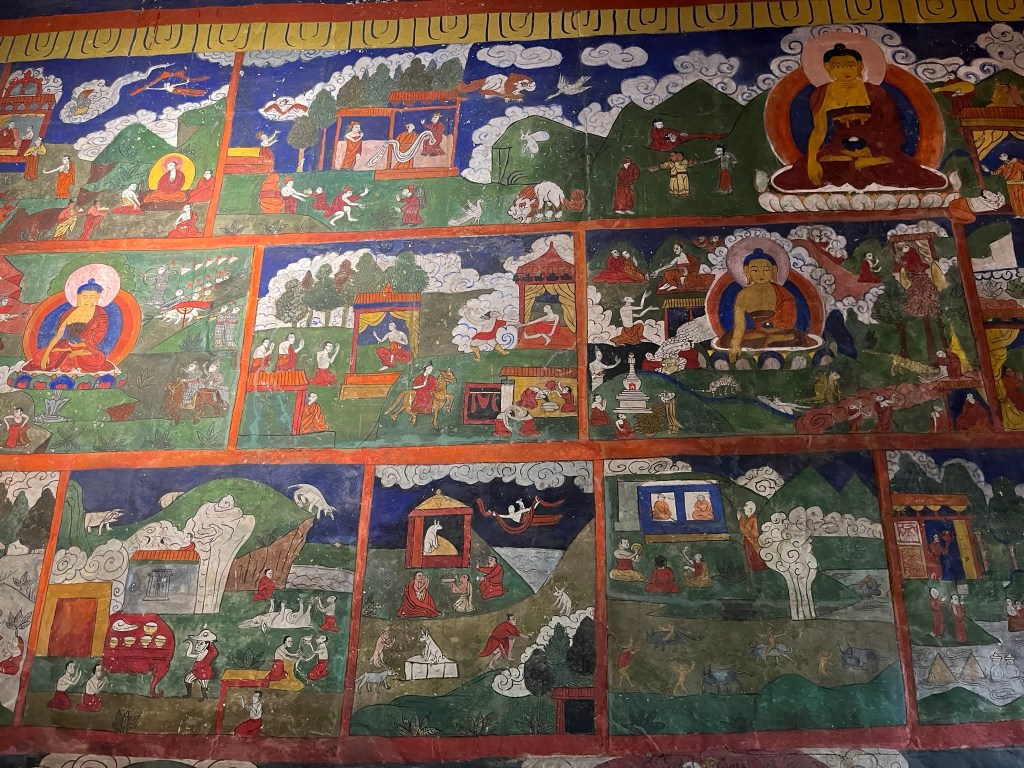
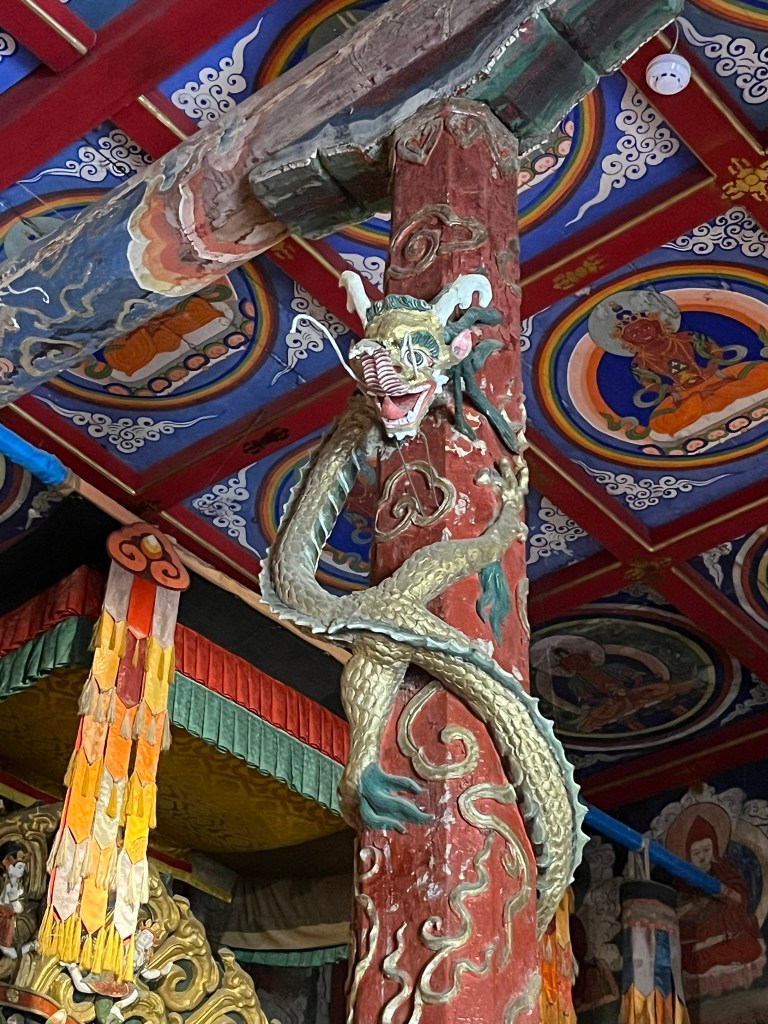
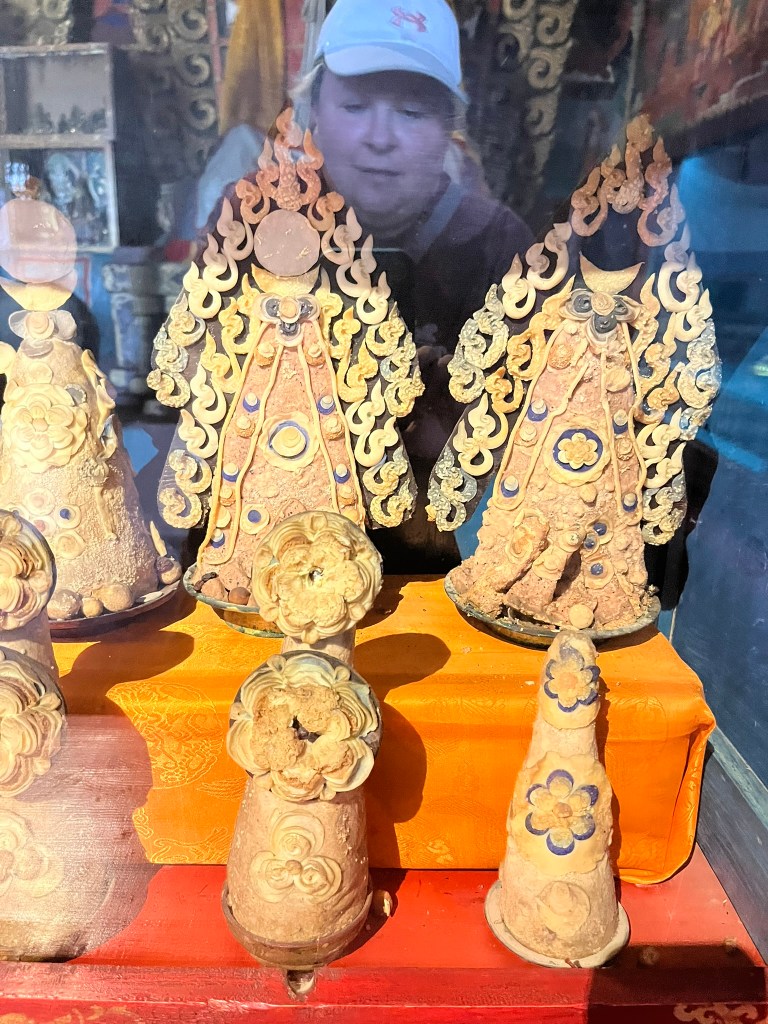
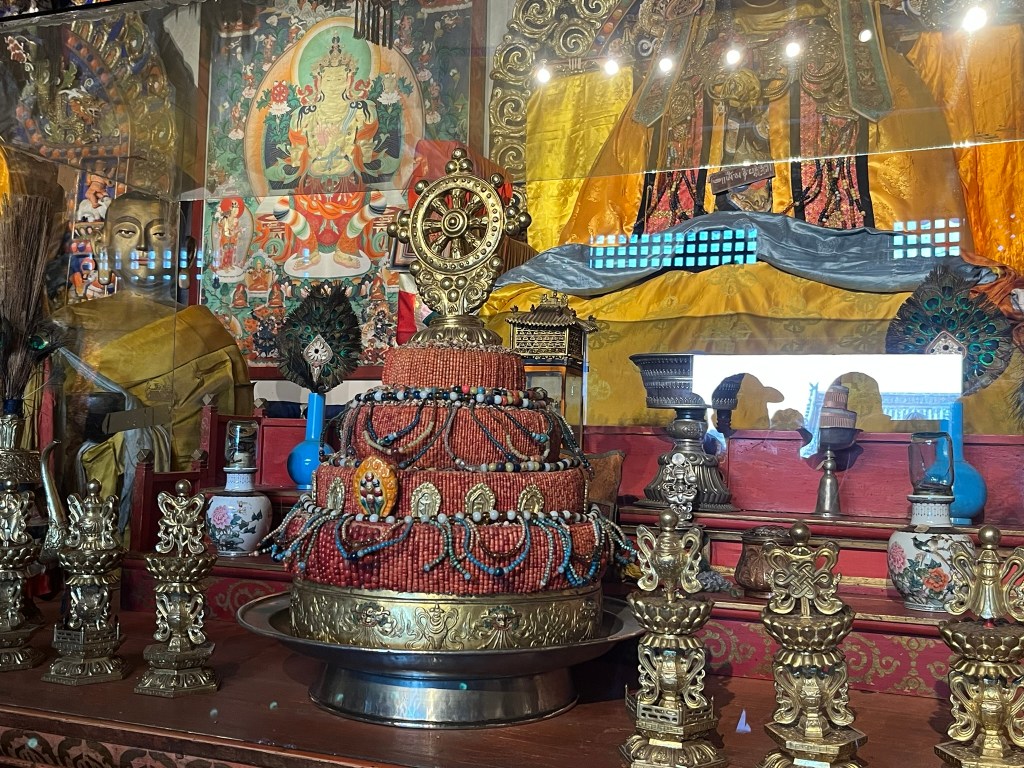
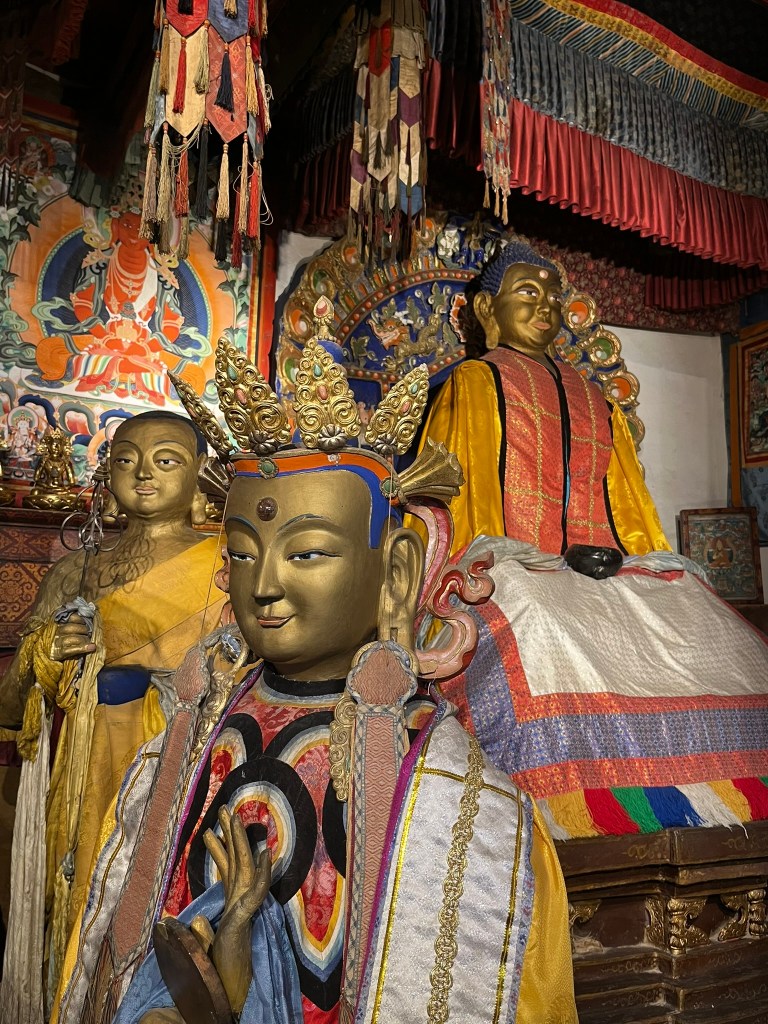
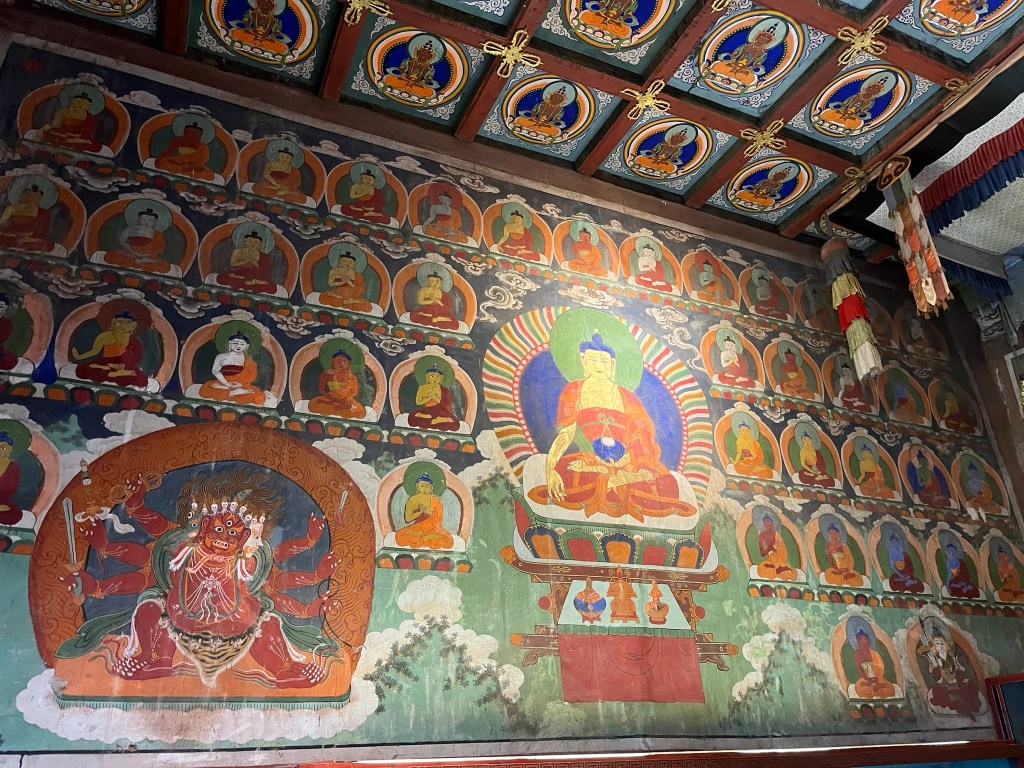
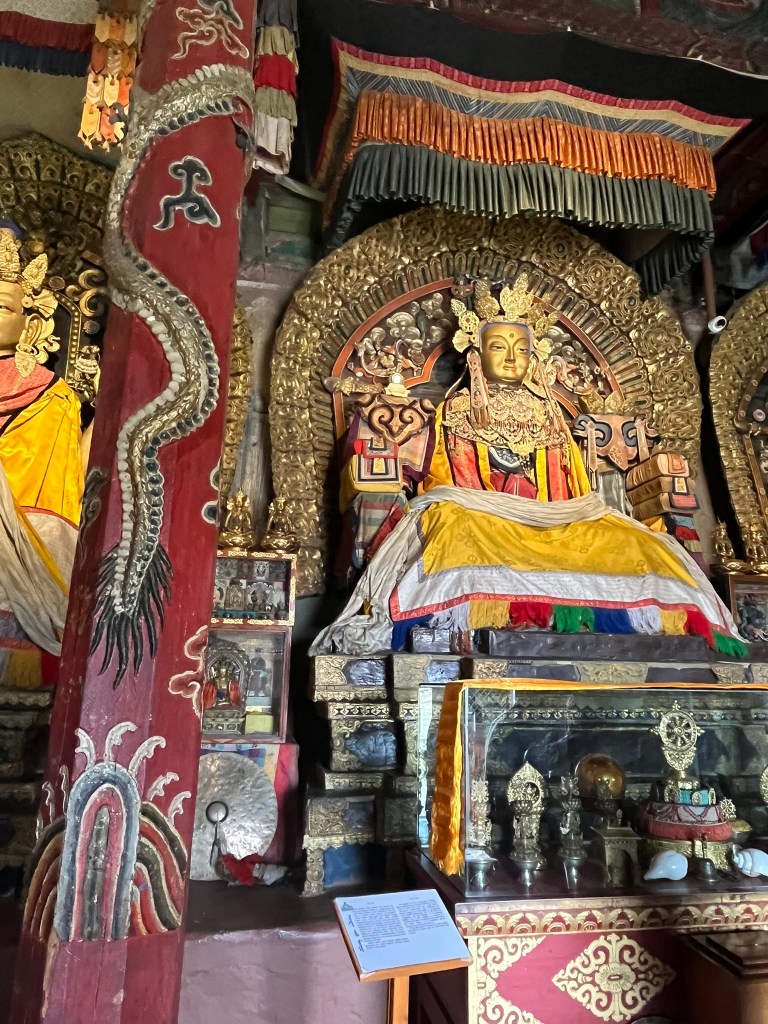
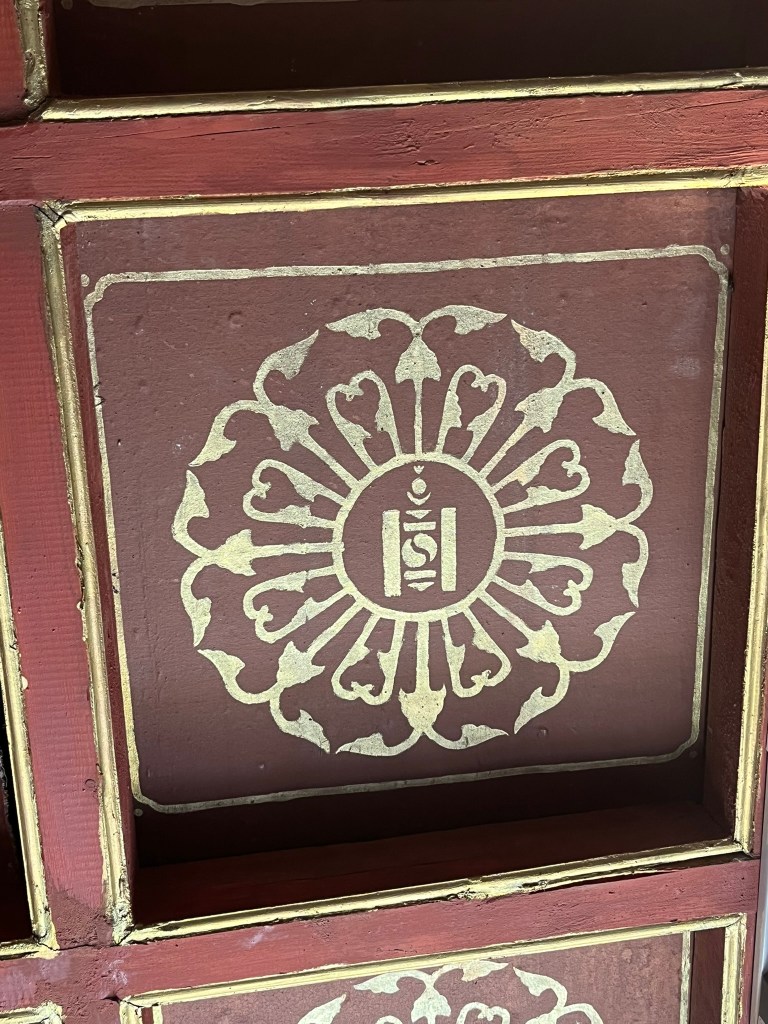
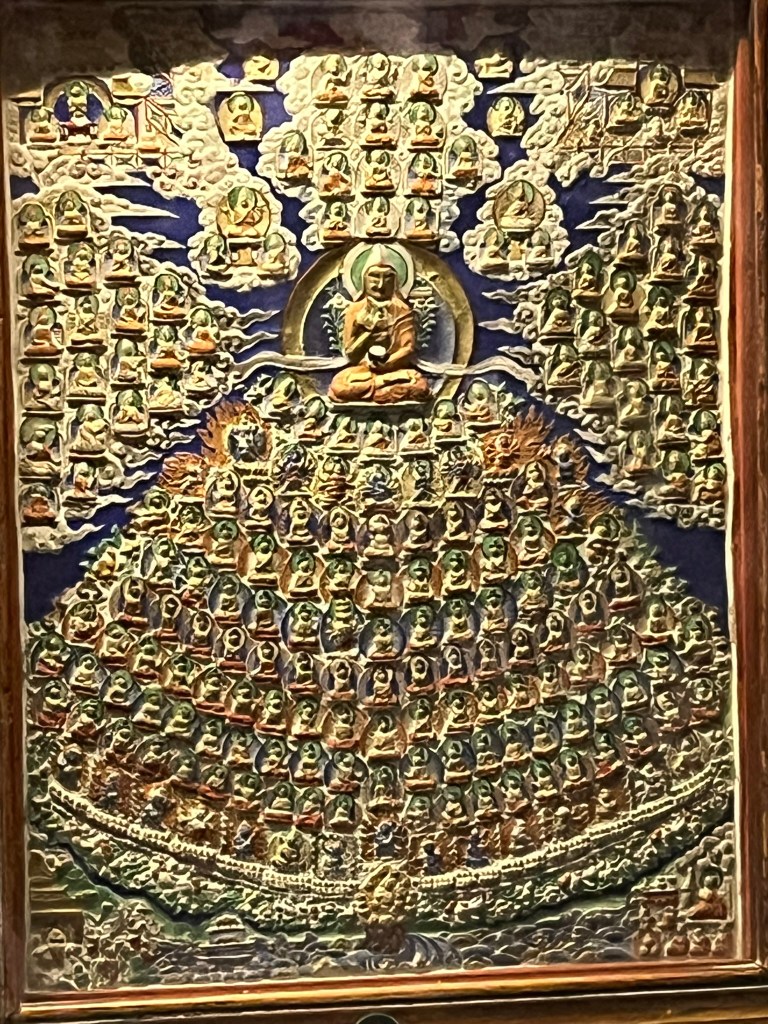
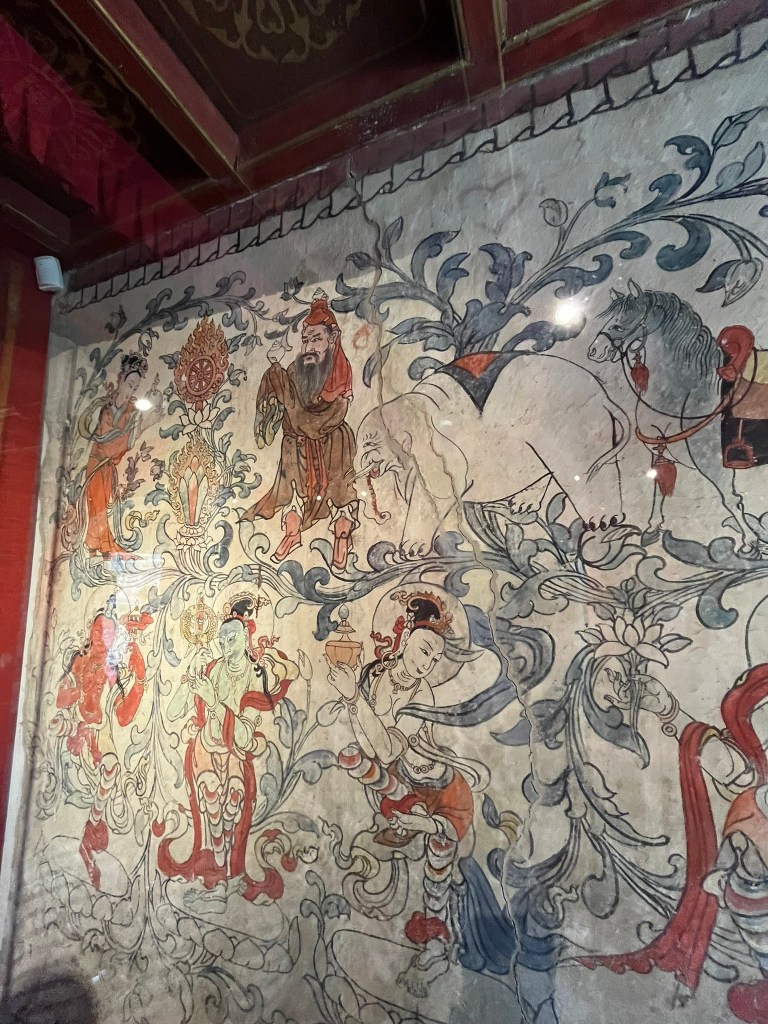
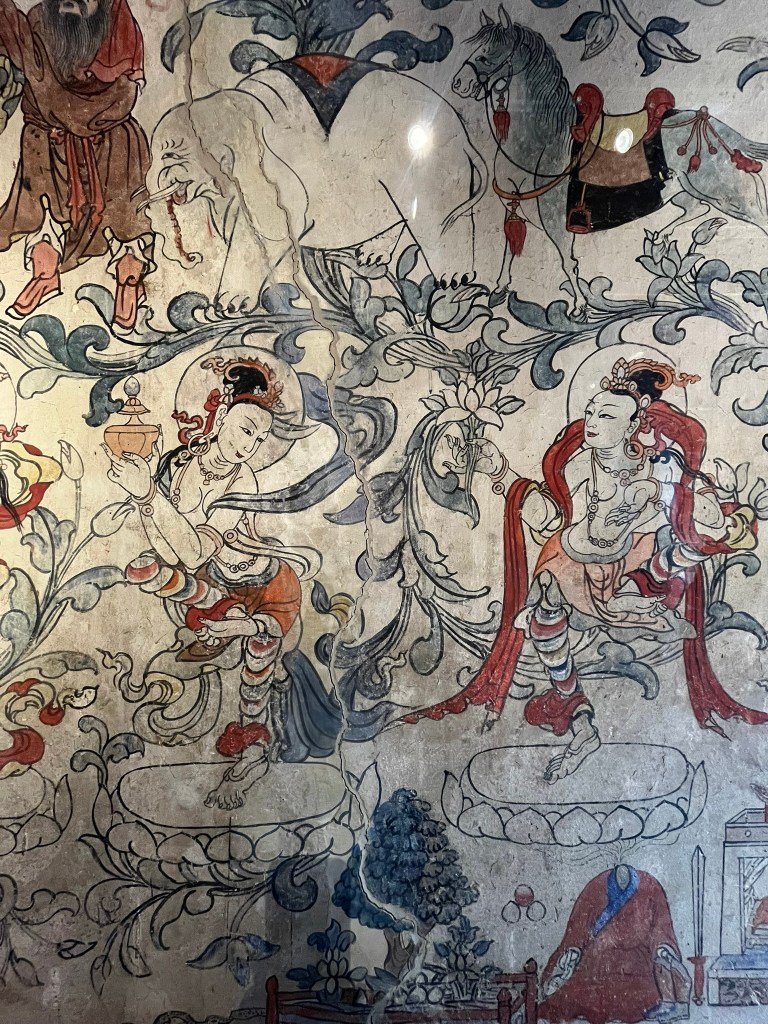
Our first stop in the monastery were the three surviving temples – entrance to this part requires a ticket and we also got an English-local guide which was great to provide context of what we were looking at. The most impressive part for me were the wall paintings and murals in the East and West Temples. The central temple was also good because we could actually take pictures inside, which places like Bhutan and Tibet don’t allow. The architecture of the buildings are a mix of Chinese influence (the sweeping tile roofs with upturned eaves), Tibetan influence and Mongolian influence, reflecting Mongolia’s position between China, Tibet and the nomadic world of the steppe.
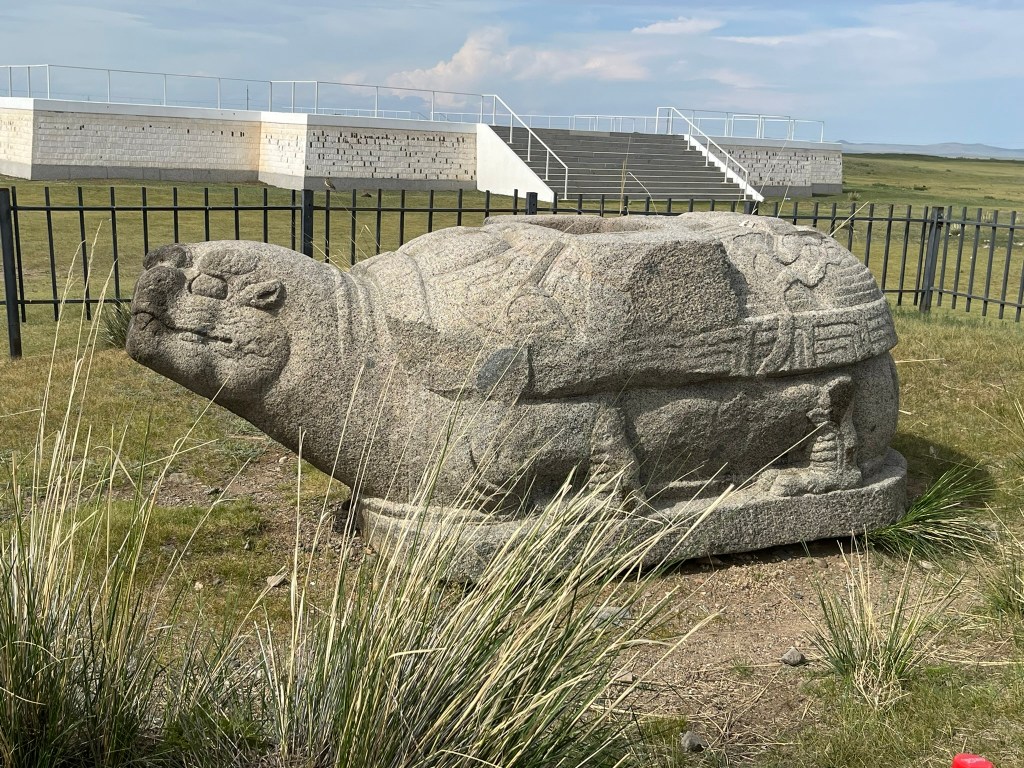
Behind the monastery lie remains from the original city of Karakorum – specifically a stone turtle dating back to the 13th century. It served as the base for a tall stone monument (called a stele) that would have risen several meters in the air with an inscription that would have commemorated an important building, imperial decree or a notable event. The symbolism of the turtle comes from Chinese traditions which Mongols adopted and adapted. Originally there were 4 stone turtles – likely near the corners or major gateways of Karakorum, defining the city’s limits. The scattered stones around the area surrounding the turtle would have once been palaces, temples, markets and homes.
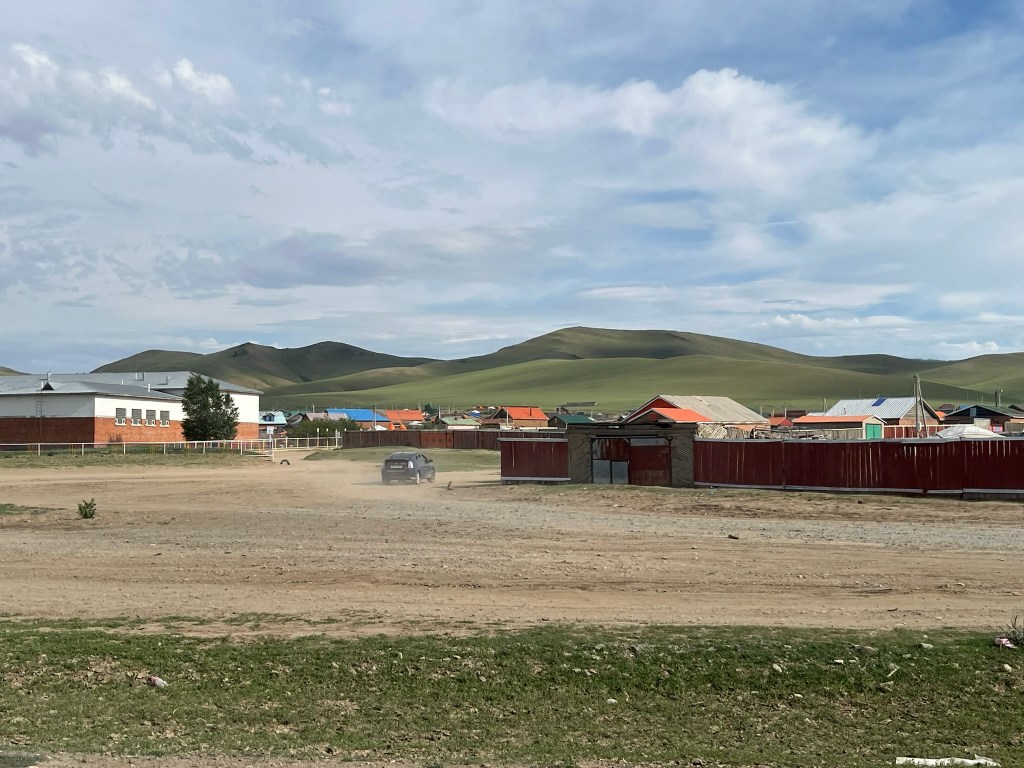
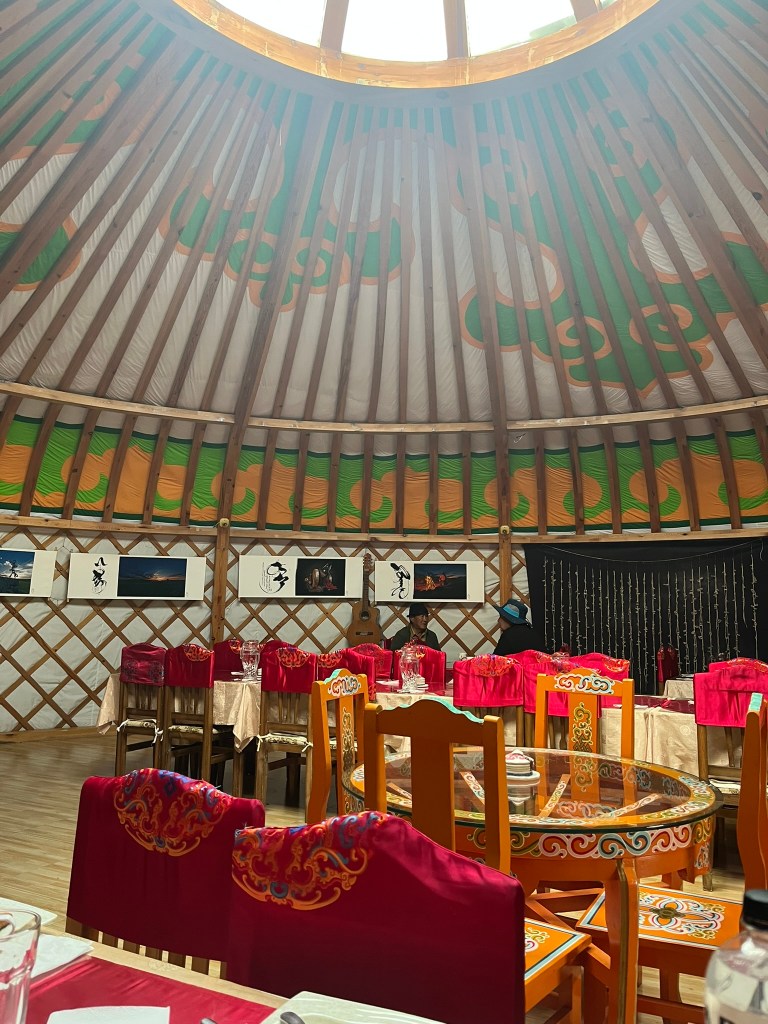
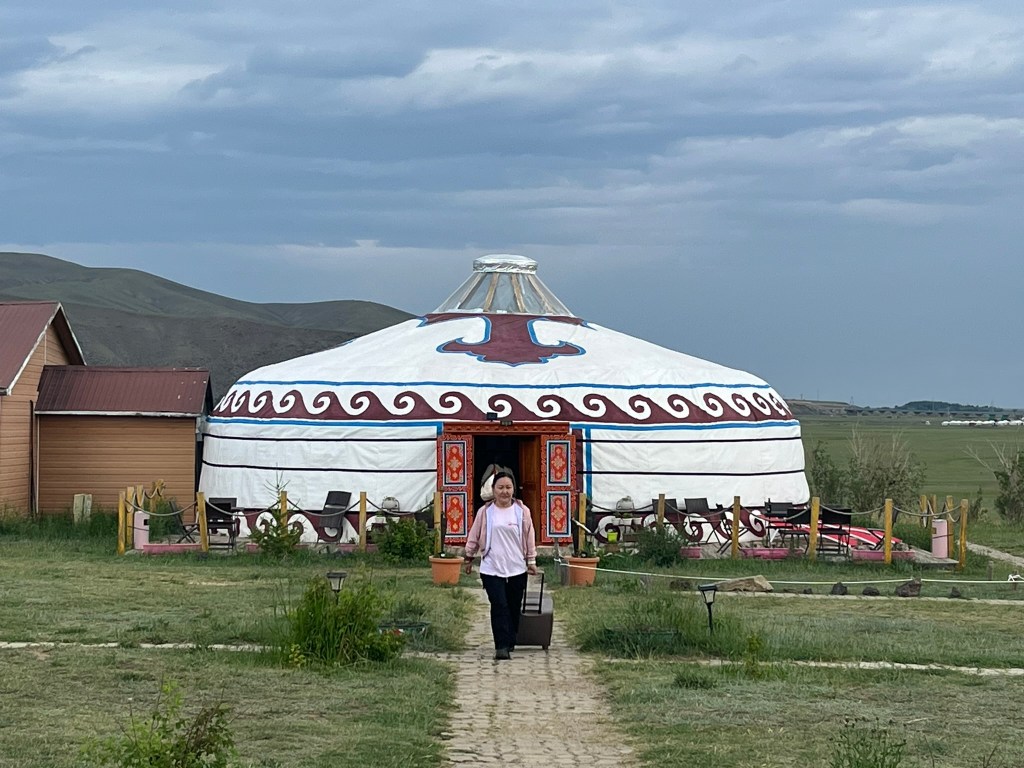
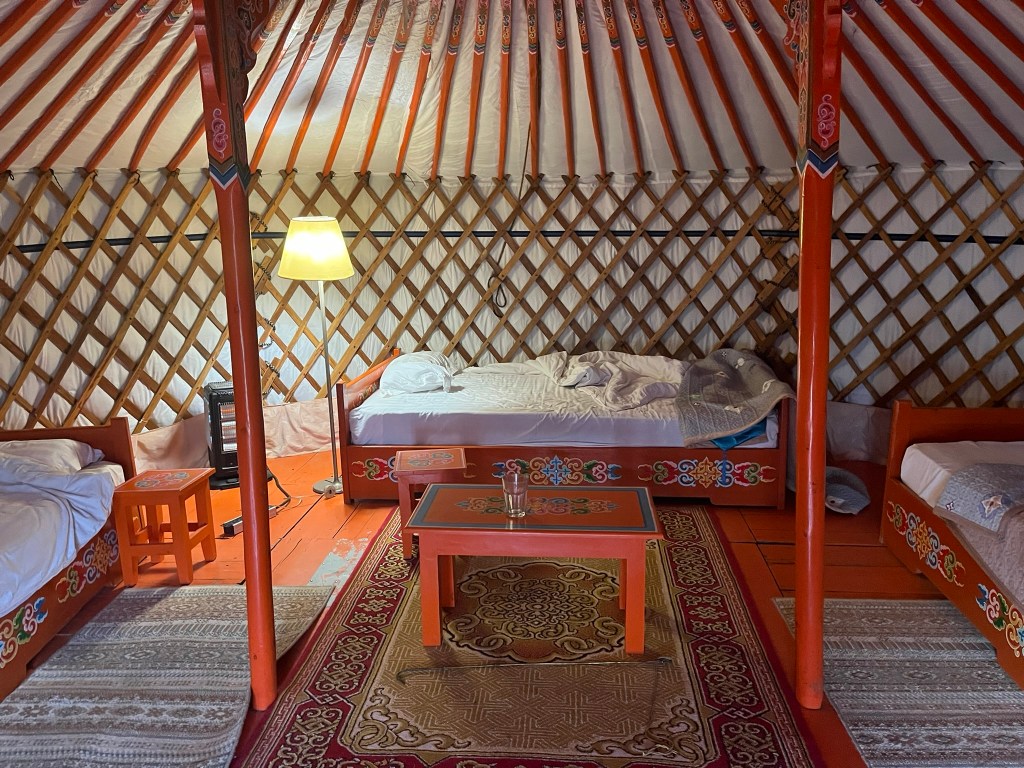
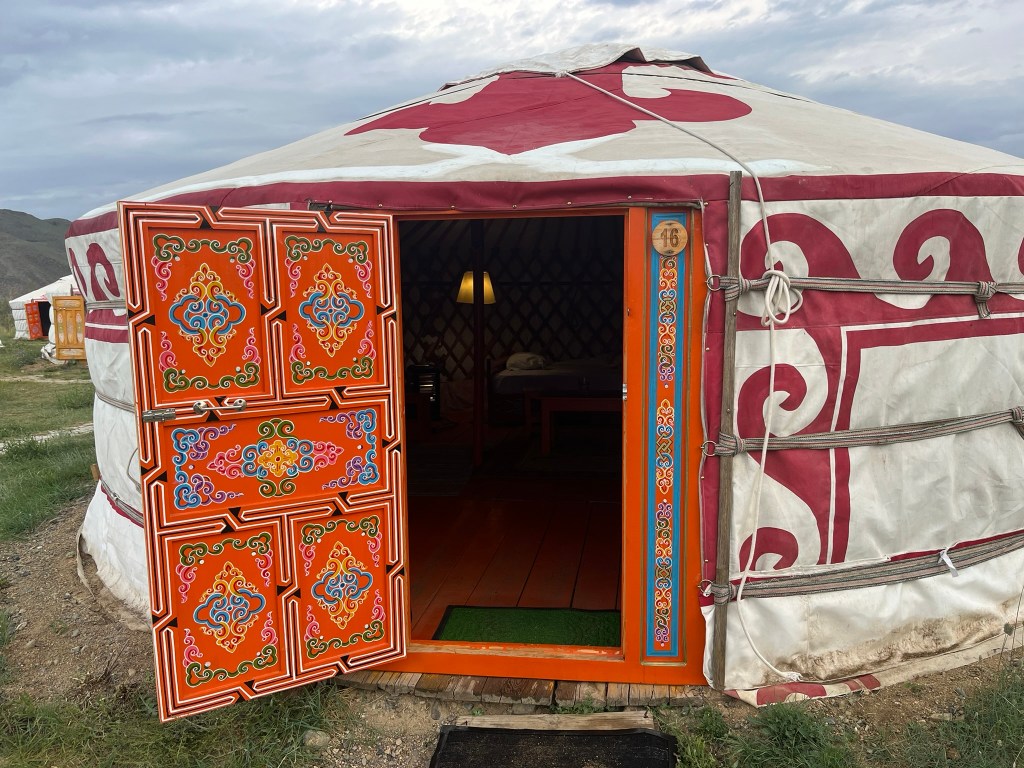
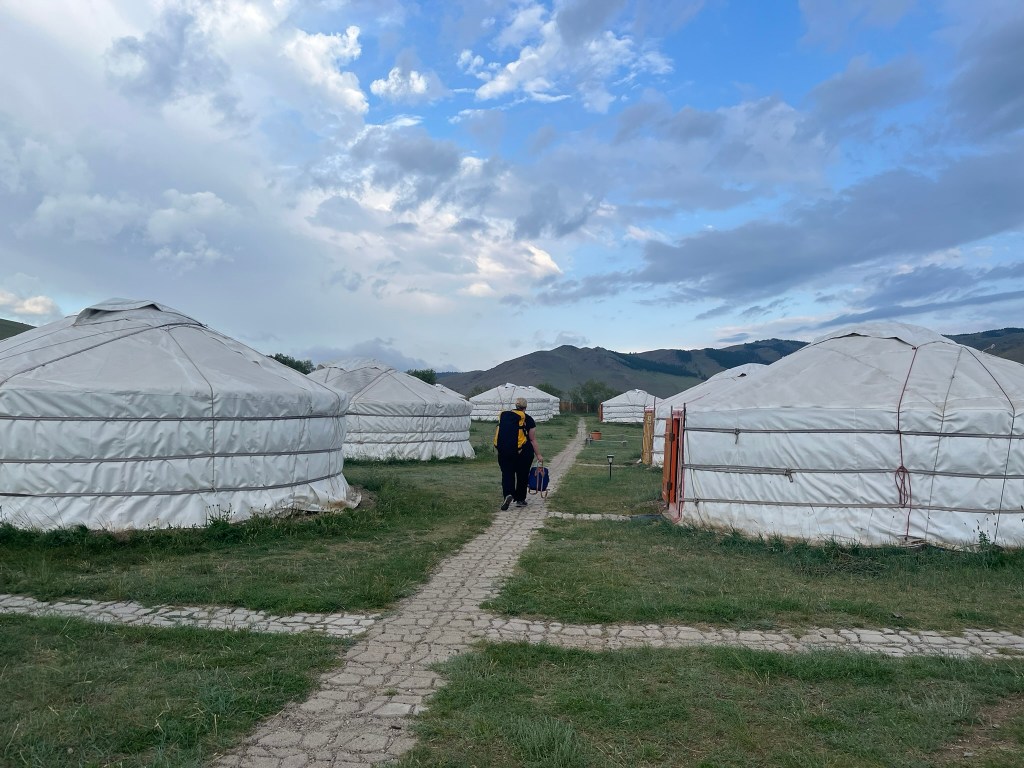
After our visit to the monastery we headed to our tourist ger camp for the night – after our home stay we were all looking forward to running water, hot showers, laundry, plug points and toilets. And the camp didn’t disappoint! We arrive just in time as a big windy rainstorm passed through shortly after.


Leave a Reply