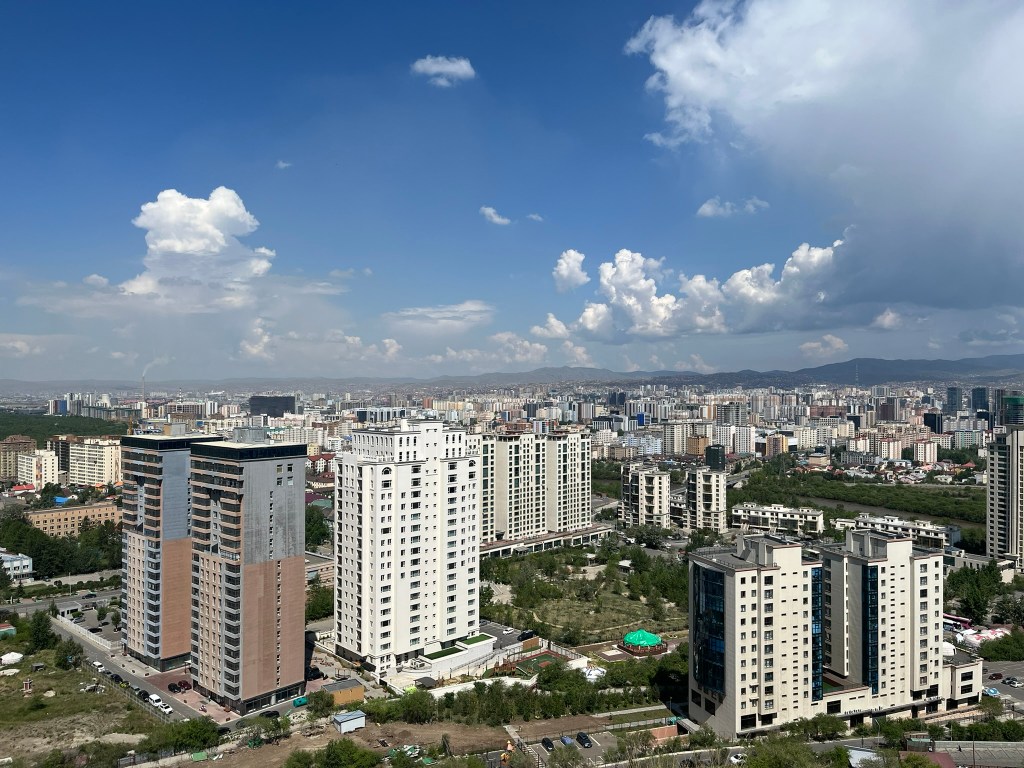
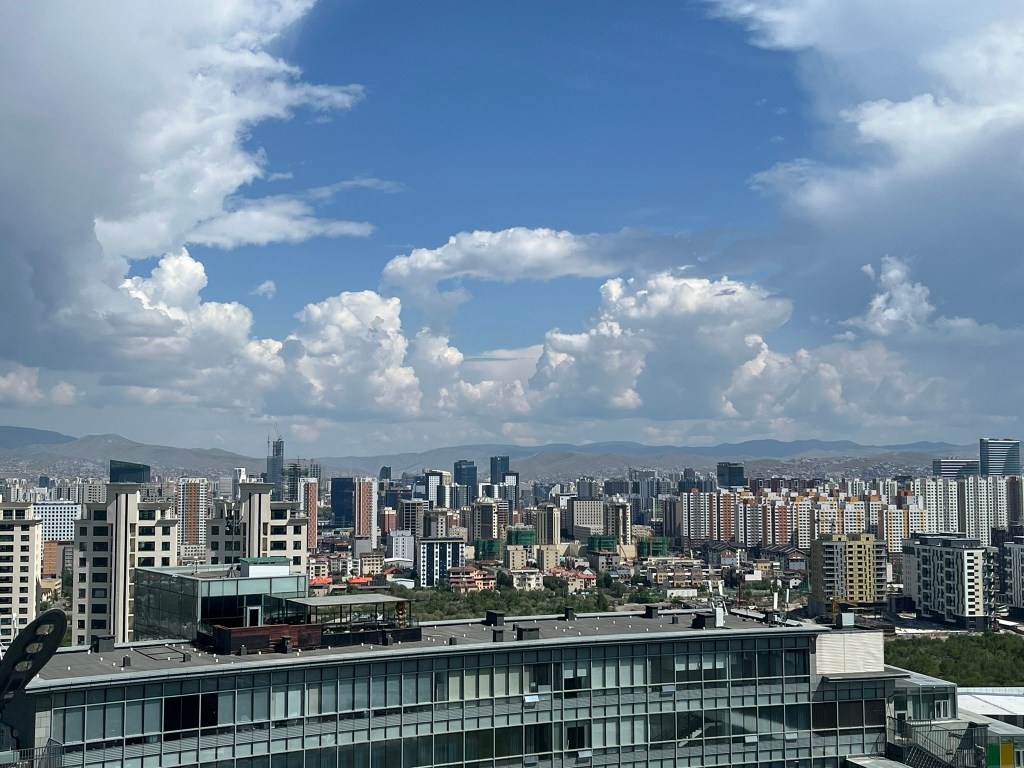
Days 2 and 3 of my trip were devoted to exploring Mongolia’s capital city – Ulaanbaatar. This is not a conventionally beautiful city – it is chaotic and lacks urban planning, has terrible traffic and sprawls across the Tuul River Valley from east to west. This gives the city a unique geography – a long and narrow urban area along the river. The capital is surrounded by mountains on all sides and rapid urban expansion over recent decades has meant that many of the surrounding hillsides have extensive suburbs or ger communities, where families live in traditional felt tents or simple houses.
I had heard before I travelled here that even in the capital, some folks still choose to live in gers and I can confirm this is true. You will see modern apartment blocks right next to plots of land with traditional felt tents on them. I am sure this will disappear over the next decade, as land becomes increasingly scarce in the city and developers will offer huge amounts to obtain this land to build shiny new apartments on. Although apparently in the hilly suburbs, it’s still the case that anyone can turn up, put up their ger and live on the land without any ownership or permits. I think the above really sums up what I think of Ulaanbaatar so far – much more modern than I expected with a rapidly growing economy, but still very traditional at the same time.
The population of the city is 1.7 million people – this is almost half of Mongolia’s entire population making Ulaanbaatar one of the world’s most dominant capital cities relative to a country. It is also widely regarded as the coldest national capital in the world, a result of its high altitude and inland location. The capital is also the economic heart of the country and produces over half of the country’s GDP. It is the home of almost all major banks, mining companies, government ministries and universities. One insane stat that I’ve seen is that there are around 720,000 registered vehicles – which is crazy for a population of 1.7 million people. But it’s easy to understand why once you’ve visited – there is very limited public transport and in the winter months you really need a car to get around.
The city was founded as a mobile Buddhist monastery in 1639 before permanently settling in its current location in 1778. The name Ulaanbaatar means ‘Red Hero’ adopted in 1924 after Mongolia’s socialist revolution.
We had arranged a private tour guide for our first day of sightseeing in the capital. In theory a good idea as some of the sights are quite spread apart and taxis and buses are pretty non-existent. Unfortunately, I would describe our guide as more of a glorified taxi driver ferrying us from one place to another but having absolutely no knowledge of the places we were visiting. Her attempt to answer our questions by googling and then reading out the answer was comical.
Our first stop was The Winter Palace of Bogd Khan, a small but well-preserved complex that was the winter residence of Bogd Khan VII, Mongolia’s last king and spiritual leader. Bogd was born in Tibet in 1869 and went on to become the highest ranking lama in Mongolia. When Mongolia declared independence from the Qing dynasty in 1911 he was proclaimed the ‘Holy King’ serving as both the nation’s religious leader and its monarch until his death in 1924. After his passing the monarchy was abolished and Mongolia became the world’s second communist state after the Soviet Union.
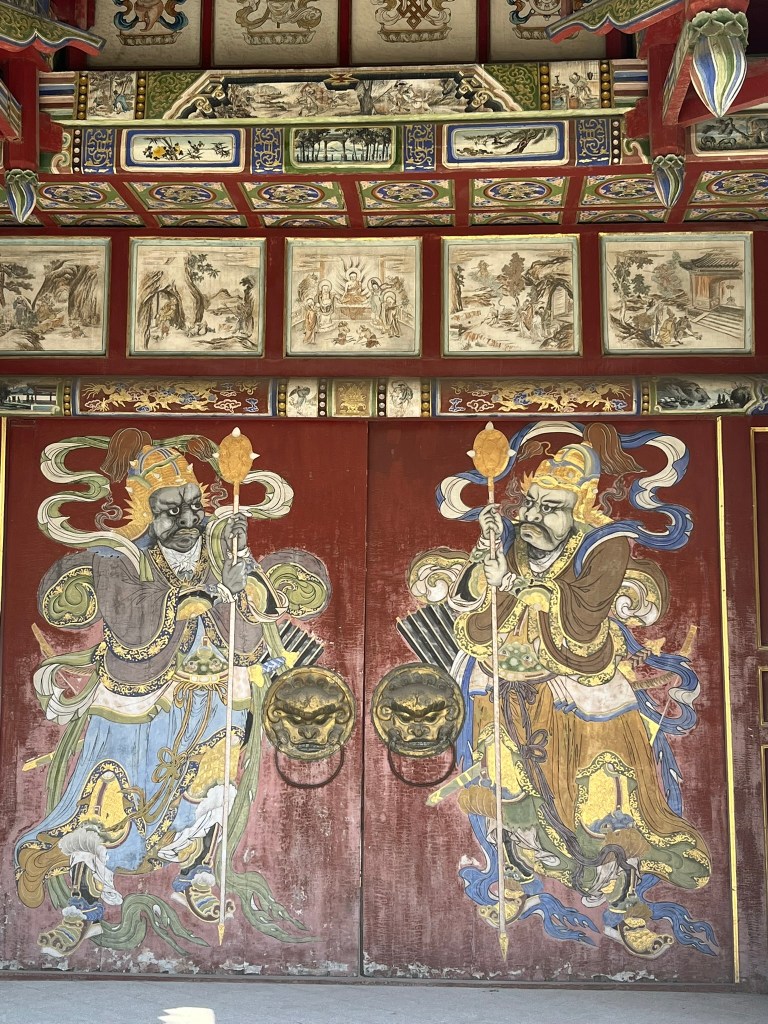
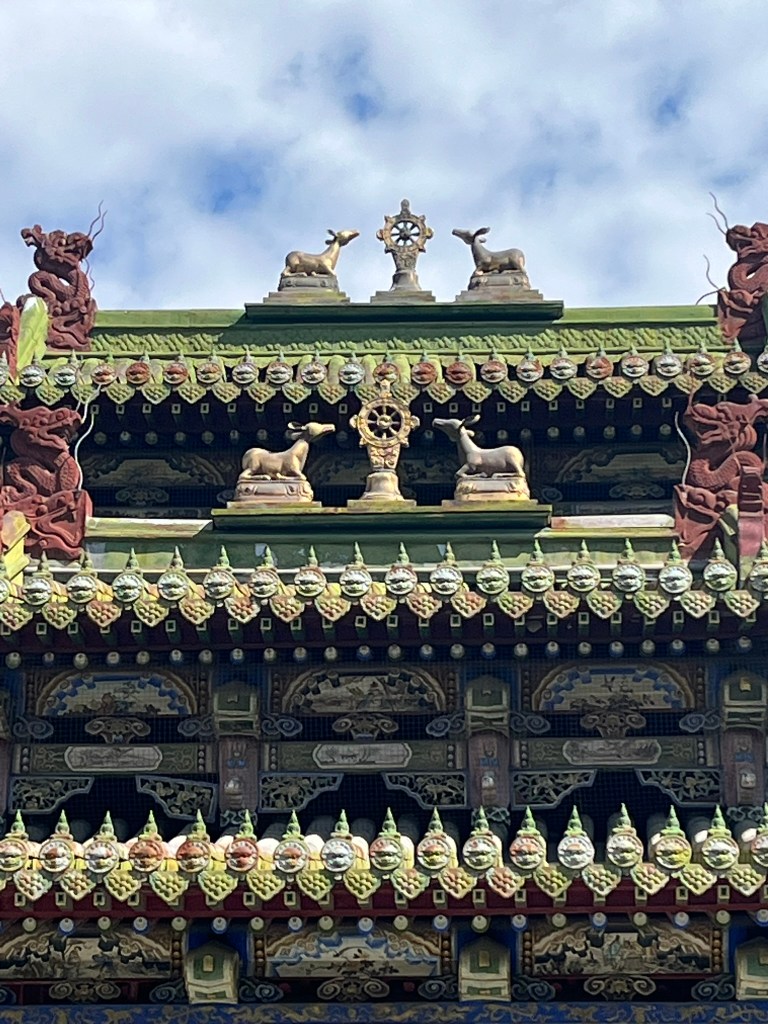
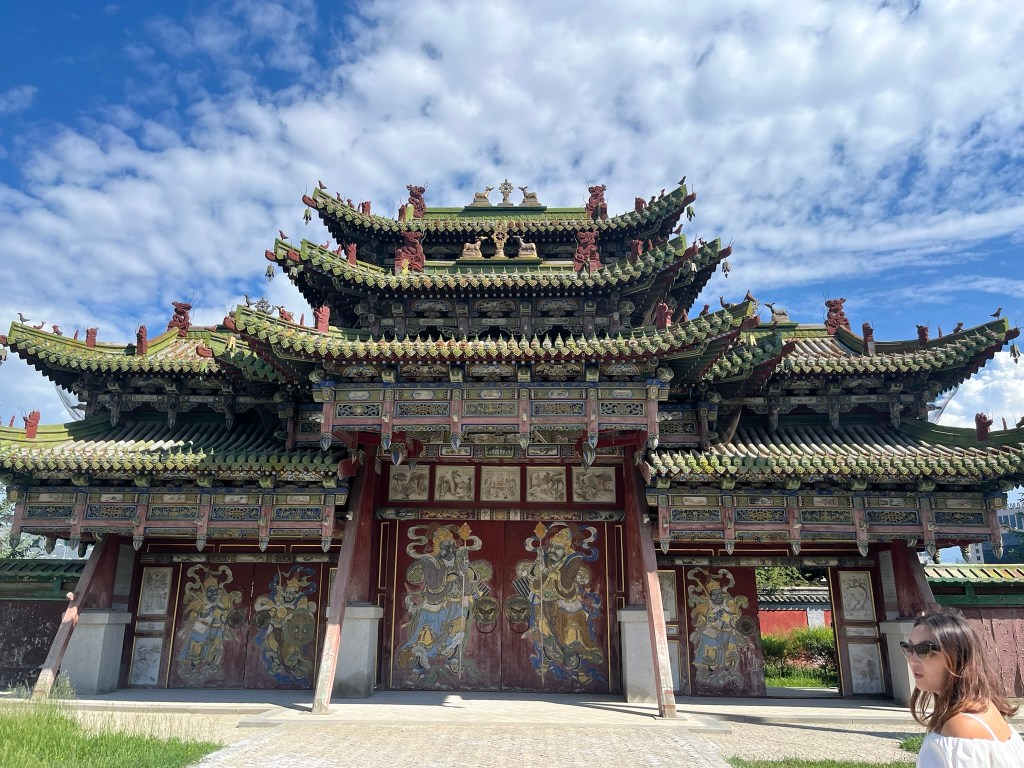
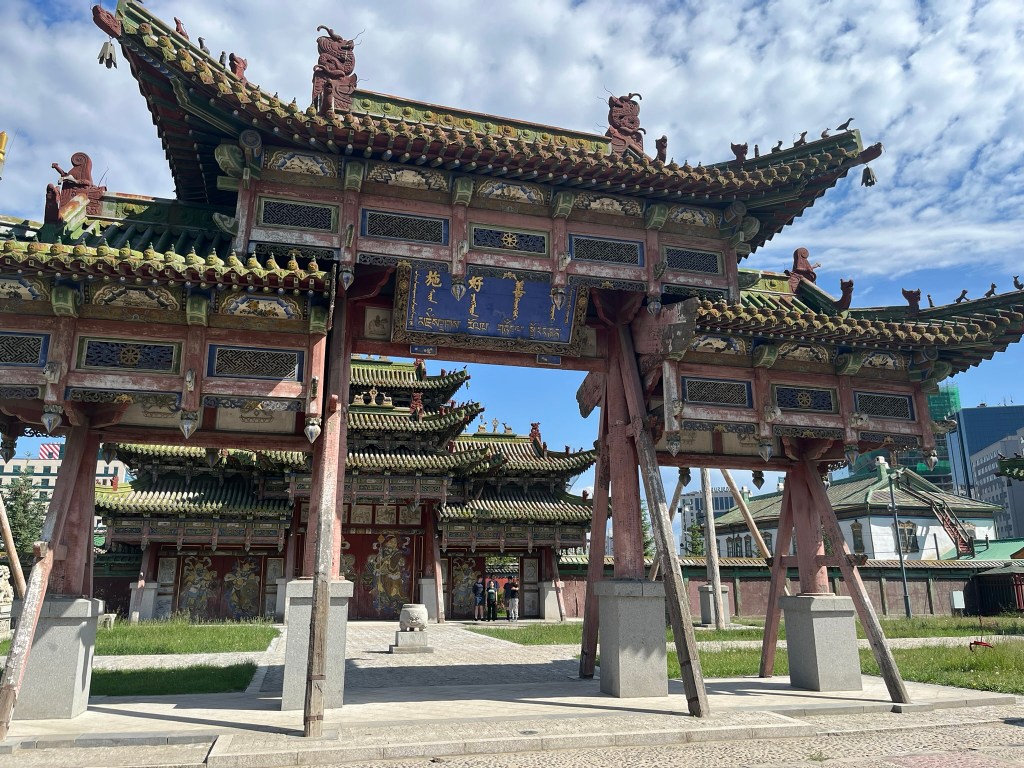
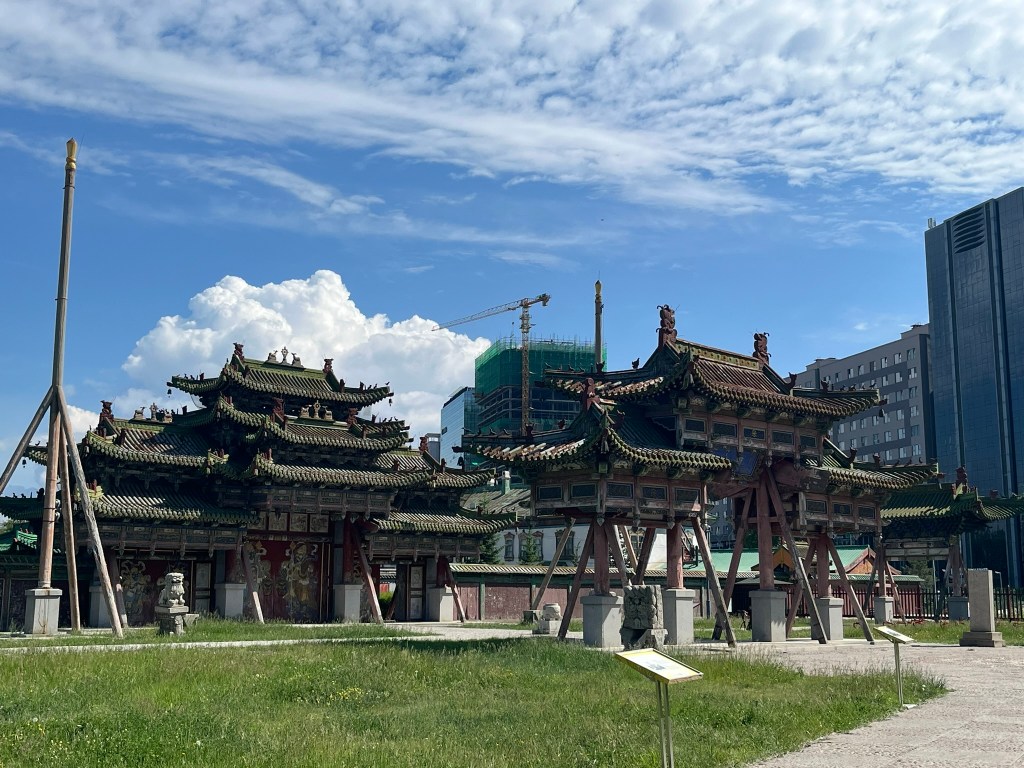
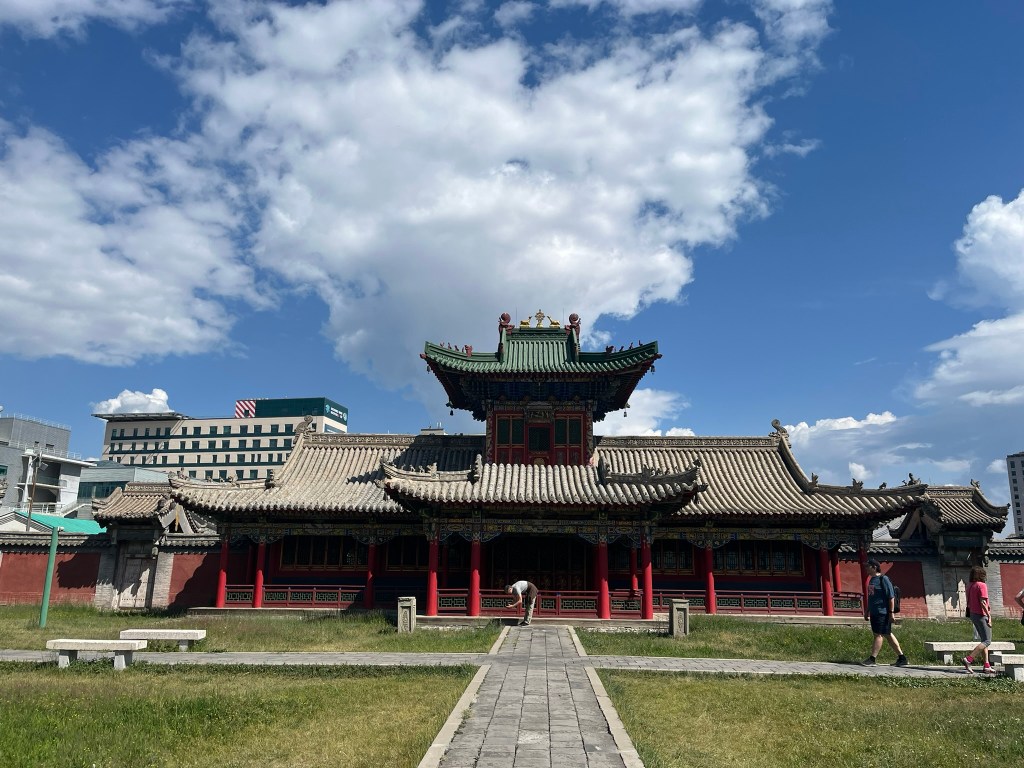
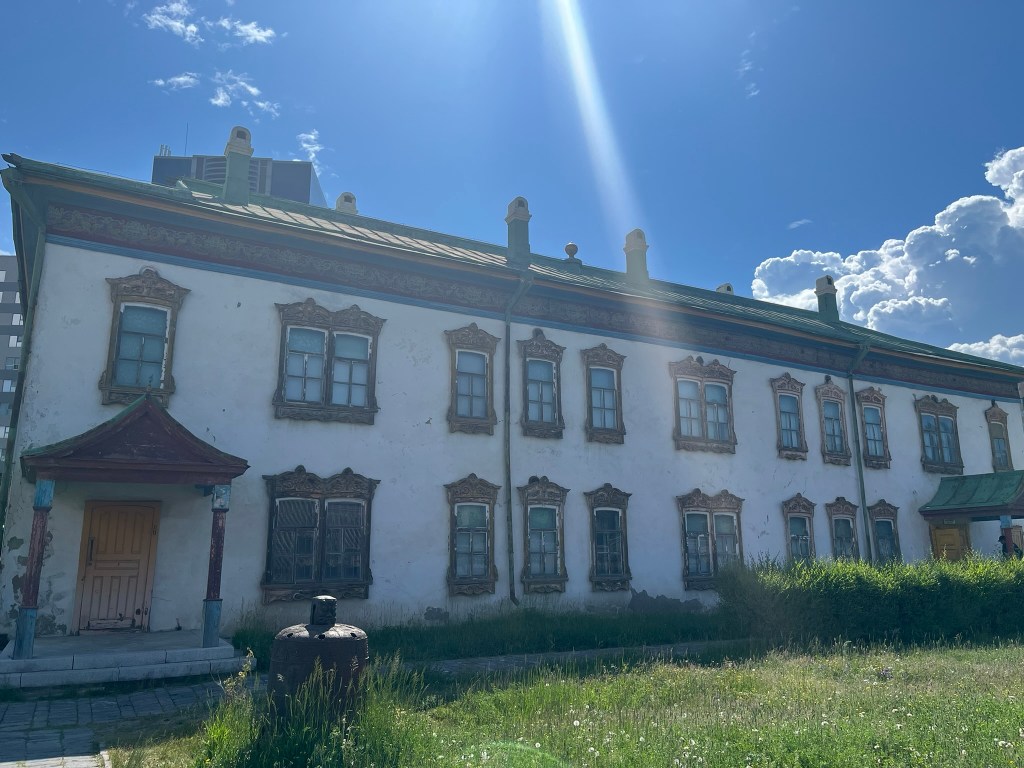
The Winter Palace is the only royal residence to survive the communist era – it was fortunately preserved and converted into a museum – albeit with the purpose of demonstrating the ‘backwards’ ways prior to communism. However this is lucky as otherwise everything would have been destroyed entirely. Unfortunately we could not take photos inside the museum which was stuffed full of lavish furnishings and art work and it gave you a real sense of how Mongolia has stood at a cultural cross-roads for many centuries with influences from Russia, China, Tibet and Europe all together.
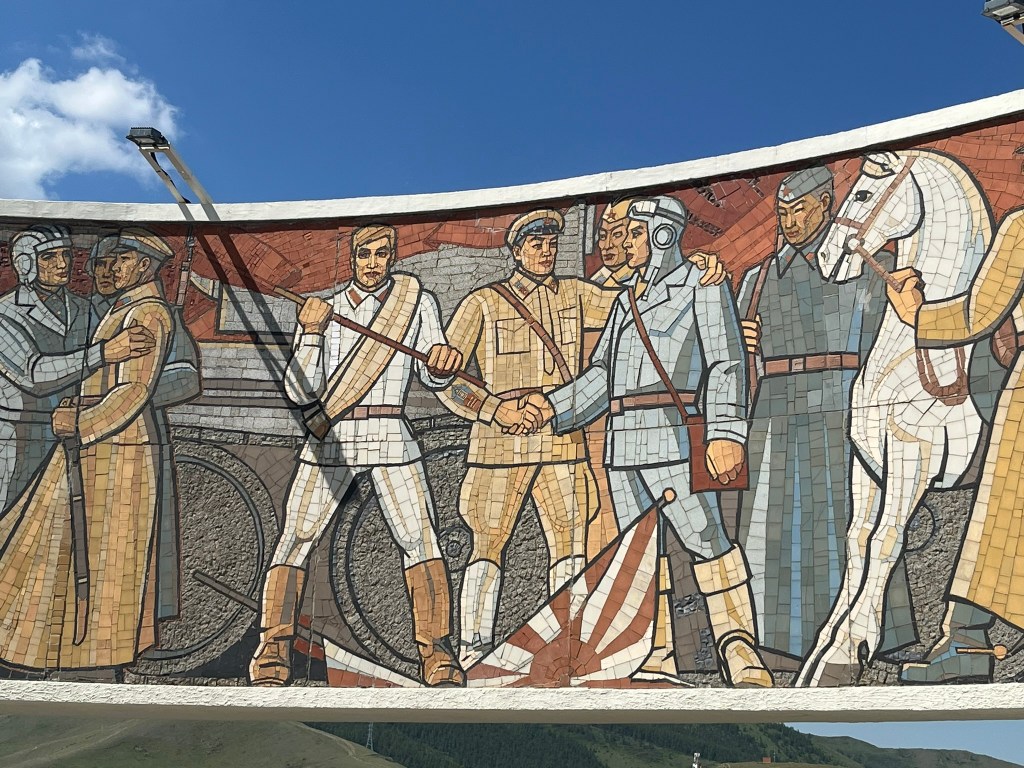
We then headed across the Tuul River to Zaisan Memorial, perched on a hill overlooking southern Ulaanbaatar. You get a great view of the city from the top. And the memorial is super interesting – built between 1969 and 1971 to commemorate the relationship between Mongolia and the Soviet Union and to honor the soldiers who fought together during the Battle of Khalkhin Gol against Japan in 1939 and later during the Second World War.
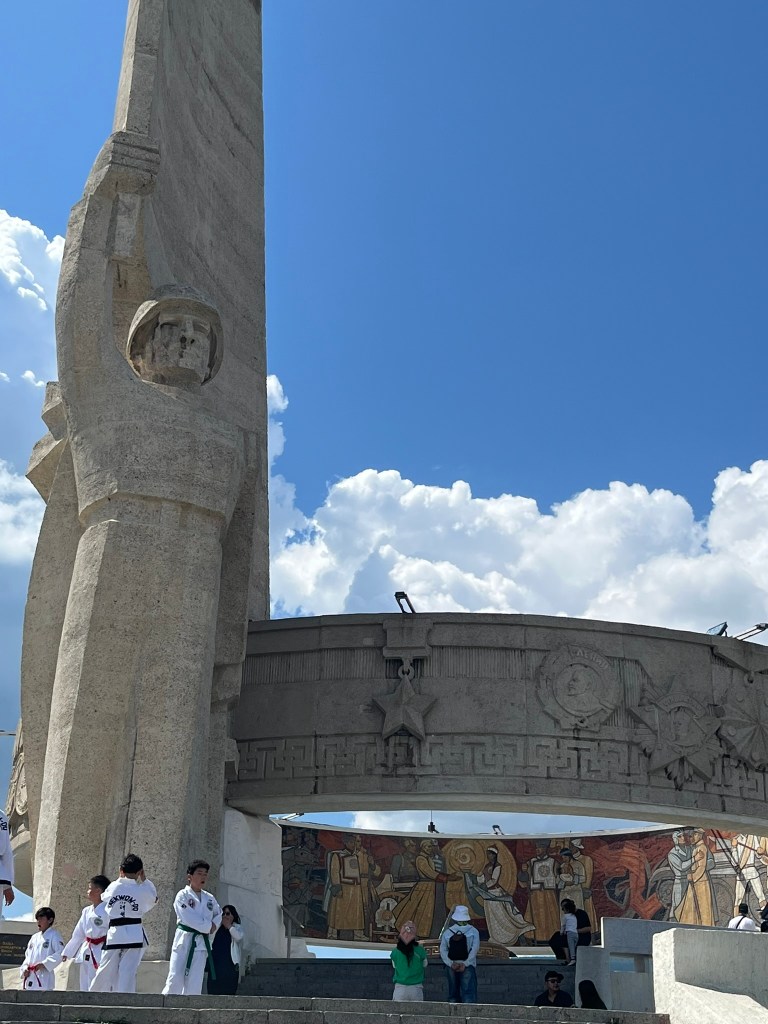
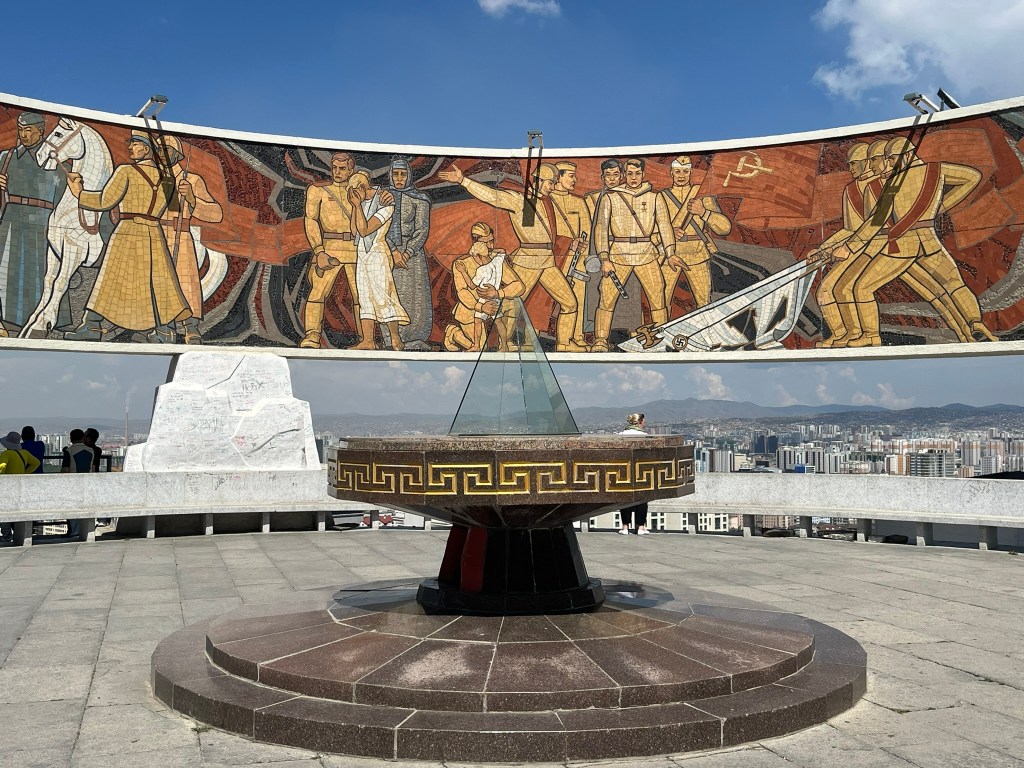
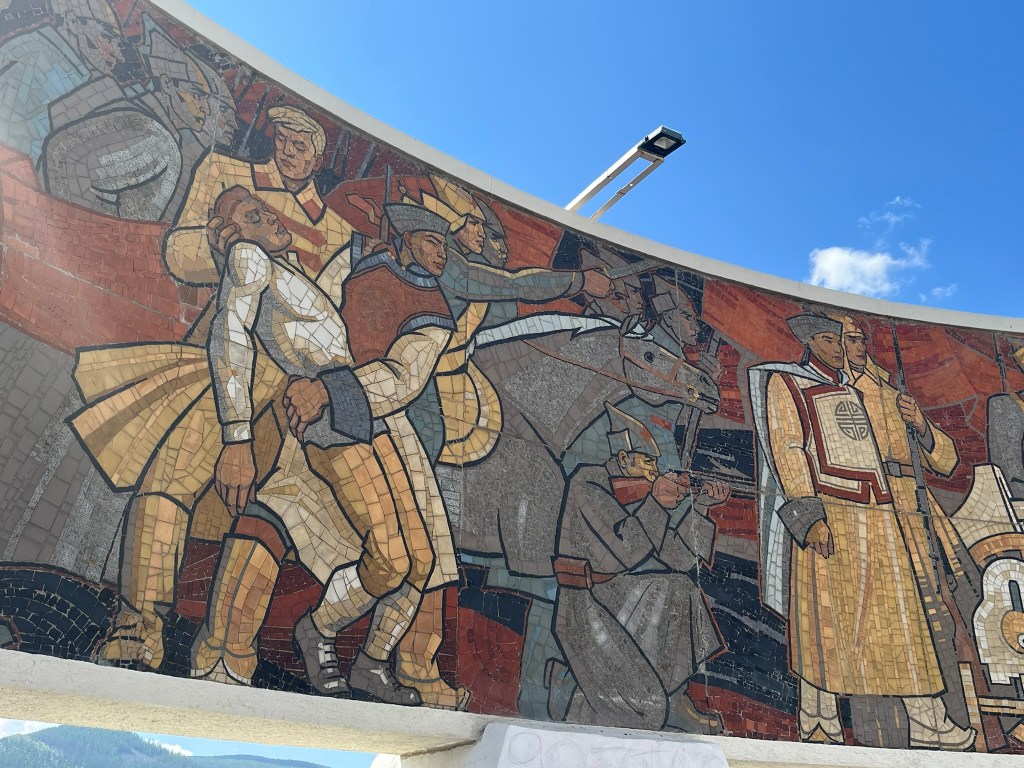
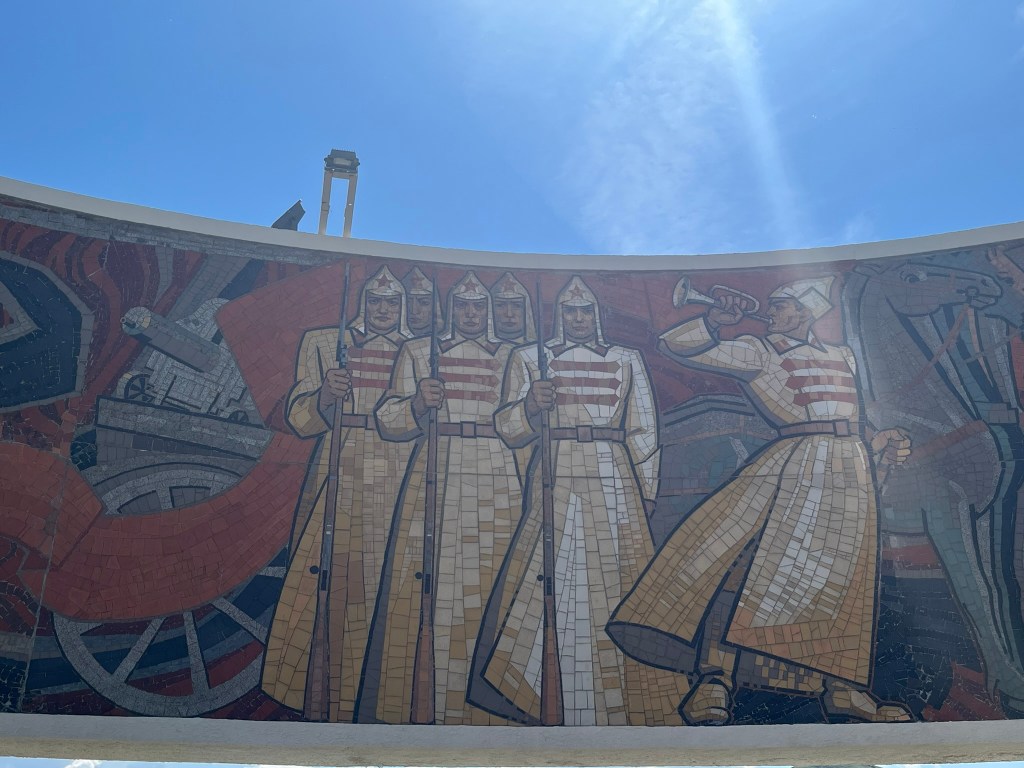
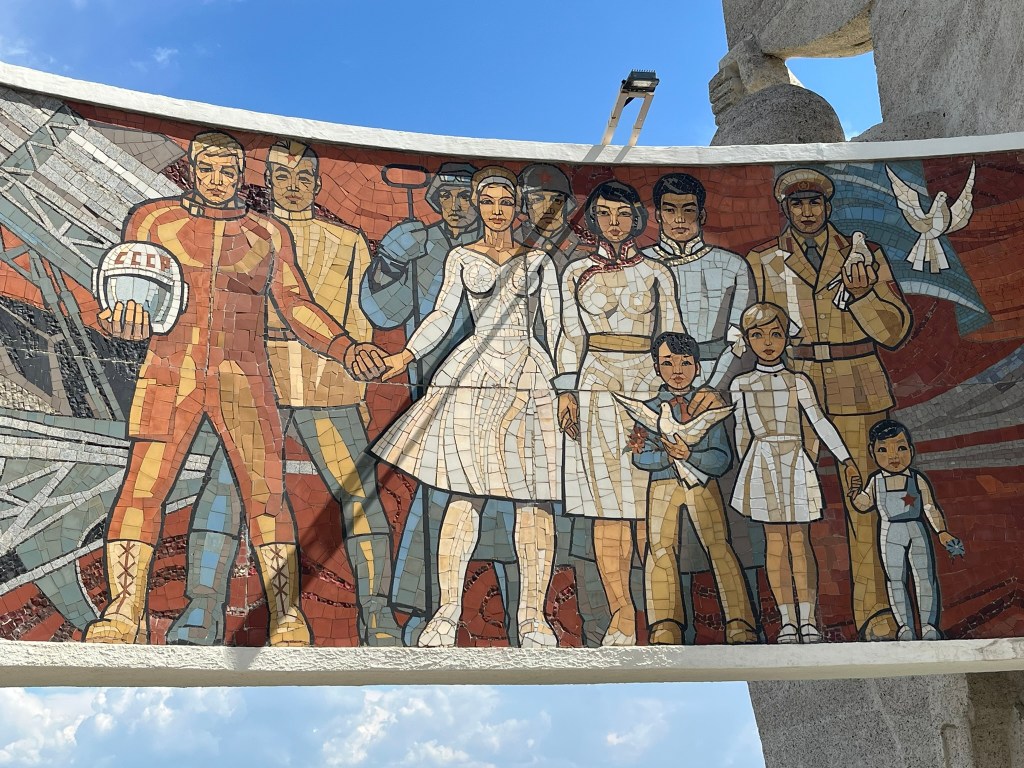
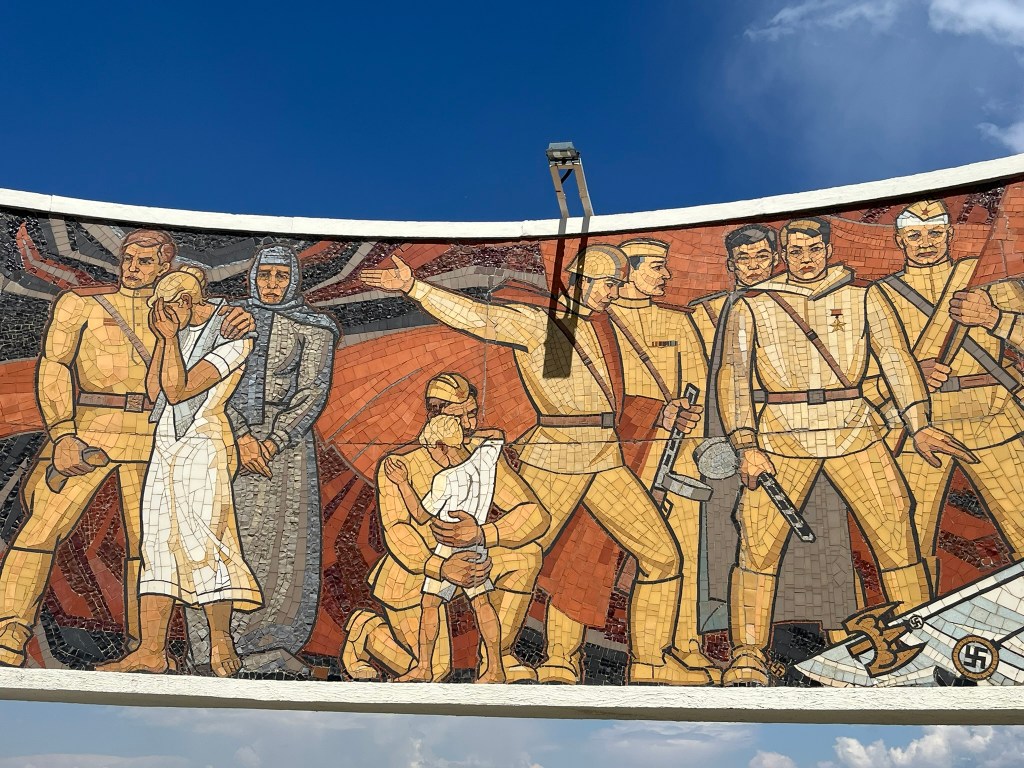
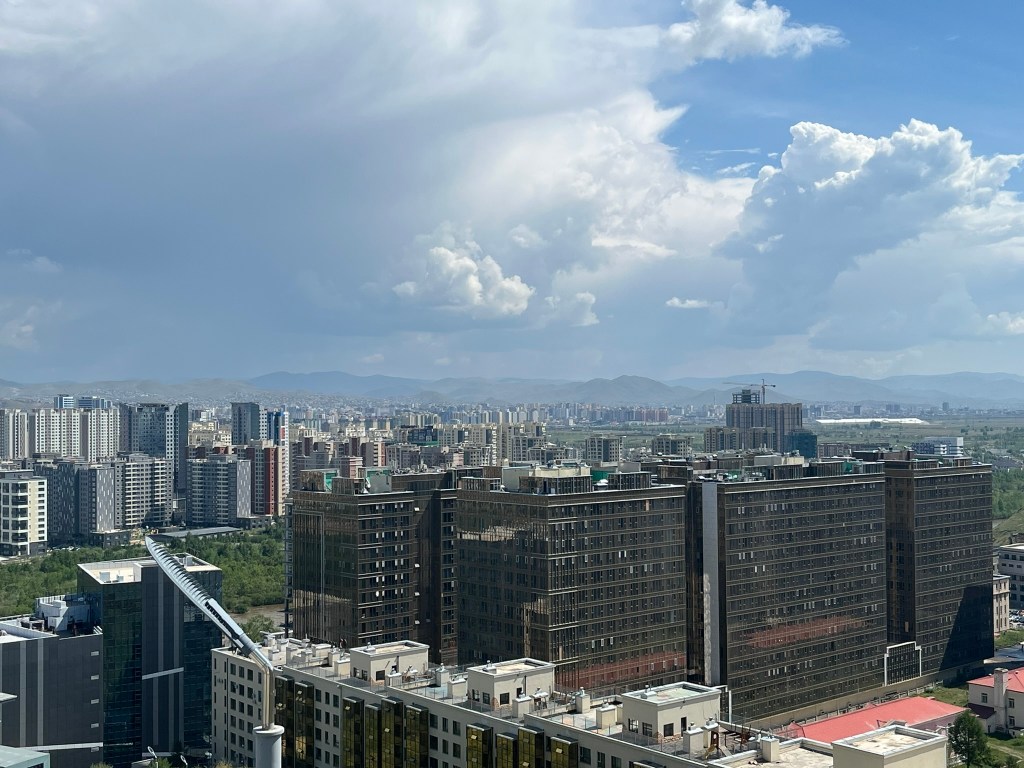
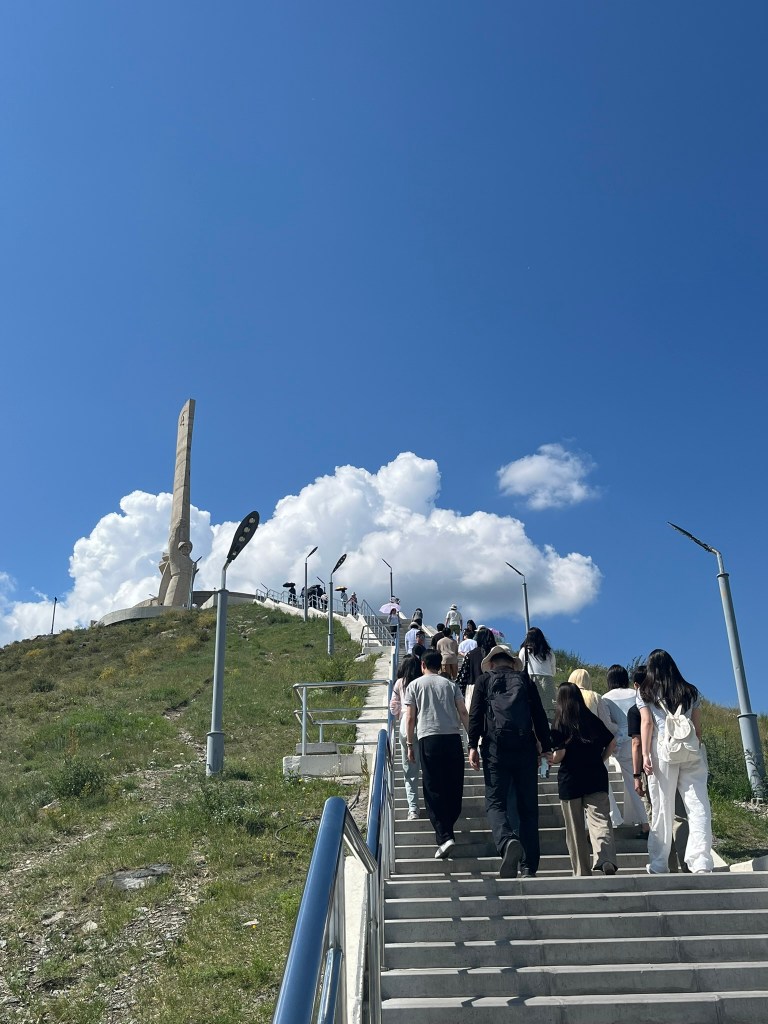
I must admit I wasn’t fully aware that Mongolia had been a communist state and was so close to the Soviet Union. Even to the point where it put in an application to join the Union (albeit as our guide explained – this was more for appearances than anything). For almost 70 years Mongolia was one of the Soviet Unions closest allies and and although it retained its independence, Soviet influence shaped almost every aspect of Mongolian politics, society and culture through the 20th century.
When the Qing dynasty of China collapsed in 1911, Mongolia declared independence under Bogd Khan, whilst China tried to regain control, leading to years of instability. In 1921, Mongolian revolutionaries supported by the Soviet Red Army defeated both Chinese forces and anti-Bolshevik Russian troops. In 1924, after Bogd Khan died, the monarchy was abolished and the Mongolian People’s Republic established. The most extreme part of Soviet influence was the political purges during the late 1930s under Stalin. The fear that Buddhism and traditional elites might oppose communist rule resulted in the arrest and execution of thousands of monks, intellectuals, nobles and government officials. More than 700 monasteries were destroyed and up to 30,000 killed (a huge number relative to a population then of just 1 million people). Buddhism, which had been central to Mongolian identity for centuries was almost abolished.
The alliance with the Soviets also provided protection to Mongolian independence. Joint forces defeated the Japanese near Mongolian’s eastern border in 1939 and this discouraged the Japanese from invading Mongolia or Soviet Siberia and helped secure Mongolia’s borders during WW2. During the war, Mongolia supplied the Soviet Union with horses, wool, meat, clothing and financial support. Previously secret documents are now revealing that Mongolia provided the Soviet Union with upwards of half a million horses and it was the strength of these horses relative to those in Europe that helped the Red Army march on Berlin. As the Soviet Union weakened during the late 1980s, there were demands for reform within Mongolia. Peaceful demonstrations in 1990 led to the end of communist rule and the introduction of multi-party democracy. Unlike many other communist countries, this transition was largely peaceful and by 1992, elections had been held and a new constitution adopted. There is a good section in the National History Museum (a must visit in the city) that runs through this part of Mongolian history.
As you drive around Ulaanbaatar there are lots of Soviet era buildings including apartment blocks, the State Department Store (aka back when it opened in 1921 as ‘the big store’), Opera, Library and lots of government buildings surrounding the square. These are intermingled with super modern glass sky scrapers, making it an interesting city to walk around and explore.
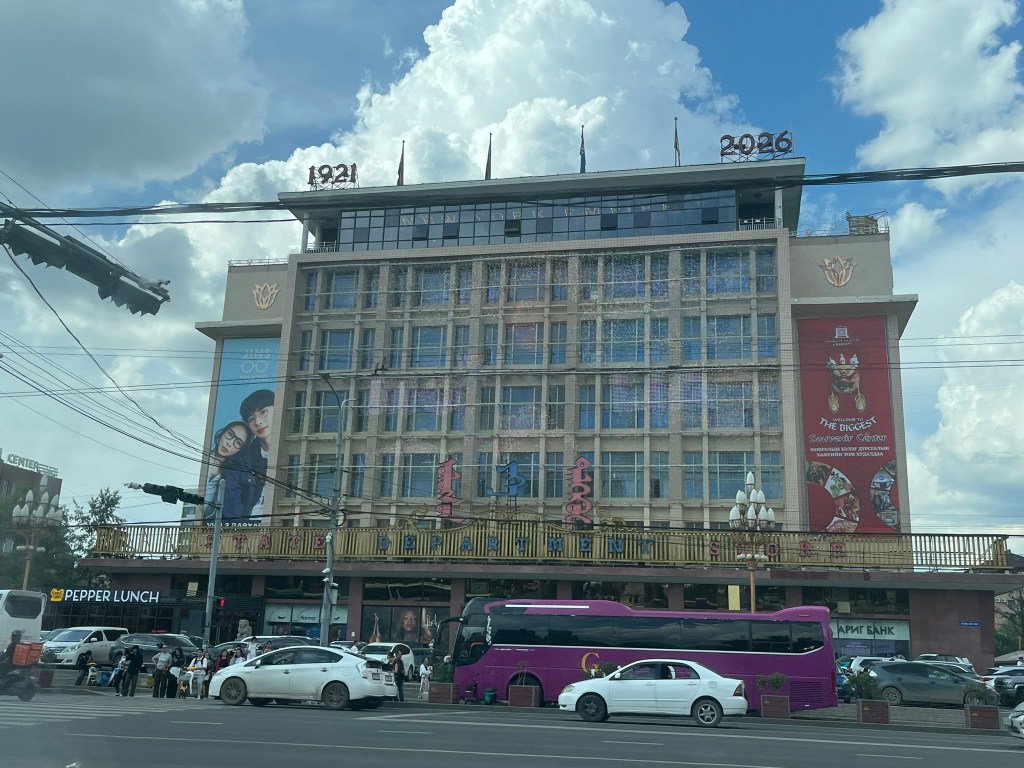
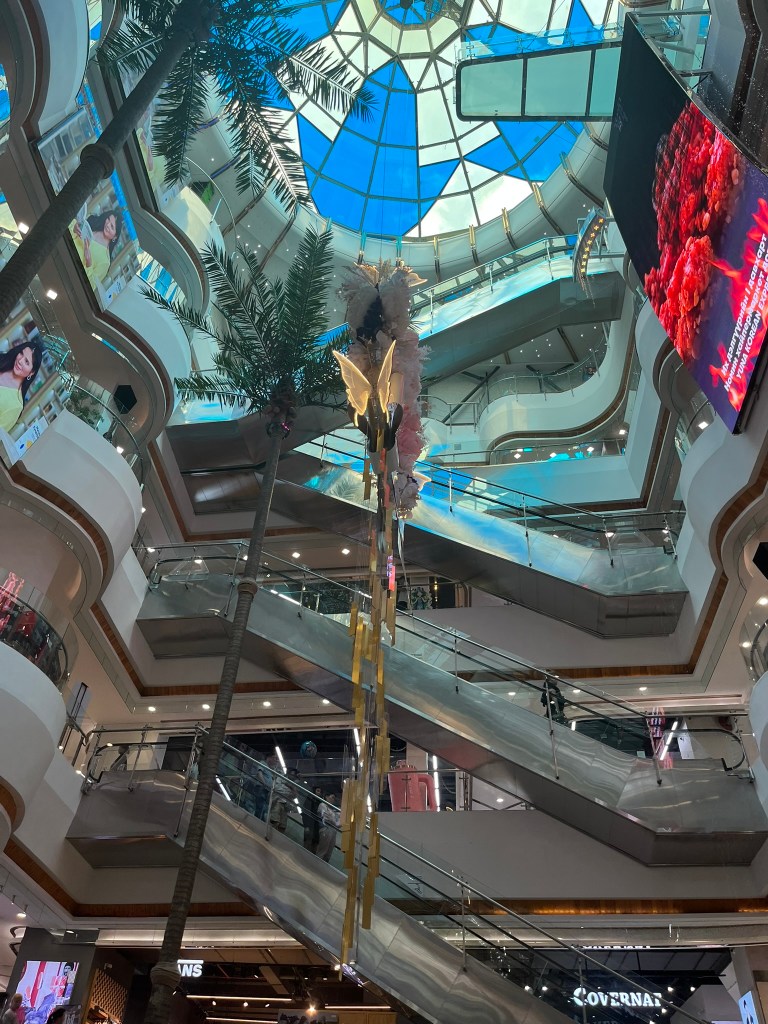
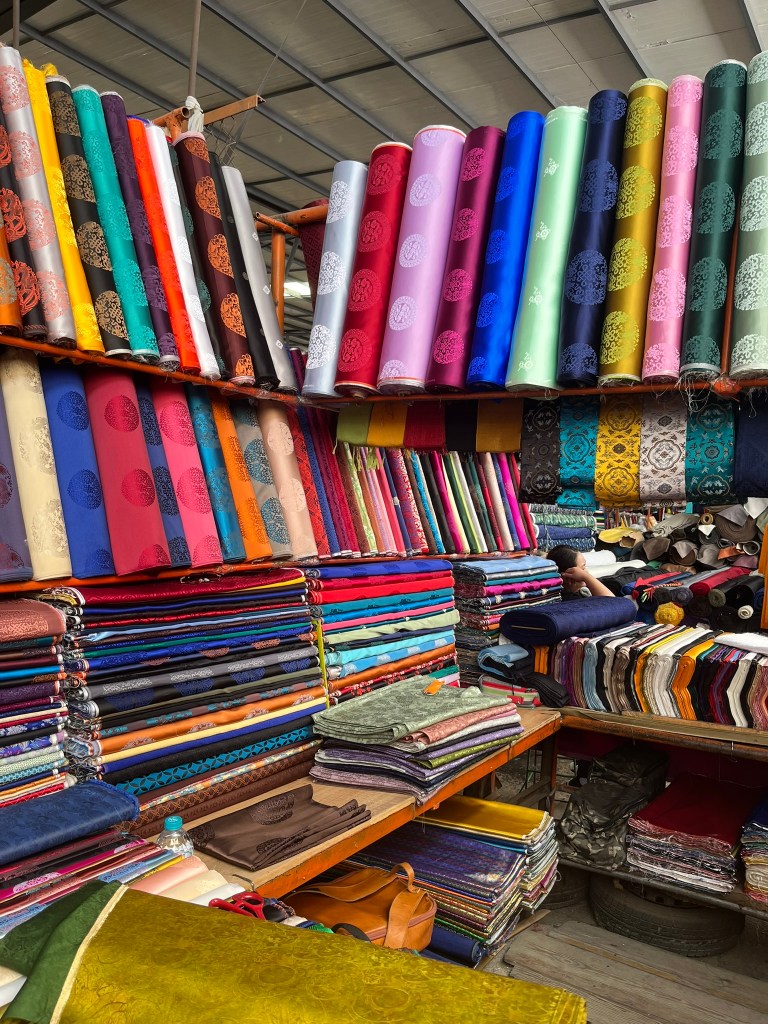
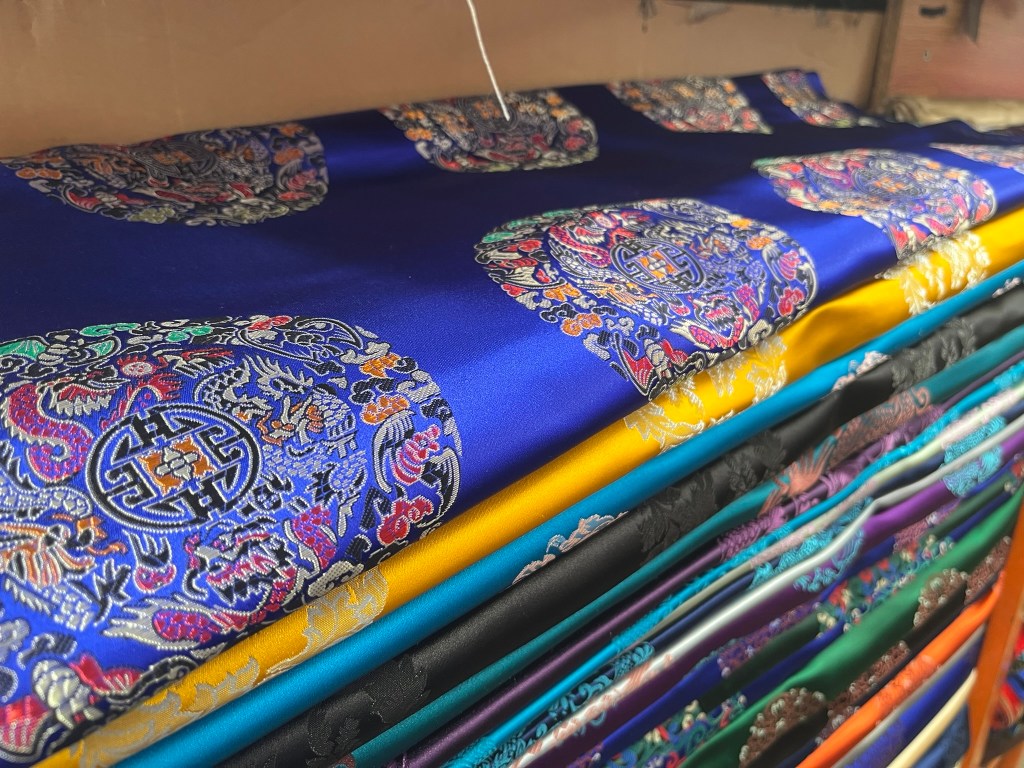
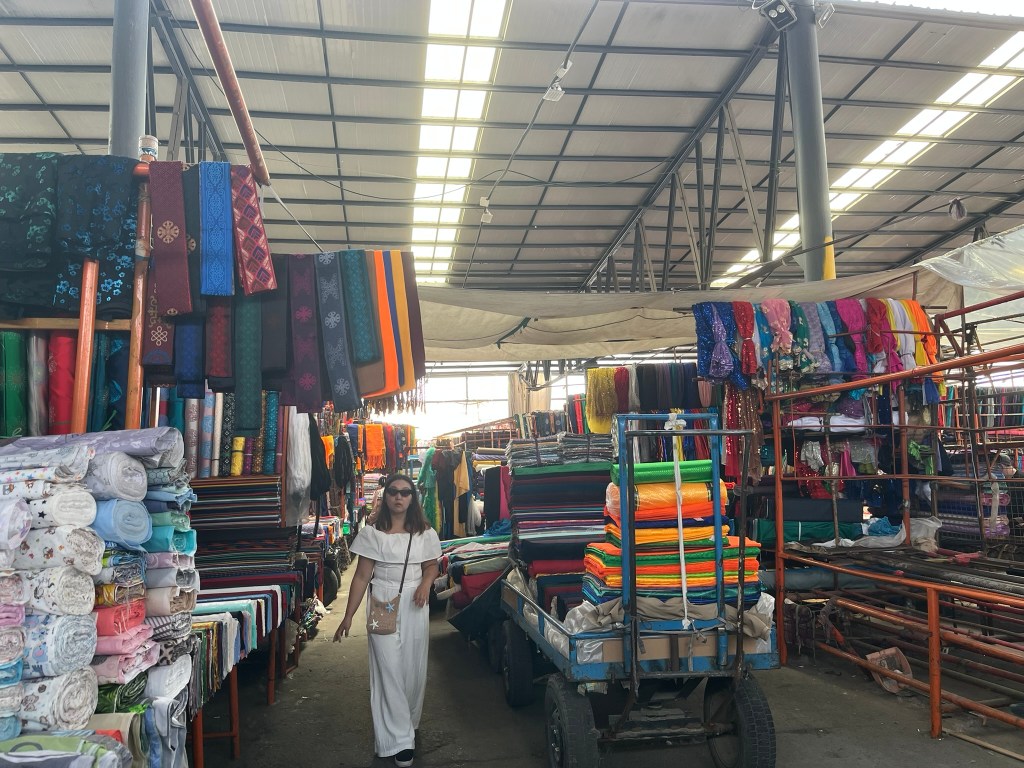
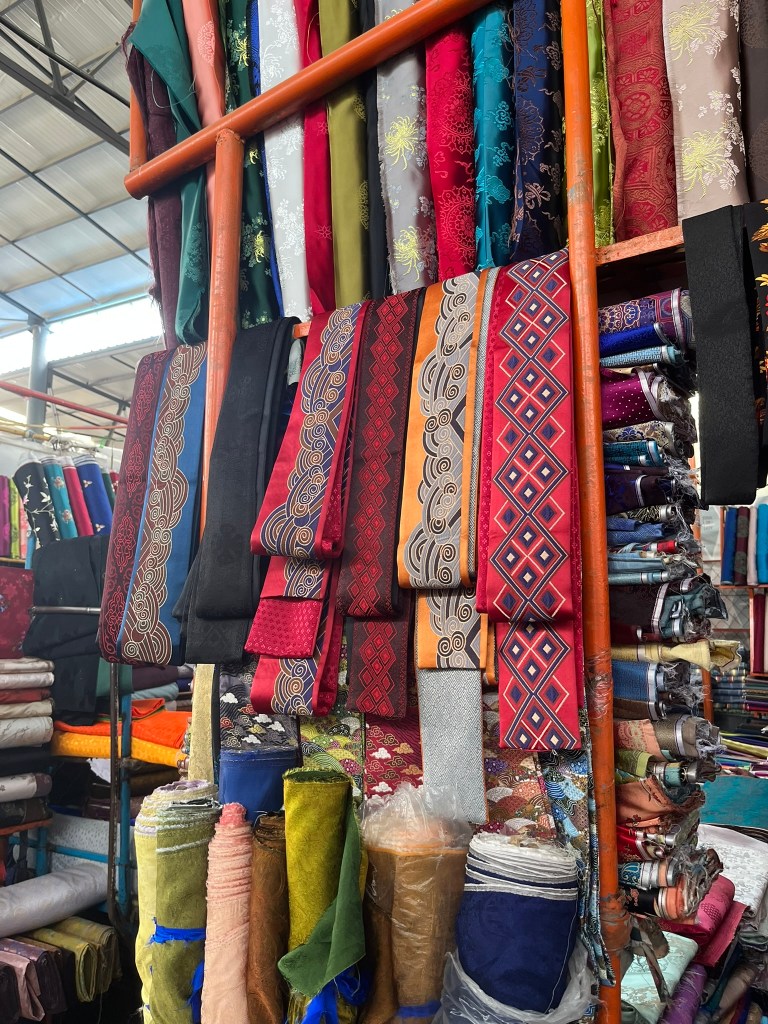
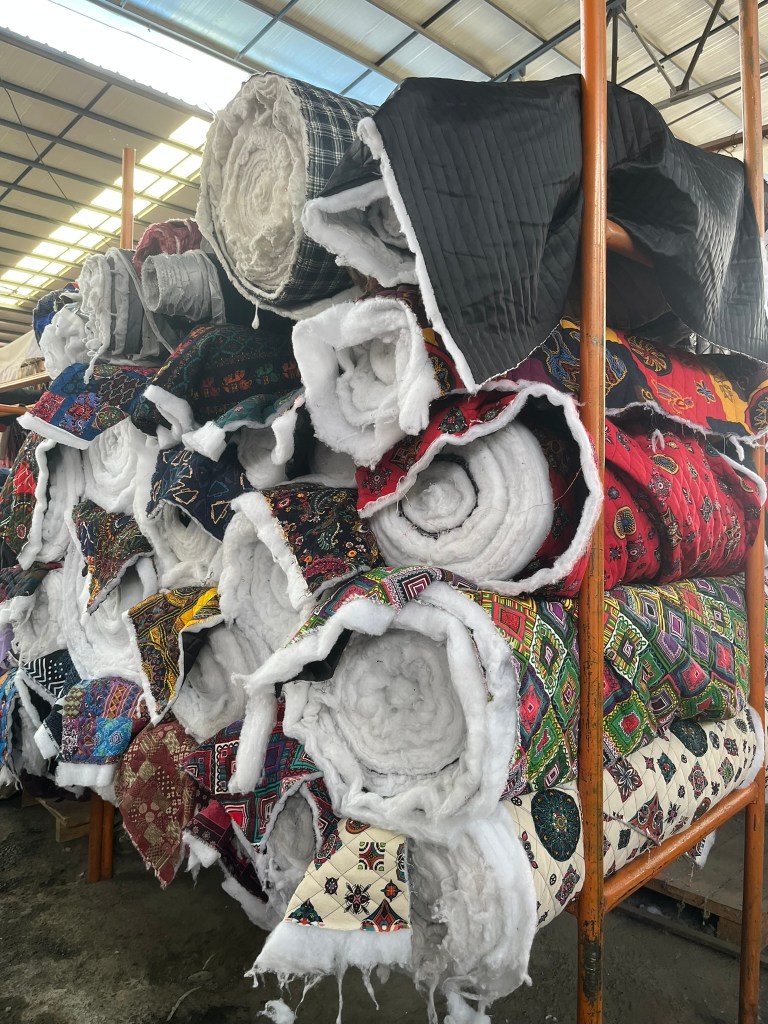
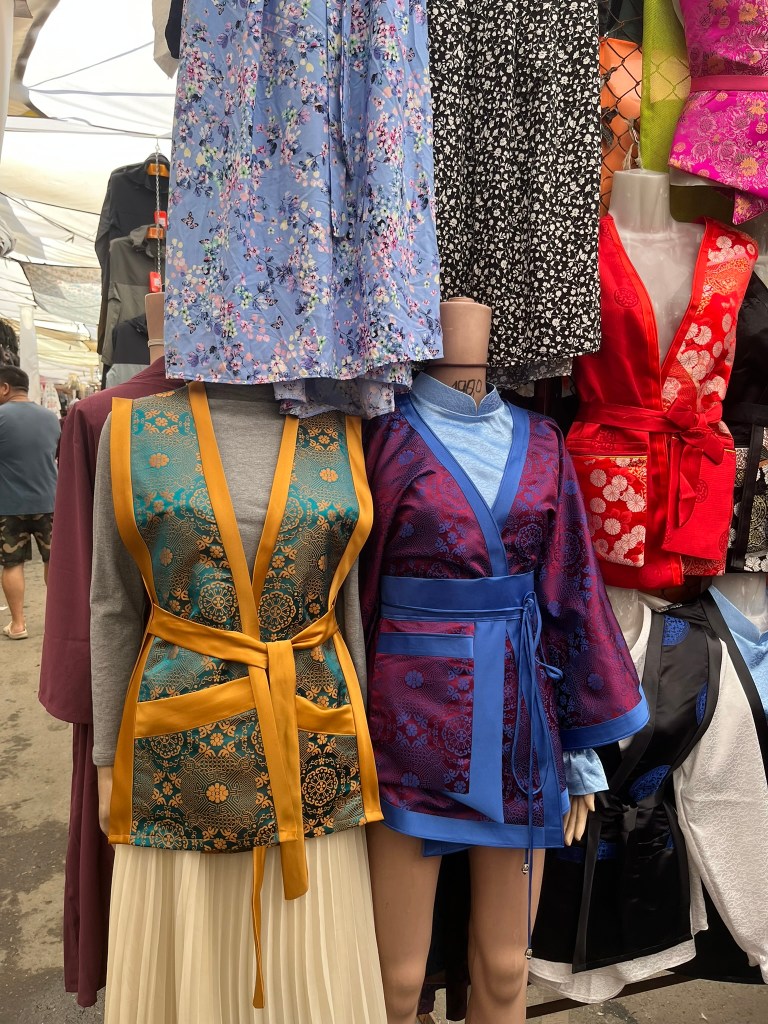
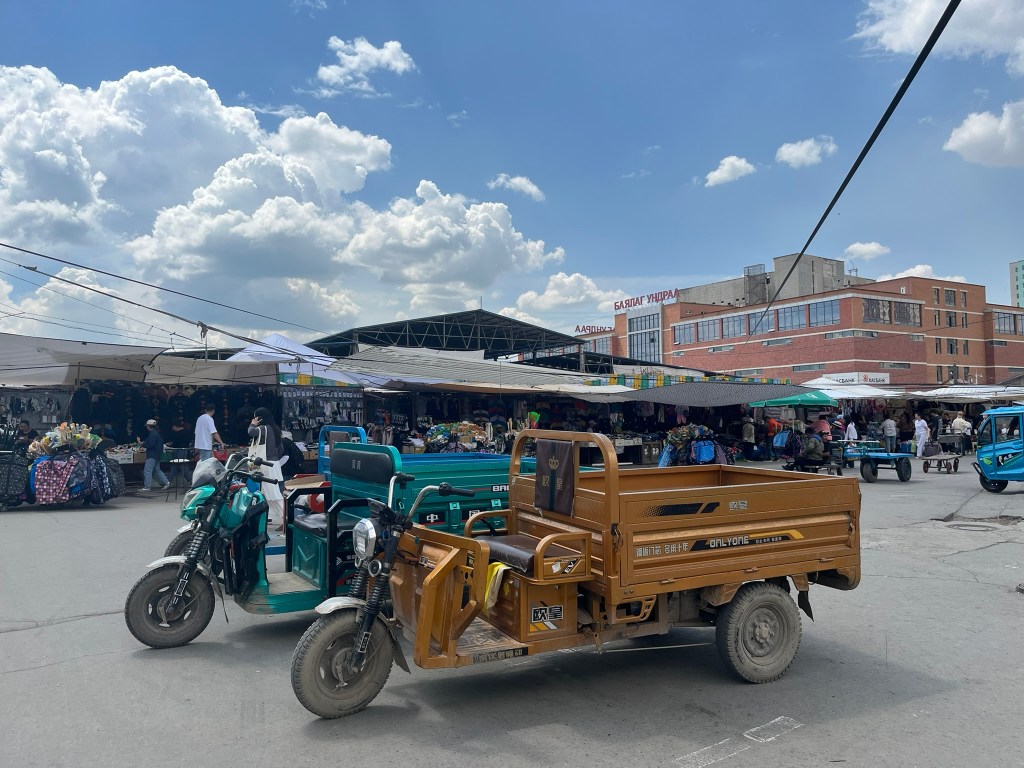
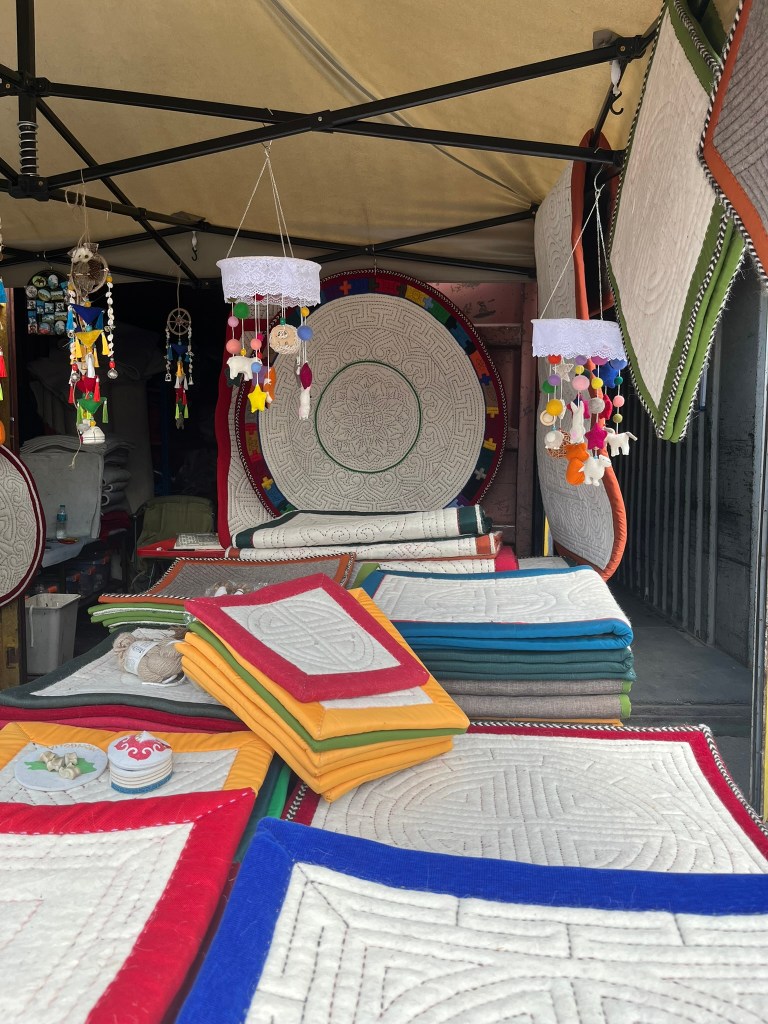
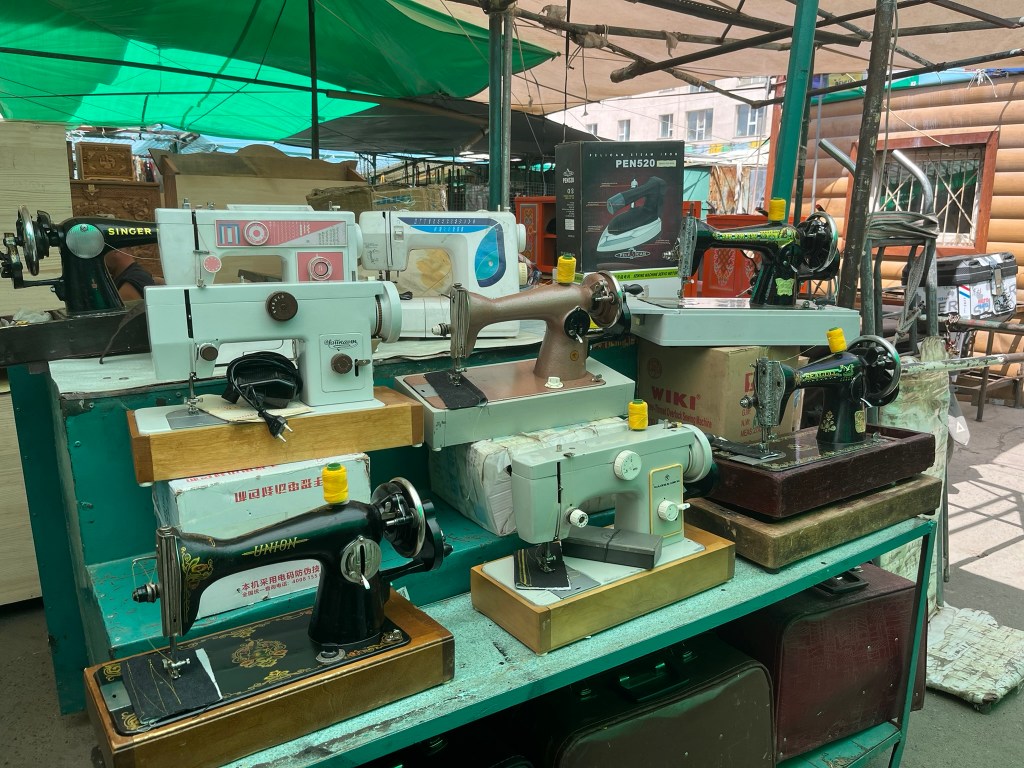
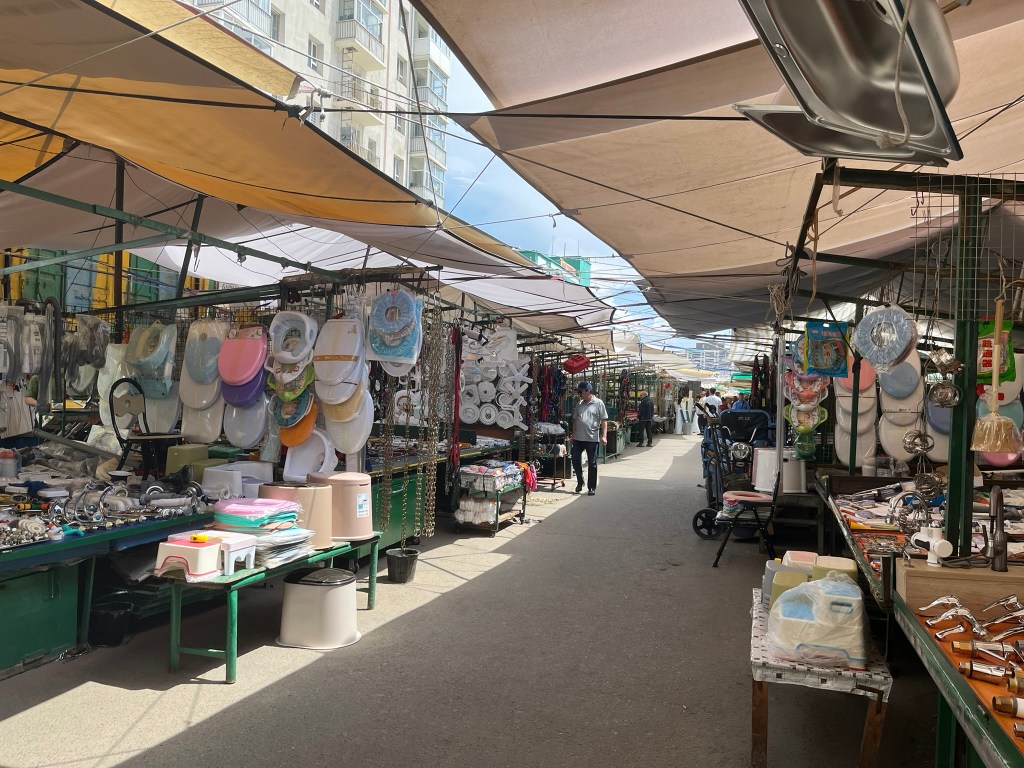
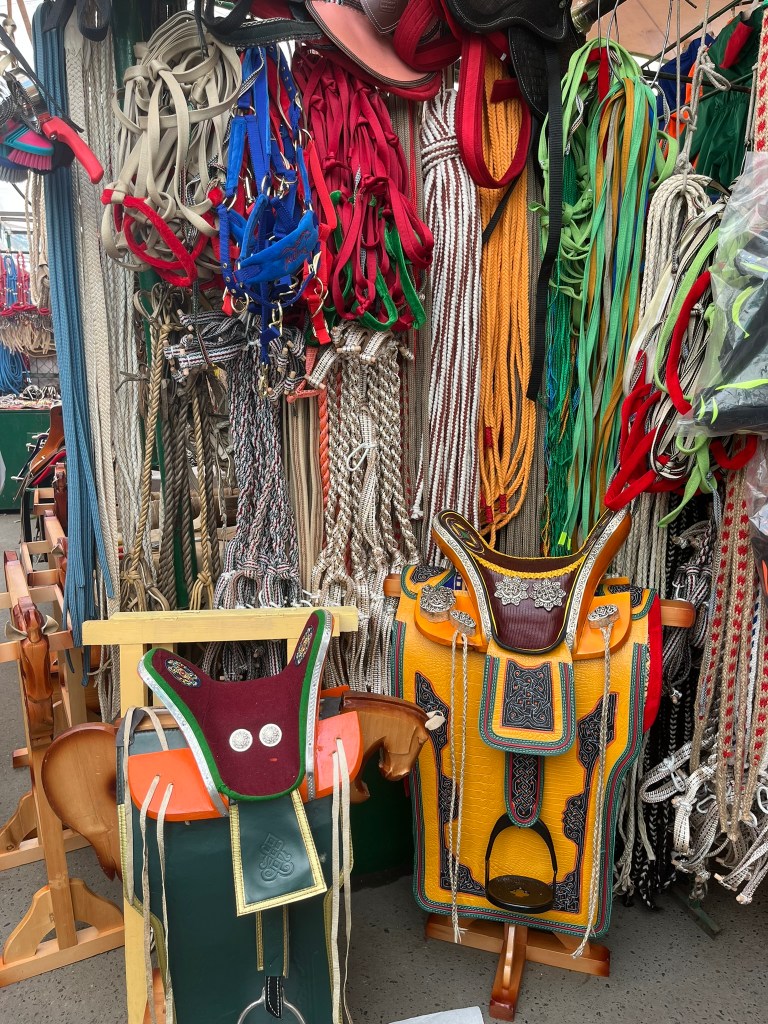
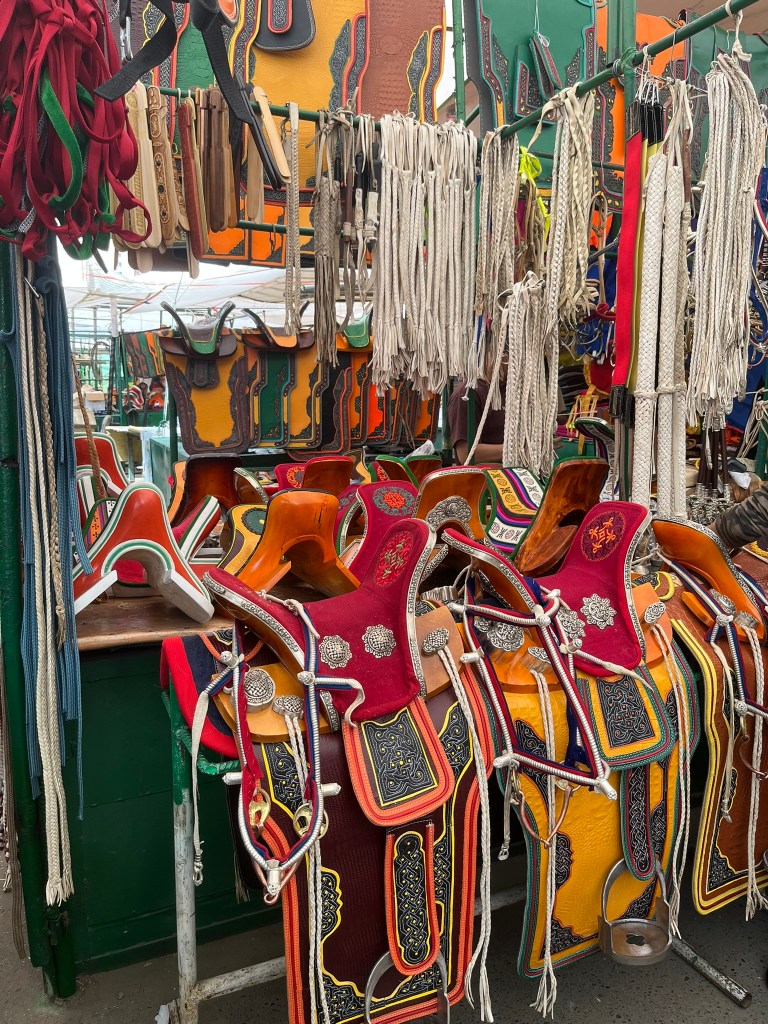
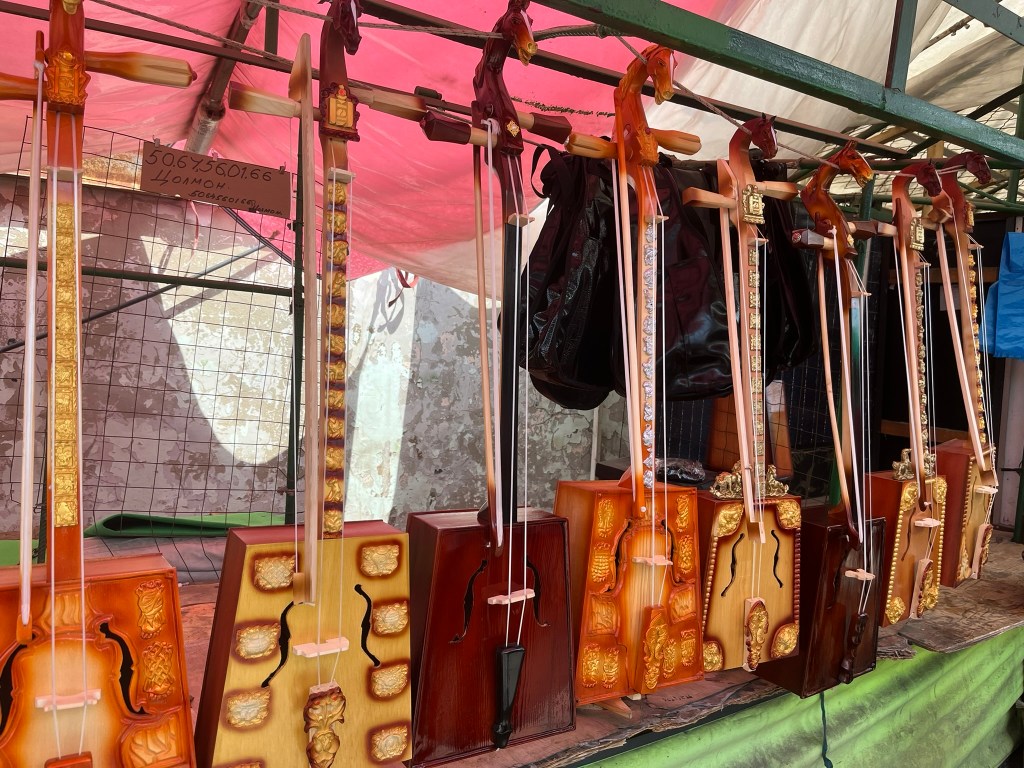
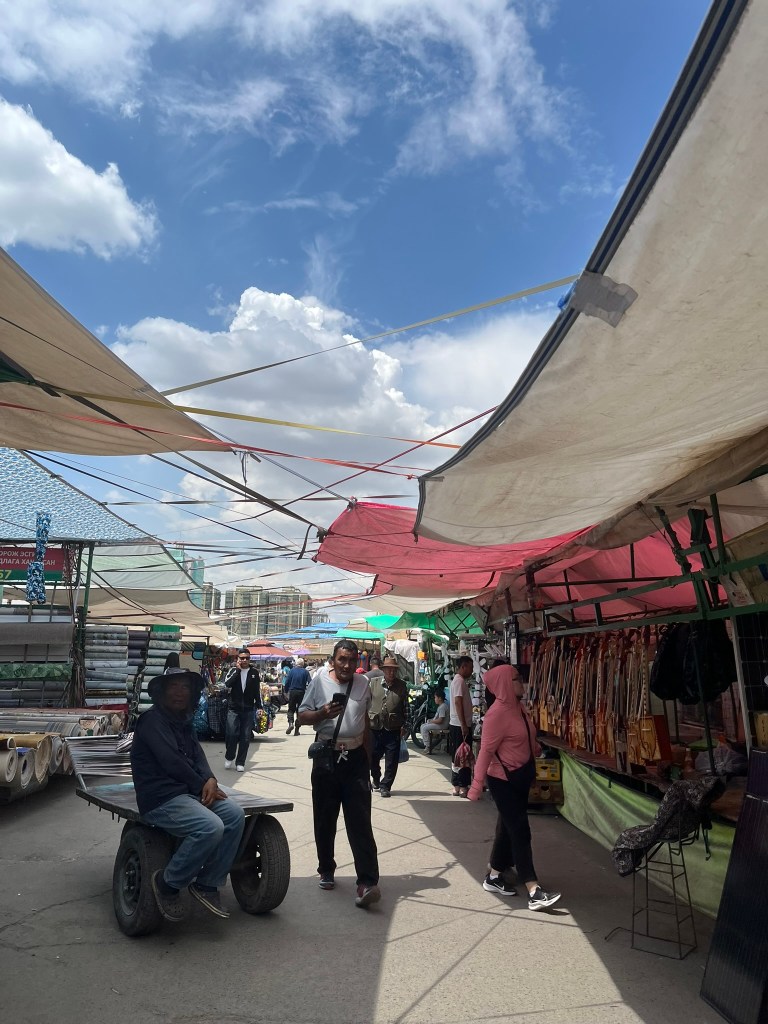
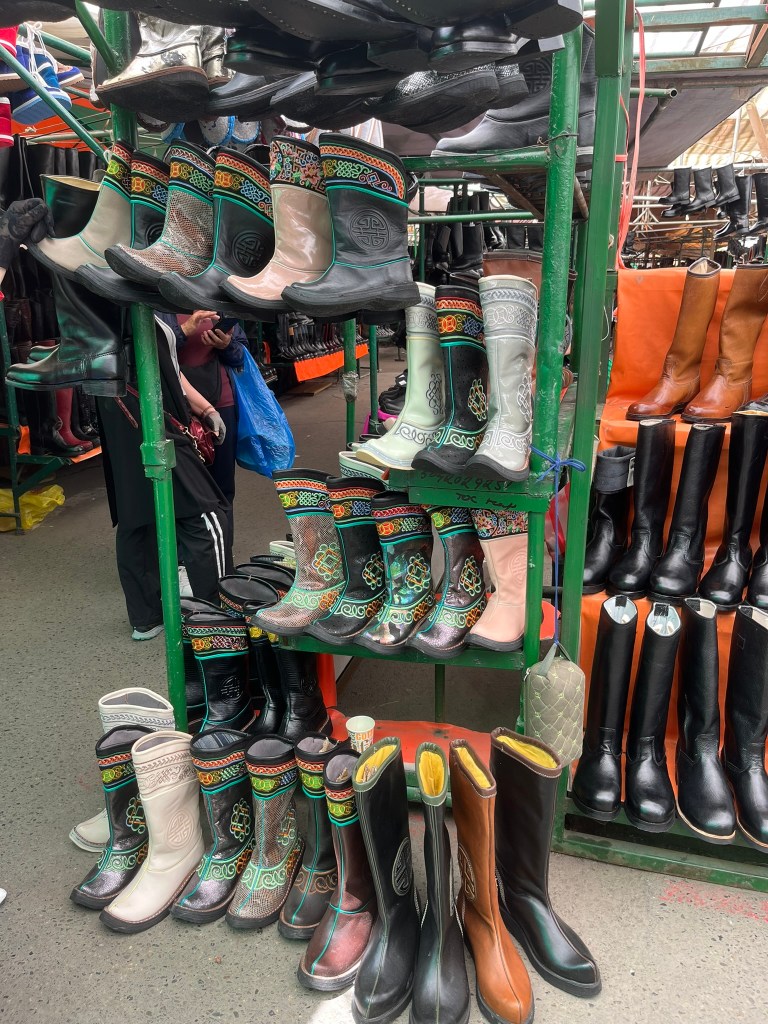
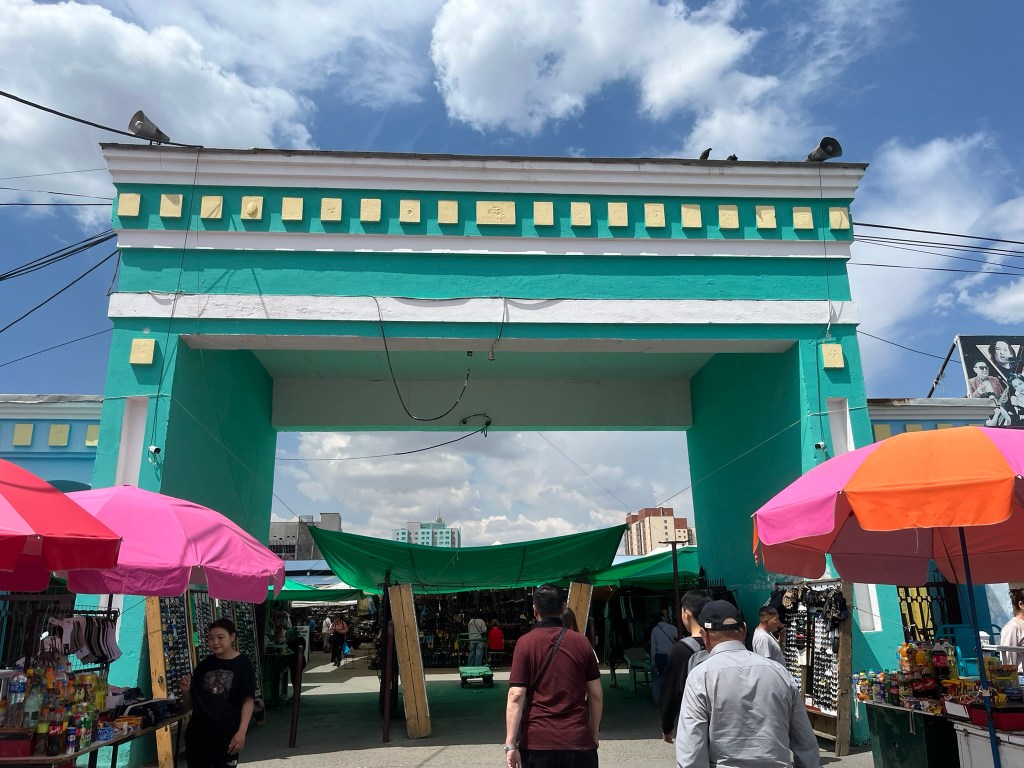
Next up (via 45 minutes of traffic) we headed to the huge Narantuul Market. It is also known as the Black Market which is a bit confusing since it’s not illegal. The name simply refers to its origins as an informal trading area during the late Soviet and early post-communist years when goods were often difficult to obtain through official channels. This market sells absolutely everything – hundreds of stalls with horse-riding paraphernalia, whole sections devoted to containers of all shapes and sizes, rows and rows of fabric sellers and everything you could possibly need to build your own yurt. There are also a few rows of antique-type things that are good to explore, but this is not a touristy-place and has yet to be ruined by hoards of tourists. Another great place to visit in the city.
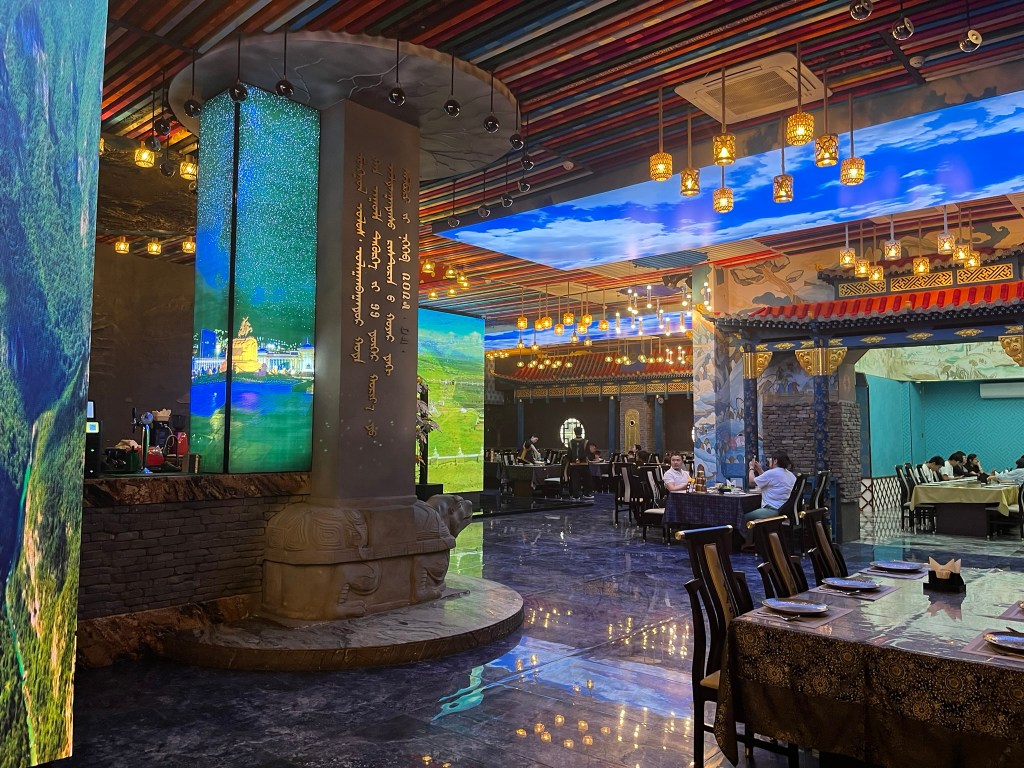
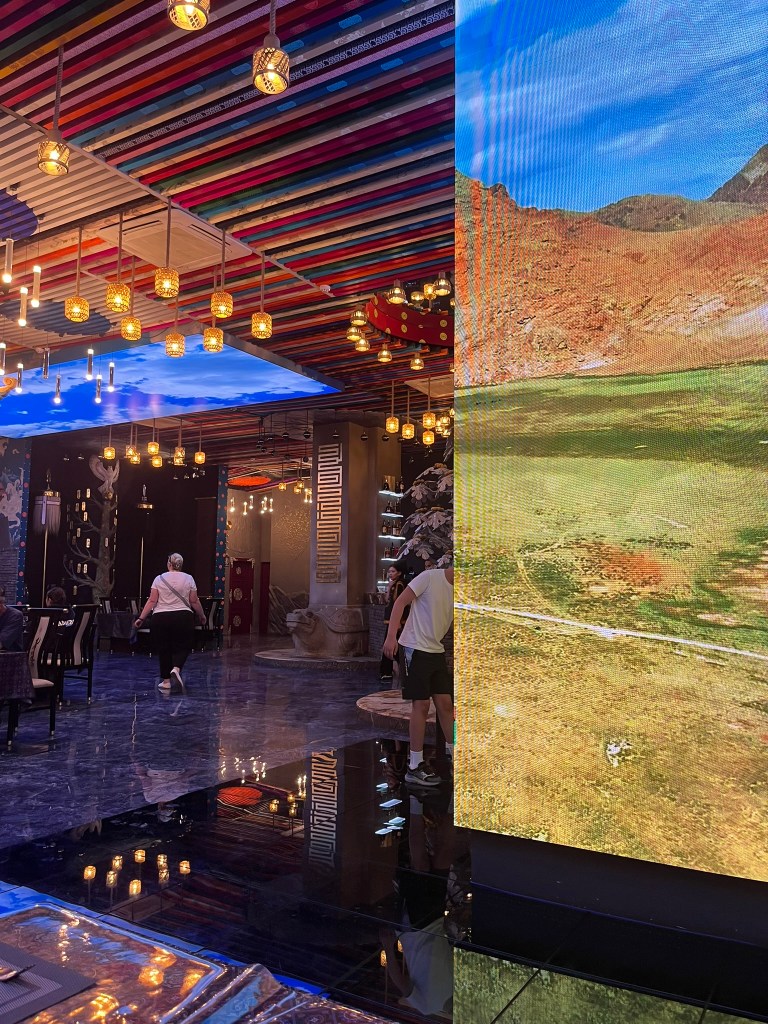
We had an excellent lunch of thin slices of braised beef in mantou buns, alongside minced lamb dumplings at a very modern restaurant called ‘The Temple’ designed to give the feeling of being inside the imperial halls of Karakorum, the 13th century capital of Mongolia.
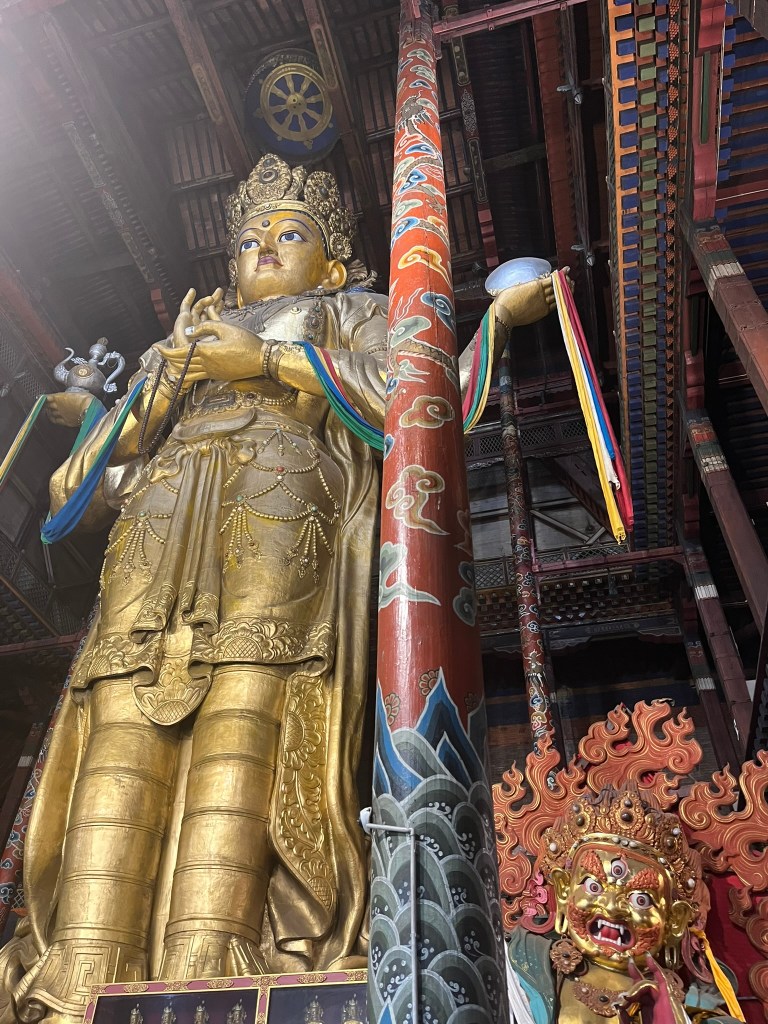
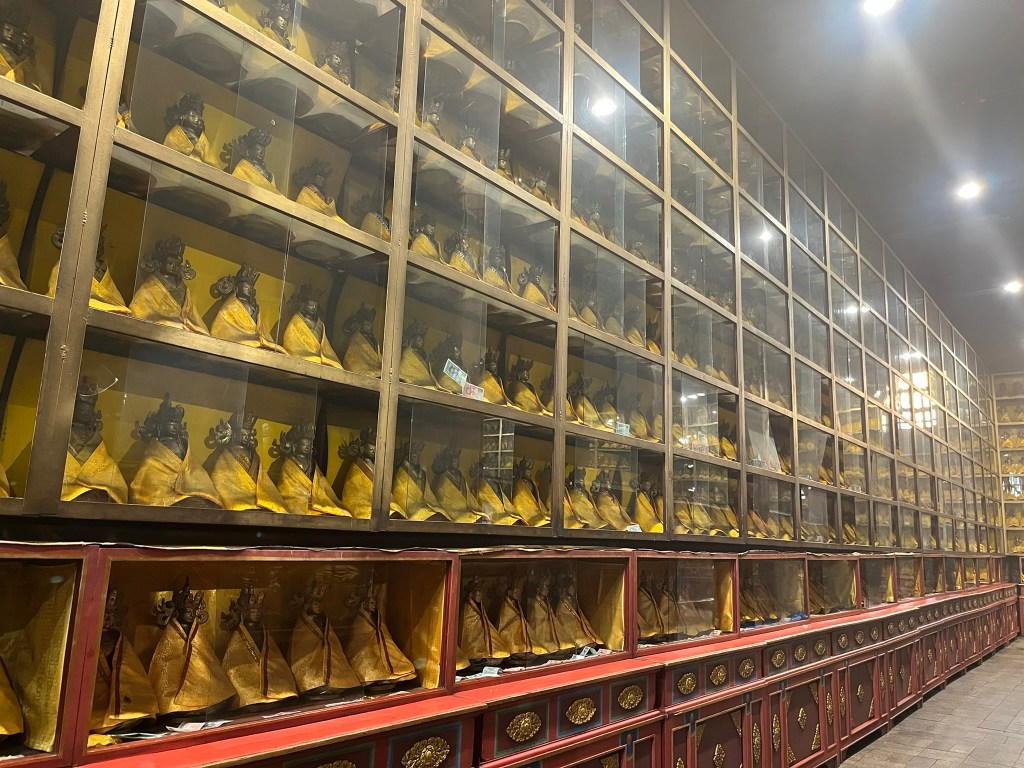
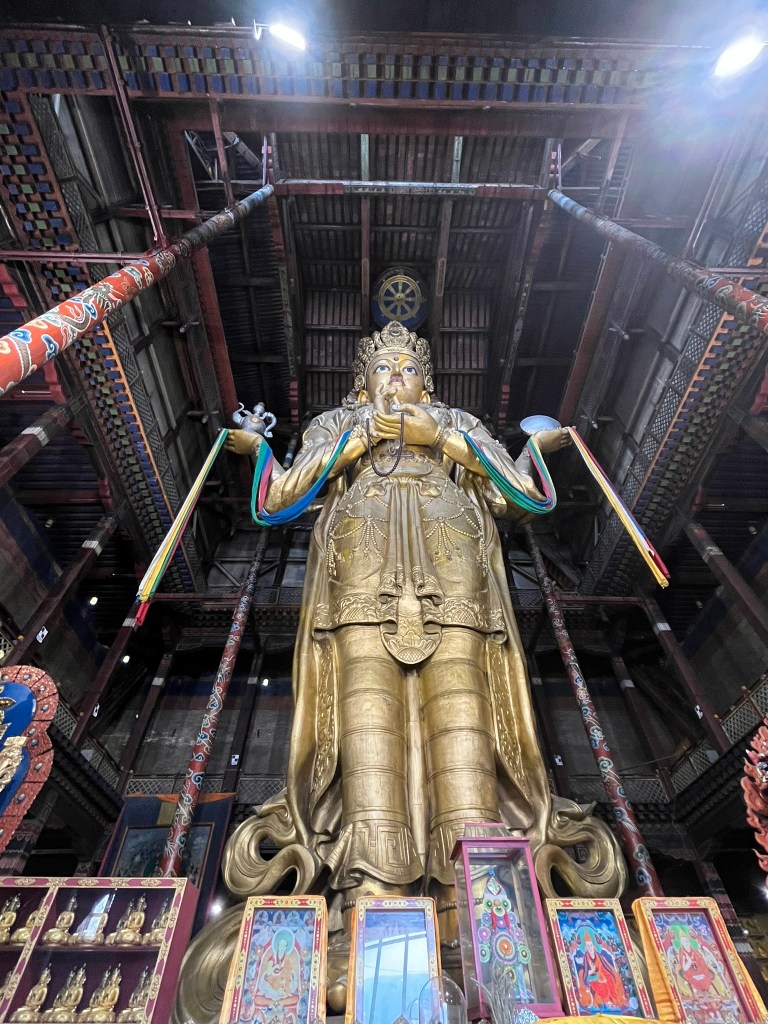
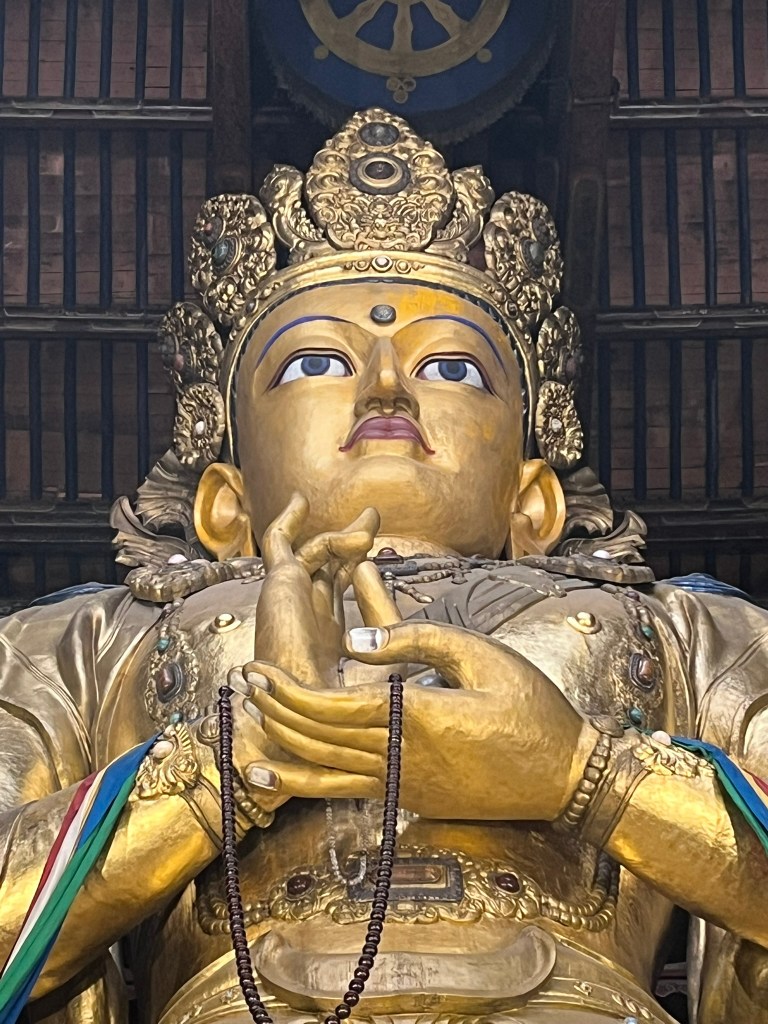
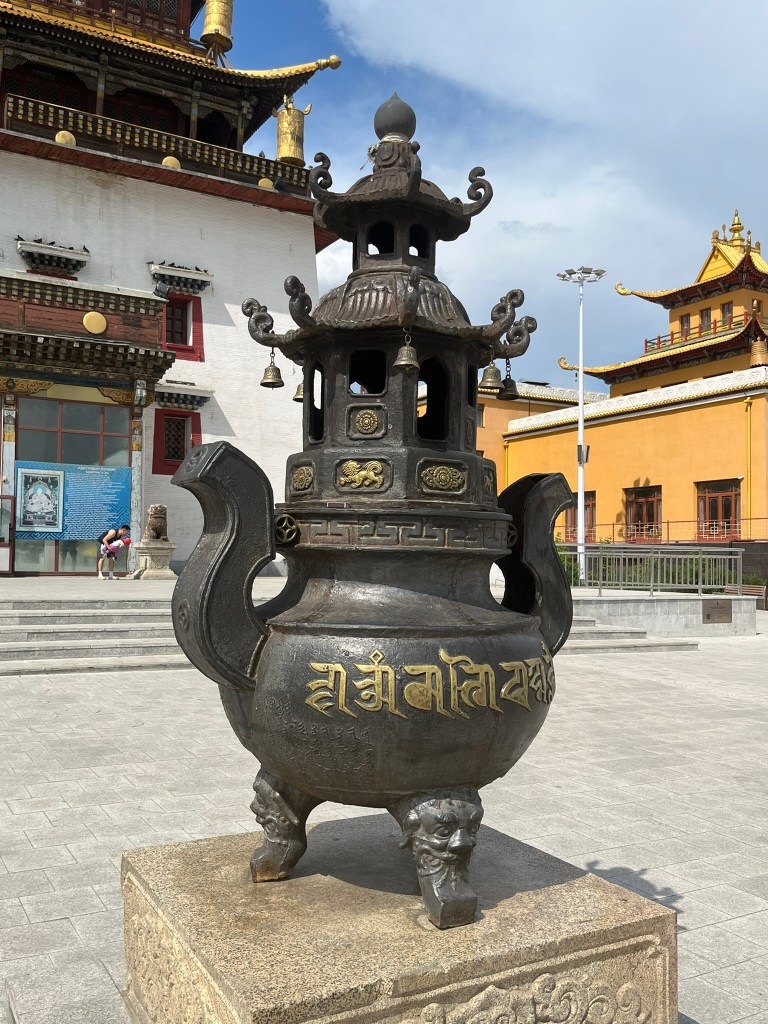
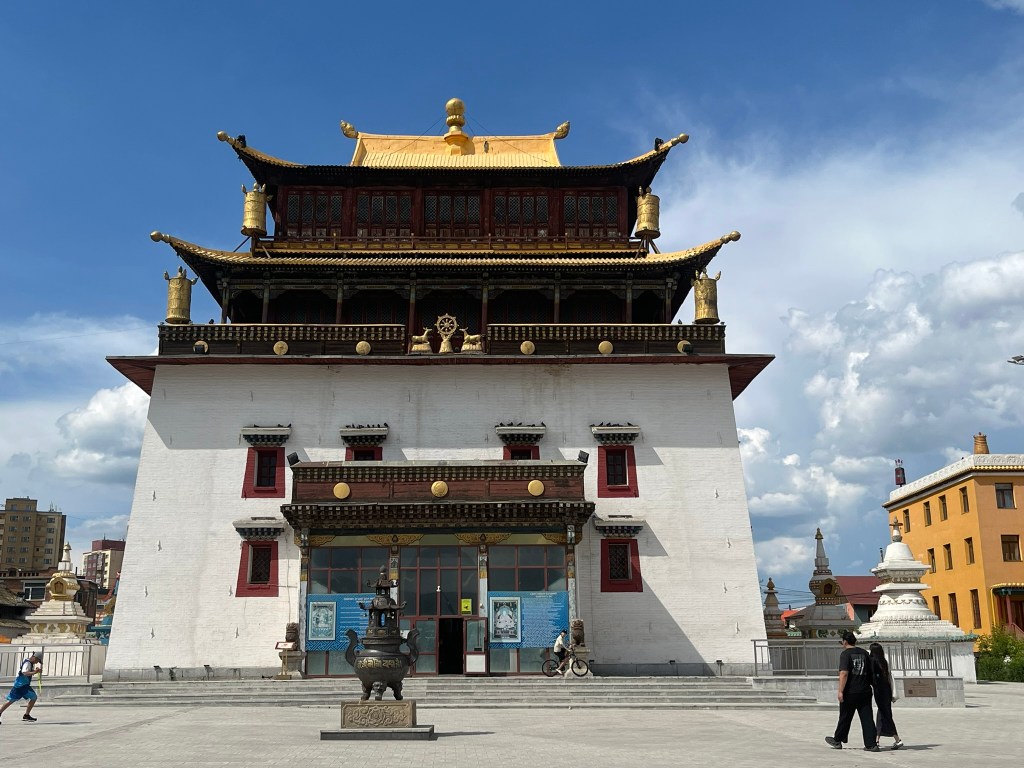
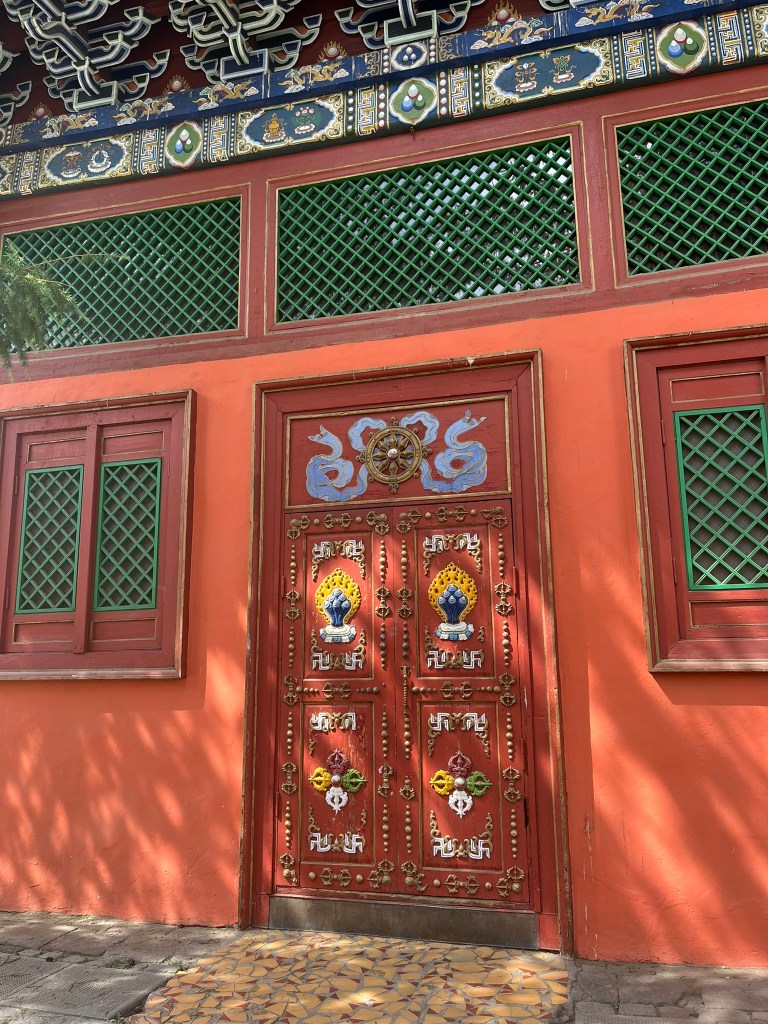
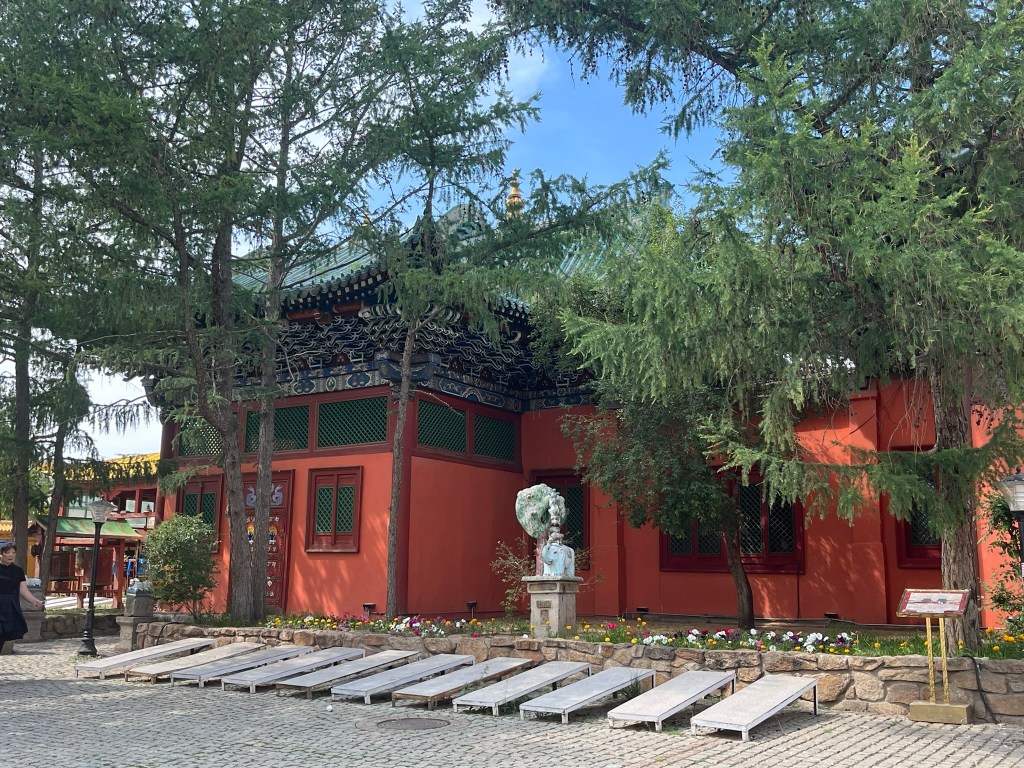
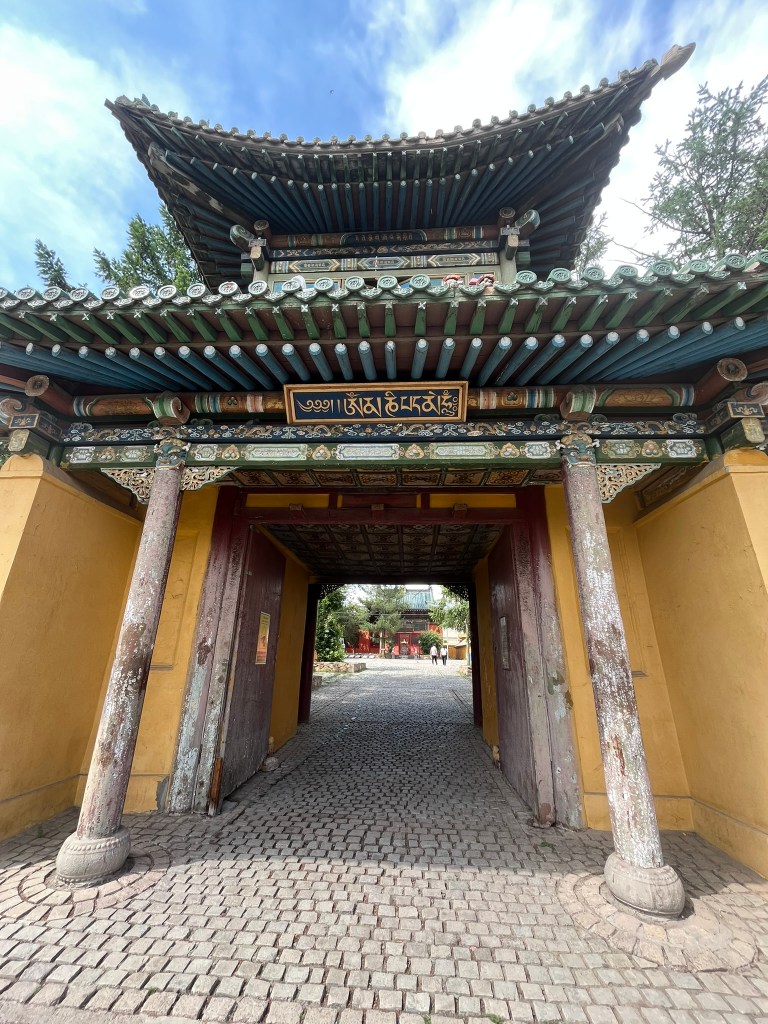
Next up we headed to Gandan Monastery (full name Gandantegchinlen), the most important monastery in Mongolia and the country’s main center of Buddhist learning and worship. It was founded in 1809 and at its peak was home to more than 5000 monks. As I mentioned earlier, the 1930s communist purges almost entirely eradicated Buddhism. However Gandan escaped complete destruction, as the government chose to preserve it as a controlled showcase of religion for foreign visitors and diplomatic purposes. In 1944 it reopened in a limited capacity and was the only functioning Buddhist monastery in Mongolia throughout the Soviet era. Today around 100-150 monks live and study within the complex. The highlight is the Migjid Janraisig Temple, home to a 27m gilded standing Buddhist statue. Although the original statue was dismantled and melted down during the communist purges, it was rebuilt in 1996.
Next up was the State Department Store aka Big Store. It is a national institution and opened in 1921. Although most of the floors are full of just regular shops (including international brands which was a bit unexpected), there is a floor full of Mongolian cashmere which was fun to walk around and a whole floor devoted to souvenirs. The outside of the building is interesting and it’s worth looking inside for 30 minutes or so if you are passing by. It was good to take a peak of souvenir options early in the trip to see what was available, but proper souvenir shopping will be done on return to the capital at the end of the tour.
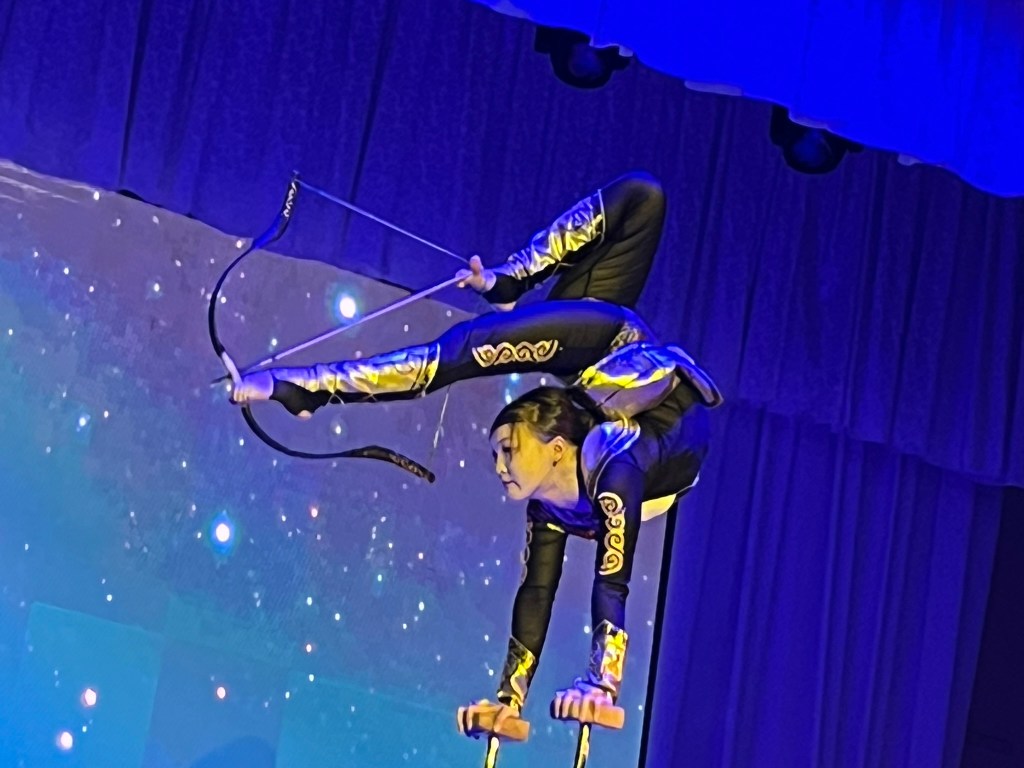
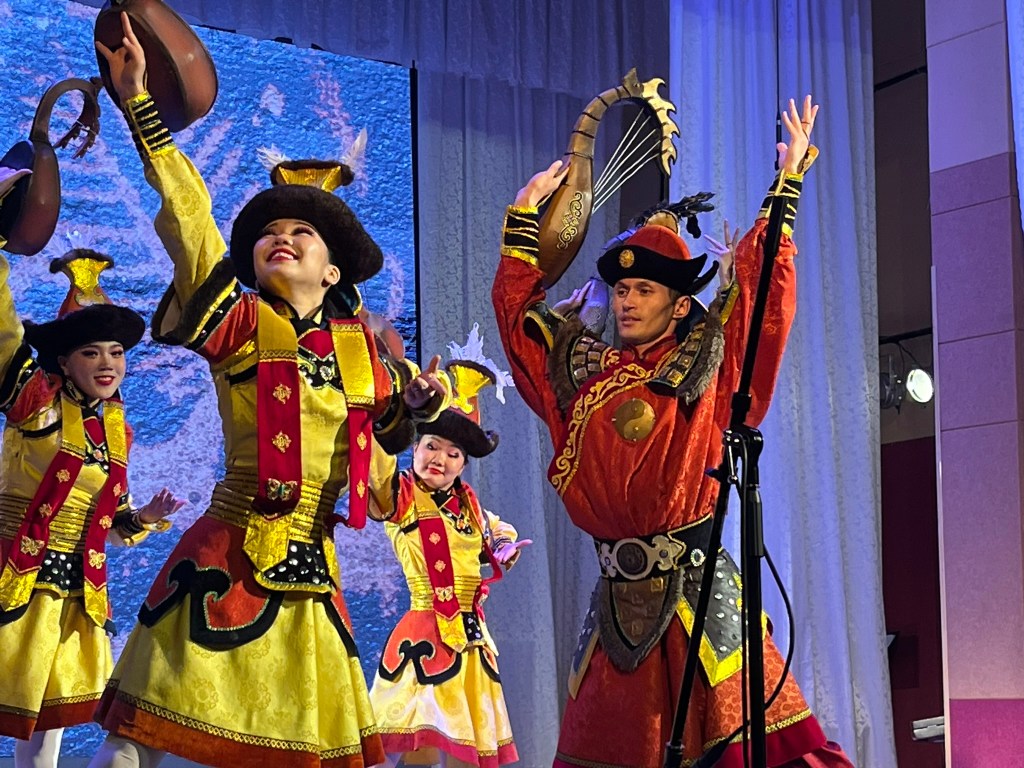
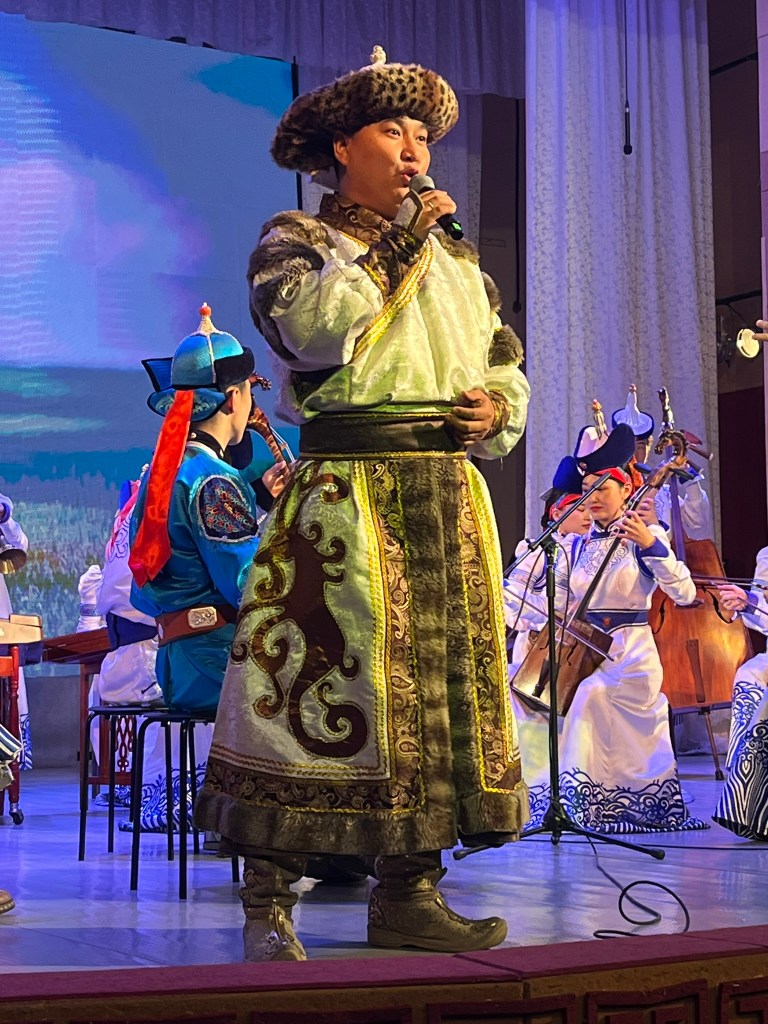
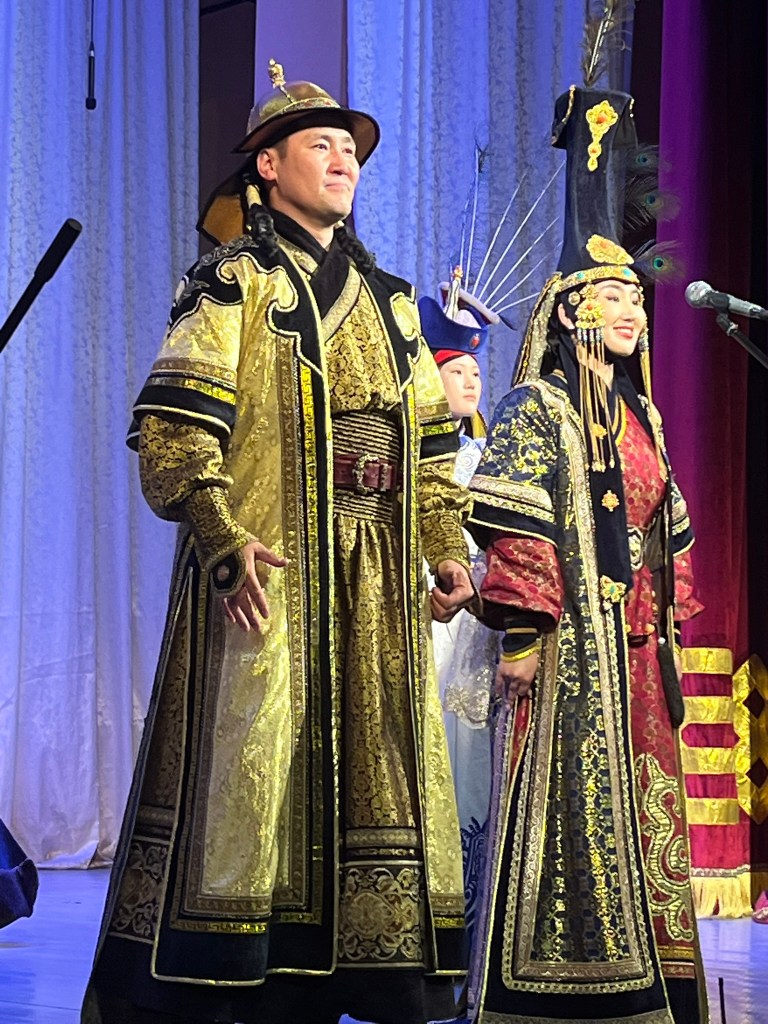
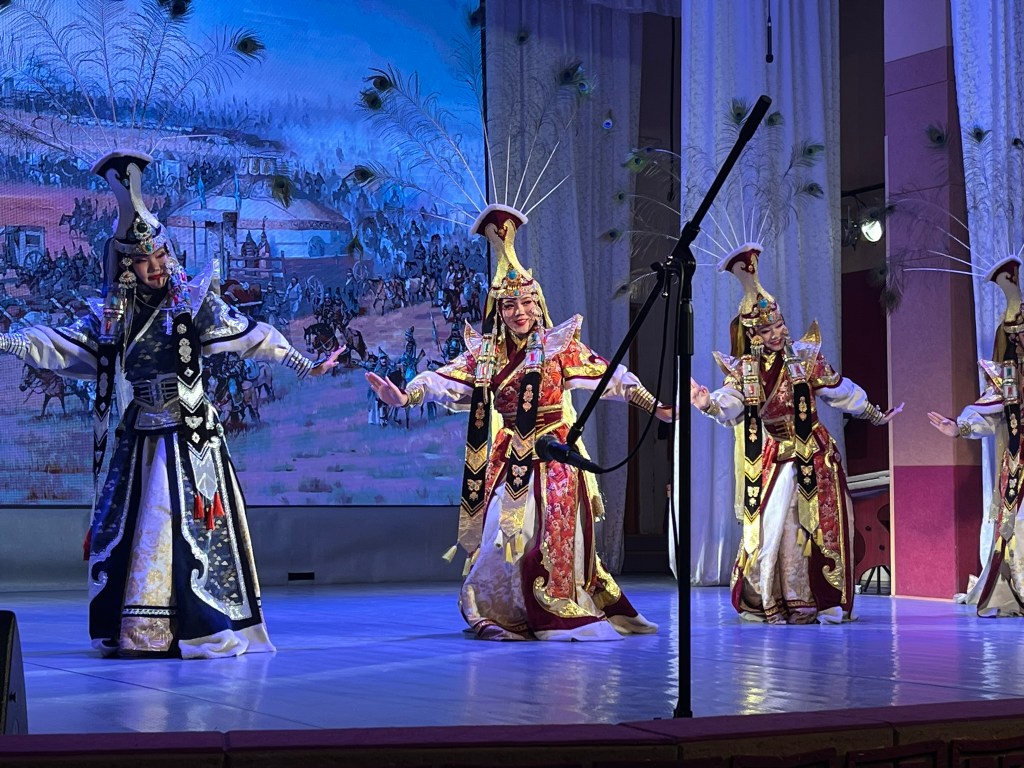
Our final stop of day 2 was Ganzam Palace to see a traditional cultural performance by the Tsagaan Lavai ensemble. This 1-hour show is excellent and showcased many of Mongolia’s UNESCO-recognised performing arts and nomadic culture. The performance includes a mini-orchestra with a huge range of traditional instruments including the morin-khuur or horse-head fiddle. This is Mongolia’s national instrument and has 2 strings traditionally made of horsehair and a carved horse’s head at the top of the neck. All the instruments were interesting but I thought the Altai Harp was also worth a mention as this is an instrument that disappeared for over a thousand years before being rediscovered by archeologists in 2008 in a cave in the Altai mountains, dating back to the 7th or 8th century. Instrument makes and music historians worked together to reconstruct how it would have looked and sounded. And now they are appearing in modern concerts. Pretty incredible!
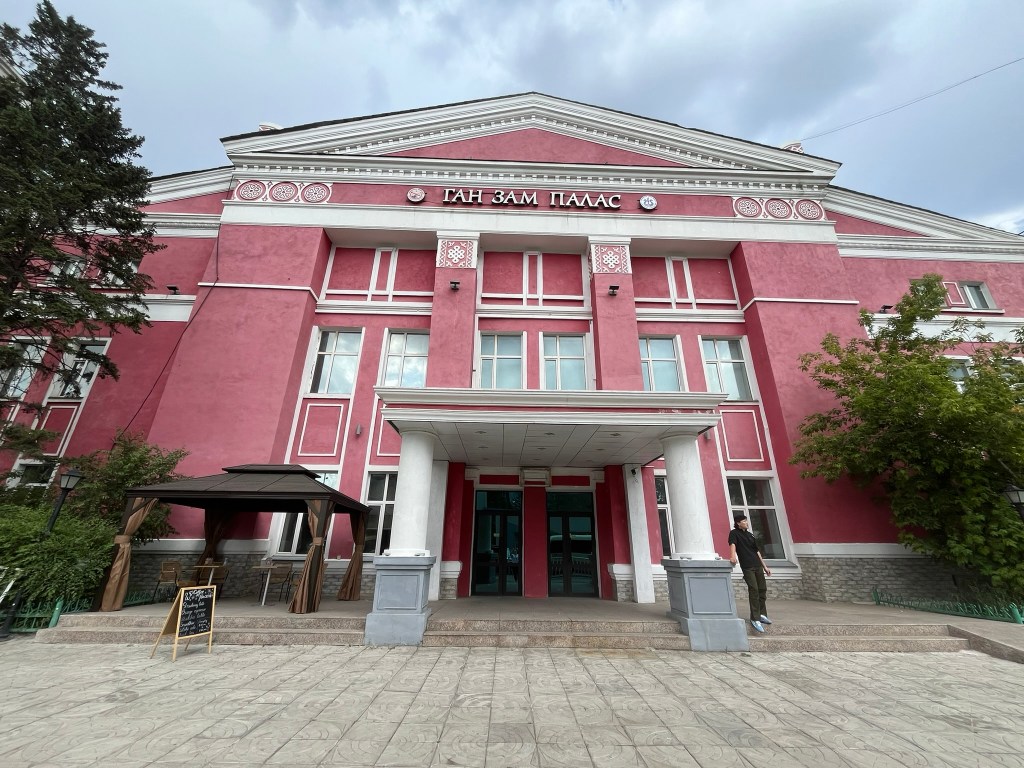
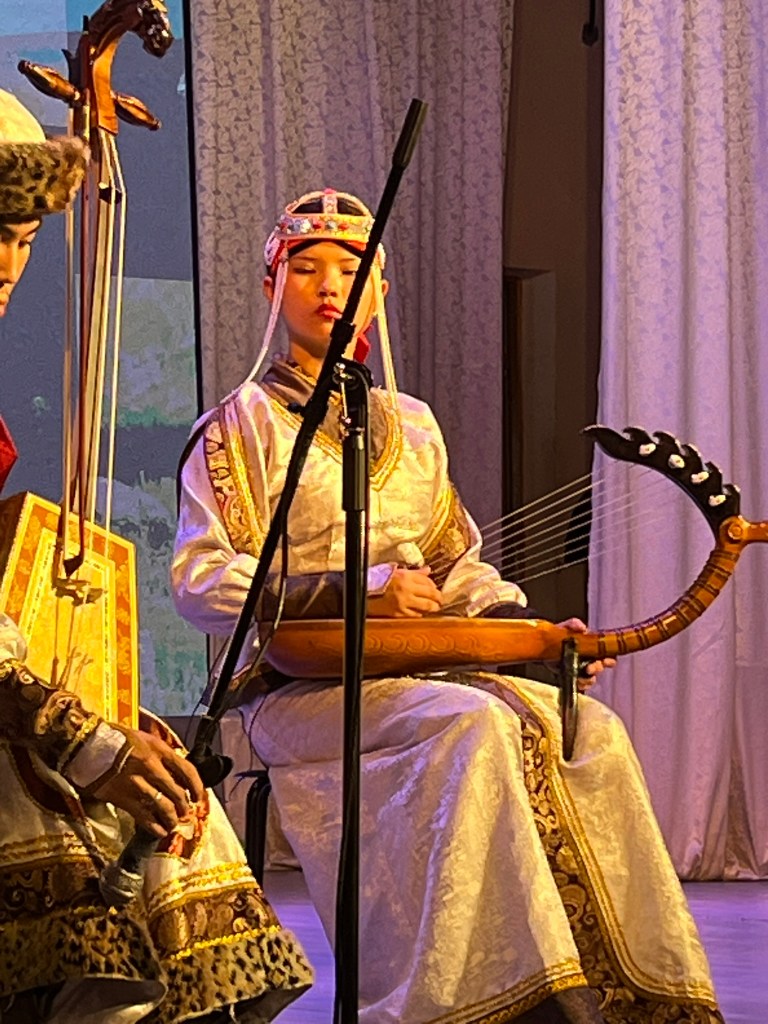
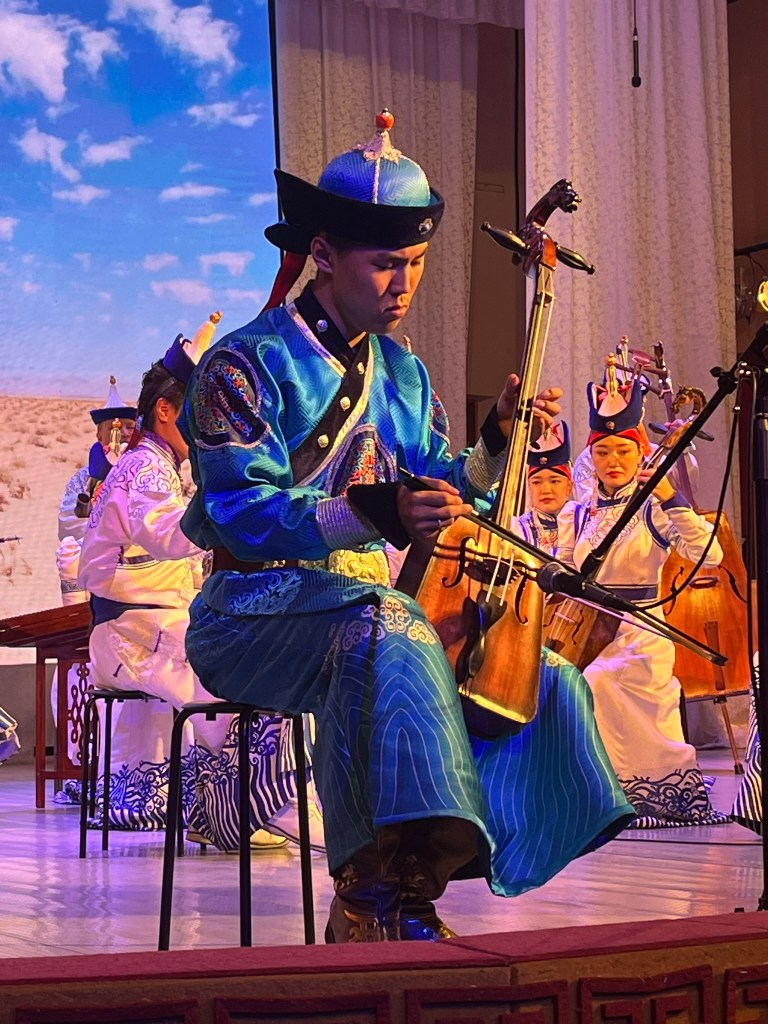
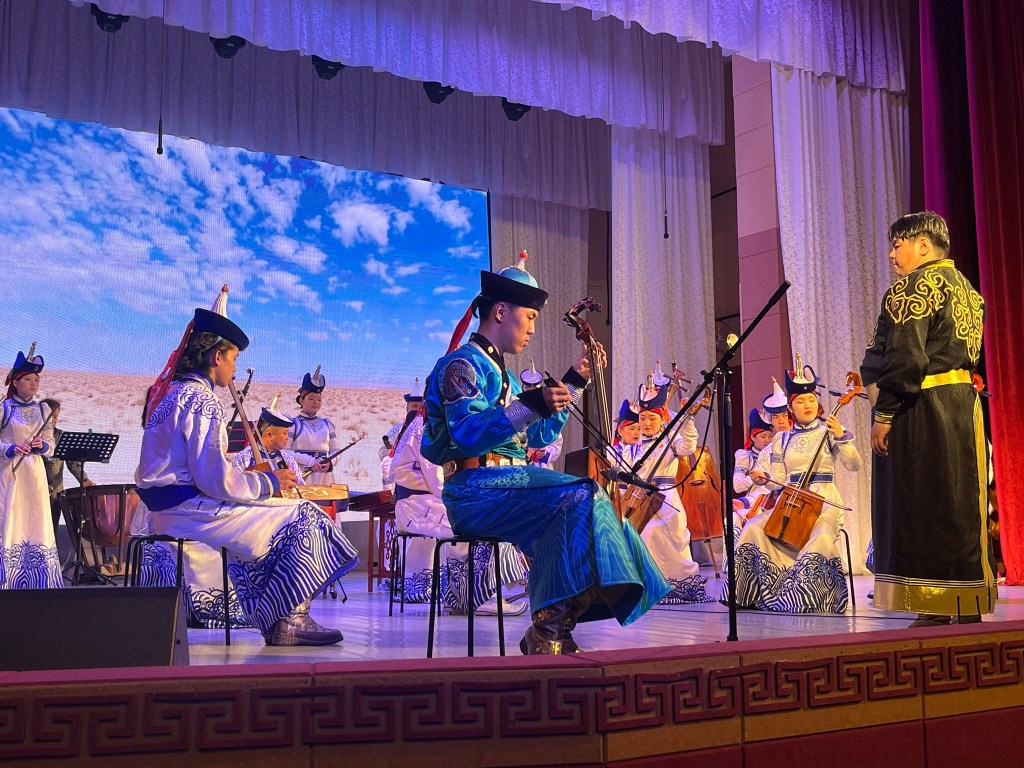
The show consisted of music performances and dancing but the absolute highlight (probably of the whole day) was the singing. And not just any singing – specifically Mongolian throat singing. The sound is so unexpected and unique it really does take you by surprise. Known in Mongolian as khoomei, the sounds that the singer makes seem impossible. A deep resonant drone accompanied by a high-pitched flute-like melody all from one voice. The singer creates the sound by carefully shaping the throat, tongue and mouth to amplify the natural overtones present in the human voice. This type of singing originated from the nomadic peoples of the Altai mountains in western Mongolia and is meant to allow the singer to imitate the sounds of the natural world. Seeing this incredible intangible world heritage is another must-do in Mongolia. There are quite a few different ensembles operating within Ulaanbaatar at various venues including Ganzam Palace and the National Opera.
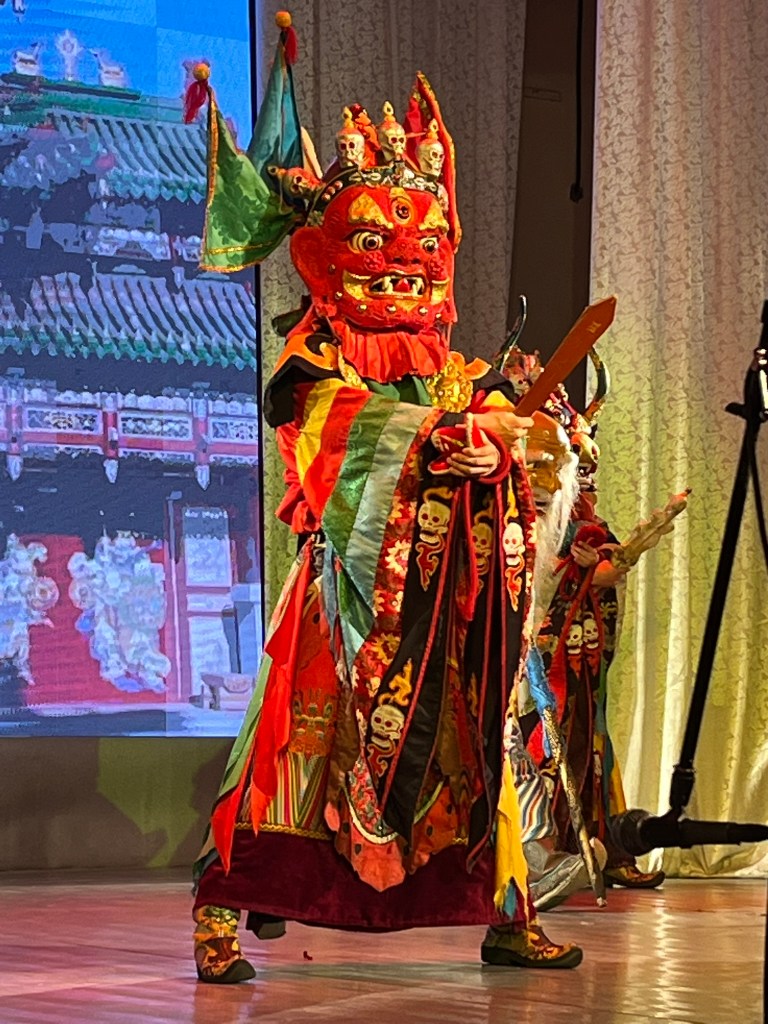
An all-round great day in the city! Tomorrow we will hit the museums and main square. And meet our group for the Intrepid trip we are joining.


Leave a comment