One of the most fascinating parts of Naadam happens before the festival even starts. In the weeks and months leading up to it, Mongolia’s top wrestlers, archers and horse racers gather in summer training camps on the steppe. These aren’t official government training camps, but rather temporary communities set up by clubs from each province and run by experienced athletes in their chosen sport.
Our first night out of Ulaanbaatar was at a Wrestling Camp for a group from western Mongolia. The wrestlers had already been at the camp for over a month when we arrived and only had a few more days training before Naadam begins. Each camp is hosted by a famous high-ranking wrestler from their province and lower-ranked wrestlers and promising youngsters join these camps to train alongside champions, making them part training center and part apprenticeship.
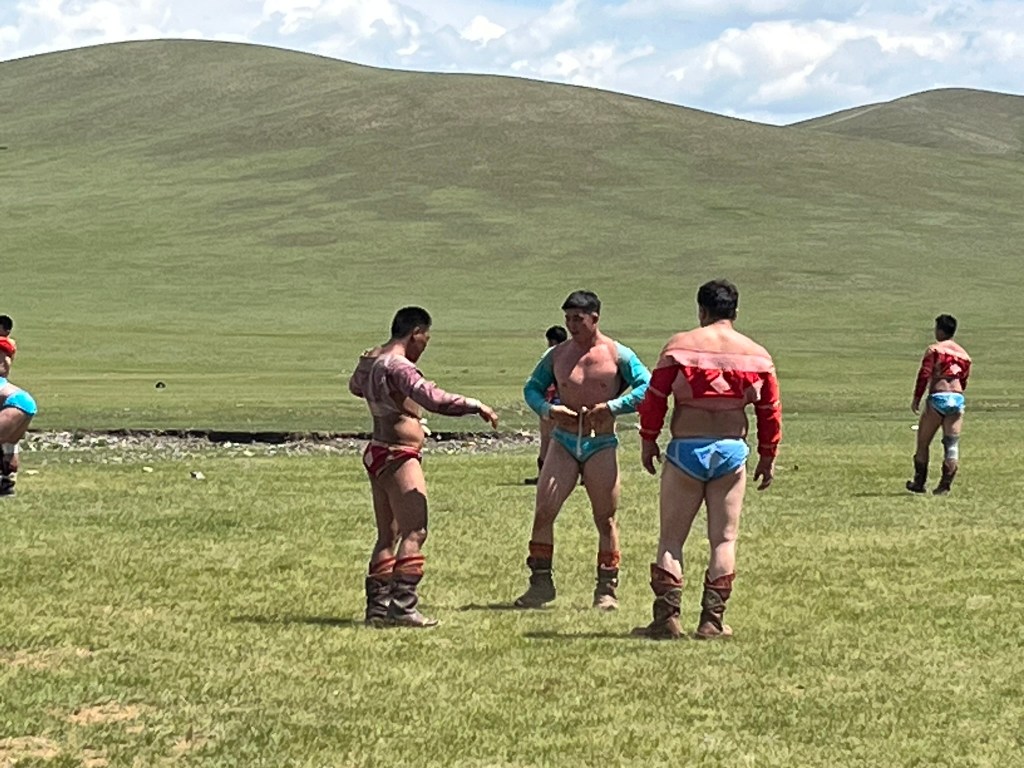
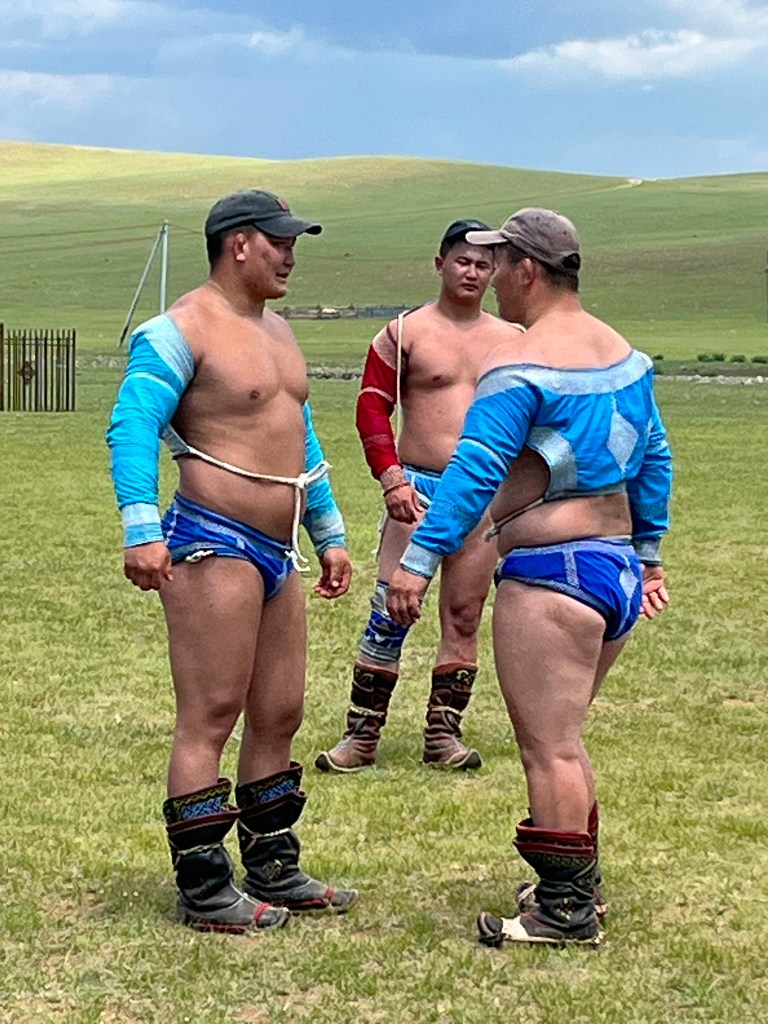
A typical day at a camp involves a long distance run across the steppe, strength work using stones and logs, practice focussing on balance grip and technique and eating huge quantities of meat and dairy to fuel their training. When we arrived in the late morning, wrestling technique practice was in full swing with individuals paired up and more senior individuals walking around providing guidance. We stayed watching for about 45 minutes and then the majority left to have showers and prepare for lunch. Two young wrestlers in their twenties stayed to chat to us, answer our questions and let us take photos with them.
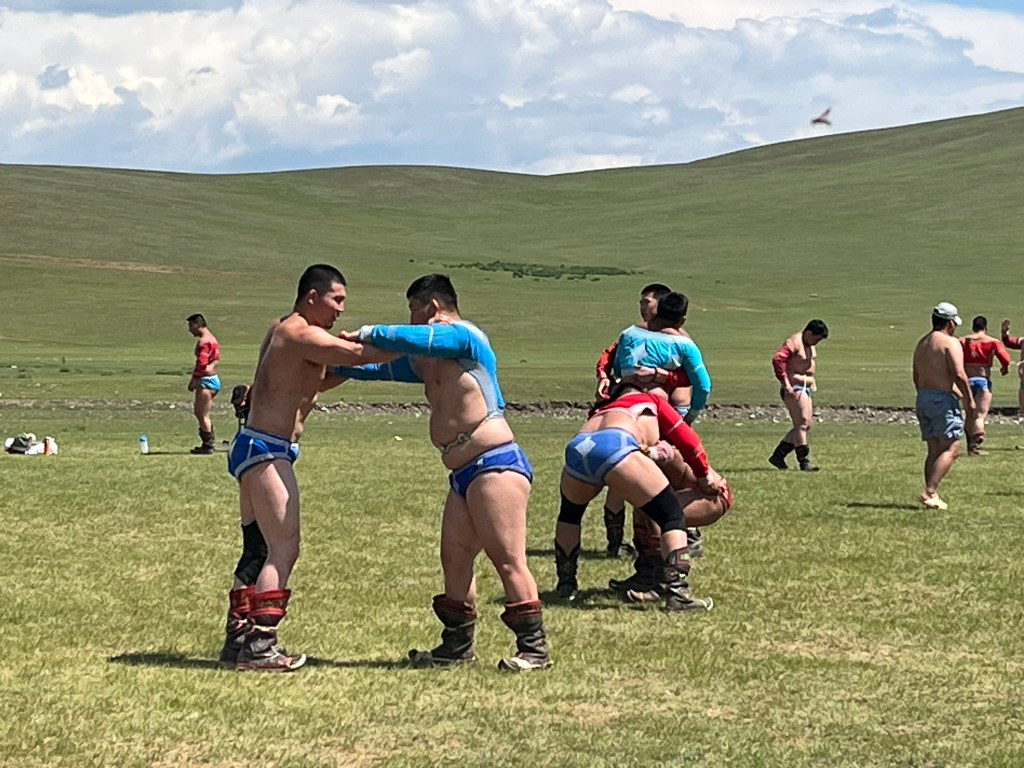
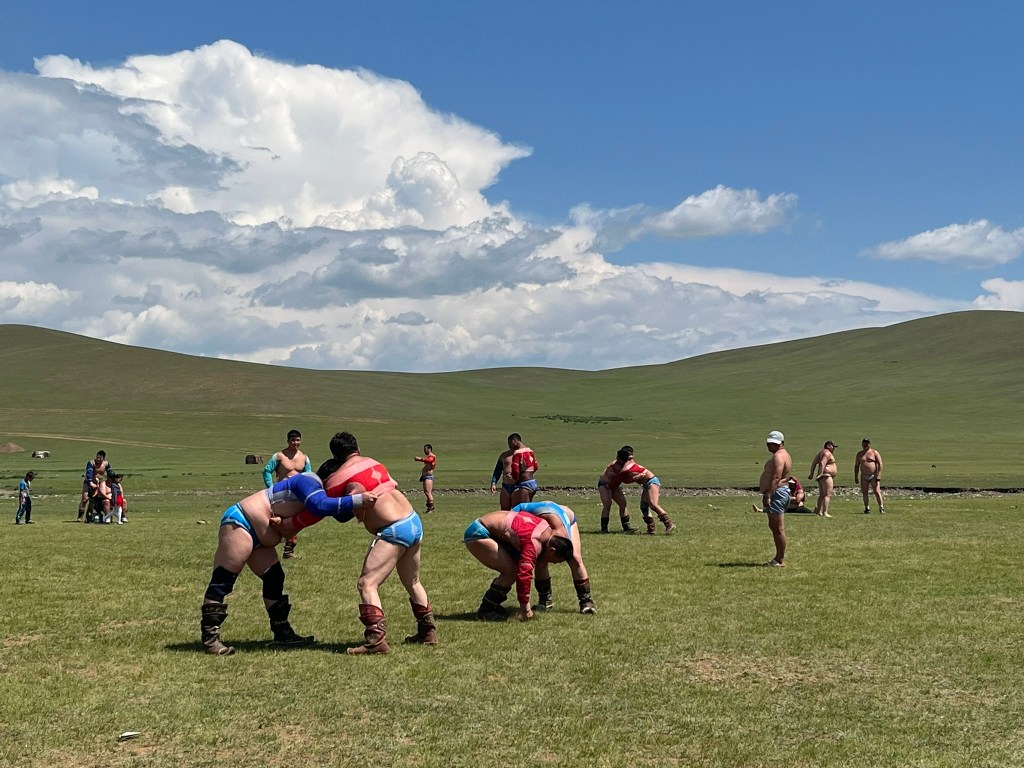
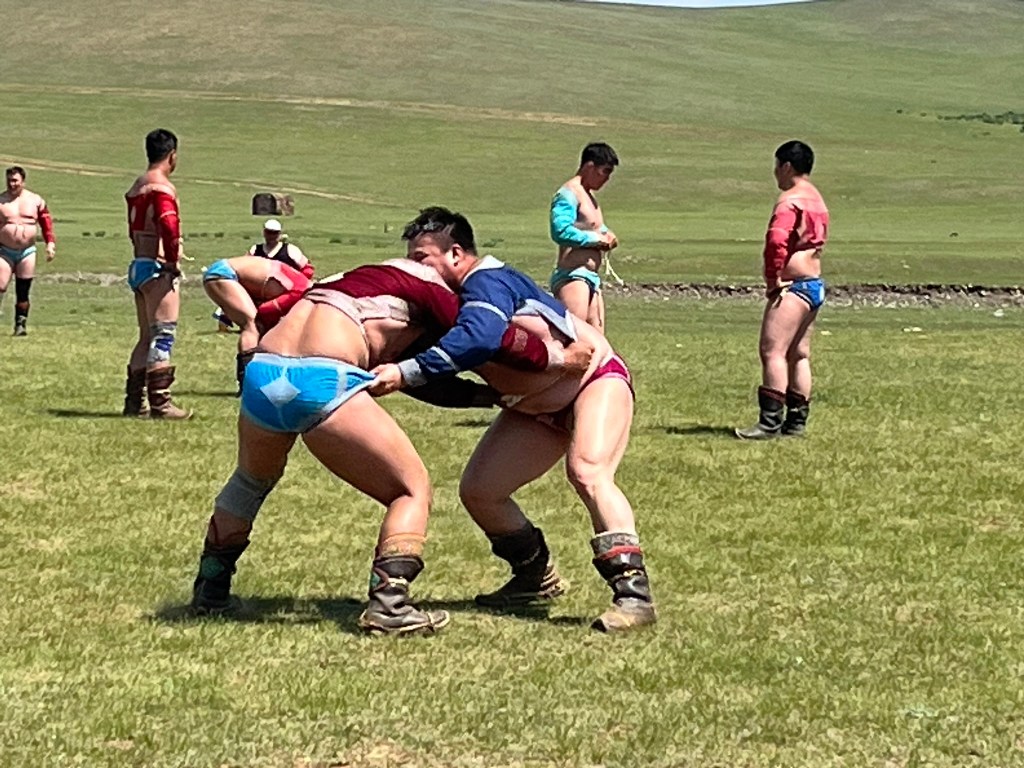
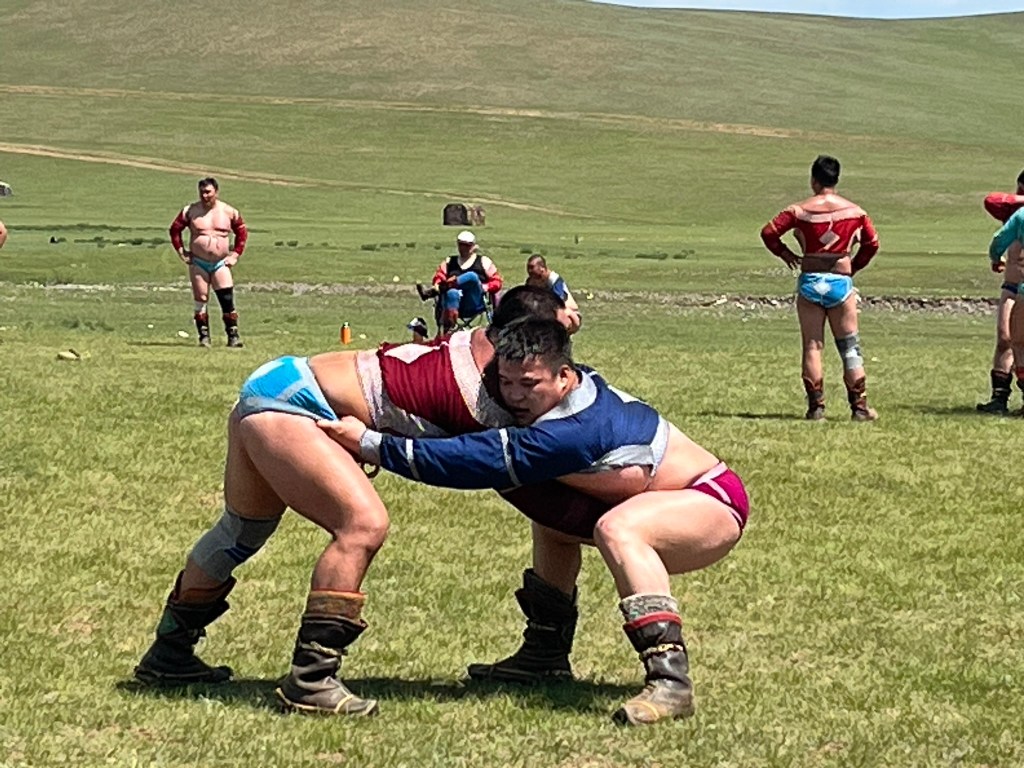
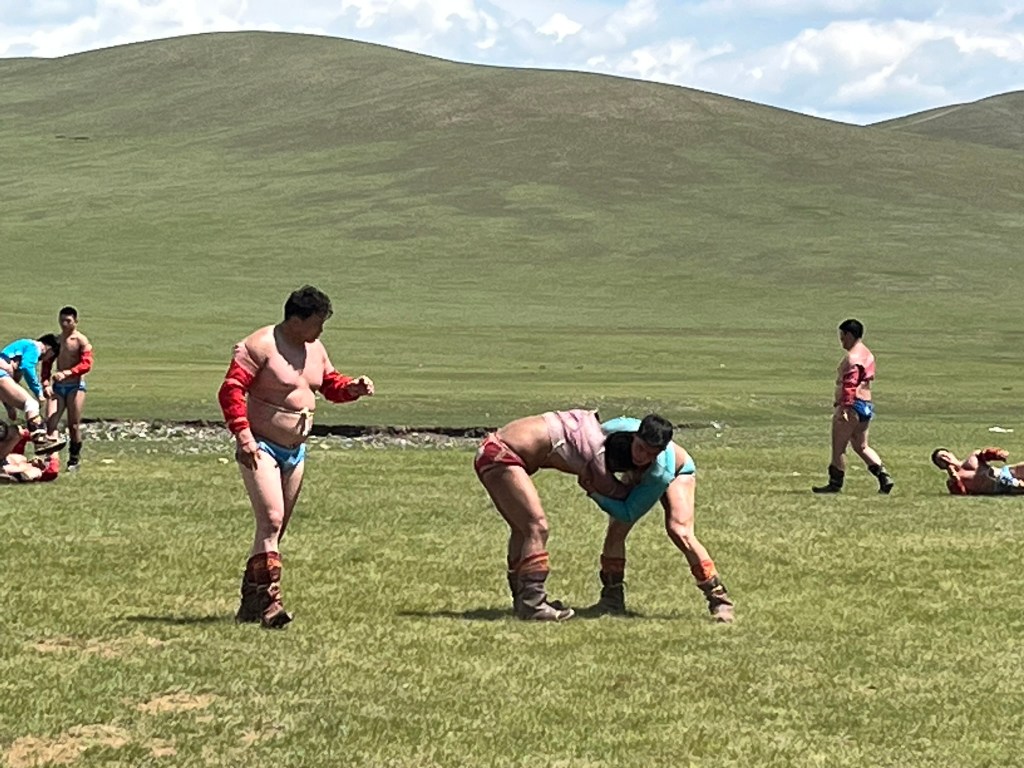
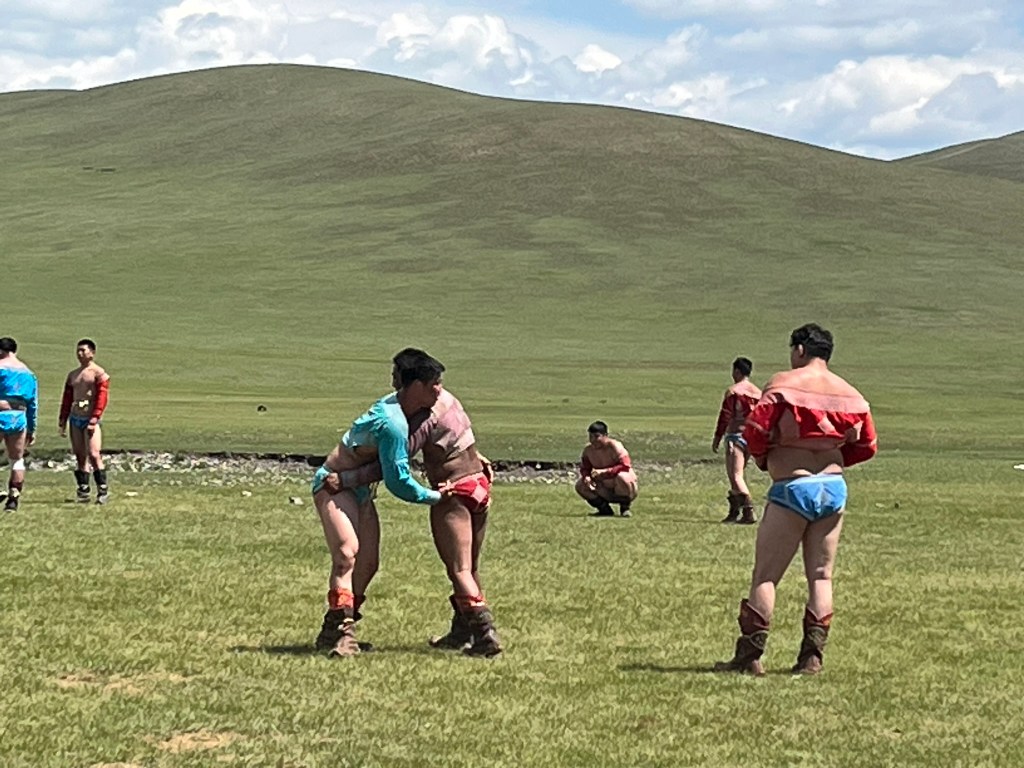
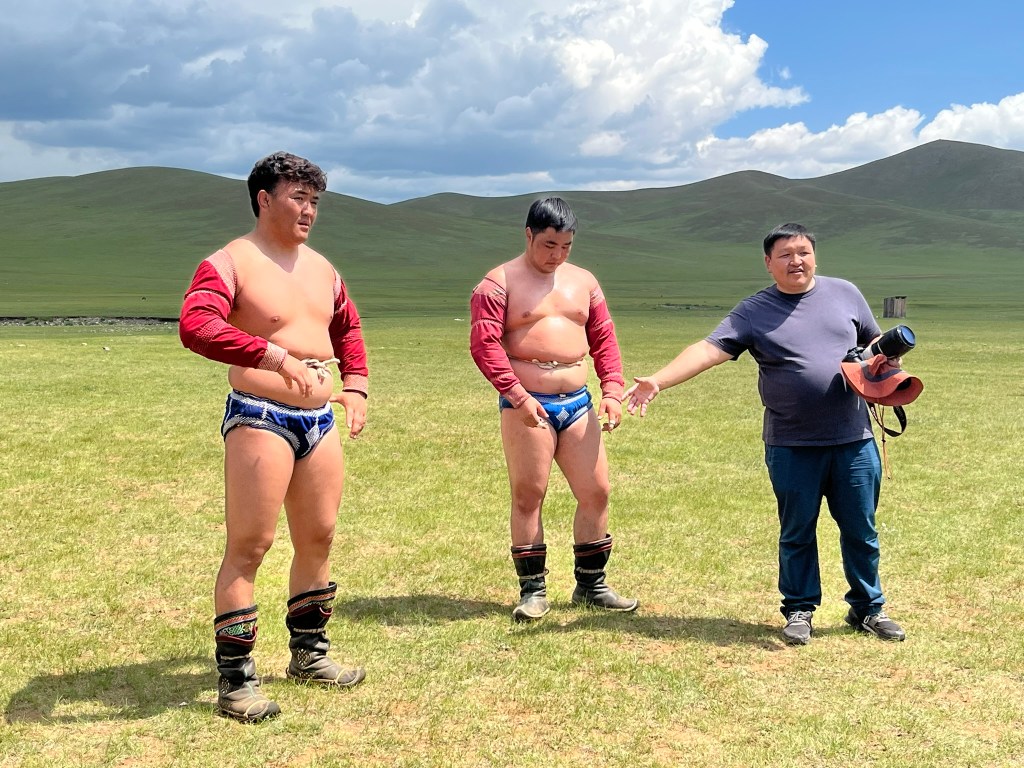
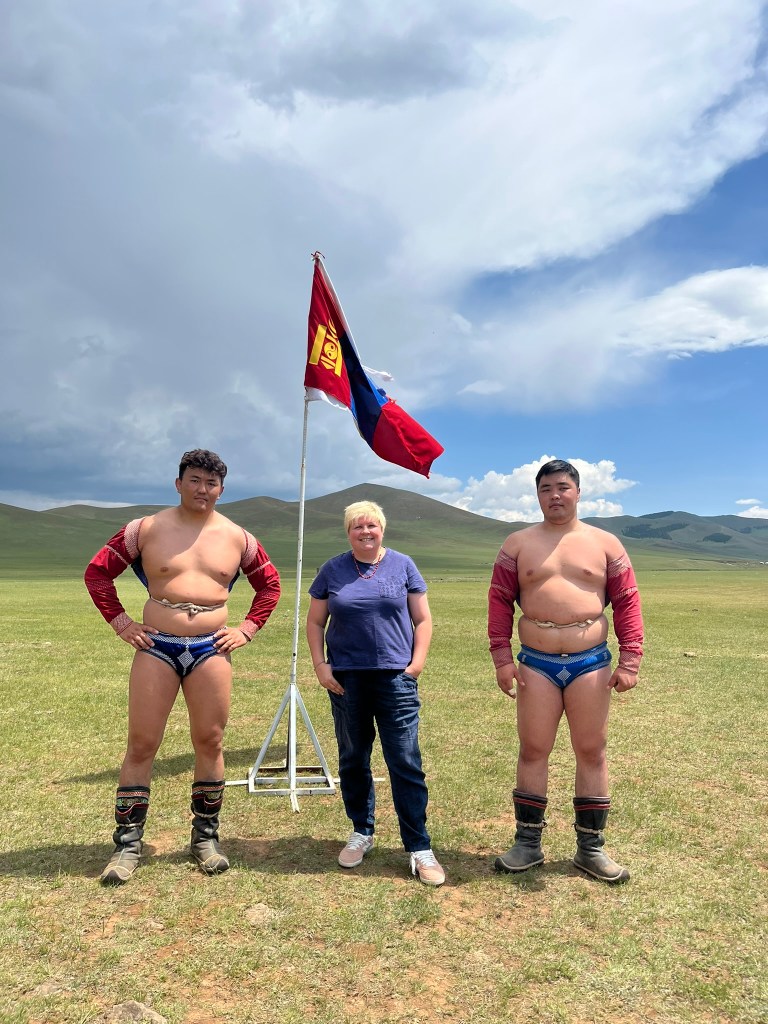
Mongolian wrestling (known as Bokh) is one of the world’s oldest continuously practised sports. It is thought to date back over 2000 years and was one of the ‘Three Manly Games’ celebrated by Chinggis Khan. Today it is the centerpiece of the Naadam Festival. The objective of Bokh is very simple – make you opponent touch the ground with any part of their body other than the soles of their feet or the palms of their hands. If they do, they lose immediately. Unlike Olympic wrestling – there are no pins, no points, no time limits and no weight classes. The last bit seems a bit bonkers as you could see a huge range of heights and weights at the training camp. However, from reading up a little it seems that many famous champions have been surprisingly light by international standards and that success depends on balance, grip strength, timing, endurance and explosive power.
Each wrestler enters performing the famous devekh or ‘eagle dance’ to symbolise strength, freedom and courage. The wrestlers then approach each other and begin looking for grips. The rules are pretty loose, and almost every type of throw, trip, lift and sweep is allowed. You just can’t punch, kick or strike and twisting fingers is forbidden. The referee will rarely stop the action unless someone is injured.
The clothing is definitely something worth writing about and has hardly changed for centuries. The Zodog is the tight open-front jacket, the Shuudag are the tight wrestling briefs and the Gutal are the traditional upturned leather boots. The outfit is supposed to give opponents plenty of places to grip while leaving the shoulders and chest free for movement.
The Naadam format for the wrestling competition will feature 9 straight knock out rounds with one fight per wrestler per round and no second chances. After the first couple of rounds where opponents are chosen by rank, the subsequent rounds allow the highest-ranked surviving wrestler the right to choose their next opponent from the remaining competitors. Apparently this will be a big source of debate for spectators when we get to the festival. Winning gives individuals rank and unlike other sports, your rank is permanent once earned. The ranks correspond to how far into the rounds you reach in the Naadam. The Champion will get the title of Avarga (Titan), the runner-up will be Arslan or Lion and so on with various other animals – Garuda, Elephant, Hawk, Falcon. Bokh is seen as a living expression of Mongolian identity and is extremely popular.
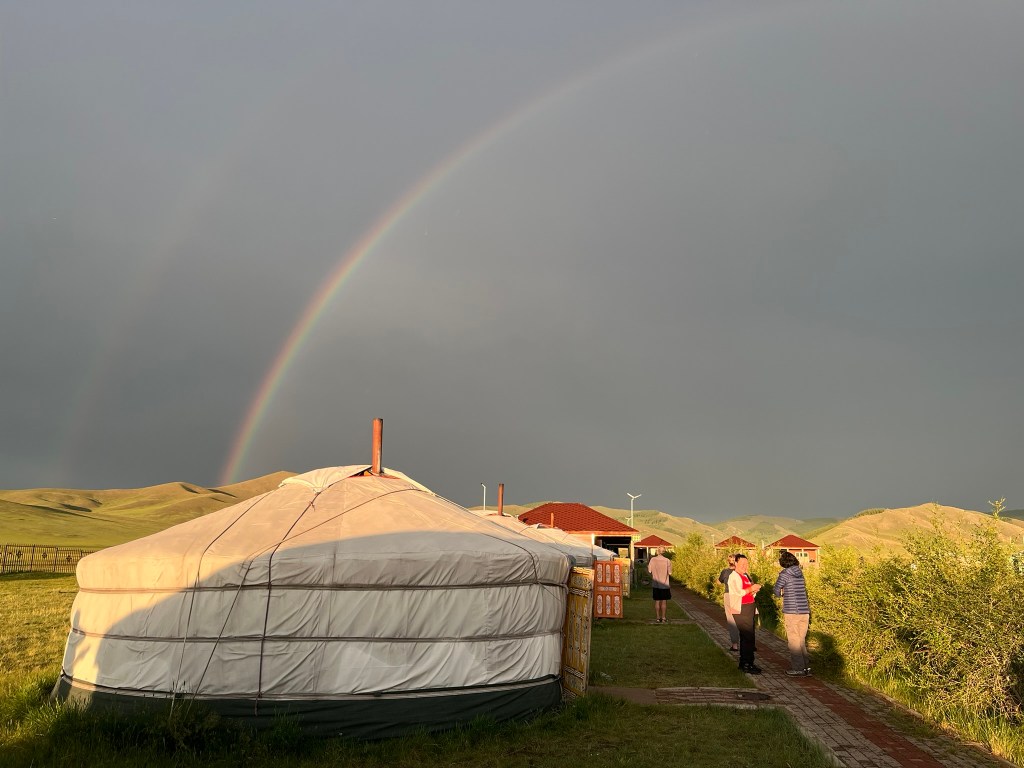
We are staying right in the training camp alongside the wrestlers (in our own separate gers) and for lunch, dinner and breakfast have eaten in their canteen and shared similar meals (although much smaller portions). What a great unique experience and definitely one of the reasons I like group tours so much – you would never be able to organise something like this independently!


Leave a Reply