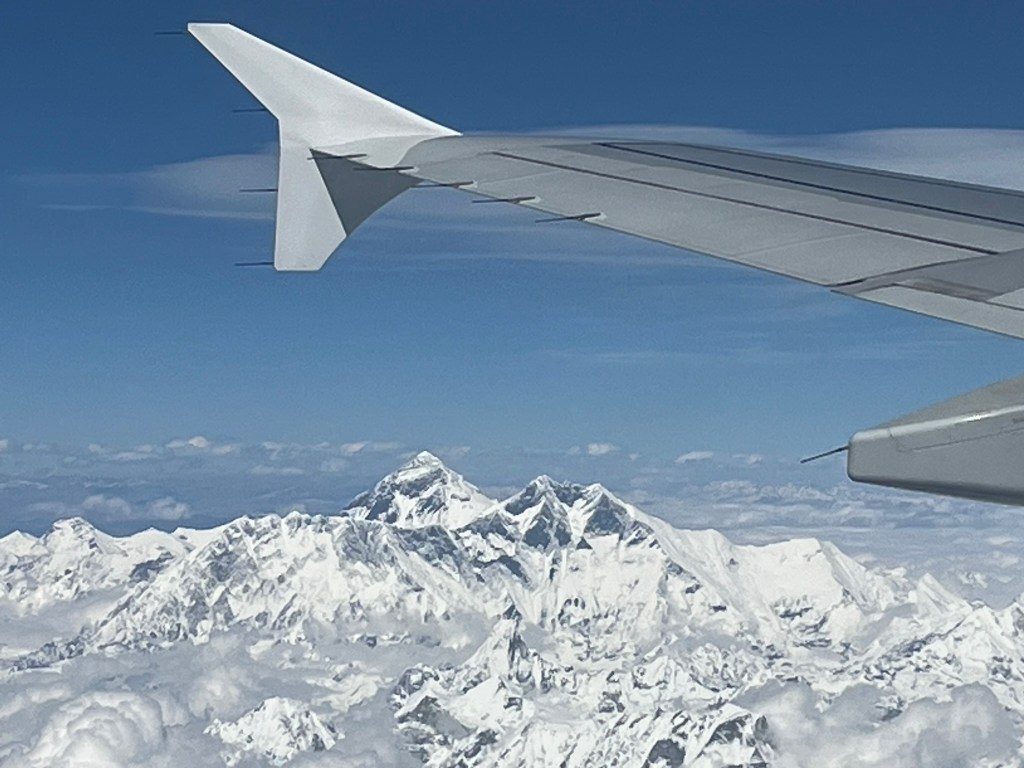
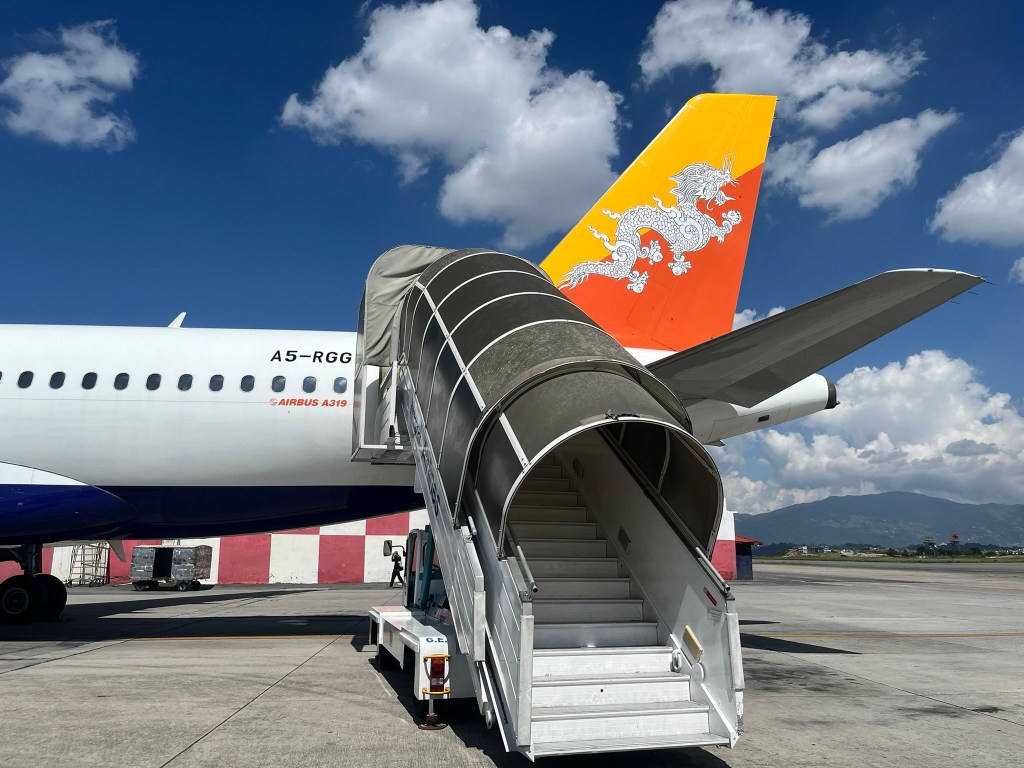
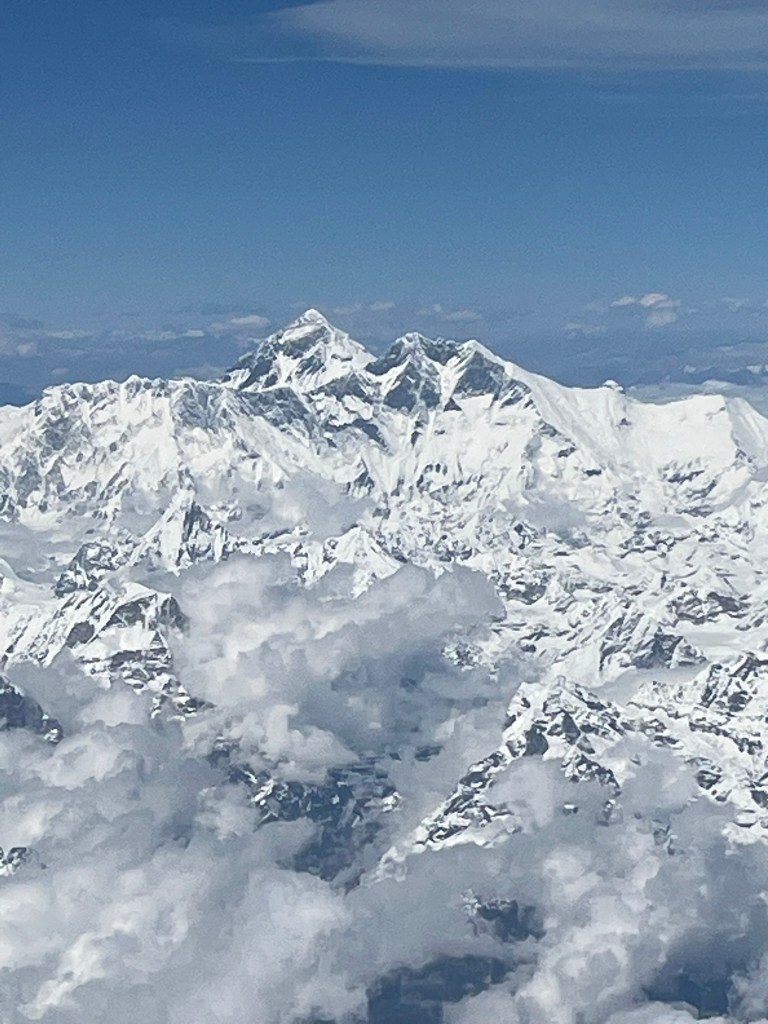
So my time in Nepal has come to an end and I am heading to Bhutan. The flight time from Kathmandu to Paro, in Bhutan, is about 1 hour and you get a fantastic view of Everest on the left-hand side of the plane as you head out of Nepal. The countries do not share a border, with a little slither of India sitting between them.
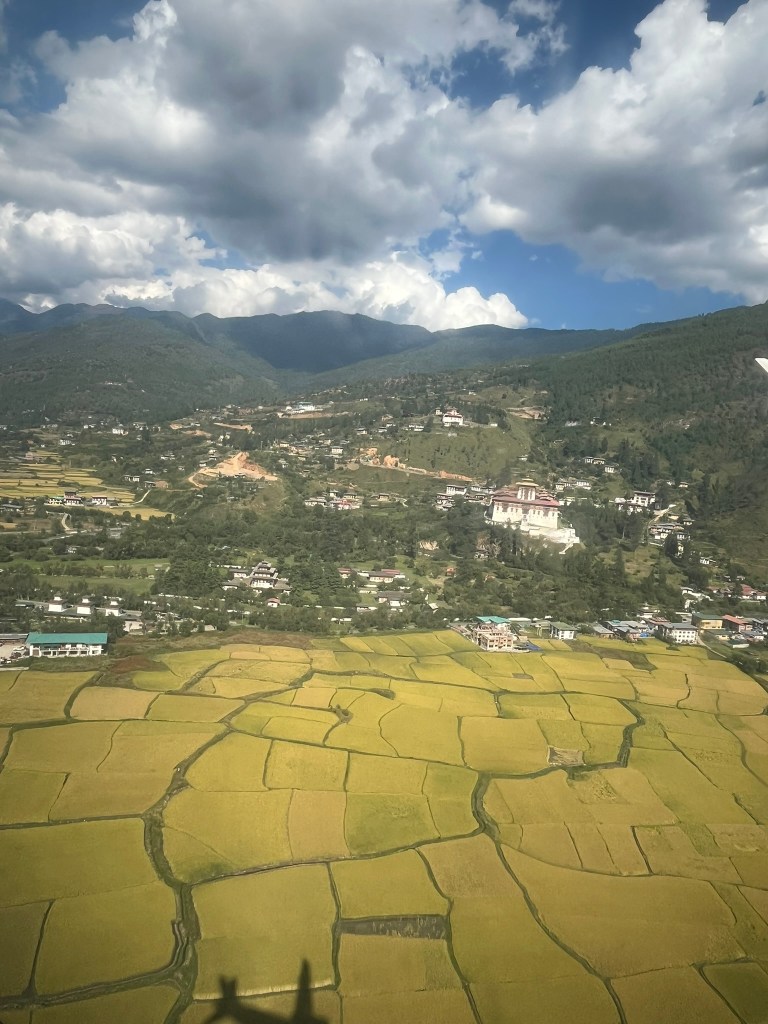
The landing into Paro is spectacular, with forest as far as the eye can see and small pockets of houses dotted around in the valleys. Paro airport is located in a narrow Himalayan valley and flying in is quite an experience. The airport itself is a work of art, with beautiful Bhutanese painted decorations all over the building. A great welcome to my 93rd country visited.
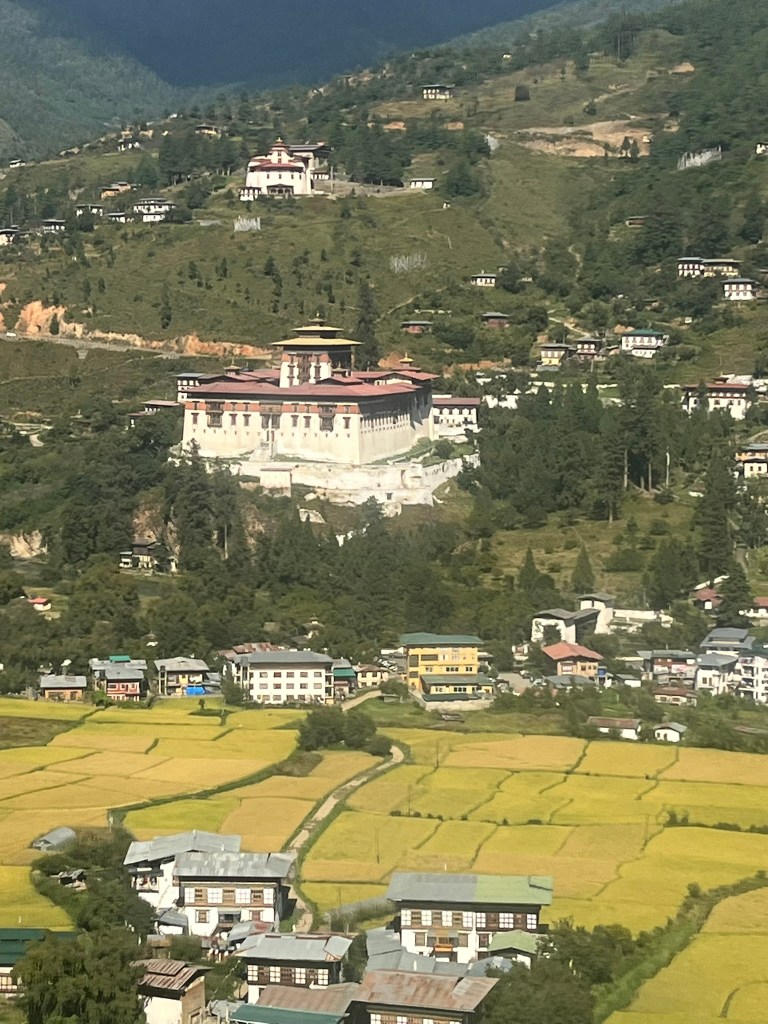
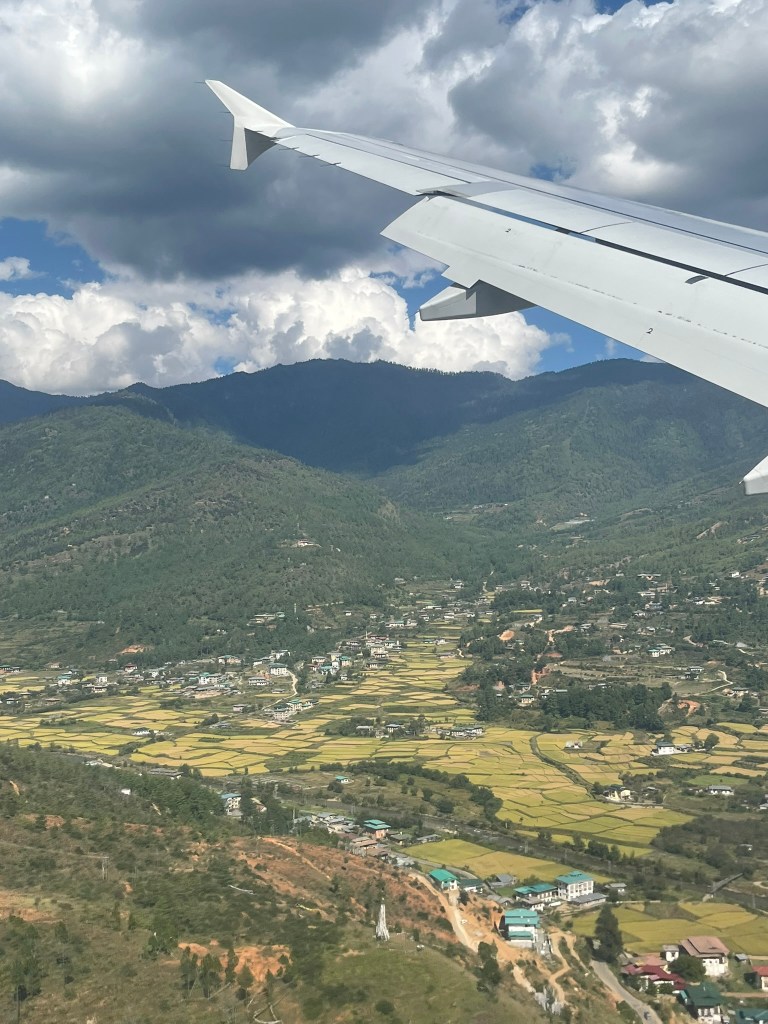
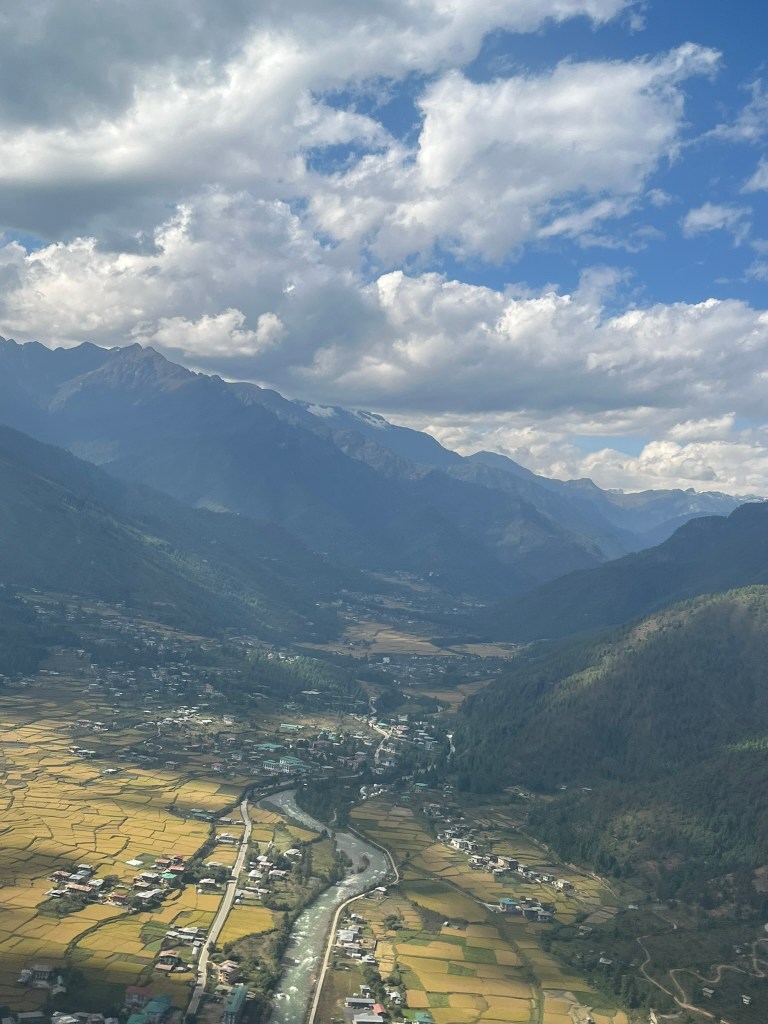
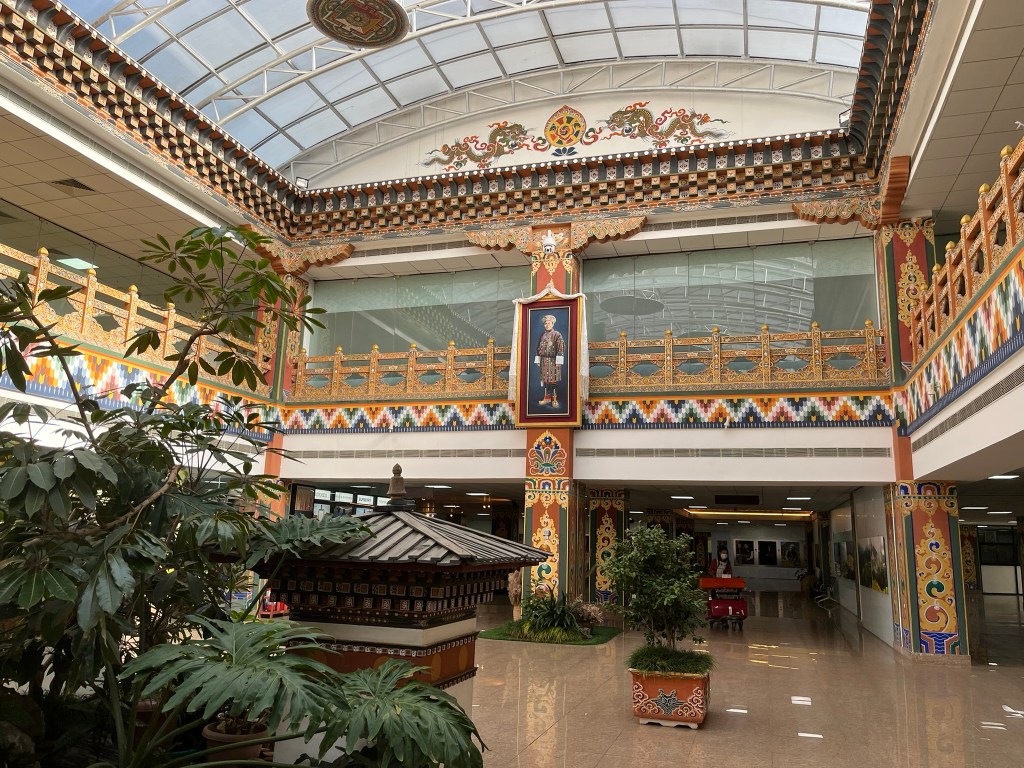
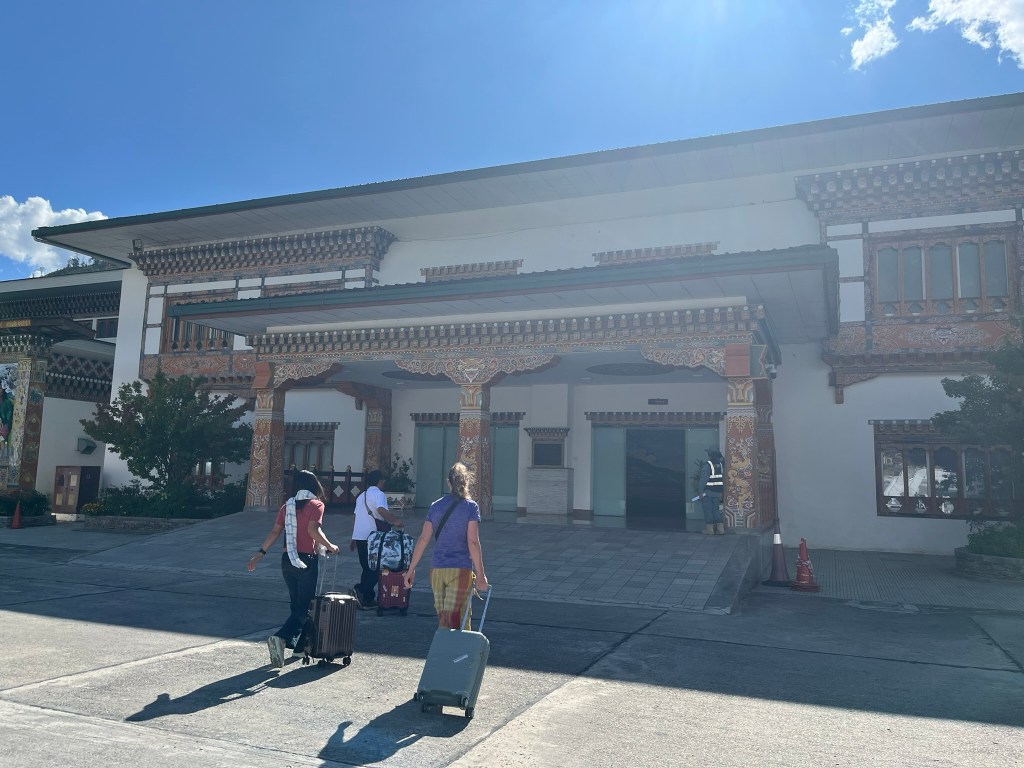
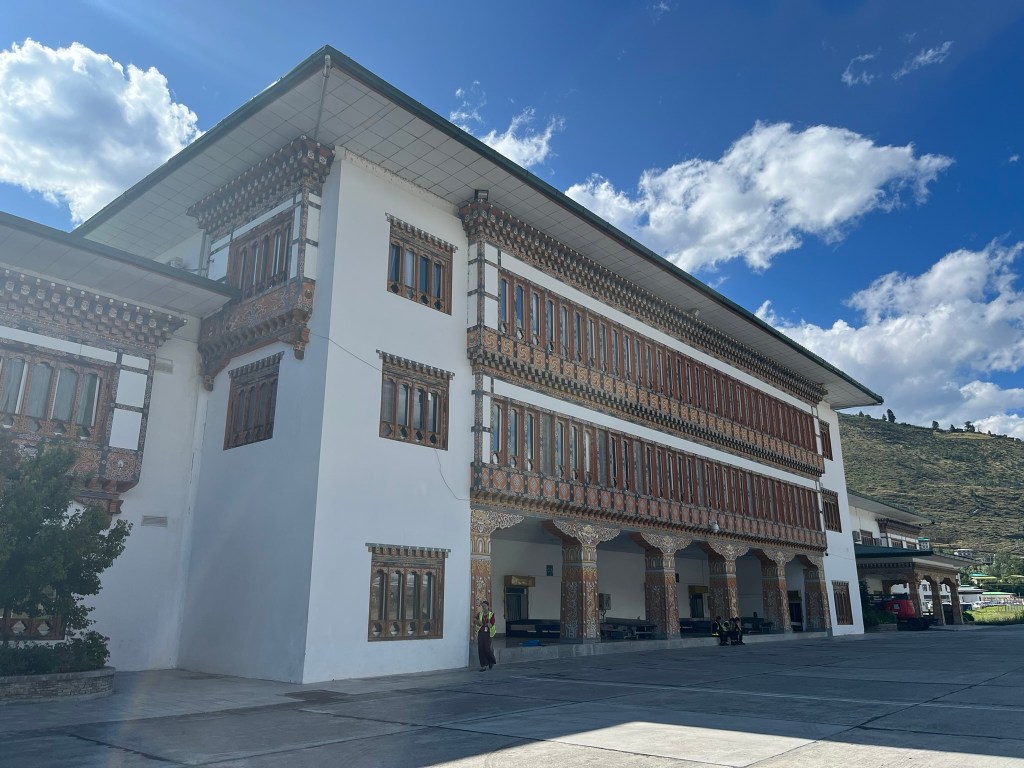
Bhutan lies in the eastern Himalayas, landlocked between Tibet to the north and India to the south, east and west. It is roughly the size of Switzerland, and has its capital in Thimpu along the Wang Chhu river. Tourism is very tightly controlled in the country, and the government has a high-value, low impact policy. You can only enter the country as a tourist on a group visa that is arranged by your travel agency and based on you joining a group tour with a set itinerary. You must enter on the day your tour starts and leave on the day it ends, so independent exploring isn’t really a possibility here. And each tourist must pay on top of the tour cost, a Sustainable Development Fee to support environmental and cultural preservation, which is around $100 USD per night of your visit. So this isn’t a country you visit without a little planning.
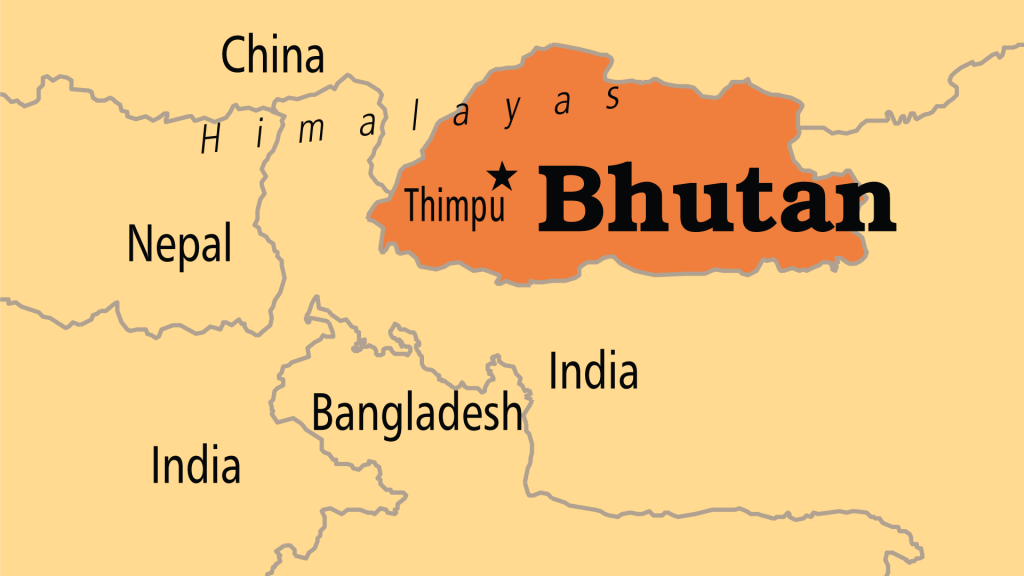
The population of Bhutan is just 800,000 people, and because of this it doesn’t really have any large cities. Its settlements are all compact, walkable valley towns. Thimphu is the capital and Bhutan’s largest city, with a population of 120,00 people. It has the atmosphere of a mountain town and it has no traffic lights! Paro hosts Bhutan’s only international airport but is a small town of just 15,000 people. Otherwise the rest of the country is made up of valley towns.
The country is predominantly Buddhist with small Hindu and Bon minorities in the south. Buildings must follow a distinctive architectural code, with carved and painted woodwork, whitewashed walls and no steel or glass facades. And people wear traditional dress everyday. The language is Dzongkha, but English is widely spoken as this is the main language used in the education system.
One of the most interesting facts about Bhutan is that it is the world’s only carbon-negative country – it absorbs more carbon that it emits. This is because 70% of its land remains forested, and it is written into their constitution that this number cannot go below 60%. And more than half of the country’s territory is protected as national parkland.
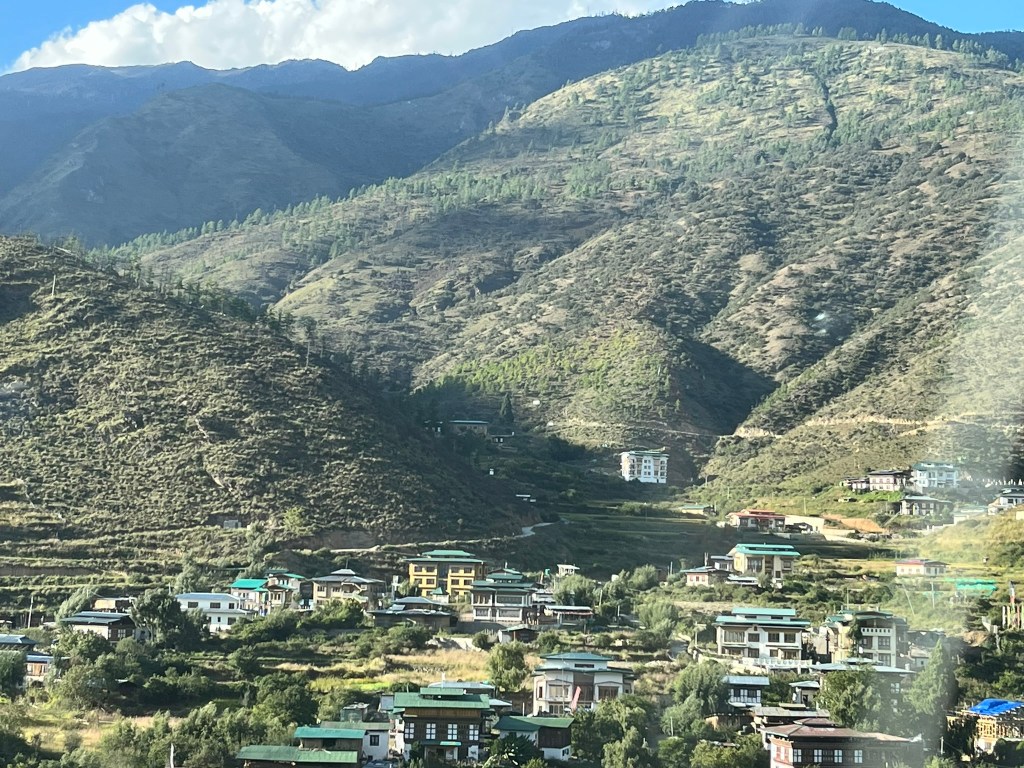
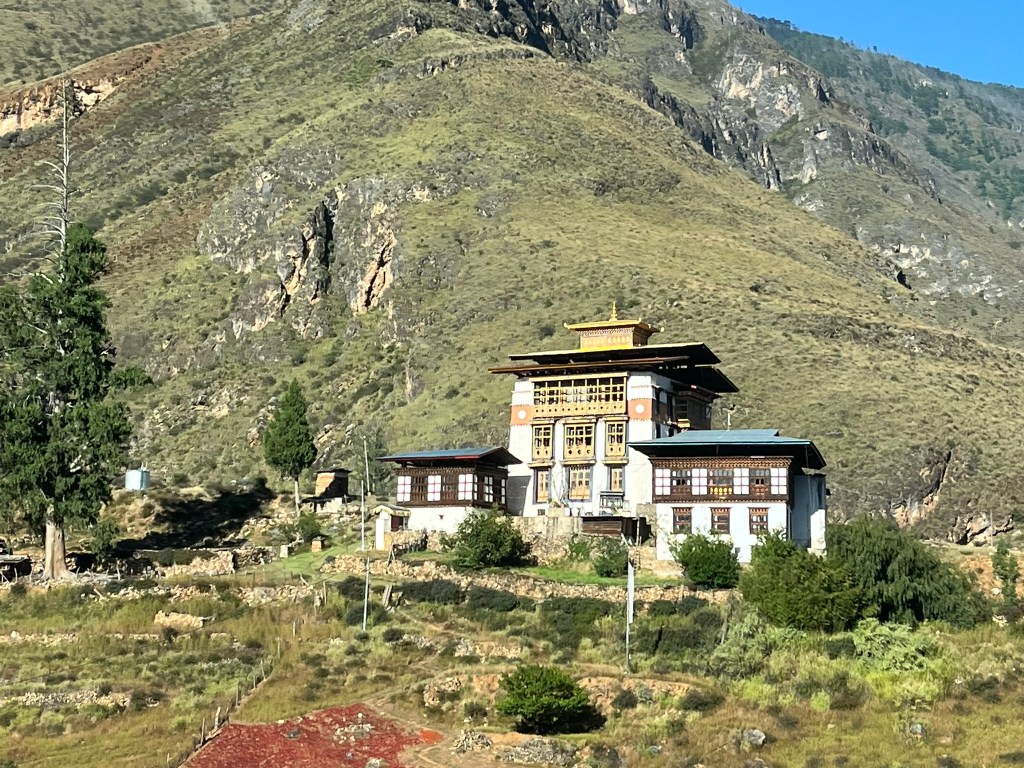
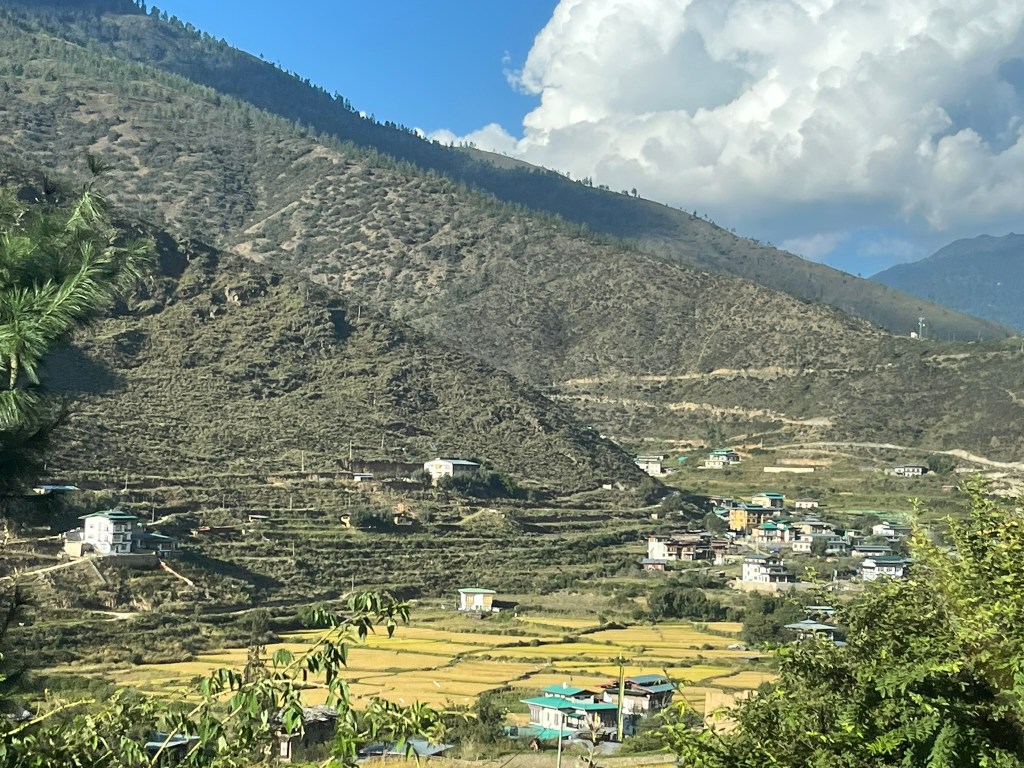
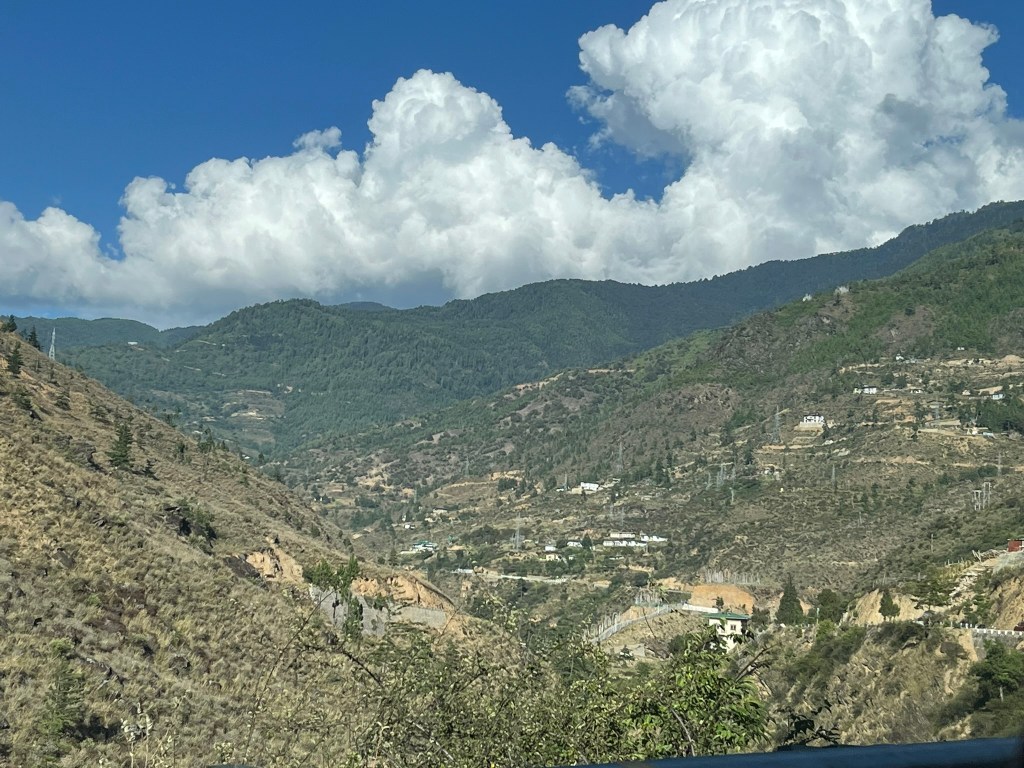
From Paro, we drove to Thimphu, which takes about an hour, and is where would be starting our tour. The scenery is great and you quickly get a feel for how clean and smart a place it is. The roads are perfect, the cars are modern, the buildings and houses are all smart and look freshly painted. I don’t know what to expect over the next 8 days, but I’m excited to explore. It looks and feels different from all the countries that surround it.


Leave a Reply