I had the chance to be invited into 2 local homes during my stay in Kathmandu Valley, to have a cooking class in both and just generally interact and talk to the family. These experiences can be a little daunting at first, because you feel a little like you are intruding in someone’s life. But the hosts are always so friendly and welcoming that invariably they are good experiences.
The first home we visited was in Kathmandu and was the home of Nirmala, her husband Jerome and son, Joven. Nirmala was so welcoming and made the whole experience really fun. Our goal was to cook a dal bhat. This is the everyday heart and soul of Nepalese cooking and almost every Nepali will eat it once or twice a day. The phrase literally means lentil stew (dal) and rice (bhat) and together they form the foundation of the meal. But a real dal bhat comes with an array of vegetables, pickles, greens and sometimes meat all served on a thali (a metal tray). I had always called a set meal like this with lots of small dishes a thali, not realising that just refers to the plate it is served on.
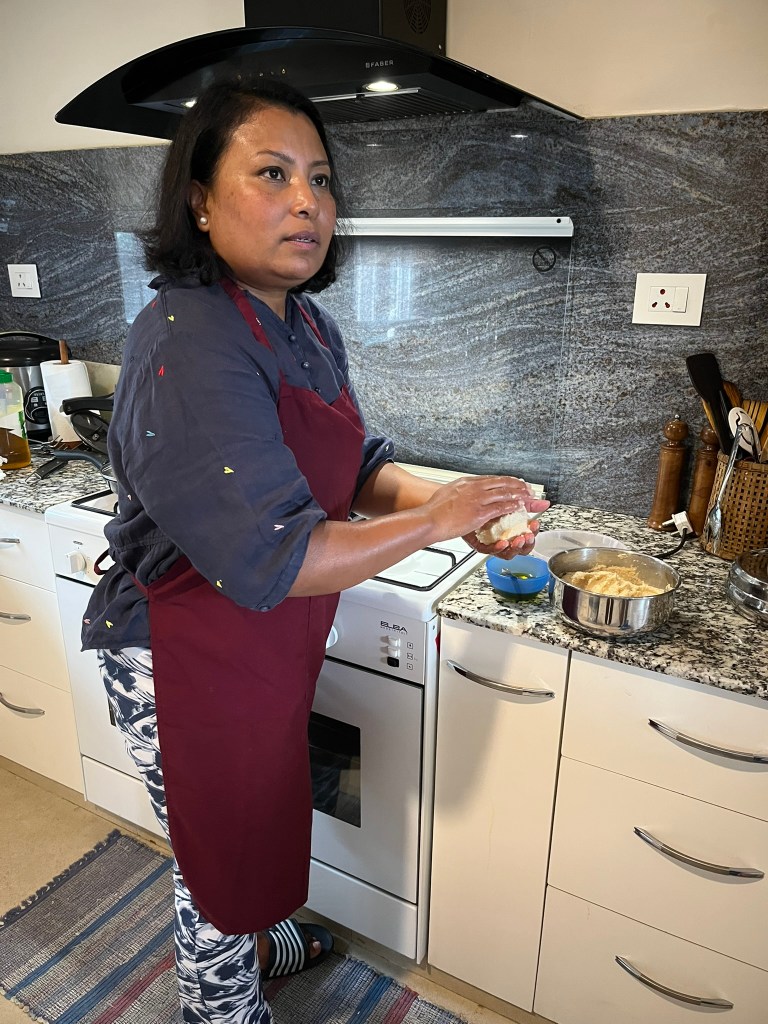
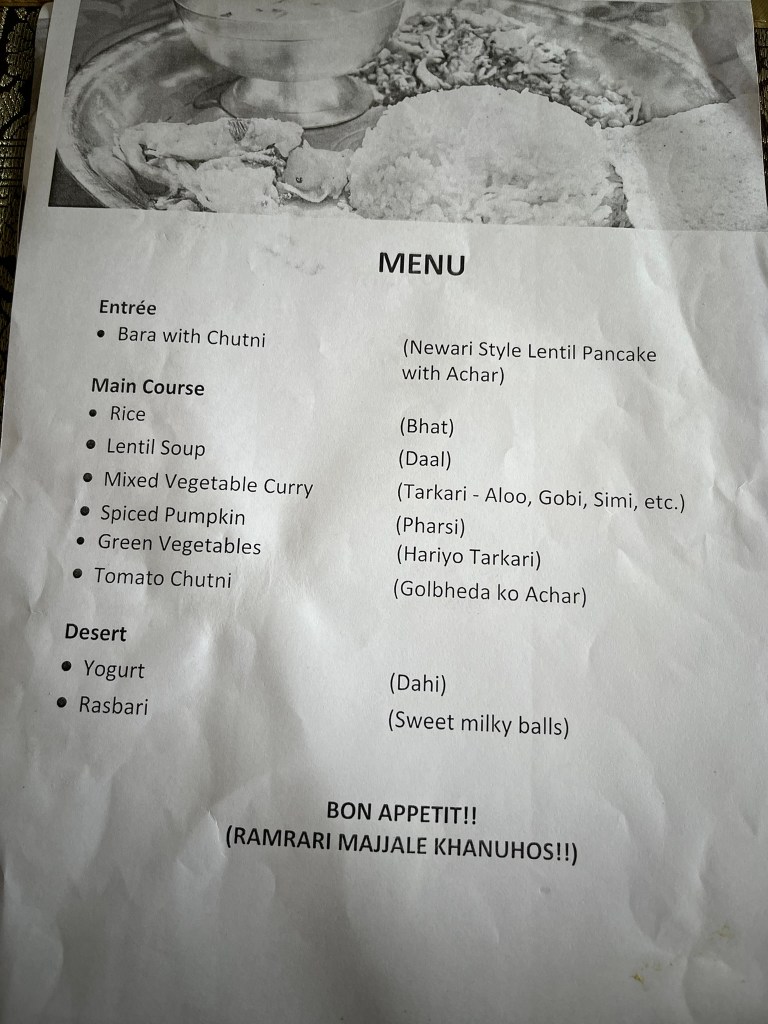
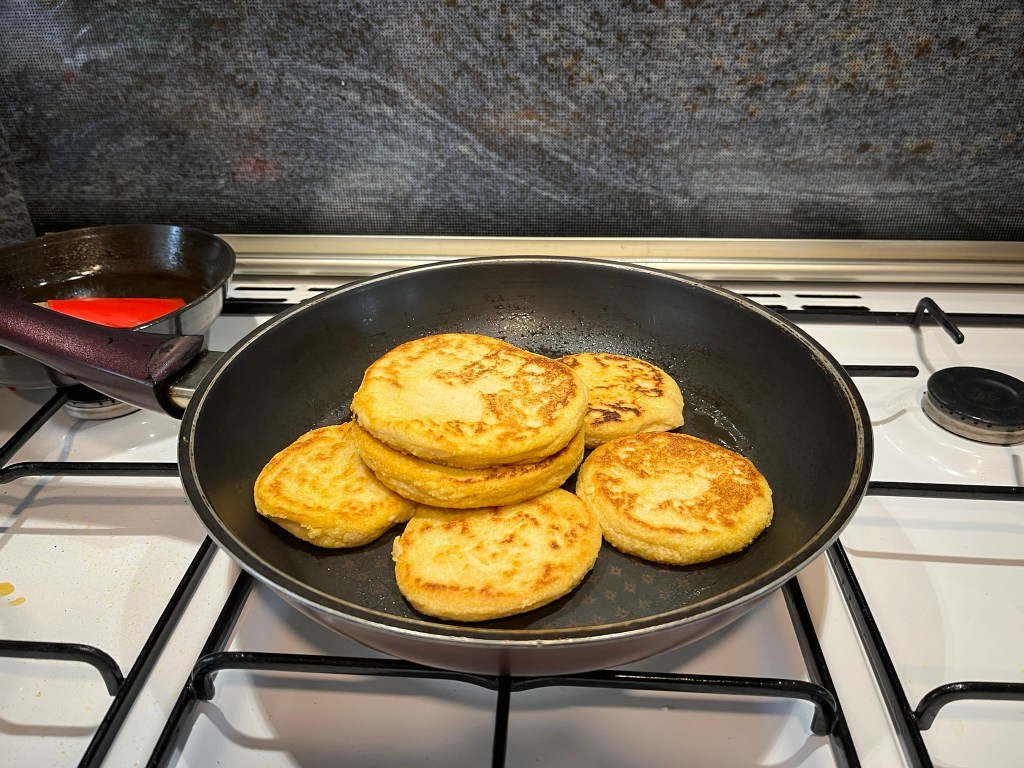
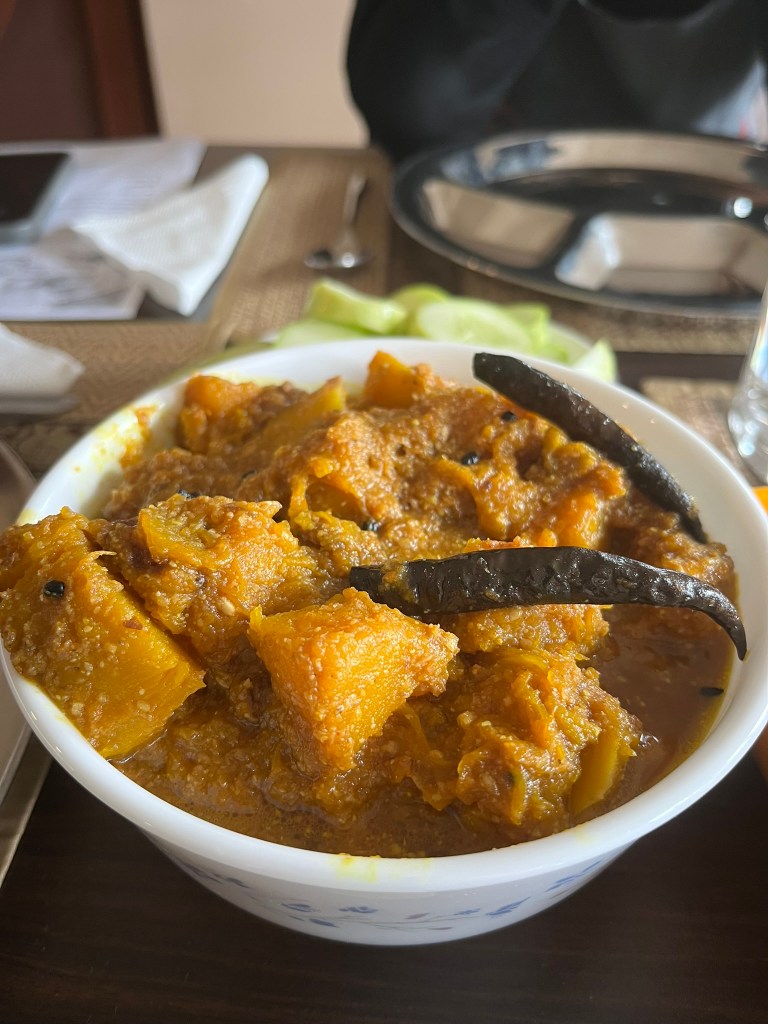
We helped make quite a few dishes including savoury Newari lentil pancakes which were really tasty and an amazing pumpkin dish that I would definitely try to replicate at home. Once everything was ready we sat with the family at their dining table and chatted whilst we ate, talking about their lives in Nepal. The family were really generous with their time and being so happy to talk with us. Their son even showed us his art work.
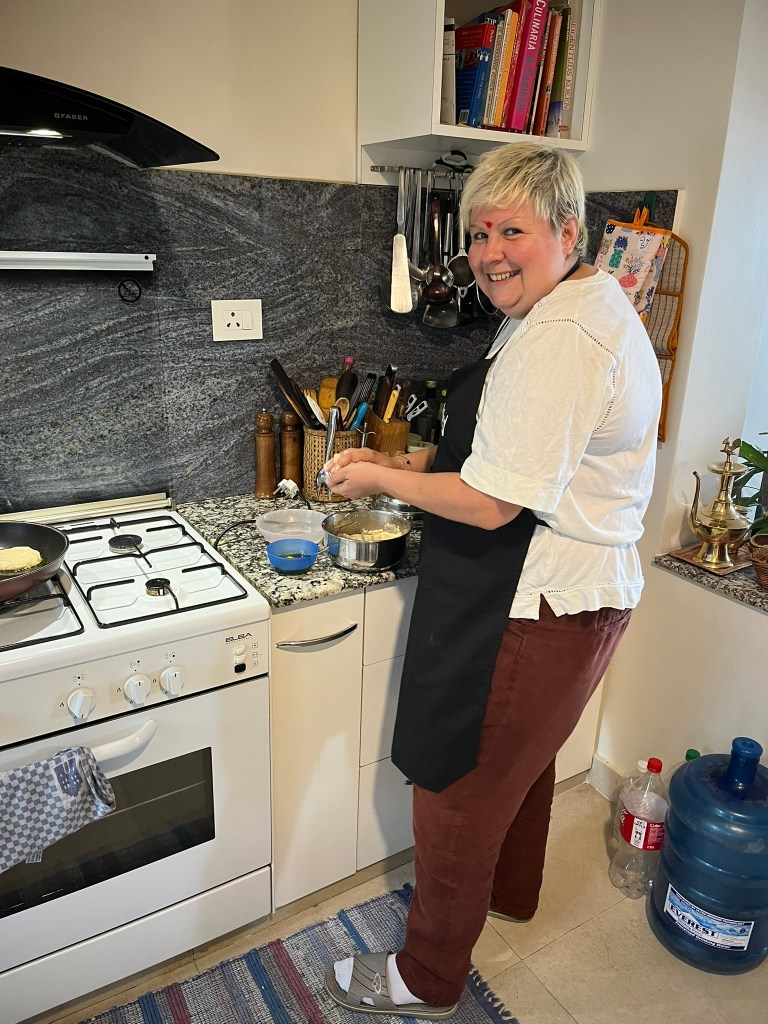
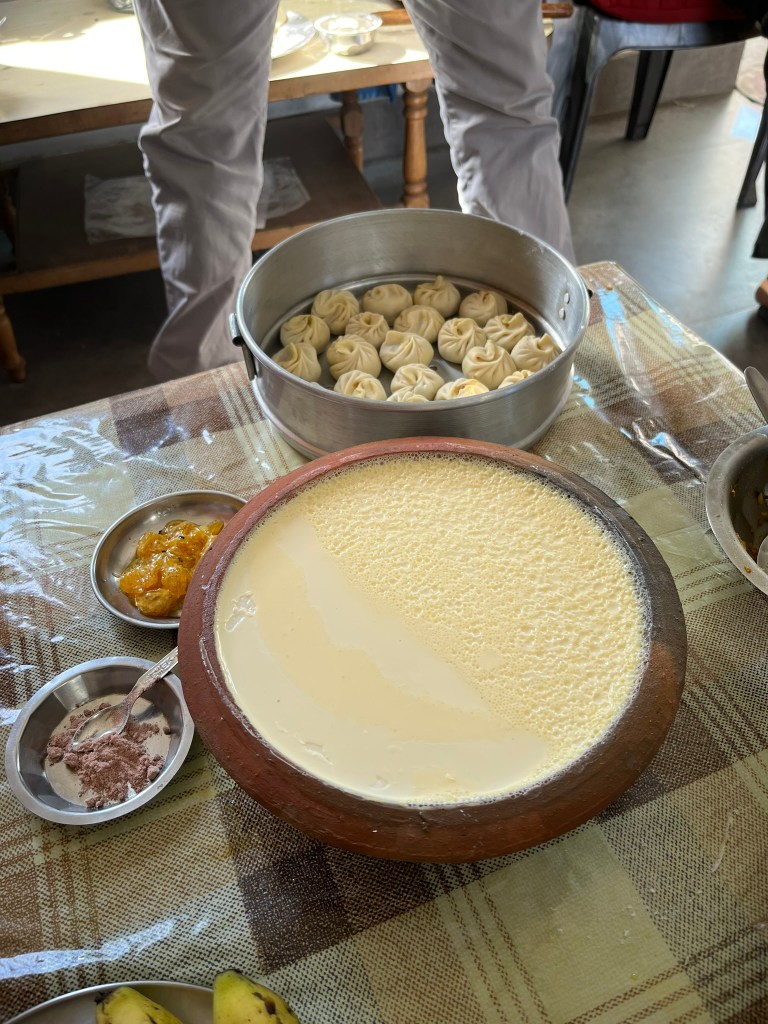
The second home we visited was in Bhaktapur and an old school friend of our guides. Our plan was to make Nepalese momo’s with the family as we could no longer do our planned cooking class in Pokhara. The family were so welcoming and it seemed like everyone was home that day to participate in the momo preparation; sons, daughters, aunts and mother-in-laws popped up from nowhere to help.
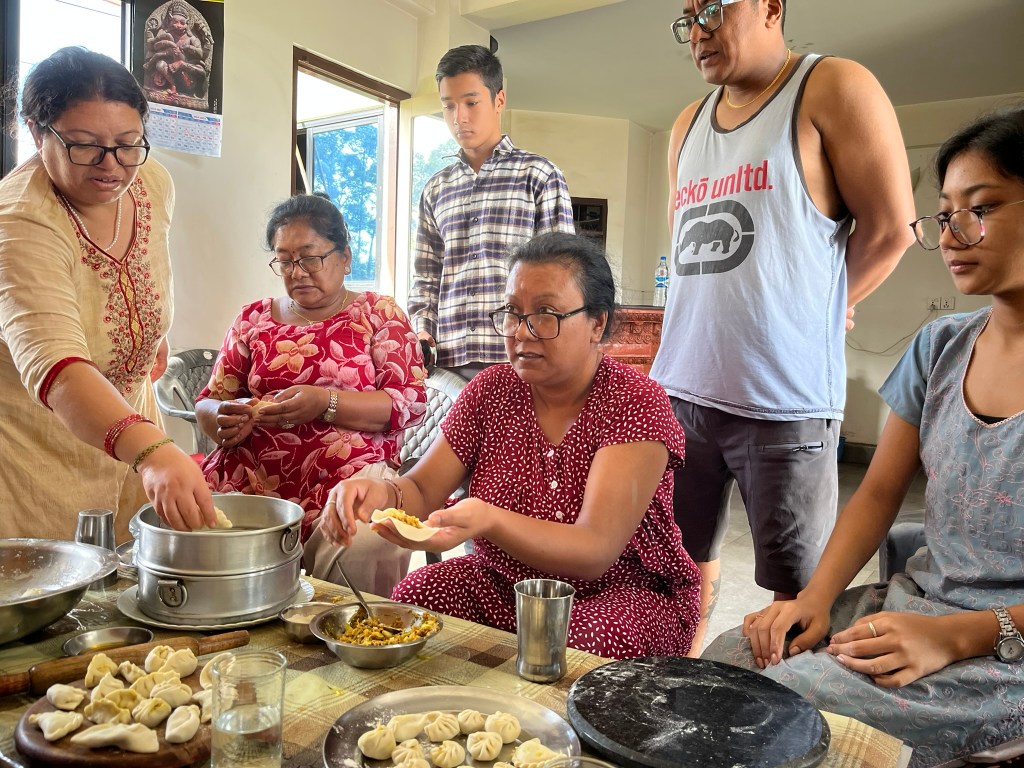
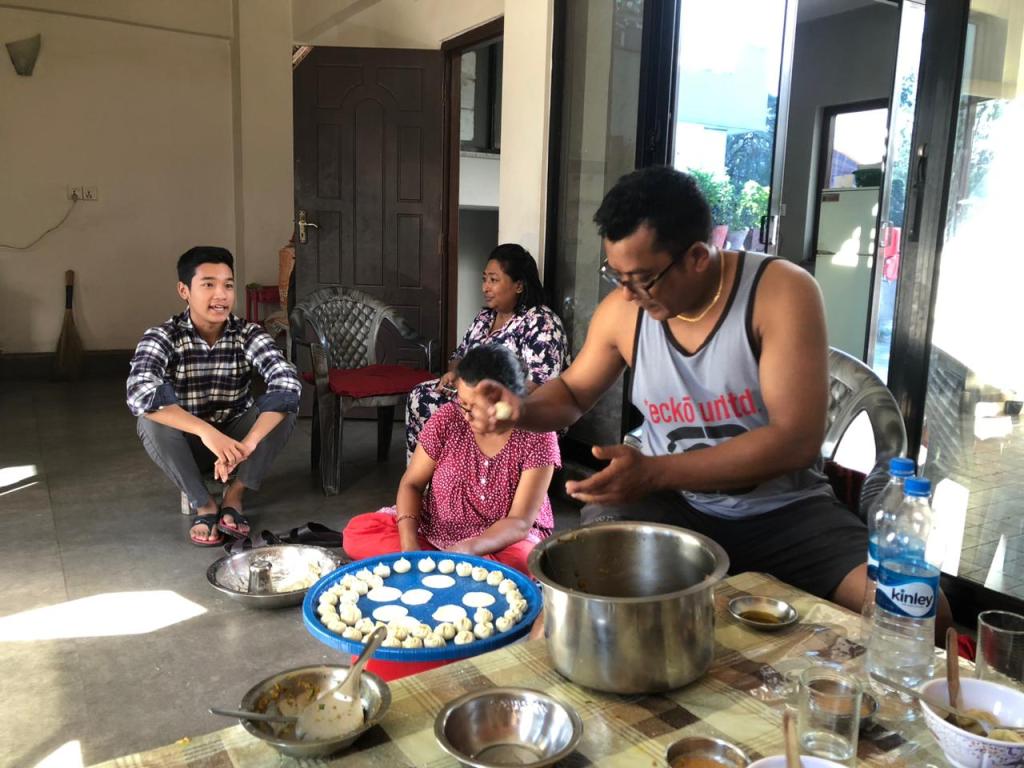
We started off by mixing a variety of spices with the vegetable filling. Each family will have their own recipe and adjust the spices to their taste. The mixture then got lightly fried off to reduce some of the water content. We made the wheat dough, which was just a simple mix of wheat flour and water. And then it was time to start filling. We tried all the different types of designs for sealing the momos and everyone had a good laugh at the badly shaped ones we were making. I made a couple, thinking we would in total make maybe 50 momos, but the family kept going and was still making them even after we had eaten our lunch and were ready to depart. They said they planned to make over 300 momos and have a big family dinner later that day.
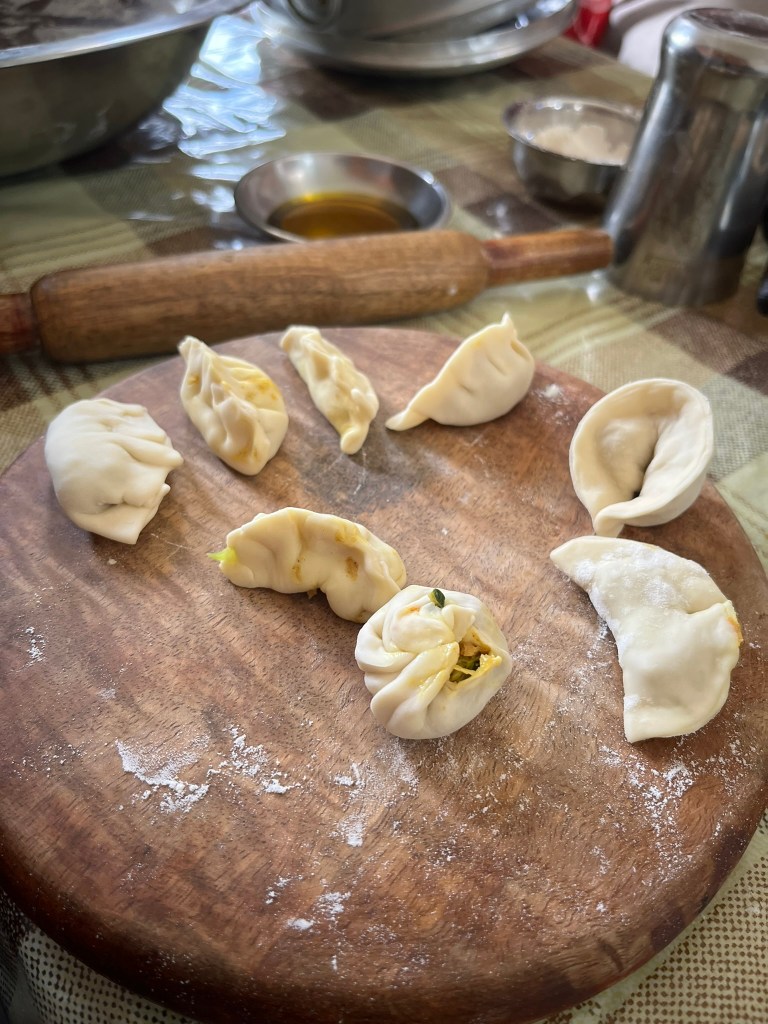
Nepalese momos are a popular dish in the country and you will see lots of momo restaurants around the city. They likely came from Tibet via trade routes, but over time have developed their own local flavor with the use of chicken instead of yak, the addition of spices, and tomato and chilli sauces for dipping.
Whilst at the family’s home we also got to try juju dhau, which literally means ‘king curd’ and is a special yoghurt served in clay pots and only available in Bhaktapur. It was delicious and reminded me a little of greek yoghurt in terms of its thick texture. We also tried a delicious dessert using mandarin segments, fried fenugreek seeds and hot oil. I’m not sure what it was called, but it was great.
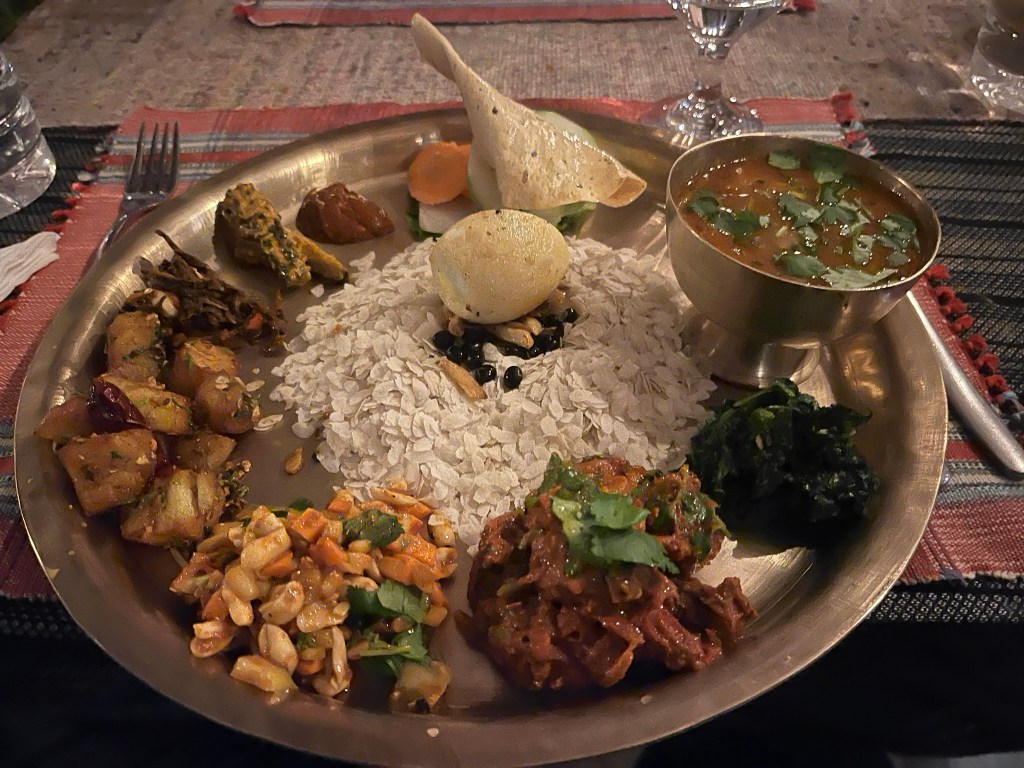
I got to try a huge range of food during my time in Nepal and was keen to try things I had never had before. On our last night in Bhaktapur, our guide suggested I try a ‘Khaja set’ at the restaurant we were eating in, which is like a festival version of dal bhat. In this, I got to try chiura baji which is rice that has been beaten and then forms flakes. It is chewier and drier than regular rice but actually very nice, especially after soaking it in dal. The set also included choila, which is marinated meat with mustard oil, fenugreek and coriander. And bhatmas sadeko, a marinated salad of peanuts and corn. It was all great, and I’m glad I gave it a try.
All in all, Nepalese cuisine has been extremely varied and tasty. I was a bit worried it would be super spicy, but thankfully the kitchens here are happy to adjust the spice levels for tourists. We did have to eat in restaurants that our guide knew cooked with filtered and purified water though as a precaution, but we still had a lot of choices.


Leave a Reply