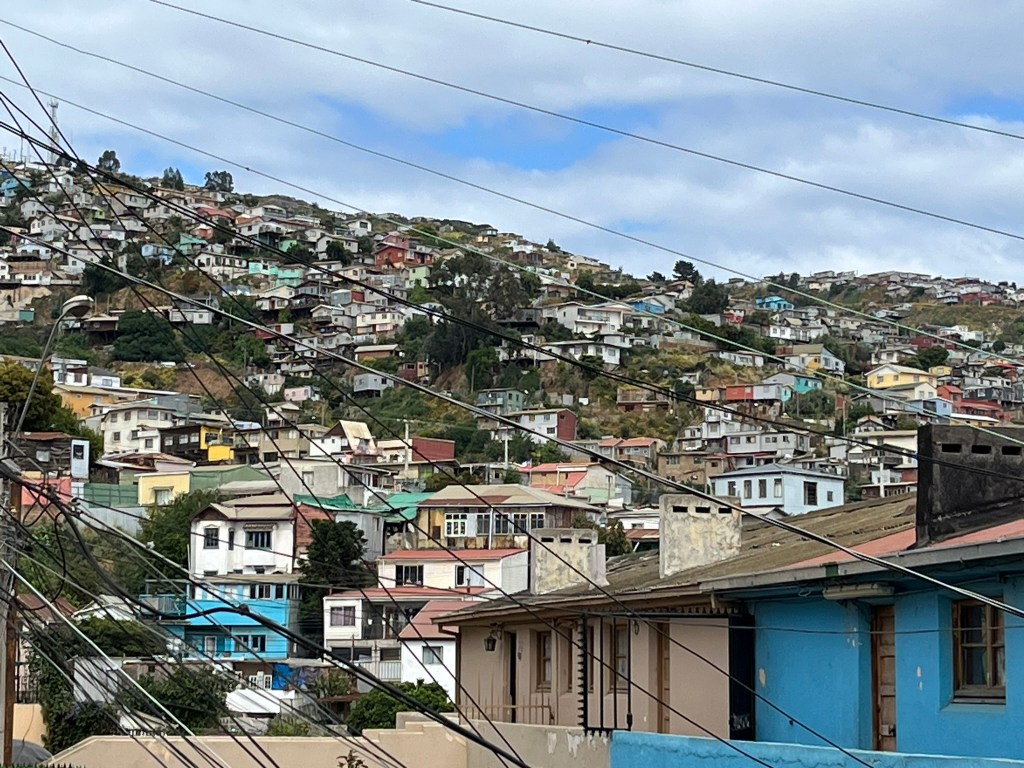
Valparaiso is a labyrinth of hills, murals, stairways and funiculars overlooking a wide Pacific bay. It’s an odd combination of a gritty working port and a UNESCO World Heritage Site rolled into one. The city is spread across 42 steep hills or ‘cerros’ that rise abruptly from the Pacific Ocean. The upper hills are a maze of narrow streets with colorful houses whilst the lower ‘plan’ area houses the flat port area, civic buildings and markets. To get between the upper and lower levels there are a series of antique funiculars that transport locals and tourists up and down for a few pennies a ride.

In the pre and early colonial era, the bay was used by the local nomadic fisher people known as the Changos. The city was founded during the early Spanish colonial period, though it evolved gradually rather than being formally ‘established’ in a single event like many other colonial cities. The Spanish conquistador Juan de Saavedra, sailing under Diego de Almagro’s expedition from Peru, anchored in the bay and named it Valparaiso or ‘Valley of Paradise’ after his home village in Spain.
Initially it was just a small anchorage and watering stop for ships travelling up and down the coast of South America. But as Santiago grew inland, Valparaiso became its unofficial port. Ships would unload goods in the bay, and then mule caravans carried them to the capital. By the 17th century, the port was still small, with fewer than 200 inhabitants, but it was strategically important. By the 18th century, the city had flourished into the chief Pacific port for ships travelling between Europe and the west coast of the America’s, especially during the California gold rush. British, German and French traders settled here, bringing European architecture, customs and schools with them. The 1906 earthquake devastated much of the city, and reconstruction created today’s eclectic mix of colonial, Victorian and modern structures. The opening of the Panama Canal in 1914 drastically reduced maritime trade and the city entered a long period of military decline.
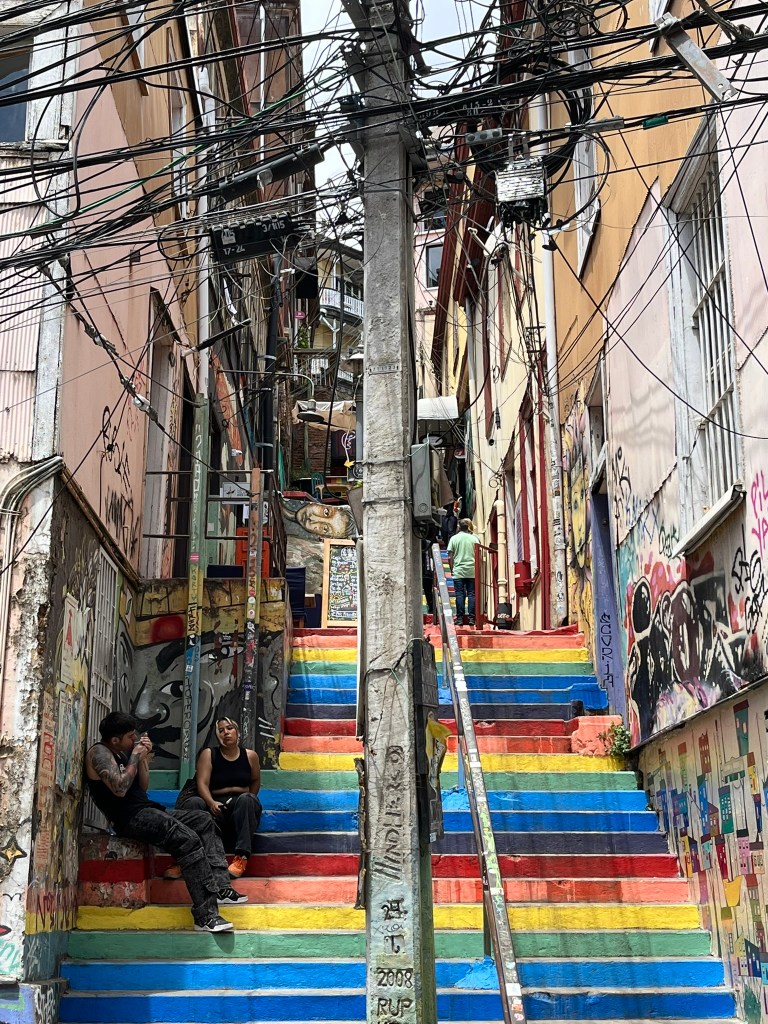
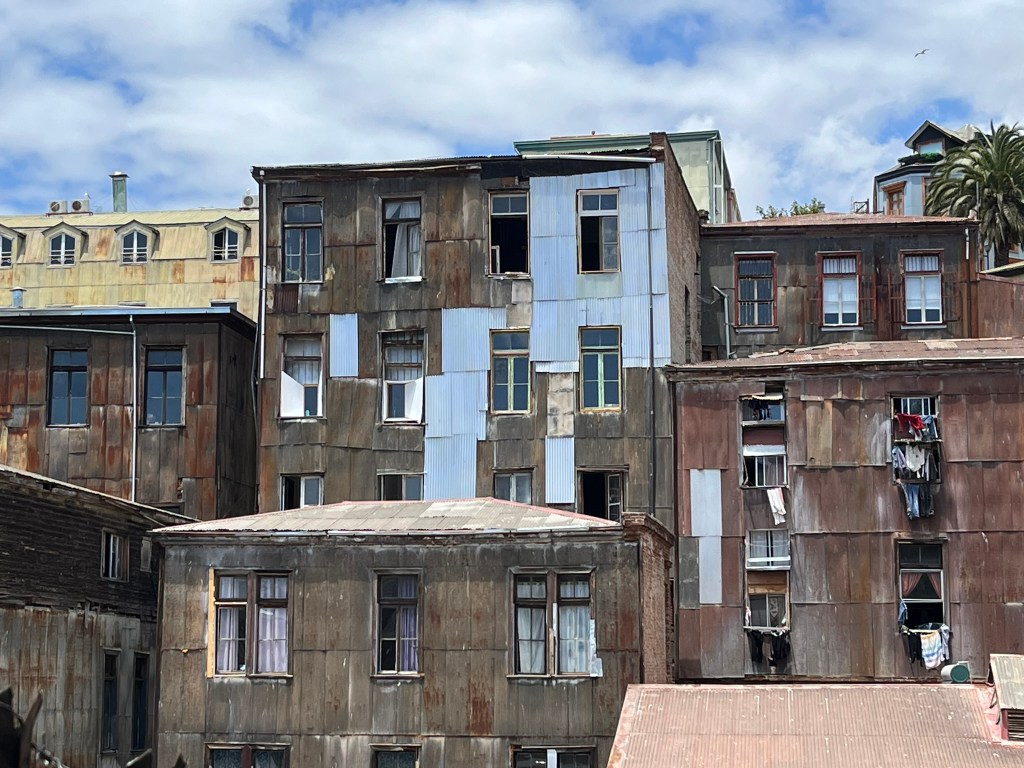


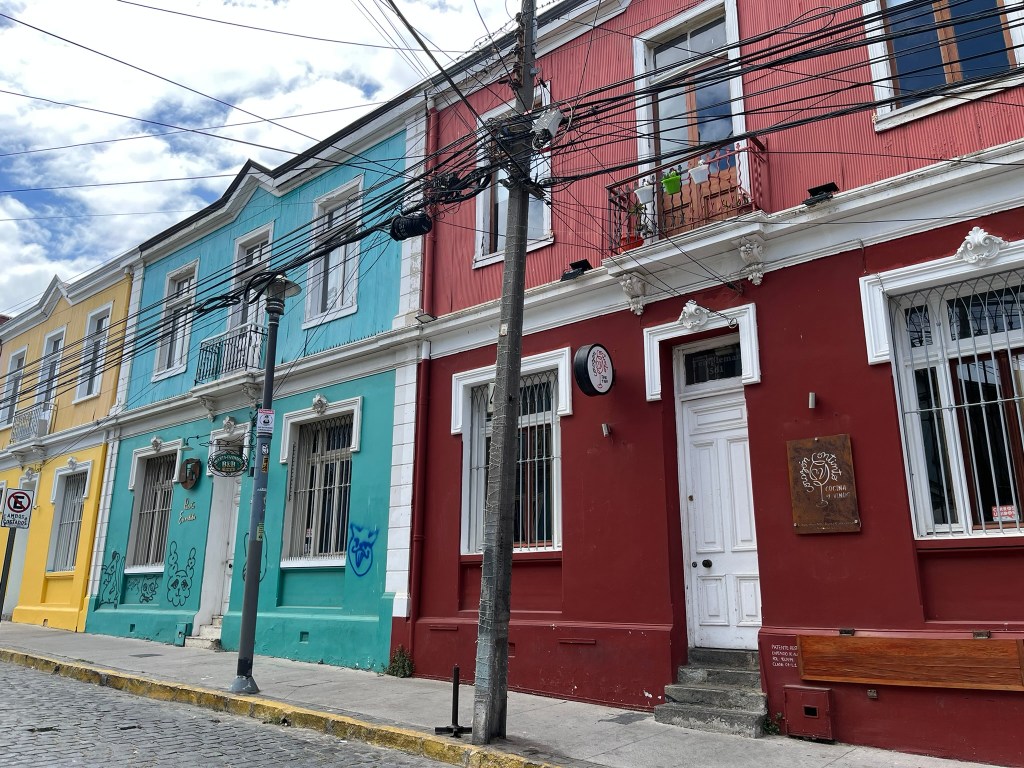
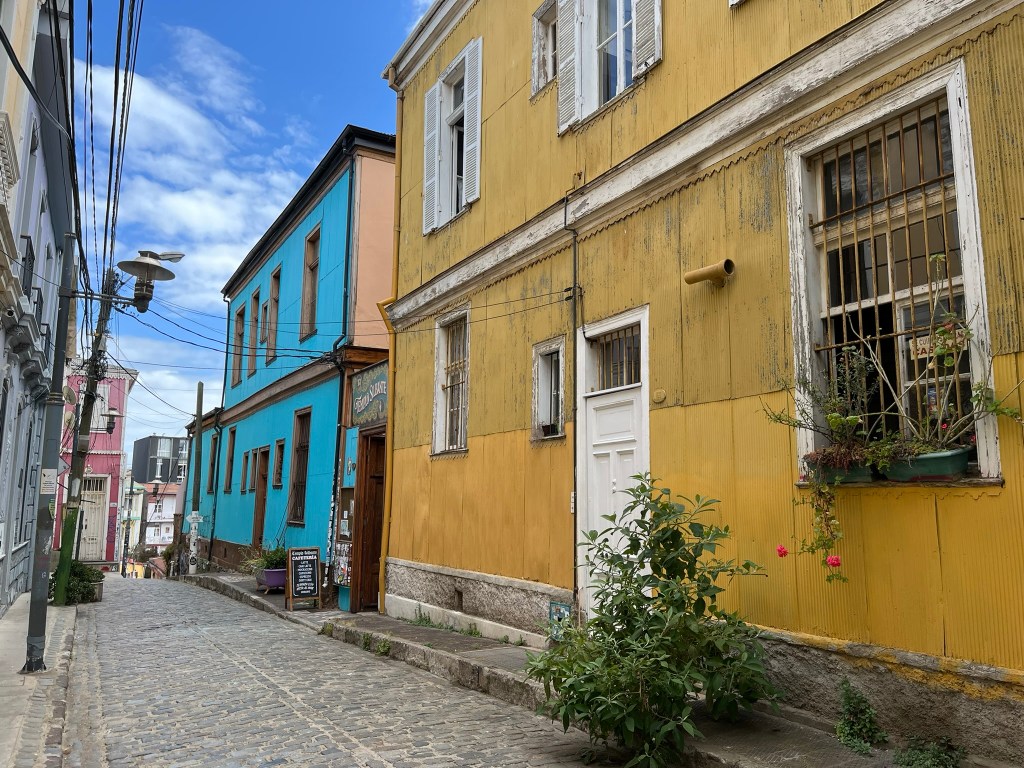
Valparaiso’s historic quarter became a UNESCO World Heritage Site in 2003, as an outstanding example of late 19th century urban and architectural development in South America. It has a unique urban layout, with adaptation to extremely steep terrain, winding streets, funiculars and terraced housing. The houses have a wooden frame, but are covered in corrugated iron taken from old ships to protect against the salty sea air. The houses are brightly painted, and the reason is said to be that residents used up the paint left over from painting the boats. It is a chaotic city and considered a masterpiece of human adaptation to geography.

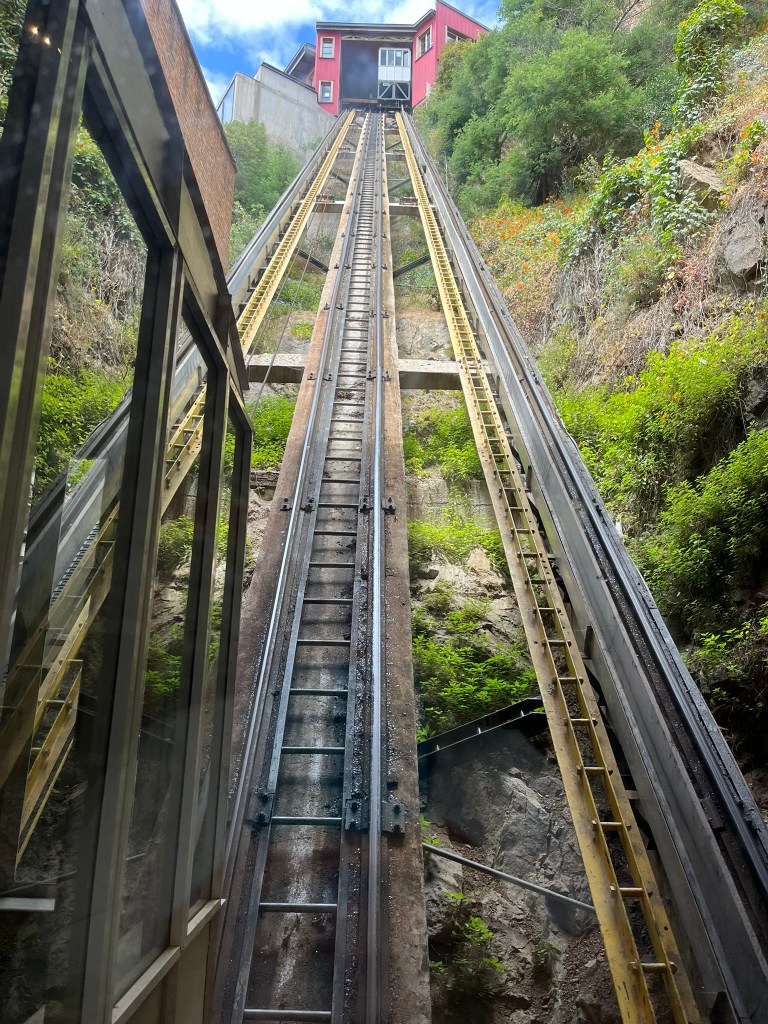
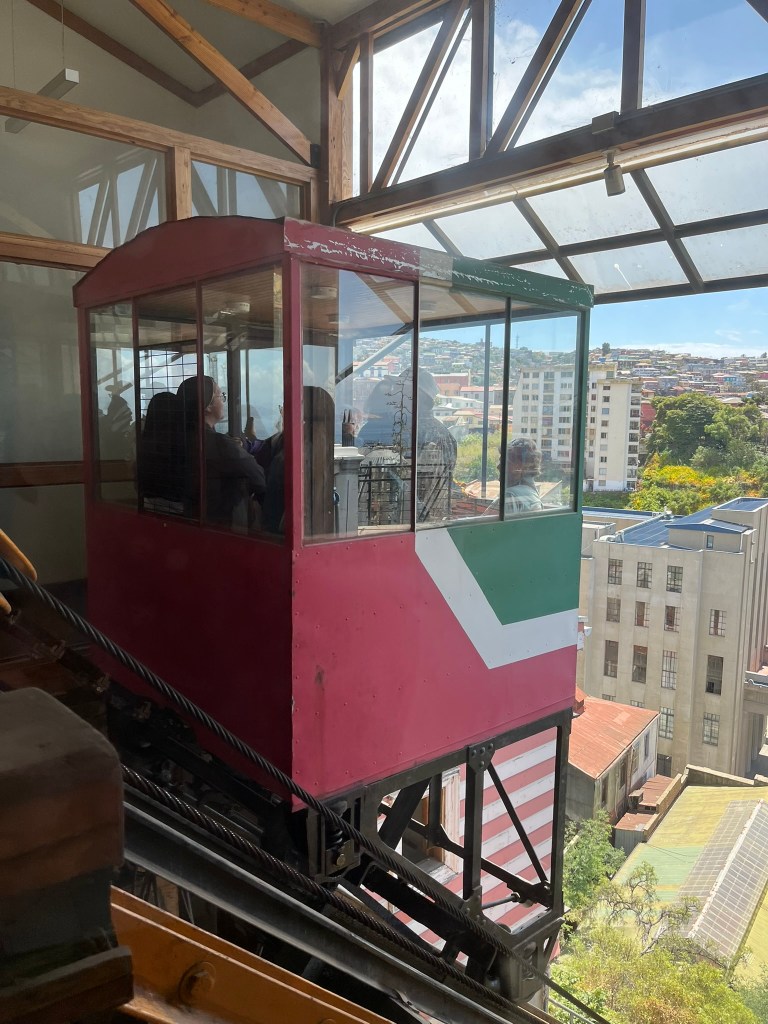
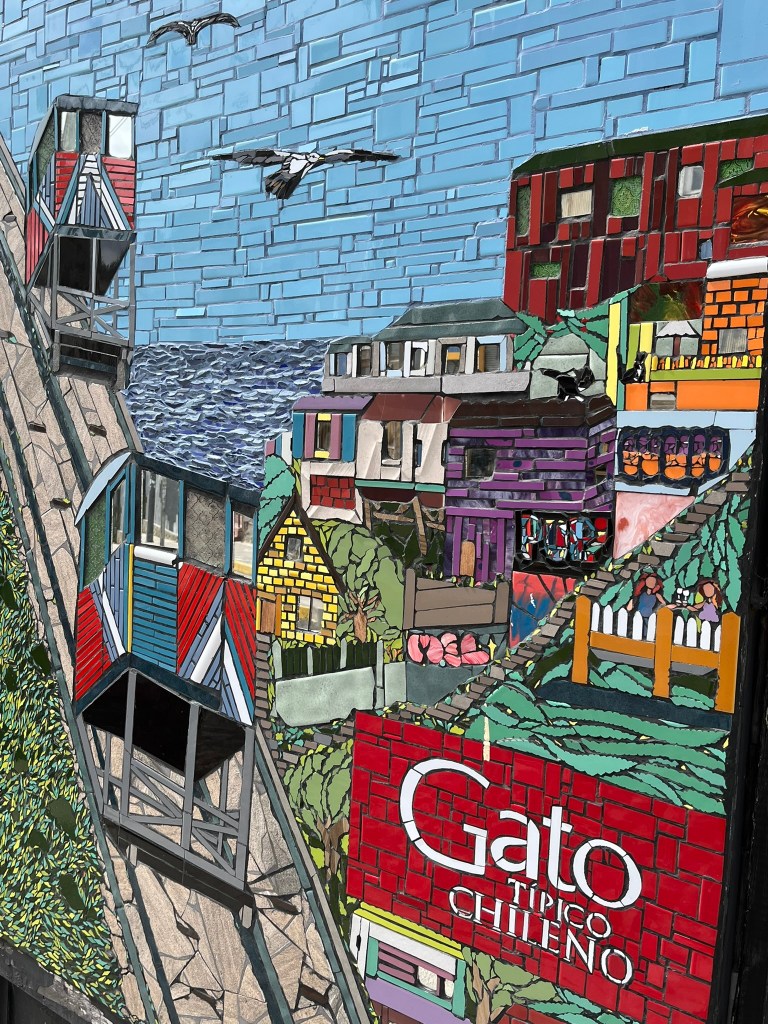
One of the highlights of the city are the wooden funiculars built in the late 19th and early 20th century, considered amongst the oldest in South America. At its peak there were around 30 funiculars in operation, but today there are only around 5 operating, although the city is working to get more up and running. They were originally privately owned, and served the working and middle-class residents who lived on the hills around the port and needed quick access to jobs and the markets below. Today, they mostly serve tourists exploring the city, costing between 10-50 pence per trip. Each funicular consists of two wooden cars counterbalanced on a shared cable, as one ascends and the other descends. Early models used steam or water-ballast systems, but were later converted to electric motors, but many still use the original iron pulleys and gear systems. Most rides last under a minute but are a novel way to travel around the town.
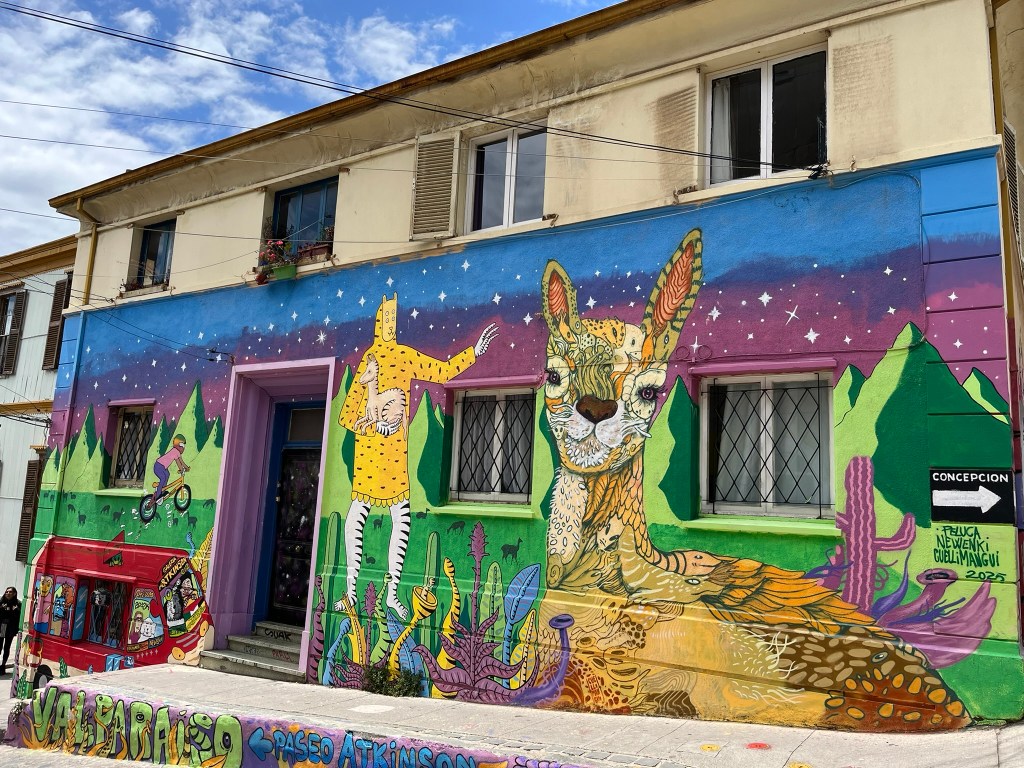
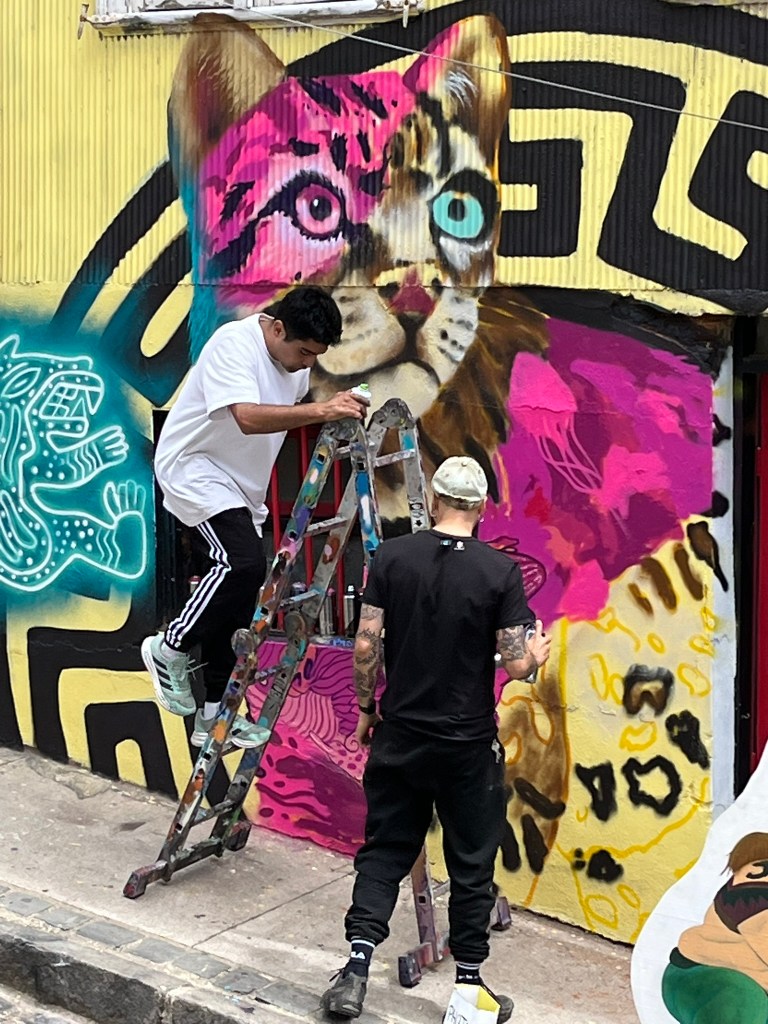
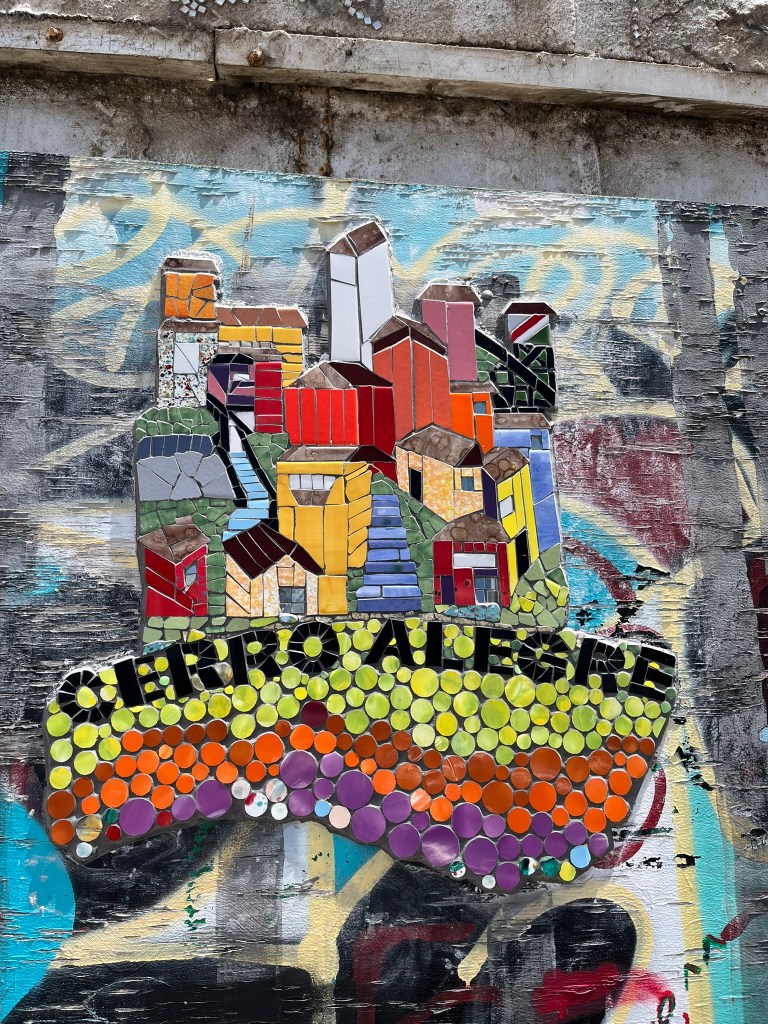
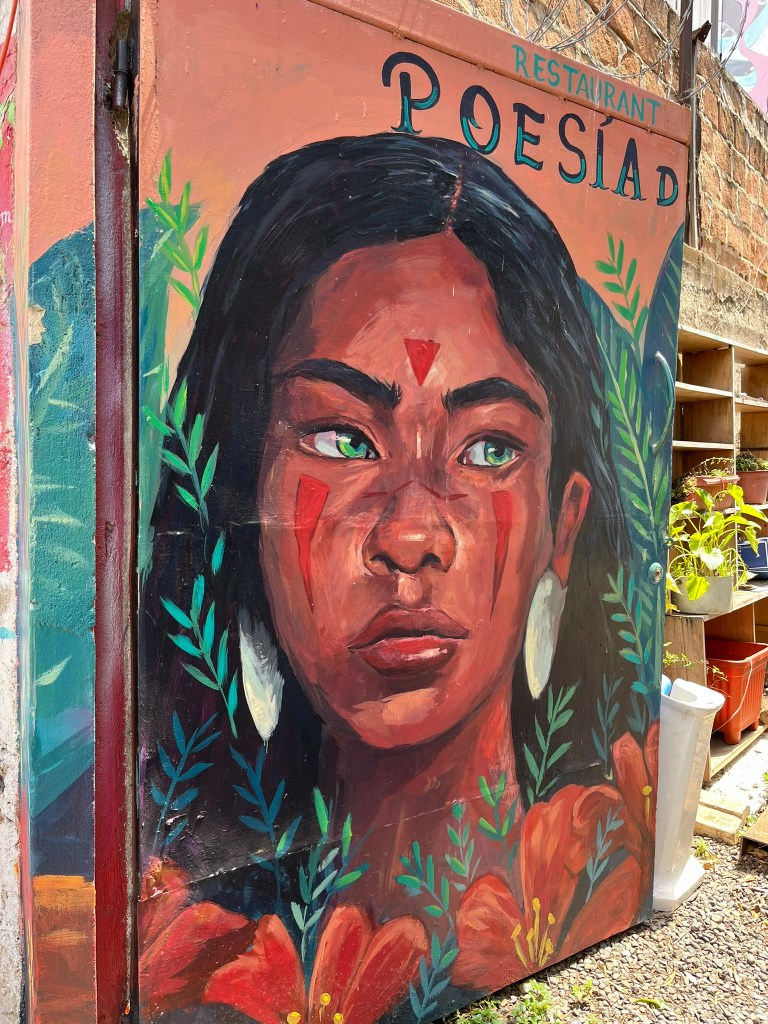
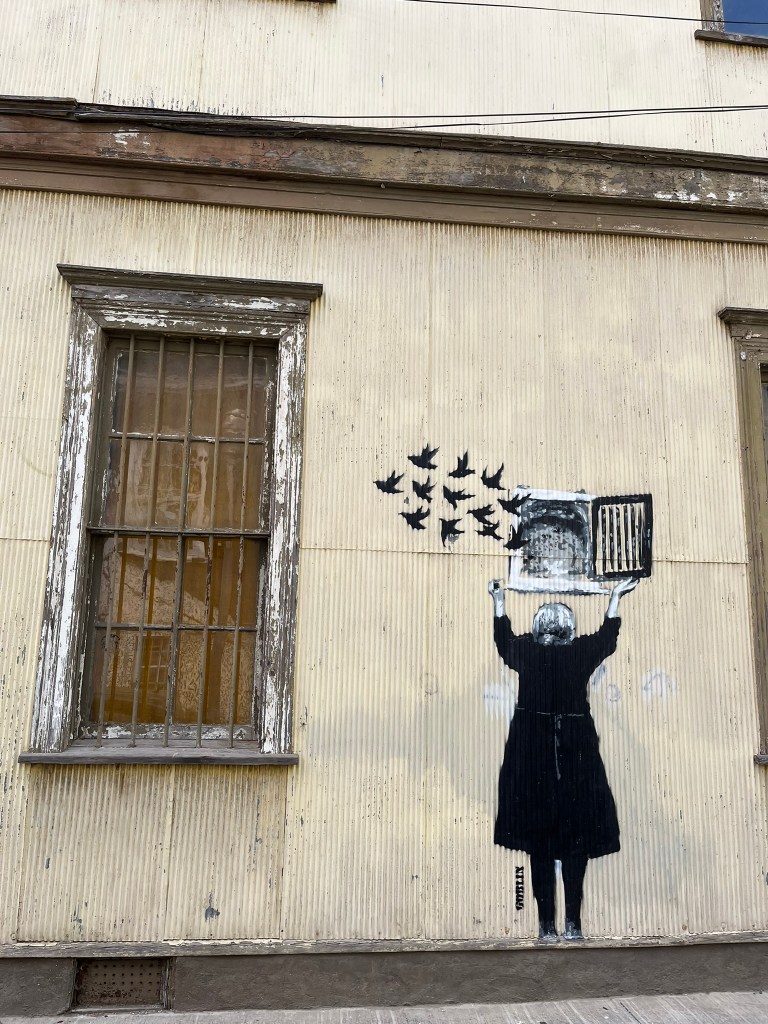
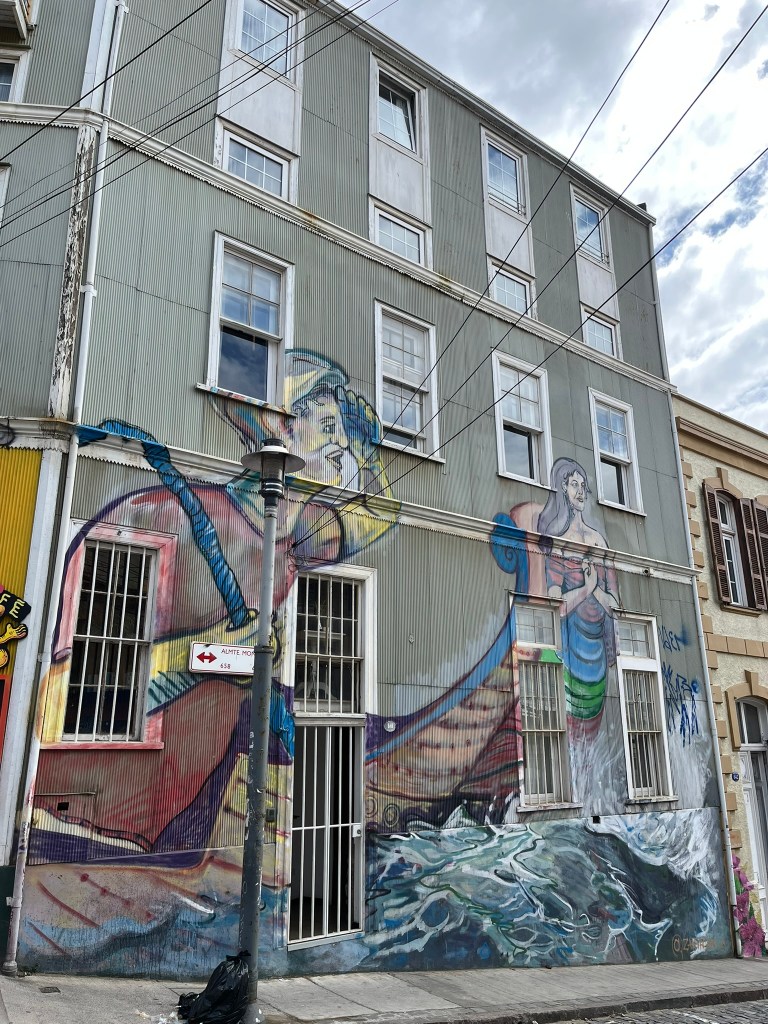
During Pinochet’s regime, Valparaiso became a center of underground artistic resistance, which directly shaped its later street art culture that thrives today. The city is often called the street art capital of South America. The murals that cover the city began as expressions of political dissent but have now evolved into an internationally recognised open-air gallery.
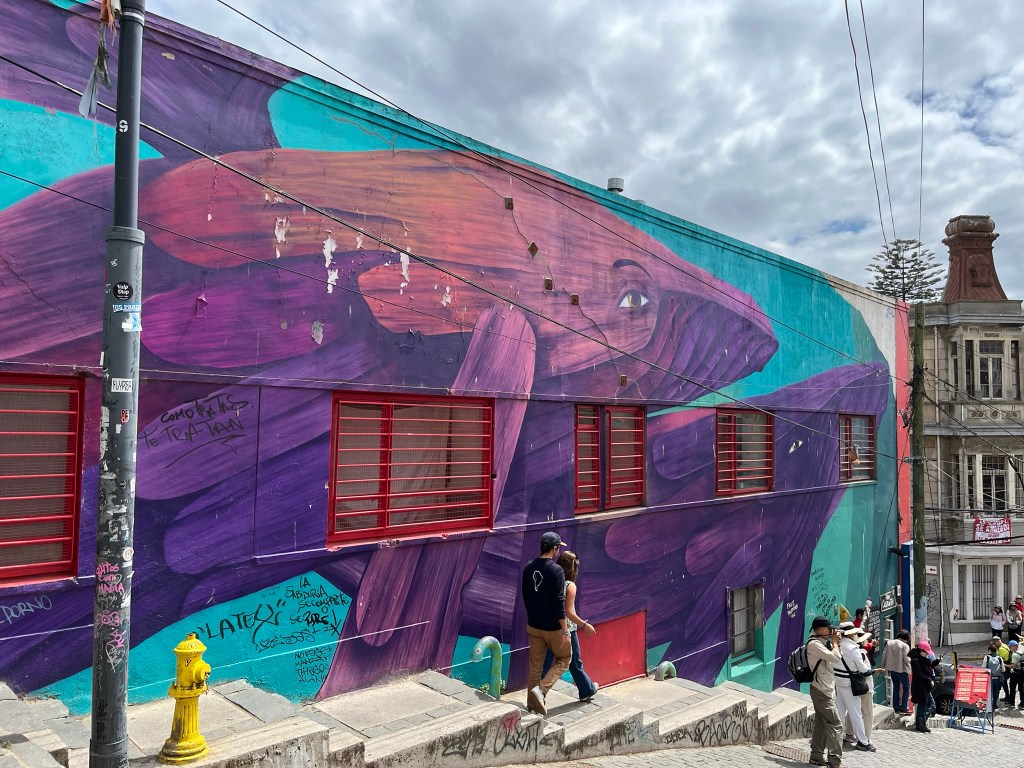
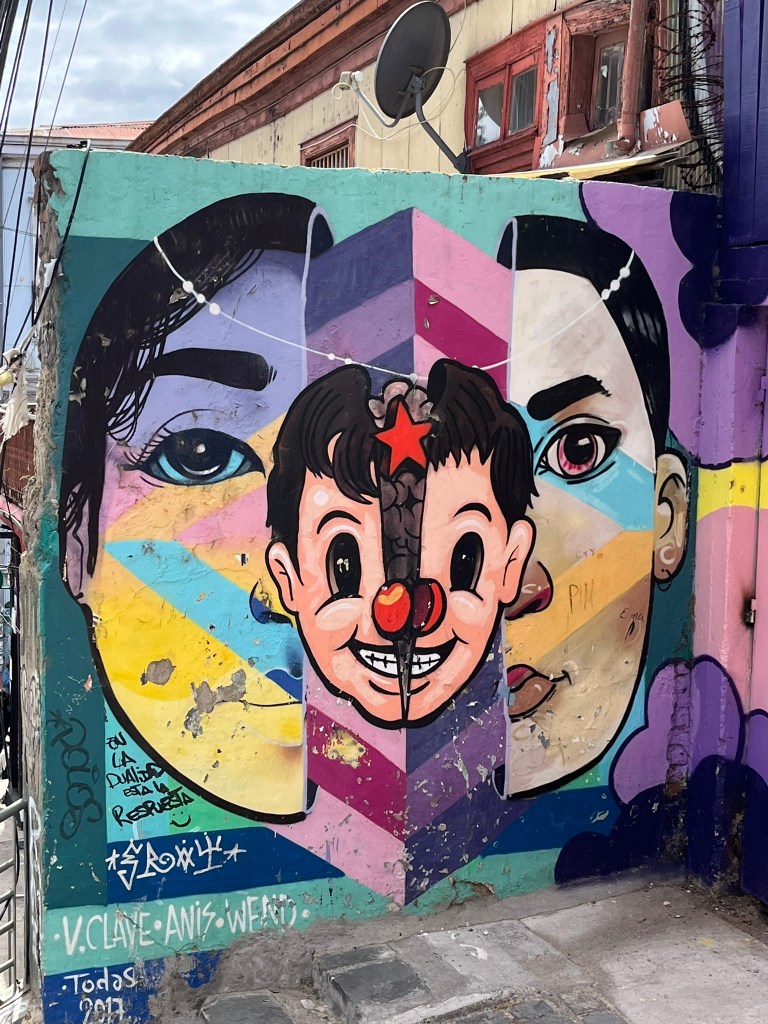
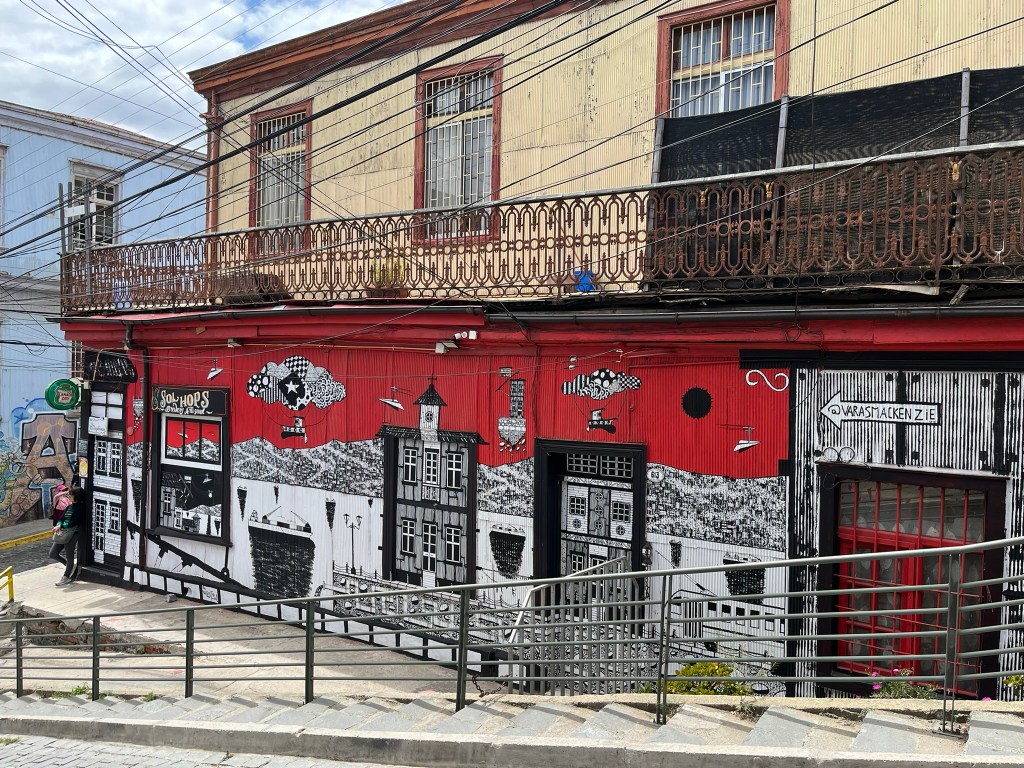
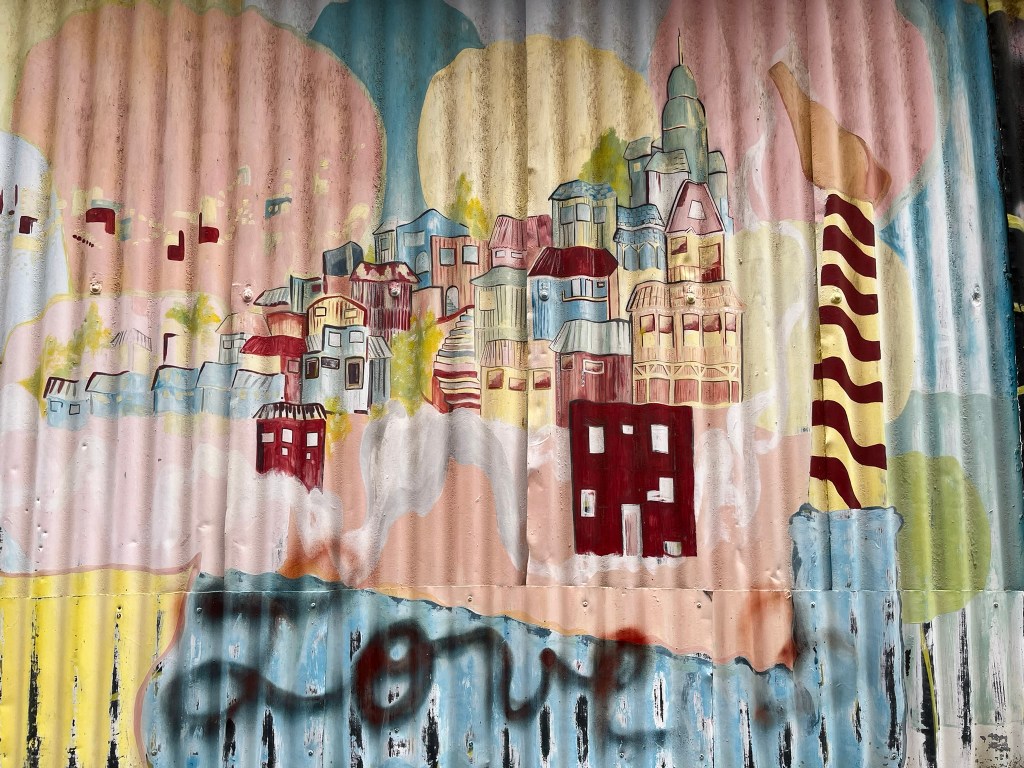

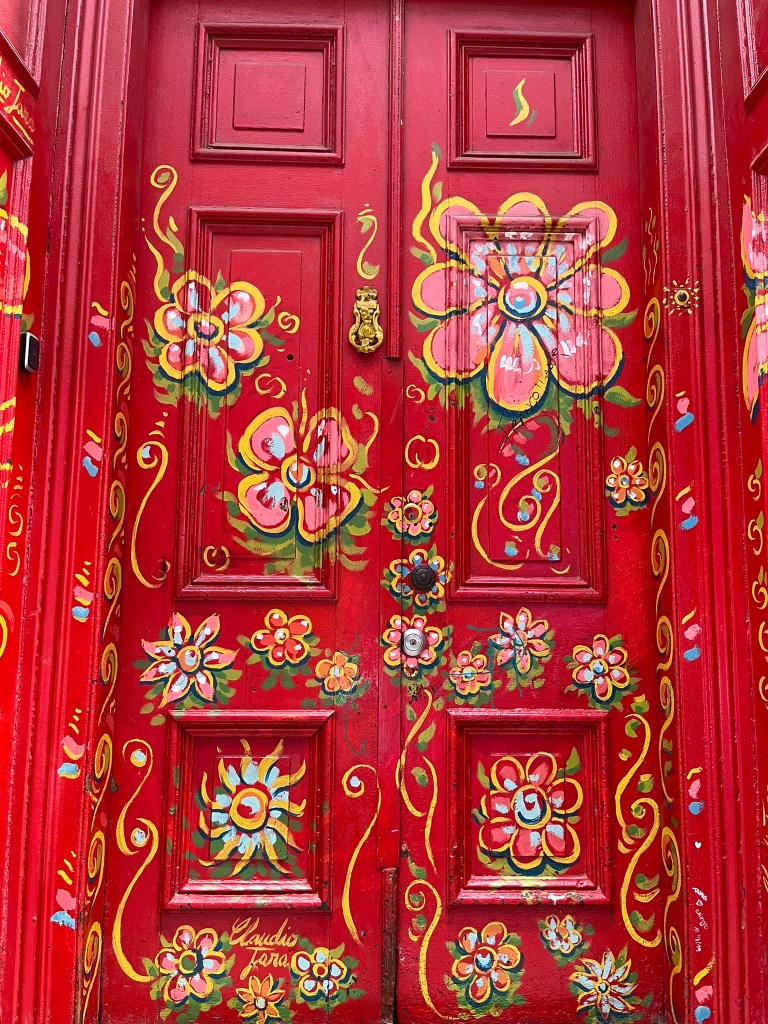
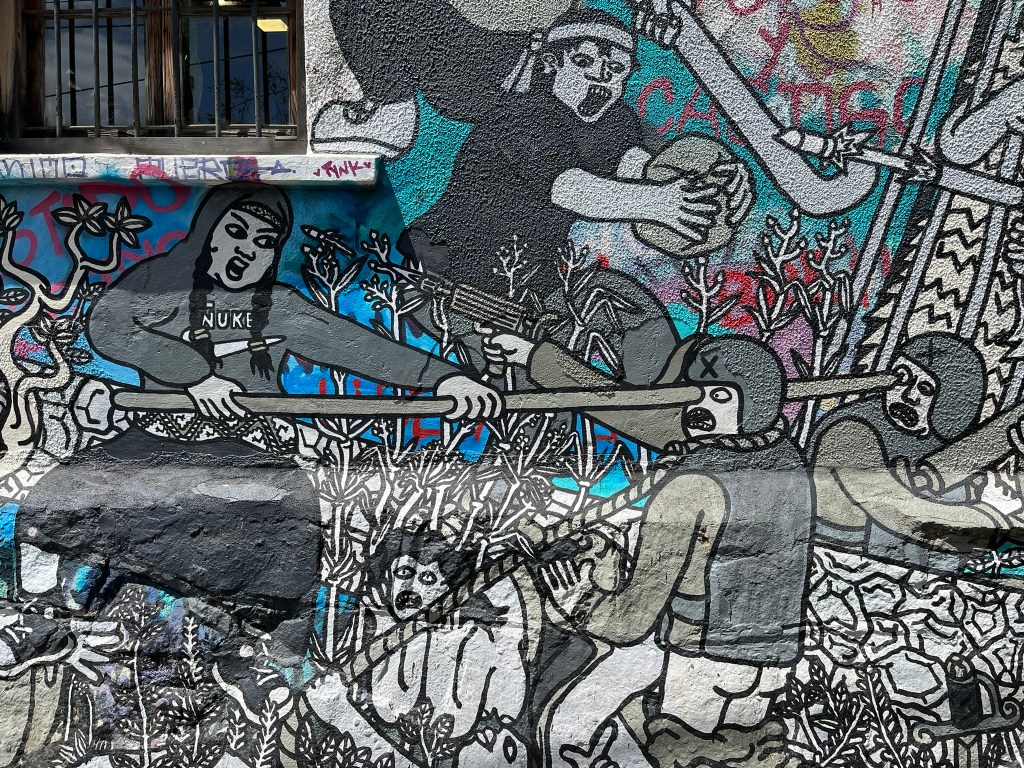
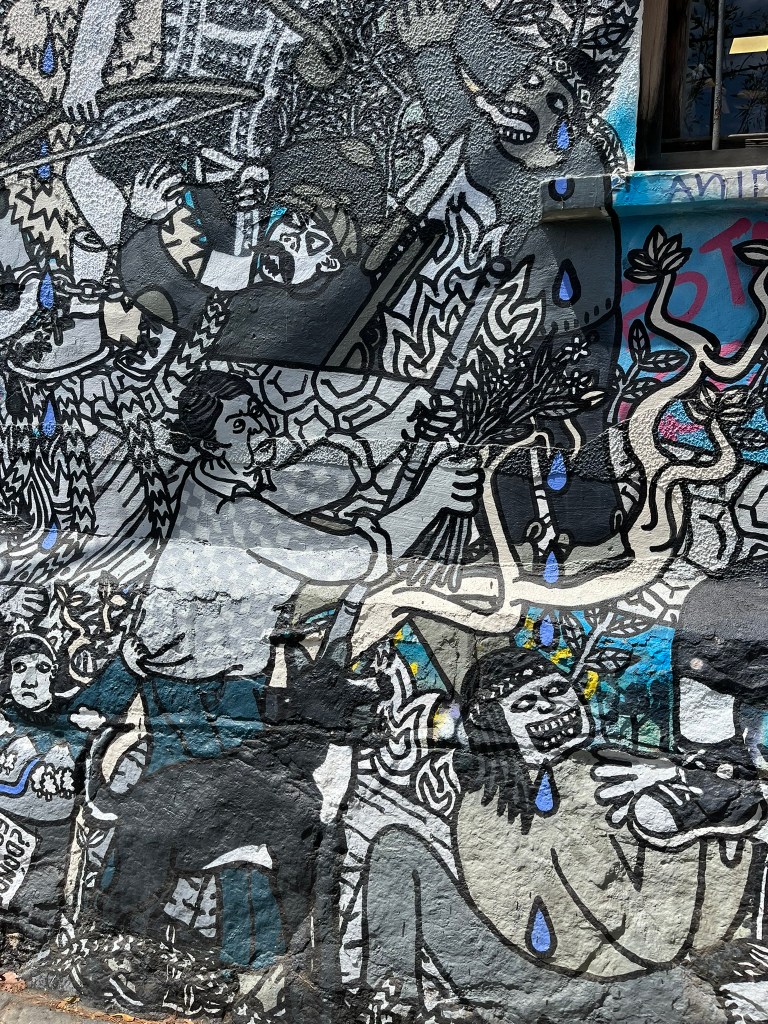
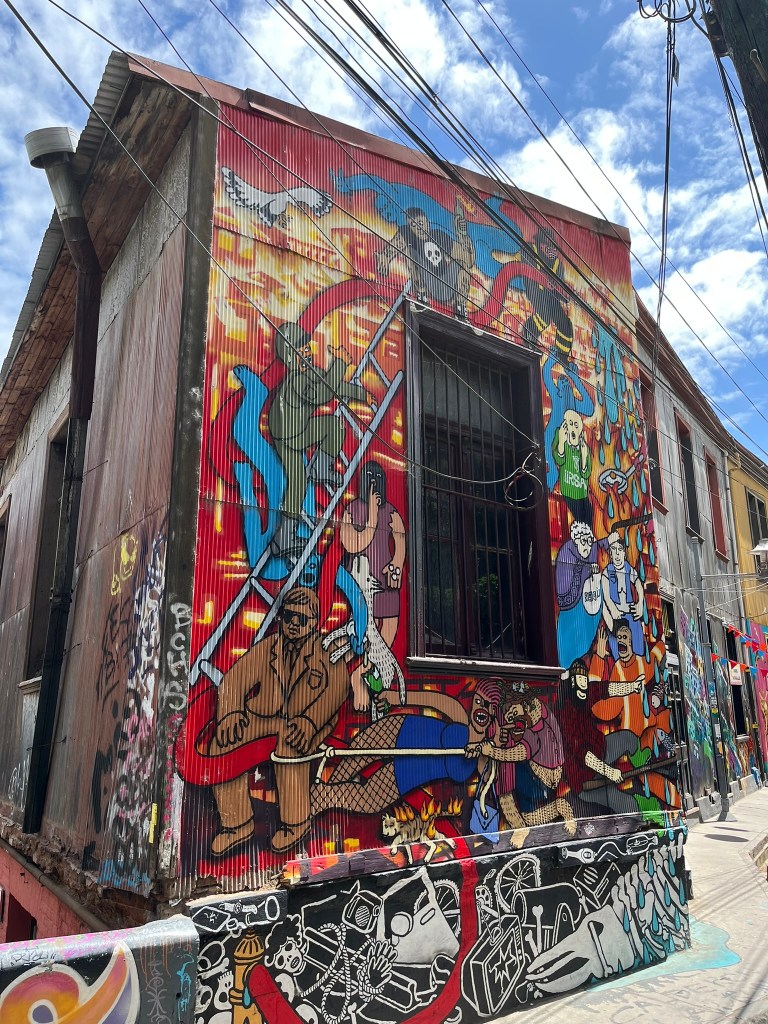

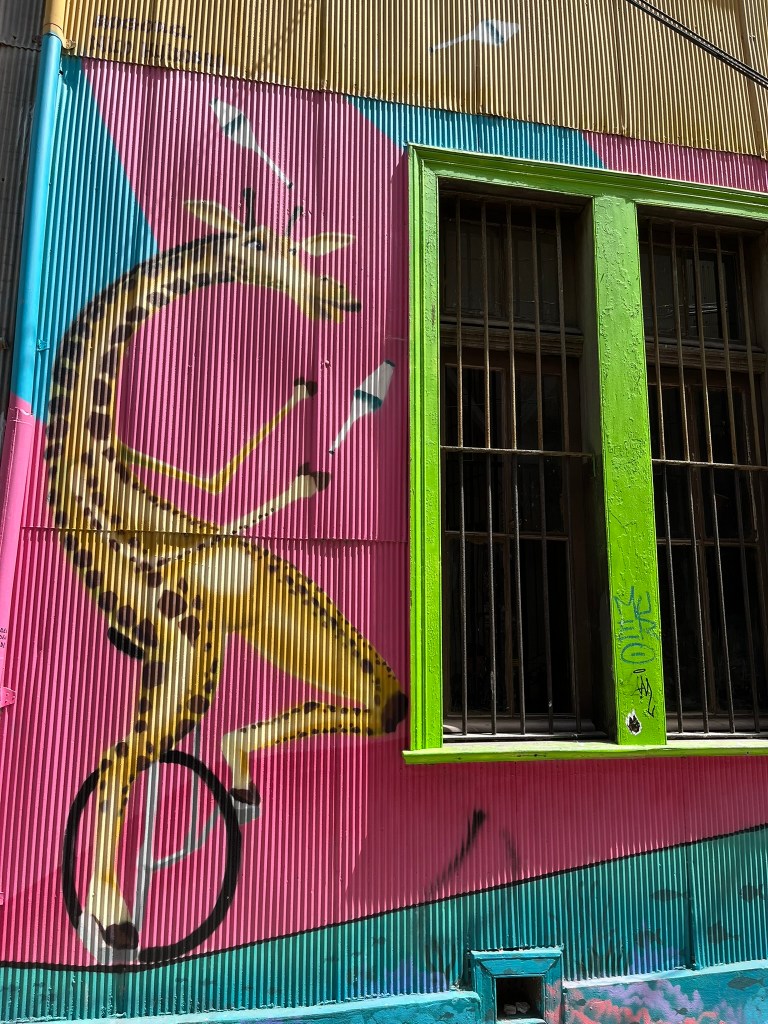
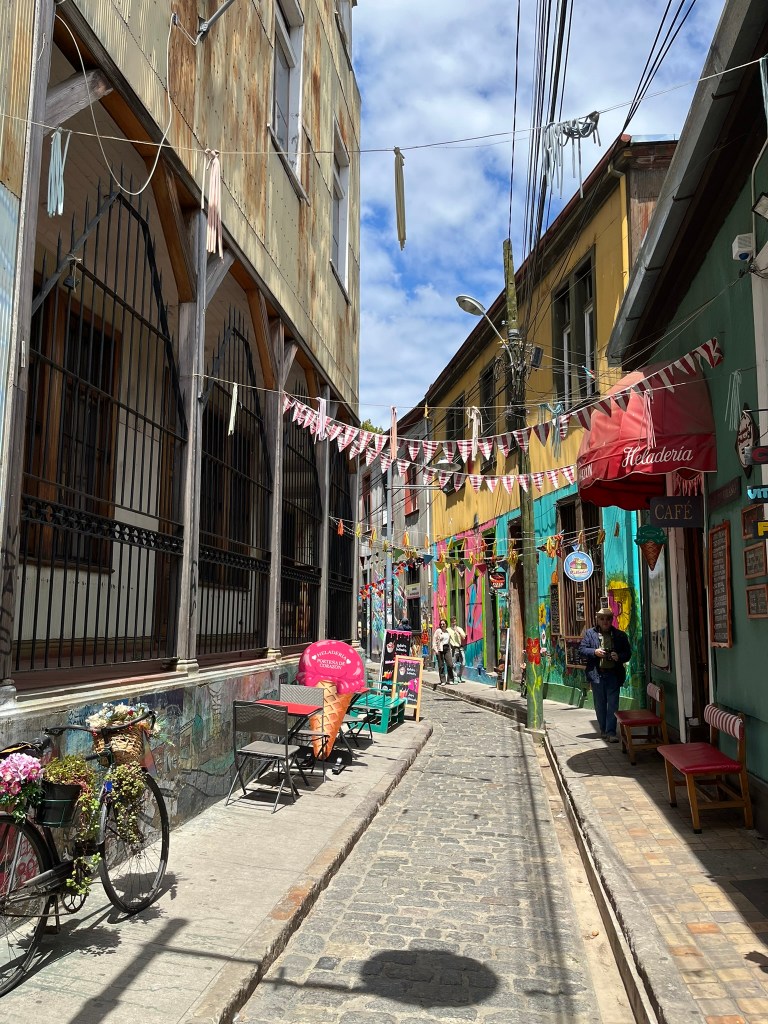
We started our walking tour of the historical quarter at the higher levels of Cerro Alegre or Concepcion (I’m not sure which) and zig-zagged our way through the streets. The area is an explosion of color with houses painted in bright reds, blues, yellows and greens and fantastic murals painted on almost every building and street corner. This is not low-quality graffiti, but art work that has been commissioned by the owners to cover their buildings from well-regarded local street artists. The range of artwork is broad and as you go from one street to another its easy to start recognising different artist’s distinctive styles. The area is a maze of windy streets and was definitely worth having a guide who could take us to the best spots with the most iconic art.
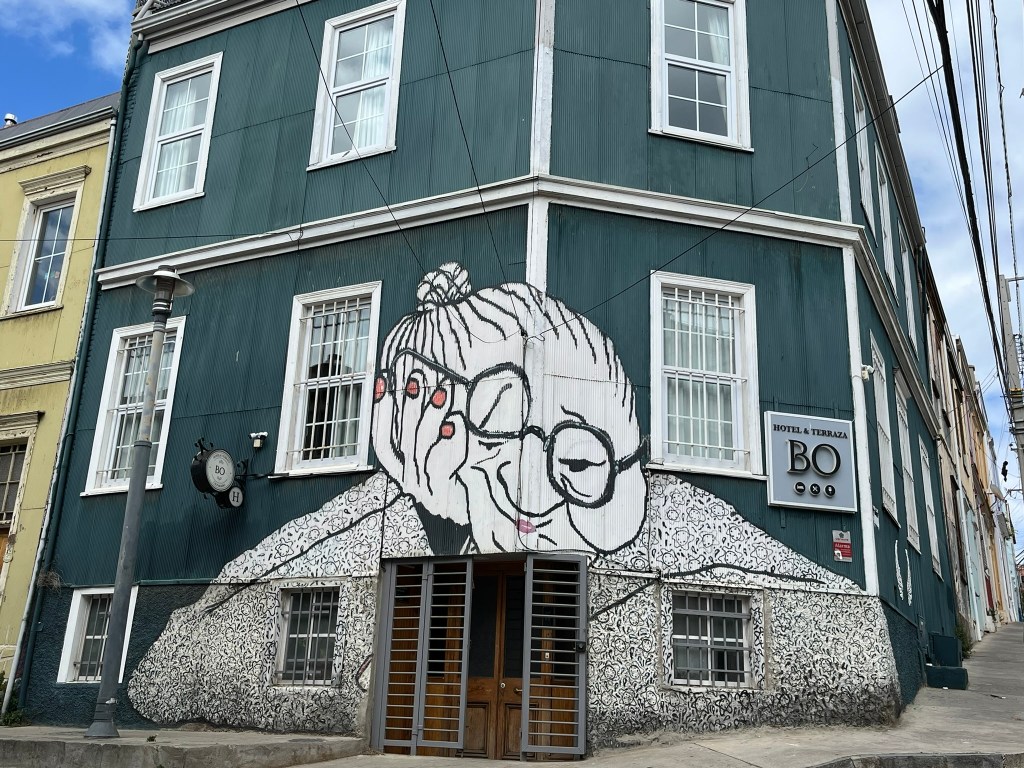
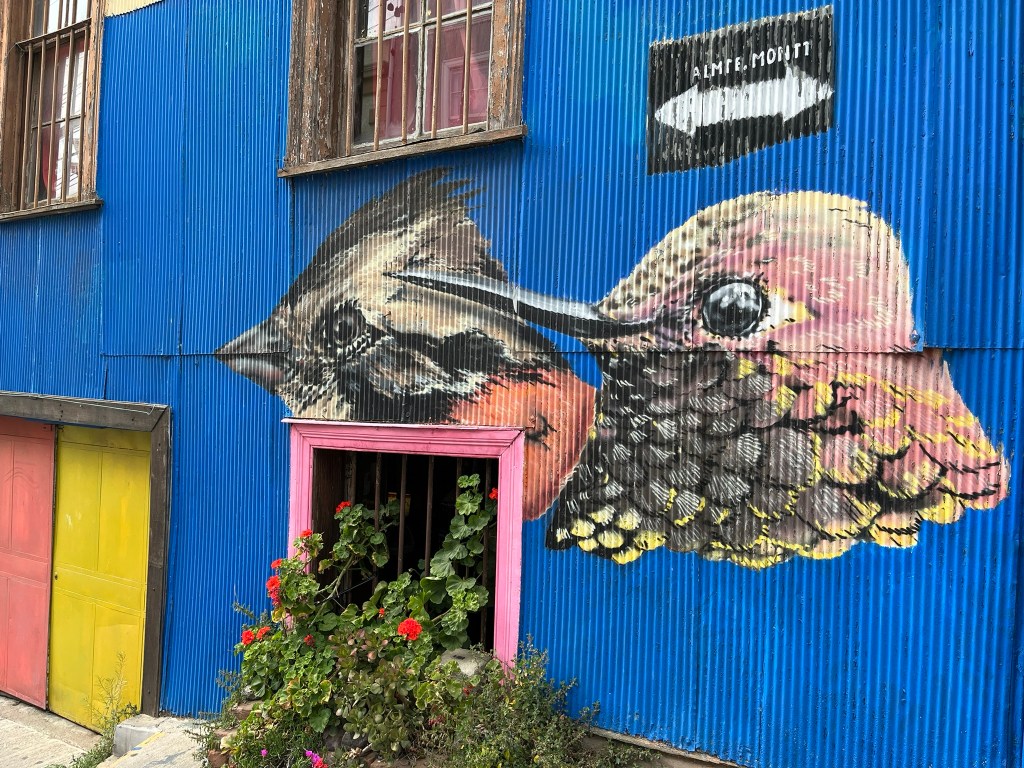
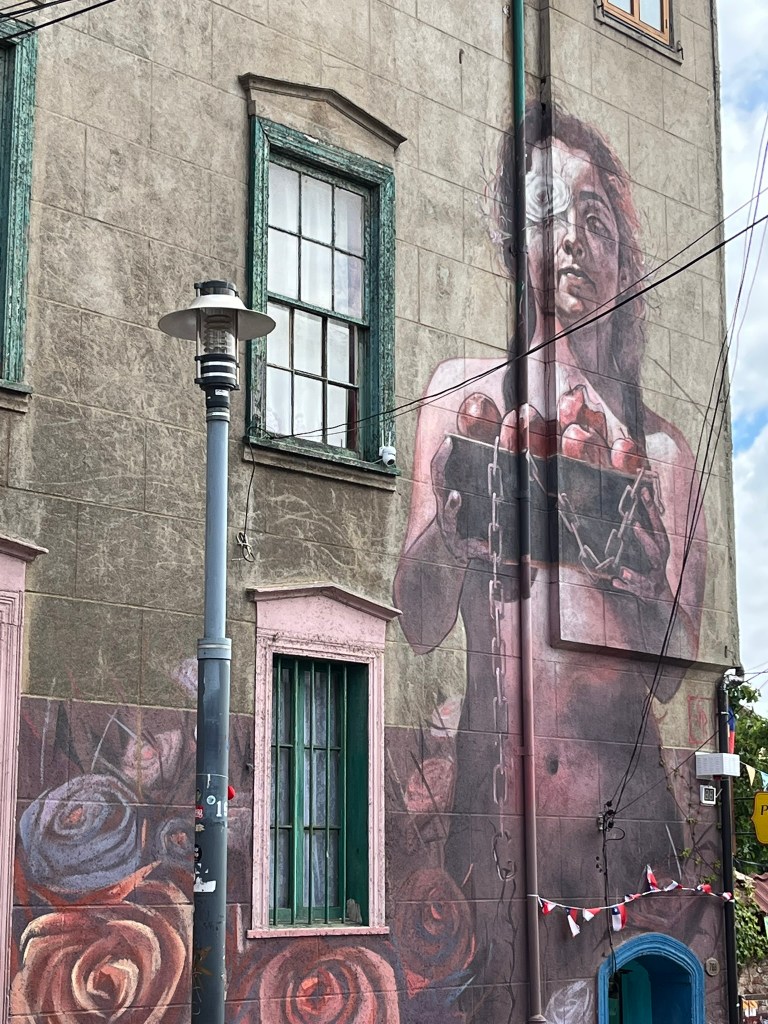
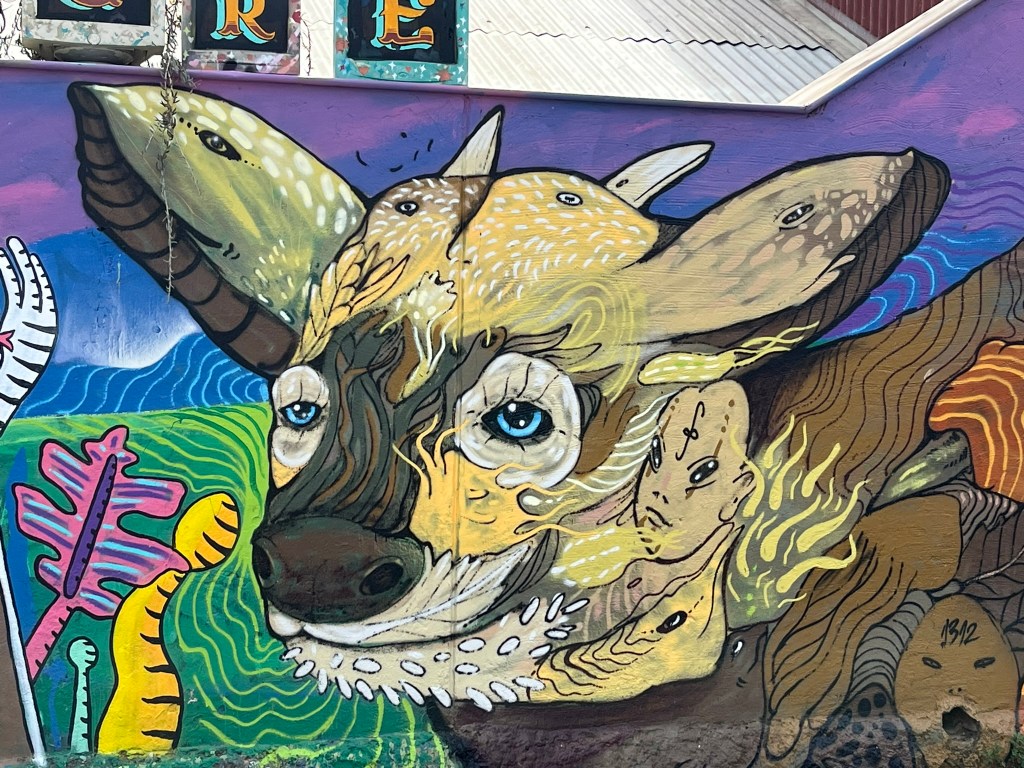
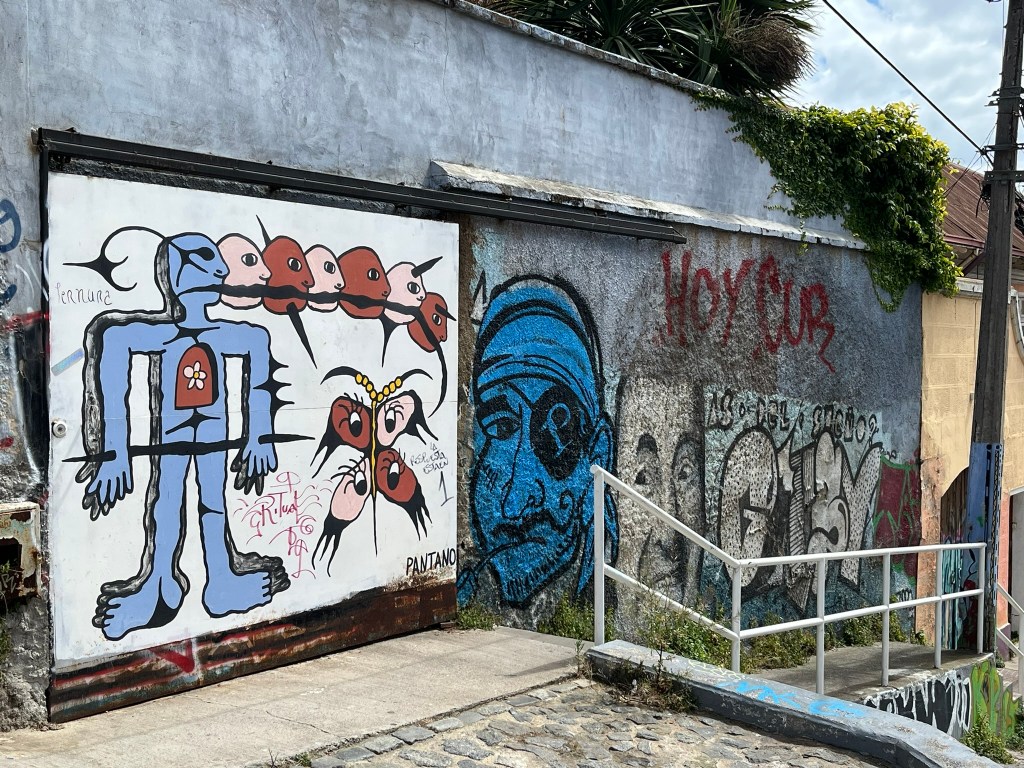

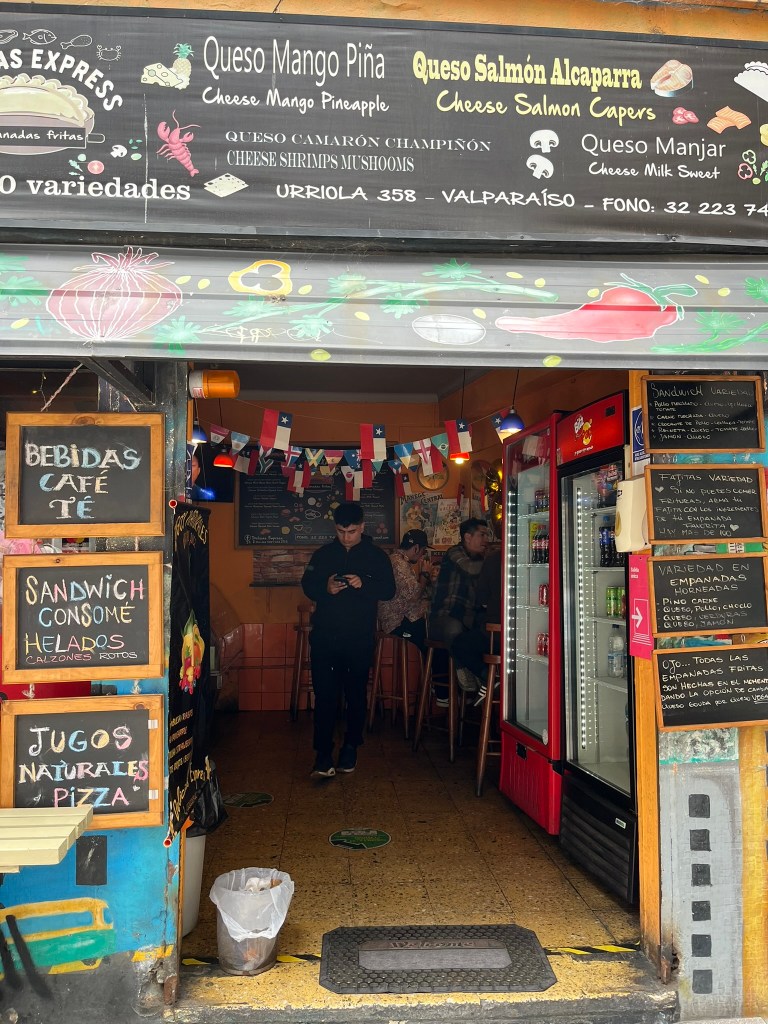
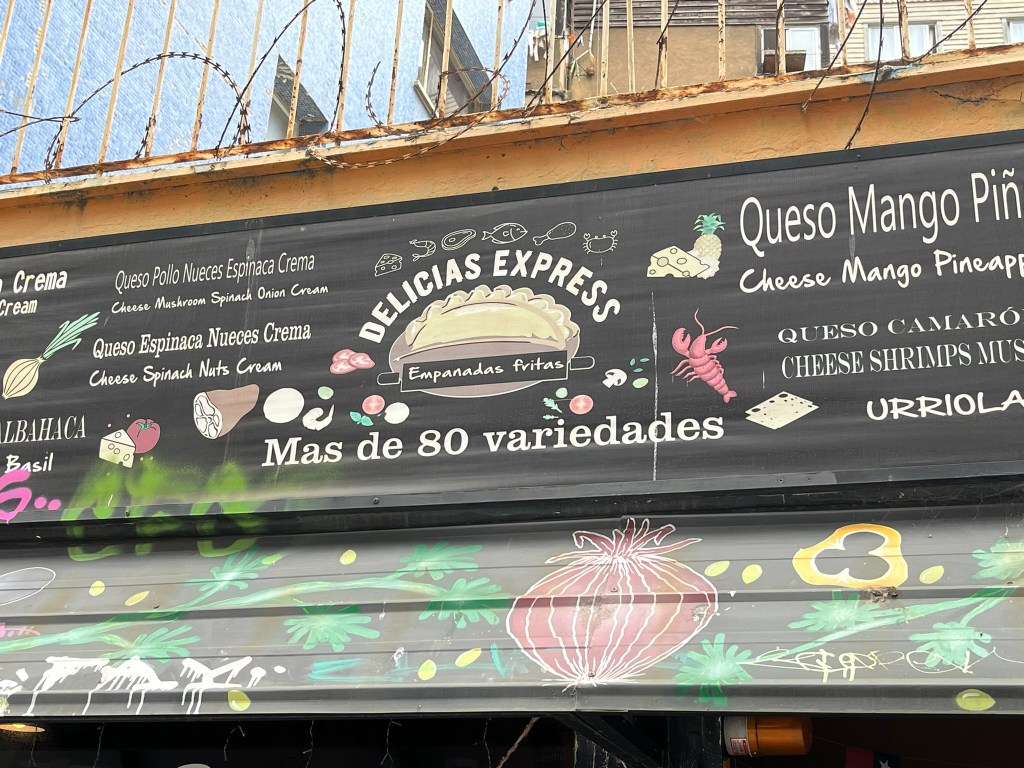
We spent around 3 hours enjoying the art work, corrugated housing and view points down to the bay, before heading down to the flat area of town via funicular for a well-earned lunch break of empanadas. Our guide recommended a small hole-in-the-wall spot that offered a huge menu of over 100 flavor combinations, all freshly made to order. The speciality in Valparaiso is to get one packed with seafood, with options like scallop and cheese or octopus and red peppers. They are enormous and one per person is more than enough. But they are absolutely delicious and I recommend finding this particular spot if you find yourself ever having lunch in Valparaiso.
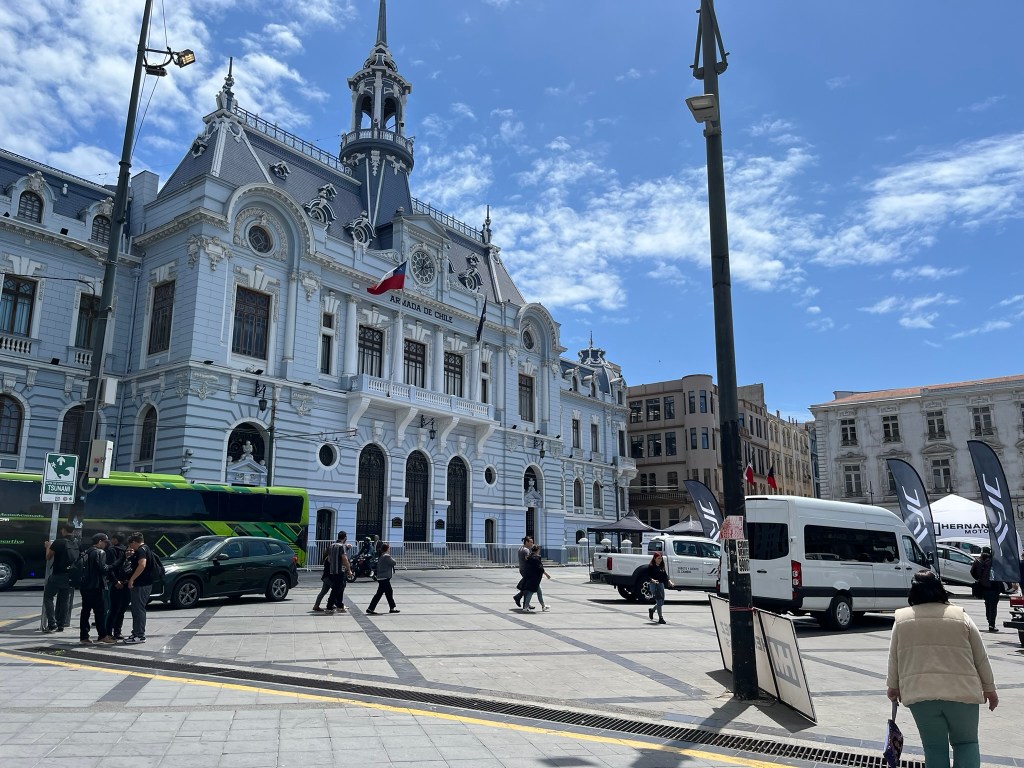
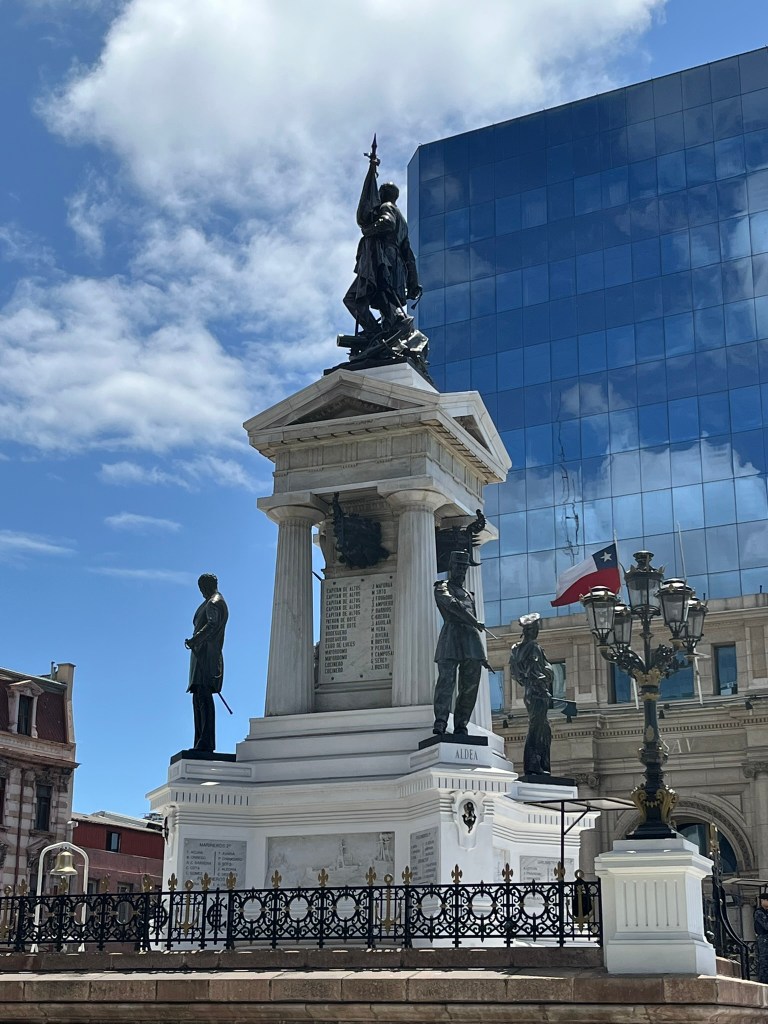
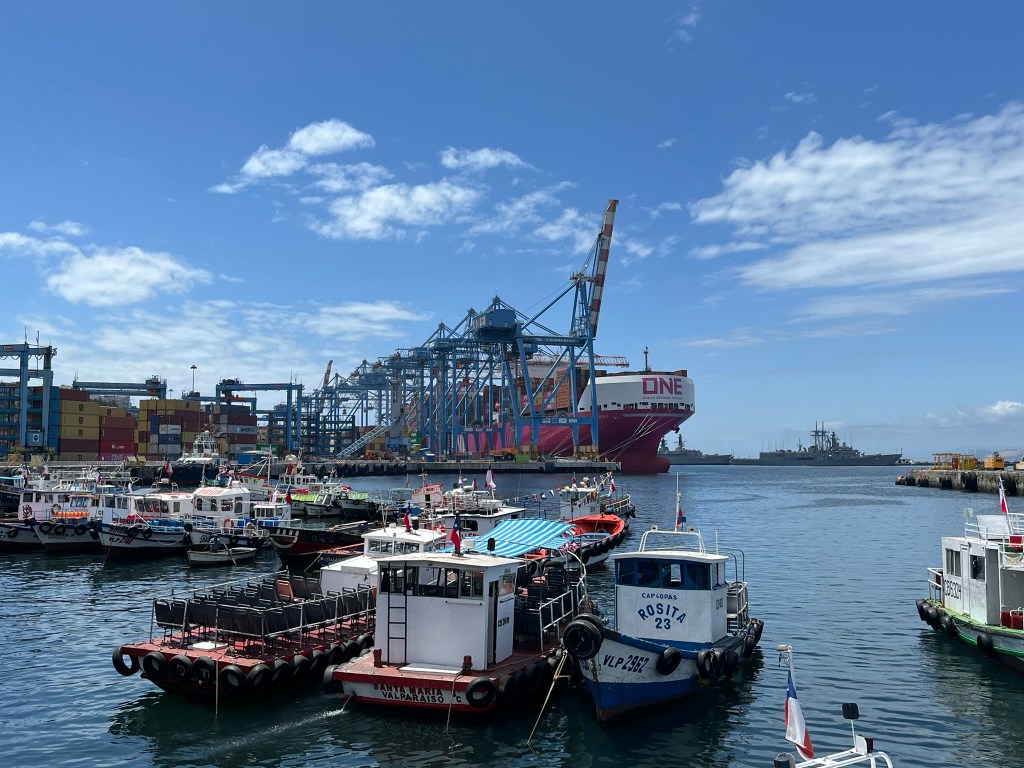
After a short walk around Plaza Sotomayor, the city’s central square, framed by the Naval Headquarters and the Monument to the Heroes of Iquique, and a quick look at the pier full of fishing boats, we headed off to the adjacent city in the bay – Vina del Mar.
Vina del Mar literally translates to ‘Vineyard of the Sea’ and is Valparaiso’s elegant and modern twin city. It is a seaside resort with beaches, palm-lined avenues, manicured gardens and grand early 20th century villas. Whilst Valparaiso is chaotic and bohemian, Vina del Mar is its calm and polished counterpart. It is a planned garden city from from Chile’s belle-epoque period of prosperity and is now one of the country’s most popular holiday destinations.

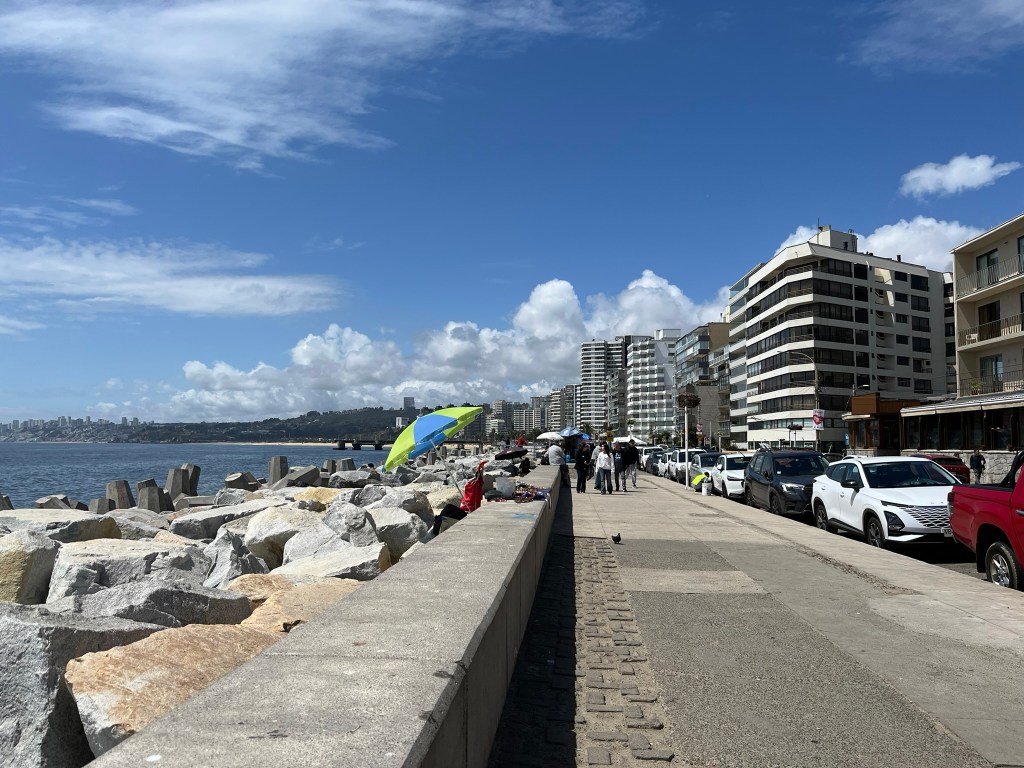
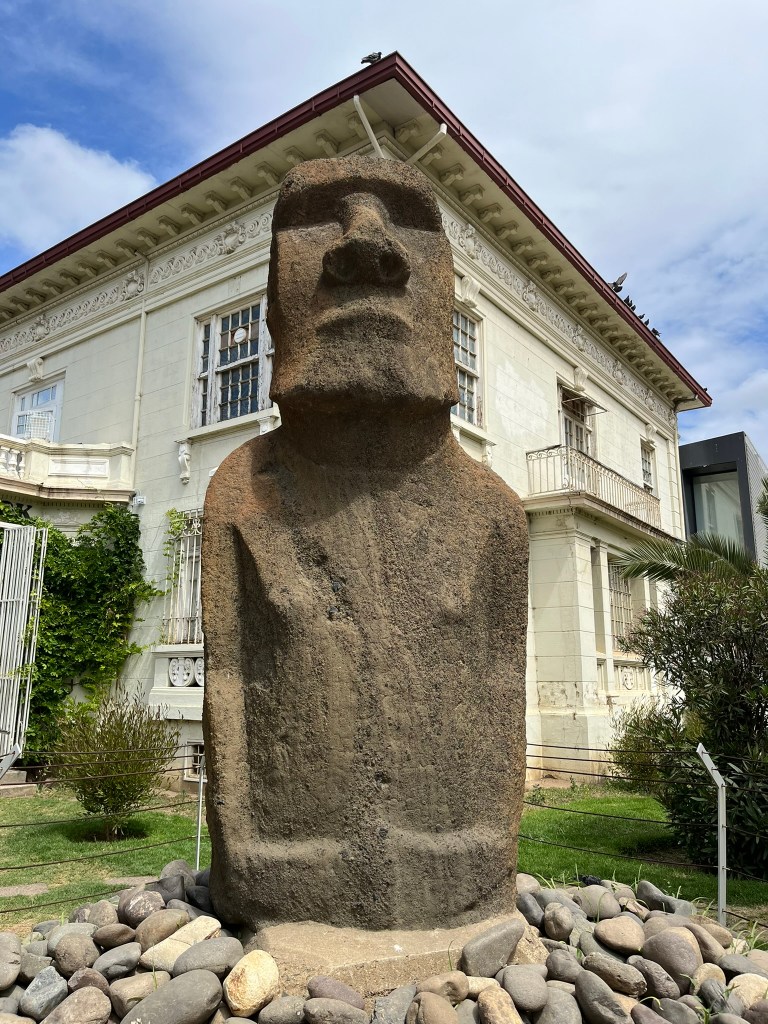
When the city was originally founded in 1878 it was envisioned as a transport hub between Valparaiso and Santiago with a railway built (that could not be built in the hills of Valparaiso itself), making the area accessible and attracting wealthy families who built summer villas and gardens. Prior to this development the area had simply been farmland belonging to two large estates. Although a nice place to visit for an hour at the end of the day, it wasn’t anywhere near as exciting as Valparaiso. The main highlight for me was seeing our first Moai statue, outside the Museo Funck. This is one of the few original Moai statues that is located off of Easter island and gave us a taste of what to expect when we head there in a few days time.
Valparaiso and Vina del mar are an easy day trip to do from Santiago, with the journey each way taking about 80 minutes.
 Colette's Grand Detour
Leave a comment