The drive from Otrar to Shymkent took around 3 hours and the flat unchanging landscape over such a long period of time gives you a sense of just how big and empty this country really is. The photo below shows what our view was for pretty much 90% of the time!

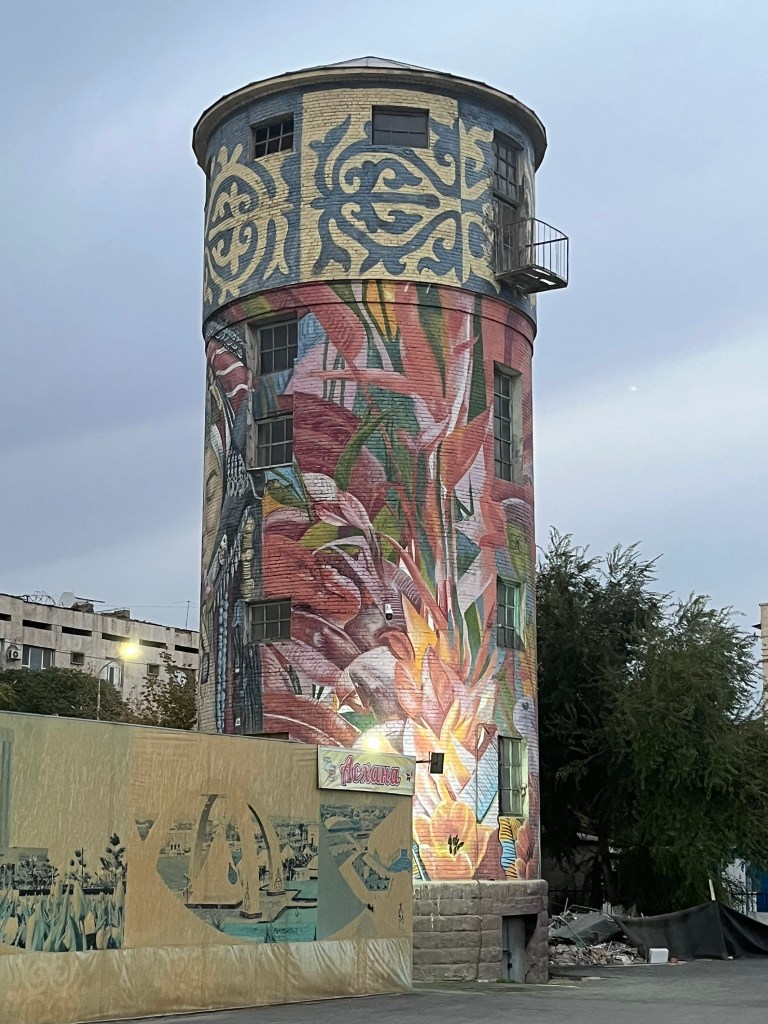
We did not have a chance to explore Shymkent except for an early dinner and drive to the train station. However, just driving around it seemed like a lovely place. The roads were all tree-lined and there were nice murals on the side of many buildings. Shymkent is the third largest city in Kazakhstan with a population of ~1.3 million. Historically it was a key silk road city and has been invaded and destroyed many times over the centuries. Nowadays it is a modern and vibrant city.
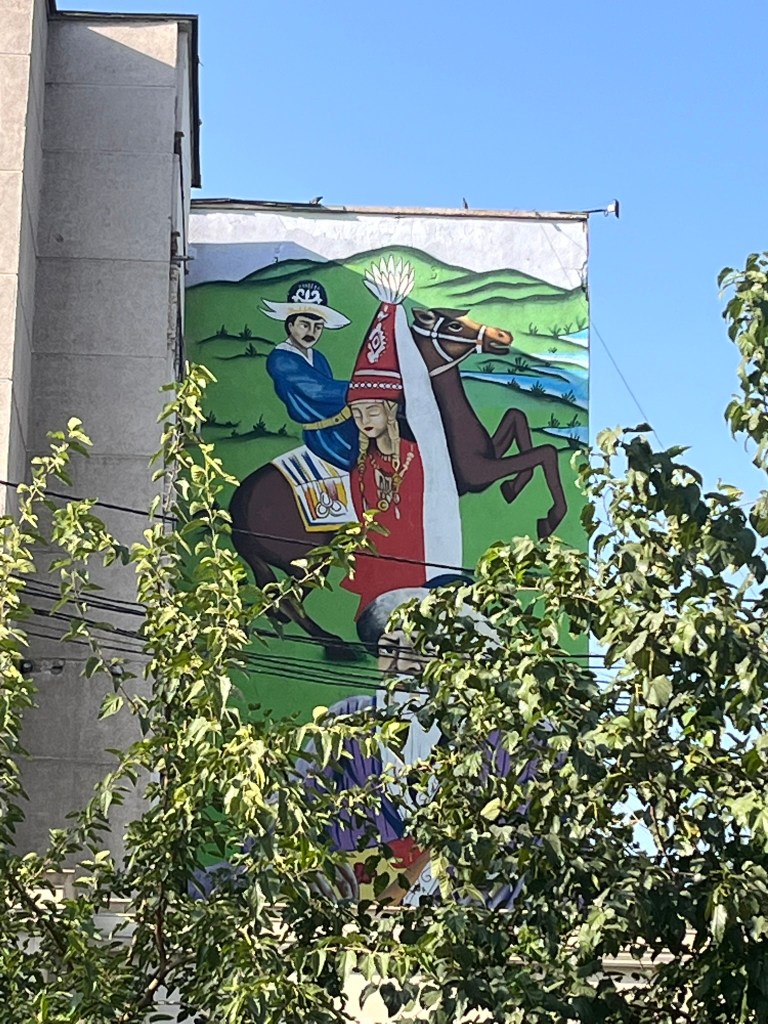
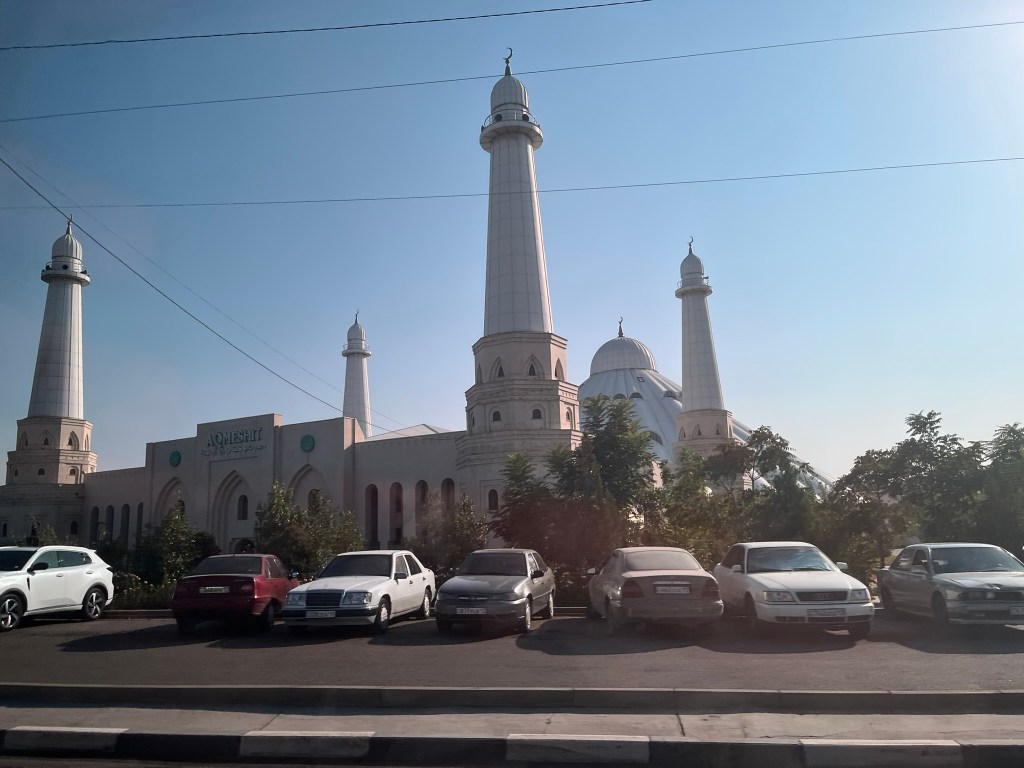
The symbol of Shymkent is the tulip and you could spot it in lots of places, with giant ones in the middle of roundabouts and small ones on the guardrails along the sidewalks. Our guide shared a very interesting fact with us whilst we briefly stopped in this city. She asked us where tulips come from. All of us quickly stated the Netherlands. And wondered where this story would go. It turns out the native habitat and where tulips that are grown all over the world today come from, is southern Kazakhstan! Over 60 wild species grow in the foothills of the Tien Shan mountains. These are the ancestors of all cultivated tulips that we enjoy today.
Over time, Turkic tribes took tulip bulbs to Persia and the Seljuks brought them to Anatolia. However, it was during the Ottoman empire that tulips really flourished away from Kazakhstan. Sultan Suleiman the Magnificent (16th century) was apparently obsessed with the flower and they became a symbol of paradise and beauty within the empire. Overtime painters, tilemakers and textile artists added them into their motifs. Which actually explains why you see them so much in the decorative tiles that you see everywhere in Istanbul. The 18th century is known as the Tulip era in Ottoman history, with richer households competing to grow rare varieties and tulip parties frequently held.
From Turkey, tulips were brought to the Netherlands by traders and travelers in the 16th century. And this is where the Tulipmania in Europe began. So tulips originate in Kazakhstan, which I feel like is a very little known fact.
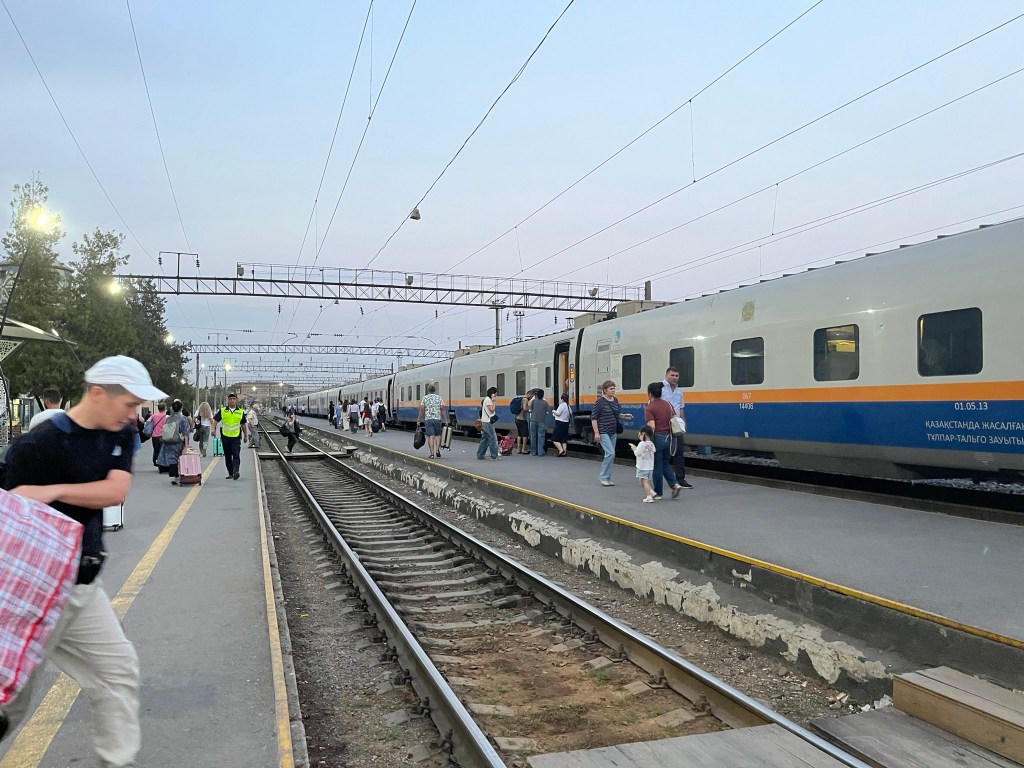
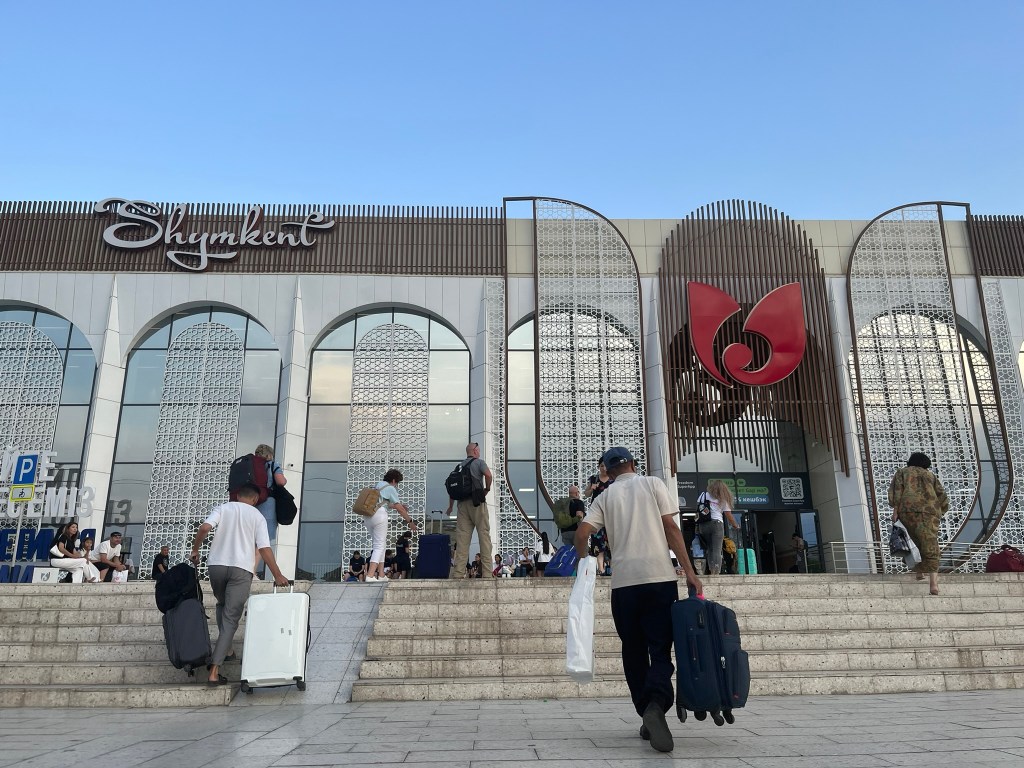
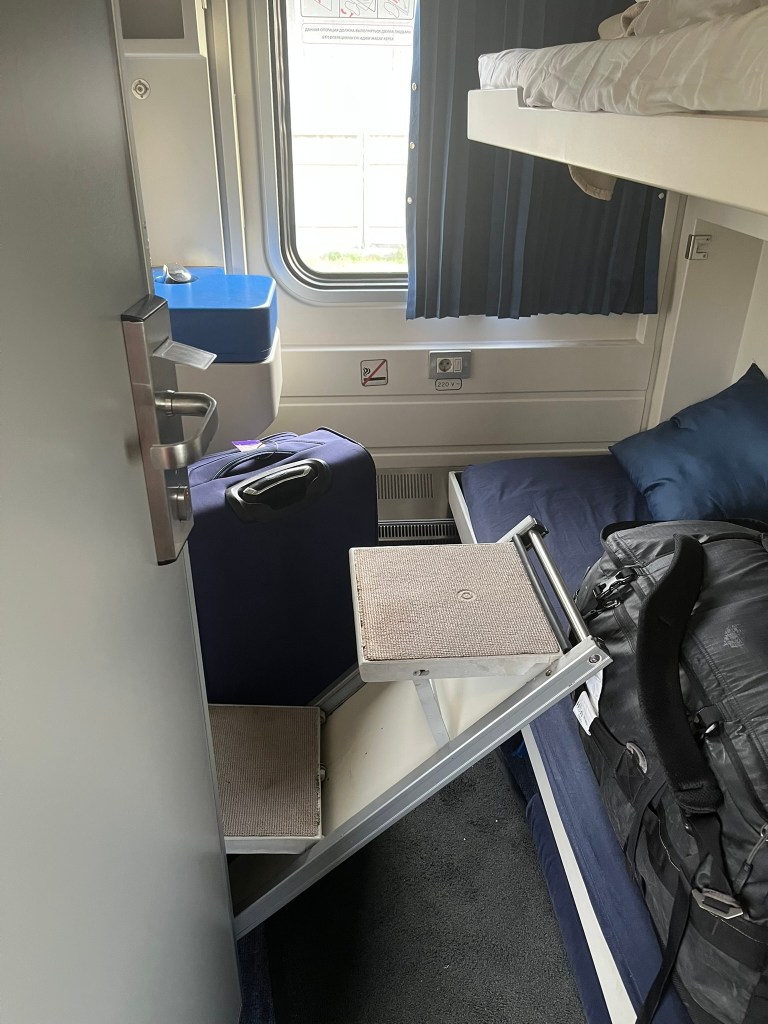
The train station in Shymkent is small but modern with just a couple of train tracks. Our train was ready to board about 25 minutes before our departure time so we had plenty of time to board and explore the train. We were in a carriage with private compartments, each holding 2 people (one upper and one lower bunk) plus a small sink in the corner. And a shared bathroom at the end of the corridor. Our group had a whole carriage to ourselves which was nice. And the train was really modern and looked like the furnishings were quite new. The bathroom was nice and clean, and didn’t feel too much like a train toilet. And the bedding on each bunk was comfy. The absolute best part was the little set of stairs that folded out to let someone climb up to the upper bunk really easily. All trains should have this.
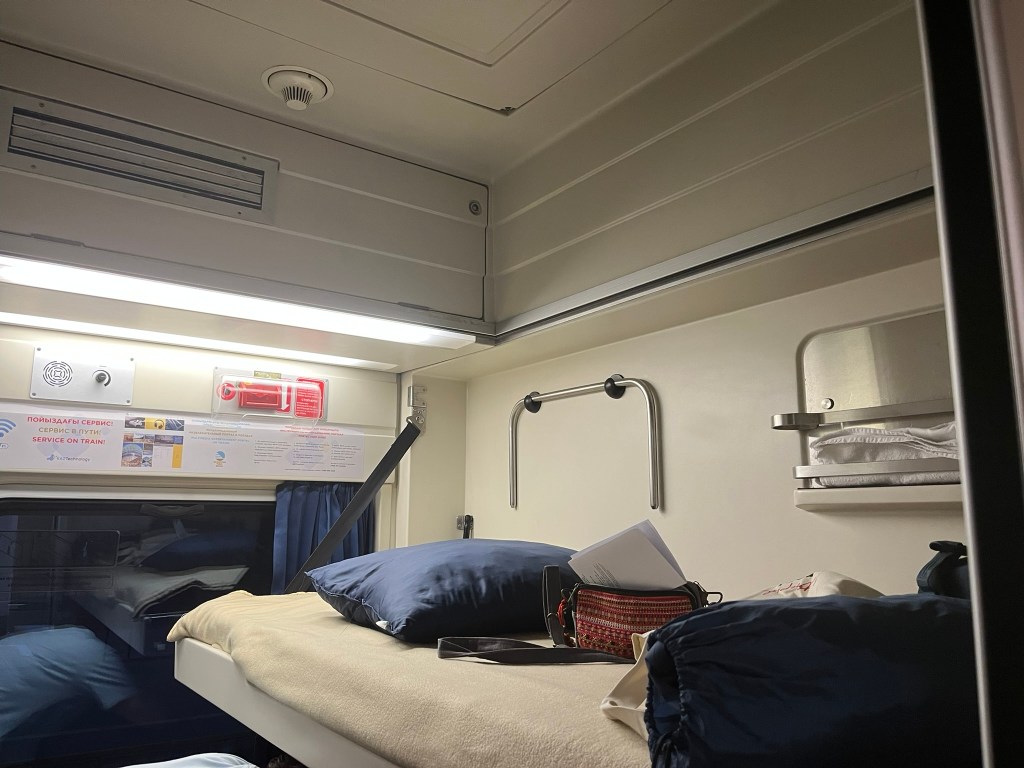

I still set up my blow-up mattress on top of the bedding as I feel like it makes such a big difference. It has been one of the best investments I have made on my travels, even if folks think its a little strange to carry around. It packs away very small considering its size when fully inflated and only takes about 5 minutes to inflate with a built-in hand pump. It also deflates very well and with very little effort. I bought mine from Amazon for about £20 GBP and I seriously recommend it if you feel like you will find sleeping on a train uncomfortable.
I slept on and off during the night, as even with the most comfortable setup, its still a moving train. But some folks in the group said they slept very little so I am glad I at least slept for a good chunk of the night. The train took just under 12 hours and arrived in Almaty at around 7.30am. First stop was breakfast and then we had a full day of activities outside of Almaty planned, exploring some of the natural highlights of the region.

 Colette's Grand Detour
Leave a reply to Kathryn Cancel reply