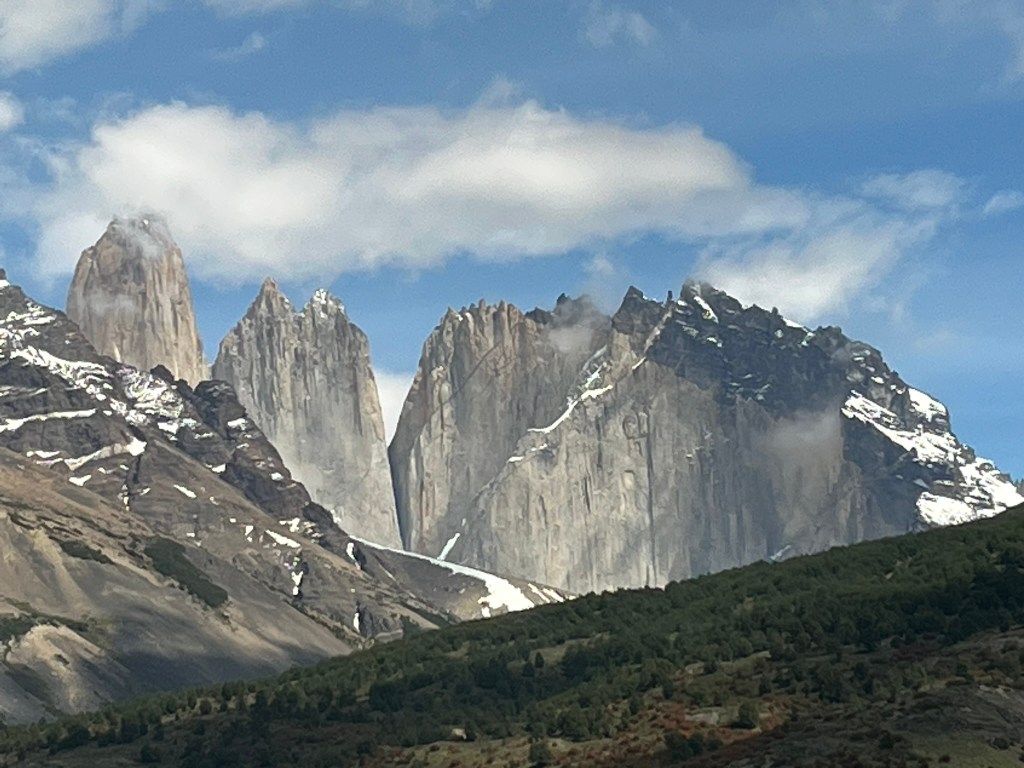
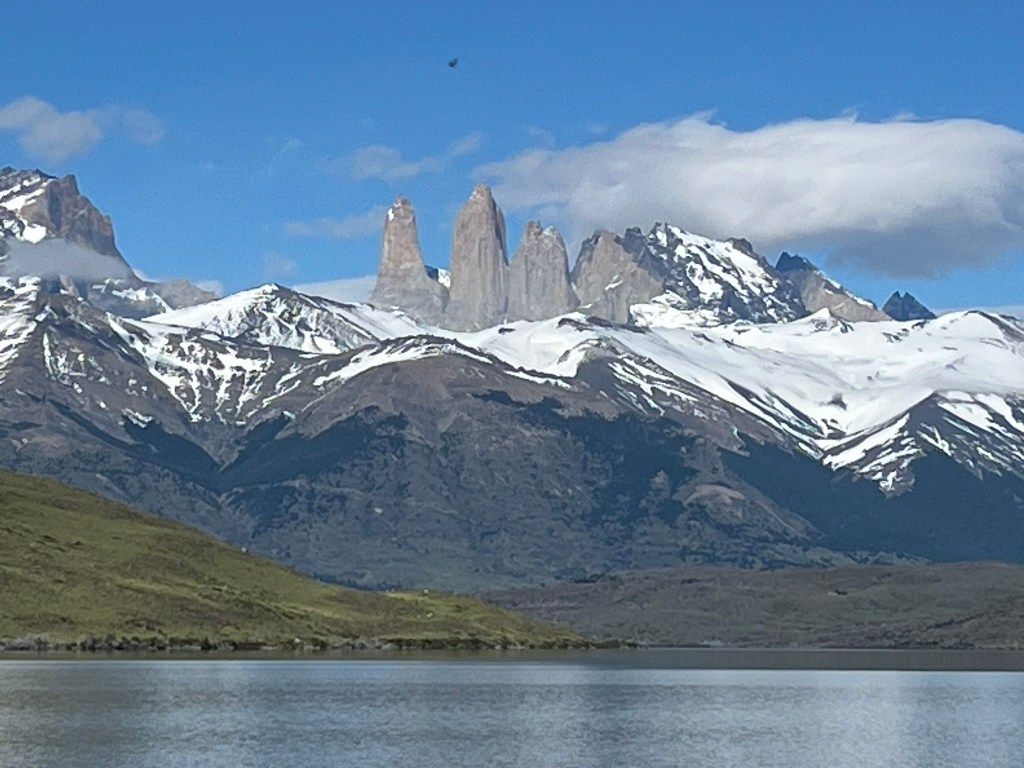
The towers of Torres del Paine are three granite spires that abruptly rise from the Patagonian steppe and form one of the most iconic mountain landscapes on the planet. They are the namesake of the park itself and the center piece of the entire Paine Massif. Seeing the towers is the biggest draw for tourists travelling to the park, and since we didn’t plan to do the 20km hike to the base of the towers we had planned a day trip that would take us to two excellent viewing points. We would be at the behest of the clouds to getting a good view though.

The three vertical granite monoliths stand side-by-side each other like enormous stone pillars. They were formed the same way as the rest of the Paine Massif – through deep magma intrusions, tectonic uplift and colossal glacial carving. The spires are essentially the edges of a granite batholith that have been exposed by the erosion of surrounding softer material by ancient glaciers. What makes them unique from other amazing geological formations like the ‘cuernos’ we saw on our first trip out in the park is that the spires are pretty much free-standing from the surrounding peaks, making them even more dramatic.
Next to the spires stands the ‘condor wall’ – a huge blade-shaped rock wall rising 1500m above the valley floor. This wall is not pure granite like the towers, but made up of older sedimentary rocks including dark shales, siltstones, sandstones, and thin turbidite layers. These rocks formed as marine sediments roughly 100-150 million years ago, long before the granite of the towers existed. The granite of the Paine Massif intruded into the middle of this sedimentary layer, and some blocks like the condor wall stayed intact, because its layers were consolidated and better cemented, so able to resist glacial erosion and remain as a thin, high blade.
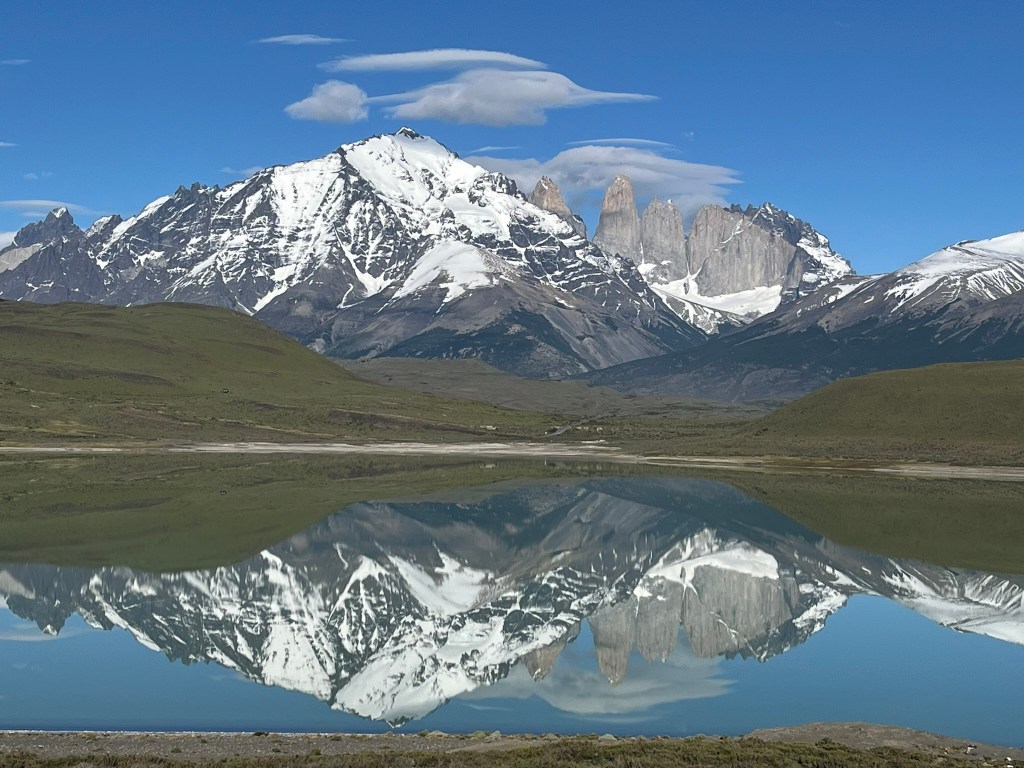
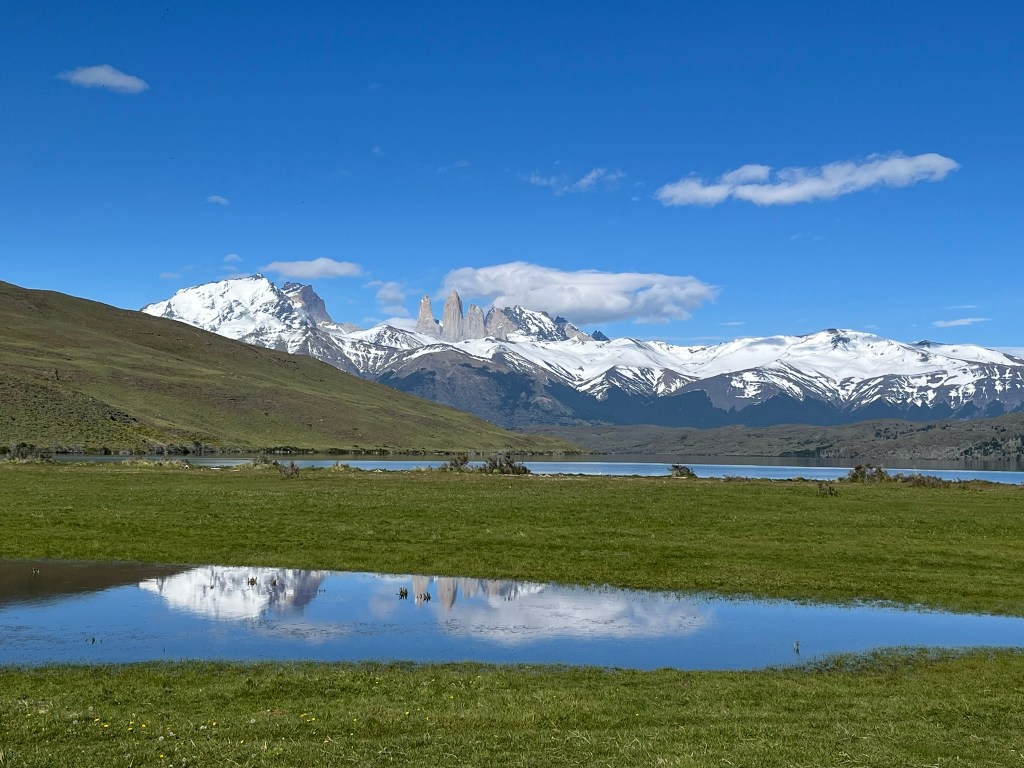
Our first view point today was at Laguna Amarga, just a few minutes drive from the entrance to the National Park. The sky was completely clear of clouds and there was absolutely no wind at all, which meant the lake itself was perfectly still and there was the most amazing reflection of the towers in the water. This was definitely a ‘wow’ moment in the park!
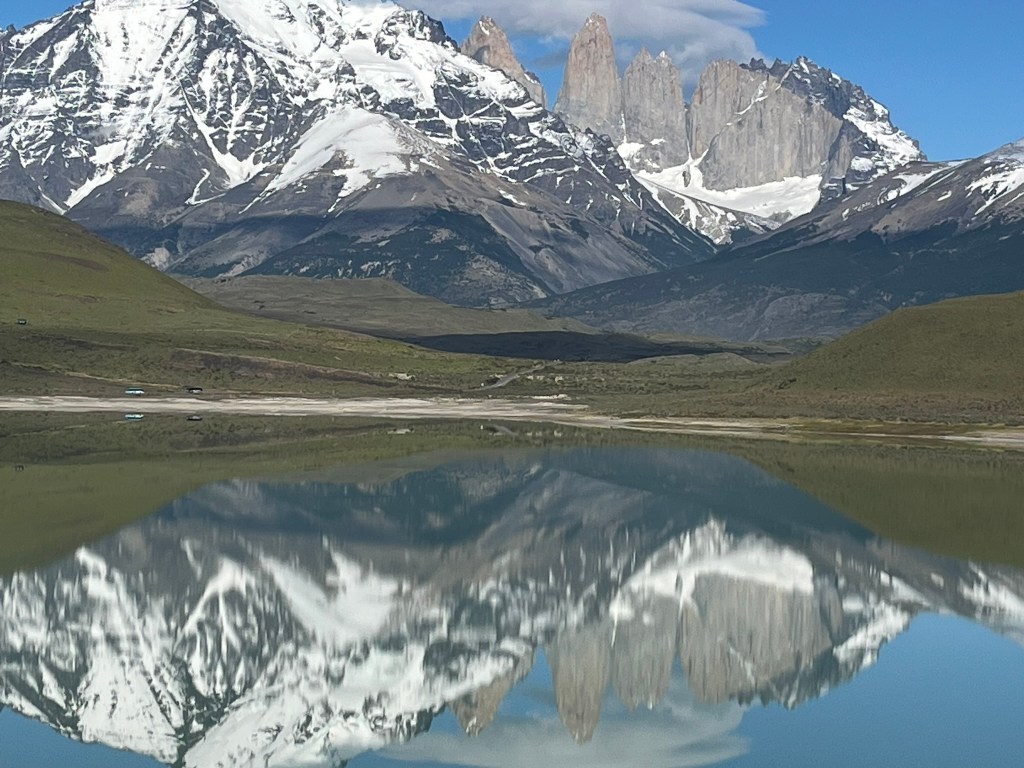
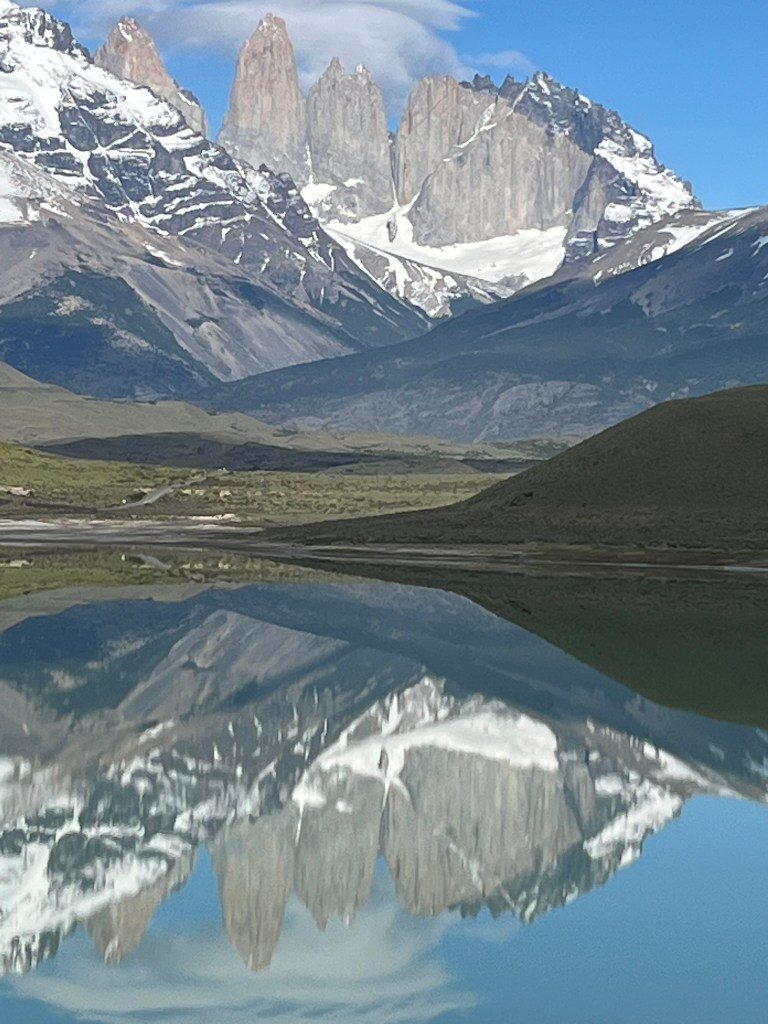
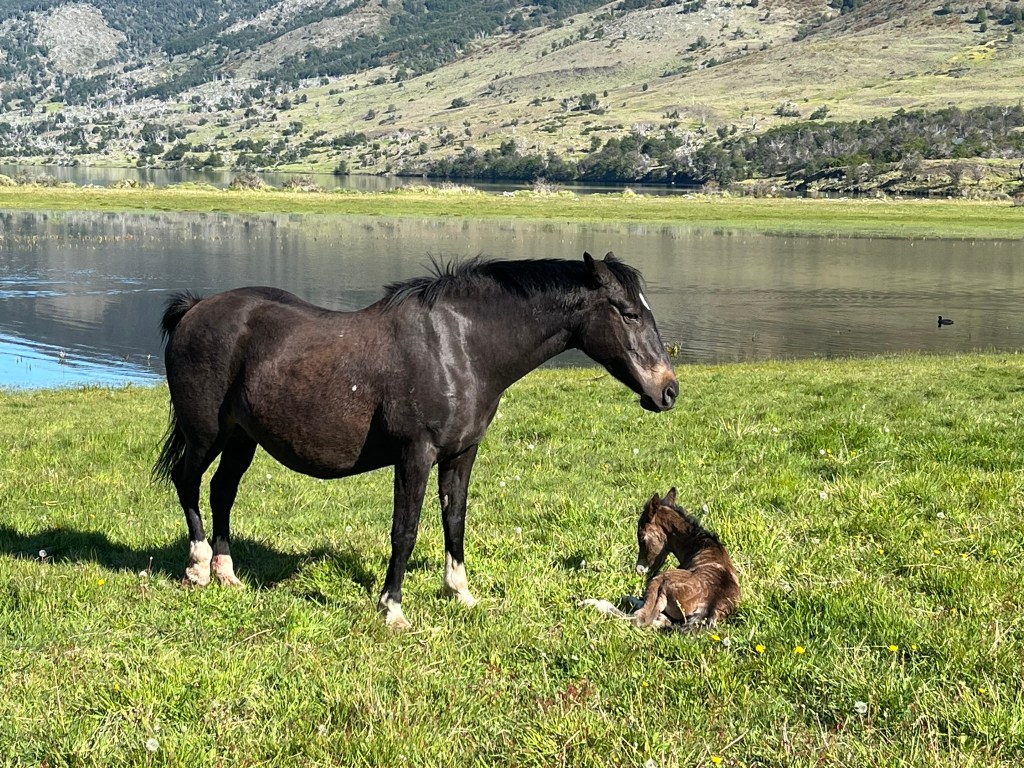
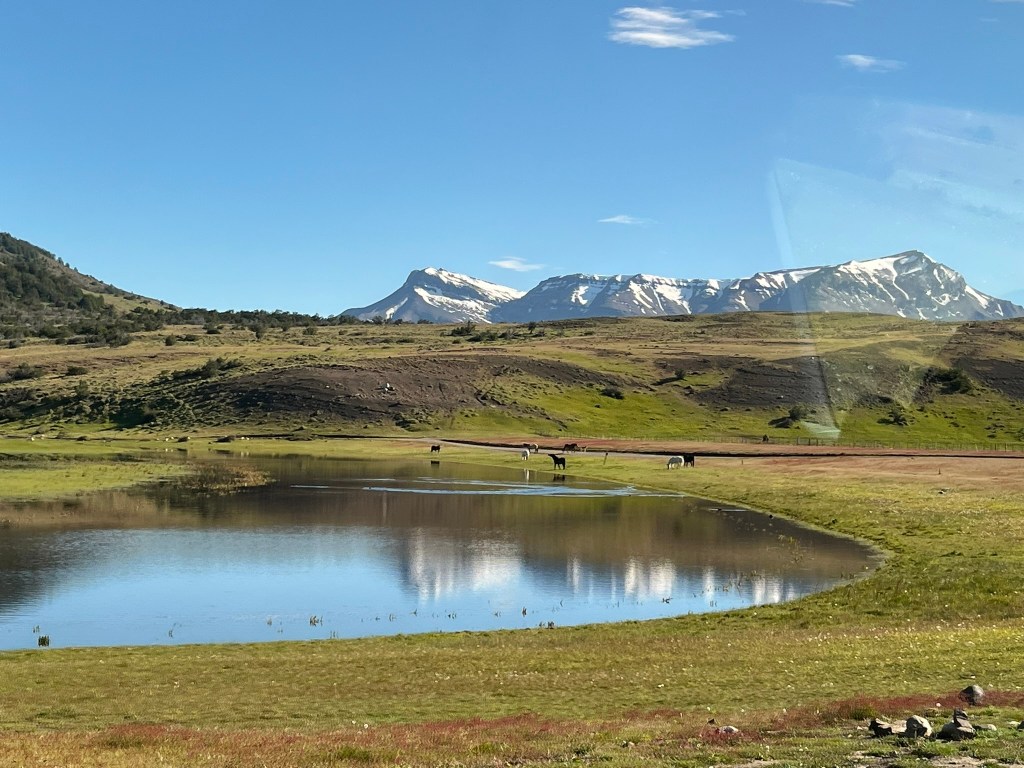
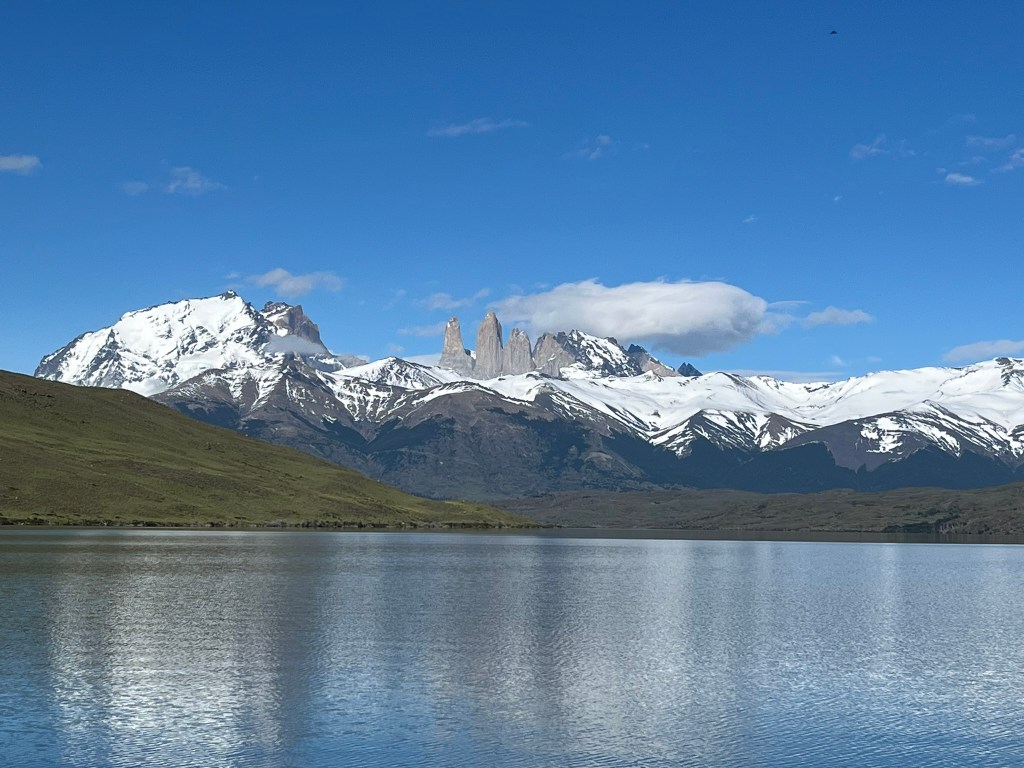
Next we headed to Laguna Azul, in the northeast corner of the park which gives full views of the towers above the calm blue lake. We walked along the lake shore, enjoying the abundance of wildlife around us – hares, ducks, geese and horses. We even saw a group of three guanaco speeding past us and off into the horizon. This is a quiet part of the park, away from the crowds and there were just a few people milling around the campsite that sits by the lake. This is the perfect place to come to see a panoramic view of the towers with no one else around.

It is at this very spot that Florence Dixie, a bold woman explorer in the Victorian era, is said to have first laid eyes on Torres del Paine in 1879. She is often credited as the first ‘tourist’ to explore the area.
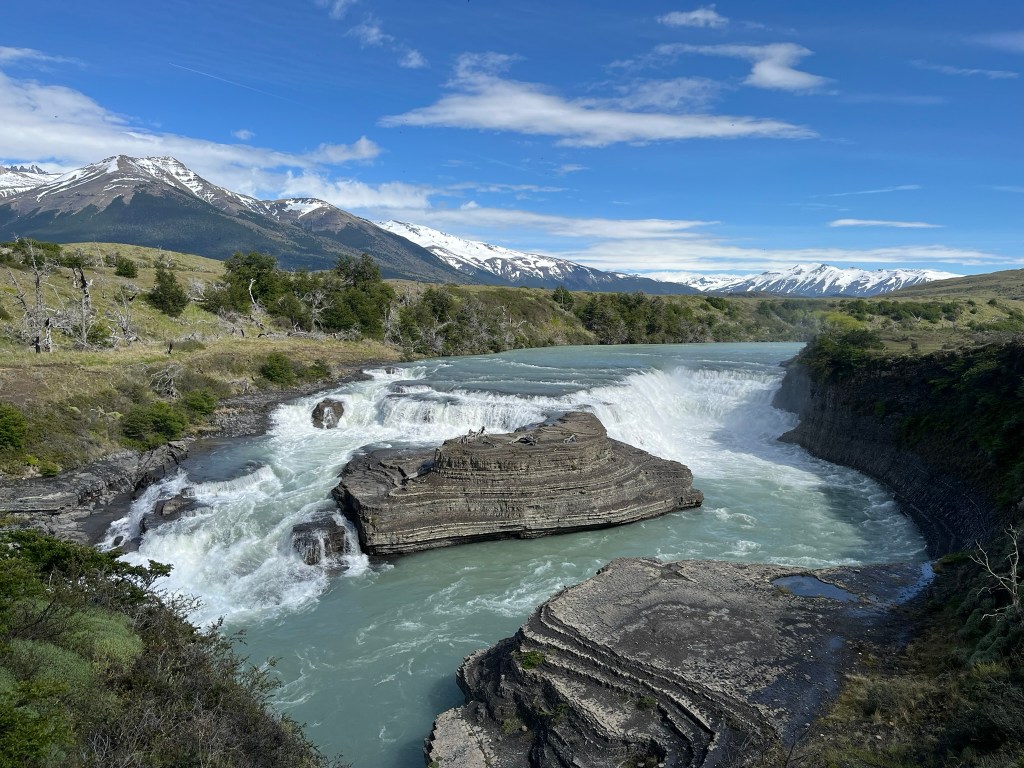
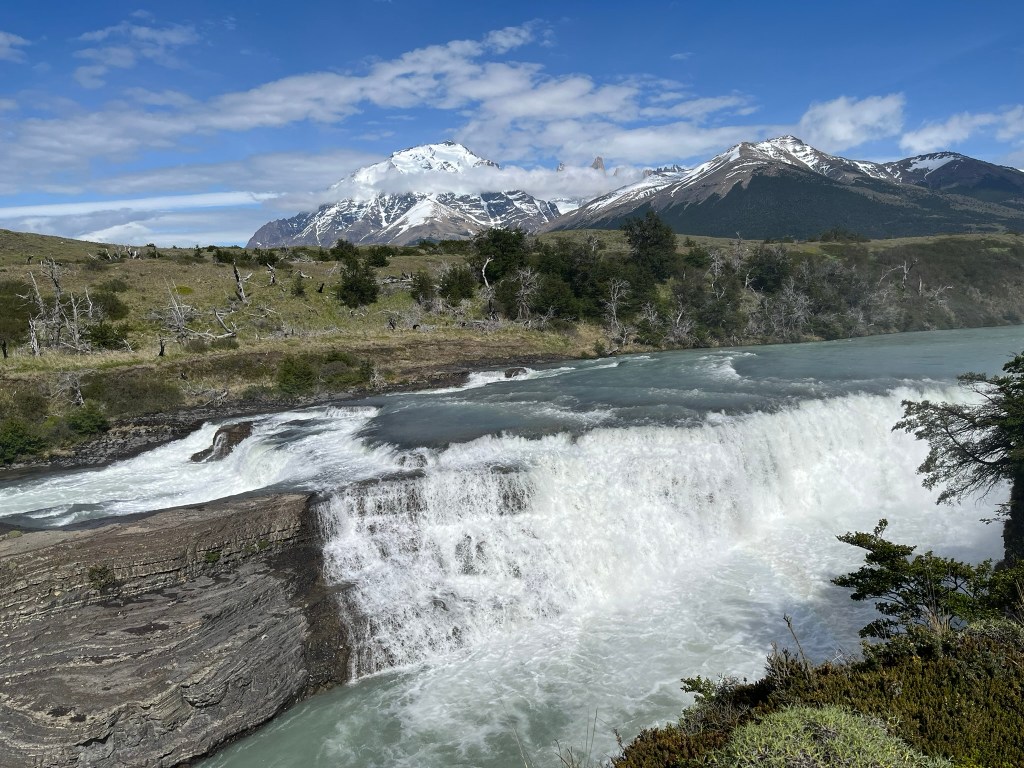
Our final stop of the day was to Paine waterfall, located on Paine river. Many things are named Paine in the park – and this is not a Spanish word, but rather means blue in the local indigenous Tehuelche language. It refers to the striking blue color of the lakes, rivers and glaciers in the park.
And that draws our time in the park and our time in Chile to an end. Next we are heading to Argentina for more Patagonian adventures. Torres del Paine is absolutely a must-do when visiting Chile and is more accessible for non-hikers than I expected it to be. The only place that required walking was heading across the windy beach on Grey Lake to get to the catamaran taking us to Grey Glacier. So don’t get put off visiting if you are a non-hiker like me!
 Colette's Grand Detour
Leave a comment