Torres del Paine is famous for its dramatic landscapes: the granite peaks of the Paine Massif, including the towers that give the park its name, turquoise glacial lakes, rivers and glaciers fed from the Southern Patagonian Ice Field. The park was established in 1959 and declared a UNESCO Biosphere in 1978.
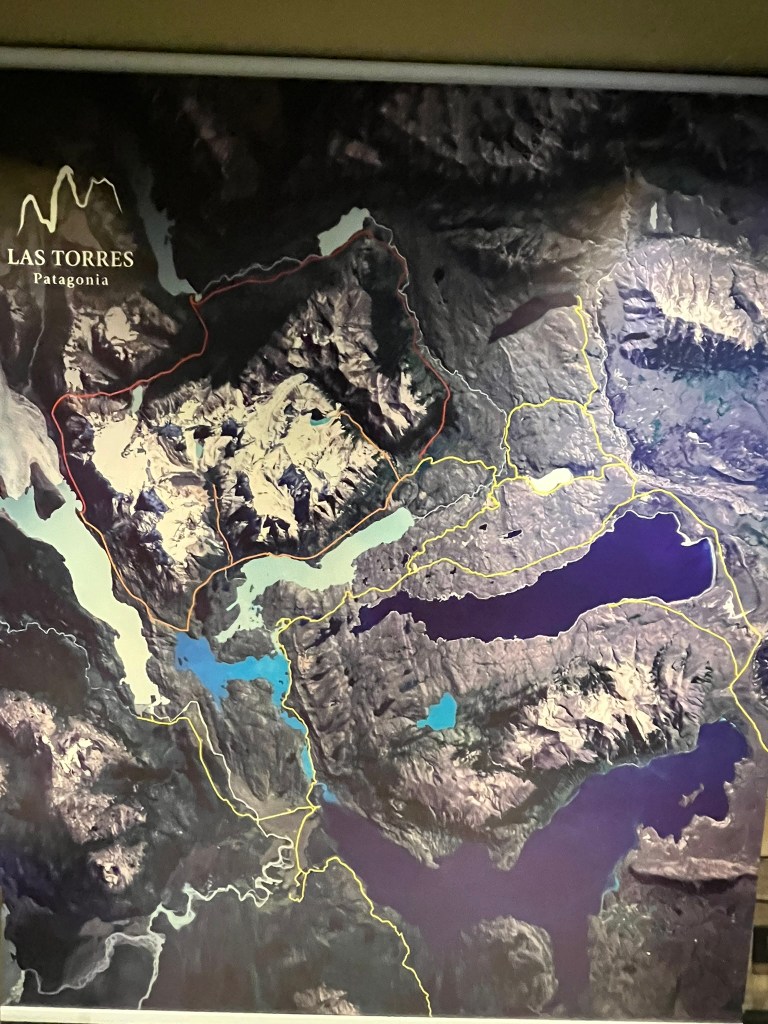
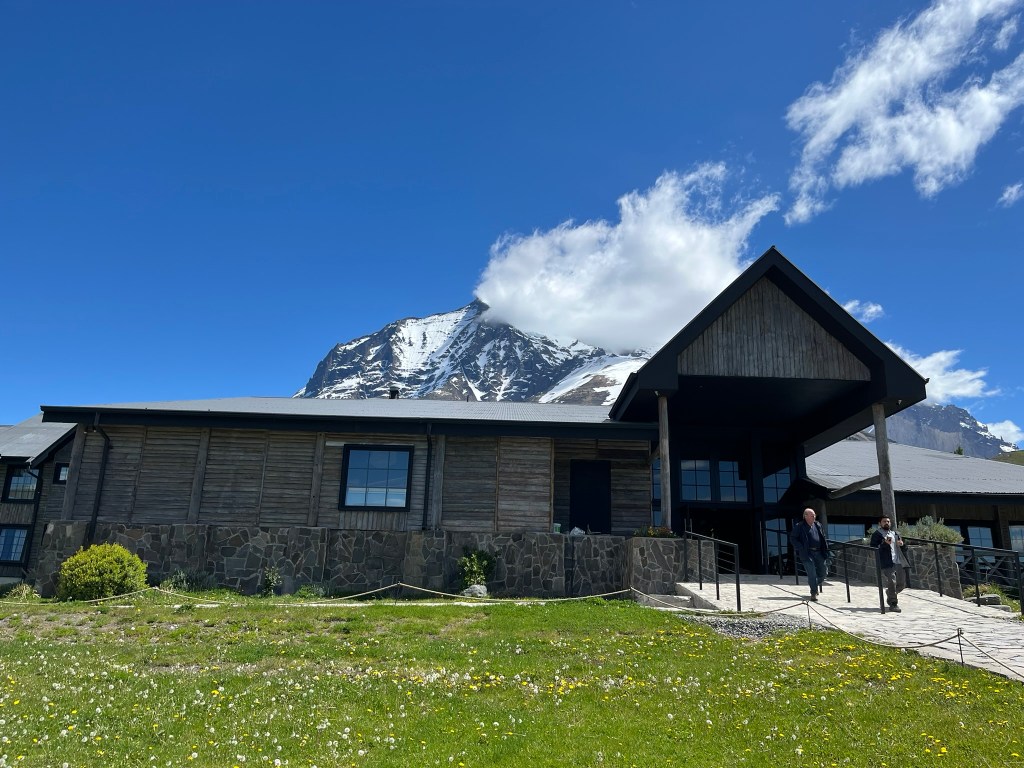
We were lucky to be staying right in the park in Hotel Las Torres. The hotel is literally steps away from the trail network that covers the park and the gateway to the ‘O’ and ‘W’ hiking circuits. The hotel sits on private land inside the National Park, which at first seems a little odd, but there are several private estancias across Torres del Paine that pre-date the creation of the park and these areas remain private. The trailhead of the famous Base of the Towers hike actually starts on the property. Las Torres was acquired by Antonio Kusanovic (the same person who owned the estancia where we had lunch on our drive here) in the 1940s. It was run as a sheep-farming ranch, supplying wool and meat to Punta Arenas and Puerto Natales. And in the early 90s the hotel was opened.

The park’s terrain has been shaped by hundreds of millions of year of geological processes. Its geological history starts with the formation of Pre Cambrian rocks over 500 million years ago. These rocks make up the foundation of the Andes, and much of Patagonia and were created through a combination of sediments and volcanic activity in an ancient sea. These rocks are predominantly metamorphic and igneous in nature. They were formed deep underground through intense heat, pressure and tectonic forces, which over time transformed them into the hard granite material that makes up the Paine Massif and surrounding areas.
Over millions of years, these rocks were uplifted, folded and exposed at the Earth’s surface due to tectonic processes – predominantly the collision between the South American plate and the Nazca plate.
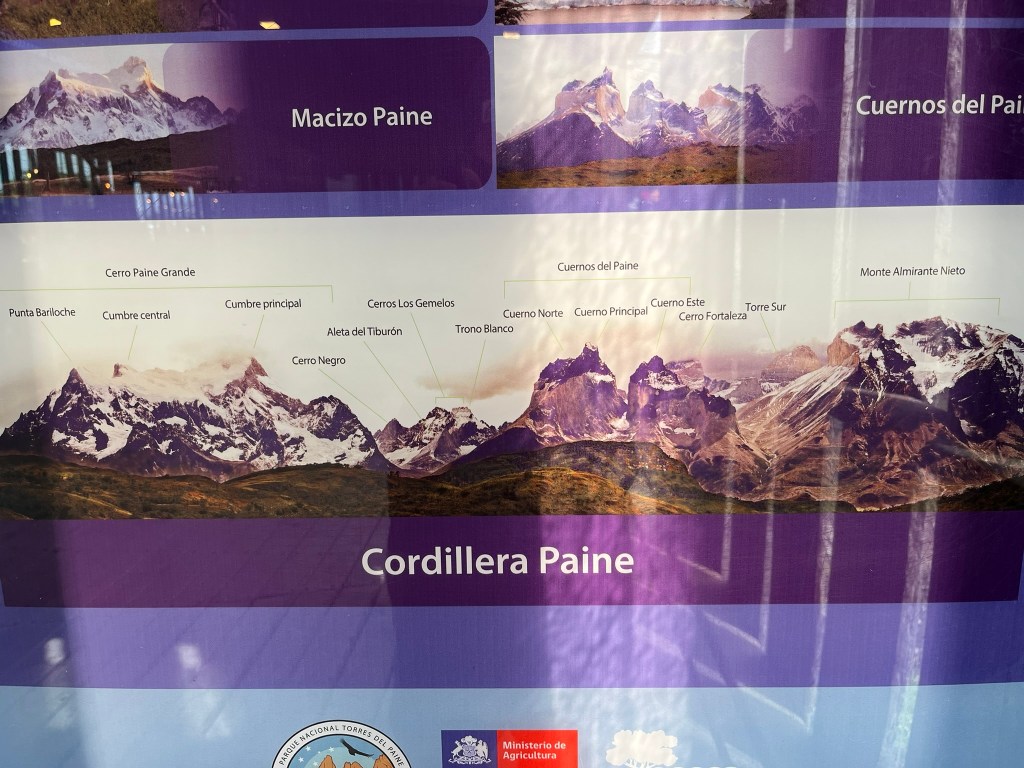
The Paine Massif is the prominent mountain range in the park and made up of primarily granite and metamorphic rock. The granite is formed from intrusive igneous rock. These formed deep underground (rather than through a volcanic eruption) when magma cooled slowly beneath the Earth’s surface, allowing the formation of large mineral crystals, which is why the granite in Torres del Paine is so coarse and durable. The granite was exposed at the surface by erosion of the overlying metamorphic rock over millions of years. The softer surrounding rock has eroded away leaving the granite spires the park is famous for.
During the Pleistocene (2 million to 10,000 years ago) massive glaciers covered Patagonia. These glaciers eroded the granite, scouring the earth, carving out steep jagged peaks and valleys. The Torres (towers) and Cuernos (horns) were formed through this process of glacial erosion.

I am not a hiker and had no intention of doing the 20km round-trip hike to the Base of the Towers, or the 5 day ‘W’ trek or the 9 day ‘O’ trek. Thankfully the hotel offers a range of excursions that includes short walks and mostly travelling by vehicle. We had pre-booked the ‘Full Paine’ excursion with the Grey Glacier boat ride extension in advance and planned our other 2 days of excursions at the Activity Center in the hotel upon arrival.
Our Full Paine tour departed at 10.45am on our first day in the park and I fully expected to be joining a bus load of other tourists but our guide introduced herself and it turned out it would be just be us for the entire day – an unexpected private tour of the entire park!
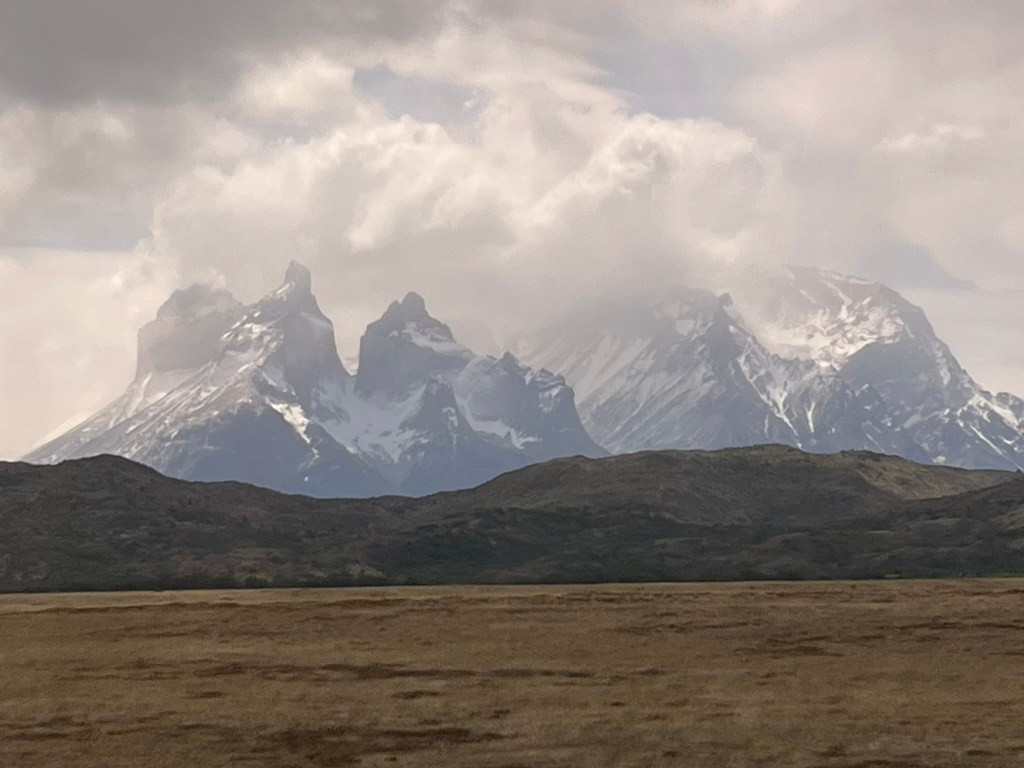
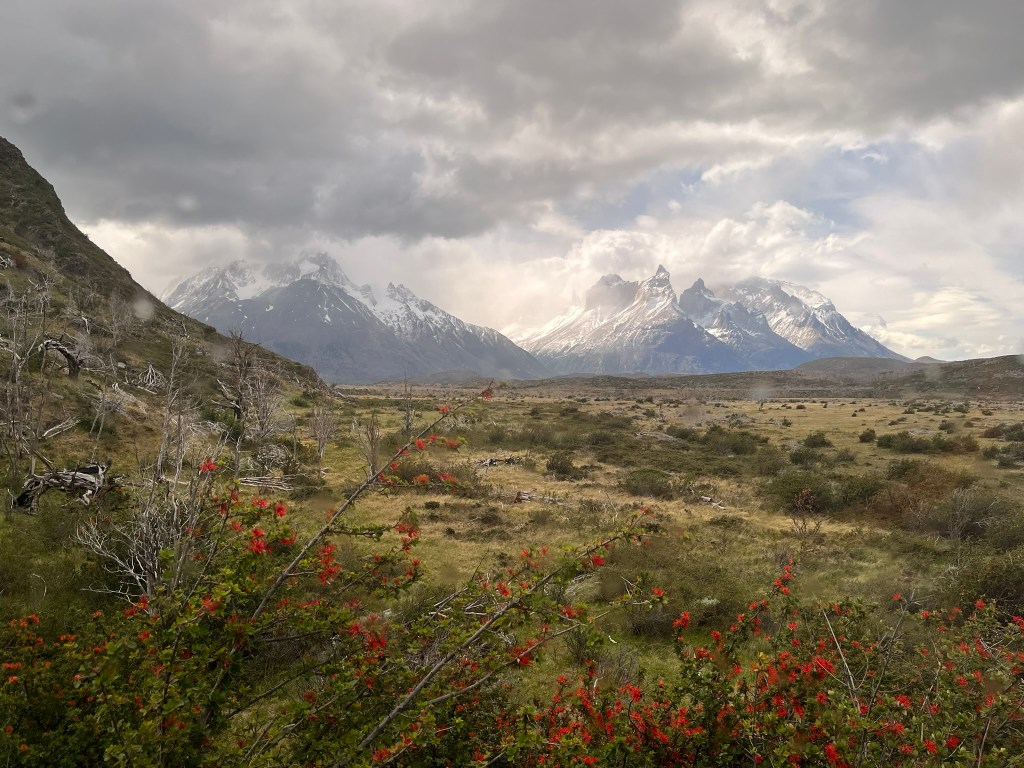
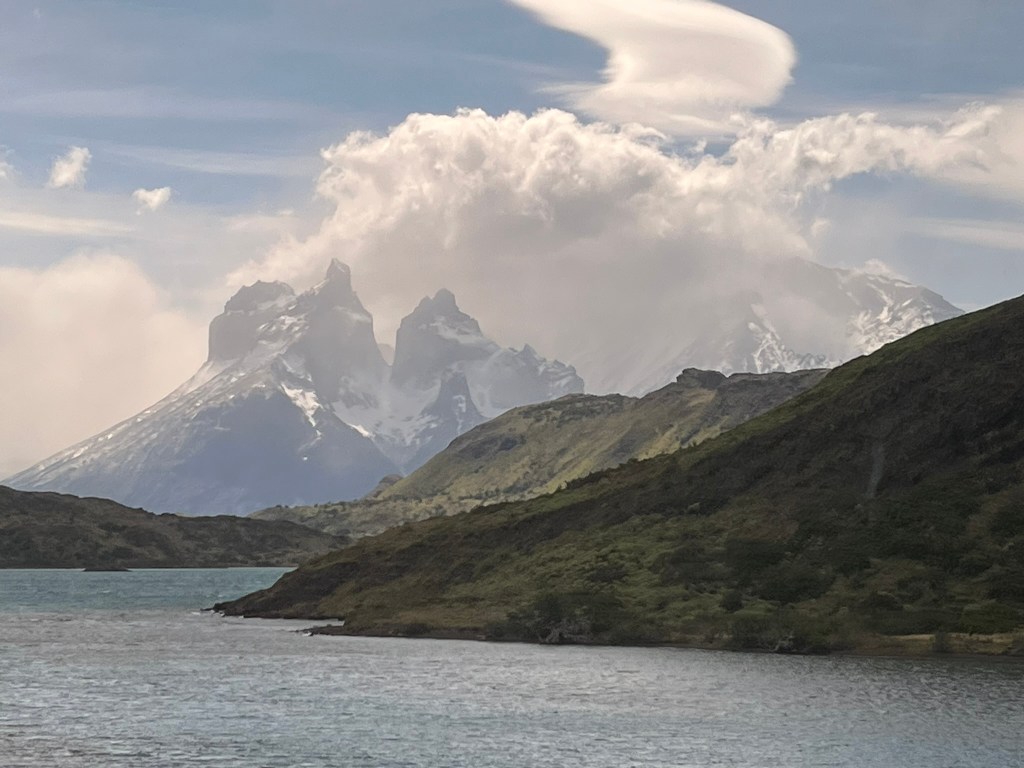
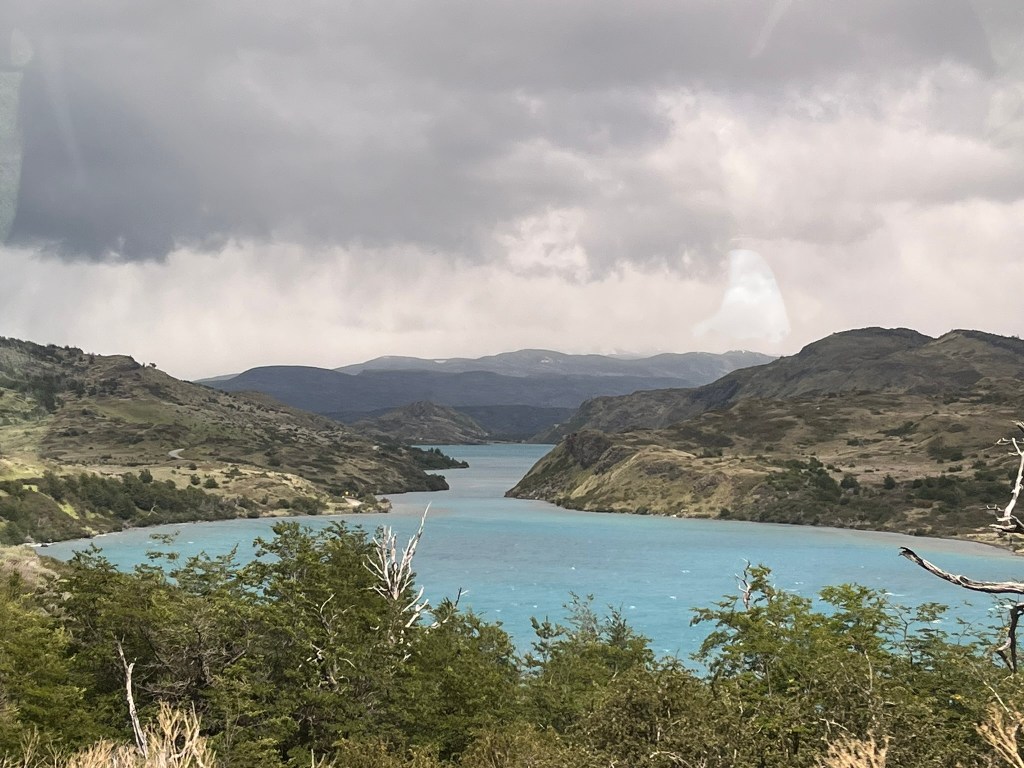
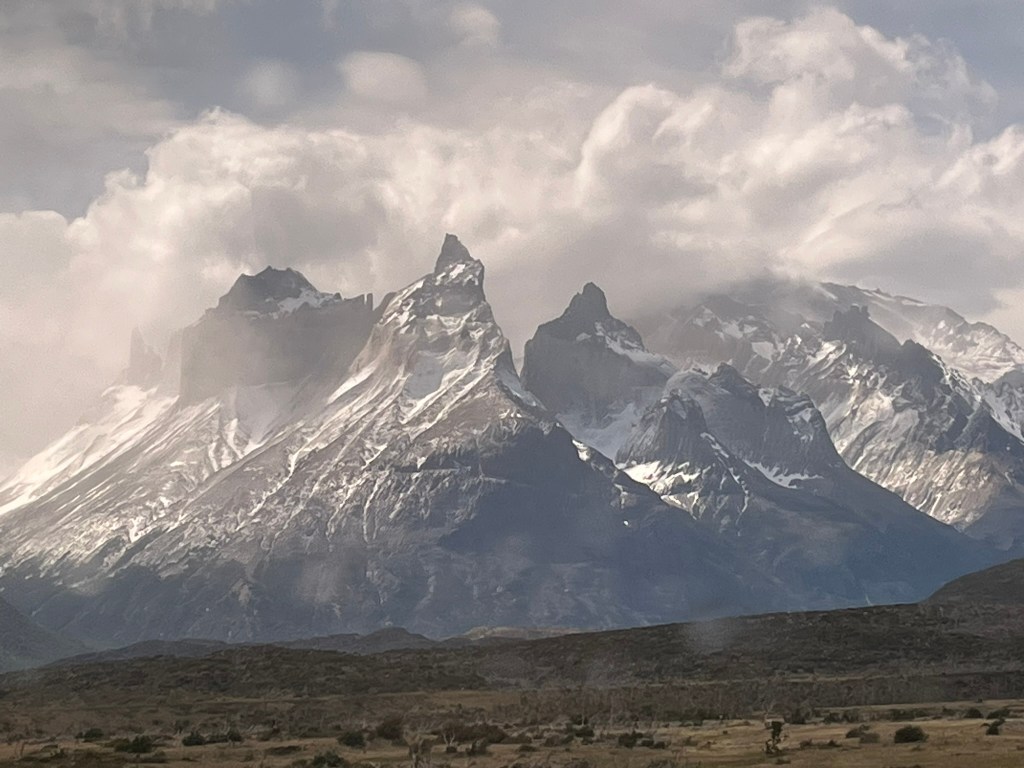
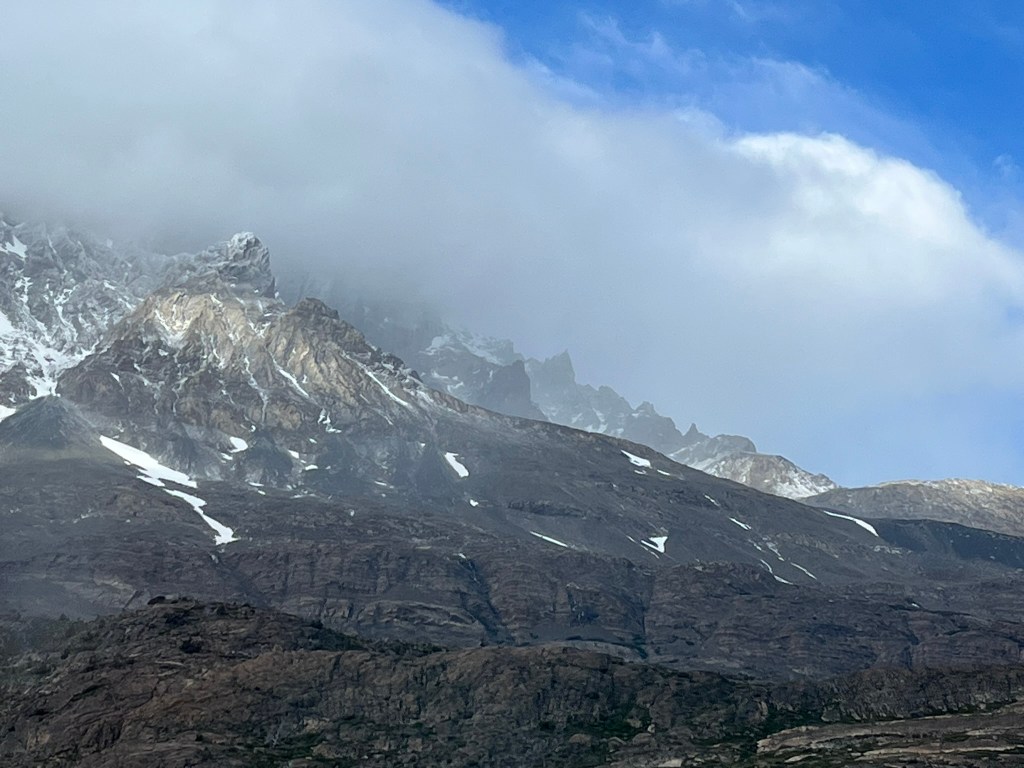
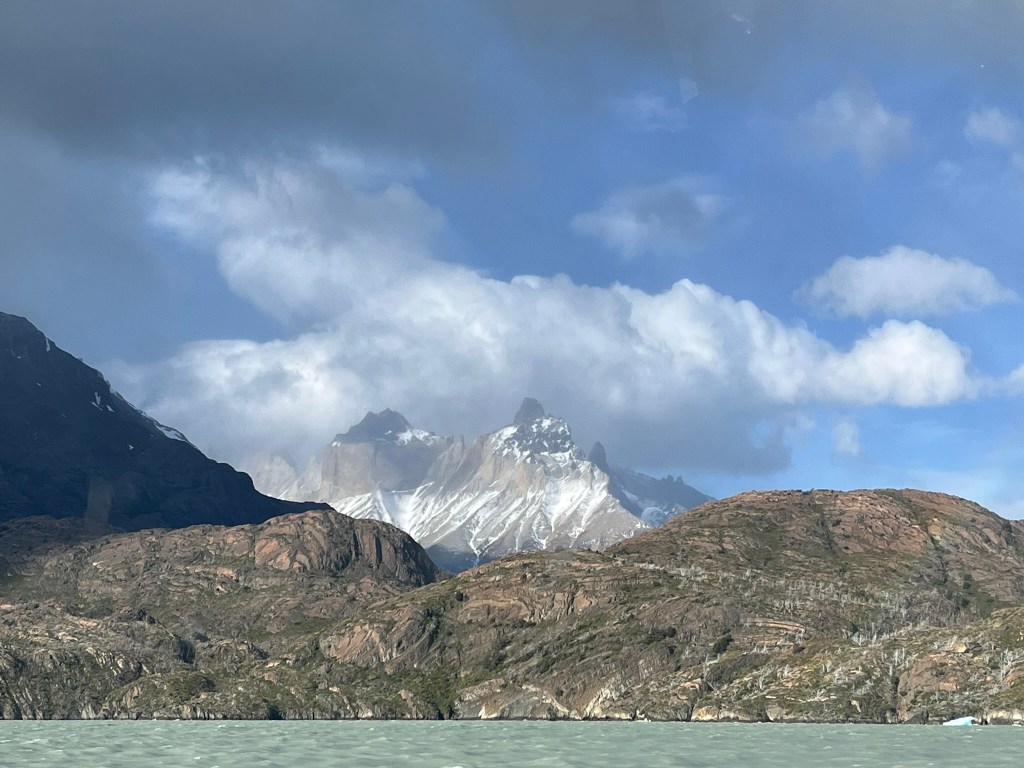
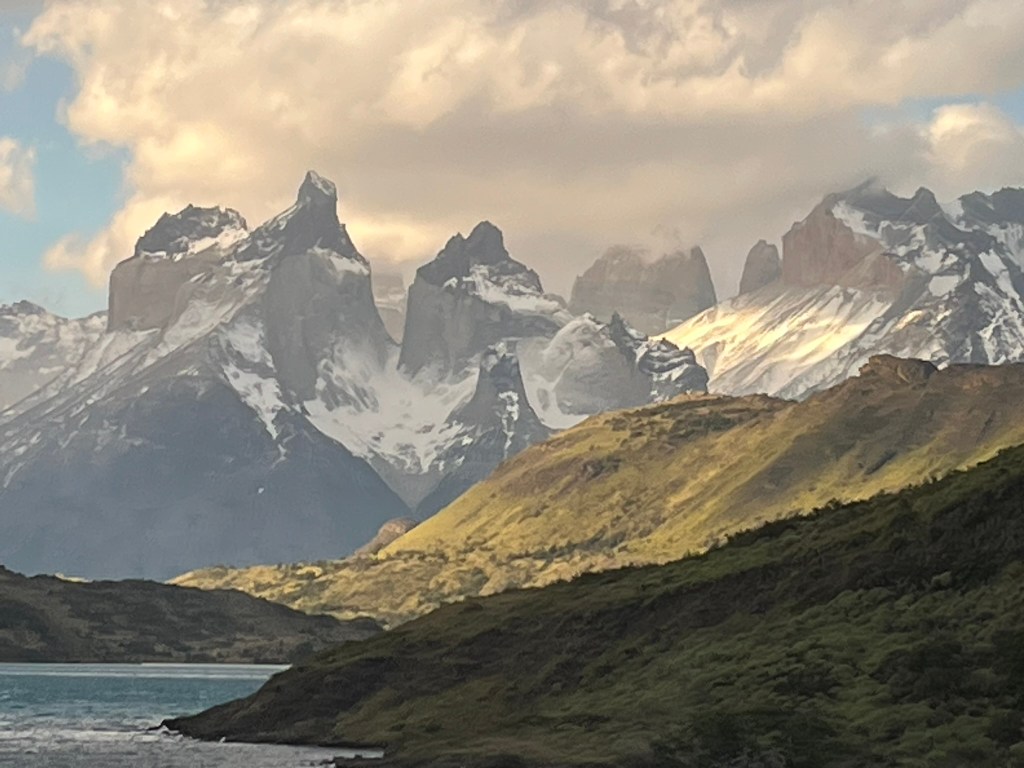
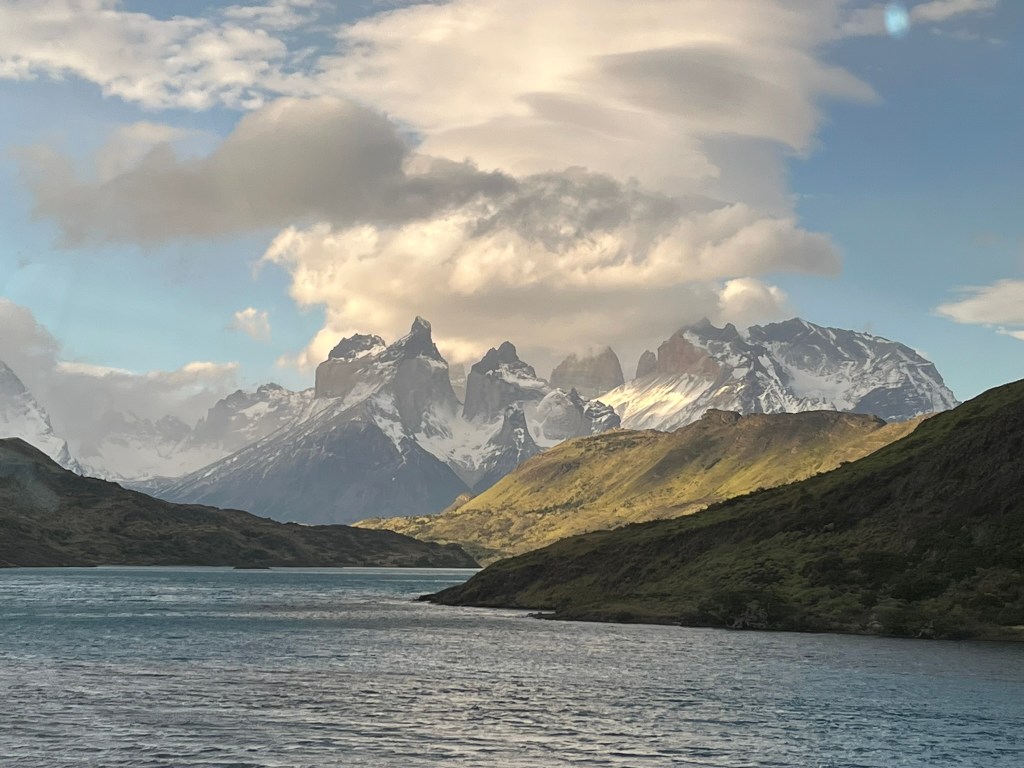
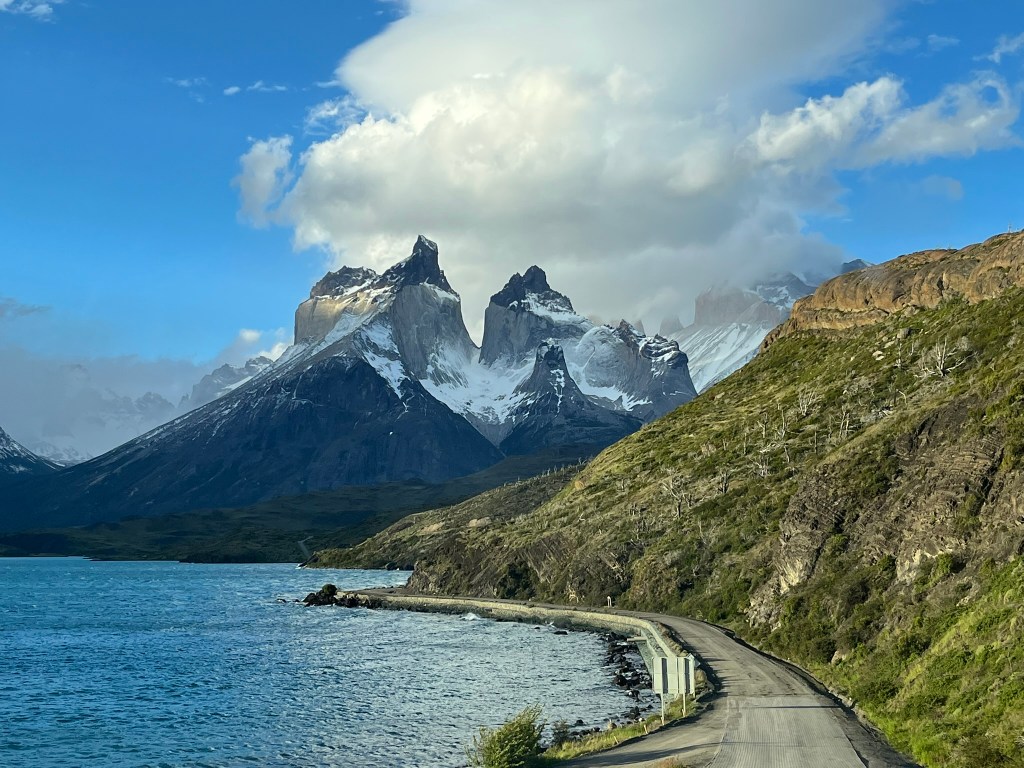
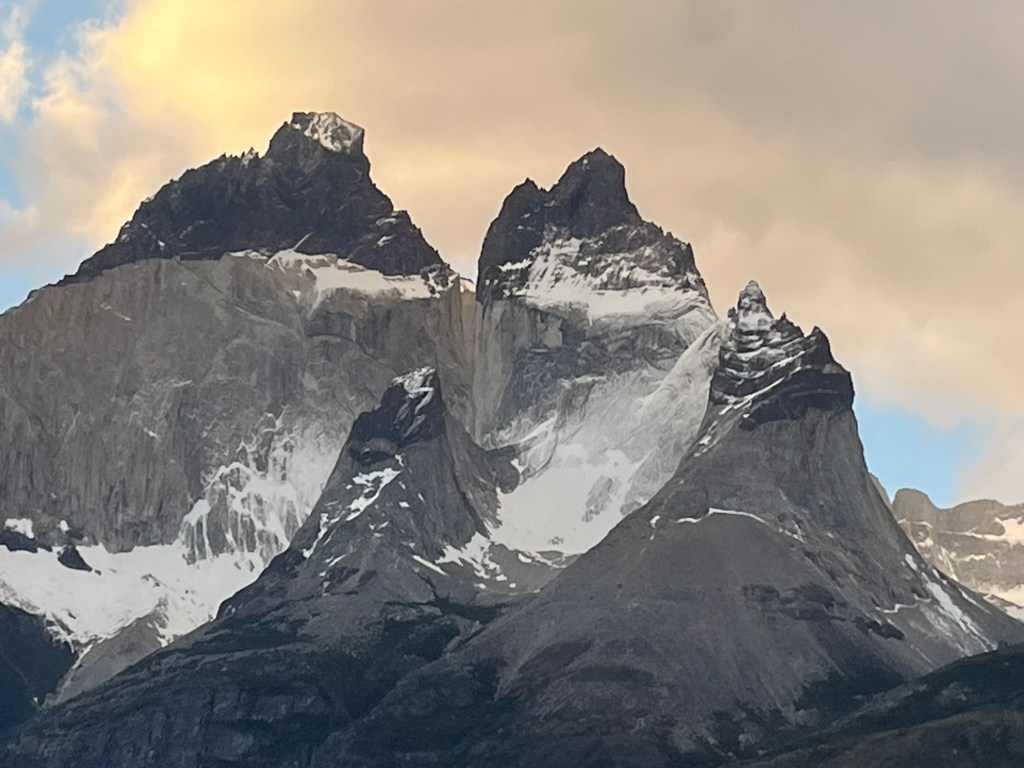
The tour first took us to Laguna Armago where we then turned north and started to get stunning views of Paine Massif and the bright green-blue Lago Nordenskjold just below it. As you drive further north Los Cuernos del Paine starts to appear with its distinct top layer of metapmorphic rock and lighter granite peaks below.

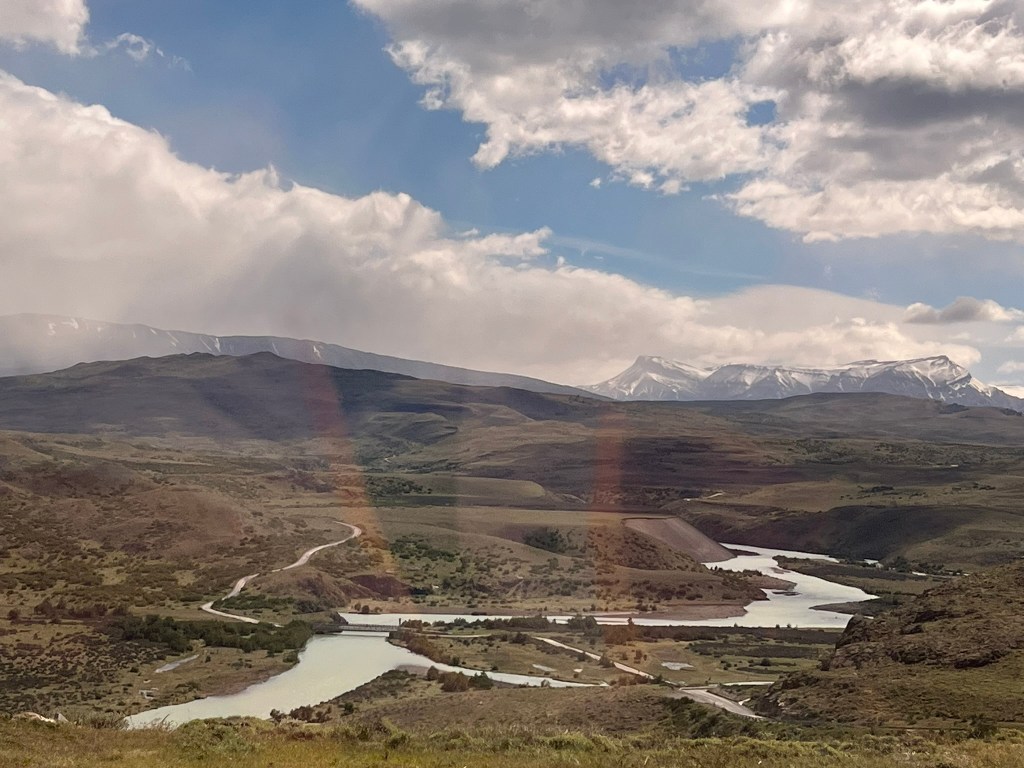
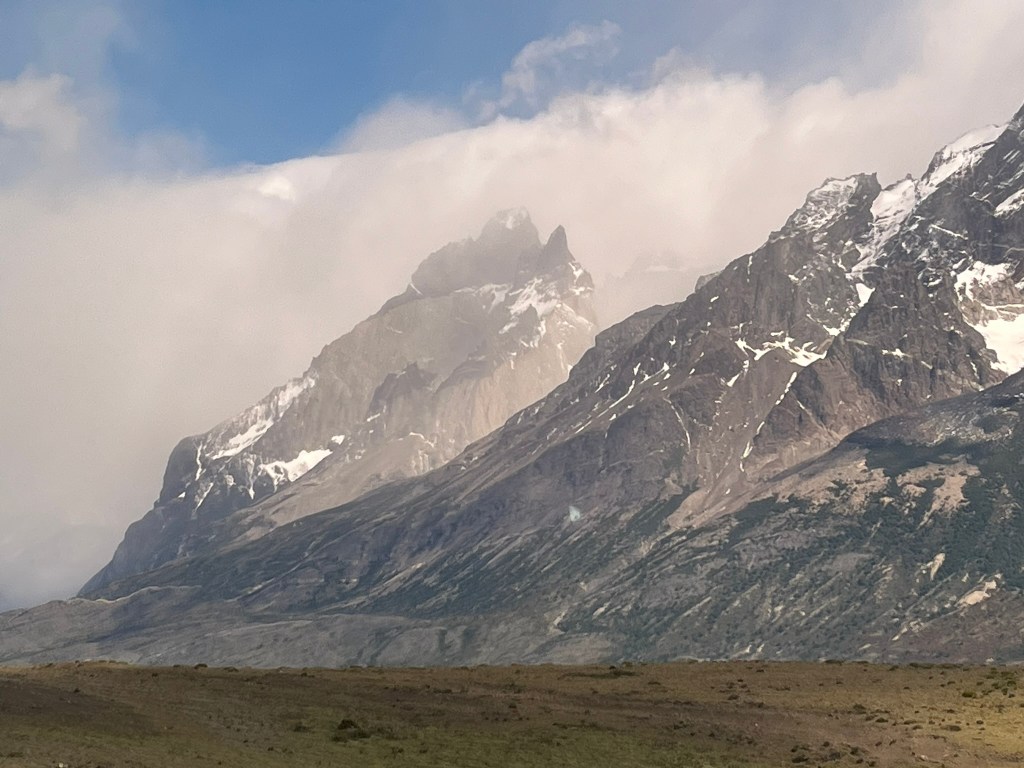
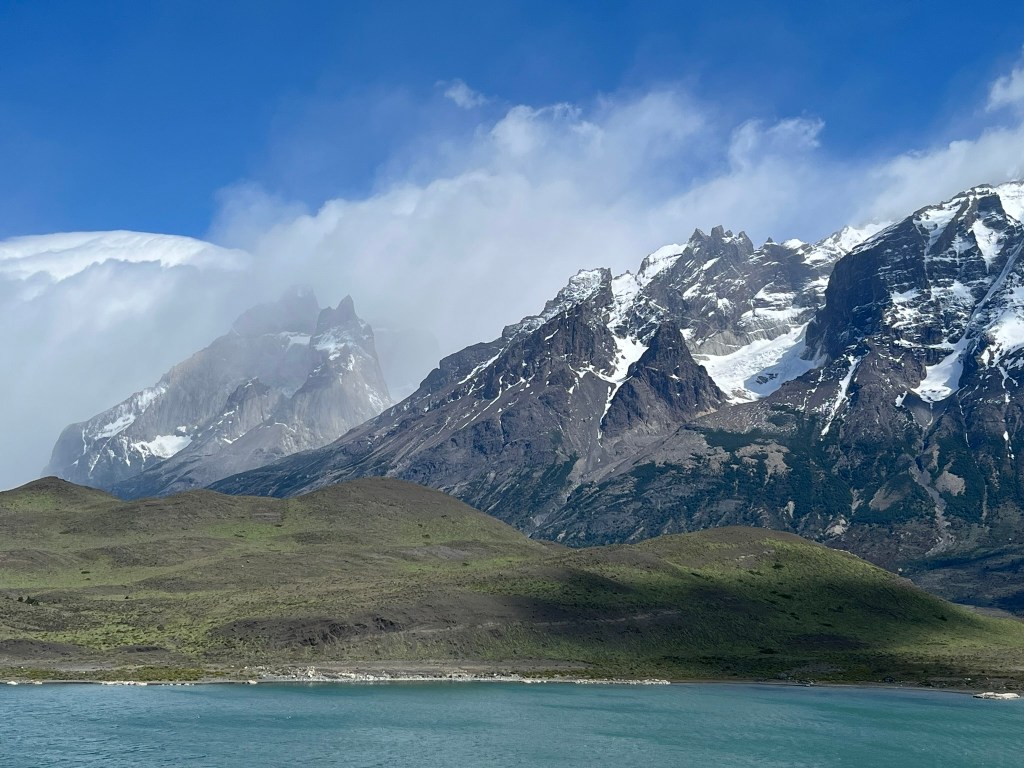
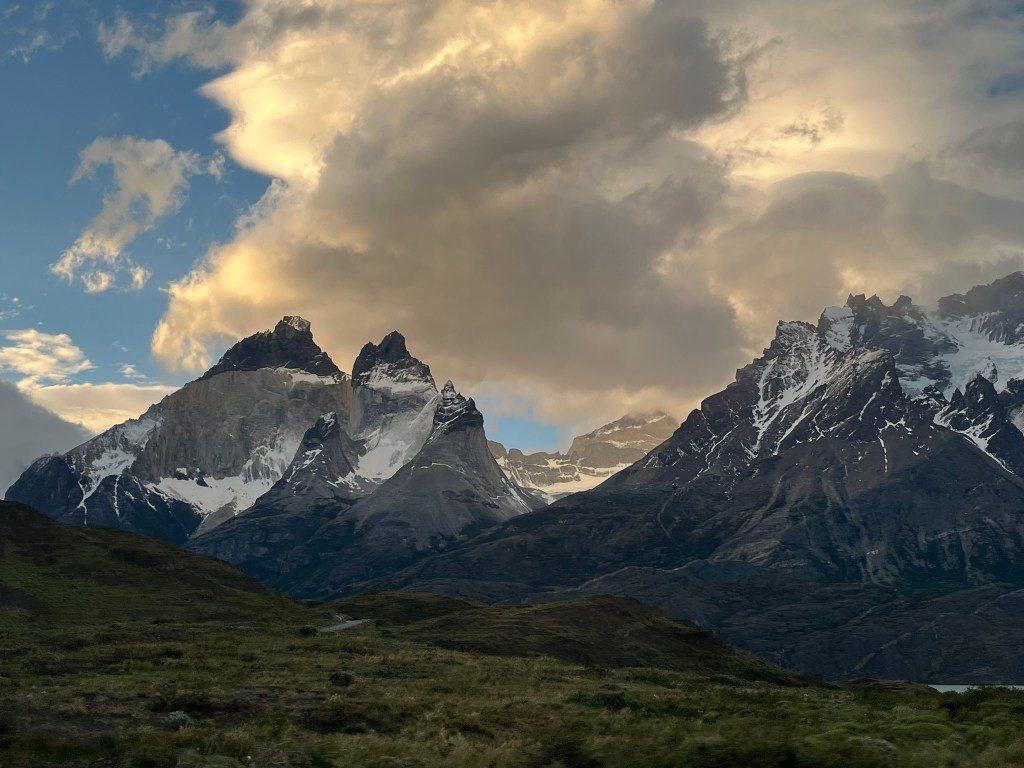
Los Cuernos is absolutely magnificent and the highlight of any trip to the park. It looks different from every angle, and with different cloud formations travelling passed it. There are look out points along the road where you can easily pull over to take photos, with no hiking necessary.
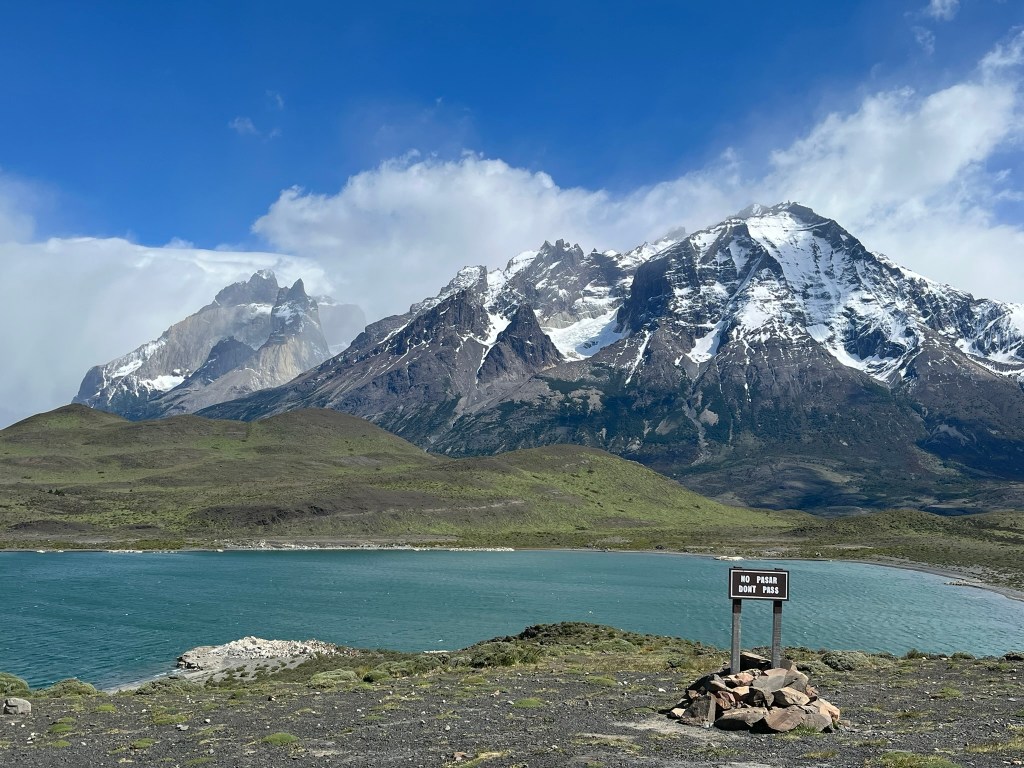
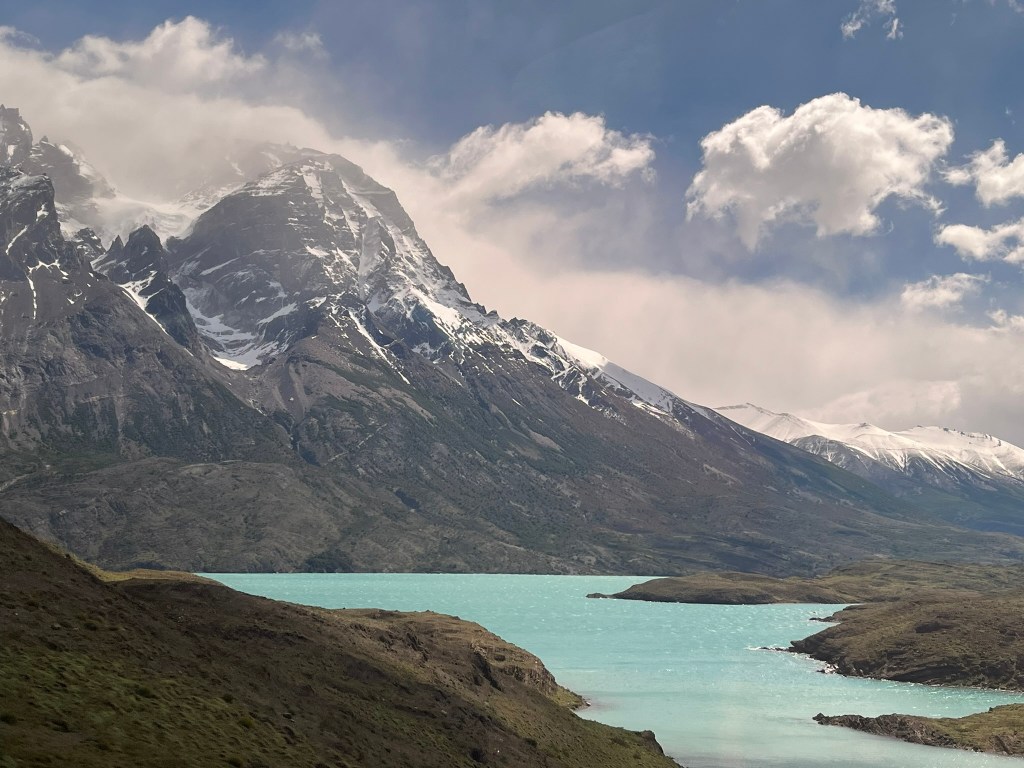
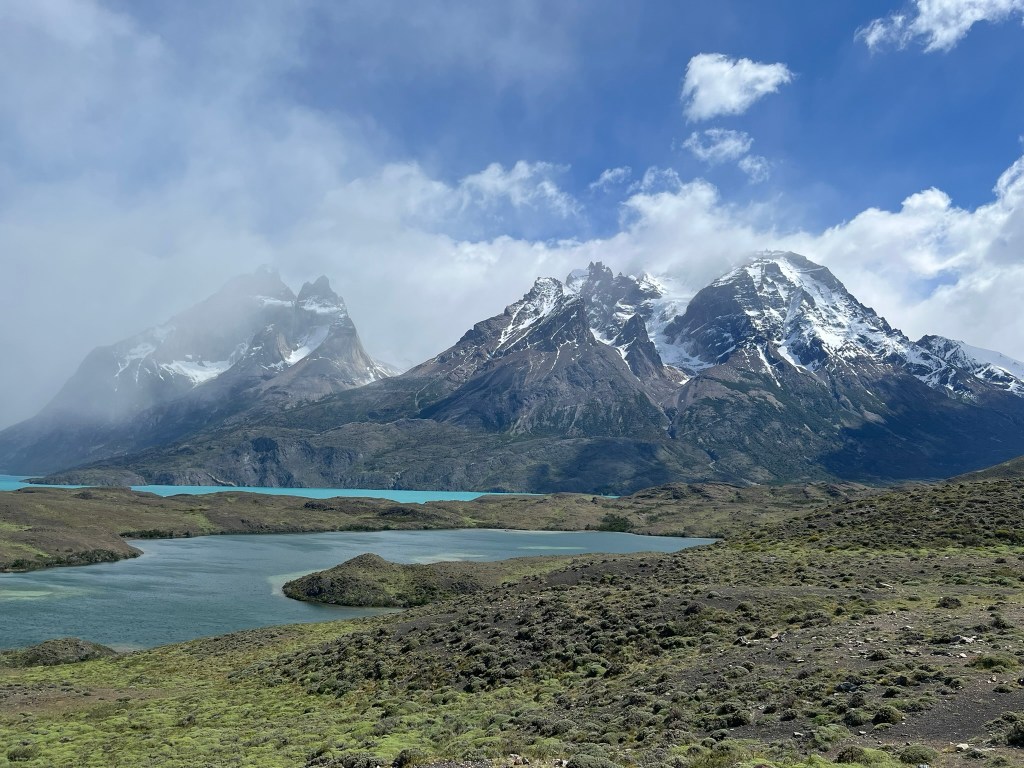
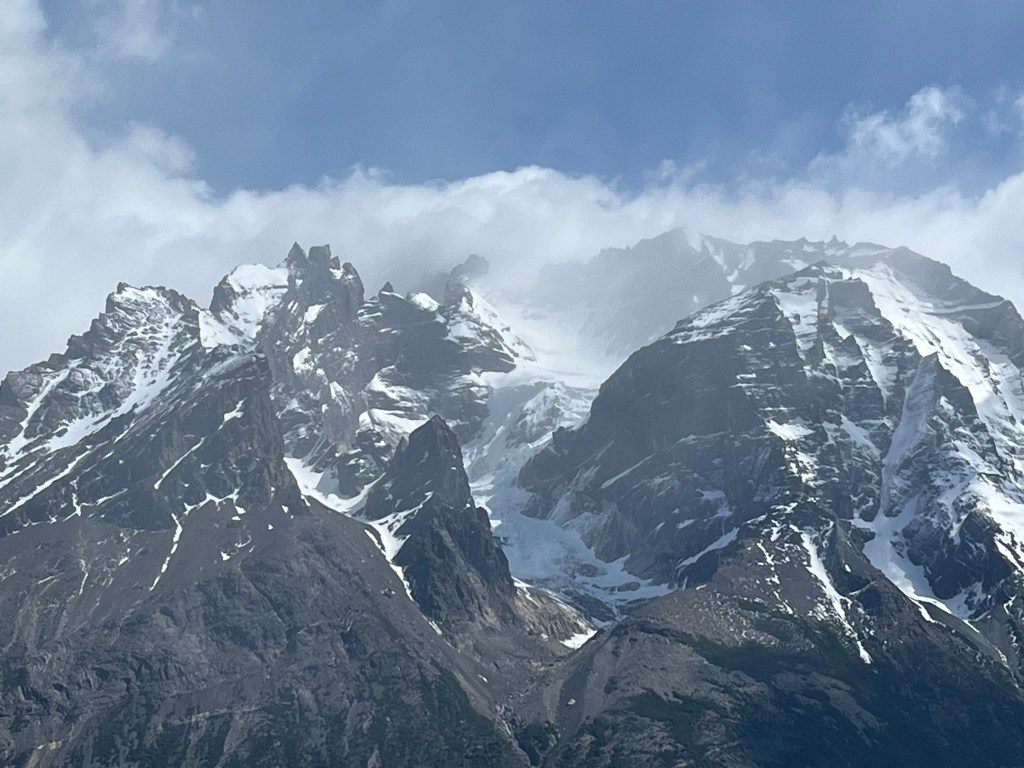
From Lago Nordenskjold we continued north, winding through the many lakes that exist in the park. We stopped in Salto Grande to see the waterfall that links Nordenskjold and Pehoe lakes. And at Lake Pehoe we crossed bridge to a tiny island where Hotel Pehoe sits, to take more panoramic photos.
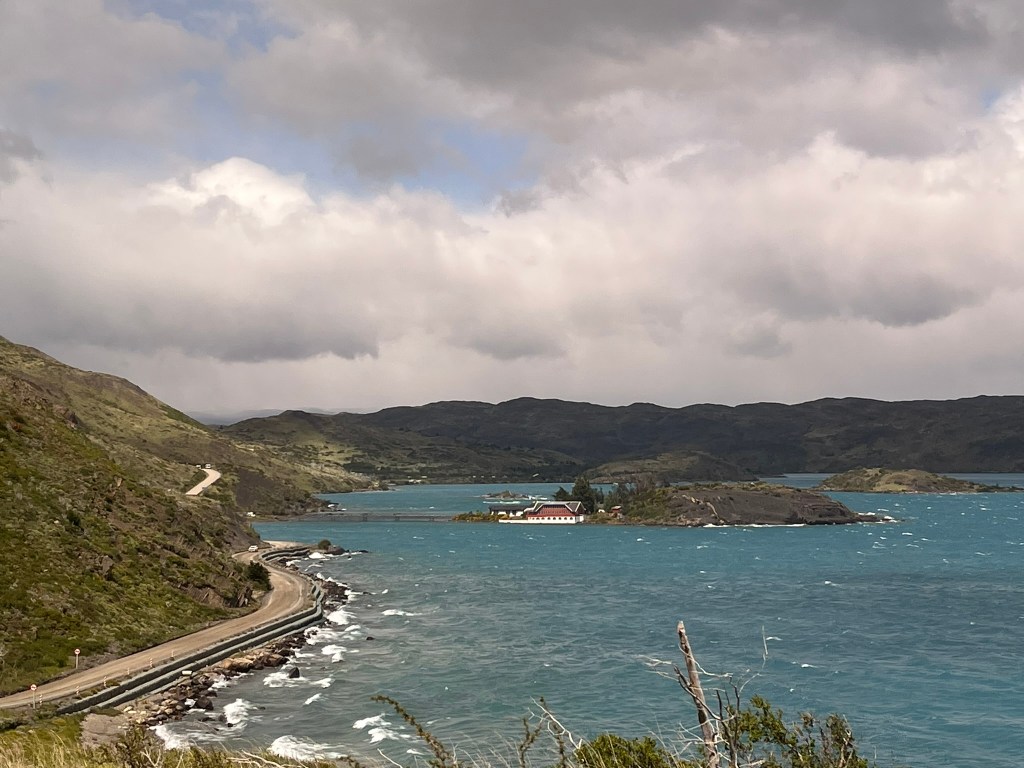
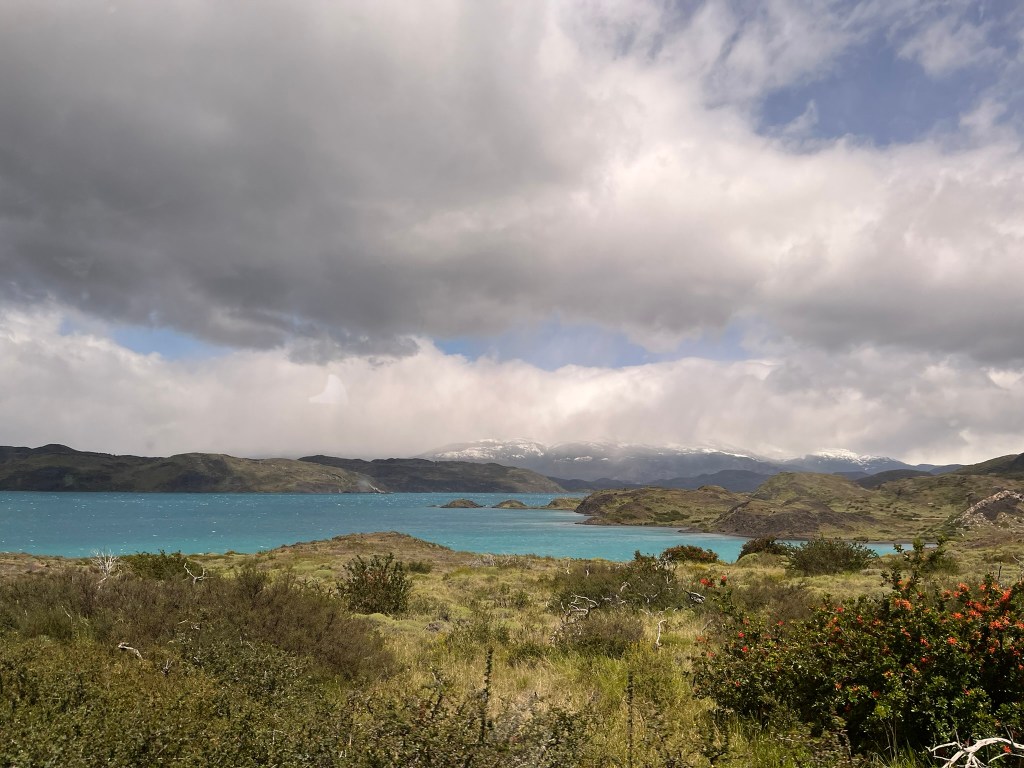

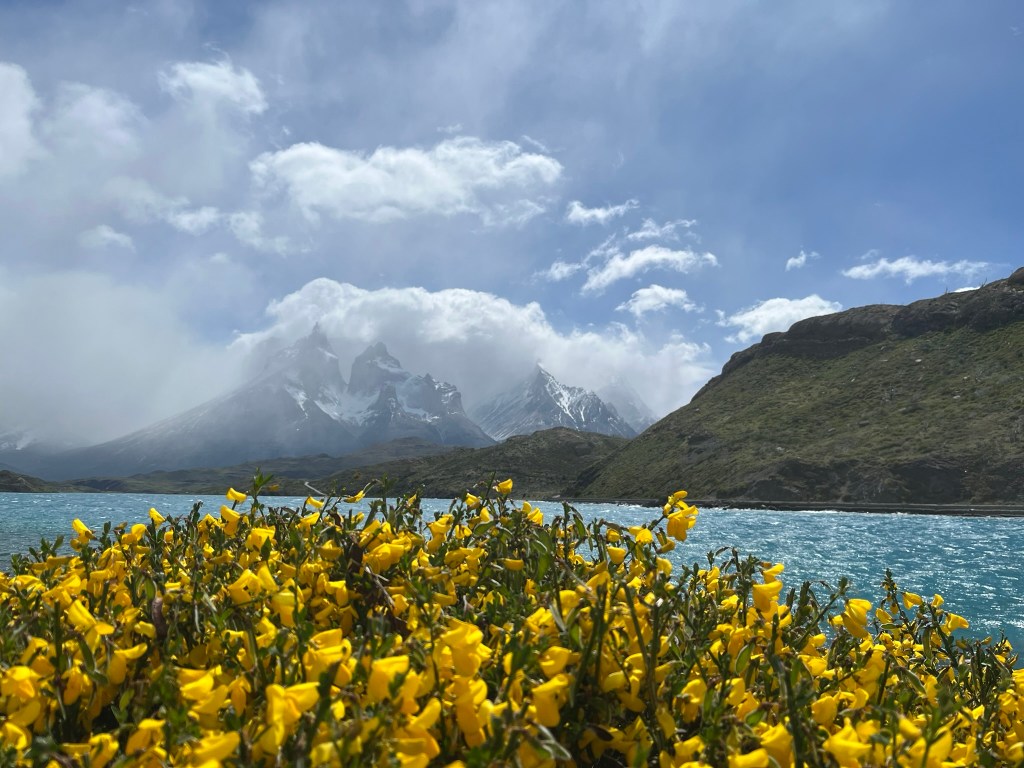

We stopped for lunch at the Lake Pehoe camping site, which again had more fantastic scenic views. As a bonus we got a close up of a Southern Caracara bird as it walked around the campsite, curious about what everyone was having for lunch. And got to see a pygmy owl sitting in a bush as we departed the site.

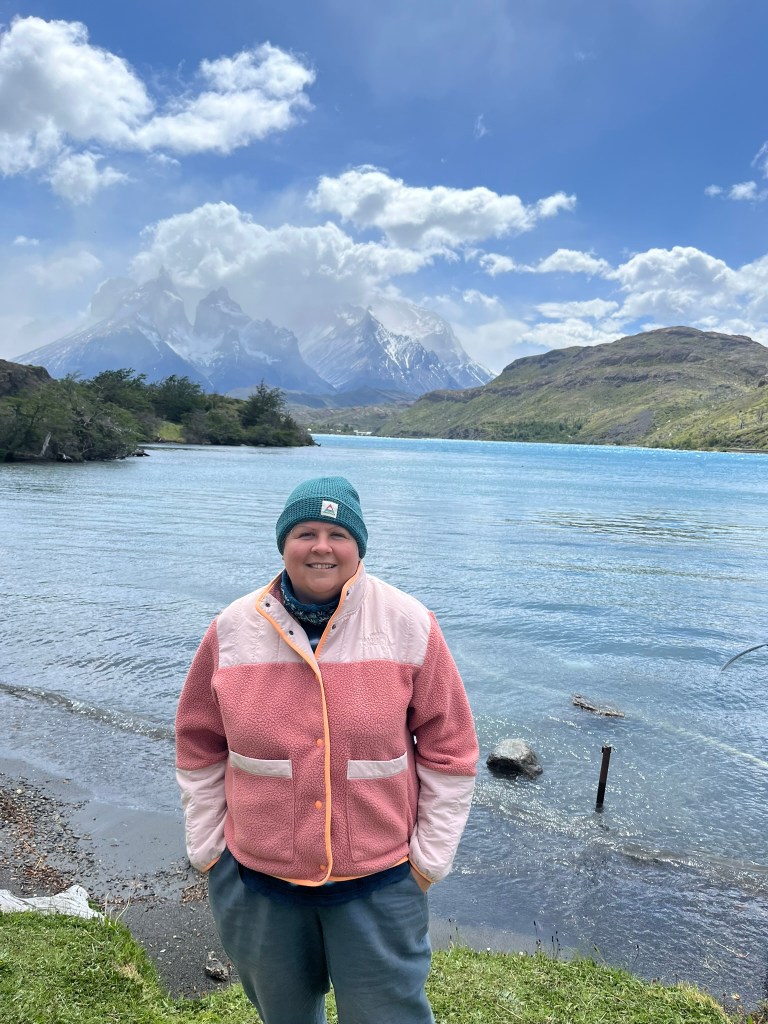
Lunch was a total surprise, set up in a shelter away from the waters edge with a full cheese and meat board, olives, wine and beer on top of the packed lunch we had been given by the hotel. The park is really nicely set up for visitors, with lots of areas set up to receive guests who need somewhere to stop for lunch or camp for the night. There is even a small cafeteria at each spot and you can rent everything at each spot from tents to pillows. Apparently it does book up fast though so it is advised to book in advance.
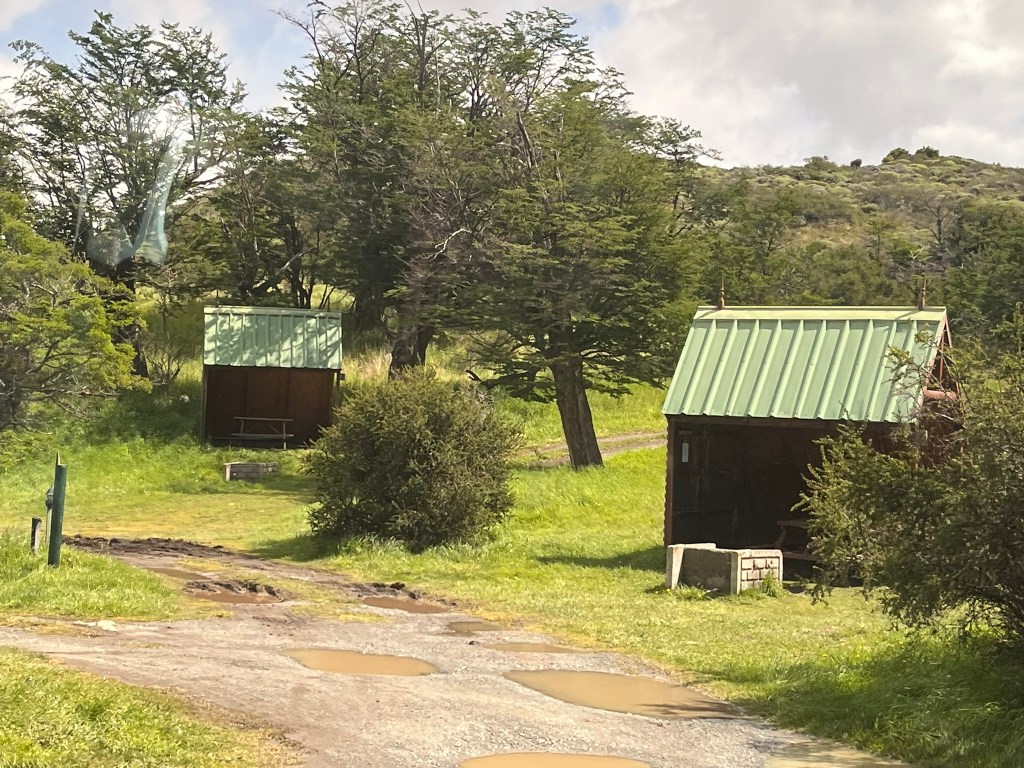
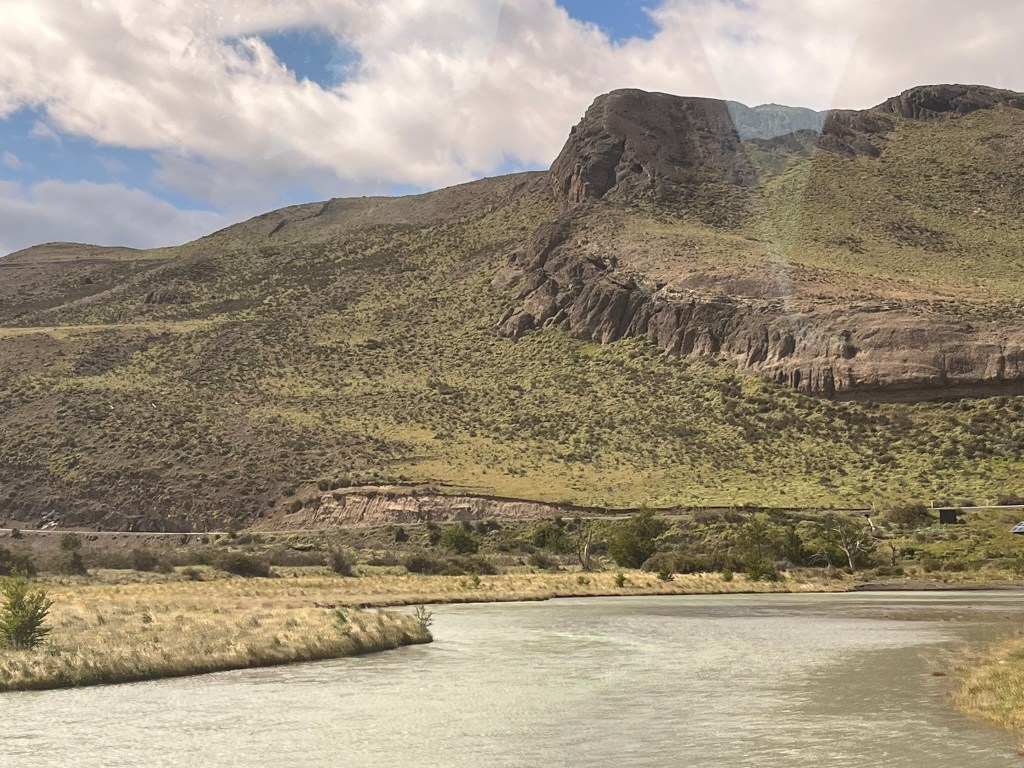
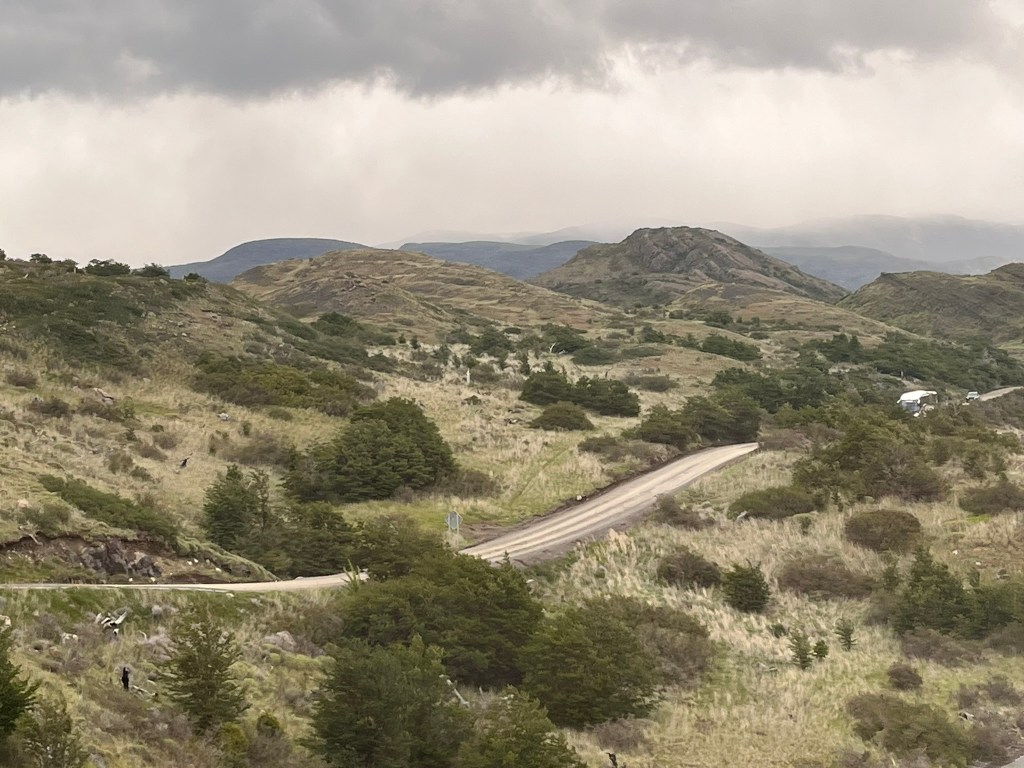
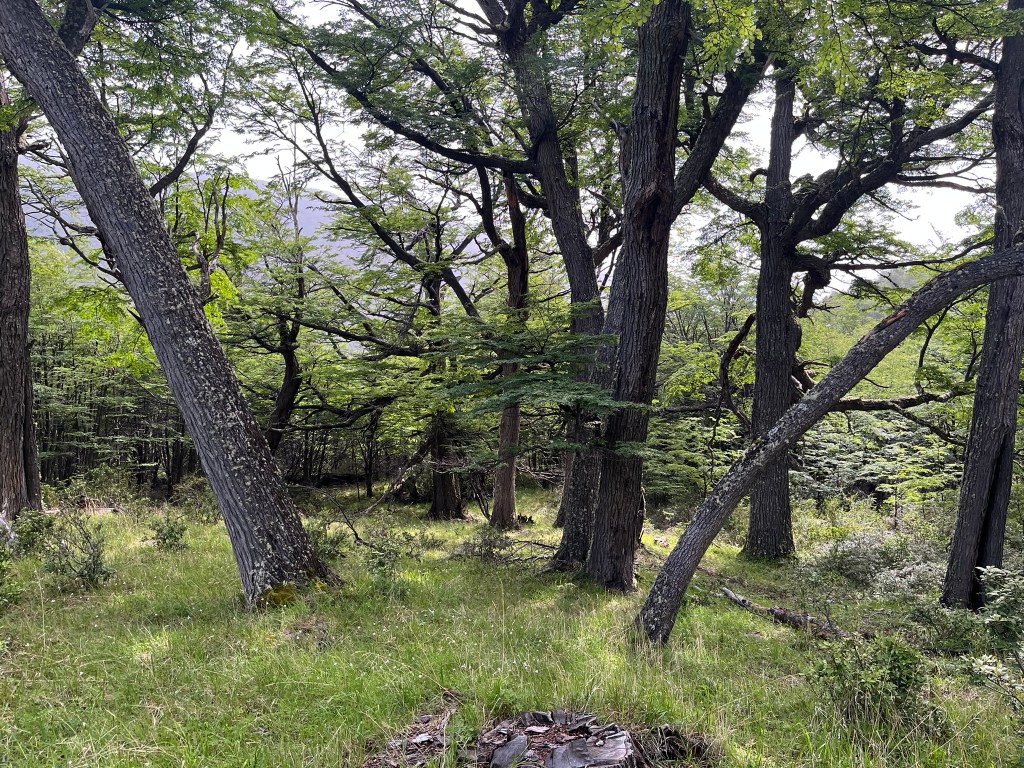
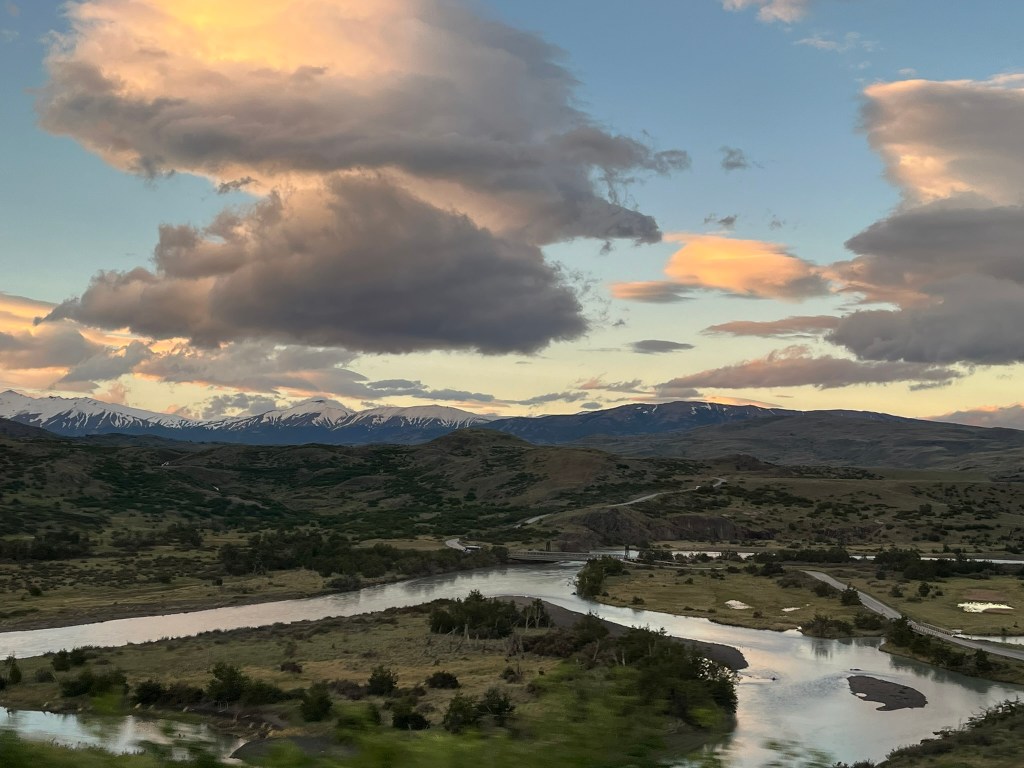
From lunch we continued our drive, now heading for Grey Lake. We passed wide steppe plains and patches of forest, home to the wind-twisted lenga trees. We then entered the braided Pingo River valley shaped by meltwater from the Grey Glacier system.

We were booked to go on the Grey Glacier boat trip, a scenic cruise on Grey Lake to the face of the glacier. The weather in this part of the park is extremely windy and changeable from hour-to-hour. So we waited a little while for the Captain to confirm that the afternoon trip would even be running before we starting making our way to the boat. Because of the terrain, the boat departs from nowhere near where you check in for the boat trip. In fact you must walk for about 40 minutes, firstly through a lenga tree forest and then across a kilometer of wind-exposed pebble beach. The walk is incredible windy, with gusts probably up to 100km/hr, but this is the only way to reach the boat.
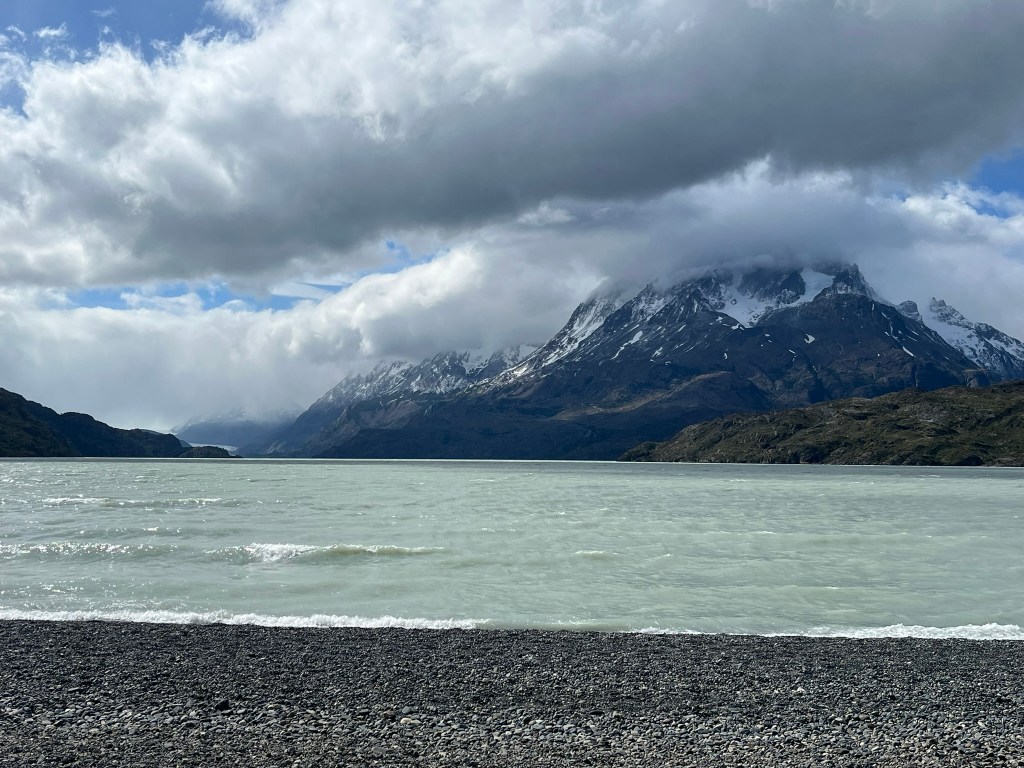
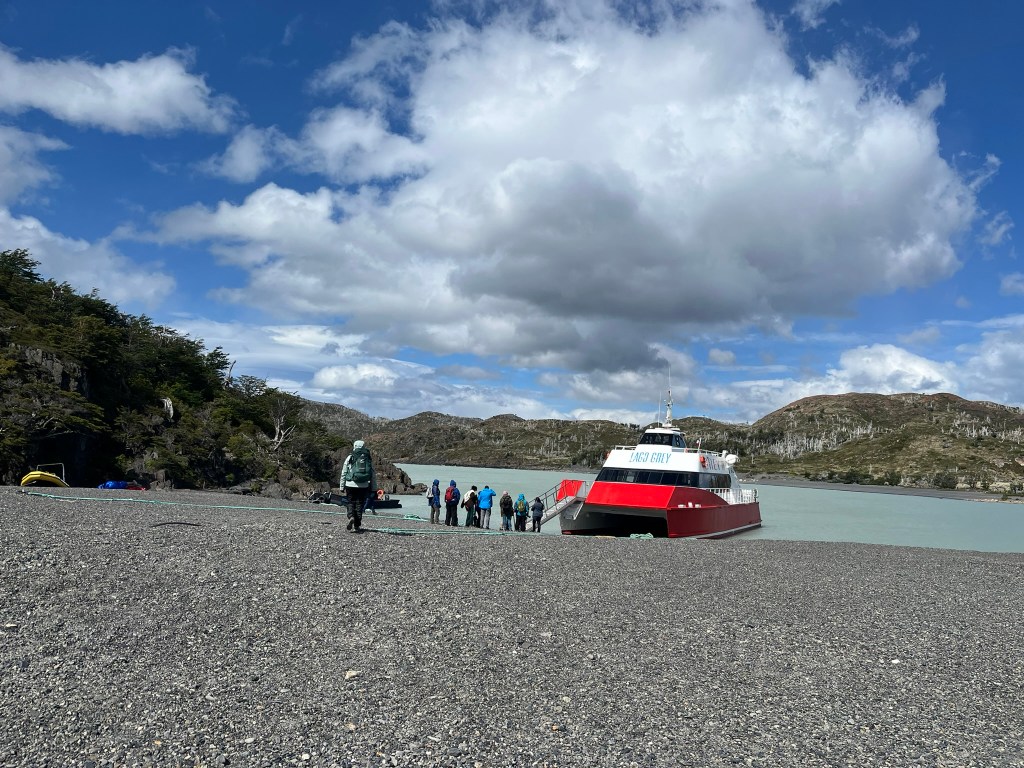

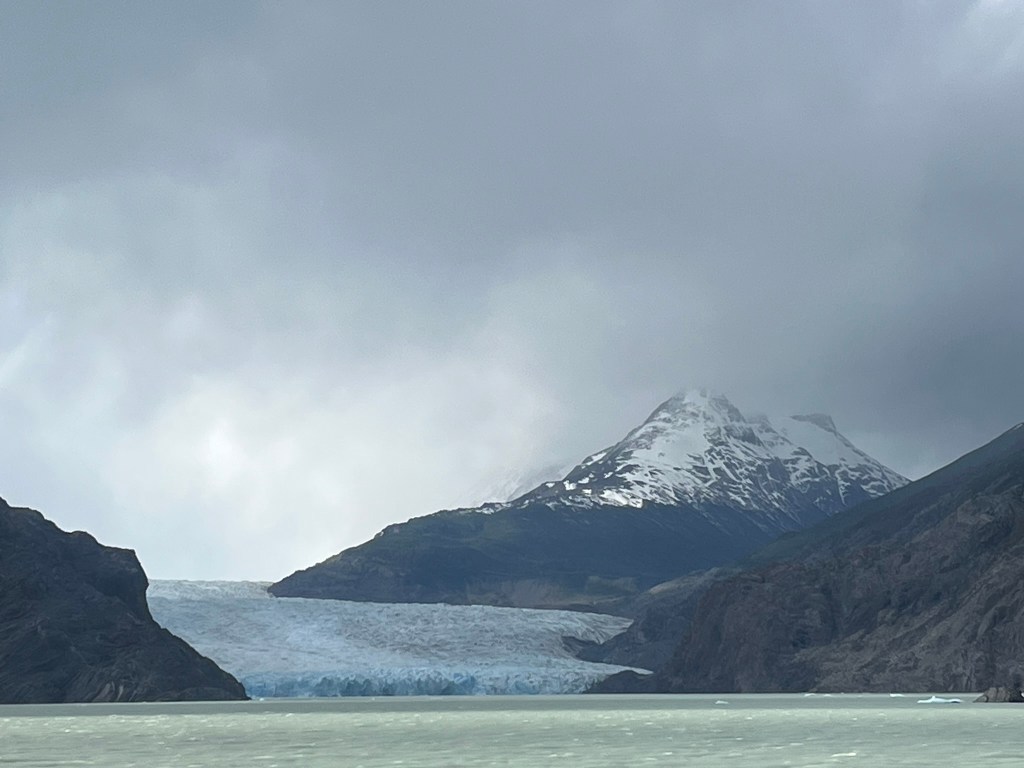
Grey Lake is a long, fjord-like glacial lake in the western side of Torres del Paine National Park and is fed directly by Grey Glacier, one of the great outlet glaciers of the Southern Patagonian Ice Field. The lake is about 20km long, narrow, wind-lashed and filled with drifting icebergs. Its distinctive milky-grey appearance comes from the suspended glacial sediment in the water. For the first part of the trip, tourists must stay inside and seated. Everyone is itching to get outside and take photos but the wind is so strong it creates huge waves like the catamaran is out at sea. You get great views of Paine Grande towering above the lake as you make your way towards the glacier.
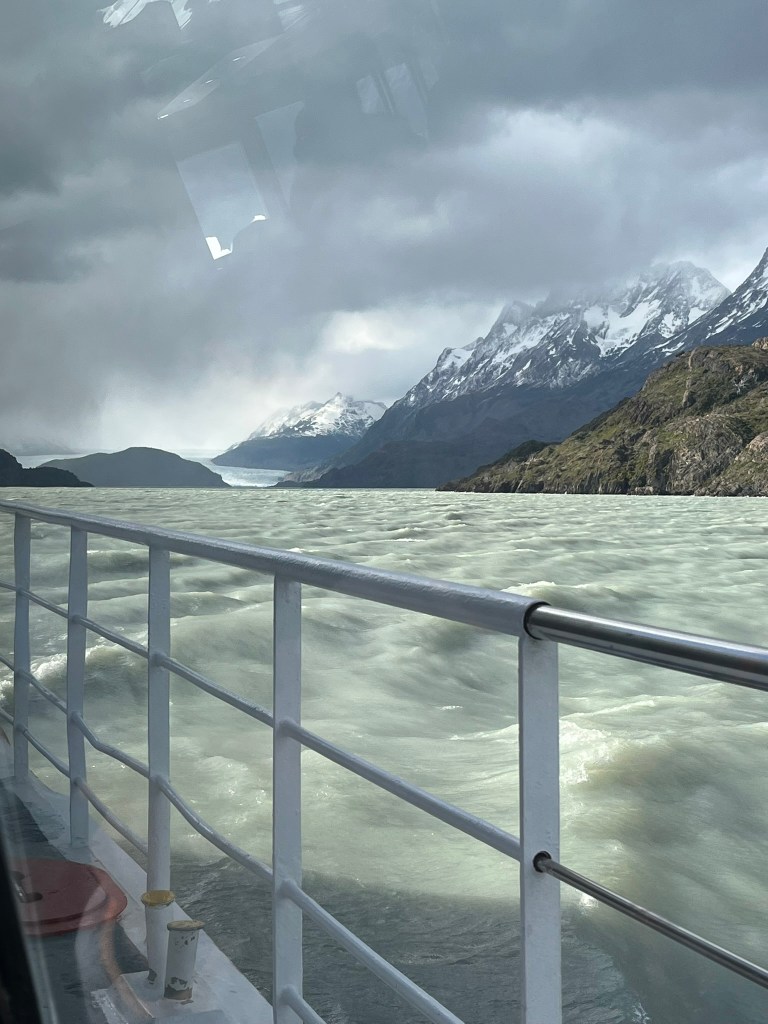
The lake is a classic glacial-trough lake formed during the last glaciation, when the Southern Patagonian Ice Fields extended far beyond their present limits. The glacier carved out a deep, narrow U-shaped valley and then as the glacier retreated northwards, meltwater filled the valley, creating the lake.
Grey Glacier formed around 12,000 years ago during the end of the last glacial period. As the Southern Patagonian Ice Field shrank back into the Andes, Grey Glacier became a modern remnant of that massive ice sheet. The glacier is distinctive because it ends in three distinct lobes (or tongues) – the Western, Central and Eastern. These lobes advance into the water separately, divided by rocky ridges called bedrock spurs. The ice is striped with bands of black, white and deep electric blue. The blue color appears where ice is heavily compressed and free of oxygen bubbles. The black or grey stripes are caused by moraine debris that the glacier has scraped from the valley walls.
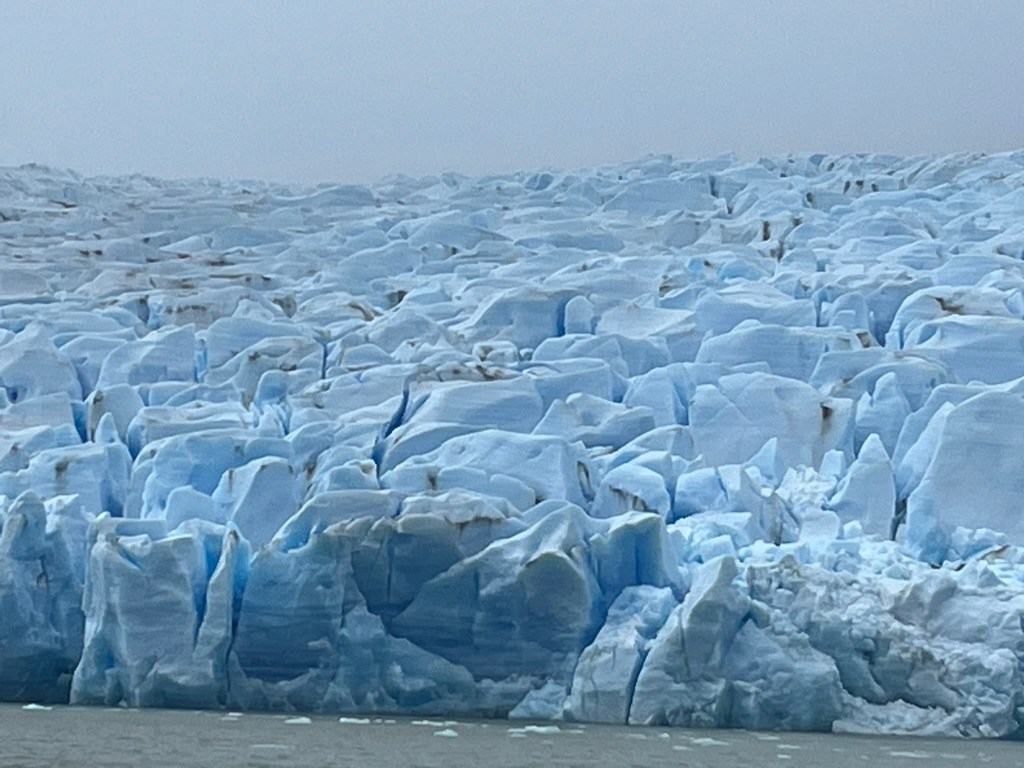
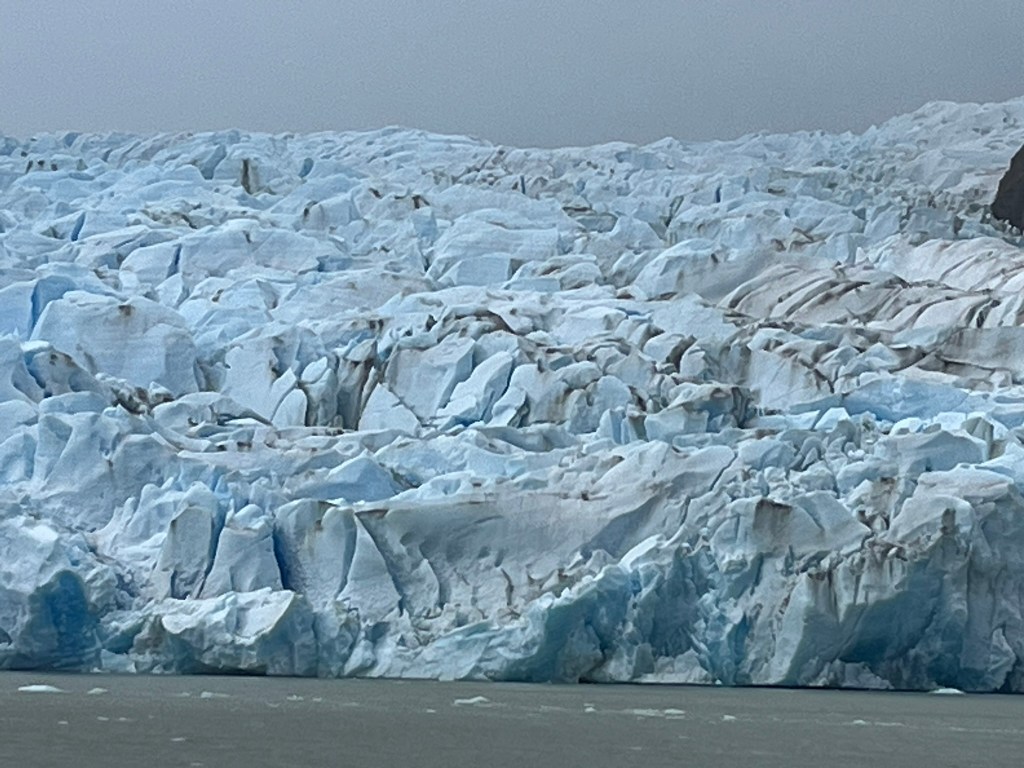
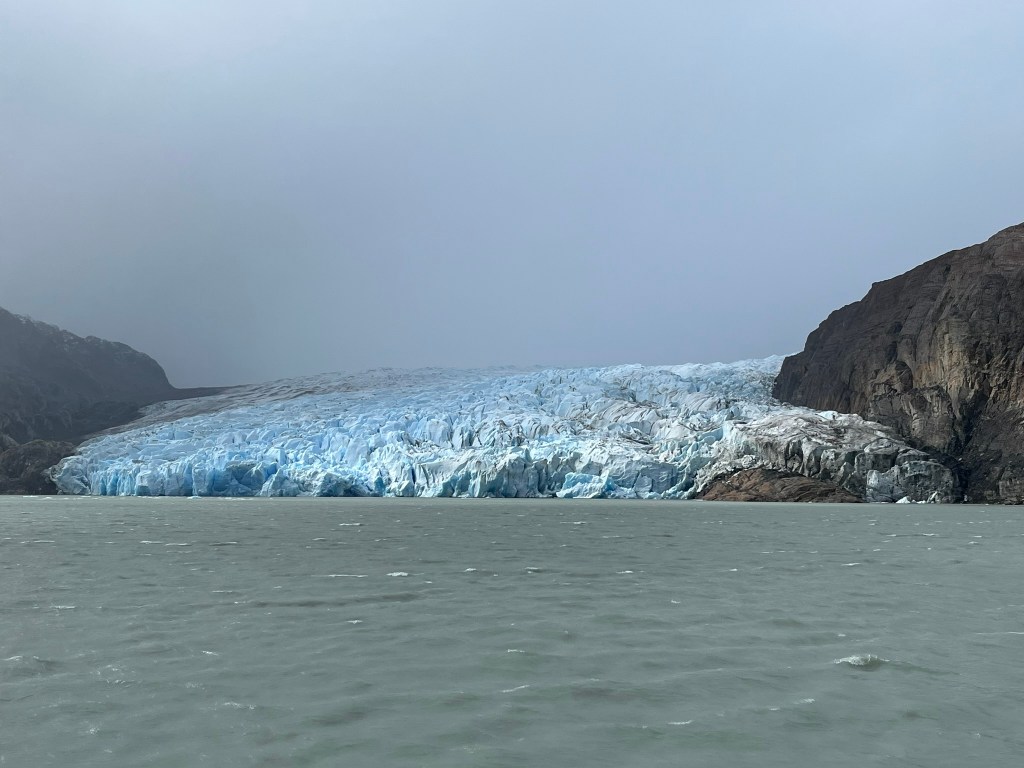
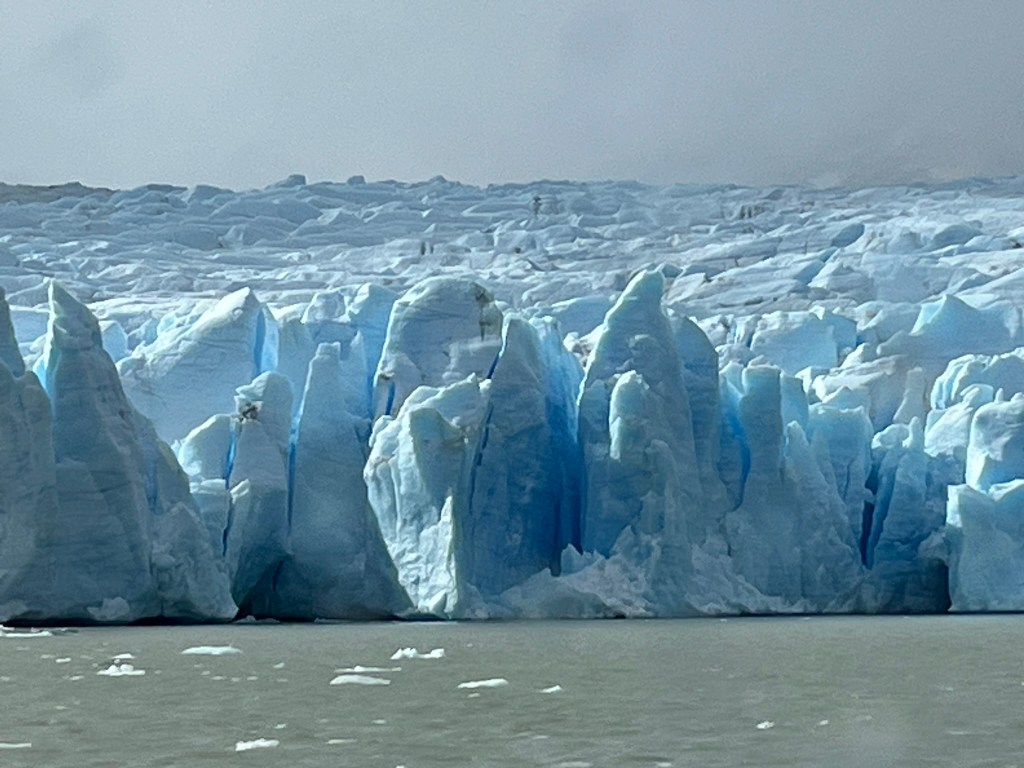
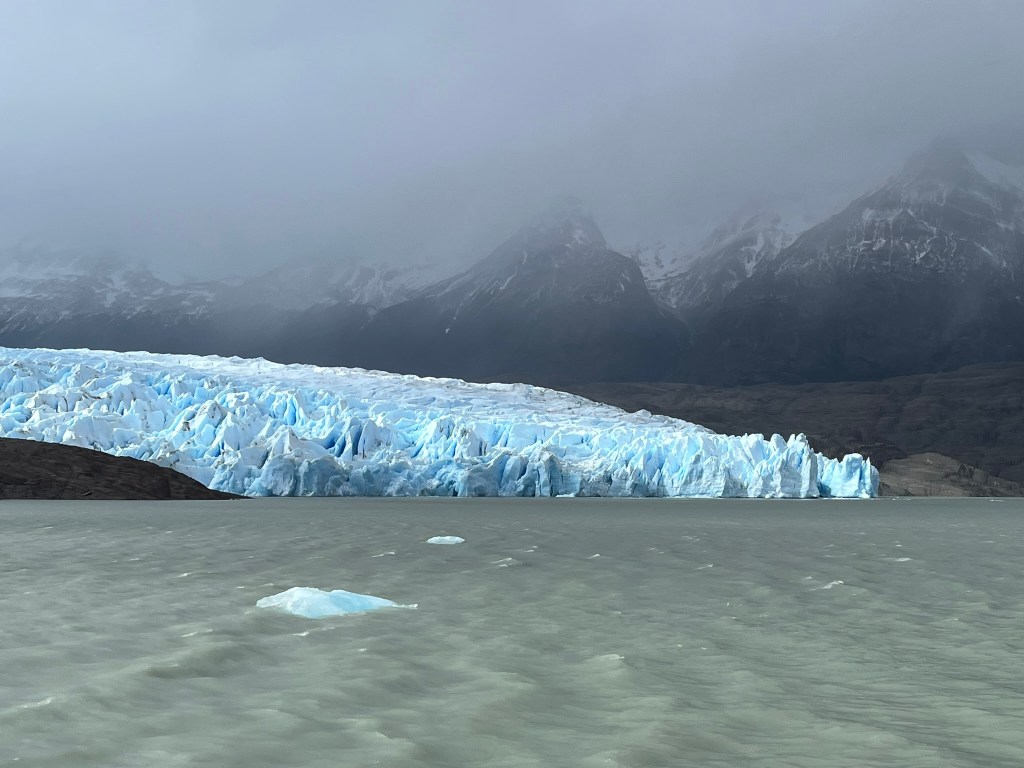
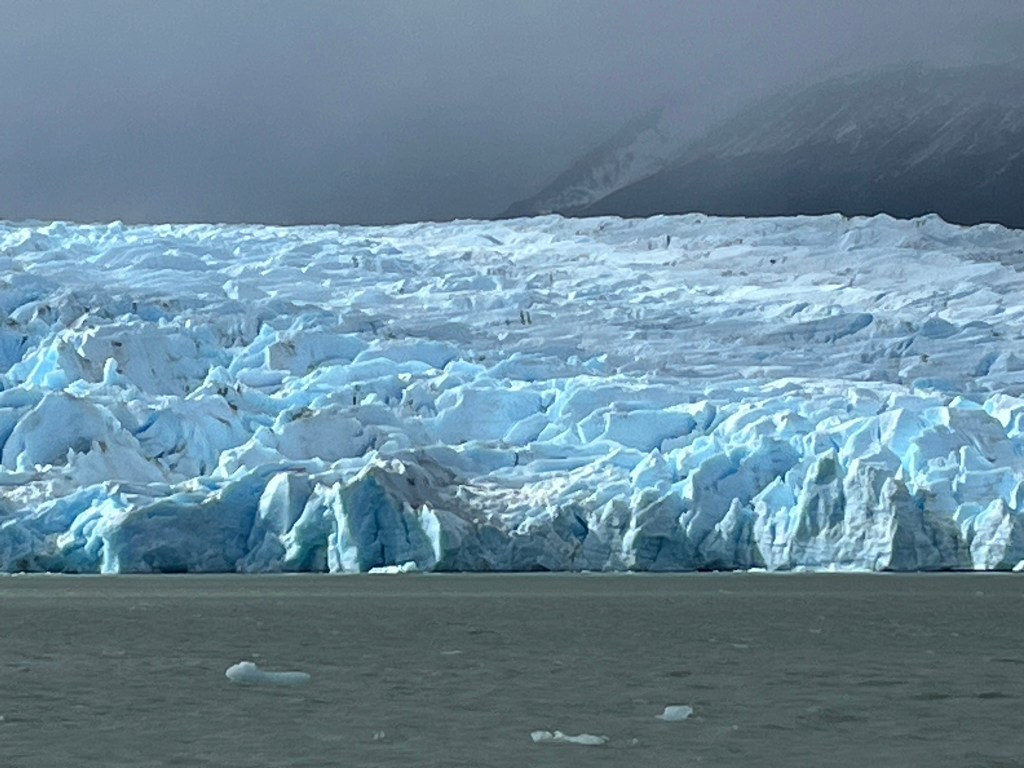
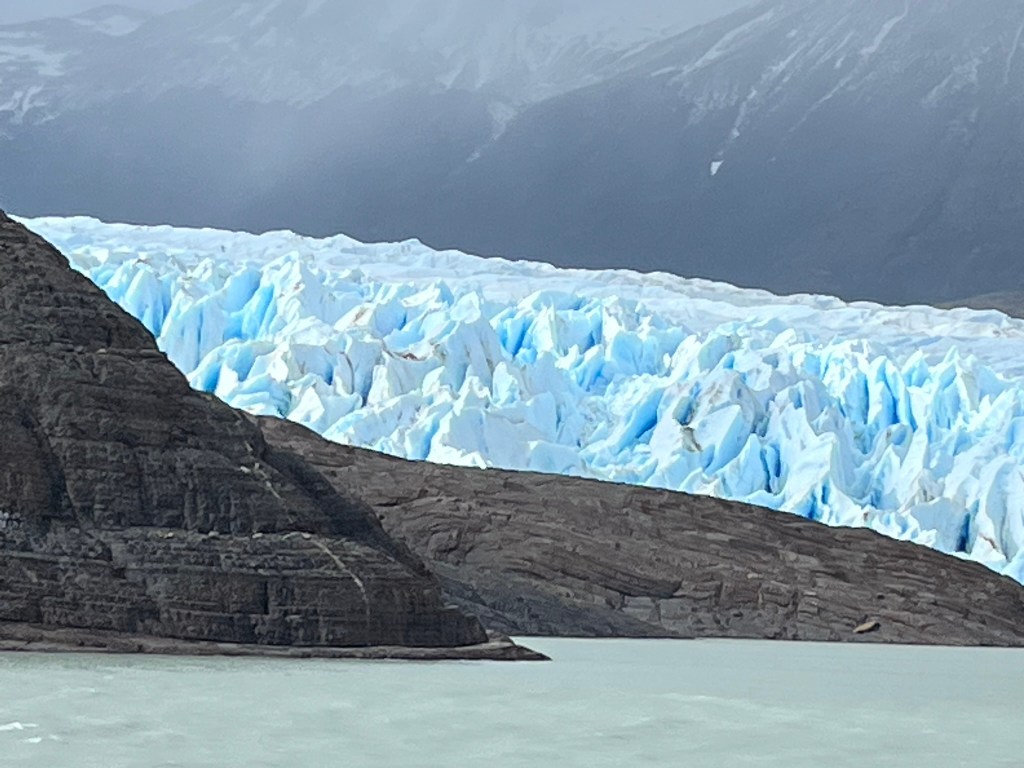
The glacier is dynamic, constantly moving, melting and reshaping itself. It moves roughly 1-2m per day at the glacial front and has steadily been retreating for decades. In the last 40 years the front has pulled back over 3km and there is evidence that the glacier is rapidly thinning.
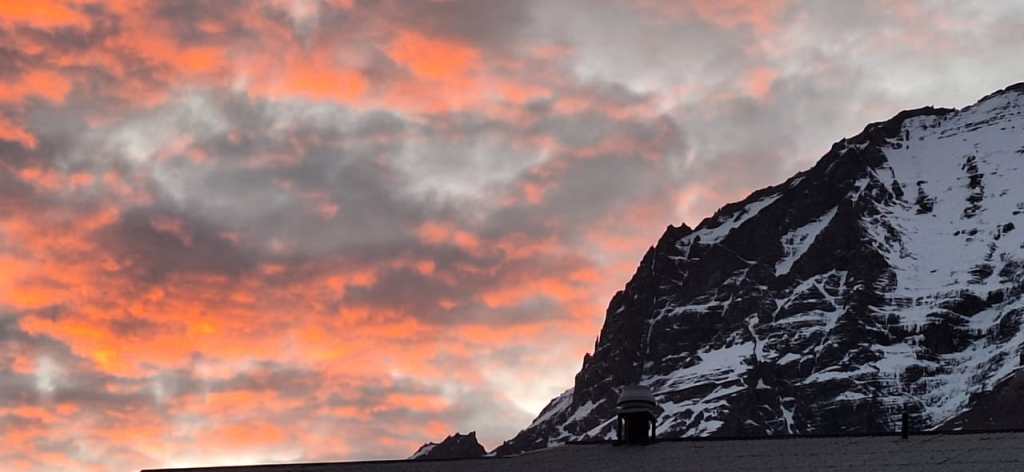
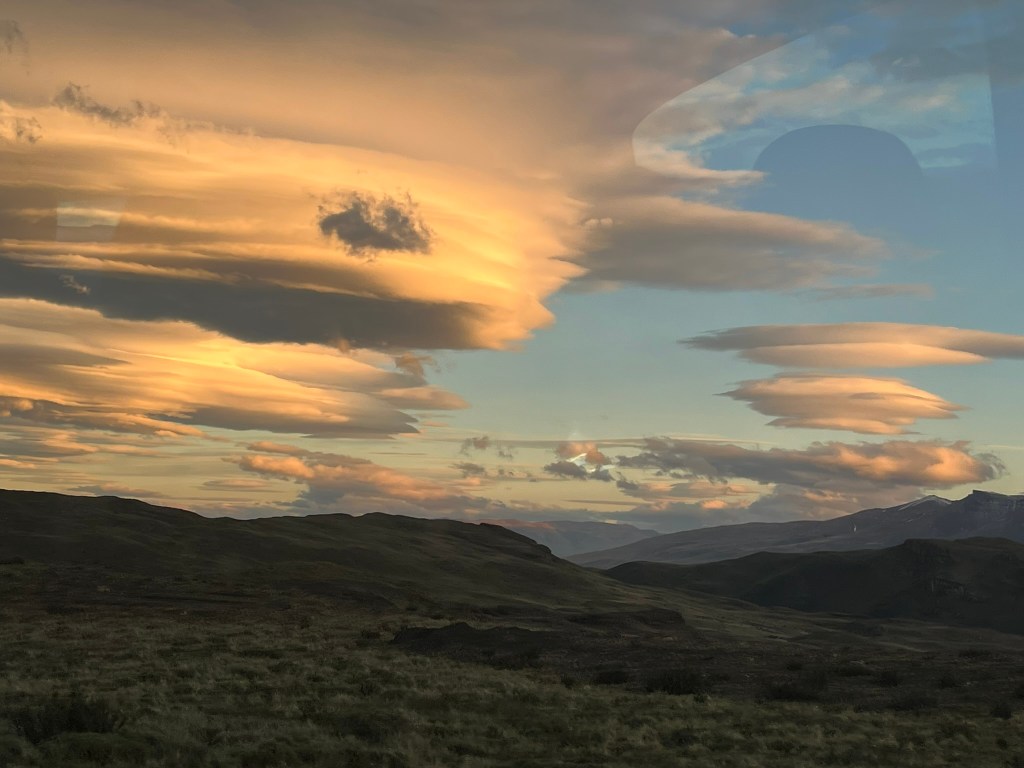
After an hour exploring the three tongues of the glacier we made our way back to shore. And from here we started heading back to the hotel. The late afternoon light was fantastic on our drive back and was the perfect way to end a sensational day in Torres del Paine.

 Colette's Grand Detour
Leave a comment