Punta Arenas sits on the Brunswick Peninsula in Chile’s far south, overlooking the Strait of Magellan. It is the southernmost major city in continental South America. The city is built on gently rising hills and is surrounded by bleak Patagonian steppe, with low shrubs, wide skies and constant wind.
This is one of the windiest cities on Earth with strong westerlies sweeping across the Southern Ocean with no mountains to slow them down. The Strait of Magellan, which is a natural sea passage separating mainland South America from Tierra del Fuego, funnels and accelerates the wind. And weather systems from Antarctica frequently pass through. In the Sprint and Summer it is possible to get winds of 130km/hr and experience four seasons in a day. Our one and only day where we had planned a boat trip down the Strait of Magellan to visit a huge colony of penguins on Isla Magdalena was unfortunately one of these Spring days and the boat trip was cancelled by the operator due to high winds.

So we had the day to explore Punta Arenas and planned to visit some of the recommended museums in town. Except it was also Election Day in Chile and almost everything bar a handful of restaurants and a few souvenir shops was closed. Today turned into a recharge day after 2 weeks of non-stop travel with a short walk around the main square and luckily stumbling upon a restaurant that did a fantastic locally caught King Crab casserole.
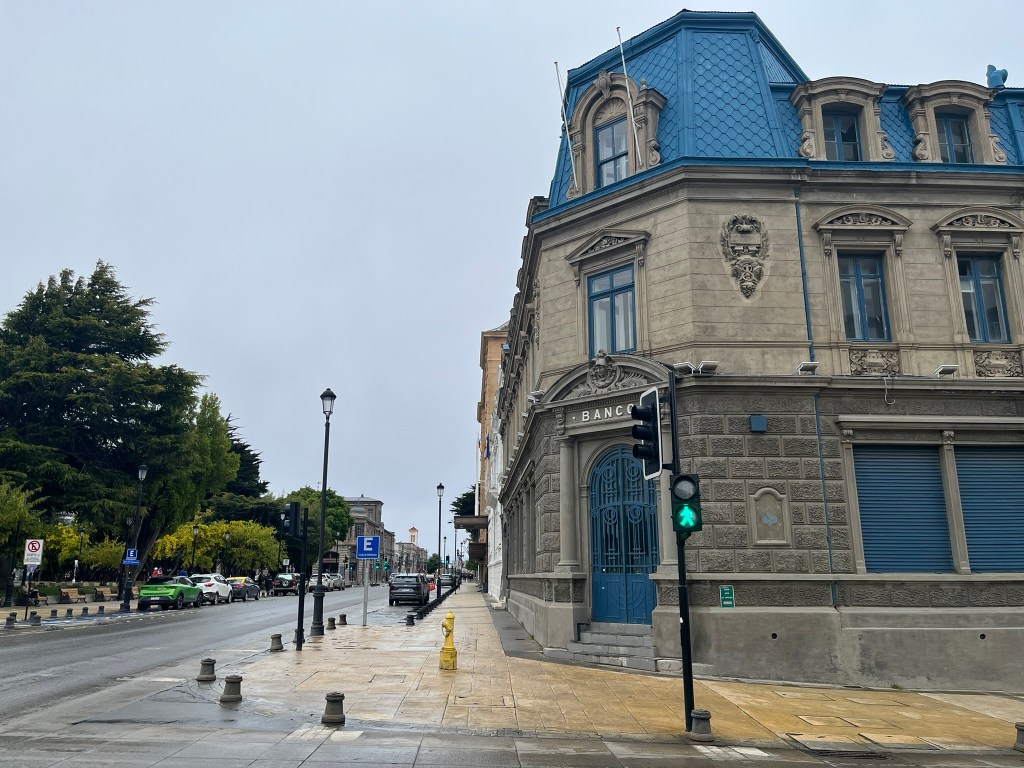
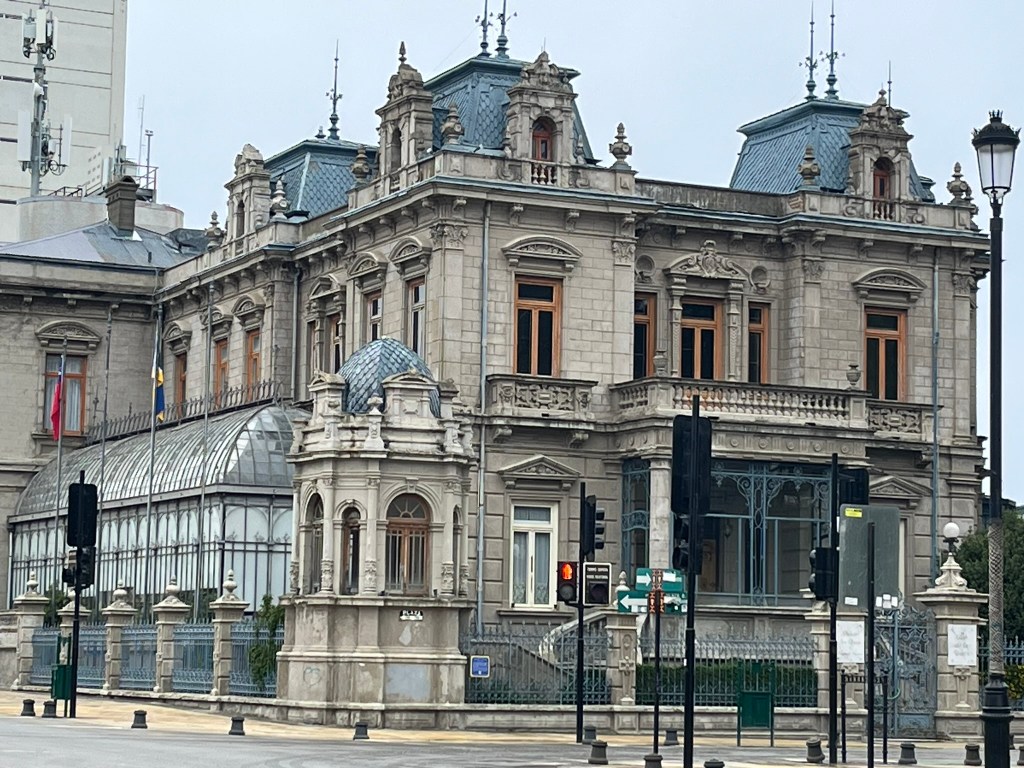
Punta Arenas was founded in 1848 by the Chilean government partly to secure control over the strategic Strait of Magellan and partly to establish a penal colony. Early settlers endured brutal weather conditions, shortages and isolate. In the late 1800s the arrival of sheep farming transformed the region. Wealthy ranchers, many from Croatia, Scotland and Spain built large fortunes and built elegant European-style mansions in town, many of which are now museums or government buildings.
Prior to being ‘founded’, the area was traditionally inhabited by the Selk’nam and Aonikenk peoples, who had adapted to the extreme cold and nomadic life. Further south in the strait, lived the Yaghan and Kawesqar, master canoeists navigating the channels.
Before the Panama Canal, all ships rounding the Americas had to pass the Strait of Magellan, making Punta Arenas a major global port. After 1914, Panama took most of this traffic and Punta Arenas shifted to a regional service hub for Patagonian ranches, Antarctic scientific bases, oil and gas exploration and tourism. Today it’s a city of 130,000 people with a strong Croatian heritage.
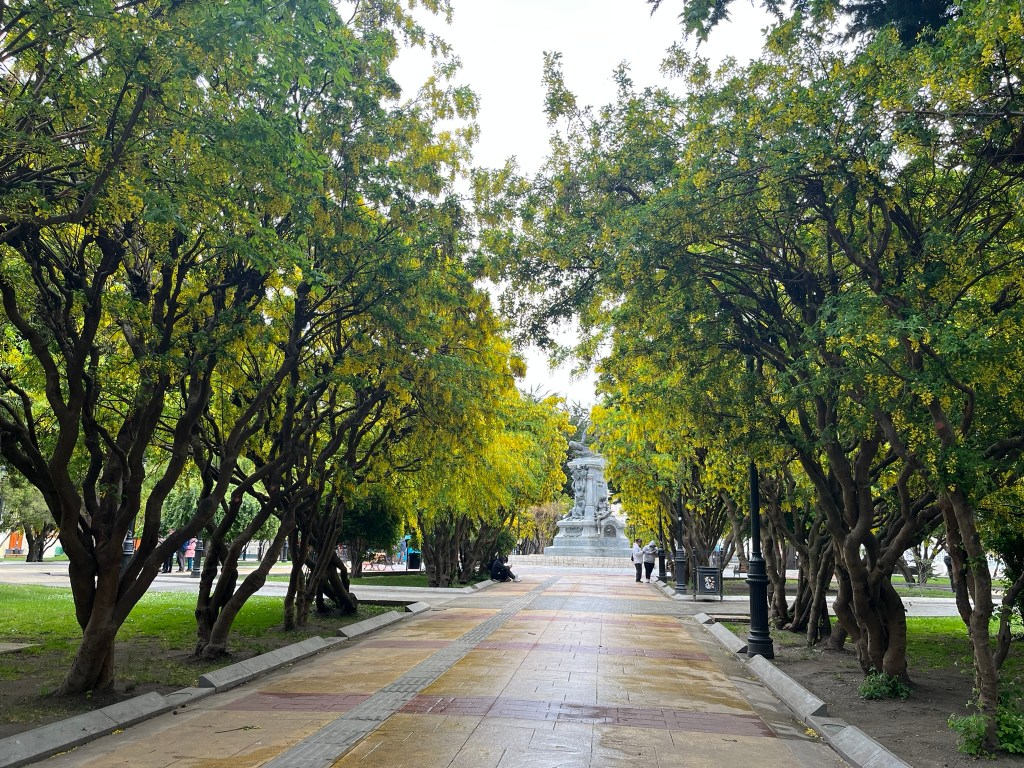
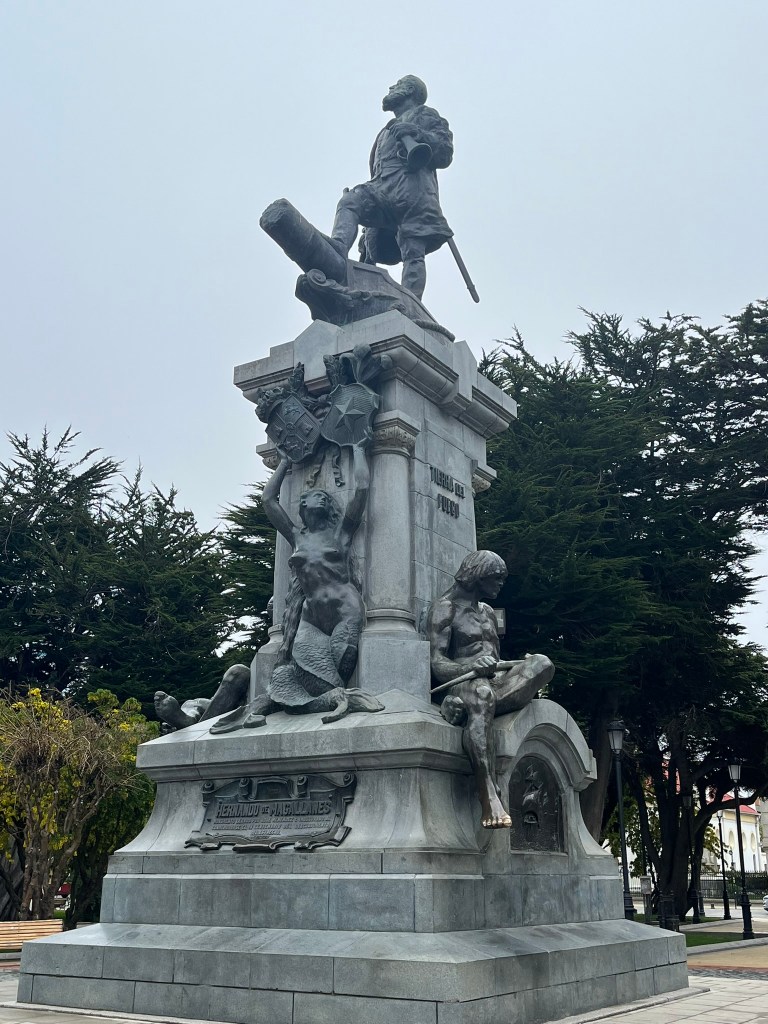
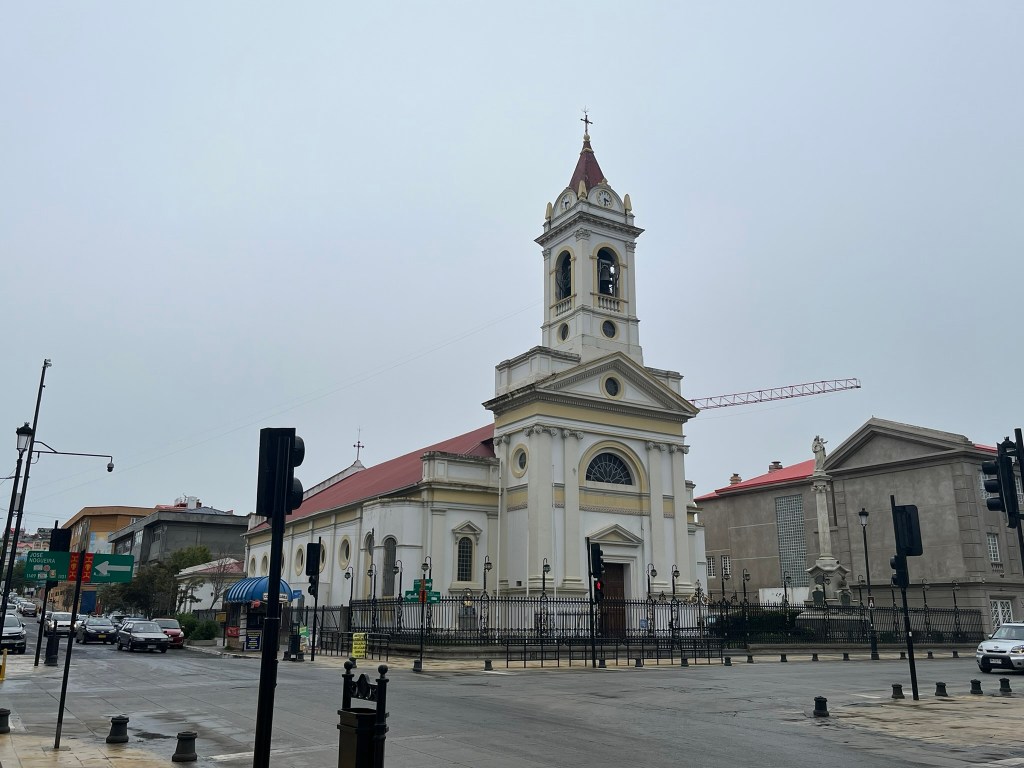
The very short self-guided walk tour we took around town included the Costanera del Estrecho (the promenade) and the main square – Plaza Munoz Gamera. At the center of the square is a bronze monument to Ferdinand Magellan surrounded by tall Araucaria (monkey puzzle) pines and beech trees. The monument commemorates Magellan’s first voyage through the strait in 1520. Around the square, the mansion’s such as Palacio Sara Braun and Palacio Jose Menendez were once owned by wealthy sheep-ranching families.

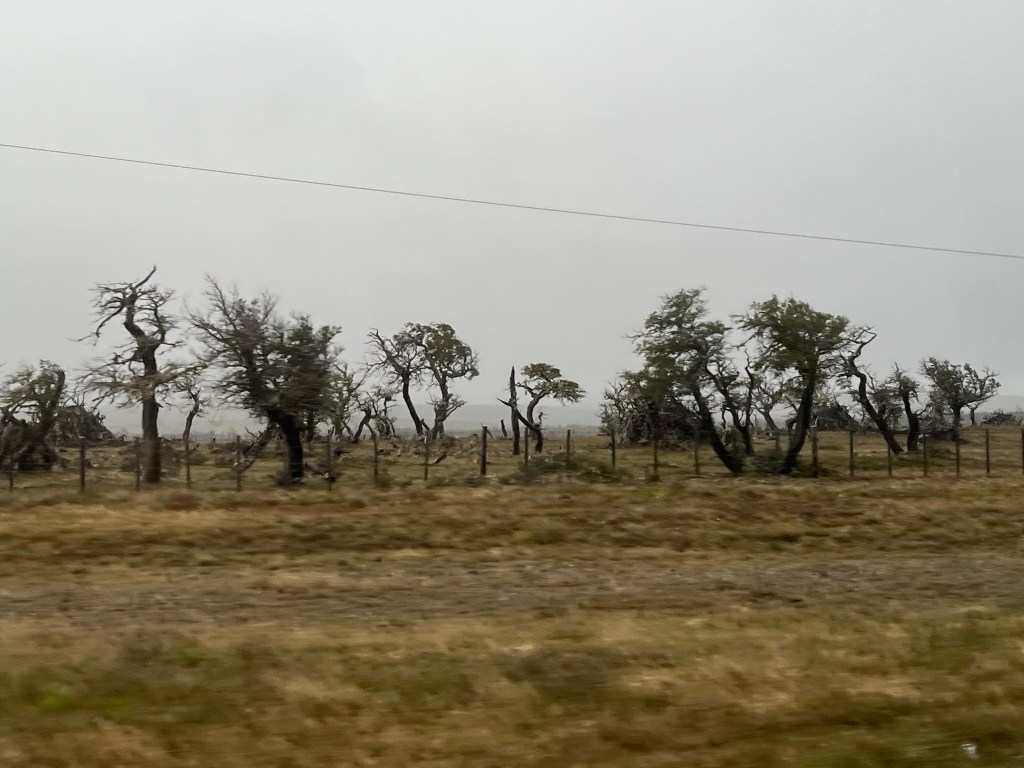
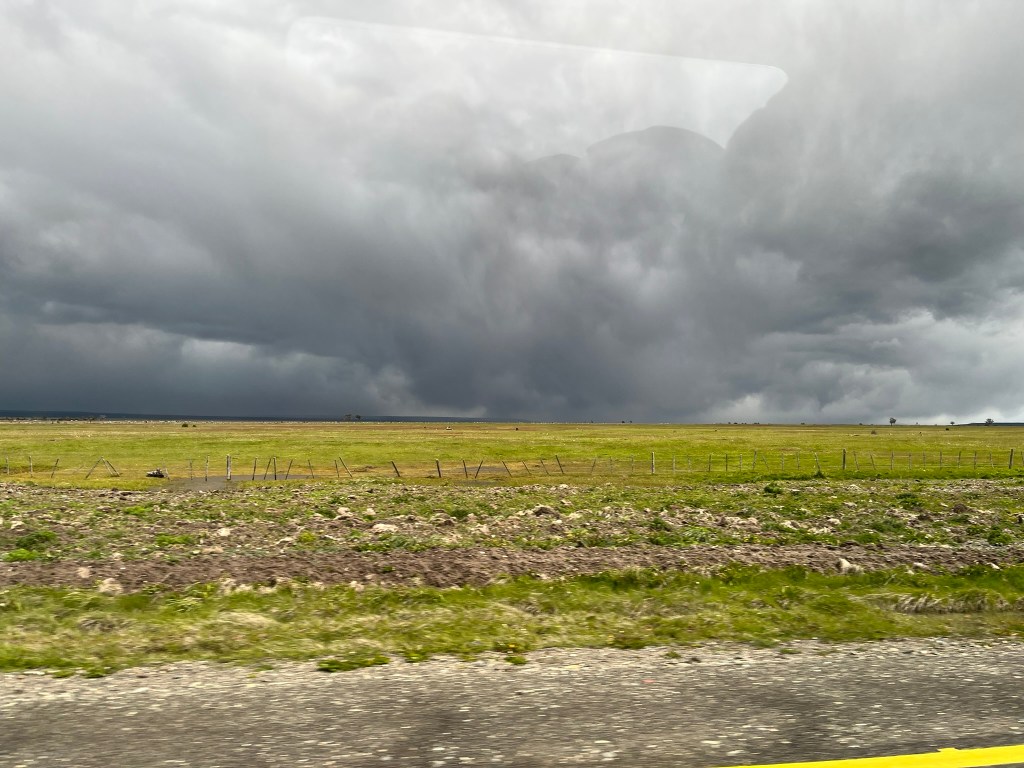
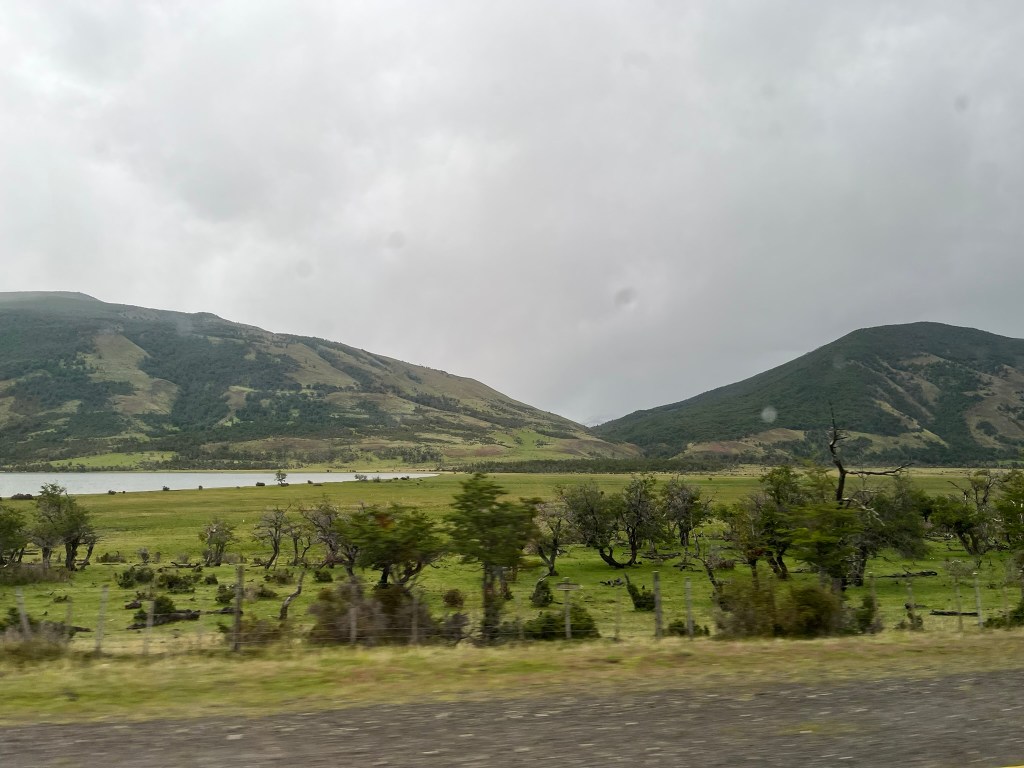
The next morning we departed Punta Arenas heading north for Torres del Paint National Park. This is one of the classic Patagonian journeys along the ‘Road to the End of the World’ and is hours and hours of empty steppe and sheep estancias. The hurricane-force winds added an additional element of excitement/fear to the drive with the van shaking violently side-to-side at times. It was a true experience of how brutal the weather in Patagonia can be.

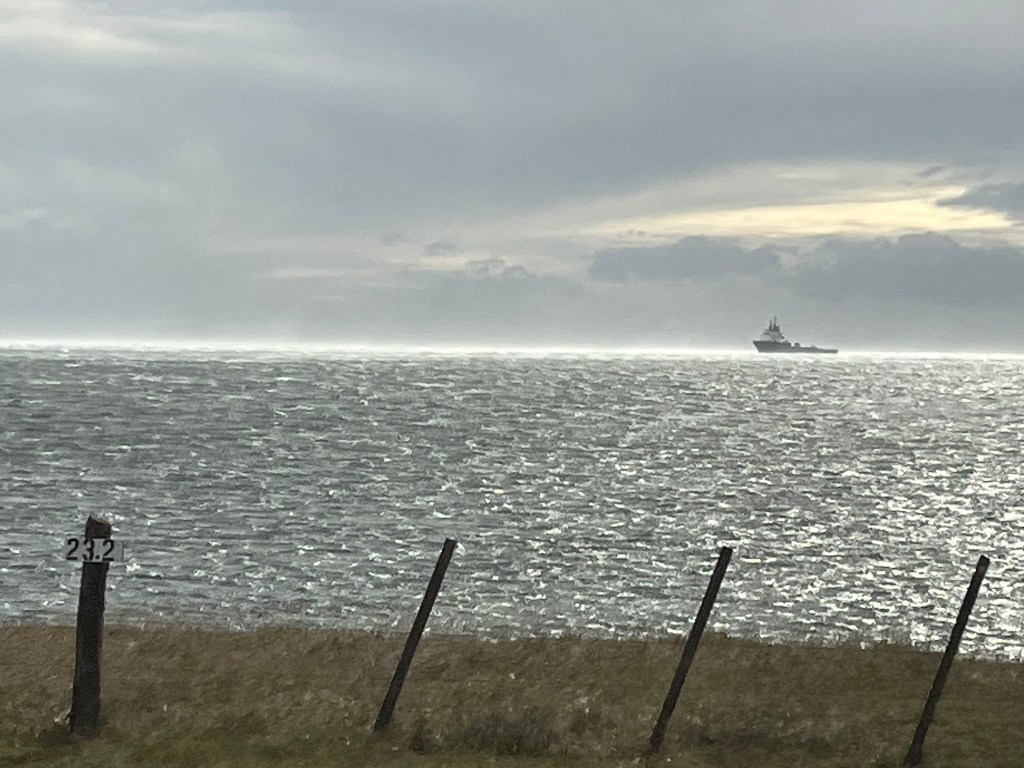
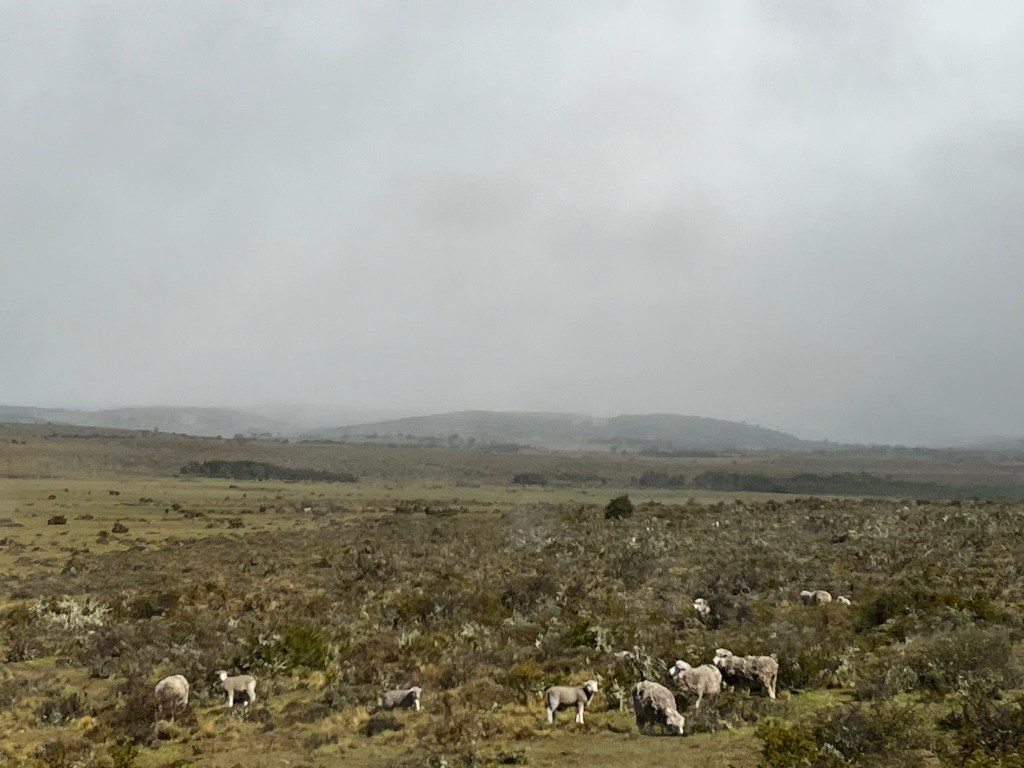
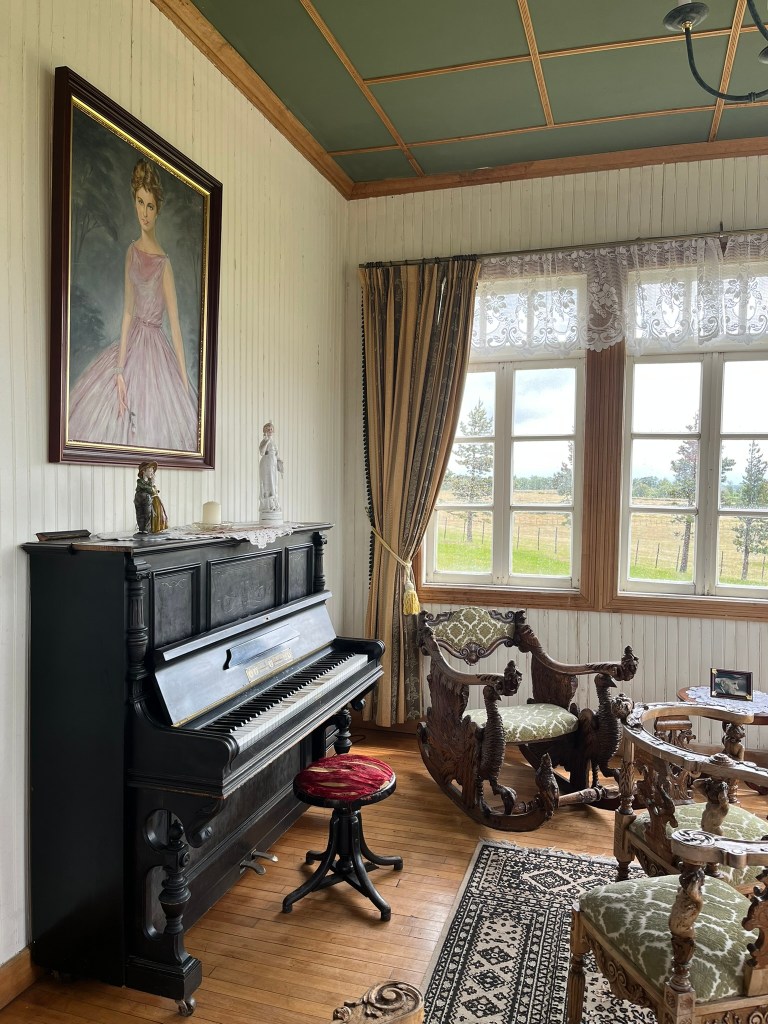
Our lunch stop was unexpectedly lovely. We arrived at Estancia Cerro Negro, a ranch owned by the Kusanovic family, Croatian-Chilean settlers who built up vast sheep holdings in the region. They also own private land within the Torres del Paine National Park, which is home to the hotel we are heading to. The ranch dates back to the early 1900s and is still a working sheep operation. After a lunch of lamb roasted on cross-stakes on an open fire we visited the original home in which the Kusanovic family lived and the barn to see a sheep shearing demo.
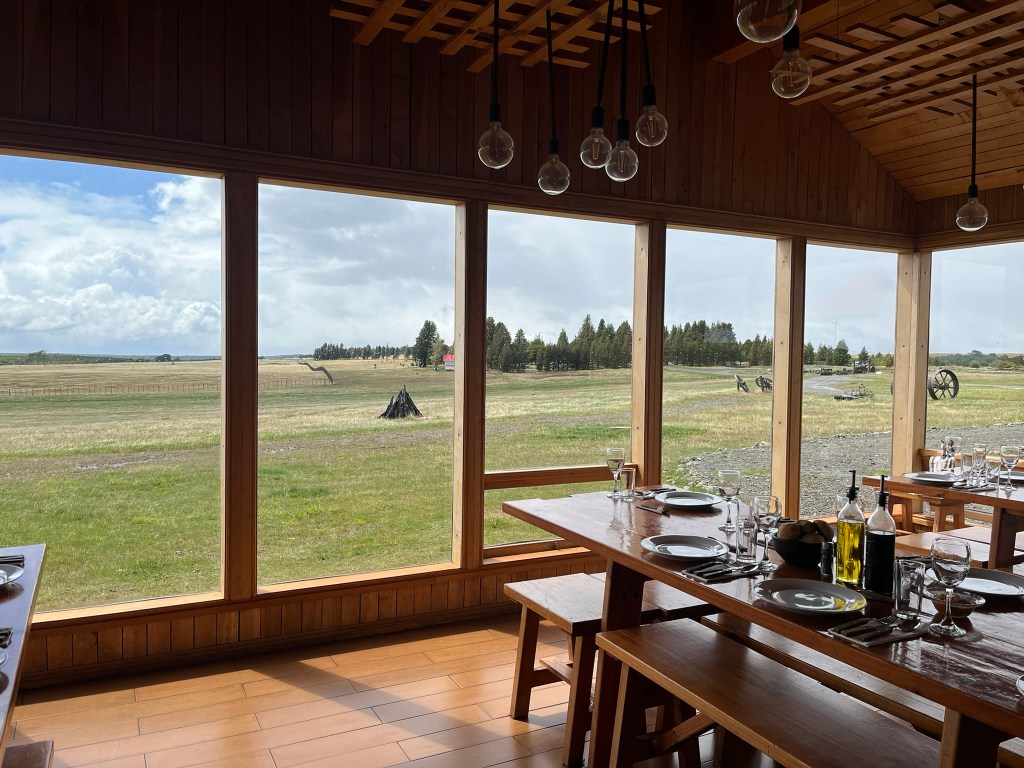
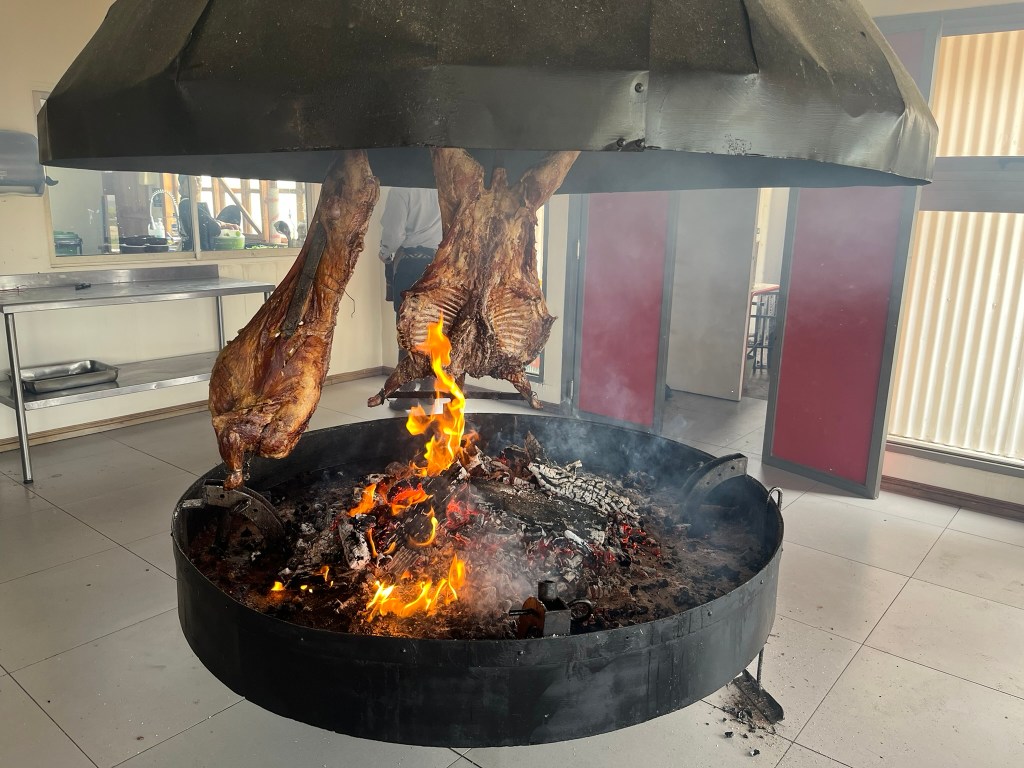

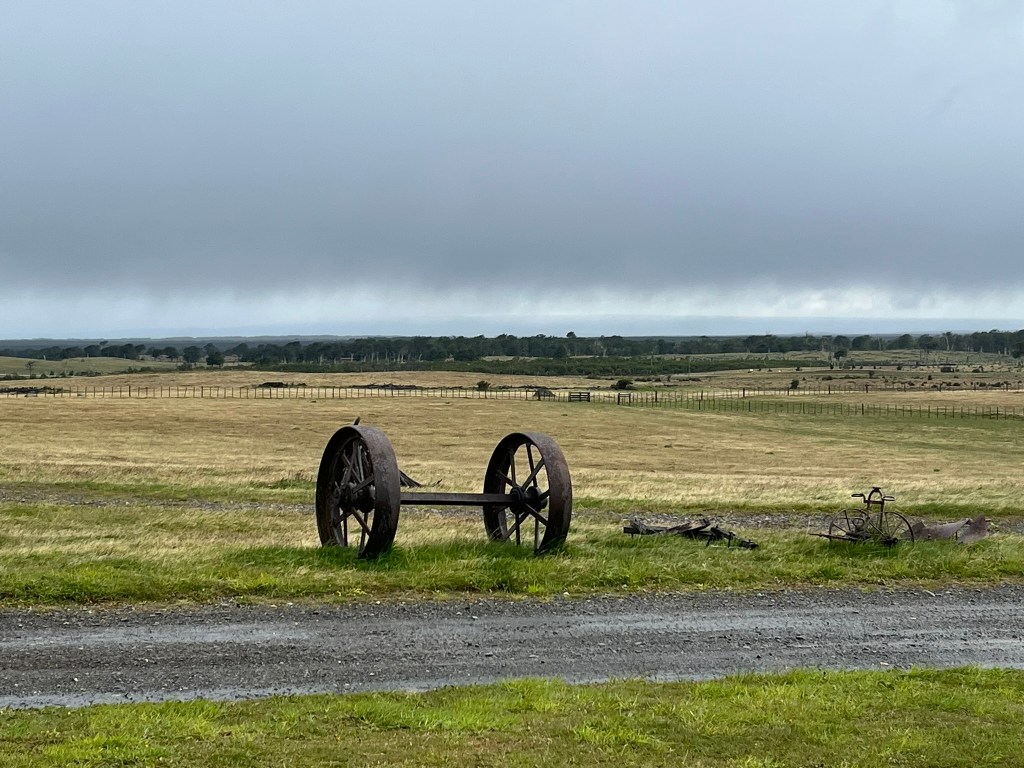
The Kusanovic family were part of a large wave of Croatian immigrants, mostly from the Dalmation coast and islands such as Brac and Hvar, who arrived in southern Chile in the late 19th century looking for opportunities in sheep ranching, trade, shipping and mining.

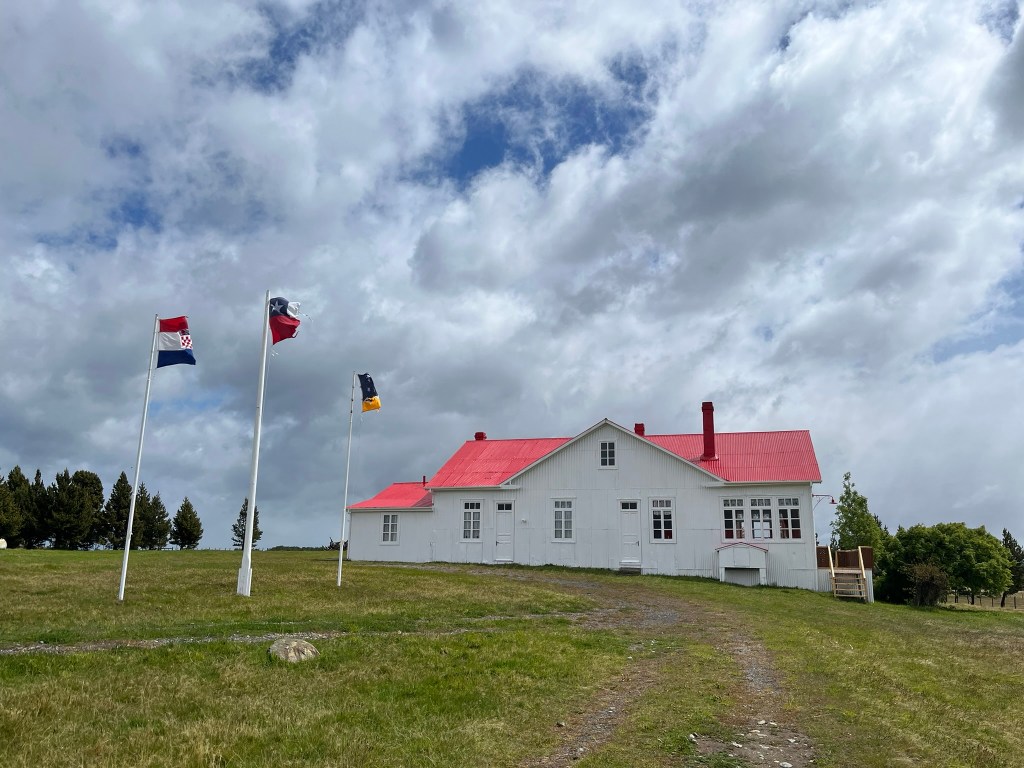
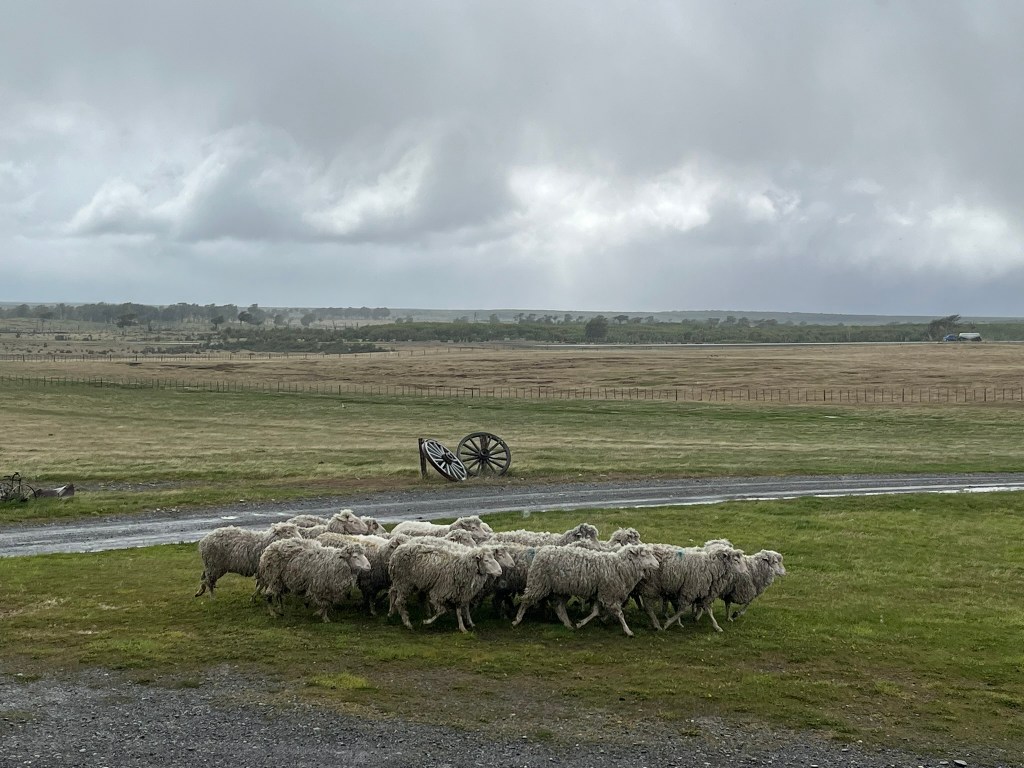
After lunch, we continued our journey through the steppe, eventually passing Puerto Natales. This is a compact and colorful port town and the last major settlement before heading into the park. The final stretch of the drive into the National Park is meant to be spectacular with glacier-fed rivers, emerald lakes and the first views of the sharp granite spires that the park is famous for. However, the rain and fog meant we could barely see the road, let alone the scenery. Fortunately, once we had checked in to Hotel Las Torres, which sits at the base of the Paine Massif, and even with limited visibility looks fantastic, we were told the storm would pass by tonight and tomorrow’s weather was looking good.
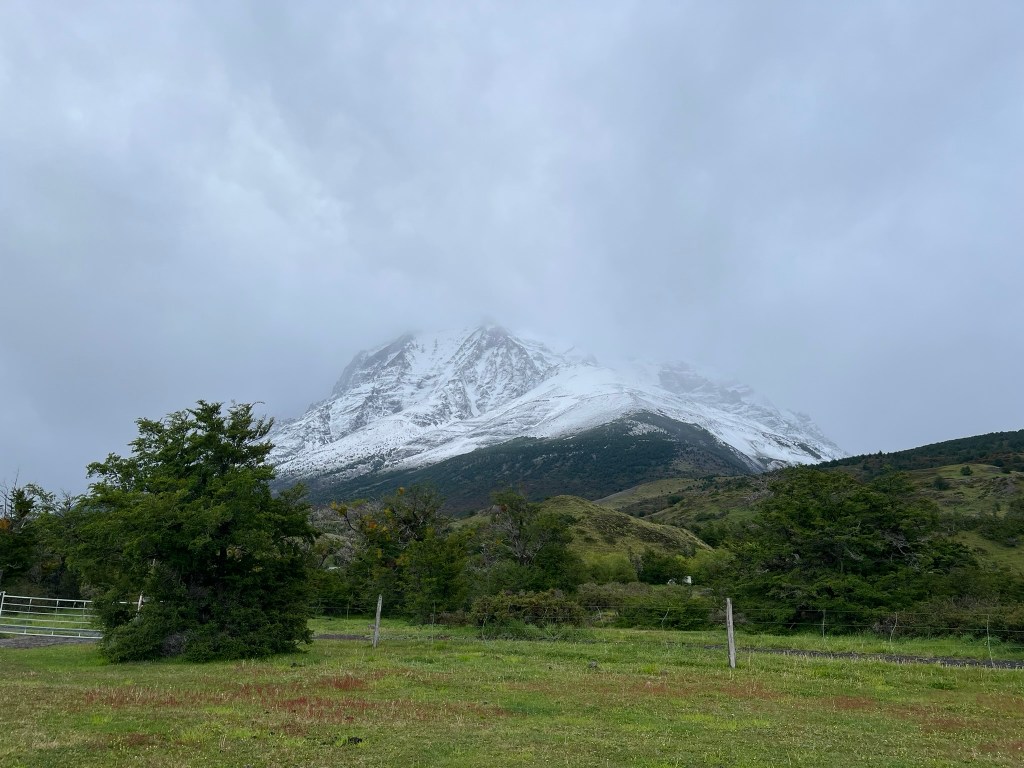

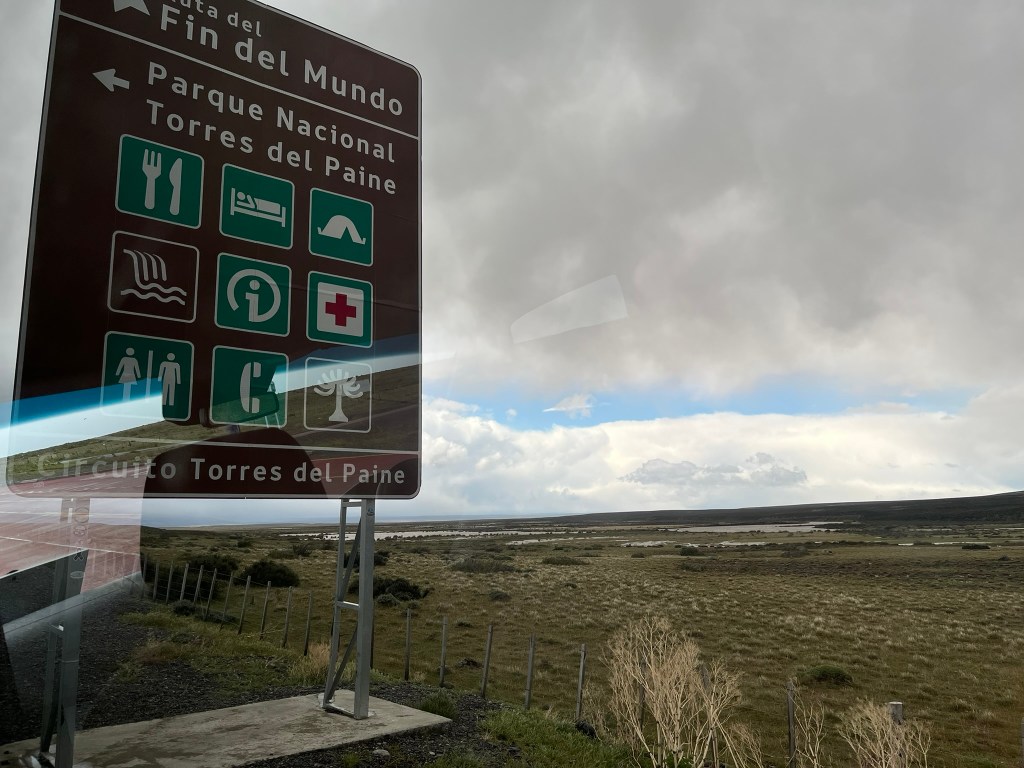
This was great news as we have the next 2 and a half days to explore the park and I can’t wait! For those thinking of visiting Torres del Paine, many folks choose to stay in Puerto Natales and/or use the camping and hostel facilities around the park and there seemed to be lots of buses arriving to bring tourists into the park and return them to town in the evening. But there are actually a handful of hotels that sit in private reserves scattered across the park and this is the most comfortable and easy way to enjoy the scenery with minimal travel.
 Colette's Grand Detour
Leave a comment