On our second full-day tour we visited Vinapu, Ahu Uri A Urenga, Puna Pao Quarry, Ahu Akivi, and ended the day at Tahai Ceremonial Complex. We also headed to the top of Rano Kau volcano to take in the views of Hanga Roa, as well as look down into the crater itself.
We were also supposed to visit Orongo, a stone village and ceremonial complex made up of 50 low, oval-shaped houses and famous as the spiritual center of the Birdman cult. However, 2 days before a cliff had collapsed, damaging the village and making the site inaccessible until the damage had been assessed. The birdman cult was a major religious-political system that dominated Rapa Nui from the 17th to mid-19th century. This was the era after the moai and ancestor worship dominated the island. It is speculated that the shift to the birdman cult wasn’t a sudden change, but a long social and environmental transition.
The old system of moai ancestral worship depended on large populations, abundant resources and co-operative labor. But over time trees were cut down faster than they grew, rats were overrunning the island and eating all the food sources, farming yields fell and the population increased. This strained the old system, and building ever-larger moai became politically and logistically impossible. As clans competed for resources, conflicts increases and this is when it is thought many moai were toppled. By the early 1700s almost all moai were on the ground.
And this is when the cult emerged, where representatives of different clans competed to bring back the first Tern egg from Motu Nui (a small island off of Rapanui). They swam across dangerous shark-infested waters and lived there waiting for the first egg. The first person to find one, strapped it to his head in a reed basket and swam back to Rapanui. The chief of the winning clan became the Tangata Manu, or Birdman. The Birdman held sacred status for one year, and had political and ritual authority. The cult ended in the 1860s with the arrival of Christian missionaries.
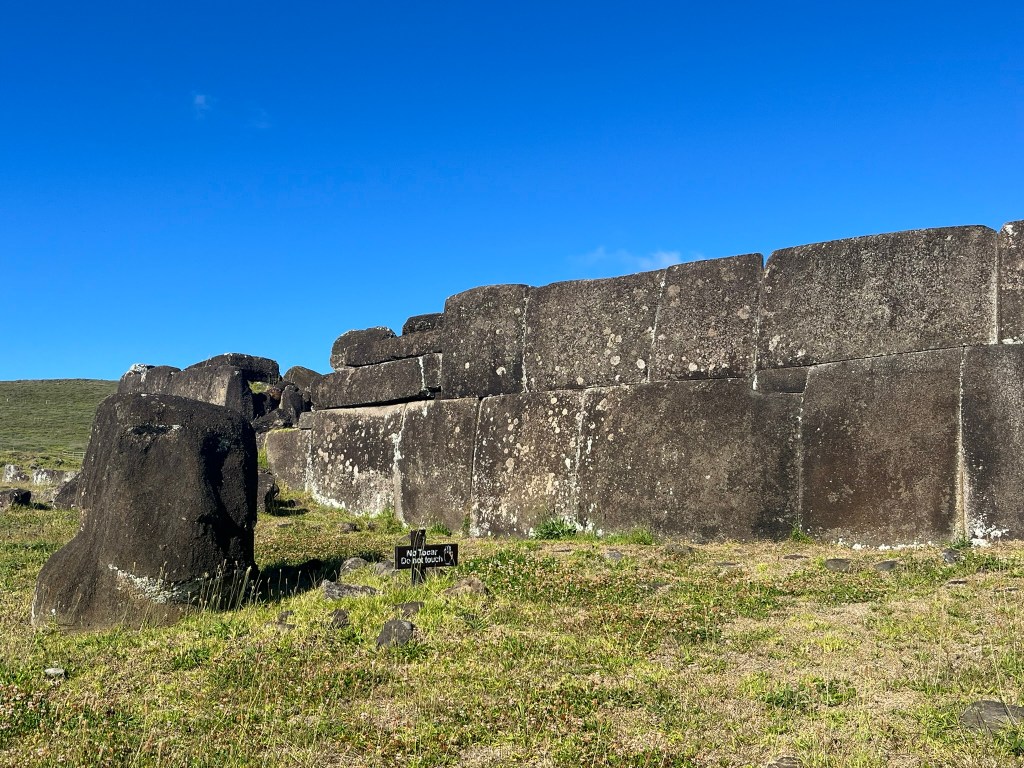
The first moai site we visited today was Vinapu. This site is famous because the stonework of the platform looks remarkably similar to Inca ruins in Peru, with precisely cut basalt blocks fitting together with tight joints and with no use of mortar. There is no other ceremonial platform on the island similar to this one, which makes it a bit of a mystery as to who built it? The moai have toppled from the platform.

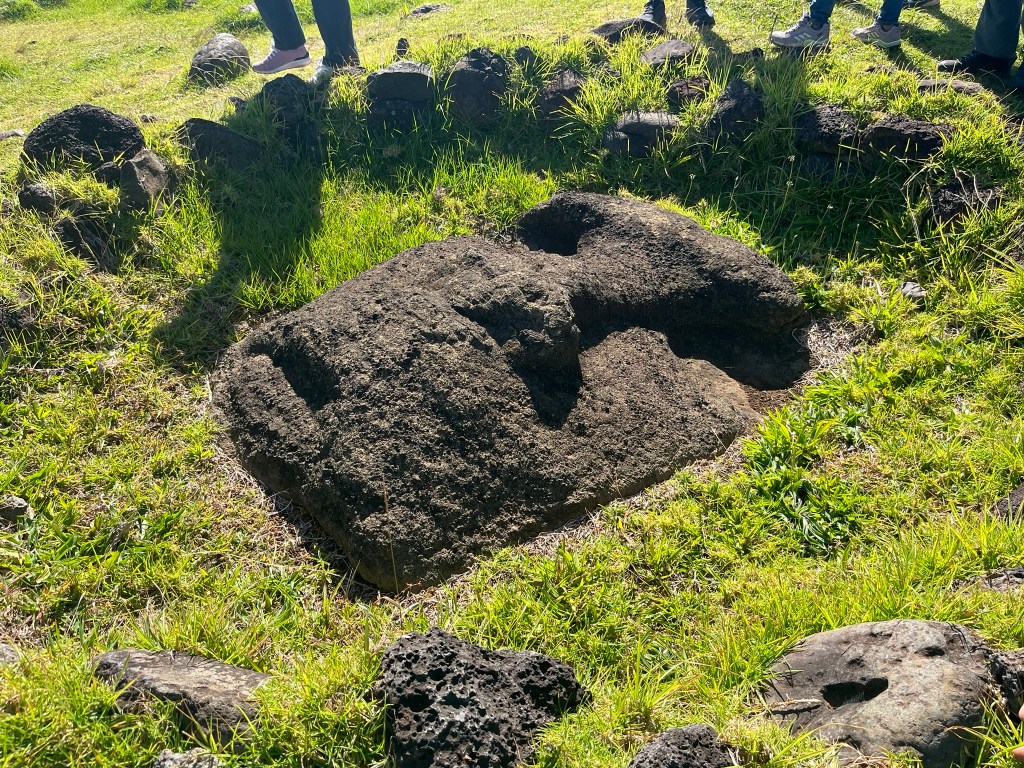

Vinapu is also known for its red-stone female moai fragments. This single moai is carved from the same red stone used for the top knots and is believed to represent the only female figure on the island (although from the weathering, it is really hard to tell). Historians postulate that Vinapu was possibly built at the height of the moai-building tradition when there was a strong desire to display engineering mastery and produce increasingly sophisticated platforms. But no one is sure. Another mystery.

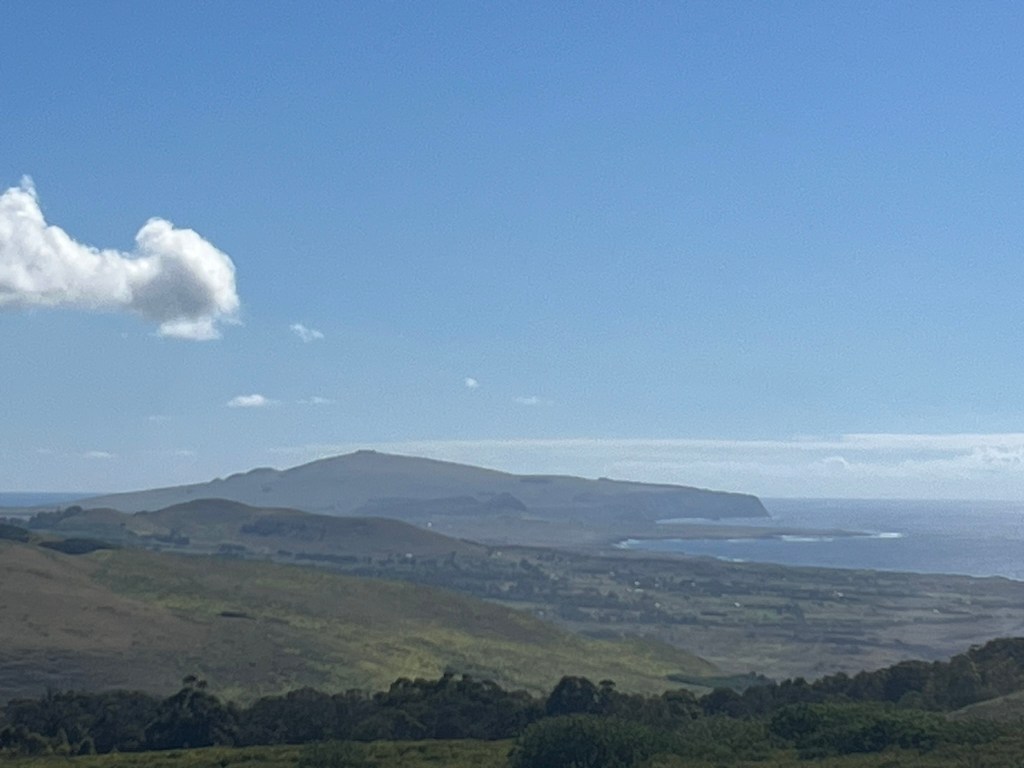
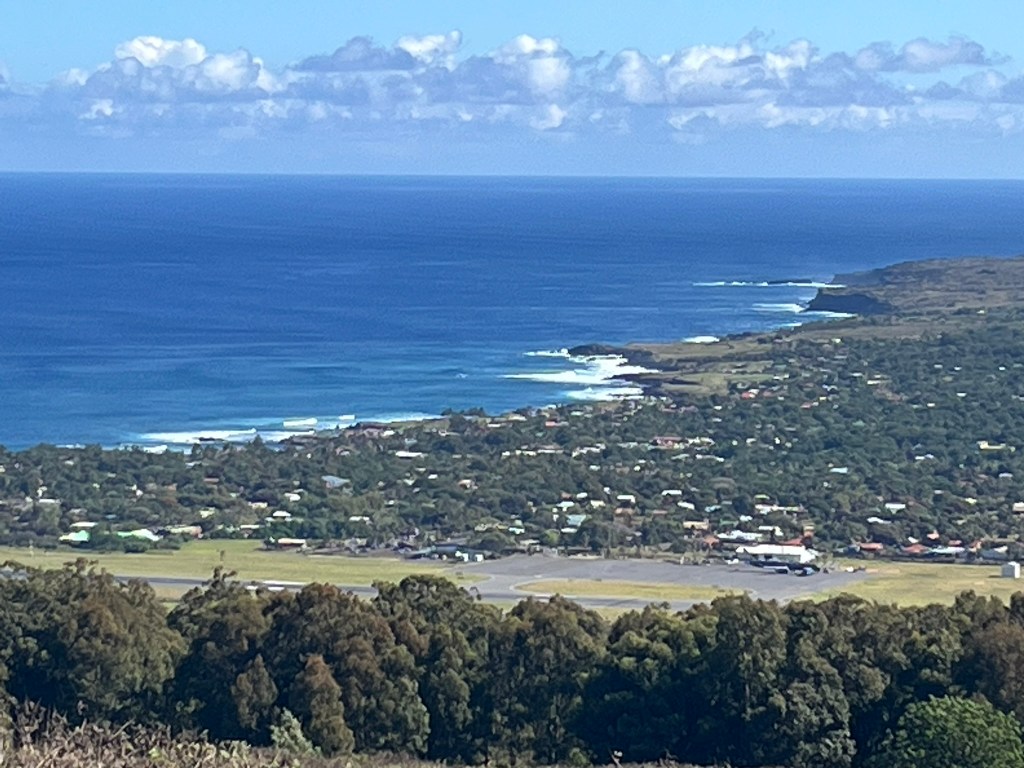
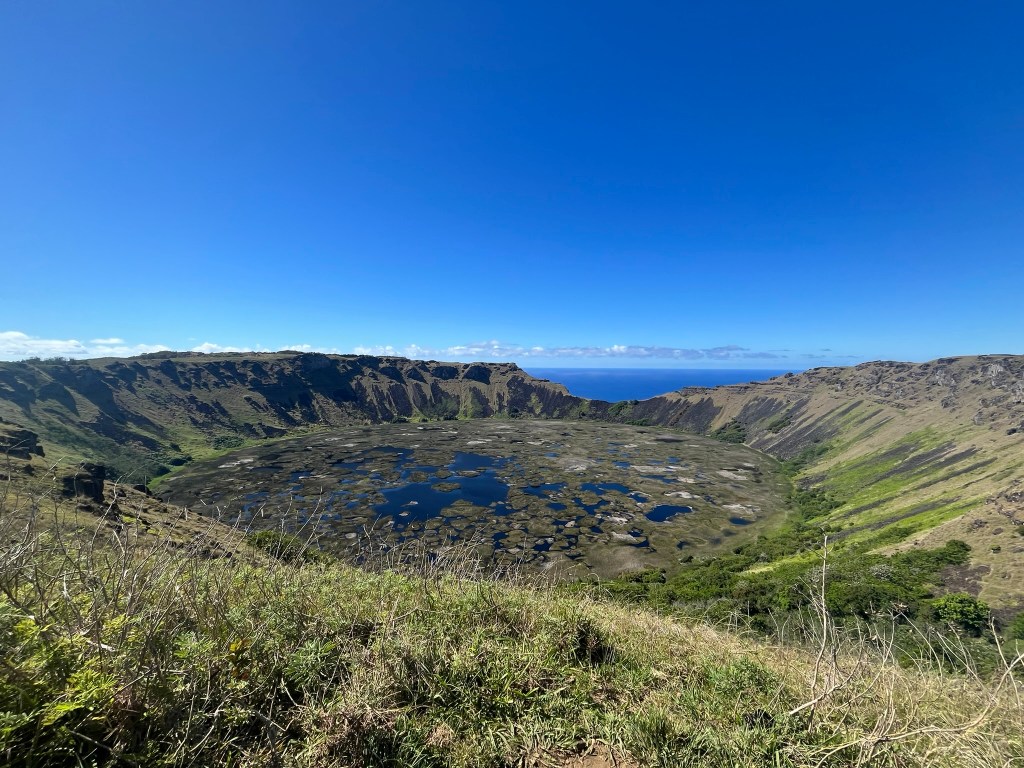
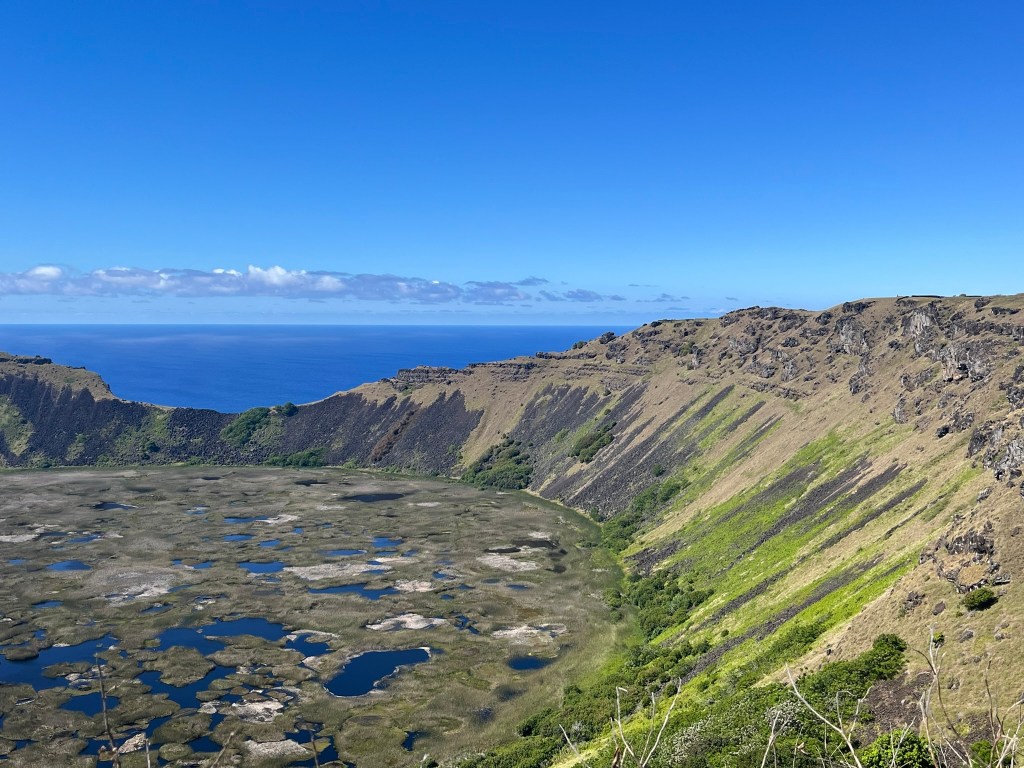
We then headed up to the Rano Kau crater, which sits on the far southwest corner of the island and overlooks the airport and Hanga Roa. The crater of this extinct volcano is 1.5km in diamter and its interior is flooded and filled with totura reed marshes. The walls of the crater are steep and covered in vegetation. It’s an epic view from the top.
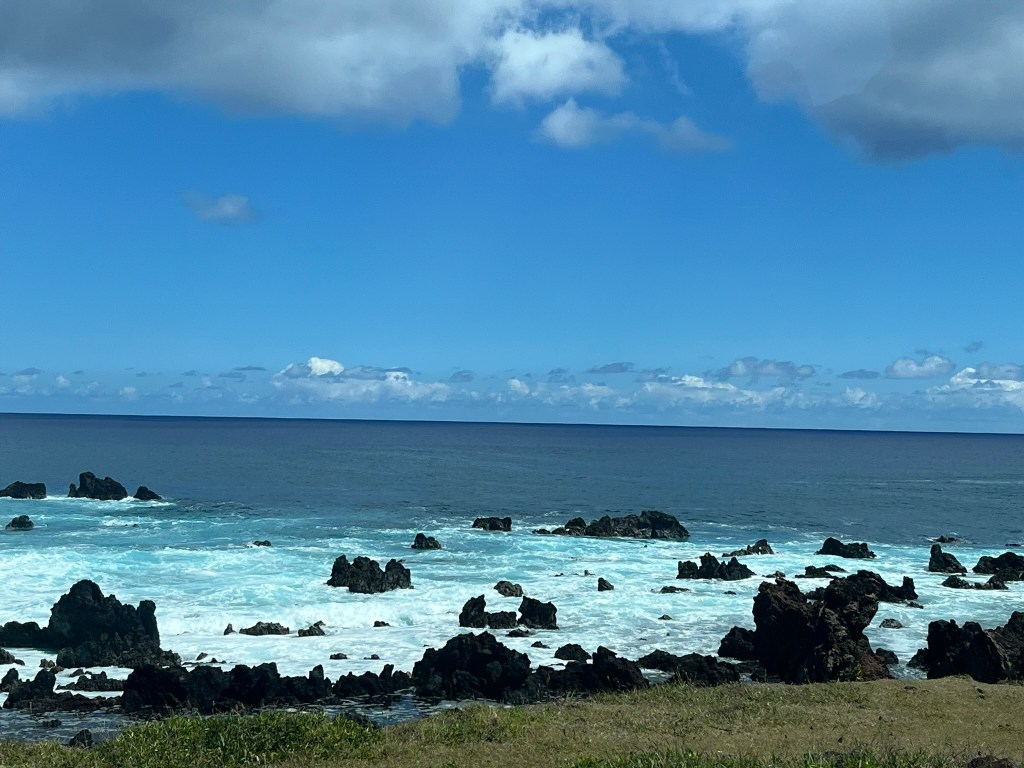
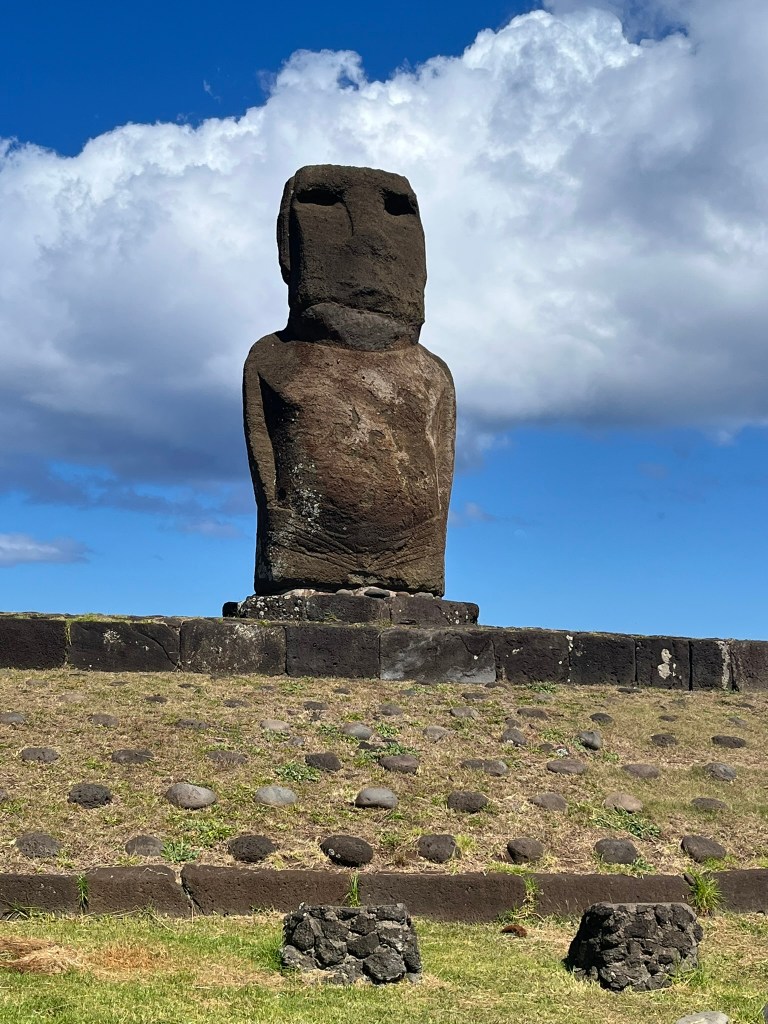
Because we could not visit Orongo village, a new moai stop was put into our itinerary – Hanga Piko or the harbor moai. Our guide shared that what was important about this particular moai was that it was restored by locals, rather than international archaeologists, and that the islanders were very proud of this.

After lunch we headed out to see more moai. Our goal was to see as many as possible in our short time on the island. Ahu Uri a Urenga is a four-handed, solstice-aligned moai, 3km inland from Hang Roa. It is one of the few moai not on the coast, and one of the few facing the ocean and not inland. It is thought this unique positioning was for calendar purposes, to align with the winter solstice sunrise and tell the local population timing for agricultural cycles.
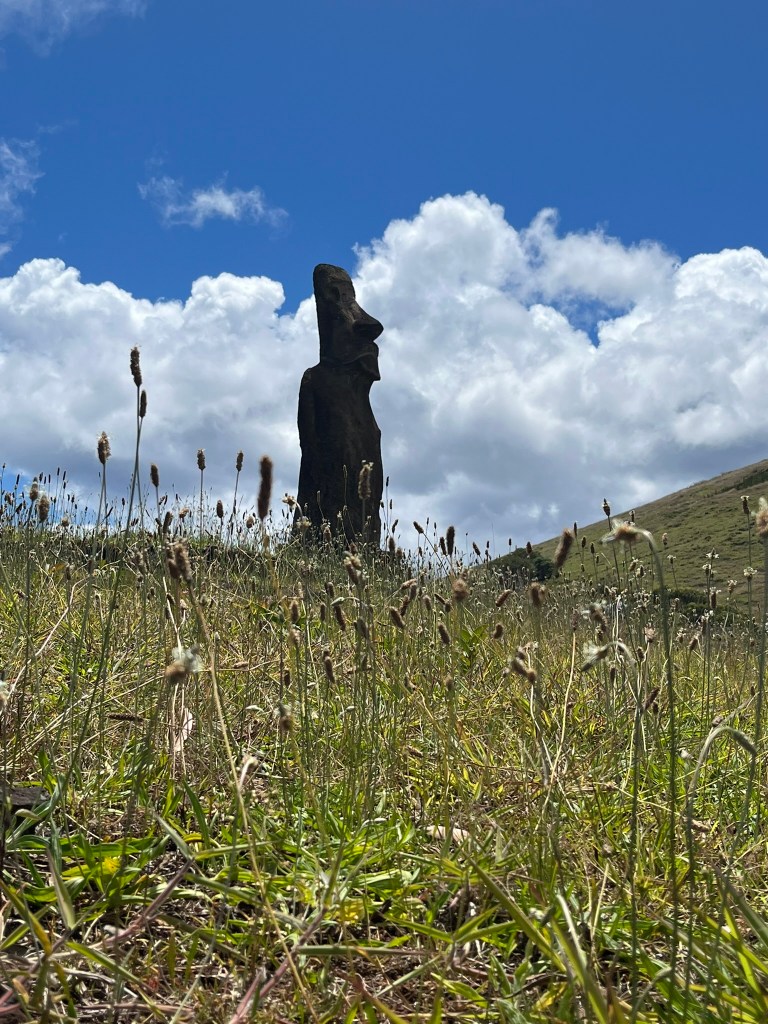

This moai is also unique because it is two pairs of hands carved onto its front. Archeologists have interpreted this as being a symbol of high-status, possibly linked with a ritual or astronomical authority. The statue was restored in the early 50s by archeologist William Malloy, who did a huge amount of work on the island researching the moai.
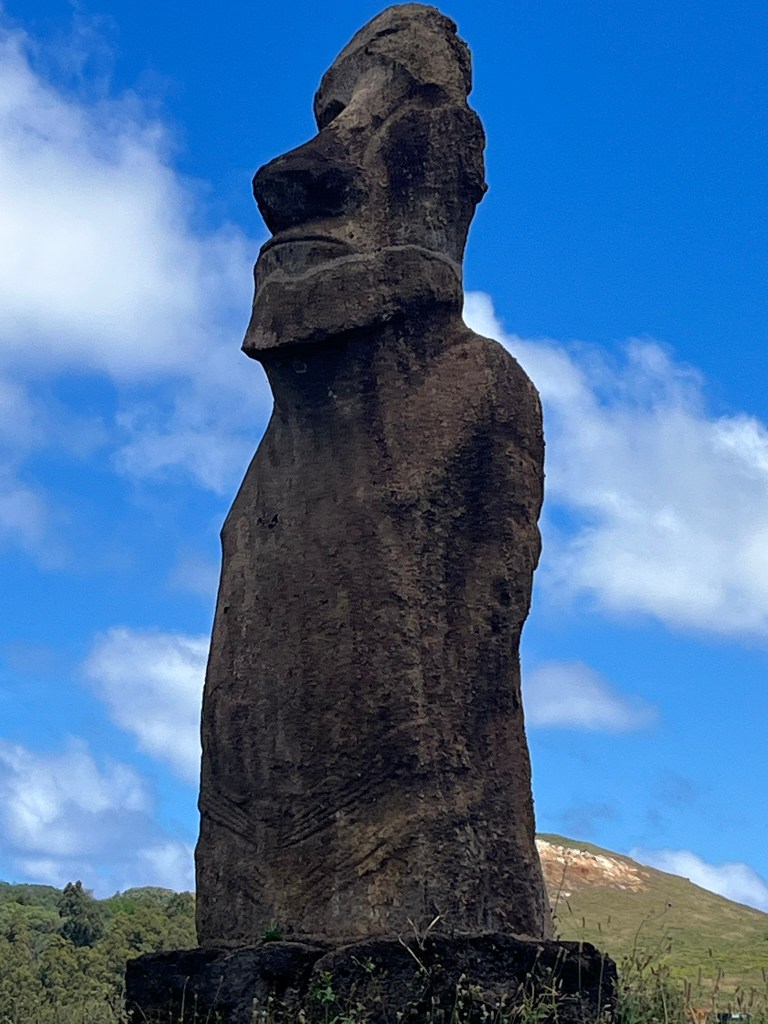
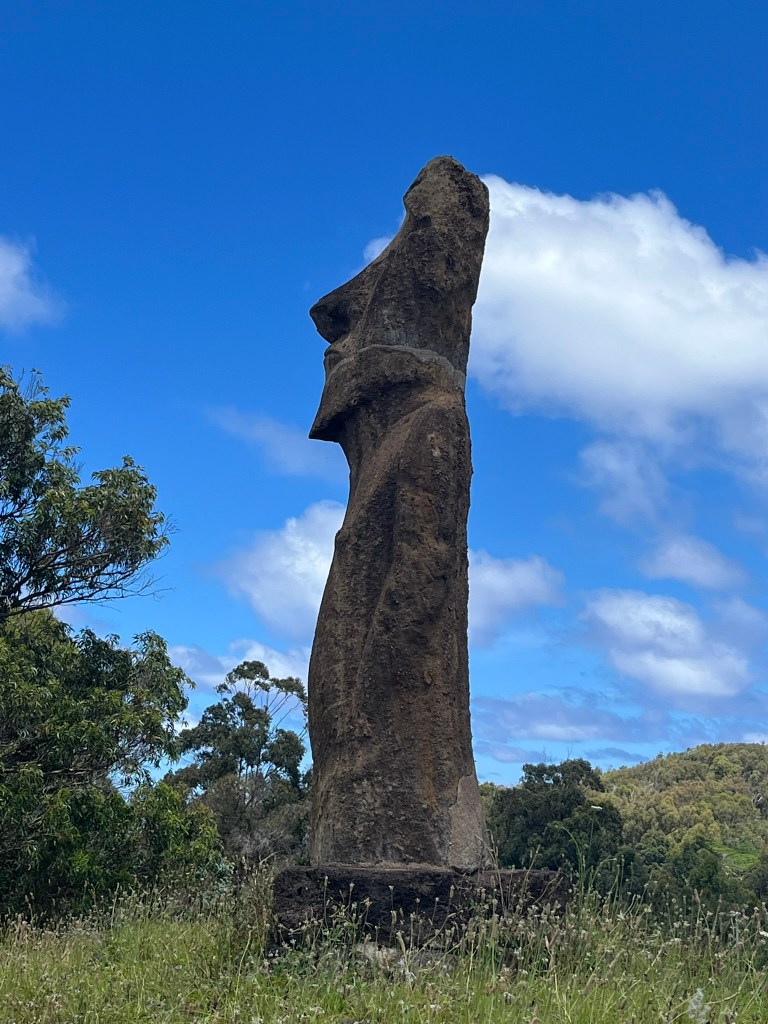
Just a short drive from here was the quarry from which the red scoria rock (a soft porous volcanic stone) was sourced to carve the red cylindrical topknots seen on some of the moai. Puna Pau is a small volcanic crater located in the island’s interior. Most of the topknots belong to the late moai period, when statues became bigger and more elaborate.
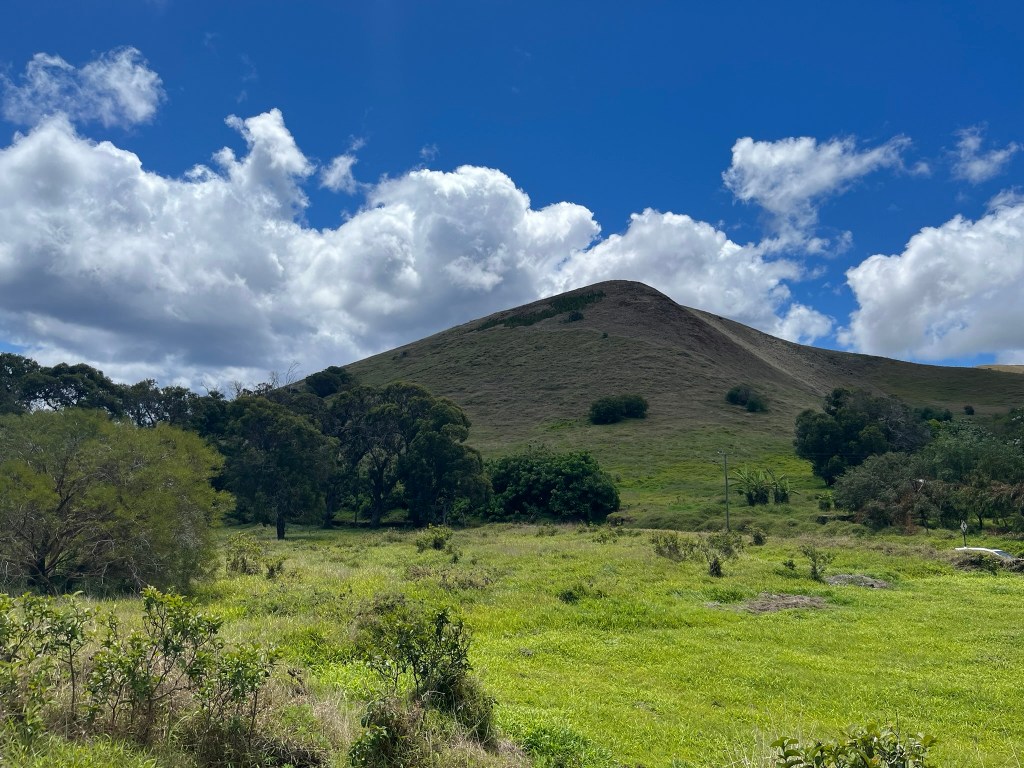
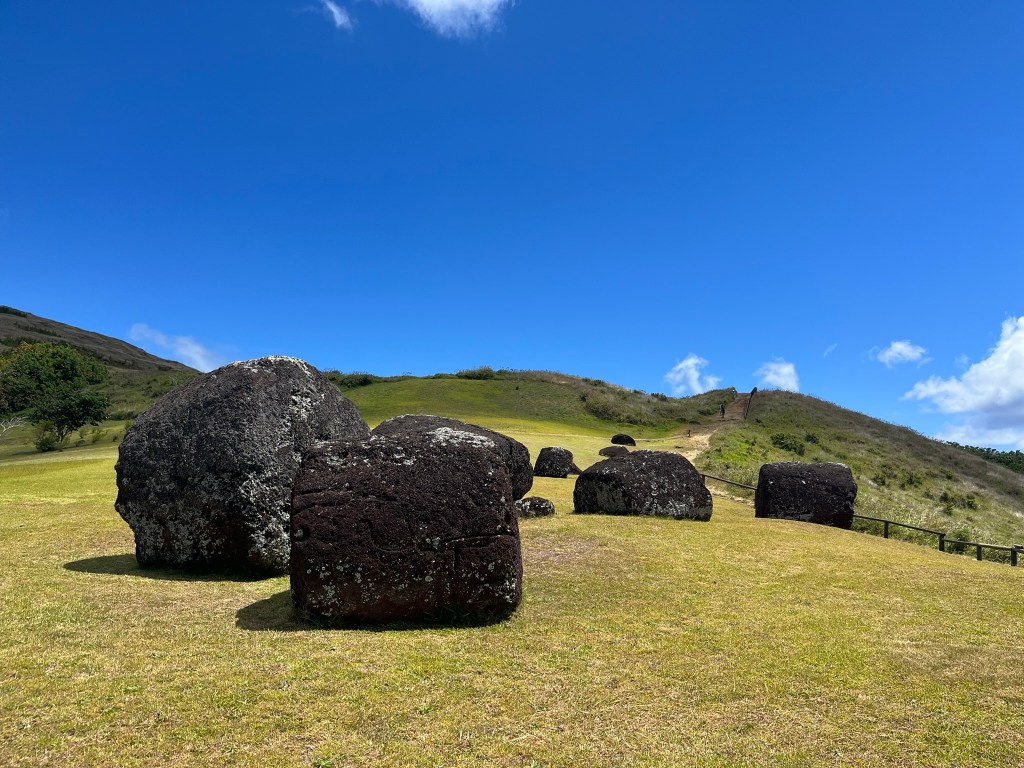
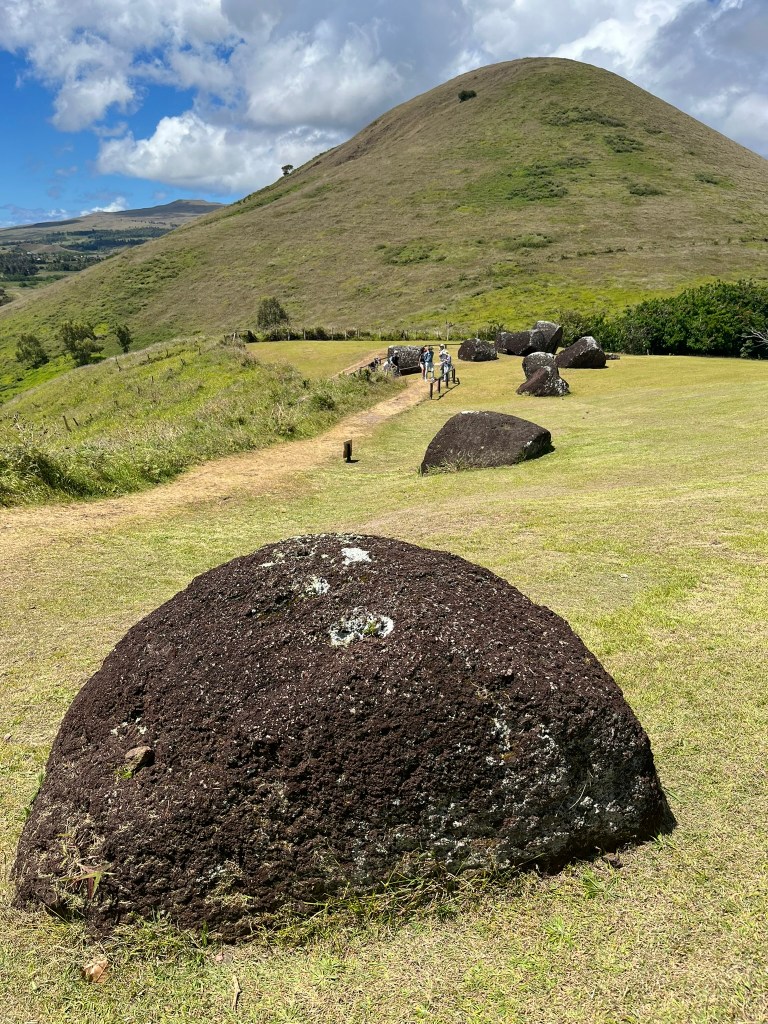
When you arrive at the quarry, there are dozens of unfinished topknots lying around the slopes. Some are complete, some half-formed. Just a few minutes climb from here you can look down into the quarry itself, although it is now overgrown with grass and difficult to make anything out. The big question is how were these topknots transported and placed on top of the moai’s heads. The best evidence suggests they were rolled sideways and then rolled up on ramps built up against the moai, and then lifted into place atop an already standing moai.
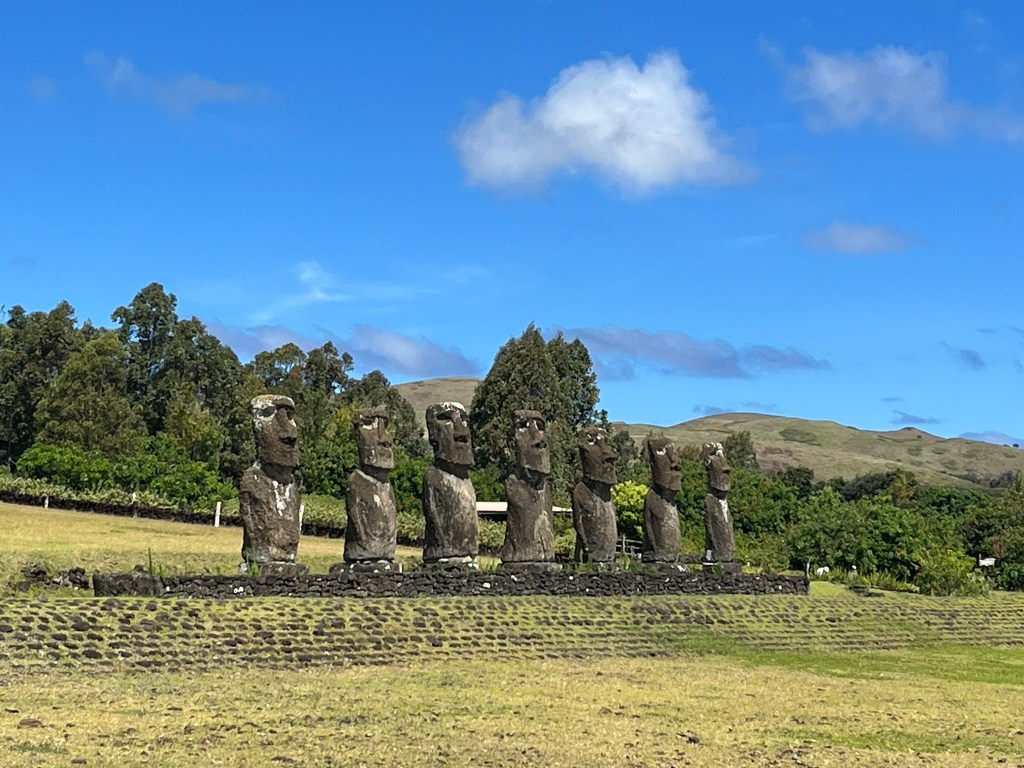
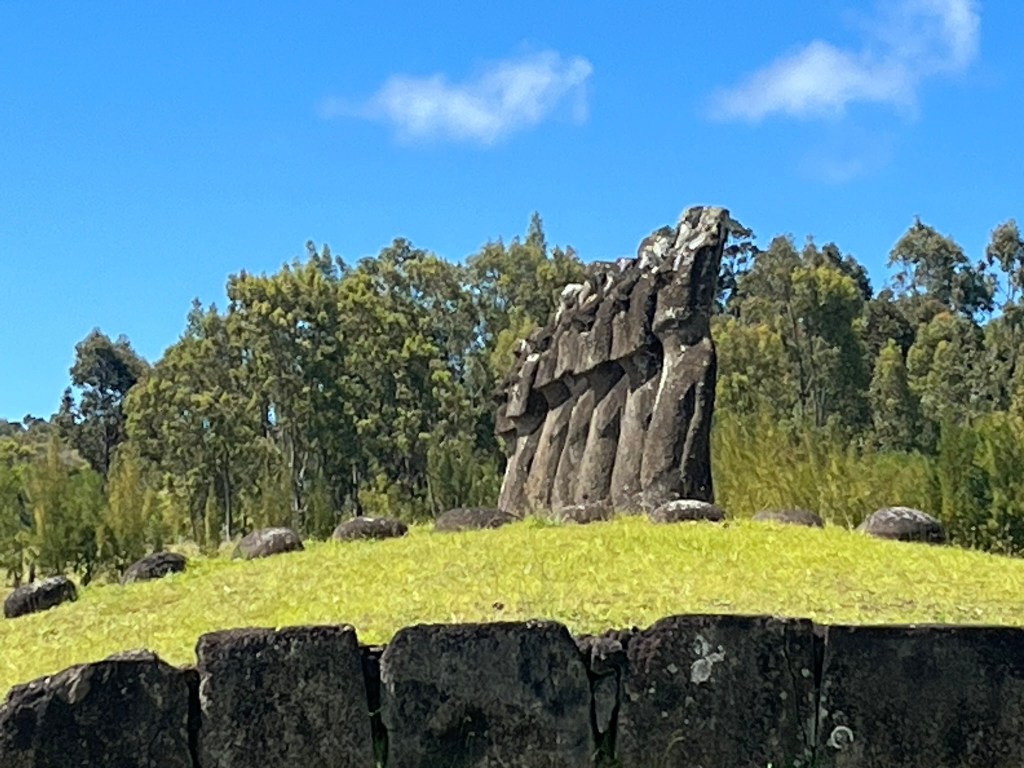
After this we headed to one of the highlights of the day – Ahu Akivi. These are the only major moai on the entire island that face the sea. Every other coastal moai faces inland to watch over their clans. But these seven moai face the ocean. According to oral Rapa Nui tradition, it is said that these seven moai represent the seven scouts sent out by Hotu Matu’a, the founding Polynesian chief to find the island before the main migration. They sailed ahead, found the island and returned to guide the settlement. And later they were honored by being represented by these statues.

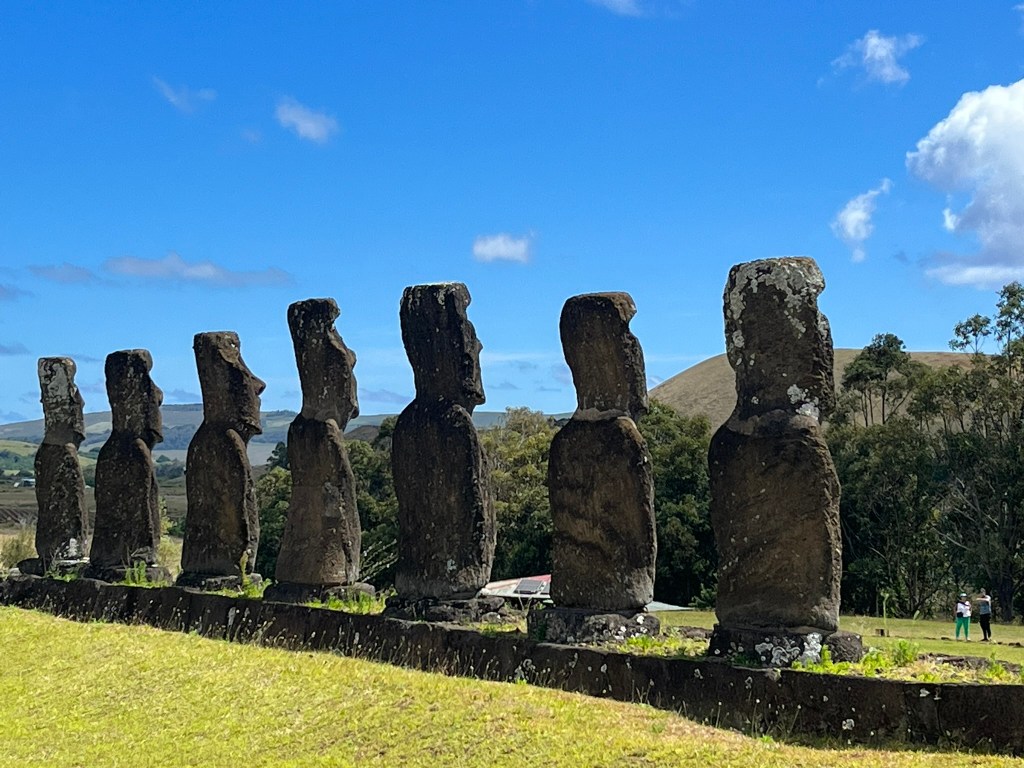
The site is also an astronomical observatory, as the direction the moai point aligns with the equinox and marks key sun positions, acting as a seasonal calendar for agriculture and ritual timings. All seven moai are a similar height, 4-5m tall, suggesting they were all built at a similar time. They were restored in the 50s, and are one of the island’s earliest and most successful reconstructions.
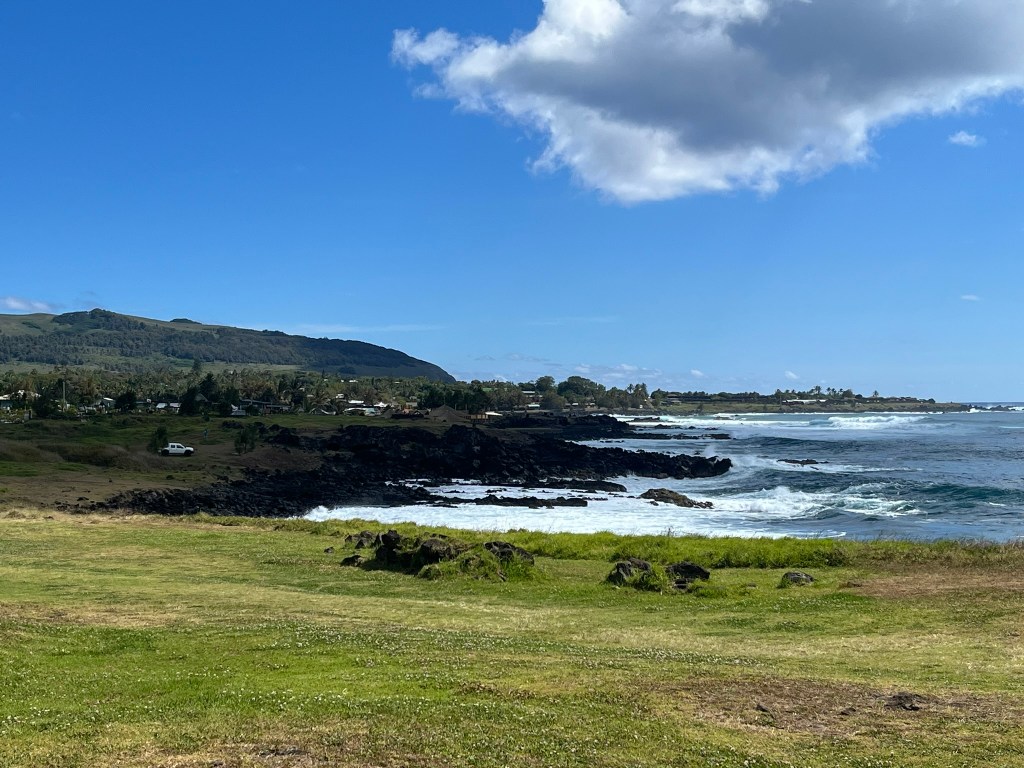
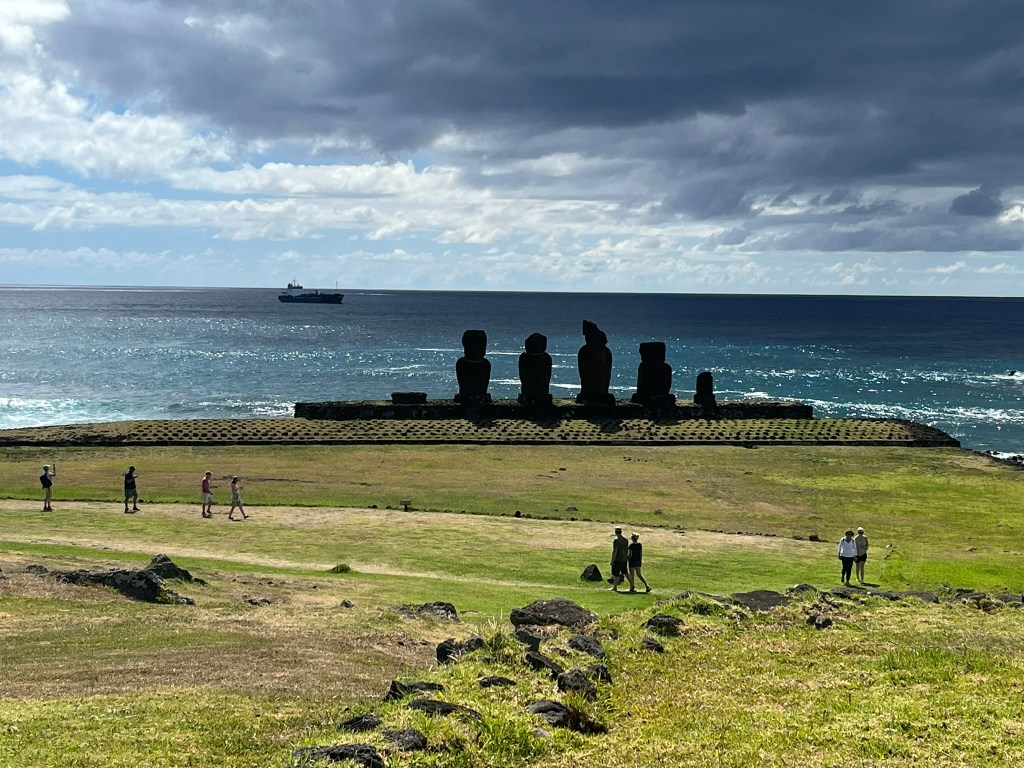
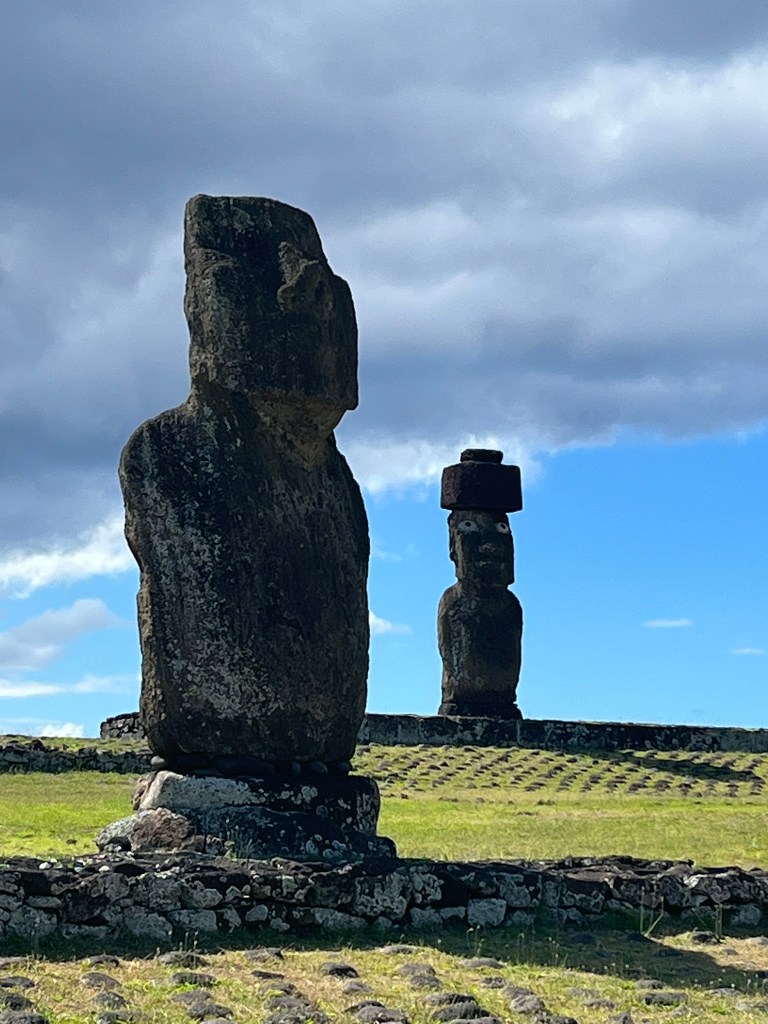
Our final stop and the last moai we would see during our time on the island was Tahai Ceremonial Complex. We were a bit sad to arrive here as it meant this was the end of our adventure on Rapanui and we have had a great time. Tahai is made up of three restored Ahu, each with distinctive moai. Ahu Vai Uri is a long platform with 5 moai of all different sizes. They are badly eroded but give a beautiful silhouette against the ocean.

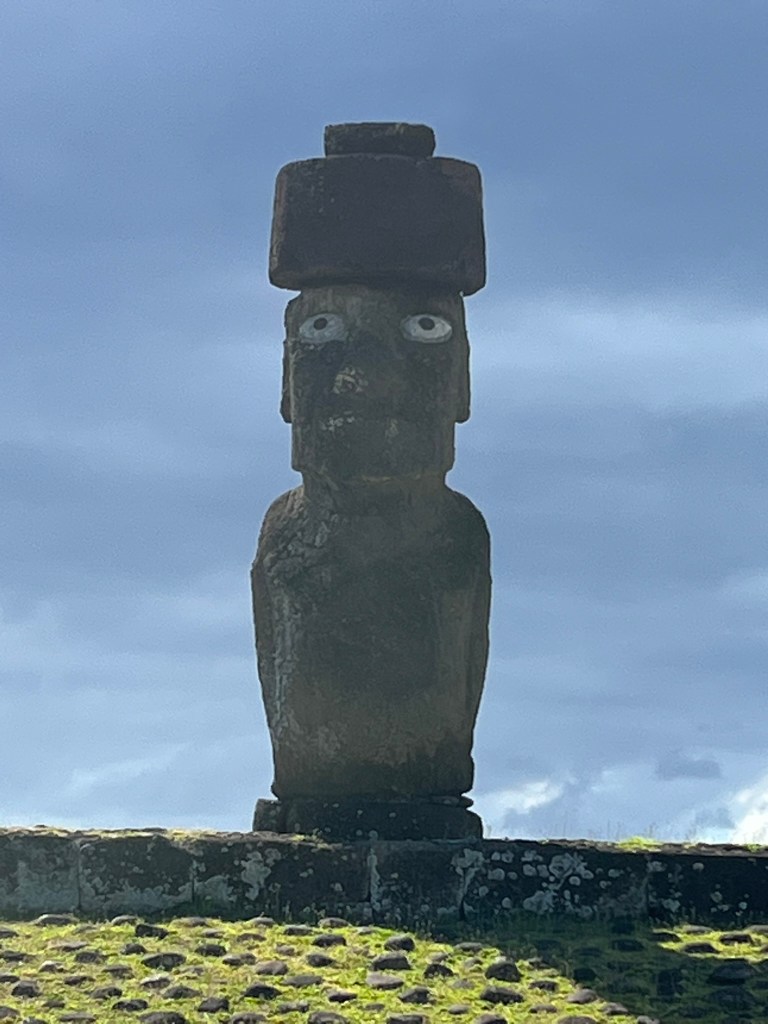
Next to this is Ahu Tahai, a lonely moai facing inland. And a little further up the coast is Ahu Ko Te Riku, or the ‘moai with white coral eyes’. This is the only moai on the island with restored eyes made of white coral and obsidian. With eyes the moai look completely different and a bit cartoonish. There is some mystery surrounding the eyes of the moai, as no evidence of white coral and obsidian has been found at any of the moai sights on the island except this one. This leads to the question – where are the eyes? And were they permanently inserted in the statues, or just put in place for special ceremonies when clans wanted to ‘activate’ their ancestors?

Now a little bit of history post-moai and birdman cult. The cult ended abruptly when Peruvian slave raids kidnapped 1400 Rapa Nui people in 1862-63. Only about 15 survivors returned, bringing with them smallpox and other diseases, which devastated the remaining population. Missionaries arrived soon after and banned traditional religion. By 1877 the population had collapsed to just 110 individuals.
In 1888, Rapa Nui was formerly annexed by Chile through the Treaty of Annexation, signed by the last king of the island. Chile leased most of the island to private companies who then confined the Rapa Nui people to Hanga Roa, behind fences and walls, and used the rest of the island as a huge sheep farm run by the Scottish company Williamson Balfour. For over 60 years, almost the entire island was a private ranch. And the Rapa Nui people were forced to work for the ranch in harsh conditions, with little freedom. During this time the archeological sites were neglected or looted.
In 1953 the sheep company lease ended and Chile installed a naval administration. Roads, basic healthcare and limited schooling appeared, but locals still lacked full Chilean citizenship and political rights. A major turning point came in 1966, when the Easter Island Law was granted, giving locals full citizenship, the right to vote, the end of village confinement and recognition of the Rapa Nui identity. Today, the Rapa Nui people are looking to become an autonomous region of Chile, rather than part of Valparaiso, to give them more control over decisions made for and by the island.
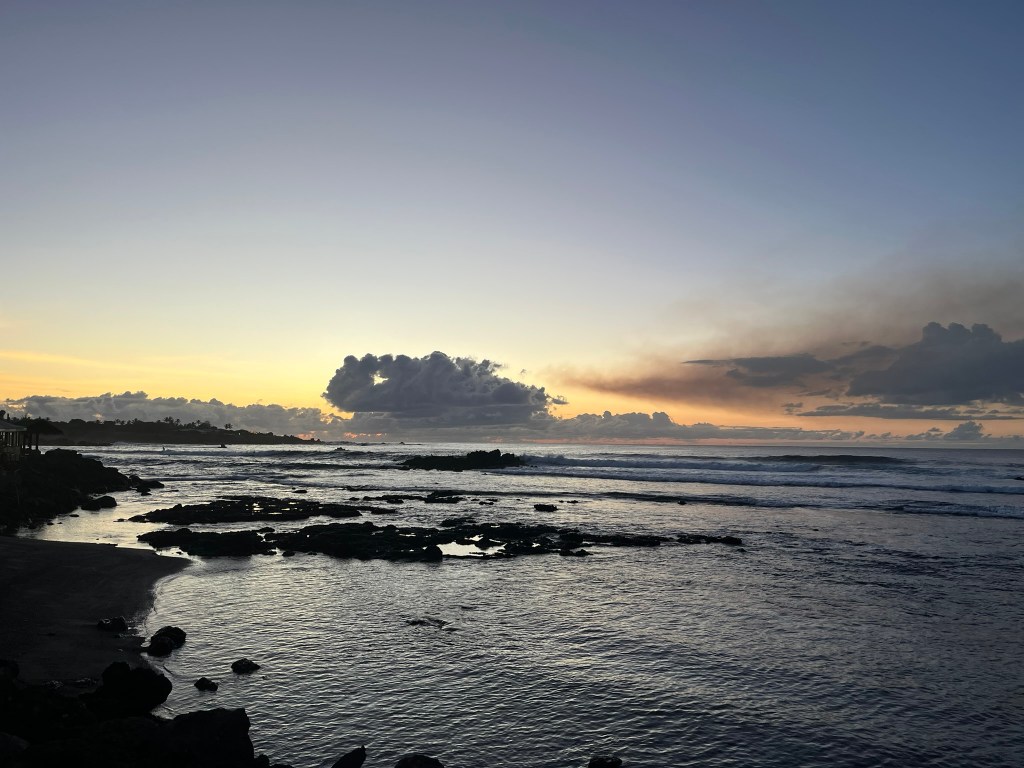
That night we headed to Te Moana restaurant, with a perfect view of the rolling waves of the ocean and watched the sun slowly set on our last night on this magical island. I cannot recommend enough, that if you are planning a trip to Chile, this must be on your itinerary. A round-trip like we did requires 4 days, 3 nights, but it is absolutely one of the most incredible and mysterious places I have ever been. The moai statues are otherworldly and at times it’s difficult to comprehend what you are seeing. I’m sure I will think about Rapanui and the moai for a long time to come.

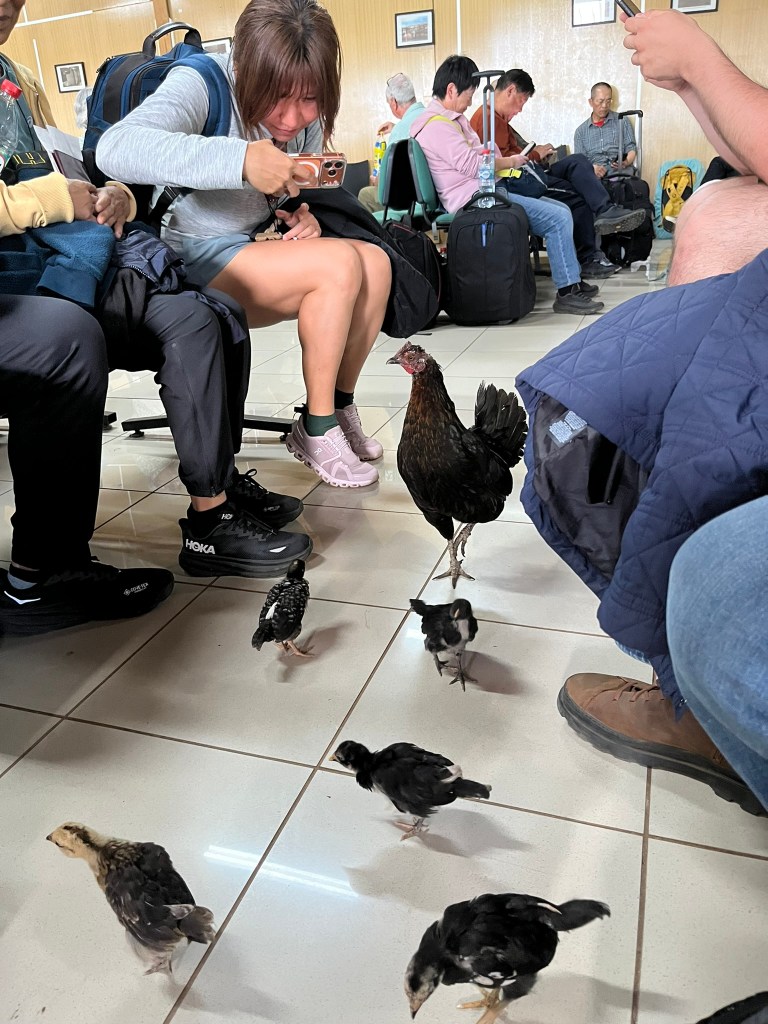
PS – The chickens running around the airport departure lounge amongst passengers as we waited for out flight back to Santiago really encapsulate the laid back island life of Rapa Nui.
 Colette's Grand Detour
Leave a comment