The flag of Chile consists of 2 horizontal bands of red and white, with a blue square bearing a white five-pointed star in its center. It was adopted in October 1817, a few months before Chile formally declared independence, and is known in Spanish as ‘La Estralla Solitaria’ or ‘Lone Star’. The white represents the snow of the Andes Mountains, the blue for the sky and Pacific Ocean and the red represents the blood shed by Chilean patriots during the war of Independence with the Spanish.
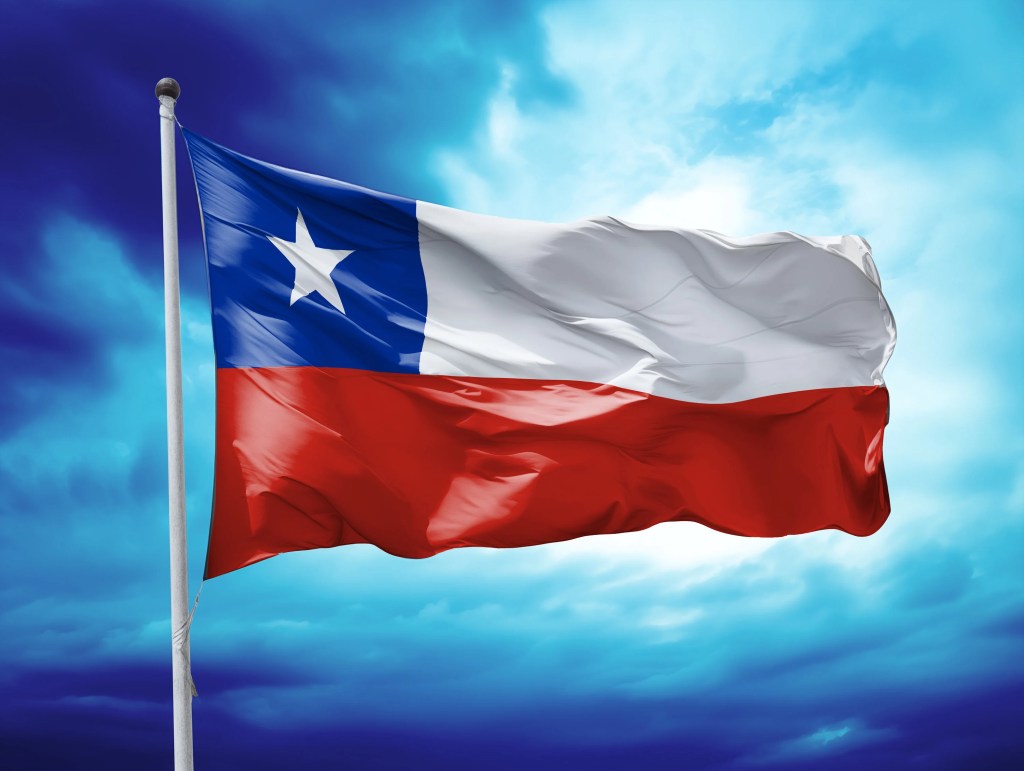
When the flag was first introduced, the white star was slightly tilted rather than upright as it is today. It is meant to represent the star of Arauco, a symbol of the Mapuche resistance and freedom. It is also thought to be a masonic symbolism, as many of Chile’s independence figures were members of masonic lodges. By the mid-19th century, Chile standardized the flag, and the upright star was adopted for clarity and uniformity.

An earlier flag was used during the independence movement called the Patria Vieja flag, which had blue, white and yellow stripes. Briefly Chile’s national flag from 1812 to 1814, it is often referred to as the country’s first national flag and represents the birth of the Chilean national identity.

 Colette's Grand Detour
Leave a comment