The small oasis of San Pedro De Atacama is a tiny adobe-built town set in one of the harshest climates on earth. This small town of 12,000 inhabitants is made possible because water from the Andes feeds the San Pedro river allowing green growth in the middle of a desert.
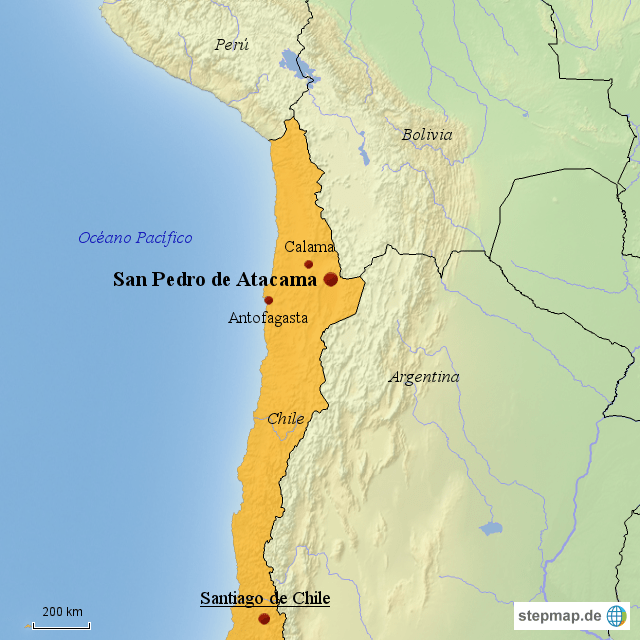
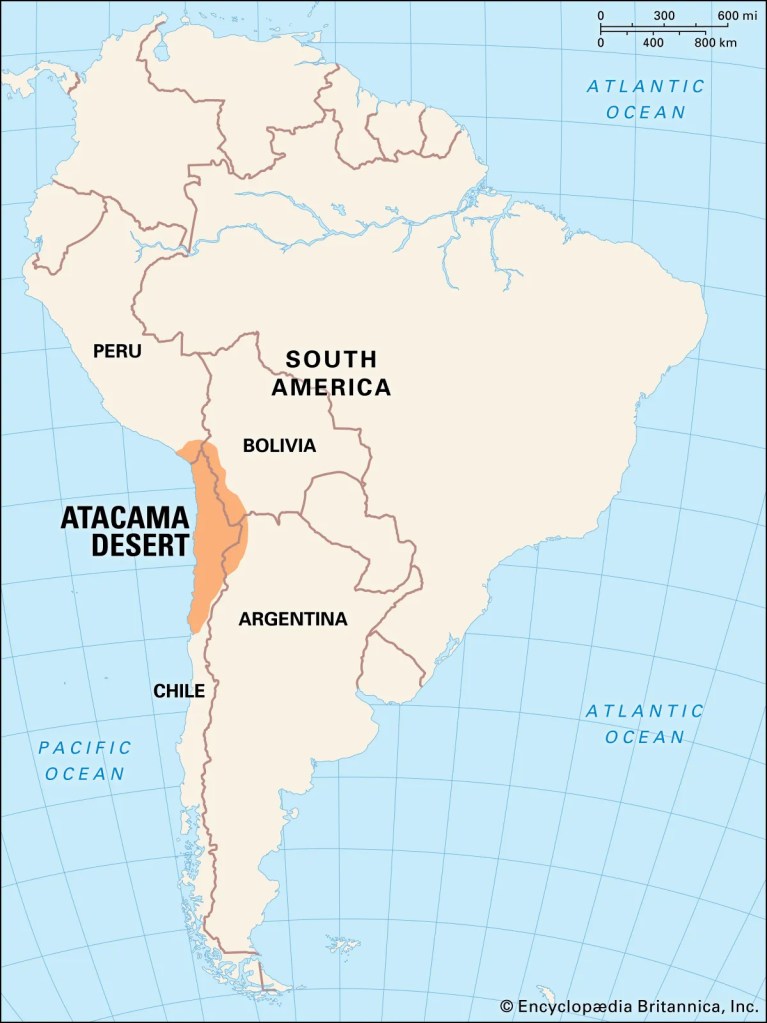
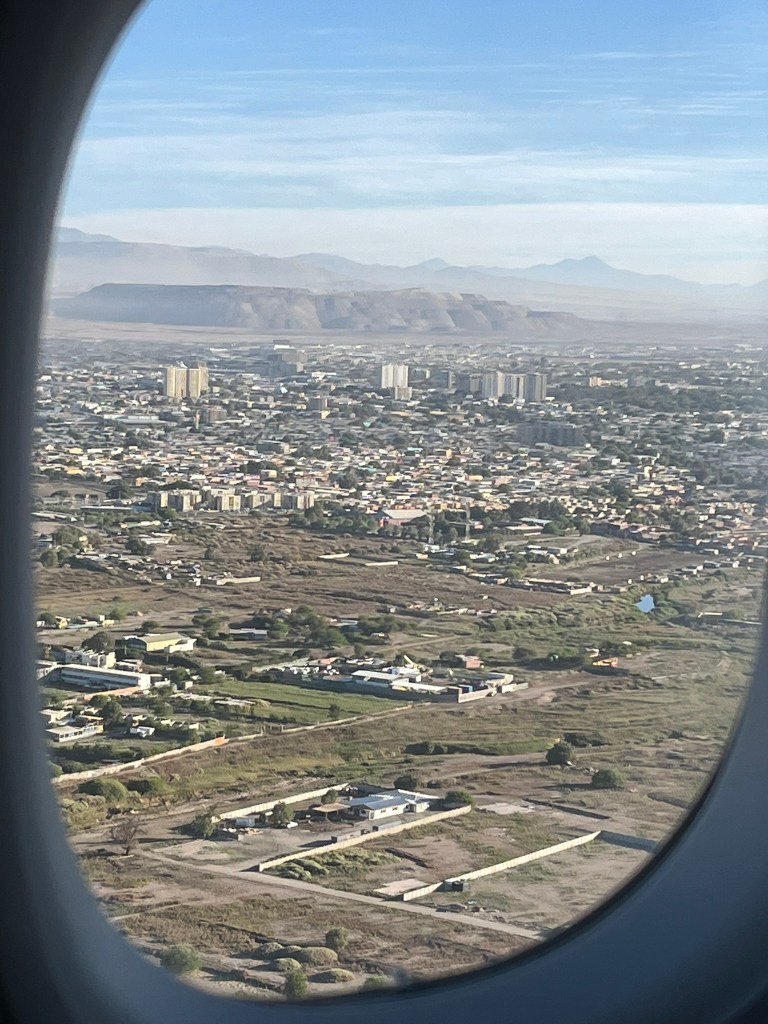
We arrived early in the morning in the high-altitude desert city of Calama in northern Chile’s Antofagasta region. Calama is where the employees reside and surrounding services exist for Chuquicamata, one of the largest and deepest open-cut copper mines in the world. It is a mining city and produces an enormous percentage of the country’s copper output – the pillar of Chile’s national economy.
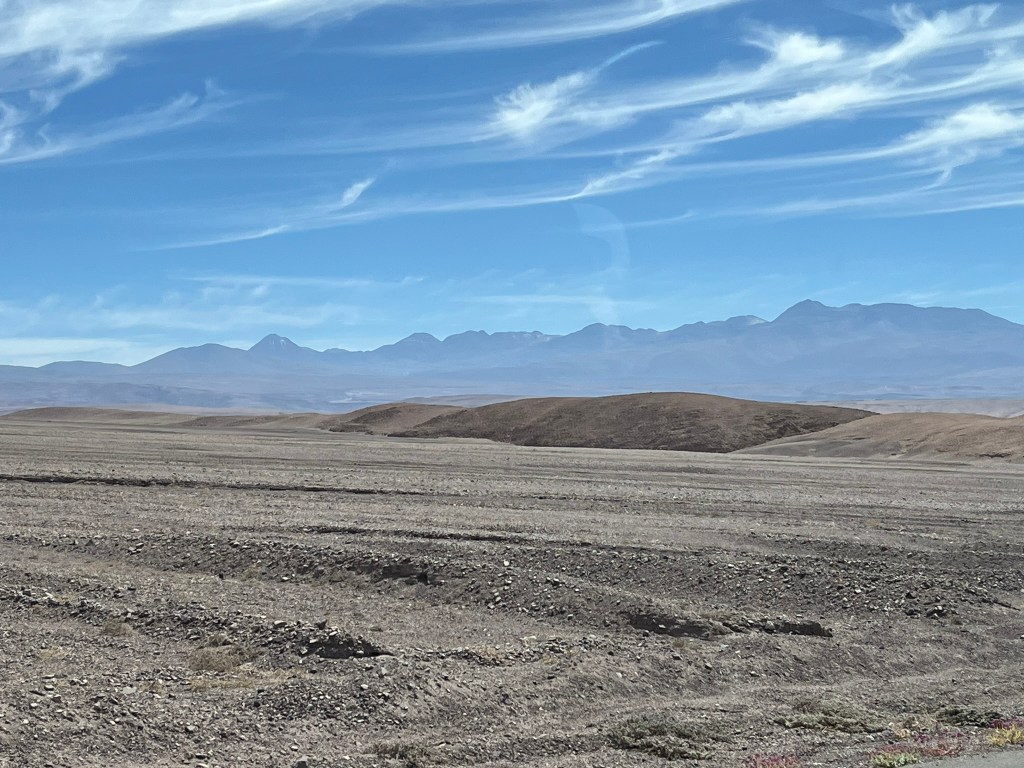
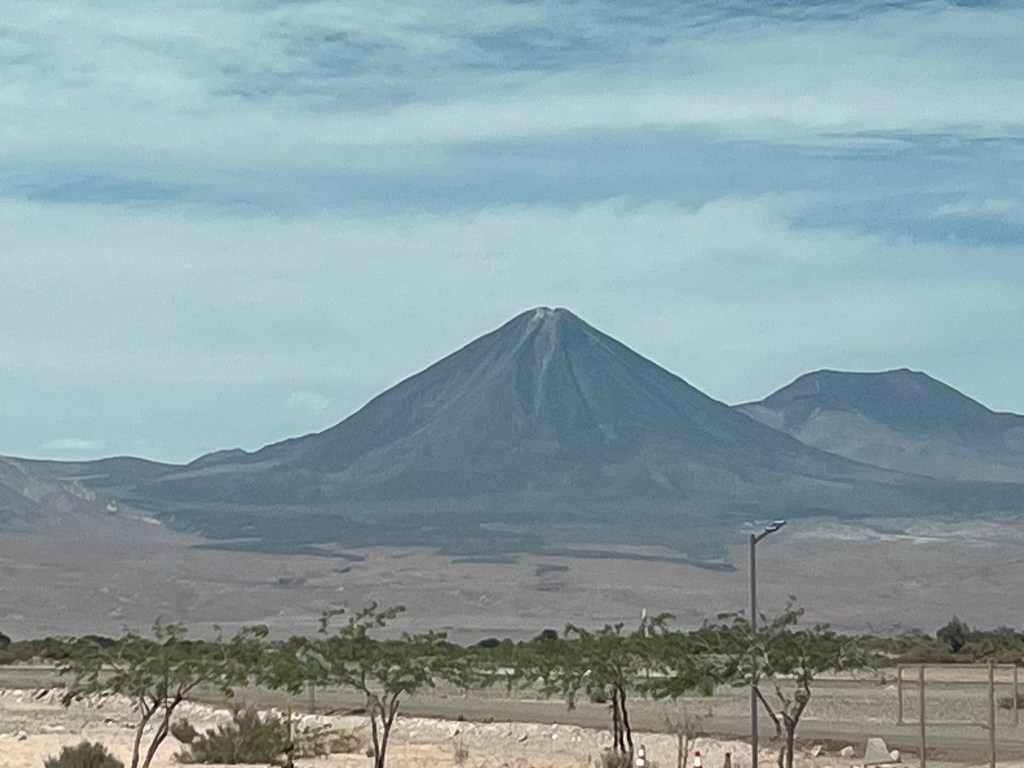
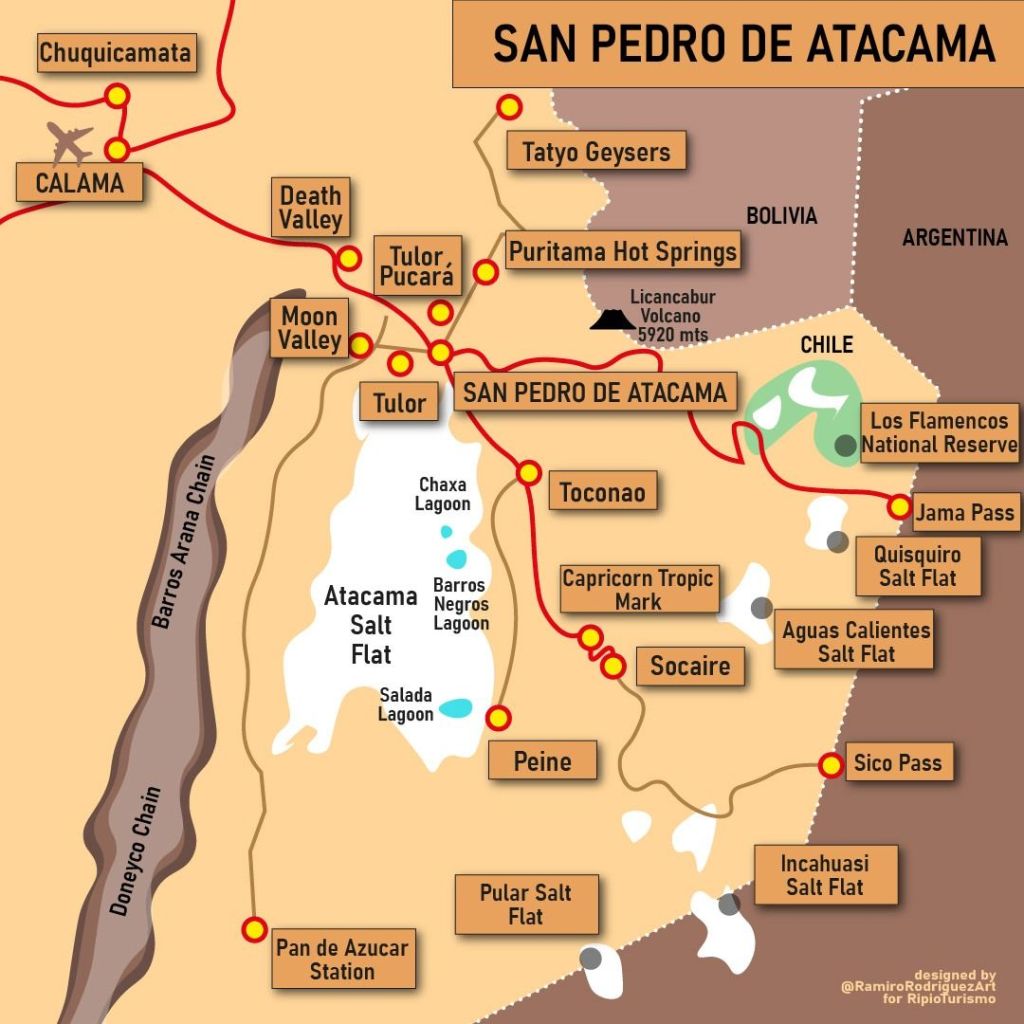
San Pedro de Atacama is an hour’s drive from Calama’s small regional airport through the Atacama desert. The scenery is bleak, with no vegetation, and beige and red gravel plains. But things get exciting as your start to near San Pedro, with tall volcanoes beginning to appear on the horizon and the red-brown ridges of the Domeyko mountain range rising up. This older mountain range runs parallel to the Andes and is fullyof interesting geological features.

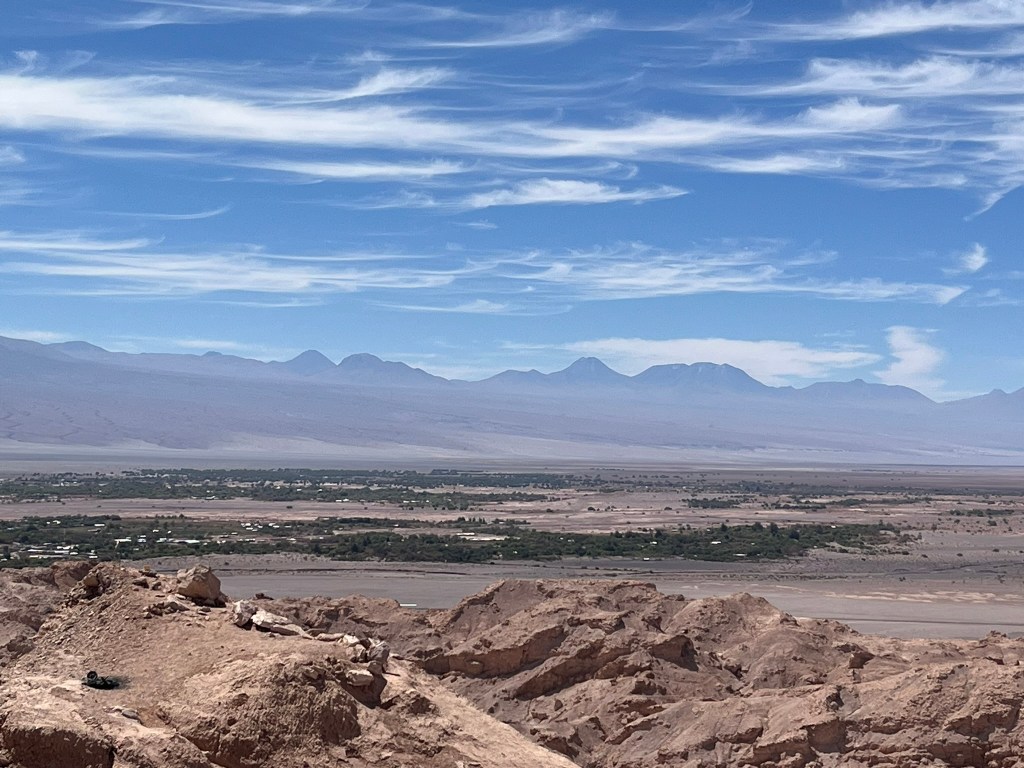
And then you suddenly drop from the plateau into the basin of Salar de Atacama, with views over the salt flats, the Andes volcanoes and the oasis town of San Pedro. Behind the volcanoes lie Bolivia and Argentina. You feel like you are driving into another world.

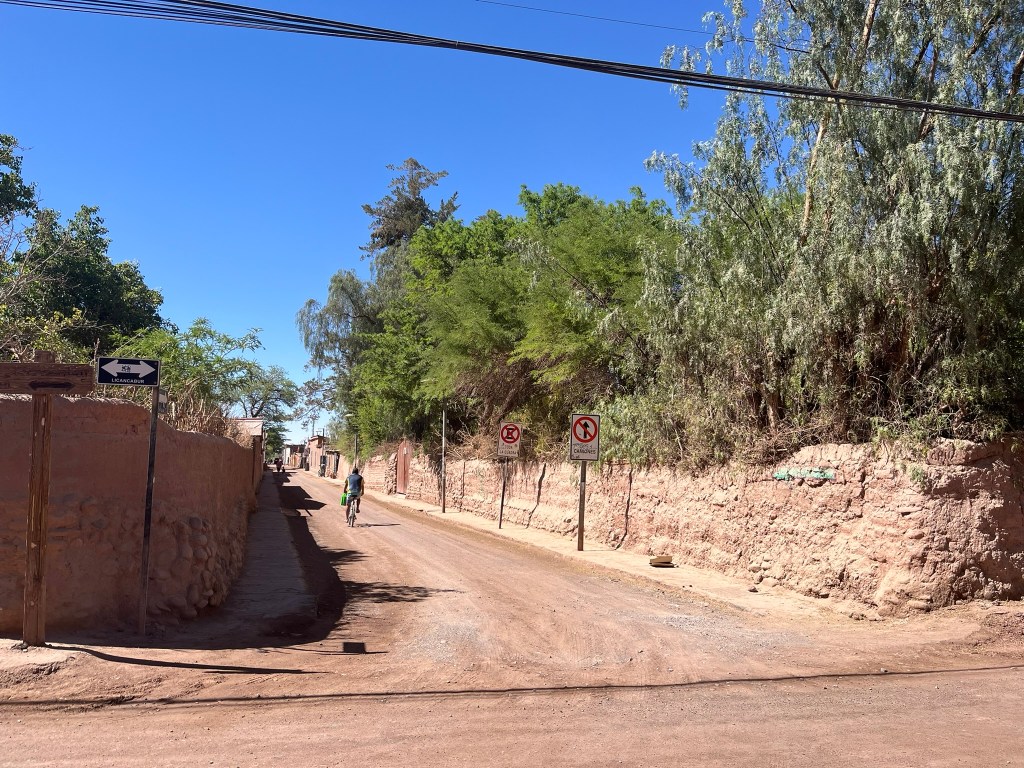
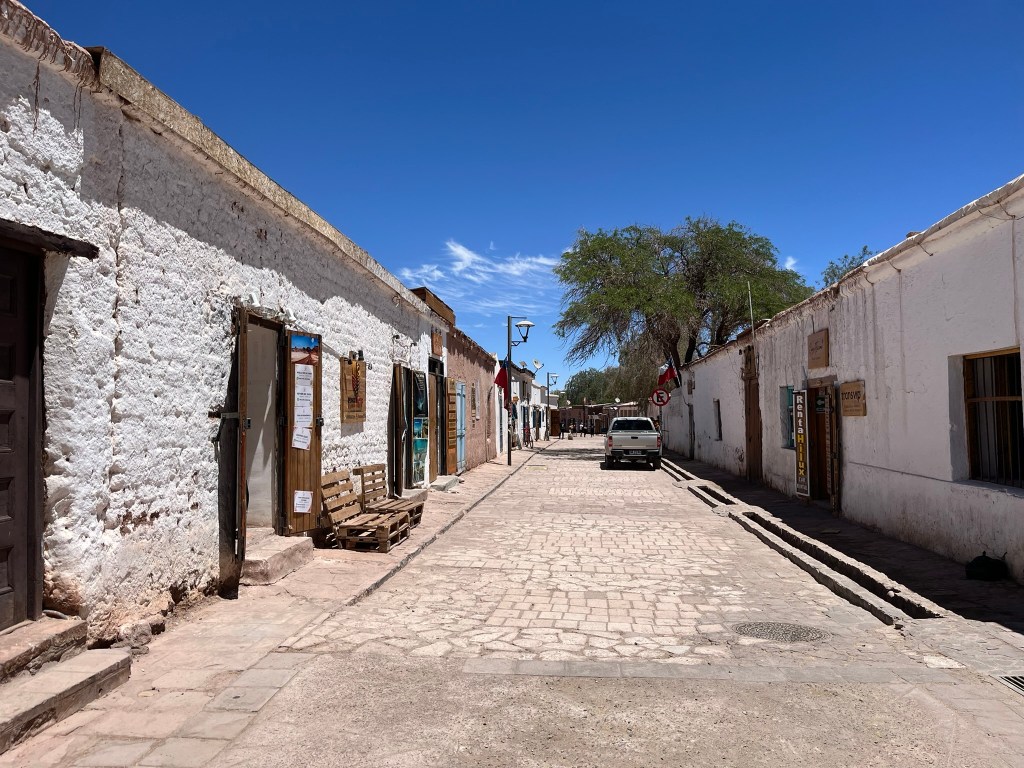
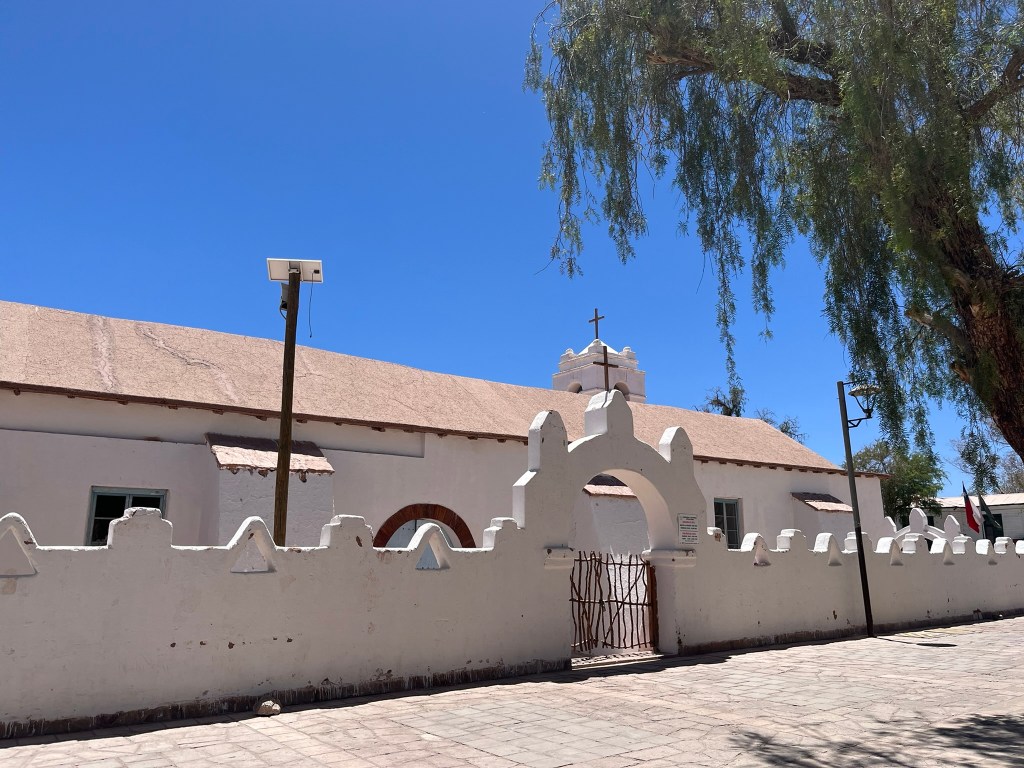
The architecture of San Pedro de Atacama is a blend of indigenous Atacameno building traditions, Spanish colonial design and modern adobe revival, all adapted to the harsh desert climate. Almost everything is made of the material adobe. This is a mix of clay-rich desert soil, straw/grass and water, and is sun-dried rather than fired. It is used to keep interiors cool in the day and warm at night. And is the preferred building material because of its low-cost, longevity and ability to blend into the natural landscape. The walls of the town are thick and textured, in an earthy range of colors and can last centuries if properly maintained. Walls are also often white-washed, a colonial influence.
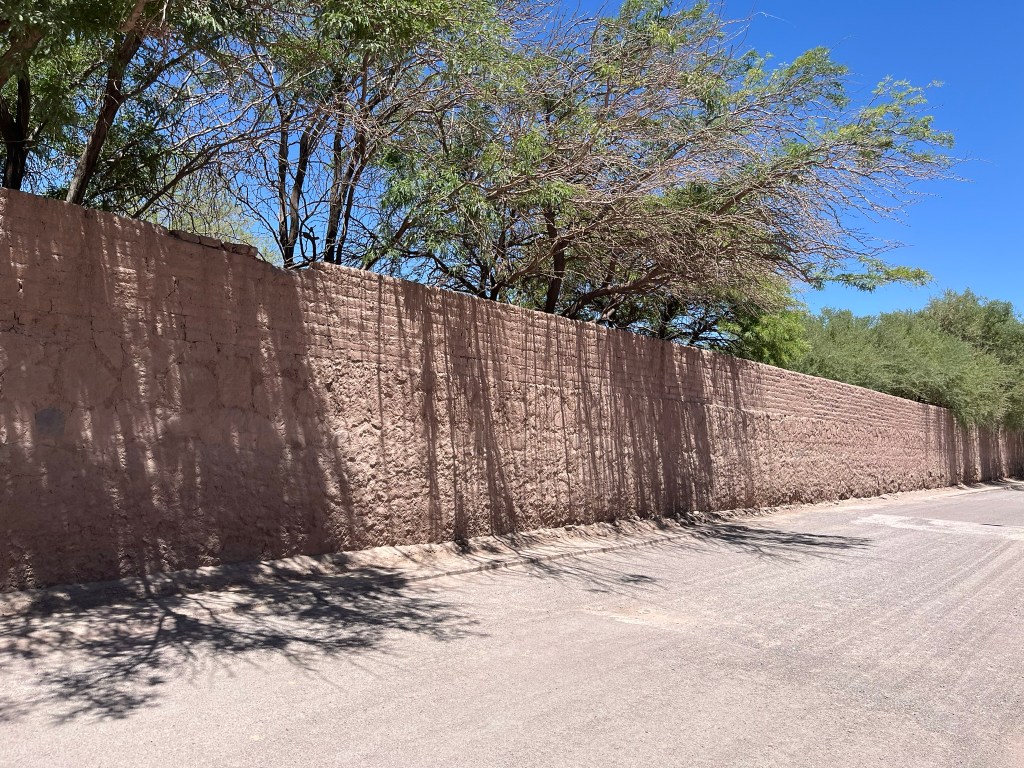
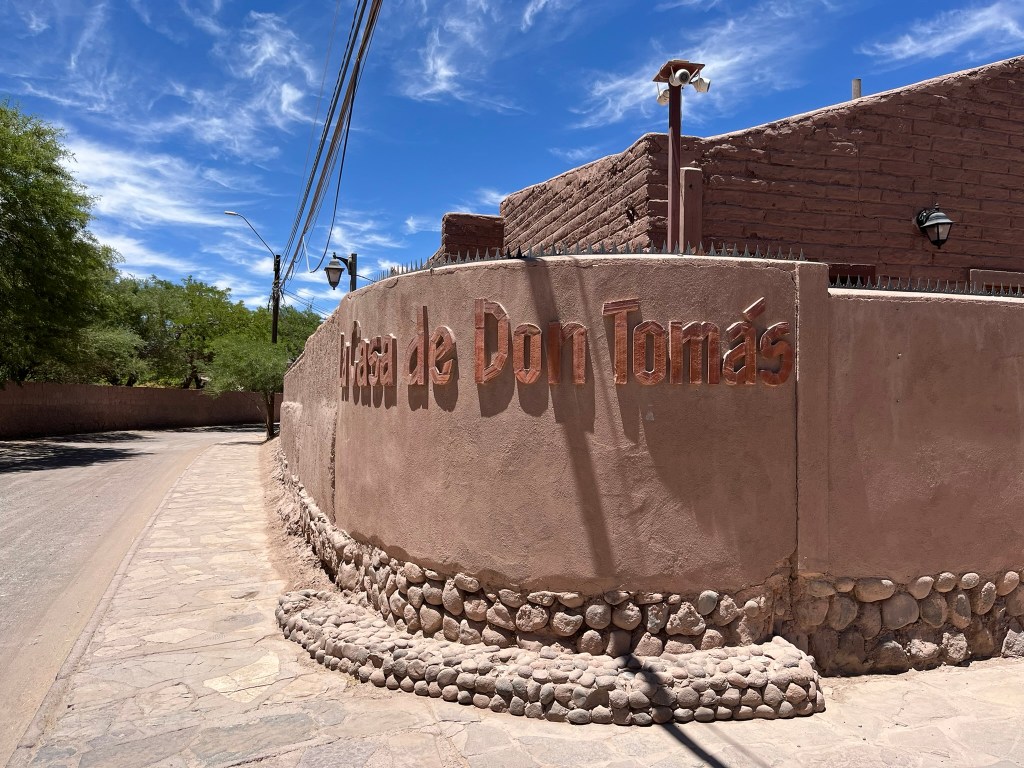
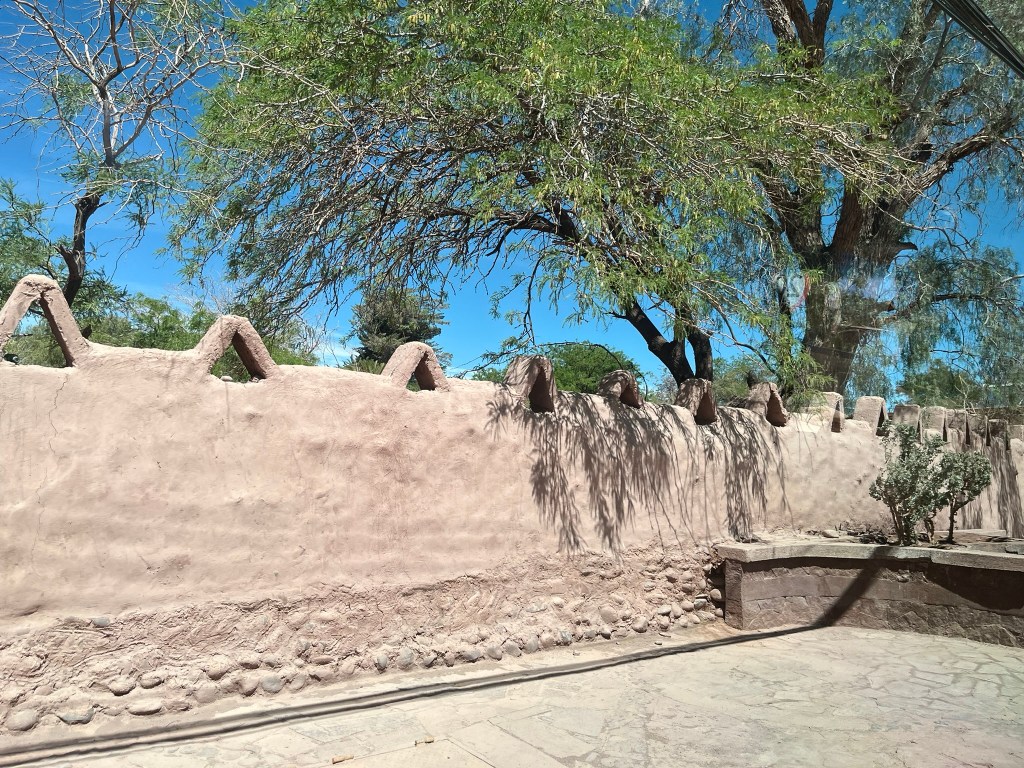

Almost all the buildings in town are a single storey, in order to preserve the traditional aesthetics of the area and for safety against earthquakes. The roofs are flat or gently sloped often with wooden beams made from a local desert tree.
The best part of town, where the streets remain unpaved and with the old adobe style walls, in that same way they were 100 years ago, are the streets of Caracoles, Tocopilla, Domingo and Atienza. Along these streets you will find all the best restaurants, bars and souvenir shops. Plus a multitude of tour companies offering day trips across the region. We ate at two restaurants in this area – Adobe and La Casana, both of which looked quite small from the street entrance but opened up into lovely shady courtyards behind.
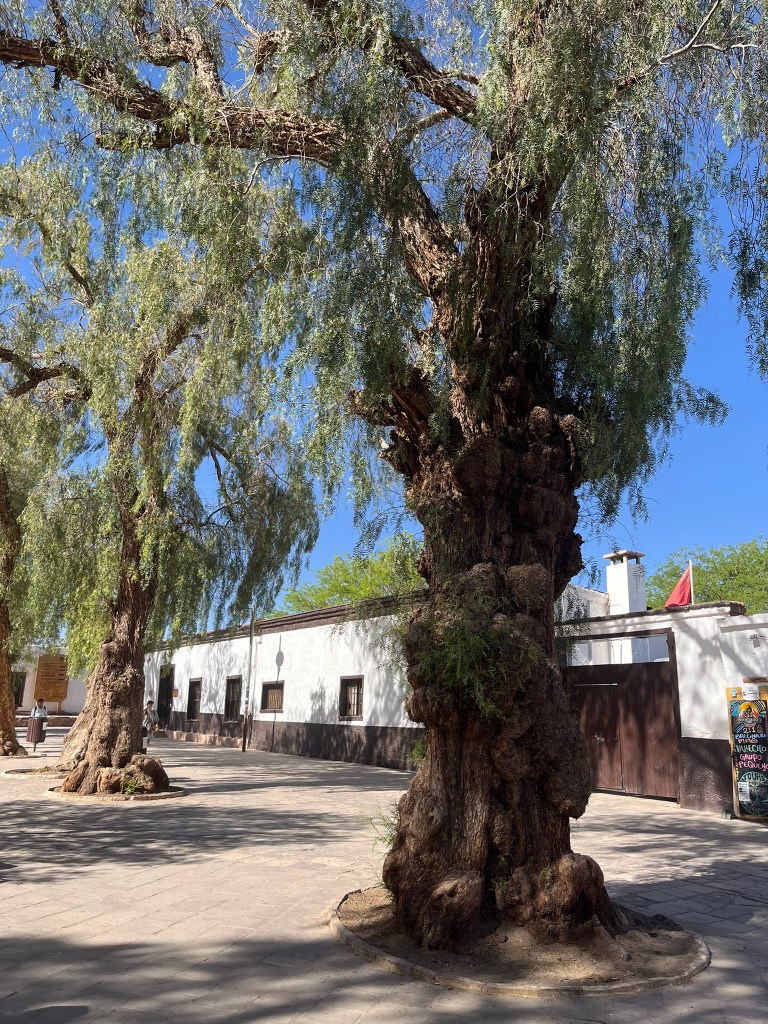


One of the highlights of the town is the Church of San Pedro, originally built in the 17th century, and restored and expanded multiple times. It has adobe white-washed walls, and a fantastic cactus-wood ceilings and beams. It sits adjacent to the main plaza of town, a good place to grab a cold-drink and relax.


The Atacama desert appears empty today, but archeological evidence shows hunter-gatherer groups passing through the basin 10,000 years ago following guanacos and vicunas and seasonal water sources. As the climate became drier over millennia, humans moved closer to water – the San Pedro river, which is fed by snowmelt from volcanoes like Licancabur and Sairecabur. By 3000-2000 BCE small semi-settled communities had begun forming around the oasis growing maize, quinoa and squash.
San Pedro became the heart of the Lickan Antay (Atacameno) culture, one of the most resilient desert civilizations in the Andes. They engineered irrigation canals, some of which are still used today. And the area became a caravan crossroads connecting northwest Argentina, the Bolivian altiplano and the Pacific coast. Llama caravans carried salt, copper, obsidian, textiles and pottery across the desert routes. The world view of the Lickan Antay was highly astronomial and mountains like Licancabur were seen as sacred.
Around the 15th century, the Inca Empire expanded southwards and absorbed the oasis town of San Pedro into its administrative system. They established agricultural terracing, new caravan routes and administrative structures in the region. The Lickan Antay did not disappear, they just adapted the Inca systems into their own culture. San Pedro became a secondary Inca node, linking Cuzco with the southern Andes.
The Spanish arrived in the region in the mid-16th century and San Pedro became part of the Capitania General de Chile. Catholic churches were established, forced labor systems disrupted indigenous structures, and caravan trade began shifting toward colonial cities. Spanish power never however fully erased the desert culture, because the region was remote, harsh and difficult to control.
Through the 18th and 19th century San Pedro remained a remote frontier settlement, still largely with an indigenous population. This is one of the reasons the town has kept its adobe architecture to this day. However, the region became contested during the War of the Pacific when Chile seized territory from Bolivia and Peru in 1879. After the war, the area was permanently annexed to Chile.
In the 1950s, a Belgium Jesuit priest and archeologist named Gustavo Le Paige arrived, and excavated thousands of artefacts. He helped map the region’s pre-Columbian heritage and generate global scientific interest in the Atacama. This was the start of tourism in the area. And in the 80s and 90s adventure travellers and astronomers began arriving in the area. Since the early 2000s, San Pedro has become one of Chile’s top destinations, with its fantastic desert landscapes, cultural heritage, and world-class star-gazing.
We will be spending 4 days in San Pedro de Atacama with plans to visit Moon Valley, the Red Rocks, a series of altiplano lakes, the salt flats and geysers. In between all of this, we plan to explore the town, go to the Museum of Meteors and head out stargazing in the desert. Its going to be an exciting couple of days!
 Colette's Grand Detour
Leave a comment