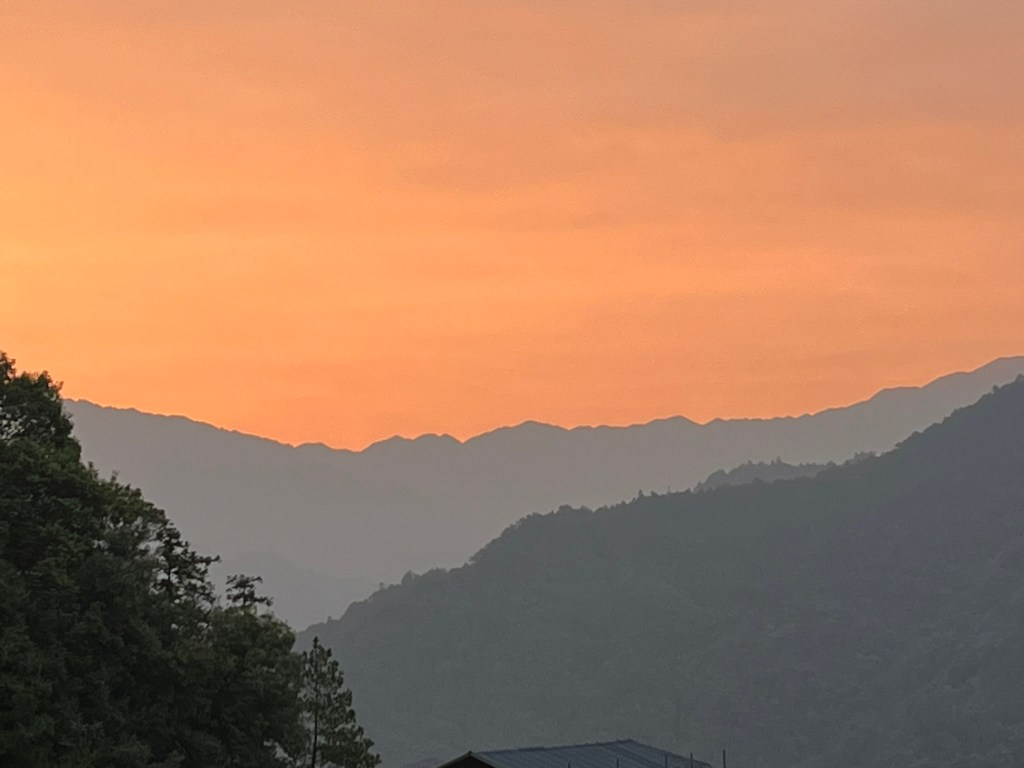
The Longji Rice Terraces sit high above the villages of Longsheng County, about 100km northwest of Guilin. They have been cultivated for over 600 years, beginning in the Yuan dynasty and continued to develop through the Ming and Qing periods. The terraces follow the mountain contours up to altitudes of 1100m. My visit was timed perfectly with the rice harvest. If I had arrived 2 days later, the golden glow of the rice terraces would have been gone, with the harvest complete and the rice now drying in bunches. Luckily for me, the mountain sides were still a sea of gold, with people scattered across the tiers starting the harvest, and manually cutting down each plant, lying it carefully in rows along the edge of each terrace.

The drive from Yangshuo takes about 2 hours on the expressway and is very scenic, with the karst limestone peaks following you most of the way. Once you reach the scenic area, you must buy your tickets before heading into the windy mountain roads. There are a couple of different places to explore in Longji, but with just 1 day in the area, I was going to visit Huangluo Yao Village before lunch and then head up to the rice terraces that surround Ping’An Village in the afternoon. Ping’An is where I would stay the night.
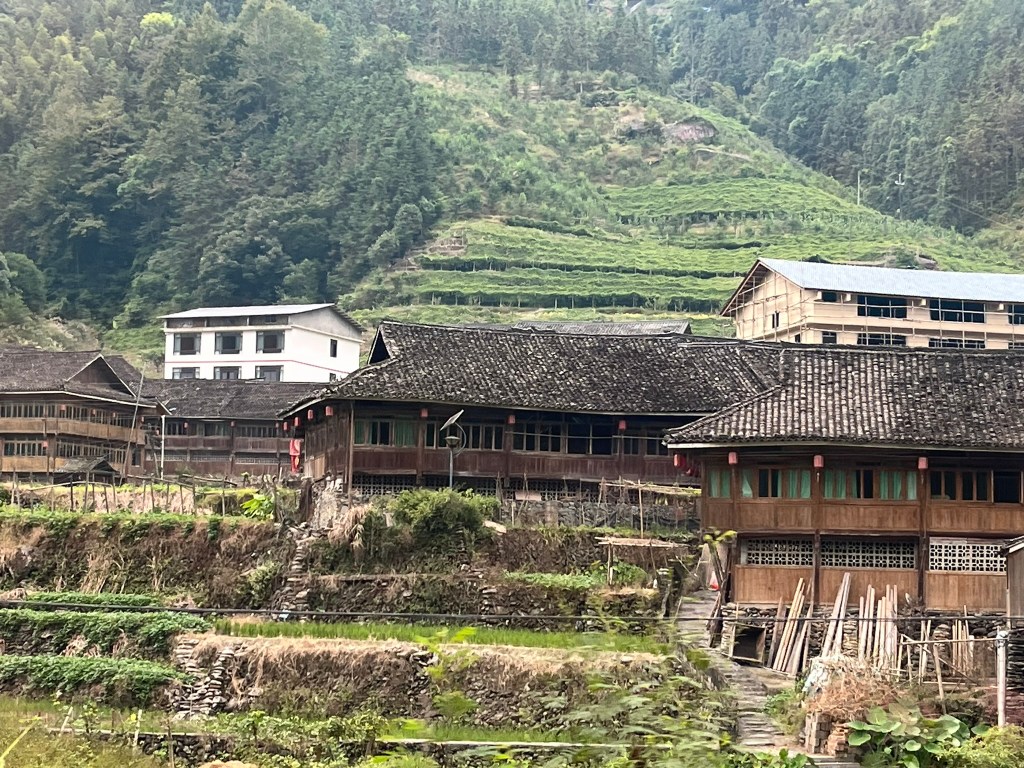
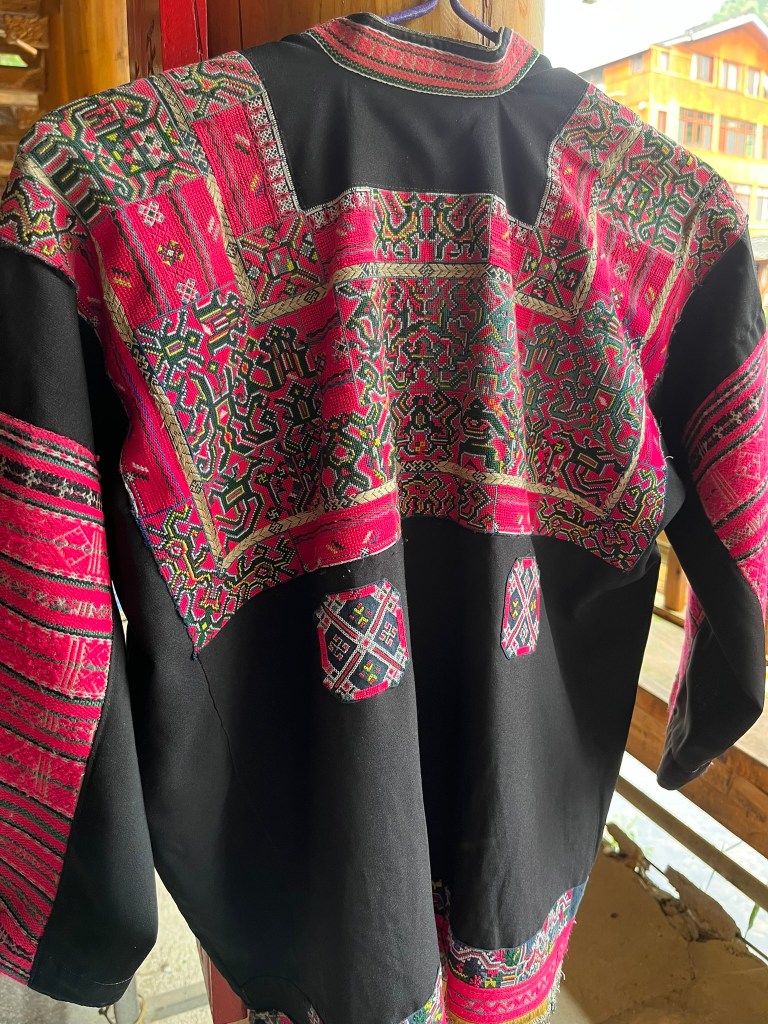
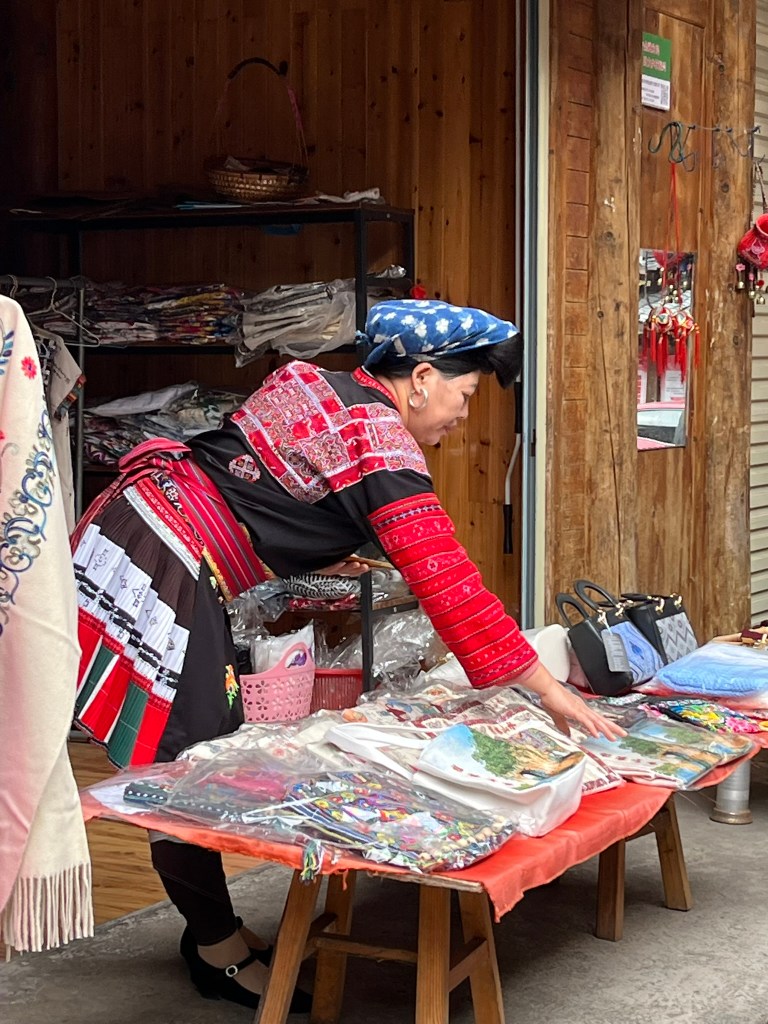
Huangluo Yao Village is home to the Red Yao people, a sub-group of the Yao minority. Their traditional red and black outfits, with embroidered jackets, pleated skirts and huge headpieces are fantastic and many of the local shopkeepers were wearing this around town. The Red Yao are particularly famous for their extremely long hair, often exceeding 1.5m in length. This was also part of the Impressions show I went to last night and is a tradition that dates back 2000 years. Long hair is considered a symbol of longevity, prosperity and good fortune, as well as being a women’s most treasured possession. According to Yao legend, hair is the spirits connection to heaven and cutting it is extremely taboo.

Traditionally a Yao girl would cut her hair only once in her lifetime at the age of 18. The hair that is cut is carefully preserved and becomes part of her marital dowry. On her wedding day, the cut portion is woven into her everyday hairstyle, symbolizing continuity between generations. Married women wear their hair in a circular wrap around their head. The Guinness Book of Records actually recognises Huangluo as the ‘World’s Long Hair Village’ with the average hair length exceeding 1.7m.
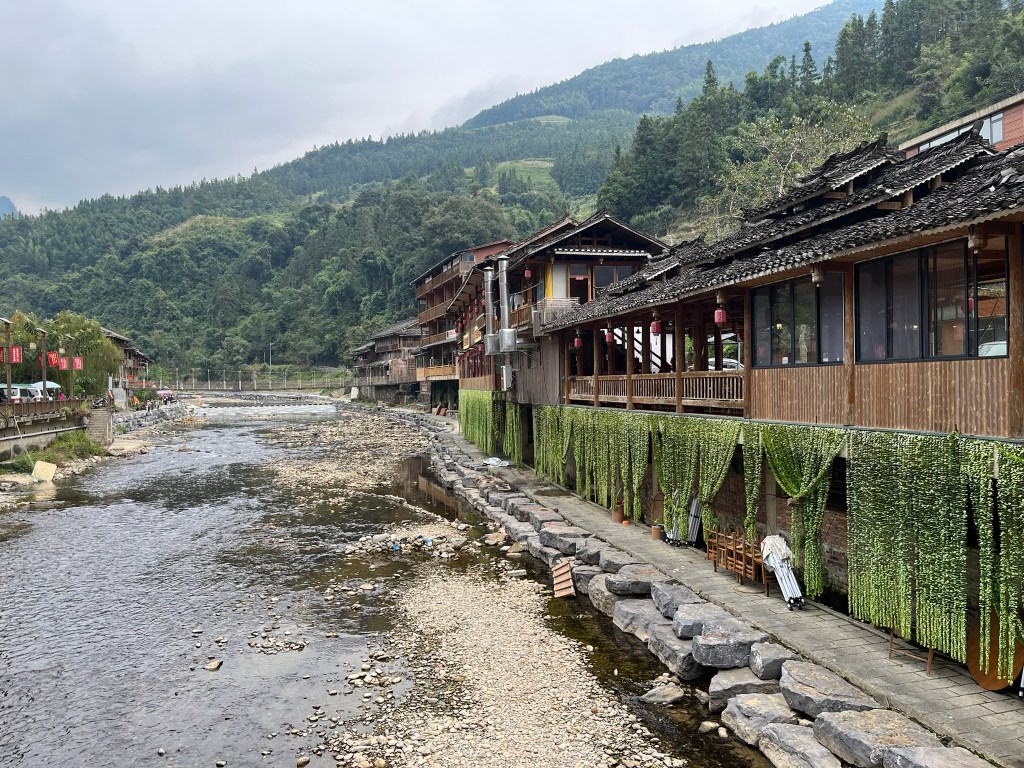
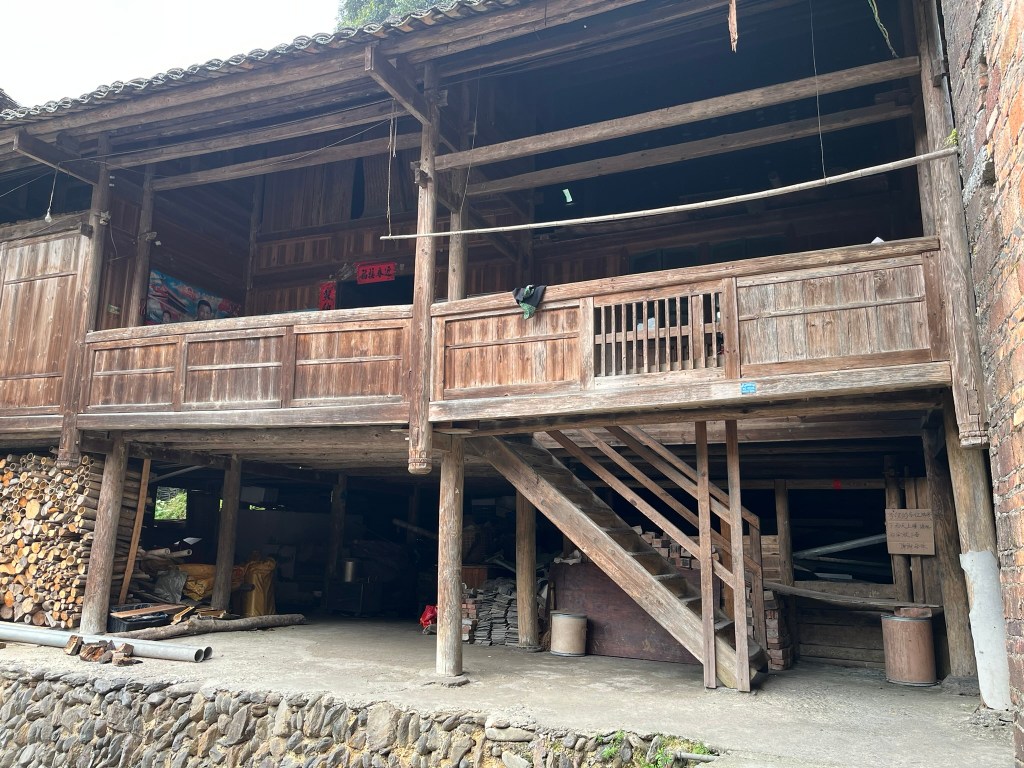
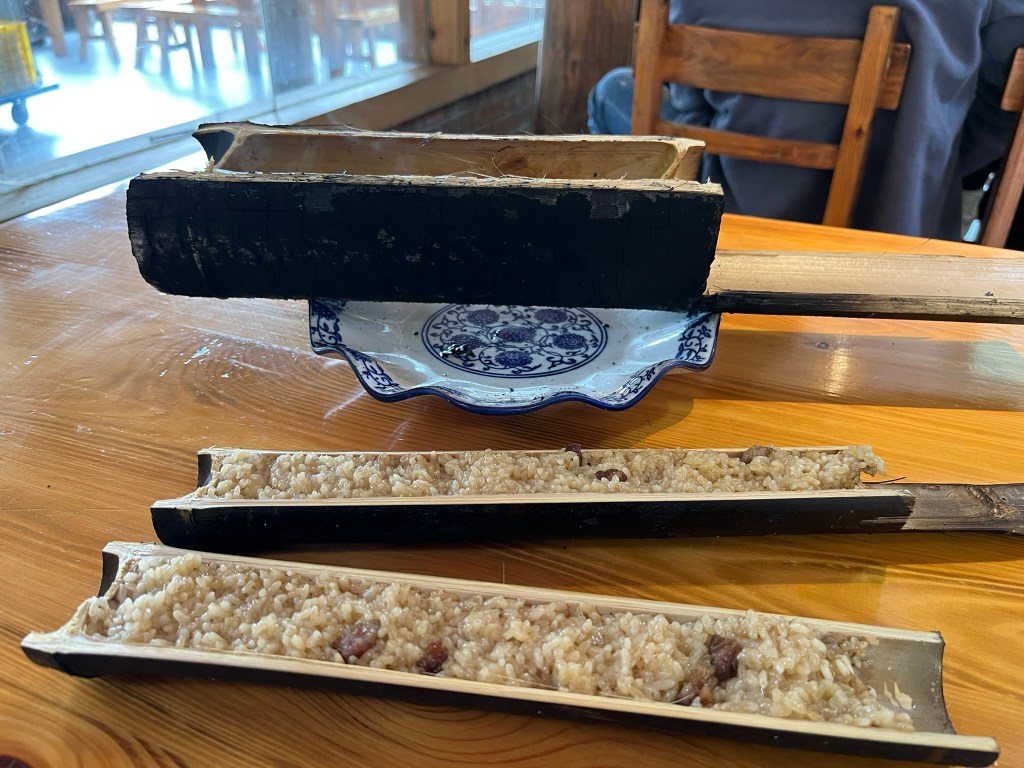
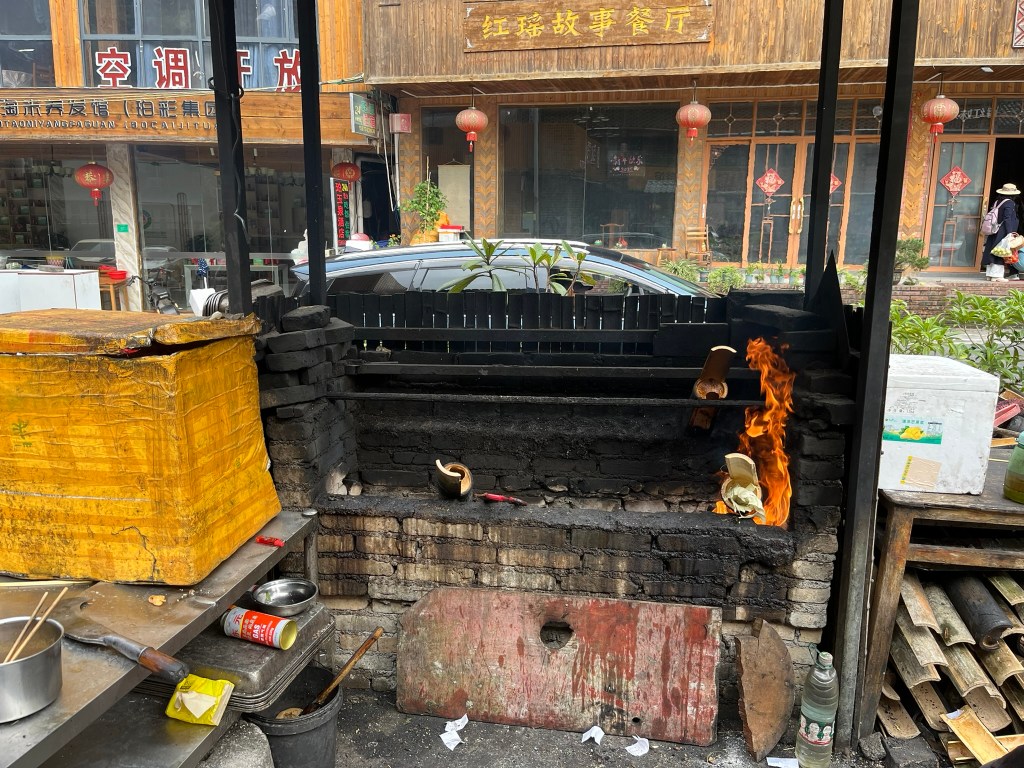
After wandering the traditional wooden homes of the village, it was time for a traditional lunch of bamboo rice and bamboo chicken. Outside the restaurant a man was tending the bbq, with stacks of big pieces of bamboo cooking away in the fire. Sealed inside each piece of bamboo there is sticky rice, sausage and vegetables, roasting away. Both dishes were great and something not to be missed when visiting the Longji Rice Terraces.
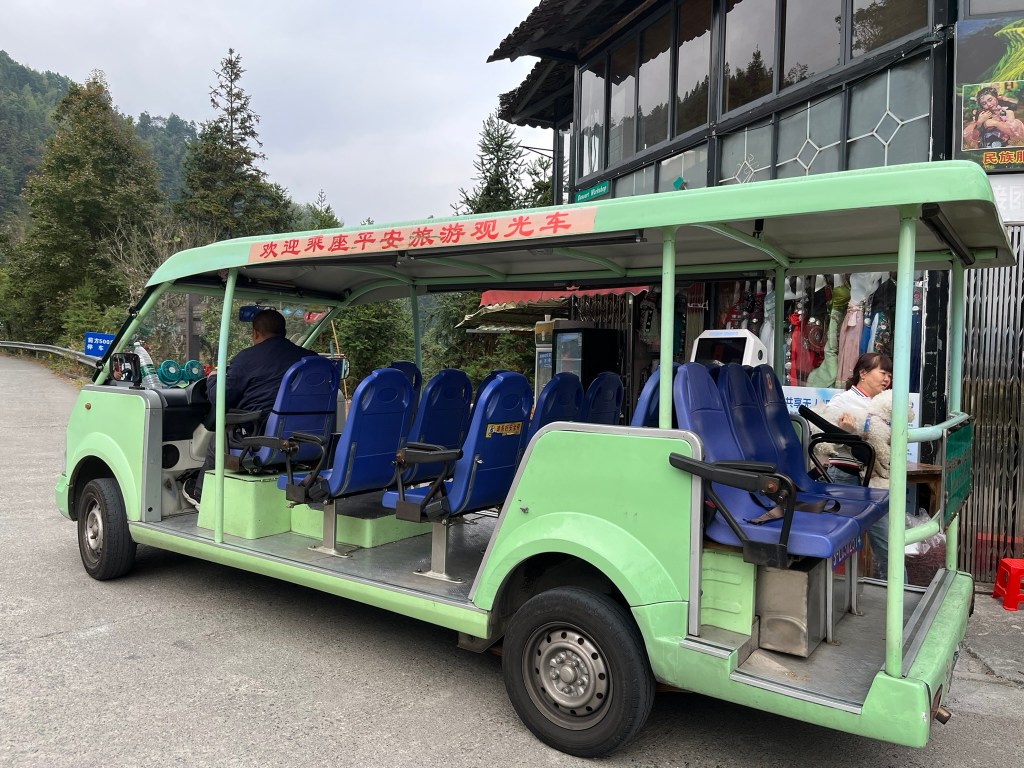
We then started the windy road up to Ping’An Village. This village is predominantly Zhuang, China’s largest minority group and the group my tour guide is from. There is the option to hike for 30 minutes up to rice terrace viewing platform or jump on a shuttle bus for 10 minutes. I opted for the latter of course, since it looked quite steep. The first viewing platform is called ‘Nine Dragons and Five Tigers’ and gives you sweeping landscape vistas of the golden yellow rice. Its a stunning and mesmerizing landscape that doesn’t disappoint.


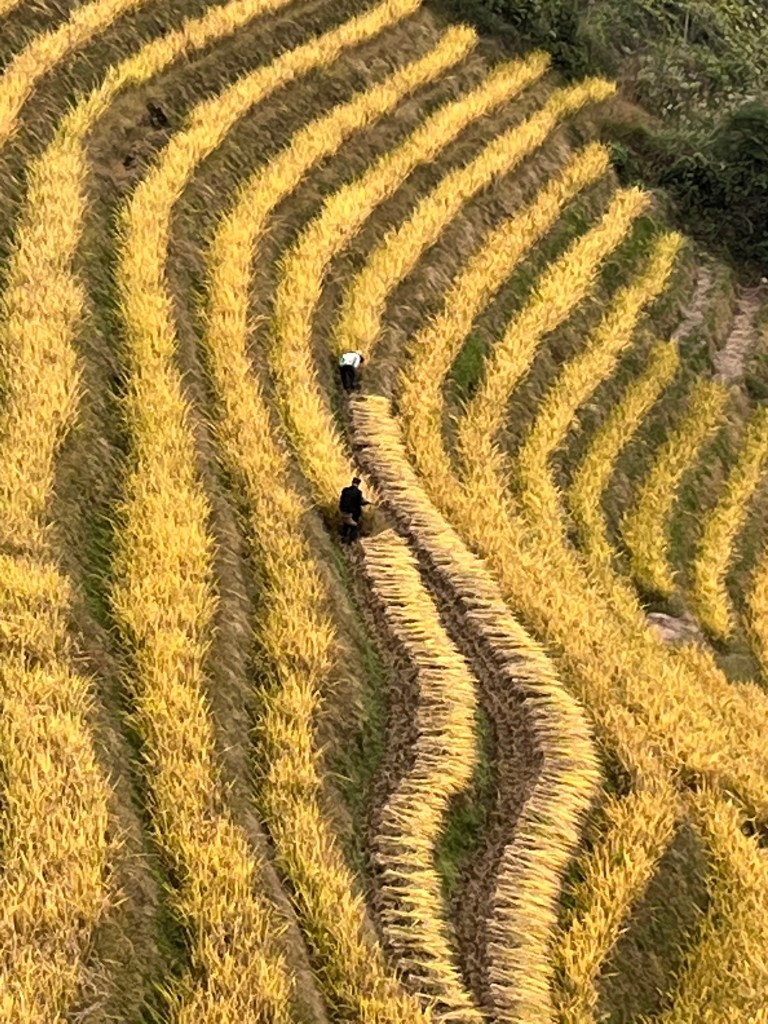
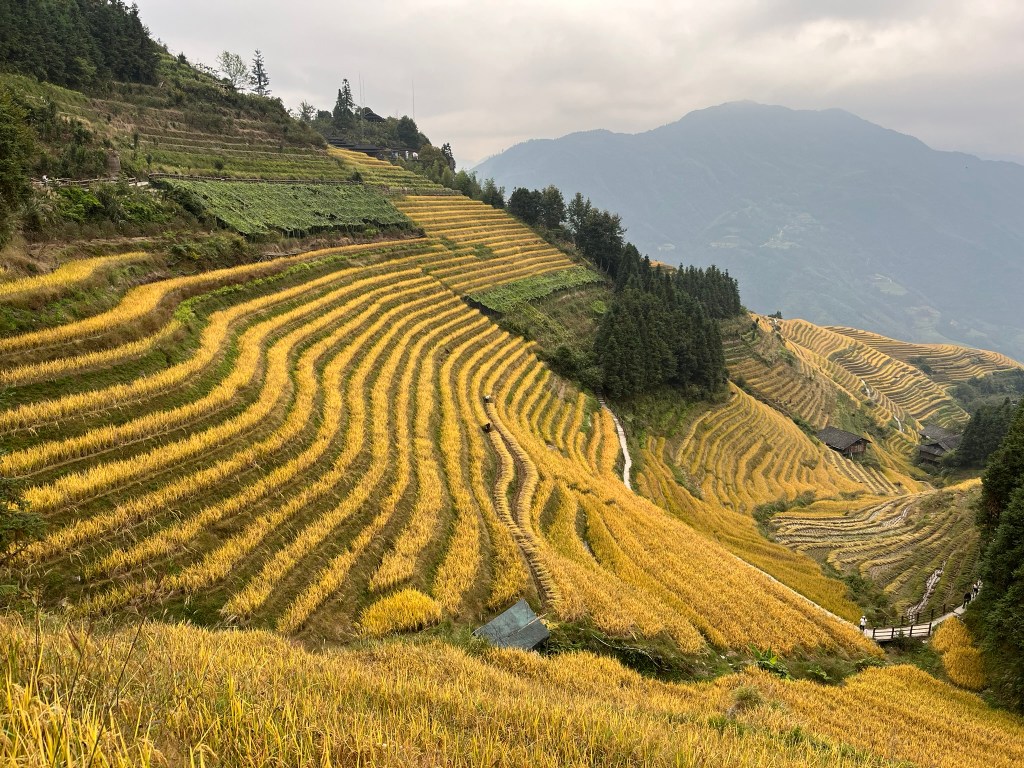
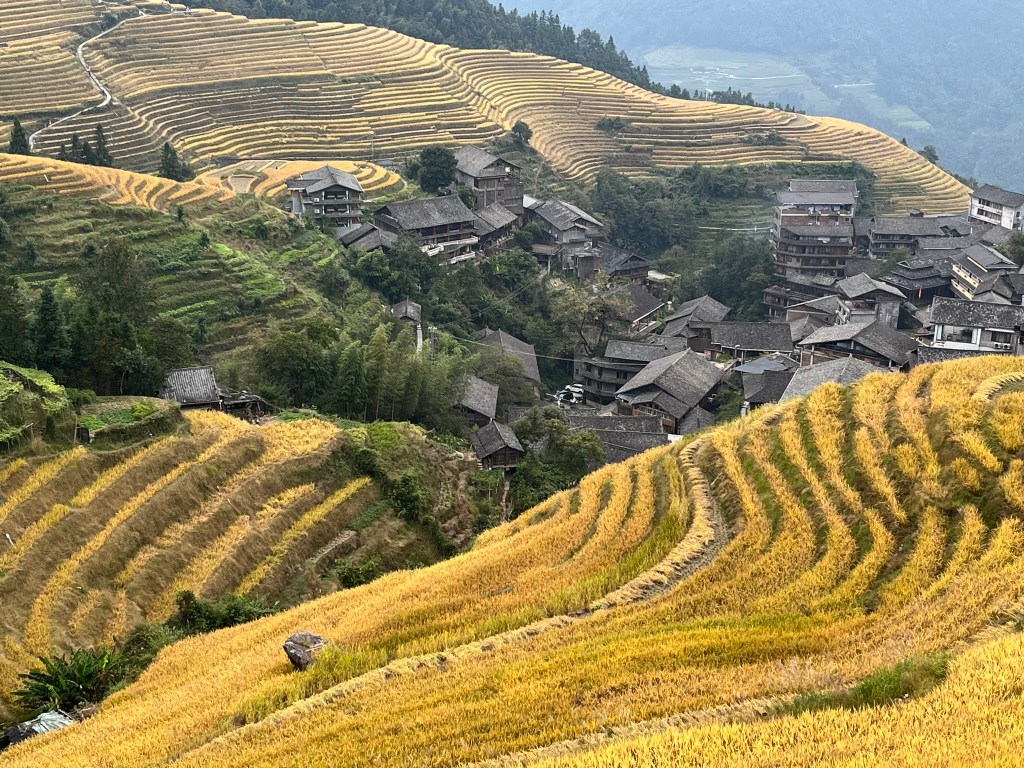
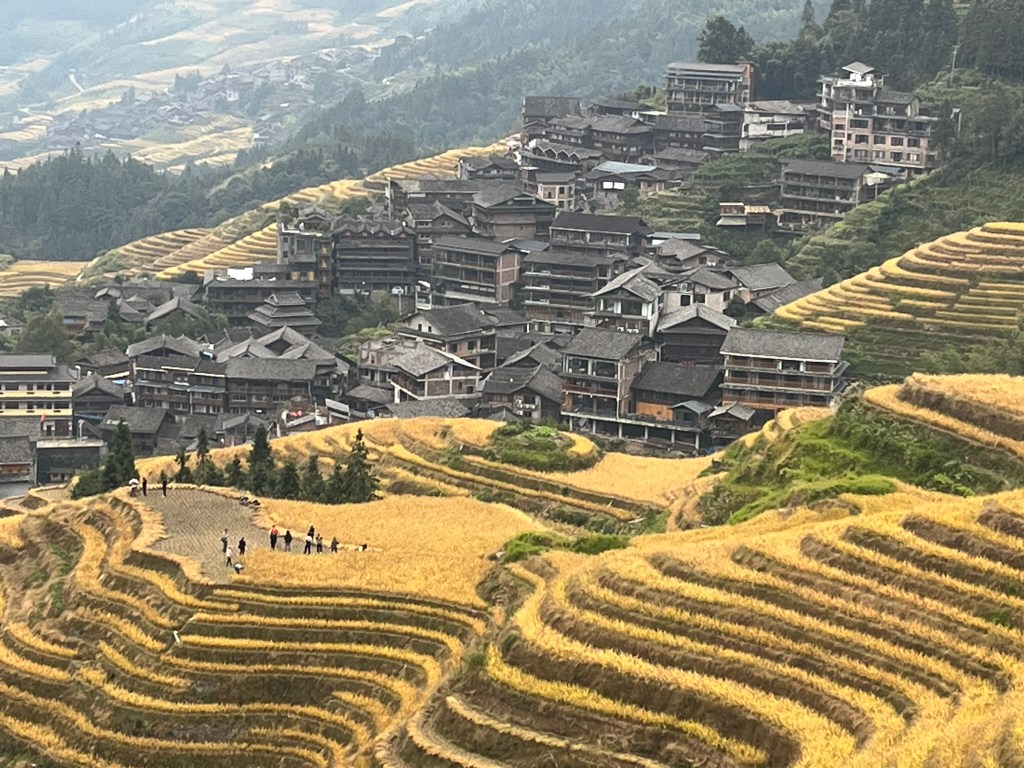
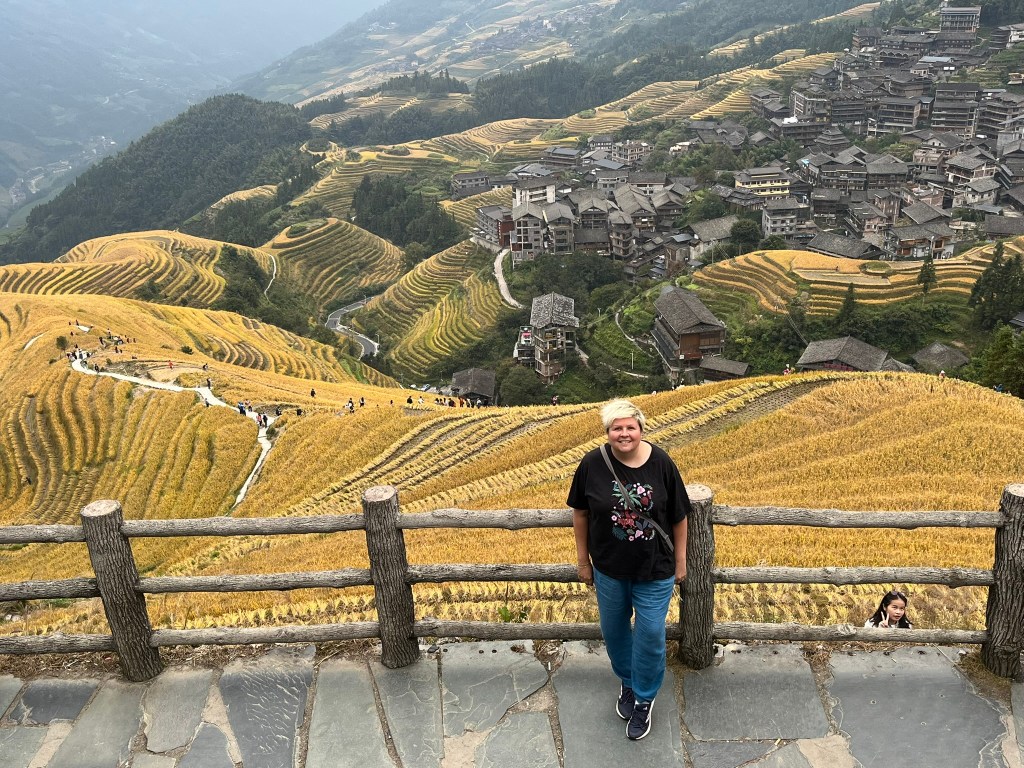
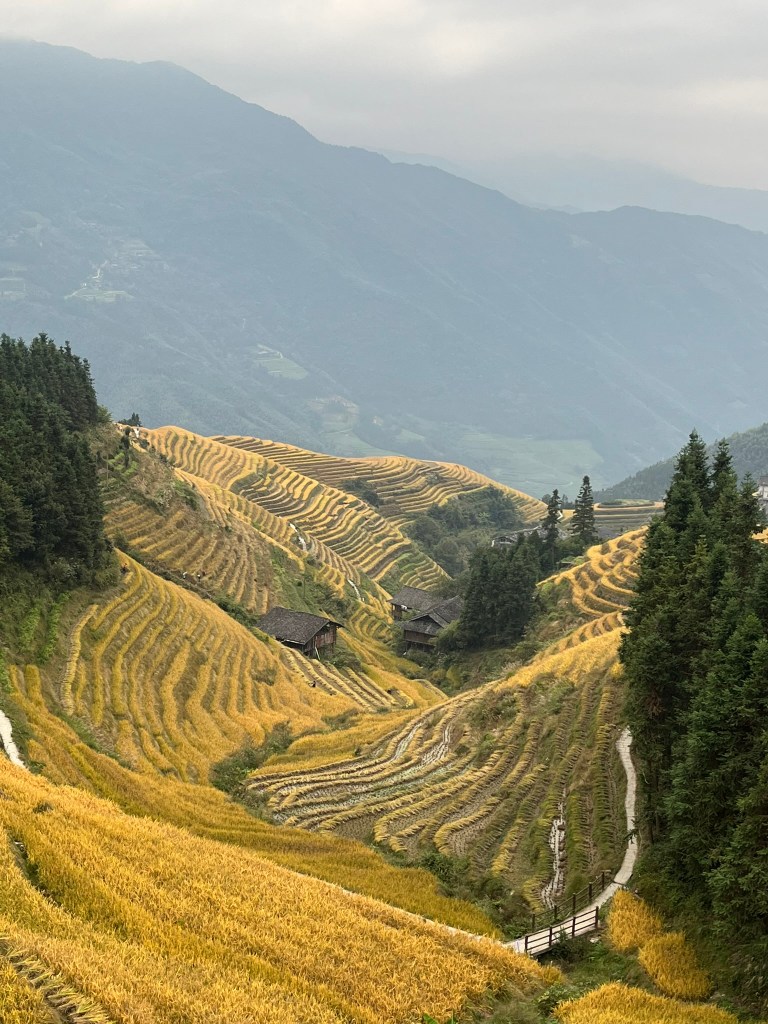
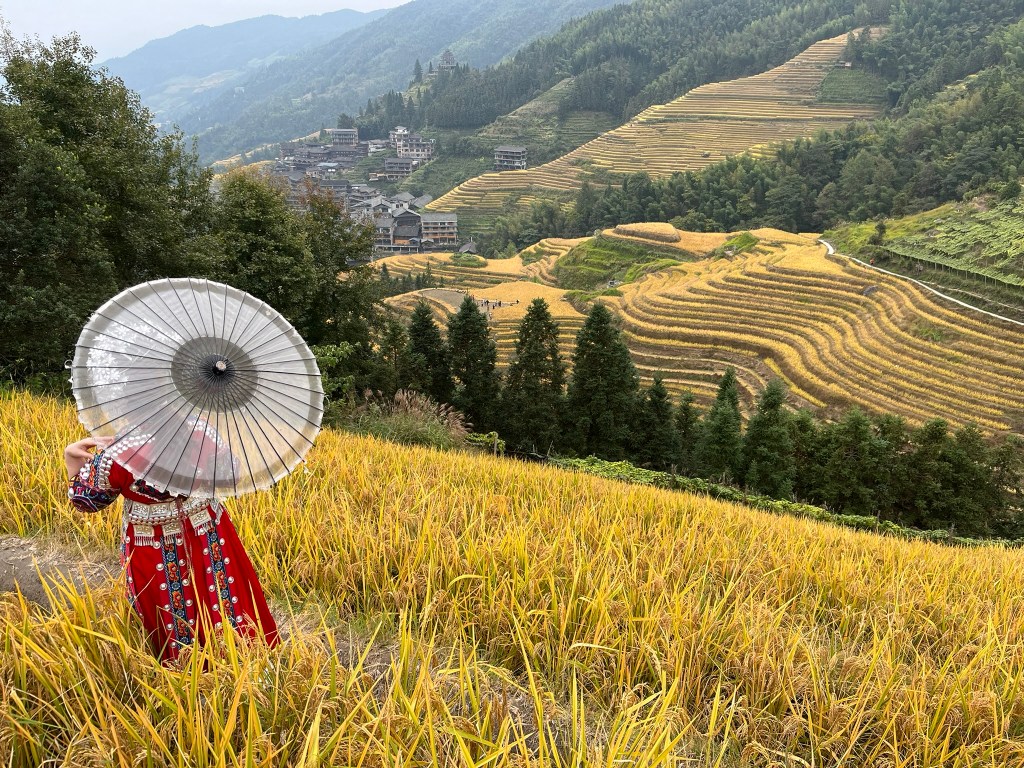
The walk to the second viewing platform is completely flat and well-paved, following the contour of the mountain. Along the route, you get lots of different views and angle of the terraces below and there are villagers dotted along the way selling fresh fruit and all sorts of other produce they have grown. Here I tried the yellow passion fruit that the region grows in huge quantities and that are much sweeter than the purple ones we get at home. And I tried the monk fruit tea, made from boiling this small-gourd type fruit that is grown widely in the area. It is boiled with ginger, giving it a sweet and spicy taste.
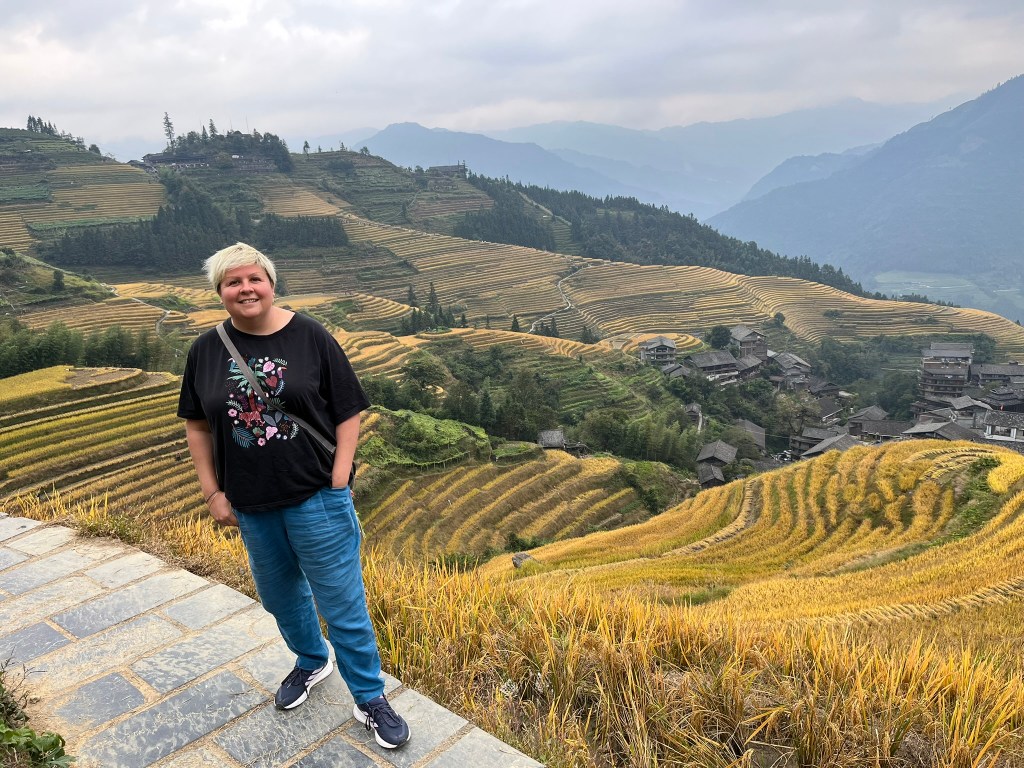
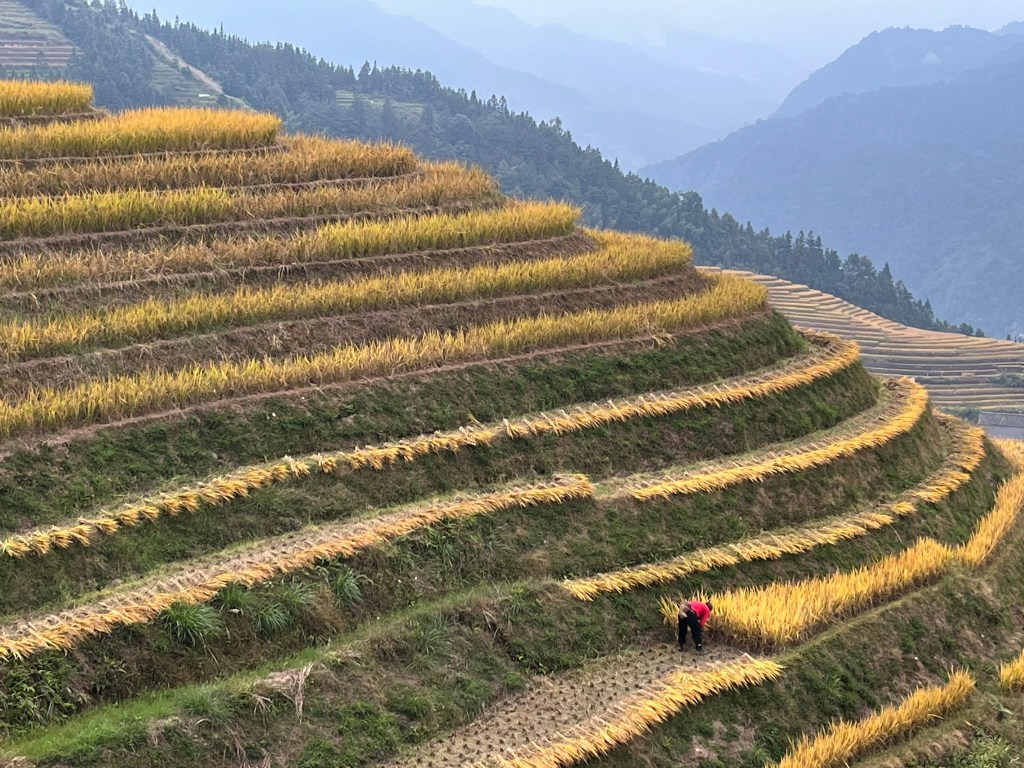
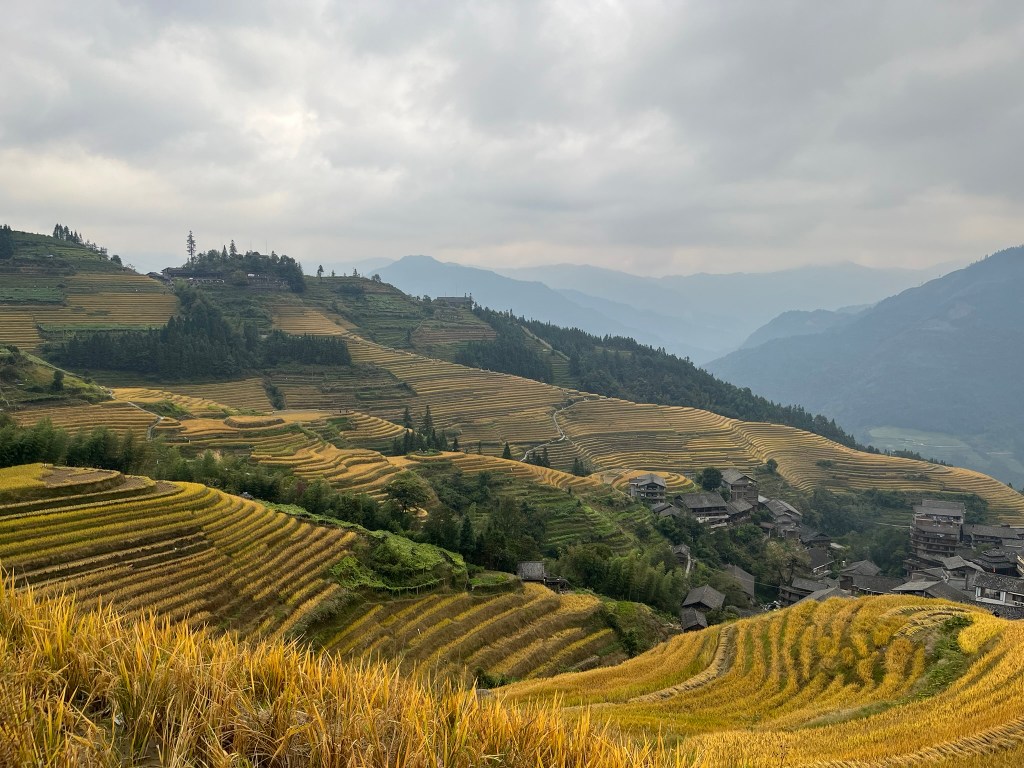
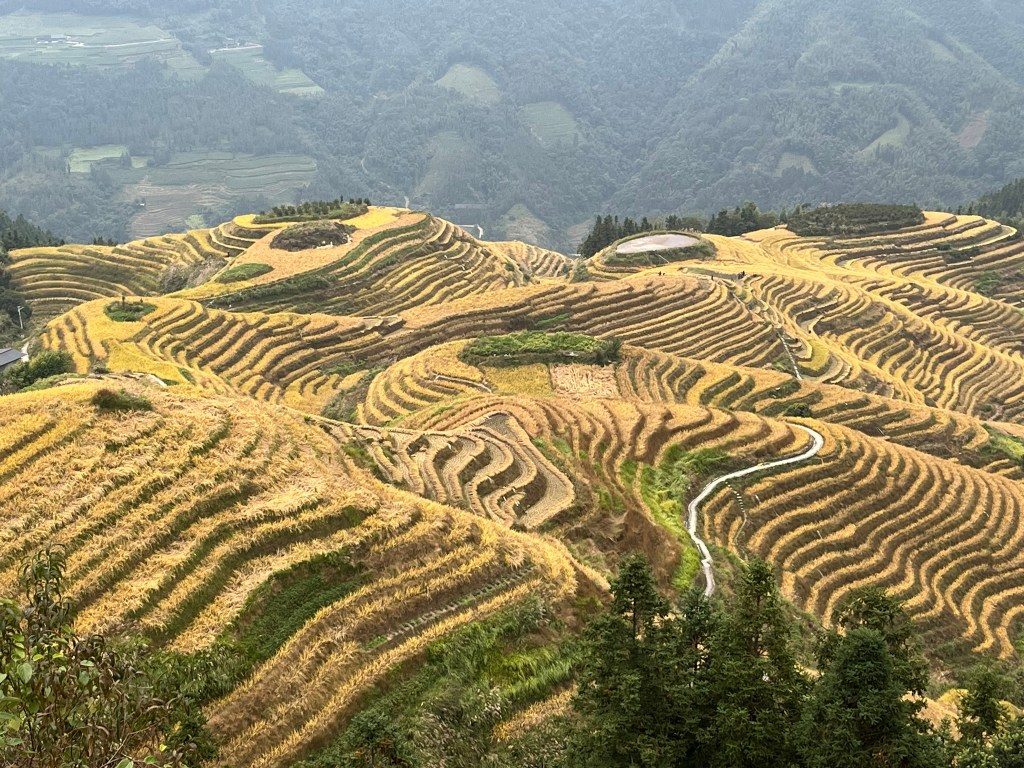
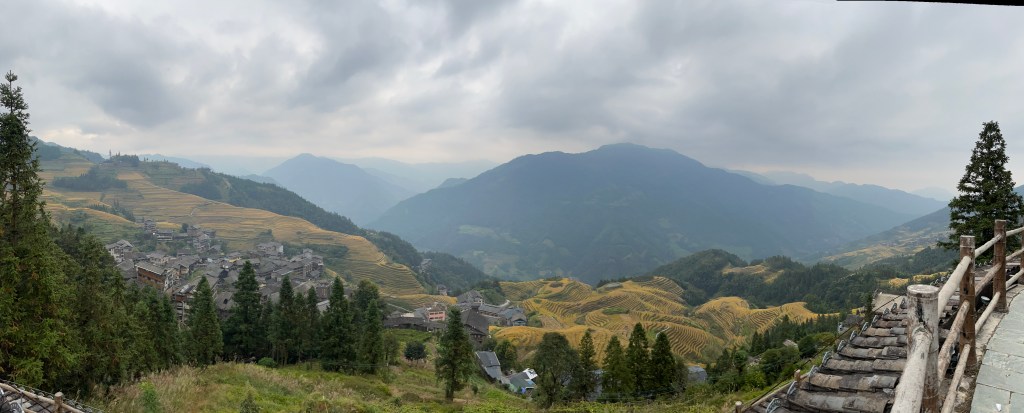
The second platform takes about 30 minutes of easy walking to reach and is called ‘Seven Stars Accompany the Moon’. From here you start heading down into Ping’An Village itself, which nowadays is still predominantly built of stilted wooden houses, but most are no longer residential and have now been converted into restaurants, cafes, shops and hotels.
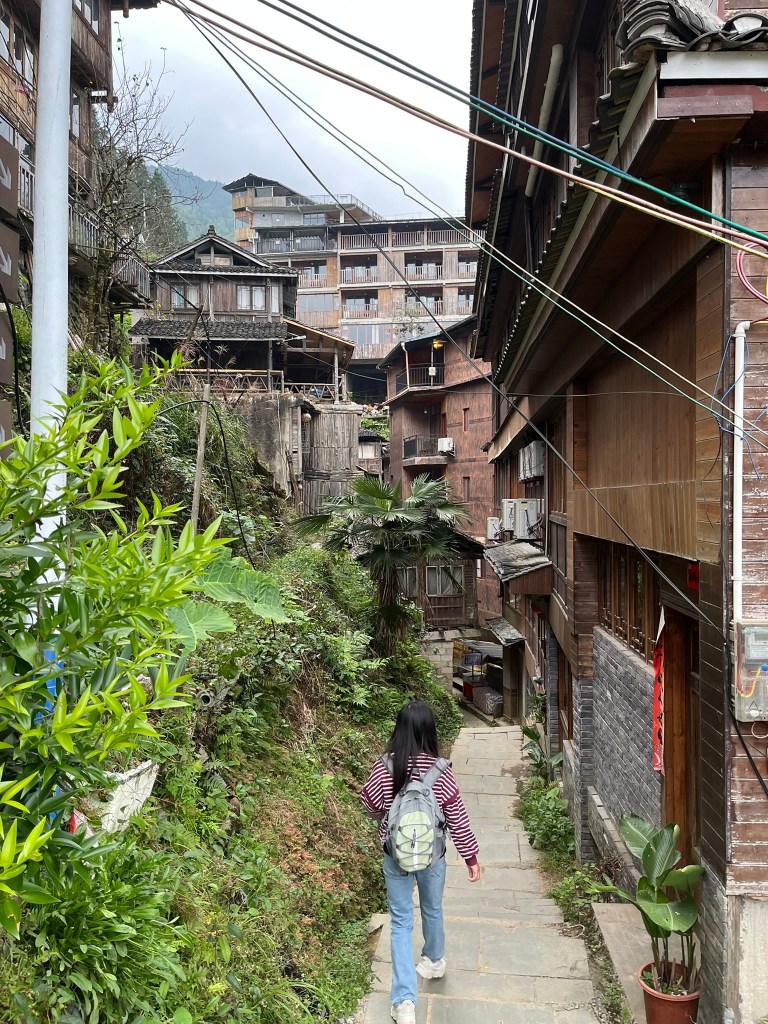
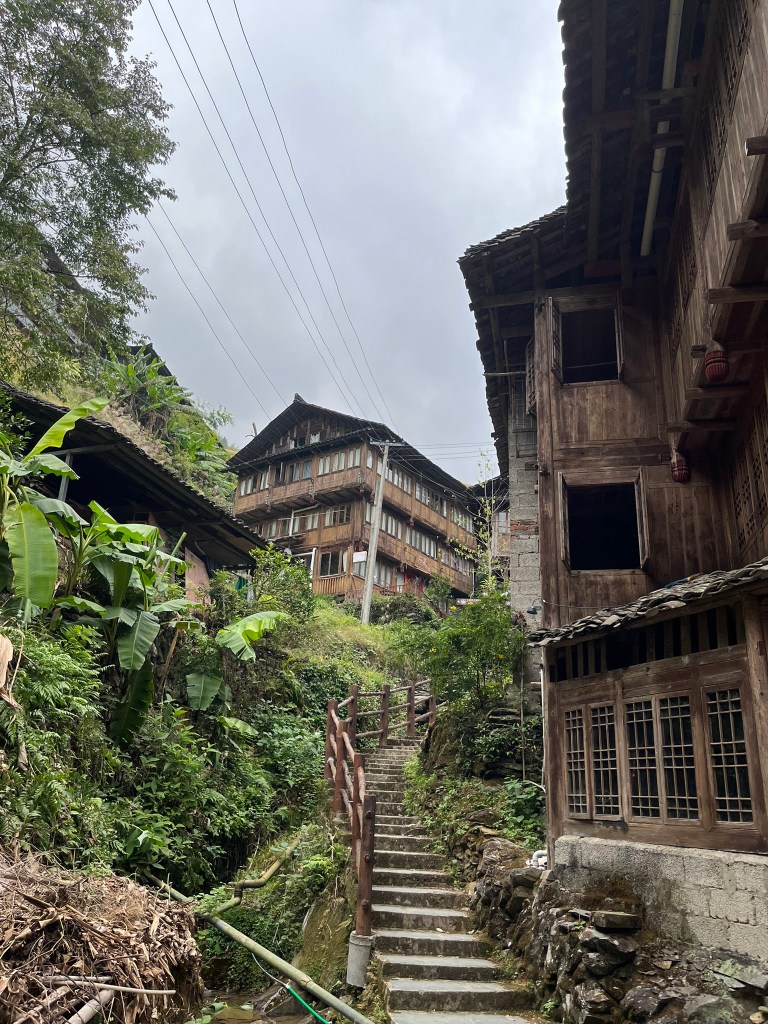

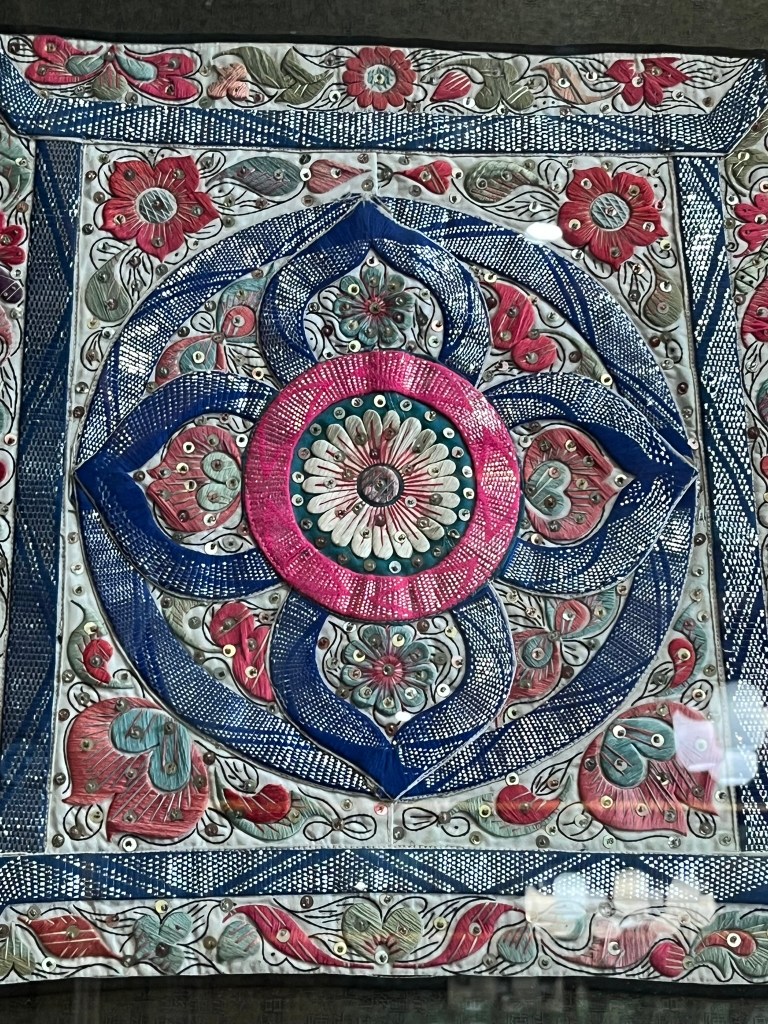
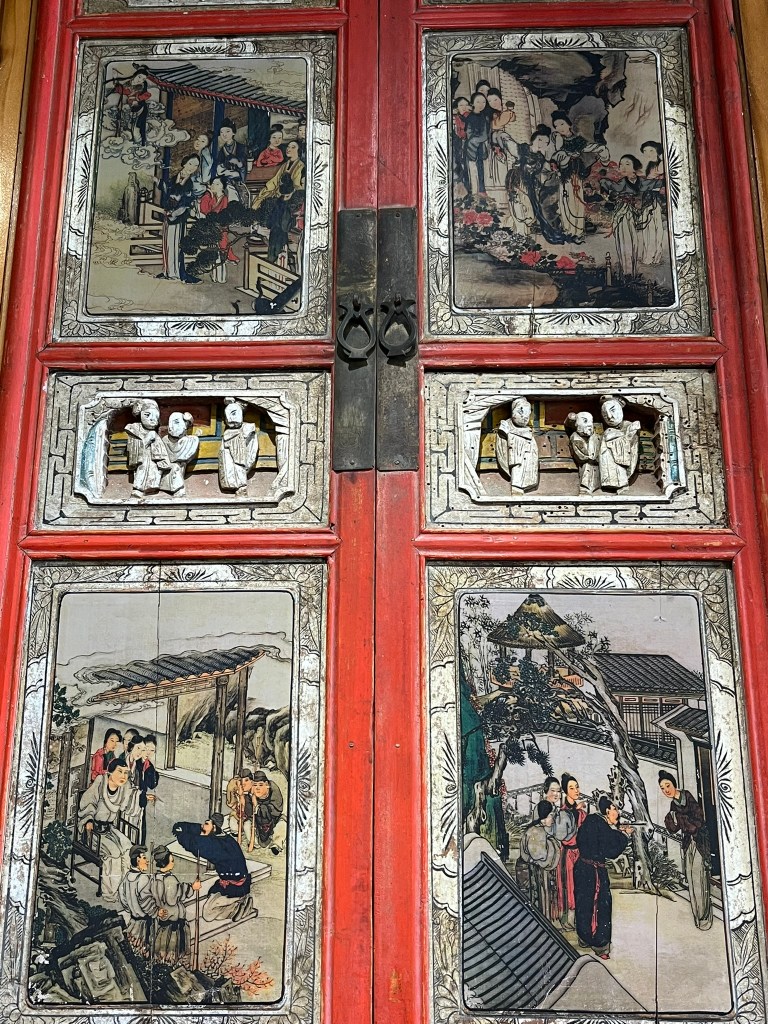
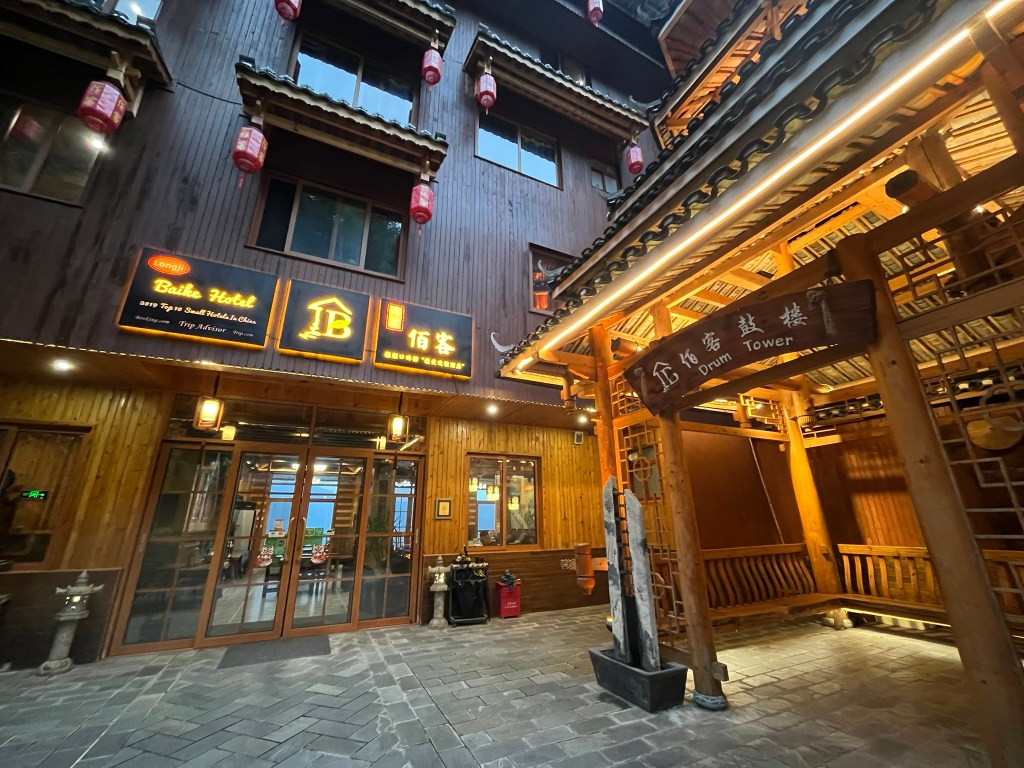
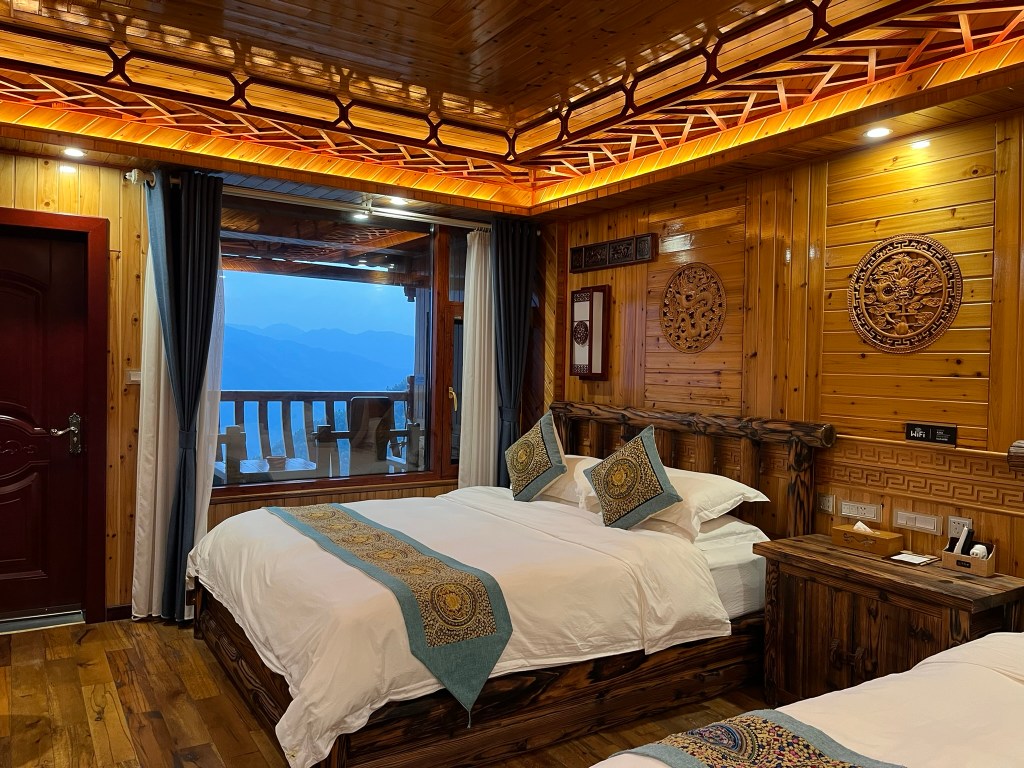
After 30 minutes of walking down nicely paved steps we reached my hotel for the night. Thankfully my bags had been brought up from the car park whilst we were exploring the rice terraces. The hotel is beautiful and my room is filled with intricate wooden carvings on the walls and hand-stitched embroidered pillows on the bed.
Today was my last proper day of touristing in China, as tomorrow is a travel day and the following day I fly back to the UK. I have loved the Guilin area and would happily come back here to spend more time. There were other parts of the Lonji Rice Terraces to see, with more villages, shows, food and viewing platforms to visit. And there was more to see and do in Yangshuo. After spending around 2 months in total in China this year, I feel like I have simultaneously seen a lot, and also realise how little of the country I have seen and how many new, lesser known places I have found out about and want to visit in the future. So for now, its goodbye China, but I’m sure I’ll be back.

 Colette's Grand Detour
Leave a comment