I arrived in Guilin mid-afternoon after a 7-hour train ride from Zhangjiajie and headed straight into the small city to start sightseeing. Guilin lies in the northeastern part of Guanxi Zhuang Autonomous Province in southern China and is famous for its dramatic karst limestone hills, lakes, caves and rivers. The city’s name translates to mean ‘Forest of Sweet Osmanthus’ and refers to the osmanthus trees that grow everywhere and flower in the Autumn. Guilin is a small city of just 1.2 million people (tiny in China) and its main industry is tourism.

The icon of Guilin is Elephant Trunk Hill, located at the confluence of the Li River and Peach Blossom River. The hill distinctly resembles an elephant dipping its trunk into the water. The trunk and body of the elephant are separated by the Water Moon cave. The hill sits at the very center of the city and the park that surrounds the elephant is full of tourists enjoying the views and watching the sunset. As you exit the park, there are street-food sellers lining the streets with all sorts of fruit and snacks on sale.
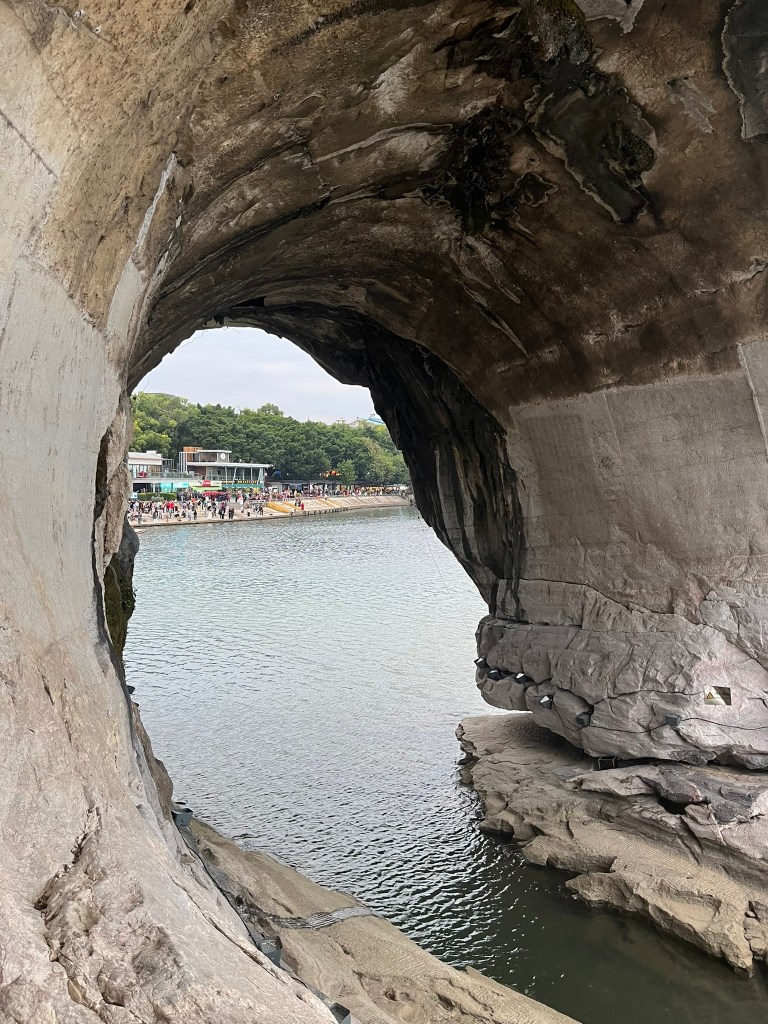
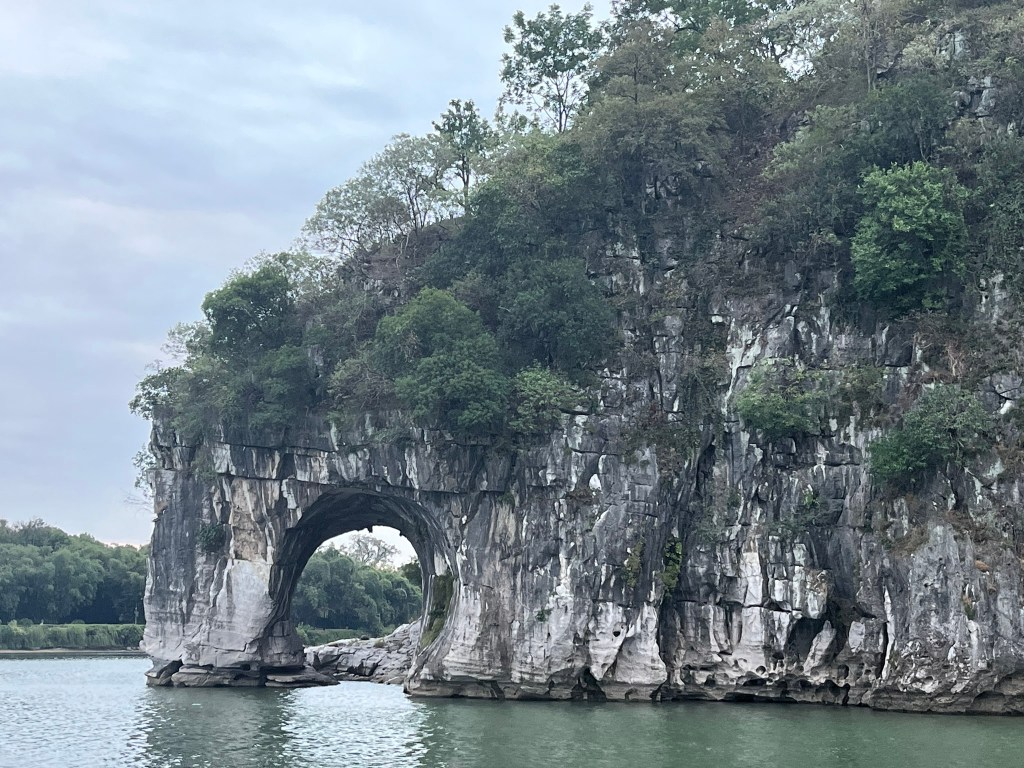
Nearby sit a network of lakes and canals that run through the city center, with one lake home to a pair of pagodas named Sun and Moon and made out of bronze and glass respectively.
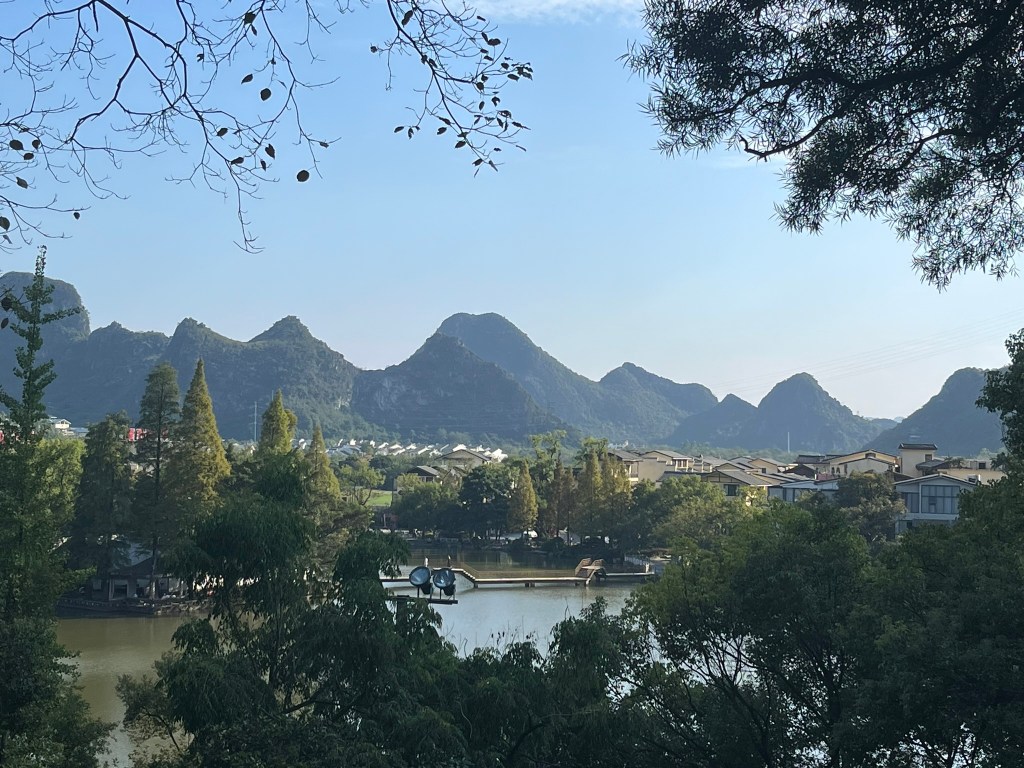
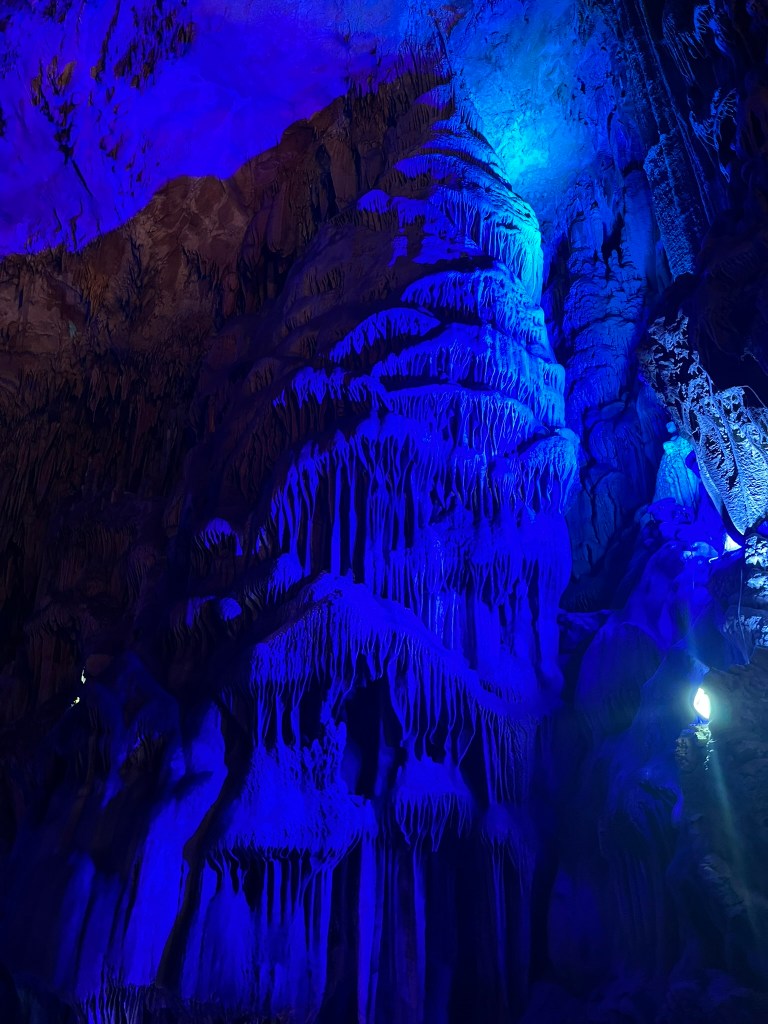
The highlight in my opinion of the city is Reed Flute Cave, located about 20 minutes drive outside of downtown Guilin. The cave lies in Guangming Hill and forms part of the region’s karst limestone formations, shaped by water erosion over hundreds of millions of years. Slightly acidic rainwater has dissolved the limestone bedrock and created grand halls, stalactites, stalagmites and stone curtains, that have taken on fantastic shapes.
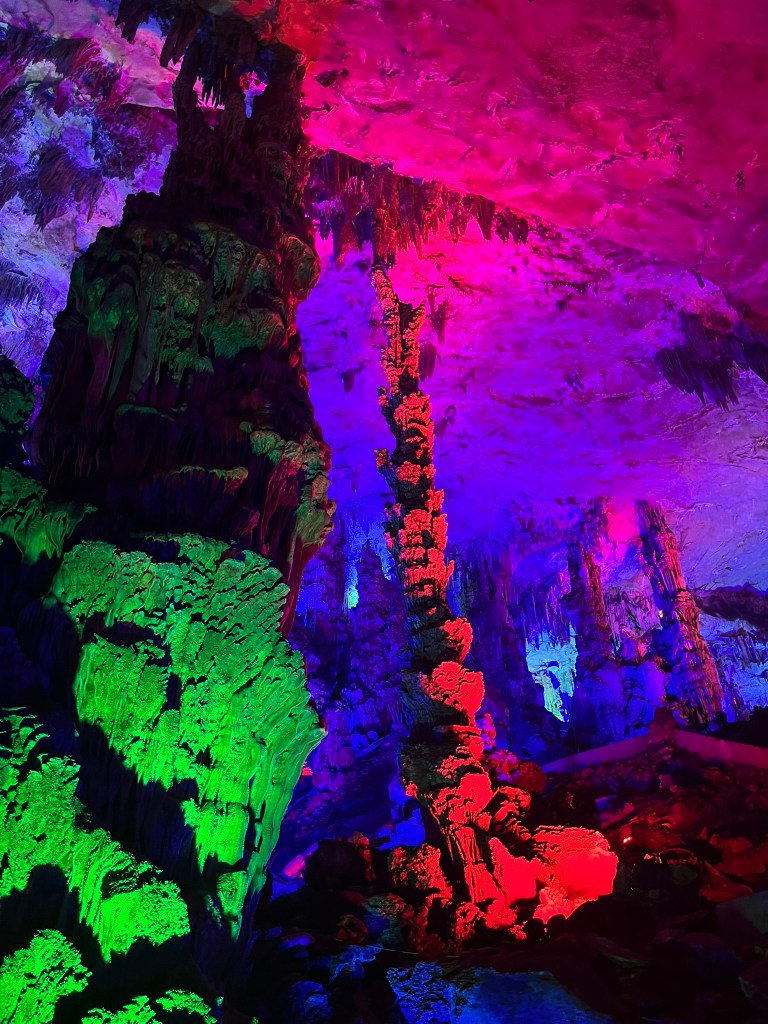
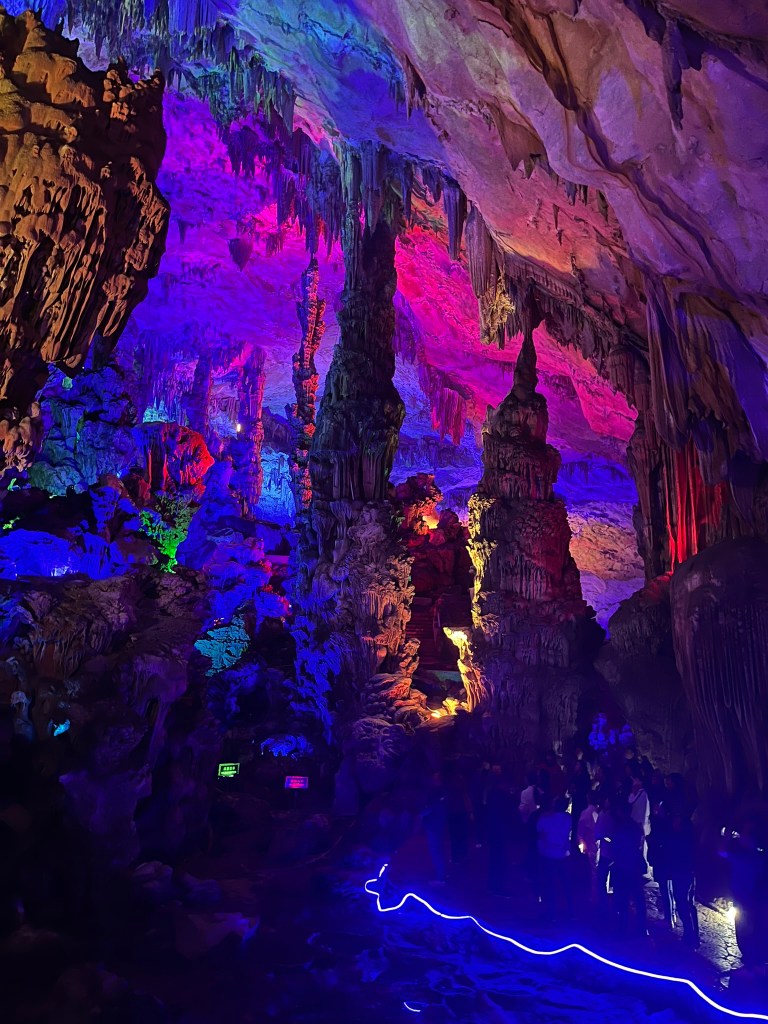
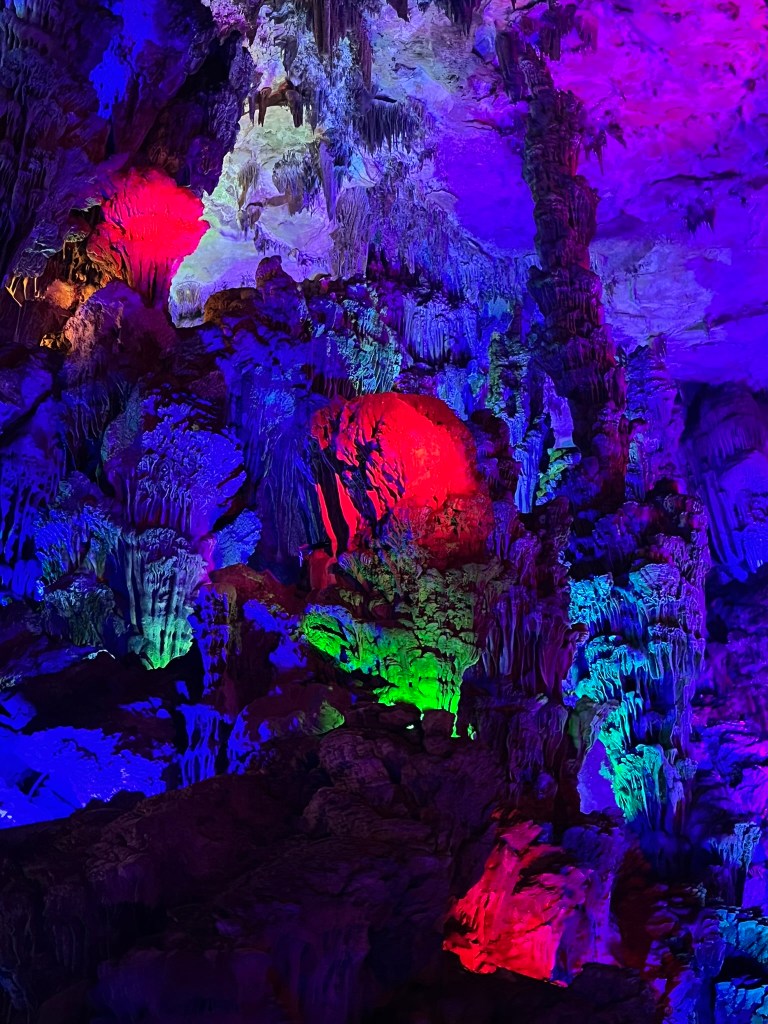
The cave extends for about 240m and visitors make a loop around an easy well-paved trail, illuminated by multi-color lights. The cave takes about 45 minutes to explore and whilst I was initially put off by the colored illuminations, I must admit that it helped to highlight each formation and it gave the experience a more mystical feel.
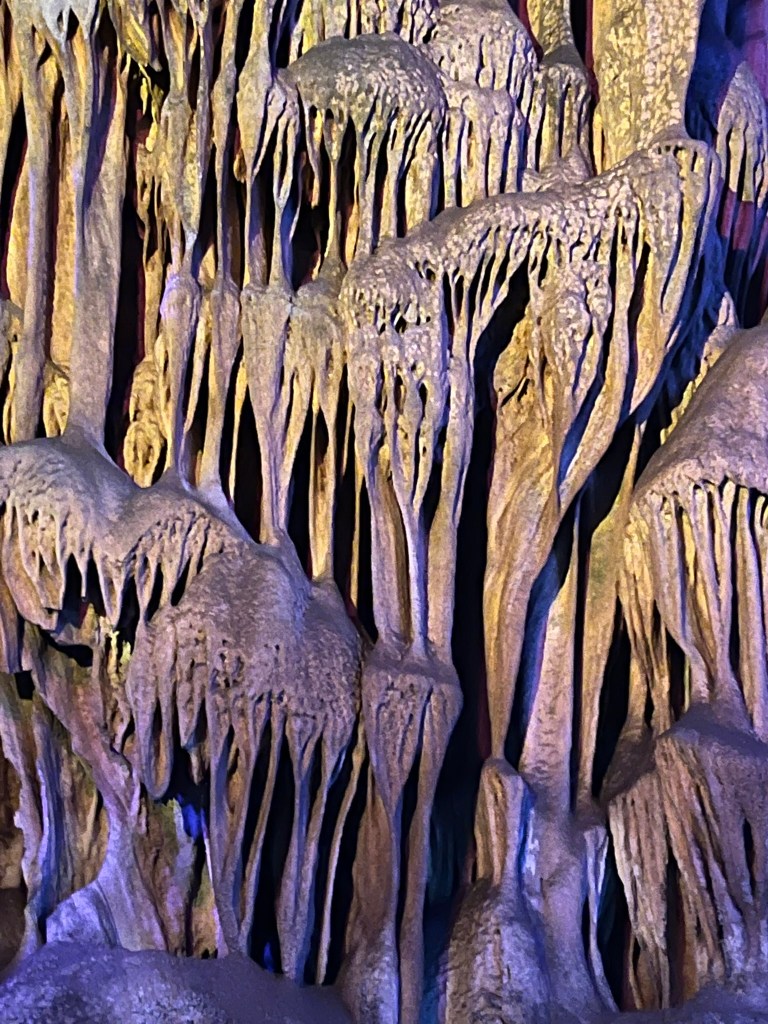
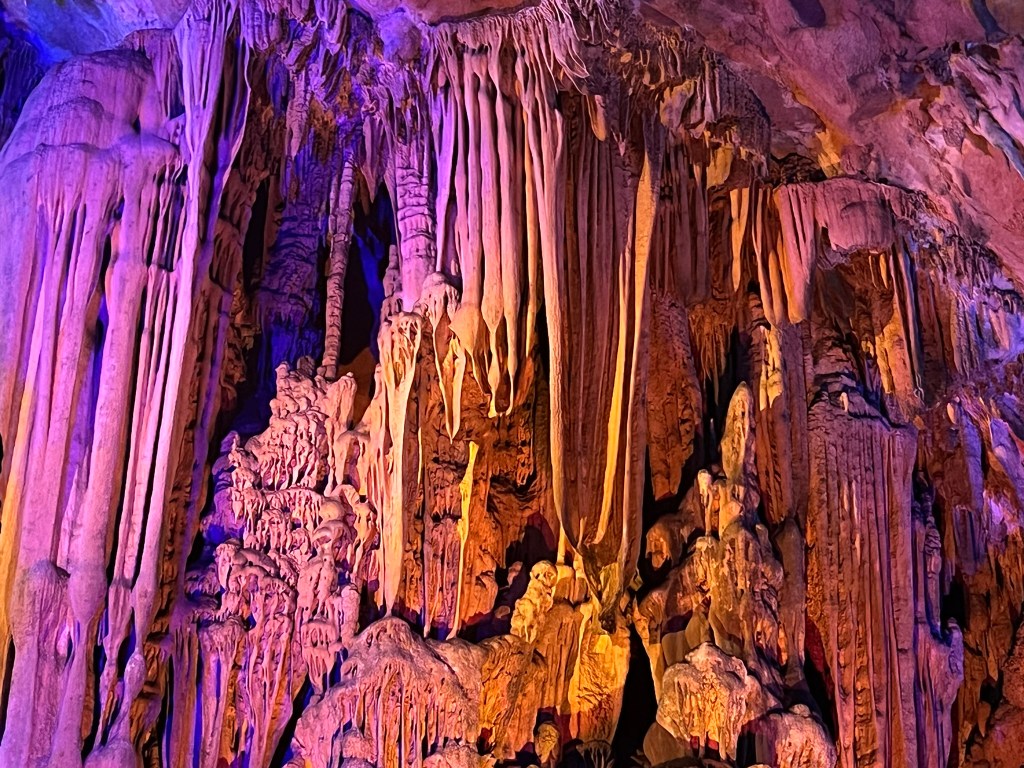

The cave, which got its name from the reeds that grow at its entrance, has actually been a tourist site for over 1200 years. Stone inscriptions inside the cave date back to the Tang dynasty with carved characters and poems praising the scenery and recording visitor’s names. The cave was rediscovered in 1940 after locals noticed reeds still grew thickly there and the name of the cave was revived from ancient records dating back to the 8th century.


Despite being a tourist destination, the city is pleasant and relaxed, with the karst limestone peaks providing a beautiful backdrop in every direction. I only had one afternoon in the city, so time was short and I only visited the highlights of the city. Tomorrow we are heading to Yangshuo via a river cruise on the Li River and I wont return to Guilin until its time for me to head home in a few days.
 Colette's Grand Detour
Leave a comment