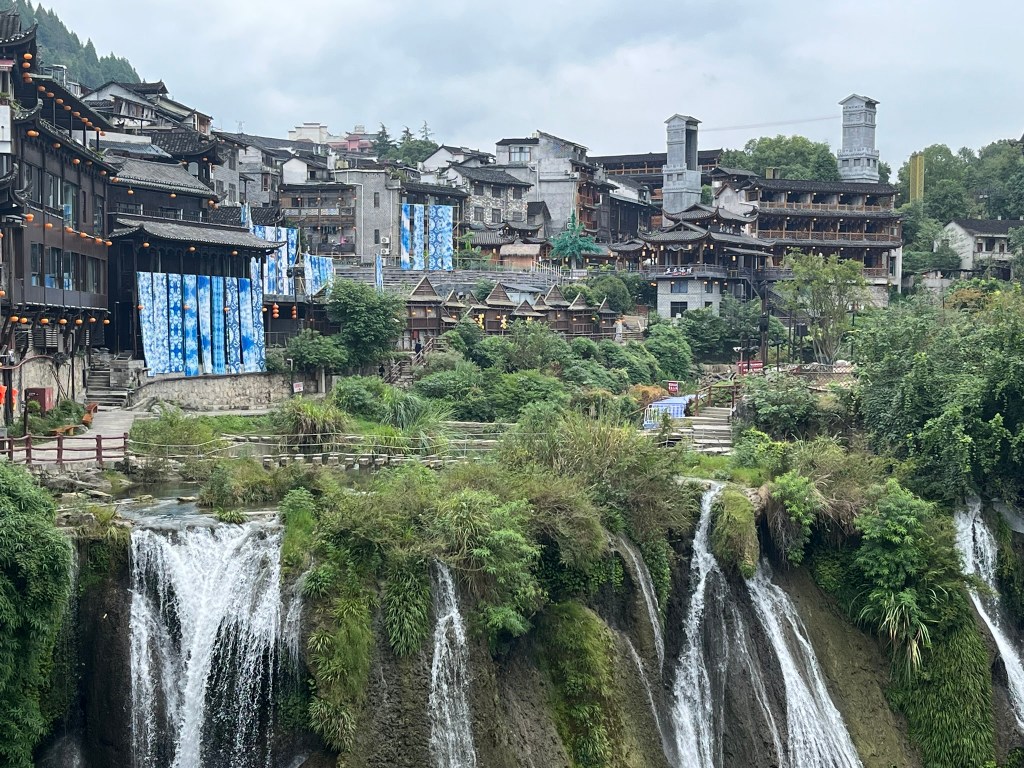
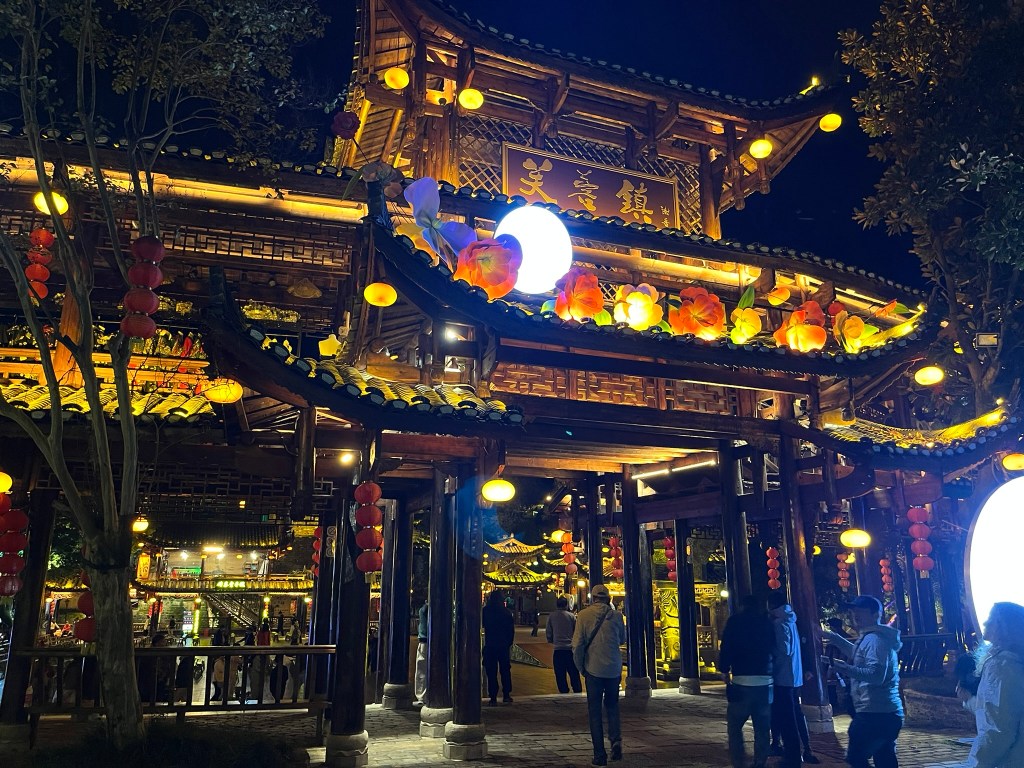
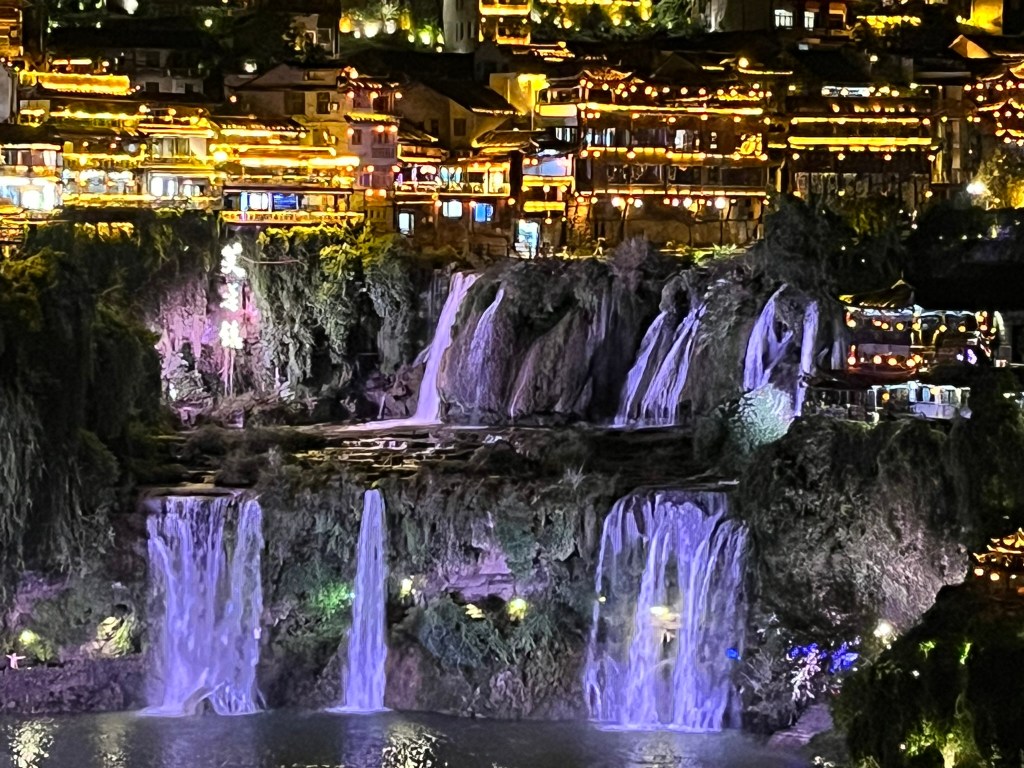
Furong ancient town is one of Hunan Province’s most unique towns, built along the steep cliffs above the You River and with a waterfall cascading right through the middle of town. Furong is especially special at night, when the entire riverside is lit by glowing lanterns, and the waterfall is illuminated.
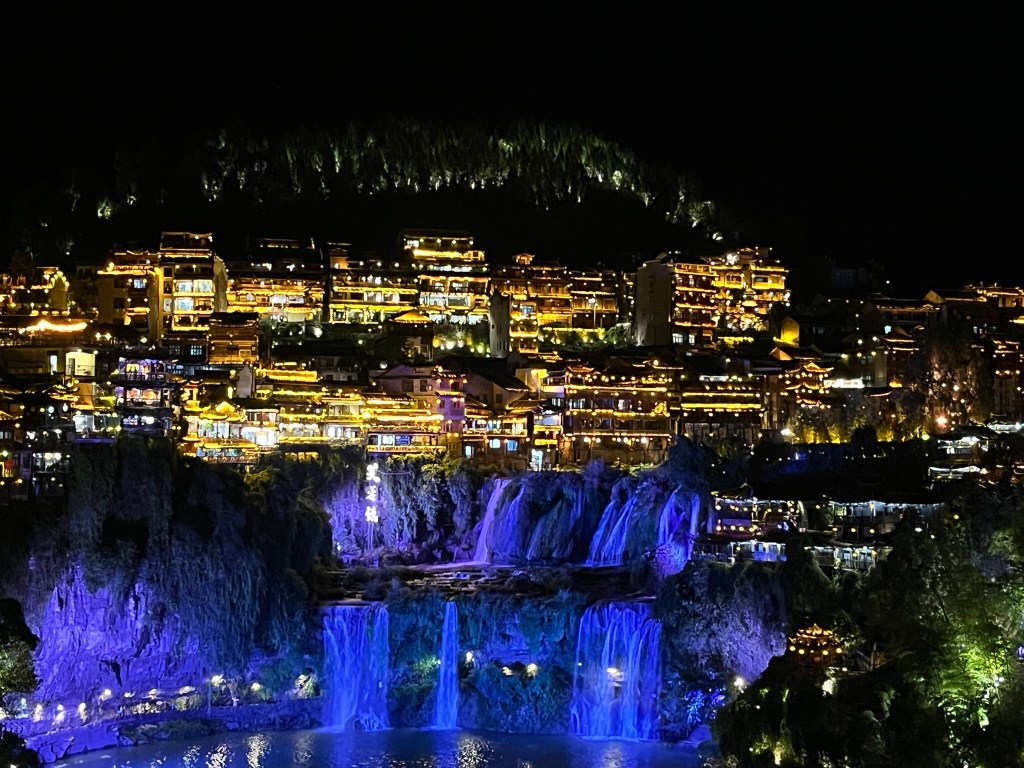
Furong Zhen was originally called Wangcun or ‘King’s Village’, a Miao ethnic minority settlement with more than 2000 years of history. The name Furong came later, after the release of a Chinese film called Hibiscus Town, which was shot here and made the town famous nationwide. Historically the You River was a vital trade route linking western Hunan with Guizhou and a stopping point for traders transporting salt, cloth and tea. Merchants, boatmen and Miao villagers mingled here, resulting in a distinctive blend of Han and Miao architecture still visible in the town’s timber houses and carved balconies.

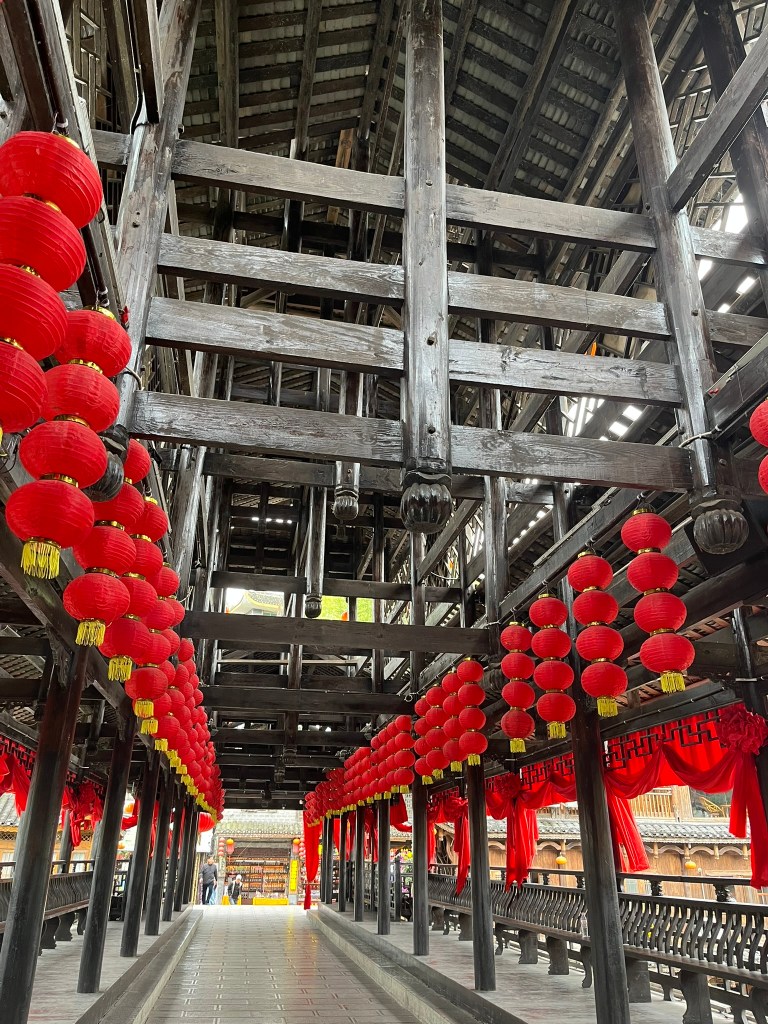
The area around Furong was historically part of the Tujia tribes territory, an ethnic minority who lived in the rugged Wuling mountains long before the Han Chinese expanded south. By the Han dynasty (2nd BC – 2nd century) imperial influence had reached the region for military outposts and trading along the You River. But the hills remained difficult to control. The Tujia clans built fortified wooden villages and developed their own social hierarchy, led by a chieftain known as a tusi. From the Yuan dynasty onwards, the Chinese imperial government had an arrangement with the tusi allowing them to govern on behalf of the emperor. This made Furong effectively a semi-autonomous Tujia chiefdom within what later became Yongshun County. Furong became a strategic center along the river. During the Qing dynasty, the government tightened controls and stripped the Tujia kings of their hereditary powers. Han settlers began moving into the valleys, bringing with them wet-rice farming and Confucian schools.
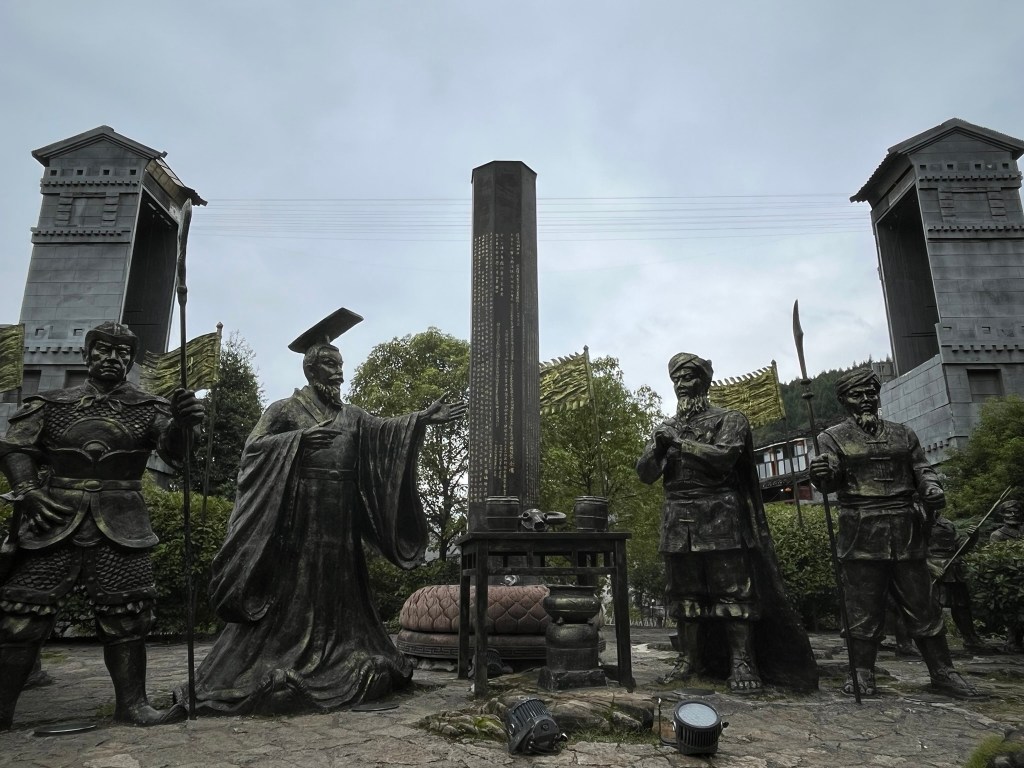
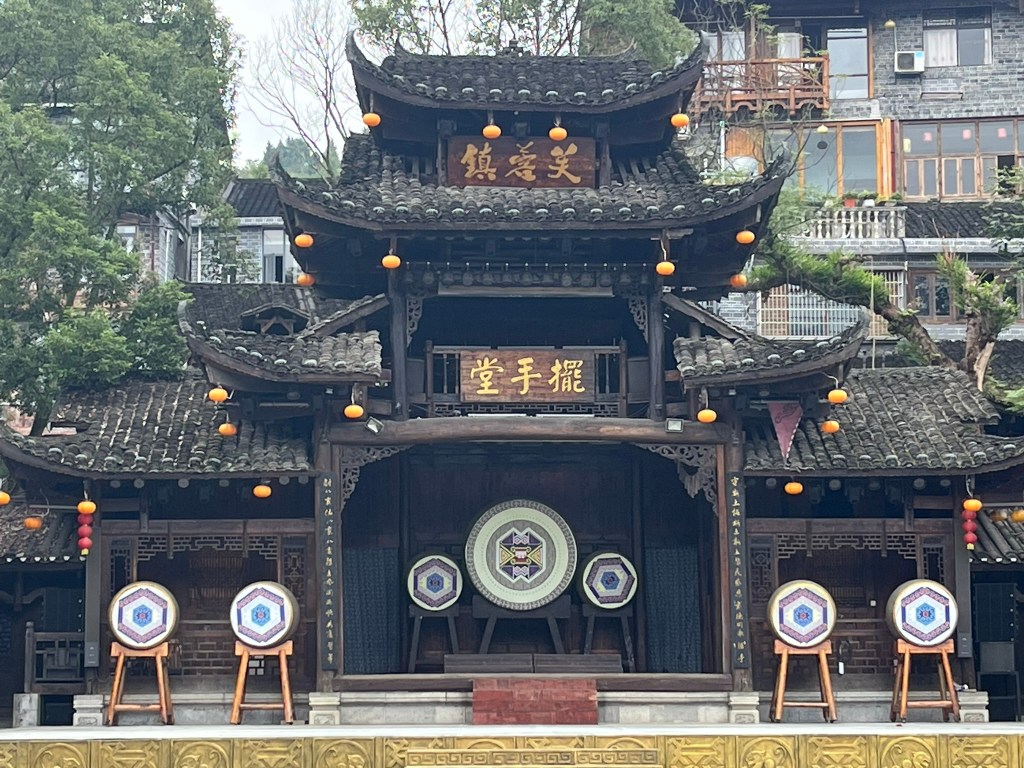
Today the town is like a living museum. You can walk around the Tujia King’s Palace, now a performance space on the upper terrace of the old town. The design of the palace blends Tujia tribal motifs with Han Chinese imperial symbolism, showing how the chieftains blended loyalty to the emperor with their own local authority. You can also climb down a steep set of steps to pass literally under the waterfall and then climb the steps on the other side of town to explore a maze of streets with tens of restaurants offering great views directly down onto the cascading waterfall.

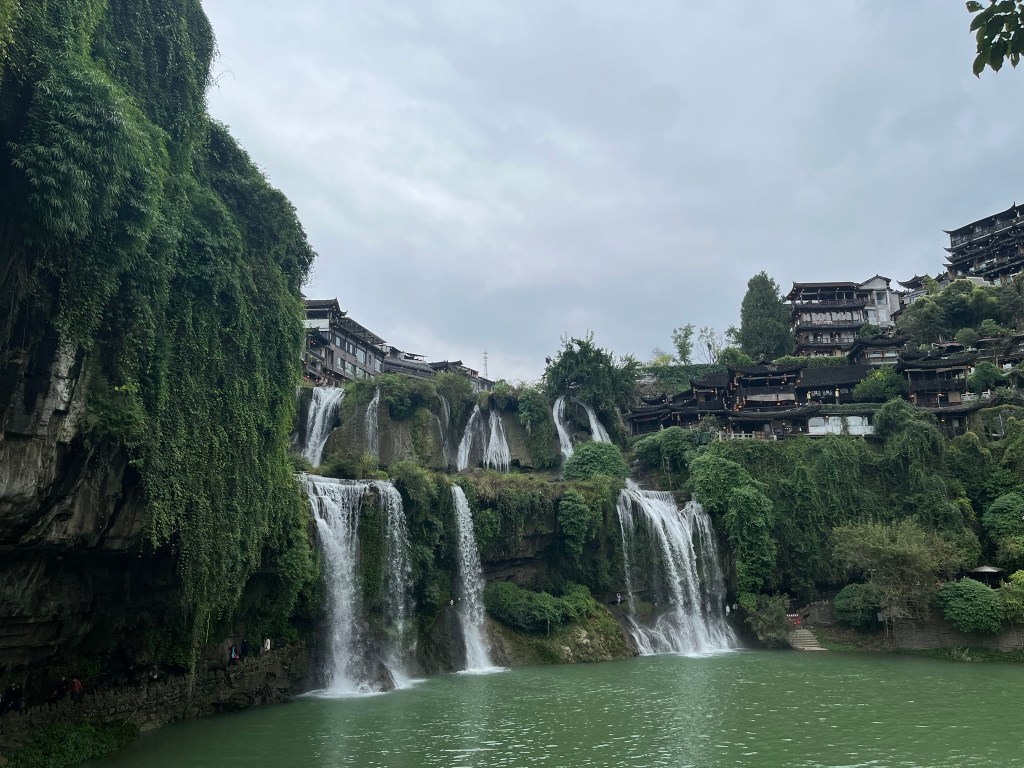
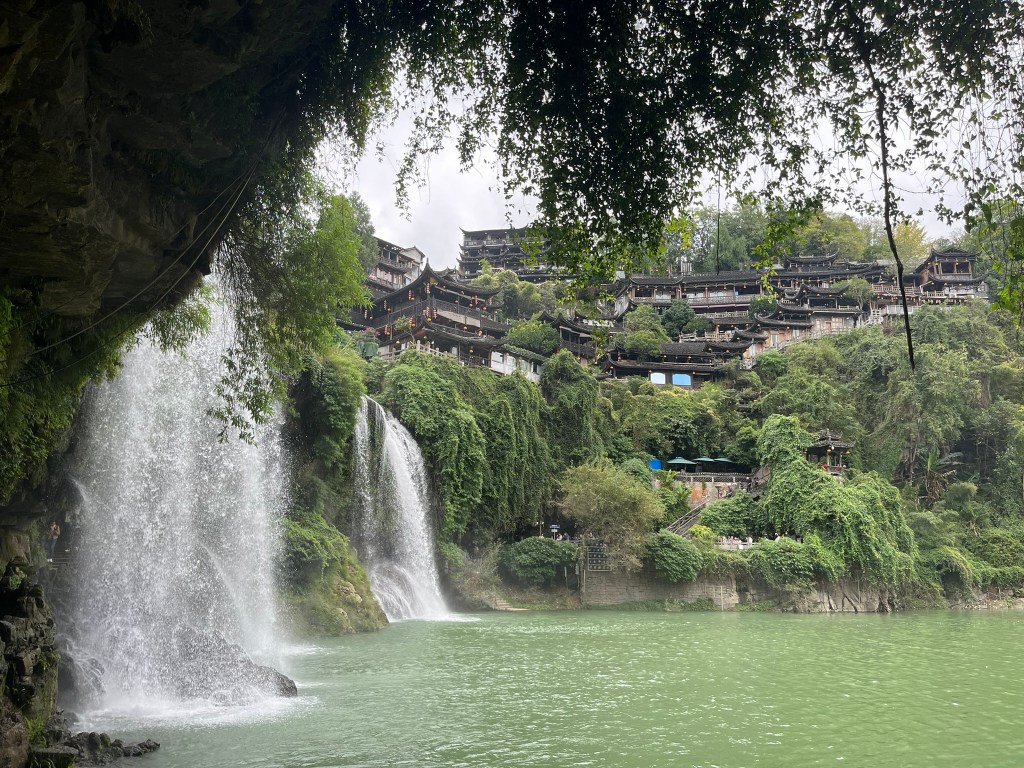
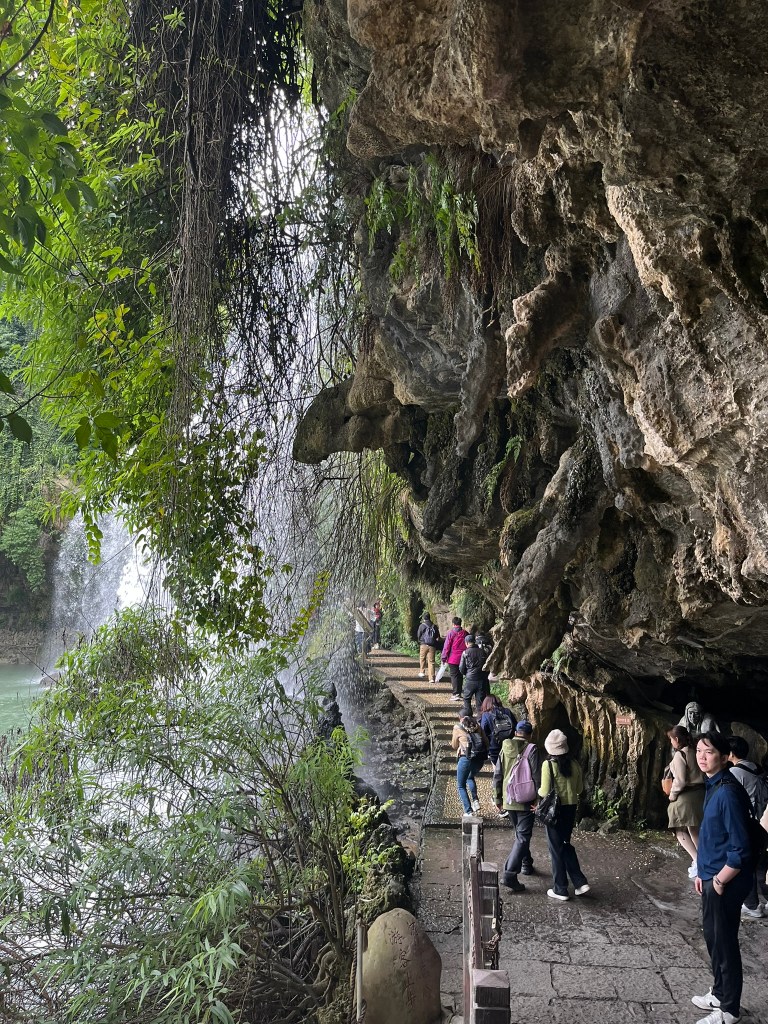
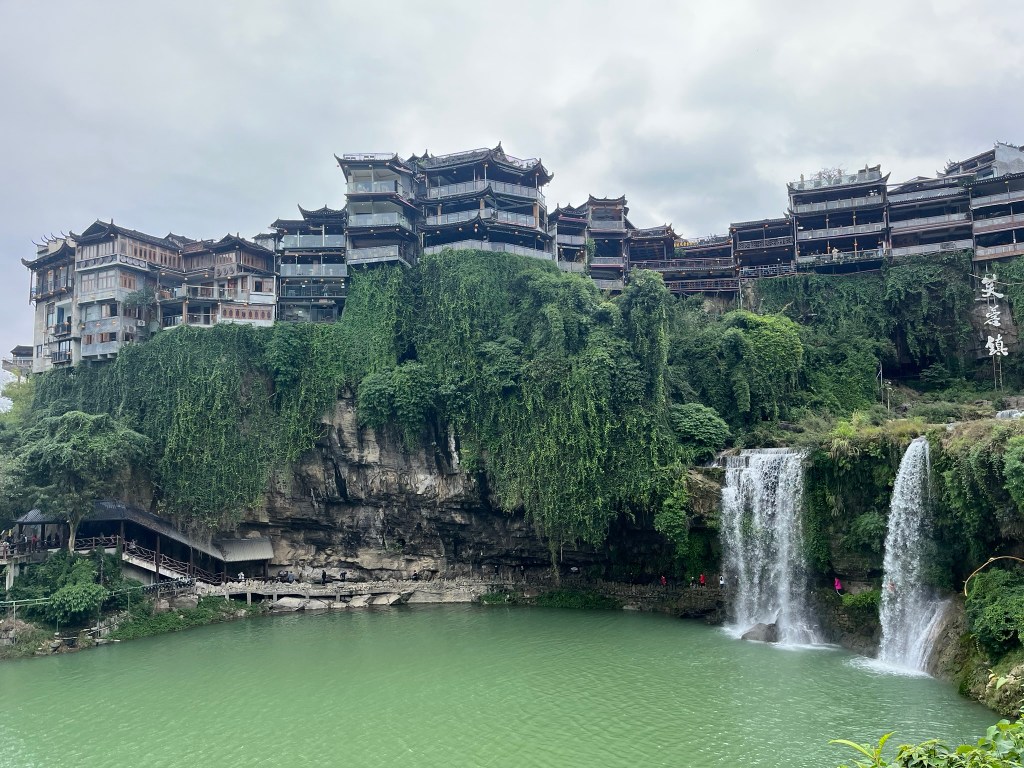
Every evening there are performances by a troupe of dancers showing Tujia rituals and legends, held on a wooden platform beside the waterfall. Women in bright embroidered skirts and silver crowns take to the stage to tell stories of the Tujia people’s origins and struggle to survive in the Wuling Mountains. Just a short walk from the performance area is the best spot to take photos of the town at night.
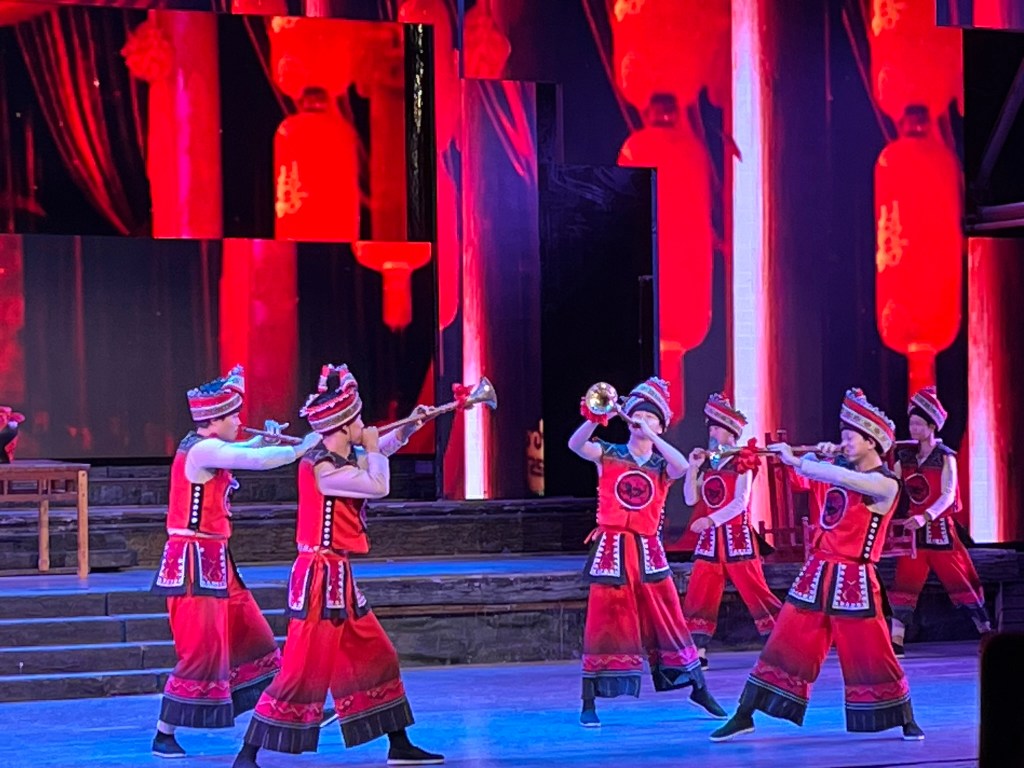
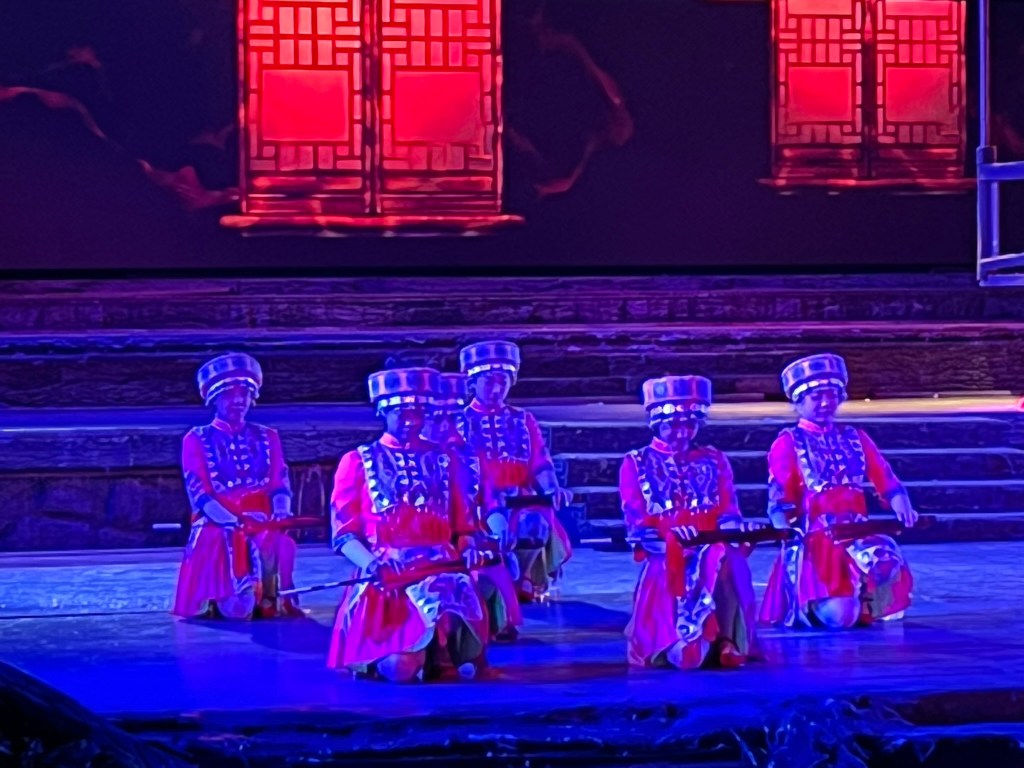
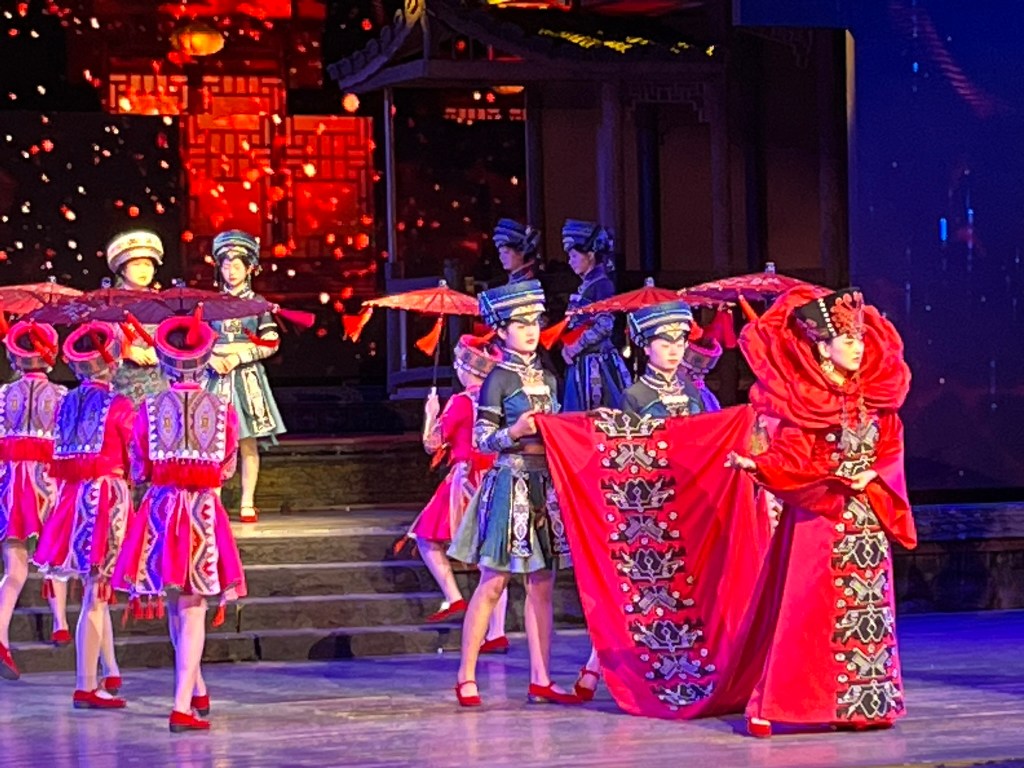

Furong is super touristy, and during the day (ignoring the waterfall) it looks and feels very similar to many other ancient towns, with the ever-present studios offering photo shoots in traditional outfits. However, at night with the town lit up it is incredible and worth a stop on any itinerary.
 Colette's Grand Detour
Leave a comment