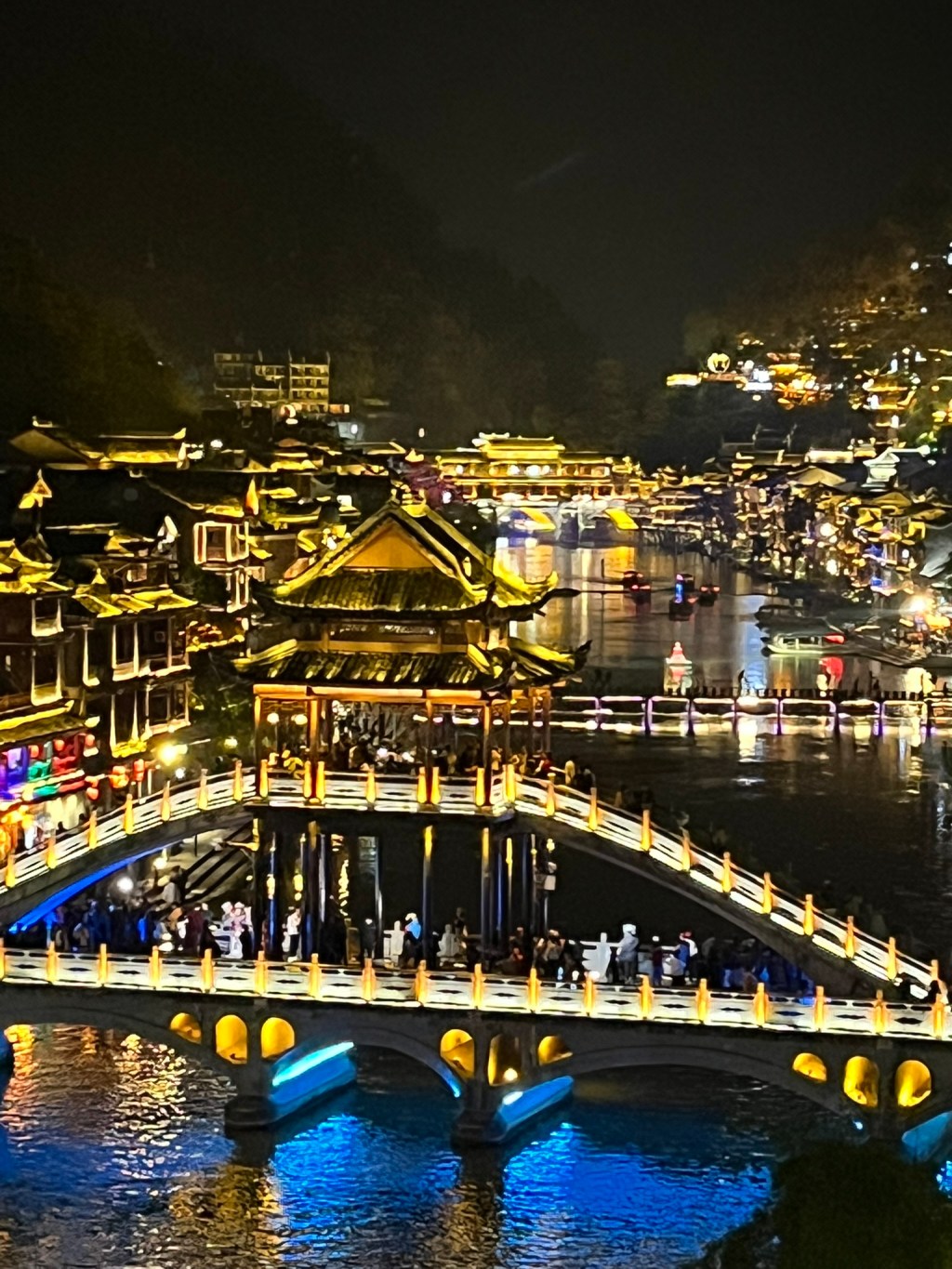
A local legend says that two phoenixes’ flew over and were so taken with the beauty of this ancient town that they lingered, giving it the name FengHuang or Phoenix. This ancient town is located within the Xiangxi Tujia and Miao Autonomous Prefecture of Hunan Province. The Tuojiang River runs through the town, defining its scenery and layout. The town as it is today was largely established during the early 18th century in the Qing dynasty, although its history goes back much further.

For most of Chinese history, the Xiangxi region, the mountainous west of Hunan, was not fully under the control of the Han Chinese. It was part of a loose frontier known as Miaojiang or ‘Miao territory’, home to the Miao, Tujia and other smaller ethnic groups who had their own tribal chiefs, languages and social systems. From the Yuan dynasty (13th century) onwards, successive Chinese governments controlled these areas indirectly through native chieftains who collected taxes and kept order on behalf of the imperial court and in return the chiefs retained local autonomy. Although during the Ming dynasty there were periodic uprising and rebellions, before the Qing dynasty, Fenghuang wasn’t a Chinese-styled walled town yet, like it is today. It was a town of wooden villages, watchtowers and terraced hills, with trade routes linking to the Han market towns further east.

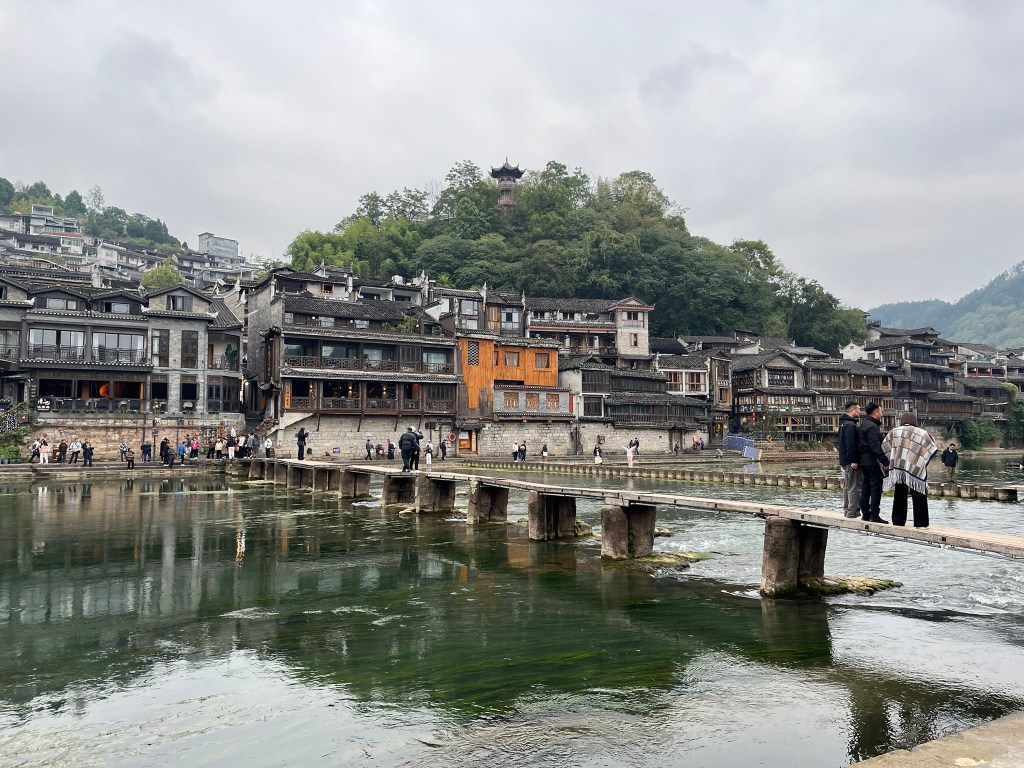

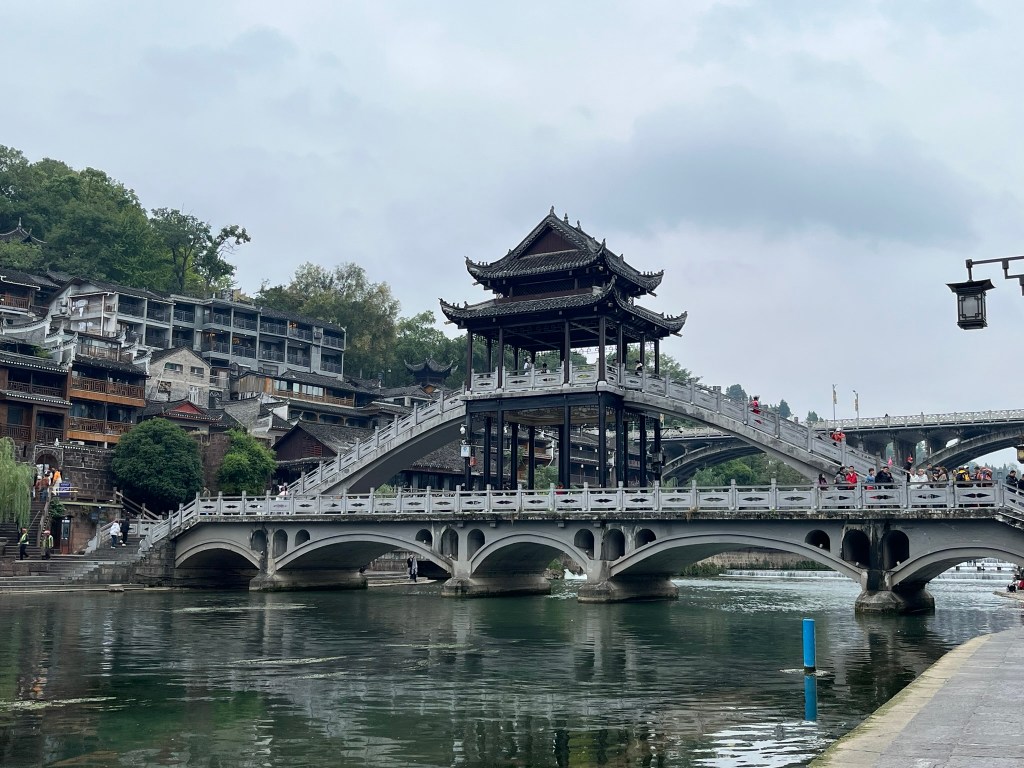
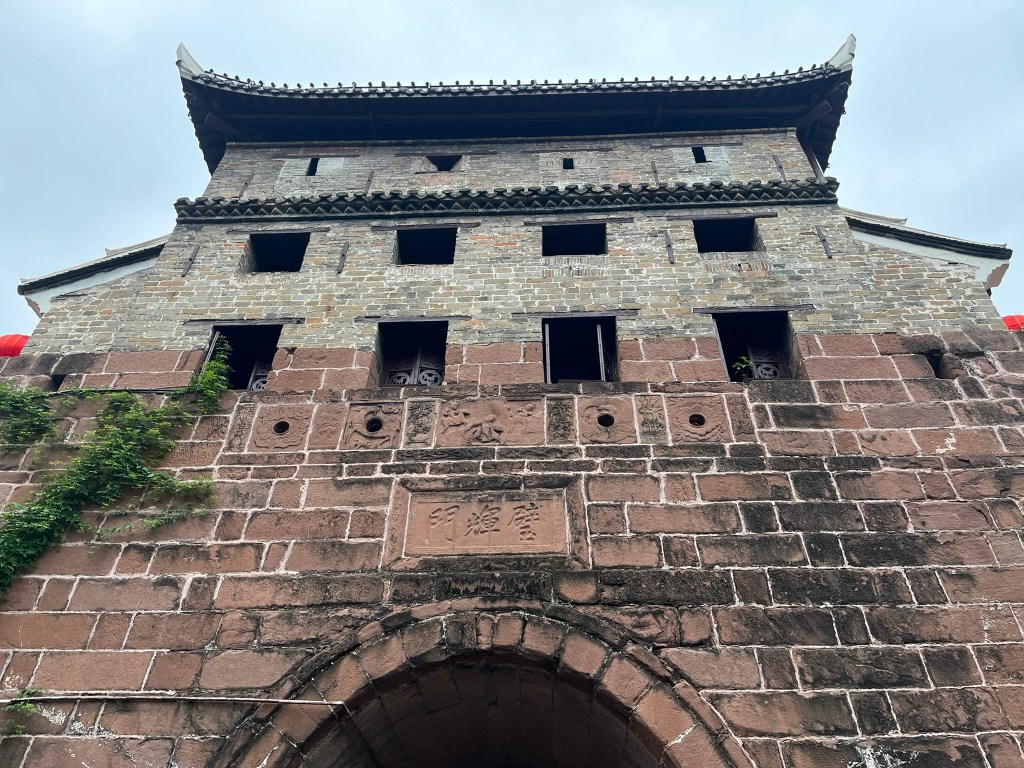
After centuries of semi-autonomous rule the Qing court decided to replace the chieftain system with direct imperial administration. The Qing wanted to consolidate control over remote frontier regions and stop rebellions. Western Hunan was strategically important to act as a buffer with other regions. So in 1704 the Qing established Fenghuang City as the seat of the new Fenghuang County. It built stone walls, a government office, barracks and a watchtower to secure the area. Han Chinese settlers, soldiers and merchants arrived forming a new administrative and market hub. After the town was founded it became a mixed frontier town where the Han Chinese lived and worked alongside the Miao and Tujia villagers. The architectural styles of the Han Chinese blended with the local stilted house designs. And the town prospered from trade in timber, rice and silver.


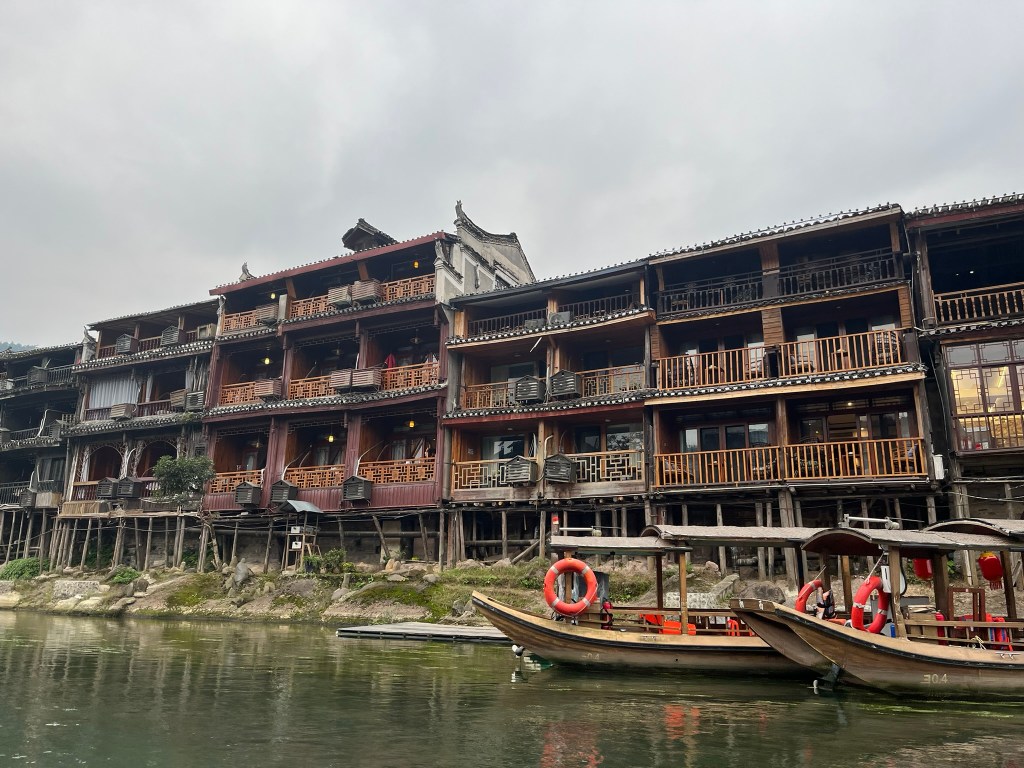
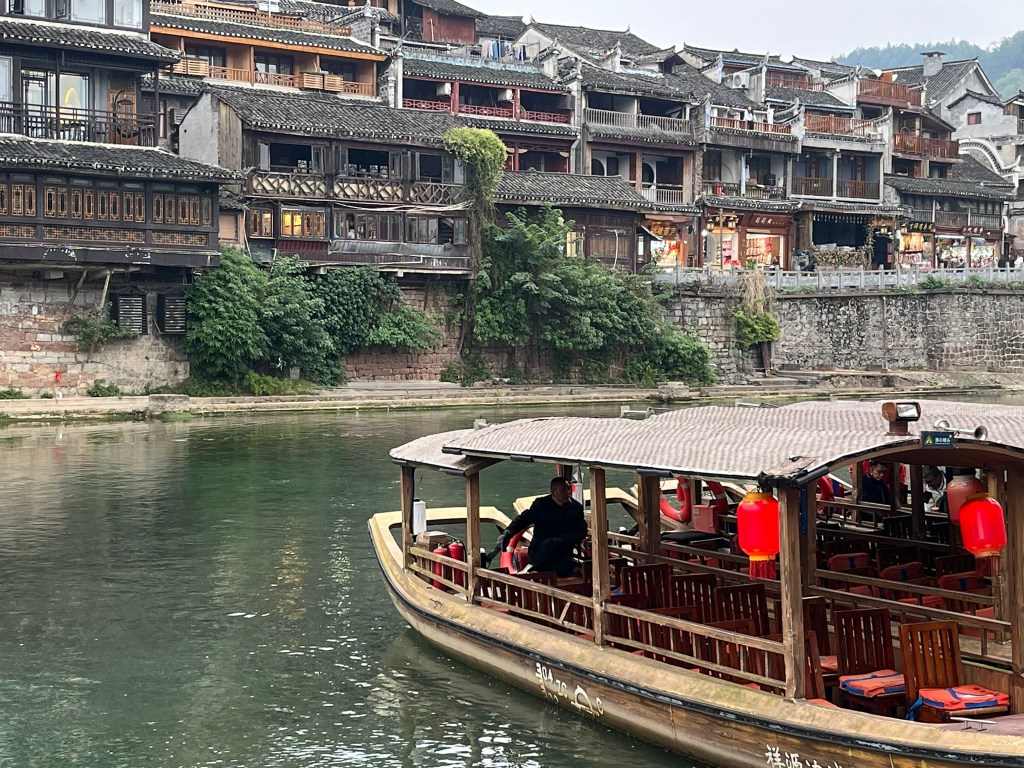
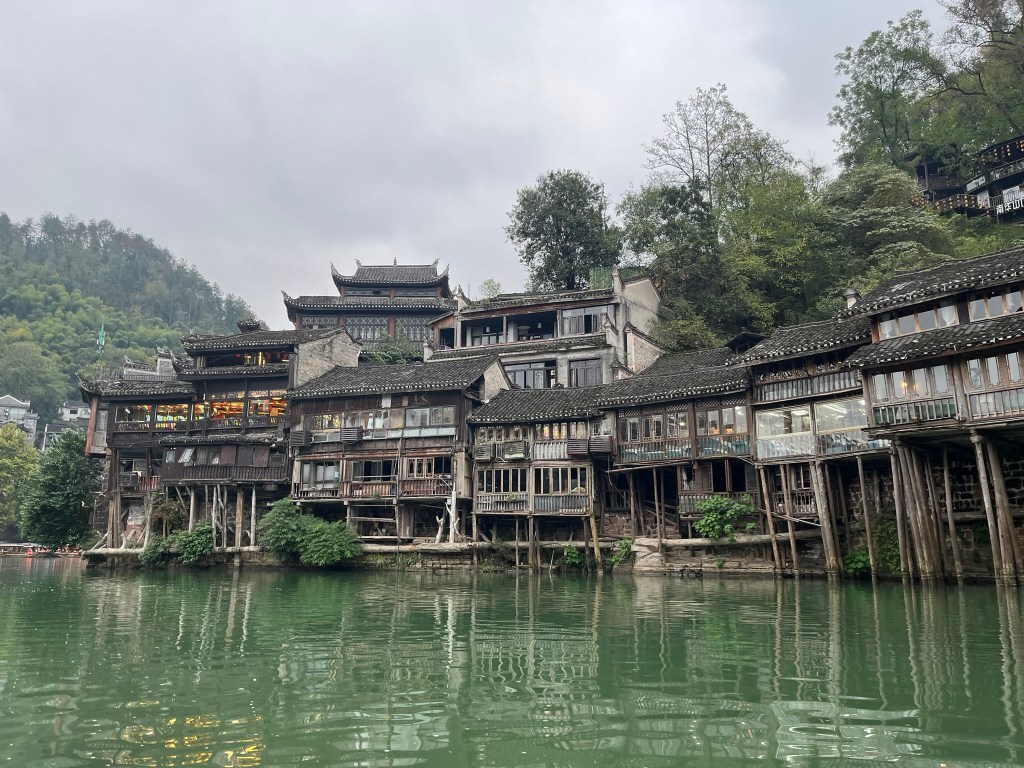
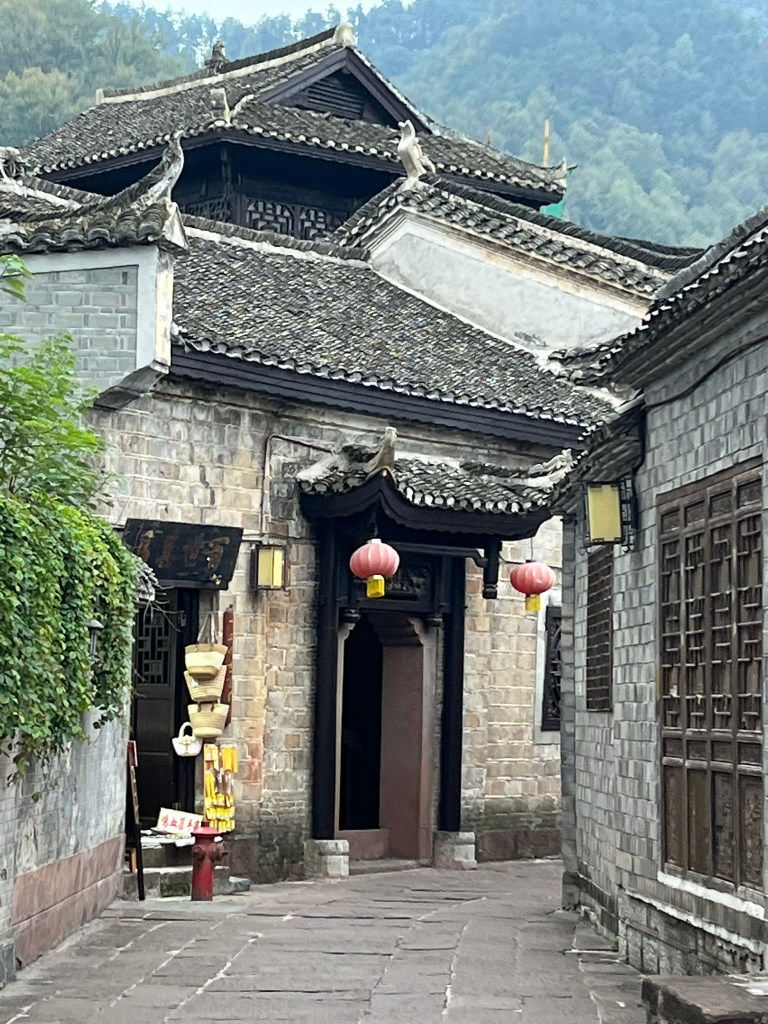
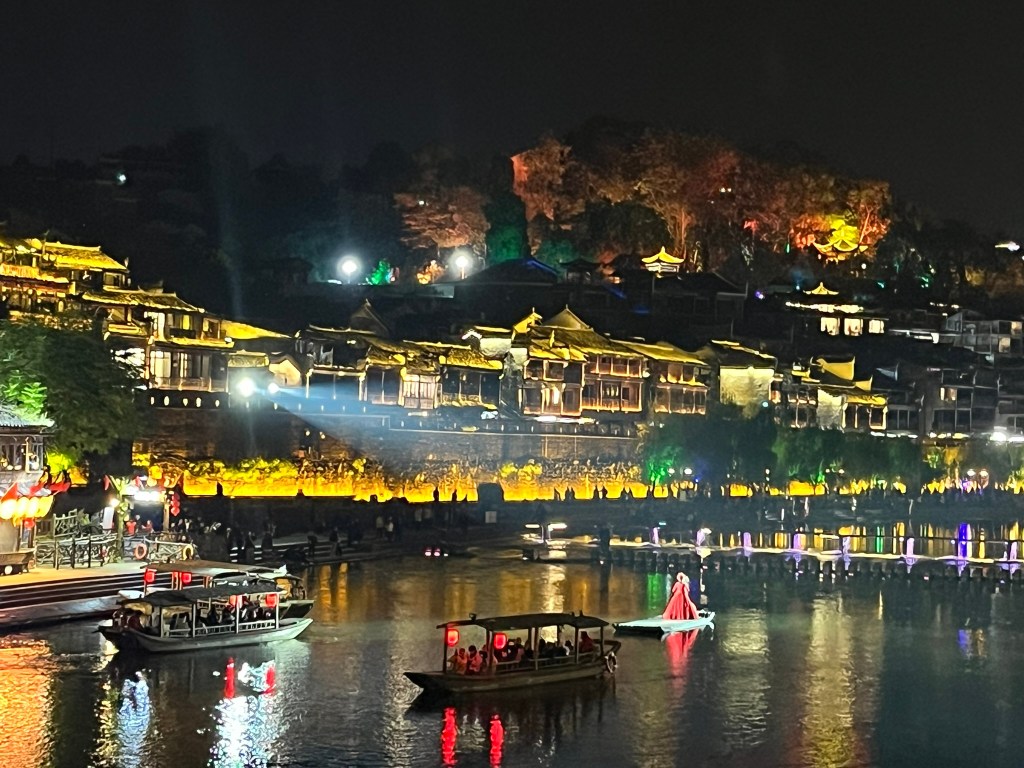
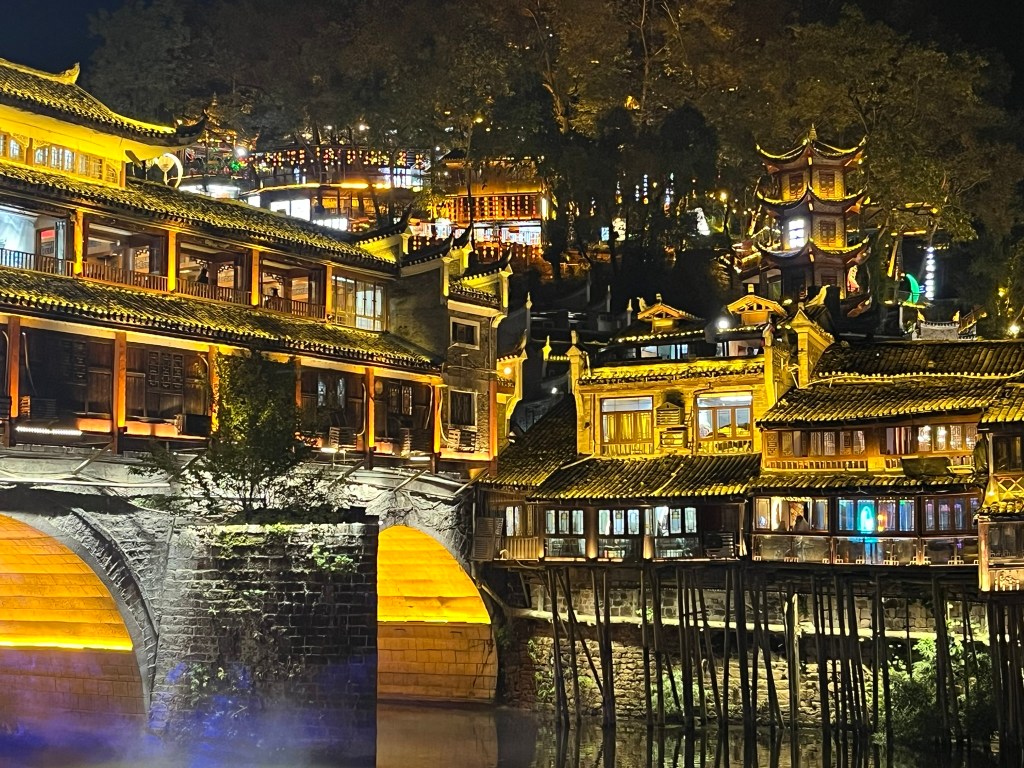
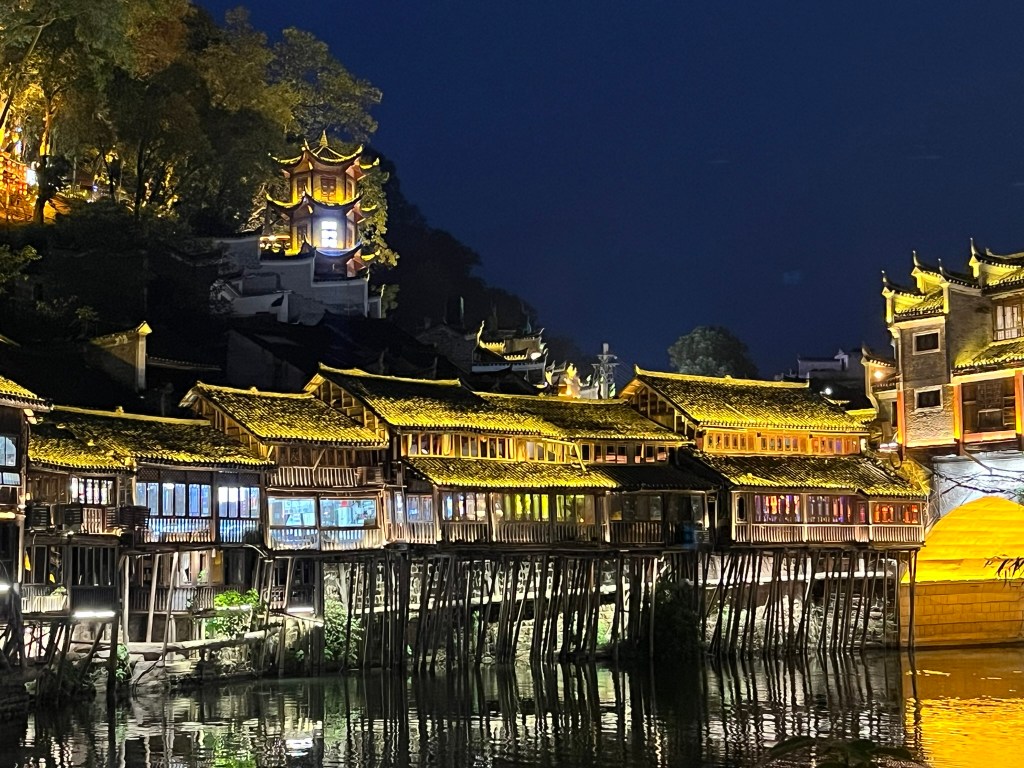
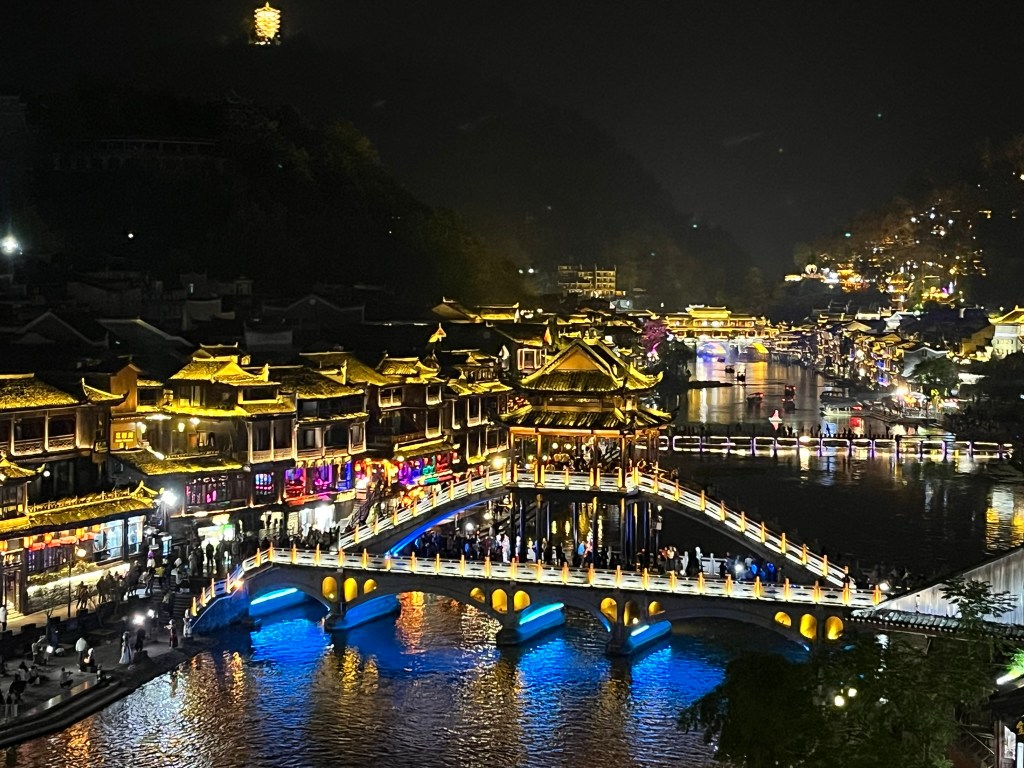
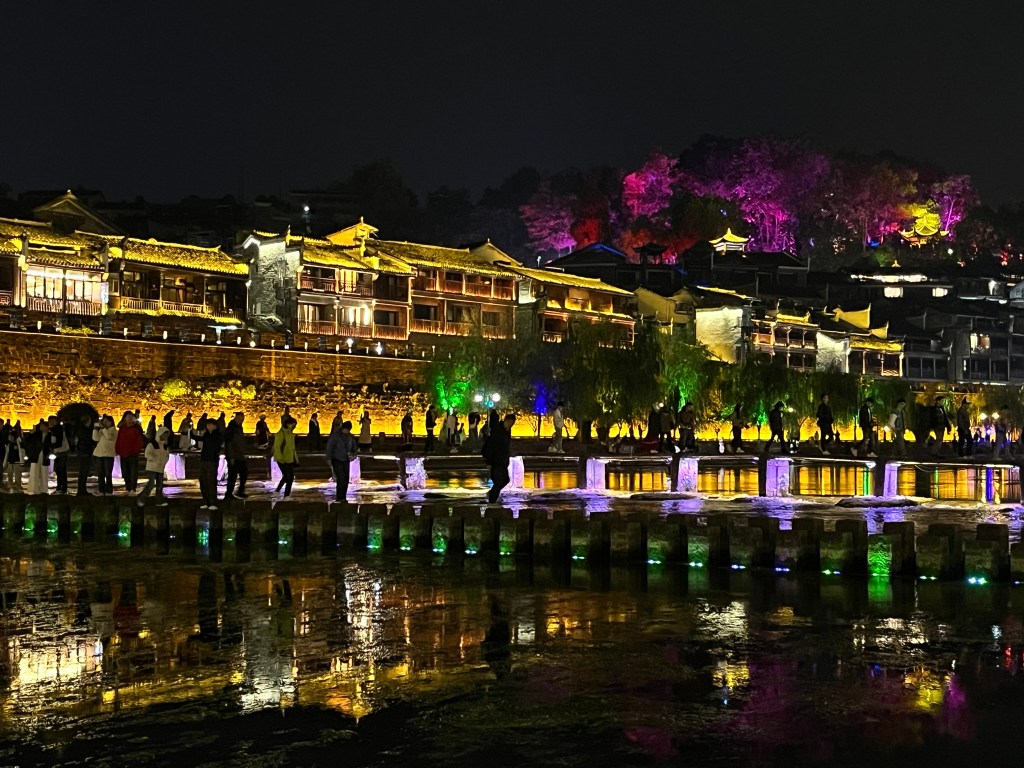
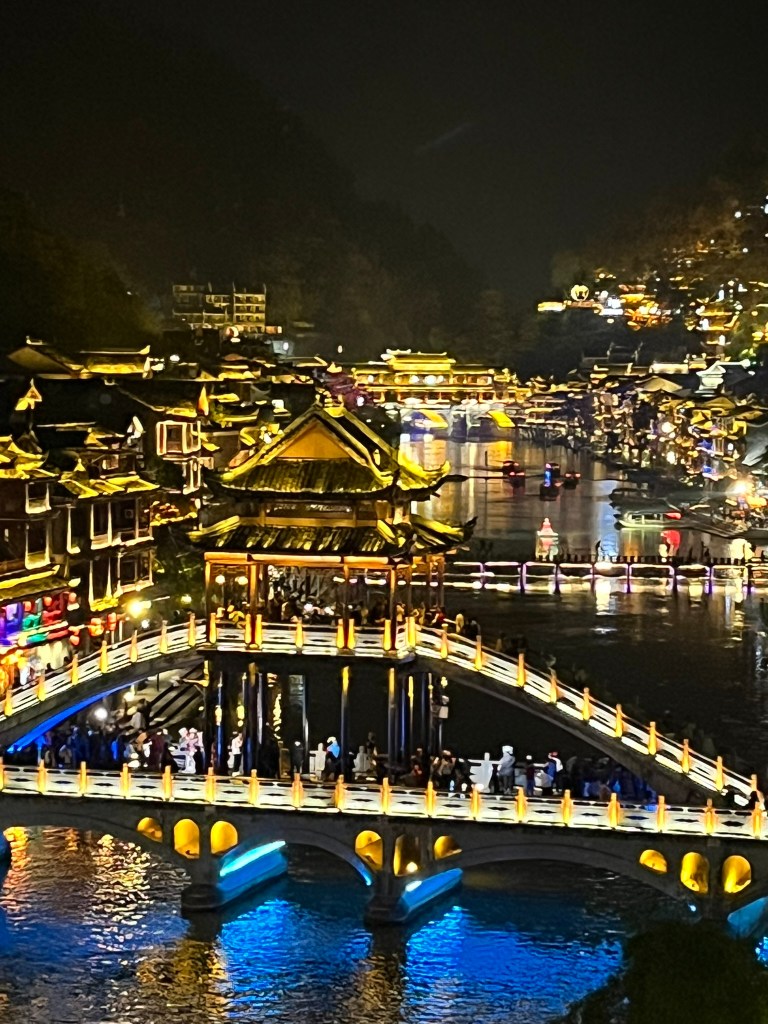
The stilted houses known as diaojialou can still be seen perched over the water today, as you walk along the river and take in the ambience. These houses belong mainly to Miao and Tujia families, many of whom have converted them into teahouses, cafes and guesthouses. Old stone steps lead down to the water’s edge and there are small boats quietly gliding along the river, ferrying tourists on short rides under the Rainbow Bridge to see the Wanming Tower Pagoda. The ancient town walls still frame the core of this ancient town and the East Gate Tower opens straight onto the riverbank. Inside the walls, narrow cobbled streets wind through the Ming-Qing timber houses, ancestral halls and small temples.
By day the town has a relaxed atmosphere, but by night it comes alive. At 6.30pm the bridges and houses are lit up spectacularly to give the town a dream-like feeling. Light shows bounce off the buildings on each side of the river and a women in red stands in the middle of the river on a small platform, representing the local legend of a women waiting for her long-lost love. The lighting is fantastic and gives the feeling that someone has painted the town in black, white and gold.


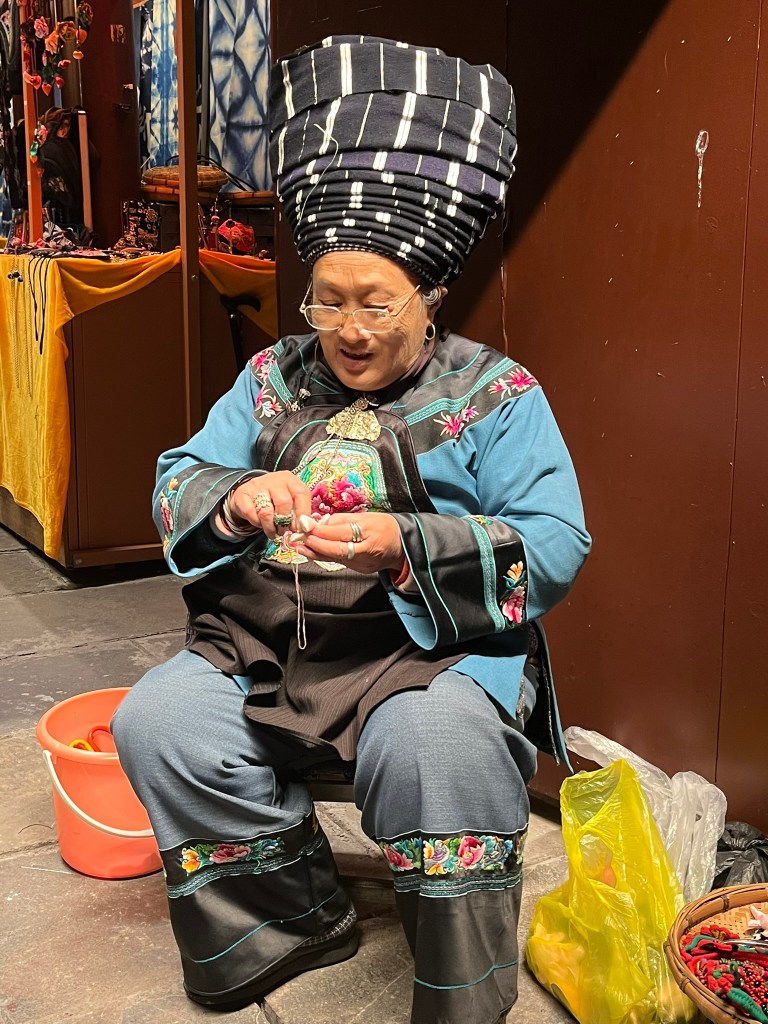
However, my favourite moment of the evening was coming across an old lady embroidering items quietly on a set of steps and dressed in her Miao national dress. She was selling the small items she had sewn herself and I was quite happy to purchase something from her rather than one of the many shops all selling identical tat.
The town is breath-taking at night and staying one night in town is a must for any trip here. The best views of town are from the highest point in town – the Phoenix Bridge, although anywhere along the riverside gives you a fantastic view. Although both are extremely touristy, I do recommend visiting both Furong and Fenghuang Ancient Towns if you are on a trip to Zhangjiajie.

 Colette's Grand Detour
Leave a comment