Tiger’s Nest Monastery is Bhutan’s most famous landmark, perched on a sheer cliff 900m above Paro Valley. It is the main reason many tourists choose to visit Bhutan and is the iconic image used in pretty much all the country’s advertising.
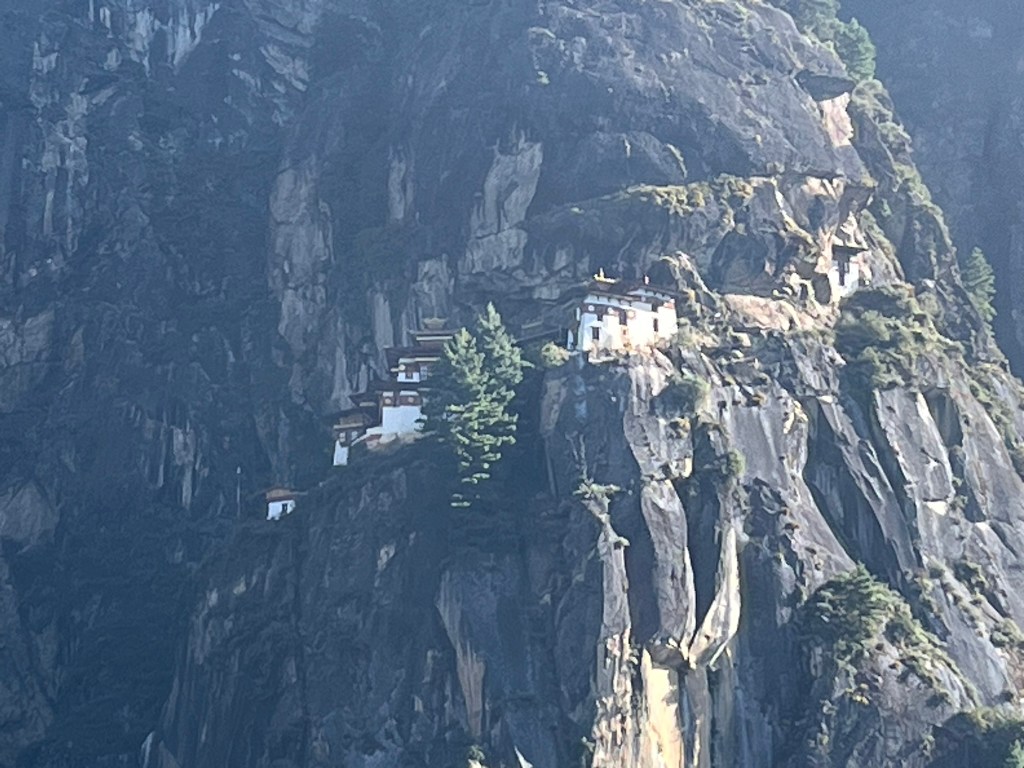
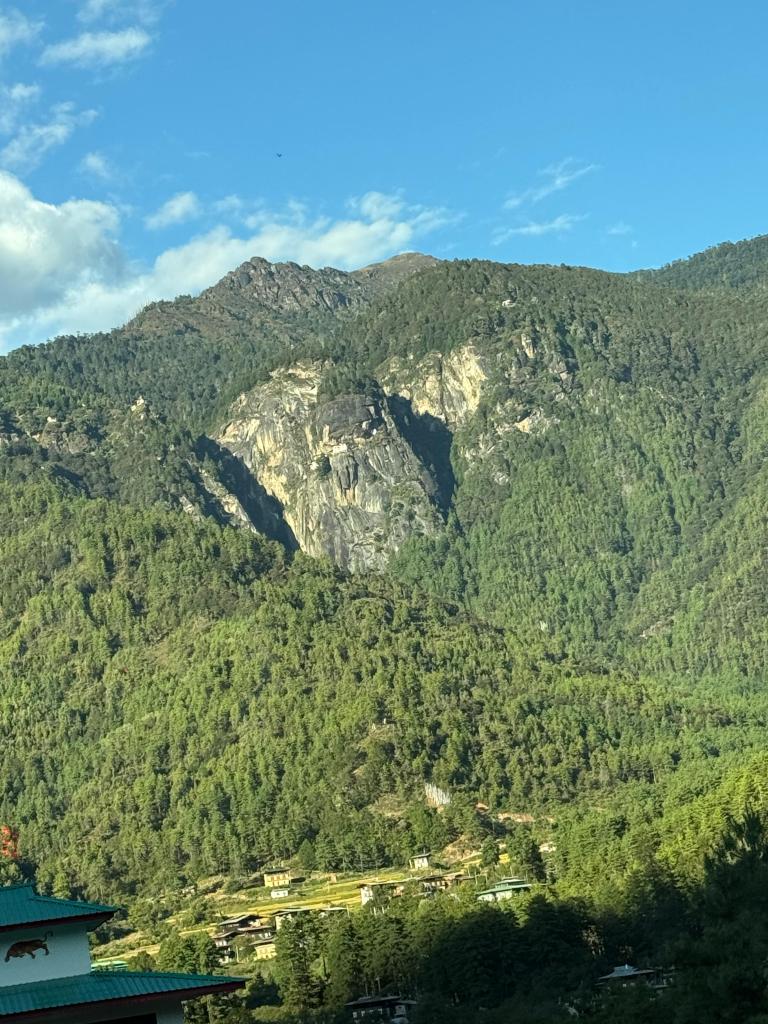
We left the hotel before dawn, with the aim to start making our way up to monastery before the heat of the day hit. From Paro it’s a 30 minute drive to the start point of the hike and a round trip to the monastery and back can take over 6 hours on a steep but well maintained path. Roughly half way up, there is a tea house rest top and this was where I planned to sit and enjoy the views. I did originally plan to hike and had even brought hiking poles with me. However, when the opportunity arose to get a horse to the teahouse, I jumped at the chance and I’m so glad I did as I could see how difficult the hike would have been.
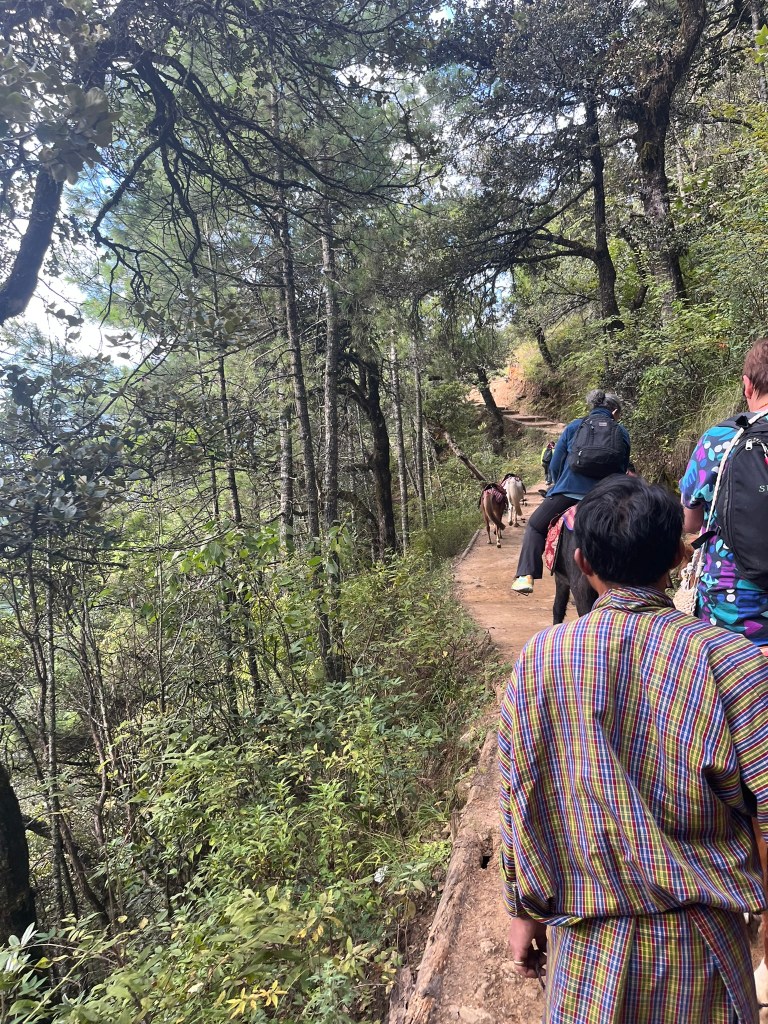
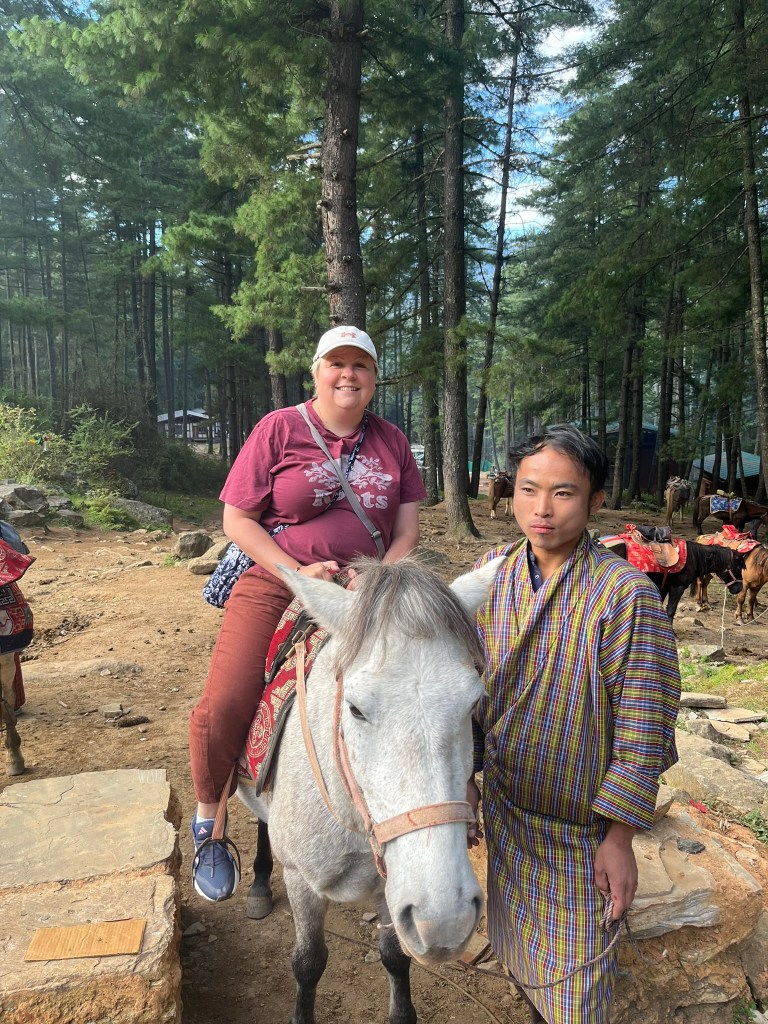
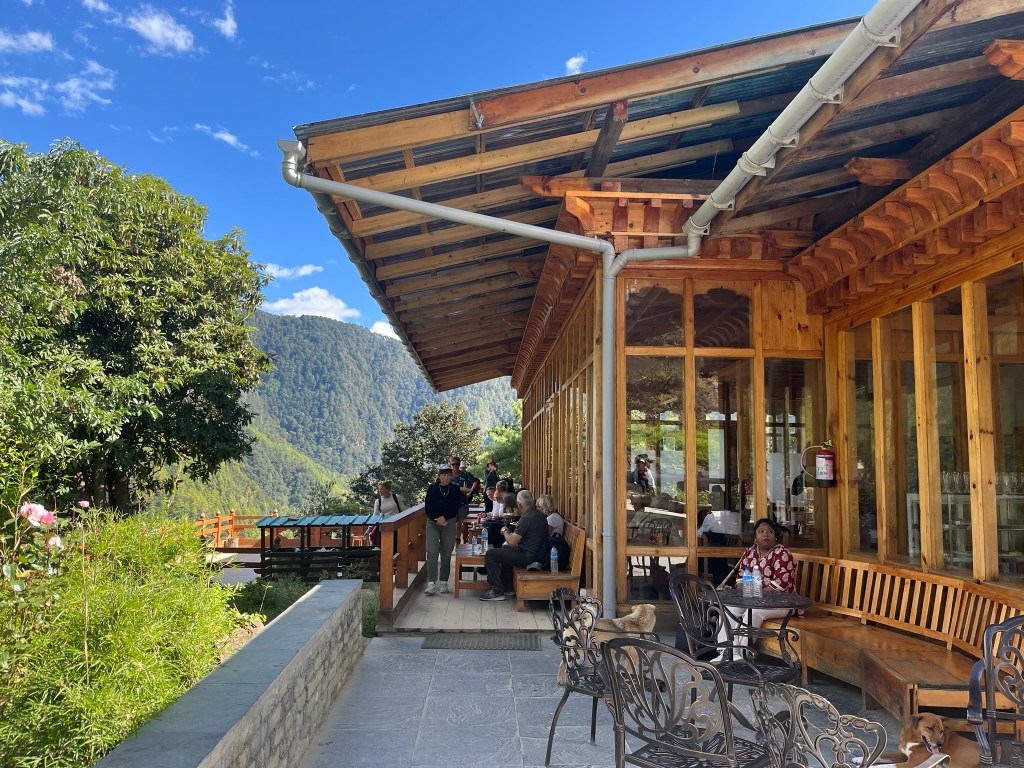
The horse ride up takes about 45 minutes and costs $25 USD and is honestly money well-spent. If you plan to do the full hike up to the monastery this saves your legs a little, and if you’re not a hiker (like me) it lets you enjoy the views without worry about how you are going to get up there. You do however have to walk back down, which I don’t mind. I could walk downhill all day, it’s just uphill I don’t like. The teahouse is actually pretty great. There is barista coffee, freshly cooked meals and they even put on a buffet for hungry hikers arriving back from the monastery for a reasonable price. And you can sit outside in the shade and enjoy the spectacular views, which are a highlight of any trip to Bhutan.

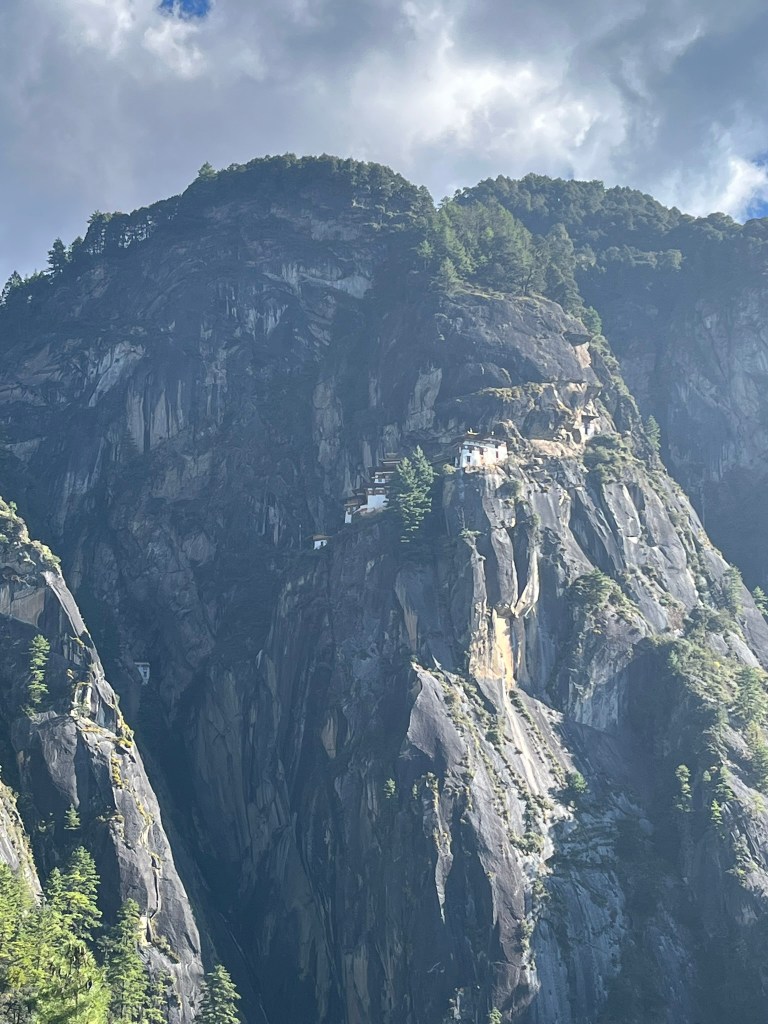
The monastery’s name comes from the legend that Guru Rinpoche, the 8th century Buddhist master who introduced Buddhism to Bhutan, flew to this cliffside on the back of a tigress. The legend says that he meditated there in a cave for 3 months, subduing demons and sanctifying the site. The current monastery was built in the late 17th century by the ruler of Bhutan at the time, to commemorate Guru Rinpoche. In 2008 there was a devastating fire that destroyed most of the structure and its precious artwork. However it was painstakingly rebuilt using traditional methods and reopened in 2005. Today it is an active monastery, with pilgrims visiting from all over the world.

We ended our very long day with a home cooked meal at a farm house outside of Paro. Some of the hikers chose to have traditional stone-heated baths before we ate. And we finally got the chance to see how Bhutan’s national dish of chilli cheese was made. Bhutan’s national cuisine is quite curious and quite different from the rest of Asia, deeply tied to its geography and climate. The cuisine is defined by chillies which are used as a vegetable rather than a spice and are a main ingredient in many dishes. And dairy products, since with its cool climate and an abundance of yak and cow, cheese (known as dashi and with a strong flavor and crumbly texture) and butter are staples. Chilli cheese is basically chopped up chilli’s with butter and cheese mixed to create a thick creamy sauce. This is eaten pretty much every day by locals alongside red rice and stir fried vegetables and meat. It was often the main highlight at lunch and dinner for us.
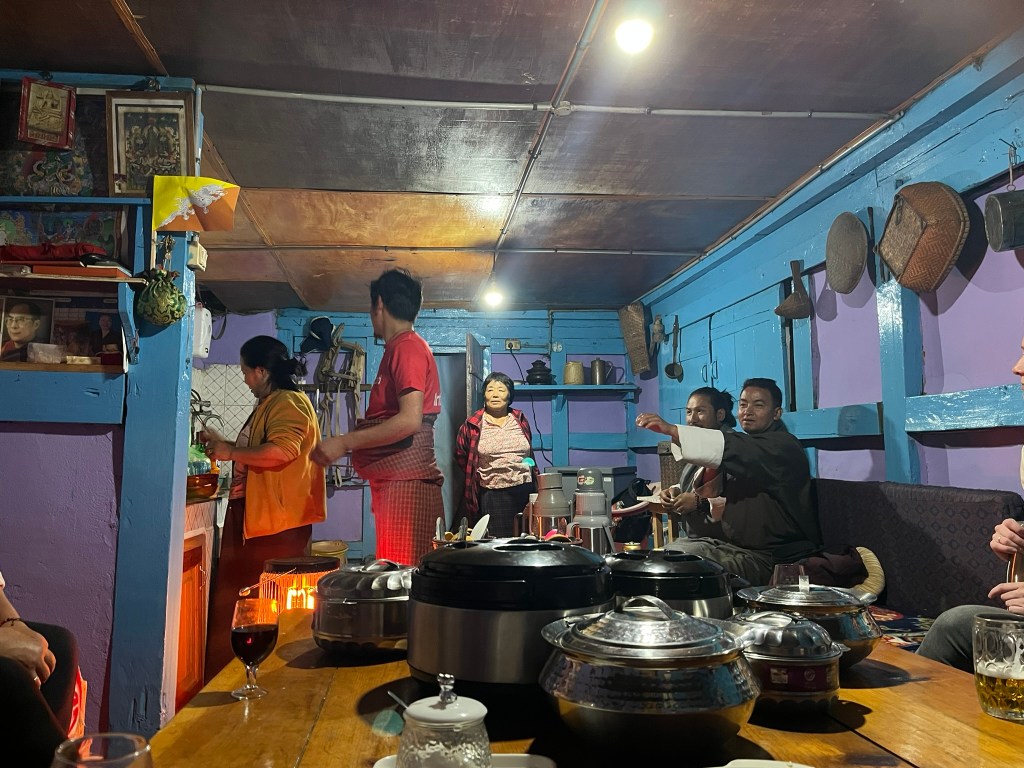
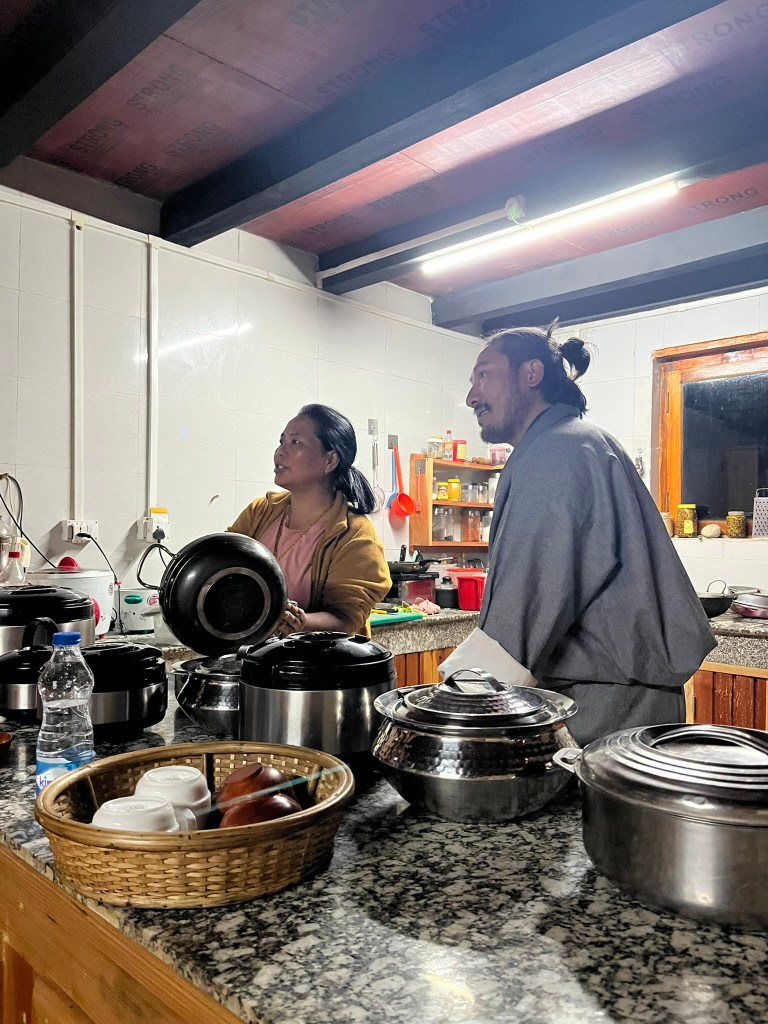
The Bhutanese diet is simple and self-sufficient with all the ingredients available locally. Other local cheese dishes include potato cheese stew, mushrooms cooked with cheese, spinach with cheese, beef with cheese. You can see the pattern. The cheesy dishes are surprisingly nice and quite morish. Just absolutely not what you expect in Asia which is not particularly known as a continent that eats a lot of cheese.

My trip to Bhutan ended the day after our adventure to Tiger’s Nest Monastery and I departed early in the morning on a flight to Changsha, via an overnight stay in Bangkok. There are only a handful of places you can fly to from Bhutan’s international airport, including Kathmandu Singapore, and Bangkok. Next up is my final trip to China this year, with 10 days of exploring the areas of Zhangjiajie and Guilin planned.
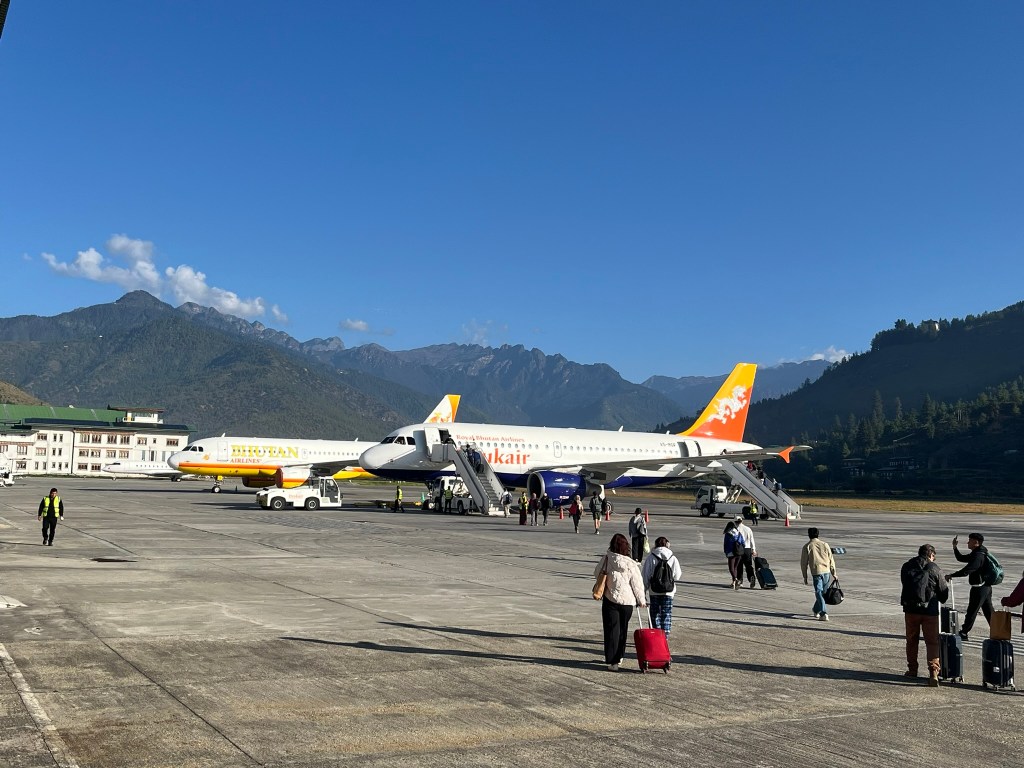
For anyone considering a trip to Bhutan, don’t hesitate. The additional cost and effort to get there is worth it. It is a surreal and otherworldly place that provides an excellent reminder that modernization doesn’t have to equal westernization and that as a country, it can choose to follow its own path and do things on its own terms. An absolutely fascinating place with fantastic scenery and a deep and beautiful culture and people.
 Colette's Grand Detour
Leave a comment