The flag of Bhutan symbolises the country’s deep Buddhist heritage, its monarchy and its connection between spiritual and secular power. The upper triangle is golden yellow and represents the power and secular authority of the King. The lower triangle is orange, symbolizing Buddhism, particularly Drukpa Kagyu and Nyingma traditions, which are dominant in Bhutan.
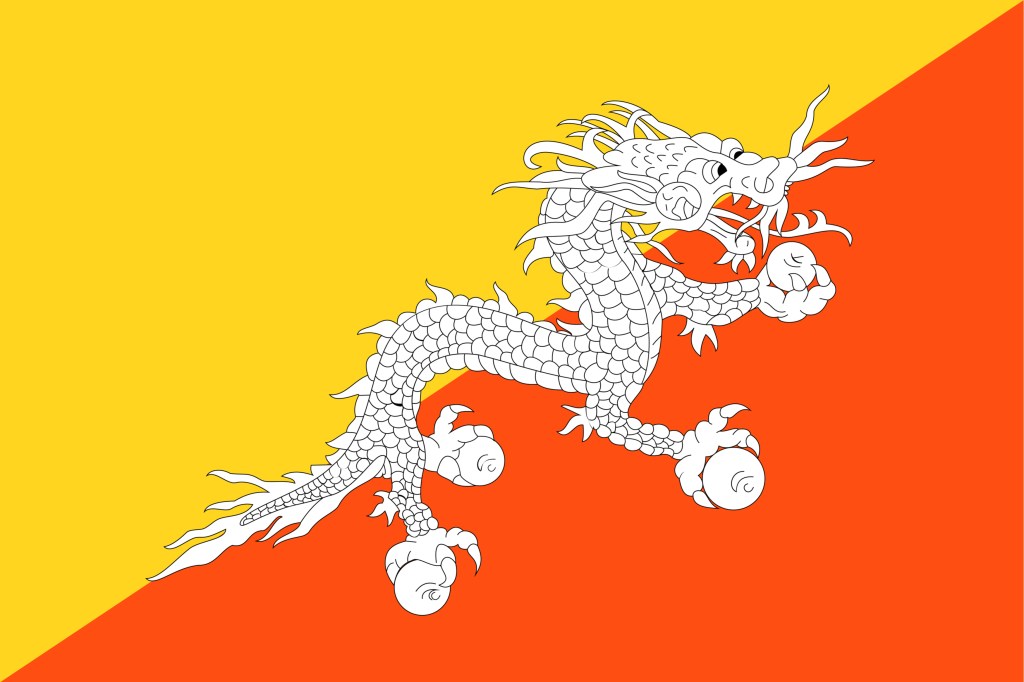
At the center lies a large white dragon (Druk or Thunder Dragon) straddling the boundary between the colors. The Thunder Dragon is a sacred symbol in Bhutanese mythology. The white color of the dragon stands for purity and loyalty, and the jewels it clutches in its claws represent wealth and security. The snarling expression symbolizes the defence of the nation’s sovereignty and strength of its people.
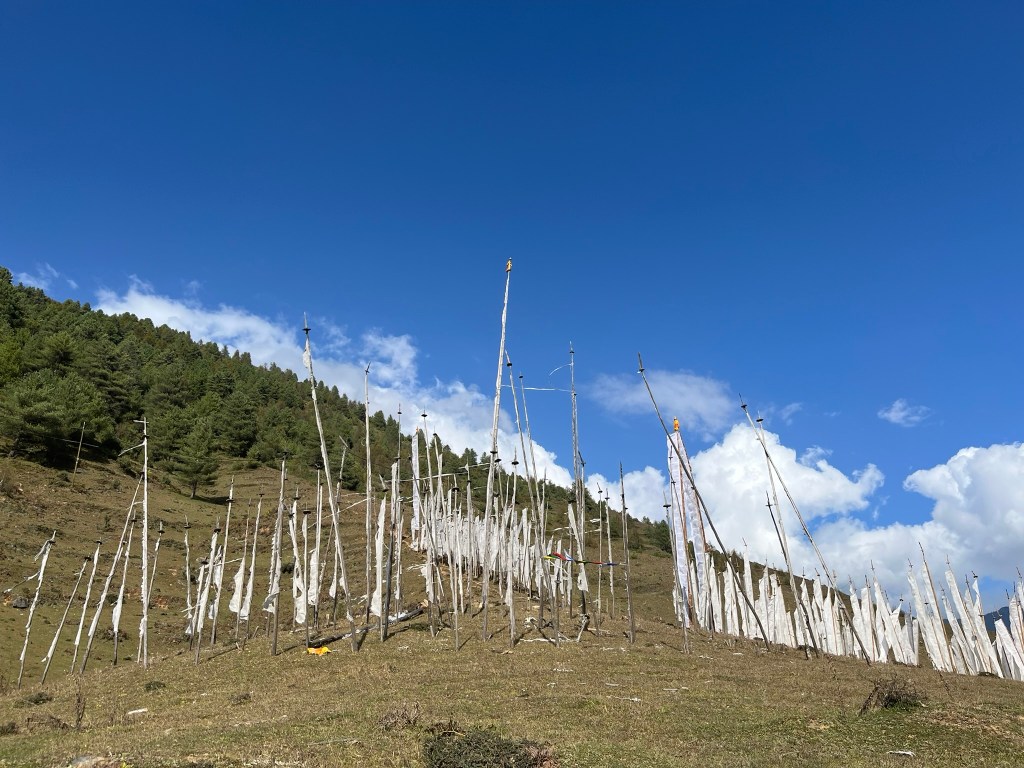
In addition to the national flag of Bhutan, you will see prayer flags all over the country. Different flag types and colors serve different purposes. The white vertical prayer flags that are seen in groups of 108, standing proudly on the hillsides are known as Darshing and are used for memorial or funerary purposes for people that have passed away. Each flag bears Buddhist mantras and sacred symbols, especially prayers to attain favorable rebirth. The wind is believed to activate the mantras written on the flags, spreading blessings and positive energy across the landscape.
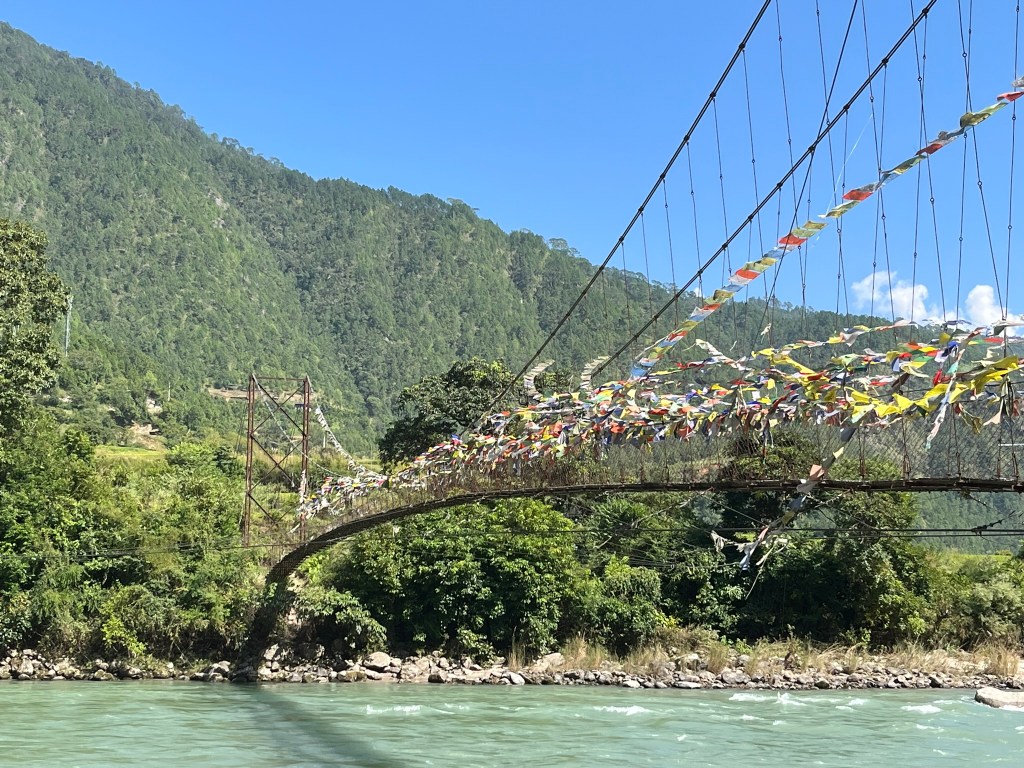
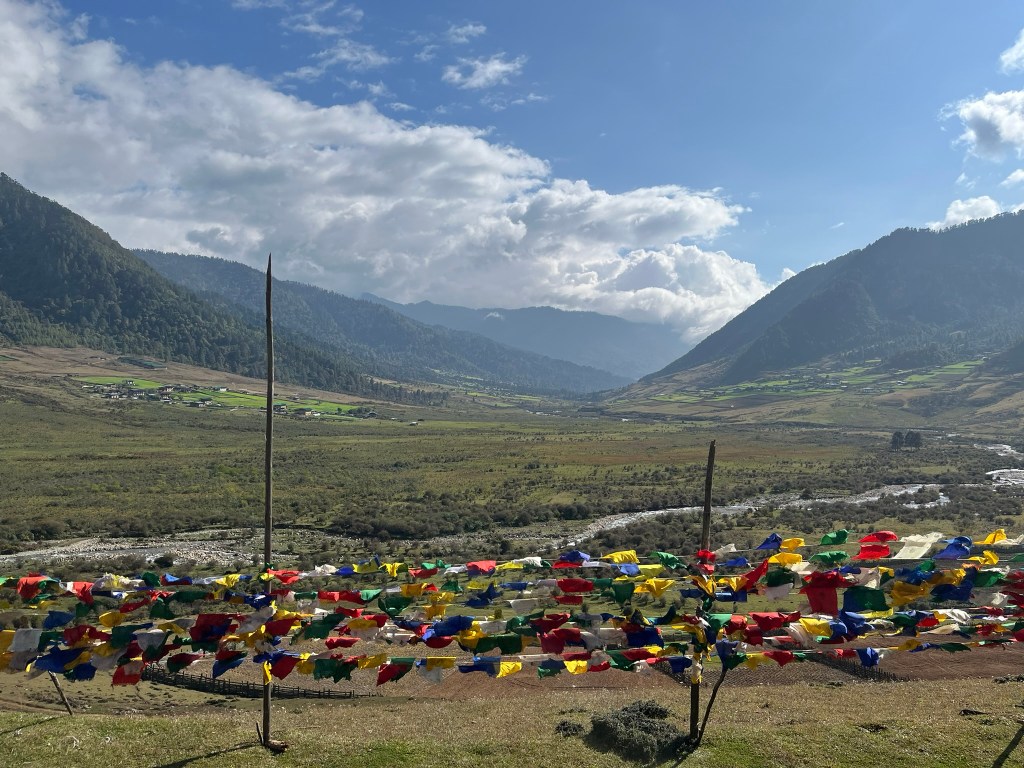
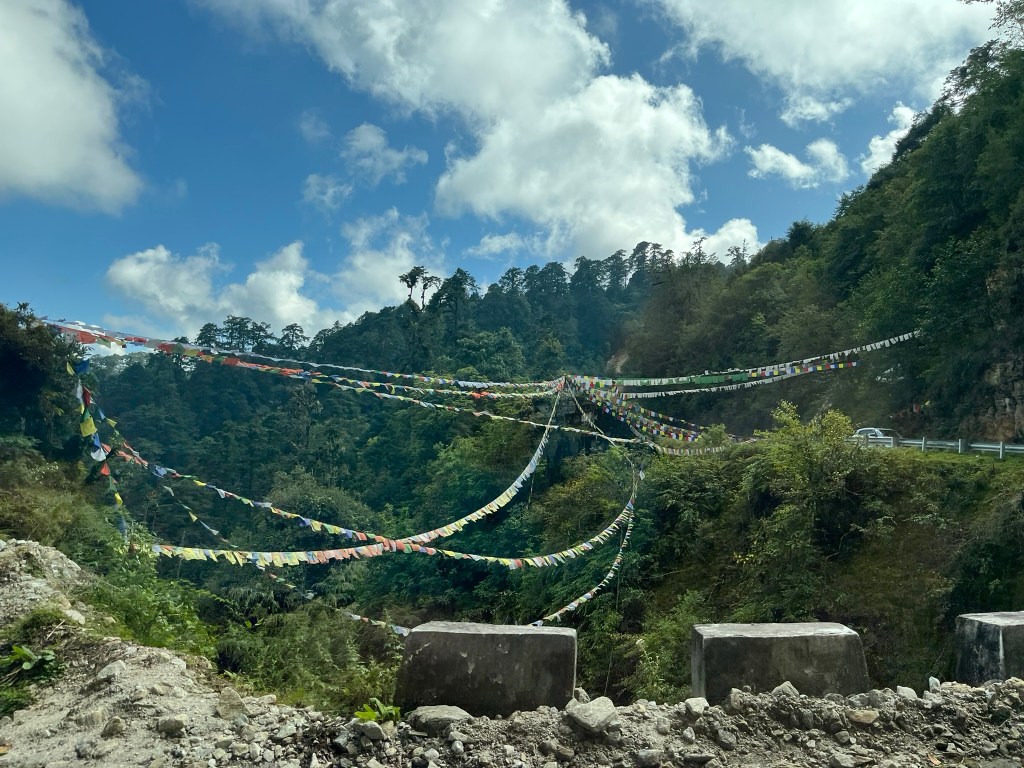
All over Bhutan you will see horizontal strings of prayer flags in five colors (blue, white, red, greed and yellow) with printed mantras on them. These are known as Lungta and used to promote peace, compassion, strength and wisdom, bringing good fortune to all beings. They are strung across mountain passes, rooftops and rivers, with the same idea that the wind will activate the prayers and spread good will.

 Colette's Grand Detour
Leave a comment