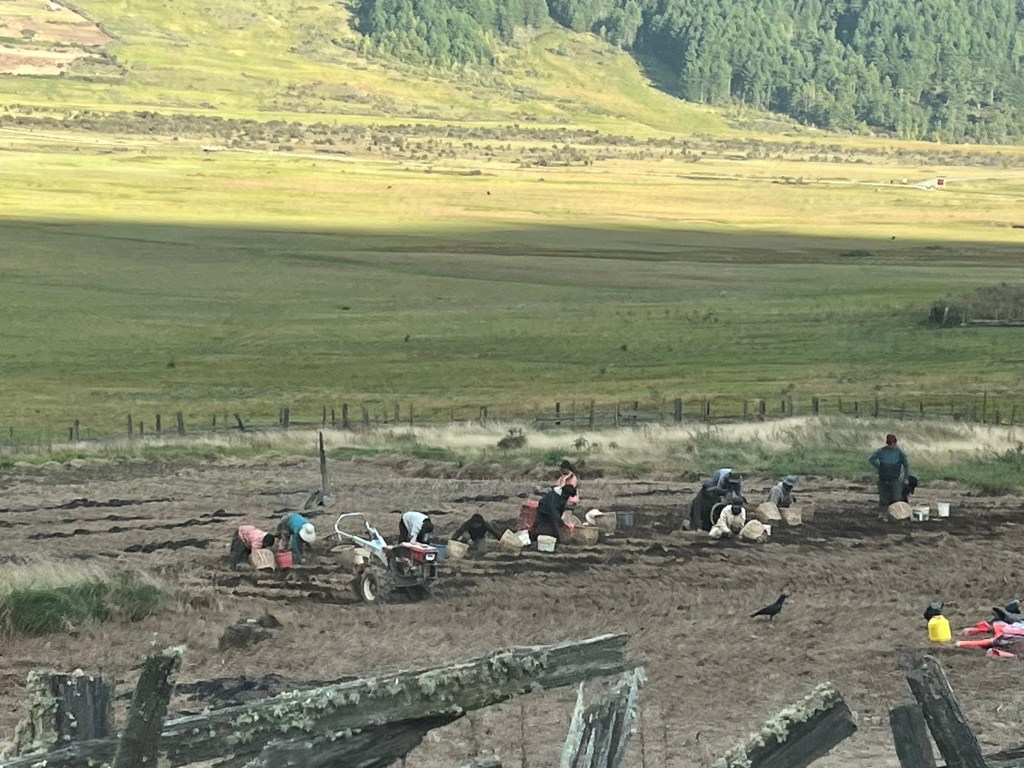
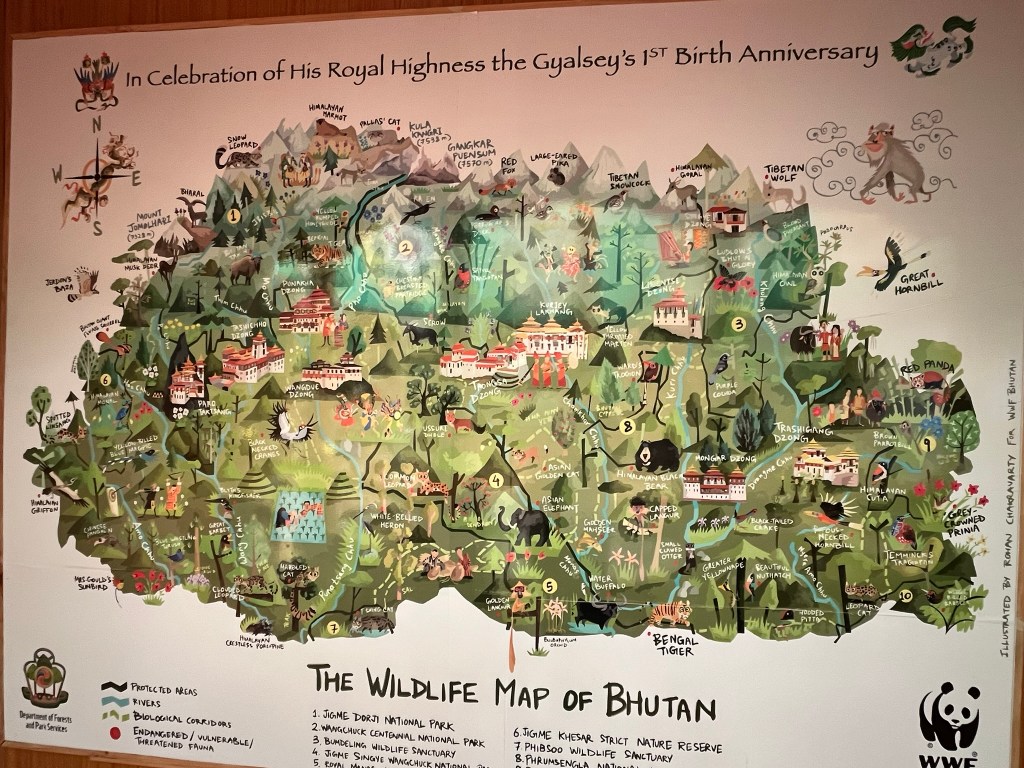
Phobjikha Valley is absolutely stunning and worthwhile the 3+ hour drive from Punakha. It sits on the western edge of the Black Mountains, about 135km from Thimphu and is famed for being the winter home of the endangered black-necked crane. Unlike most of Bhutan’s valleys it is broad and u-shaped, carved by ancient glaciers rather than rivers. The flat valley floor is covered in meadows and marshlands, and the area is largely free of urban development. Villages sit on the slopes such as Gangtey and Phobjikha and are made up of traditional farmhouses. Locals cultivate potatoes, turnips and buckwheat.

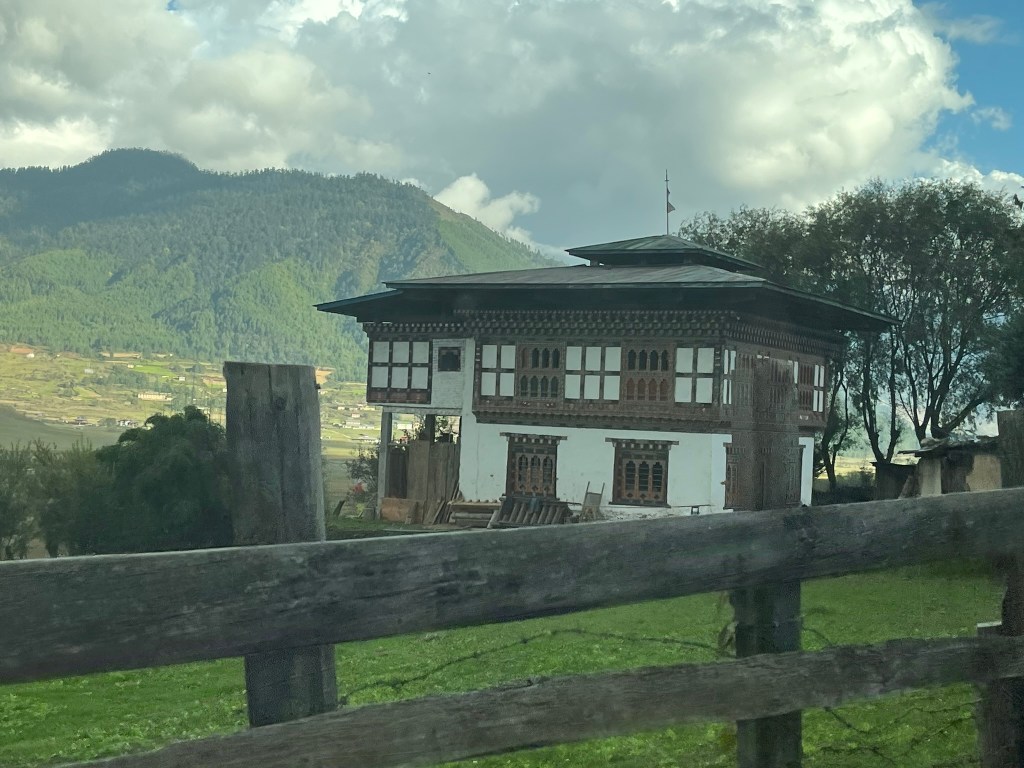
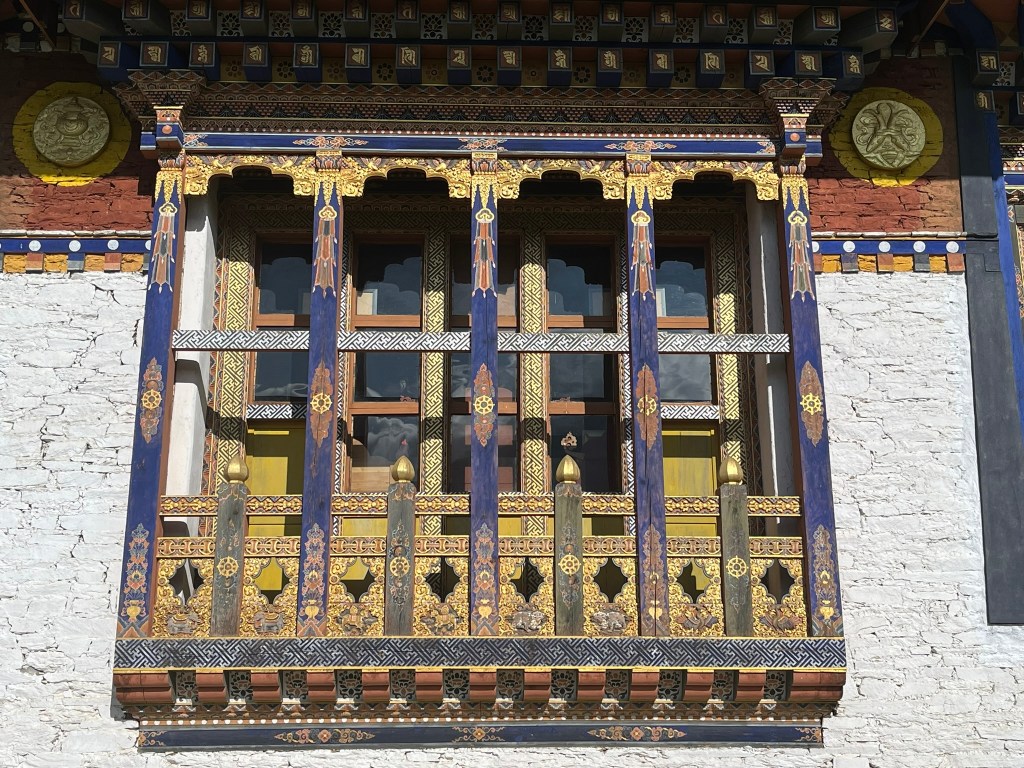
Gangtey Monastery overlooks the valley from the crest of ridge, high above the meadows. It follows the Nyingma school of Tibetan Buddhism and is one of the oldest in the country. It remains today, a major center of monastic life with about 300 monks. And it offers sweeping panoramic views of the valley below.
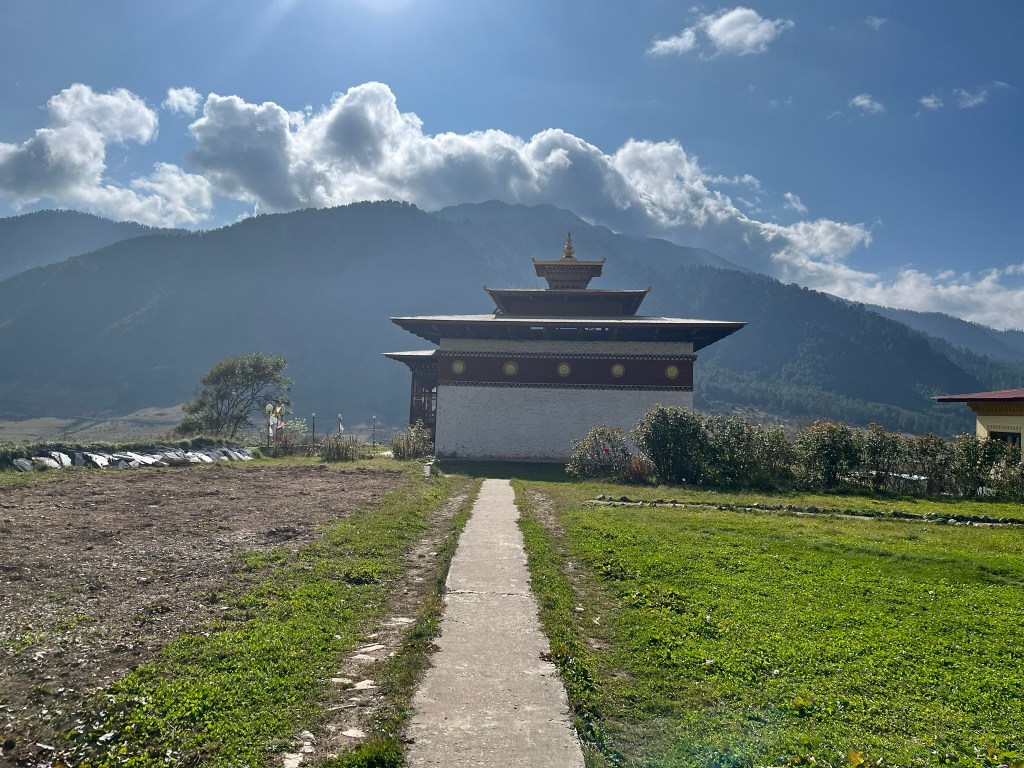
At the other end of the valley lies Gangtey Nunnery, a much quieter place, and under the spiritual guidance of the monastery. It was establish in the late 1990s to give women from rural communities the opportunity to pursue Buddhist education and monastic life. Around 60 nuns live here, from young novices to senior practitioners.
Phobjikha is part of the Jigme Singye Wangchuck National Park buffer zone and is where the endangered black-neck cranes find a home for winter after migrating from the Tibetan Plateau. They arrive in late October and depart in March. The cranes are considered sacred, and locals believe they embody the spirits of monks and deities. For the Bhutanese, the cranes symbolise longevity and peace. Famously, when they arrive, they circle Gangtey Monastery 3 times before landing and do the same when they depart. There is a Crane Festival every 11th November at the monastery, marking their arrival with masked dances and performances.
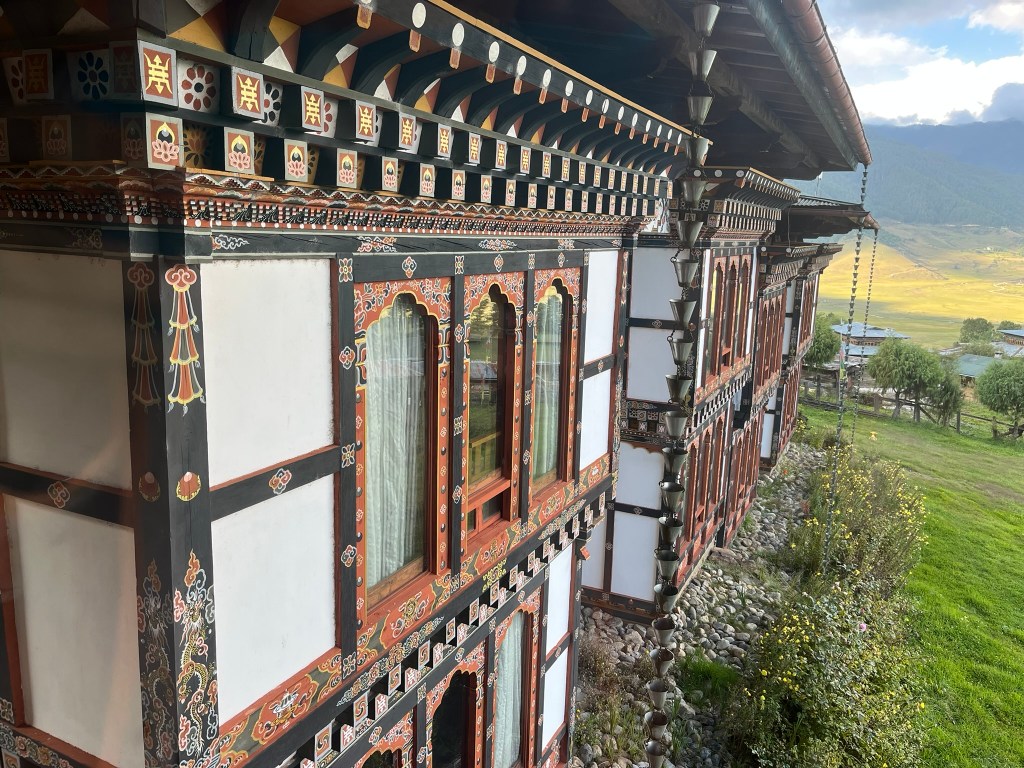
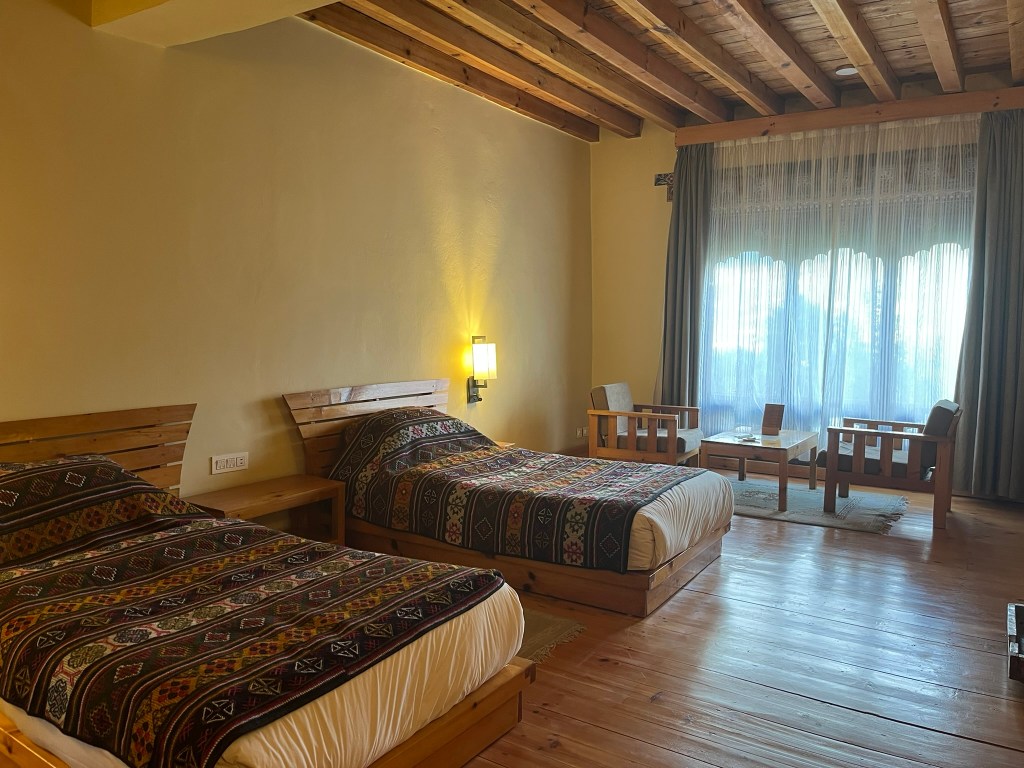

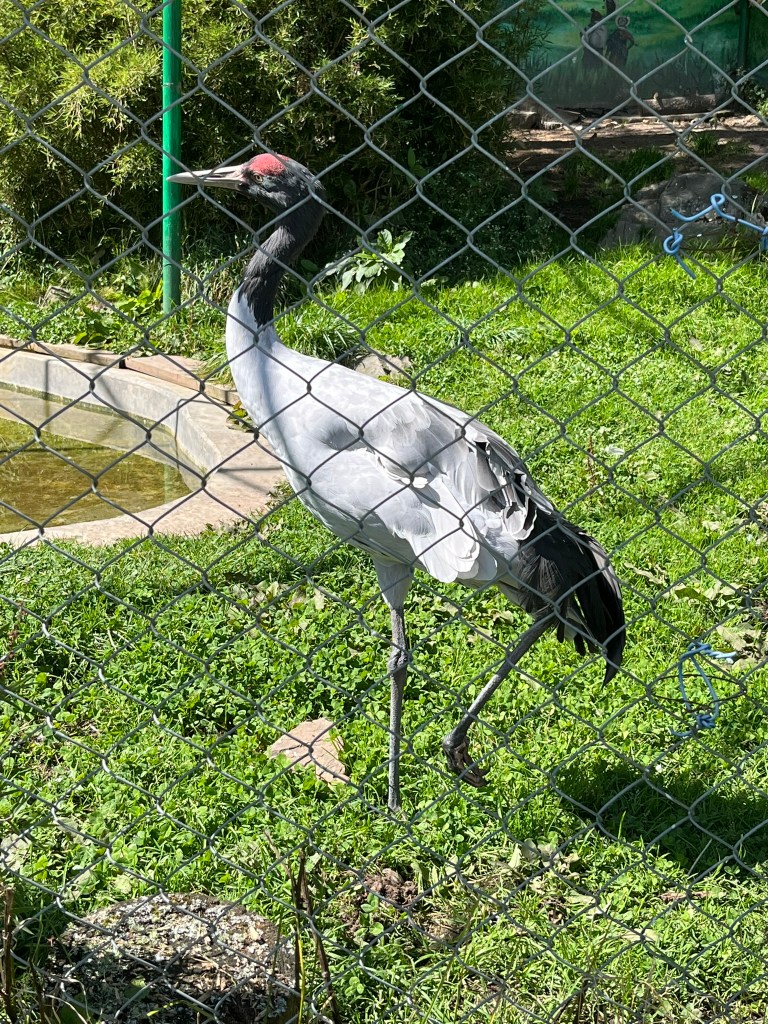
We started the day by visiting the Crane Information Center, a few minutes from our beautiful hotel, where you can see 2 cranes that were rescued and now stay all-year around at the center. We watched a short video and explored a small information gallery. They are beautiful birds, and much bigger than I imagined, with red marks on the tops of their heads and white around their eyes. As we were a little early for the migration season, these would be the only 2 cranes we would have the opportunity to see. When they arrive in the valley, they enjoy the marshy meadows that lie in the flat part of the valley (which is protected) and feed on barley stubble, tubers and dwarf bamboo shoots.
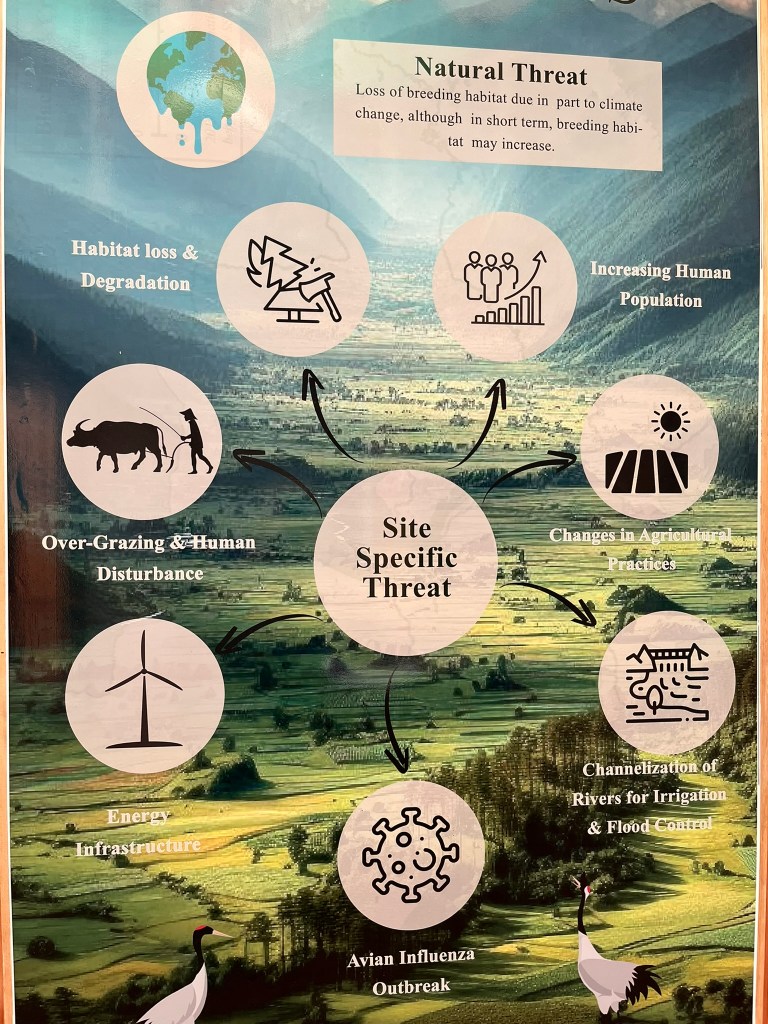
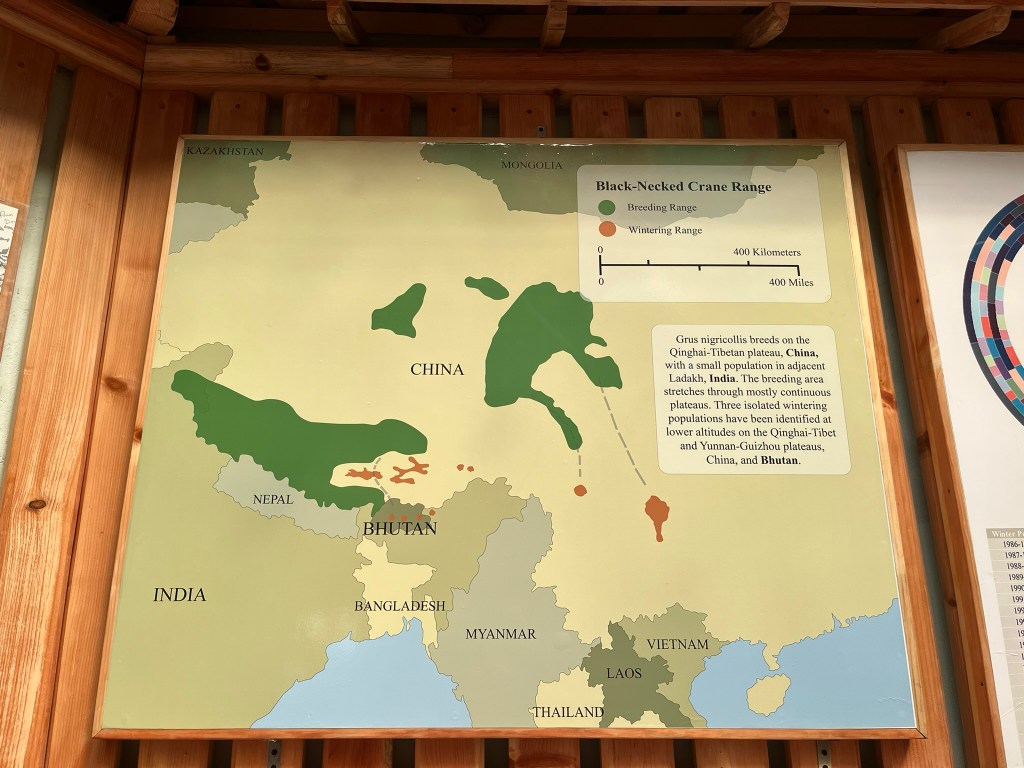
The cranes depend on the wetlands of the valley, and there have been significant conservation efforts in the area to ensure the birds continue to migrate here and thrive. Powerlines have been buried underground to prevent bird collisions, and wetland grazing and potato farming are regulated to protect the land. In a typical year around 500 cranes will winter in the valley, and the numbers are increasing, a sign of successful conservation efforts.
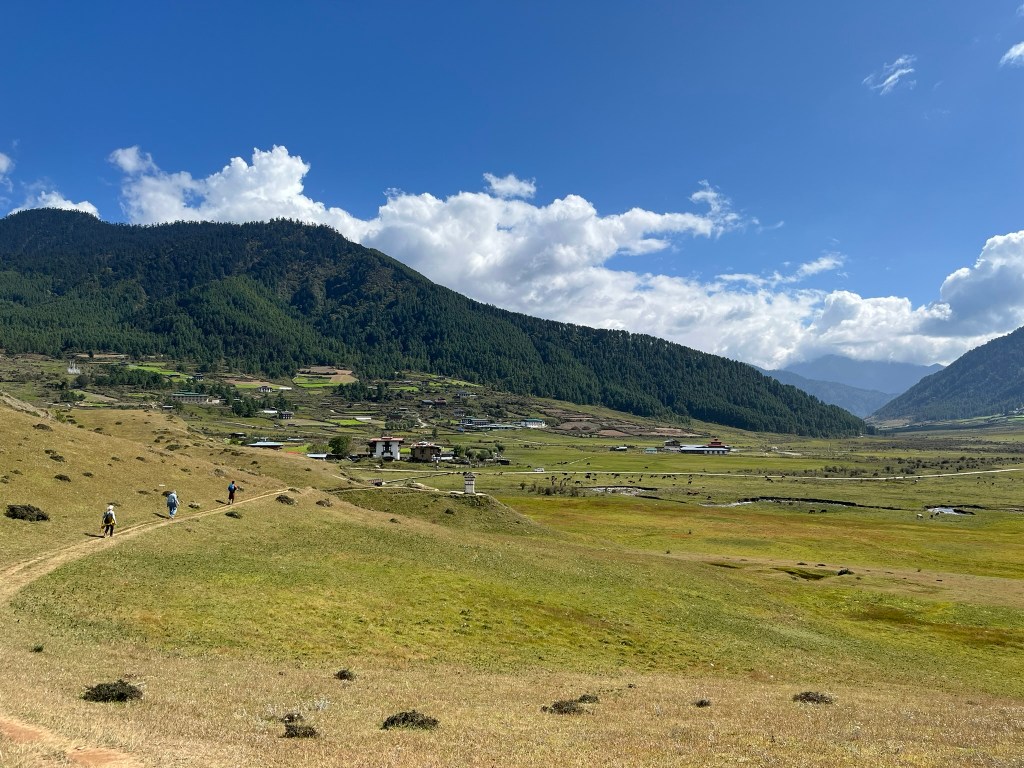
We planned a morning hike of about 2 hours, heading down from Gangtey Monastery, through shady woodland and then slowly heading down into the valley. The views were absolutely sensational and the pictures do not do it justice. Best of all, it was a downhill hike, so it was easy going and enjoyable.

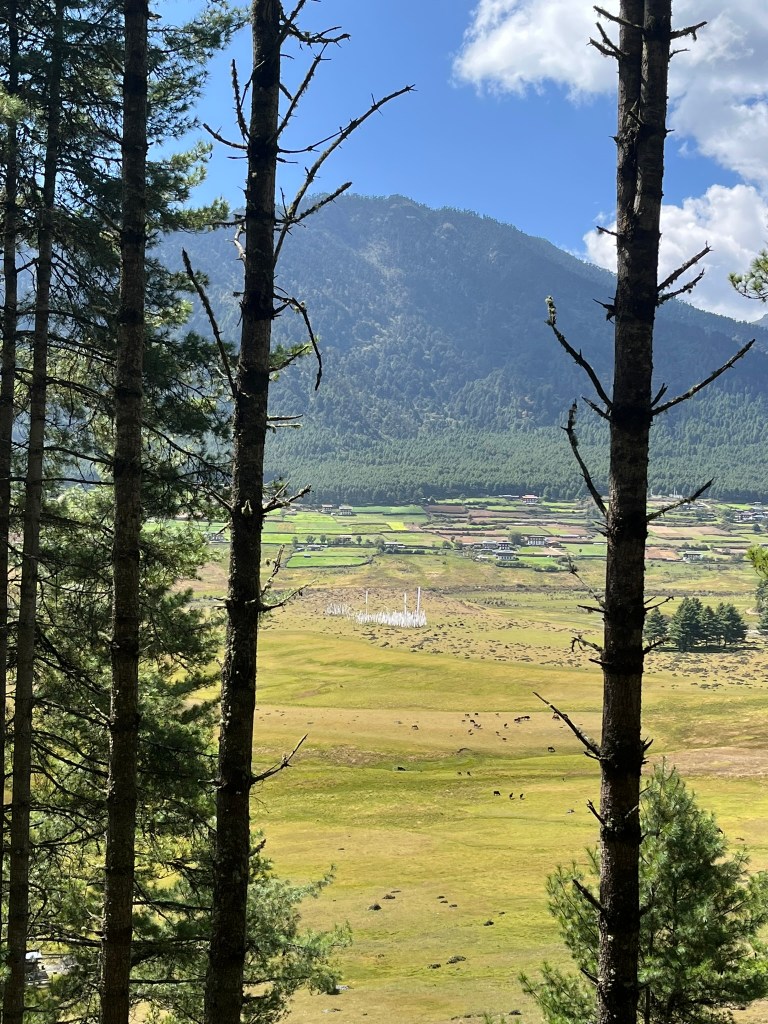


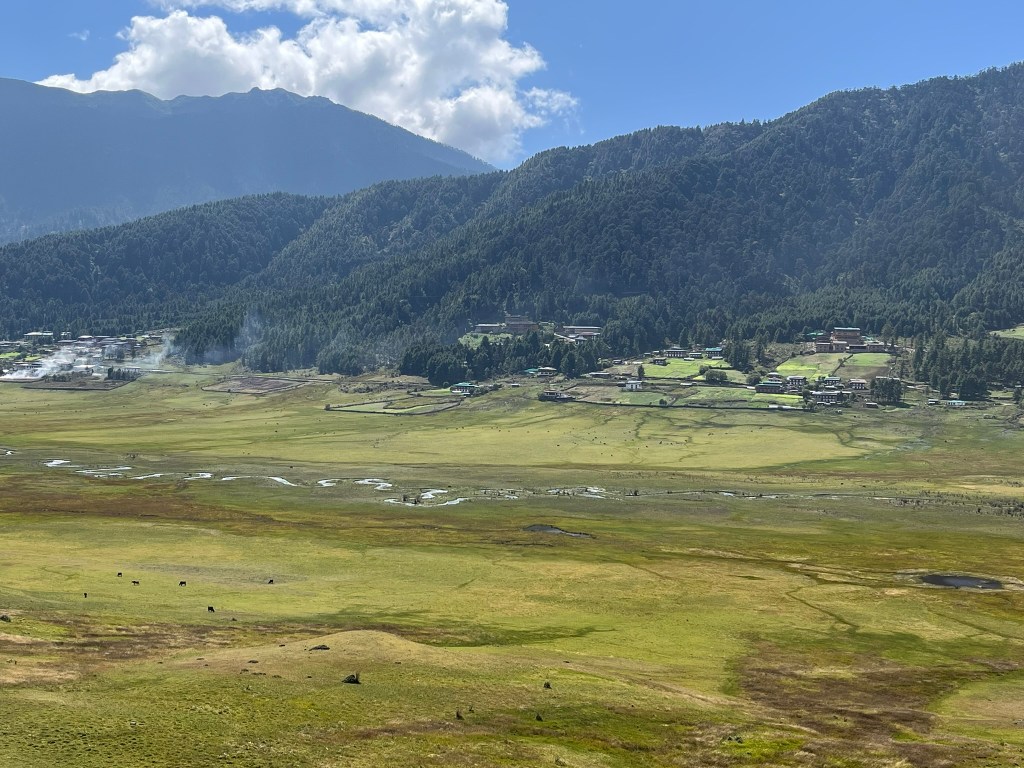
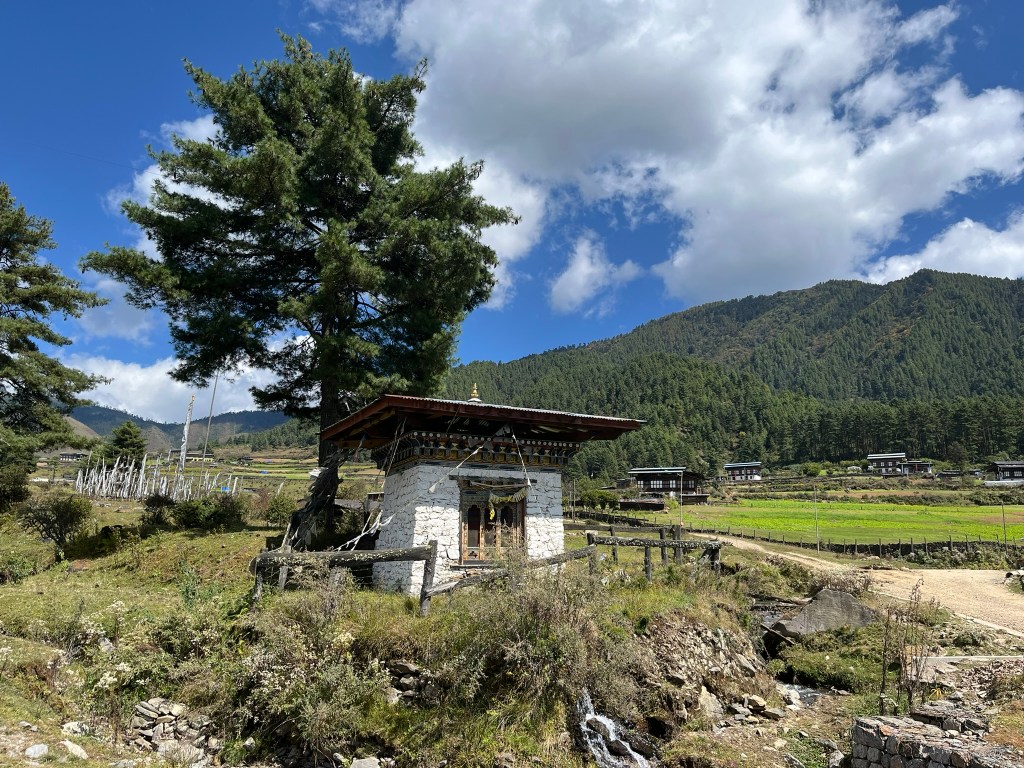
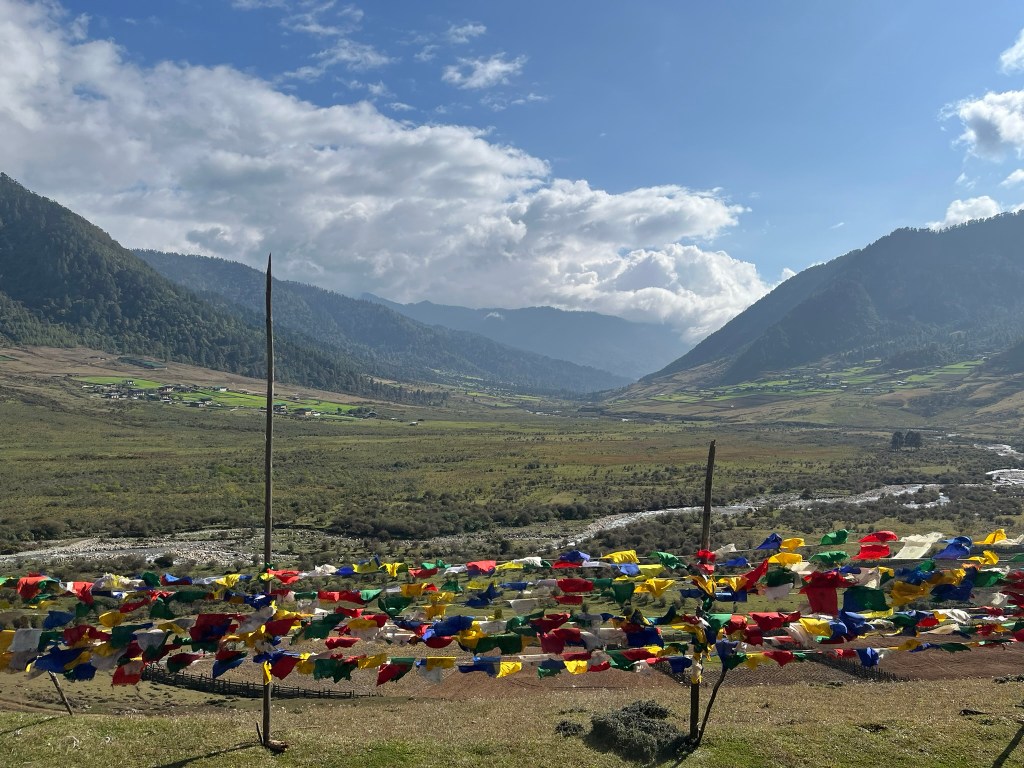
We ended the day at a viewing area near the nunnery, filled with prayer flags and more fantastic views. I think so far this has been my favourite place in Bhutan. I loved Thimphu for the culture and arts & crafts, and Punakha for its fabulous dzong fortress and hanging bridges. But Phobjikha Valley feels like a hidden oasis, quiet and peaceful and what I imagine huge swathes of Bhutan are like outside the main towns.
 Colette's Grand Detour
Leave a comment