Bhutan’s Gross Happiness Index is one of the most distinctive national development frameworks in the world. Gross National Happiness (GNH) is Bhutan’s alternative to conventional economic measures like GDP. It aims to measure the holistic well-being and happiness of the population, combining economic progress with cultural, spiritual, environmental and social health. The concept was introduced by the third king in the 1970s and evolved into a formal national policy framework in the 2000s.
GNH is based on the belief that true development occurs when material, spiritual, social and environmental needs are all balanced. Happiness is not an individual pleasure alone, but the collective harmony of society and nature.
There are four pillars of GNH, reflecting Bhutan’s development vision.
- Sustainable and equitable socio-economic development
- Environmental conservation
- Cultural preservation and promotion
- Good governance
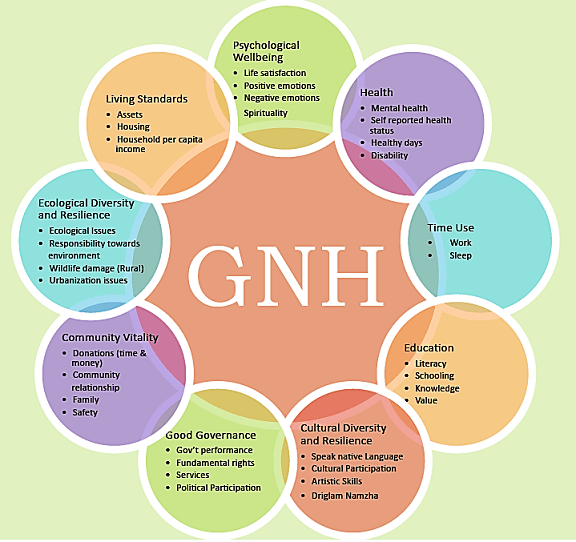
To make these pillars measurable, Bhutan has 9 domains which are each assessed through a set of 100+ indicators.
- Pyschological well-being – life satisfaction, emotional balance, spirituality
- Health – physical and mental health, disability
- Education – literacy, knowledge, values, lifelong learning
- Time use – Work-life balance, time for rest and family
- Cultural diversity and resilience – participation in festivals, language use, cultural identity
- Good governance – trust in government, participation, service delivery
- Community vitality – family and social support, volunteerism, safety
- Ecological diversity and resilience – environmental awareness, air and water quality, wildlife protection
- Living standards – income, housing, assets, financial security
Each domain is given equal weight, reflecting balance rather than economic dominance.
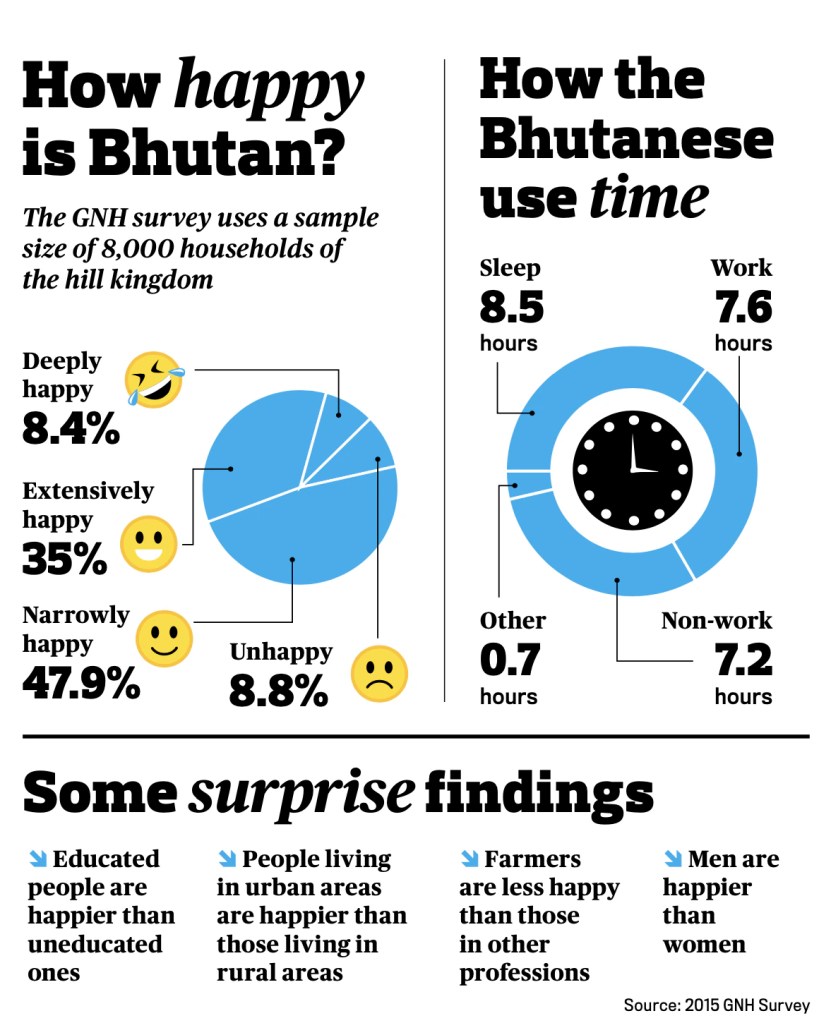
The GNH index is calculated using 33 specific indicators within the 9 domains and data is collected through nationwide surveys every few years. People are categorized as deeply happy, extensively happy, narrowly happy or unhappy. The results of the survey guide government policies. Some examples of the types of questions asked in the survey include ‘Do you feel rushed or overworked?’, Do you speak your mother tongue at home?’ and ‘How well do you know your neighbours?’.
GNH is more than just a philosophy, it directly shapes government planning, budgeting and project approvals. Every major policy or development project is evaluated not only for its economic benefit but also for its social, cultural, environmental and spiritual impact. Policies and projects must undergo the GNH Policy screening test, which evaluates against the nine domains. A policy that fails the test, for example one that harms cultural heritage or increases inequality, can be rejected or redesigned before approval.
Bhutan’s economic planning follows a cycle of Five-Year Plans, which identify key results areas that correspond to the 9 domains. Some examples include the balance of economic and environmental impact for hydropower development. Hydropower exports to India are Bhutan’s main source of income. However, the large dams have only been built after environmental safeguards like wildlife corridors and fish migration studies were added. Bhutan also limited the number of new hydropower plans being constructed at any one time to prevent ecological strain and cultural disruption in rural valleys. The result is that Bhutan earns revenue but also keeps 70% of its land under forest cover and maintains its negative-carbon status.
Another example is its high value, low impact tourism policy, where the policy principle is that tourism must enrich local communities, protect culture and preserve the environment. In education, the curriculum is designed not only to build skills but also to foster moral values, cultural awareness and mindfulness. The national curriculum includes happiness and compassion as learning outcomes, blending modern education with Bhutanese values. A final example is the urban planning put in place when Thimphu was rapidly expanding in the 2000s. Height restrictions were placed on buildings to preserve mountain views, traditional architectural styles were mandated and urban green belts and public spaces promoted community vitality.
GDP tell you how much money a nation makes. GNH tells you whether life is actually better. GNH for Bhutan is not just a slogan but a policy filter and is helping the country stay carbon-negative, culturally confident and socially stable even with limited economic growth.
 Colette's Grand Detour
Leave a comment