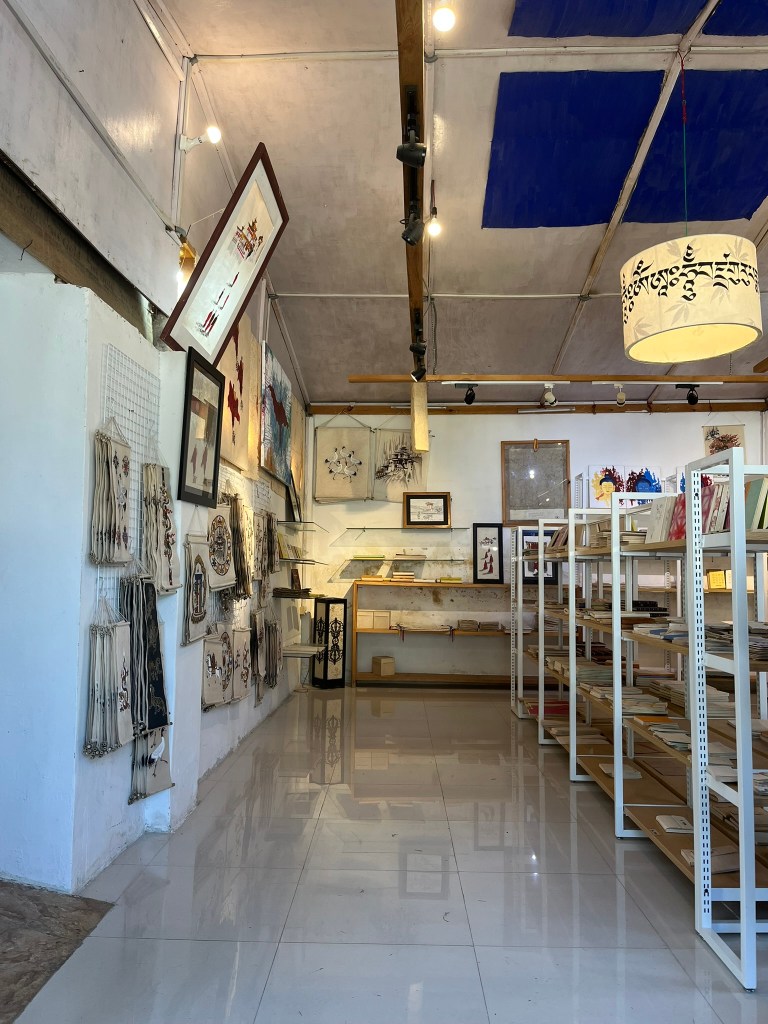
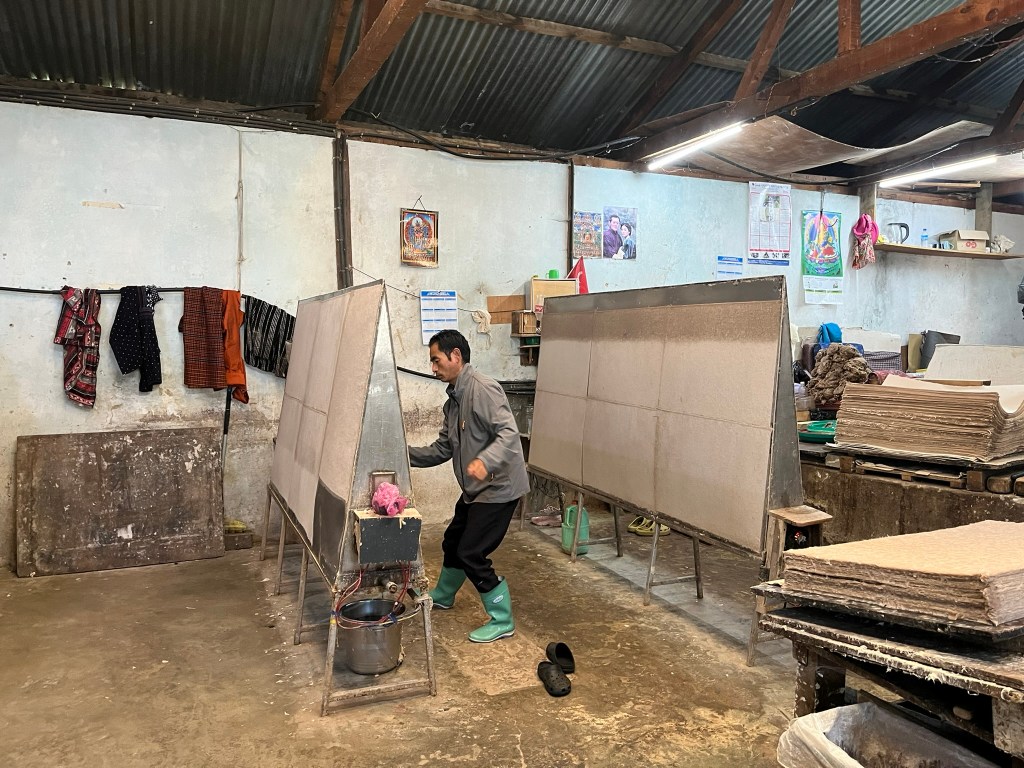
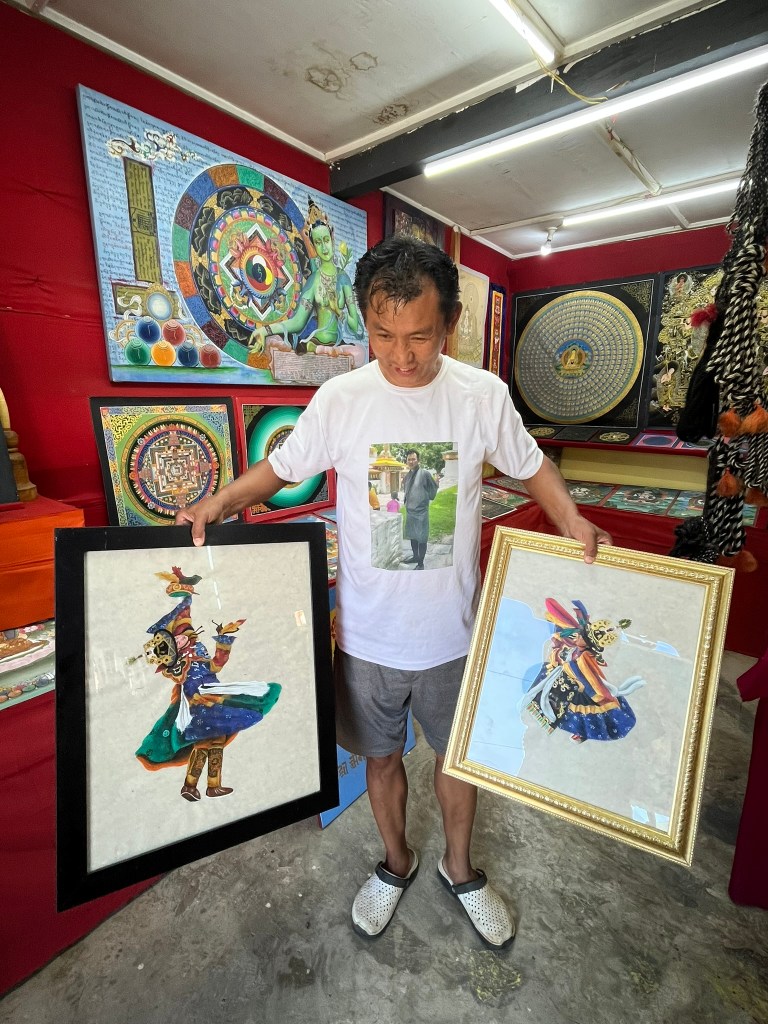
As we departed Thimphu we briefly stopped in at a paper factory on the outskirts of the city. Jungshi Handmade Paper Factory is a small workshop where you can see the traditional craft of making paper from the bark of the Daphne tree. This is officially one of Bhutan’s thirteen traditional arts. Handmade paper, known as Dehsho has been produced in Bhutan for over 1000 years. It was originally a monastic craft, used for Buddhist scriptures and prayer books. Traditionally monasteries would have made their own paper using local plant fibers. The aim of this factory is to revive and sustain this tradition, whilst also providing rural employment and producing eco-friendly paper. Later in the day, in the village we visited, I bought 2 paintings of dancers performing in the masked dance festival that were painted on this handmade paper.
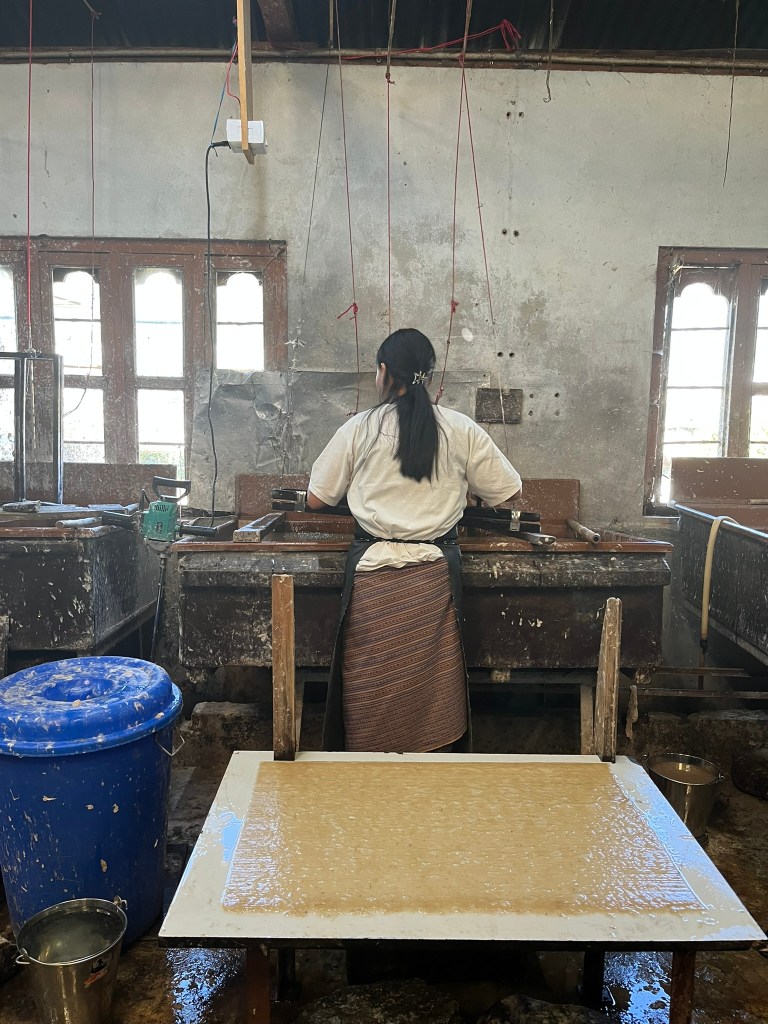
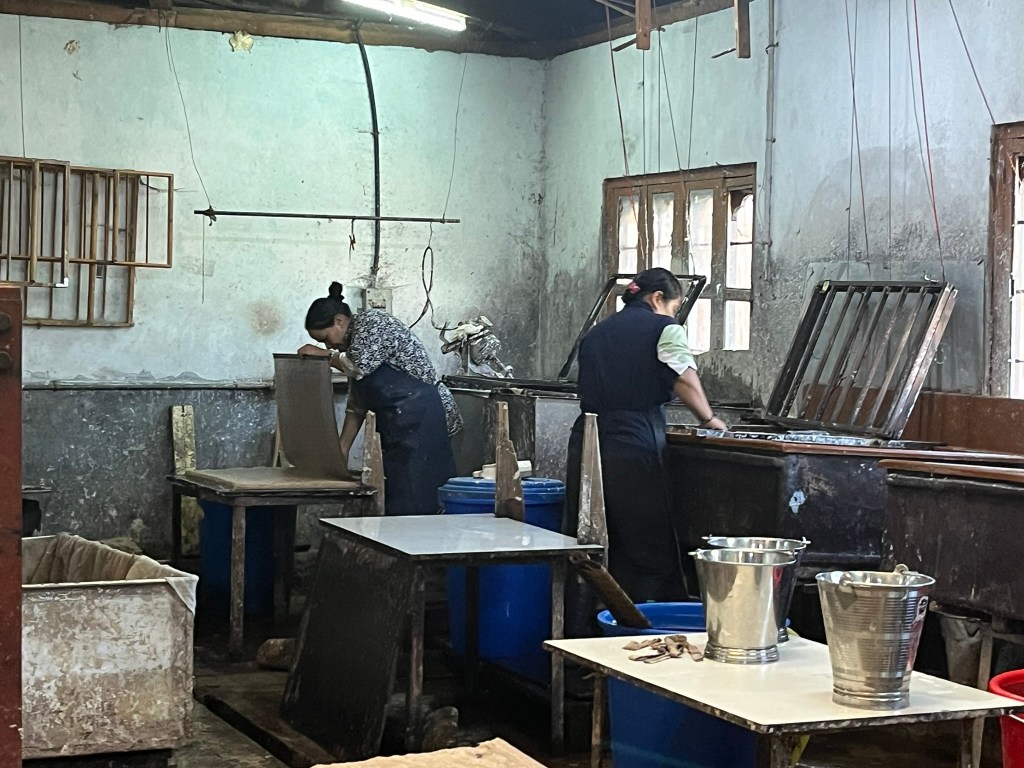
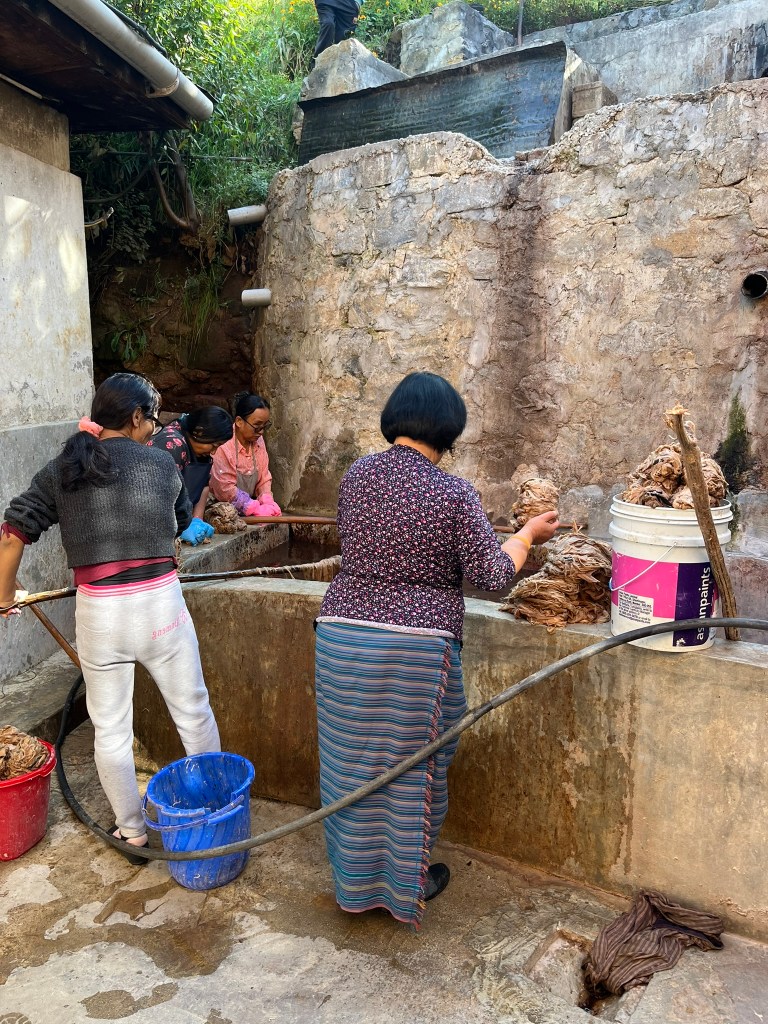
You can walk through the factory and see every stage of the process, starting with soaking the bark and then boiling it before it is beaten into a pulp. The pulp is mixed with water and an organic starch mixture and then a wooden frame with a fine bamboo screen is dipped into the vat, lifted out, shaken to distribute the fibers evenly and then placed carefully onto a pile. The sheet are laid on vertical heated metal surfaces to dry and then pressed and trimmed ready for sale. The product is beautiful and has a lovely thickness and texture.
Just outside of Thimphu lies Simtokha Dzong, one of the oldest surviving fortress-monasteries in Bhutan. It is small in size when compared to other dzongs, but historically extremely important. It was the first dzong built by the Tibetan lama who unified Bhutan into a single nation in the 17th century and established both the administration and spiritual foundation of his rule. According to legend the site was chosen because it was believed to be haunted by demons who troubled travellers in the valley. The Tibetan lama subdued the demons and built the dzong to imprison its spirit beneath the structure, ensuring peace for the land. The dzong guarded the entrance to Thimphu valley and controlled the trade route between Paro and Thimphu. It also served as a monastic school, as it still does today.
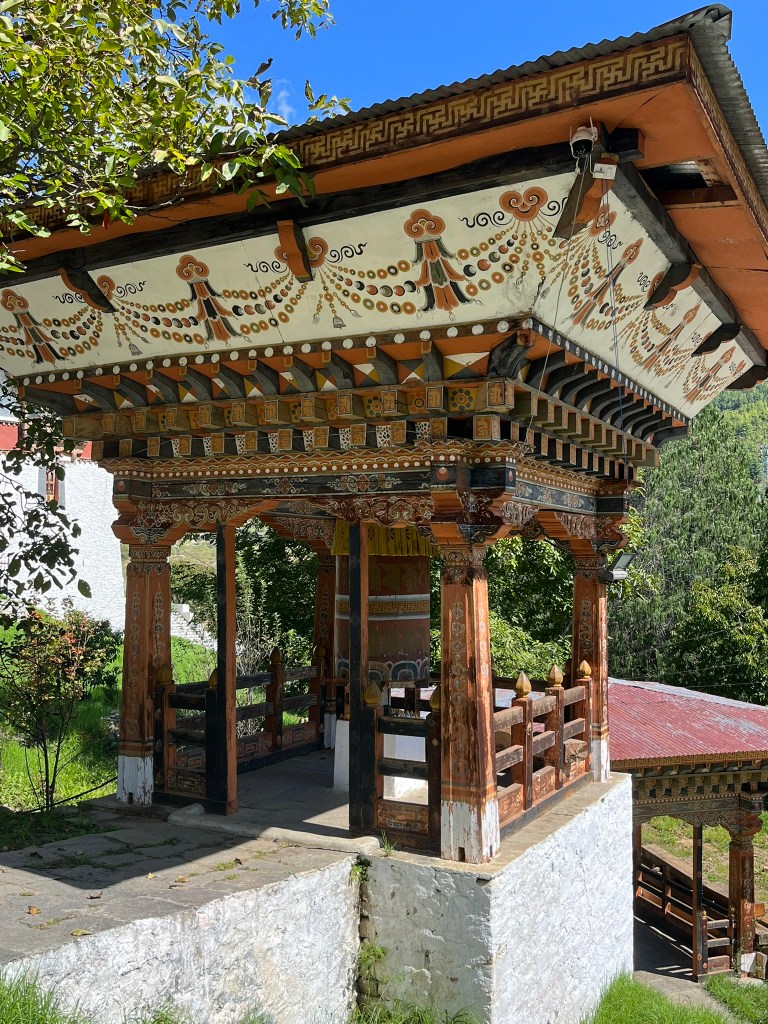
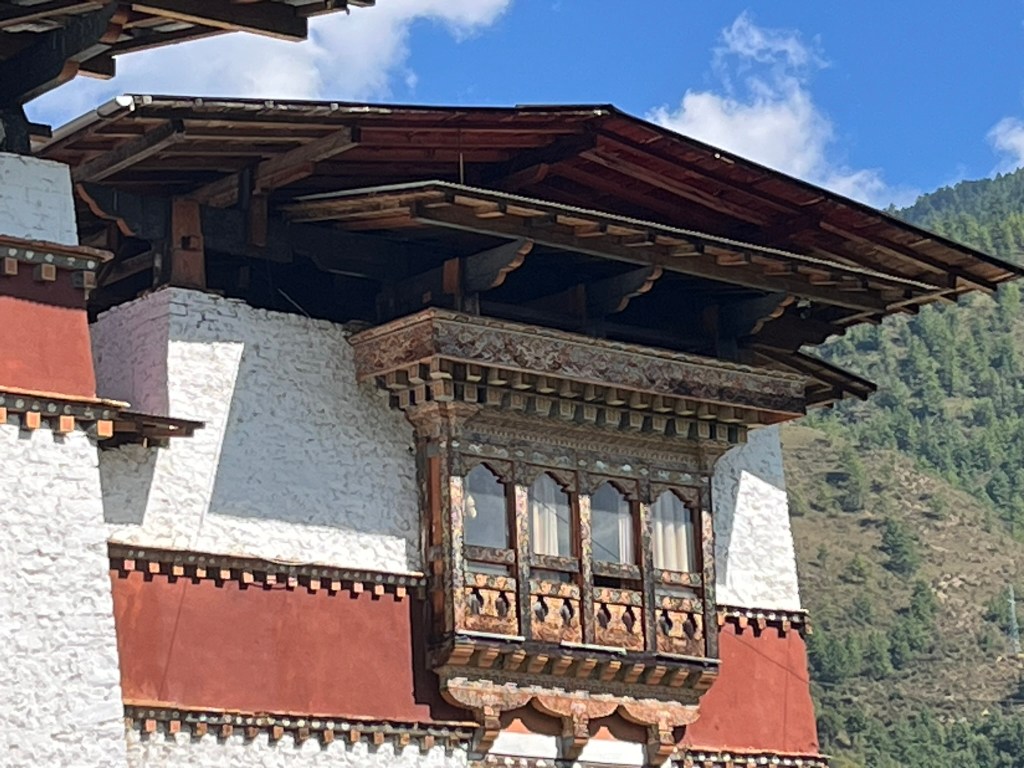
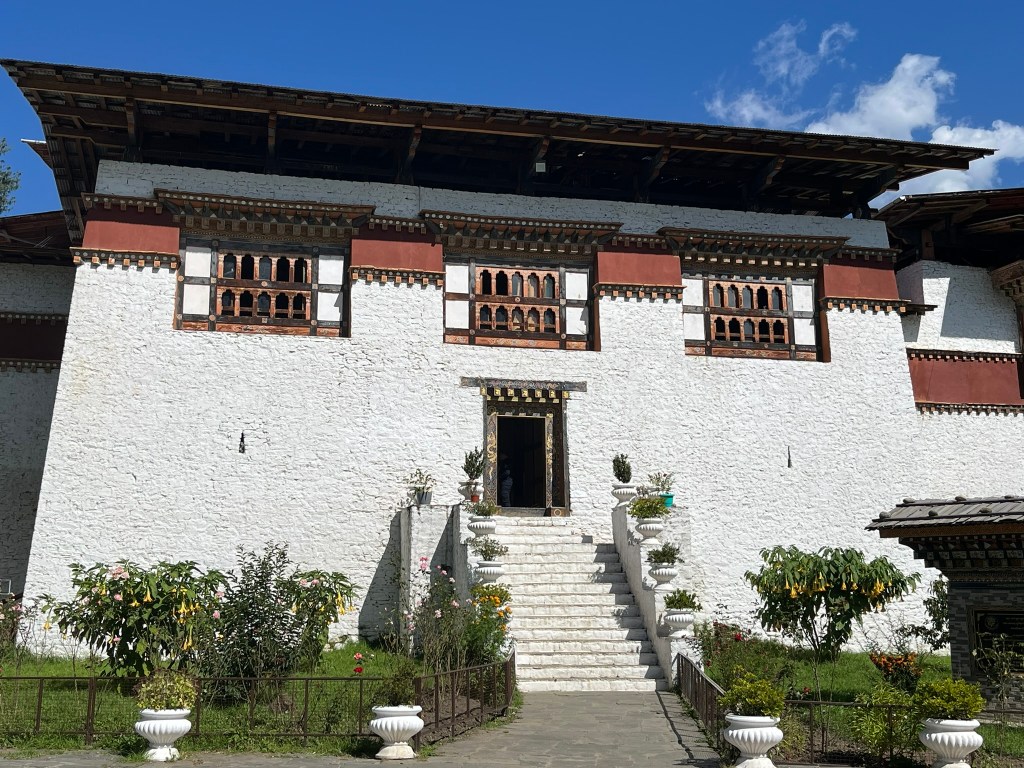
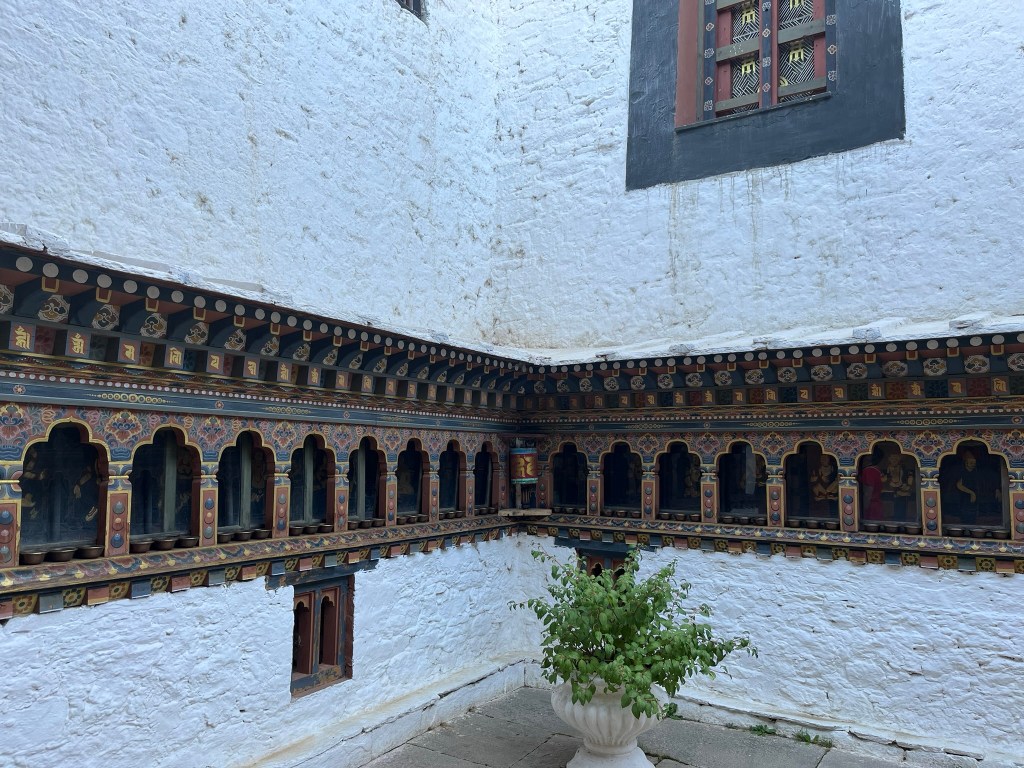
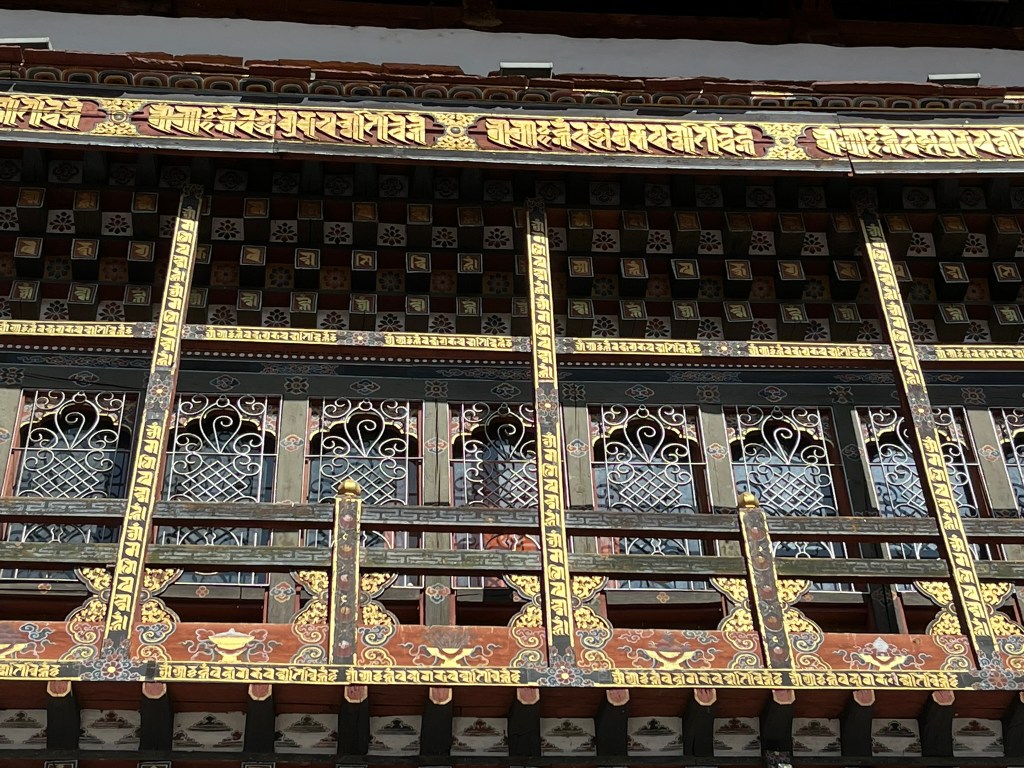
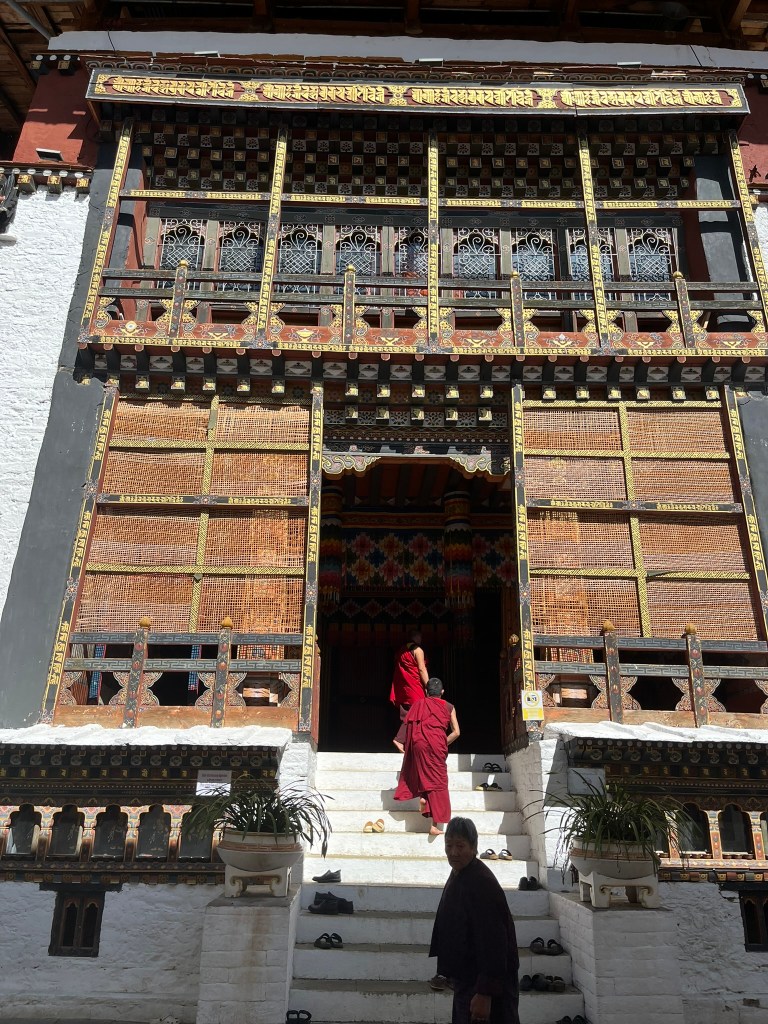
The building is a single compact central courtyard surrounded by massive stone walls. The central tower is three stories high with the inside used as an assembly hall for the monks that reside here. The assembly hall is richly decorated and again we were lucky that the monks were in the assembly hall when we visited, chanting and reciting mantras.

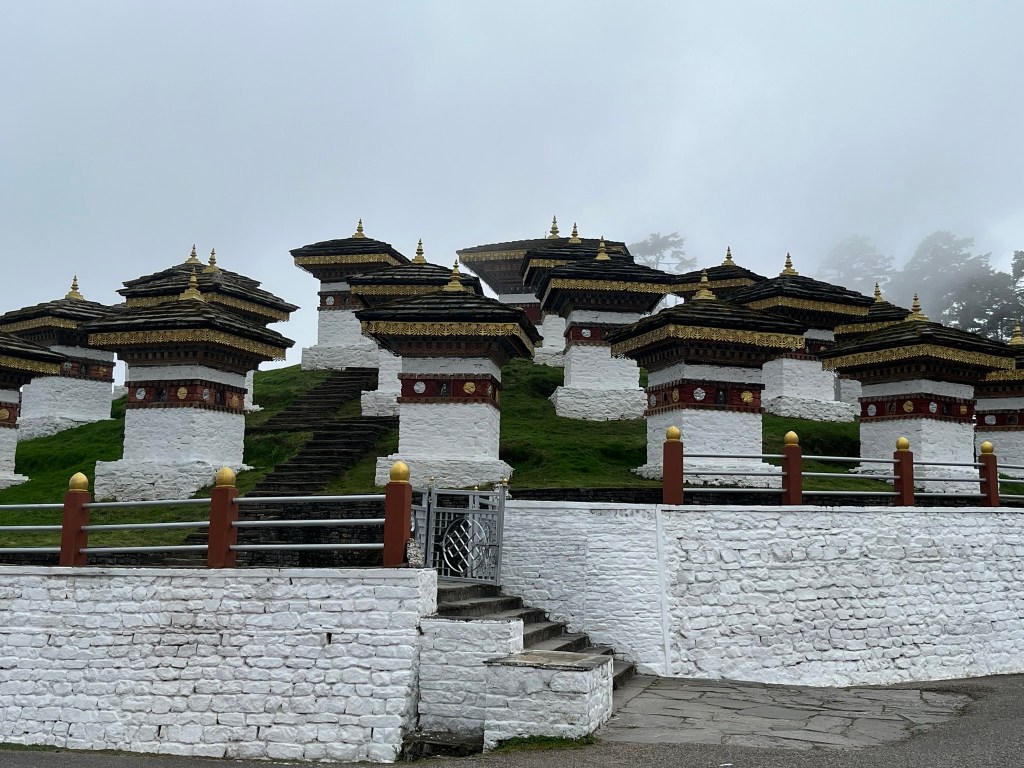
The drive to Punakha takes about 3 hours along well-maintained but very windy roads. After about 1 hour you reach Dochula Pass, where if the weather is good there is an opportunity to see a panoramic view of the eastern Himalayas, including Bhutan’s highest peak, Gangkar Puensam. The pass is also marked by 108 memories stupas that commemorate the lives of Bhutanese soldiers who lost their lives in 2003, when there was armed conflict with India in southern Bhutan. This is also a nice cafe to grab a coffee.
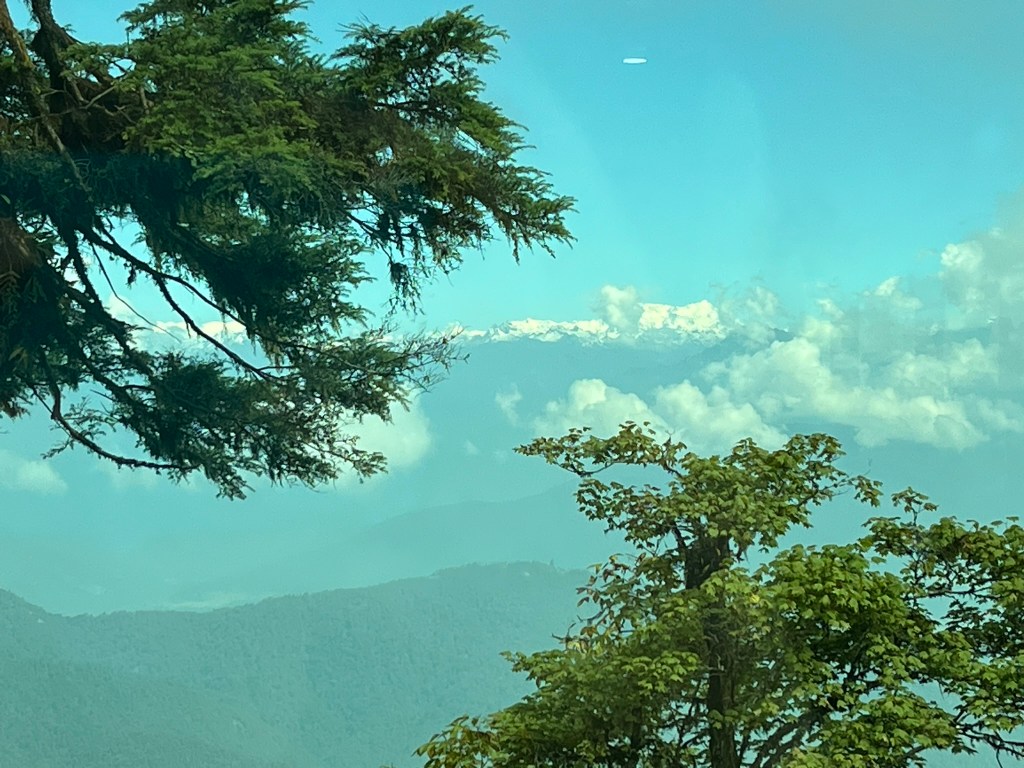
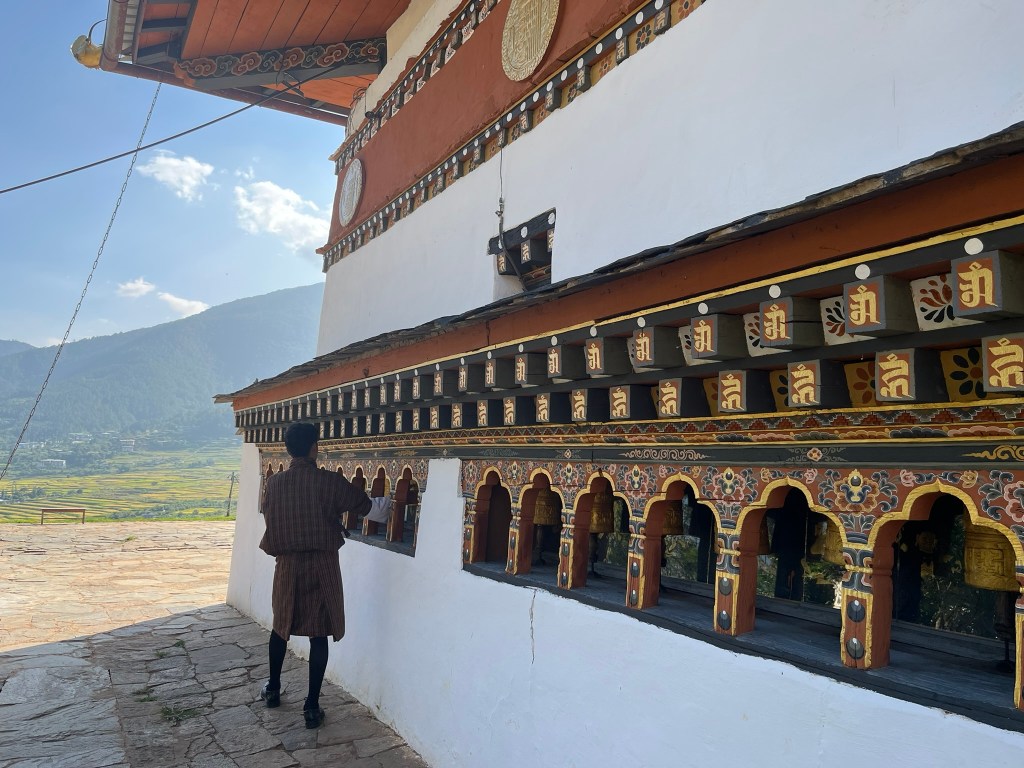
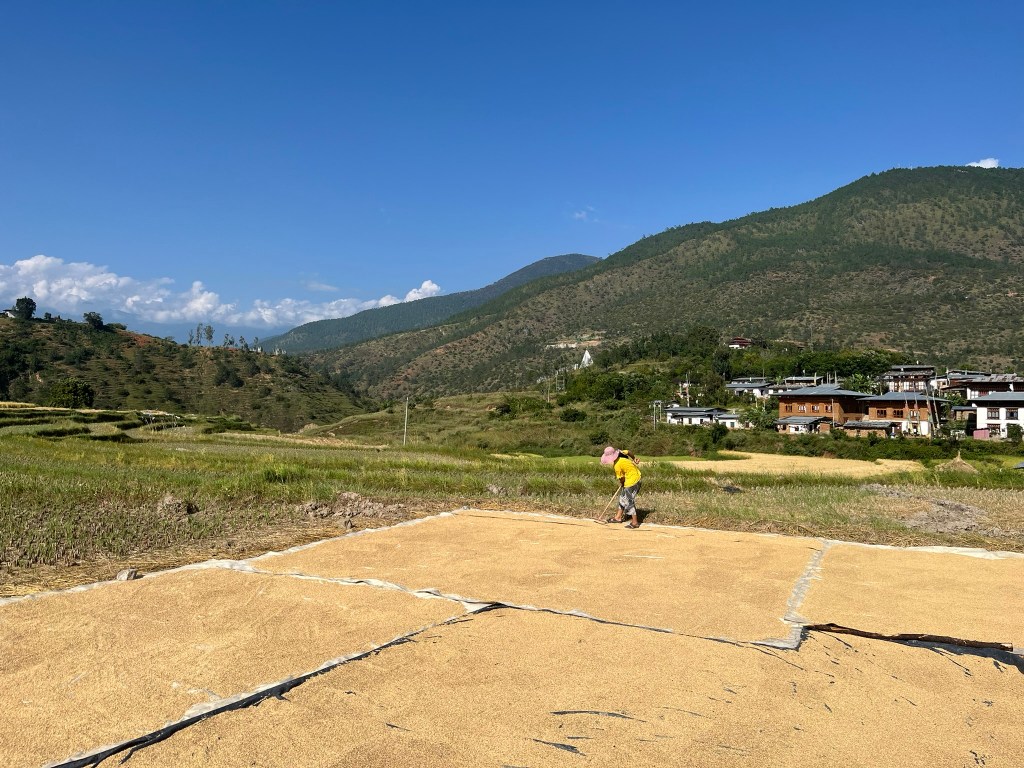
As you descend from the pass, the road descends dramatically through lush forest and the vegetation shifts from pine forest to subtropical bamboo and banana groves. We stopped in the village of Lobesa for lunch and then walked through the rice fields to the village of Sopsokha, where it is possible to visit the ‘Madman Temple’ called Chimi Lhakhang. The temple was built to honor Lama Drukpa Kunley (the same person who the legend says created the Bhutanese national animal). He was known as the Divine Madman for his unorthodox style of teaching Buddhism using humor and shock to challenge conventional religious norms. The legend says at the site of the temple, Kunley subdued a demoness, said to have turned into a dog, and trapped its power, and then blessed the location where the temple now stands. Chimi Lhakhang is widely known in Bhutan as a fertility pilgrimage site and many couples come to seek blessings so that they may conceive children. The ritual requires women to circumambulate the temple carrying a wooden phallus and offering prayer. There are also great views looking down into the valley from the temple.
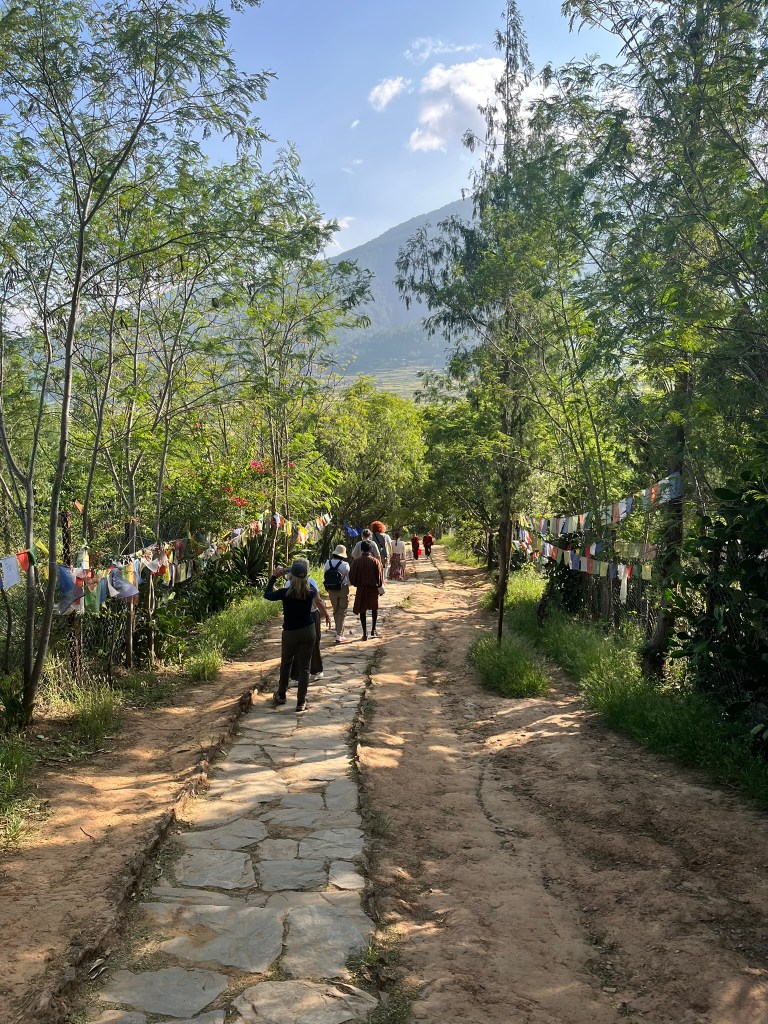
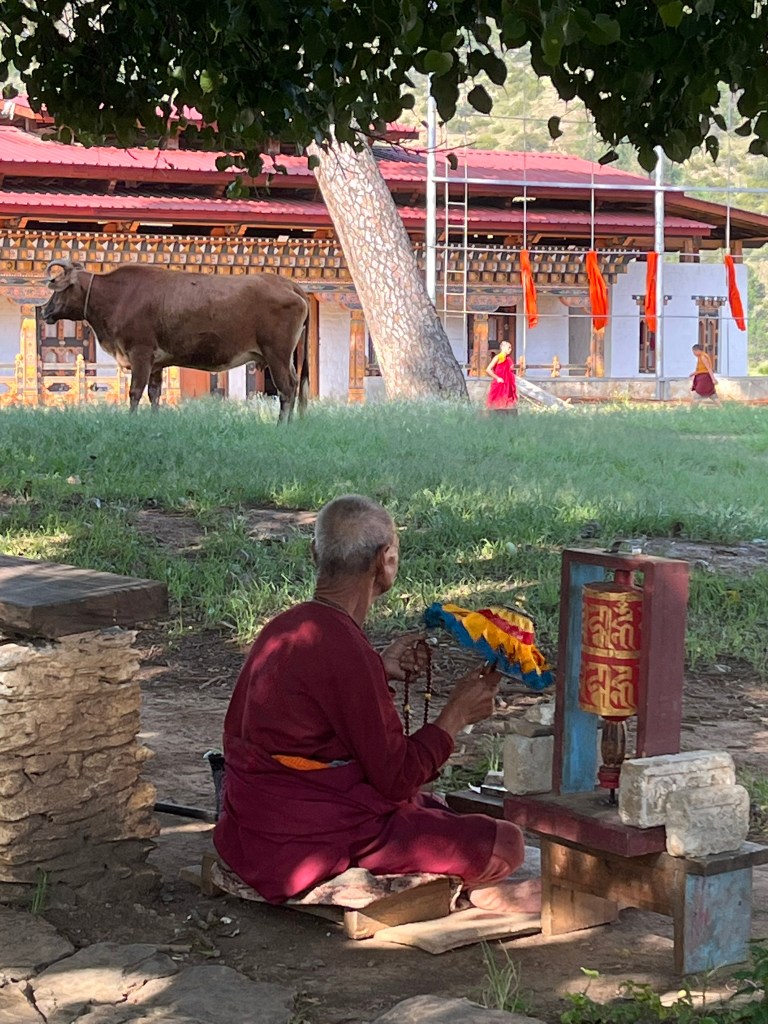
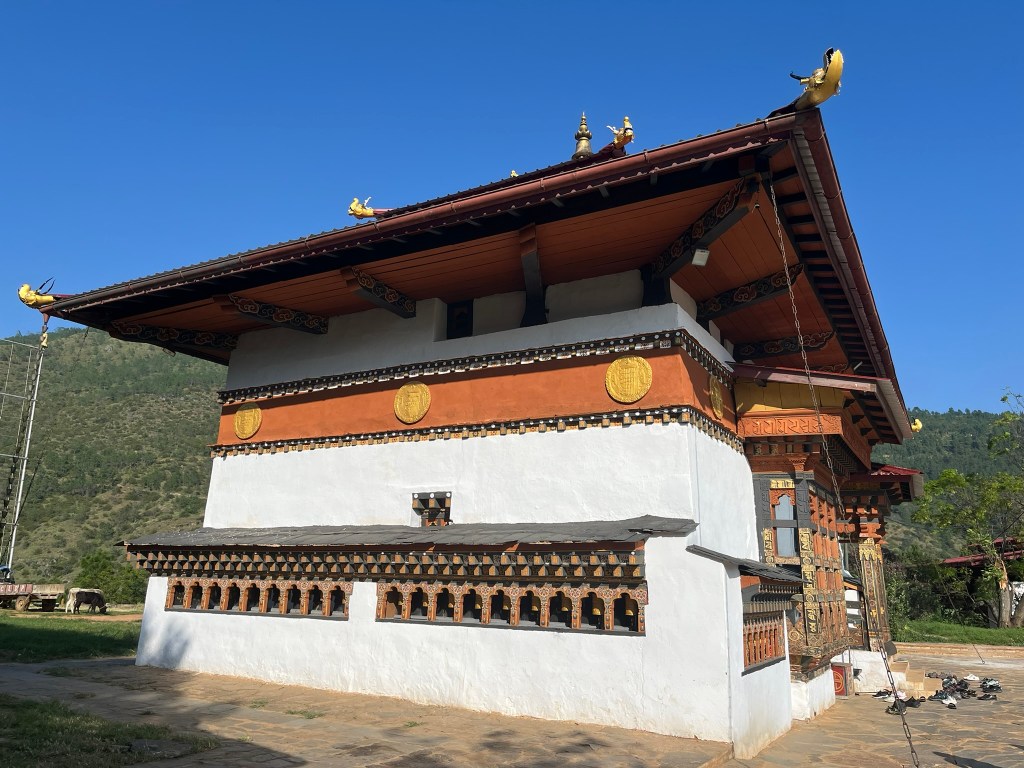
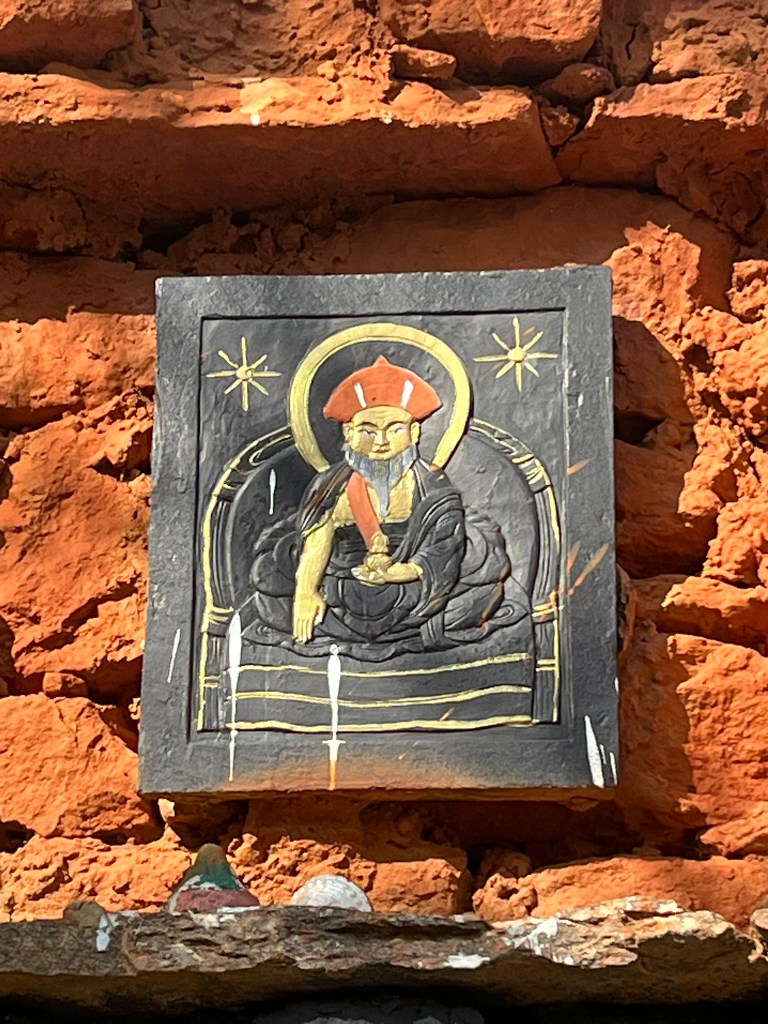
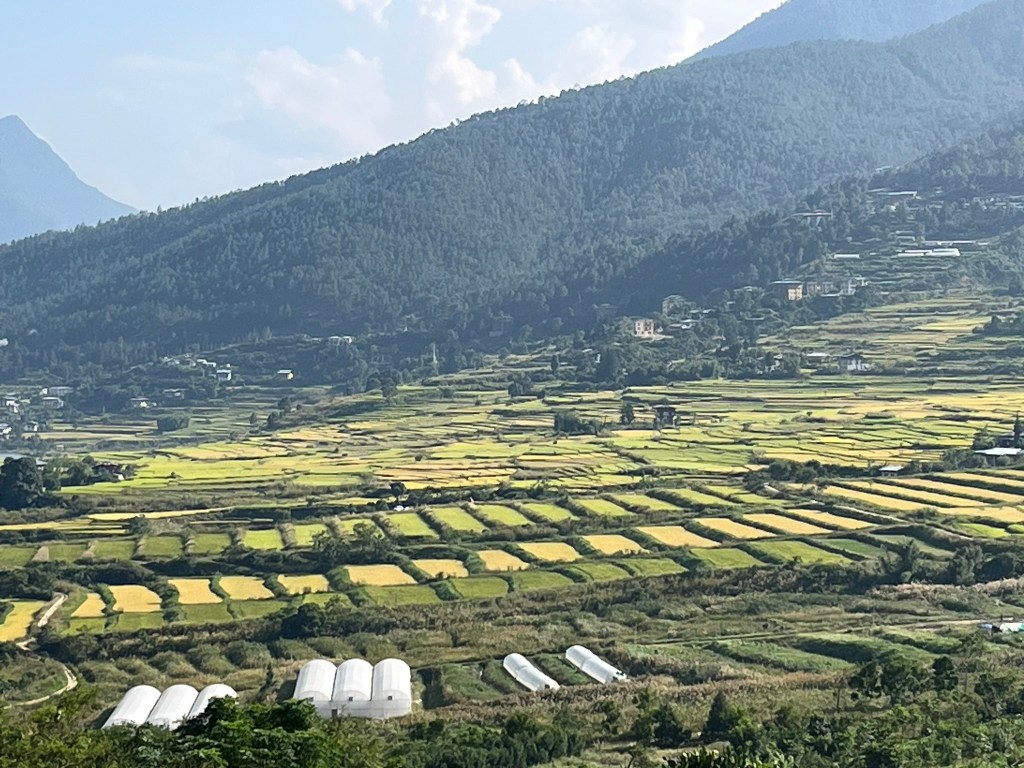
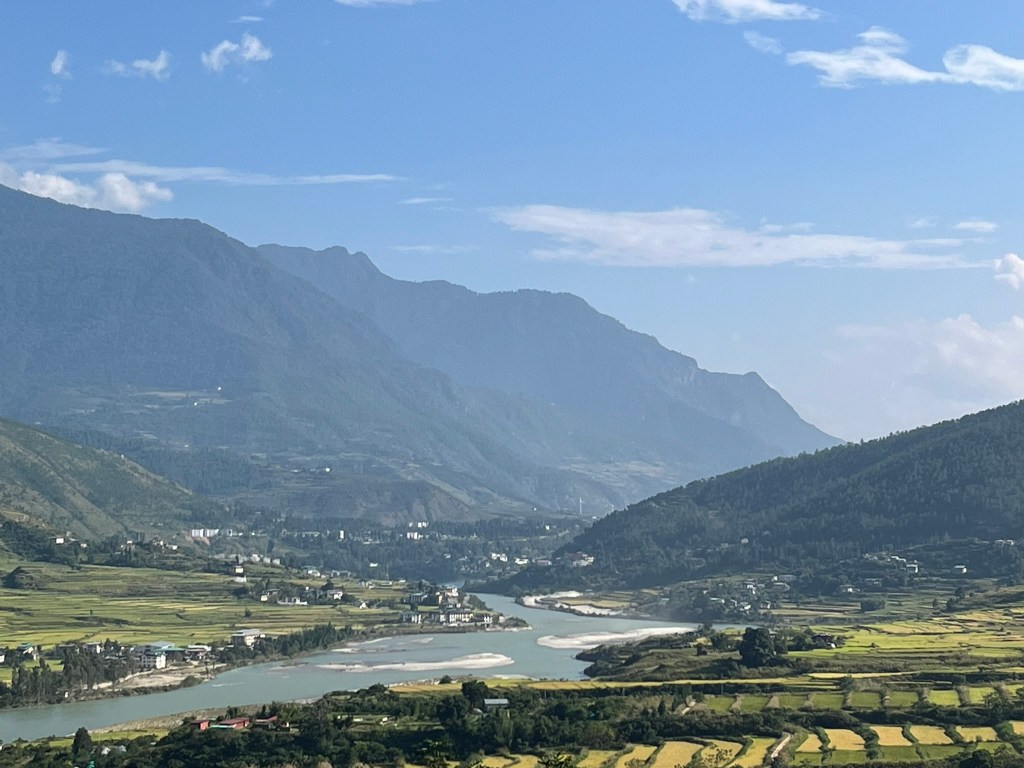



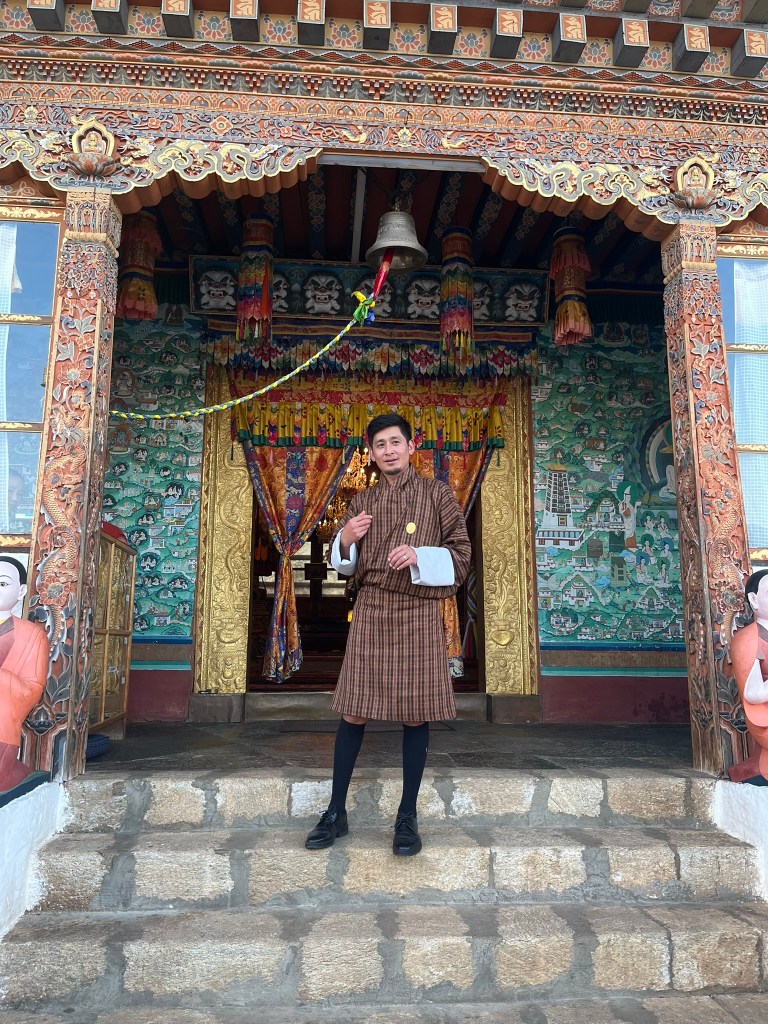
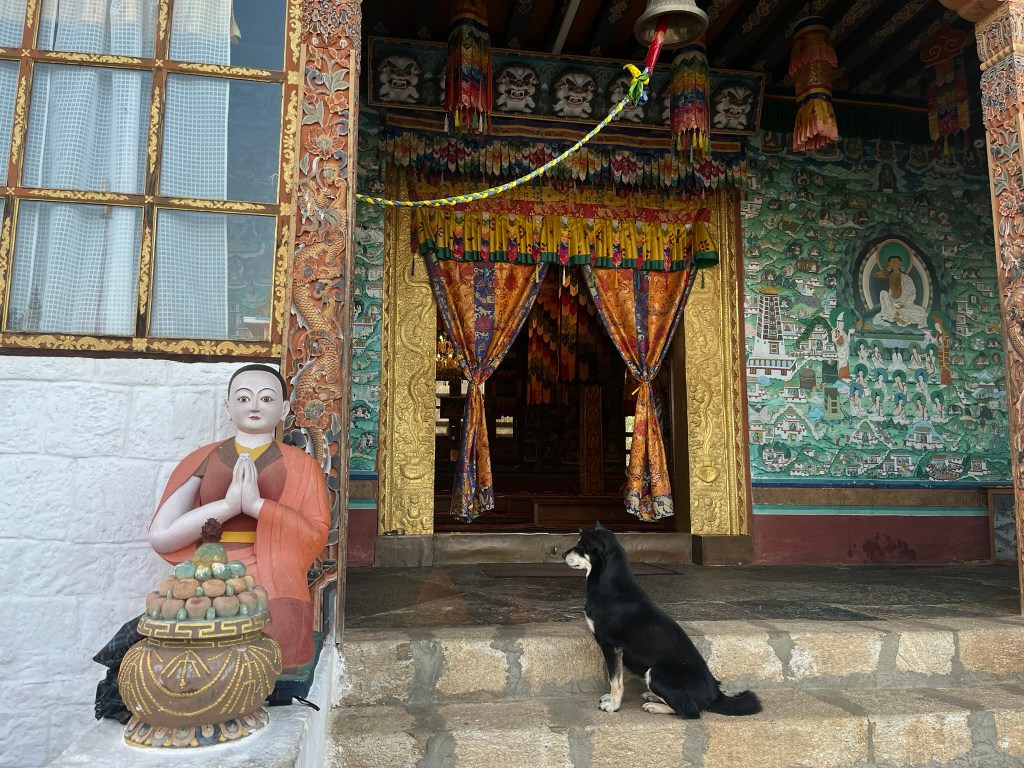
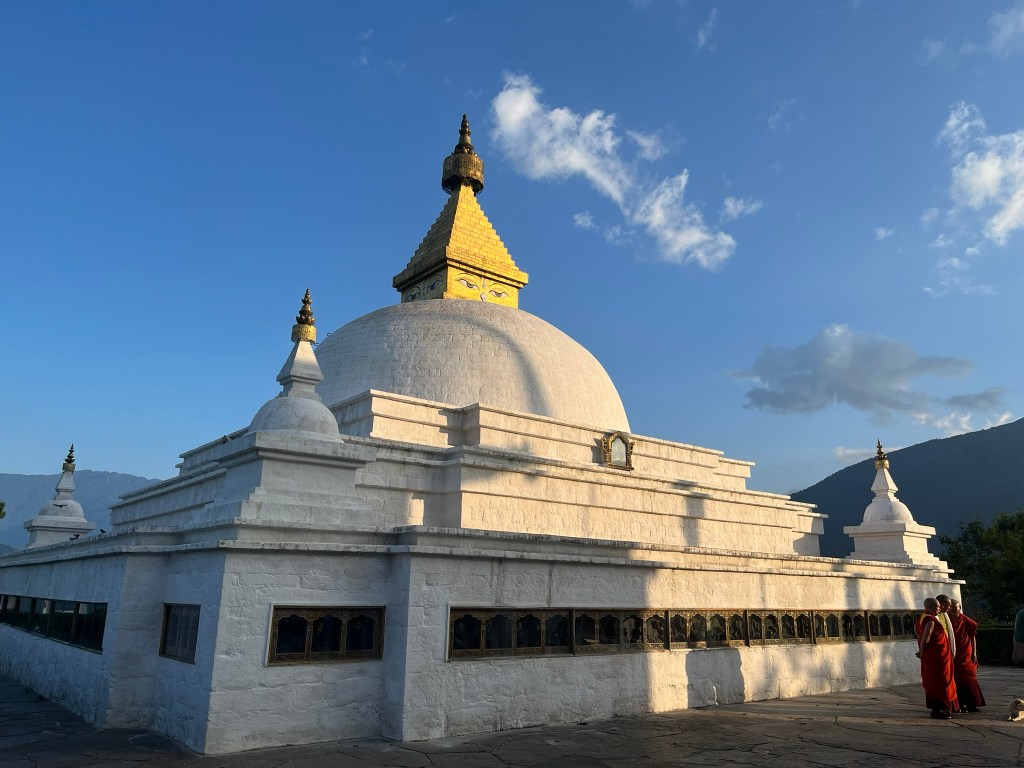
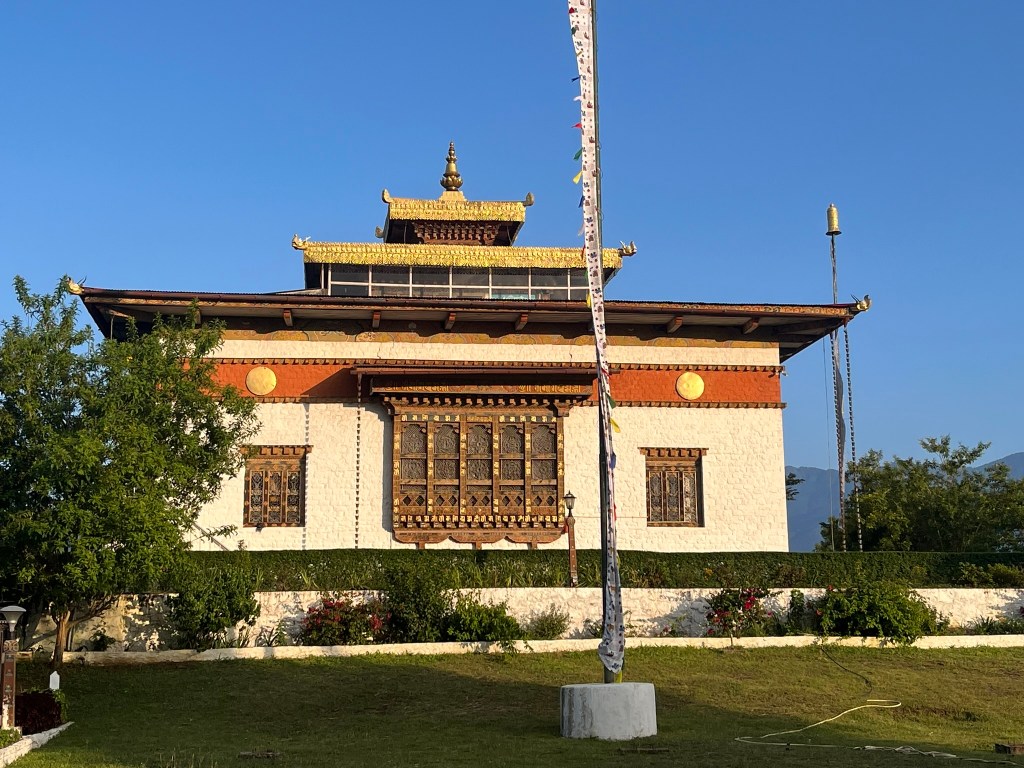
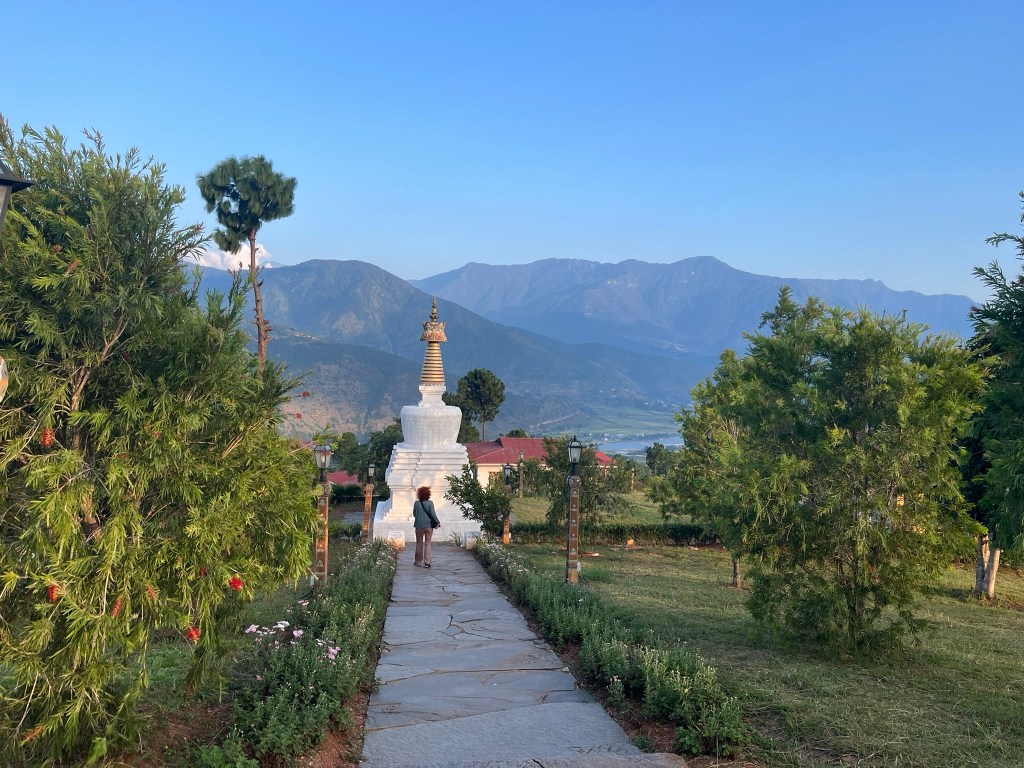
Our final stop today was the nearby Sangchhen Dorji Lhuendrup Nunnery, perched on a hilltop overlooking Punakha valley. It was built about 10 years ago as a Buddhist college for women and houses about 60 nuns. They undertake religious study and meditation but also learn skills such as tailoring, statue-making, thangka painting and embroidery. Inside the main assembly hall there is a 14-foot bronze statue of the thousand-armed buddha and next to the hall stands a stupa, reminiscent in design to the Boudhanath Stupa in Nepal.
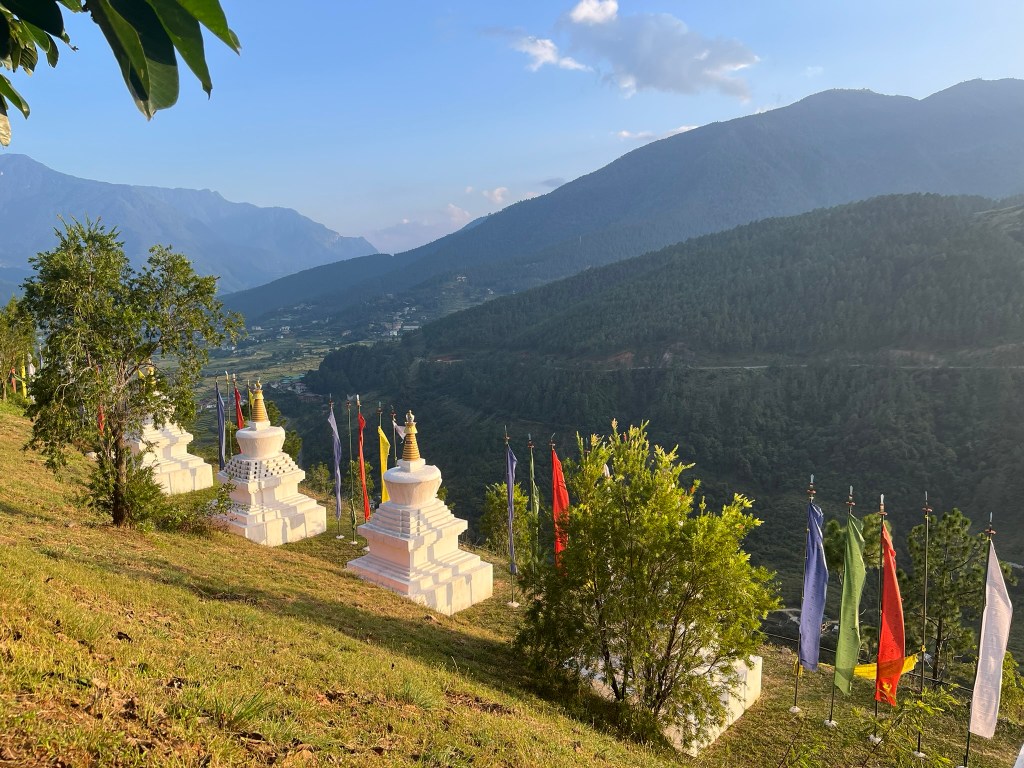
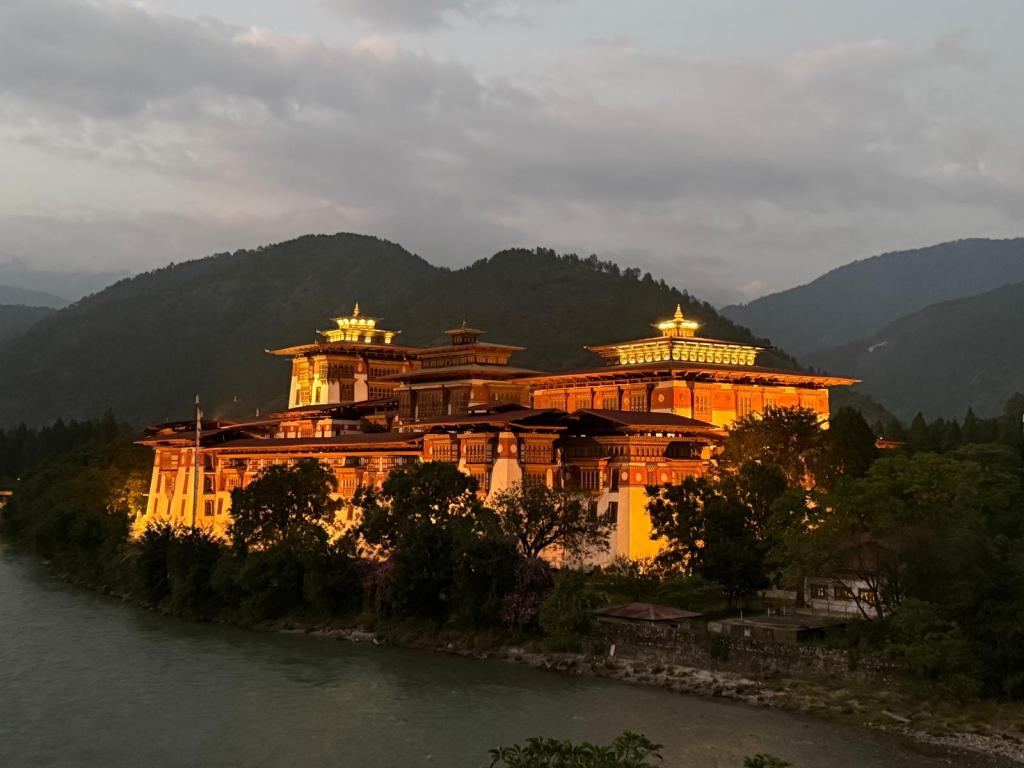
Our home for the night would be on the hilltop looking down in Punakha Valley with an incredible view of the lit-up monastic-fortress we would be visiting tomorrow.
 Colette's Grand Detour
Leave a comment