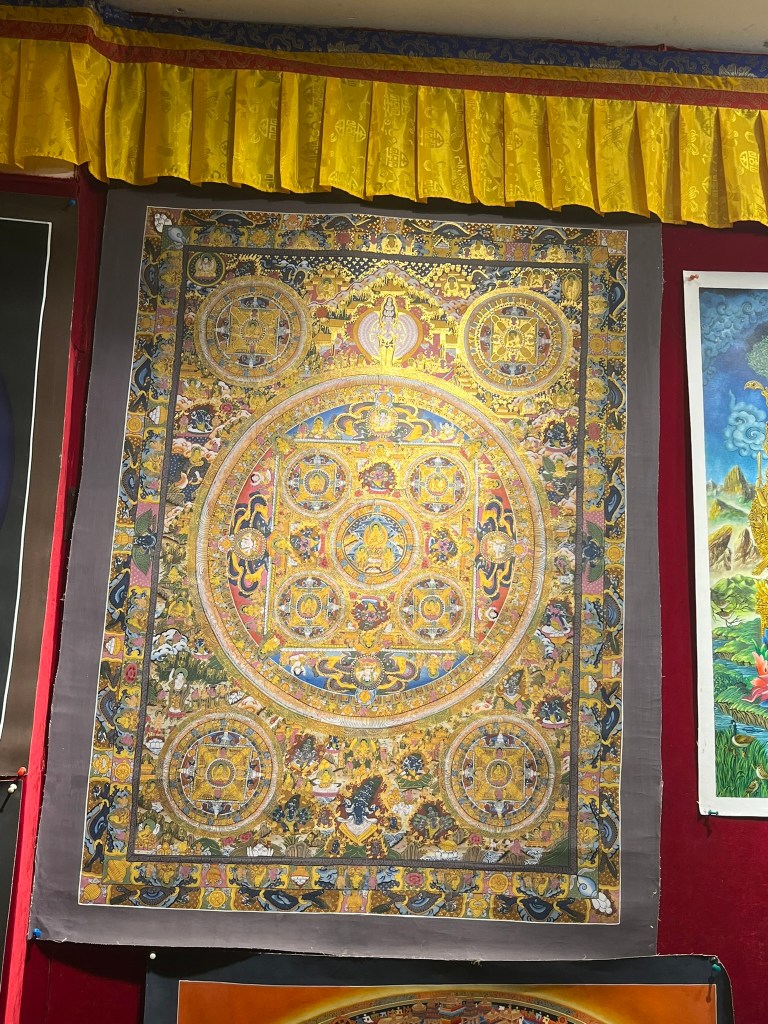
My second craft activity during my time in Kathmandu was to try my hand at painting a mandala. Mandalas are a Tibetan Buddhist tradition that serve as meditation aids, visualising divine palaces where deities reside. Since our time in Lhasa, travelling across Tibet and now in Kathmandu we had seen hundreds of shops showcasing this artistic style, but I had yet to really go into a shop, look at the art closely and understand what they were. We had also seen three-dimensional mandalas in Jokhang Temple and Potala Palace in Lhasa, and a sand mandala in Sakya monastery.
The word mandala comes from Sanskrit and means circle, although most mandalas are a combination of circular and square geometries, representing the universe, order and wholeness. Mandalas can be both artistic and ritualistic and as I mentioned can exist in forms other than paintings.
Thangka mandalas (which is what I was doing today) are painted on thangkas which literally translates to scroll paintings on cloth. Sand mandalas are created by monks using colored sand and often take days or even weeks to complete and then just as quickly they are dismantled. This is meant to embody the concept of impermanence. Mandalas can even be entire temples or stupas. Or created within the mind as a visualisation during meditation.

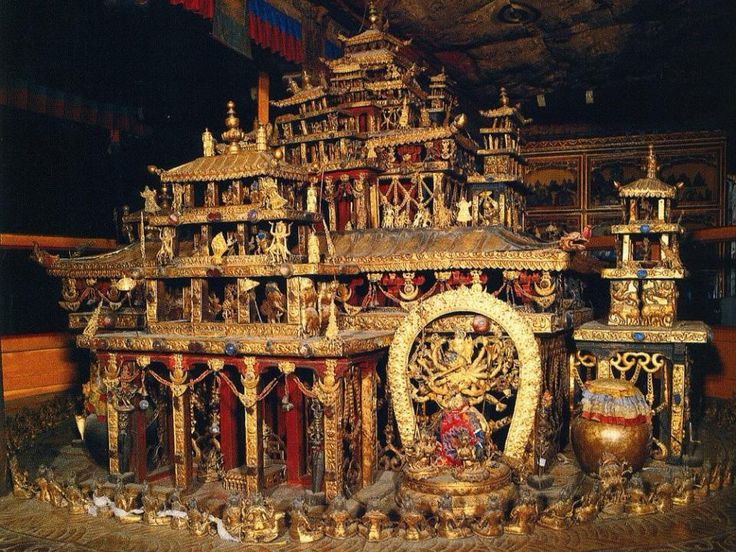
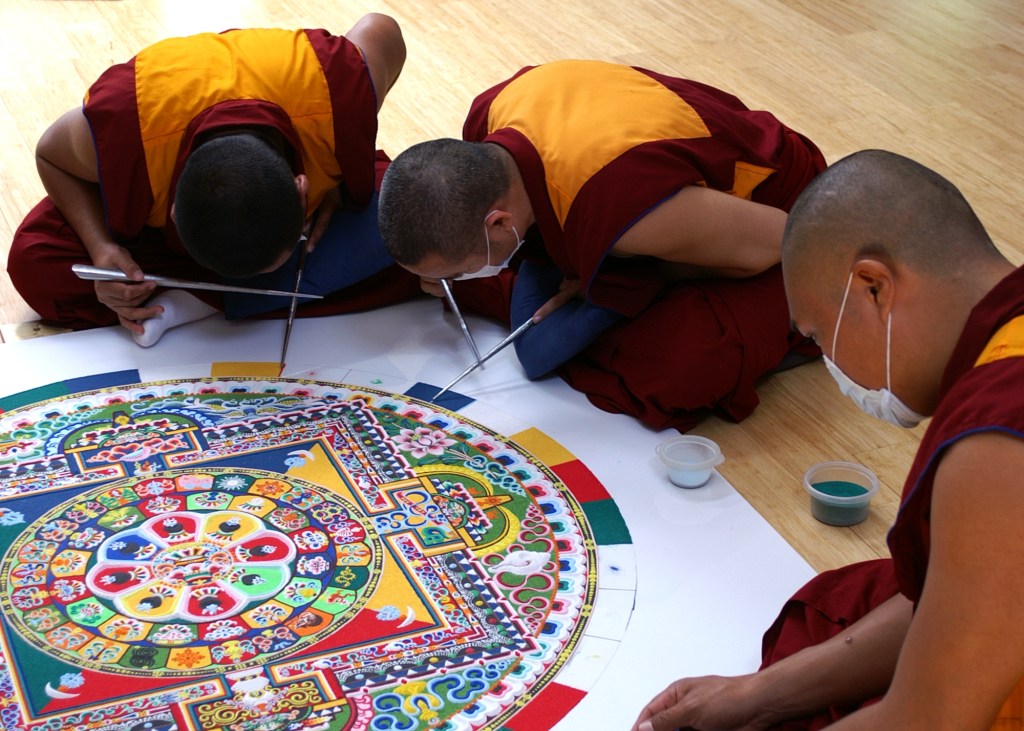
Regardless of the style of mandala, geometric patterns sit at the core of the design. And they typically use concentric layers of squares and circles, with gates, lotuses and symbols arranged in such a way to draw the eye inwards towards the center of the mandala, which represents nirvana or enlightenment. There is a huge amount of symbolism within a mandala. They are cosmic maps that are meant to represent the universe and the mind. And the geometry used is felt to be sacred, symbolizing harmony, balance and cycles. As your eyes travel through a mandala, this is supposed to reflect a practitioners spiritual journey as they shed layers of illusion.
The painting school I had booked was about a 5 minute walk from my hotel in Thamal and was run by a Tibetan-Nepalese teacher, who came from a long line of thangka painters.

We started the process by looking at the four stages of painting a mandala, from drawing out the pattern through to adding the fine gold detail. Today I would just be doing the basic painting element of a mandala which would take around 3 hours. Typically a small mandala with all the decoration added could take a master around 18 days to complete, working on the piece around 3 hours a day.

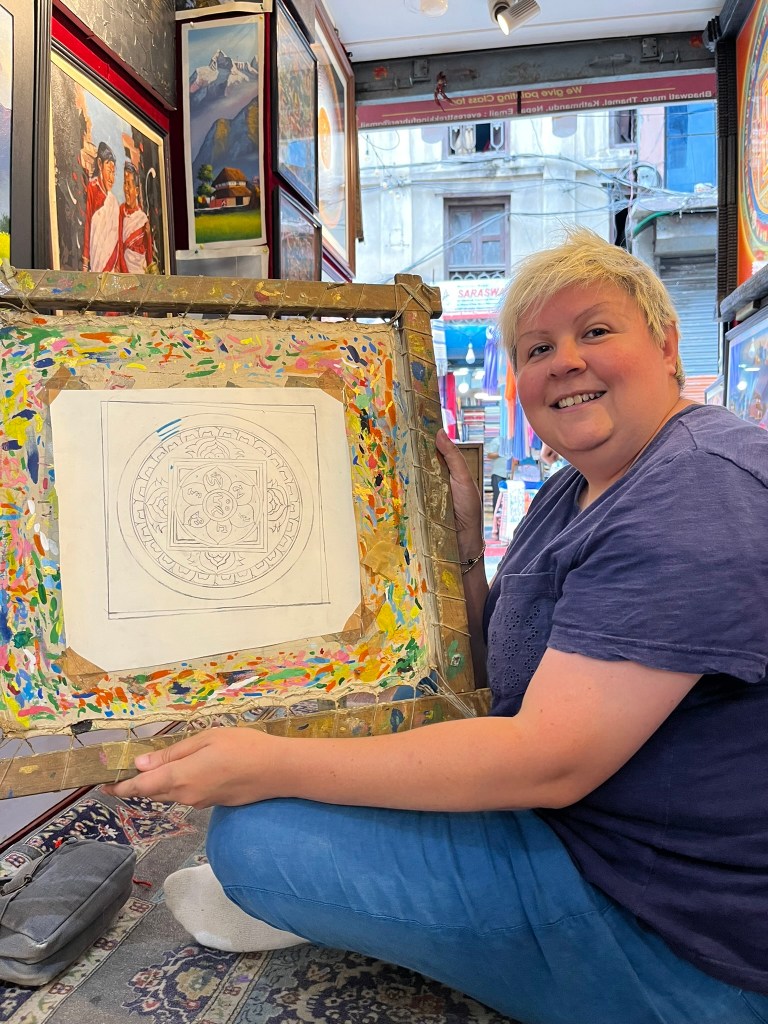
My teacher had already drawn out the pattern for me and explained that I would do the painting sitting on the floor with my legs folded. This is intentional as the process of painting is supposed to be a type of meditation. Each color has a different meaning within the painting; blue for infinity, green for harmony, orange for compassion and so on. I sat on the floor for about 30 minutes before my feet started to go numb and then I shifted to a small stall. However, I remained focussed and painted for around 2 and half hours with full concentration and not taking a break. It did actually feel quite meditative as you have to focus so closely on painting within the boundaries for each color that you don’t have much opportunity to think about any thing else.
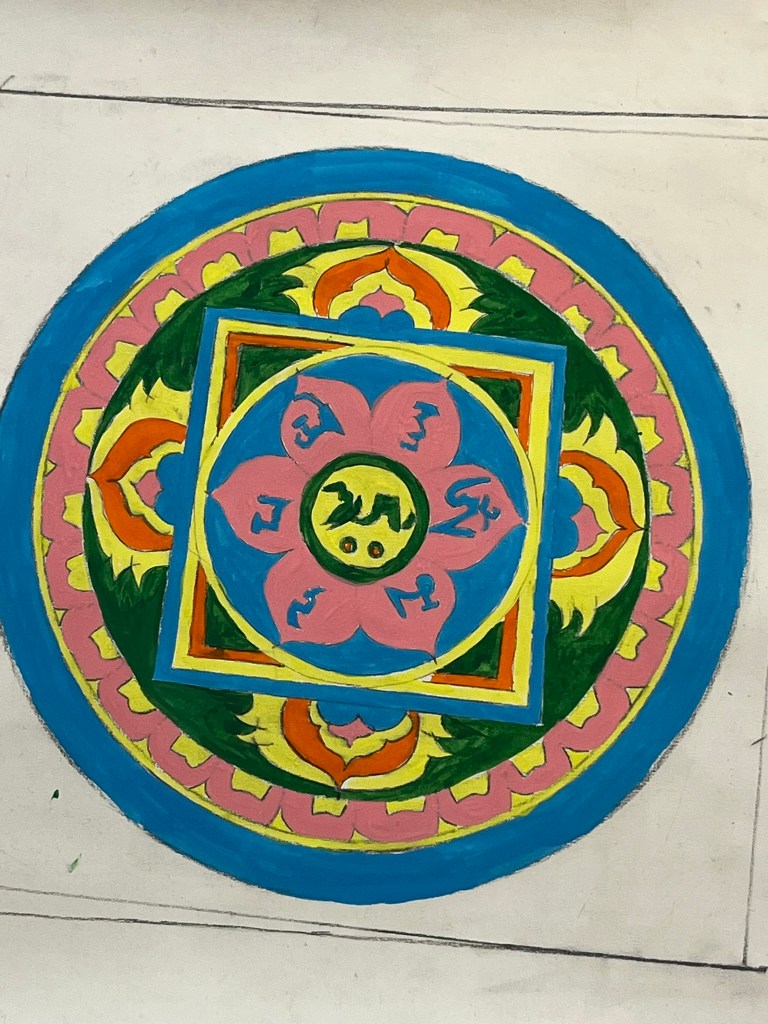

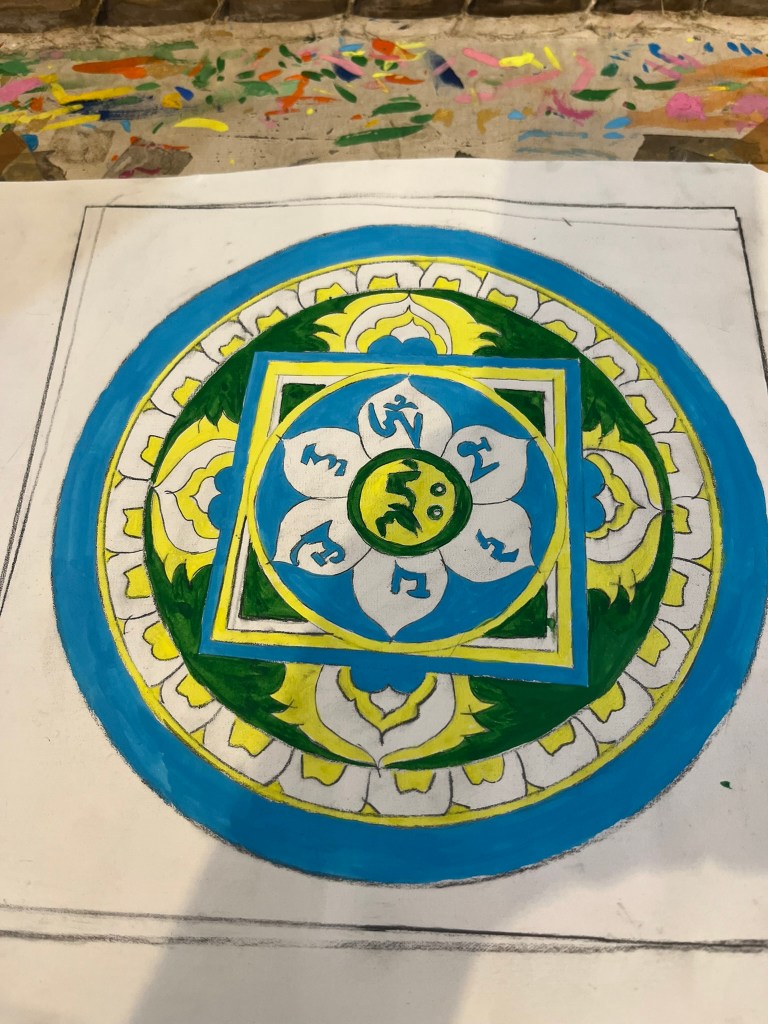
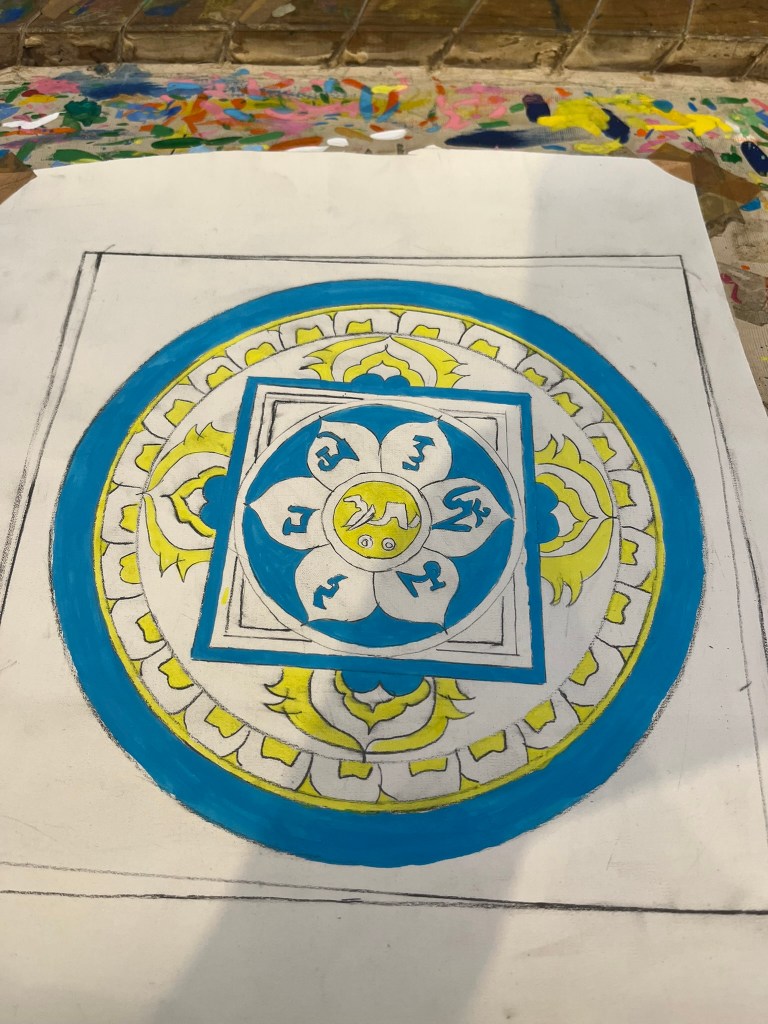
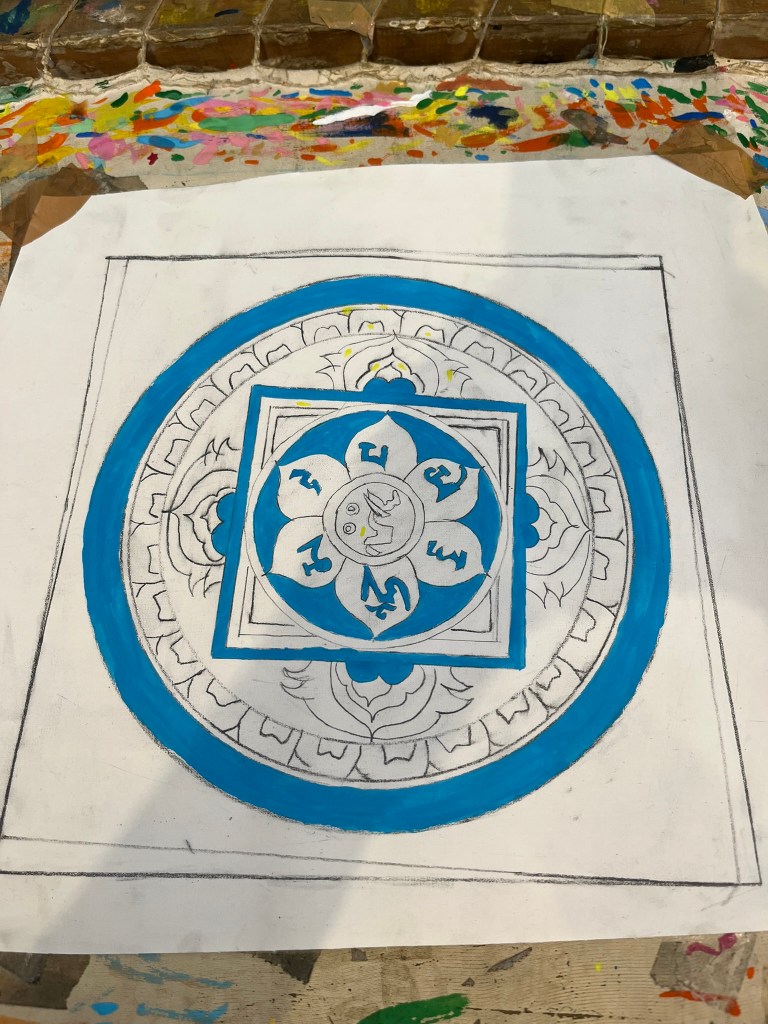
Once I had finished we went upstairs to the teacher’s studio where he showed me some professionally painted mandalas and explained to me the meaning behind them, which ones were designed by the Dalai Lama himself, as well as how to recognise a mandala painted using natural pigments versus one made with manufactured pigments. The price difference was quite significant as well! He showed me a series of thangka paintings that had been done by a monk, who during the winter comes from his monastery near Everest to stay with the teacher and paint. I thought this was quite a nice story, so decided to invest in one of the monks pieces.
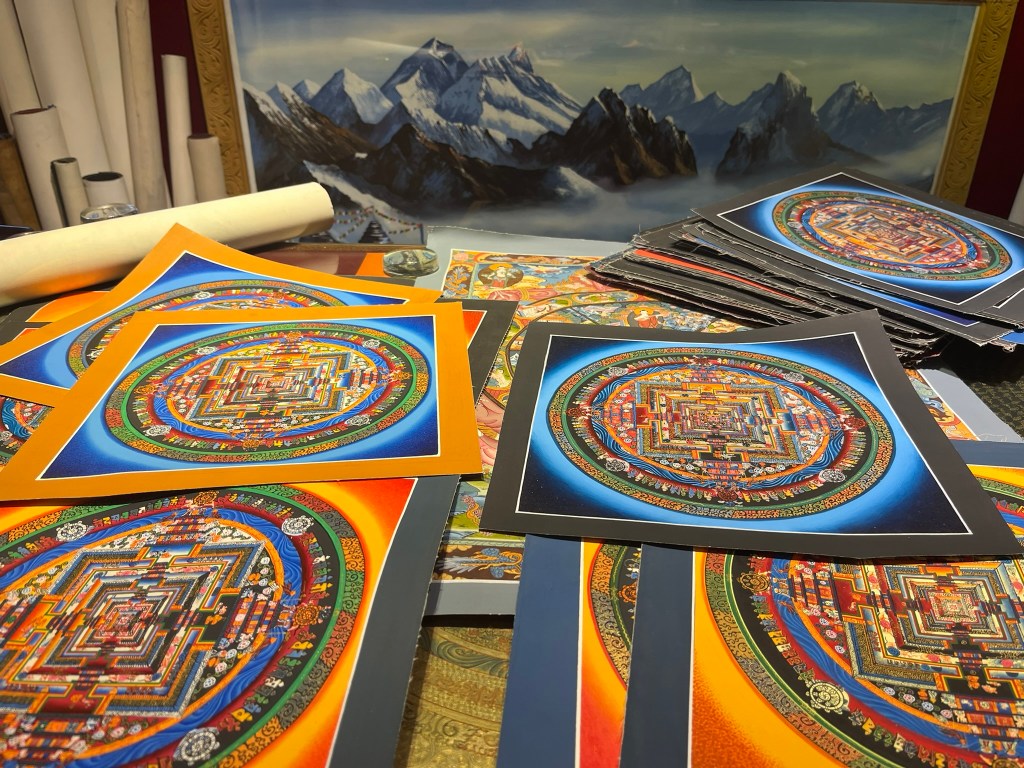

I really enjoyed my day at the thangka painting school. The painting experience was great and like trying any craft, you quickly realise how skilled the professionals are! But I even more enjoyed the long chat I had with the teacher afterwards with him showing me lots of different mandala designs and their significance. He said he equally appreciated that I was asking lots of questions and interested in the designs rather than just simply pointing at something to buy. All around another great day in Nepal.
 Colette's Grand Detour
Leave a comment