Wood-carving is a celebrated tradition in Kathmandu Valley, and is deeply embedded in the architecture, religion, identity and daily life of the city. Historically, the Malla era (12th-18th century) is thought of as the golden age of woodcarving in the region. The Malla kings invested a lot in the arts and architecture and this led to increasingly decorative and elaborate wood-work. Doors, windows, pillars and decorative arches were richly carved with detailed motifs. The rivalry between the three kingdoms in the valley resulted in competition to produce increasingly exquisite carved architecture.
The Newar community are the indigenous inhabitants of the valley and have a long history of craftsmanship. The community still practices this art and many families pass down their skills through generations.
From the 1960s onwards a revival of this art form began. An example that I saw on google was Dwarik’s Hotel which was built by collecting and saving old wood carvings from demolished houses and integrating them into the structure of the hotel, create a kind of living museum. From my time walking around Thamal I have seen a little bit of wood-carving on the buildings, but not much. I think this is likely due to a lot of buildings being demolished after the 2015 earthquake. I also haven’t yet been to the city’s main historical sights where I am sure I will see more of this art form.
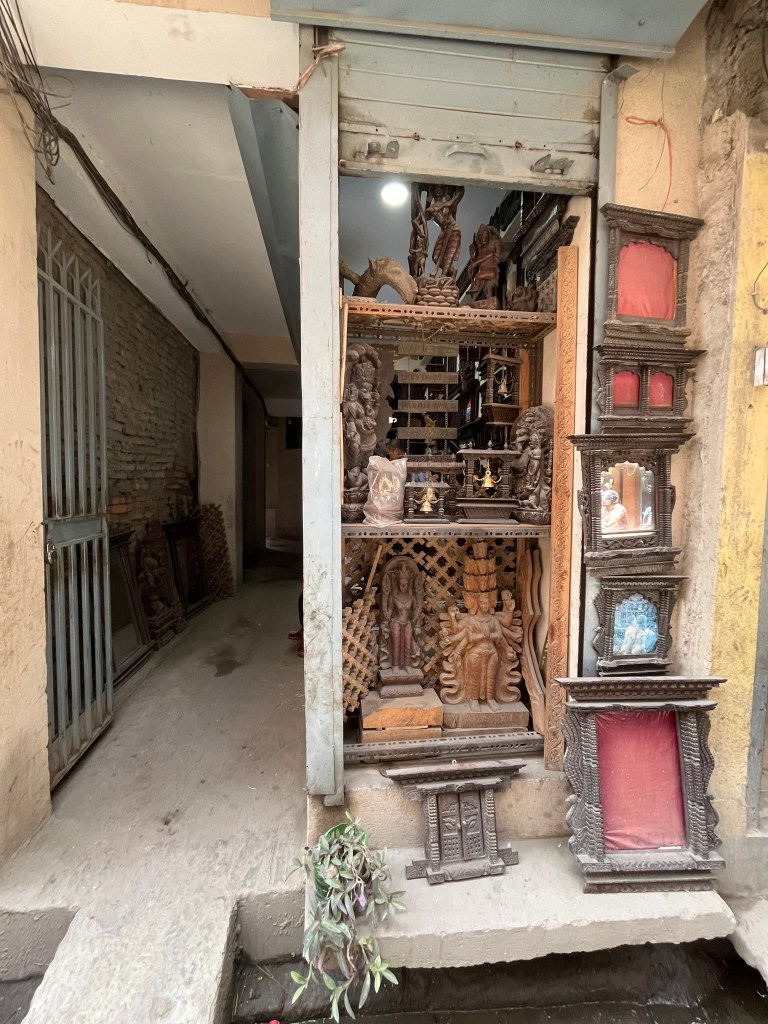
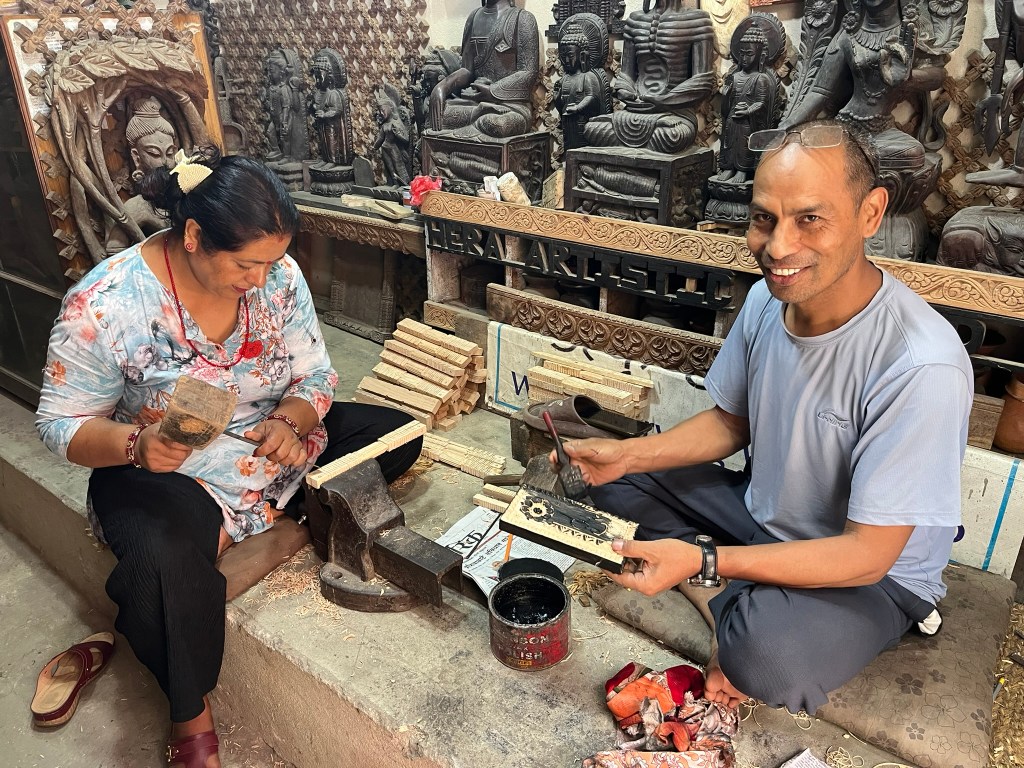
I wanted to give wood-carving a go myself and I booked to do a 3-hour workshop a short walk from my hotel in Thamal. I met the master artisan and his wife in their small workshop and we got straight down to business. He showed me his tools, which were a wooden hammer and a simple set of chisels with different sizes and shaped-ends to achieve different effects. And we took some time to practice on a small wooden block so I could see how to gouge straight lines, what angle to hold each chisel to get the desire depth and effect, and to practice how much pressure to put onto the wood.
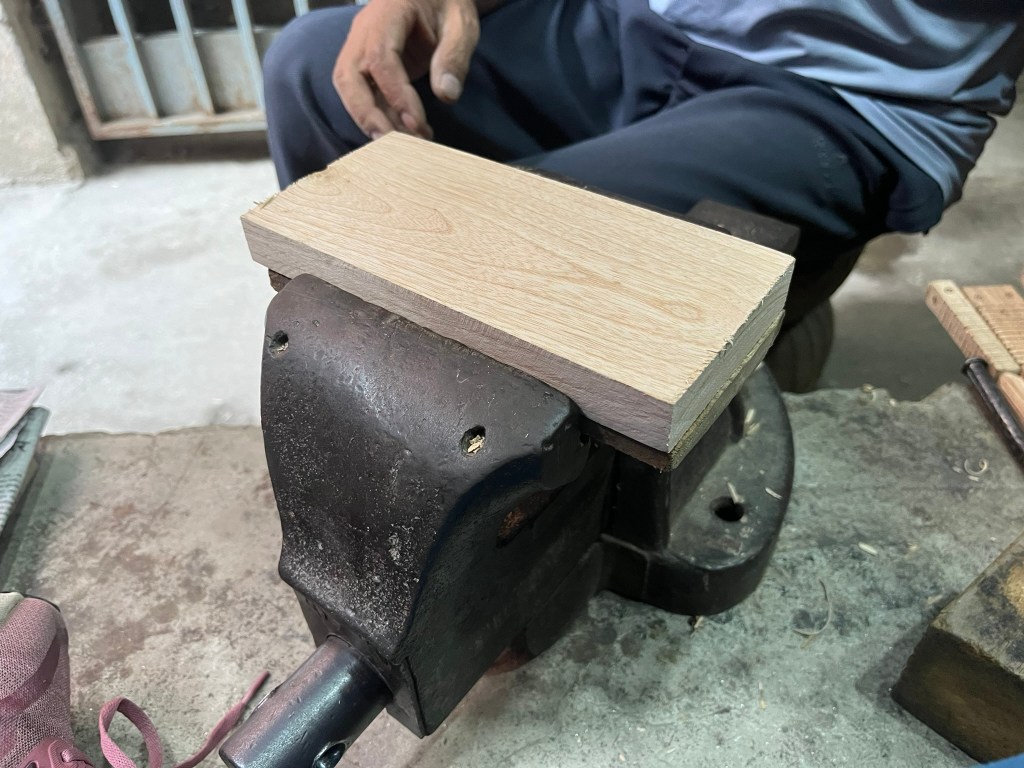

And then we started on my piece and building up the design. The approach was very easy to follow and generally consisted of either using a chisel with a gentle ‘c’ shape firstly at 90 degrees to mark out the pattern and then at 45 degrees to dig out a bit of the wood and create the motif. We also used a much finer ‘v’ shaped chisel to carve in finer details and create indented lines. The border took about 30 minutes to do and then we moved onto the flower motif which was much more involved.
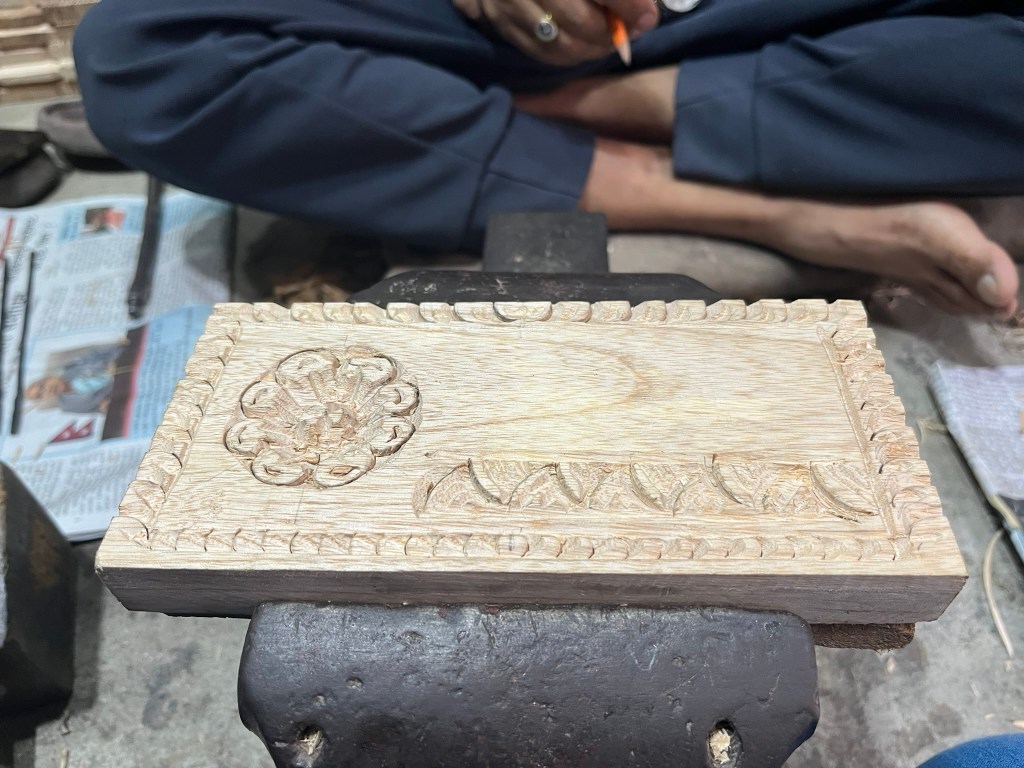
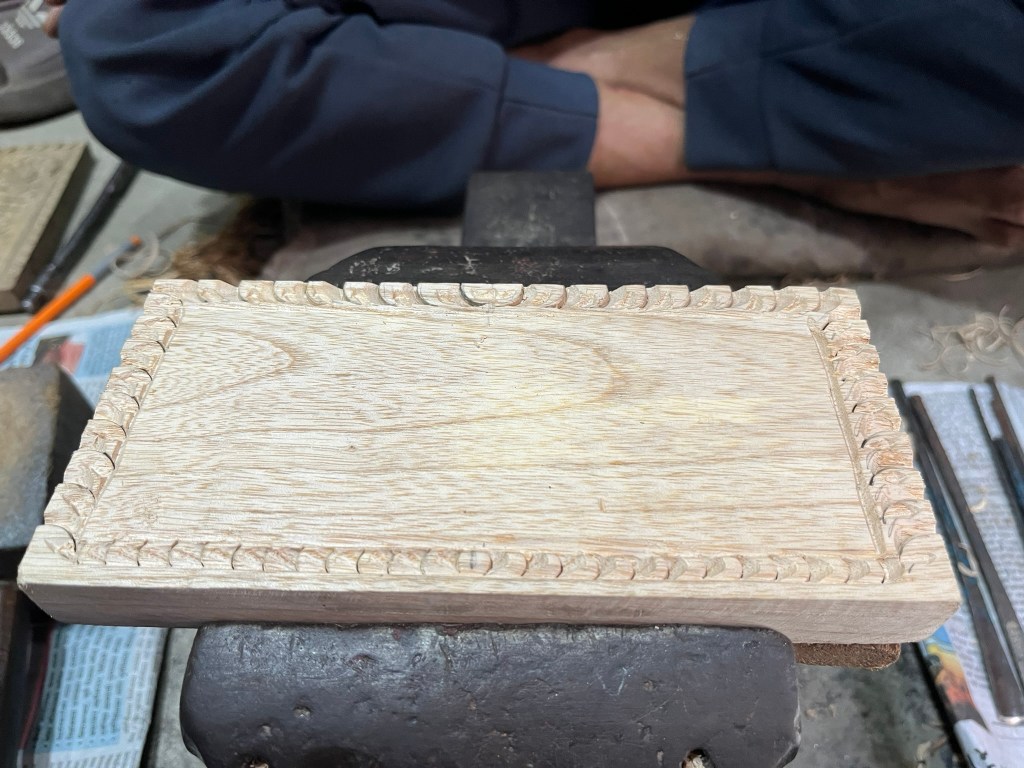
We closely built up the pattern starting with simply carving out the center of the flower. This bit took me about 40 minutes to do with the masters guidance. And then finally I carved in the Ohm symbol which required a lot of patience and concentration to get the depth just right and curve the groove smoothly. Finally we sanded down the wood and covered it in black finishing treatment that consisted of oil, wax and black powder.
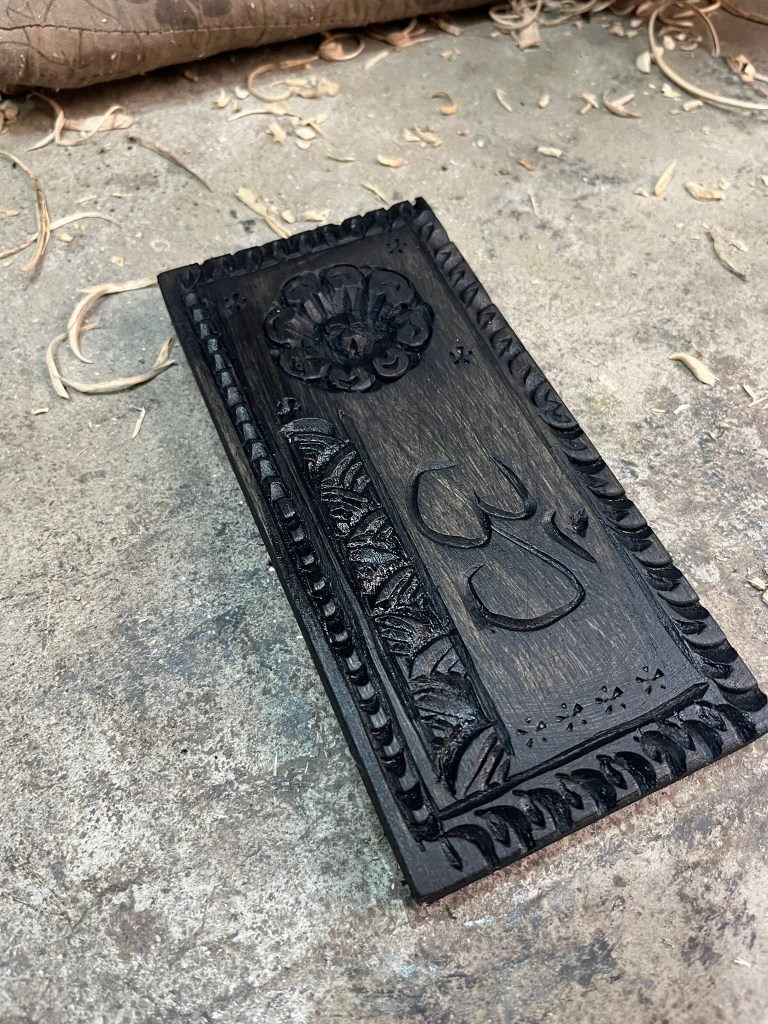
All in all the process took about 2 hours to complete and it was fun to try a new type of craft. It is pretty hard work as you need to grip the chisels tightly, adjusting the angle to ensure a consistent depth of carving and keep a certain cadence with the wooden hammer. Making just a small piece, was enough for me to get a flavor for the art form and appreciate just how skilled you need to be to create the fine details you see in professional pieces.

This workshop is really authentic. The man who runs it followed in the footsteps of his father and grandfather to become a professional wood-carver and the pieces he had in his very small workshop were all hand-made by himself and his wife. Providing workshops for tourists was very much a side-hustle away from his main day-to-day work. I would definitely recommending giving this a go in Kathmandu as it really makes you appreciate the art form much more.
 Colette's Grand Detour
Leave a comment