The drive to Kathmandu from the Dram border crossing between Tibet and Nepal is possible one of the most perilous journeys I have ever taken. Yes the quality of the road was bad. That I was expecting. However, it was the many landslides, both old and new that we had to carefully drive across, the bits of road that had collapsed down the side of the steep gorge, and the blind turns with no way of knowing who was coming from the opposite direction that made it particularly terrifying.
We departed the border town of Nyalam extremely early (6.40am) to try and get as close to the front of the border crossing queue as we could. We were the only ones on the road as we left town in darkness, slowly winding our way down through the hills. Between Nyalam and the border you descend around 2000m in just 40km, plunging from high-altitude plateau into subtropical forest.
Zhangmu is the closest town to the border and is being newly-rebuilt after the 2015 Nepal earthquake completely destroyed it. It is still very much under construction and we were basically driving through a building site clinging to the edge of the gorge. The border was only reopened for freight traffic in mid 2019, 4 years after the earthquake and up until July this year was not open (or prepared) for regular passenger traffic. However, floods in July of this year at the regular border crossing for passengers in Gyirong, destroyed the bridge between China and Nepal, forcing everyone to use Dram for the time being.
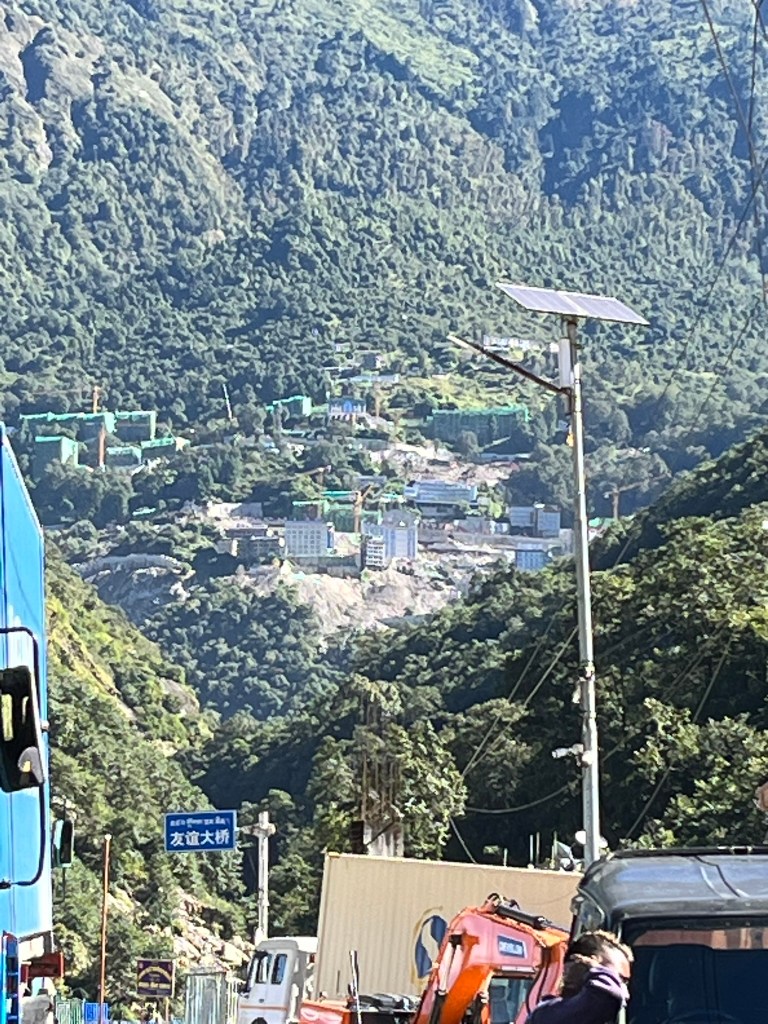
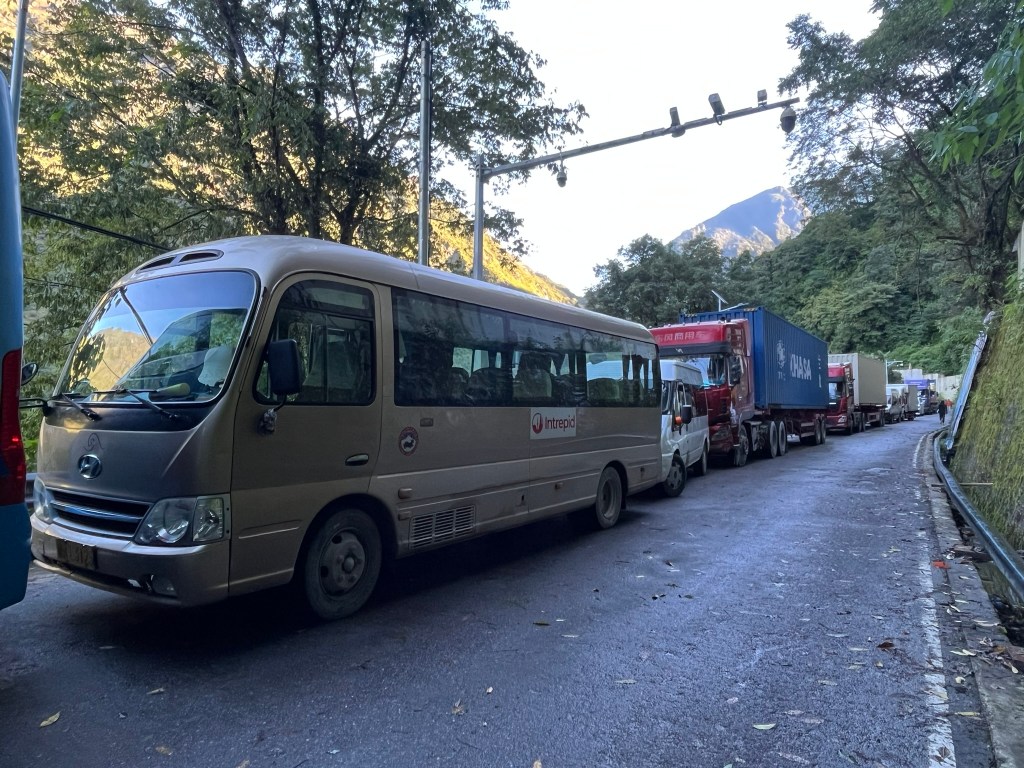
Our guide was not joking about how important it would be to get to the front of the queue. We parked up at around 8am, the second vehicle to arrive. At this point I was fast asleep, but the others had breakfast and tea whilst we waited for the gates to open at 10am. By 9.15am the number of vehicles behind us was probably over 100, each full of people. There was a lot of jostling for position, especially when the motorbike tour we had seen a few days ago rocked up and parked right at the front of the gates. However, our guide swiftly made sure that the authorities knew who had arrived when.
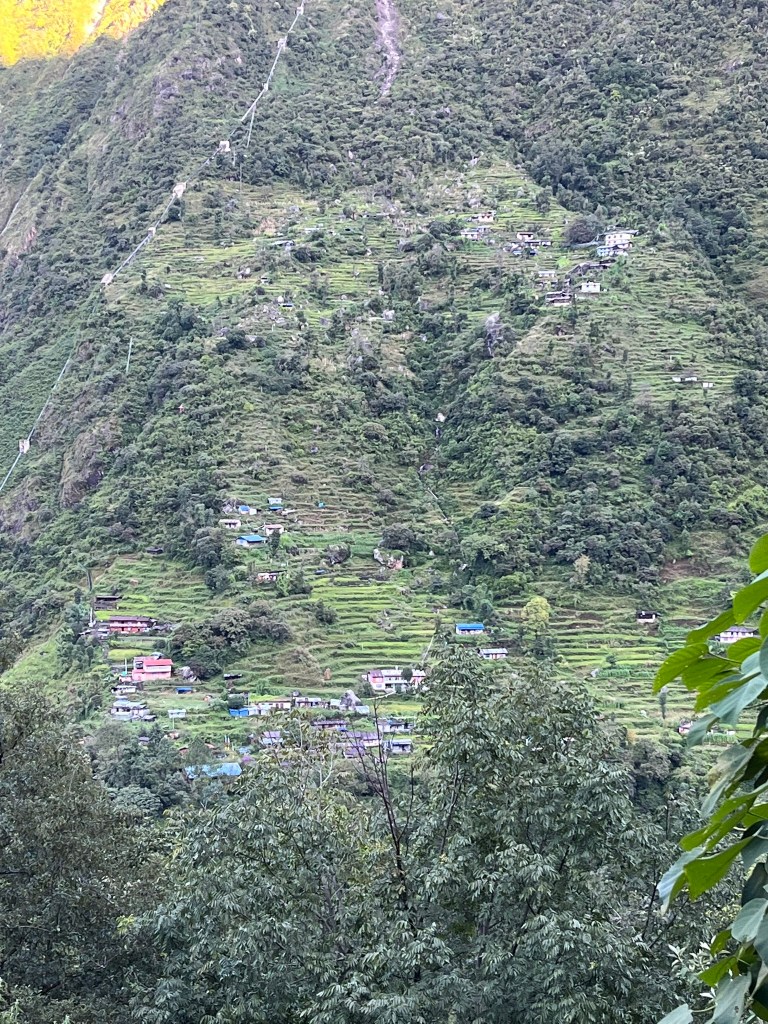
At around 10.15am we headed down another series of switchbacks to the China Immigration building and quickly gathered our bags, said goodbye to our driver and stood in queue to enter the building. We had to fight for our position as other tour groups tried to barge past us. Another argument ensued as to why a group of foreign tourists had been allowed to push ahead of us (and other groups). But our trusty guide did a great job and the authorities held the group back at customs whilst we were allowed to pass. We were all quite pleased with ourselves, especially as one of the pushing group had had the audacity to say to me that ‘in life you have to be patient’ when I told him they shouldn’t be pushing.
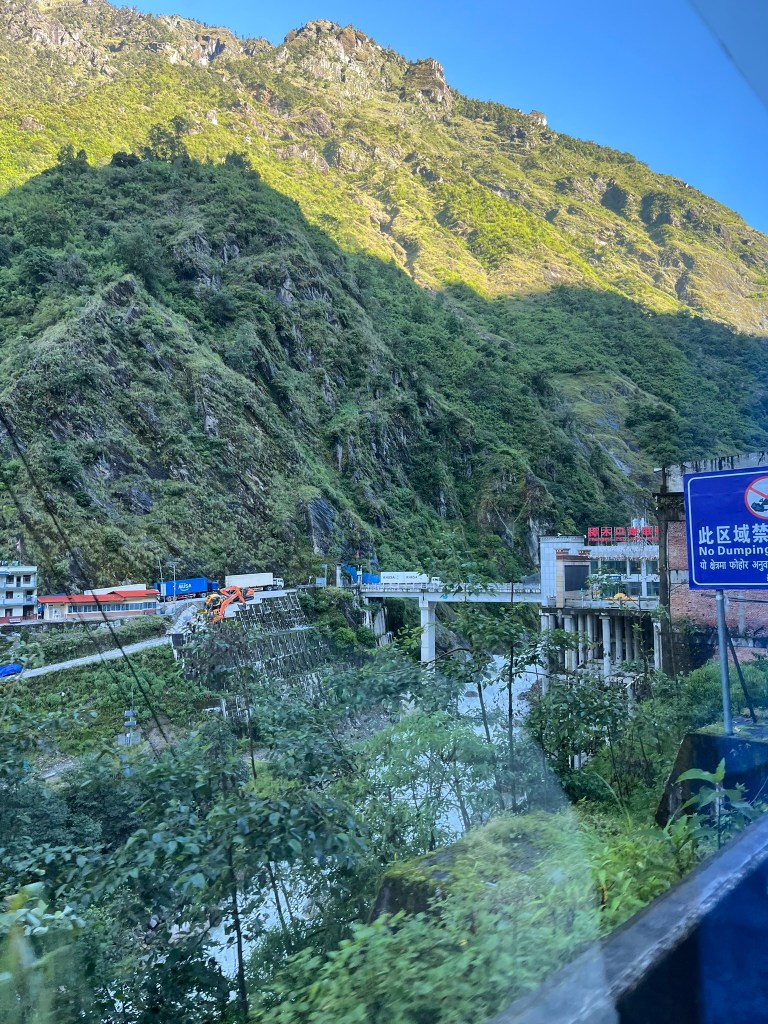

Once through the organised chaos of departing China we walked across the bridge to another world; Nepal. Where China had a huge building, with many police officers, cameras and checks, on the Nepalese side there was a small one-room building and 1 person manning the arrival desk to let us all in. Our e-visas were quickly processed and paid for, our passports stamped and then we headed to our 4x4s. No one even checked as we left that we had indeed gone through the immigration building, let alone gotten our passport stamped.
Now this is where the journey got hairy. We had been pre-warned that there had recently been flooding and landslides in the gorge and that the last group had had to walk over 2 sets of landslides with their luggage and swap vehicles 3 times to get down the valley. It quickly became evident that landslides here were not an unusual thing. You could see evidence of old landslides absolutely everywhere and honestly the road was more landslide than road in most places. Below us the Bhote Koshi river rushed down the gorge.
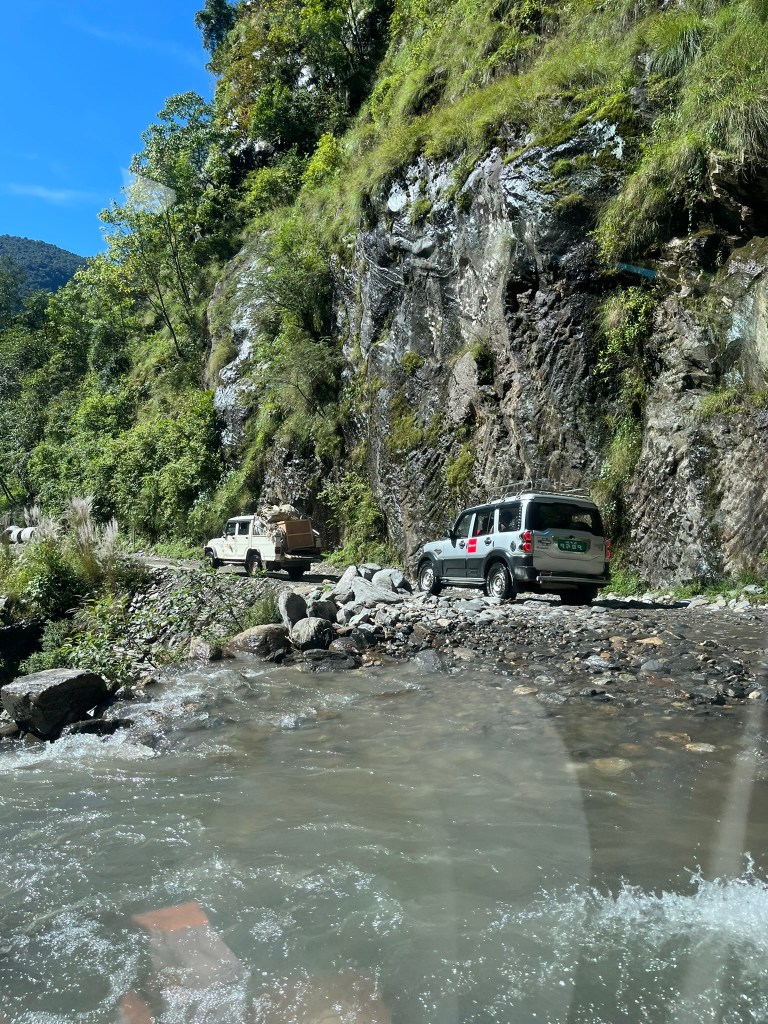
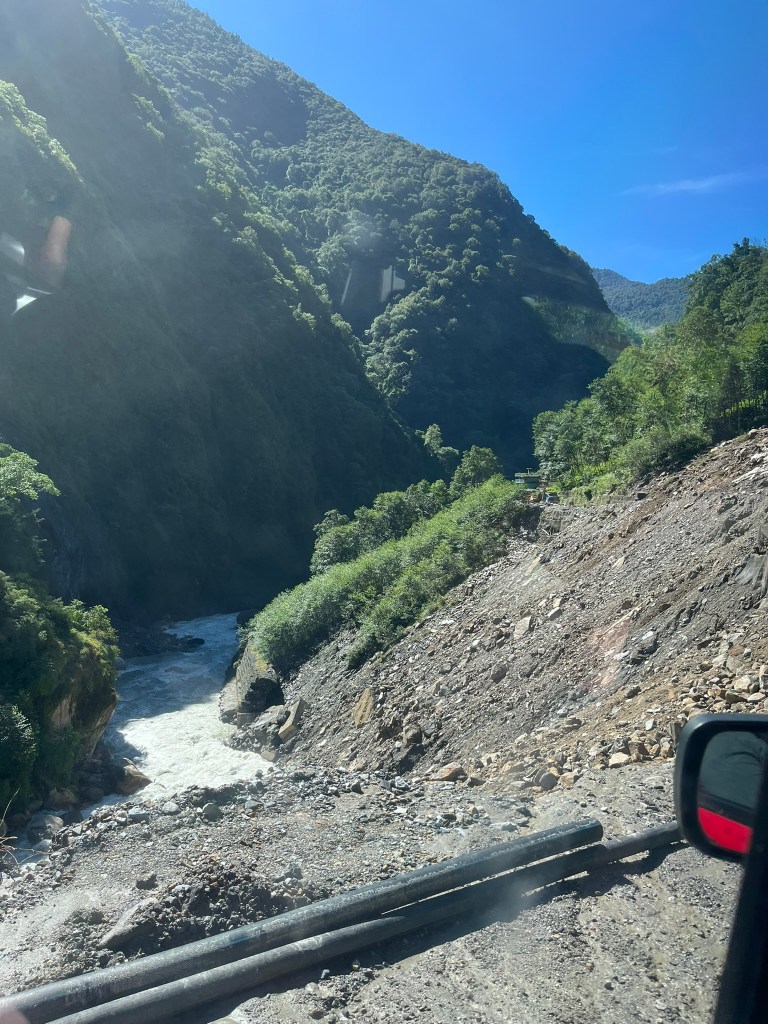

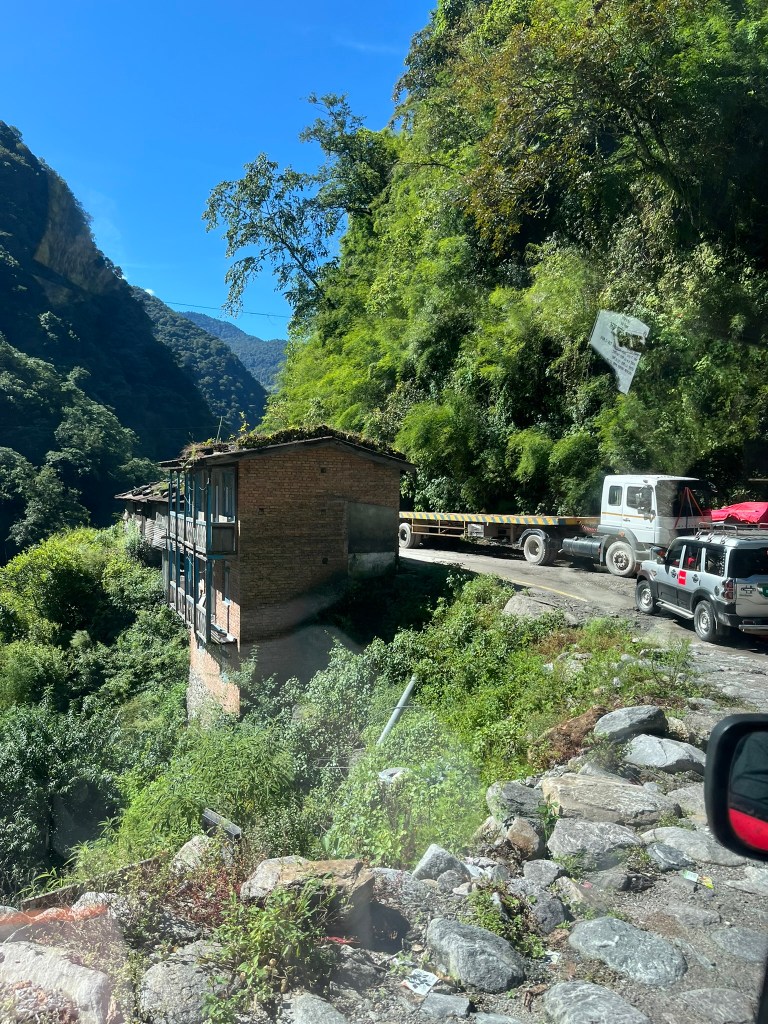


In theory this is a 2-lane road. In reality it is a 1-lane road and often bits of the road are crumbling down the steep sides of the gorge. There are also hundreds of trucks and containers parked everywhere waiting to head up to the border crossing. I really have no idea how they got that far up the valley as it was a difficult enough driving in the 4×4. Either luckily or unluckily, the recent landslides had been prepared so that vehicles could now drive over them. But cutting across a landslide in a vehicle is probably equally if not more scary than being asked to walk over one.
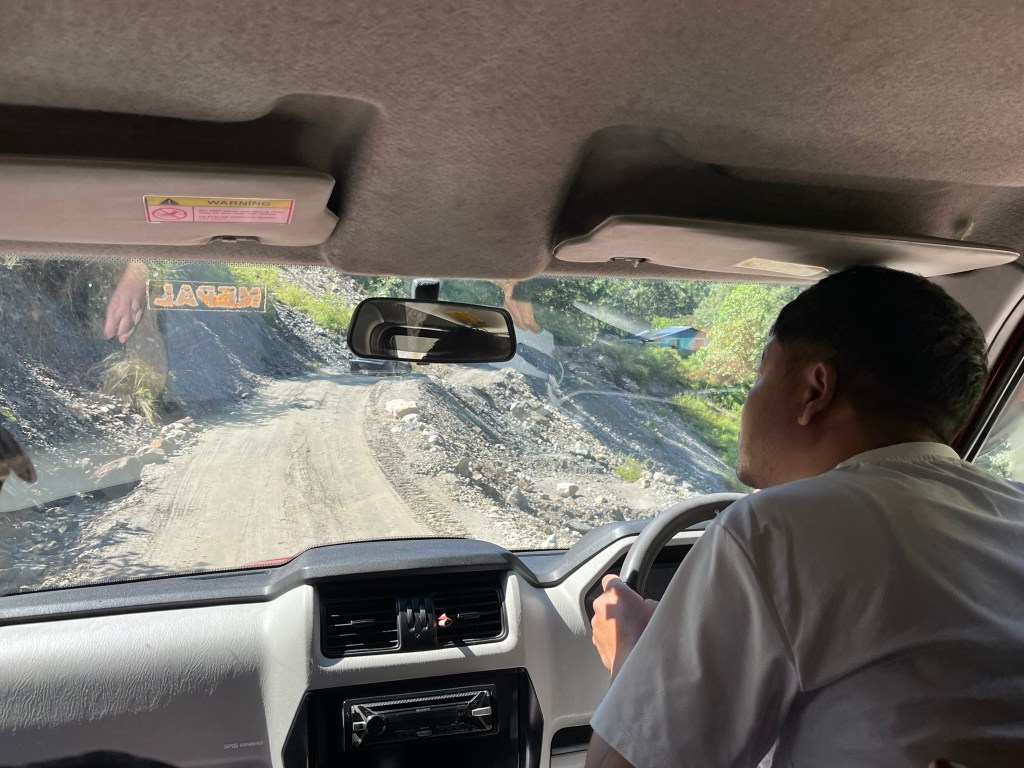
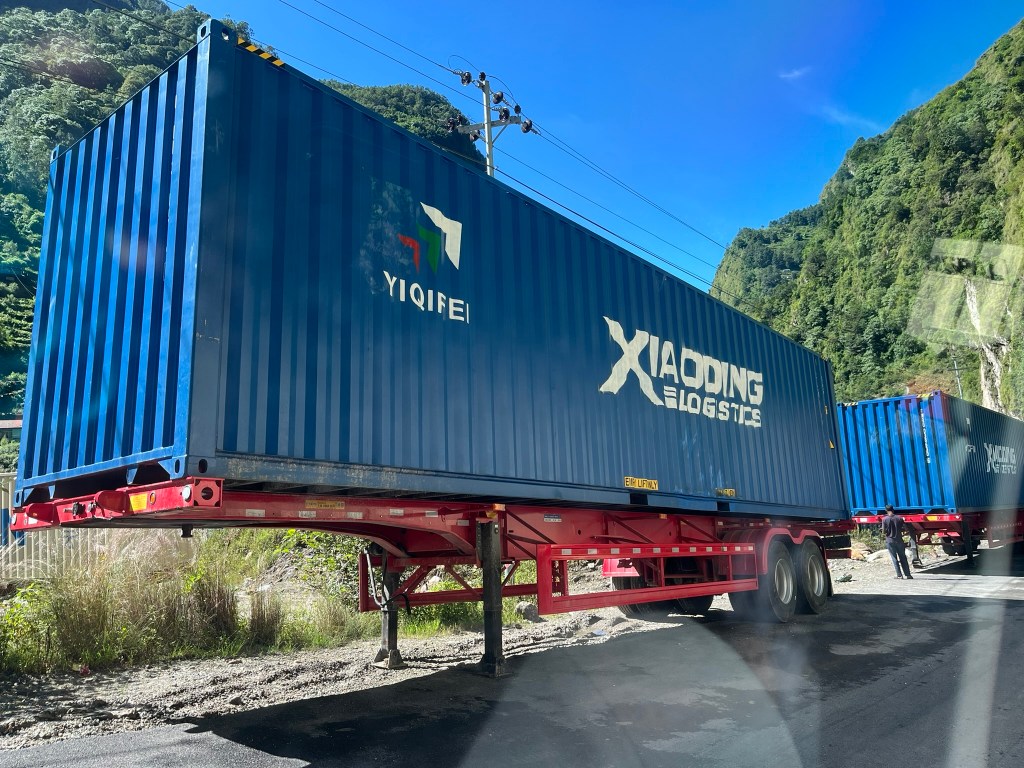
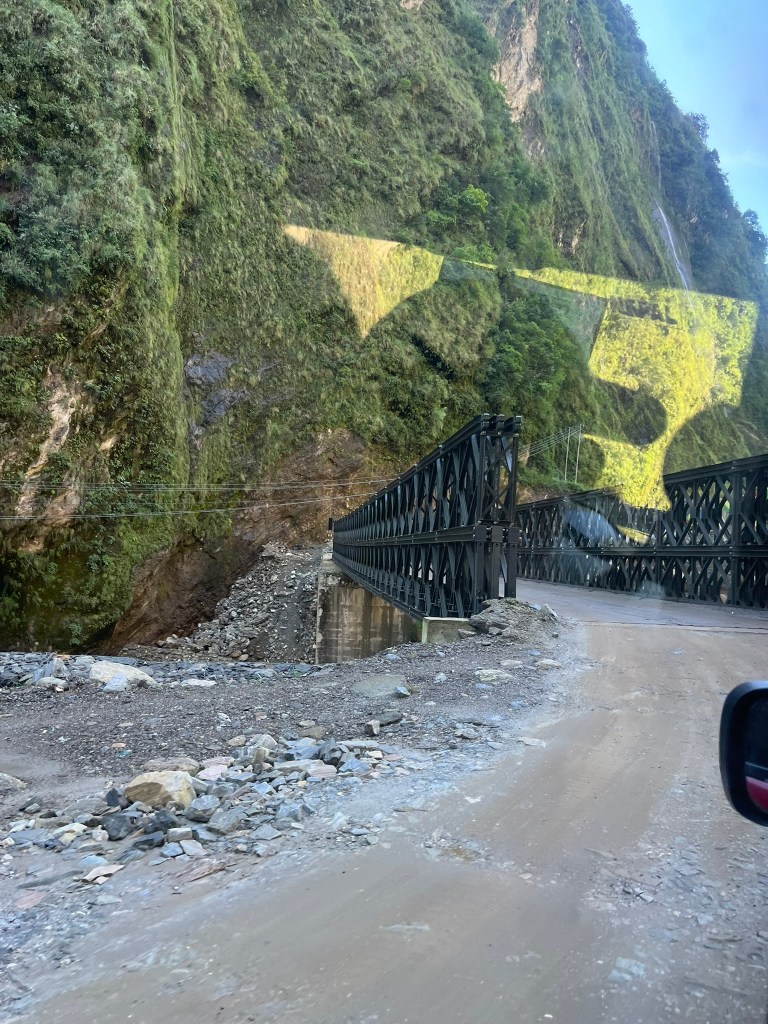
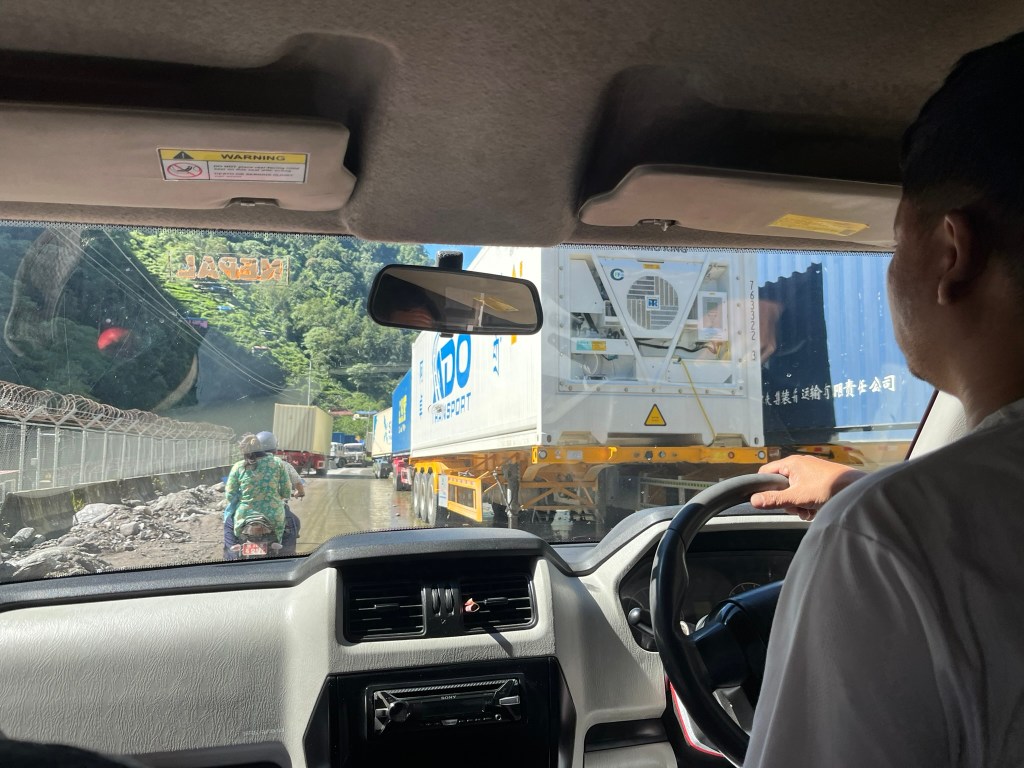
I think most of us tried not to look to closely at the condition of the road and thankfully we had a good driver who was familiar with the area. It took us about 4 hours from the border to reach the outskirts of Kathmandu. And other than a few stretches here and there, the road is in dreadful condition right up to the edge of the city.
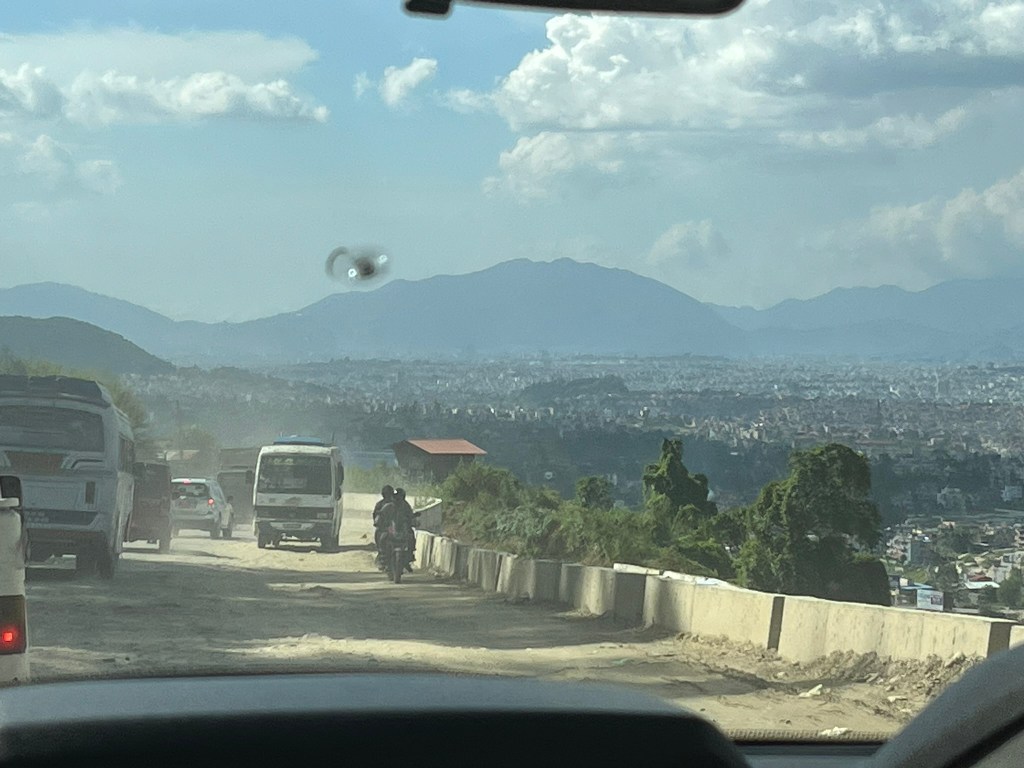
Everything is completely different than our time in Tibet. The traditional houses have been replaced by tall thin apartment blocks, there are people everywhere, it is hot and humid and we are surrounded by lush forest. I can’t believe we were at the base of Everest yesterday! But I am excited to be in Nepal, my 92nd country, and can’t wait to start exploring the country. As we drove through Kathmandu to reach our hotel we passed many of the buildings that had been burnt down, destroyed or heavily damaged in the protests 2 weeks ago, but our guide said things were currently calm now and from what we could see from the car window, life was continuing in Kathmandu, regardless of the political situation.

 Colette's Grand Detour
Leave a comment