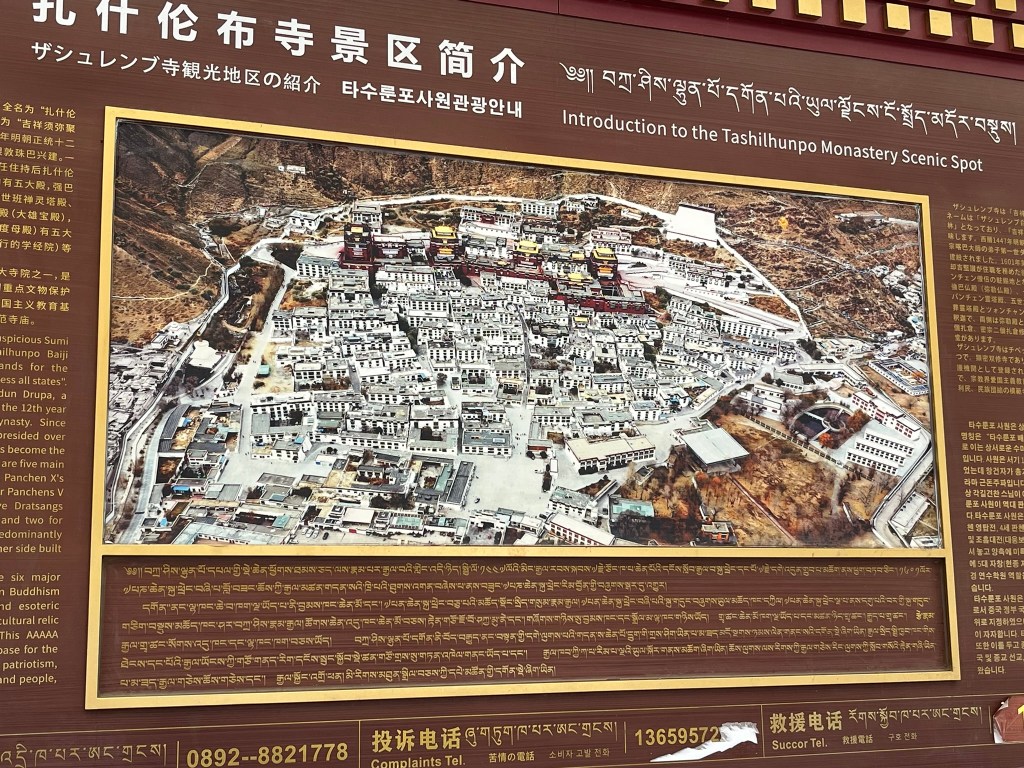
Tashi Lhunpo is a major Tibetan Buddhist monastery in Shigatse, Tibet. It was founded in 1447 by Gedun Drupa who later became the first Dalai Lama. And it is traditionally the seat of the Panchen Lamas, the second highest line of reincarnated lamas in the Gelug school after the Dalai Lama.
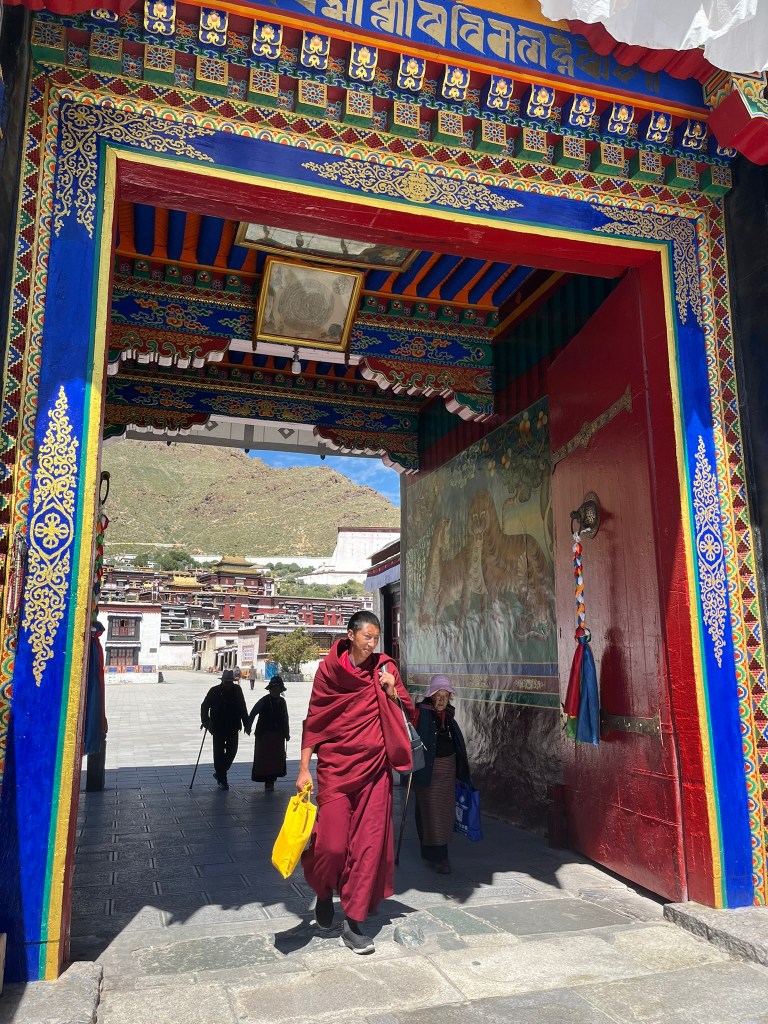
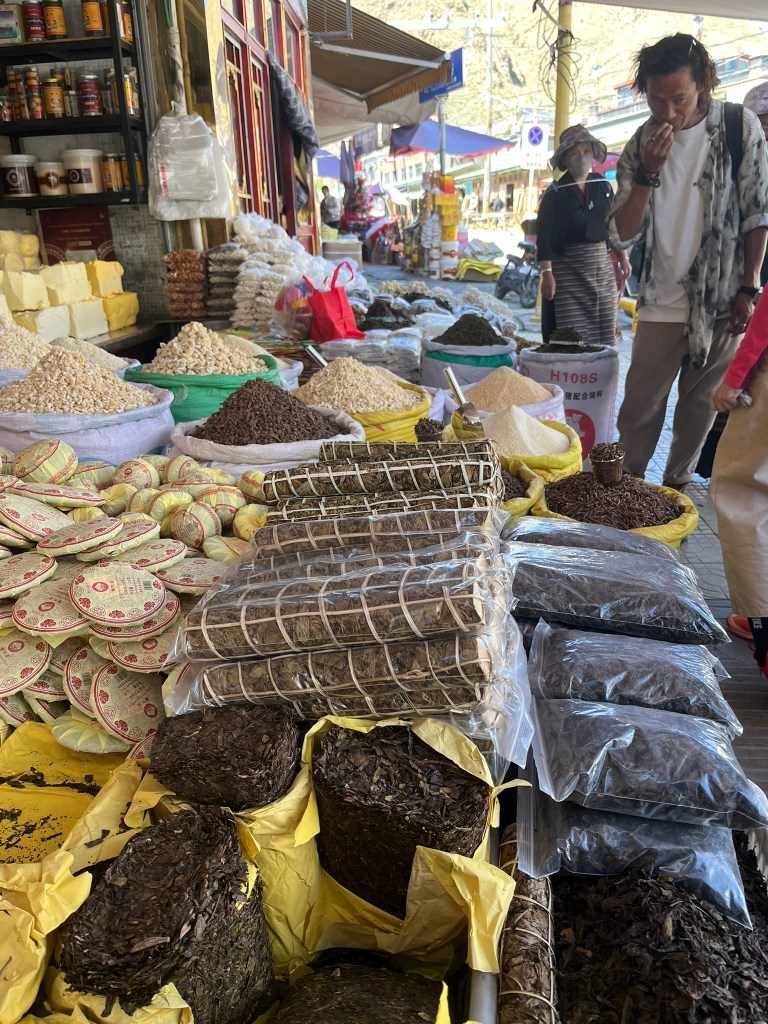
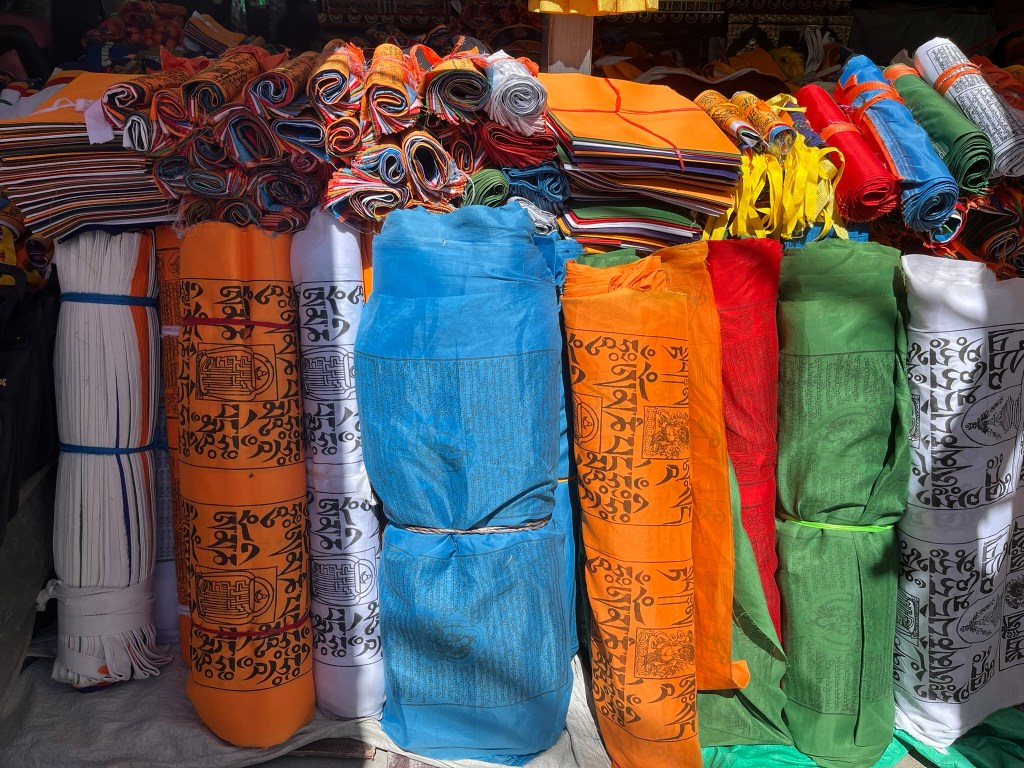
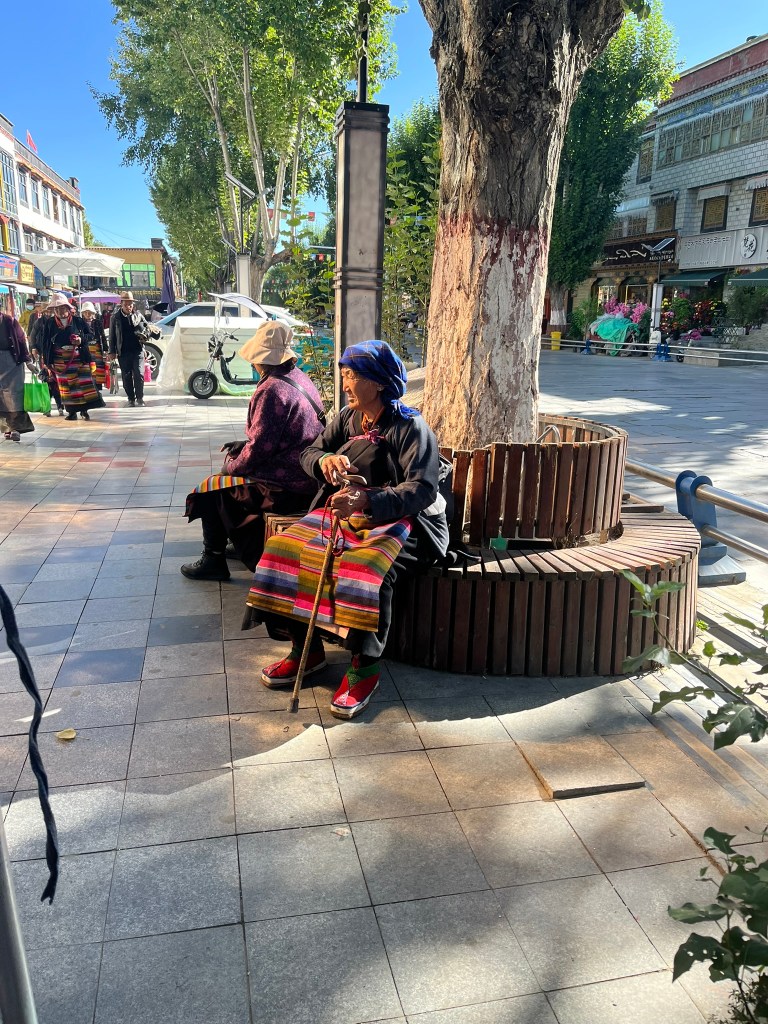
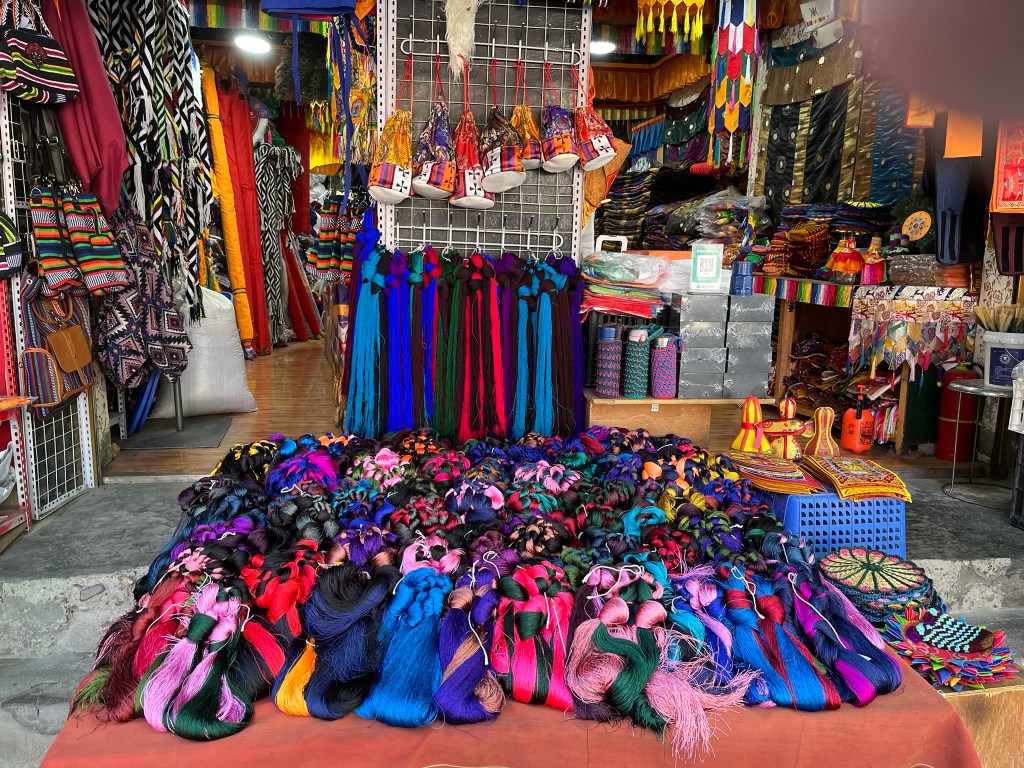
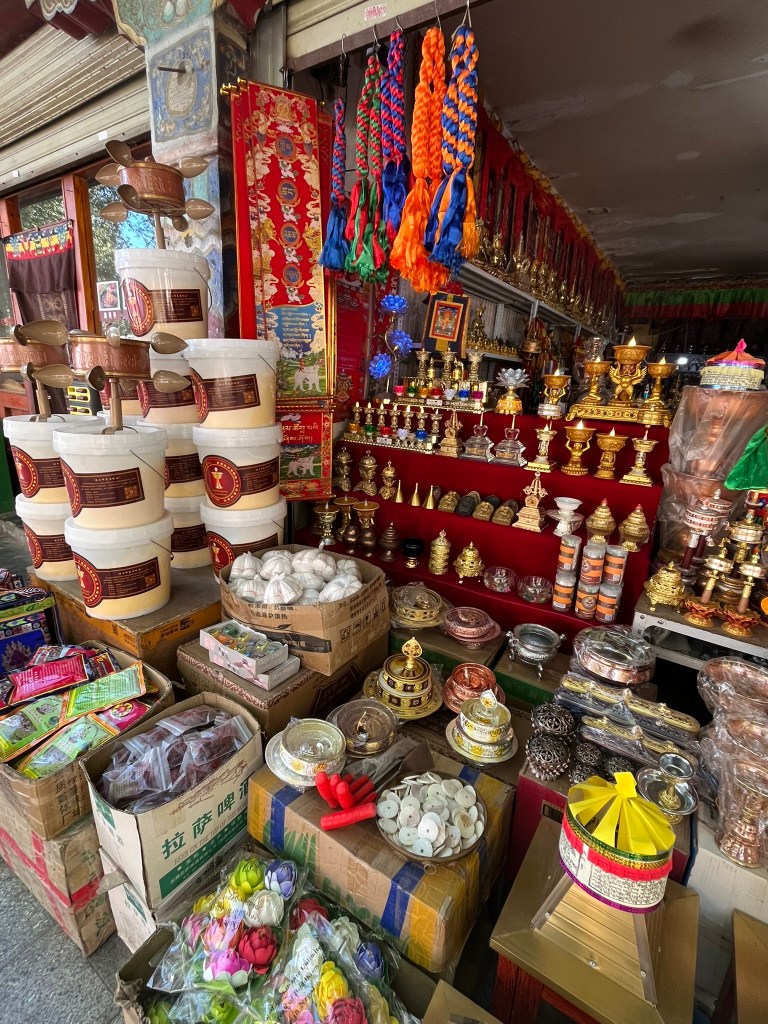
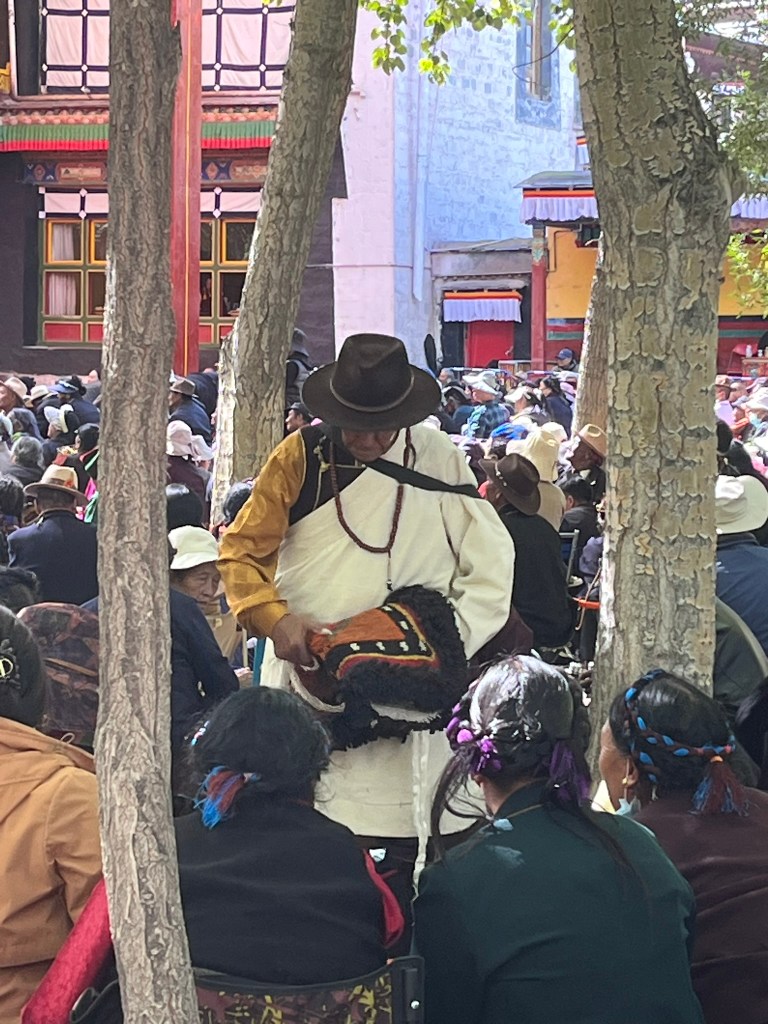
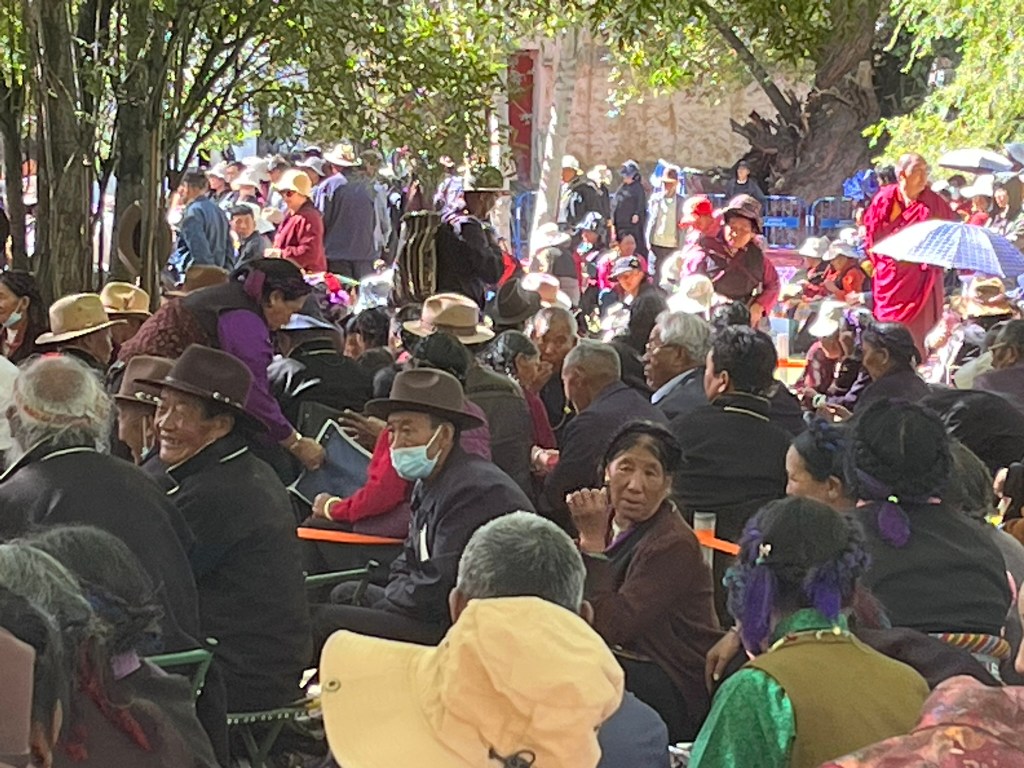
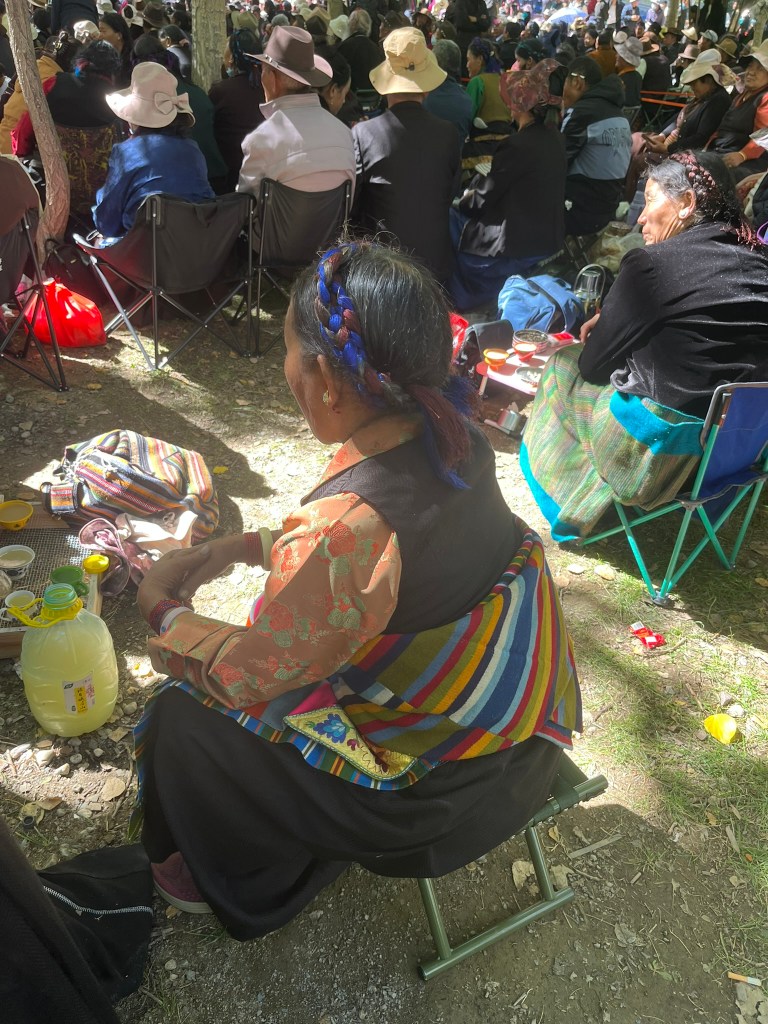
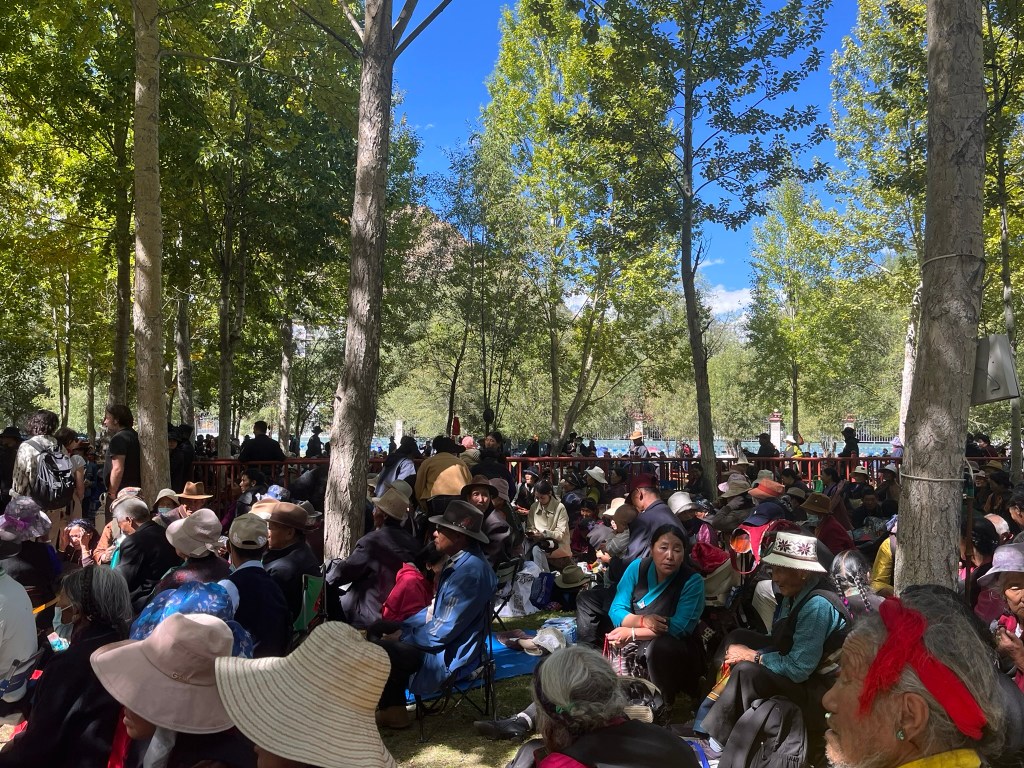
We were lucky enough that today our visit coincided with a Chum Festival being held at the monastery, where it was rumored that the current Panchen Lama was in attendance. As we arrived in the morning to the area, many hundreds of people were heading up the road, dressed in traditional outfits, carrying big flasks of tea, stools to sit on and picnics on their backs. Whilst my group went off to do the kora circuit of the monastery around its perimeter I headed to explore the shops and market stalls in the area and to people watch. The shops were similar to Lhasa, stuffed full of various Buddhist-related paraphernalia as well as beautiful jewellery and furniture. The most popular purchase of the day for those heading up to the monastery seemed to be fold-up stools to make sitting on the grass at the festival a little more comfortable.


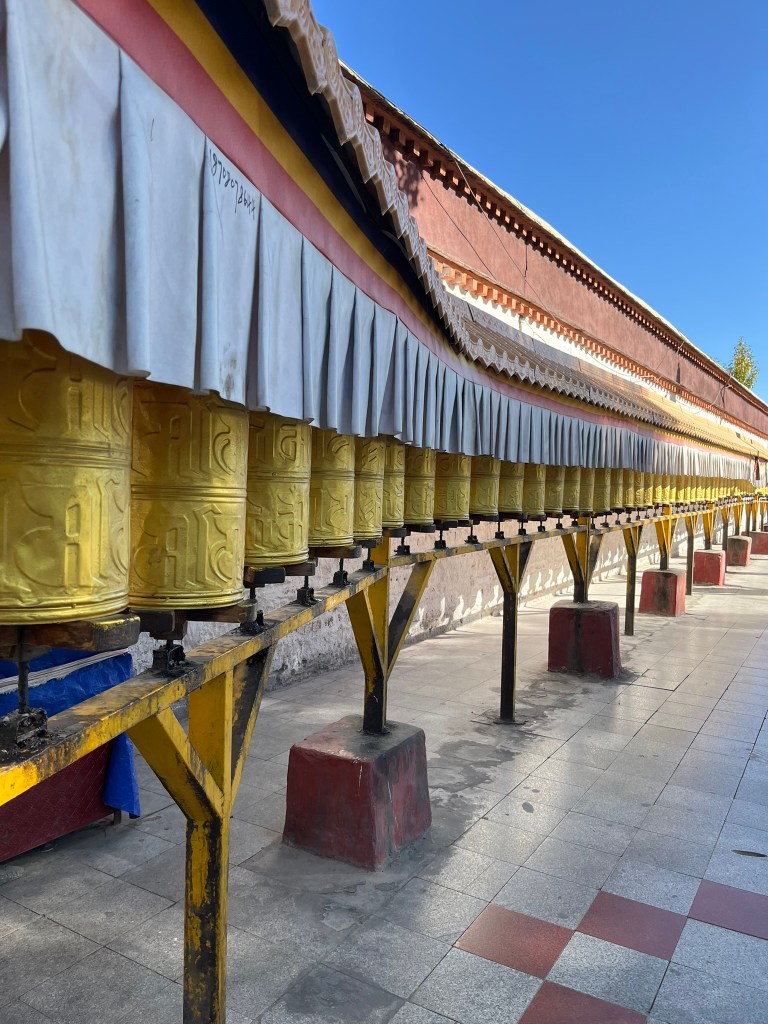
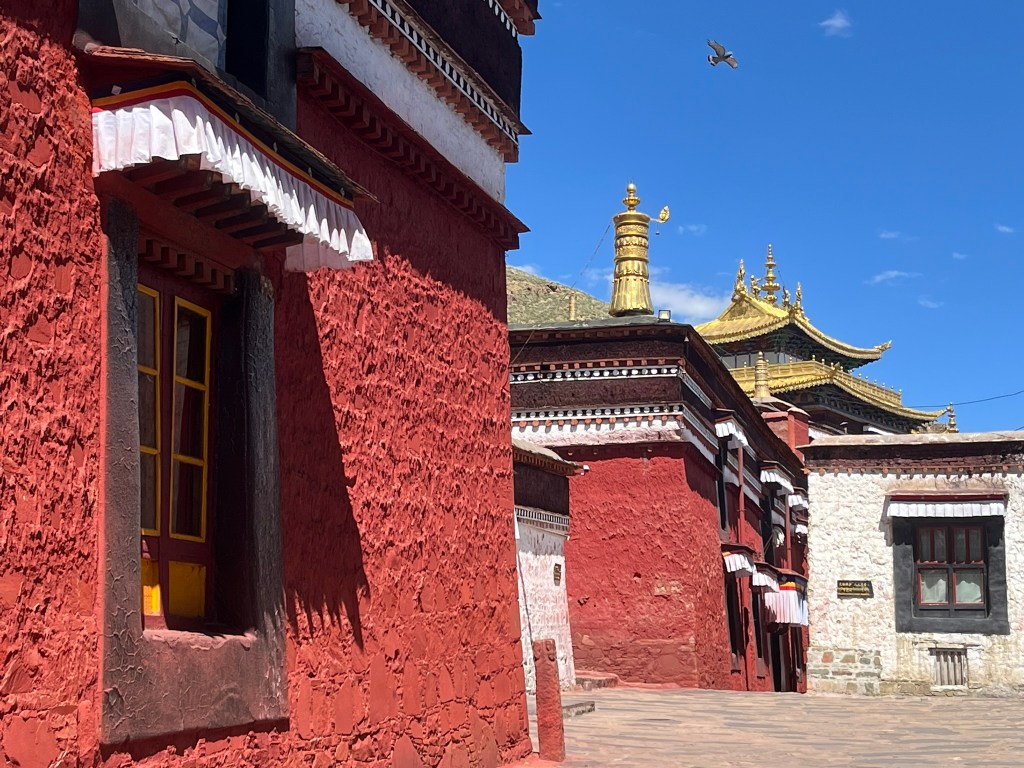
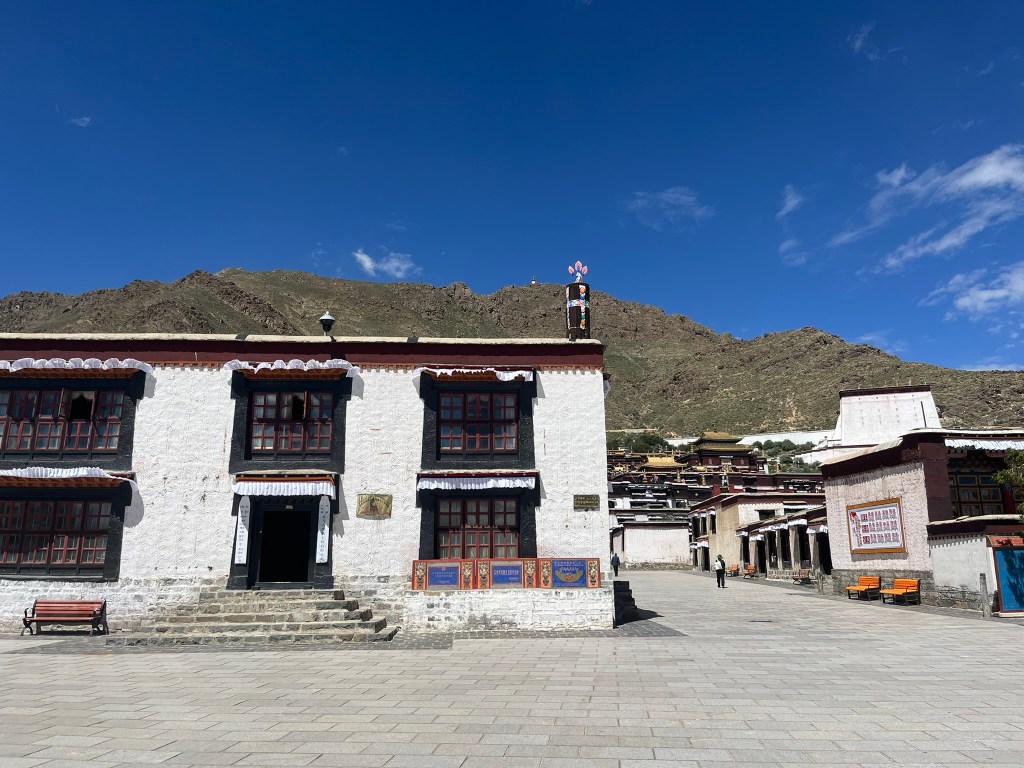
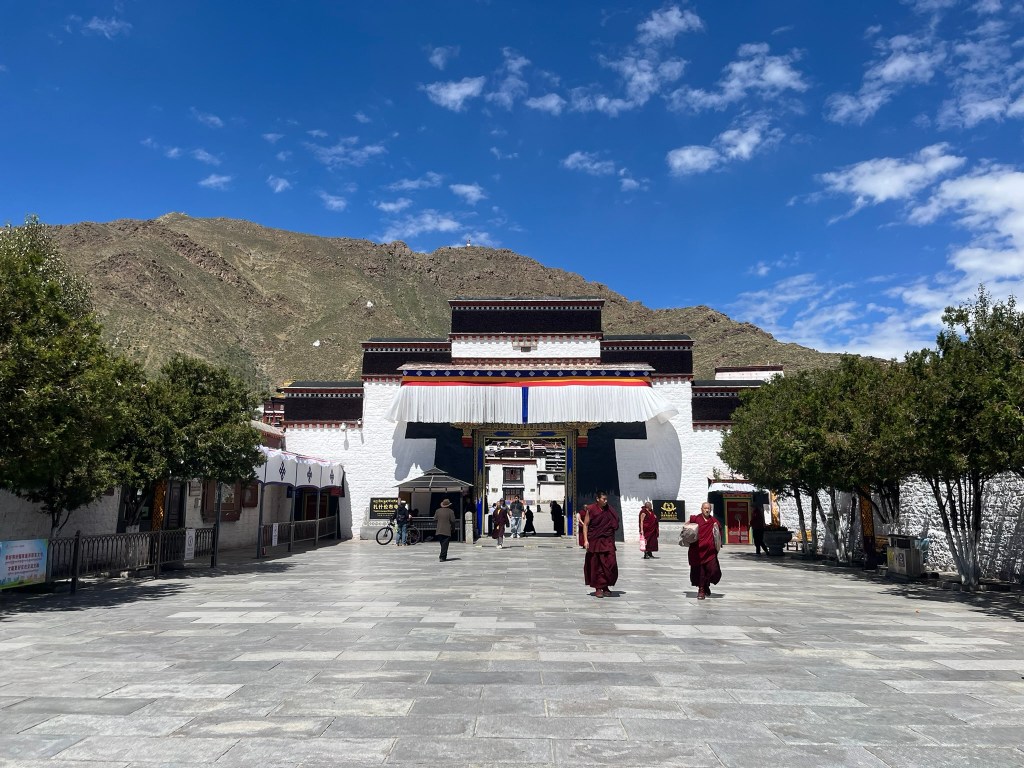
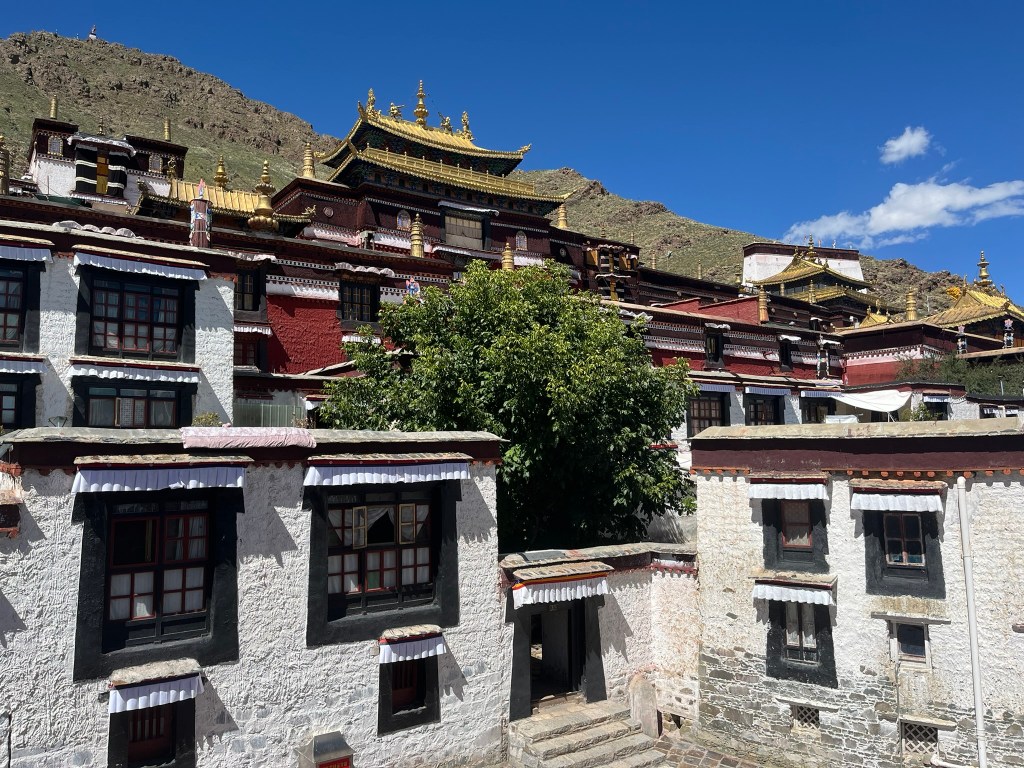
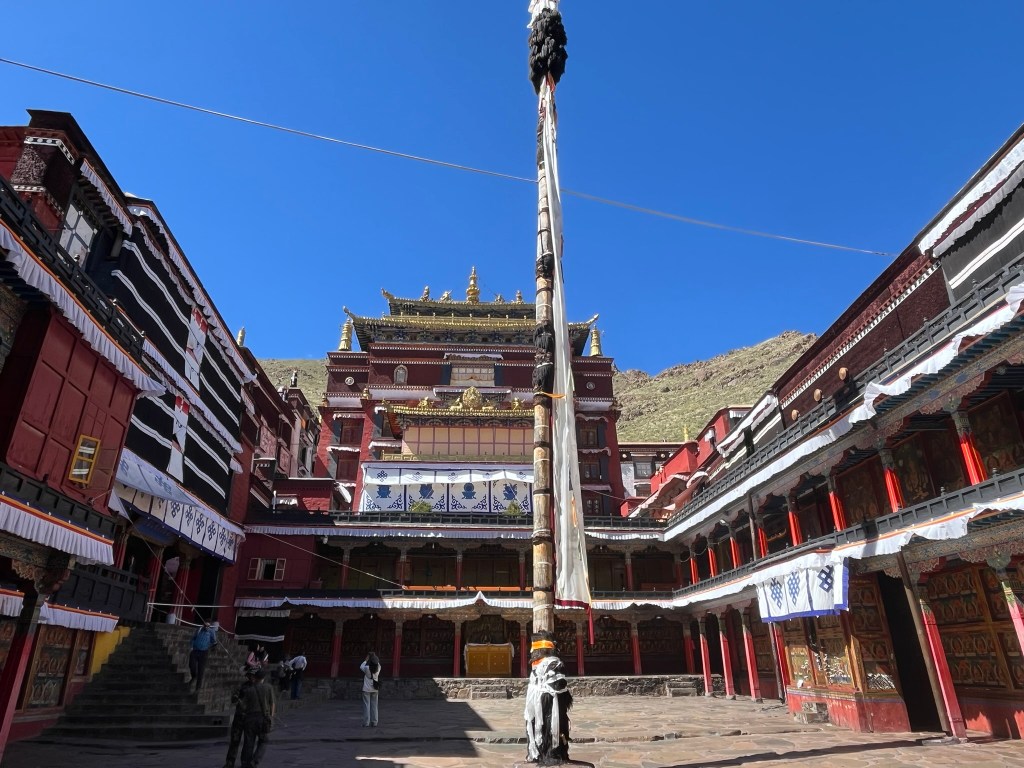
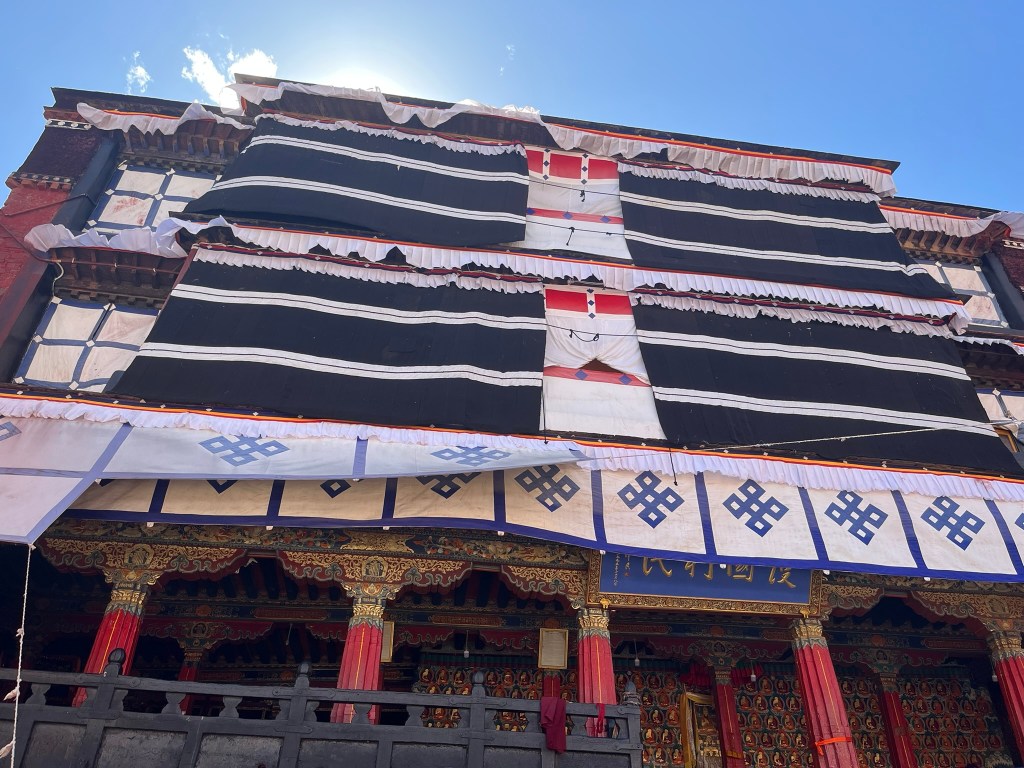
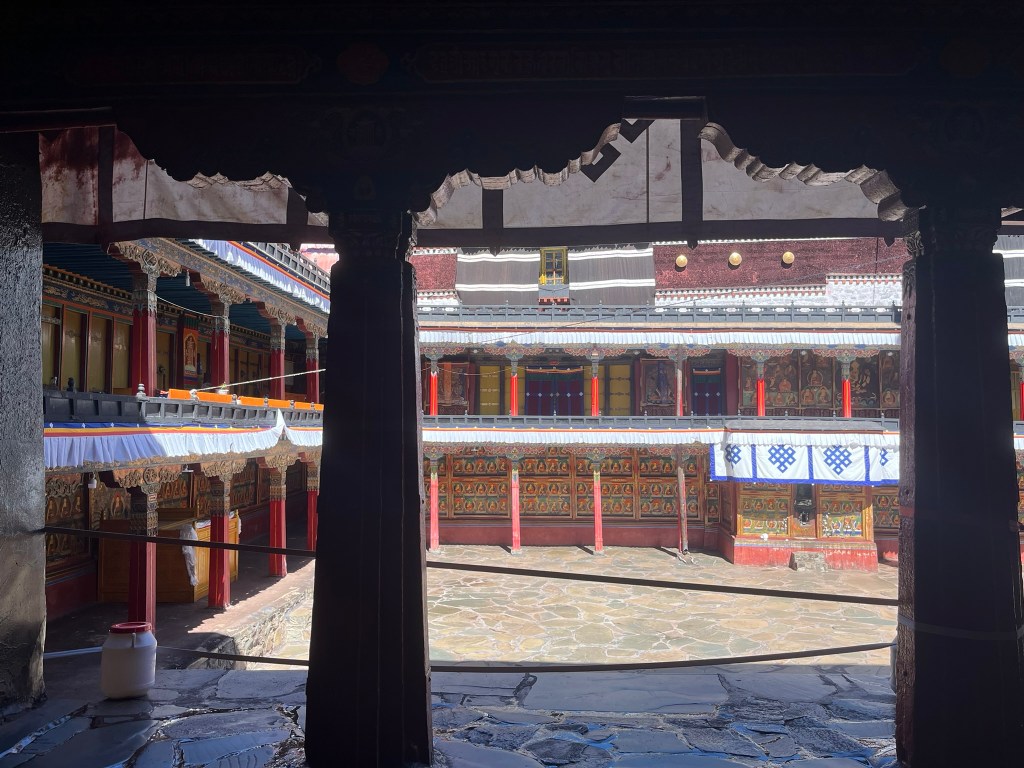
After meeting back up with the group to have tea and noodles, we headed into the monastery. And because everyone was next door at the festival we almost had the whole place to ourselves. The design and architecture was similar to Sera Monastery, with white-washed walls, red roofs and black door frames. The whole monastery covers about 150,000 square meters but our focus was to visit 3 specific places in the complex.
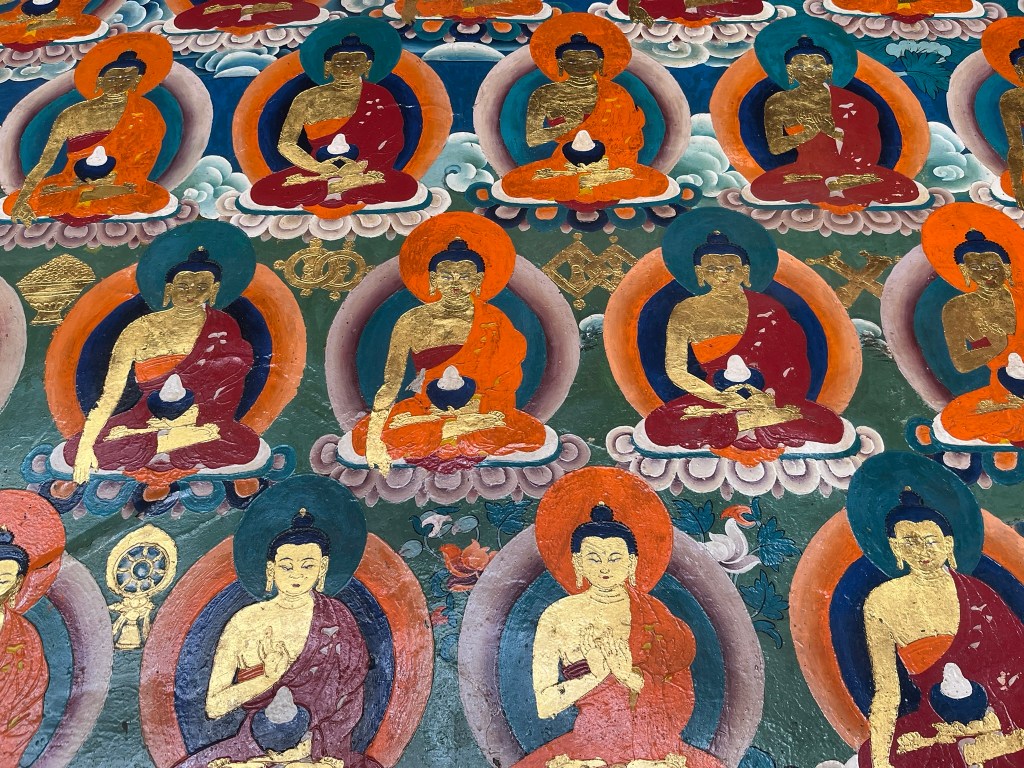

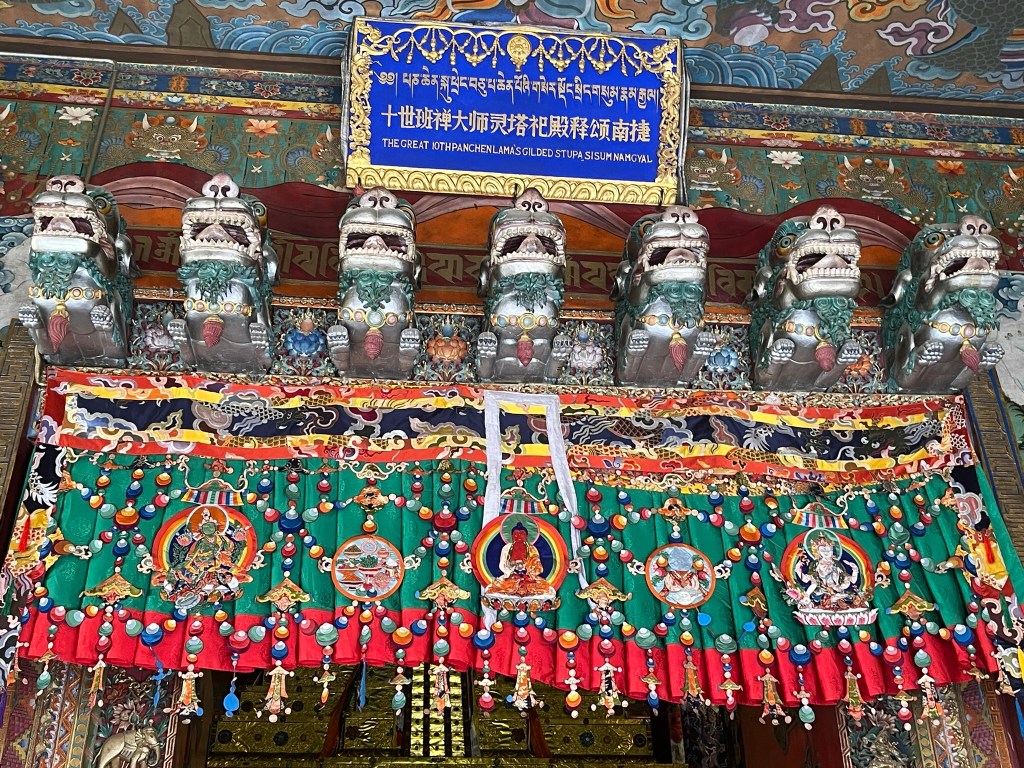
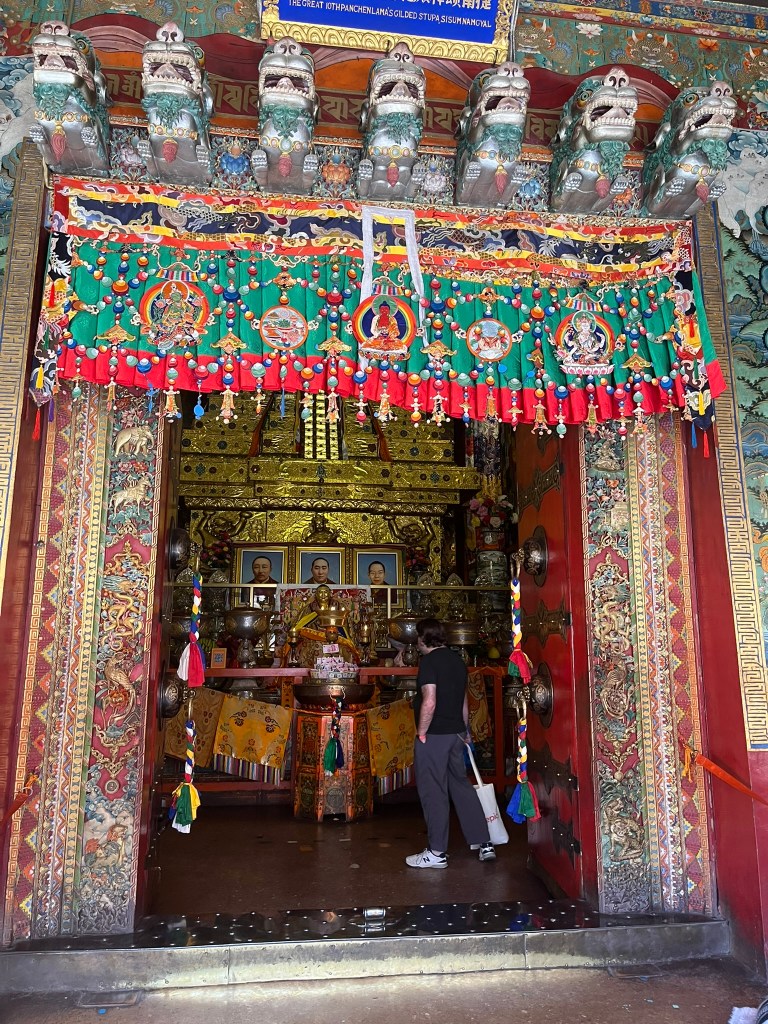
The Chapel of Jampa contains a huge 26m tall copper gilded statue of the Future Buddha and you don’t have any idea it is there until you pull back the thick curtain protecting the hall from dust and wind, and step inside. The statue is so tall that it pretty much takes up all the space in the room, leaving a narrow gap to walk around it. We then visited the tomb stupa of the 10th Panchen Lama which was gilded in gold with many inlaid stones.
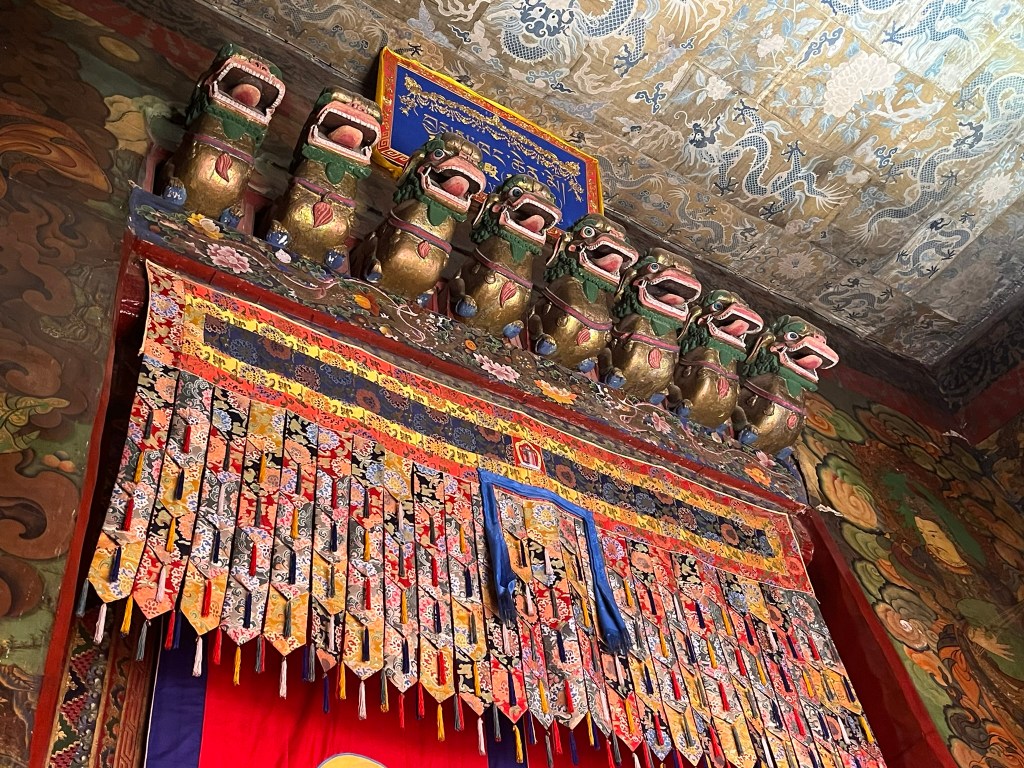
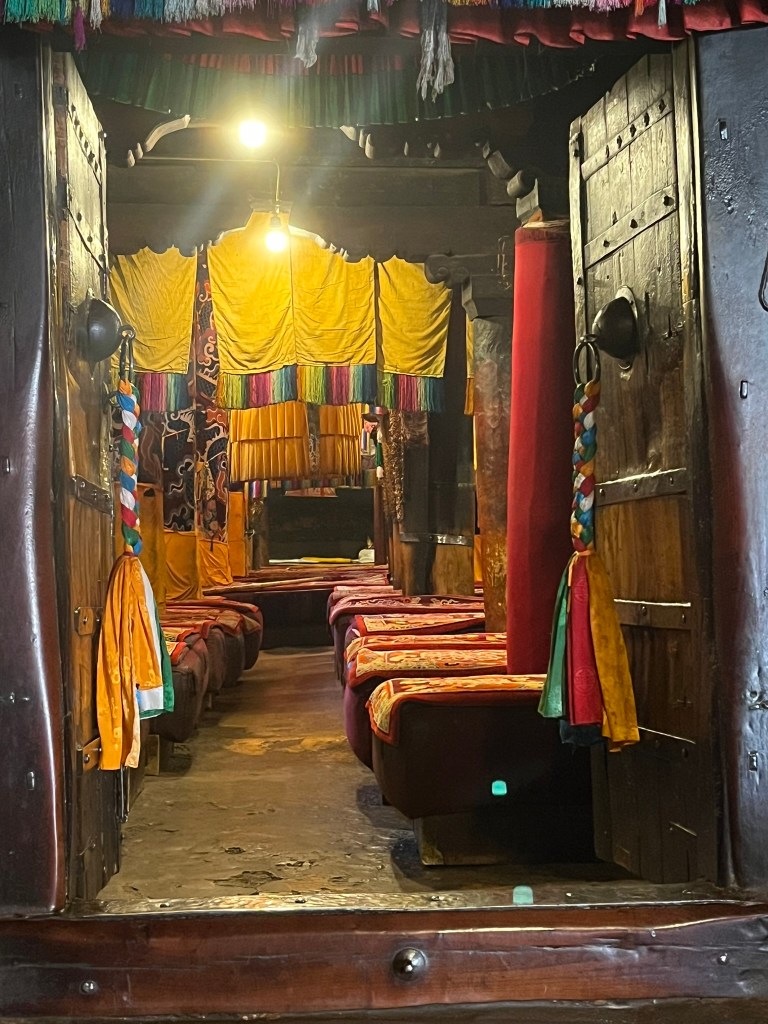
Finally we visited the grand assembly hall, one of the focal points of monastic life at the complex. Here you can see the throne seat of the Panchen Lama and all the amazing murals and decorations that cover every surface.
Then we headed to the Chum Festival via a separate entrance to the monastery. Our guide had noticed there seemed be a lot of extra security and found out that the Panchen Lama was actually attending today’s festival. Once inside the small festival ground we found thousands of locals sat in groups of families and friends, sat on stools with little tea tables and drinks and picnic lunches laid out. Pathways to get around were clearly delineated and the large police presence ensured that no one stood on the path for too long and got in the way of everyone being able to view the main stage.

On the main stage, a monastic orchestra was set up to play traditional instruments like 4-meter long trumpets that produce a deep, resonant drone, conch shells blown to announce the start of rituals, double-sided drums helping keep rhythm for the dancers and crashing cymbals. The music is meant to create a ritualistic atmosphere, calling on protective deities. In front of the musicians sat around 200 monks in lines, watching the show from the stage. And to the right of them was the main ceremony building, where I assume the monks sitting here were much more important.
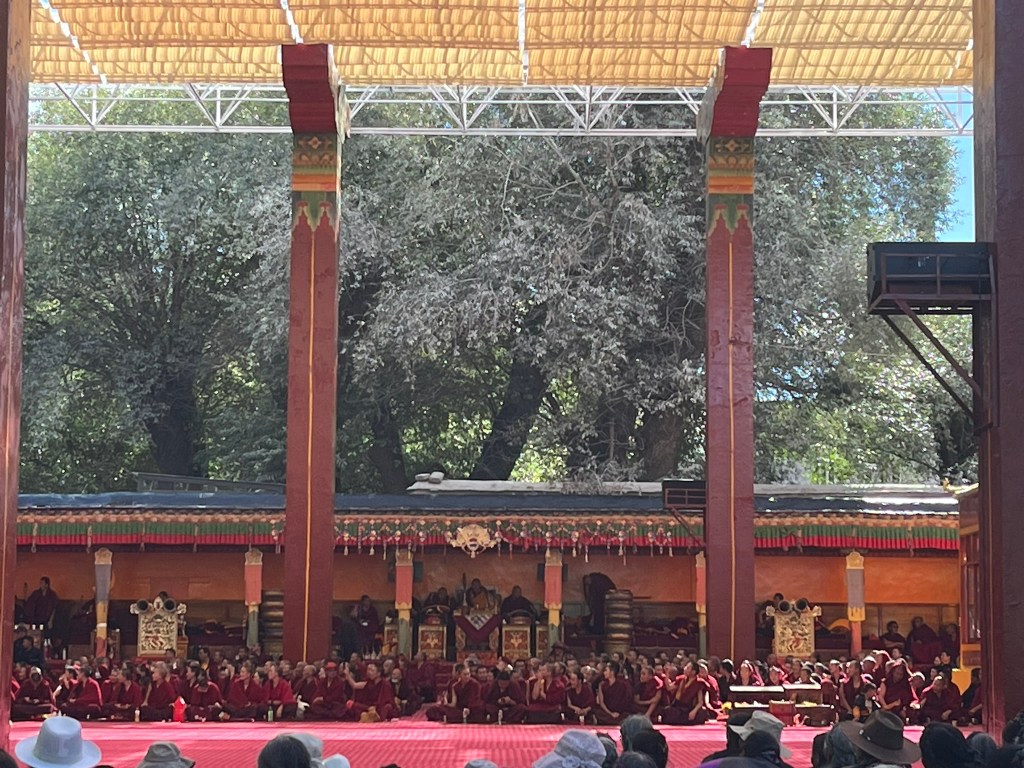
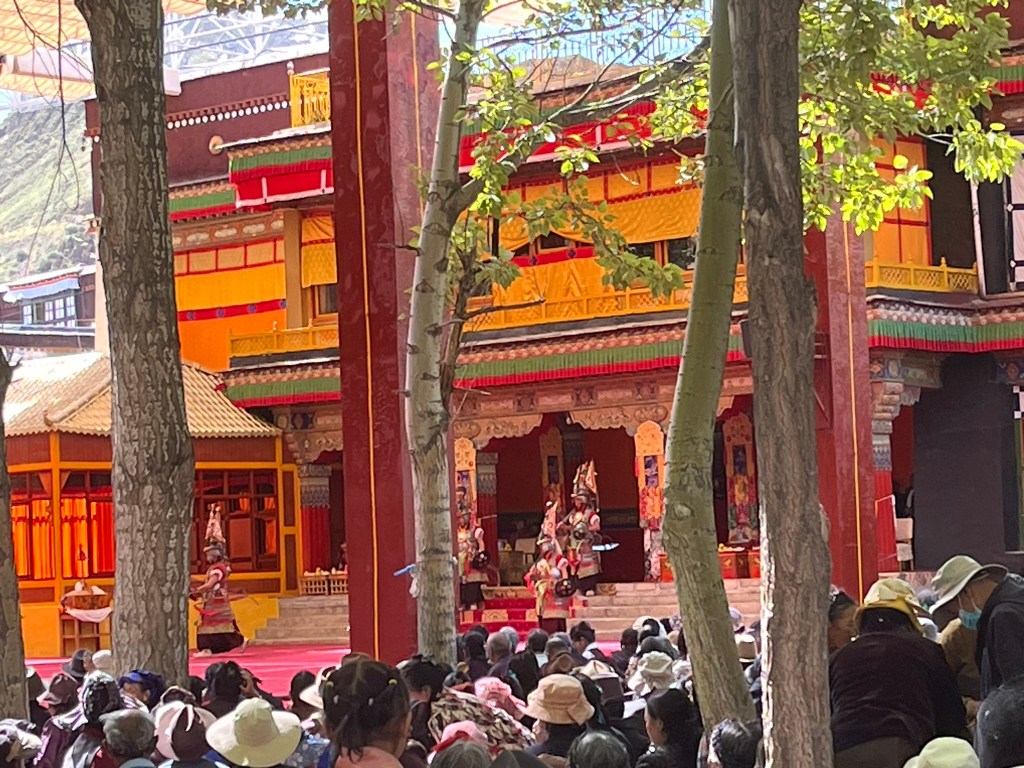
The Chum Festival is a series of sacred Tibetan Buddhist ritual dances, performed by monks who are often masked and costumed, representing protector deities, animals or figures from Buddhist cosmology. They serve both as meditative movement and as public teaching where Buddhist stories and moral lessons are conveyed through performance. I believe we saw the Clown Cham, performed by monks wearing giant comic heads with exaggerated features, and the Protector Deity Sword Cham, where the swords are meant to destroy obstacles to enlightenment. The dancing was slower than I imagined it would be and more ritualistic and purposeful. But with the slow, heavy and repetitive sounds from the orchestra often in long drones and bursts, it created a unique atmosphere. More surprisingly between performances there was a kind of Buddhist comedy duo akin to those you get at a circus who entertained the crowd and got the monks laughing at one point with a strange game of football. Not what I expected at a Buddhist festival at all.
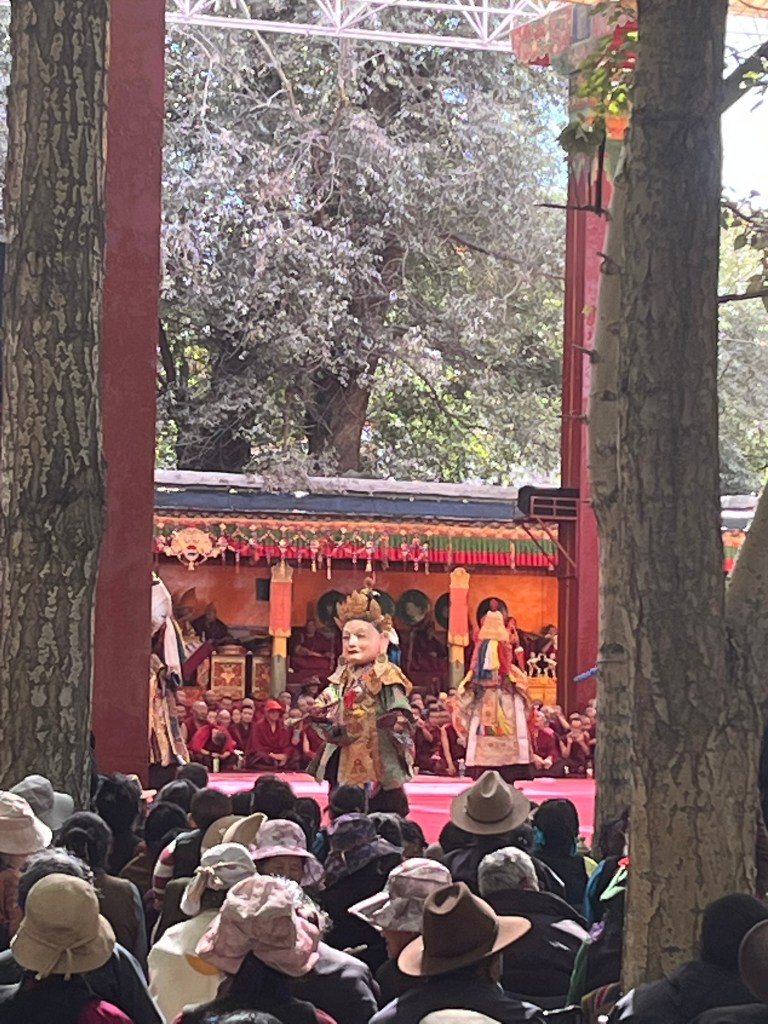
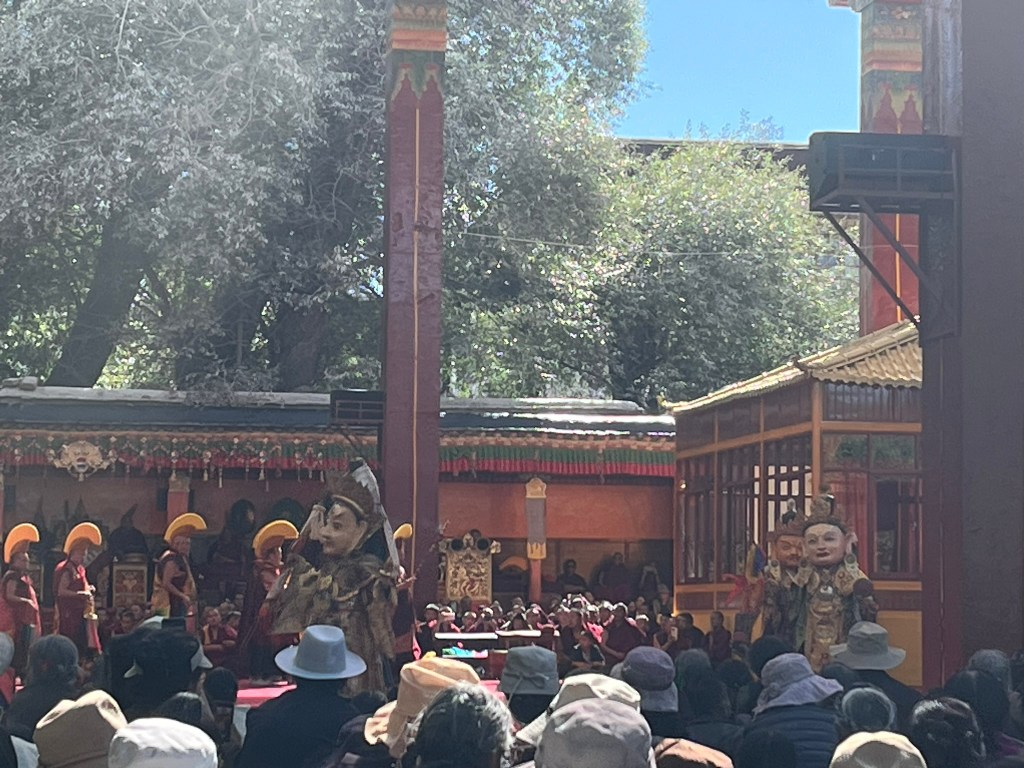
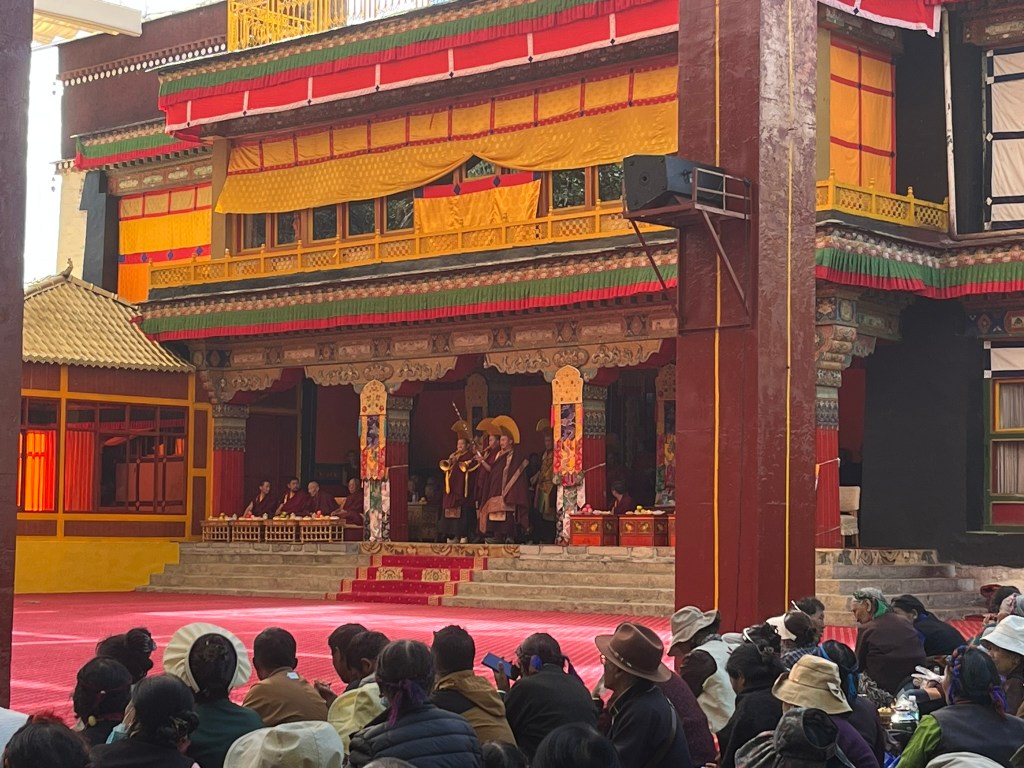
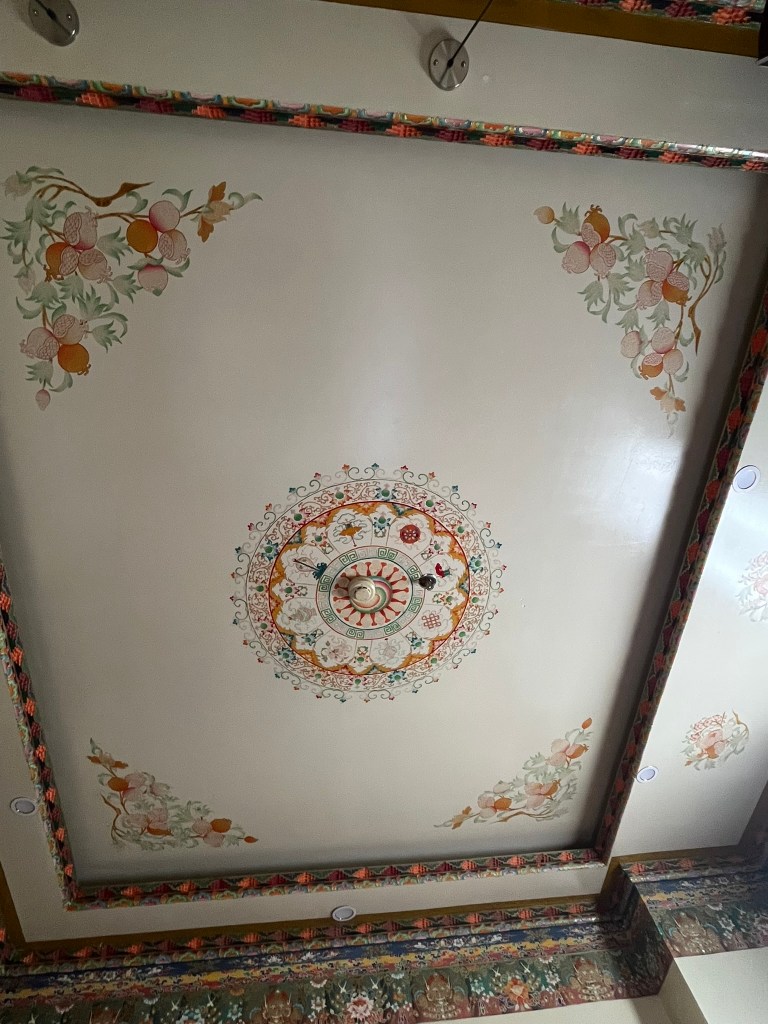
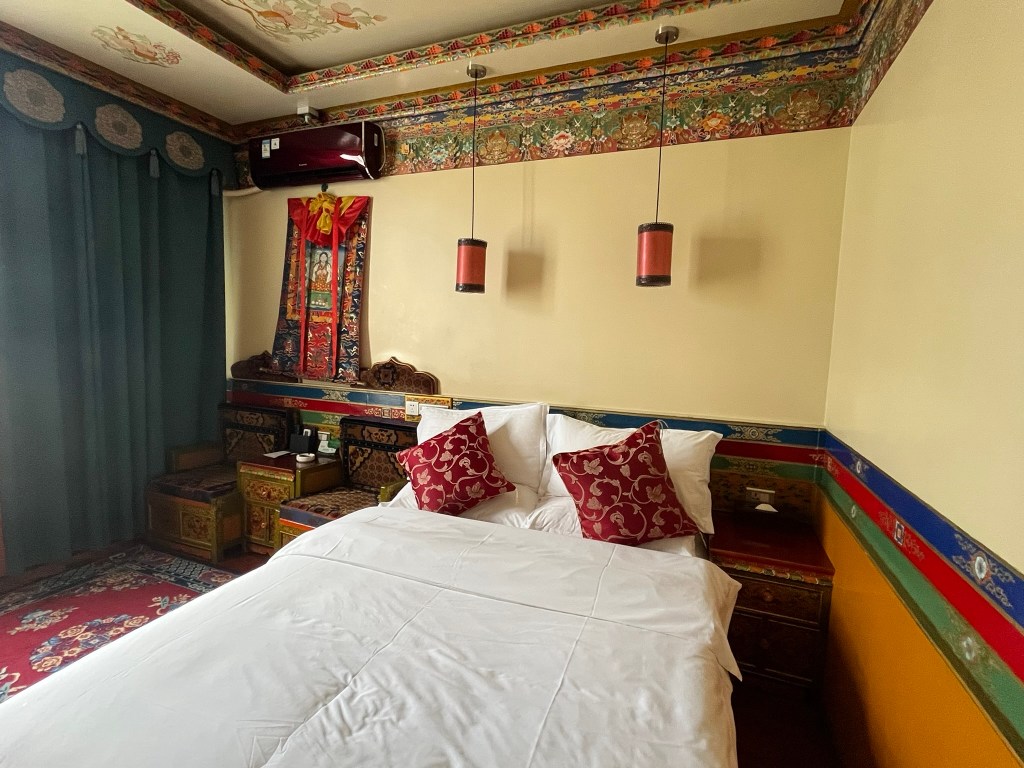
I’m so glad we got to enjoy an hour at the festival and see locals enjoying time with their friends and families in their traditional outfits. It added another angle to my understanding of Buddhism and how it fits in with modern life. We also had another amazingly decorated hotel here.
 Colette's Grand Detour
Leave a comment