The monastery was founded in the 11th century by Khon Konchok Gyalpo, a member of the Khon family. The Khon family were important within Tibetan Buddhism at the time, and established a new school of Tibetan Buddhism here called the Sakya School during what is known as the ‘second spread of Buddhism in Tibet’. Something unusual about the Sakya School is that it does not follow reincarnation to determine to whom leadership will be passed on to. Instead it is passed hereditarily within the Khon family. This tradition continues today, although it is split between two main branches of the Khon family taking turns to appoint a head for a set term of years.
The monastery is divided into the ‘northern monastery’ on the hill side and we have a great view of it from our hotel. The ‘southern monastery’ is on the other side of the river and is the part of the monastery we visited this afternoon. The northern section is older, originally built in the 11th century and the birthplace of the Sakya School, however it was almost completely destroyed during the cultural revolution and today only ruins remain.
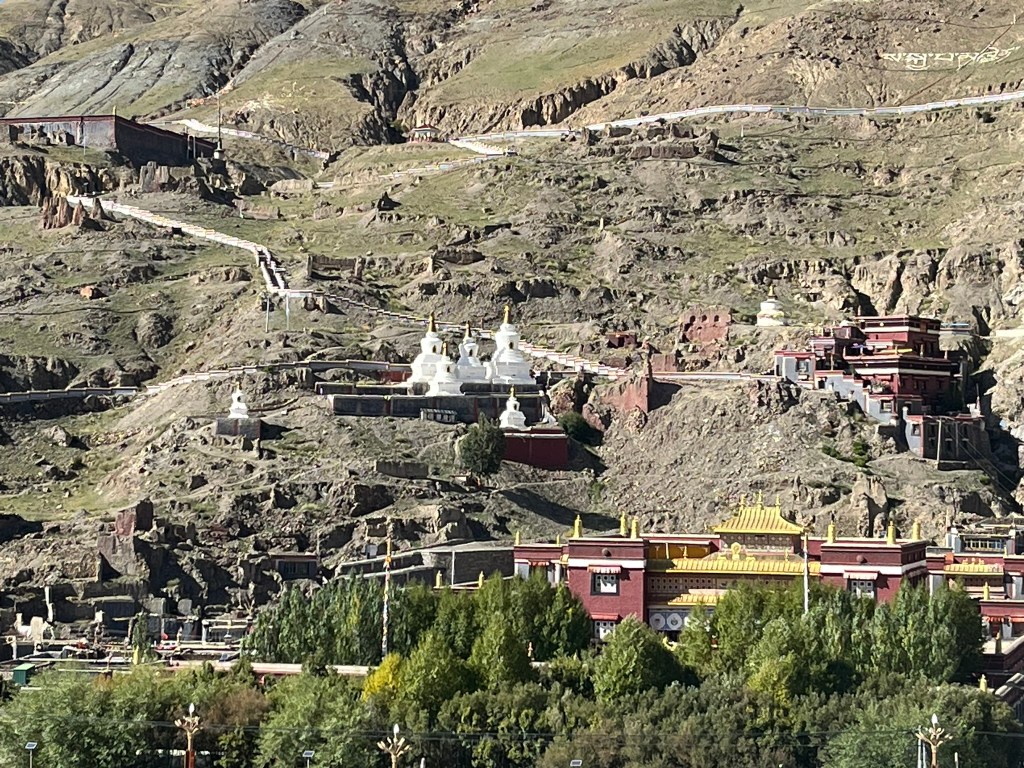

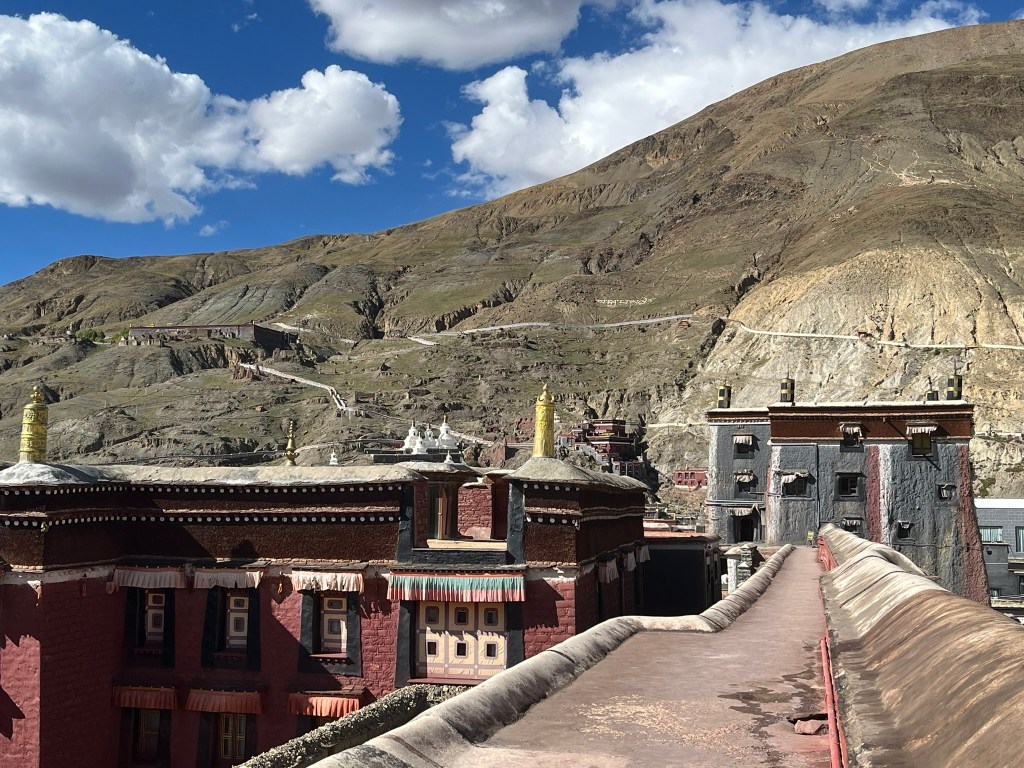
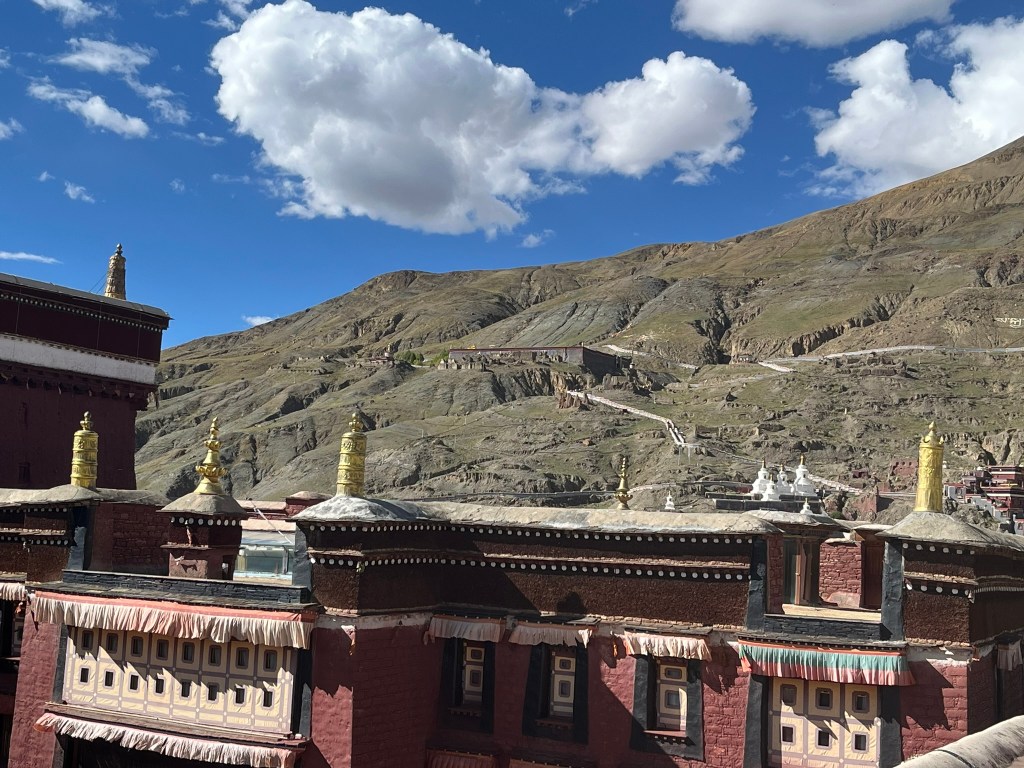
The southern monastery came later in the 13th century when Sakya had become very powerful through their relationship with Kublai Khan. As we arrived at the southern section of Sakya monastery, I was quite shocked. It looked totally different from any of the other places we had seen during our time in Tibet and was more like a fortress than a monastery. There are some good reasons for this. In the 12th century, Sakya wasn’t just a spiritual center but it was the seat of government and capital of Tibet. The abbots of Sakya monastery ruled Tibet on behalf of Kublai Khan during the Yuan dynasty in China. So the monastery had to also serve as a palace, government office and stronghold.
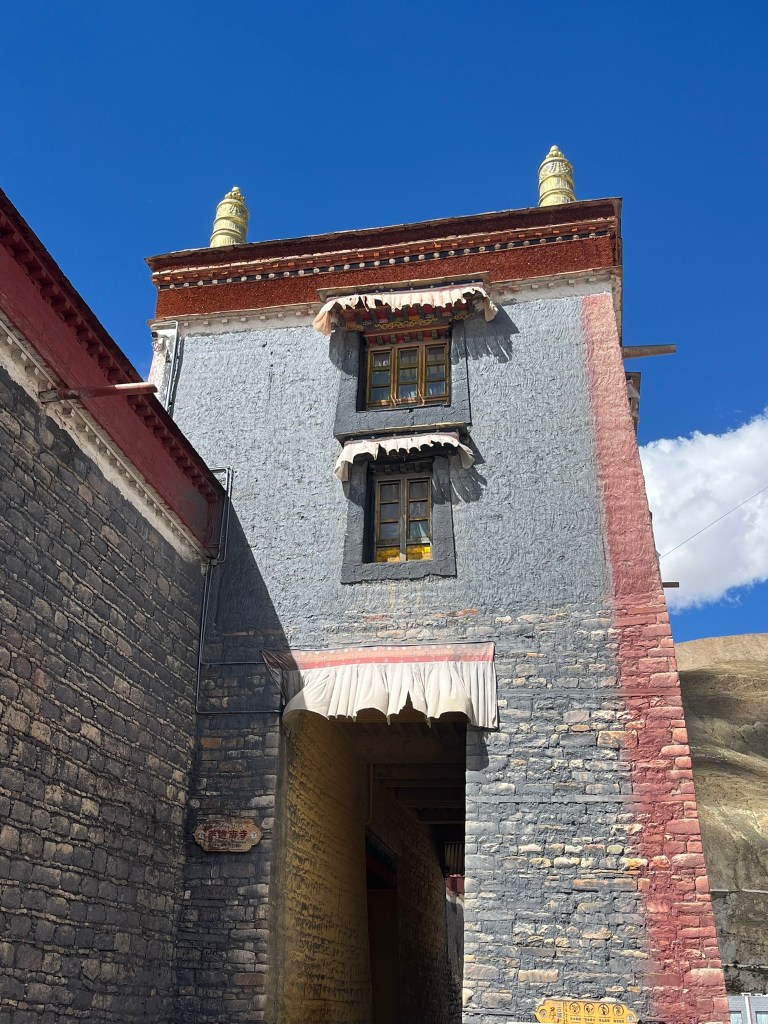
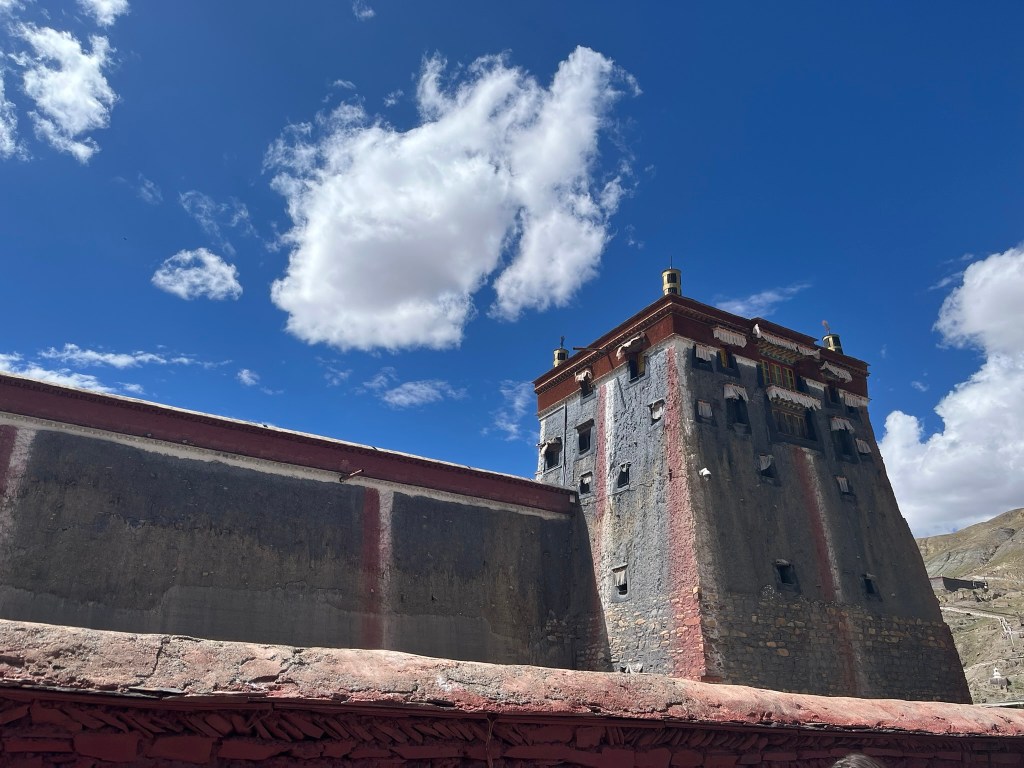
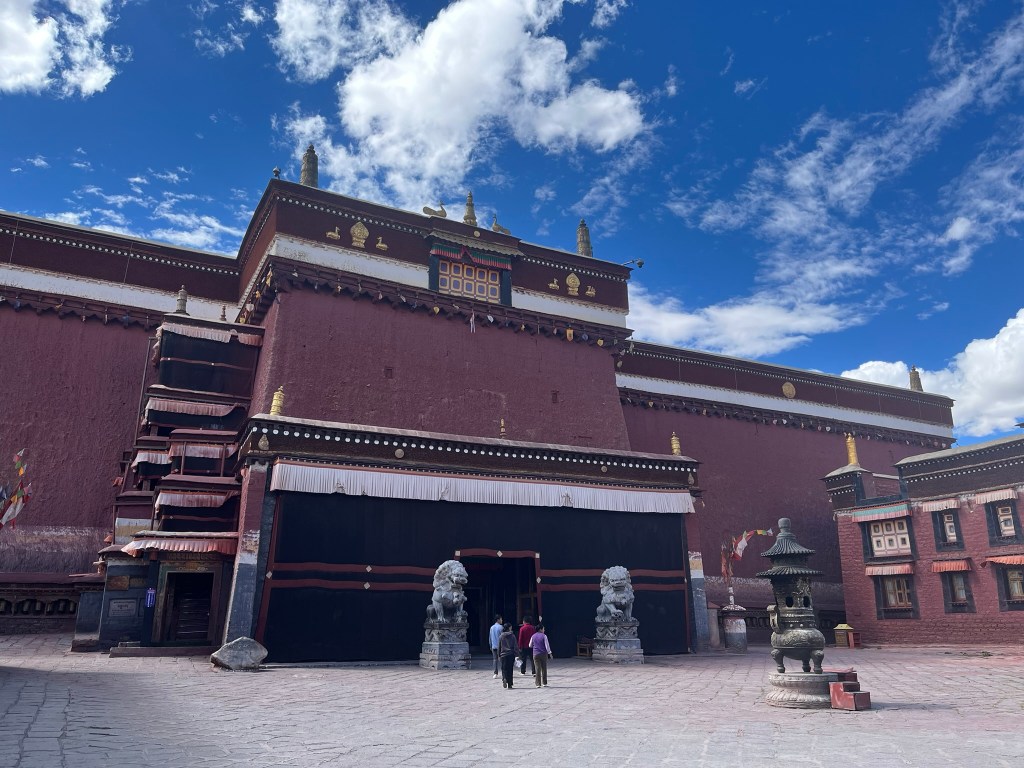
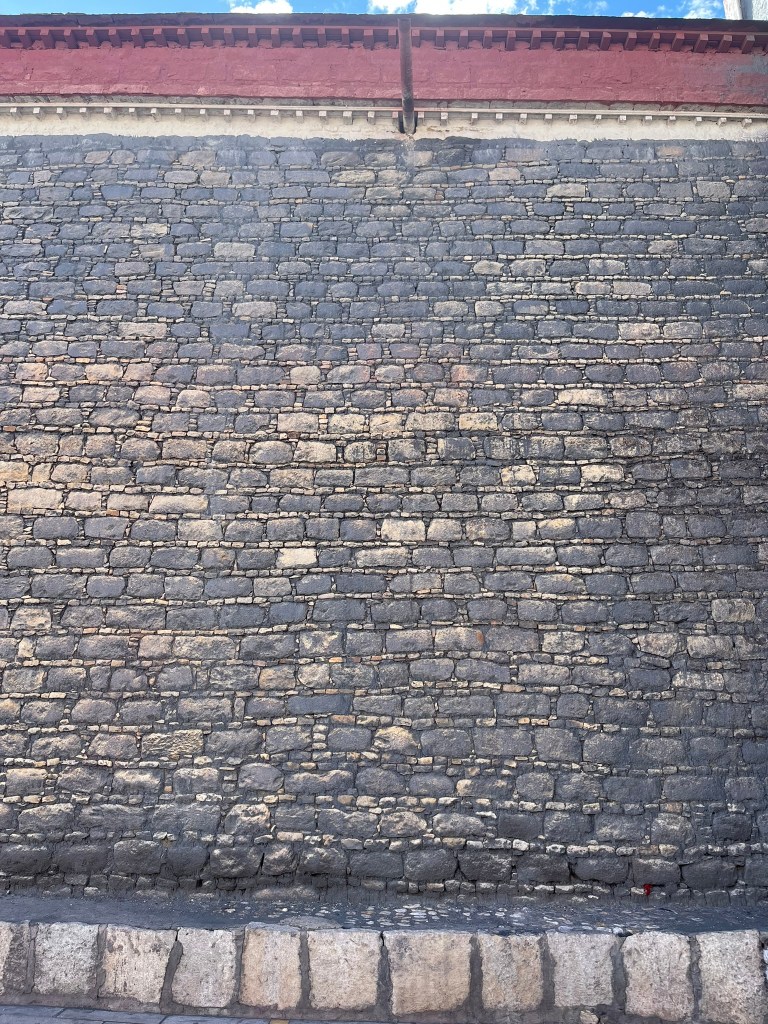
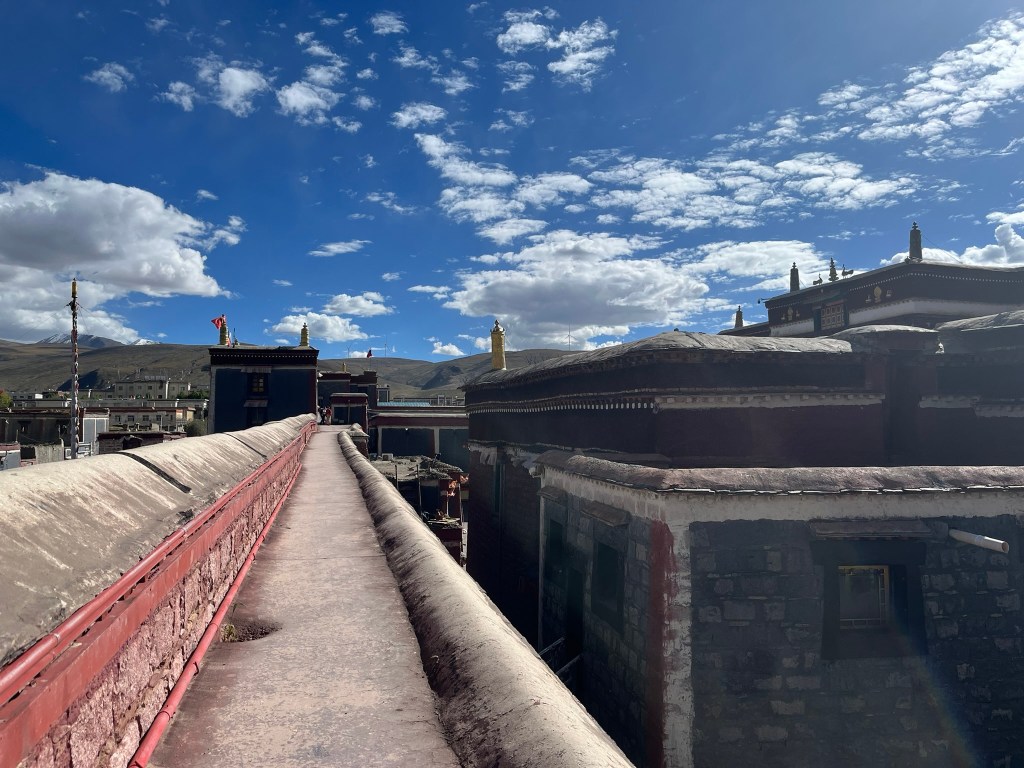
The outer walls dominate the small town of Sakya and are 4m thick and 16m high, and there are watch towers on each corner. Once you enter, you reach another inner courtyard with another set of very high walls. And then within these walls lies the central courtyard, around which there are entrances to chapels and the grand assembly hall of the monastery. You can climb up and walk on top of the outer walls of the monastery, just like you would a walled city or a fortress.

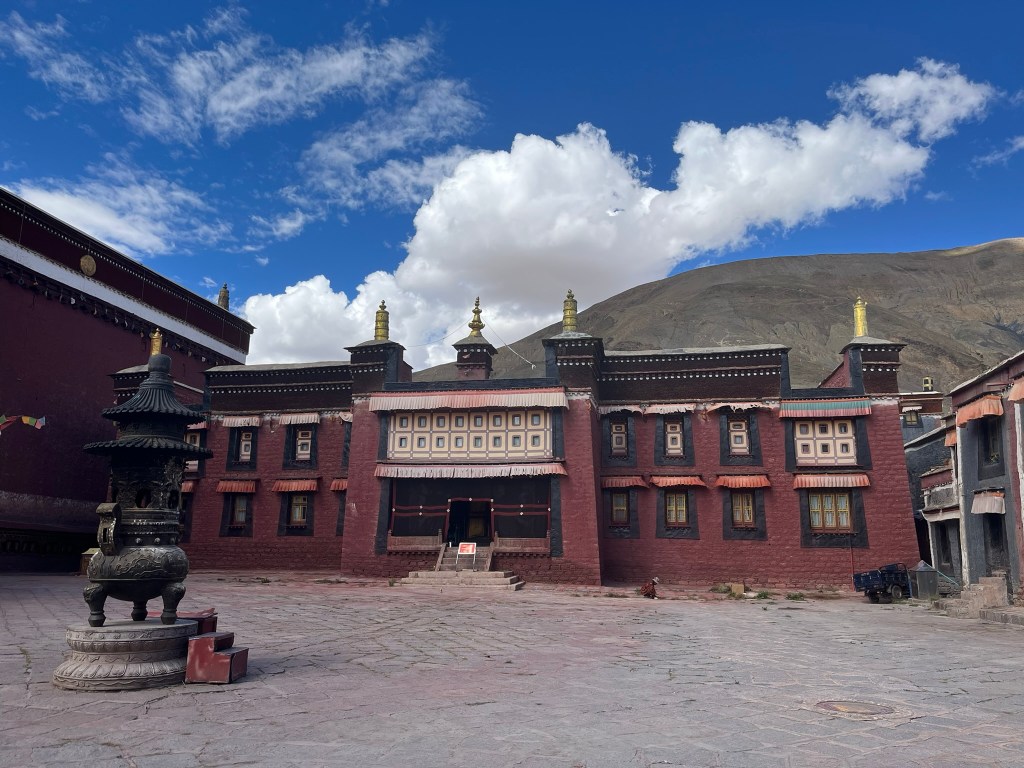
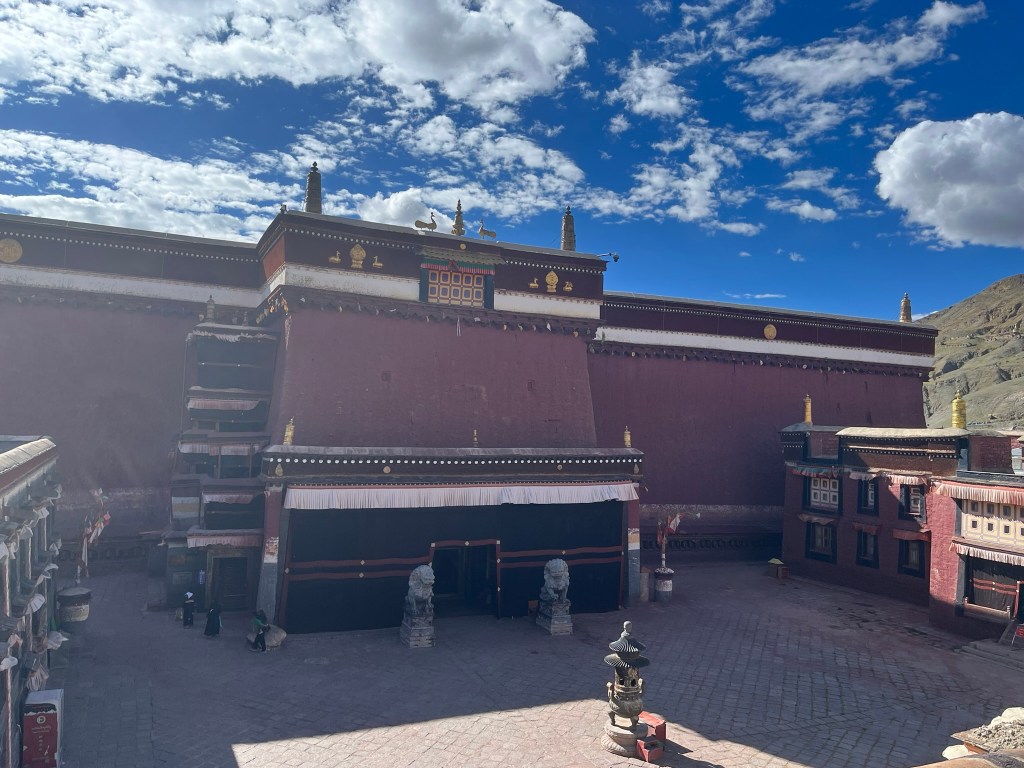
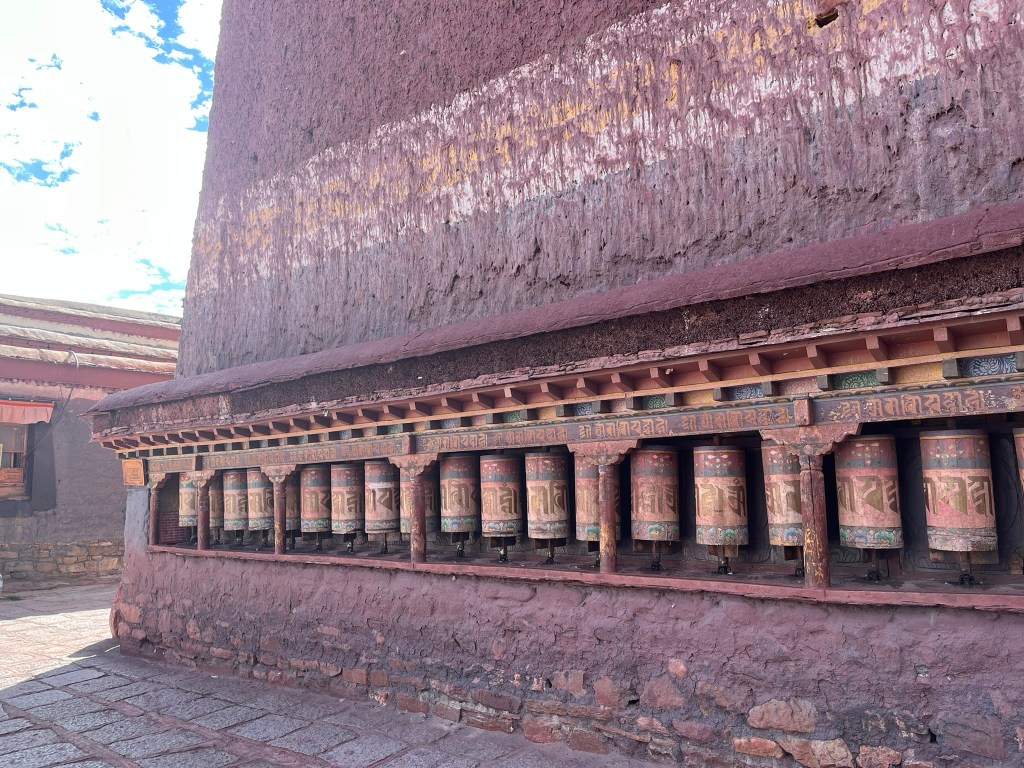
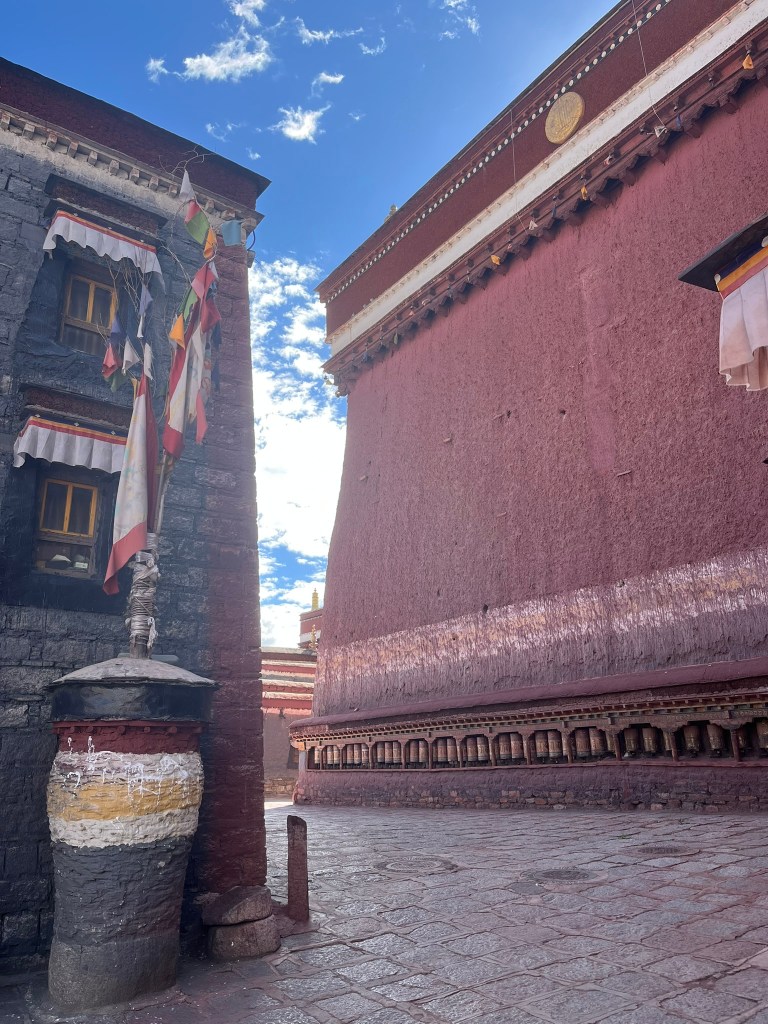
The monastery uses a color scheme distinct to the Sakya school, with vertical stripes in grey, white and red. The buildings are predominantly grey in colour rather than the white-wash we have seen everywhere else in Tibet, reflecting the grey of the mountains that sit behind the monastery.
The Great Assembly Hall was the highlight of our visit to the monastery. Not only is it one of the largest assembly halls in Tibet, spread across 6,000m^2 and with massive wooden columns giving it a palatial feel. But it holds a hidden library, said to hold about 84,000 text books, including Buddhist scriptures, history, medicine, astronomy and literature. The library sits behind the long line of Buddhist statues and you enter through a small door at one end of the hall. The size of the library is shocking. From floor to ceiling, there is shelving, 60m long across the back wall of the hall, 10m high and 10m wide. At the end of the library there is a giant scripture over 500kg in weight and nearly 2m long, requiring several people to lift it.
The texts were compiled in the 13th and 14th century when the Sakya lamas had close ties with the Mongols and it was sealed away during times of turmoil, which is why it managed to survive fires, wars and the cultural revolution. In the last 20 years, a huge effort has been undertaken to catalogue and digitize the library and by 2022 everything had least been indexed. This is a Tibetan national treasure that provides insights not just into Buddhism but science, law and culture from the 13th century. Unfortunately no photos are allowed so you have to imagine what it looks like (or google it).
 Colette's Grand Detour
Leave a comment