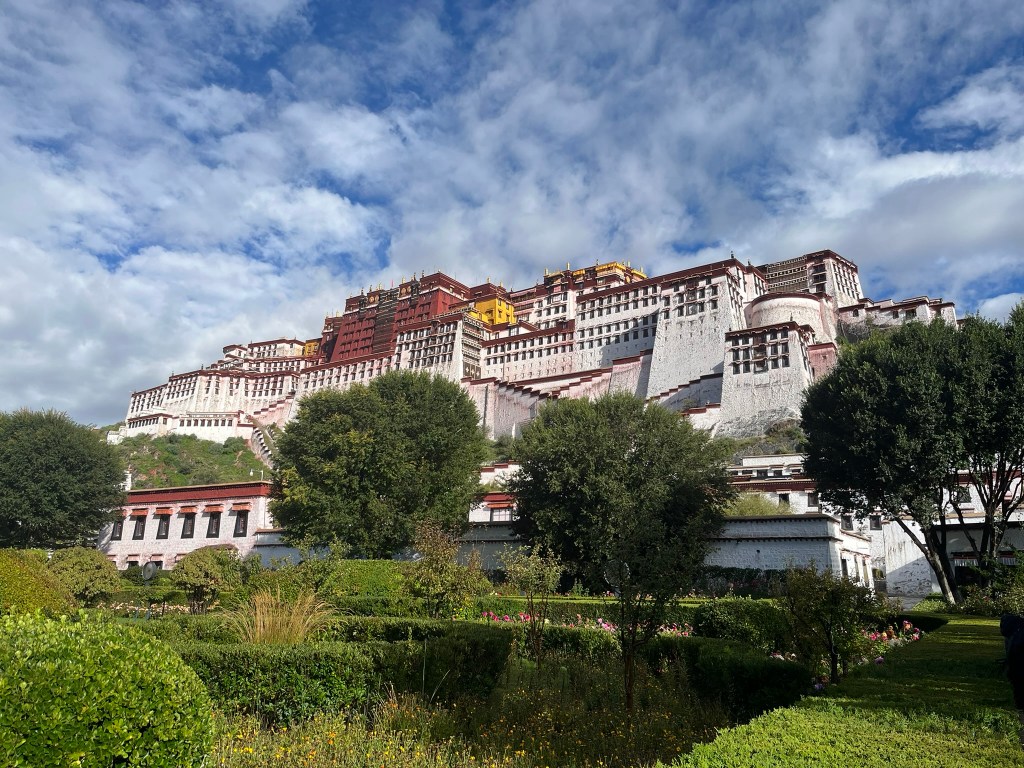
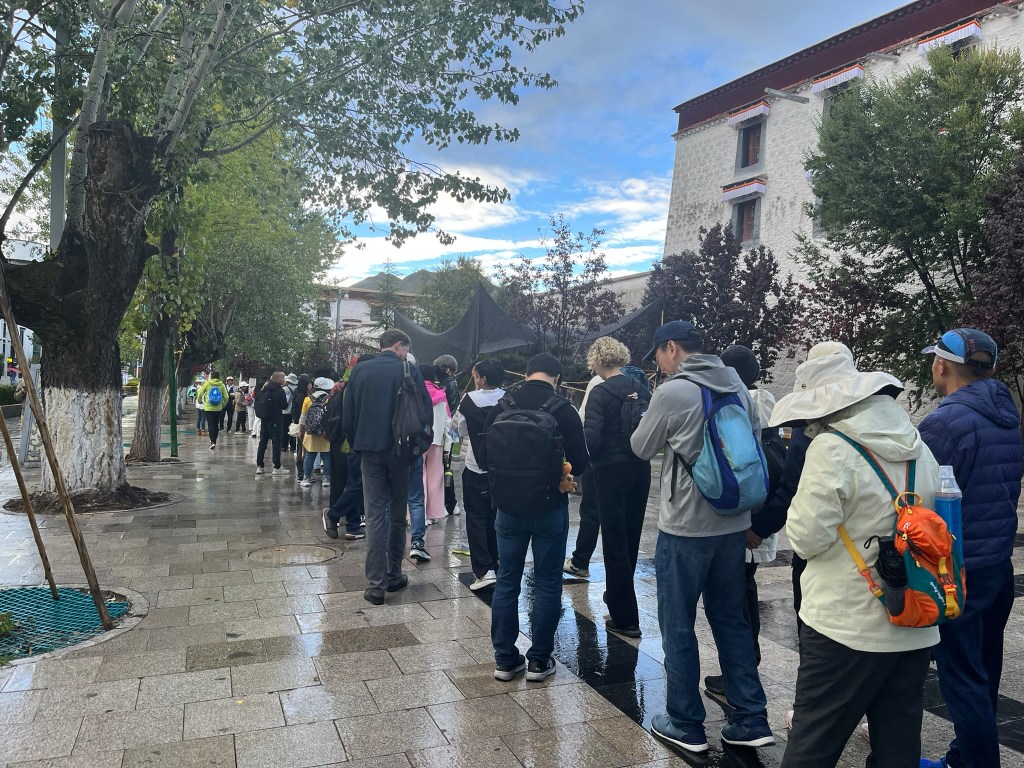
Potala Palace dominates the skyline of Lhasa and is much bigger and more spectacular in person than you might imagine. It is the top tourist and pilgrimage sight in Lhasa and tickets must be purchased in advanced. We jumped on the public bus for 2 stops and then jumped off to pass through the first security check and join the queue to enter. Once inside, there are a series of gardens and lots of great angles to get snaps of the whole palace.
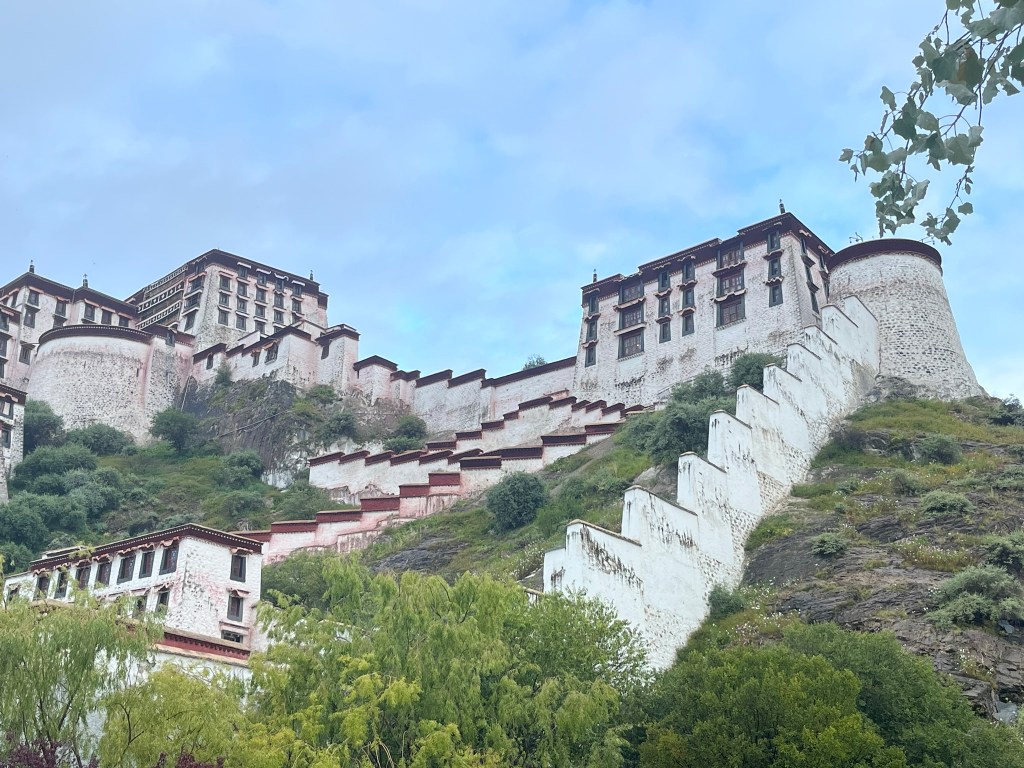
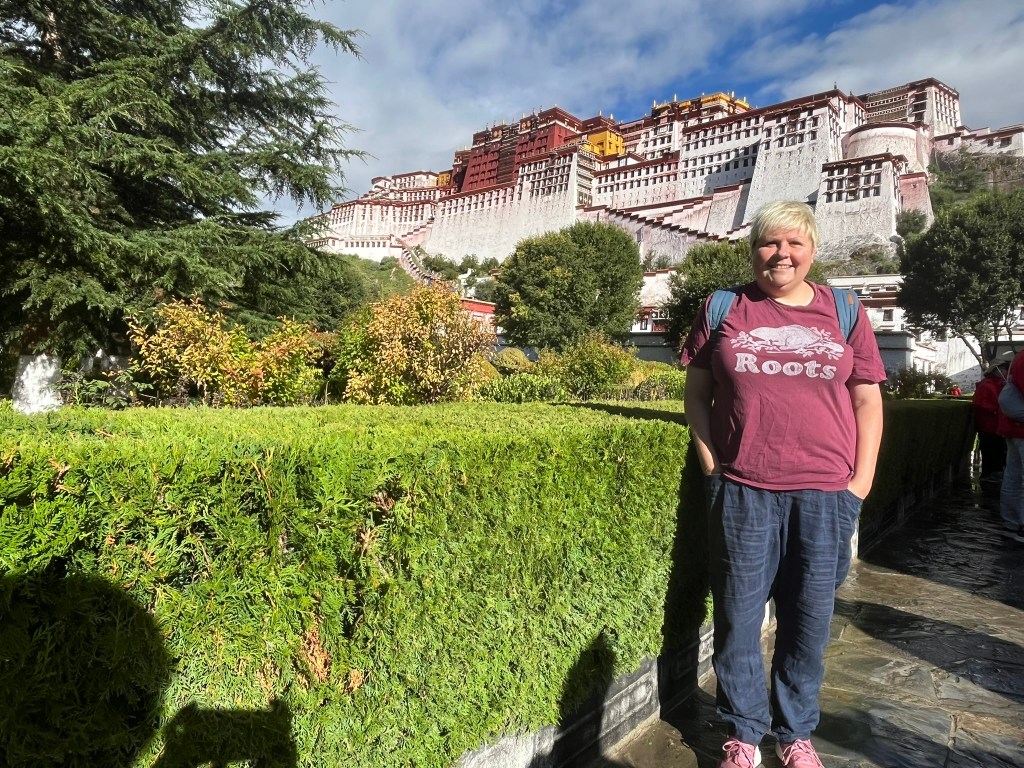
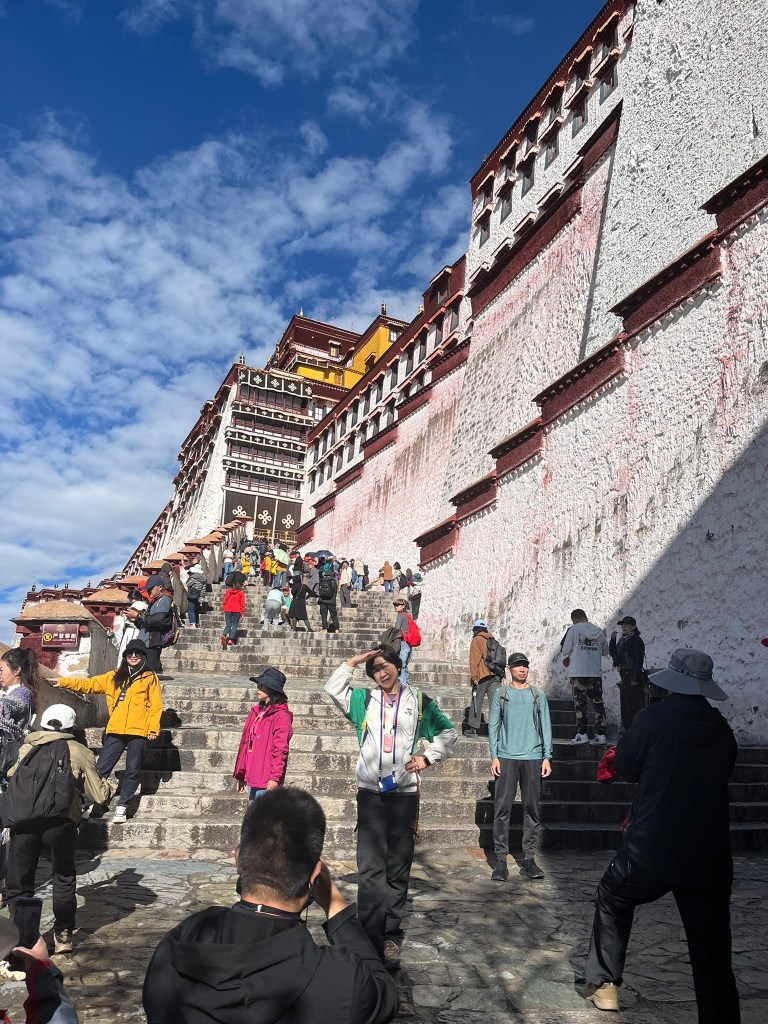
And then the climb to the upper courtyard begins, zig-zagging back and forth at least twice each way and then a few more steps hidden inside the first building you enter. The climb is not as bad as it looks from a distance and it’s a relatively gentle slope. But with the altitude it can knock your breath away. We saw many Chinese tourists sucking at oxygen bottles they had purchased in town to make it up to the main buildings.

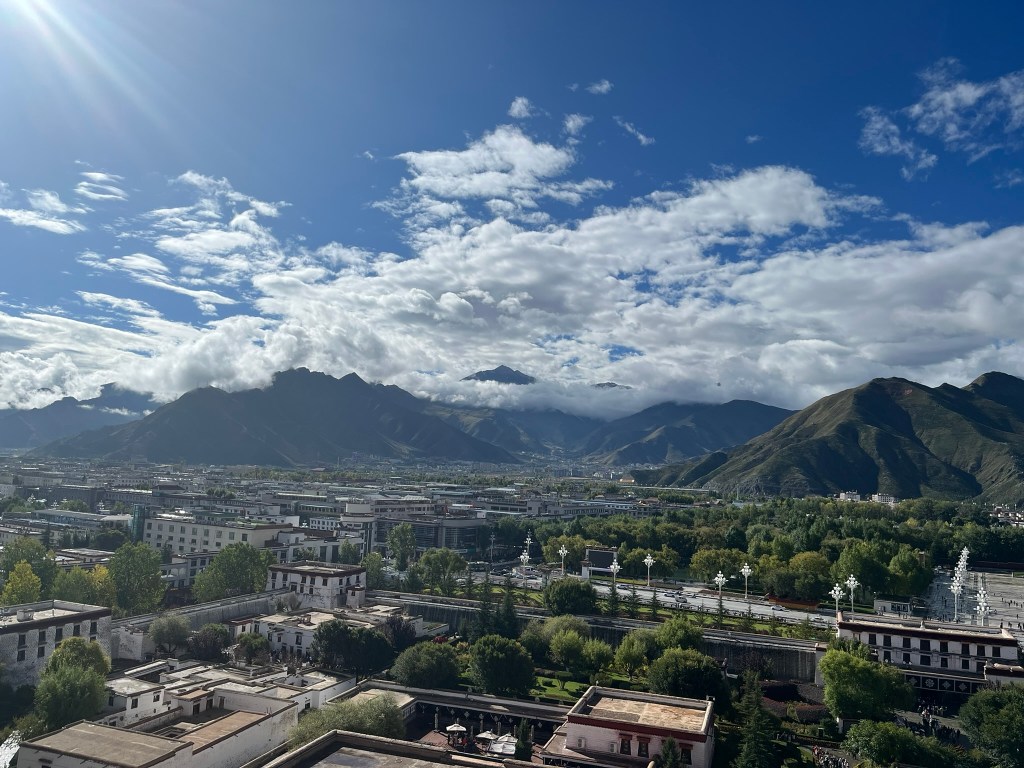
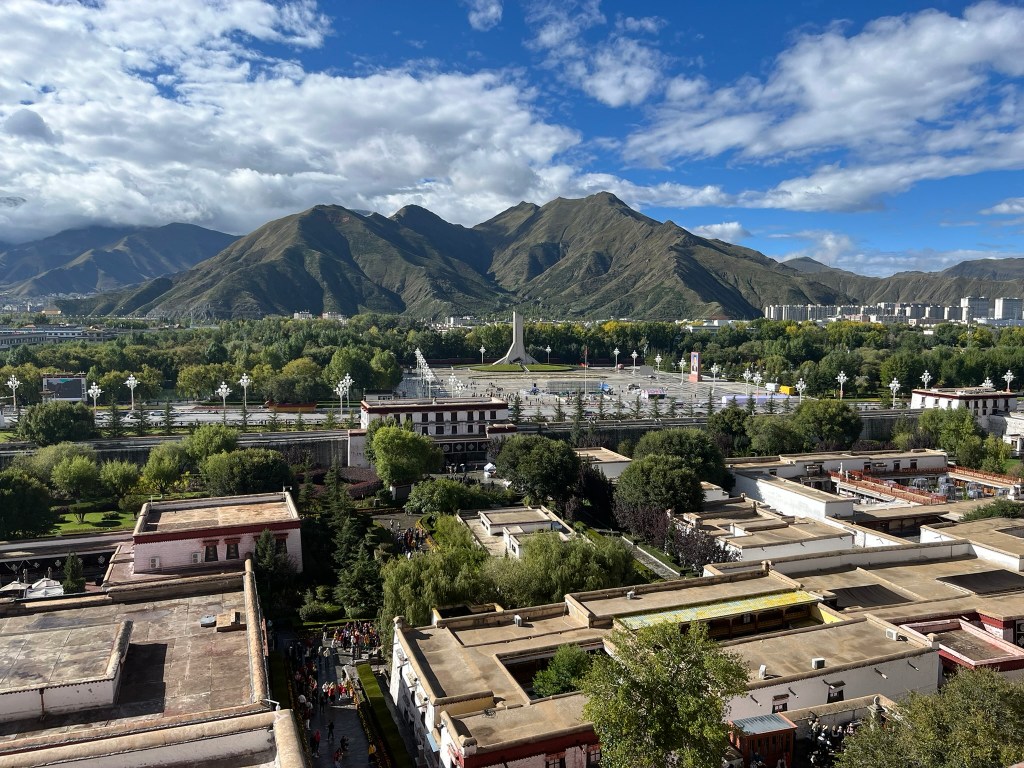
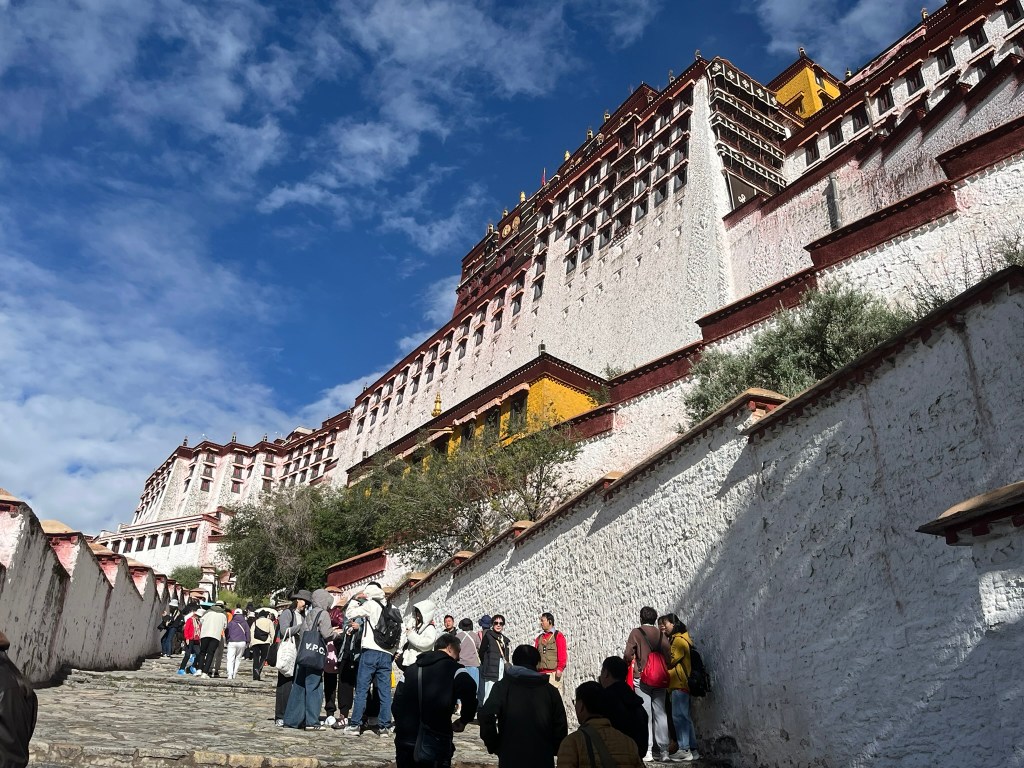
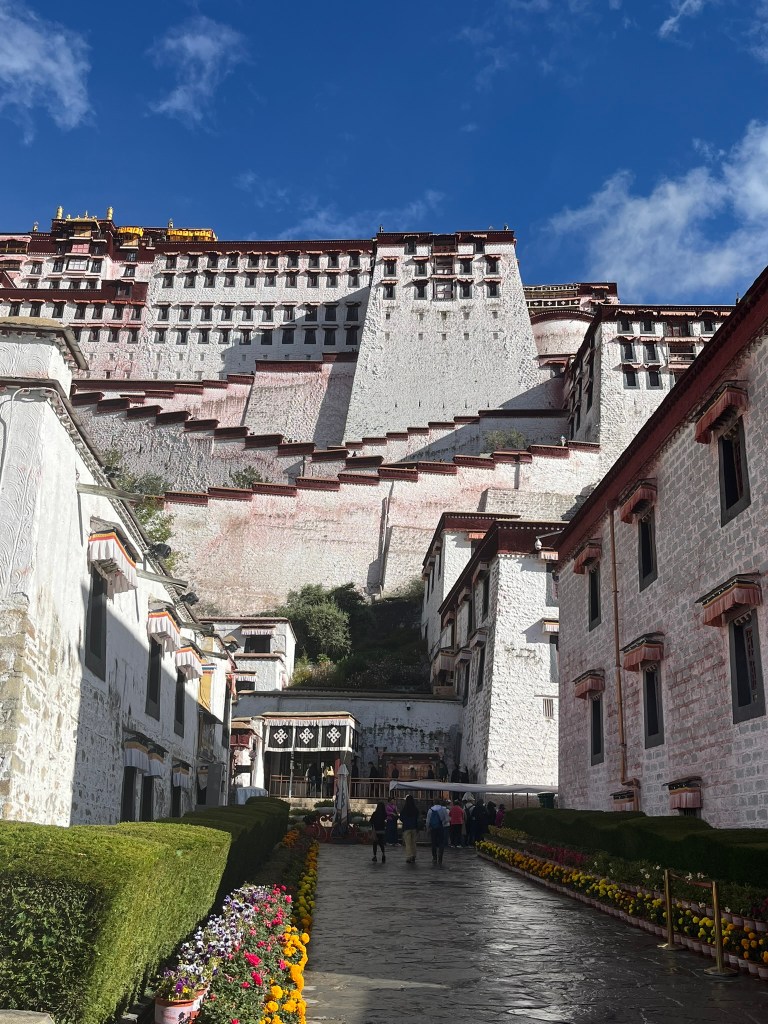
Potala Palace is built on Marpo Ri hill (or Red Hill) looking down over the Lhasa River and has had some sort of fortress structure built on it since the 7th century, when King Songtsen Gampo built a fortress for his Chinese and Nepalese brides. Today’s immense structure was built starting in 1645, by the fifth Dalai Lama, and symbolised the union of political and religion power in Tibet under the Dalai Lama. From the 17th century until 1959, the palace served as the winter residence of the Dalai Lama and the center of the Tibetan government. Today it is no longer used for government purposes and it is a museum and pilgrimage site. It was designated a UNESCO World Heritage Site in 1994.
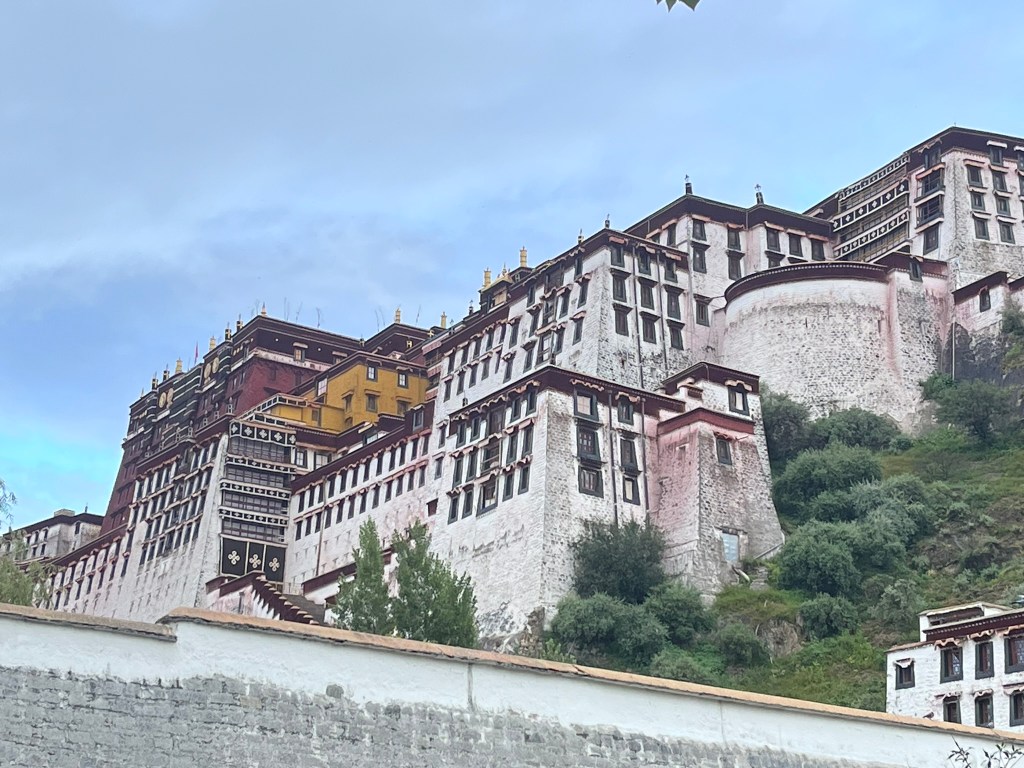
The palace is 13 stories high, with more than 1000 rooms and rises 117m from its base. It is built of stone and wood with walls more than 3 meters thick at their base, tapering as they rise. To strengthen the stone and rammed-earth walls and protect against seismic activity, the original builders embedded iron bars and clamps deep within the masonry, helping lock together the large stone blocks and wooden beams.
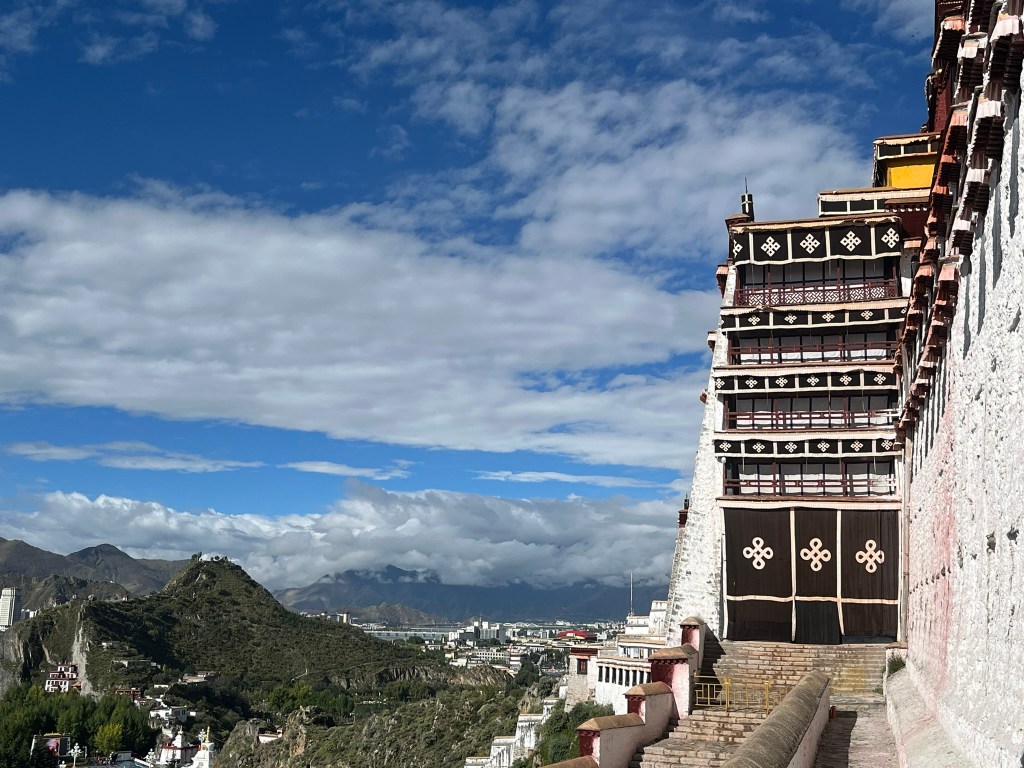
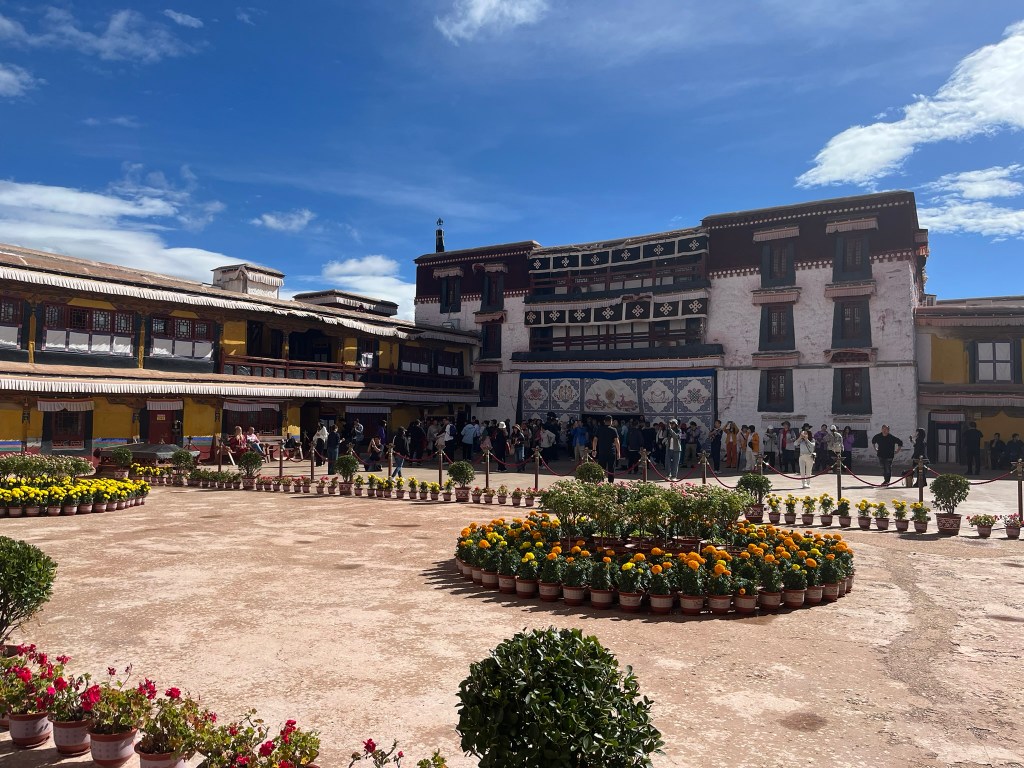
There are 2 main parts to the palace; the white palace and the red palace. The white palace is used for administrative functions and contains the Dalai Lama’s living and reception quarters. Here there is a balcony looking down into the inner courtyard where he would watch performances from. The red palace is the religious part of the building and is filled with thousands of chapels, shrines and stupas. The color of the palace is significant; white representing peace and administrative authority, red for spirituality and learning and black trim for protection. The brown and white curtains draped across many of the windows are made from yak hair and provide protecting from the sun, the rain and the cold.
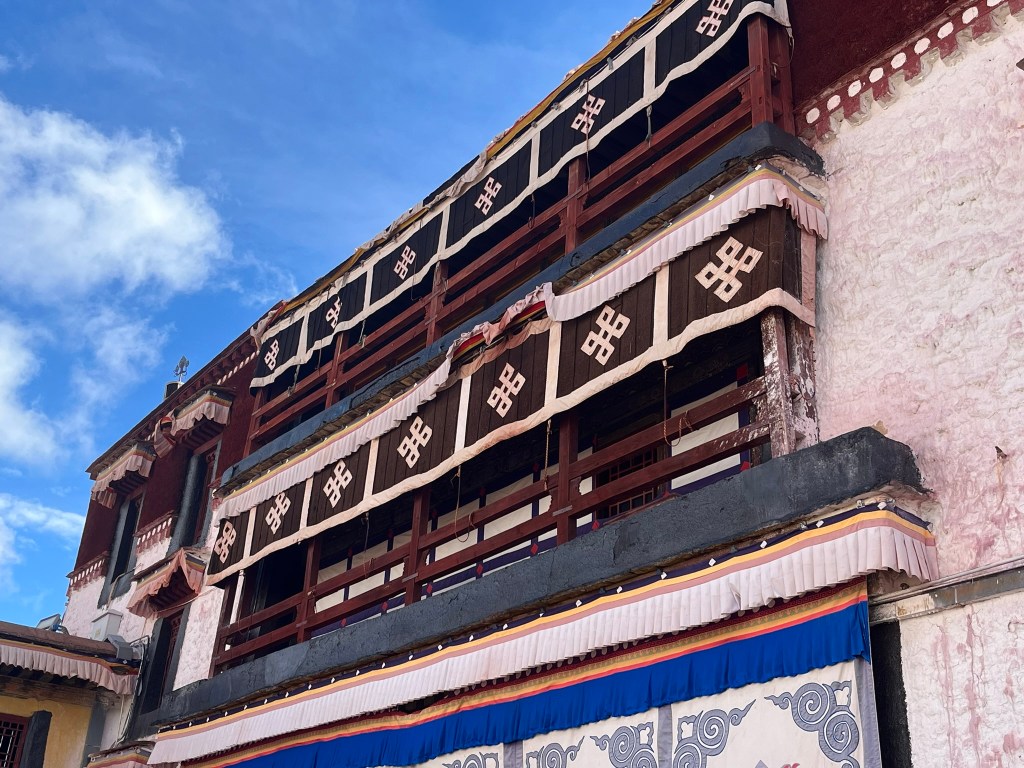

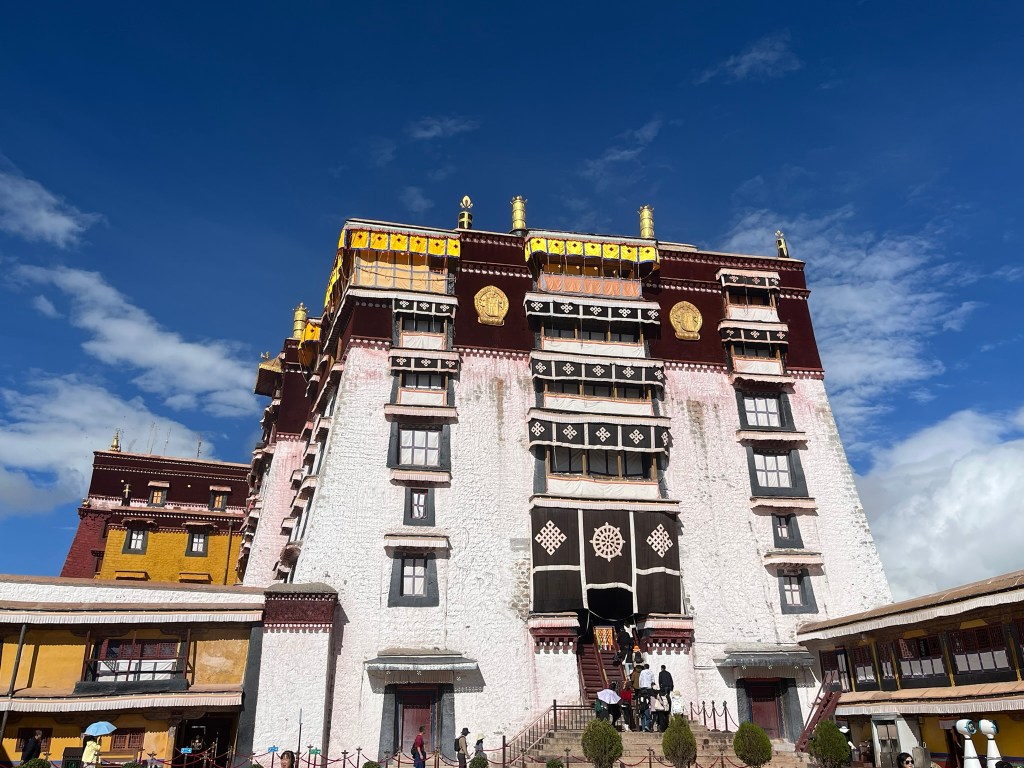
Inside the red palace there are tomb stupas for eight of the Dalai Lama’s, including the most spectacular one, for the fifth Dalai Lama (who established Potala Palace), covered in 3,500kg of gold and encrusted with jewels. The palace is a maze of rooms, all heavily decorated and with very steep stairs leading to each floor. Each room heavily smells of incense and yak butter (used as an offering to keep the candles alight). And there is a strange combination of people praying and making a pilgrimage around the palace and tourists like me, just looking to understand the history and significance of the place.
Once you enter the white palace from the inner courtyard, your tour guide will be on the clock. They have just 40 minutes to take you around the white and red palace or they will be penalised. For every minute they are late finishing a tour, they are not allowed to return with another tour group for 3 days. This was ok for our guide to be a few minutes late as the next time he would return would be in over 15 days time, but for a local tour guide taking groups around every day this must be quite stressful especially as the route around the palace is very busy. However I am sure pilgrims would take hours to complete the route if there was not a time limit.
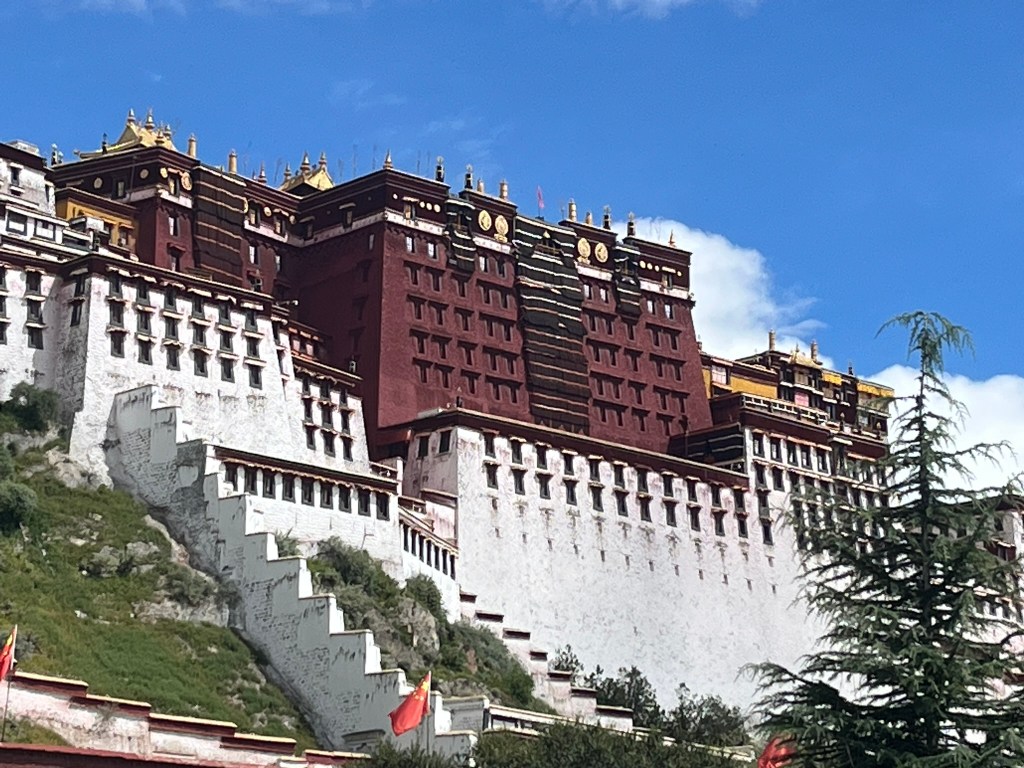


You exit the palace from the opposite side that you entered, downing a winding path and then you have a choice to either walk back clock-wise to complete the Lingkhor pilgrimage circuit around the base of the hill, along with hundreds of Tibetans. Or to walk against the crowd to get some great shots of the palace from the front. I chose to go against the flow of people and get some good photos as the palace is absolutely breathtaking. That evening we returned to a rooftop restaurant nearby Potala Palace and got the chance to see it lit up at night.
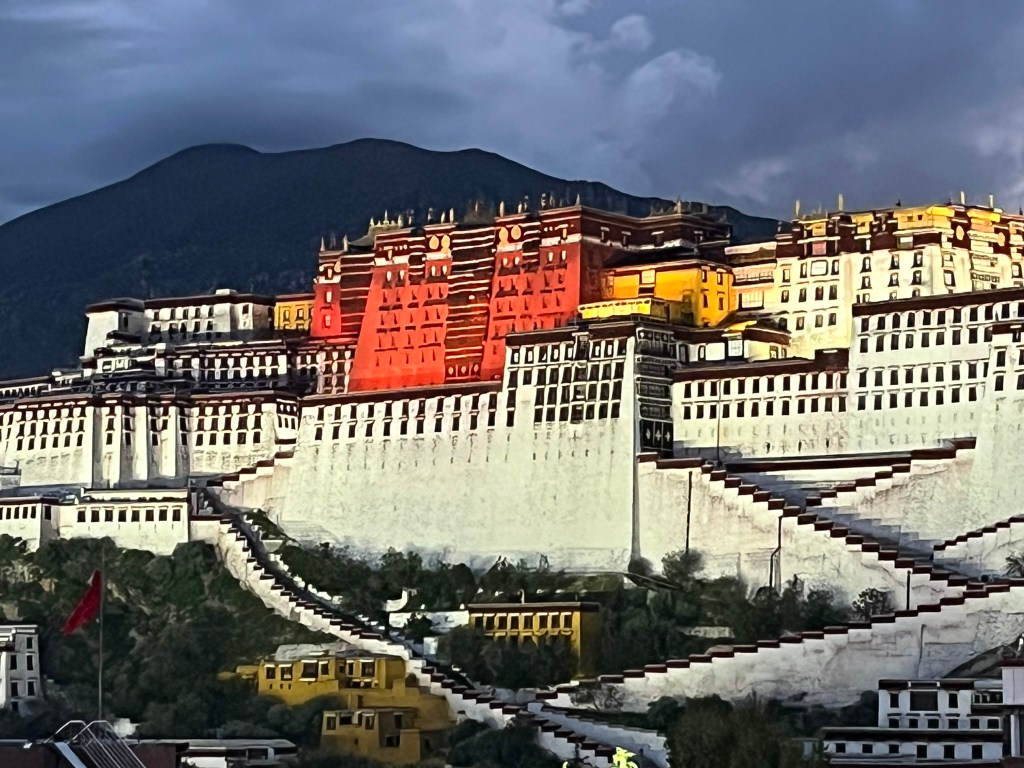

Potala Palace does not disappoint. It is definitely on my list of top places I have visited this year and a trip to Lhasa is absolutely worth it to see this amazing piece of history.
 Colette's Grand Detour
Leave a comment