Lhasa is a city that conjures up exotic images of a far-away Himalayan kingdom. As we travelled from the train station to the old part of the city, we drove past the amazing Potala Palace, towering over the streets below and then turned into a maze of white-washed buildings, all with colorful trim around the windows. We had arrived in Lhasa!
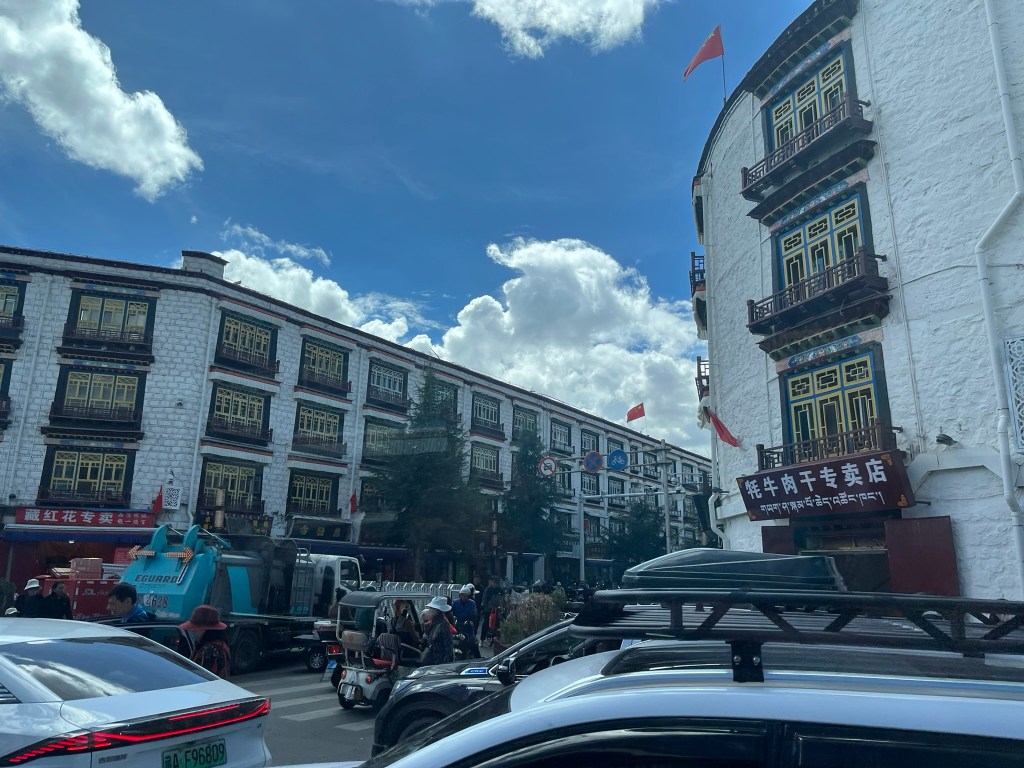
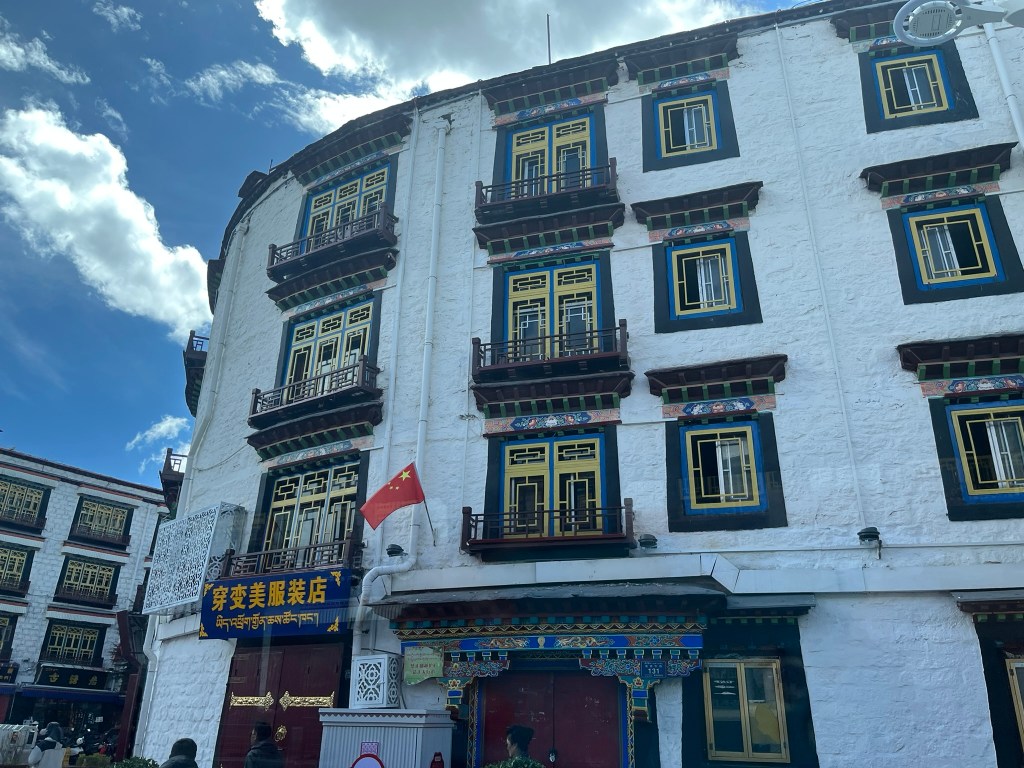
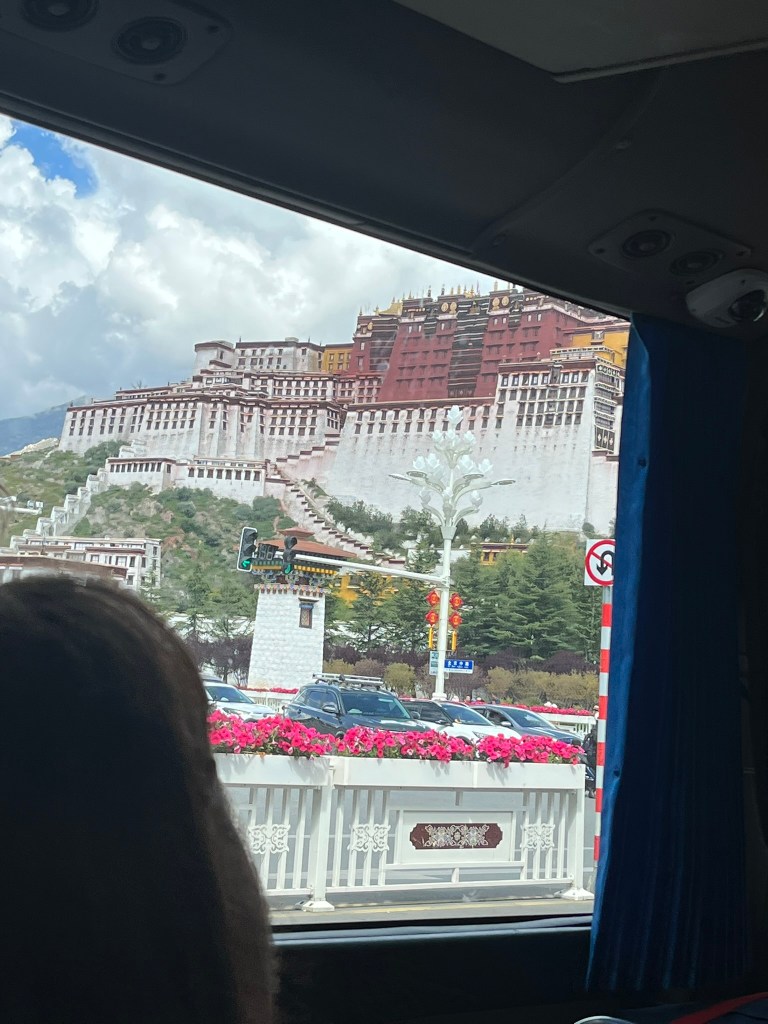
Lhasa, a city of 900,000 people, lies in the broad valley along the Lhasa River, which is a tributary of the Yarlung Tsangpo, known downstream as the Brahmaputra. It sits at an altitude of 3,650m making it one of the world’s highest cities. The city is framed by the mountains that surround the valley, some of them over 5,000m+ high and many of them snow covered even in Summer. The clouds lie low here, sometimes as low as the 1-2 story buildings in the city. The sun-light is intense and bounces off the white walls creating a dazzling effect.
The Lhasa valley has been inhabited for centuries by farmers and herders, even before it became a center for Buddhism. The mountains and caves of the area were already revered in the pre-Buddhist Bon religion. In the 7th century, Songsten Gampo, the Tibetan king established Lhasa as his capital, which translates to ‘Place of the Gods’. At this time Jokhang temple and the first iteration of the Potala Palace was built (more on these in the coming days). Lhasa grew as Tibet’s spiritual center and monasteries like Sera were established in the 15th century by the Gelugpa order of Tibetan Buddhism.
When the 5th Dalai Lama assumed both spiritual and political leadership, Lhasa also became the political center of Tibet. It was at this time that Potala Palace was massively expanded into the grand structure it is today. Lhasa was also a hub for trade, with caravan routes linking India, Nepal, Bhutan and Central Asia. It was a lively market town where wool, salt, tea and crafts were exchanged.
In 1950, the People’s Liberation Army entered Tibet and formerly incorporated it into China. For a few year’s Lhasa’s traditional system was left alone, but tensions grew in the mid 1950’s and many refugees from other parts of Tibet poured into Lhasa. In March 1959, rumors spread that the Chinese government planned to abduct the Dalai Lama and thousands gathered around his summer palace in Lhasa to protect him and demand Tibetan independence. Protests escalated and there was street fighting between the PLA troops and Tibetans. The summer palace, as well as other areas of Lhasa were heavily shelled and thousands were killed. Disguised as a soldier the 14th Dalai Lama fled the city and crossed the Himalayas into India, where he was granted asylum and still remains until today. At this point, the Tibetan government was dissolved, monasteries occupied and the resistance crushed. Thousands were arrested or sent to labor camps.
The Cultural Revolution in China during the 1960’s, looked to radicalize Tibetan youth and was a campaign against Buddhism, monasteries and other local traditions. In Lhasa the Jokhang temple was desecrated and sacred statues destroyed and it was used as a pigsty and grain store. The Potala Palace narrowly escaped demolition. And monastic treasures like scriptures and ritual objects were smashed, burned or looted. Many traditional homes were torn down in the capital. Monks and nuns were forced to abandon their vows, marry and work in secular jobs. Religious practice was banned and the Tibetan language de-emphasized in schools in favor of Mandarin. The city became heavily militarized, with many checkpoints and large rallies held in Potala Square where monks and other counter-revolutionaries were publicly punished.
The cultural revolution ended in 1976, after Mao’s death and many of the policies he had brought in were reversed. Religious freedom was restored in a limited way, monks were permitted to take vows again and there was a big effort to restore the city. Pilgrimages and monastic education slowly returned and tourism was allowed. There were still protests in the late 80’s led by monks calling for independence.
Today, Lhasa remains the cultural and religious heart of Tibet. The old town still very much has a feeling of an ancient city, whilst outside the old city there is concrete housing and Chinese architecture. Many migrants have moved to Lhasa altering its demographics and tourism has boomed. Every part of the city is under close surveillance, however you can see that Tibetan culture is still very strong, from how crowded it is with pilgrims.
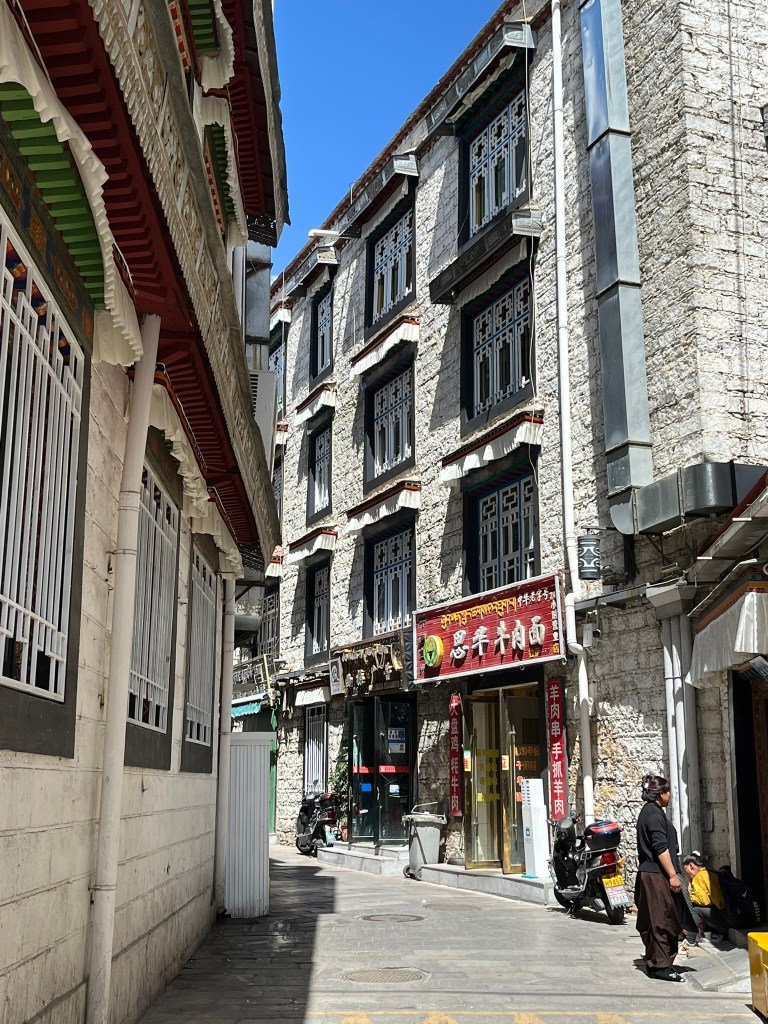
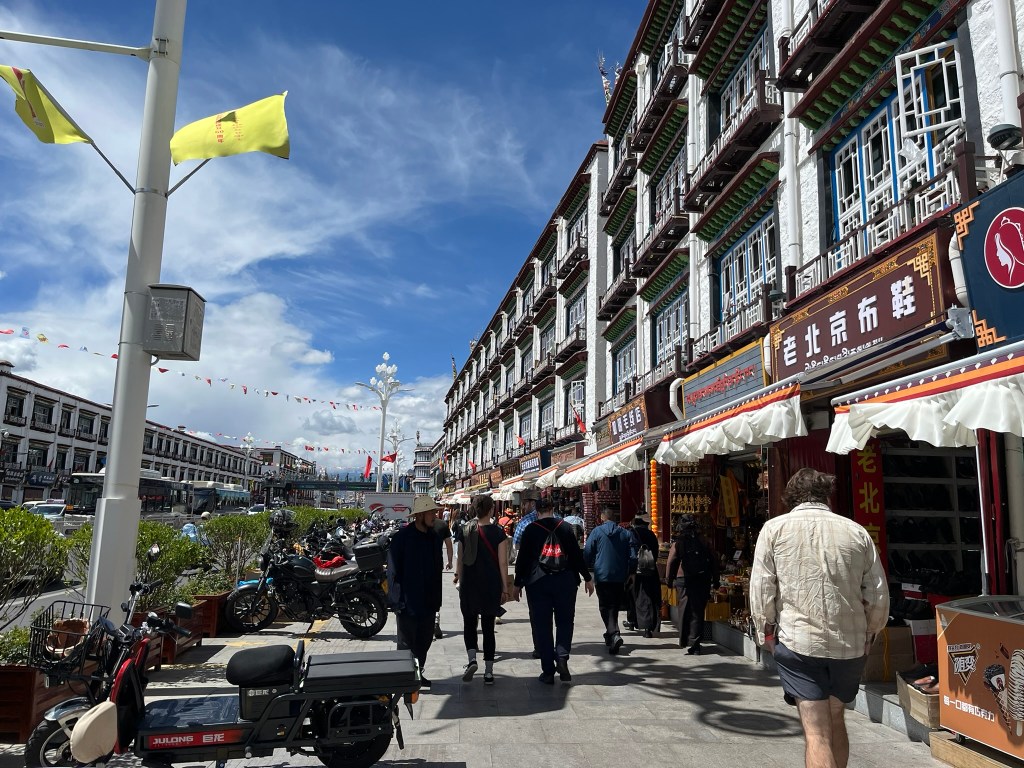
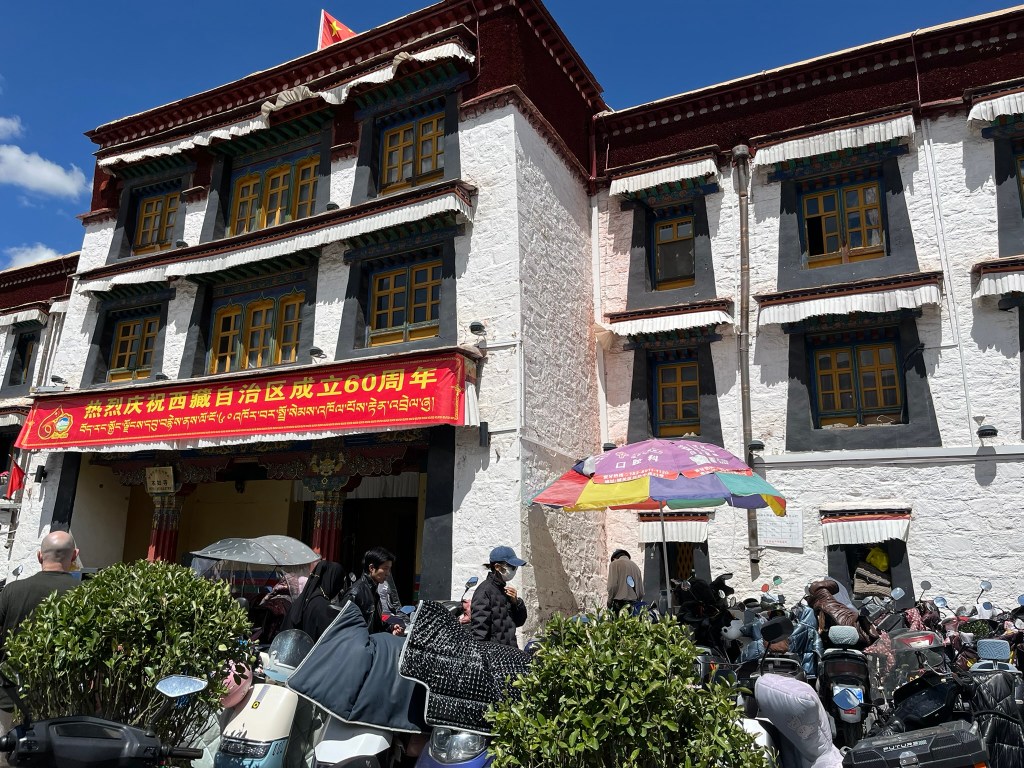
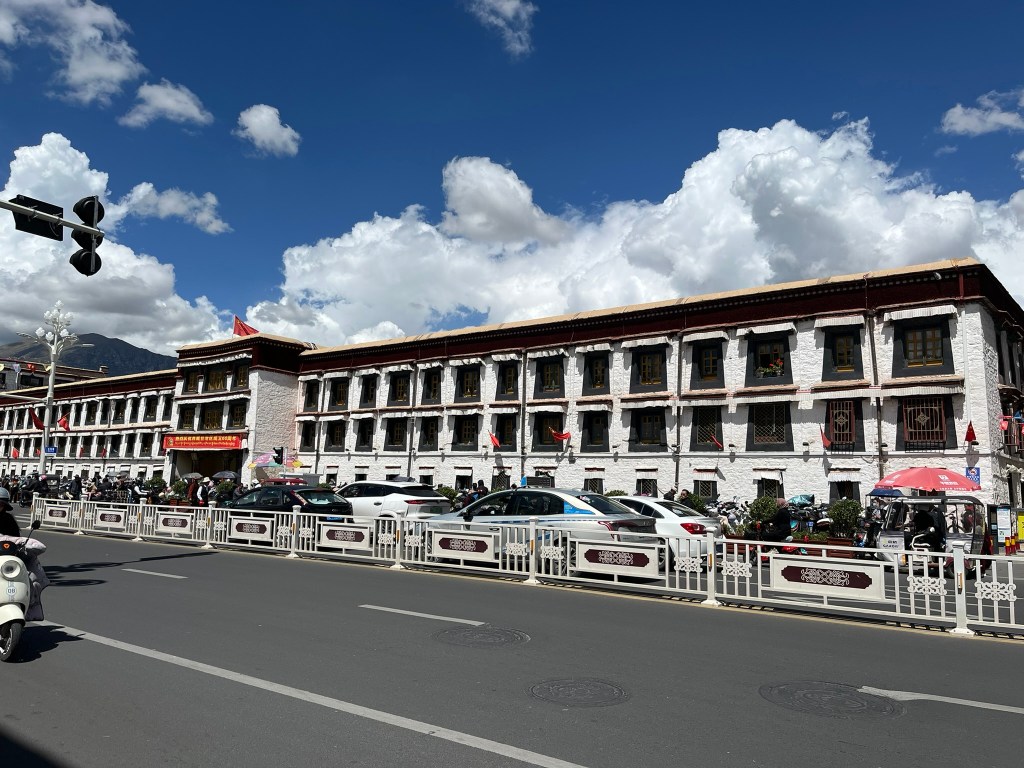

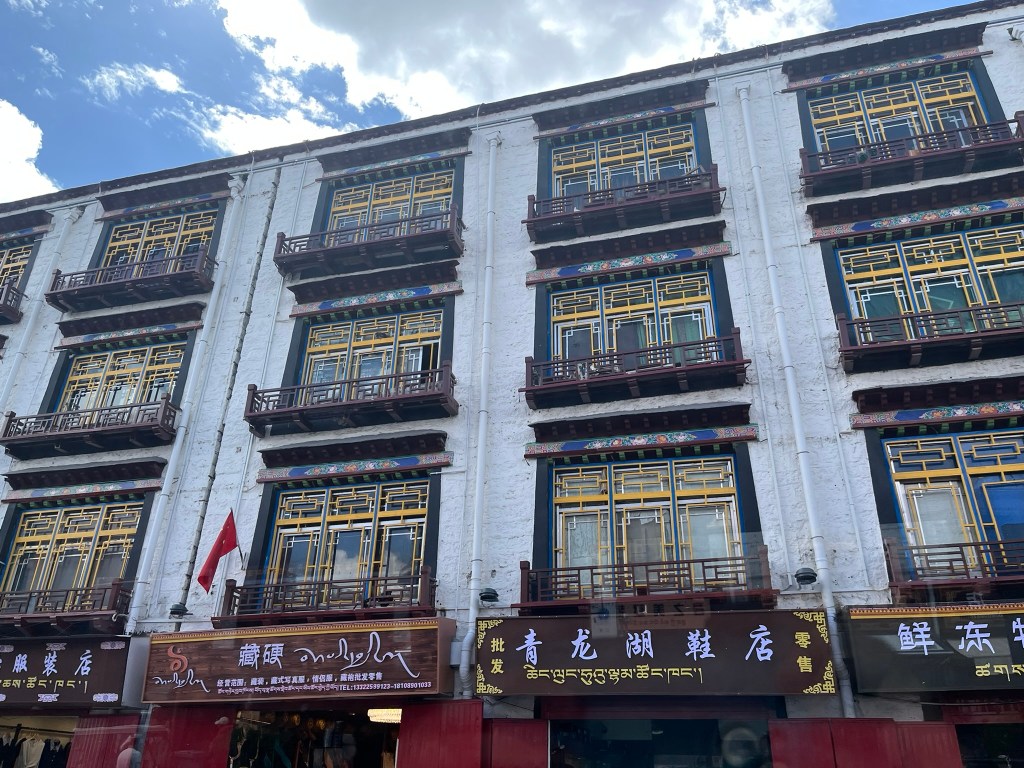
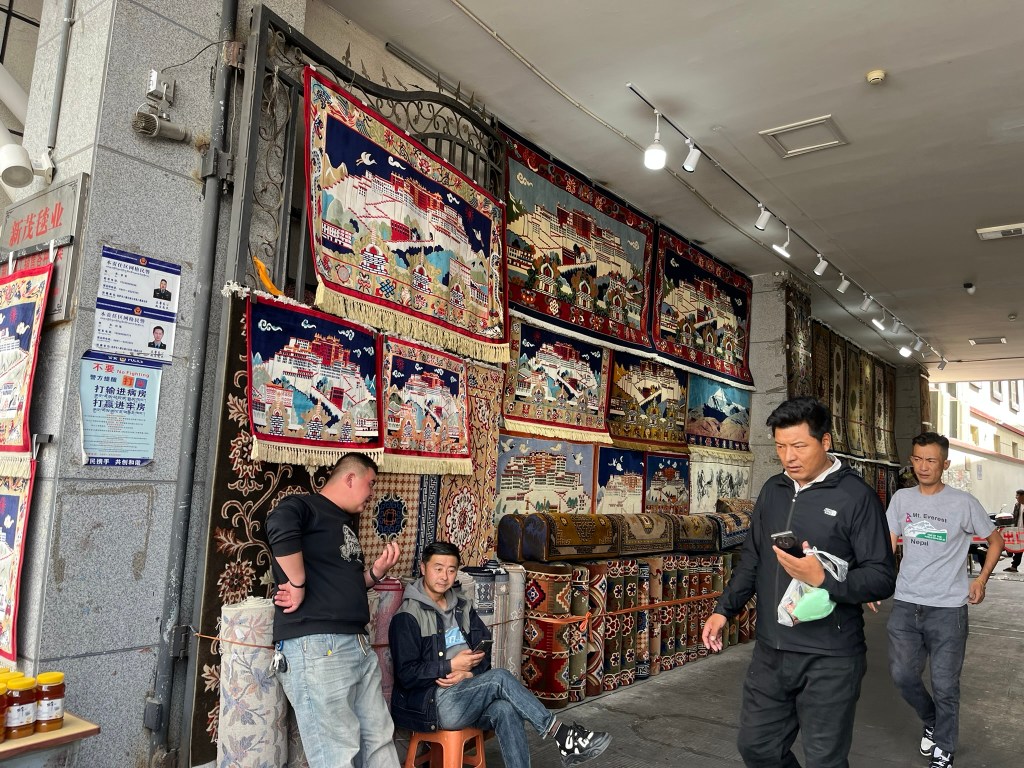
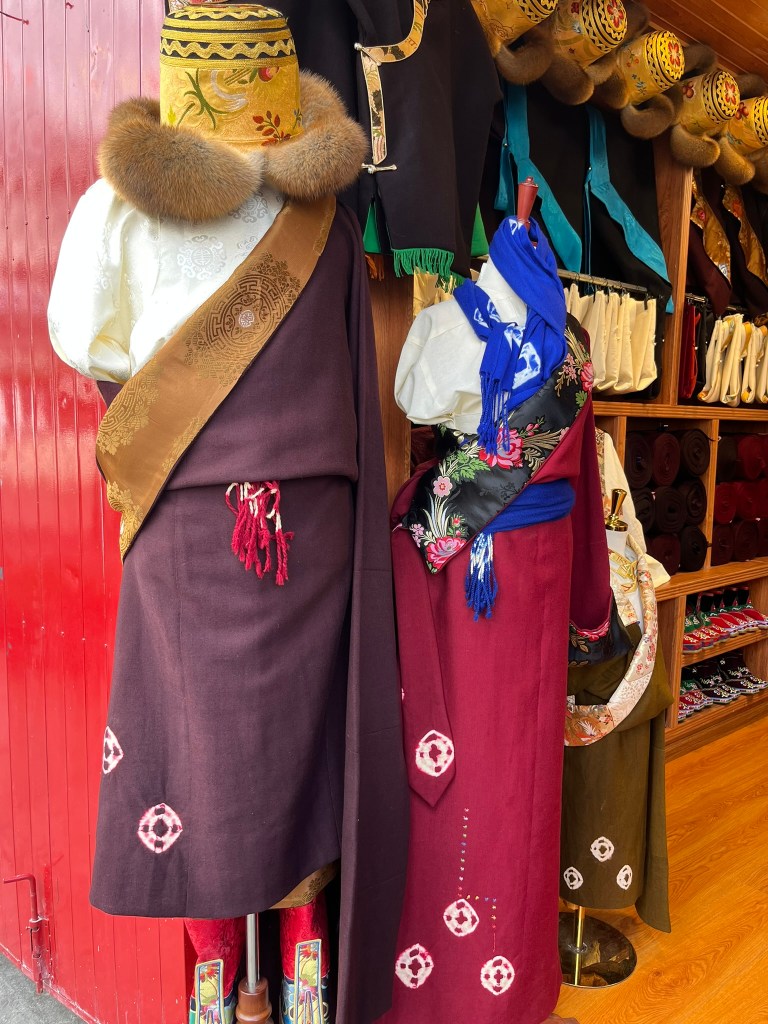
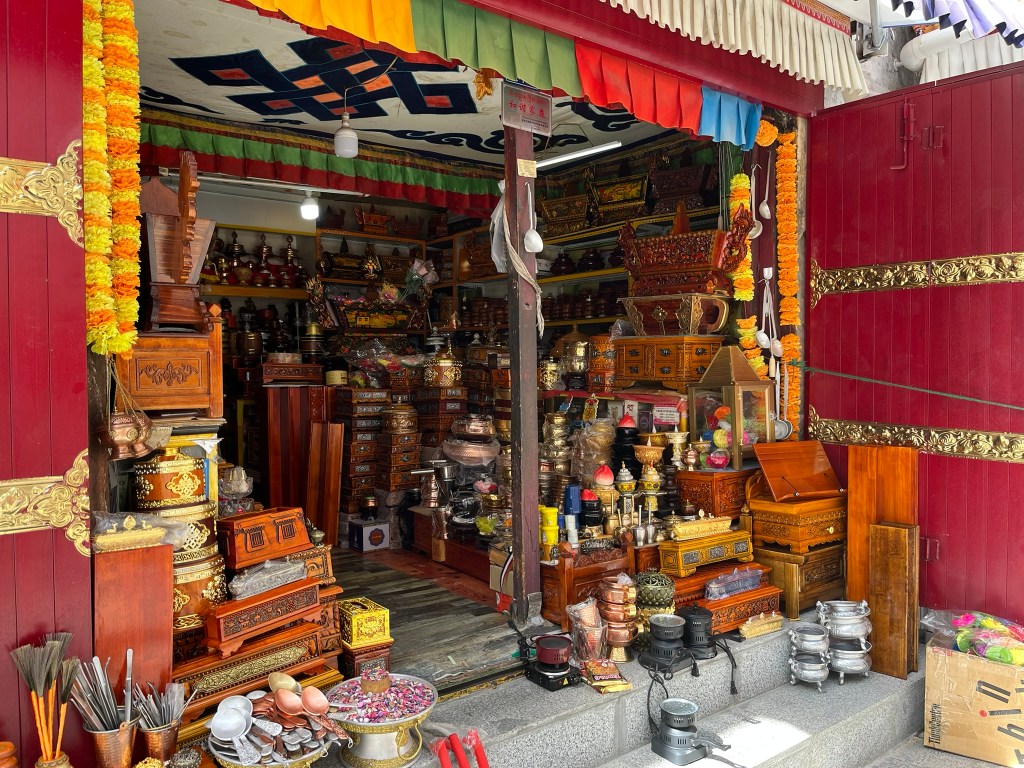
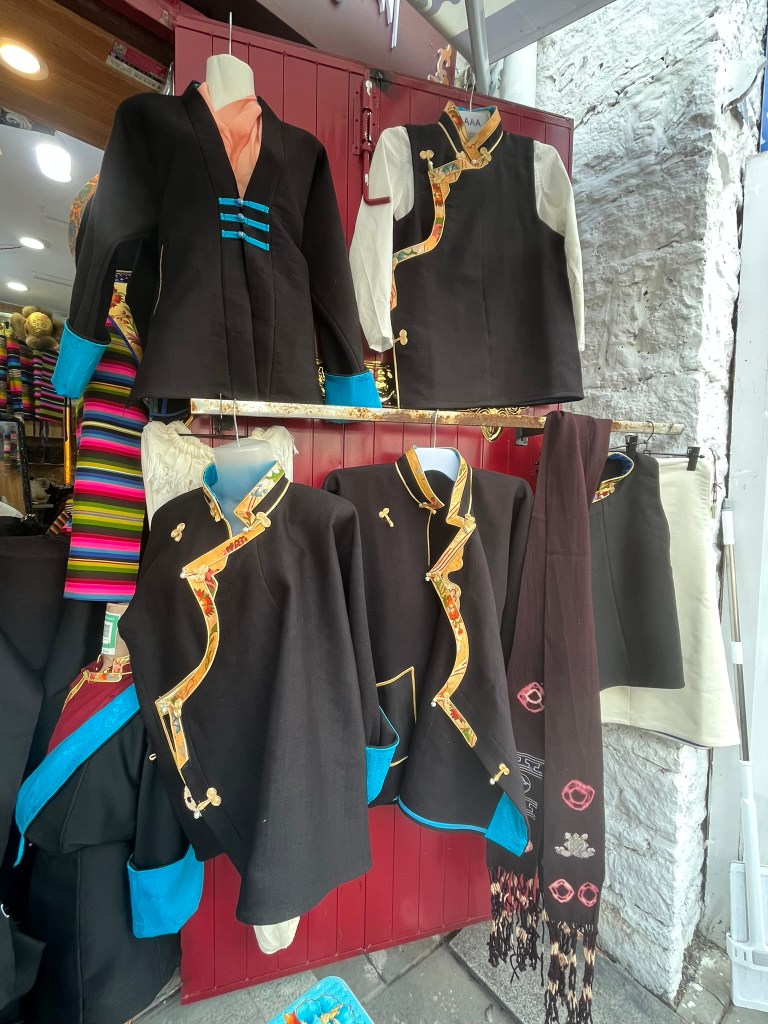
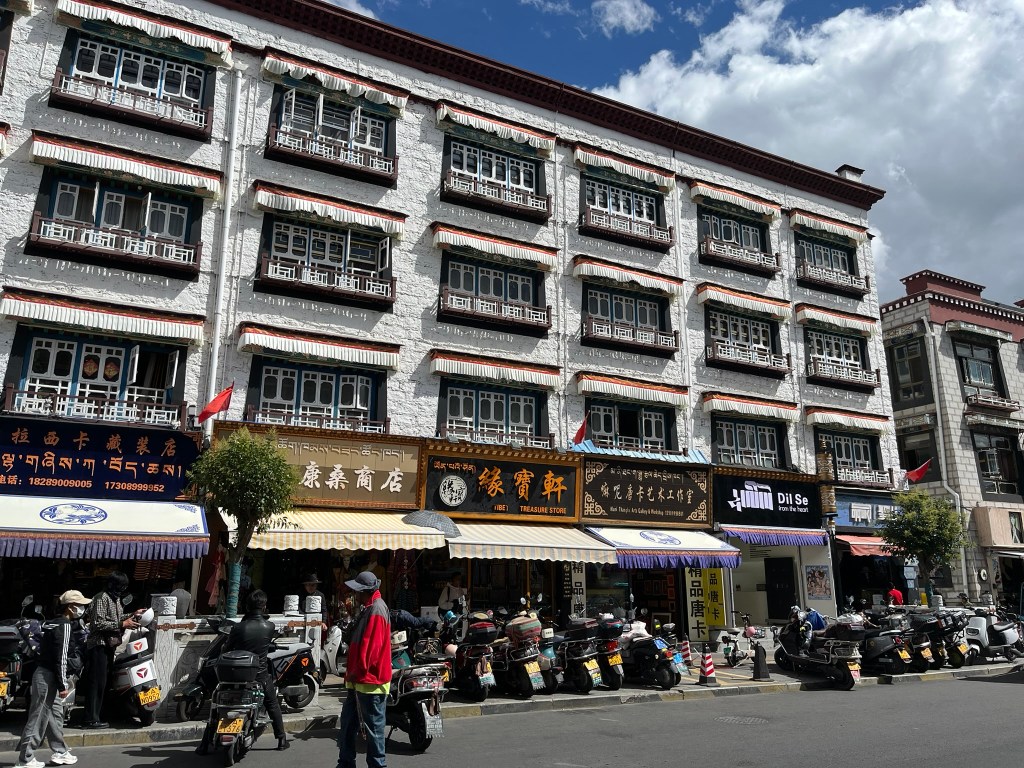
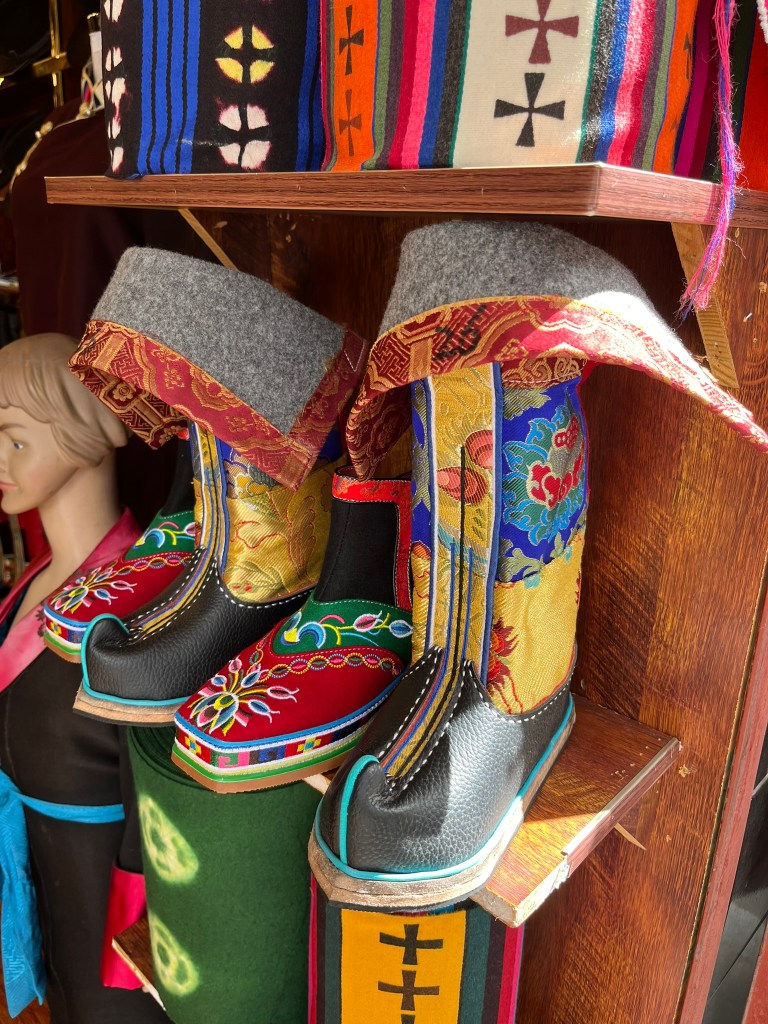
The old town centers around Jokhang Temple and Barkhor street, which encircles the temple. The buildings in this area are all 2 or 3 stories, white-washed and made of granite and rammed earth. They have flat roofs trimmed with prayer flags, and brightly painted window and door frames. We took a short walk around the area on our first day to explore a little and the it is a complete maze, with narrow alleys veering off in all directions as well as bigger roads like the one our hotel is on. The shops and restaurants are a mixture, with some targeted at tourists selling thangka paintings, incense, yak butter and prayer beads but others are still for locals. I especially liked all the shops selling traditional Tibetan material and outfits. Keep in mind that Tibet currently attracts around 50 million tourists a year, of which only around 20,000 are foreigners.




My first impression of Lhasa is that it going to be an exciting place to explore and I can’t wait for the next few days.
 Colette's Grand Detour
Leave a comment