Our first experience in Tibet was to visit a family home on the outskirts of Lhasa nearby the Sera monastery, to see what the life of a local family is like and to have a momo dumpling cooking class. We jumped on the public bus just opposite our hotel and paid the 10 Yuan (~15p) ticket. The buses are all electric and there were a huge mixture of people on the bus; pilgrims on their way to Potala Palace, monks, local people going to work and tourists. Many of the locals were curious to ask our guide where we were from and what we were visiting in Tibet. After about 15 minutes we reached the suburbs and walked to the family home we would be visiting.
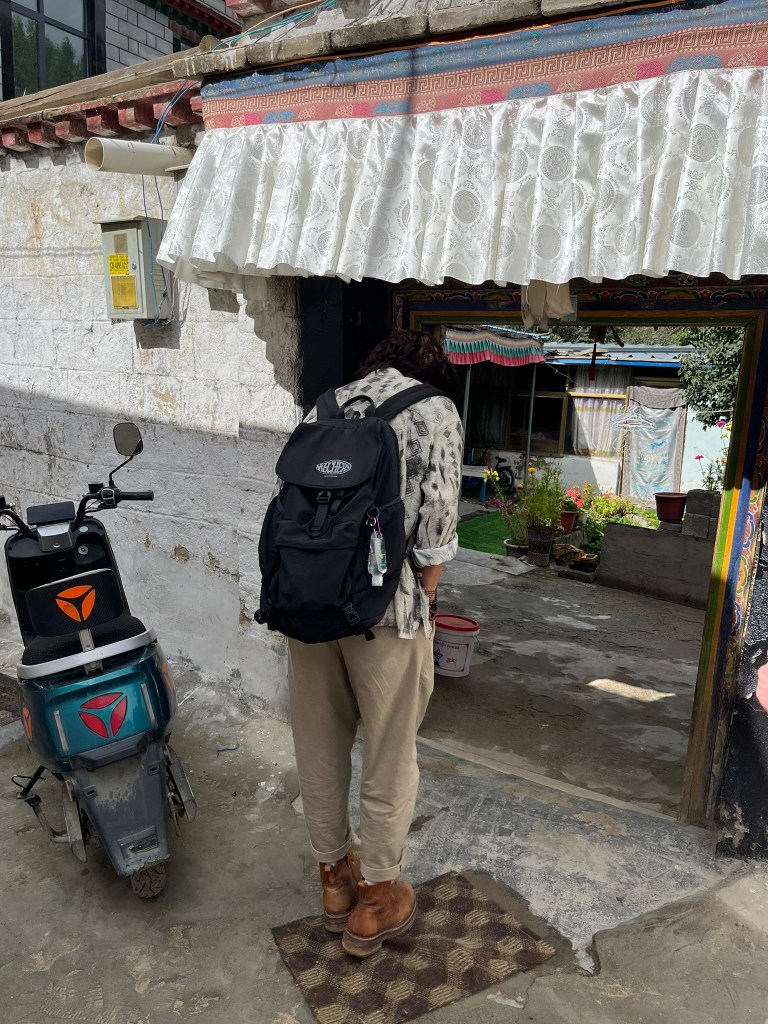
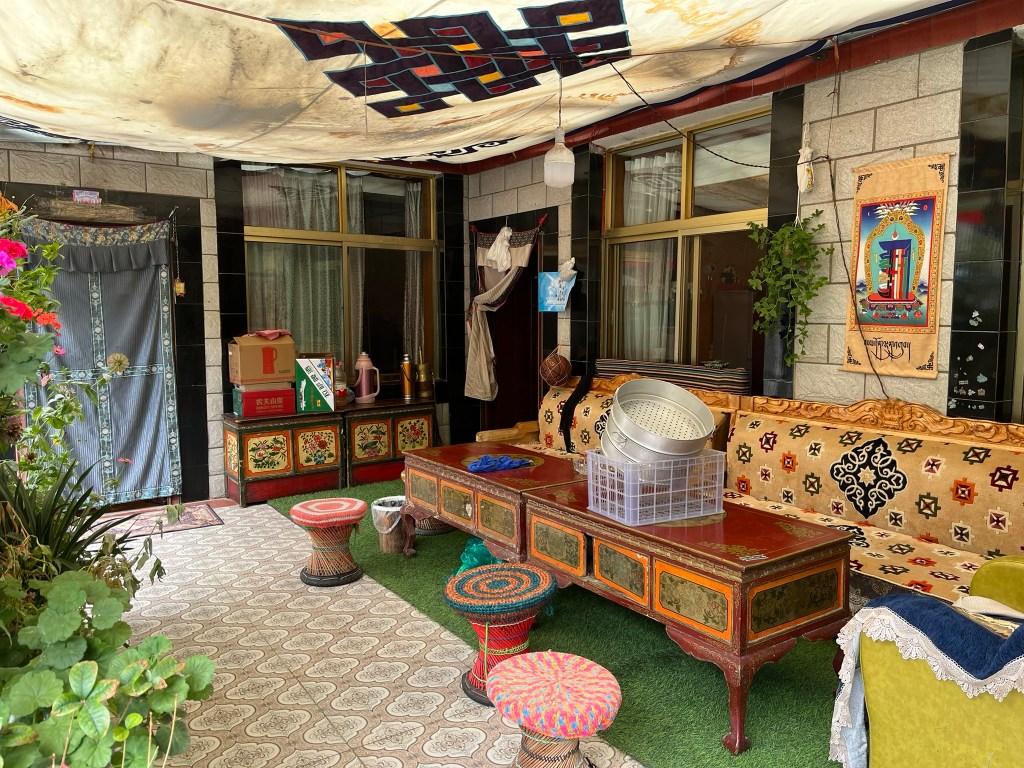
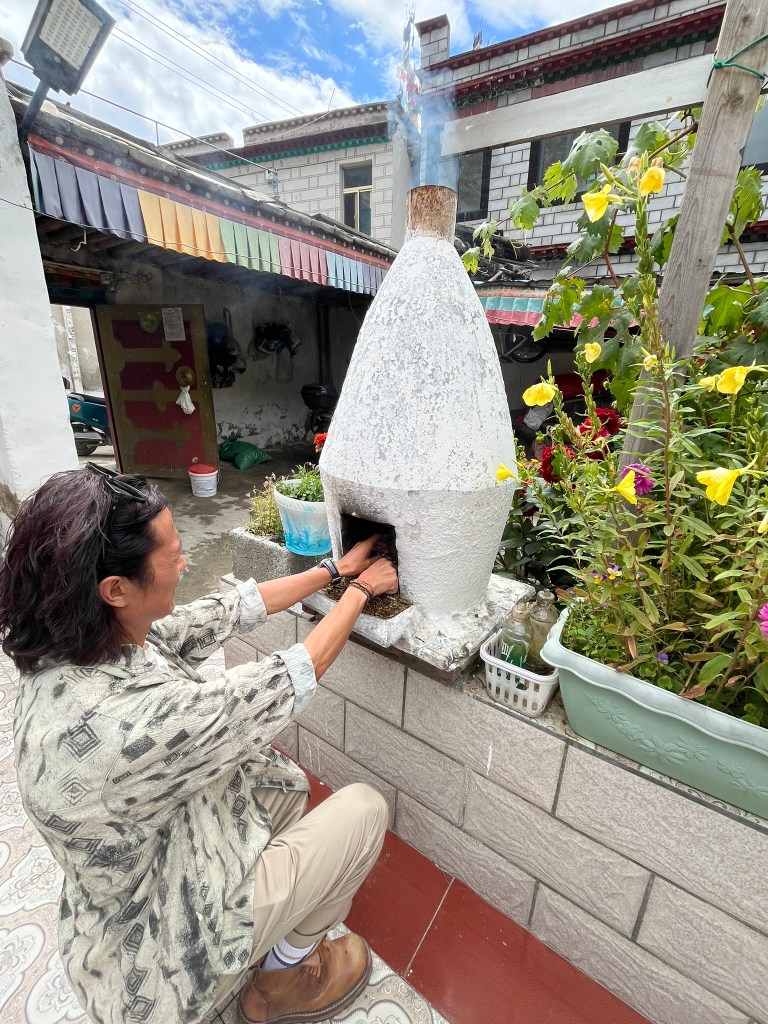
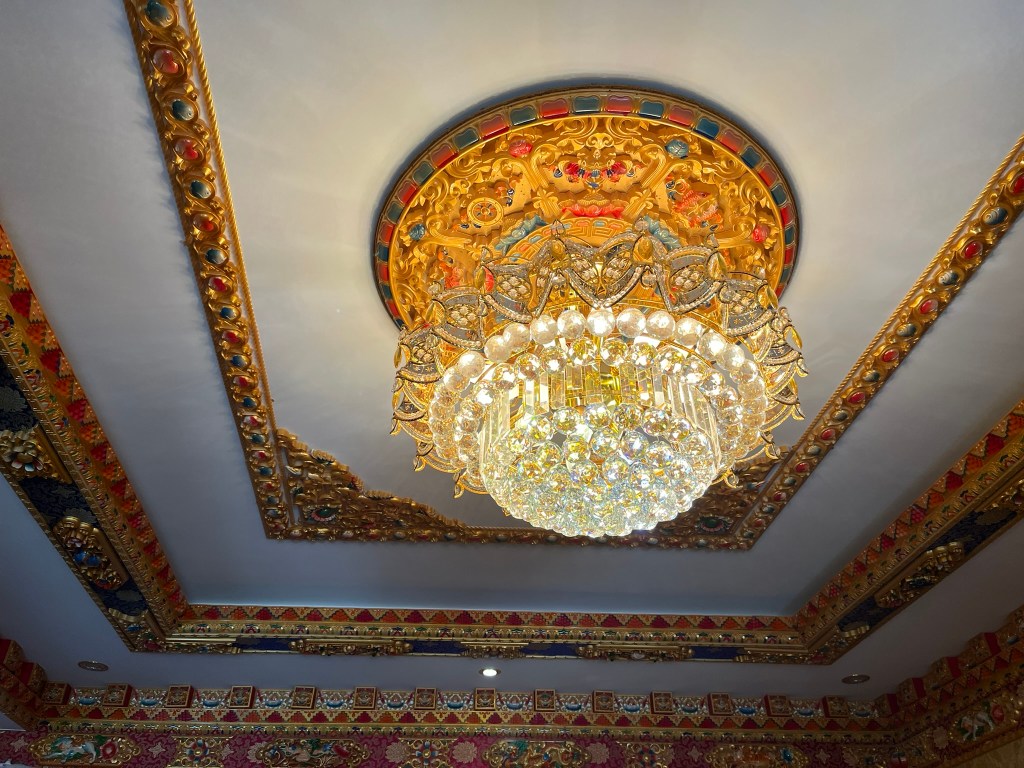
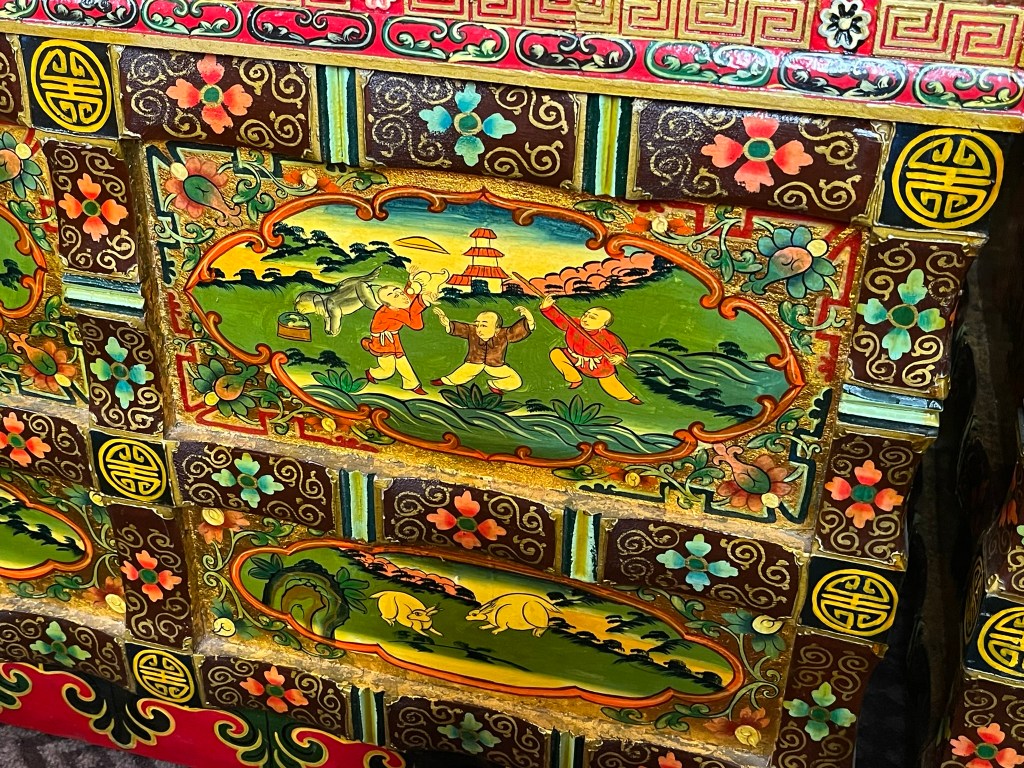
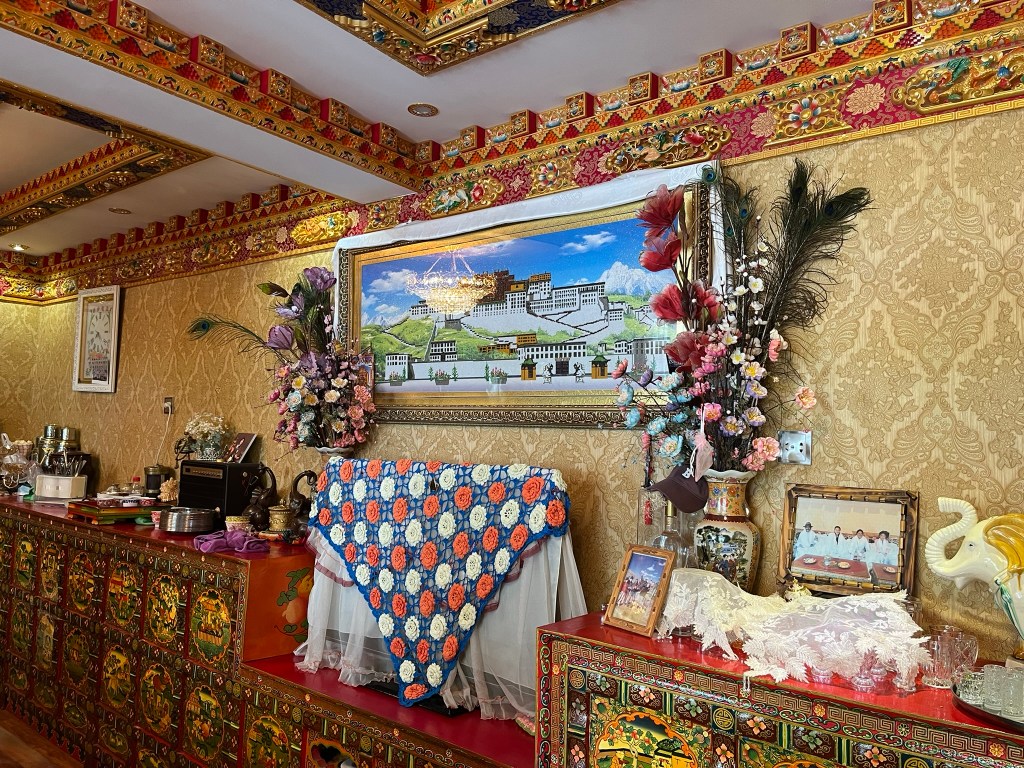
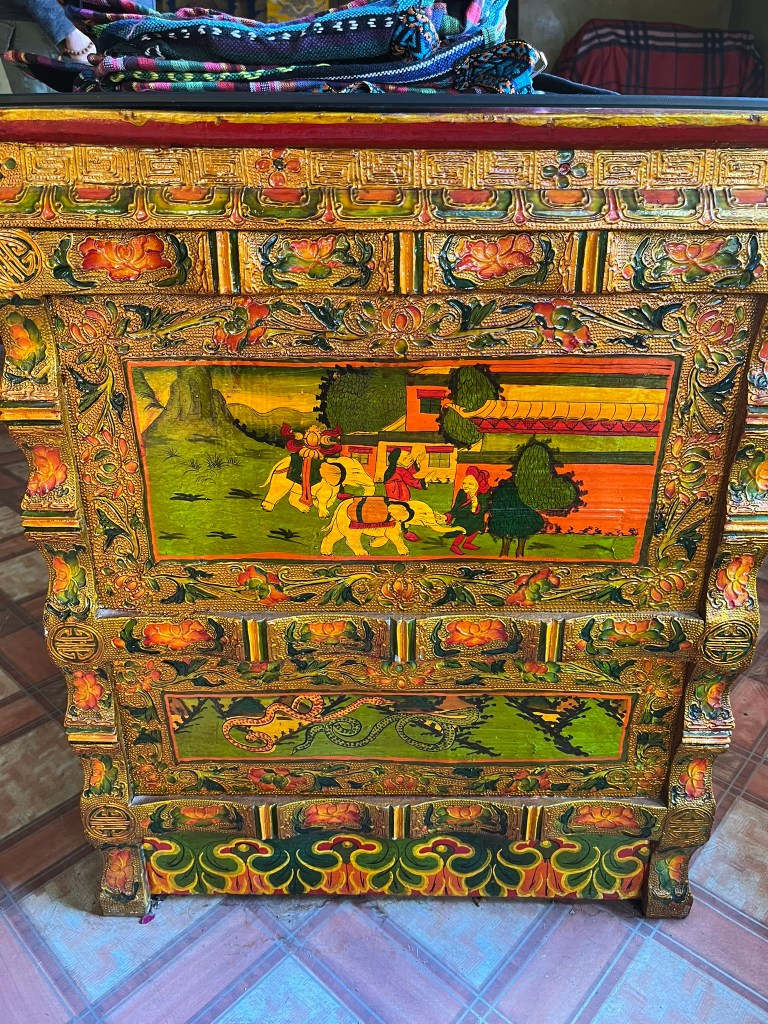
We were invited into a central courtyard that had a giant incense burner, lots of beautiful flowers and an awning with a long table and chairs under it. We went inside the living room, which was so intricately decorated. The cupboards around the edge of the room and the table in the center were all painted with Buddhist scenes completely covering them. Even the ceiling was decorated.
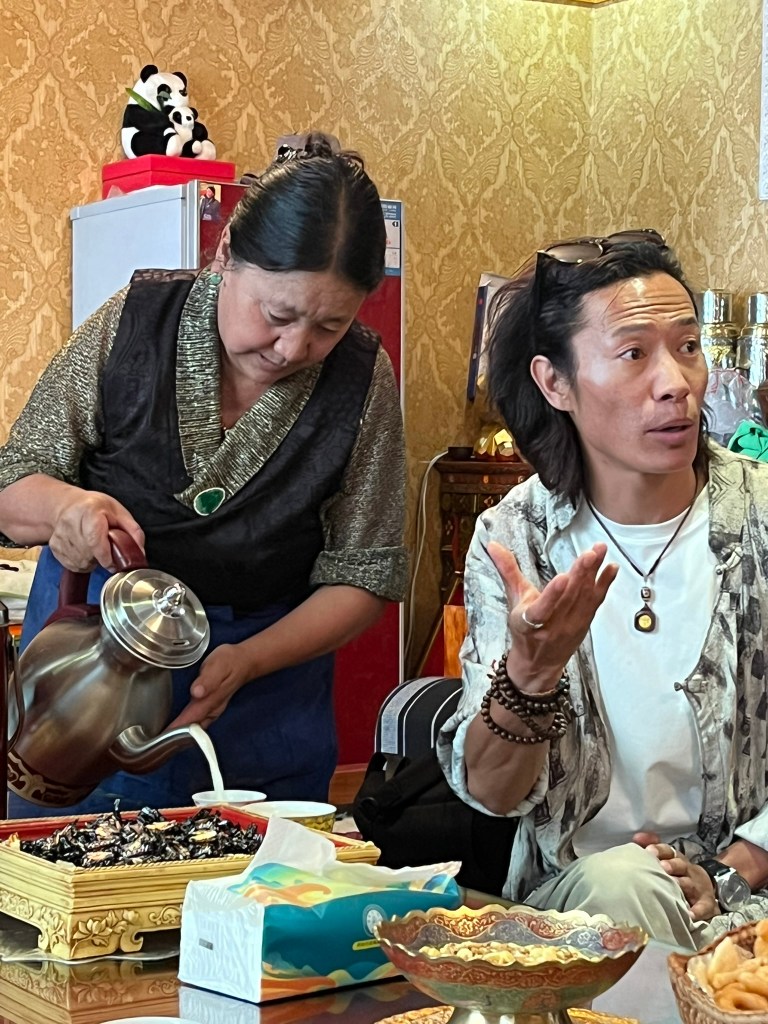
We were offered a cup of butter tea, which is the most traditional drink in Tibet. Our guide said he will typically drink 5 cups of butter tea at breakfast every day. As a drink it is deeply tied to the region’s high altitude environment and pastoral lifestyle. It traces its roots back to when Tibetans lived a nomadic lifestyle and needed sustenance in a harsh-climate. The ingredients are tea leaves, Yak butter, salt and hot water. Tea is not grown in Tibet, but it was accessible via trade routes from Sichuan and Yunnan and delivered in the form of tea bricks. I saw these tea bricks in Yunnan province when I visited earlier in the year, so it was interesting to see how they are used along the Tea and Horse Road. To prepare the tea component of the drink, the brick tea leaves are boiled for a long time until the liquid is dark and strong.

Yak butter is also extremely important in Tibetan culture and it is their main source of fat in their traditional diet. To make the butter, a female yak, known as a dri in Tibetan, is milked and this is then boiled and cooled. The cream that rises to the top is skimmed off, and then what is left is churned using a hollowed-out log. A wooden plunger is moved up and down to separate the butter fat. And after 10-30 minutes, globules of butter start to appear. The butter is then scooped out and washed with cold water to remove any remaining buttermilk, then pressed into blocks or lumps for storage. A block of butter can last up to 2 years in Tibet. This butter is not only used in tea, but also in tsampa (which I’ve not tried yet) and for the butter lamps in the monasteries.
To make the tea, chunks of butter and a little salt are added to the strong tea and it is churned until it becomes smooth, thick and creamy. This tea is good for high altitudes because it helps with fluid balance and prevents dehydration. It also helps circulation, helping adaptation to the thin air. Whilst we drank our tea we had a chance to speak to our guide about the history of Tibet and some of the core elements of Buddhism.
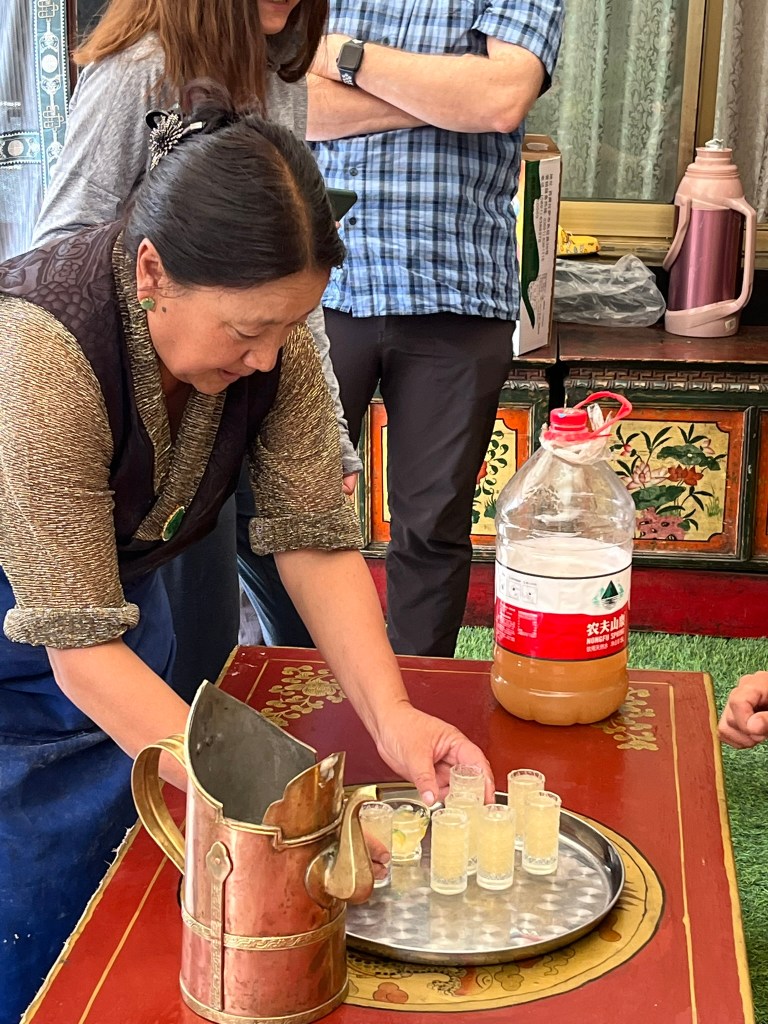
Next up we helped the women in the family make momo dumplings. They rolled out the simple dough of water and flour and showed us how to fill and pinch closed the dumplings. There were lots of different designs possible, some easier than others. We then headed out to the courtyard to try some chang, a traditional barley drink of Tibet that is very lightly alcoholic, whilst the women steamed and fried our momo’s for lunch. The chang was surprisingly nice and didn’t have the off-putting flavor that homemade alcohol sometimes have.
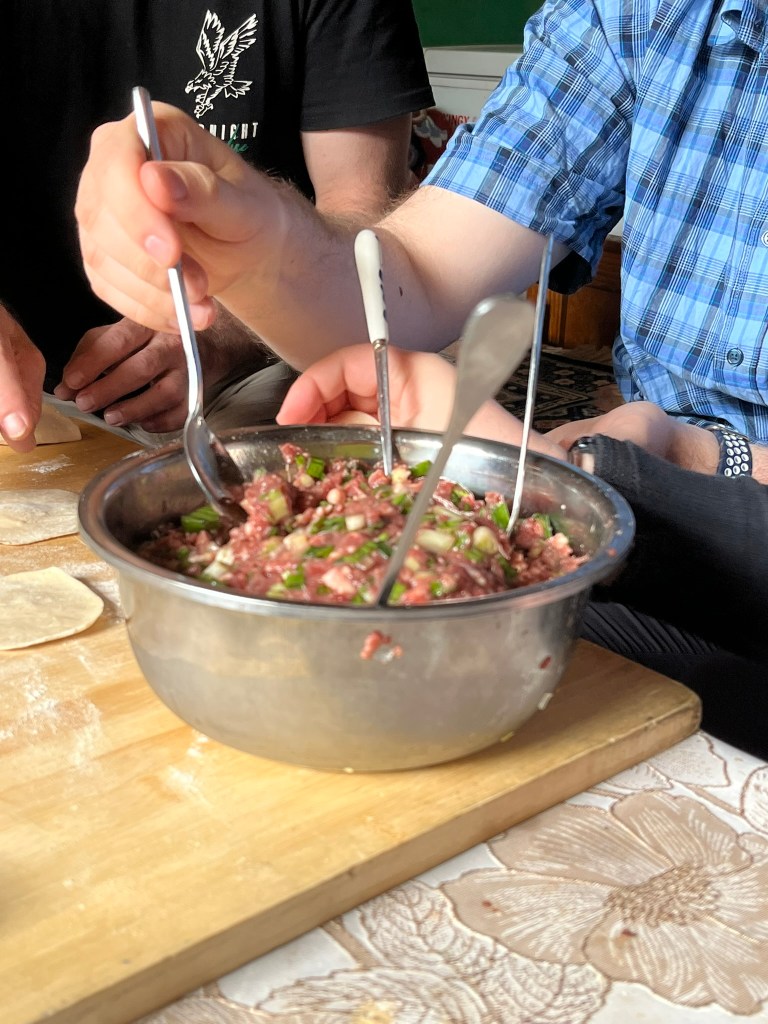

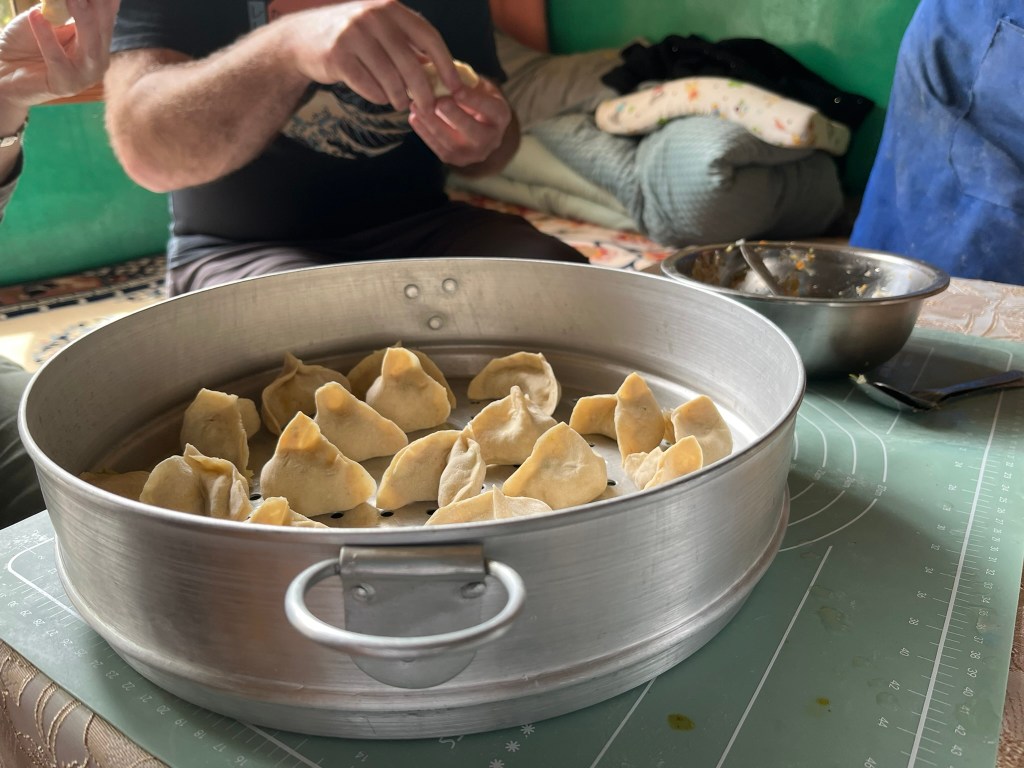
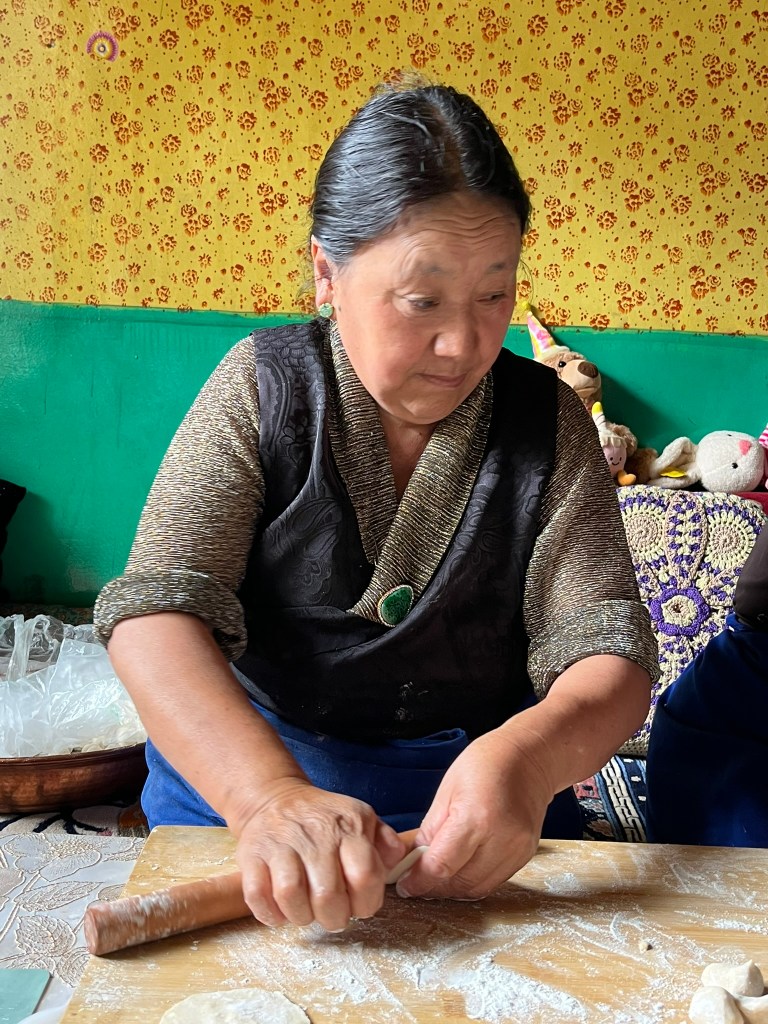
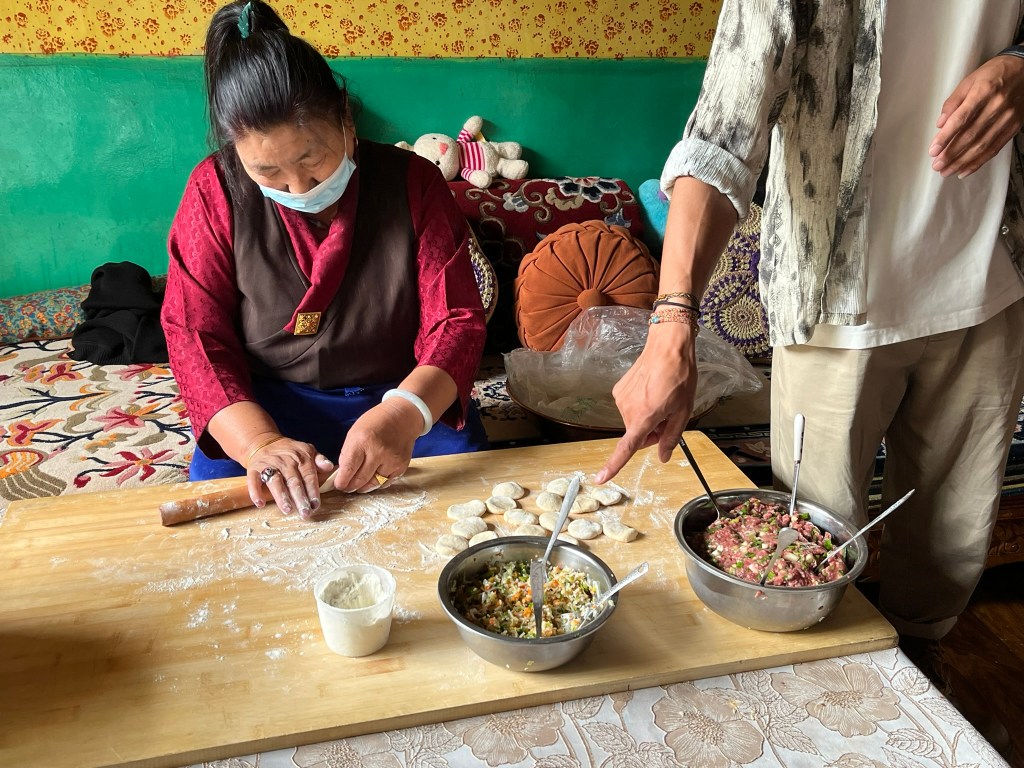
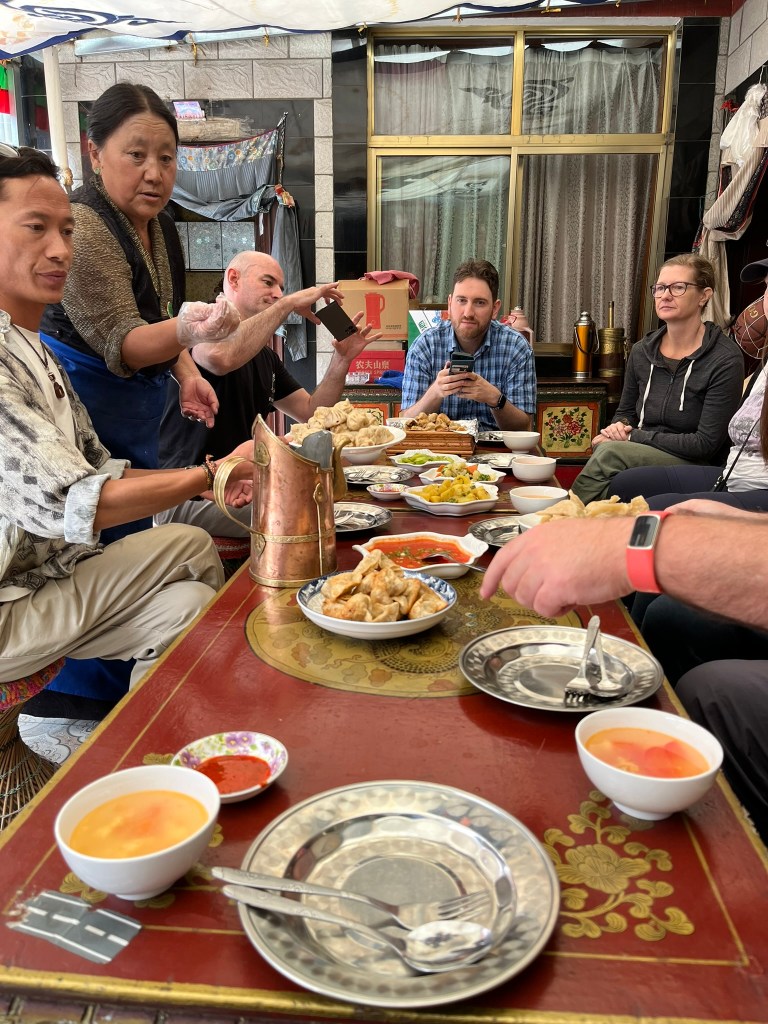
Then it was time for lunch, where we got to eat our momo’s (some had yak filling and others vegetables) alongside potatoes, cauliflower and cucumbers. All the dishes were simple but delicious. This is a hall-mark of Tibetan cuisine. Unlike Chinese cuisine that often uses ten’s of ingredients for a single dish, Tibetan food focuses on its freshness and uses very little extra ingredients.
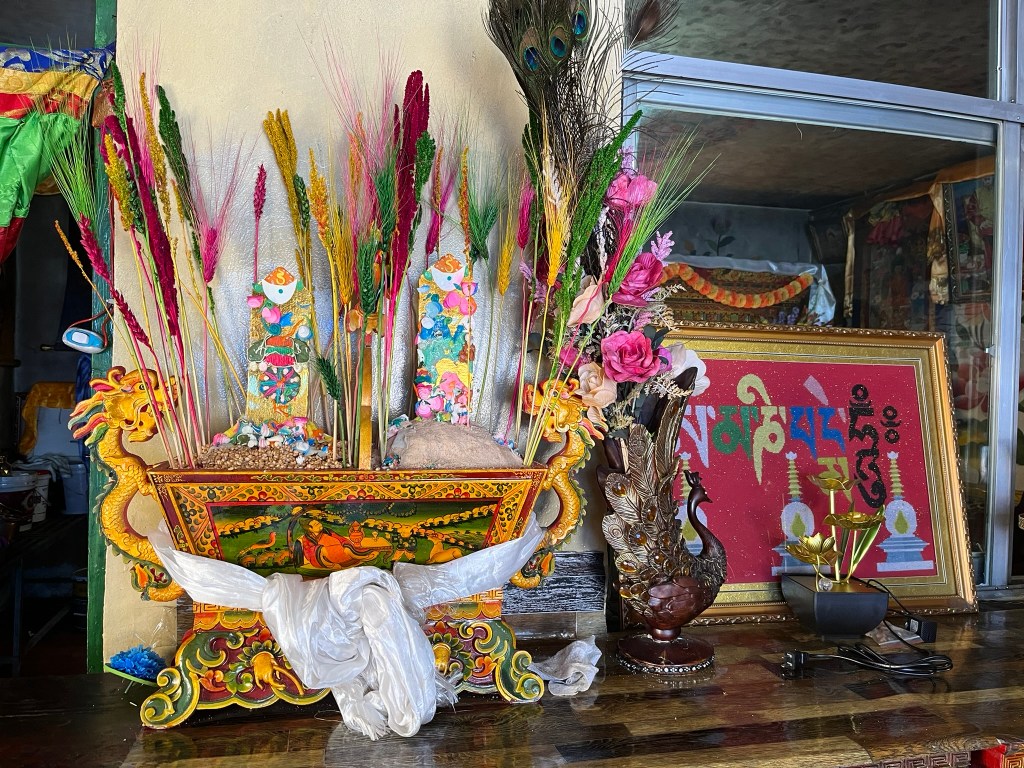
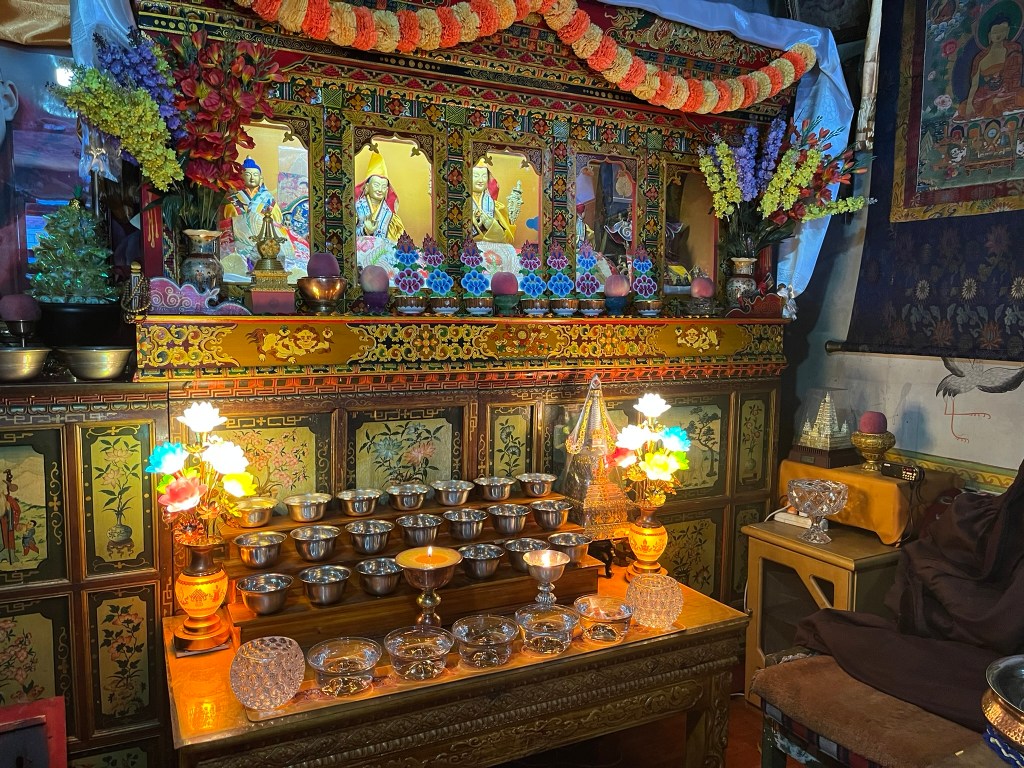
After lunch we visited the family’s prayer room. Every family, even in an apartment will have a designated room, shelf or cabinet to have their shrine. The shrine will always face towards the rising sun or a close-by sacred mountain and there will be images and statues of Buddha, thangka paintings and sacred scrolls and scriptures. There will also be butter lamps, where yak butter is used as a type of candle, and offering water-offering bowls that are changed each day. In a wealthier household there may also be fruit, tsampa figures and butter sculptures offered. We saw the butter sculptures later at the Sera Monastery and they were incredible detailed. I have no idea how you make such a thing out of butter!

After lunch we said goodbye to the family and thanked them for hosting us and headed down the road to visit Sera Monastery.
 Colette's Grand Detour
Leave a comment