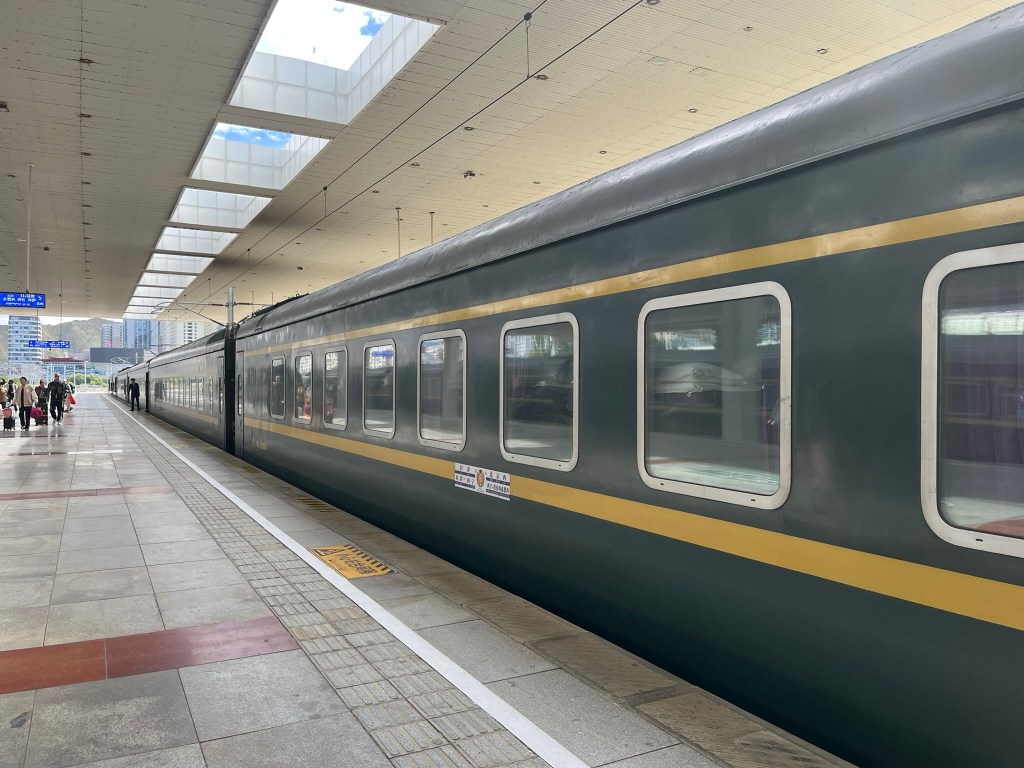
For the next part of my journey I will be getting the overnight train from Beijing to Lhasa in Tibet. The Z21 train runs daily, departing from Beijing West Station and arrives in Lhasa 42 hours and 3,757km later. It is an epic journey, with 2 overnight sleeps on the train and fantastic scenery as you cross the Tibetan Plateau. As a tourist you cannot visit Tibet without a permit and it is required that you have a tour guide at all times. You can fly or get the train to Lhasa. But the train is firstly way more of an adventure and you get to see awesome scenery but also it provides you an opportunity to adjust to the altitude slowly.
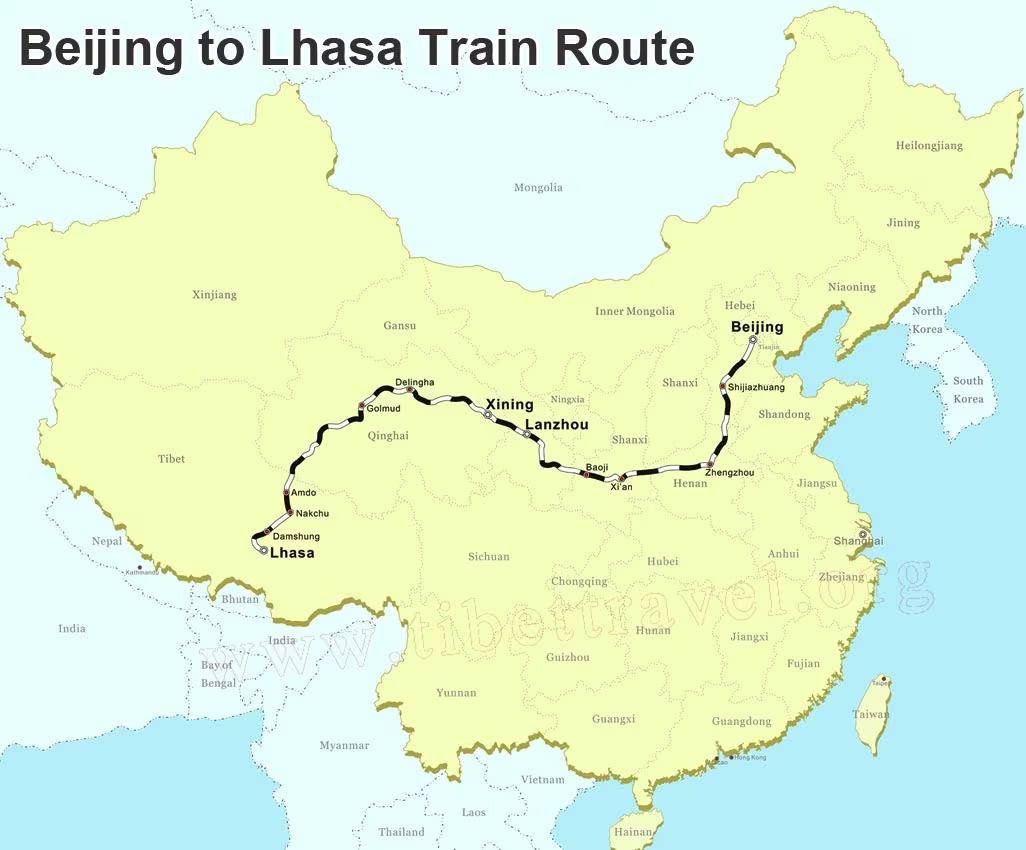
Getting a direct train all the way from Beijing to Lhasa has only been available since 2006, when the Qinghai-Tibet Railway was opened, operating from Xining. It is the world’s highest mainline railway and at its highest point is running at 5,072m at Tanggula Pass. In order to allow passengers to adjust to the altitude of the Tibetan Plateau, each carriage has diffused oxygen systems that are pumped into the air conditioning and typically switched on from Golmud onwards. There are also individual oxygen points on each bunk in case of severe altitude sickness.

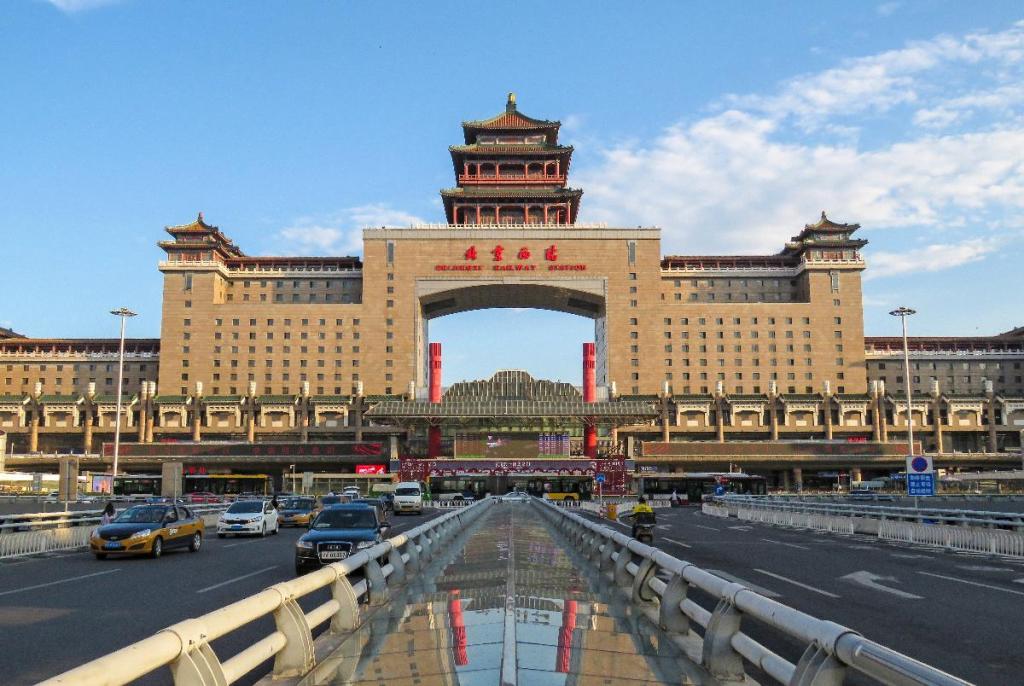
Our train departed at 7.22pm from Beijing West Station. This is an enormous station but it is easy to navigate with separate waiting halls for each track and a huge range of fast food and convenience stores to grab dinner and stock up for the train. I already had a range of food that could be prepared with just hot water, which would always be available in each carriage so I just grabbed some big bottles of water to stay hydrated and try to avoid getting the headaches and nausea that normally come with even mild altitude sickness. Your passport is checked at least 5 times between arriving at the station and sitting down in your allocated bunk so keep it handy!
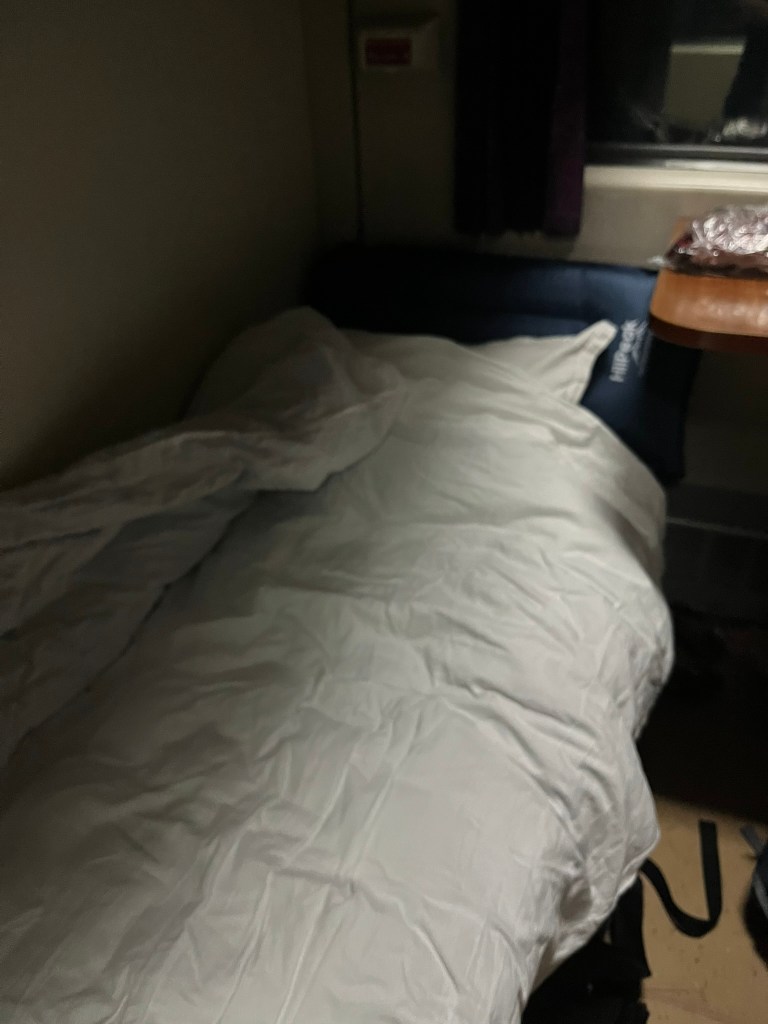
Our tickets were for the hard-sleeper bunks, which consist of 60 people per carriage divided into 10 sections each containing 2 stacks of 3 bunks. Luckily the tour company I am using booked us all the preferred bottom bunk, so we all thankfully avoided having to climb up and down into the roof of the train for 42 hours. There were bathrooms at each end of the carriage as well as sinks, and hot water taps at one end. Everything throughout the 42 hours was cleaned regularly and 80% of the times I visited the bathroom it was spotless. The toilets are squat in the hard-sleeper carriages but there are sit-down toilets further up in the soft-sleeper carriages. The main difference with the soft-sleepers were that it was just 4 to a compartment instead of 6 and they had a door that could be closed for privacy and to keep out the noise of other passengers.

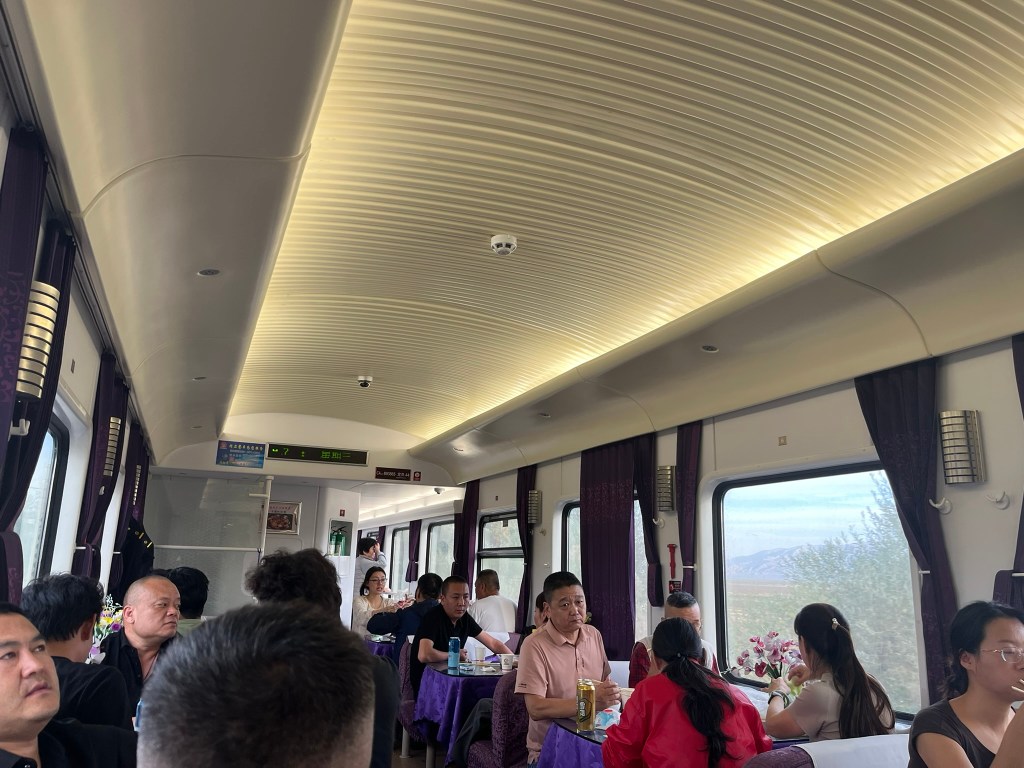
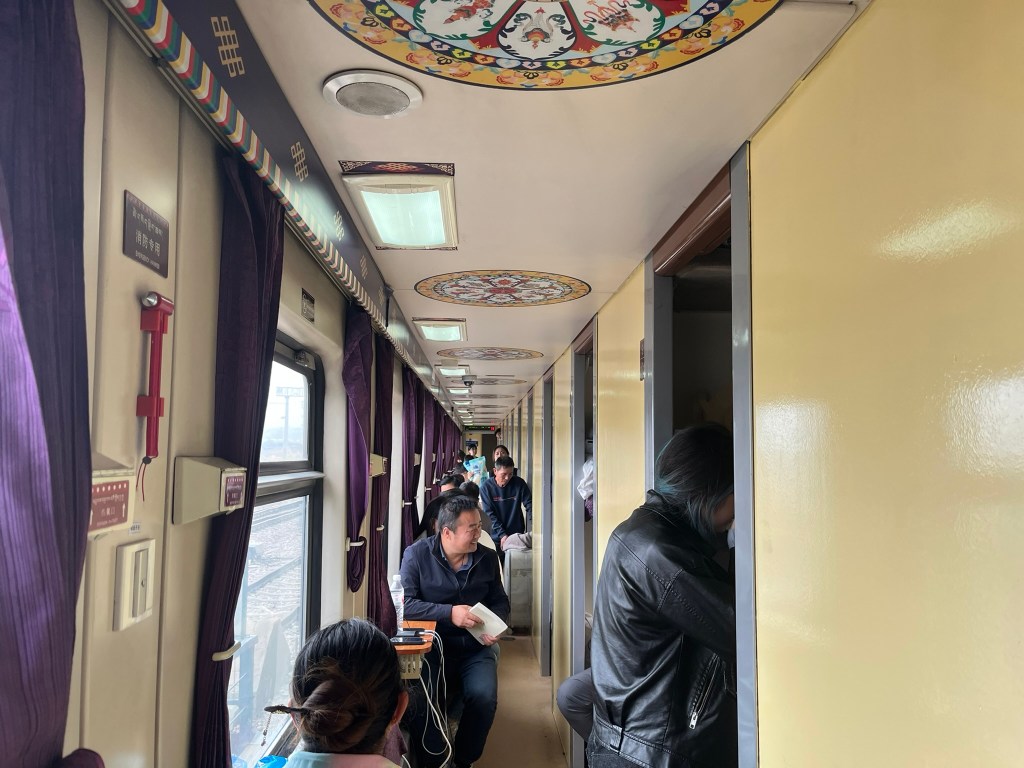
All the sleeper compartments have a corridor that has fold out seats for folks to relax in and plug points to recharge phones. It was a bit of scramble to get a plug point as we didn’t have them at each bunk, but because I had a multi-point adaptor which could plug multiple devices in, it was quite easy to convince the locals to let me plug in and then they use my plug to connect their devices. And finally there is a dining cart that offers full-service meals and trolleys going through the carriages all the time selling snacks and drinks. We ate in the dining car on the second night and it wasn’t bad considering it was cooked on a train.
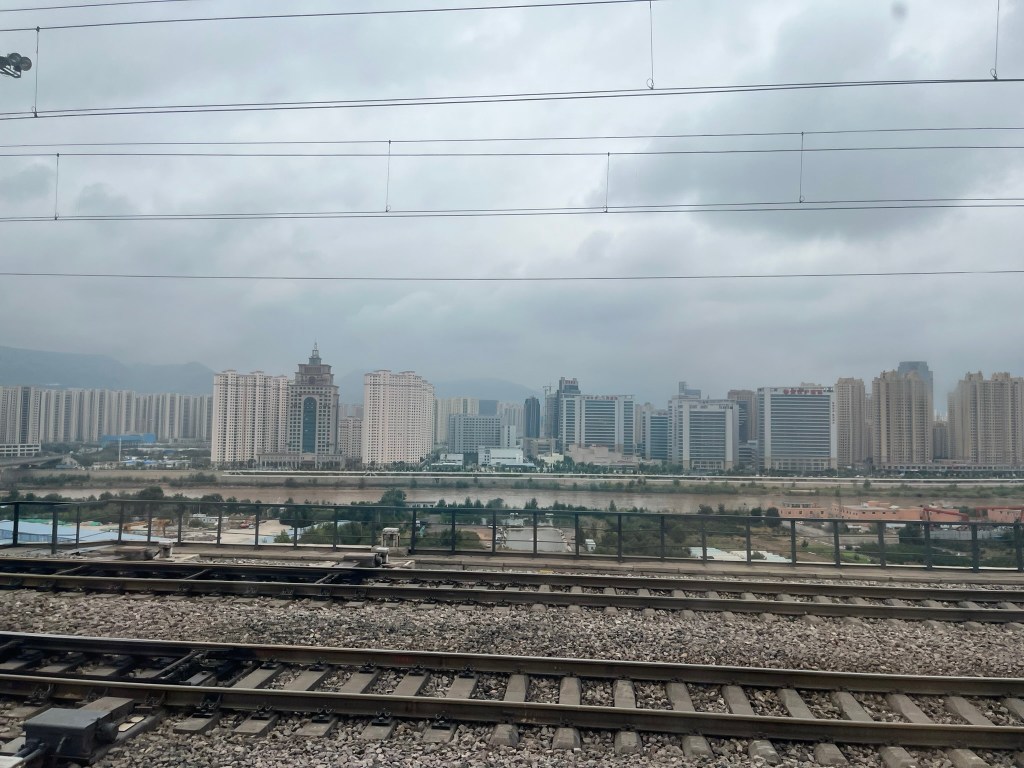
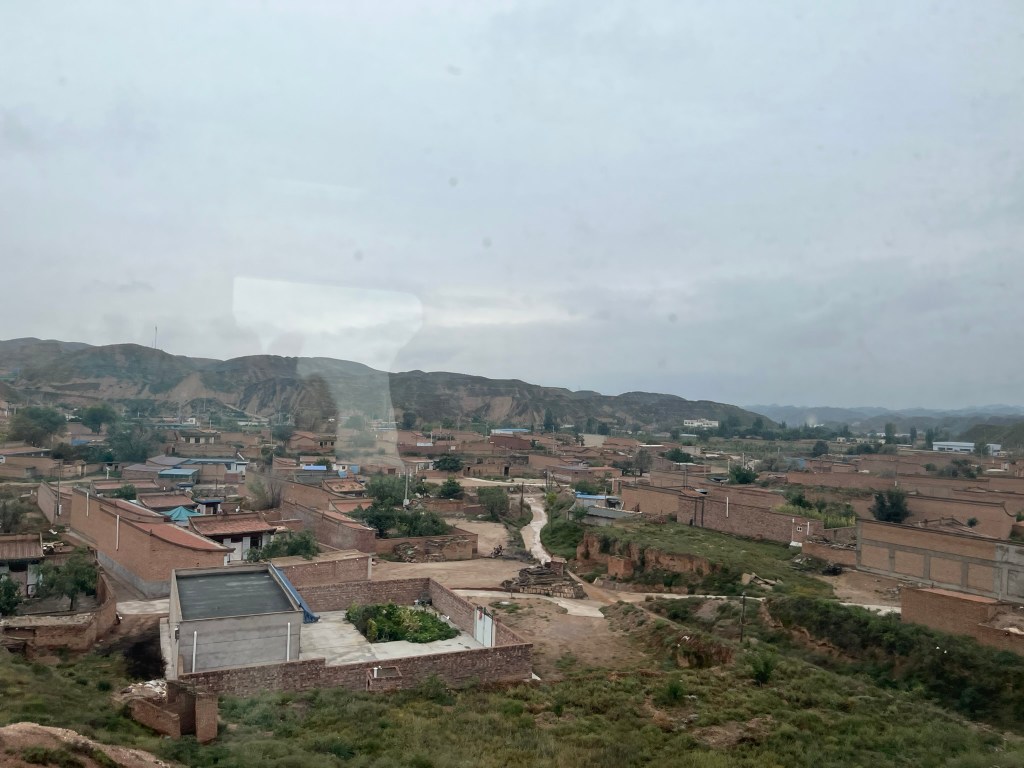
From Beijing until Xining took us until the afternoon on our second day on the train. The landscape in this section is mainly the Loess plateau with gullies that rapidly erode, steep loess escarpments and river-cut terraces. In this section of the train journey we travelled through, and stopped at many cities (most with over 3 million people) and the scenery is nice but not spectacular.

Once we left Xining station, and started approaching the edge of the Tibetan Plateau the scenery got much more interesting. This is the earth’s largest high plateau, uplifted by the collision of the Indian and Eurasian tectonic plates over 40 million years ago. This has built up the Himalayan-Tibet orogen. Uplift continues even today and will continue for millions of years.

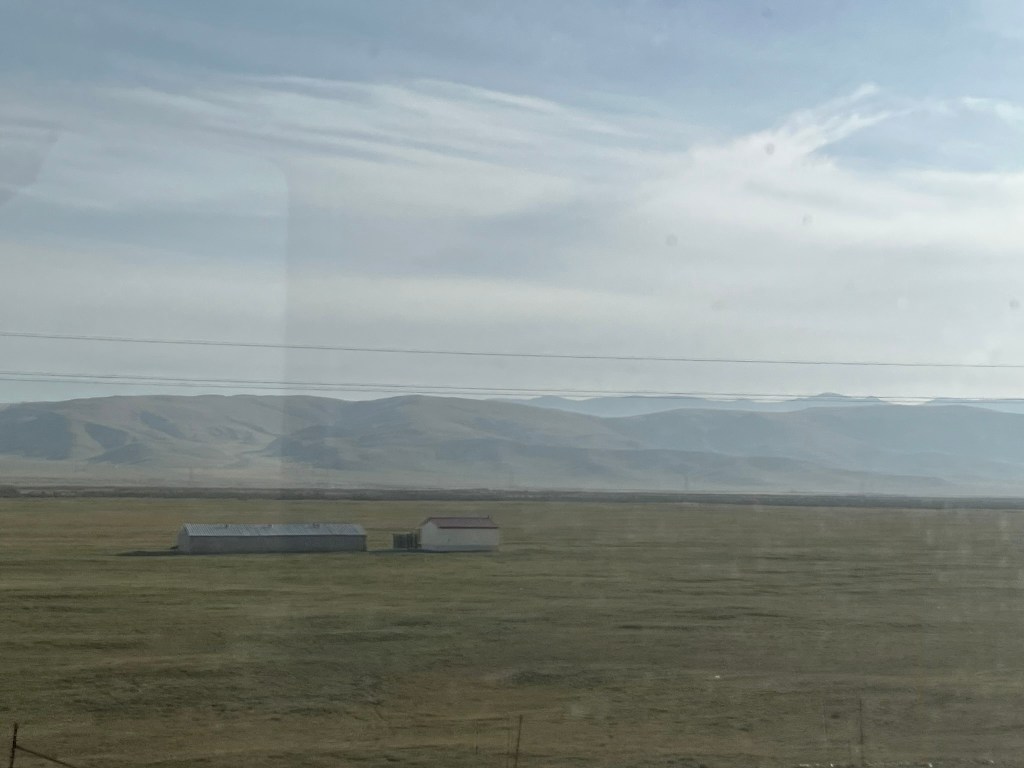

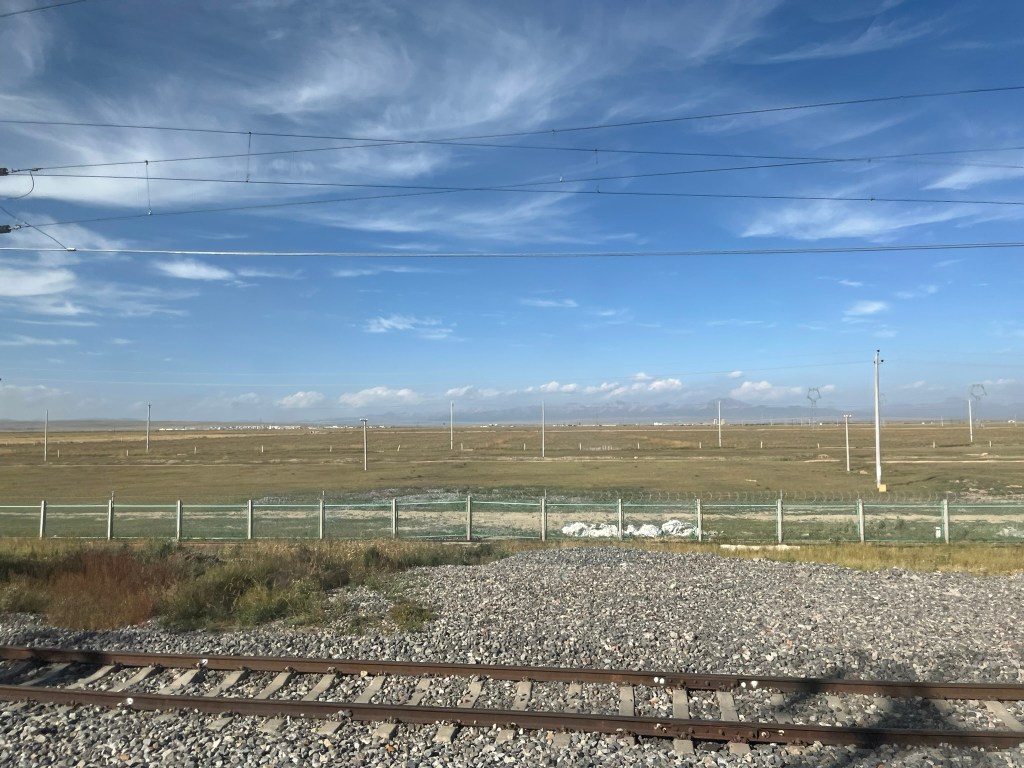

As we started to gain elevation, the amazing scenery of Qinghai province started to reveal itself. We journeyed around to the western size of the massive Qinghai lake, within the Qaidam basin flanked on both side by the Qilian and Kunlun mountain ranges.

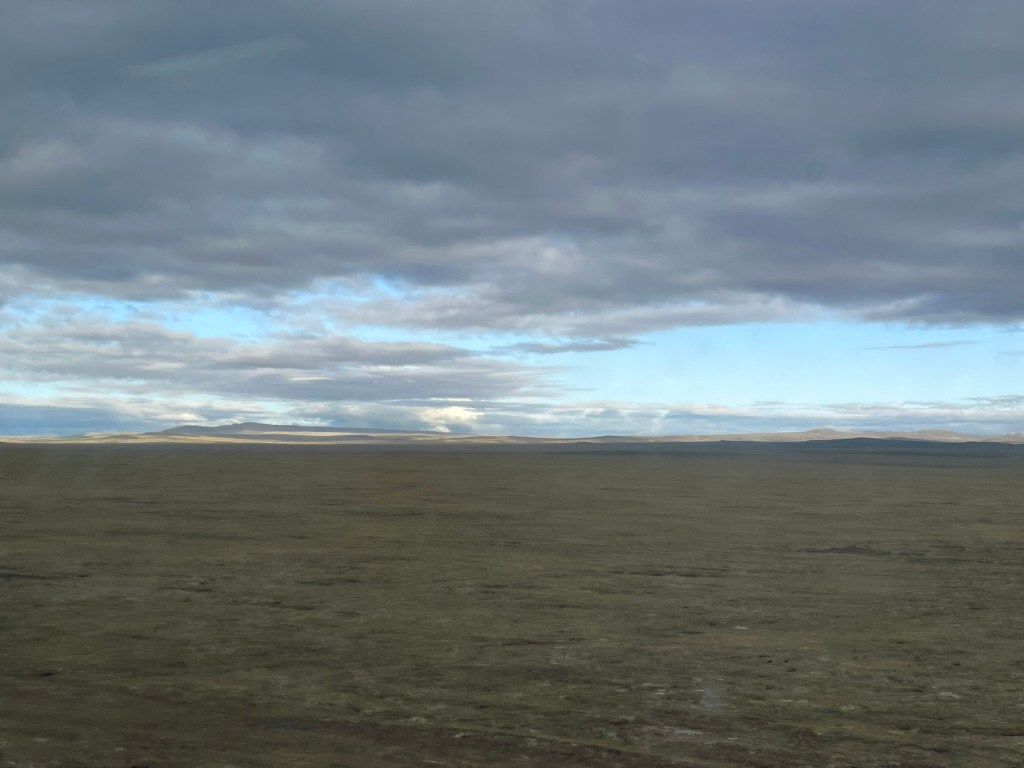
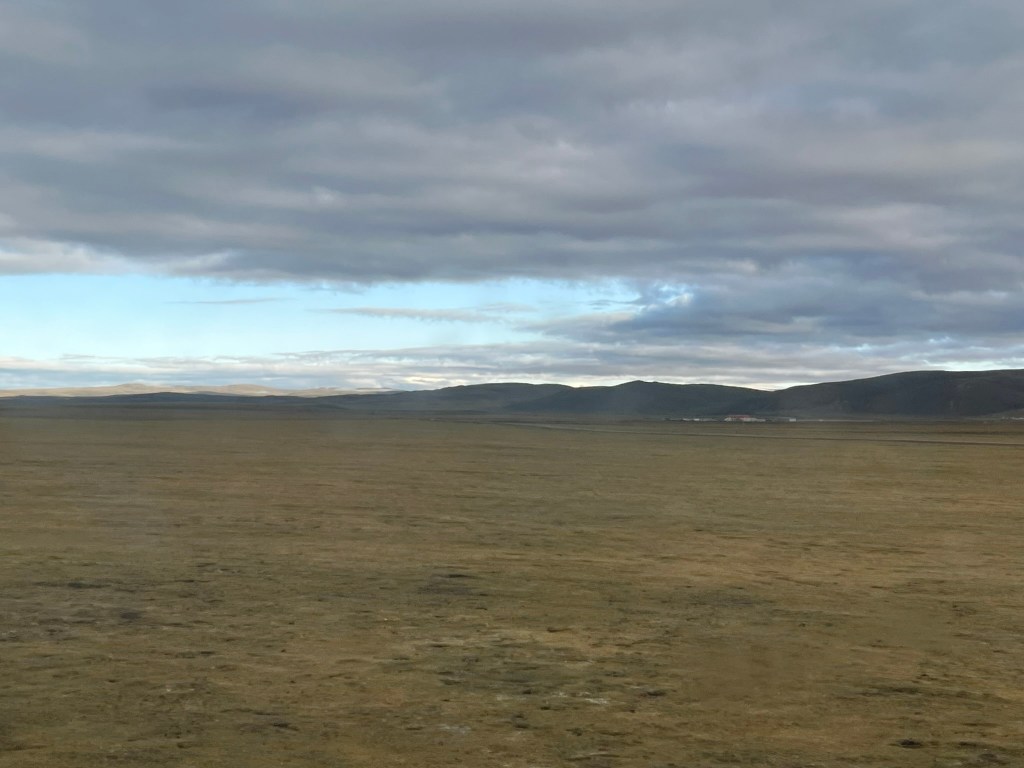
As night fell for our second overnight on the train we reached the city of Golmud, the last big city before we would start our ascent up to the highest parts of the plateau. At this point, a second engine was hooked on to the train to help us get up the steepest parts of the journey. And the oxygen was switched on. Although it was dark, it was easy to feel whilst lying in bed that sometimes we were going up very steep slopes and other times we were making long slow turns, presumably switch backs to make our way up to Tanggula Pass, the highest point we would travel through.


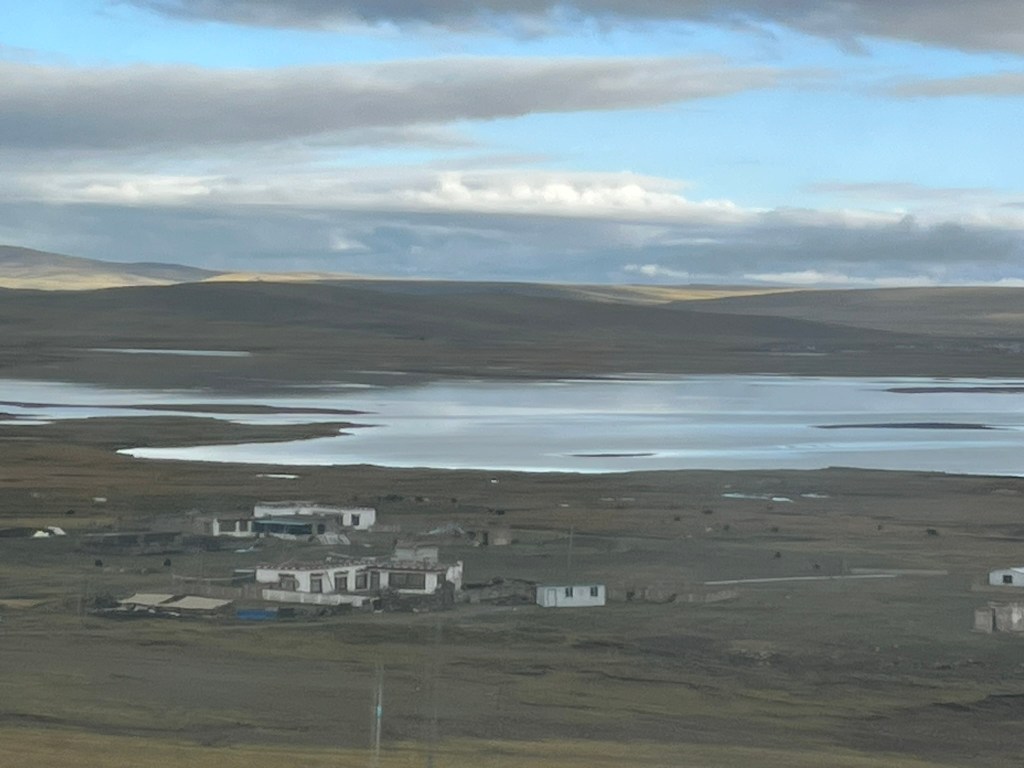
This part of the journey is through complete, cold, wind-scoured wilderness of tundra, ponds and permafrost. This is where Tibetan antelope, wild Yak and Tibetan gazelle roam freely. They keep the track safe in places where the permafrost is fragile, by dropping speed in certain sections as well as raising the track on pile-founded embankments and using passive ground-cooling systems that prevent the ground from thawing, thus keeping the train track stable.

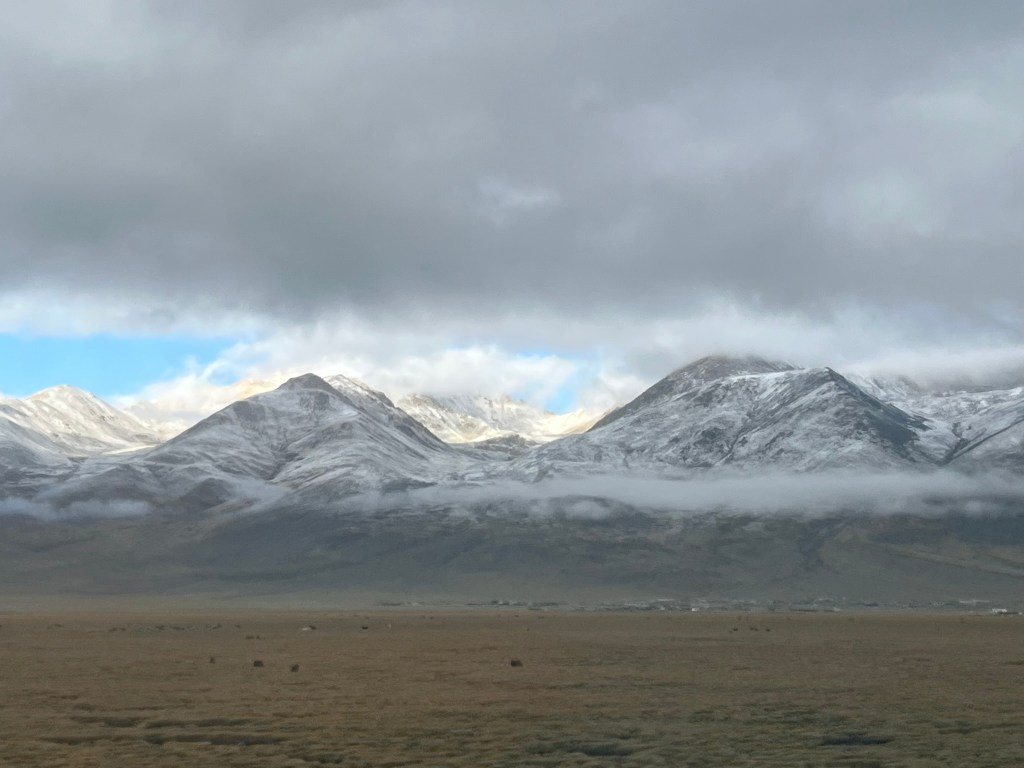
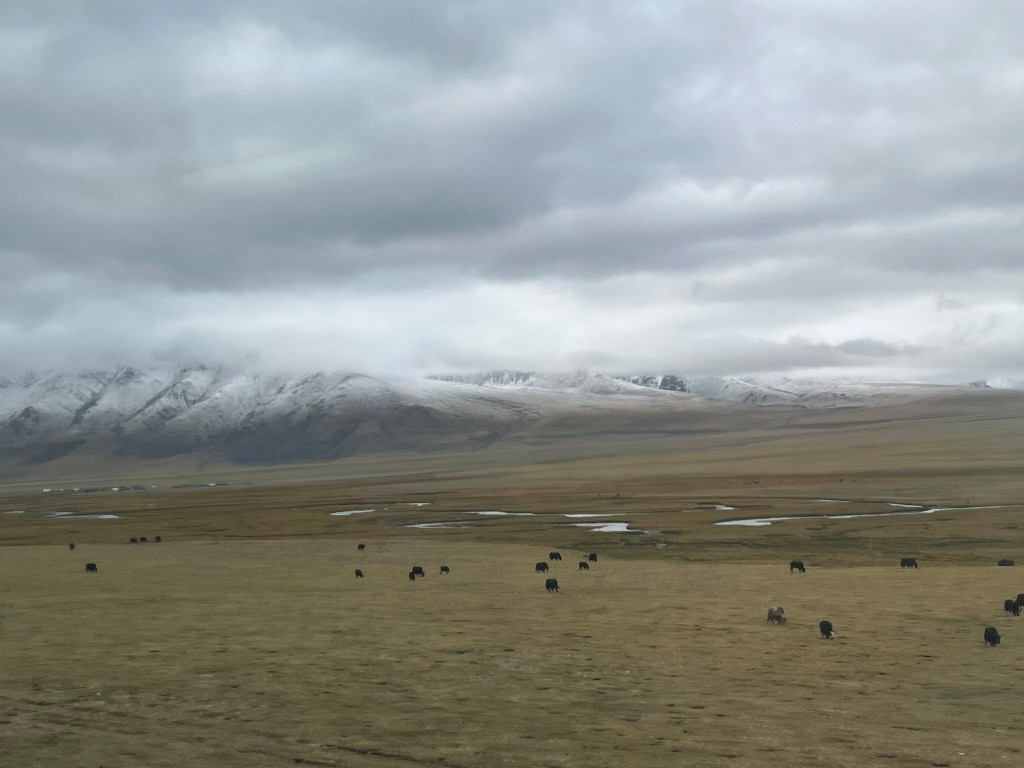
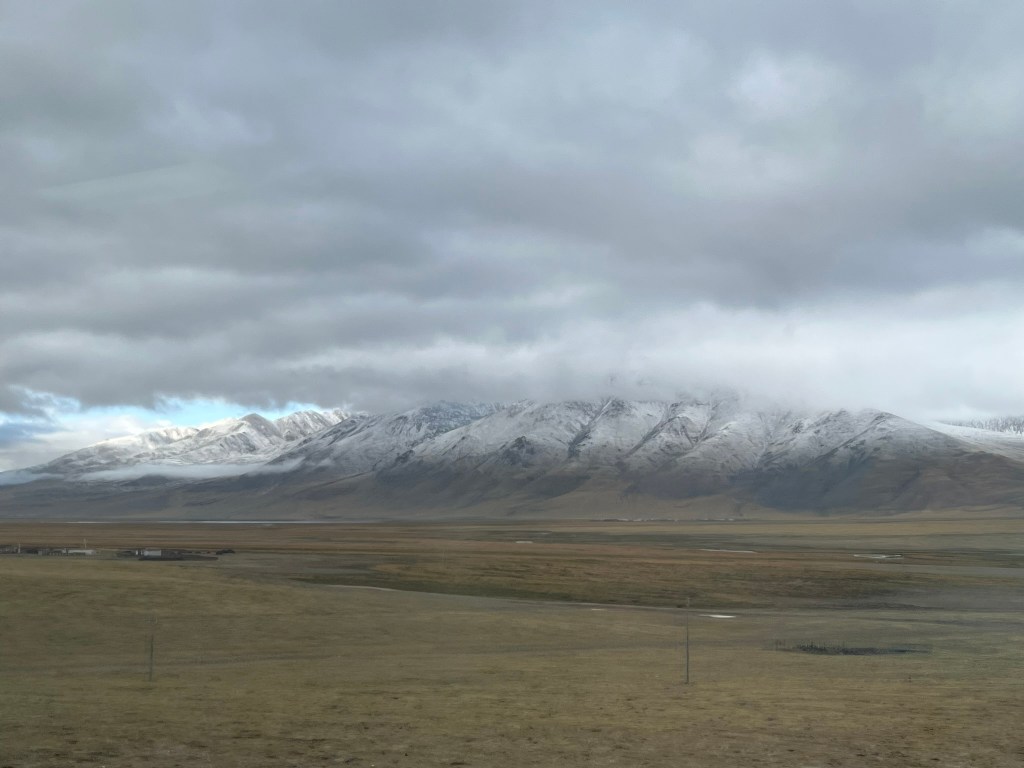
As we woke up on the third day, we were treated to the never-ending plateau grasslands, turquoise wetlands and sweeping alpine steppe, with the Nyainqetanglha range of glaciated granites and metamorphic rocks on either side of us. We went past many small village settlements and big herds of grazing yaks.


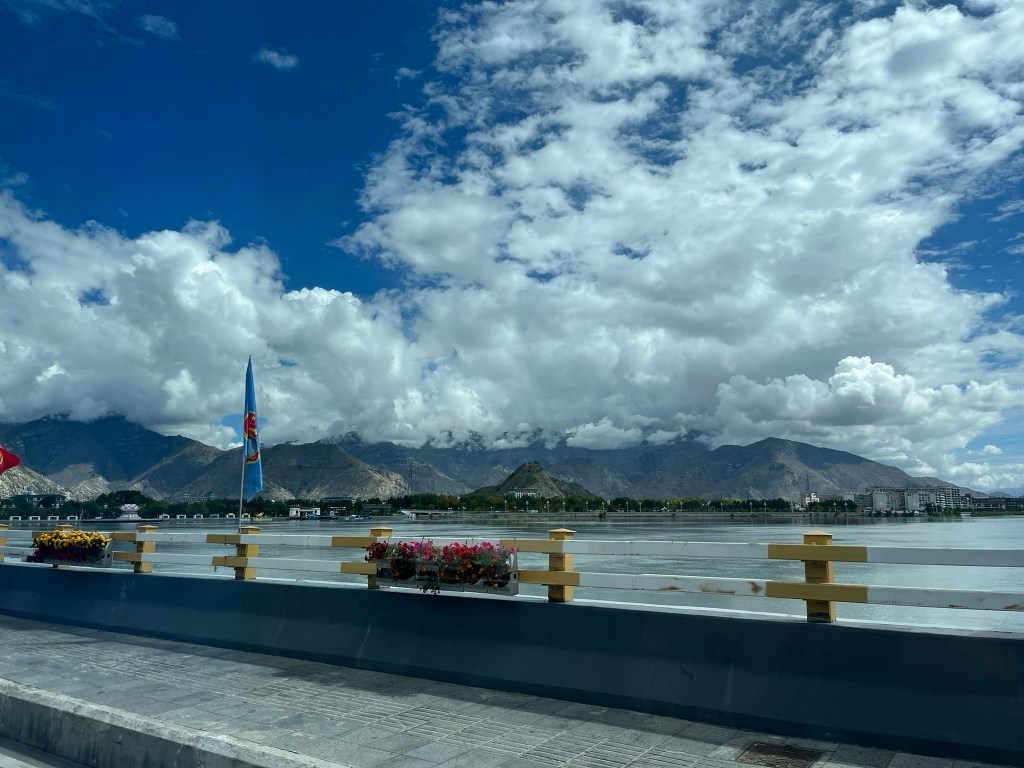
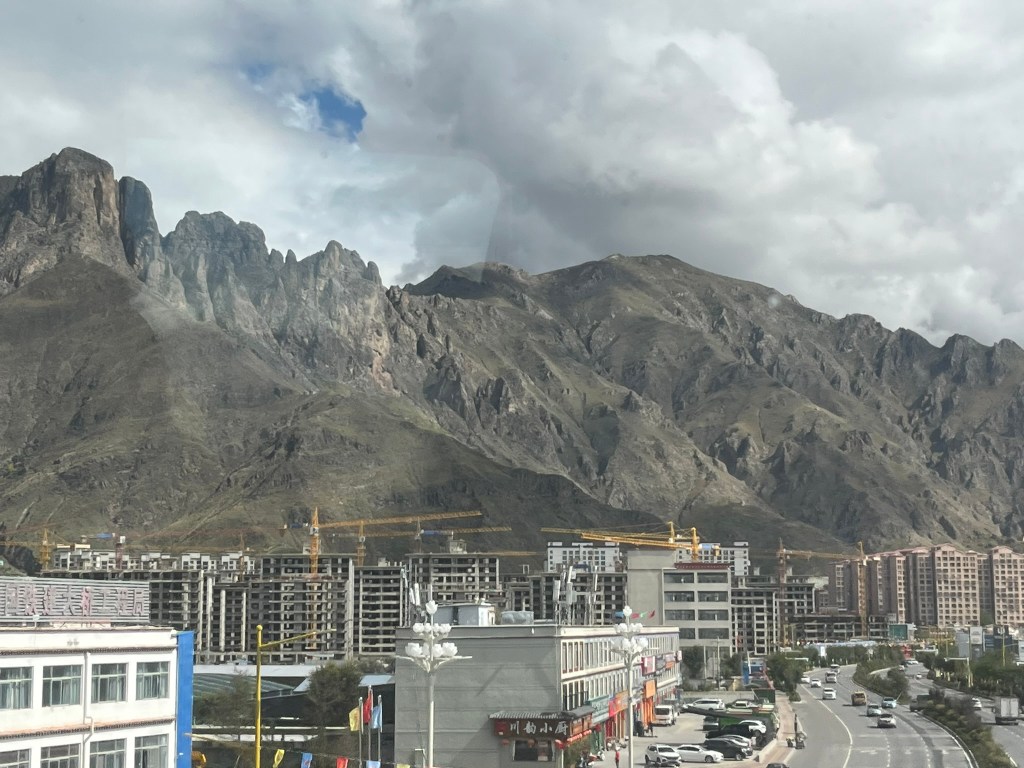
And then before we knew it we were pulling into Lhasa and our epic train journey had been completed. The whole trip was brilliant and weirdly much more enjoyable than just doing 1 night on an overnight train where you end up not really seeing much as you typically depart after dinner and arrive just after breakfast. That said I did have my secret weapon – which definitely made a difference – my trusty travel blow-up mattress. This was its 4th journey this year and I definitely won’t be getting any future overnight trains without it!
 Colette's Grand Detour
Leave a comment