Sera Monastery lies at the foot of Serowoze mountain on the northern outskirts of Lhasa and is part of the Gelugpa sect of Tibetan Buddhism. It was founded in 1419 by a disciple of Je Tsongkhapa and is one of the three major Gelug university monasteries in Tibet. The monastery is a large complex and combines religious, education, residential and hermitage components. During the 17th century it played a key role in supplying learned monks, abbots and teachers as the Dalai Lama’s political authority rose in Tibet. At its height it supported tens of thousands of monks and it had an international reputation, with students coming from Mongolia, Bhutan and other Himalayan regions.
In the early 20th century Sera continued to function as a great monastic university with 5-7000 monks in residence. However, following the 1959 Lhasa uprising against Chinese rule, many of the buildings were severely damaged, monks were killed or dispersed and the institution pretty much collapsed. During the Cultural Revolution (1966-76) religious life was suppressed and many texts and statues were destroyed. Sera fell into ruin during this period. Exiled monks who had fled to India re-established Sera Monastery in Southern India in the 1960’s and this ‘new’ Sera continues to flourish today. In the 1980’s restoration work began on the original monastery and it began operating again, although now with only around 600 monks. Today, Sera is a pilgrimage and tourist site as well as an active monastery.
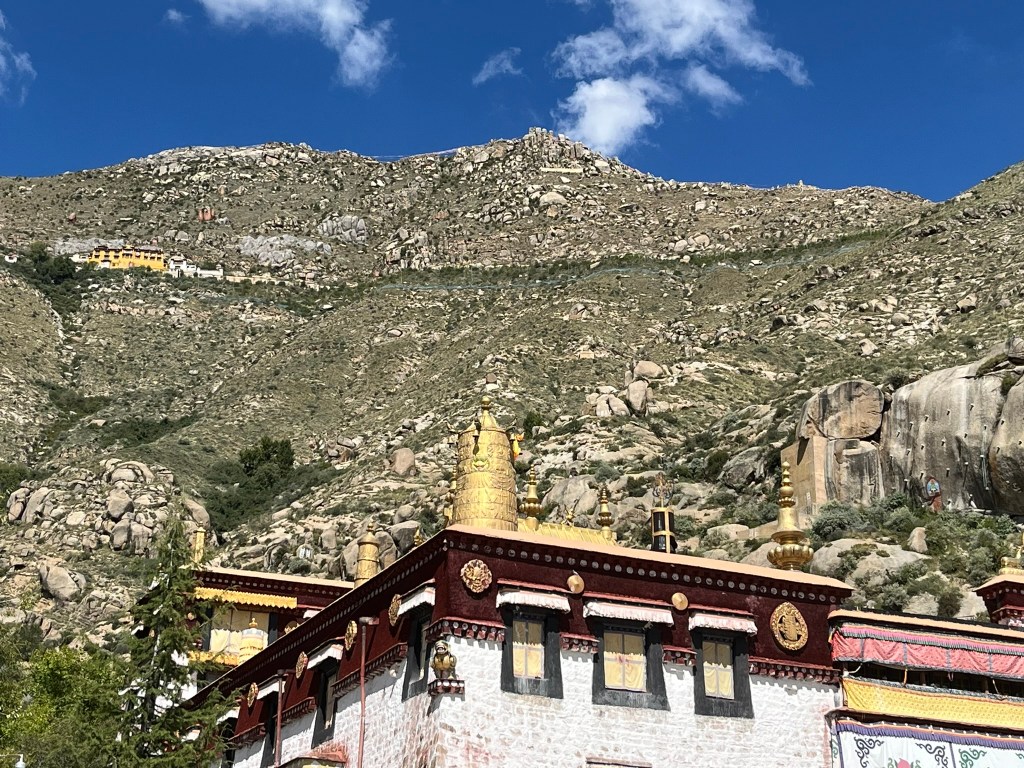
We took a short walk from the home in which we had our momo dumpling cooking class to the entrance of the monastery and slowly walked up the shallow slope to the center of the complex. Up above us on the mountain-side we could see the hermitage gripping tightly to the cliffs.
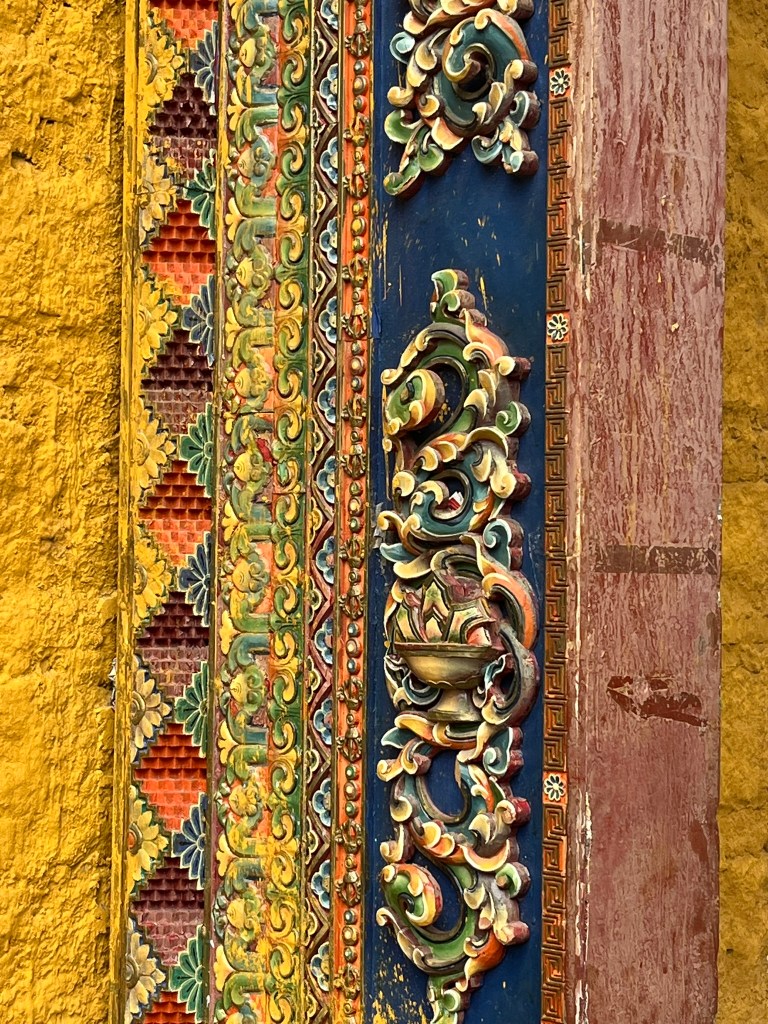
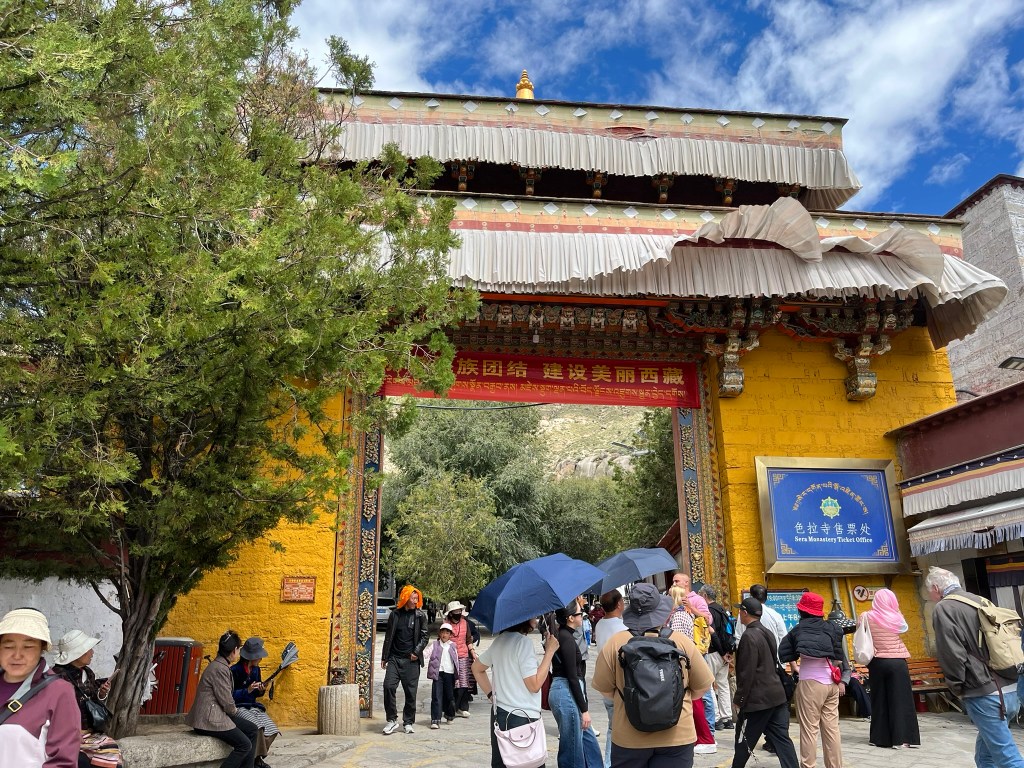
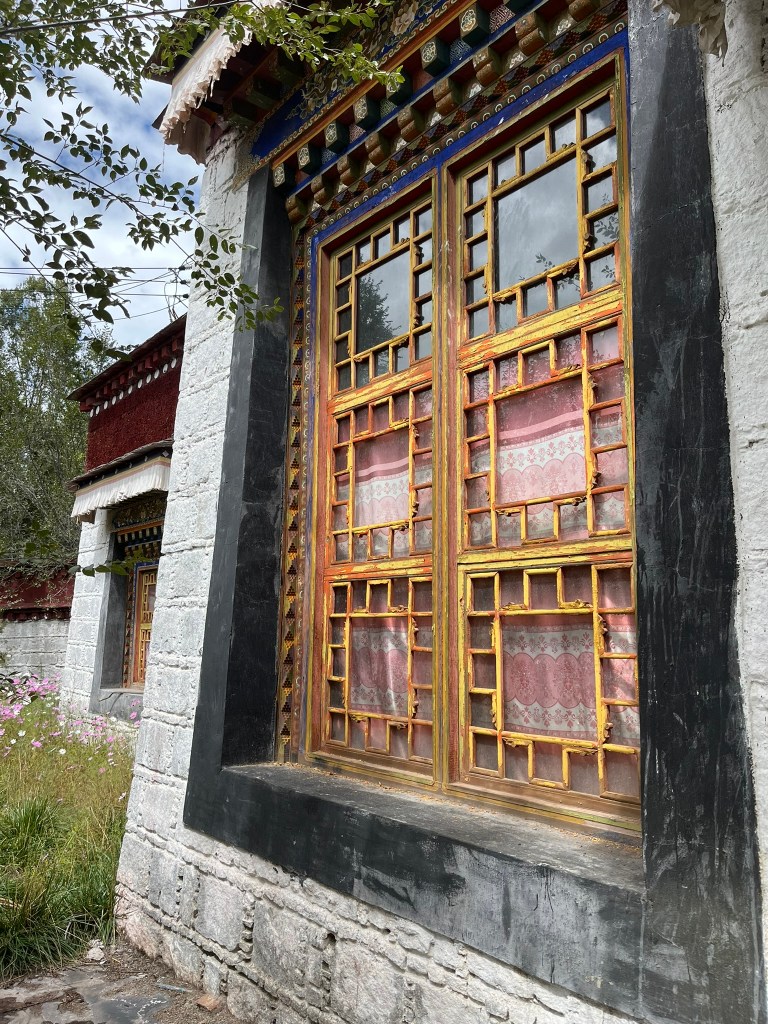
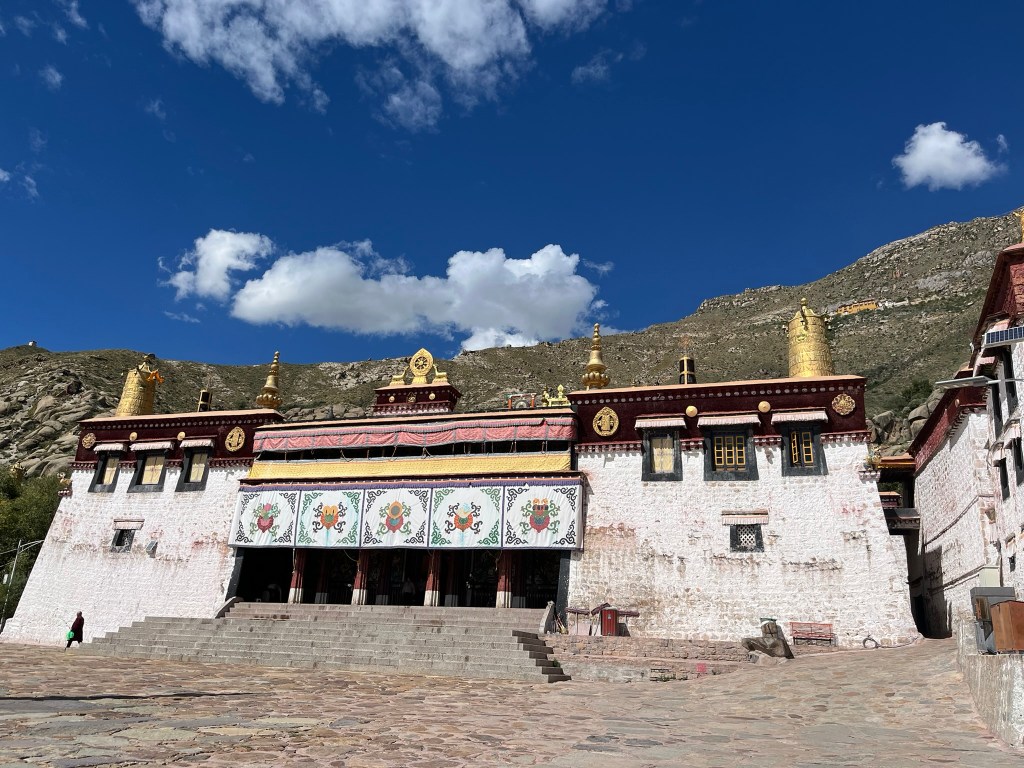
All of the buildings are white-washed, with beautifully carved and painted windows. Before we entered any buildings we talked a little bit about the traditional architecture that we were seeing in the monastery but had also seen along the main street near our hotel. Whether it is a family home and or palace, there is a specific architectural style used that is influenced by the climate, geography and culture of the region. The buildings are made of granite stone (readily available in the area) and rammed earth and made thick to insulate against extreme cold and intense sun. They are typically rectangular with in-ward facing compounds and the walls are thicker at the top than at the bottom. The walls slope in-ward just a tad, adding stability against earthquakes and strong winds.
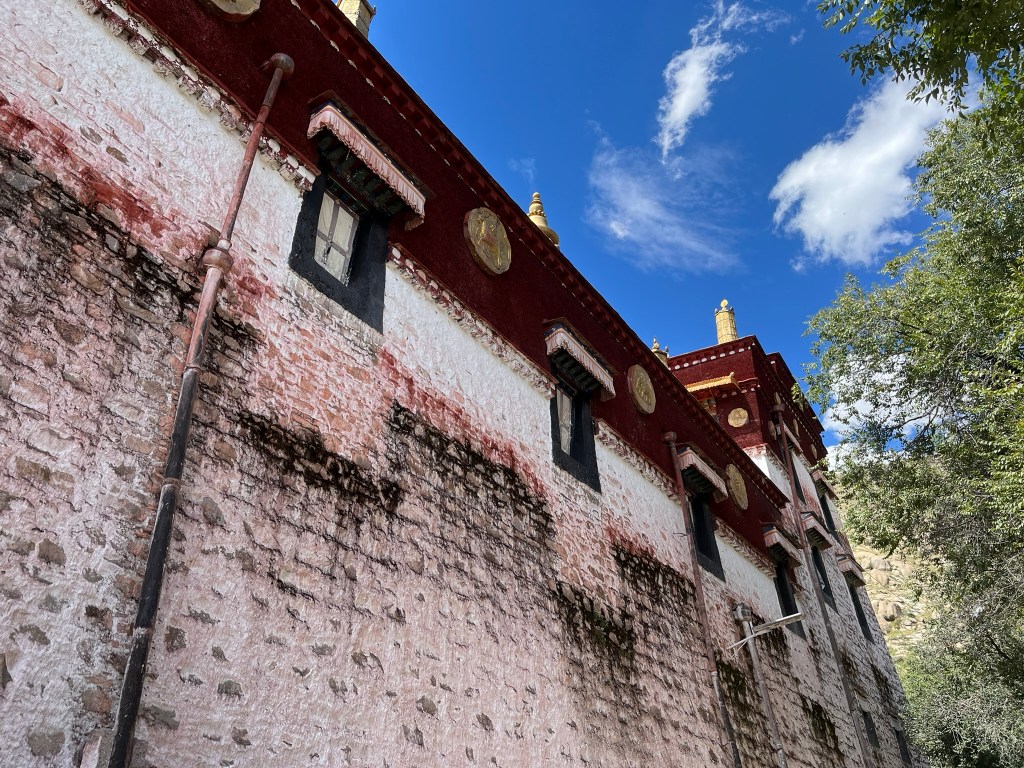
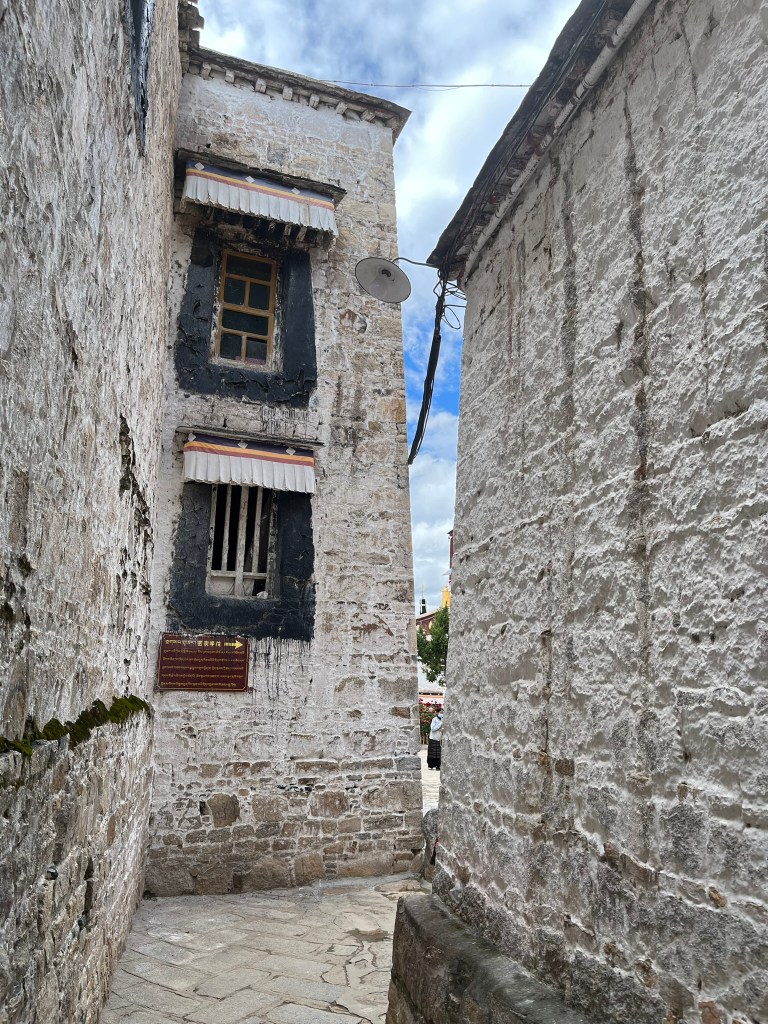

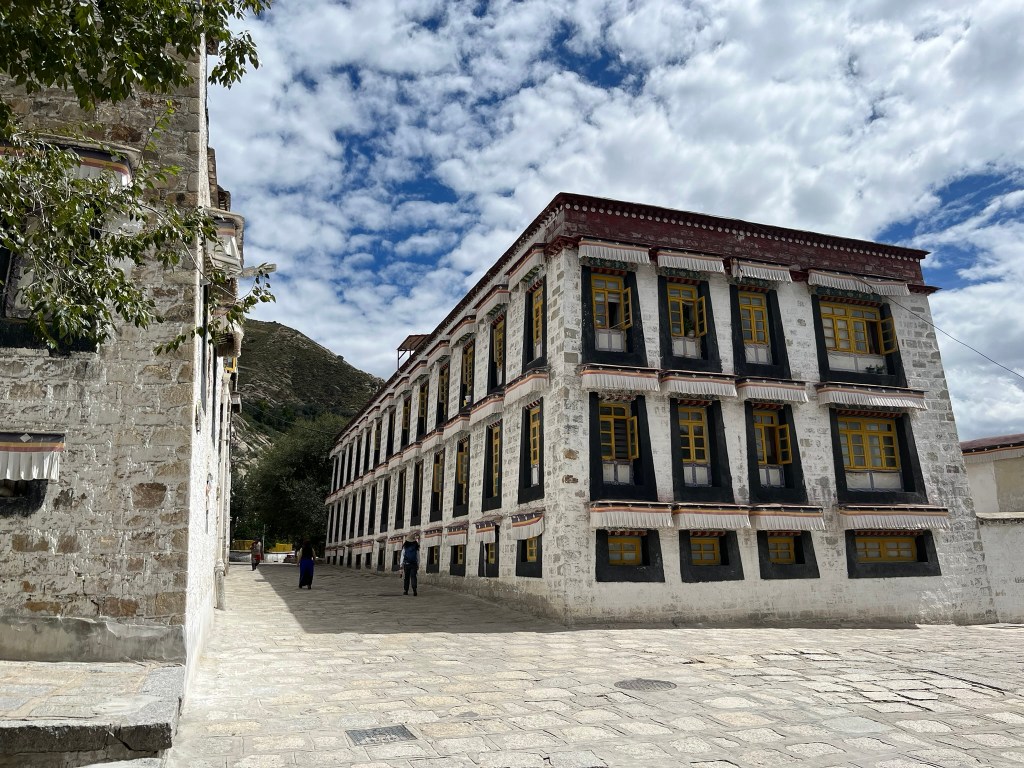
The doors and window frames all have thick black borders painted around them – this is to reduce glare from the high-altitude sun, but also to warm that part of the house in the winter. The striped cloth awnings that are draped above the windows are called khyenri and they help shade the interior as well as providing a flowing look to the facades. The white walls are made using chalk paint and symbolise purity and positive energy.
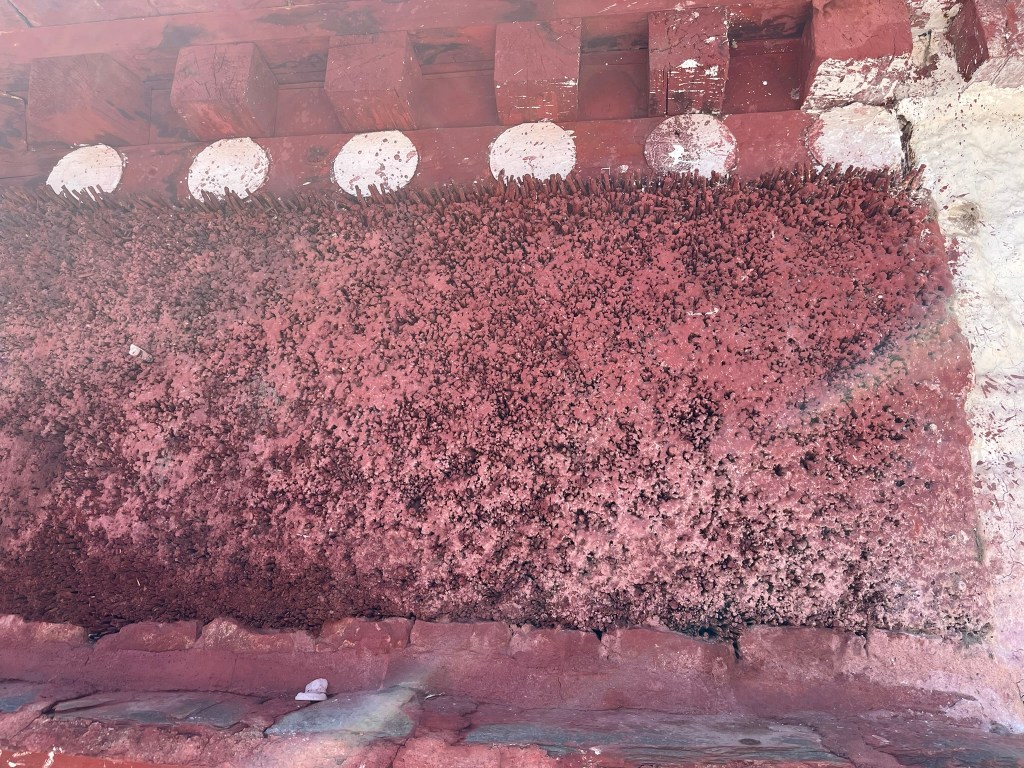
On the prayer halls there were red second floors and roofs. Traditionally branches and twigs are bundled together and tied with yak skin rope. These bundles are then shaped to form the upper stories of the prayer halls and painted red using iron-rich clay. A layer of earth and clay is packed over the top to make the roof flat and solid. This makes the upper stories of these buildings much lighter and absorbs some of the strong winds experienced in the region. Originally this design was purely practical but over time the red wash has become ritualised and a mark of a sacred building.
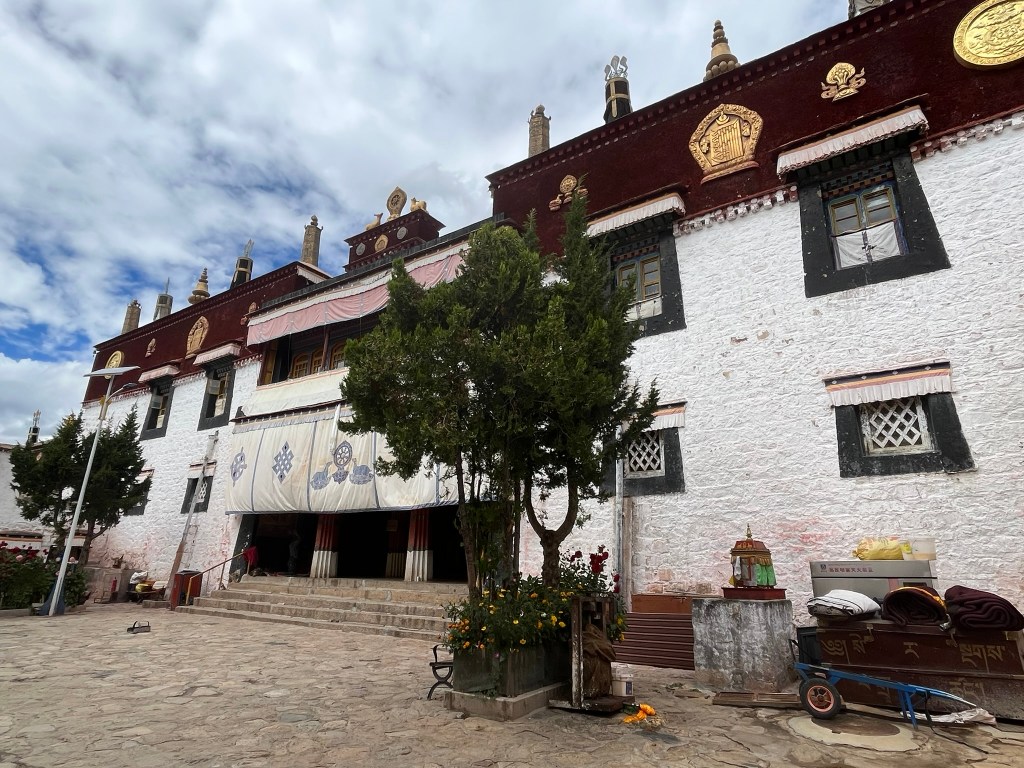
Within the monastery there are three colleges, the assembly hall, a debating courtyard, residential quarters and the hermitage. Today we would just be visiting the Ngakpa Dratsang college which is focussed on tantric ritual practices and reserved for only monks with the most advanced education in Buddhism, followed by the debating courtyard and the Great Assembly Hall. We would only visit a few places because we are going to be visiting many monasteries over the coming days and so we will learn about different aspects of Buddhism in each place.
We could not take photos in either the Ngakpa Dratsang college or the Great Assembly Hall, but the outsides were richly decorated and we saw a number of visitors carrying out full-body prostration that requires worshippers to fully extend themselves on the ground, standing, kneeling, lying down, then rising and repeating, all whilst reciting prayers and mantras. It looked like incredibly hard work, but I guess that is the point!
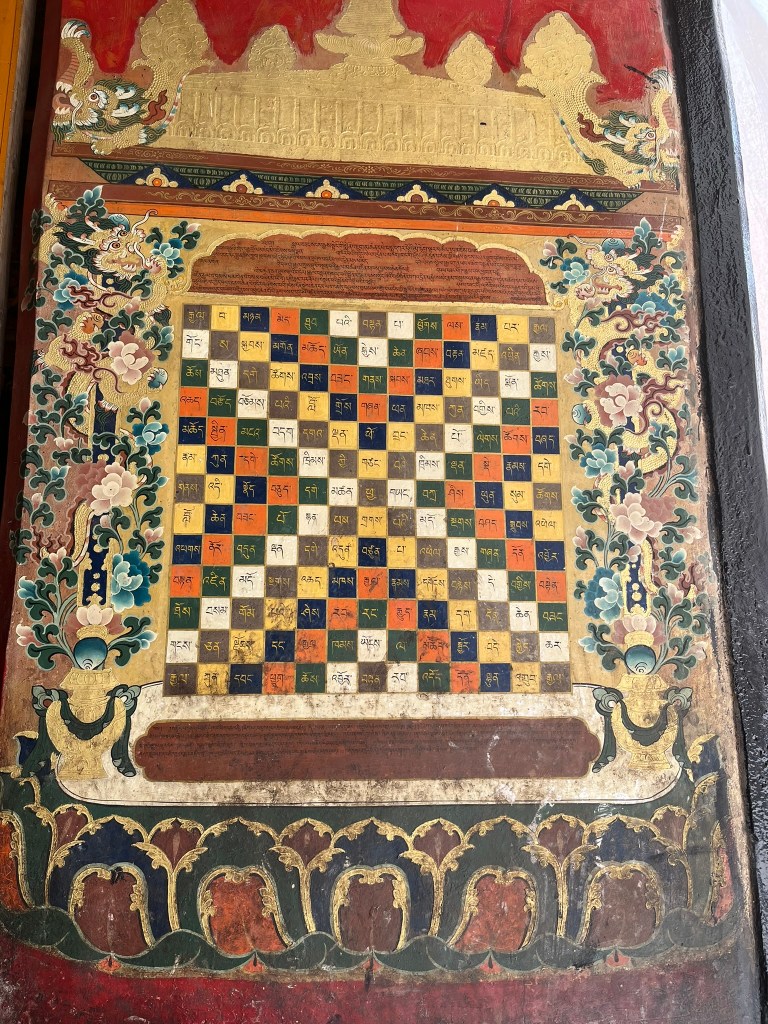
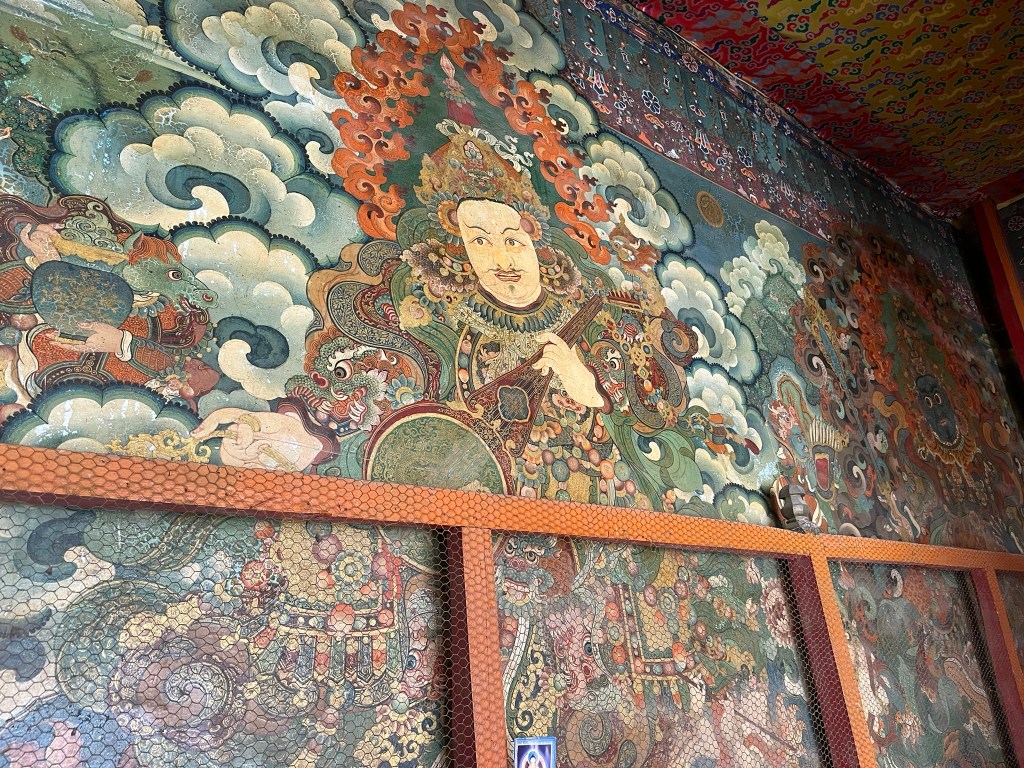
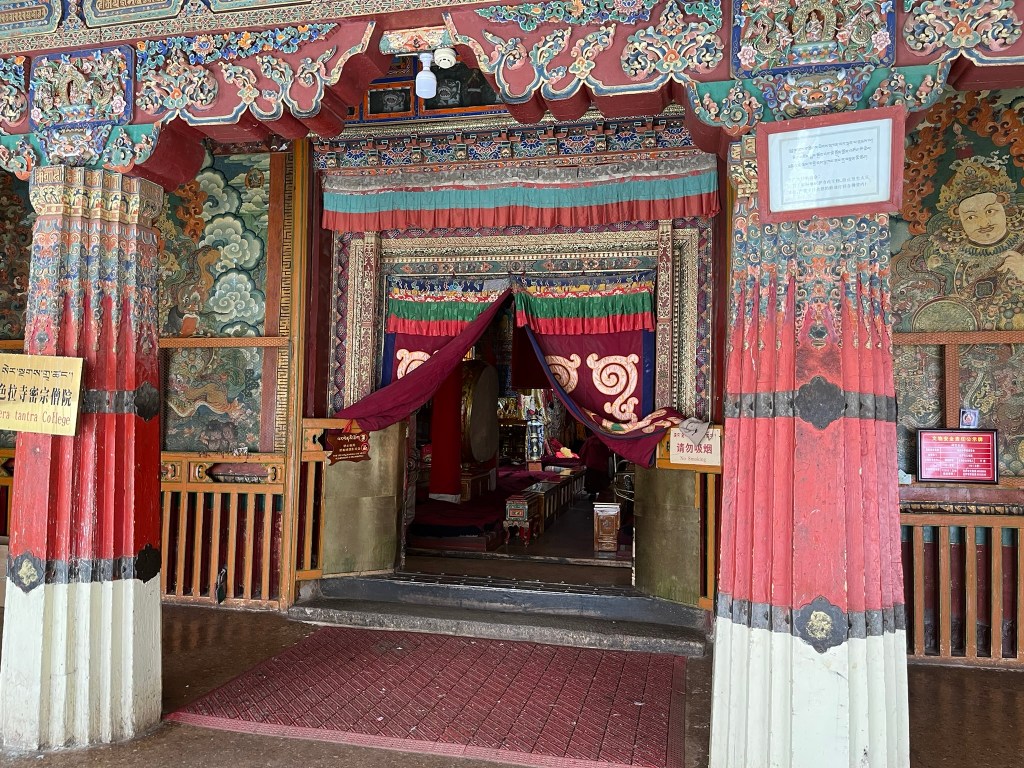
Inside the halls there were long rows of red mats just raised off the ground. Only monks who have completed their full training can sit here so we sat to the side on wooden benches to talk about the history of the temple. When the temple is in use the monks would sit on these mats, reading and reciting mantras. At the back of the temple were lots of Buddhist statues, each with their own history and meaning. Lots of decorated banners hung from the ceiling and every wall was decorated in the traditional Buddhist colors and with paintings of Buddha’s life.
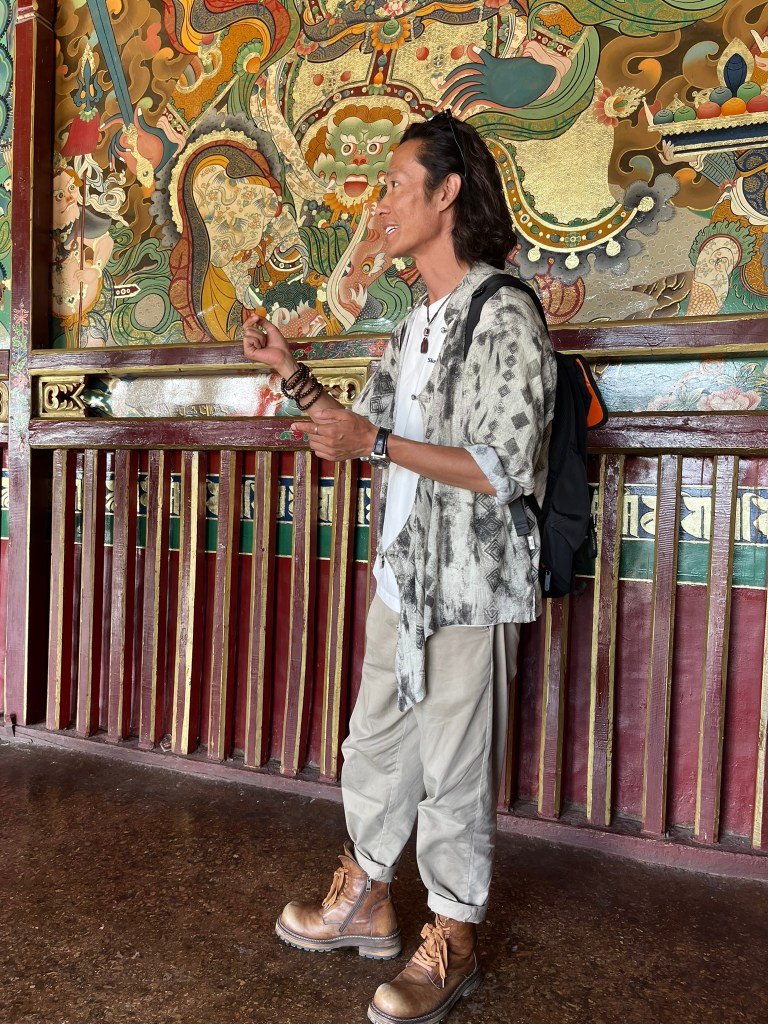
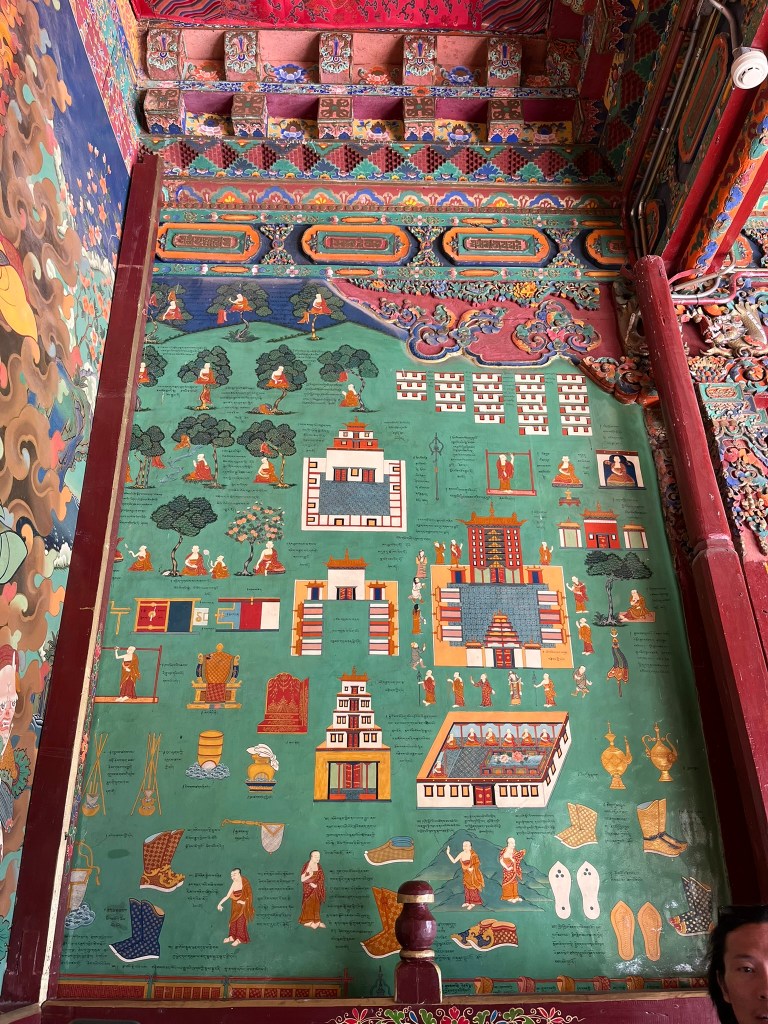
The college is the oldest remaining part of the monastery, dating back to the 15th century, not long after the complex was founded. Whilst the other colleges focus on logic, debate and scripture, the Tantric college provides advanced training in ritual performances, meditative practices, and deity yoga practices such as creating mandalas. Only a small percentage of monks will go on to study at this college.
Then came the most interesting and unexpected part of our visit to the monastery – the debate courtyard. Everyday, the monks gather to debate each other, testing each others ability to think logically, think philosophically and apply the Buddhist teachings to real-world situations. This is an important part of scholarly progress for monks as it helps them solidify knowledge of Buddhist doctrine and makes them think beyond the ‘what’ to the ‘why’ of what they are learning.
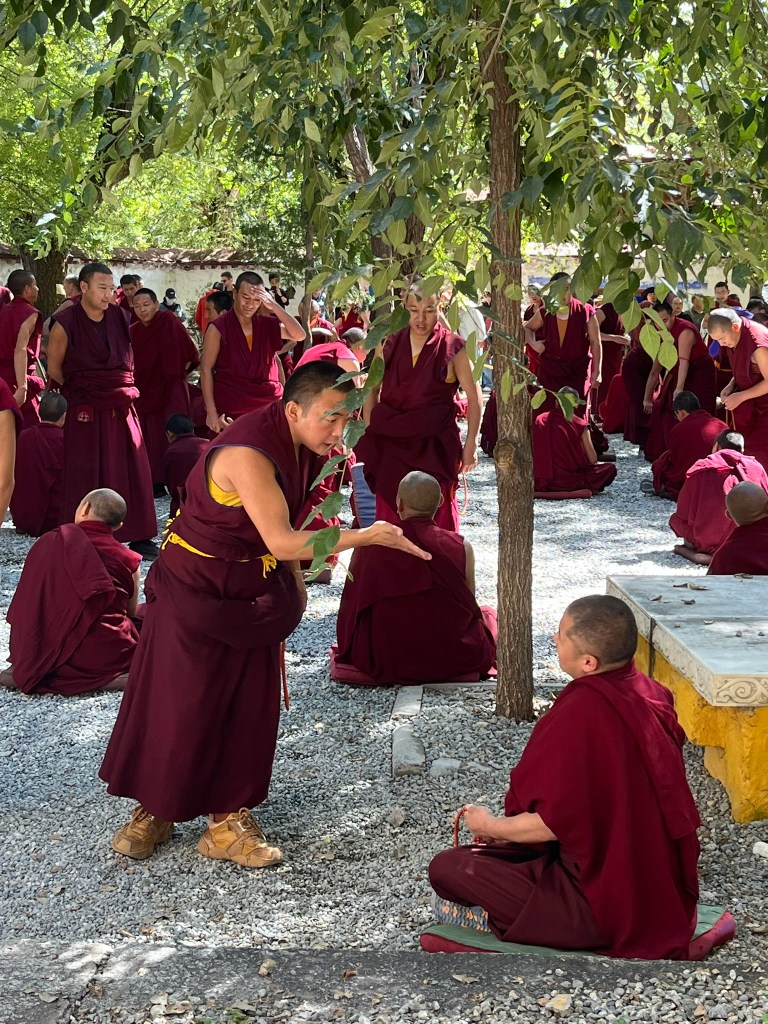
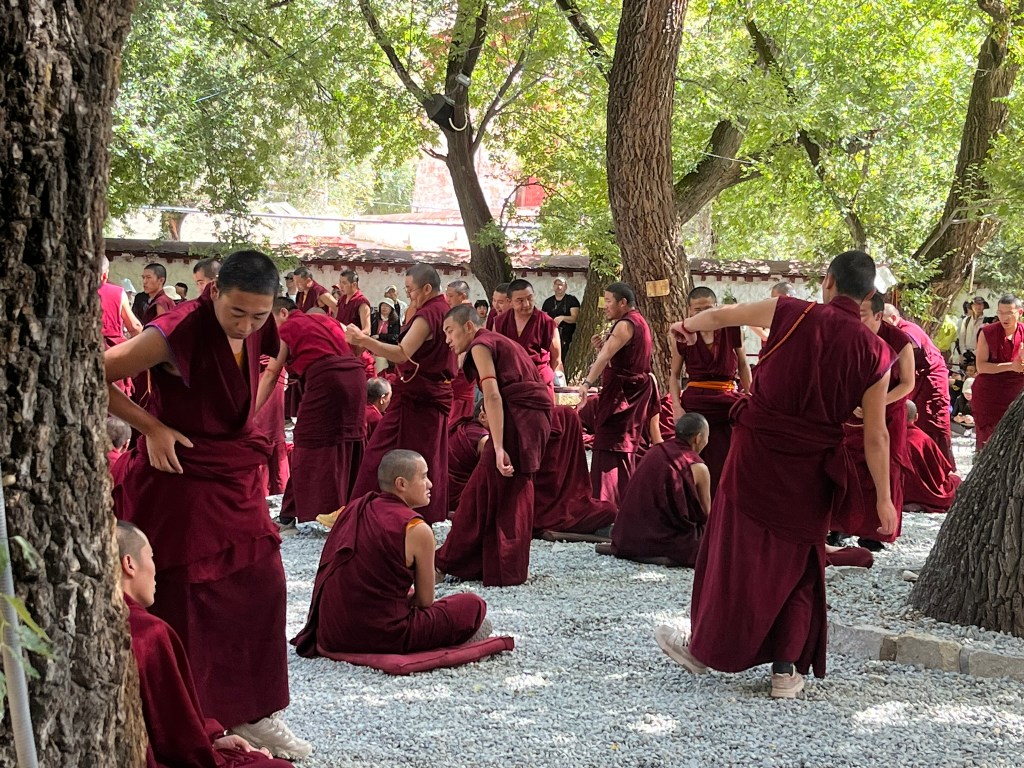
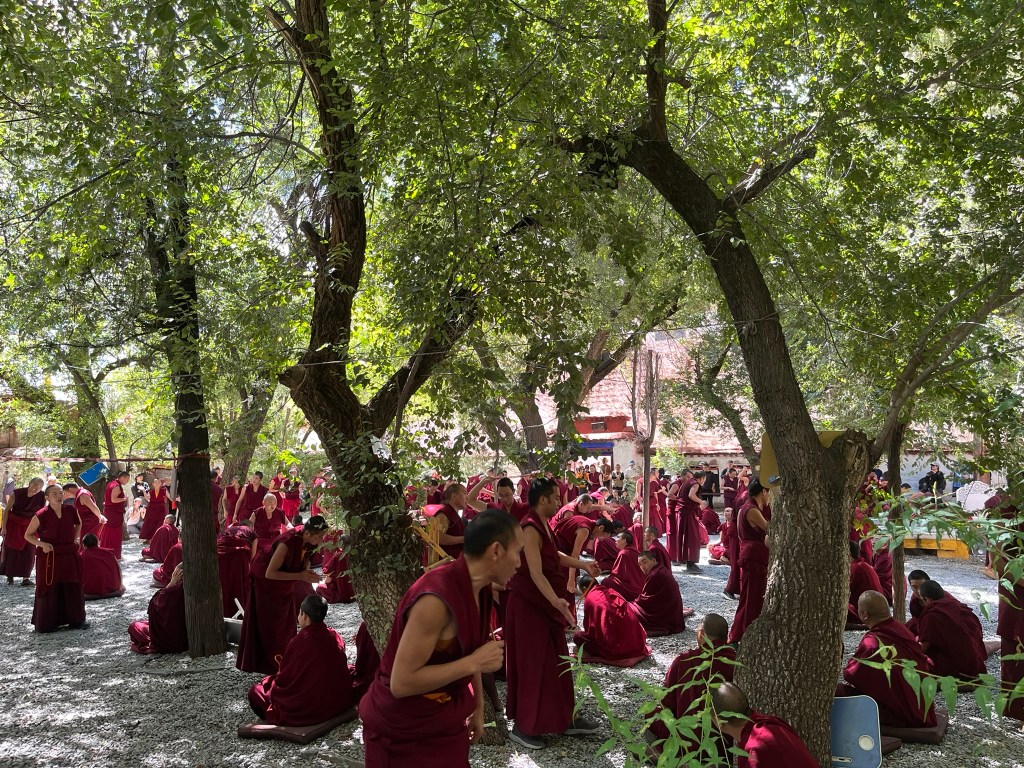
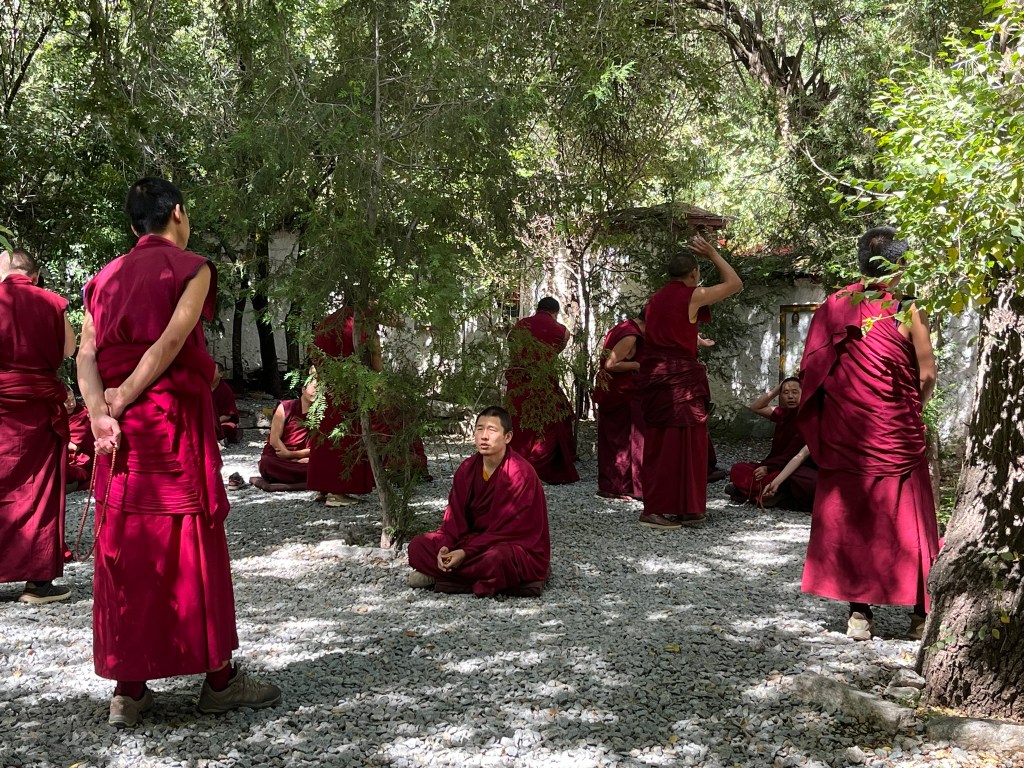
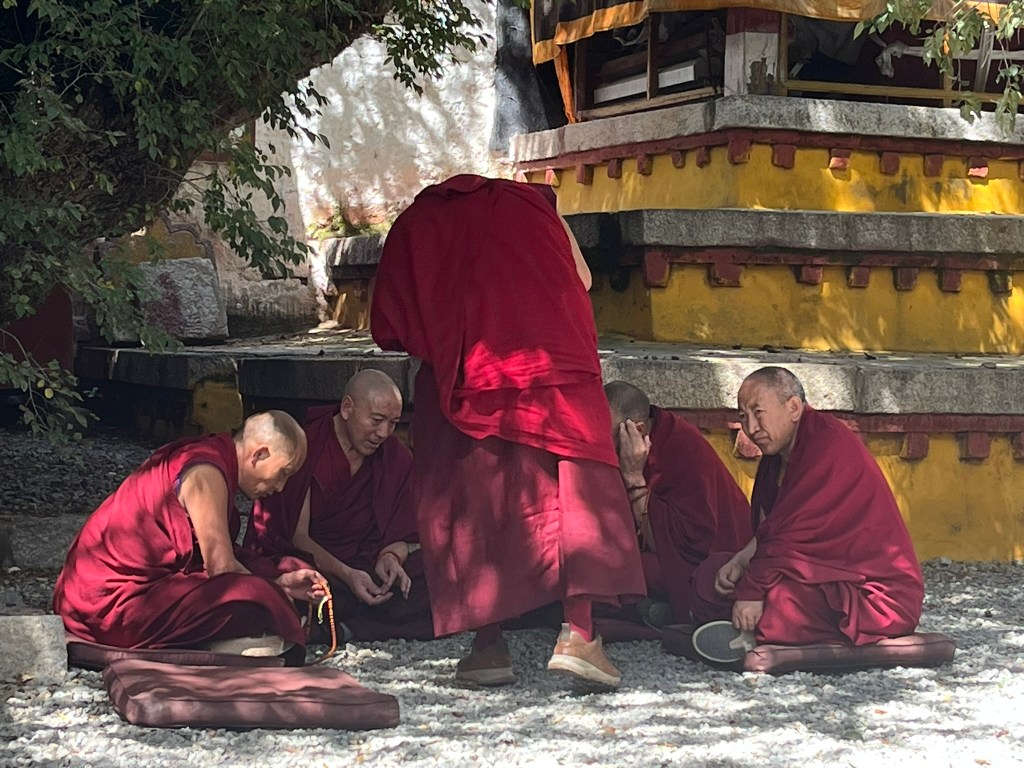
As you enter the courtyard, it is a cacophony of noise, with a couple of hundred monks all debating with each other with great energy. There is always a ‘questioner’ who stands, poses questions and challenges answers. They clap their hands dramatically, stomp their feet and flick their prayer beads to place urgency and pressure on the defender. The defender is sitting and must respond to questions using logic, doctrine, scripture and knowledge. Debating happens every afternoon from 3-4.30pm and they allow tourists to stand on the edge of the courtyard and watch. There is no ranking, and regardless of experience anyone can be a defender or a challenger. It is about the monks testing and focussing their minds and you can see how hard each sitting monk is thinking as they answer the questions. And it is honestly one of the most unexpected and brilliants sights I have ever seen.


A brilliant first monastery for us to visit and get a taste of what is to come in the trip.
 Colette's Grand Detour
Leave a comment