Pingyao is one of China’s best preserved ancient cities and designated a UNESCO World Heritage Site. Located in central Shanxi Province it provides an immersive experience into what a prosperous Ming-Qing Dynasty period city looked like. As you pass through one of the four gates of the still-intact city walls, you enter another world, with beautifully preserved architecture and a rich history of trade.
Pingyao has existed as a walled settlement since the Zhou dynasty (800-600 BCE). Its location sat at the crossroads that links north and south trade routes making it strategically important. From the Han dynasty (200 BCE) until the Tang dynasty (900 CE) it continued this role as the administrative center of the county. However, in the Tang dynasty it began to grow in size and wealth. During this time the area was densely populated with a lot of farming and commerce. It also controlled the salt resources of the region and local clans were given monopoly rights and contracts for salt distribution across China. The capital during the Tang dynasty was Chang’an (Xi’an) just to the south of the city, so Pingyao merchants and traders could easily provide goods and services to the capital earning immense wealth. The Shanxi clans were well known for their trustworthiness which made local merchants reliable trade partners.
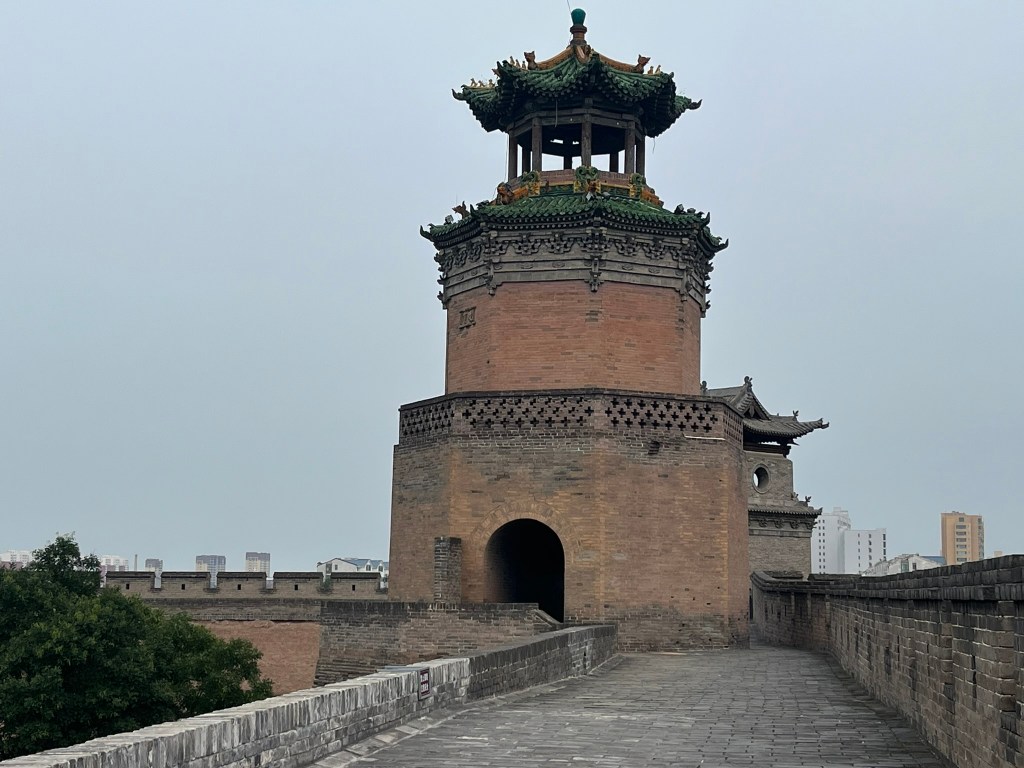
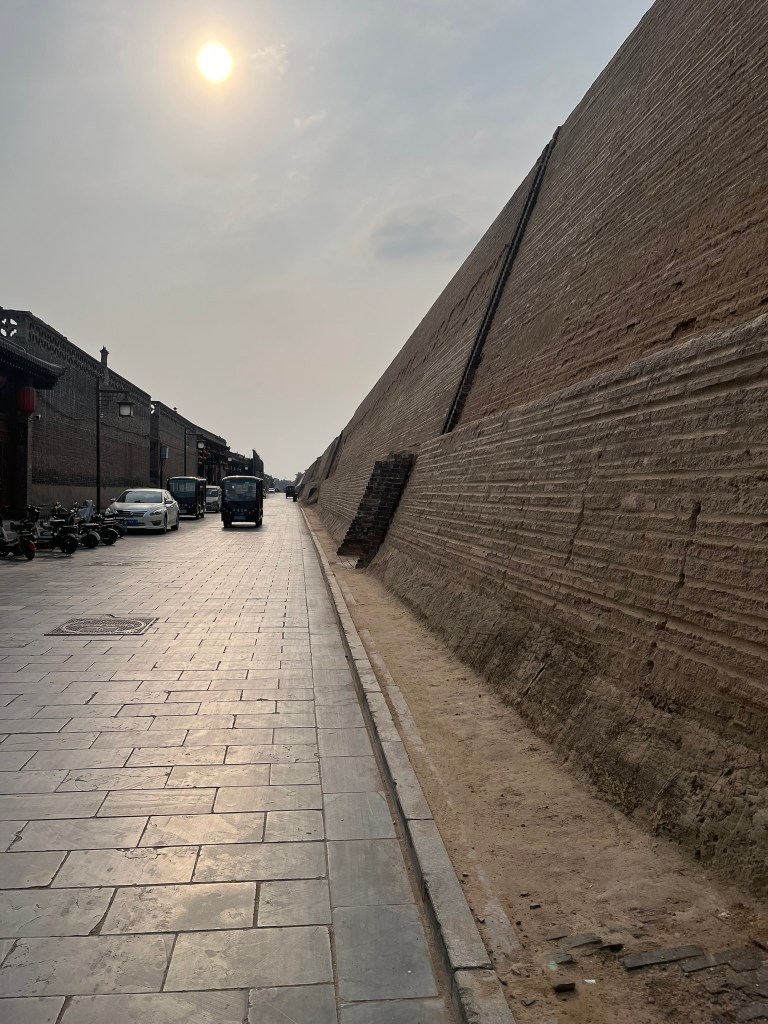
This set the stage for major expansion in the Ming dynasty. Emperor Hongwu ordered a major reconstruction of Pingyao. New city walls were built, 6km in circumference and are the same walls that stand today in the city with 72 watch towers and 4 main gates. The city’s urban layout was changed to a standardized grid street plan, to reflect the imperial ideals of order and stability. Again this street plan is fully intact today. During the Ming dynasty, Pingyao sat at the northern frontier of the empire, so it was an important first line of defence against any Mongol incursions from the steppe. But the city walls also provided a safe place for merchants to trade, building wealth, particularly through salt and the lucrative Xiechi salt fields.
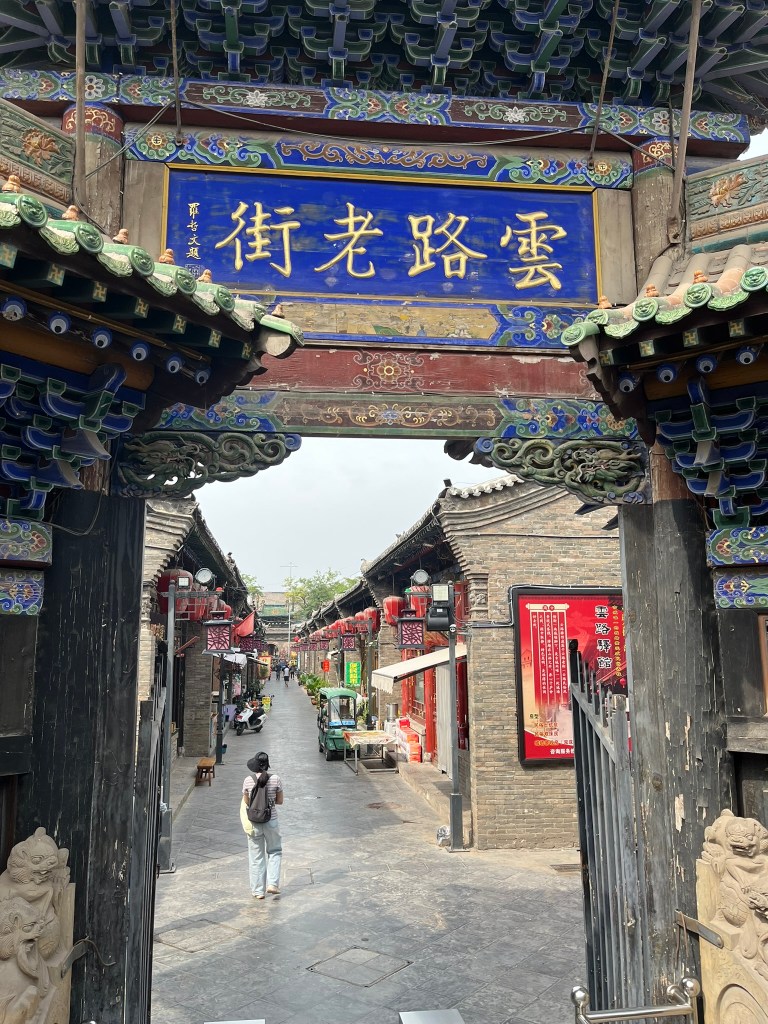
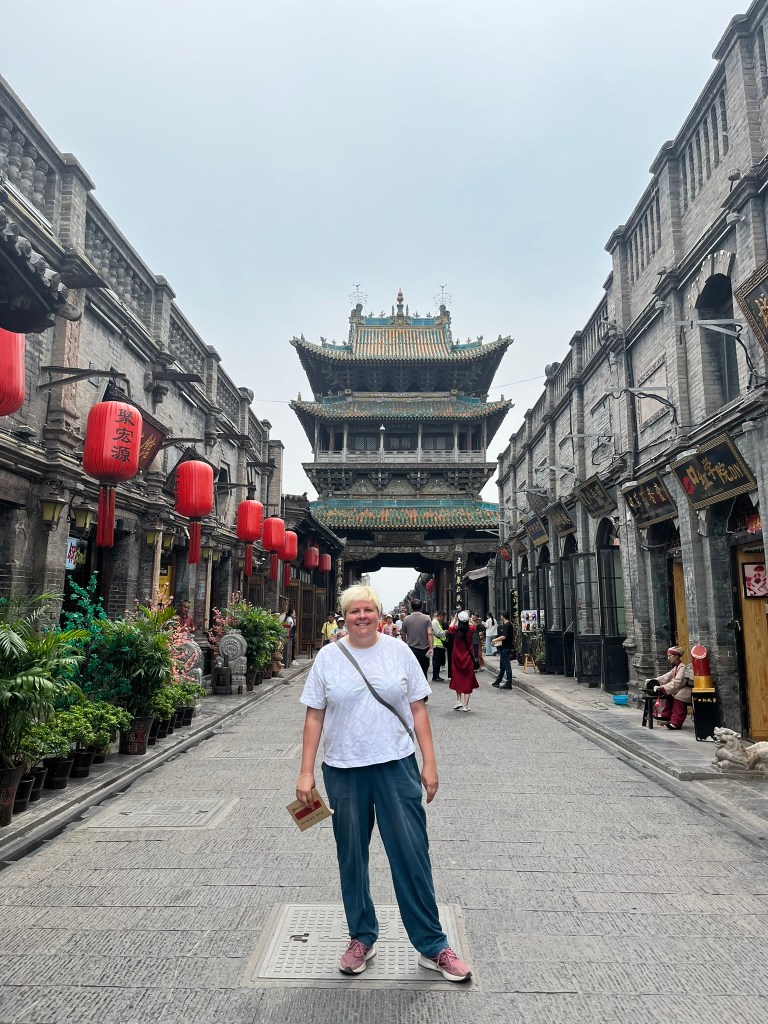
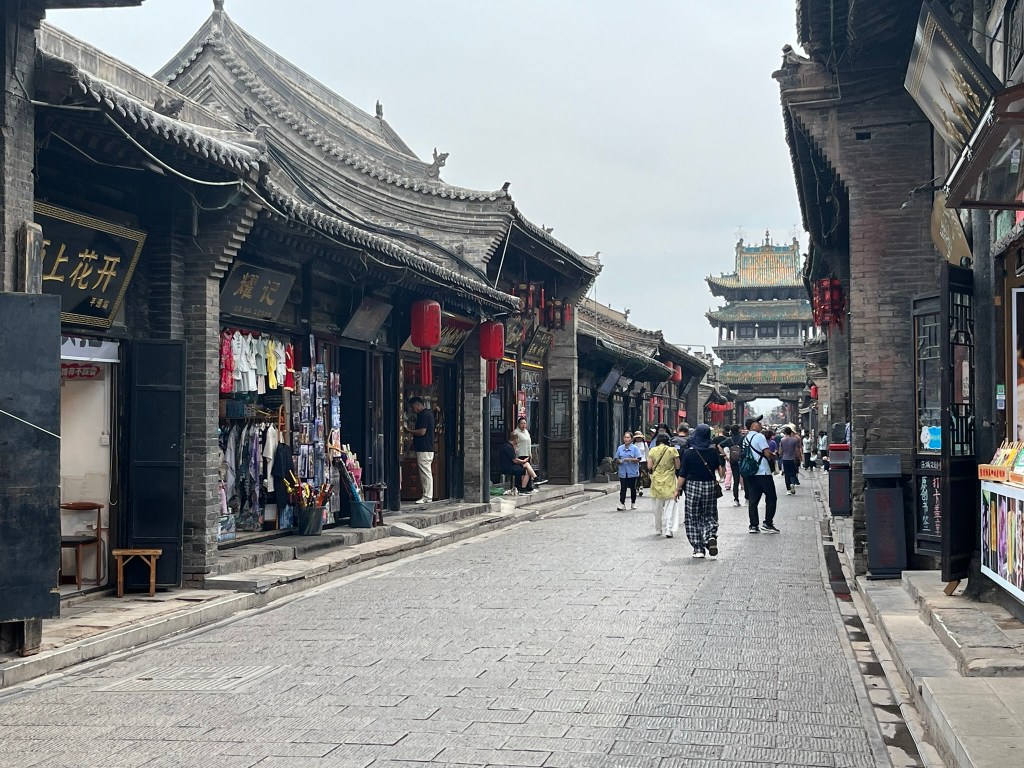
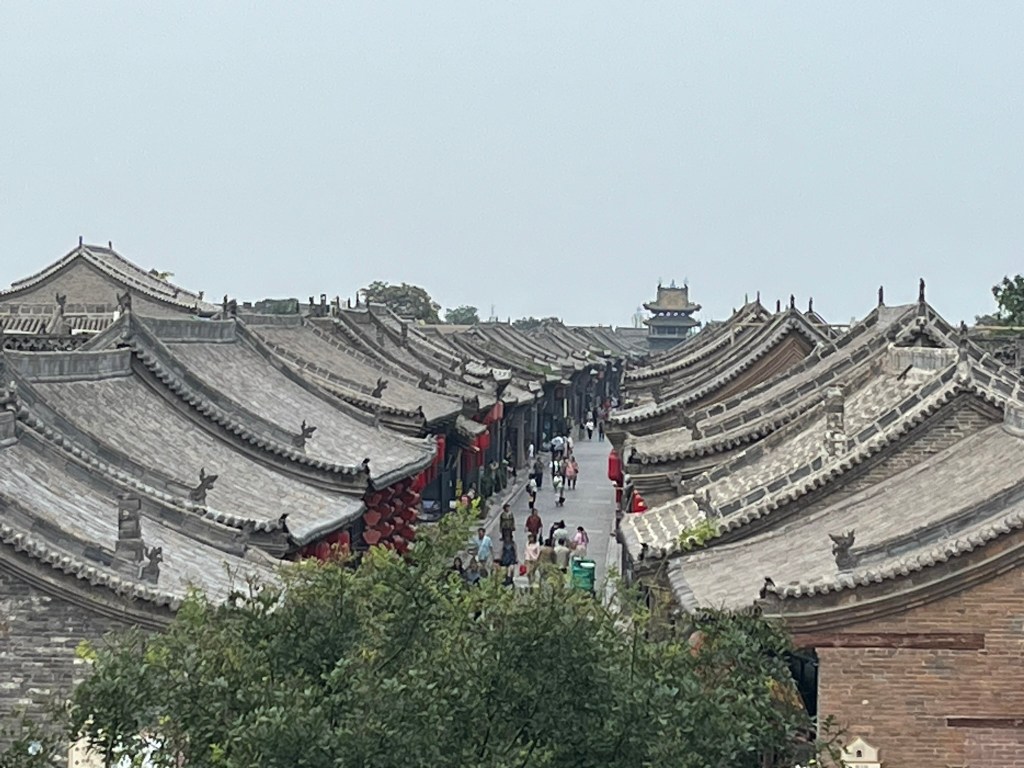
We entering the walled city via the West Gate walking along one of the 2 main arteries of the city – West Street. Cars cannot enter the walled city and in the center it is pedestrian-only stopping the golf carts ferrying passengers to hotels and small scooters from clogging up the streets. This was the financial heart of Pingyao, and the street is lined with Qing-era merchant courtyards, banks and shops. The facades preserve their traditional grey brick design and wooden signage. The city is small and to get to the central intersection where the city tower lies between West and South street takes about 15 minutes at a slow pace. South street is the more commercial street in Pingyao, but retains its charm with original Ming-Qing era signage and shop fronts.
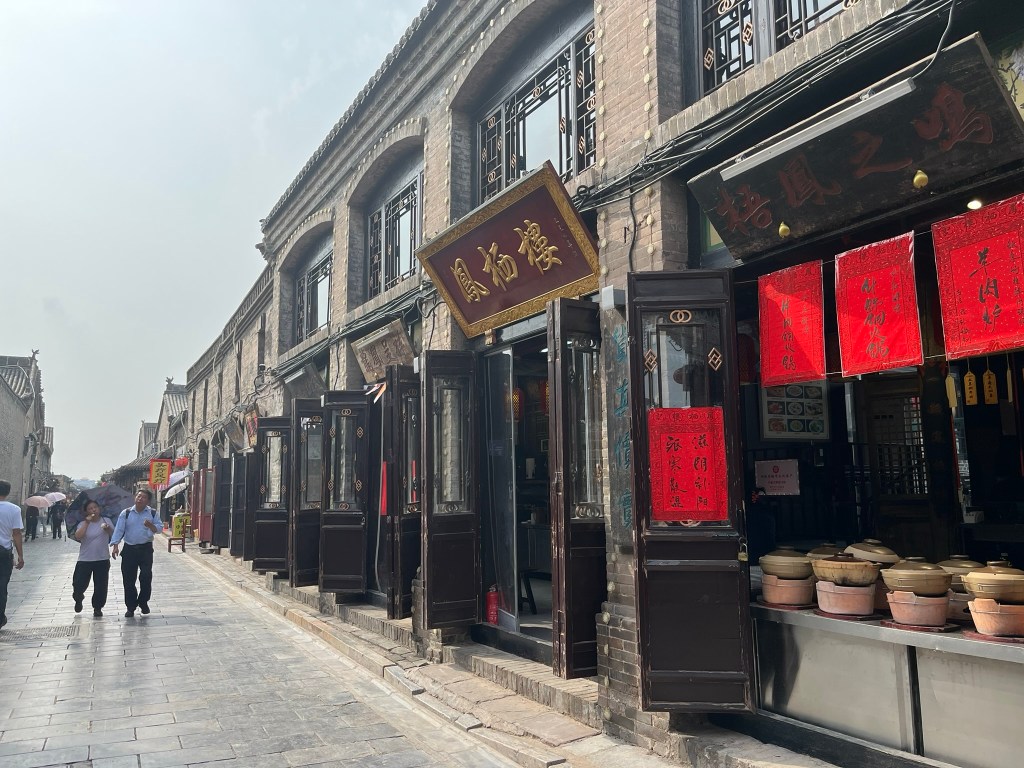
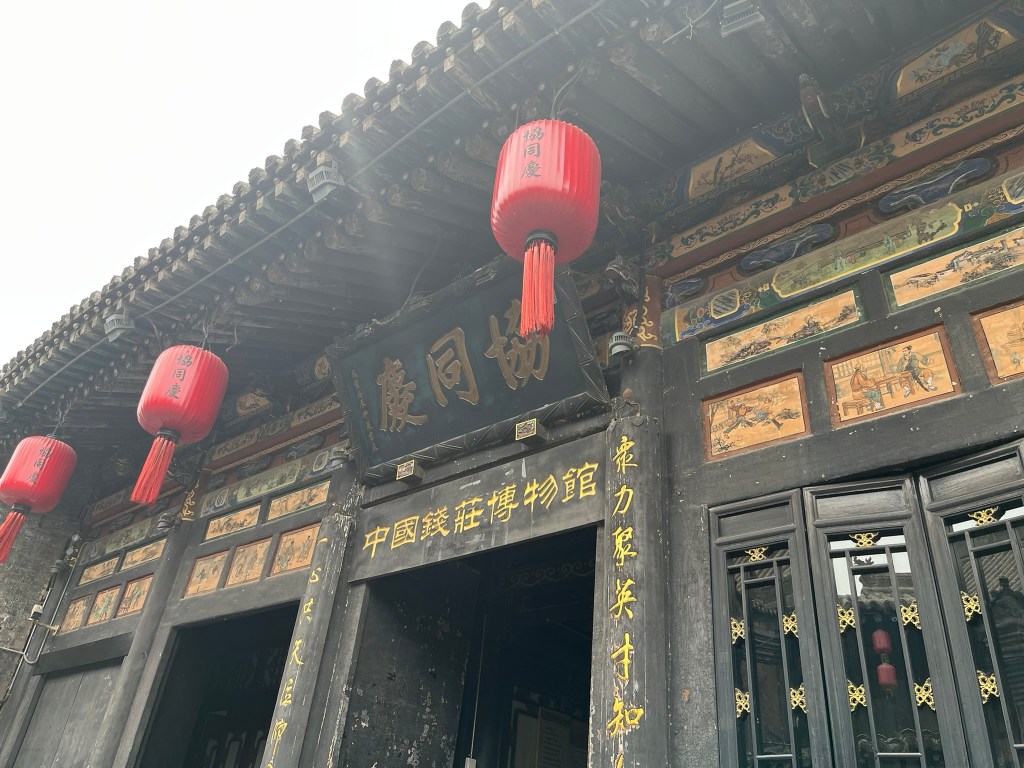
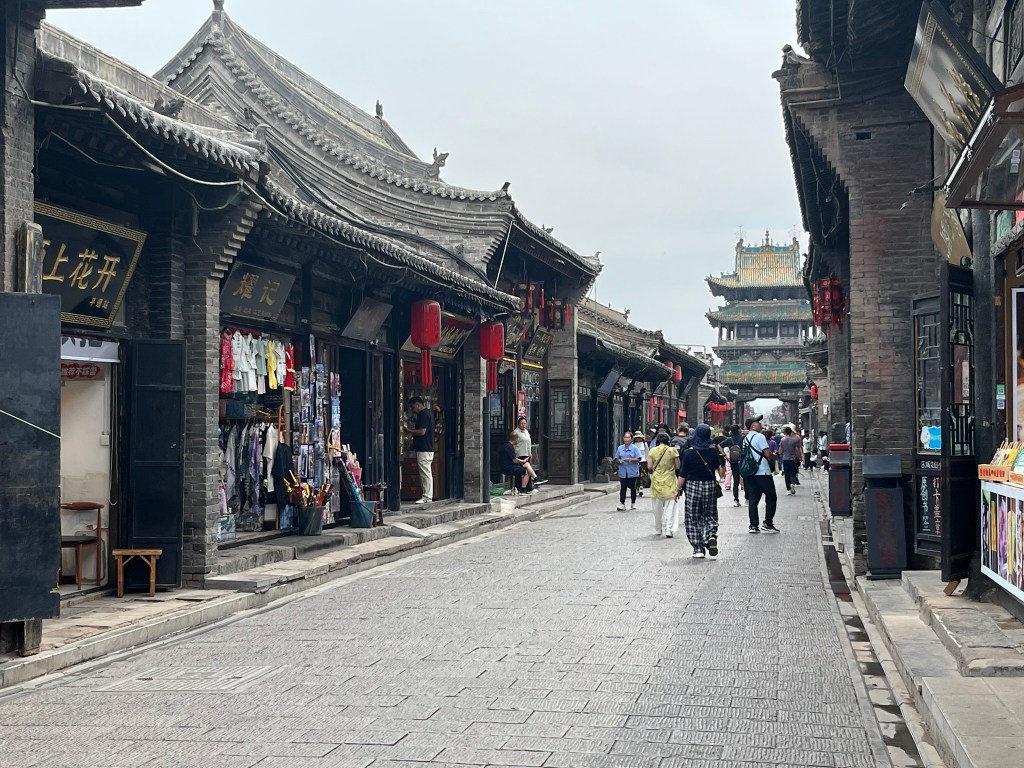
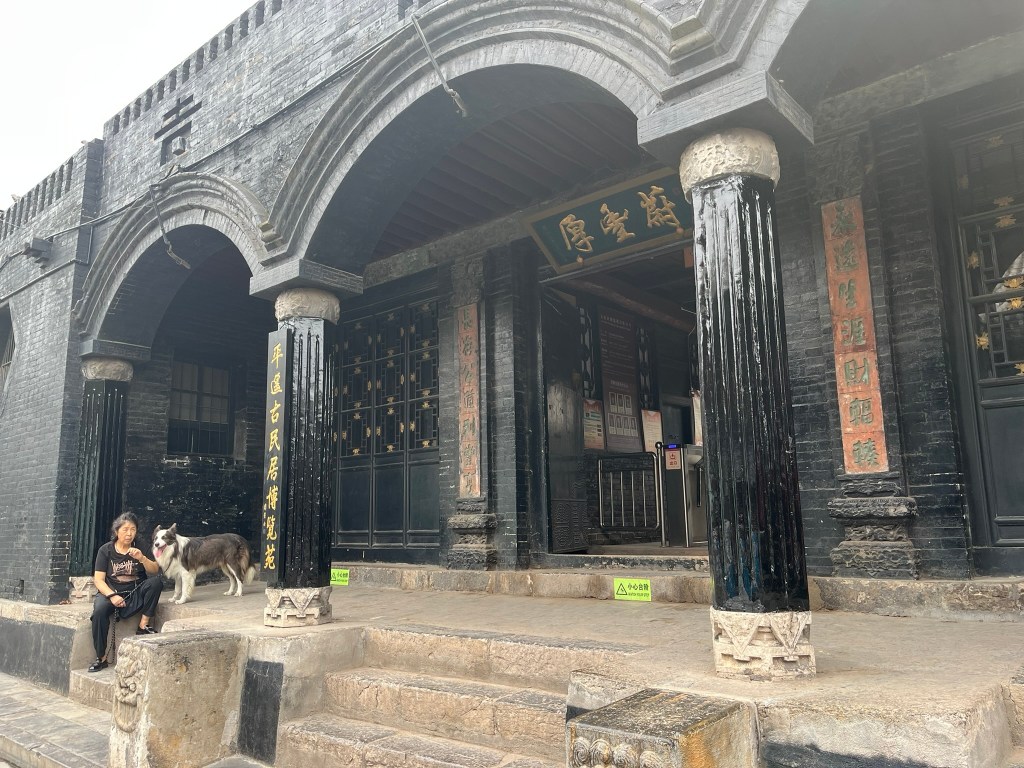
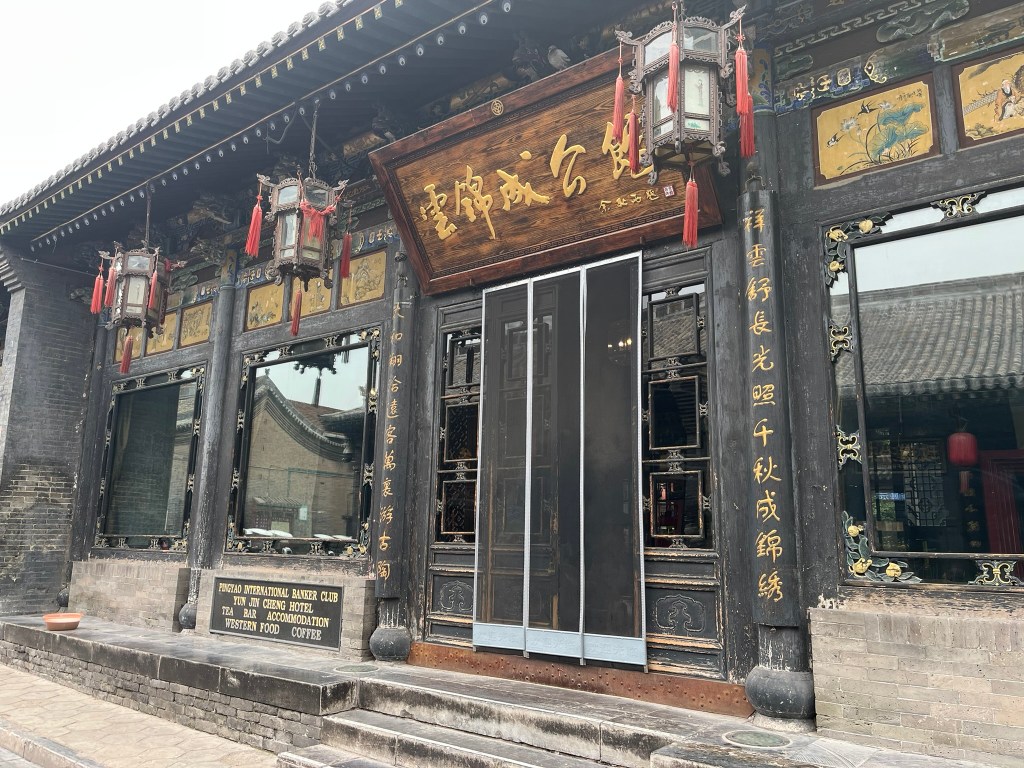
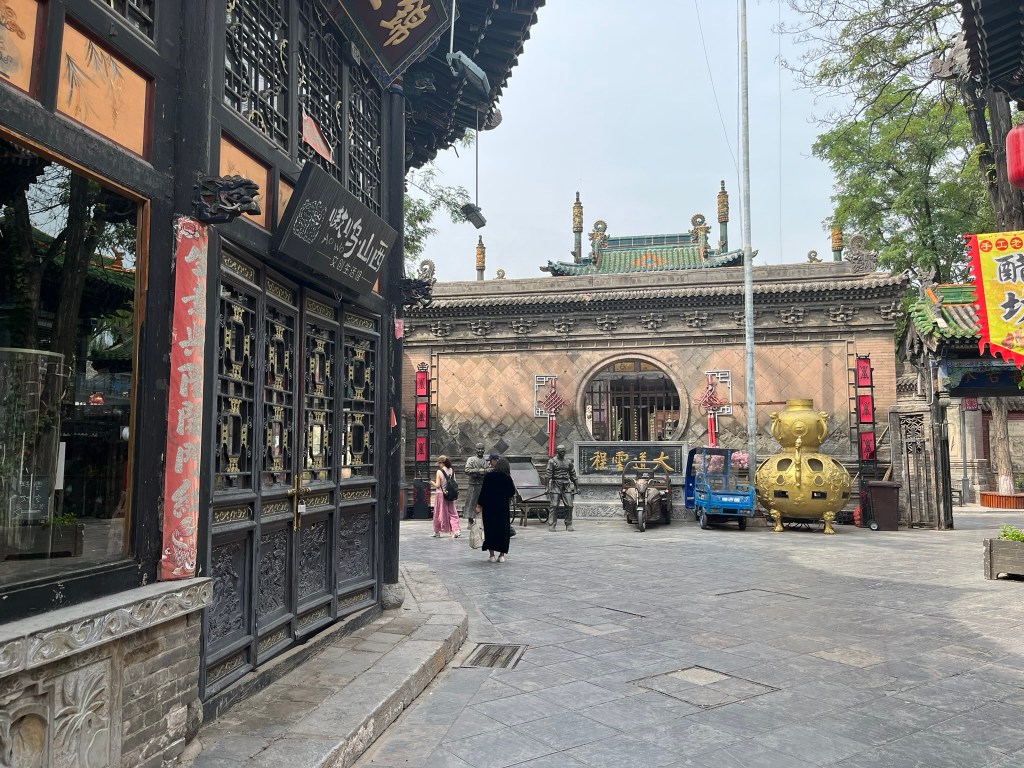
Along both of these streets there are souvenir shops, restaurants, lacquerware workshops and the ubiquitous Shanxi vinegar shops. It is lively but the tourist amenities do not ruin the atmosphere. Alongside this there are many heritage buildings and museums that can be visited through the Pingyao Ancient City ticket that will get you into around 20 sites around the city.

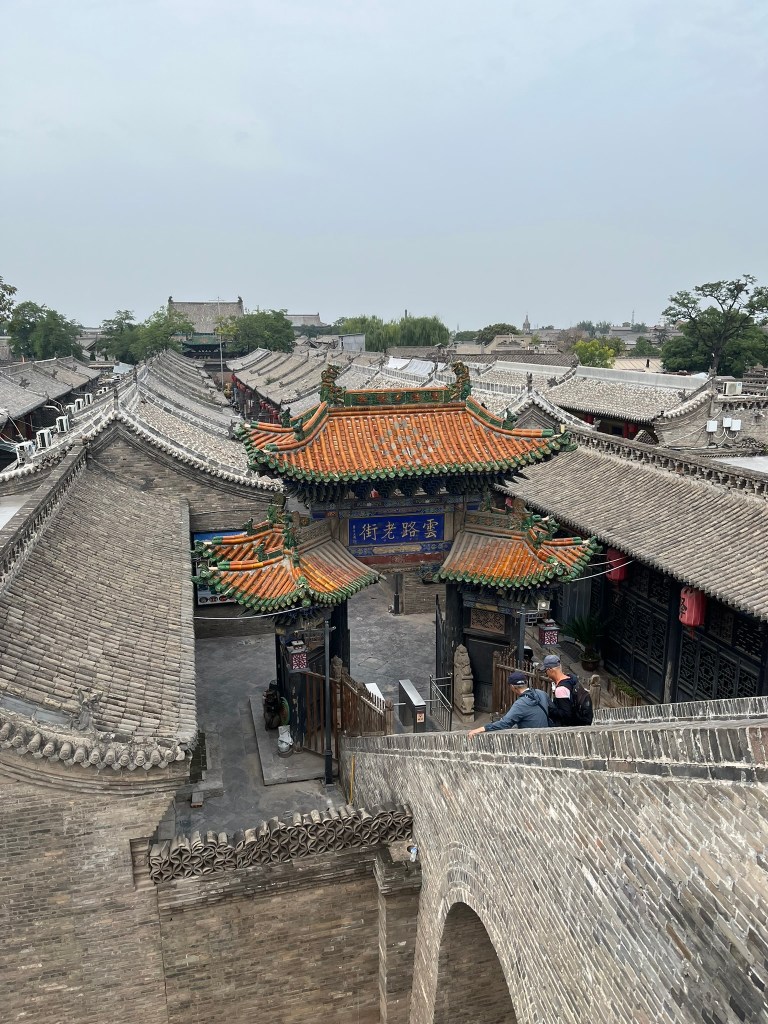
The city wall is one of the highlights and completely encircles the city. It is built of rammed earth and brick and is in very good condition. You can climb up and walk along the entirety of the wall, getting great views of the city below. It is much easier to appreciate how complete in its preservation the city is from this view. With a flat skyline of 1 or 2 story buildings, forming hundreds of grey brick courtyard houses with sloped gable roofs and heavy timber beams with dougong brackets.
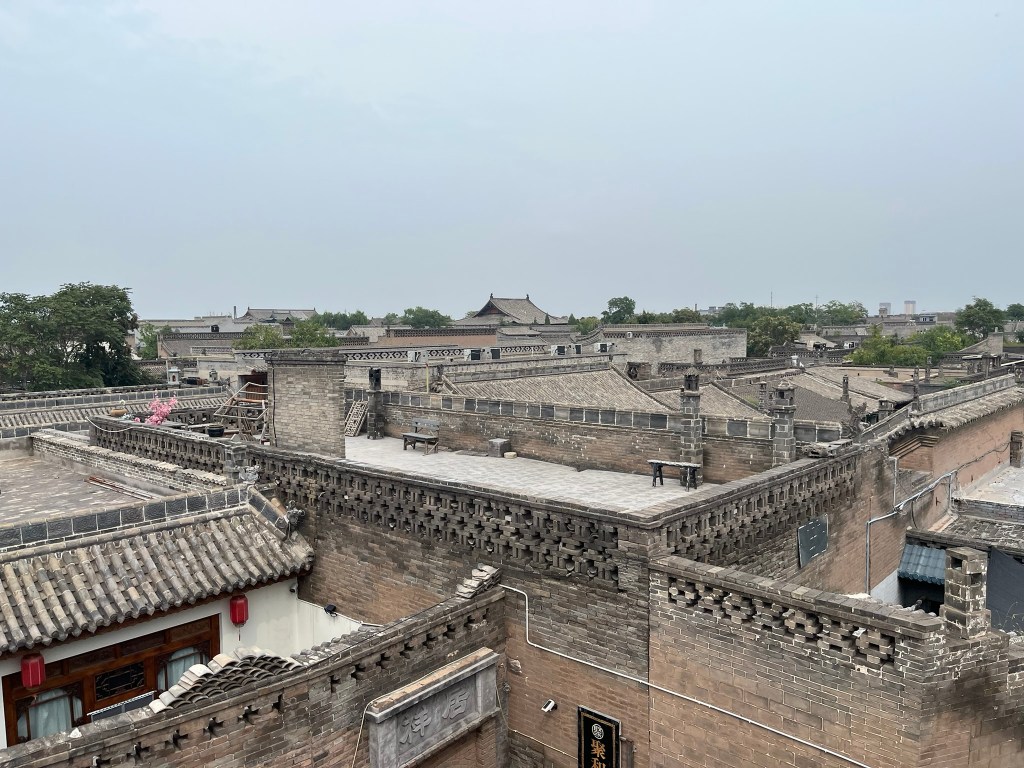
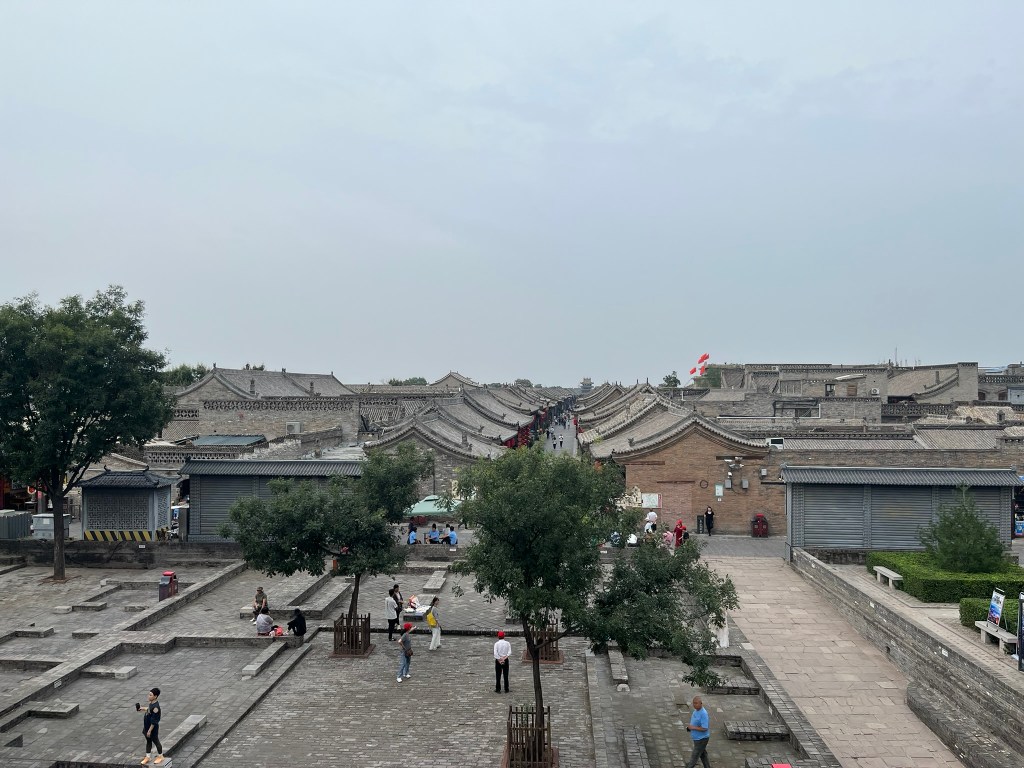
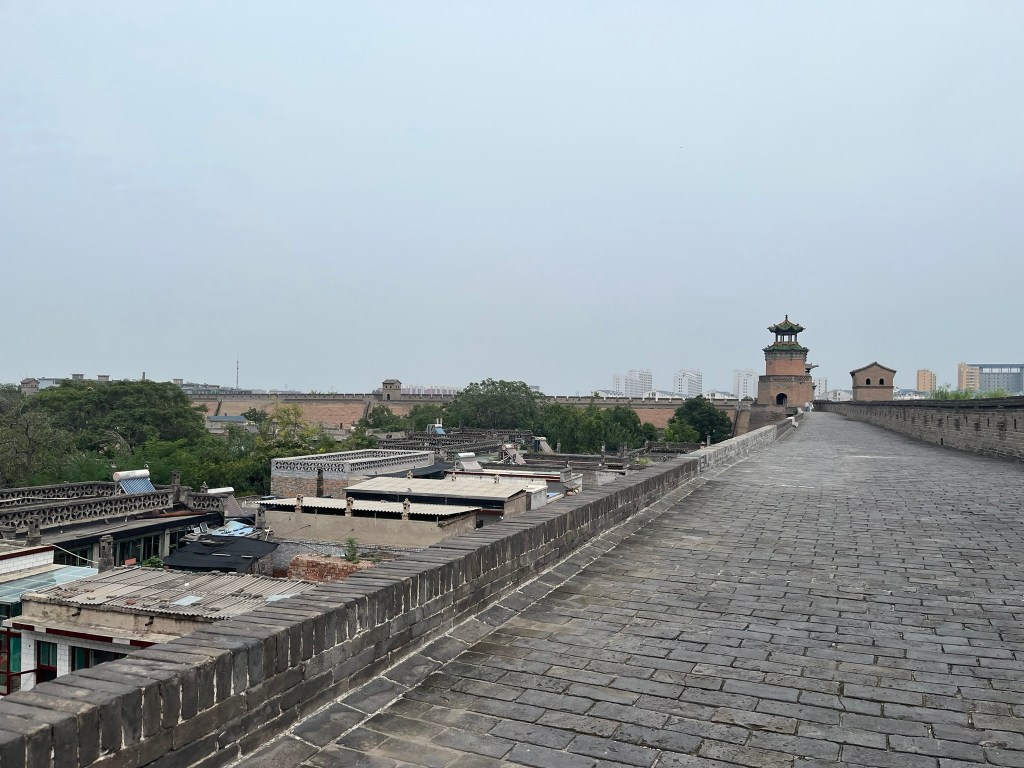

We walked along the wall for about 20 minutes before exiting to visit the Confucius Temple. It is one of the largest and oldest in Shanxi, with most of the current design from the Ming era. This temple was also the center of education in olden times, and was where students prepared for the prestigious imperial civil service exams.

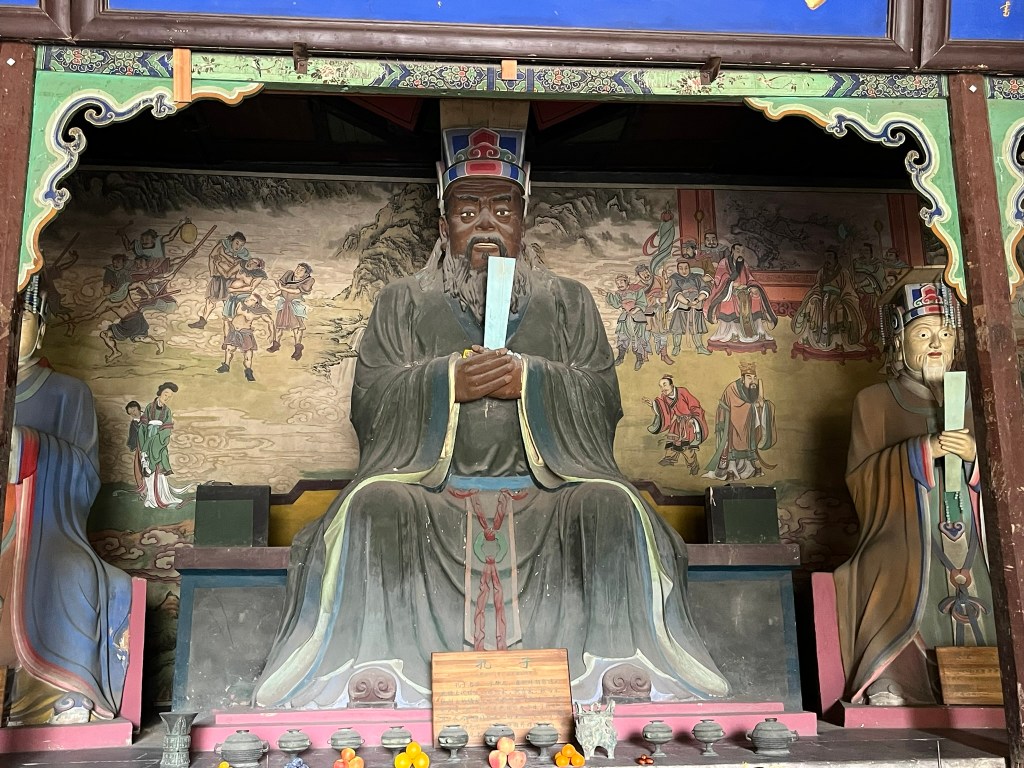
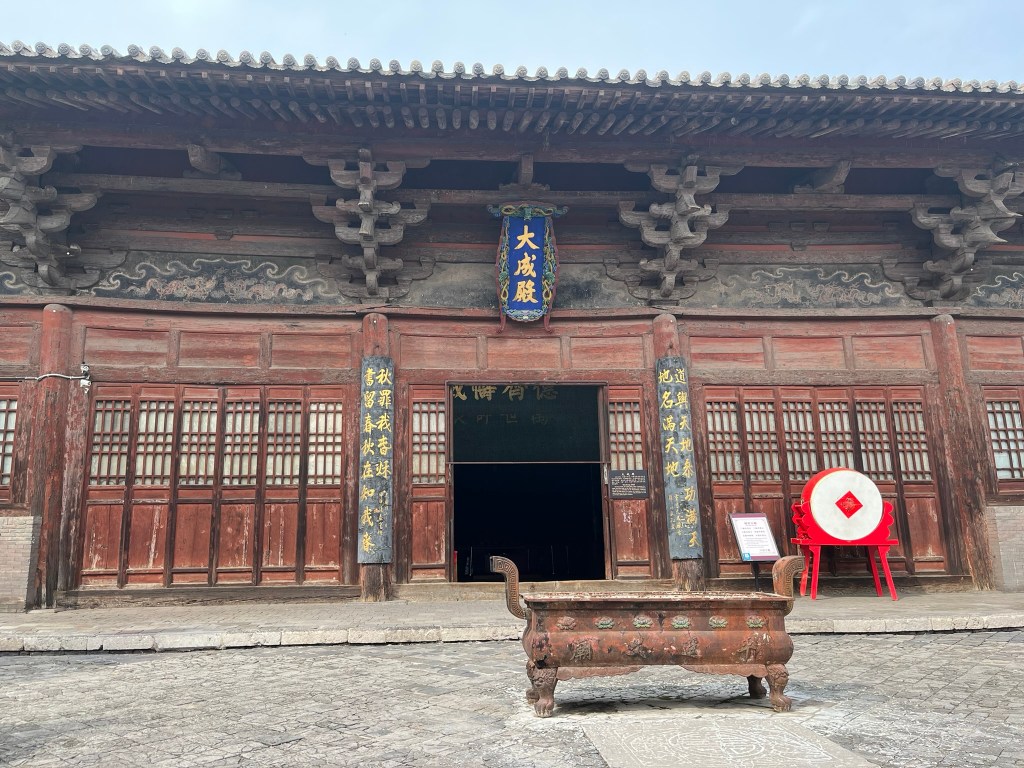
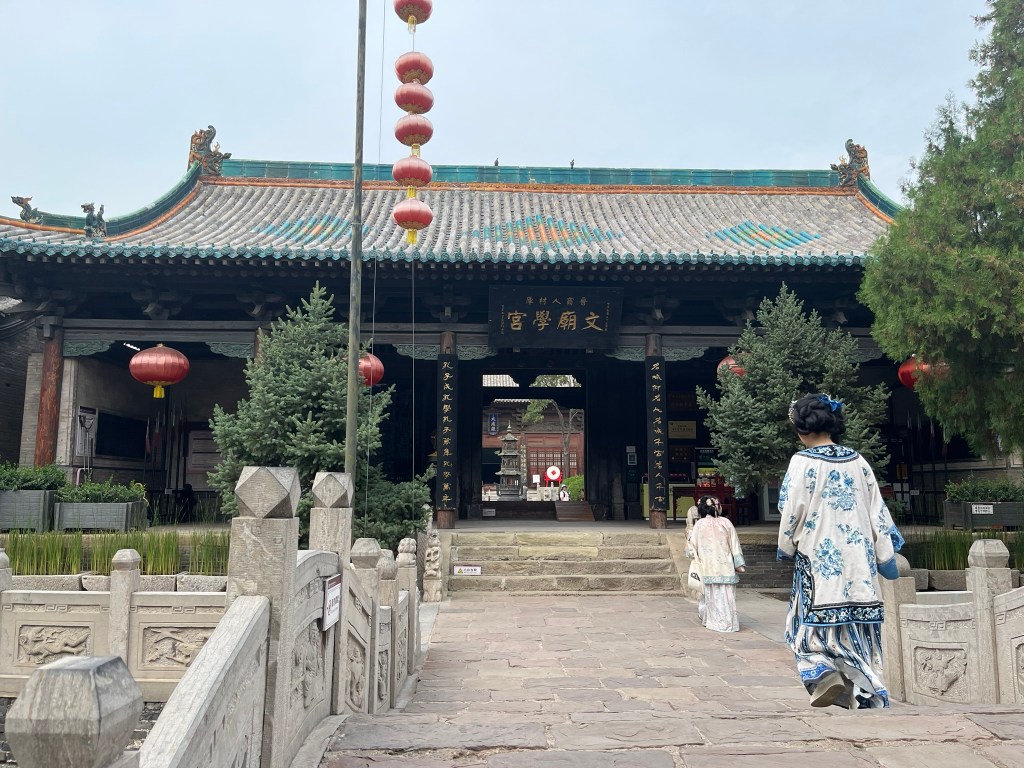

A few minutes down the street is the City God Temple, with most of the current building from the Qing dynasty. It is one of the best-preserved Daoist ‘City God’ temples in China. The City God (which I had never heard of before) is believe to be the spiritual magistrate of a city, overseeing morality, justice and protection. The City God judged the souls of the dead, deciding rewards and punishments in the afterlife. For merchants in Pingyao he was also the patron of honest trade. The highlight (for me at least) was the roof tile decorations, with brightly glazed tiles and dragon-fish ridge ornaments.
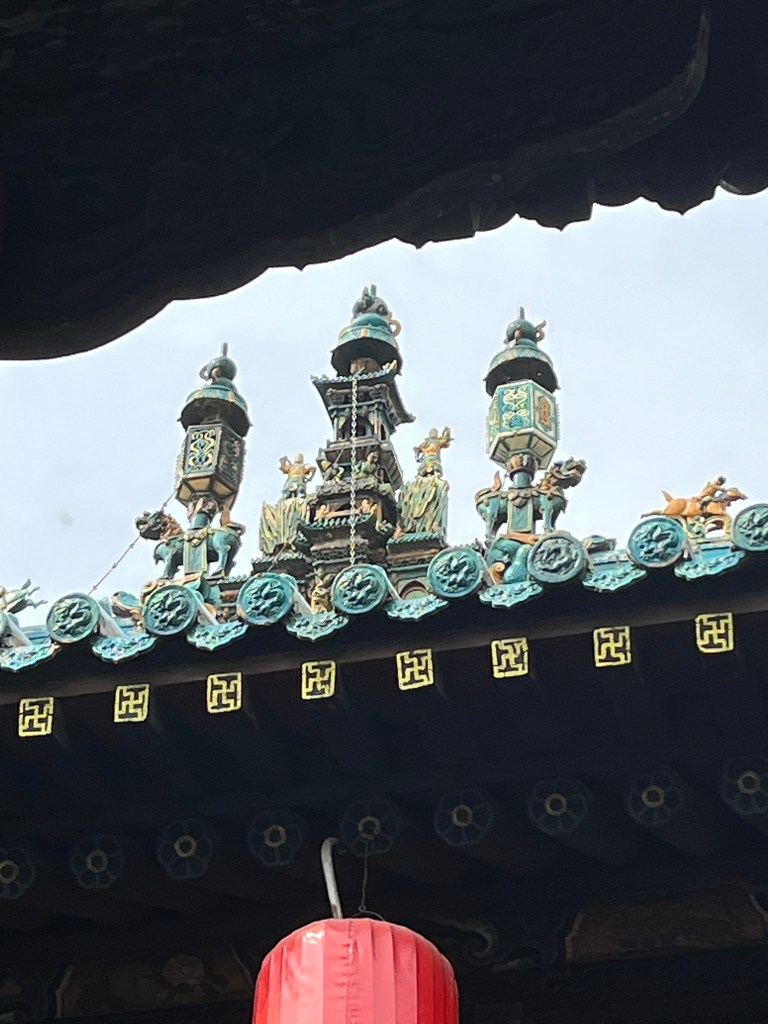
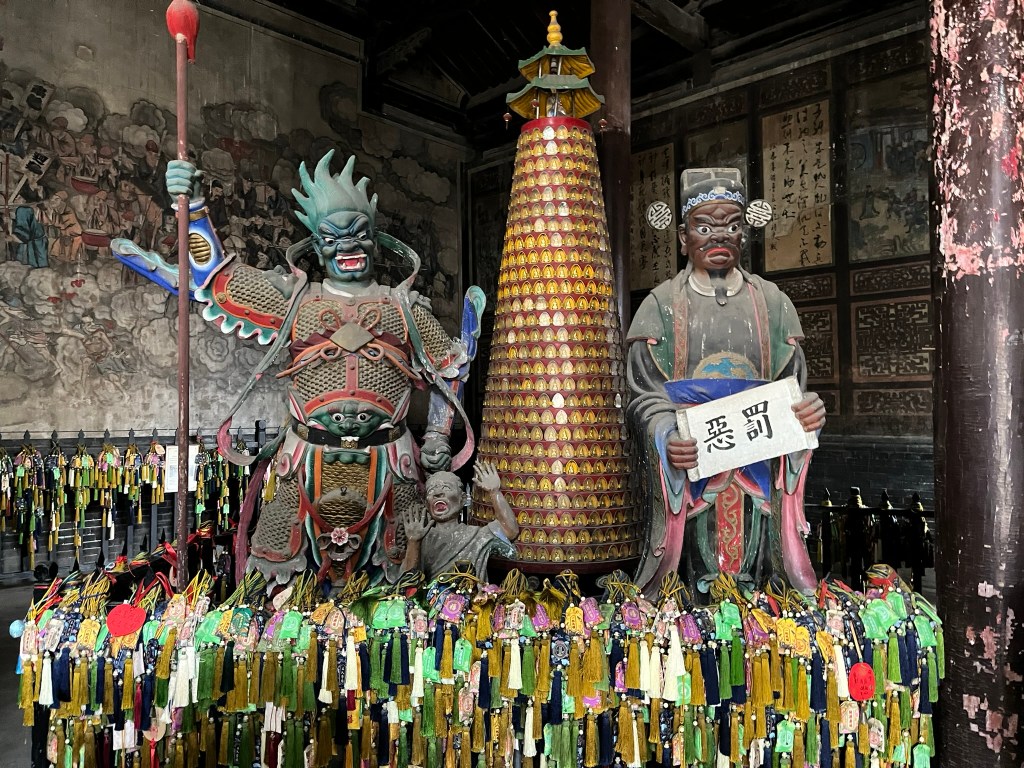
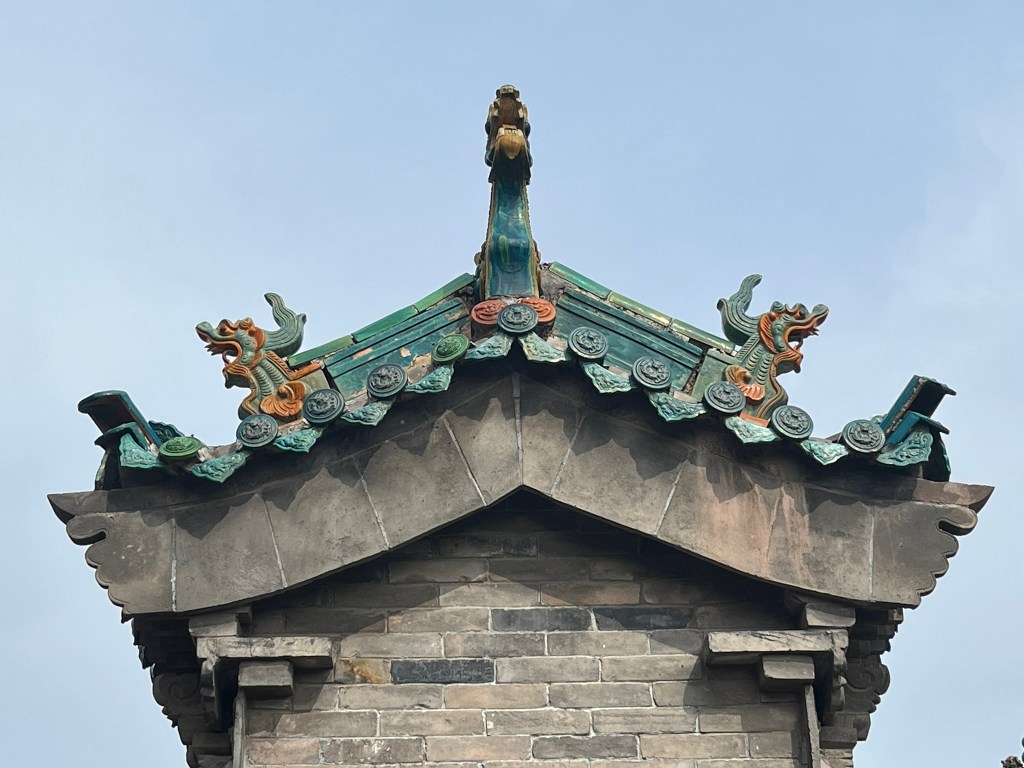
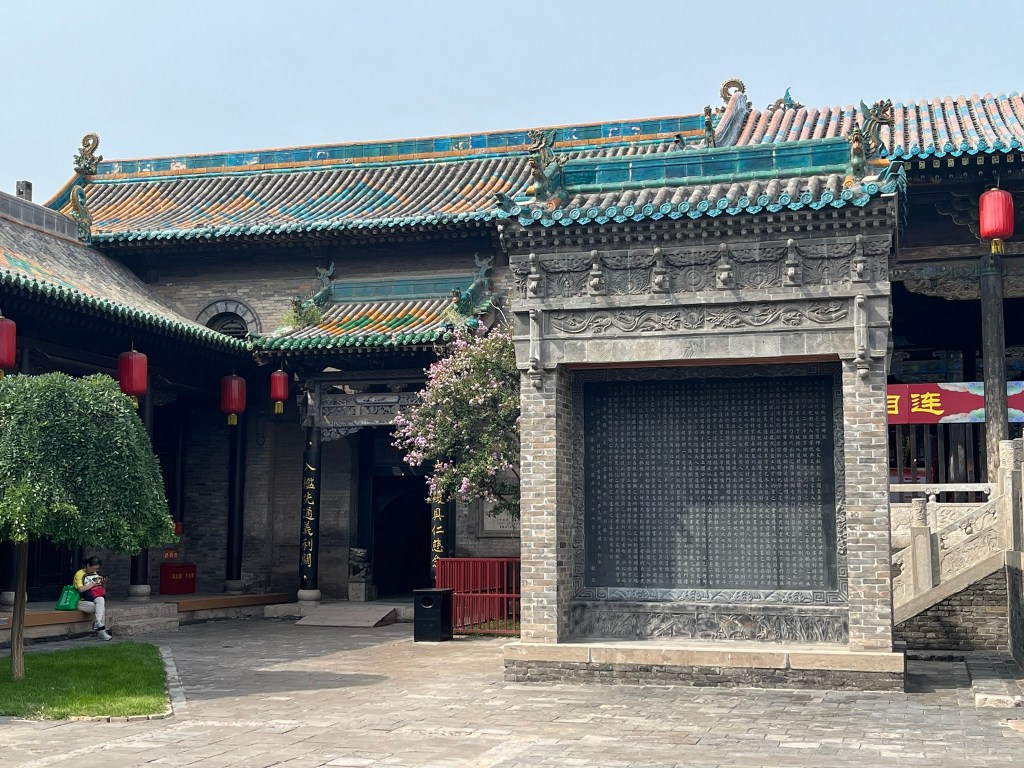

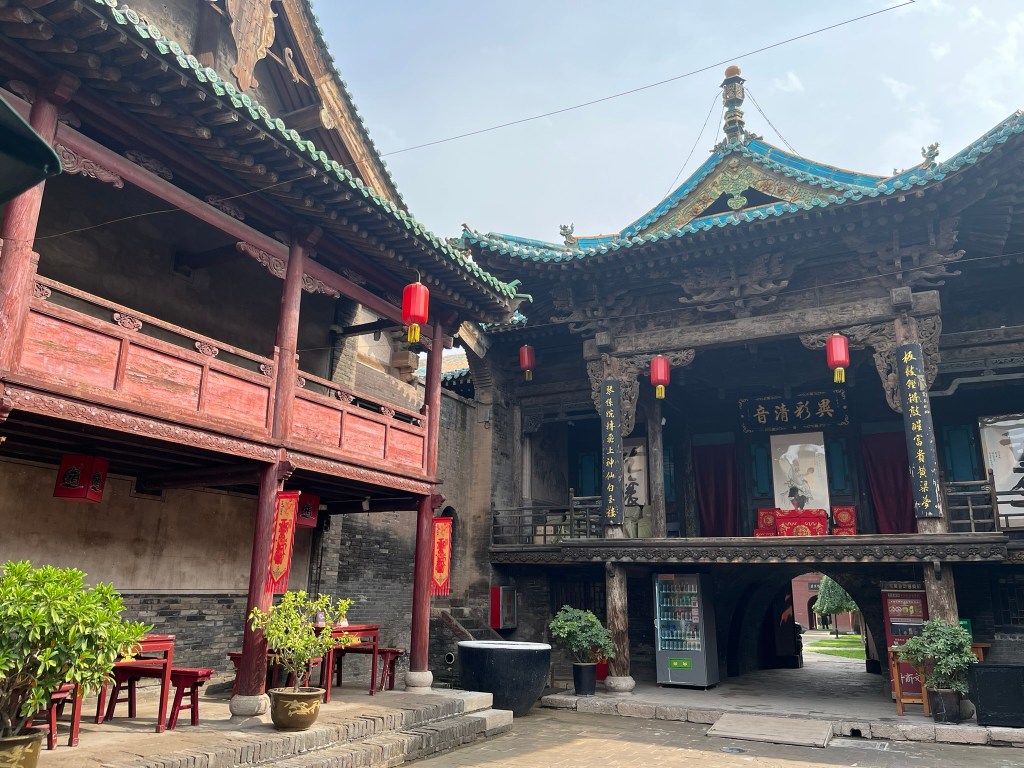
It is quite common in China to have Daoist, Confucian and Buddhist temples sit alongside each other within a city. It is known as ‘Three Teachings in Harmony’, with Daoism providing urban protection and justice, Confucianism symbolizing education and morality and Buddhism providing spiritual salvation.
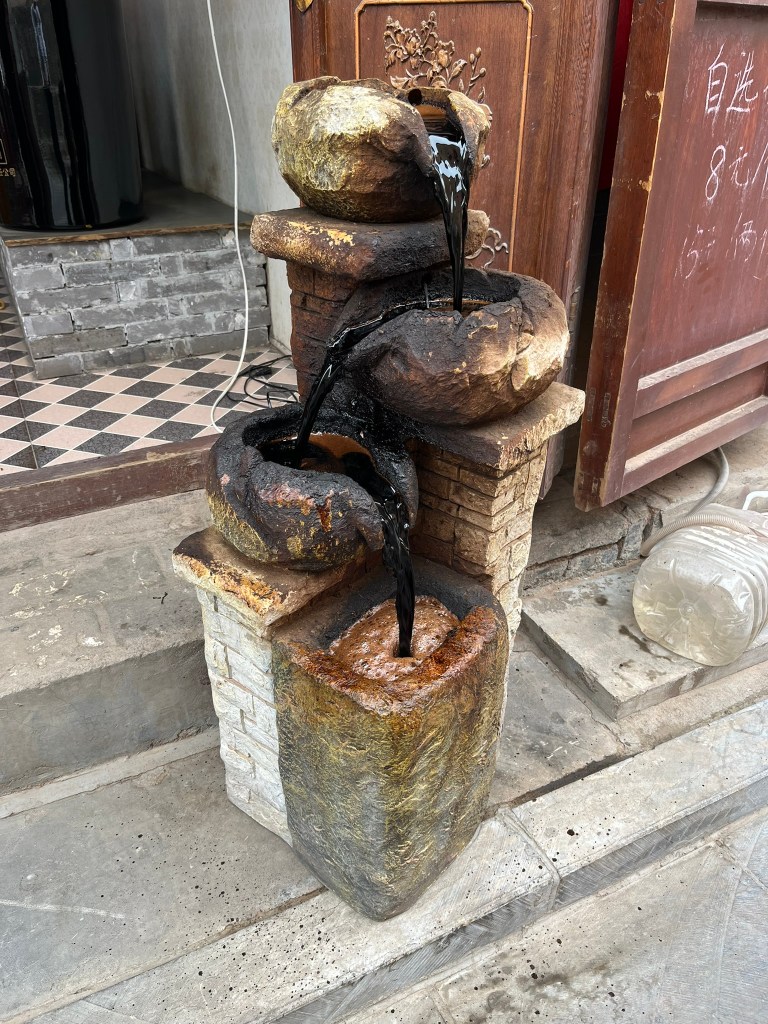
Our final stop was to see how Shanxi’s famous aged vinegar is made at a vinegar brewery. Its easy to tell how important vinegar is to Shanxi, by the number of shops selling huge bottles of the black liquid both here in and in Datong. The smell permeates the streets of Pingyao, so it’s difficult to miss. The dark, rich and slightly sweet liquid sits on every table of every restaurant in the region and is doused on top of almost every dish. I tried it with my noodles and it did make the broth really delicious and moreish, with a lot of umami flavor. It is also used medicinally, with locals drinking a spoonful a day to aid digestion and circulation.
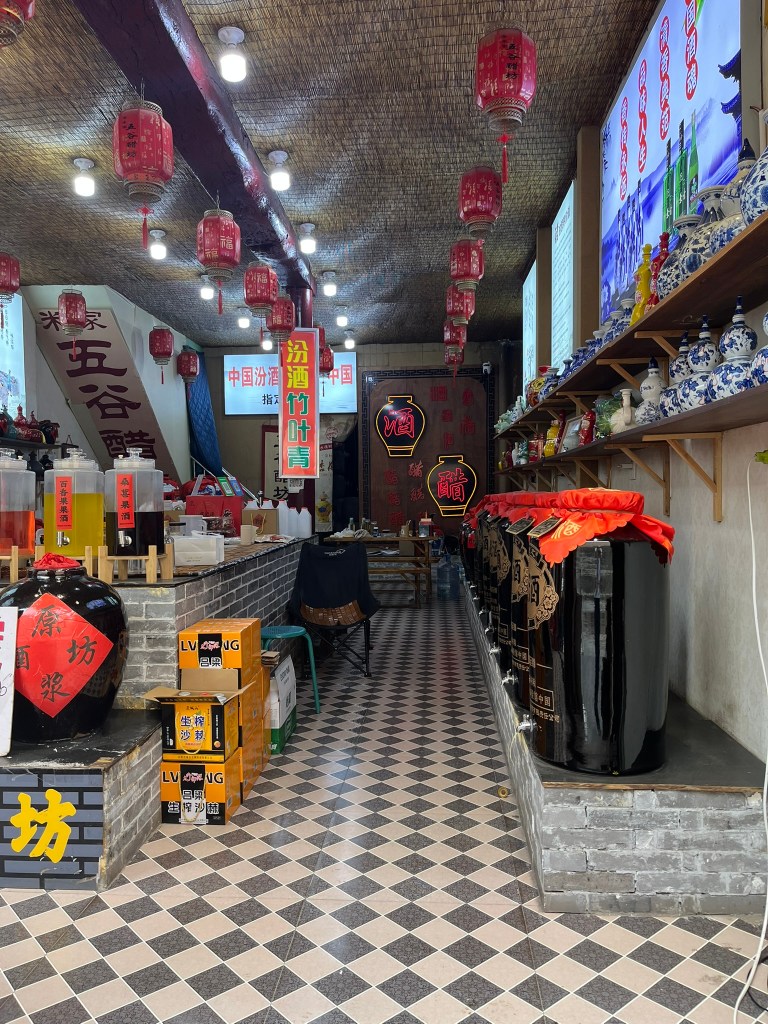
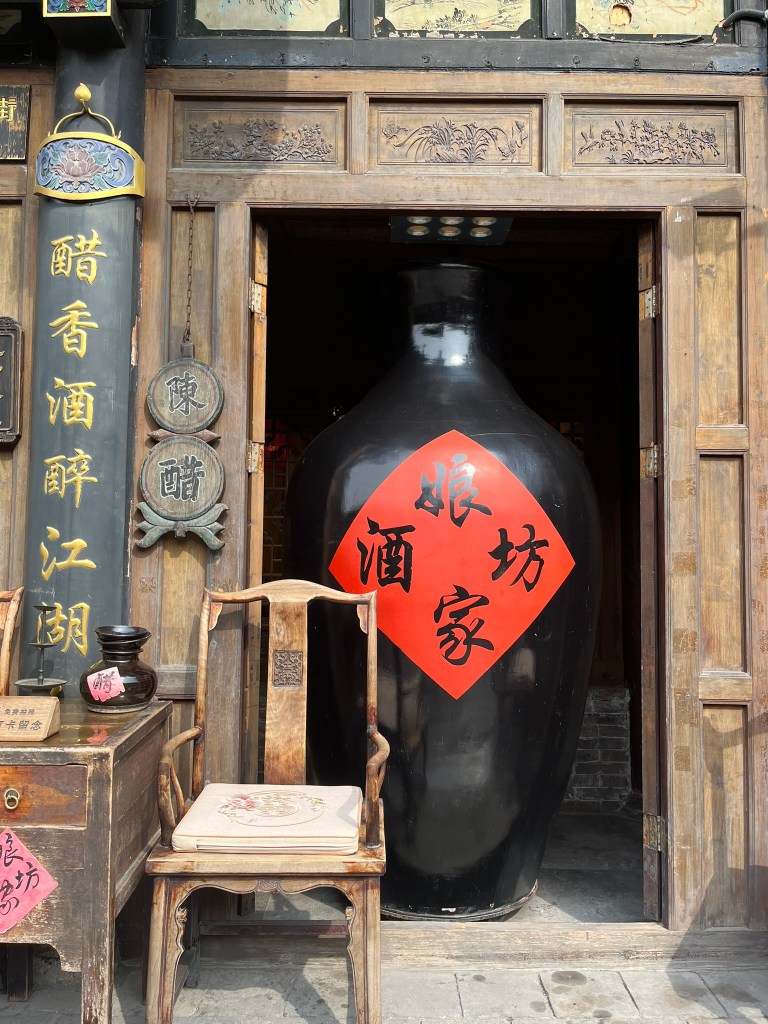
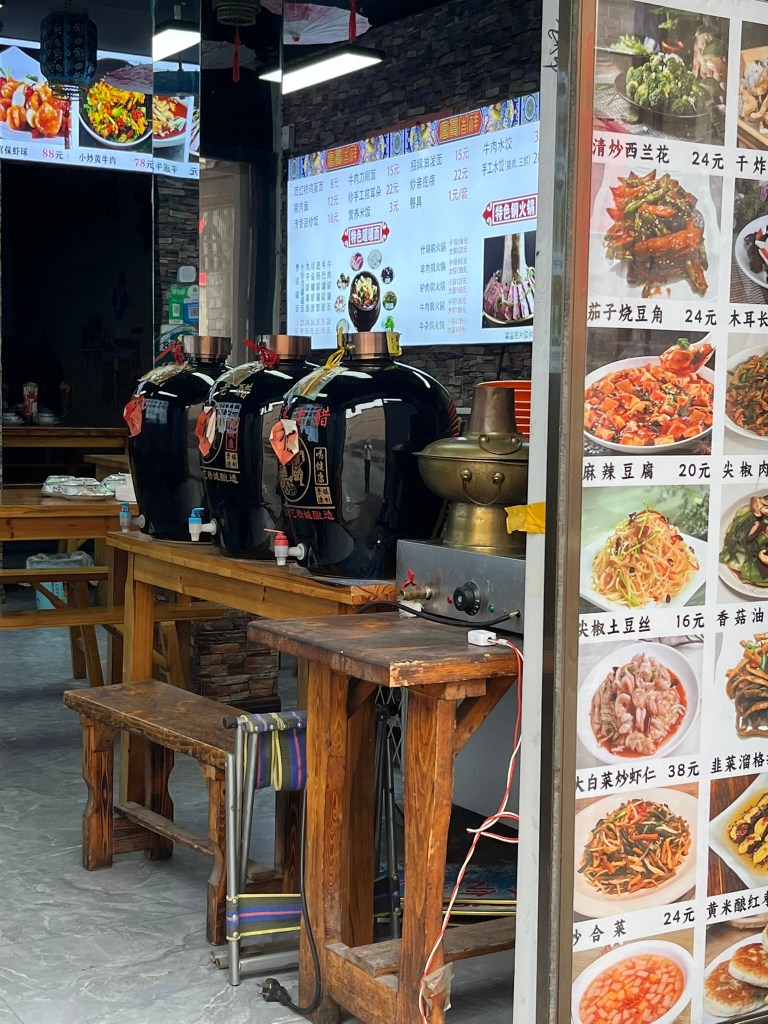
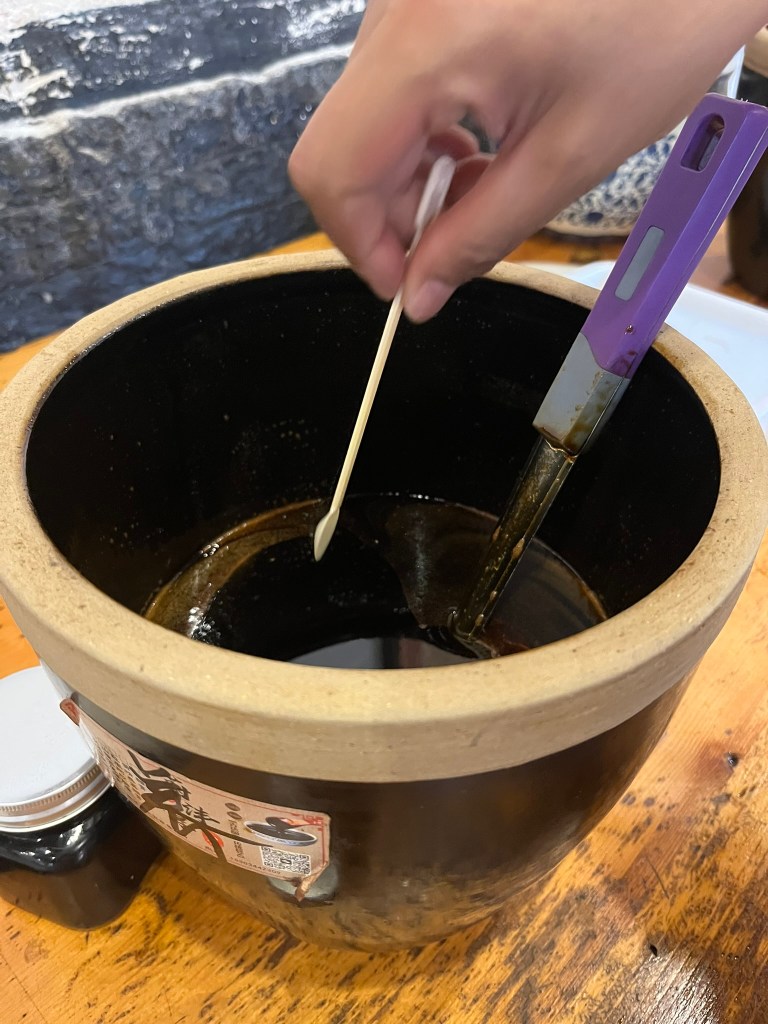
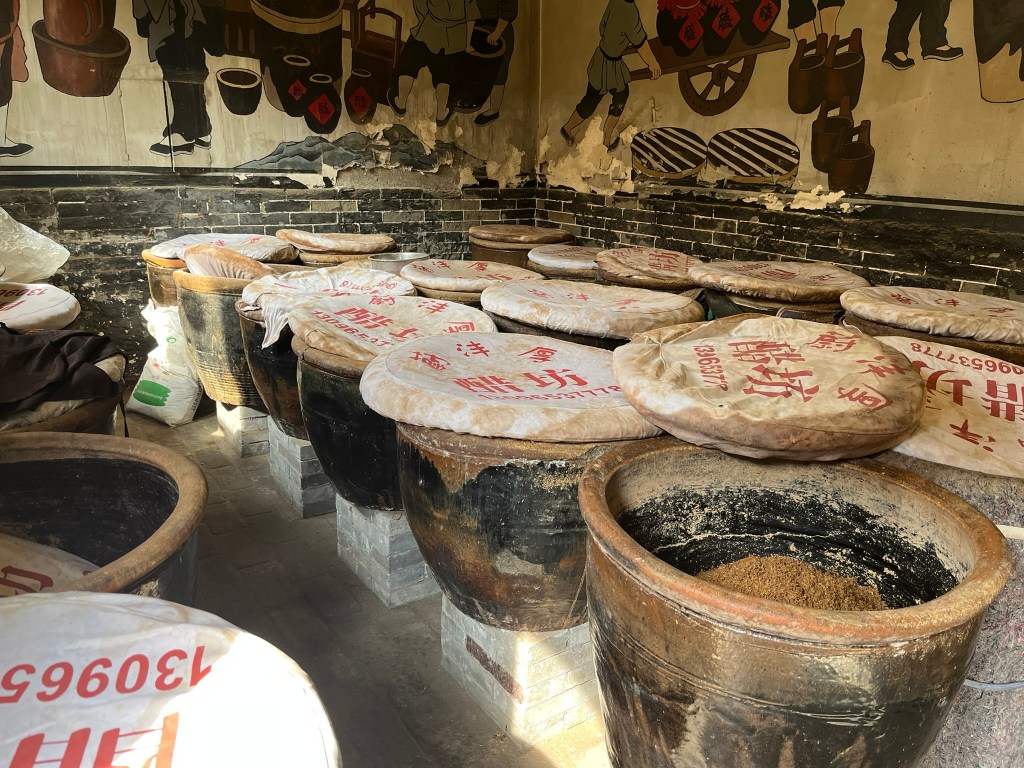
The primary ingredient is sorghum, sometimes mixed with barley and bran, which is steamed and then formed into bricks. It is then transferred to big pots and mixed with a fermentation starter to break down the starch into sugars and then alcohol. It is then exposed to a type of bacteria that turns the alcohol into acetic acid, producing vinegar. Unlike the vinegar we are used to in Europe, Shanxi vinegar is smoked and then aged outdoors in open pots allowing the sun to further ferment the mixture. Typically the mixture is fermented for up to 3 years before it is sold. I got to try a type of vinegar paste in the brewery, which is like a thick syrup that has had ginger, dates and medicinal herbs added to it. It was really good, but I wasn’t going to lug around a bottle of vinegar for 6 weeks, so I didn’t buy any!
I had high expectations of Pingyao. It is advertised as one of the great ancient cities to visit in China. And thankfully it didn’t disappoint. I much preferred Pingyao, to Lijiang and Dali that I visited earlier this year in Yunnan Province in Southern China. The atmosphere was much more peaceful, with far less tourists (although I do not know how busy it might get in the summer) and the overall experience was enjoyable.
 Colette's Grand Detour
Leave a comment