The Yingxian Wooden Pagoda is another architectural marvel of Shanxi Province. It is the oldest fully wooden pagoda still standing in China and considered one of the tallest ancient wooden structures of its kind in the world. It was built in the 11th century during the Liao dynasty and stands at 67m tall. It is nine stories in total but only 5 are visible from the outside.
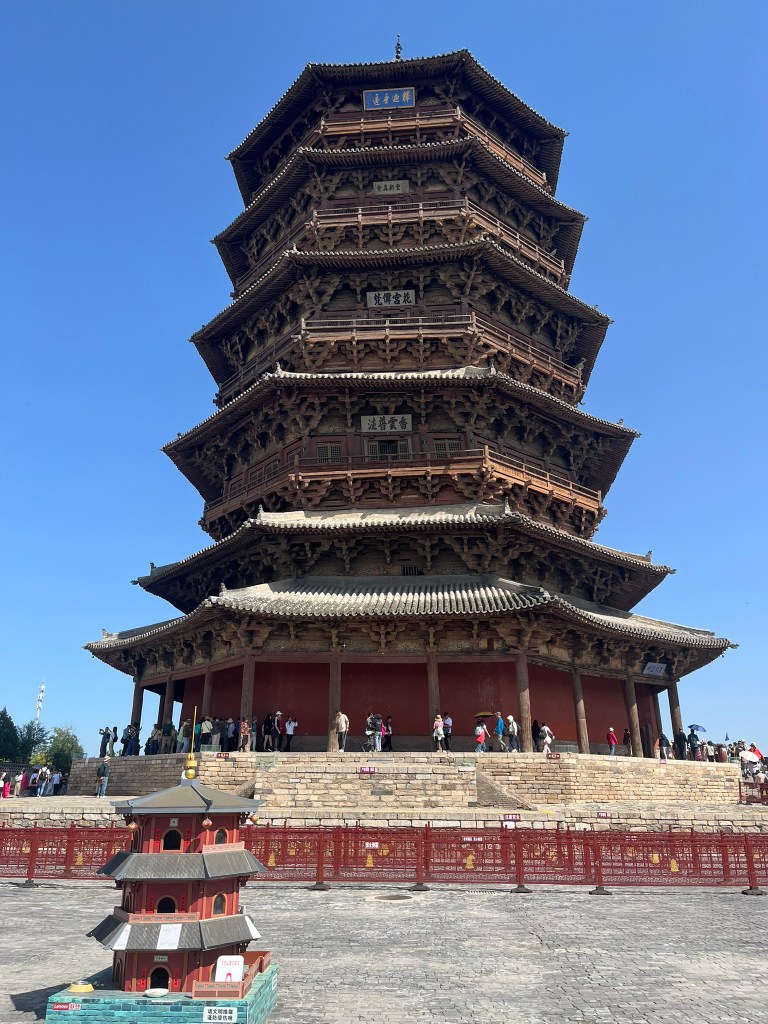
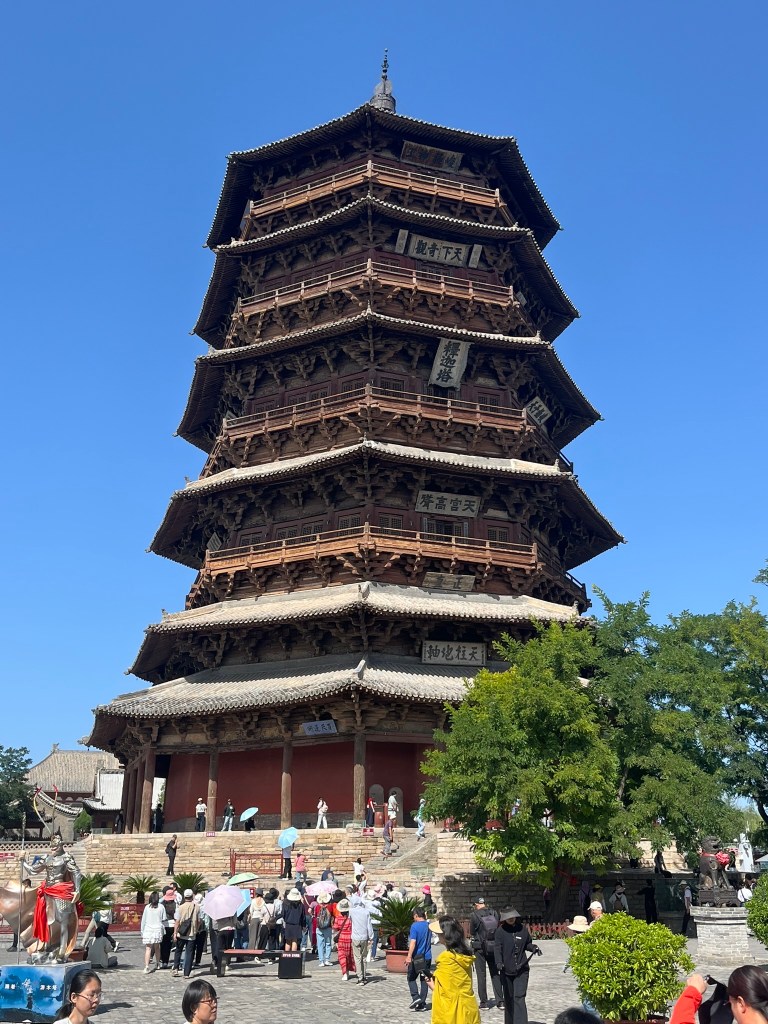
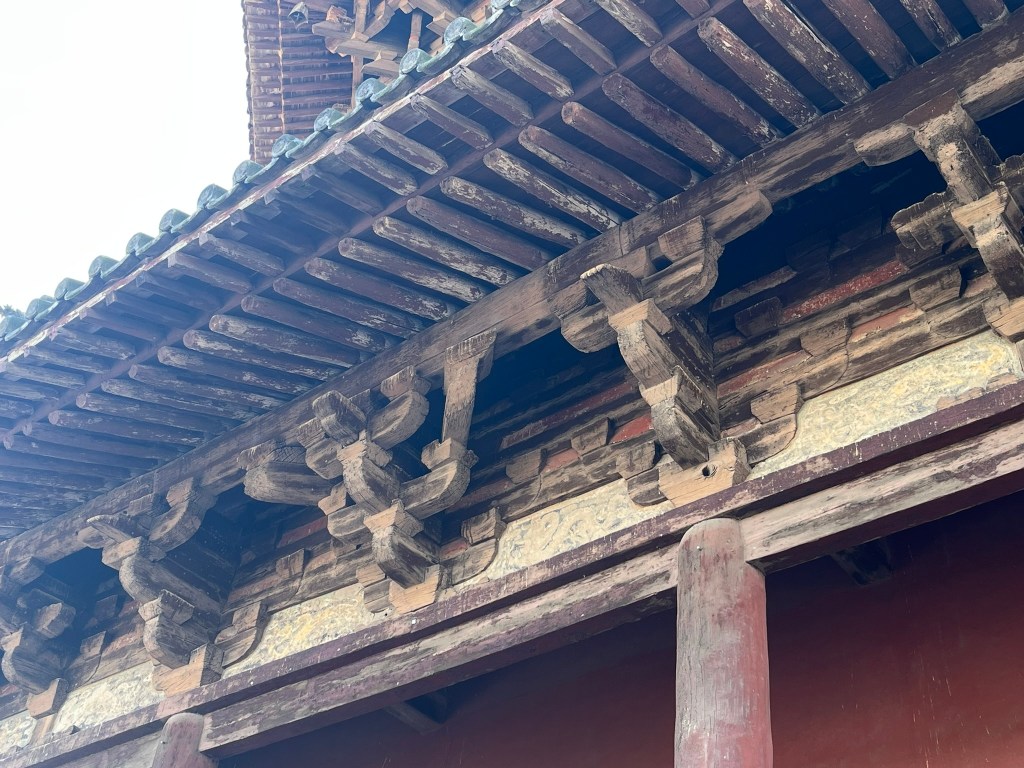
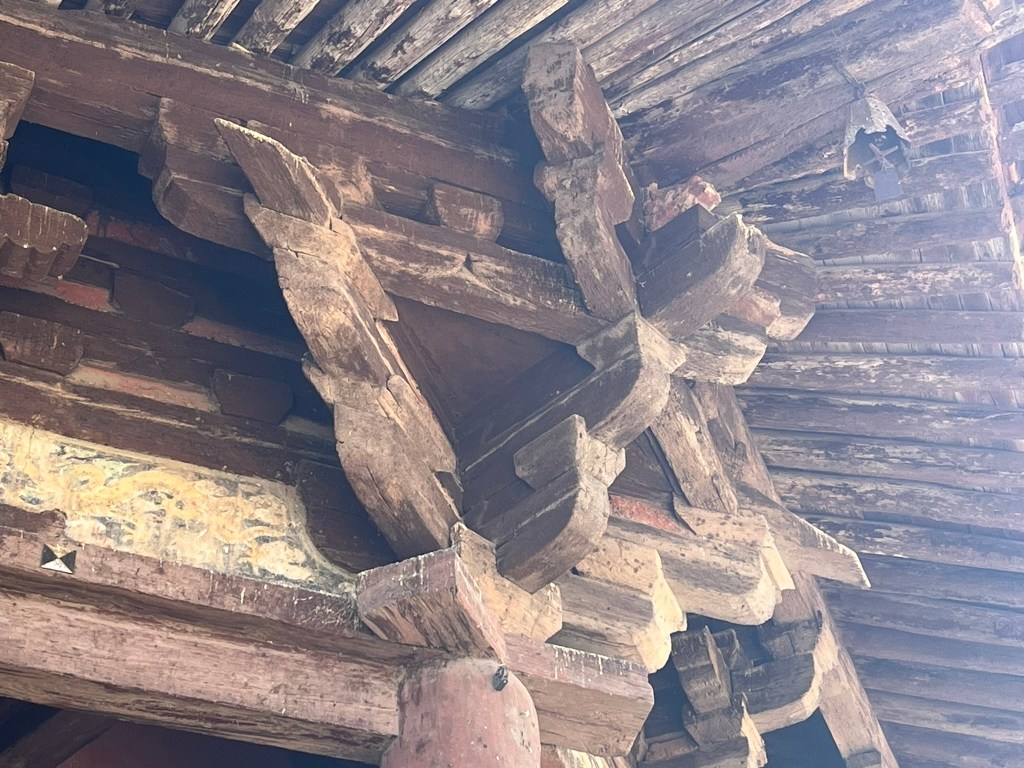
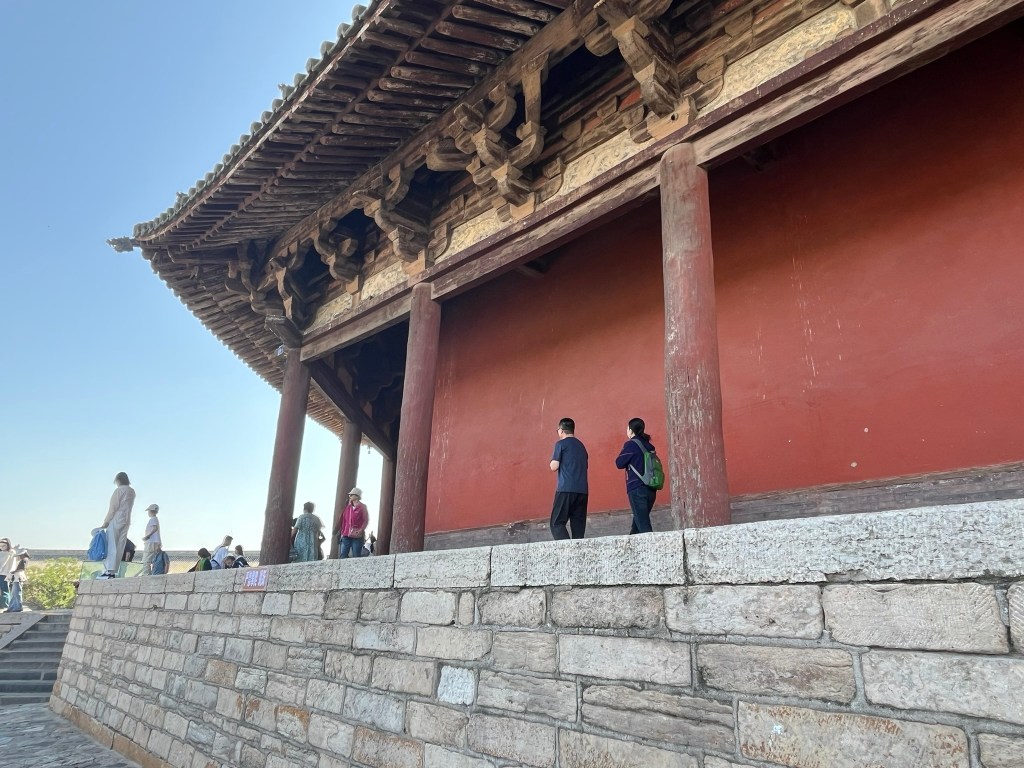
Amazingly, it is completely wooden and uses no nails or iron bars. It uses traditional Chinese carpentry techniques to hold everything together including the Dougong bracket system used widely in traditional Chinese architecture. These brackets are easy to see on the outside of the pagoda and allow for load distribution across all the base columns supporting the structure as well as acting as shock absorbers to make the structure earthquake resistant. What makes this pagoda particularly special is the large number of dougong bracket types used , many more than usually seen in Tang or Liao dynasty buildings.
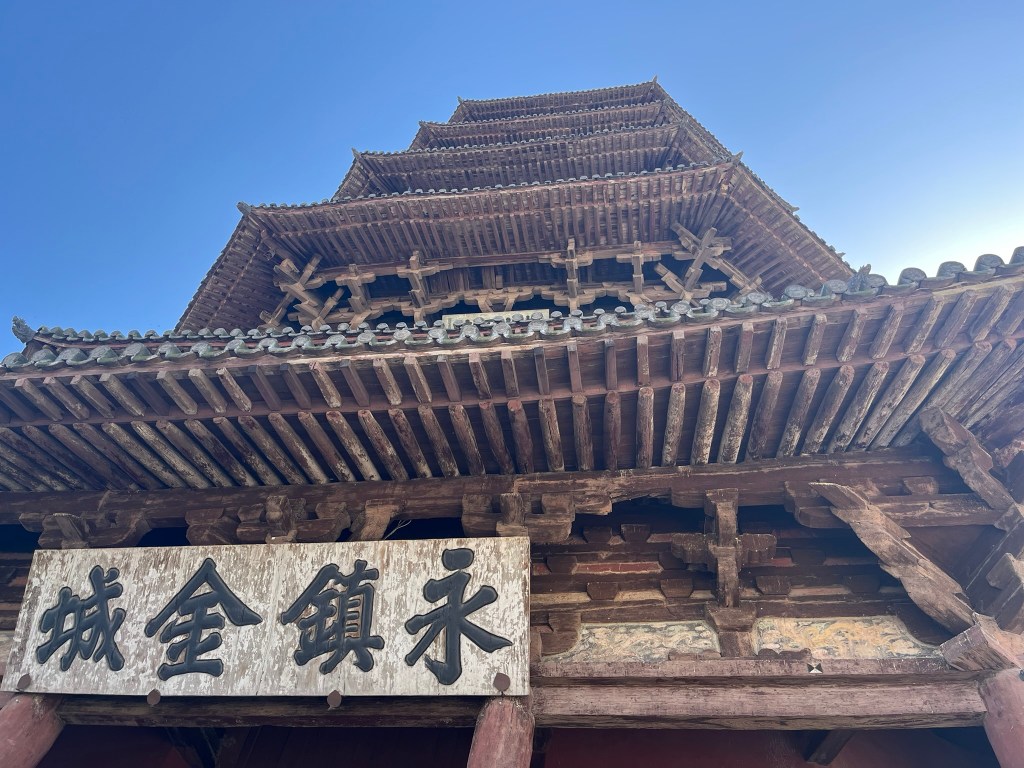

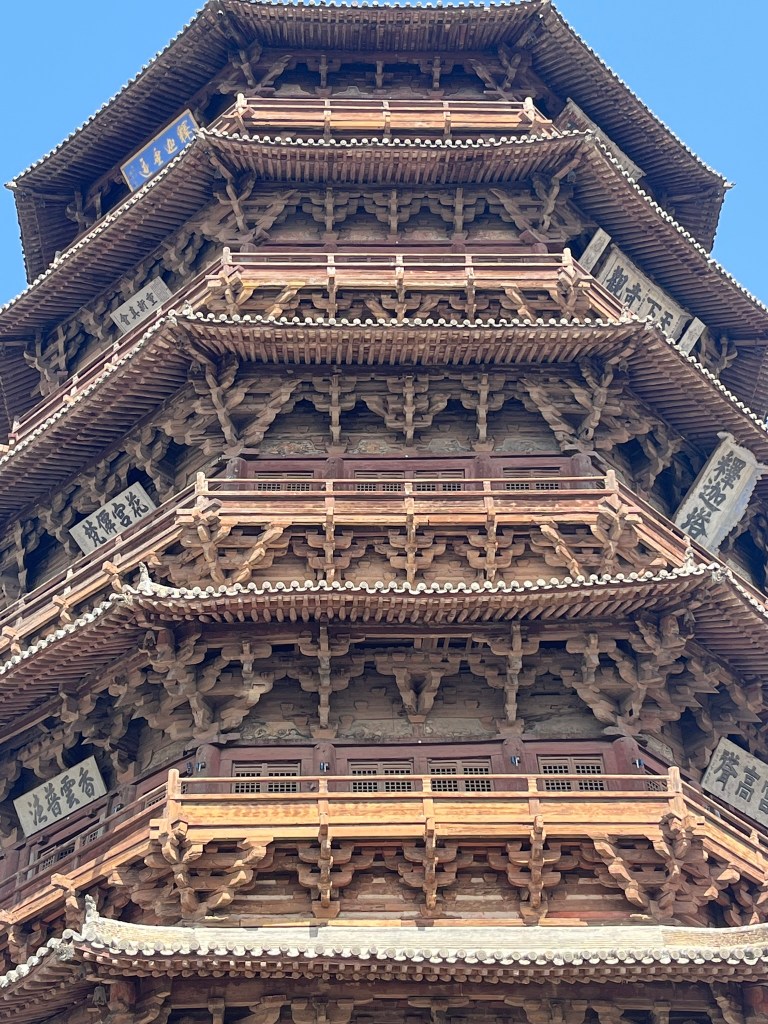
Its clever design has survived many earthquakes, wars and simply the passage of time over 1000 years. However, it could not survive humans. In the 1930’s, local authorities tried to modernize the pagoda by creating some windows on the third floor for light. And foolishly they cut into some of the supporting wooden columns and beams. This messed with the weight distribution that had so carefully been designed by the original Liao craftsmen and resulted in it tilting by about 3 degrees. Enough that it can be seen by the human eye, and it can no longer be climbed, but not catastrophic. In reality the pagoda has been under the pressure of soil settlement, wood warping, big temperature swings and strong winds for a thousand years so its not surprising that it has shifted a little.
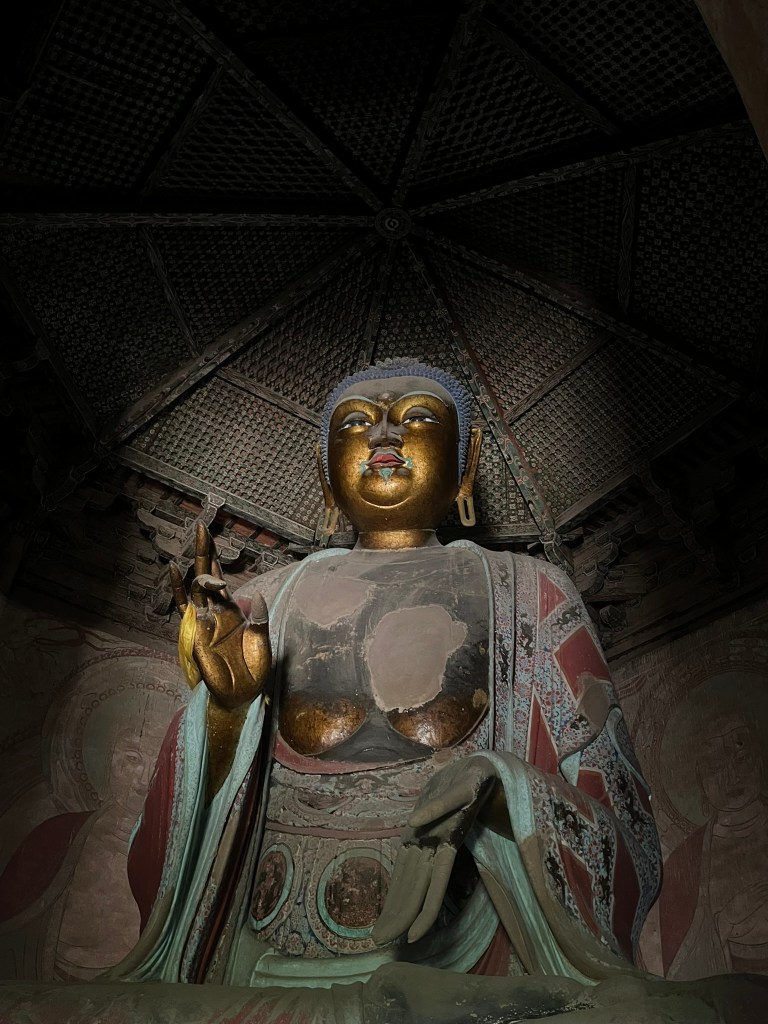
You can still go into the first floor of the building where there is a magnificent Shakyamuni buddha seated within a lotus flower and intricately decorated. It is made of clay over a wooden framework and then painted, a common technique in the Liao dynasty. And behind the pagoda there are a series of prayer halls, but these are not old like the pagoda. All-in-all I was very impressed with just how big the pagoda was, and how detailed the structural design was. A good detour on the way back from the hanging temple to Datong.
 Colette's Grand Detour
Leave a comment