Datong is a small city in Northern Shanxi, around 350km west of Beijing, and it takes just under 2 hours to get here via high-speed train from Beijing North Station. It lies on the Loess Plateau at the border between the Mongolian steppe and the Chinese heartland, and has historically played a role as a strategic border city between nomadic tribes and settled Chinese dynasties.
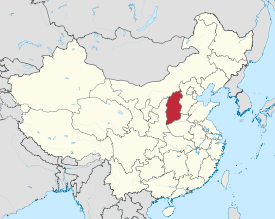
In the 5th century the Northern Wei dynasty emerged, after the Tuoba Xianbei tribe were made victors of a chaotic Sixteen Kingdoms period when northern China was fractured into many states warring against each other. They made Datong the capital of the Northern Wei dynasty under its old name of Pingcheng. It was only the capital for a short period of just ~100 years, but in this time the Tuoba Xianbei transformed from nomadic steppe rulers into the emperors of northern China. Before they became rulers of the dynasty, the Tuoba Xianbei had shamanistic traditions, however through trade and knowledge sharing along the silk road, they encountered Buddhism as it was spreading across Central Asia.
Before I provide more detail on the Northern Wei dynasty, a little background on the Tuoba Xianbei tribe. They were a branch of the Xianbei people who emerged on the northern steppe after the fall of the Xiongnu. There homeland was the grasslands and mountains of what is now Inner Mongolia and northern Shanxi. During the late 4th century, the Tuoba gradually consolidated power in the region and adopted elements of Chinese culture, results in the establishment of the Northern Wei dynasty.
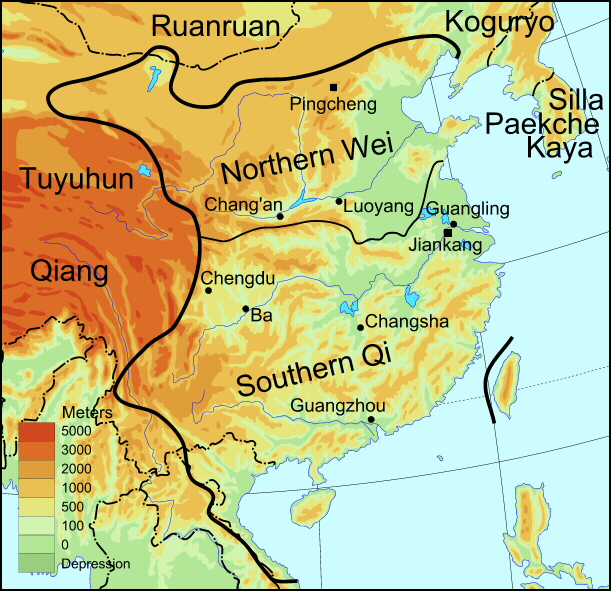
When Emperor Daowu founded Northern Wei in 386 CE, Buddhism was known but still marginal. In the early 5th century, Emperor Mingyuan began to visit Buddhist monks and temples. The thinking was that Buddhism was appealing as a universal faith that provided a bridge between nomadic and Han Chinese culture. The next Emperor Taiwu, under Confucian influence led a persecution of Buddhism. And then in the mid-5th century Emperor Wencheng reversed this and reinstated Buddhism as a protected religion.

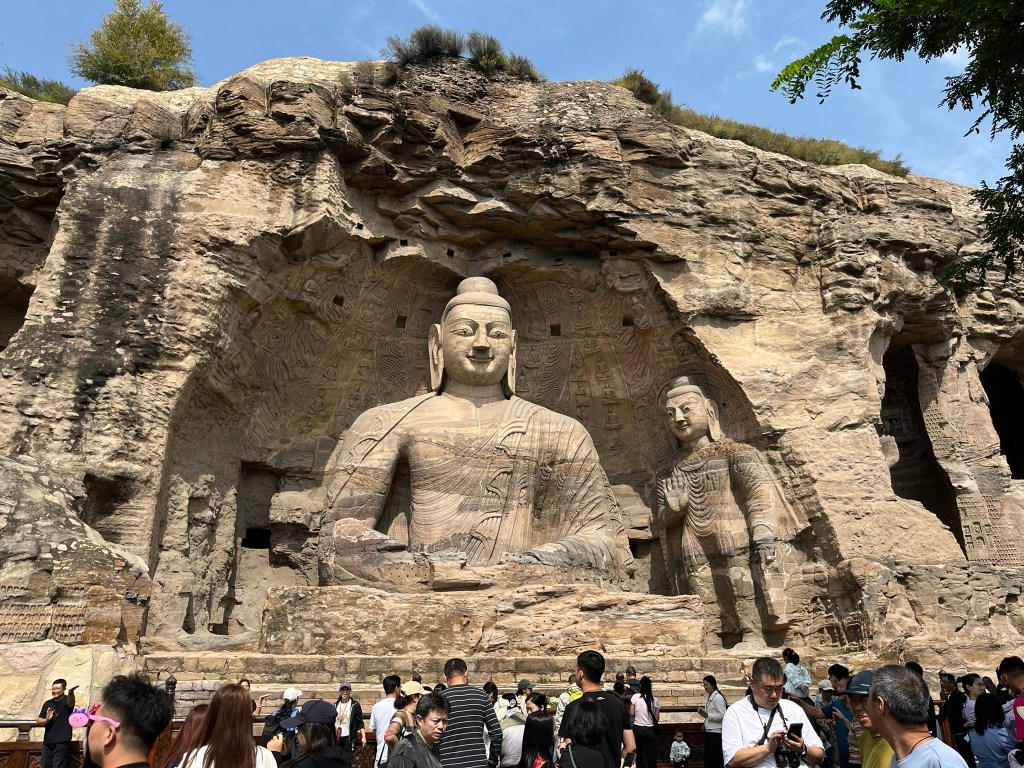
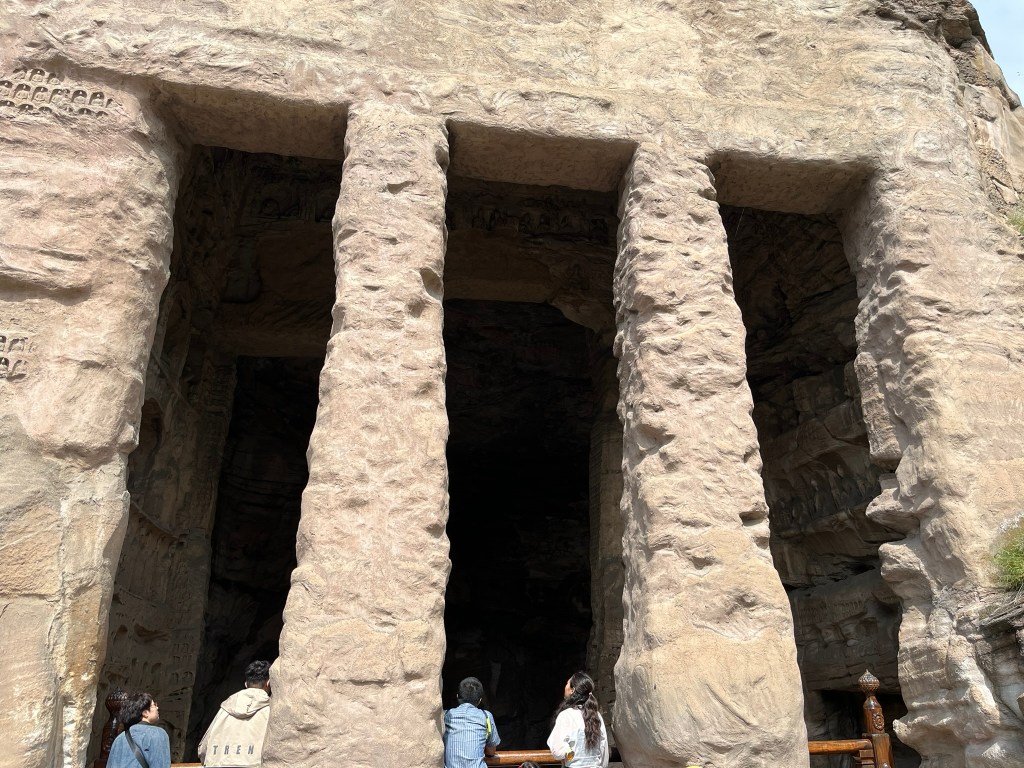
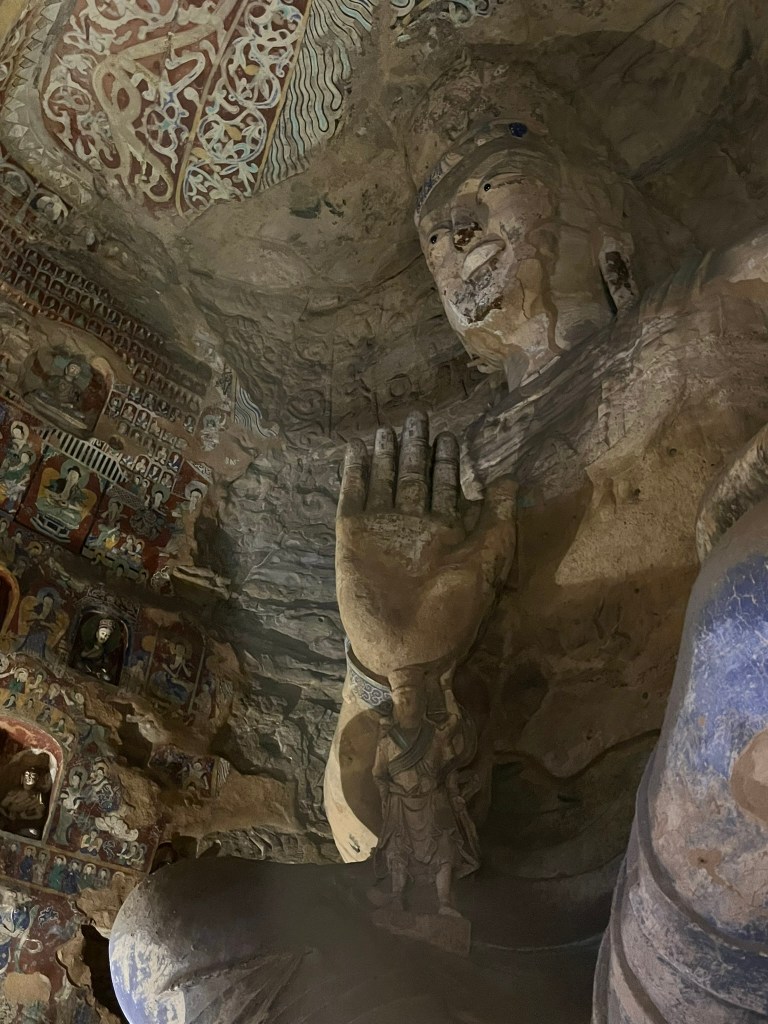
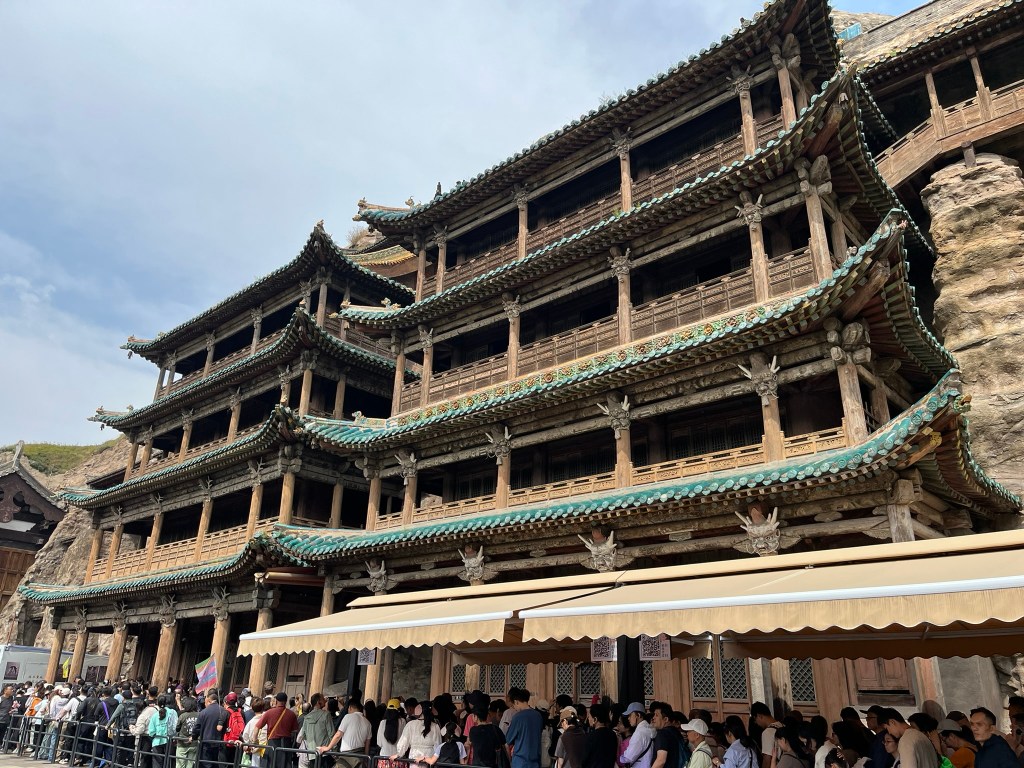
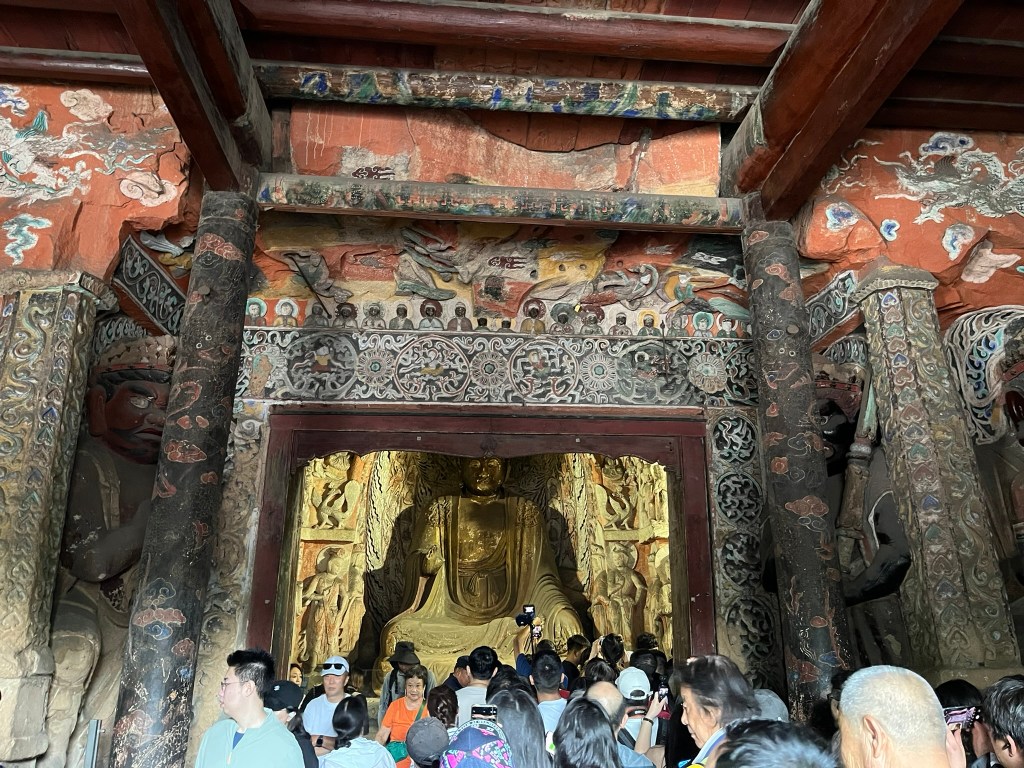
It’s at this time that the famous monk Tanyao persuaded the Emperor to build a series of colossal Buddhist statues just outside of the capital. This project created the Yungang Grottoes, a set of 250 caves and 51,000+ statues ranging from just a few cm’s to 17m tall, around 16km west of Datong in the Wuzhou mountain cliffs. In Phase 1 of its construction, five giant Buddhas were carved out of the rock, representing the first 5 Northern Wei emperors. This helped inextricably link Buddhism and the Tuoba Xianbei’s imperial legitimacy. At the Yungang Grottoes The Five Caves of Tanyao can be visited as Caves 16-20 and they really are stunning monuments.
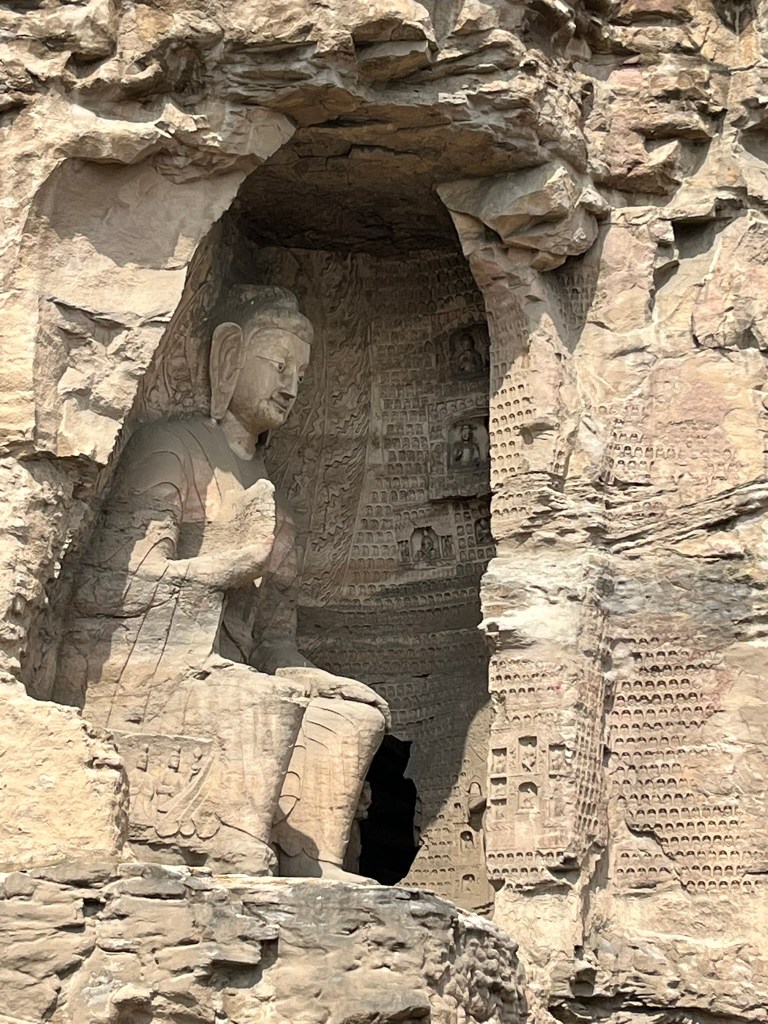
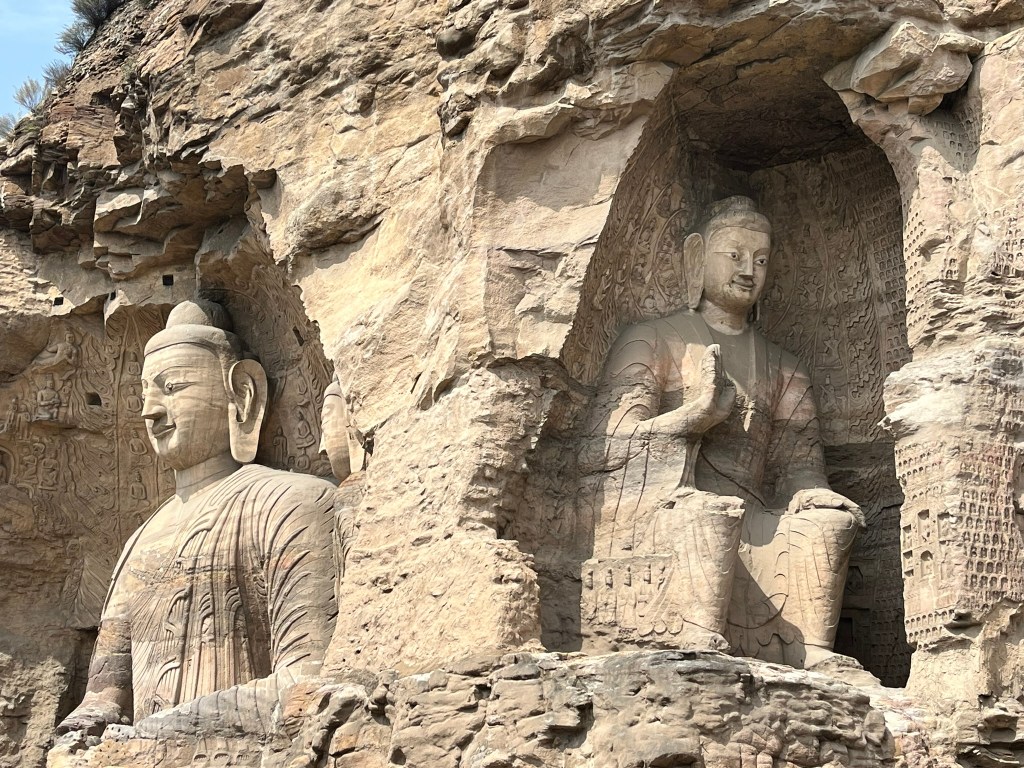

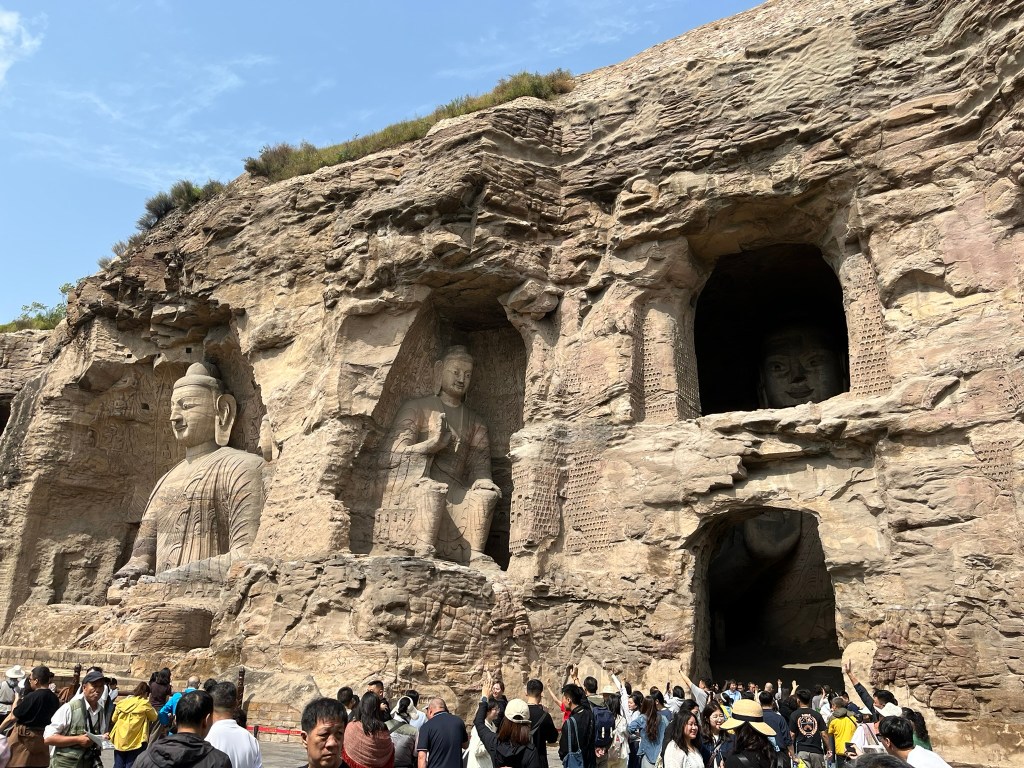
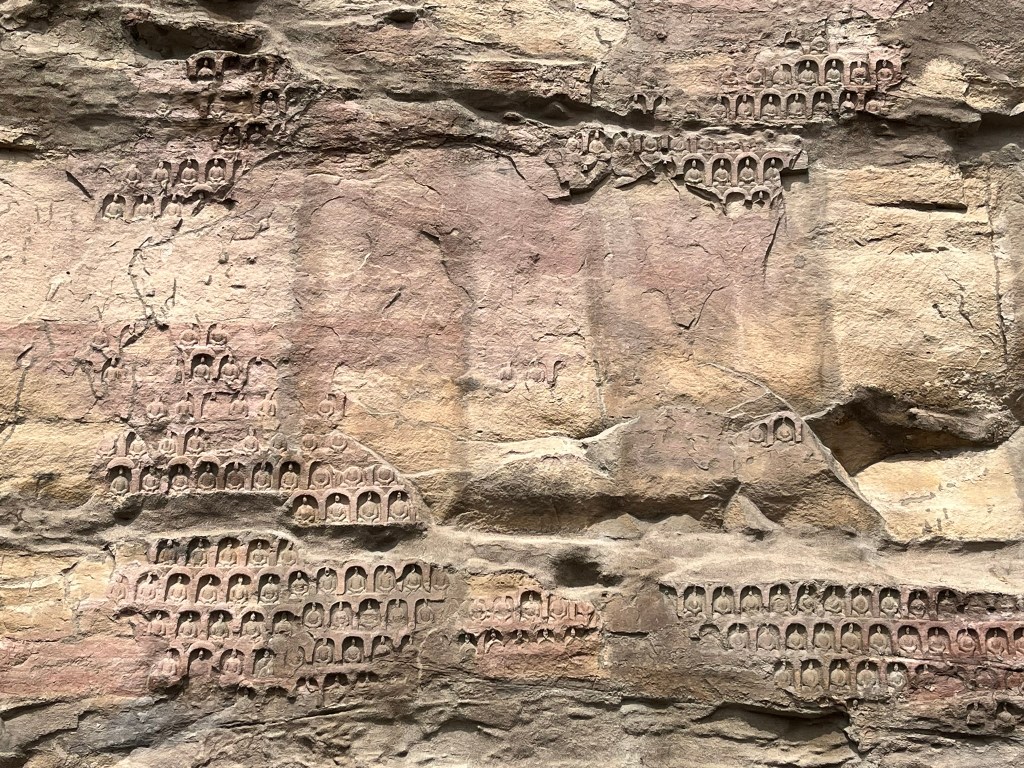
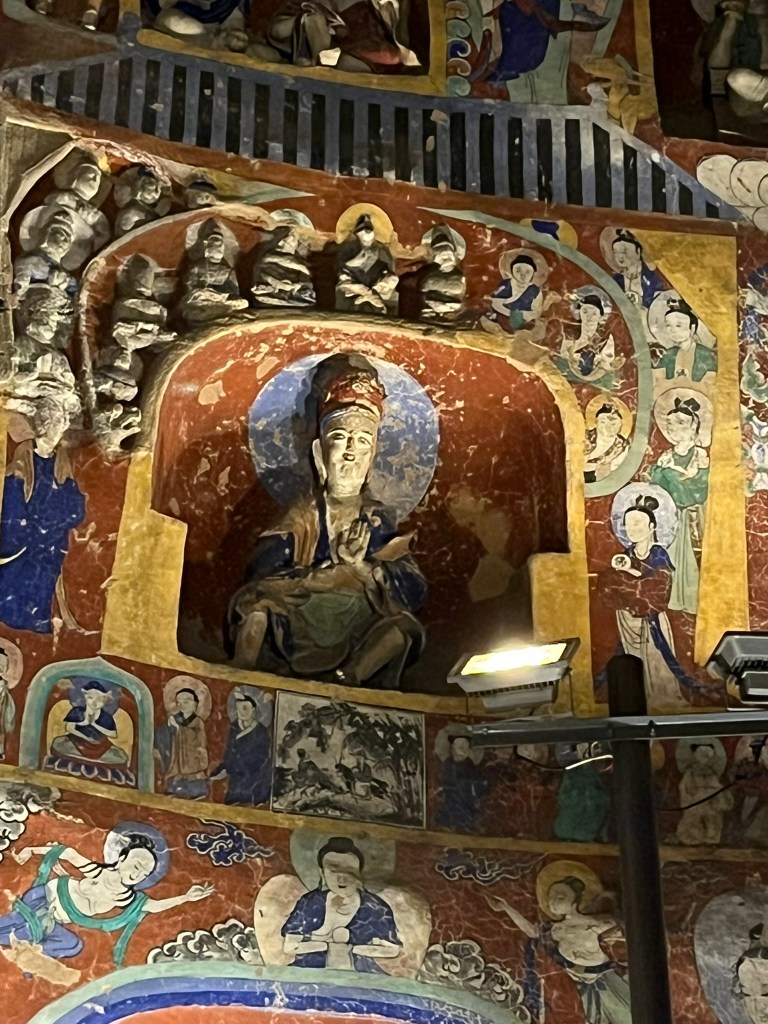
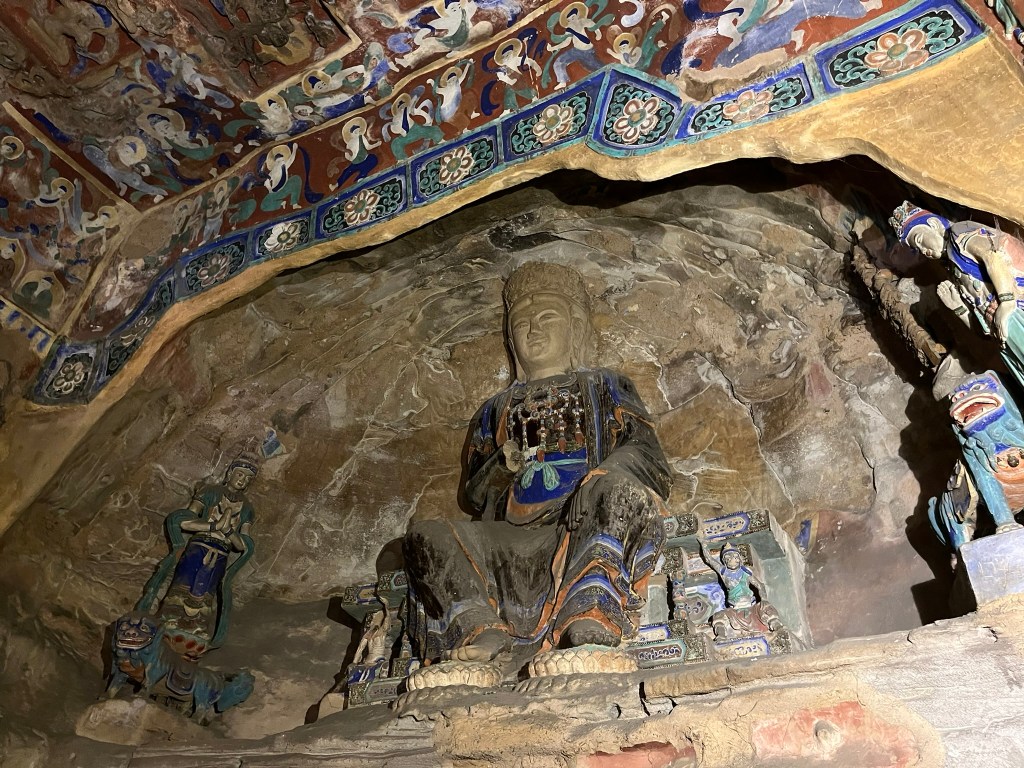
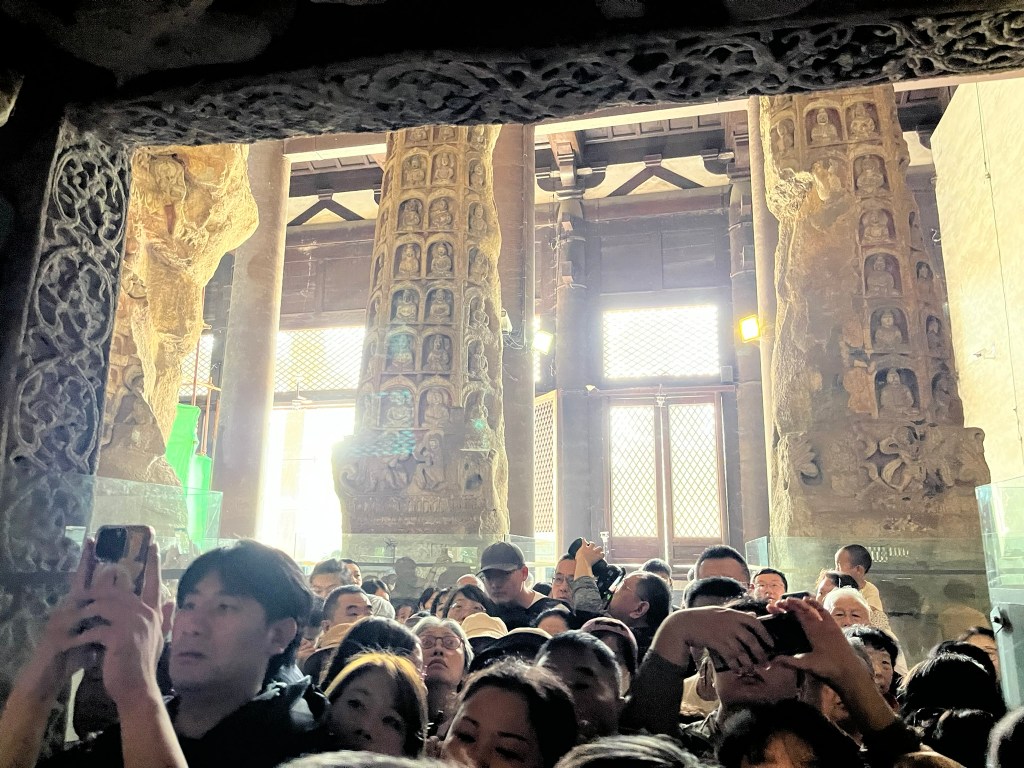
In a second phase of construction a series of caves were built, smaller than the original colossal Buddha halls, but filled with densely carved reliefs, thousands of miniature Buddhas, ceiling decorations and all brightly painted in blues, greens, reds and gold. Most have a seated Buddha sitting on an internal pillar that can be walked around inside the cave. These caves are absolutely incredible and worth the long lines to get a glimpse inside.


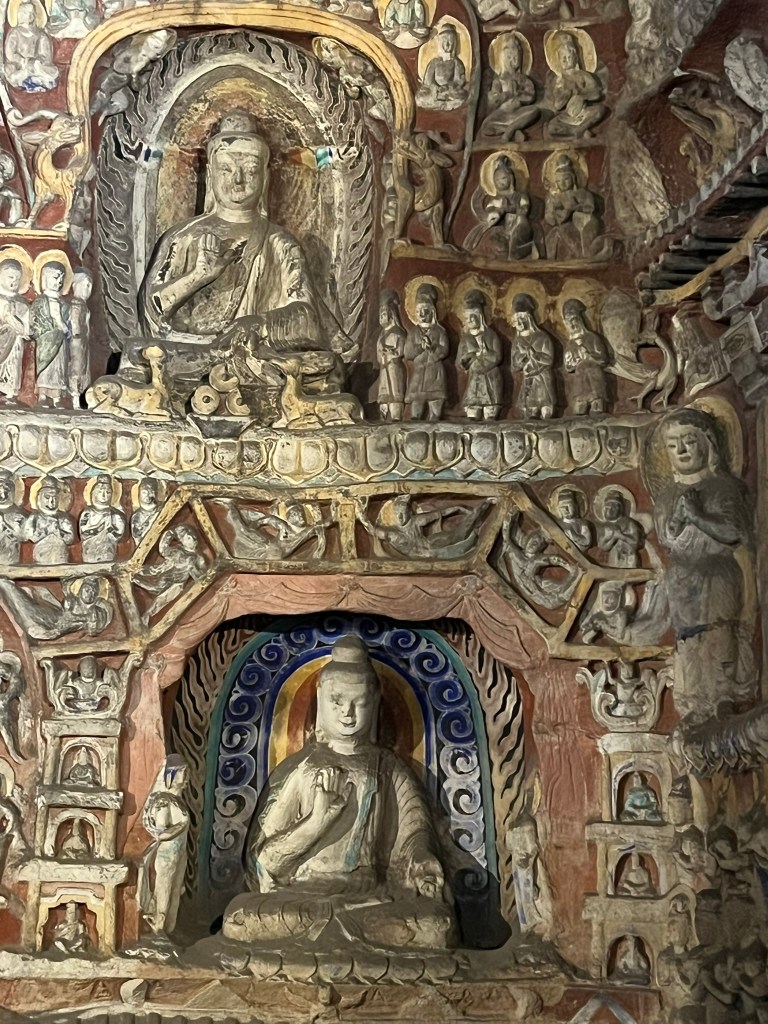
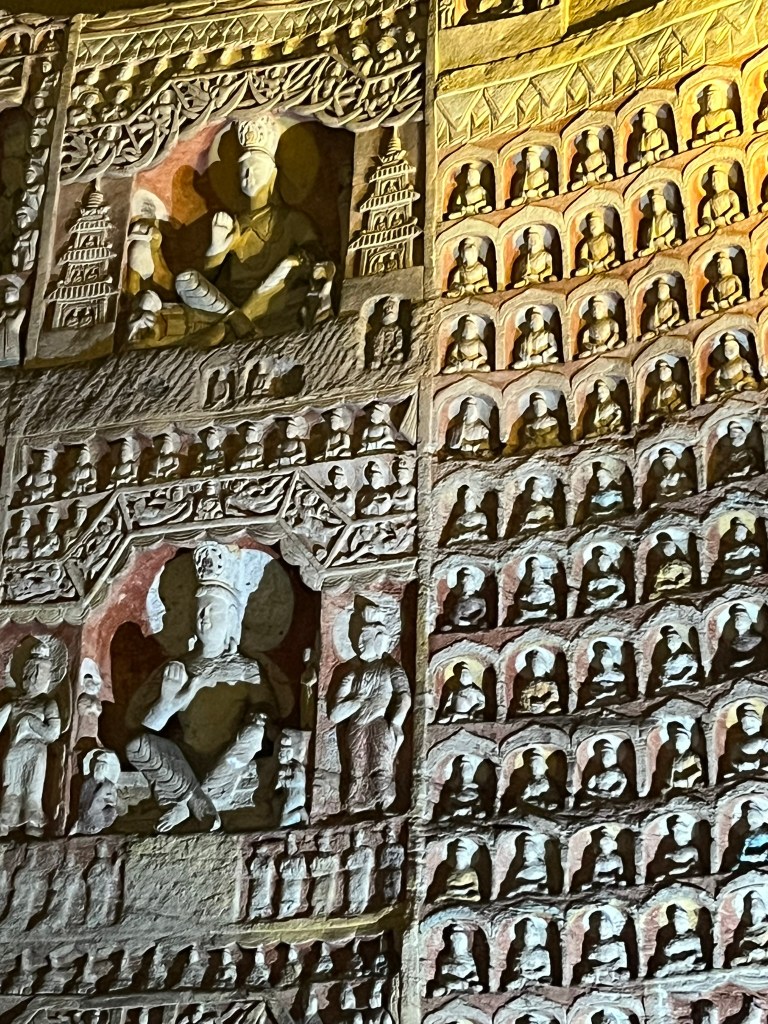
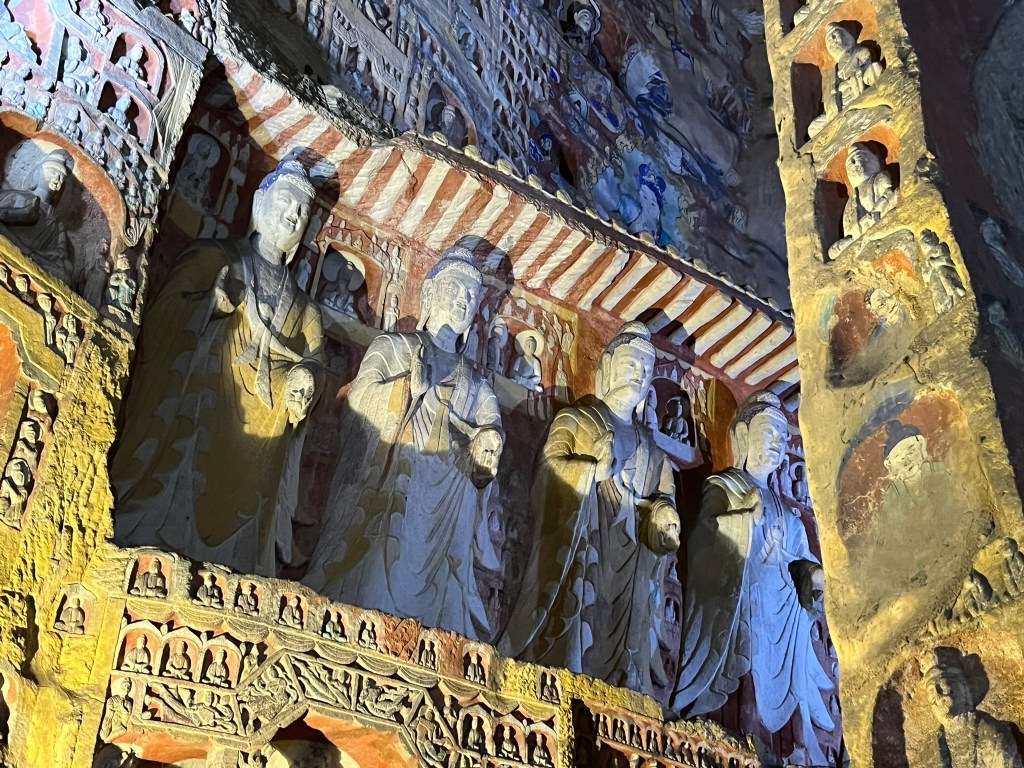
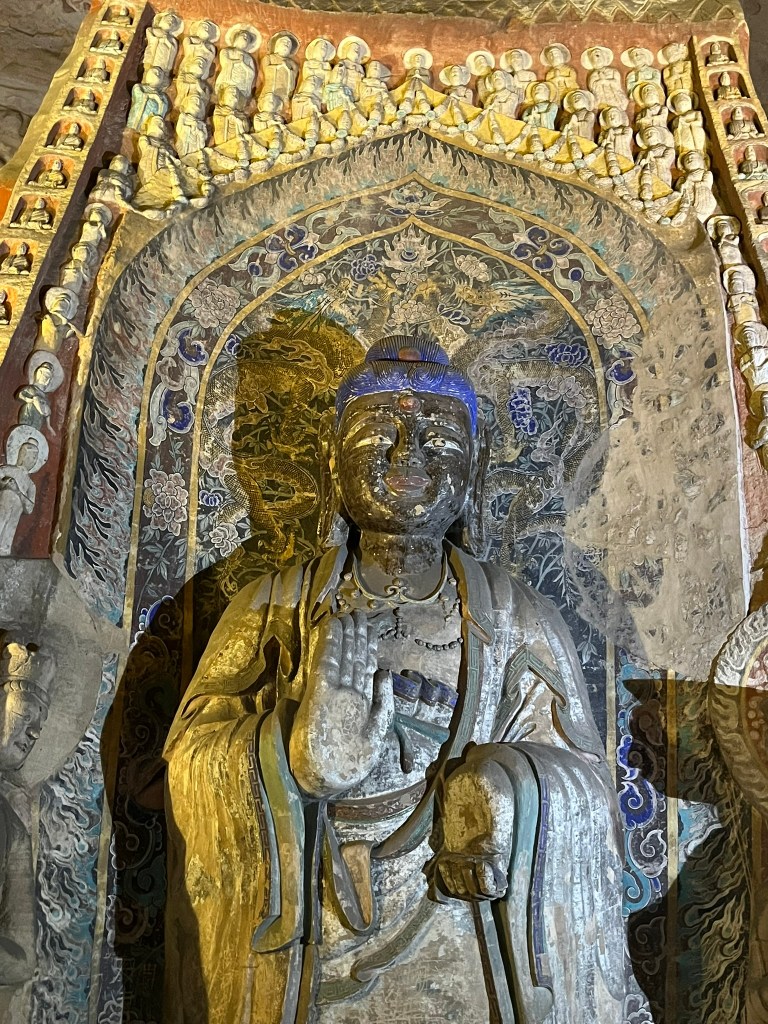
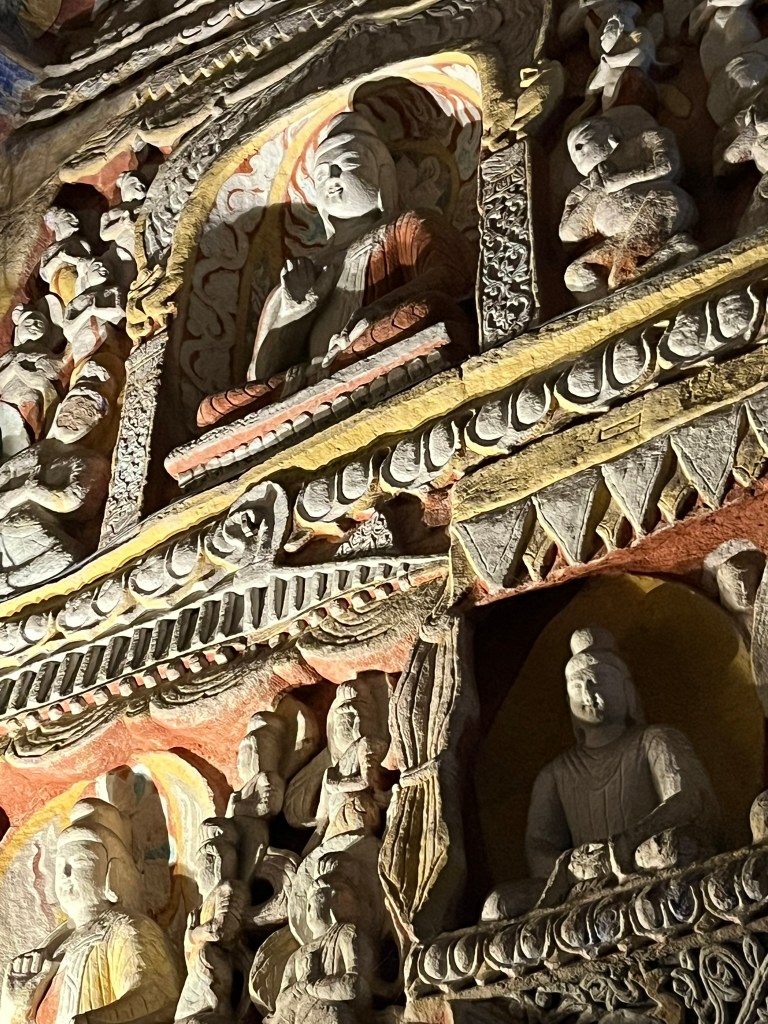
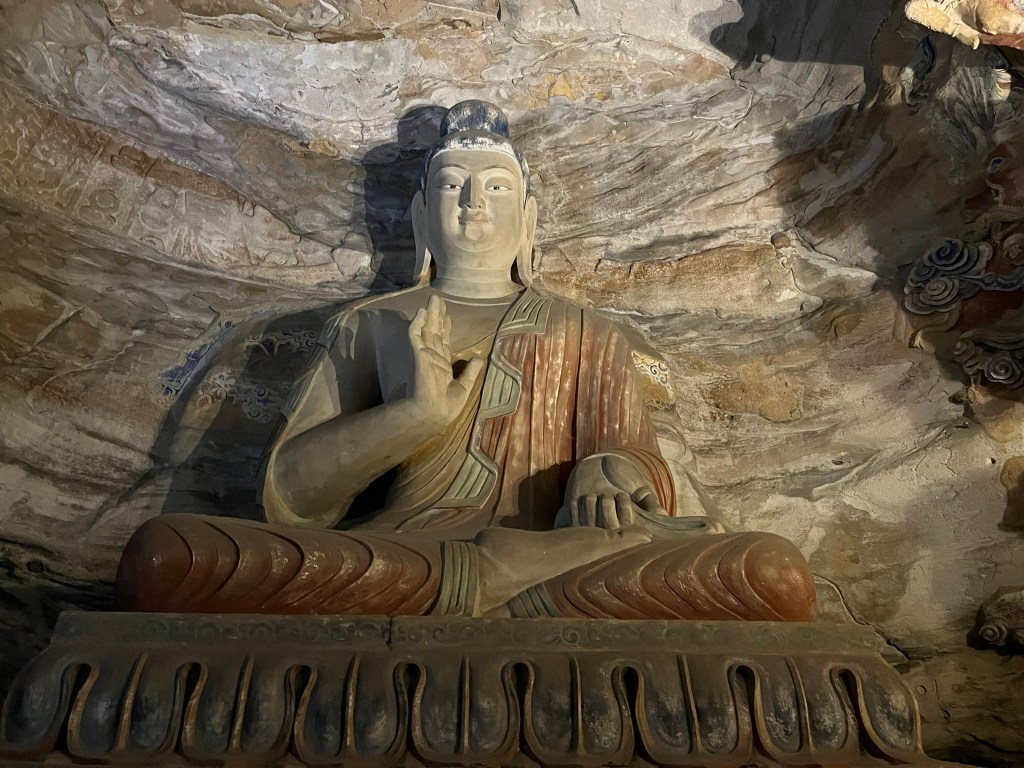
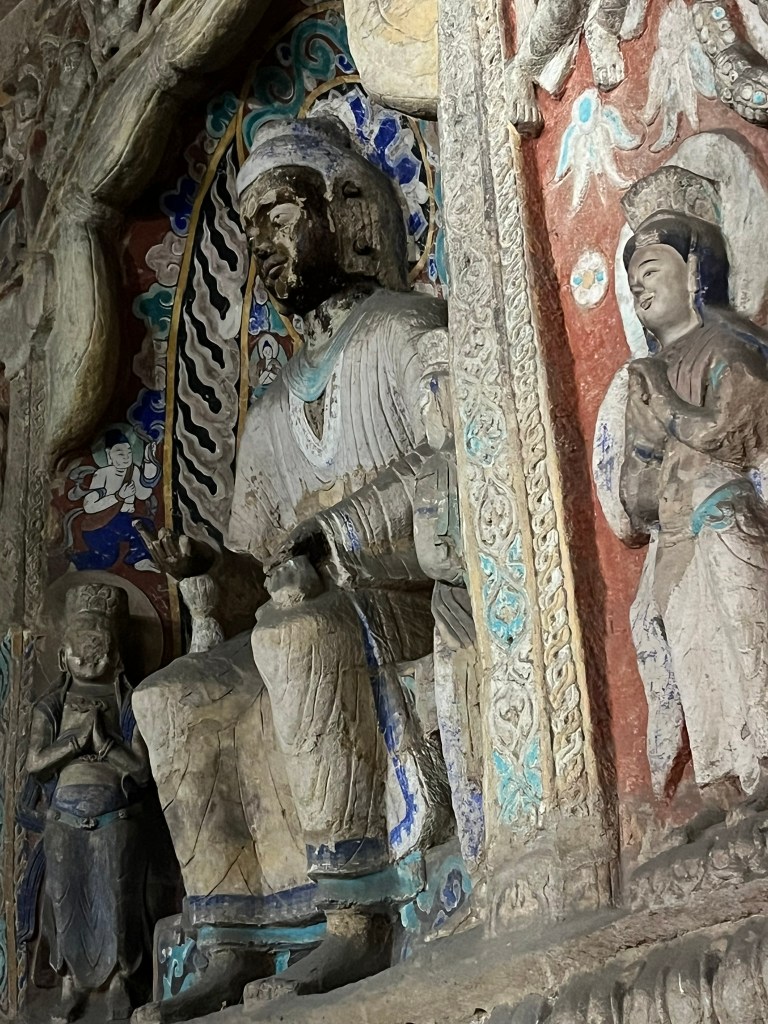
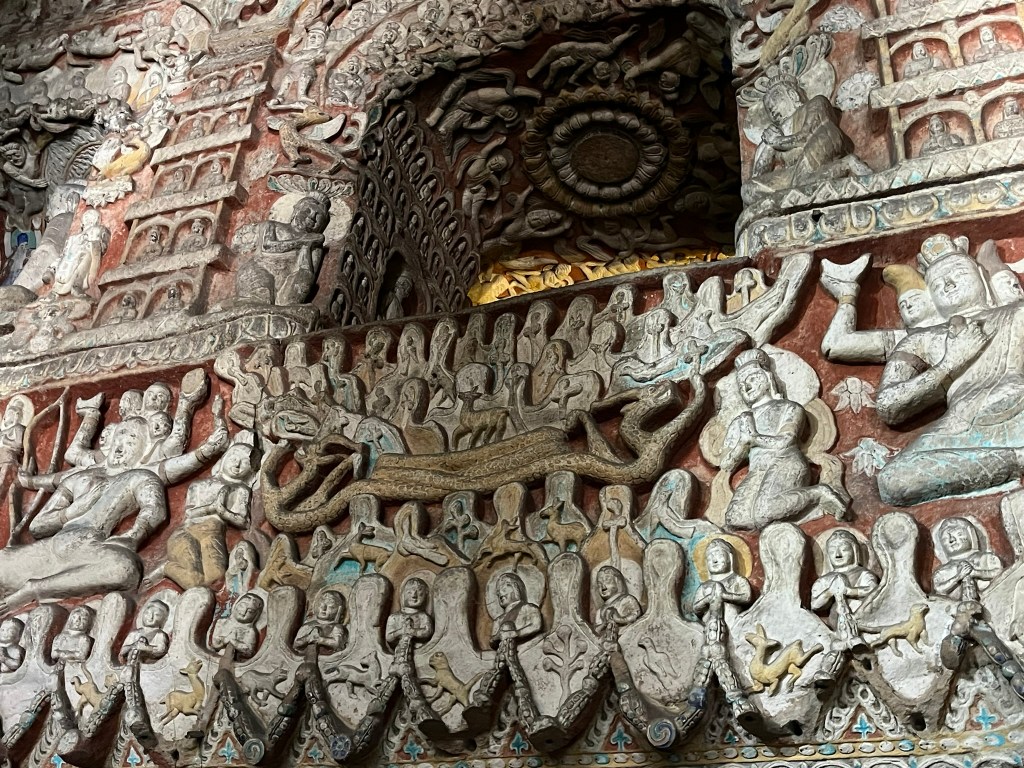


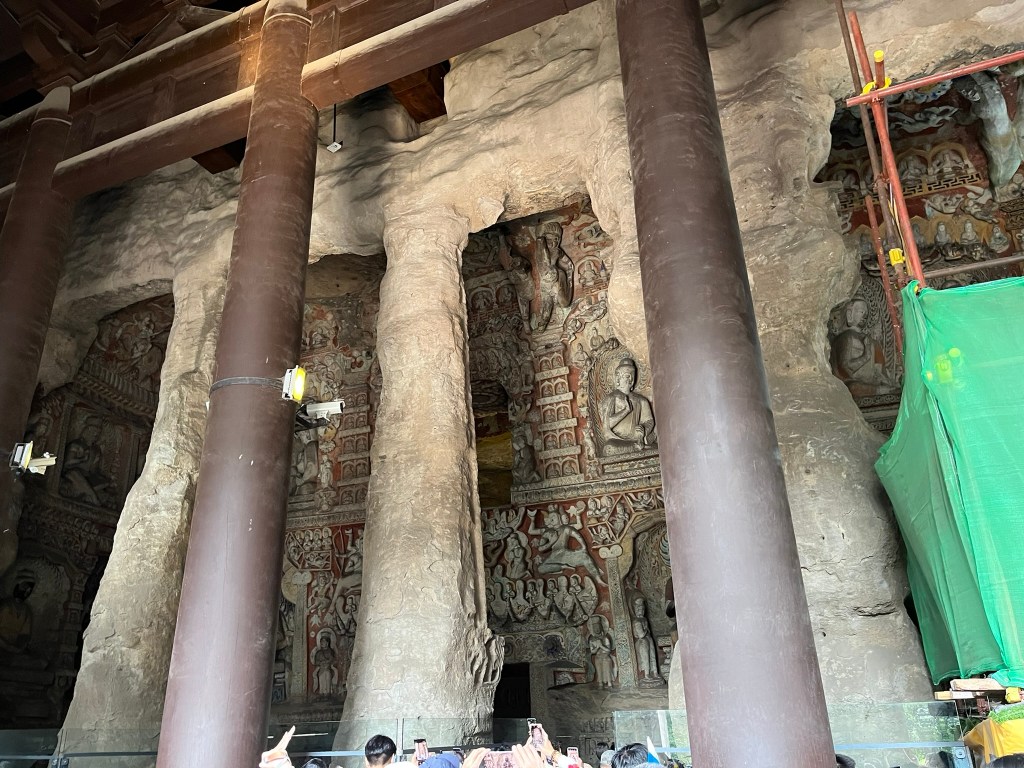
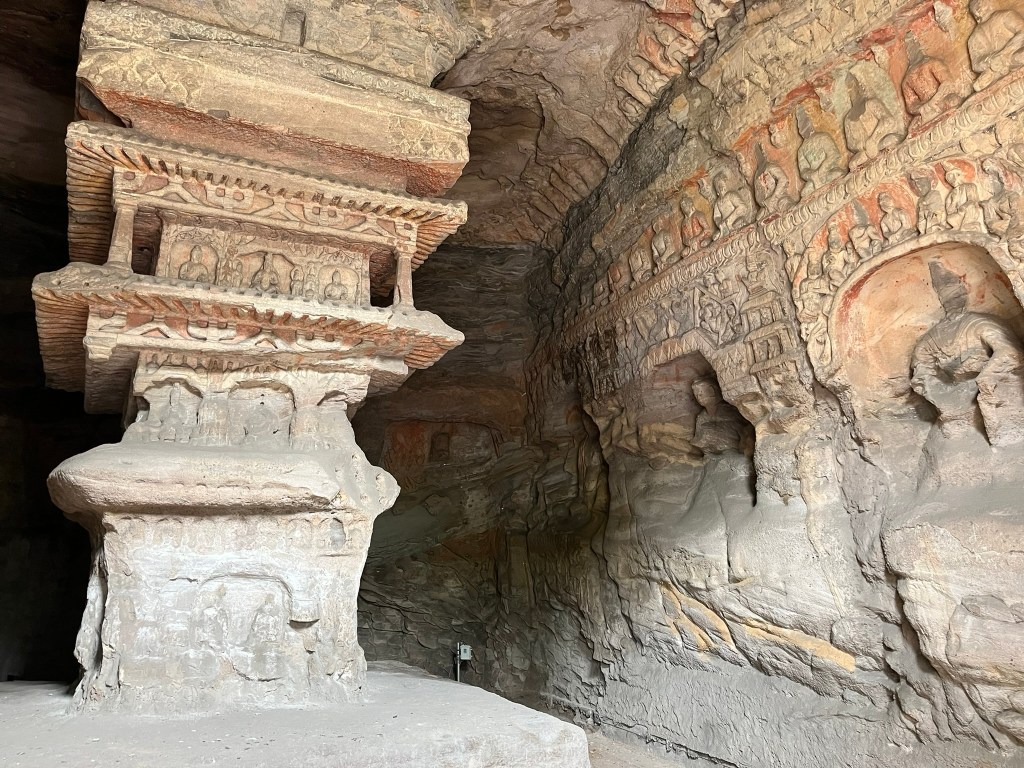
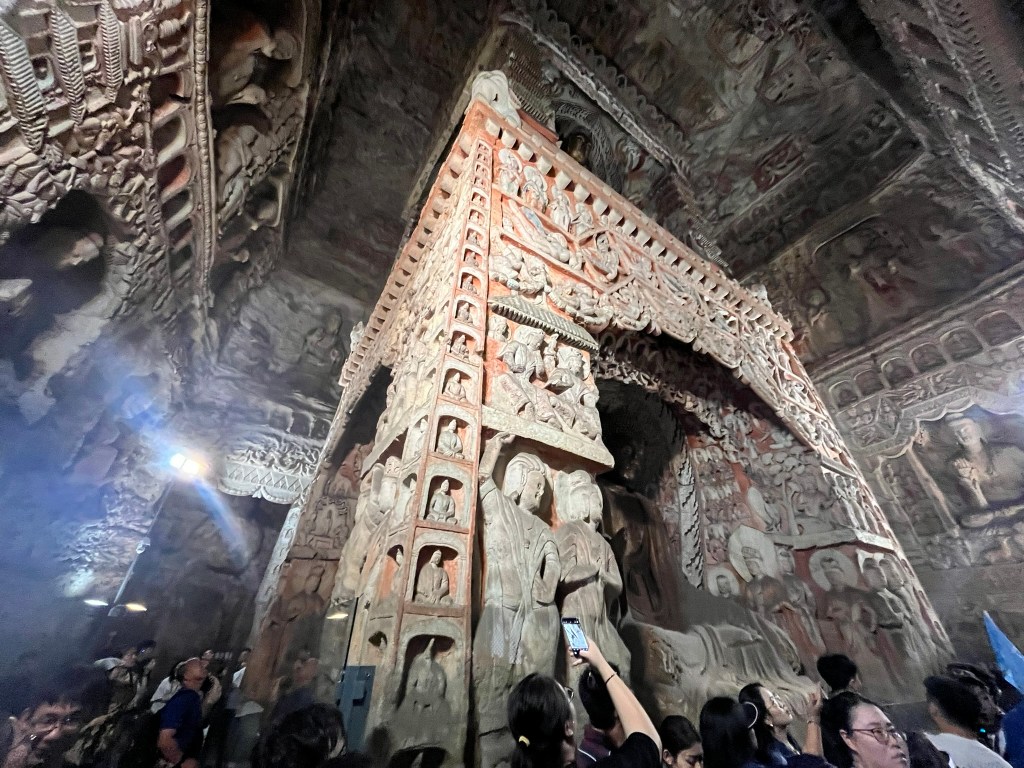
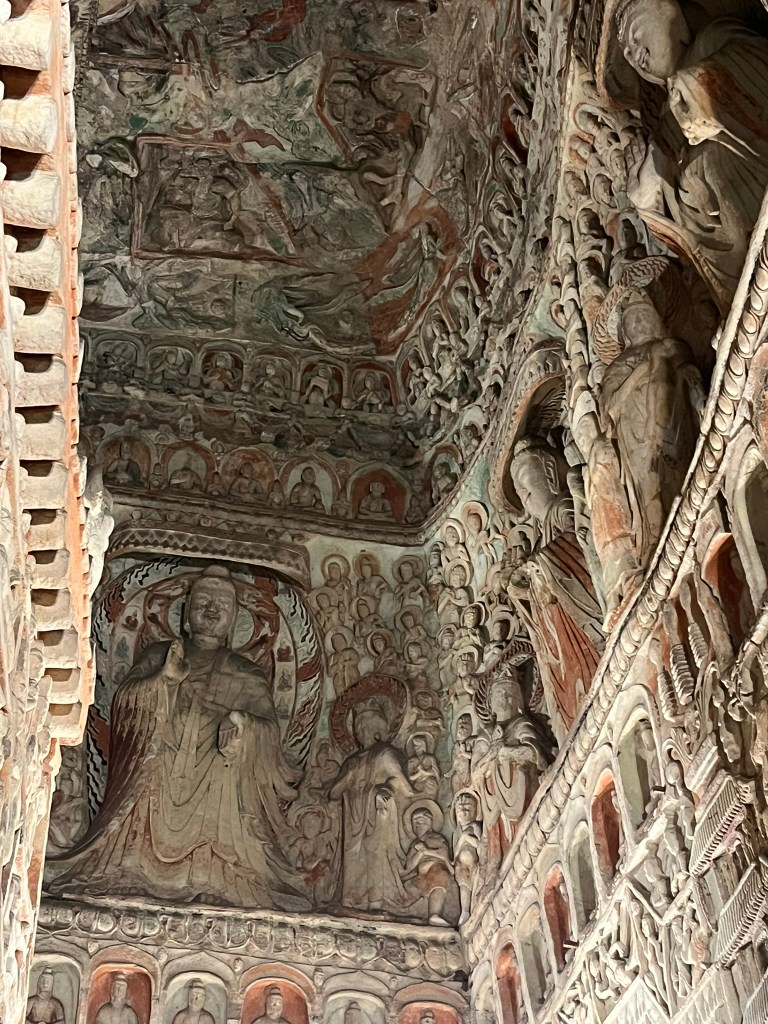
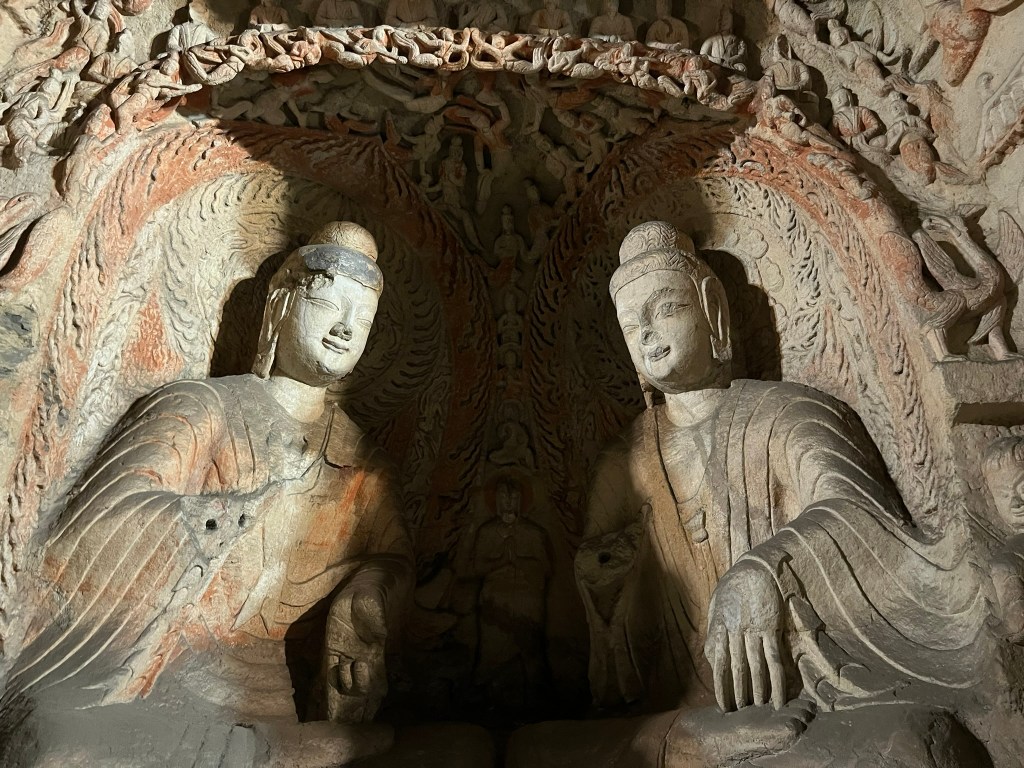
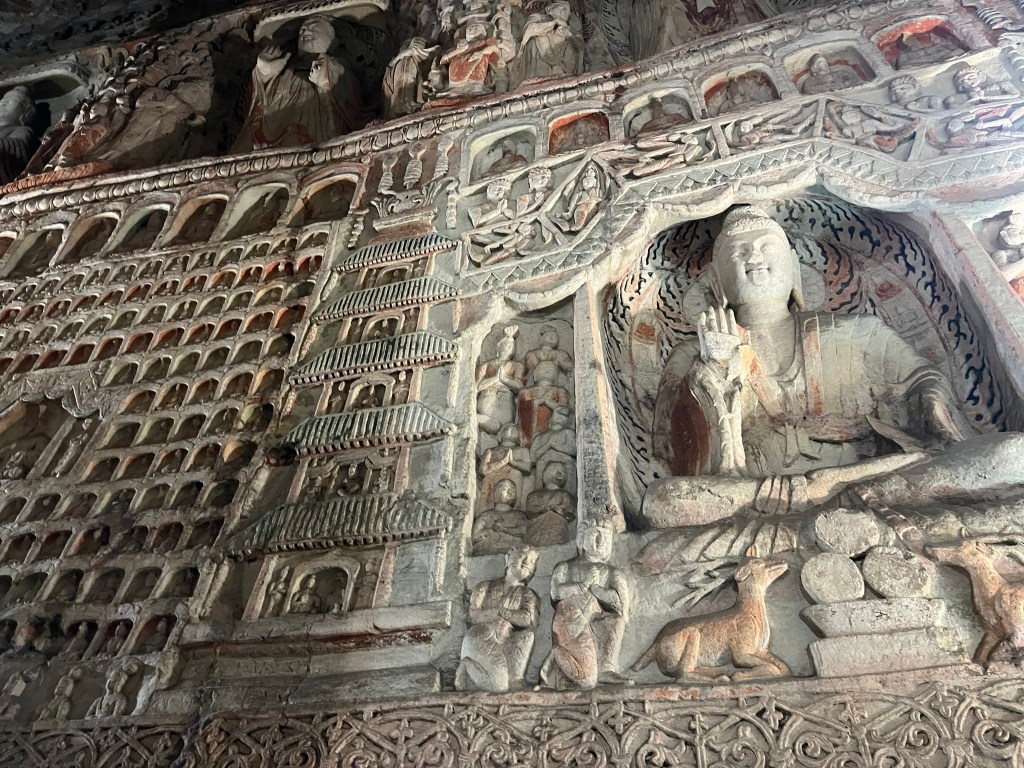
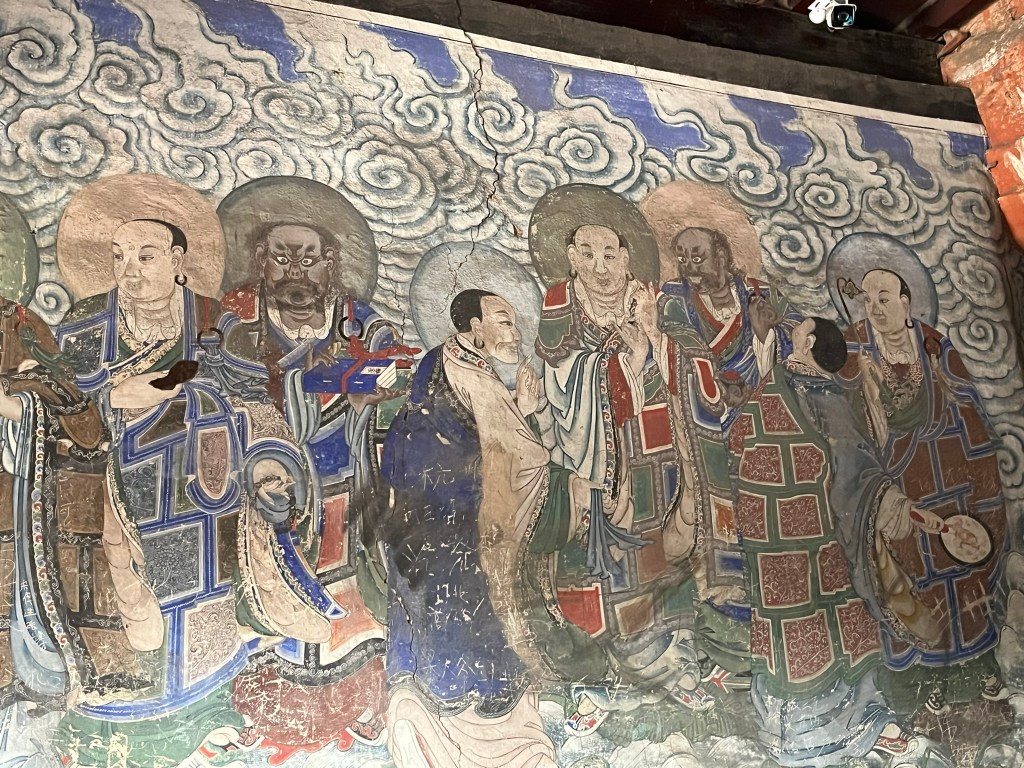
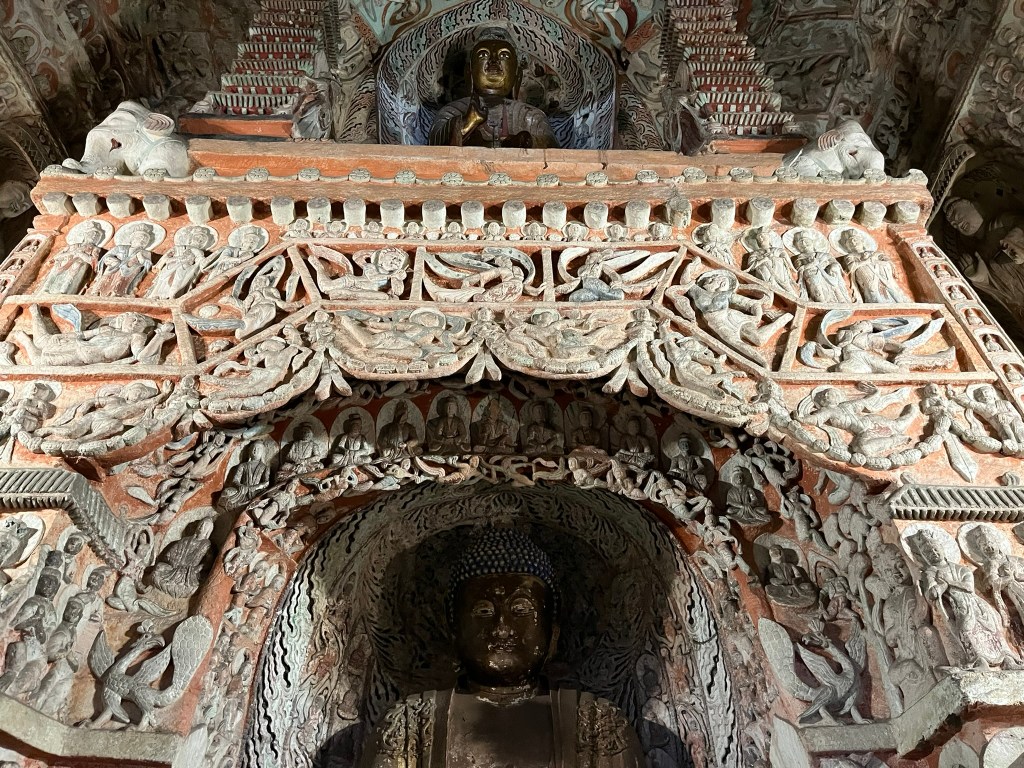
Eventually Emperor Xiaowen decided Pingcheng was too remote from the rest of China and still too closely connected to Xianbei tribal traditions. The decision was made to move the capital to Luoyang, which had previously been the capital of the ancient Han dynasty. And for the elite of the dynasty to sinicize their names, clothing and language. This shifted the dynasty away from a frontier kingdom and into a full Chinese imperial state. During this time Buddhism was firmly entrenched within the Northern Wei dynasty and it was used to promote moral order, cultural unity and imperial authority. It cemented Buddhism within Chinese society.
After the capital was moved away from the Yungang Grottoes, the building of devotional caves did not stop. People who remained in Pingcheng continued to extend the grottoes just on a much smaller scale.
Visiting the Yungang Grottoes was my main purpose for travelling to Datong. It is a UNESCO World Heritage Site and sits alongside Longmen Grottoes in Luoyang and Mogao Caves in Dunhuang as the best Buddhist cave art to see in China. The grottoes do not disappoint and are really worth coming to see. The caves and statues have been well preserved and not Disneyfied. The surrounding temples are all new but as long as you arrive knowing that the caves are the main sight to see and ignore all the fluff you will have a good time.
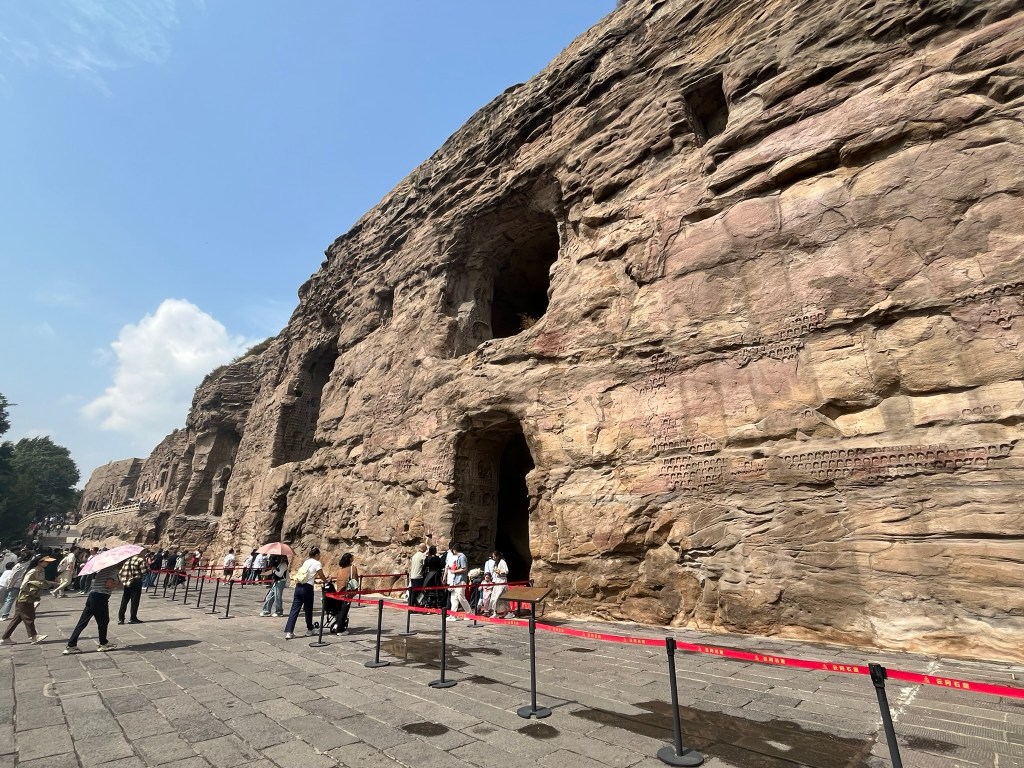
For those thinking to visit, as per most sights in China, there is a lot of walking involved from the ticket office to the caves themselves but once there, its all on flat ground and easy to navigate. And you can cheat and get a golf cart there and back if needed. However, be warned the caves can get extremely busy and there is not really an orderly queuing system. You just have to shuffle forward and stand your ground if someone tries to barge past. That said, I didn’t wait for longer than 10 minutes to get into each cave. And the Five Caves of Tanyao can be seen from outside so no queuing required.
Also if you want to get the set – the Mogao Caves of Dunhuang and Longmen Grottoes of Luoyang are equally spectacular but different in style and setting. I recommend visiting all three places (plus other Buddhist cave sites like Bingling and Kizil) so that you can compare and contrast and see how the styles evolved over time.
 Colette's Grand Detour
Leave a comment