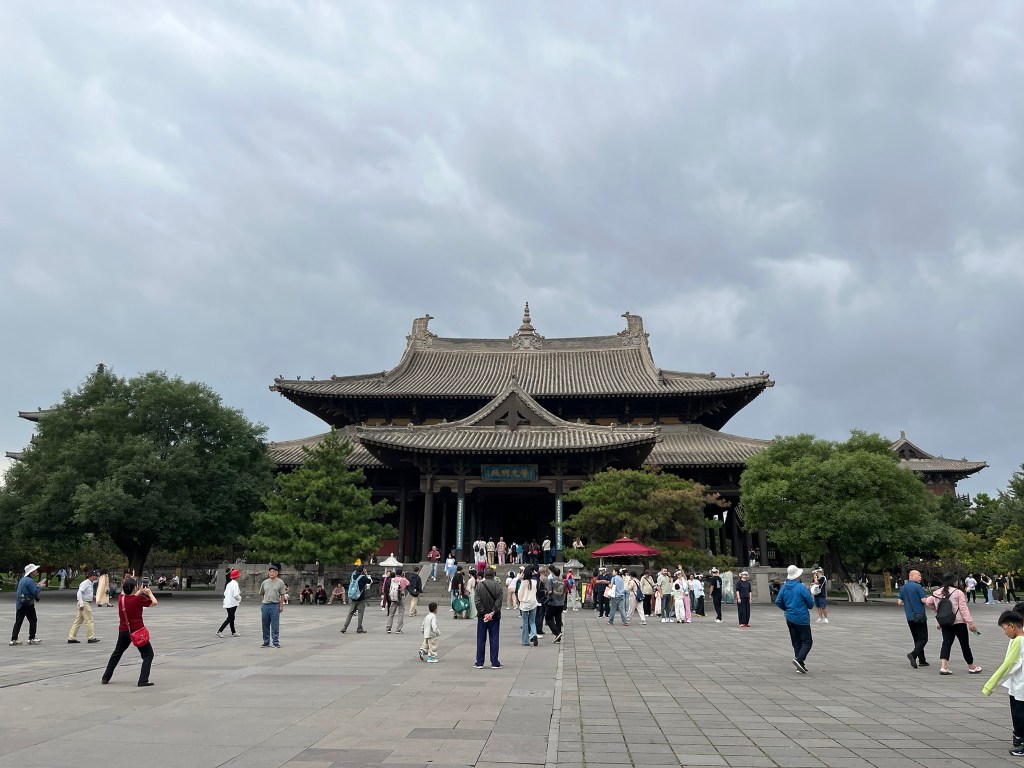
The Huayan Temple sits at the heart of the newly-reconstructed ‘old city’ of Datong. Most of the buildings within the broader temple complex are from the 21st century, rebuilt based on what was known to be there in past times. However, the Huayan Temple is original, built in 1038 during the Liao dynasty and renovated during the Jin dynasty. It has somehow survived wars, fires and earthquakes through the centuries.
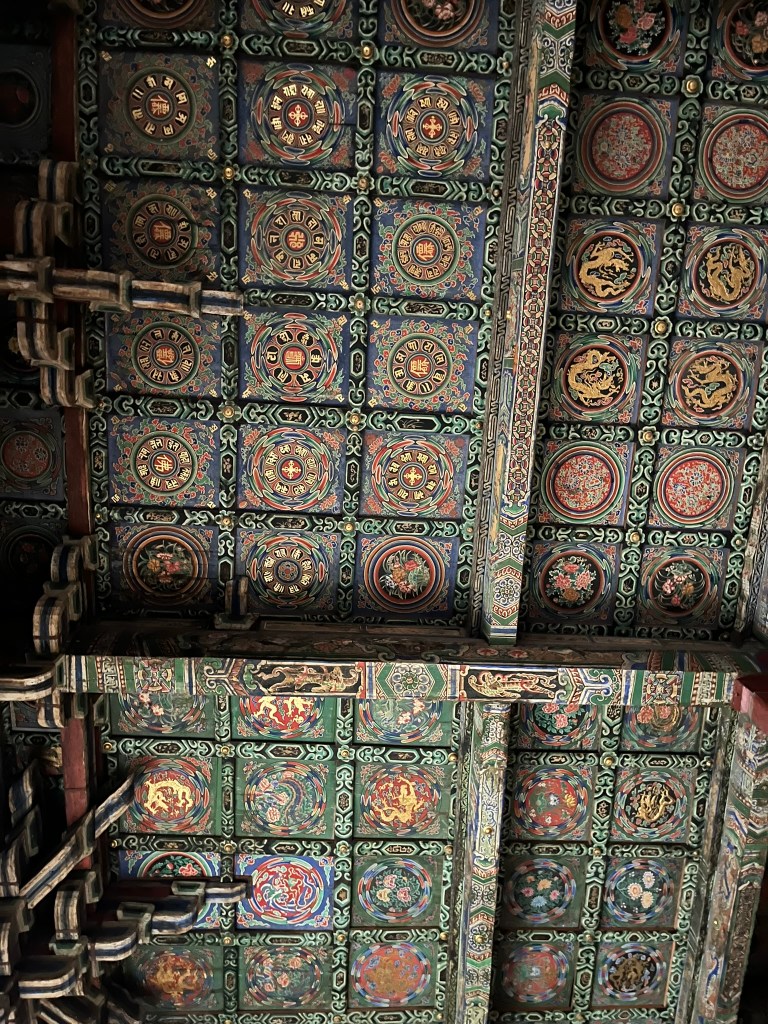
It is one of the best-preserved temples from this period of time with a large timber frame, dougong brackets (more of this when I post about the wooden pagoda I visited) and red plastered walls.

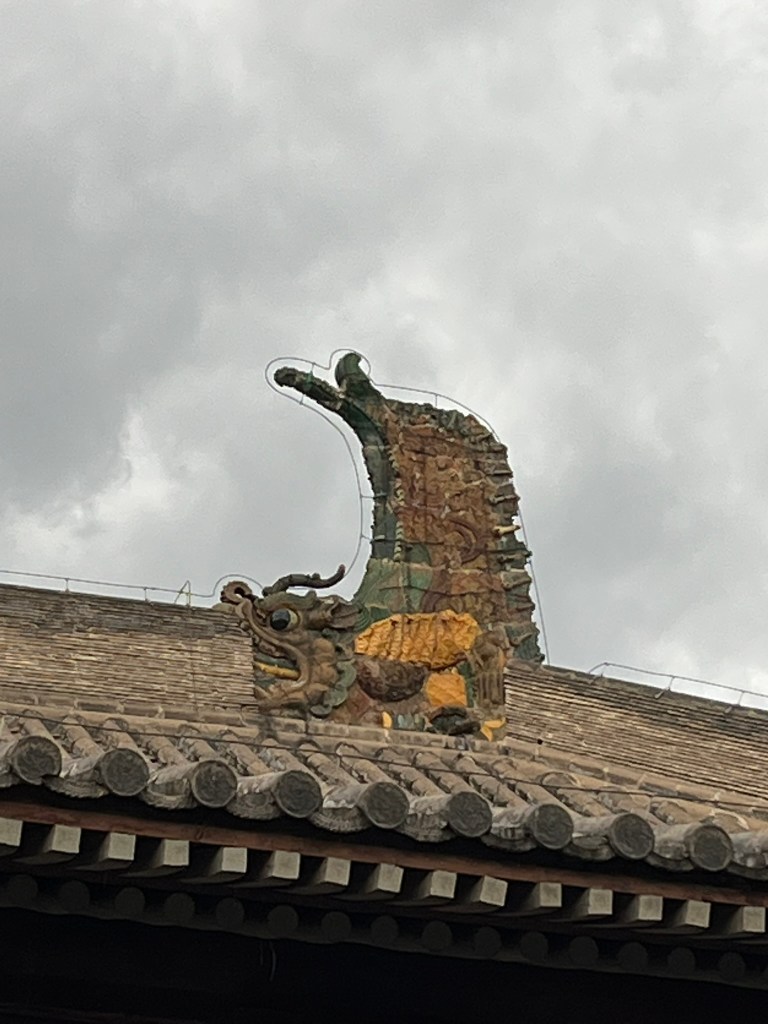
On top of the roof a pair of chiwen (dragon-fish), also known as roof dragons sit. They are a traditional part of Chinese architecture. The fish design is supposed to symbolize water and protect against fire. The dragon represents power. The pair that sit on top of the Huayan Temple are particularly famous for their size and brilliant green and yellow glazes. They also have a structural function and are not just for decoration. Their weight at each end, stabilizes the long roof ridges, shields the joints of the roof tiles from rainwater and deflects wind uplift.
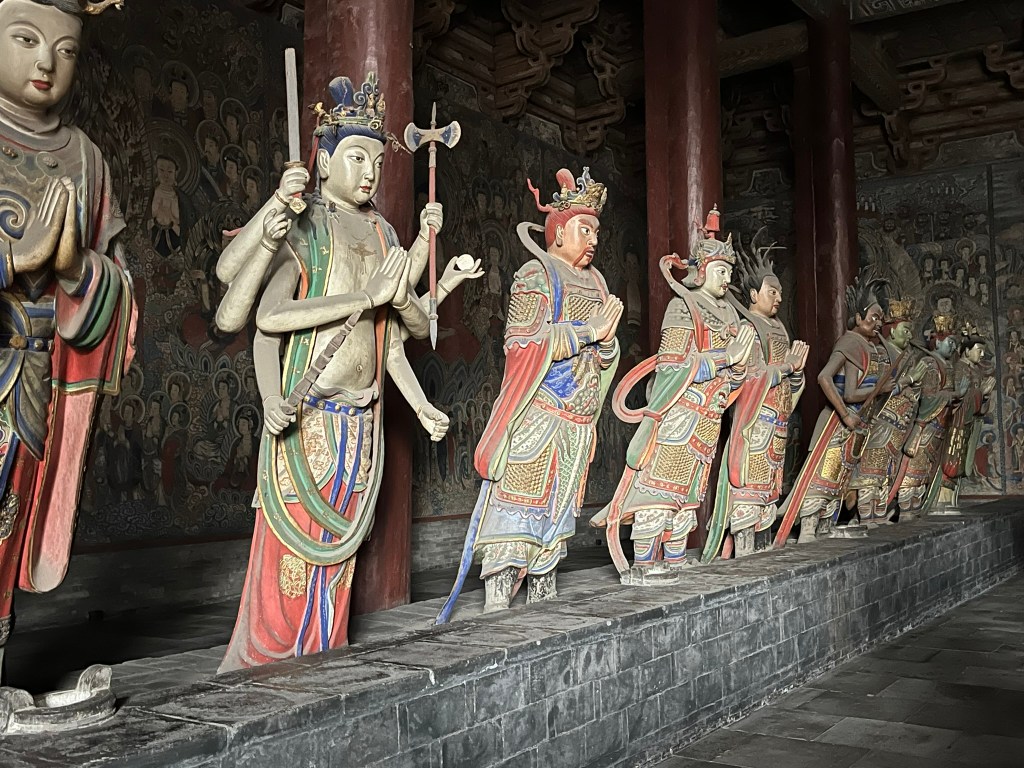
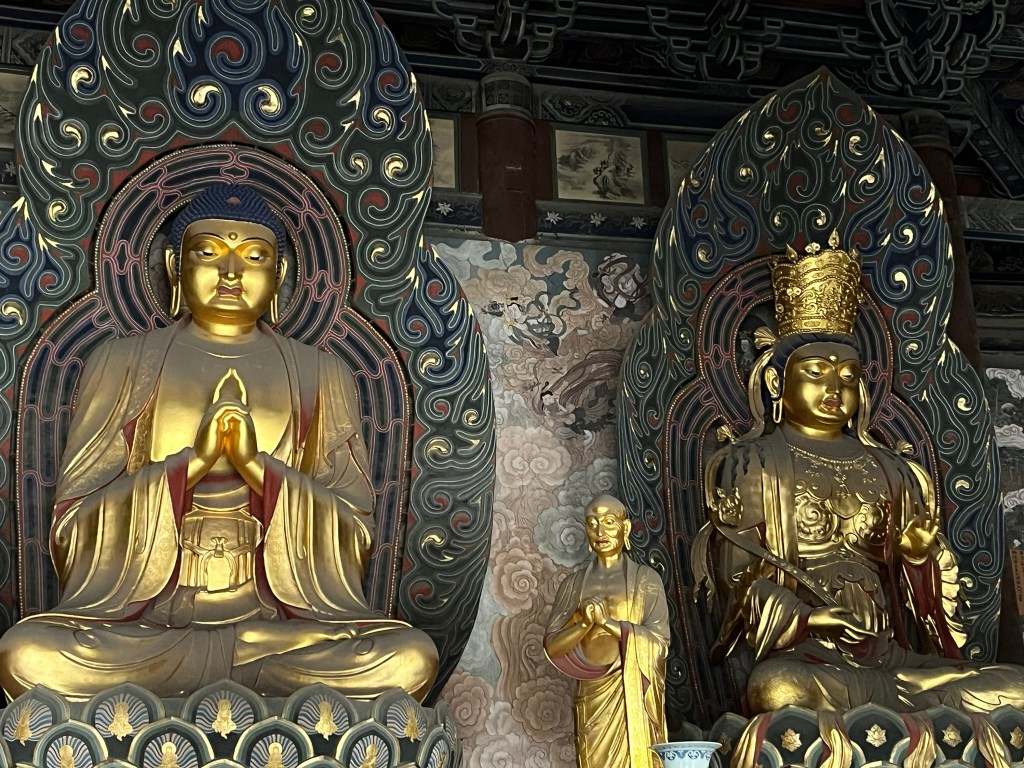
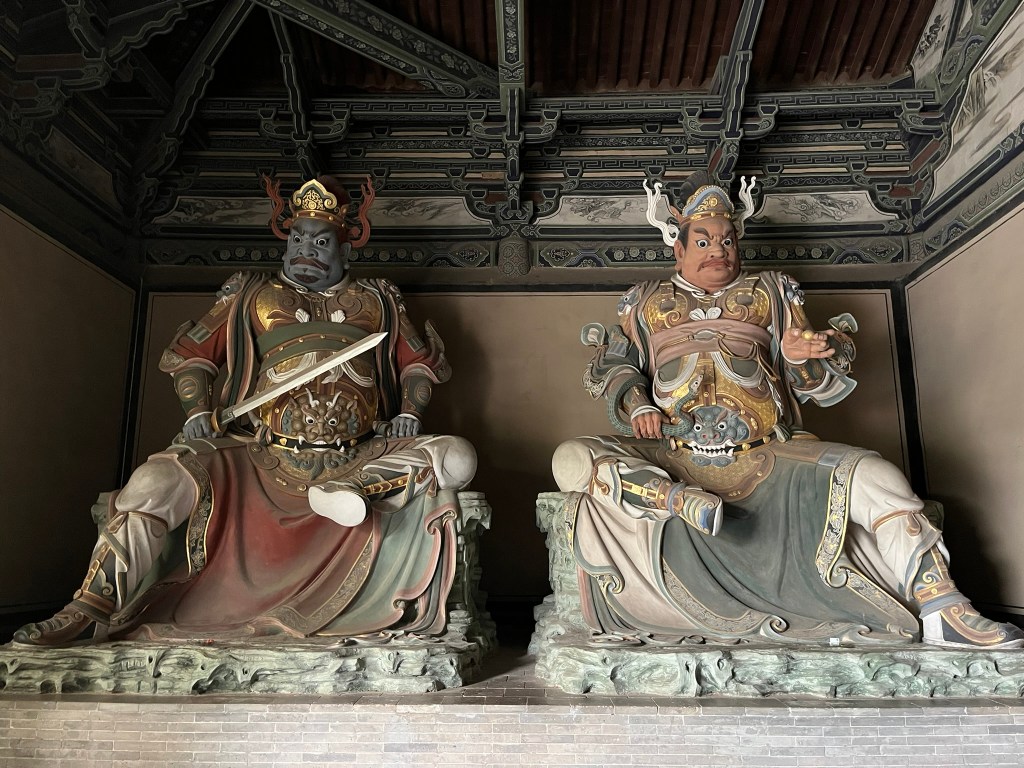
Inside the temple, Five Buddhas of Wisdom sit in the center. On each side there are 10 guardian deities, known as Heavenly Protectors. They are a blend of Buddhist and Taoist traditions, each with their own distinct clothing and weapons. Their role is to protect the temple and worshippers from evil, and they lean forward in order to appear ready to fight at any time.


The Liao dynasty was founded by the Khitan people, another nomadic confederation from modern-day Inner Mongolia. The dynasty was established in the early 10th century at the same time that the Tang dynasty was collapsing. Their empire stretched from Mongolia into Northern China and lasted until the early 12 century when they were conquered by the Jurchen-led Jin dynasty.
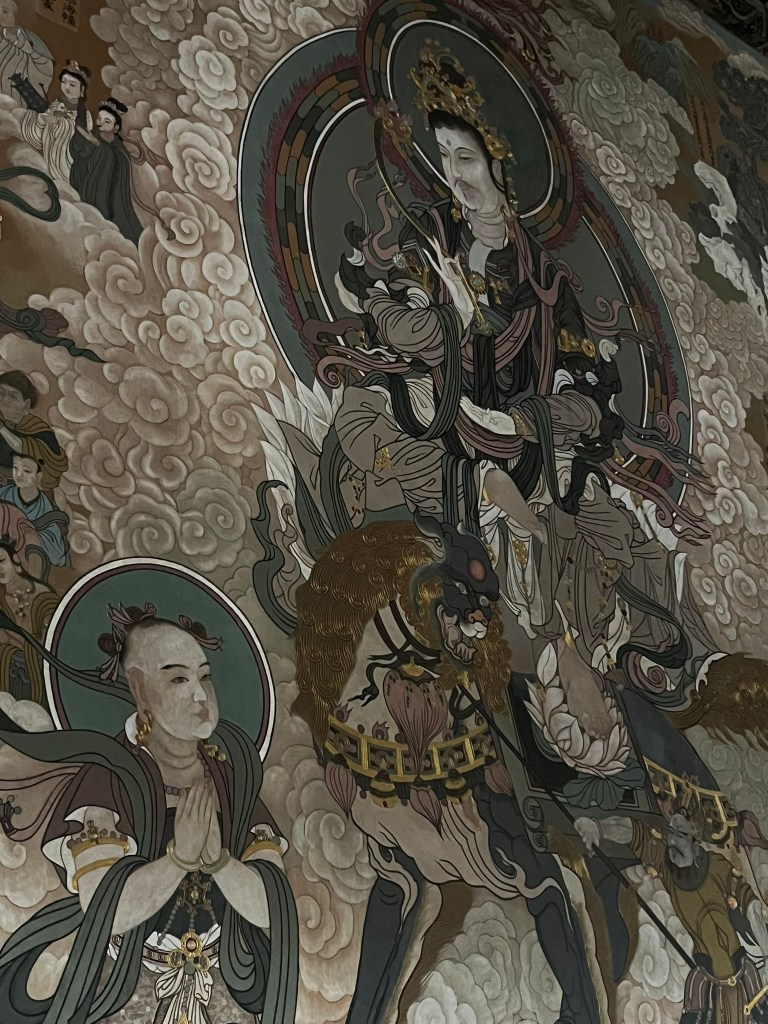
Datong was then known as Xijiang, or Western Capital and was one of five capitals of the Liao Dynasty. The city continued to be a center of Buddhism during this time and this is one of the reasons that Huayan Temple was built. Like the Tuoba Xianbei that came before them, the Khitan rulers used Buddhism to strengthen their legitimacy with the Chinese and link their rule with cosmological order. Its interesting to note the subtle changes to the sculptures during this period, with more naturalistic figures and serene smiles, and the inclusion of more nomadic cultural elements like flowing garments and aggressive poses.


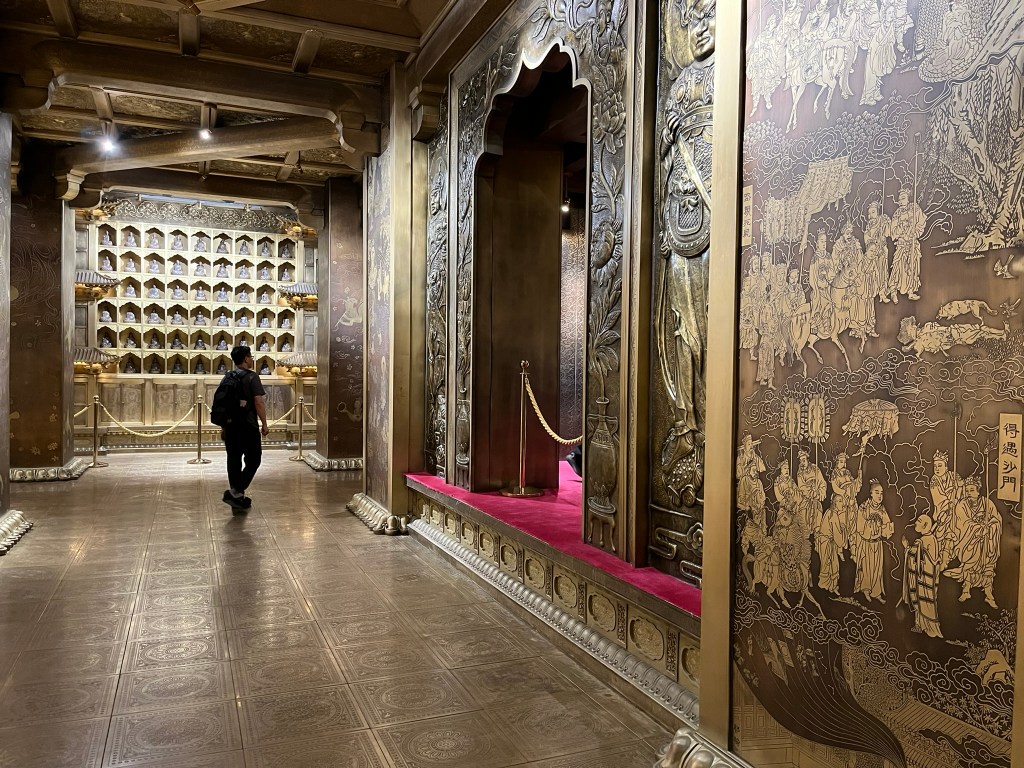
The wider temple complex is nice to walk around and explore, but the highlight is the Huayan Temple. The Huayan Pagoda is also very popular to visit and it wasn’t clear to me if the structure was old or new (but I think new). The draw is the underground chamber that lies beneath the pagoda and houses a sacred relic. The entire chamber is covered in intricately engraved copper from floor to ceiling and houses 1000 small Buddha statues. It looks extremely new, and my guide suggested it cost a lot of money. There were huge crowds to take a look at the sacred relic, so I skipped taking a peak as I don’t really buy into that stuff.
 Colette's Grand Detour
Leave a comment