Margilan is another ancient city in the region and renowned as the nation’s ‘silk capital’. There is a local legend that says Margilan was named by Alexander the Great after being served ‘murgh-nan’ (chicken and bread) in the city, however historical records trace its prominence as a silk road trade hub back to the 9th century.
Margilan is the heart of Uzbekistan’s silk trade and craftsmanship, and for over a thousand years the city has been producing some of Central Asia’s finest silk. The region is especially known for the fantastically patterned ikat fabrics known locally as atlas and adras. The industry dates back to the 9th century when merchants from Kashgar on their way to Samarkand and beyond, brought cocoons of silk worms, cloth and weaving knowledge to the region. Nowadays UNESCO has recognised the importance of protecting this ancient craft.
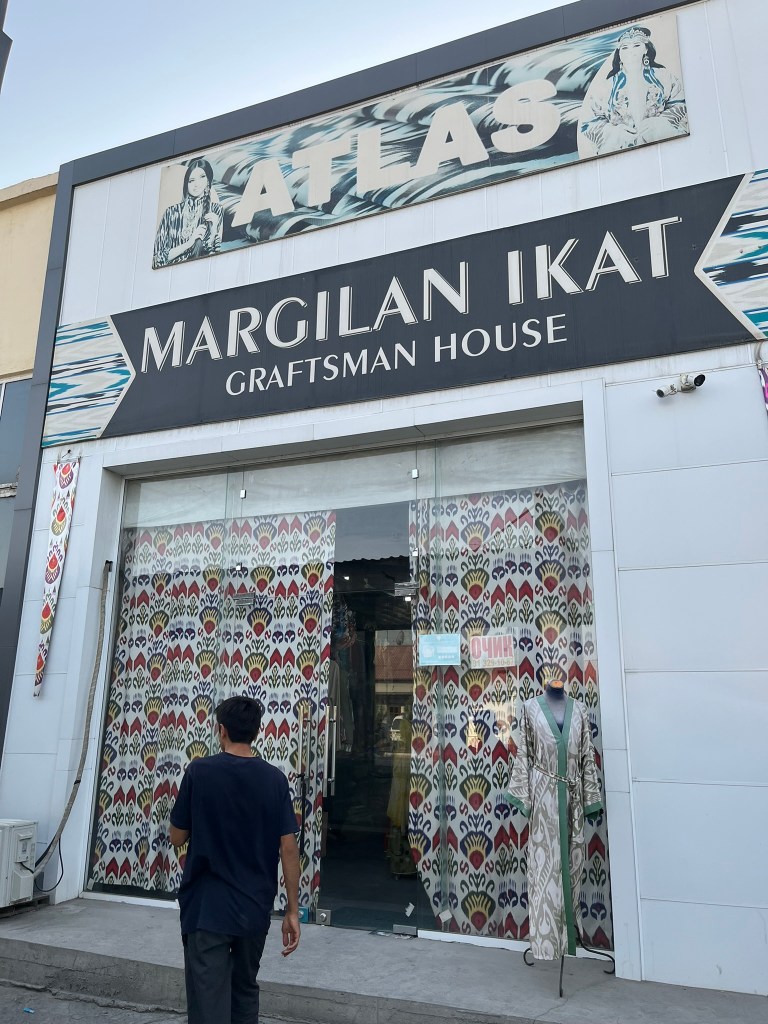
And this was the reason I had come to Margilan today – to see a silk factory that still creates textiles using traditional methods and be taken through the process step by step. And of course there was a great shop at the end stuffed full of lovely fabrics for me to take home. The silk factory (well, more like where they take tourists around) was about 15 minutes drive from Margilan train station and I was met enthusiastically by my guide Abdul-Assiz who would show me the 4 major steps to making silk fabric. The place I was visiting was a family-run business with everyone specialising in different stages in the silk-making processing, with a master weaver running the show and teaching apprentices. Abdul-Assiz was a master binder – an expert at wrapping the warp with cotton (they have modernised and now use sticky tape) to resist against the dye. Their business extends to many women working at home on their own looms who then bring their work to the main factory. And their main business comes from orders from outside Uzbekistan. They particularly work with French businesses who send over their designs to be made here in the Fergana Valley.
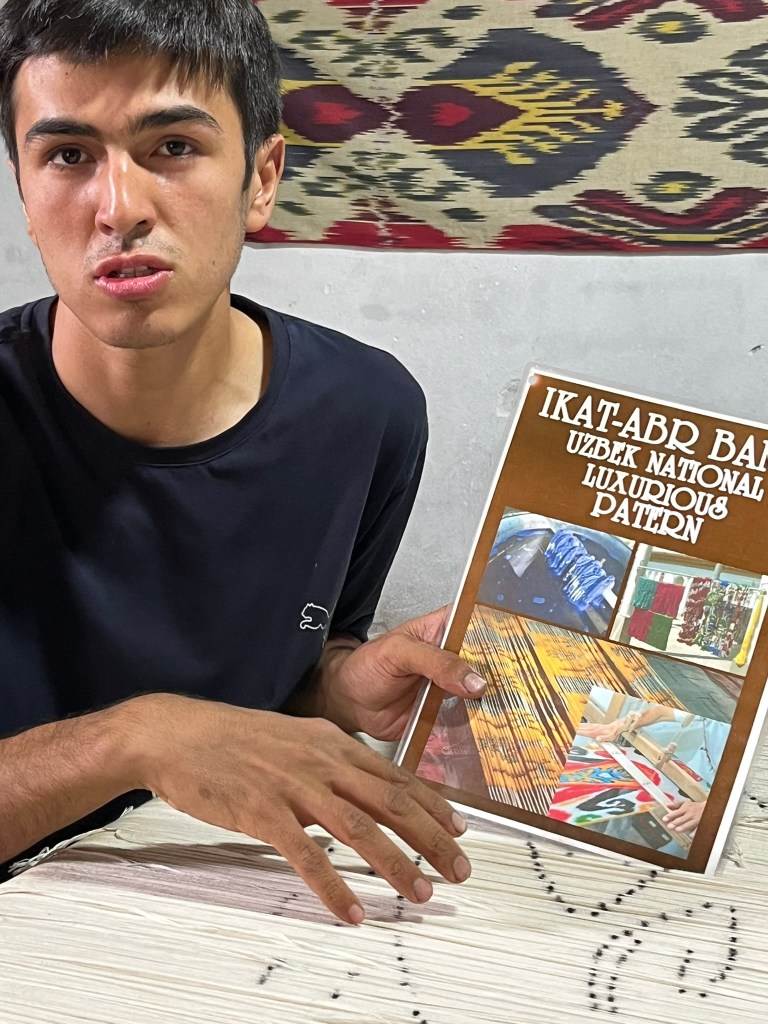
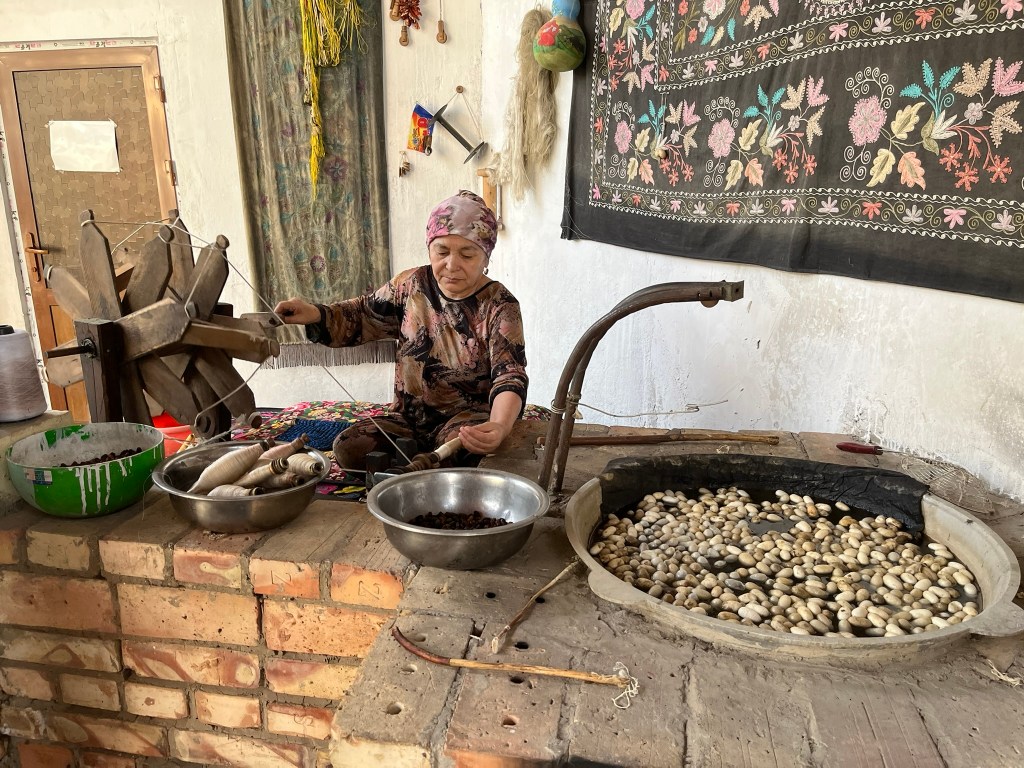
We started by talking about the life cycle of the silk worm and how they reach the stage of being cocooned and ready to steam. The process can then begin, to unfurl the silk and prepare it into a type of yarn. Apparently you can get as much as 3km of silk thread from a single female silk worm, which is pretty incredible. Once the yarn is ready it can be dyed using a range of natural colors.
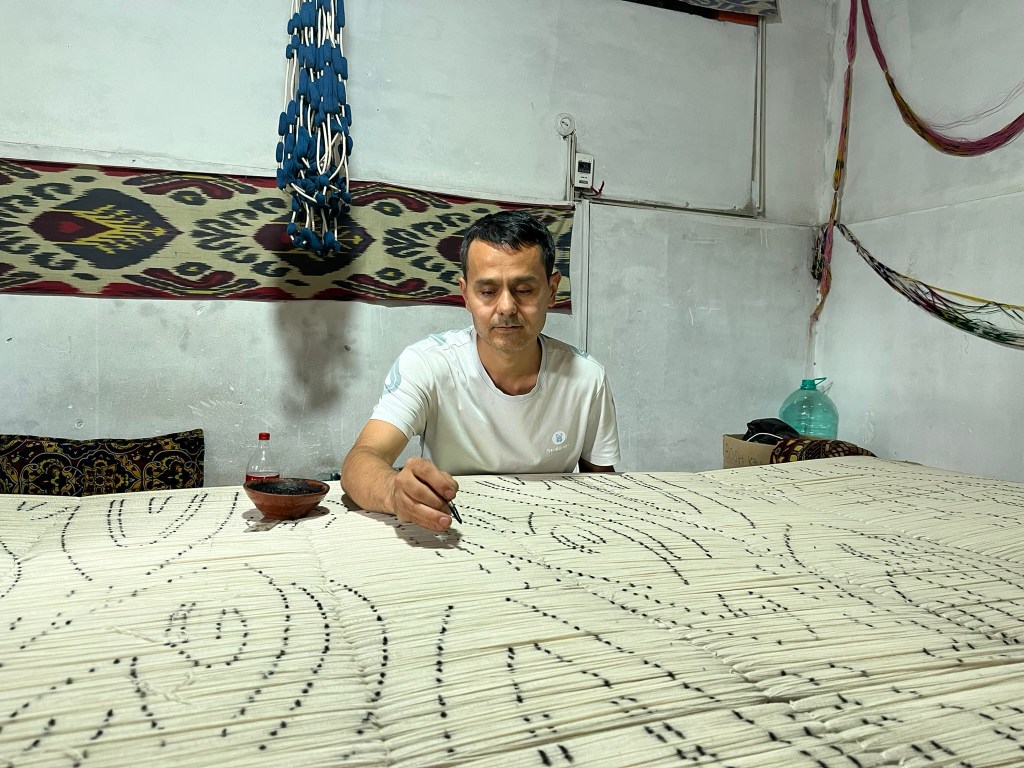
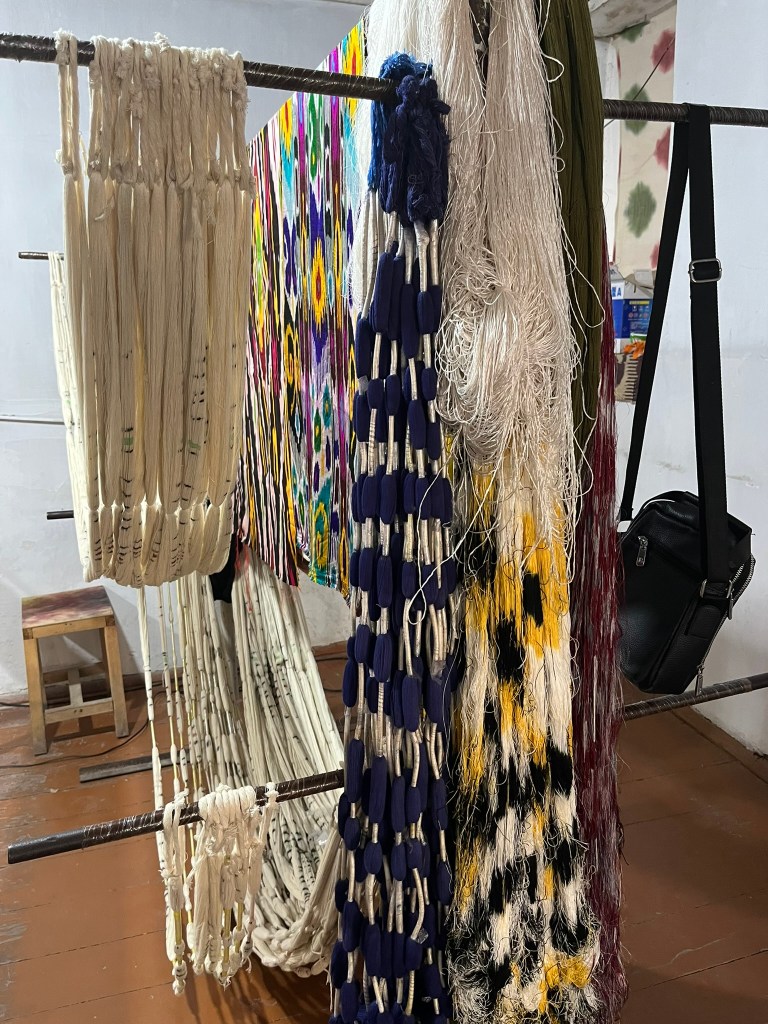
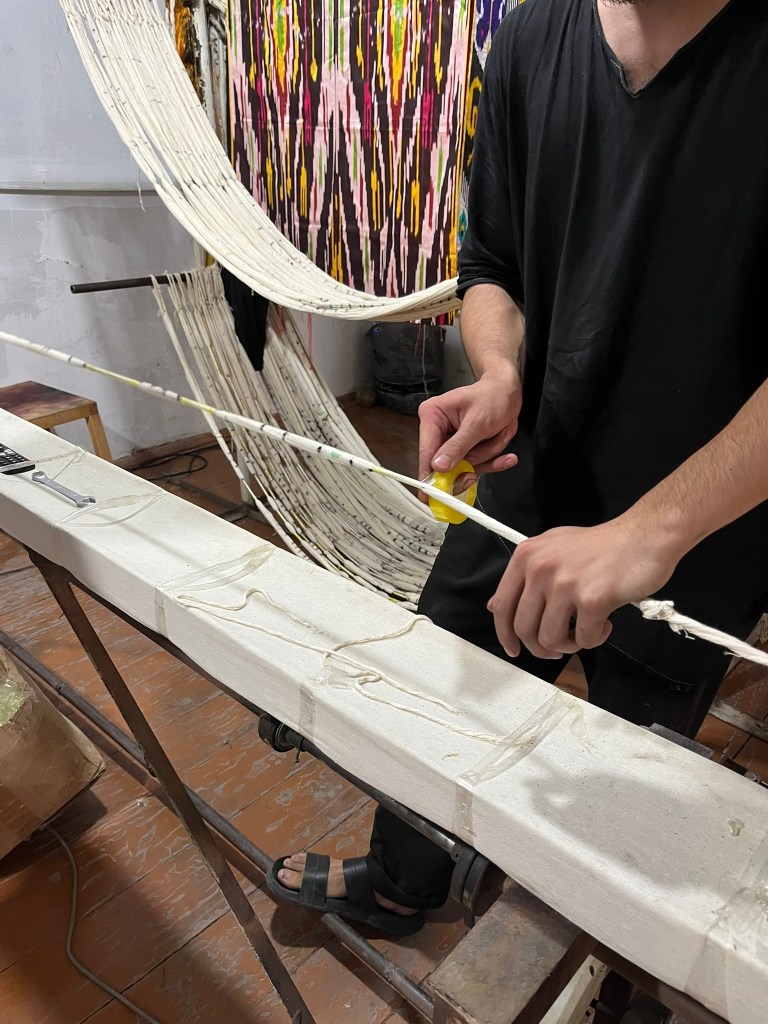
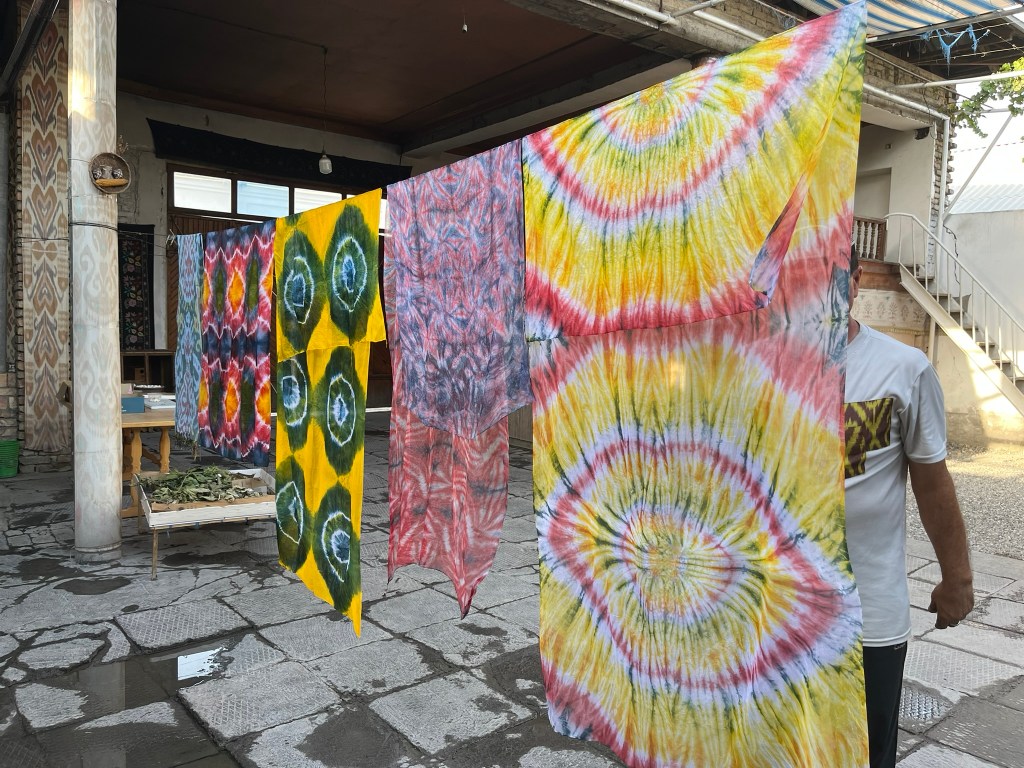
We then moved into the room where huge lengths of silk have the pattern marked onto them. This denotes where the silk must be dyed and where it must be covered so that the dye does not reach it. Each time a new color is added to the silk thread, this process must be repeated. To protect the silk thread from the dye, traditionally cotton string was used but this is a very slow process, so now they use the great invention of sticky tape and a machine that can spin sticky tape around the block of thread. I hadn’t appreciated what a time consuming practice preparing and dying the fabric was before even getting to the loom stage!
There are 2 types of fabric typically produced in Uzbekistan. Khan-Atlas is the most famous product – a brightly coloured silk ikat fabric with cloud or flame-like motifs. And Adras, which is a silk-cotton blend, lighter in colour and much more affordable. There are 2 types of loom set up here – 2 pedals and 8 pedals. The pedals of a loom determine which warp threads are lifted as the waft is passed through the gap and so different types of fabrics can be made on each. The 2 pedal loom creates a simple 2-sided plain weave and is traditionally used to create adras fabric. The 8 pedal loom allows for much more complexity and is reserved for atlas weaving. It creates glossy flowing fabrics with a soft drape – the fabric that Uzbekistan is most famous for. It was crazy to see the 8 pedal loom in practice – I don’t know how the weavers remember the sequence of pedals to use whilst also passing the waft back and forth.
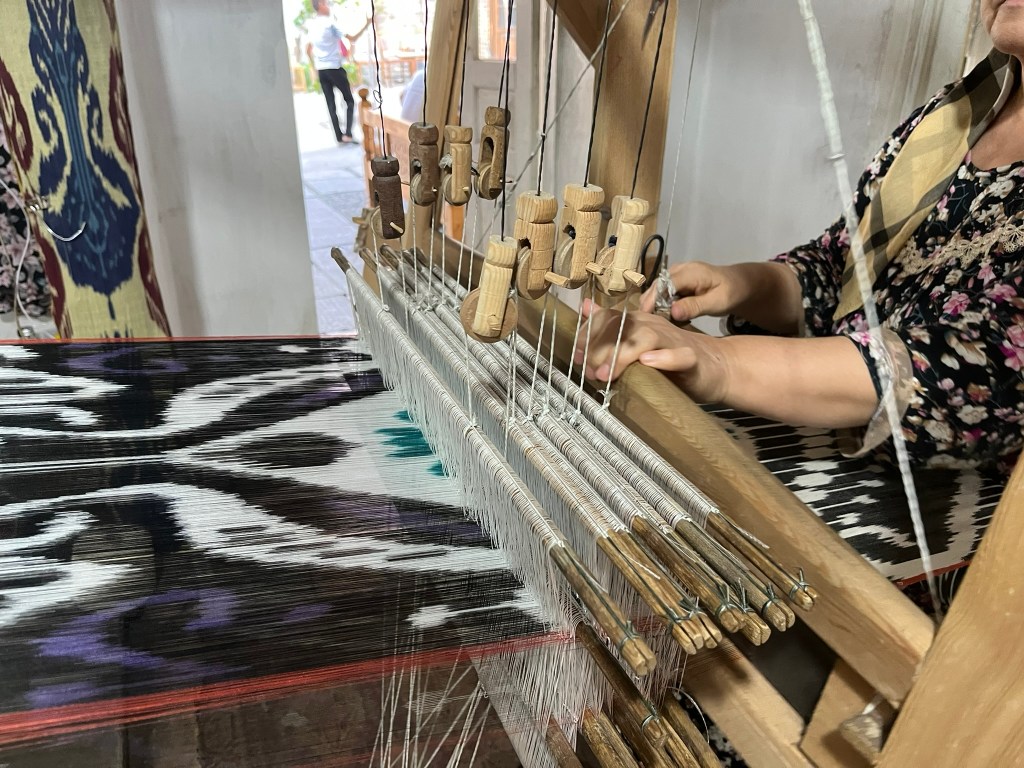
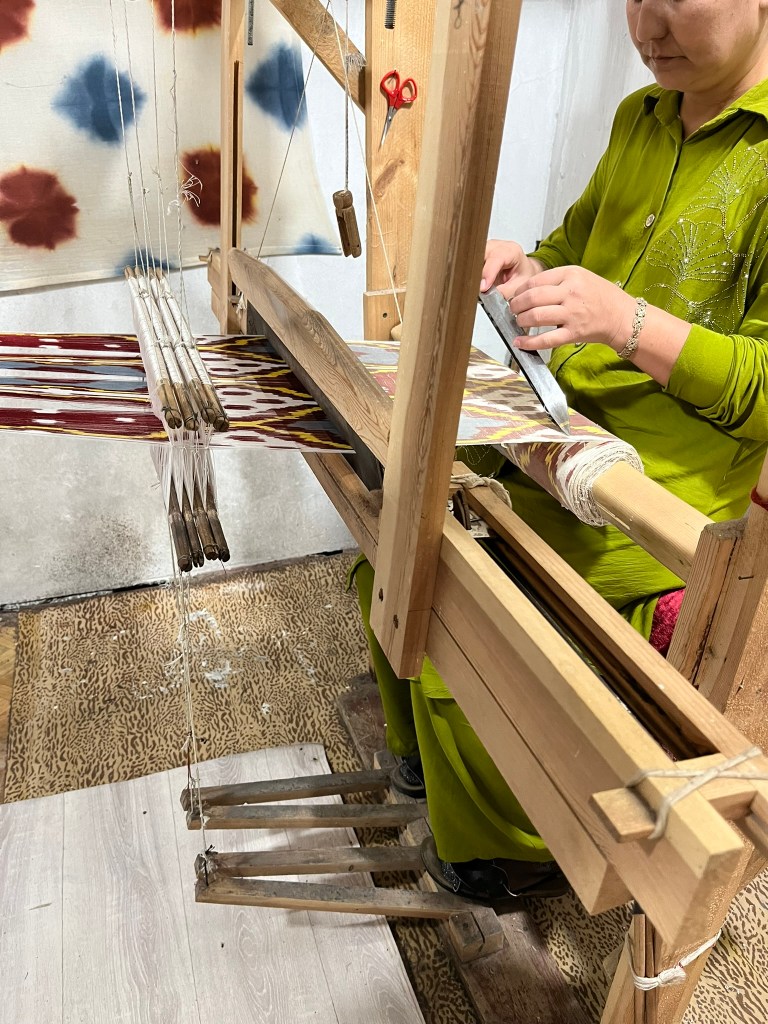
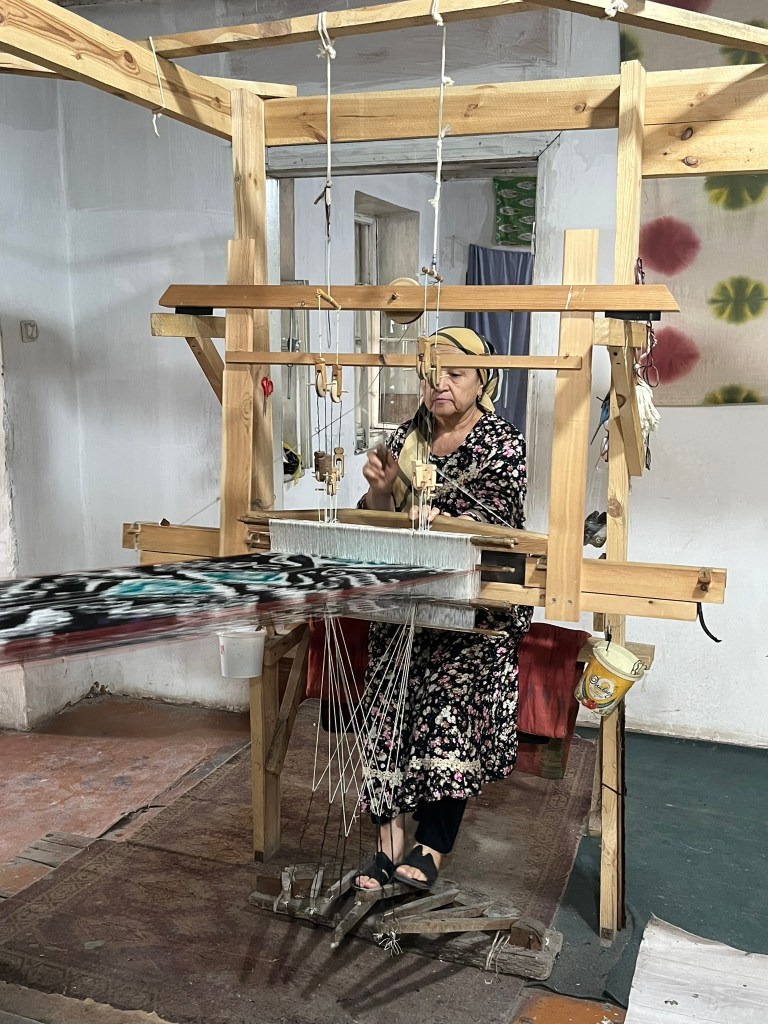
The walk through the silk factory workshop was exactly what I hoped when I planned to visited this part of Uzbekistan. I had seen the beautiful fabric in Samarkand, Bukhara and Khiva but I wanted to understand the intricacy of how it was made. And it didn’t disappoint.
 Colette's Grand Detour
Leave a comment