Today was mostly a travel day as we waved goodbye to Kyrgyzstan and hello to Uzbekistan. This will actually be my third trip to Uzbekistan this year, so instead of continuing on with my group who are heading to the amazing sights of Samarkand and Bukhara (which I visited in April) I will be hopping off the tour at Margilan to explore the Fergana Valley for 2 days before heading to Tashkent to get my flight home.
It was a short 30 minute drive to the border and then it took us about an hour in total to exit Kyrgyzstan and enter Uzbekistan. It was interesting to see that the modern day version of the silk road is still in full swing with huge trucks laden with goods heading in both directions.
We then headed to Andijan, which is where our train trip will start from. The train was comfortable and had air conditioning which we were all thankful for as it was a super hot day. My fellow travellers have a 5 hour journey to Tashkent and won’t arrive into the capital until late tonight. I, however, jumped off after 50 minutes at the city of Margilan where I was met by my guide and driver. I arranged this side trip through the private tour company that my tour leader that I had on my first trip to Uzbekistan in April runs, so I knew I was in safe hands.
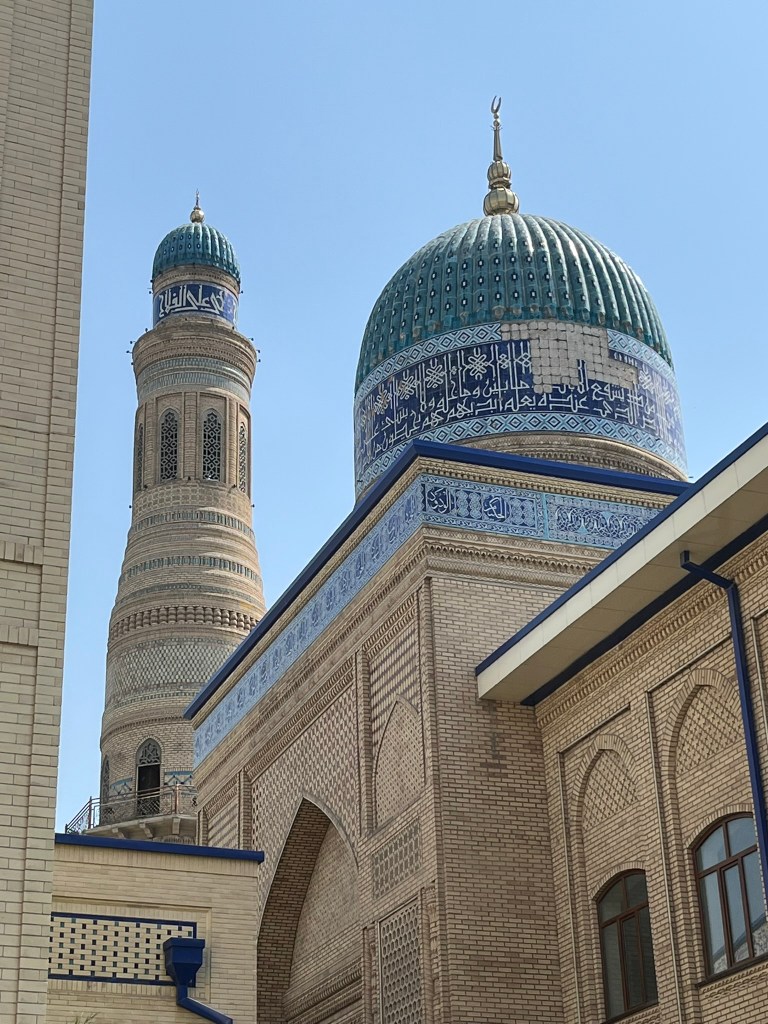
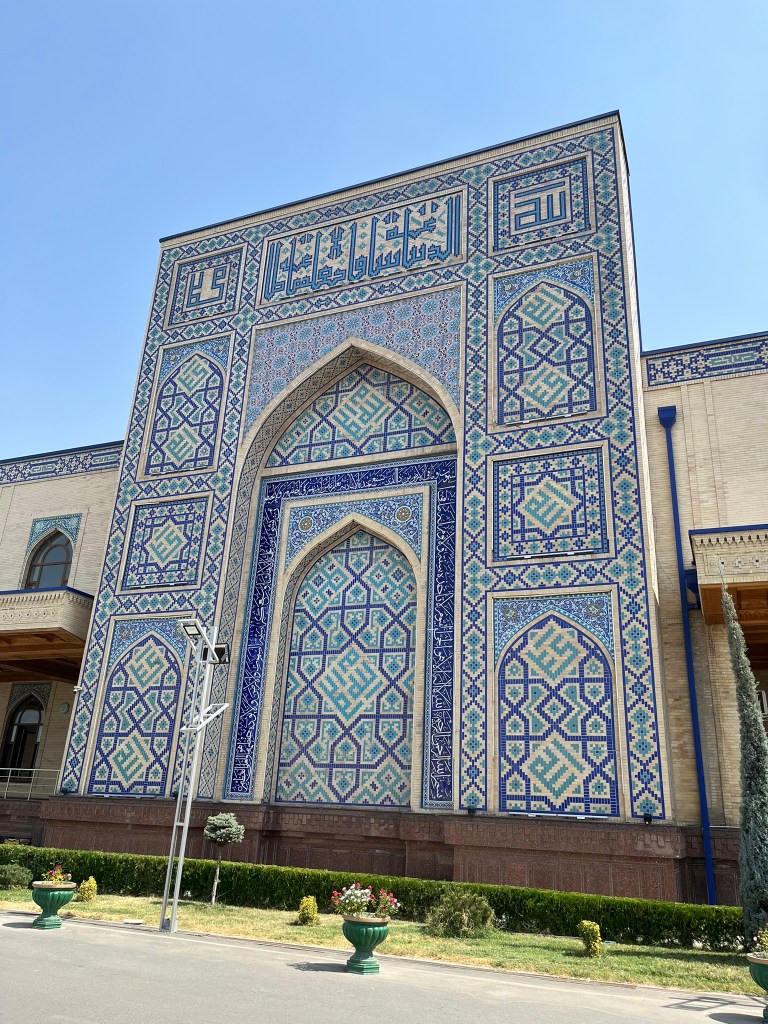
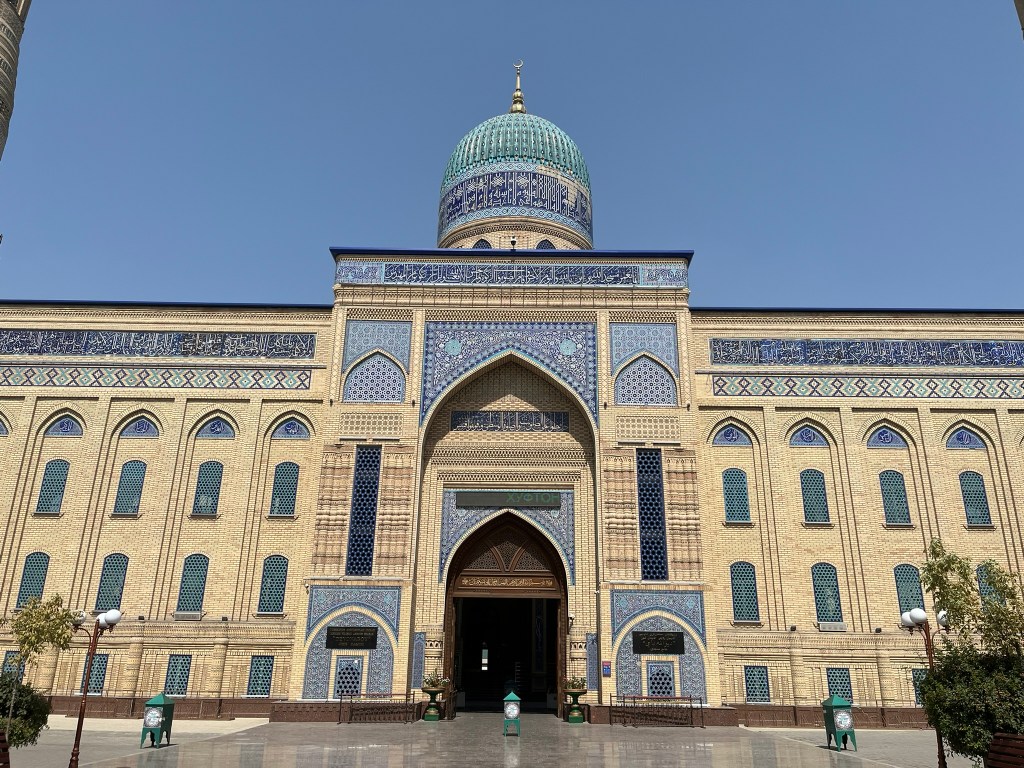
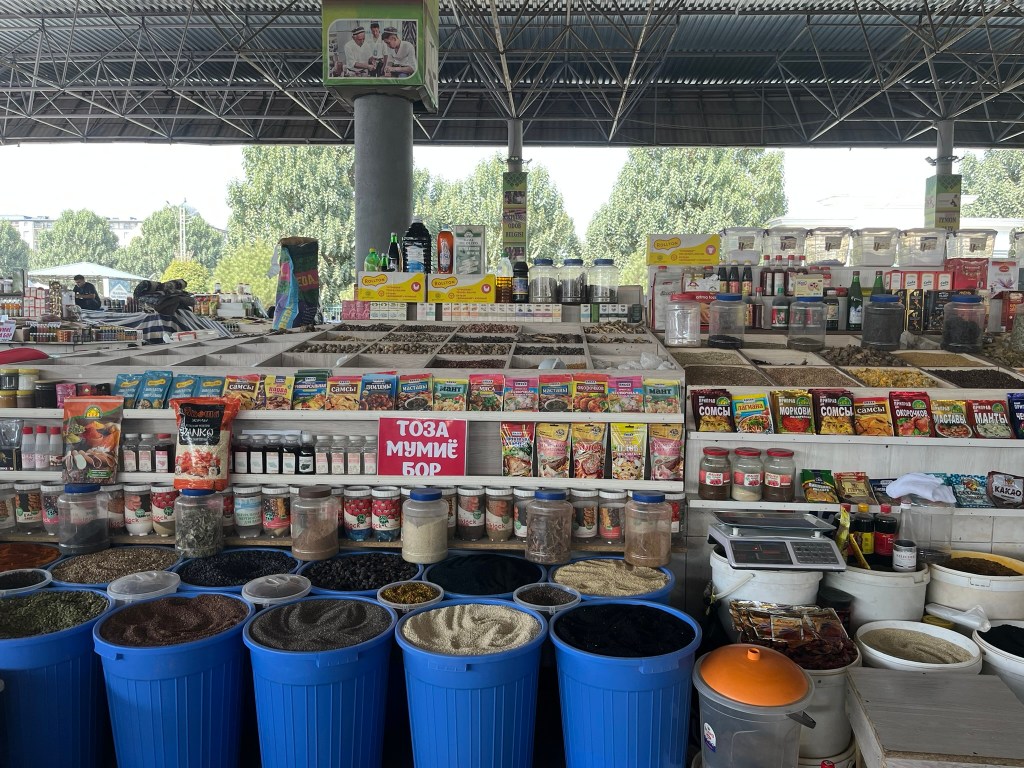
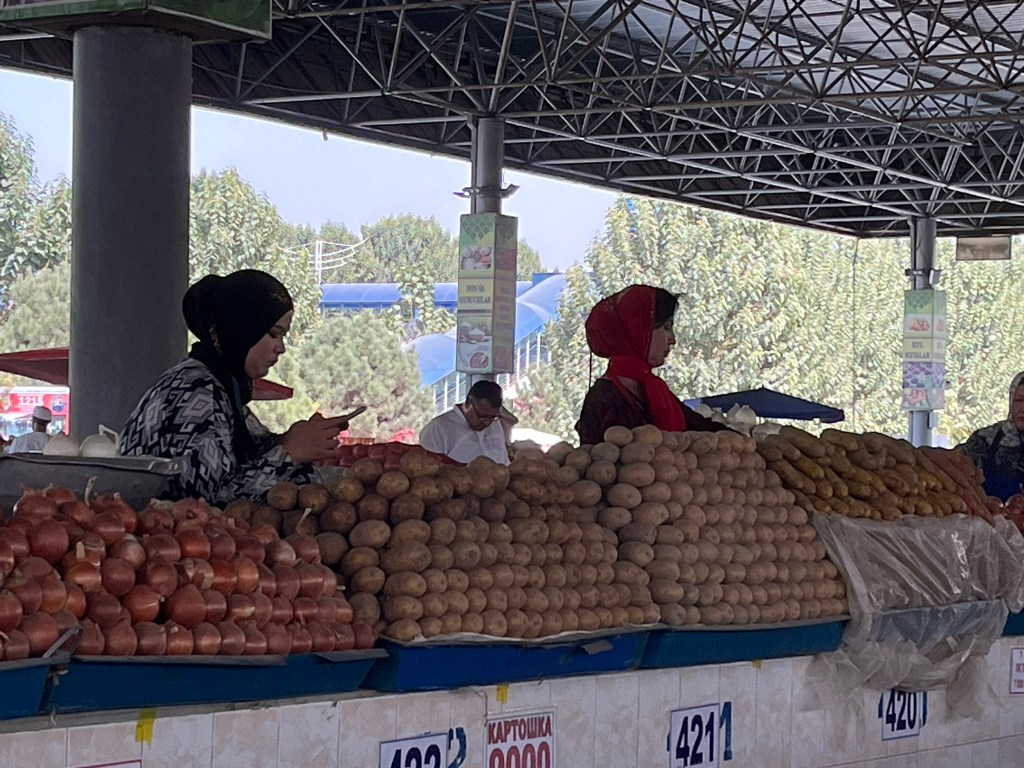
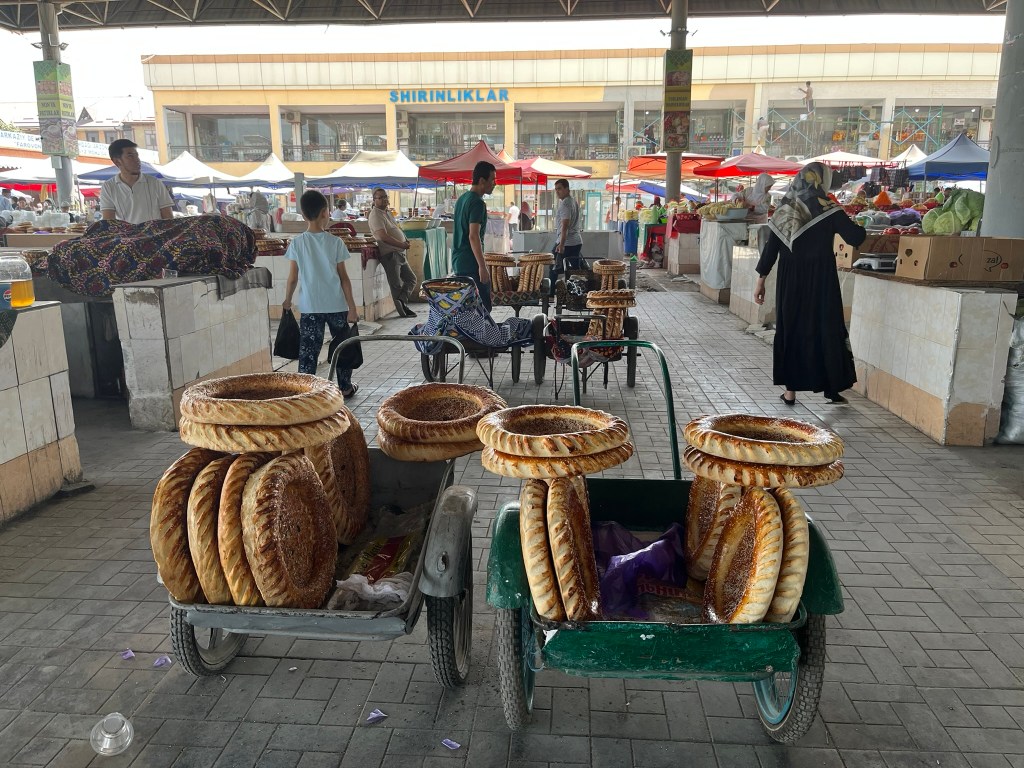
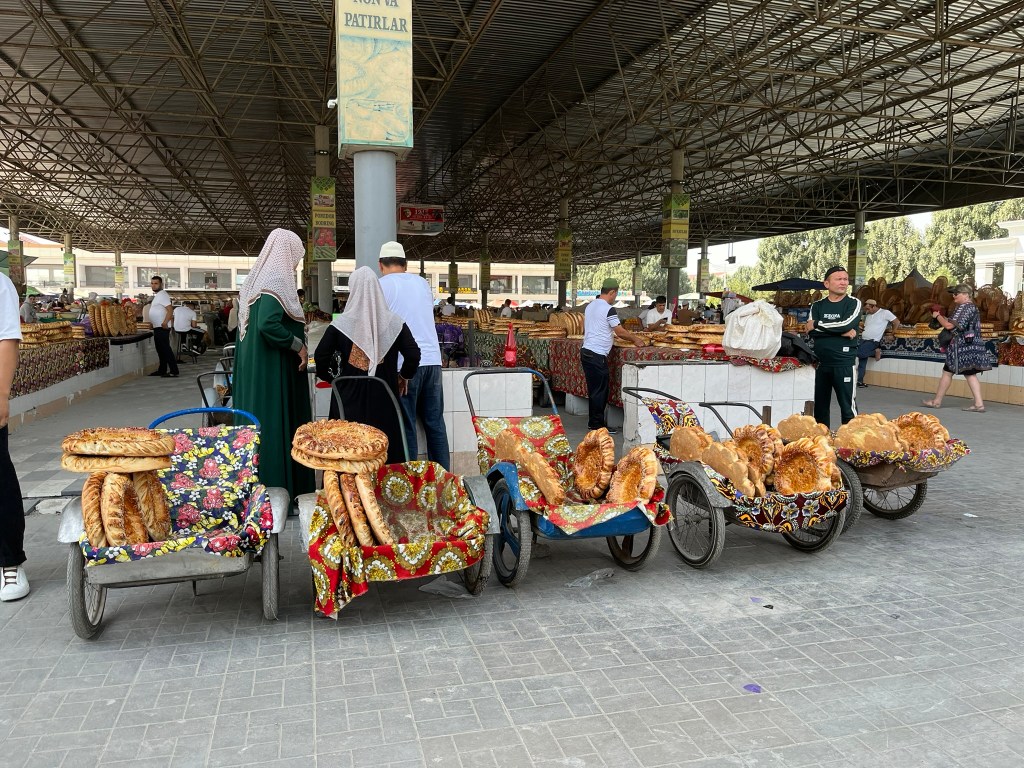
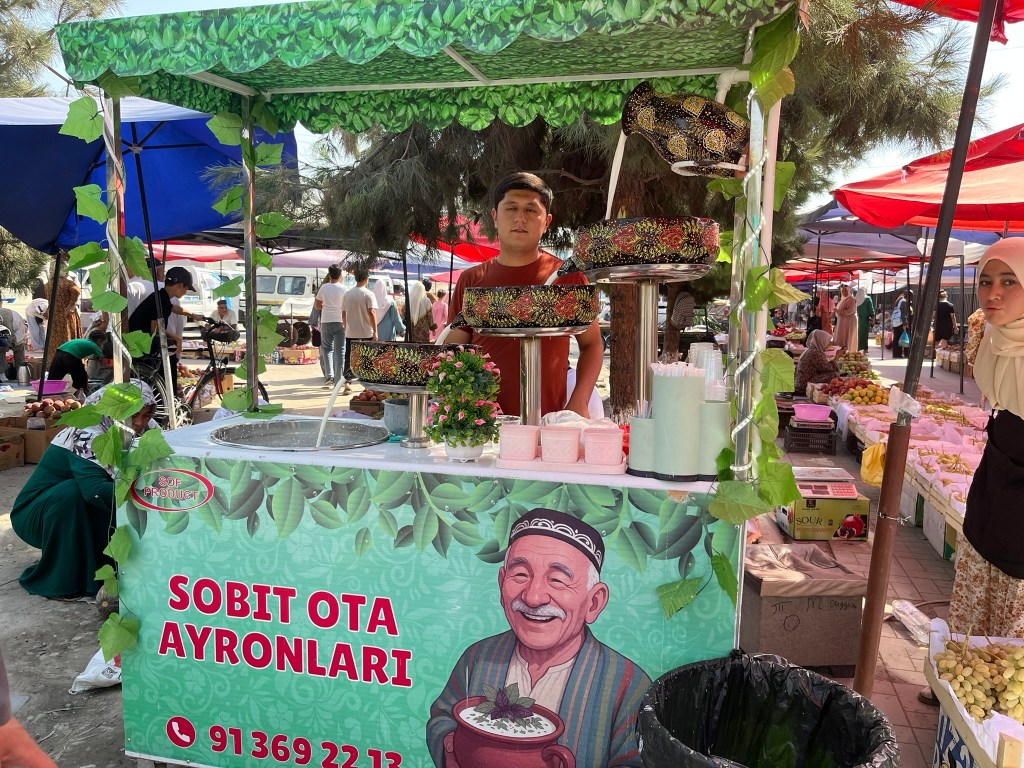
Before we got on the train we had a little explore of Andijan. This is one of the oldest cities in the Fergana Valley and the administrative capital of the region. It was another important stop on the silk road and today sits very close to the border with Kyrgyzstan. It has a population of 400,000 people and its main industries are automobile assembly (GM has a big factory here producing Chevrolet cars for the region), textiles and cotton processing. We visited the city bazaar which was bustling with people and had some of the biggest rounds of bread that I have ever seen! And the newly built Devonaboy Mosque covered in elegant blue tiles that sits opposite the bazaar.

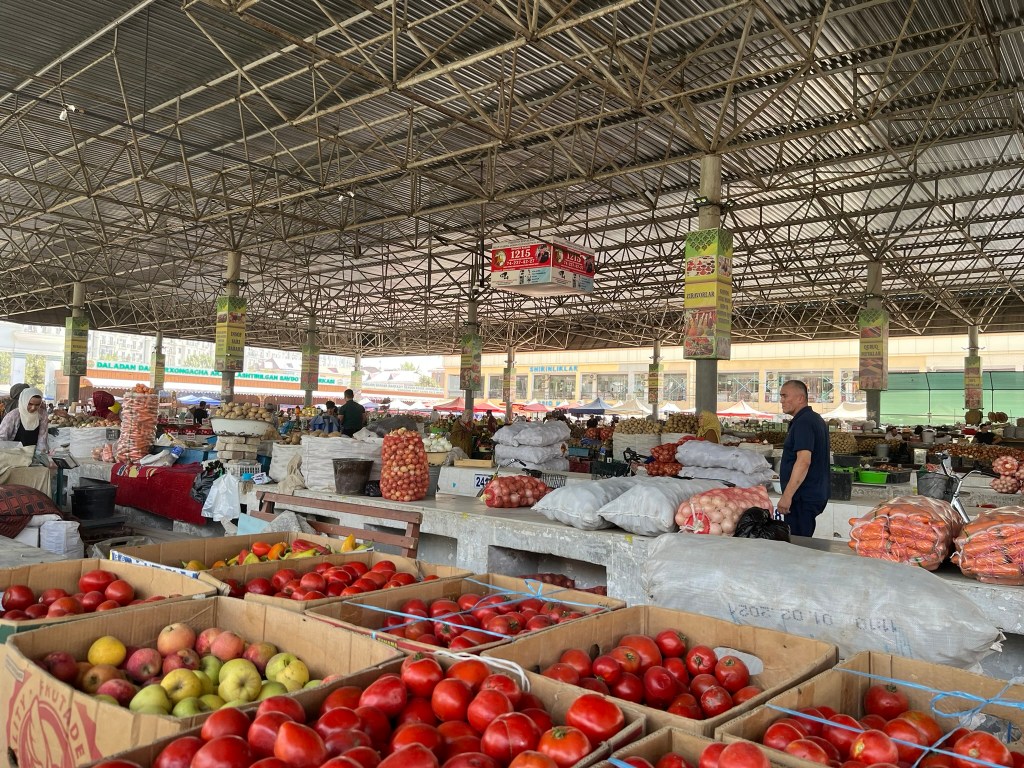
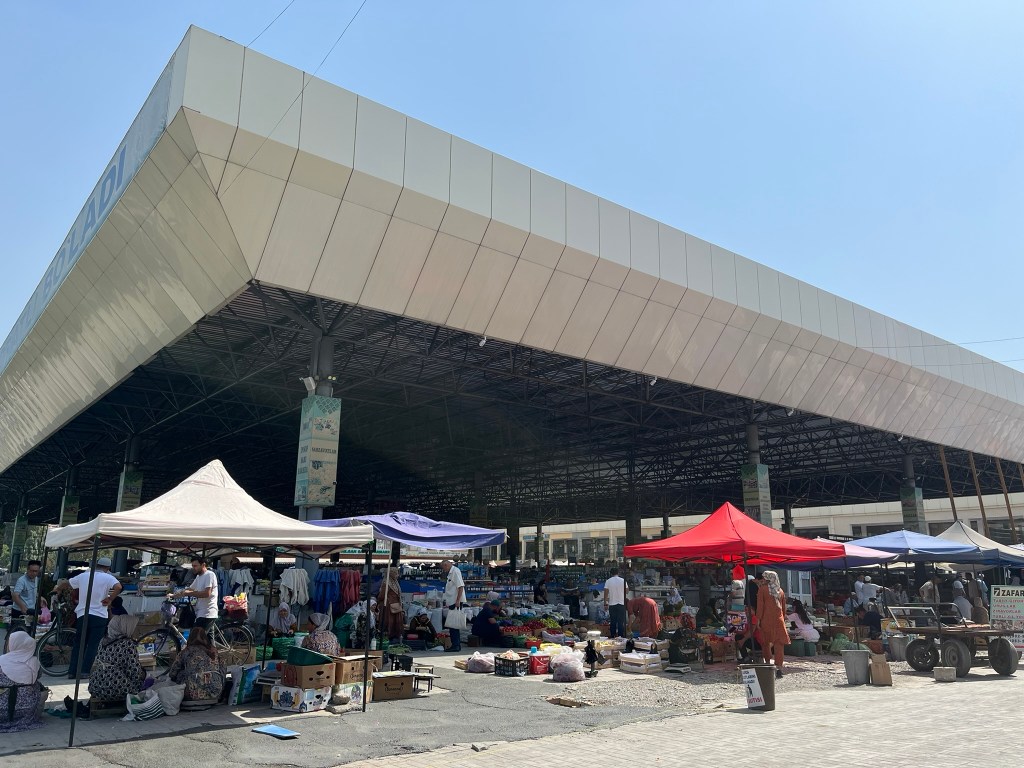
The city’s biggest claim to fame is that it is the birthplace of the founder of the Mughal Empire – Zahir-ud-din Muhammad Babur in the late 15th century. Otherwise the city has a similar history in terms of different khanates and empires ruling over them as Osh. There is not much left to see in terms of ancient ruins as most of the historical architecture in the region was destroyed by a severe earthquake in 1902.
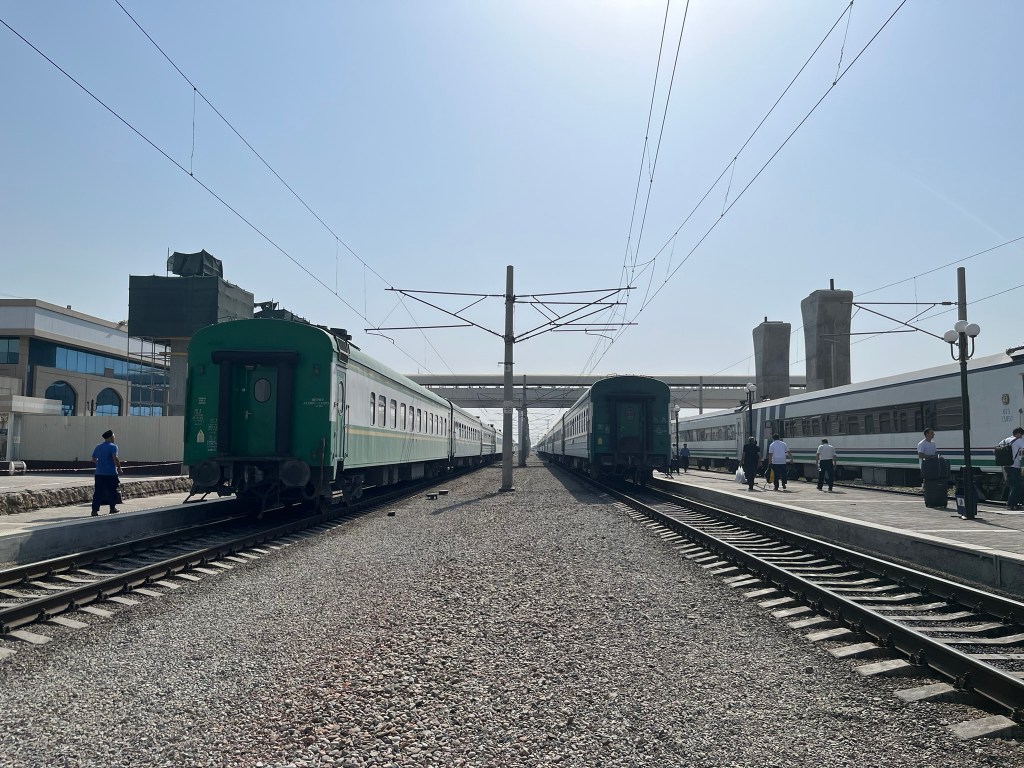

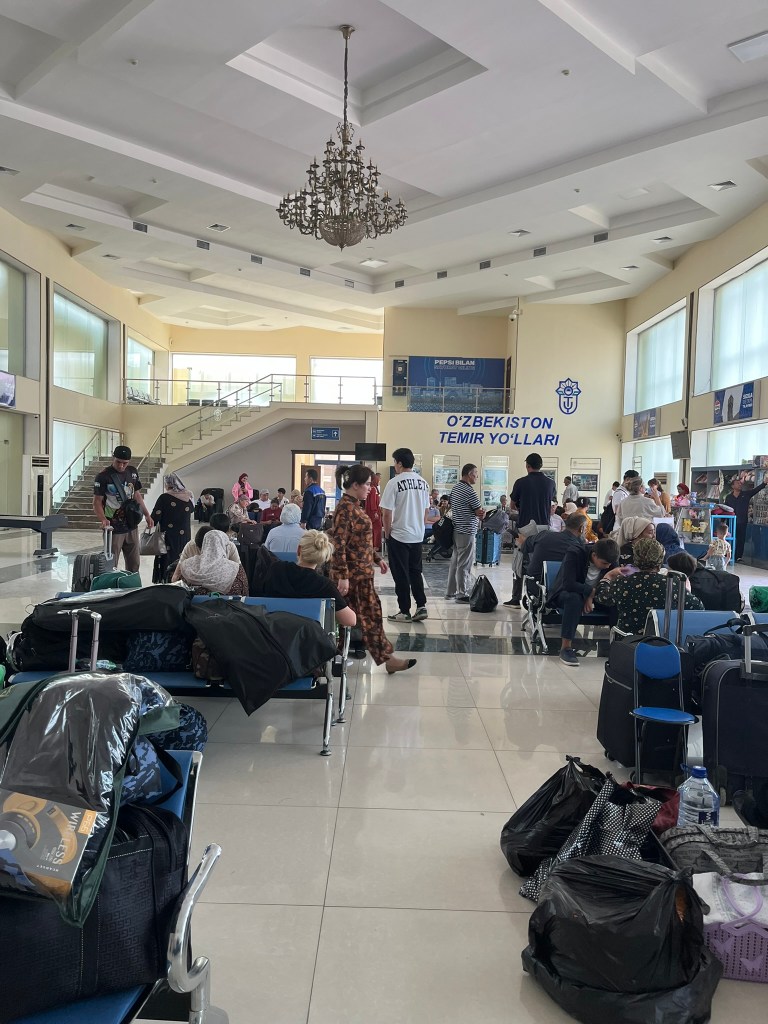


After 50 minutes on the train we arrived at the city of Margilan where I hopped off the train and waved goodbye to the lovely group I have travelled with for the last 20 days.
 Colette's Grand Detour
Leave a comment