First up on today’s itinerary was a visit to the pottery center of the Fergana Valley – Rishton. The history of pottery production in Rishton goes back many centuries and is a fortunate mix of the right natural resources, availability of skilled artisans and access to the silk road trade routes.
The soil around Rishton contains a rich, fine, reddish clay with a high plasticity. Ideal for wheel-throwing and strong ceramics. The salt-wort plant called ishkor needed for Rishton’s signature glazing method grows on the nearby steppe. And minerals and pigments are locally available to generate the fabulous blues, greens, yellows and browns that make this pottery famous.
Archeological evidence shows pottery production in Rishton as early as the 9th-10th century. The valley was a settled farming culture (as opposed to nomadic) which encouraged the need for durable vessels which in turn gave artisans a source of employment. Rishton sits on a branch of the silk road and so pottery not only became a household need but also something that could be traded, allowing Rishton pottery to go far beyond the valley. By the 15th-16th century Rishton had a reputation for ceramics across Central Asia and the blue-glazed pottery was a prized possession in Samarkand, Bukhara and Kashgar.
But pottery wasn’t just magically invented in Rishton. Yes there were the right ingredients for it to thrive but where did the artisans learn their craft? The most likely story is that ceramics were brought along the silk road during the Tang and Ming dynasties from China and in the other direction from Persia. And potentially artists travelled back the other way to these source countries to learn the craft. Similar to the development of the silk cloth industry in the region.
During the Soviet Era, pottery was industralized in Rishton with collectives and factories established, producing ceramics on a mass scale for export across the Soviet Union. This diluted the traditional hand-made quality. Post-independence many old masters revived the traditional methods, returning to natural clay and ishkor glazes. Today around 90% of the country’s traditional ceramics are produced in Rishton and it is a thriving cultural heritage hub full of workshops, museums and artisan cooperatives.
I was lucky enough to visit the workshop of Rustam Usmanov, a master ceramicist and often called ‘the guardian of the ishkor tradition’ in Uzbekistan. Through the unassuming doors on an unassuming street we entered a world of pottery, with a long courtyard filled with kilns, pottery wheels, drying racks and displays of finished works. This is not a factory, but a family home full of artisans at work. As we were taken around the space, we not only met masters at work but many of their family members busy cooking or looking after children.

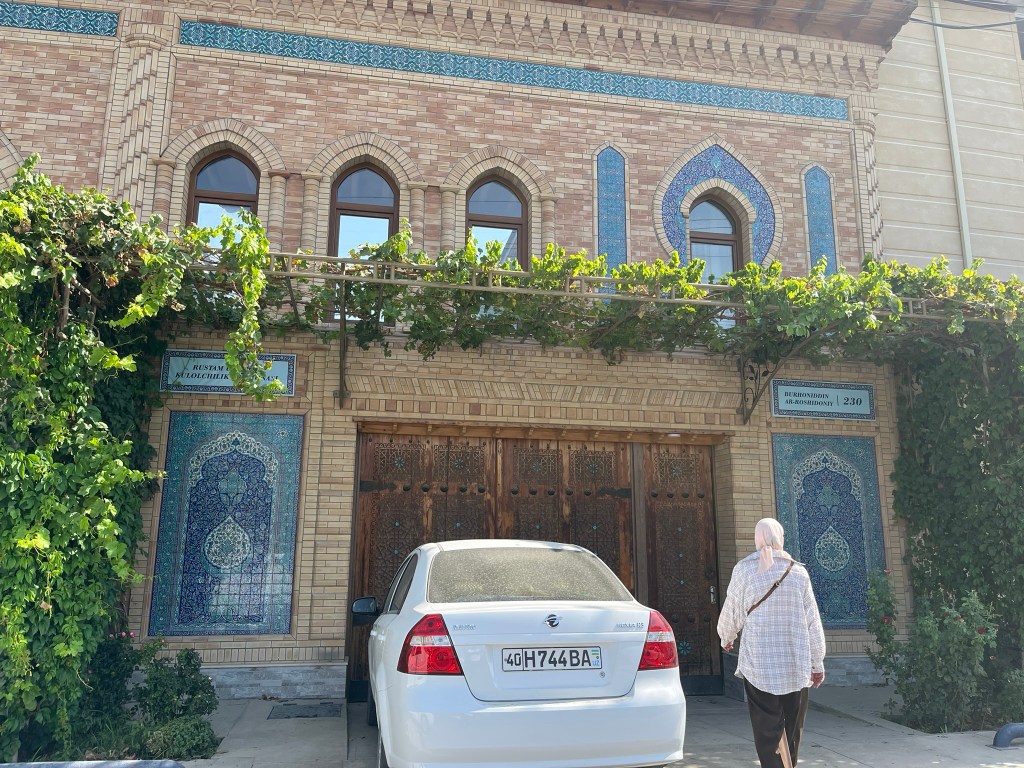
I first saw a demonstration of creating a series of simple bowls on the wheel. It’s amazing how quickly a professional can create something in just a few minutes.
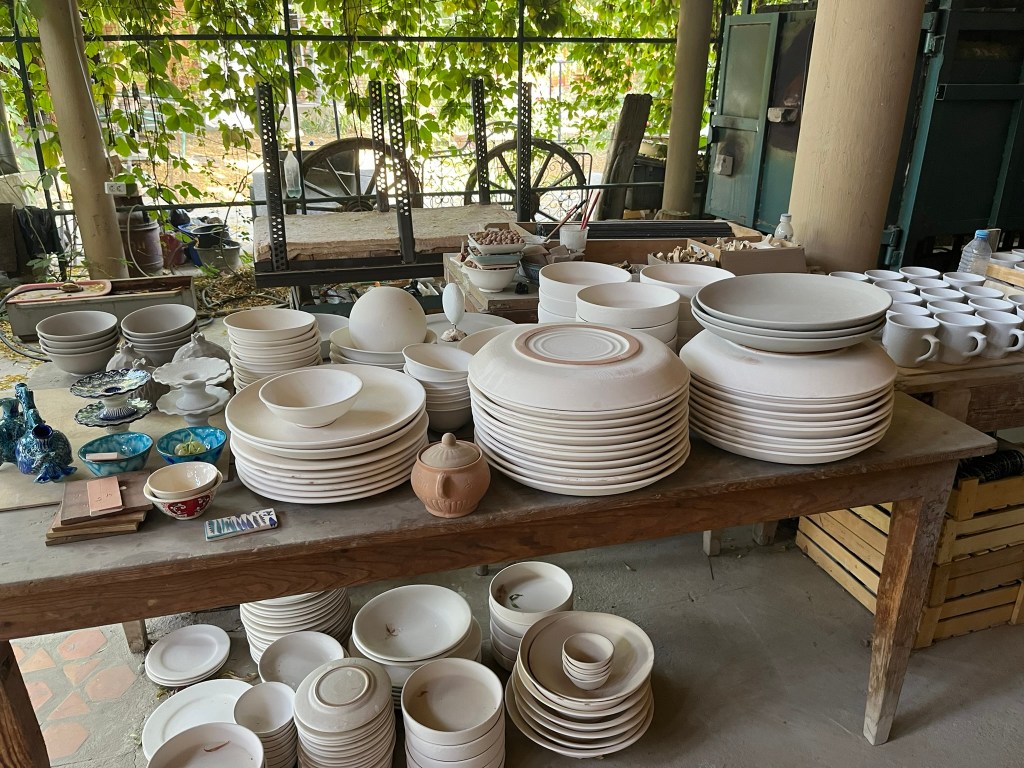

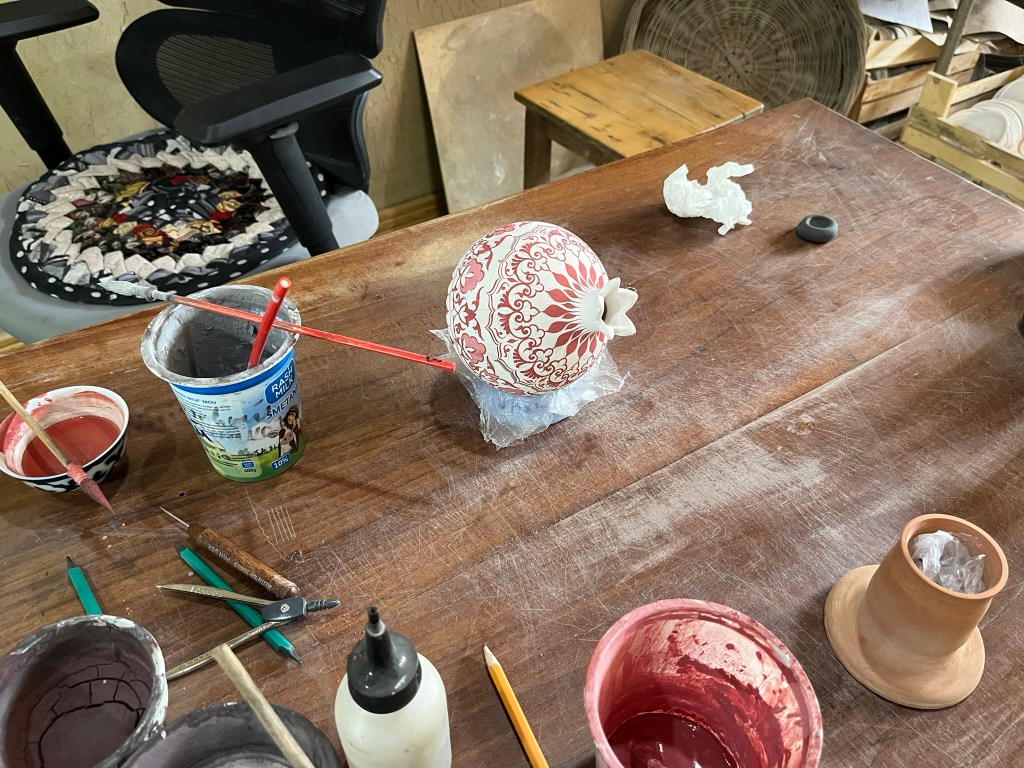
We then went upstairs to the painting studio where we saw 2 masters at work. The most important aspect of Rishton pottery that distinguishes it from other types, is the use of the ishkor plant ash in the glaze and undercoat. The plant is harvested, dried and burnt to create a white ash. The ash is washed and sieved, leaving a fine alkaline powder, which is then mixed into a solution and used as an undercoat for the first firing, onto which paint will be applied and then as a glaze over the top. It is the alkalinity of the solution which is important and locks in the bright blues and greens creating a shimmering turquoise effect.
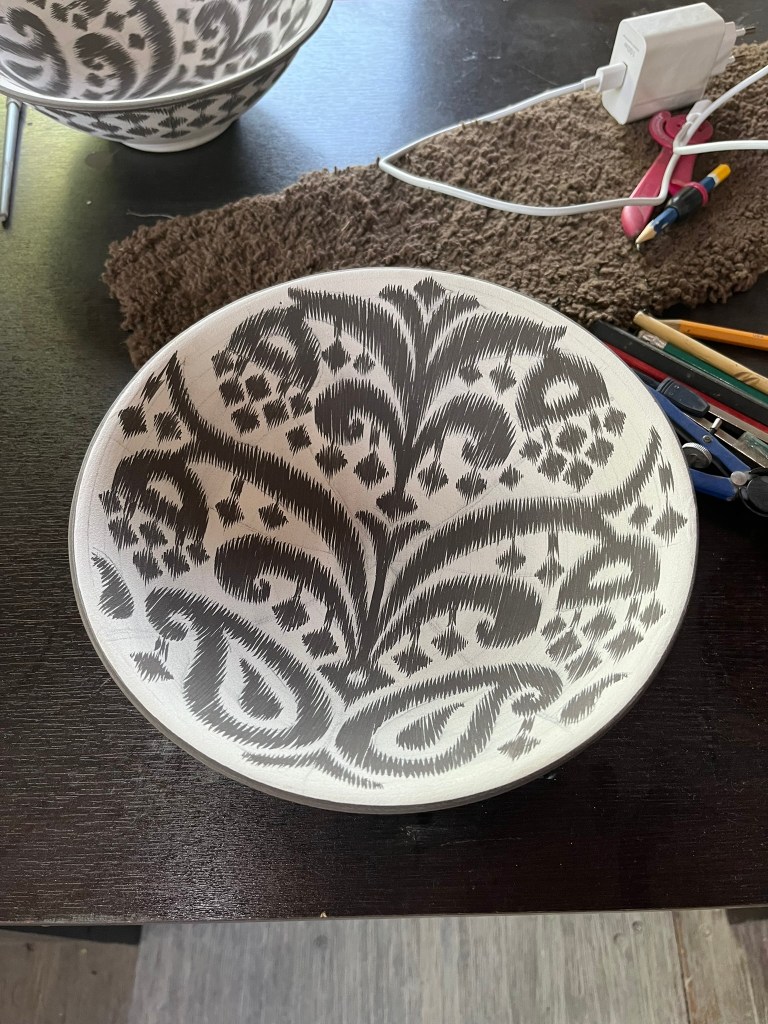

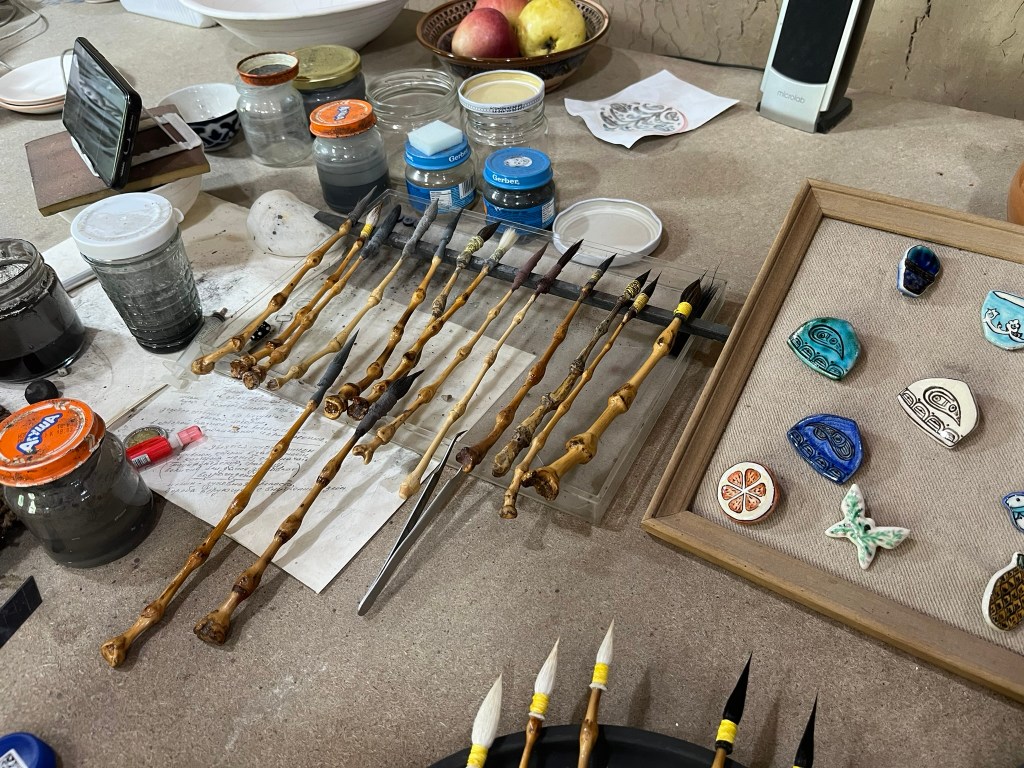
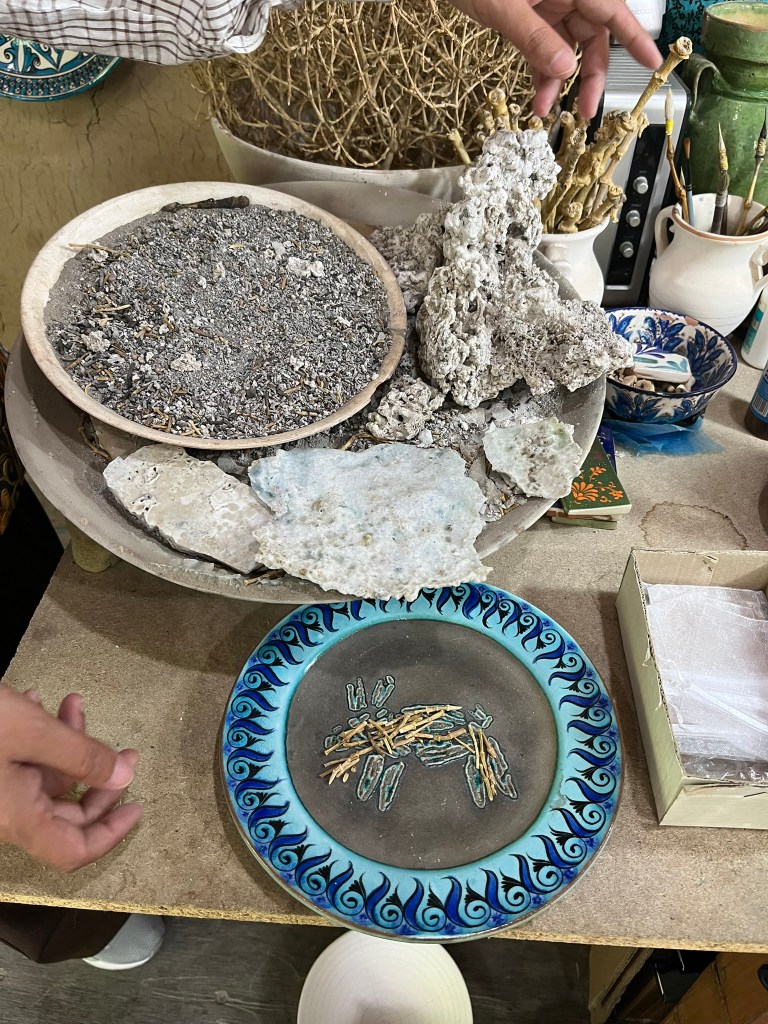
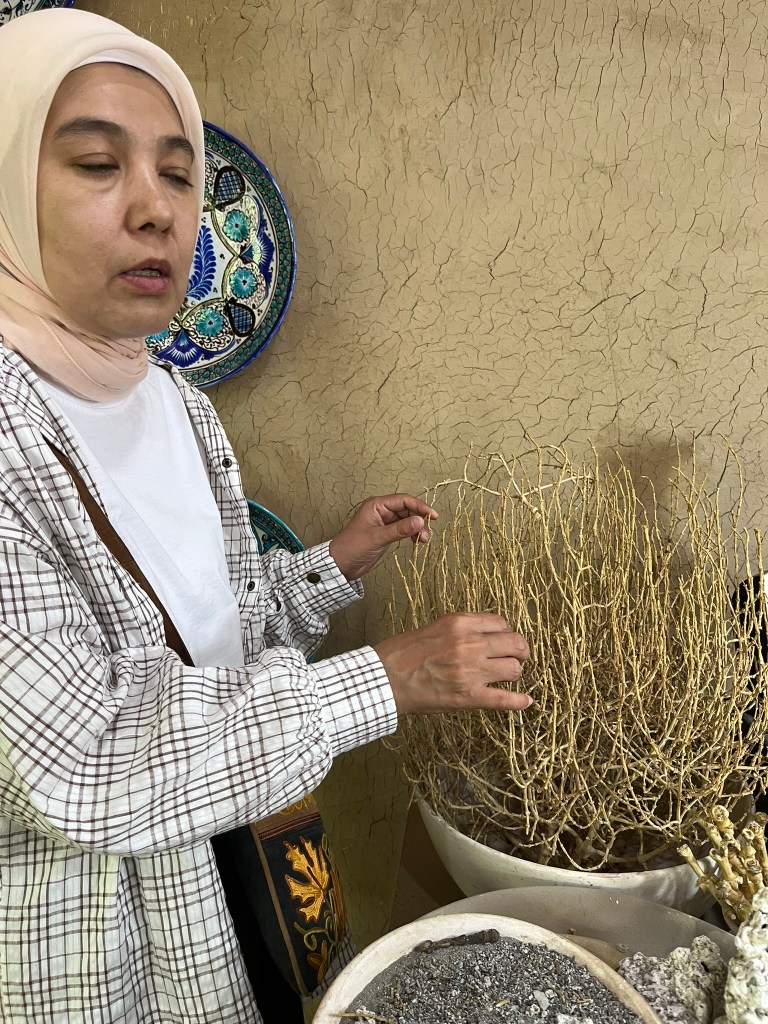
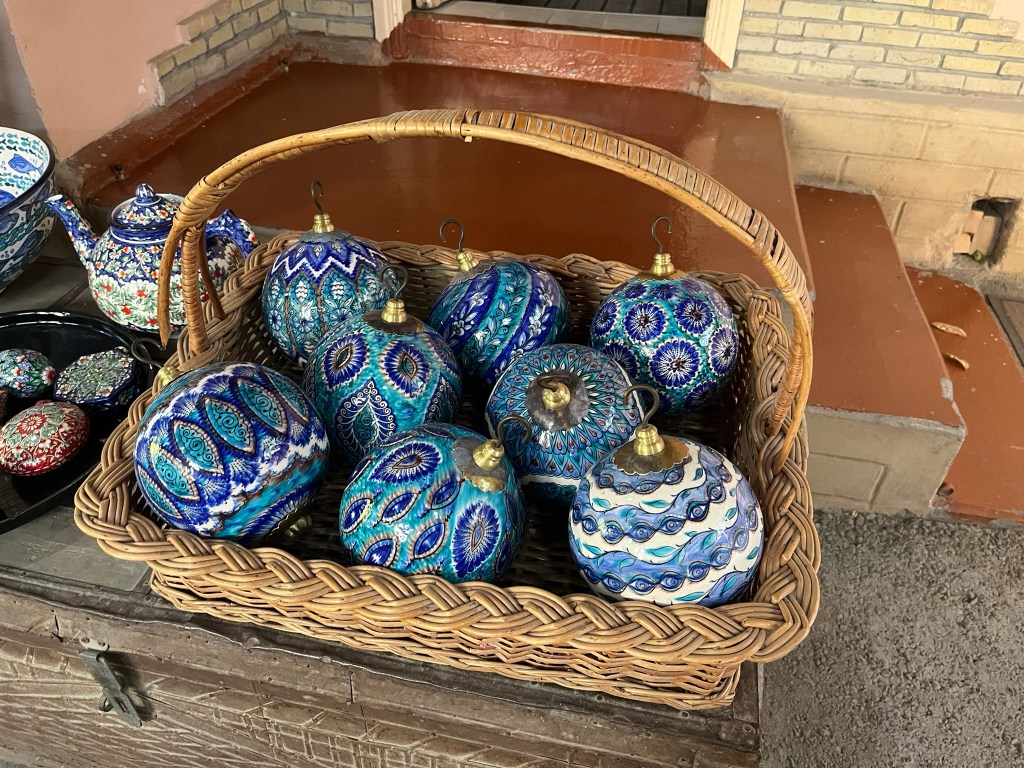
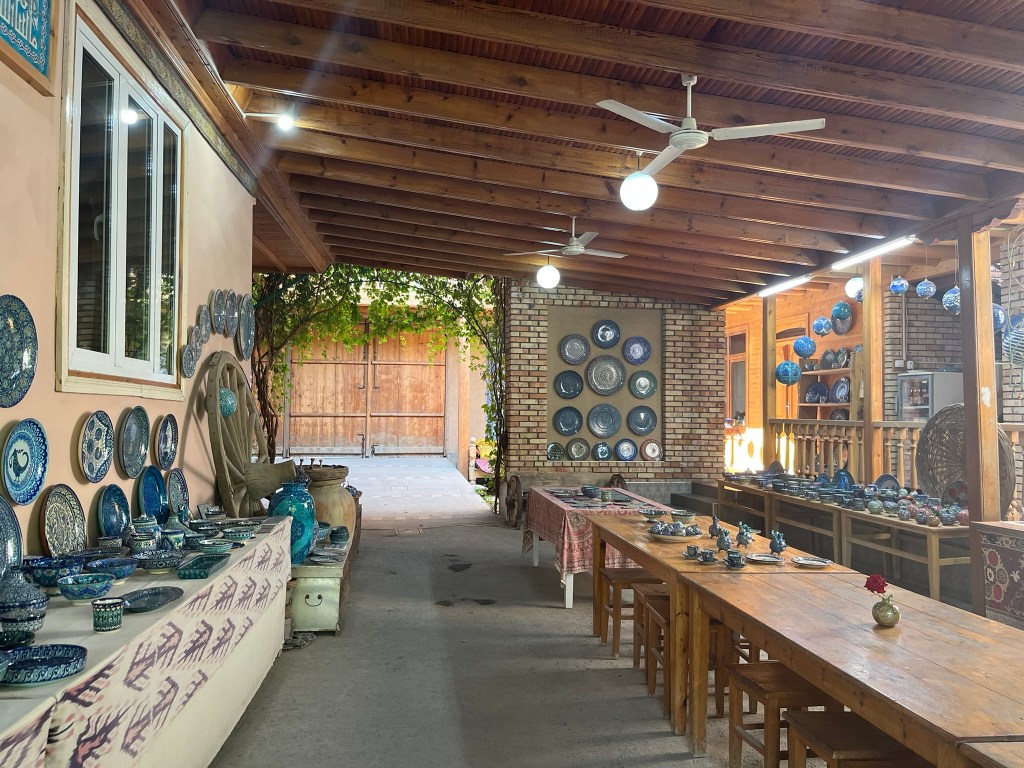
We then came downstairs to explore the courtyard and all the beautiful pieces they had available to purchase. Once I had chosen which pieces would be coming home with me, I enquired about who they typically sell to. I assumed they would say that the pieces went off to areas like Samarkand and Bukhara to sell in tourist shops. But to my surprise they said what is produced in this workshop goes off to museums and private collections all over the world. And they they produce complete sets for Embassies (I assume they meant Uzbek embassies in other parts of the world) and they had a big client in France who orders thousands of pieces every year. I feel quite lucky to own such a special piece of pottery!

 Colette's Grand Detour
Leave a comment