The flag of Kyrgyzstan is a bright bold red with the center piece a golden-yellow sun of 40 rays surrounding a tunduk (the central crown of a traditional yurt). It was adopted in 1992 after Kyrgyzstan gained independence from the Soviet Union.
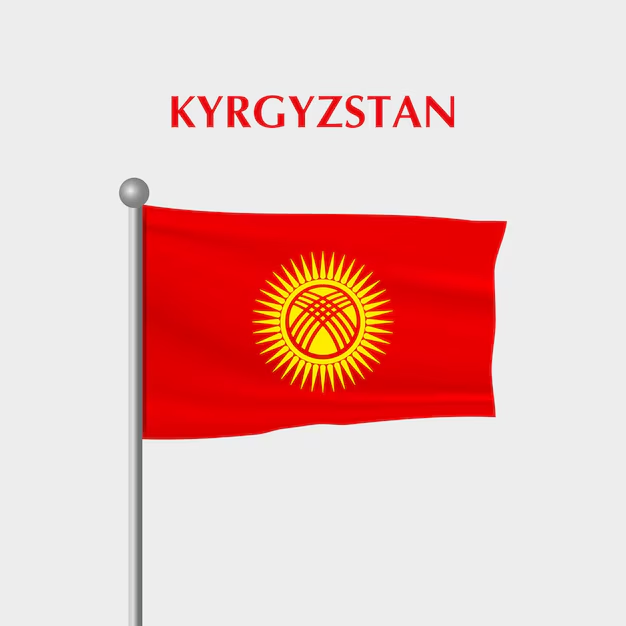
The red is meant to represent the valor and Bravery of the Kyrgyz hero, Manas. Red was the color of Manas’ battle banner. And the 40 rays of the sun are supposed to represent the 40 tribes united by Manas to form the Kyrgyz people. The tunduk is a powerful cultural symbol presenting family and the unity of the Kyrgyz people.
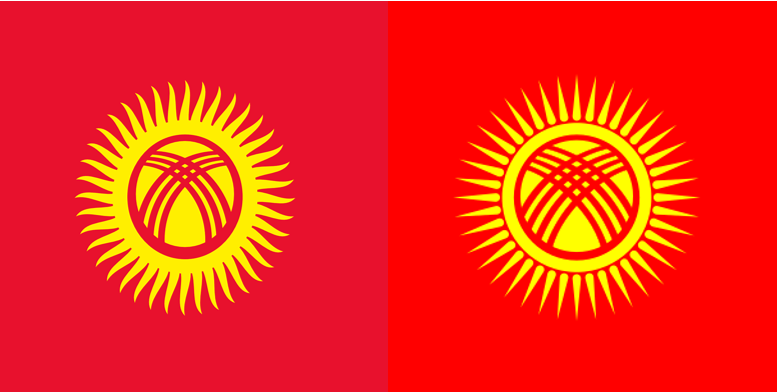
There has been some controversy over the use of strong tribal symbolism as some argue it overemphasises the Manas epic and doesn’t fully represent the modern Kyrgyz identity. Separately, and more bizarrely, in 2023 the president decided to make very subtle changes to the way the sun rays were represented on the flag because some had said it looked like a sunflower.
The sunflower in local Kyrgyz culture is associated with fickleness and the concept of shifting allegiances for personal gain. So a bill was passed to adjust the design of the sun rays to make them more distinct. Many citizens felt that the change was unnecessary and questioned why such a minor change was prioritised over critical issues like rising inflation and poor infrastructure. It must have cost quite a lot of money to change the flags over the entire country!
A quick note on Manas as I have not mentioned him up to now, but he comes up a lot whilst visiting Kyrgyzstan, whether that be statues in his honor or symbolism in the national flag. The Epic of Manas is a heroic oral poem telling the story of Manas, a legendary warrior who united the 40 tribes of Kyrgyzstan against their enemies. It is the longest epic poem in the world with some versions reaching over half a million lines (i.e. 20x longer that Homer’s Iliad and Odyssey combined).
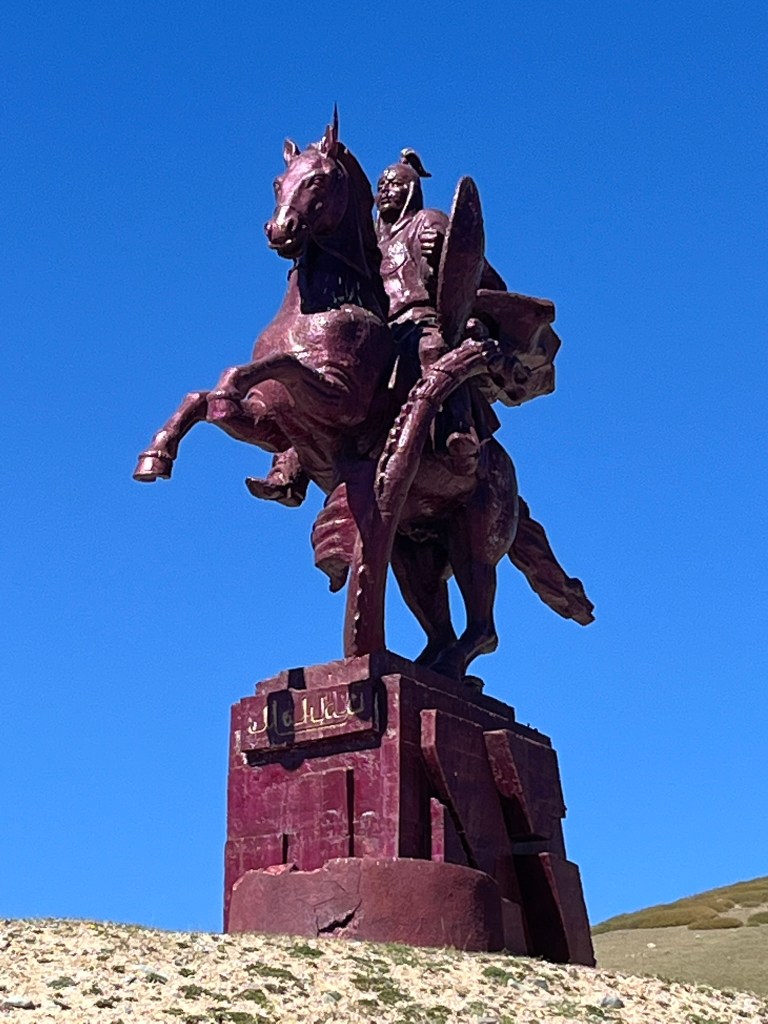
The epic is trilogy covers the life of Manas, his son and his grandson. It is traditionally performed by specialist readers known as Manaschi who recite the poem from memory in a chant-like style, sometimes for hours without a break. It is said they go into a trance and claim their gift comes from dreams and visions where Manas appears himself in front of them. As the poem is an oral tradition many subtly different versions exist as over the centuries ach manaschi has improvised new details. The poem is inscribed by UNESCO as part of the Intangible Cultural Heritage of Humanity. We were lucky in Kyszyl-Oi for one of the school children to do a short recital of part of the poem for us, which gave us an idea of how the chanting-style sounds.
 Colette's Grand Detour
Leave a comment