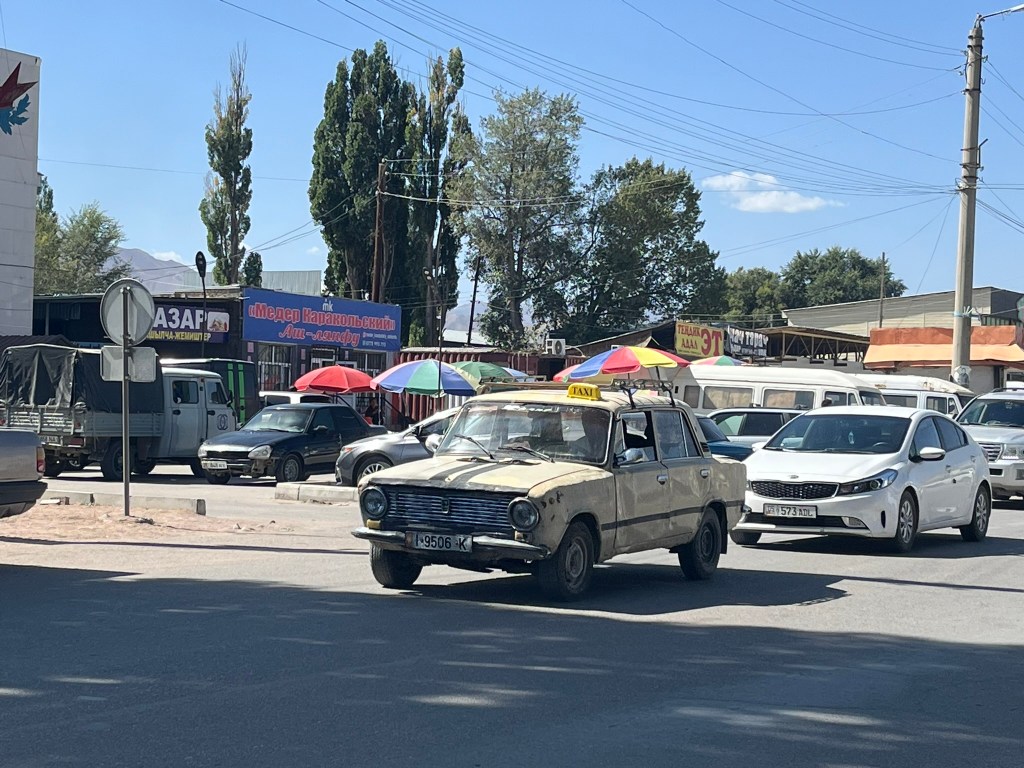
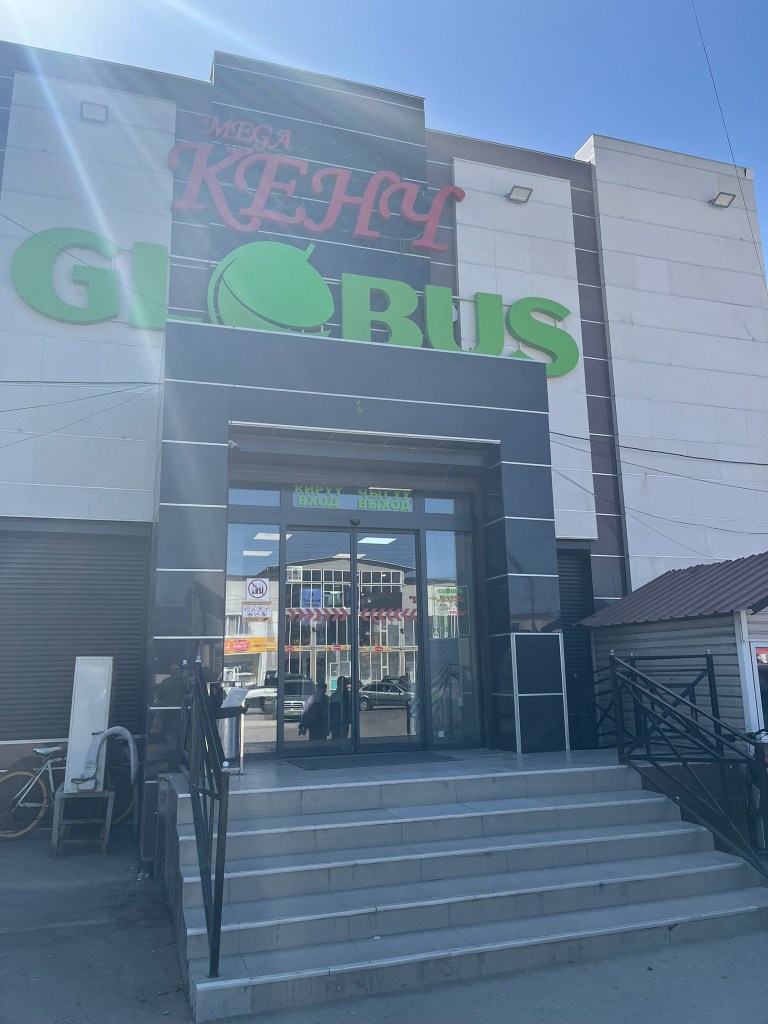
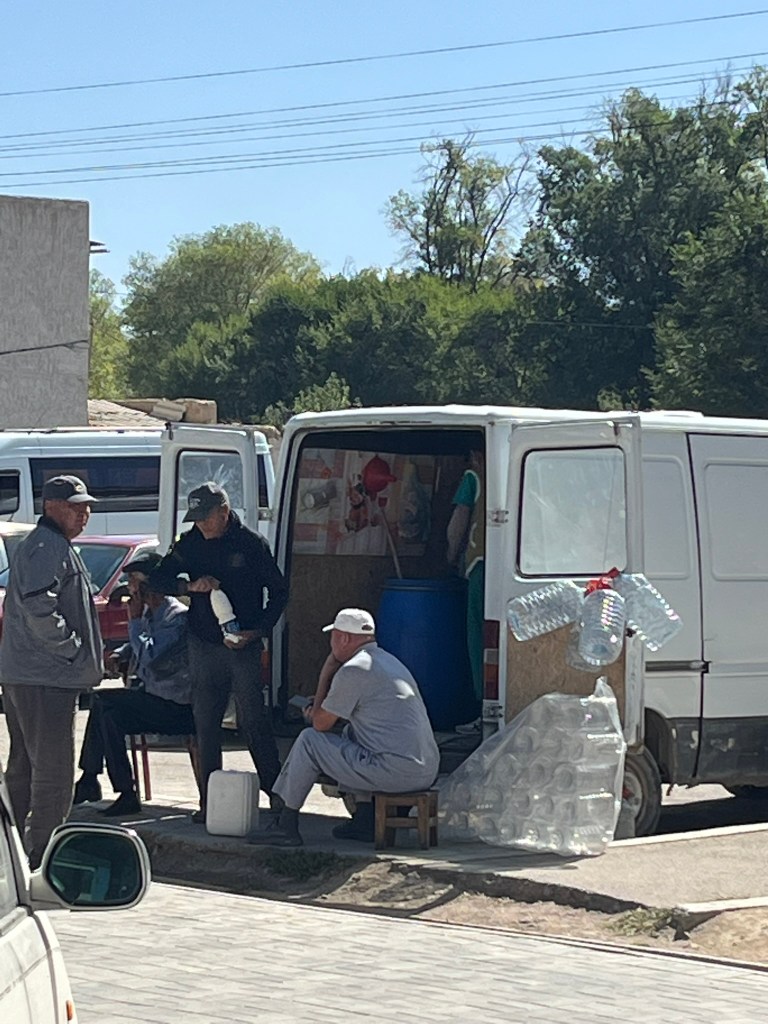
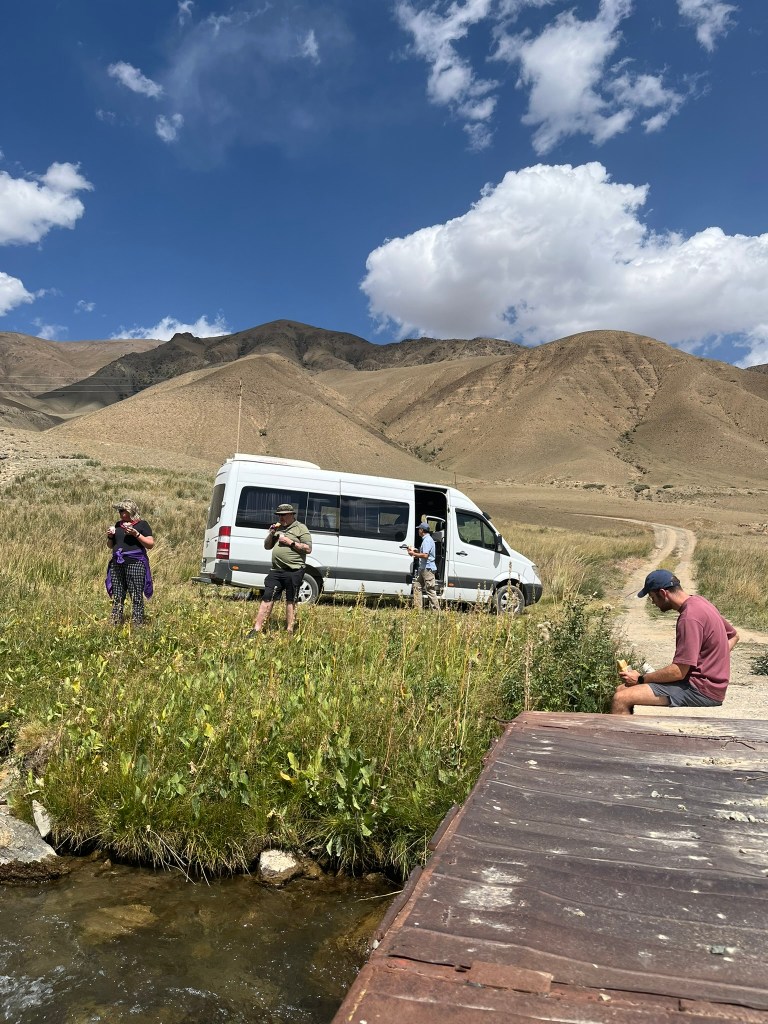
Today we left the shores of Issyk-Kul lake and were heading to Son Kul lake. The drive would take us around 7 hours in total including breaks to stretch our legs and have lunch. First we set off for the town of Kochkor, where we able to go to a supermarket and grab provisions for a picnic lunch. This little town was an interesting stop with the local market along the main street selling all sorts of things. The most fascinating was the lady selling fresh milk out of a big blue drum out of the back of her van, ladling it into old soda bottles for people as they passed.
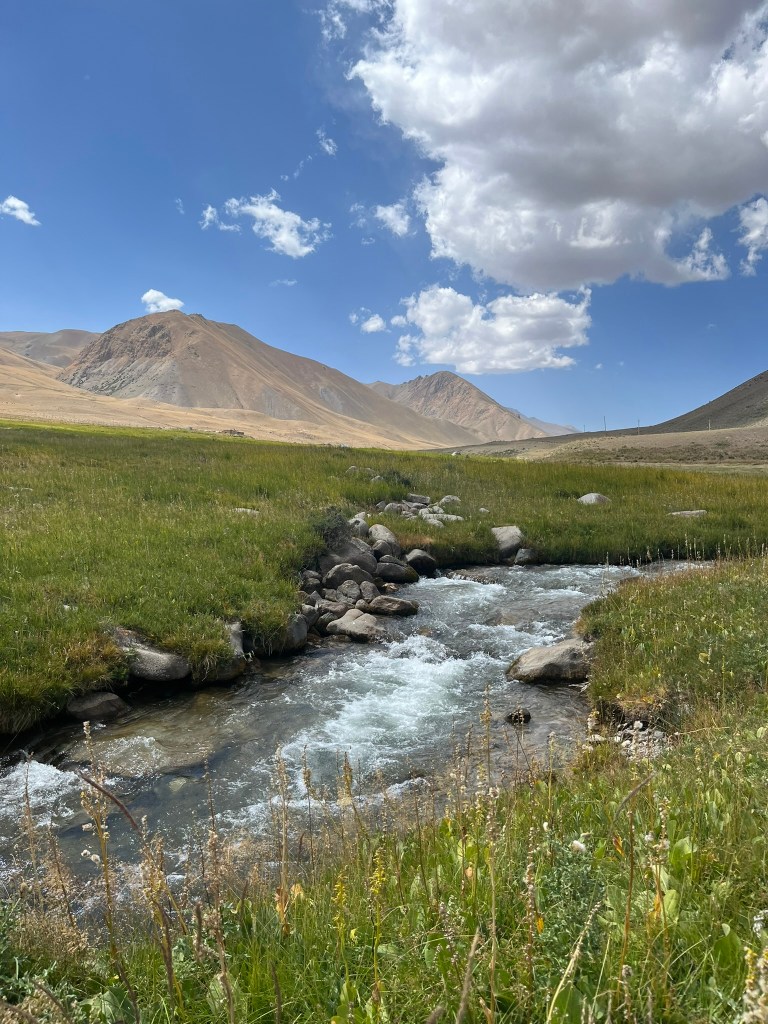
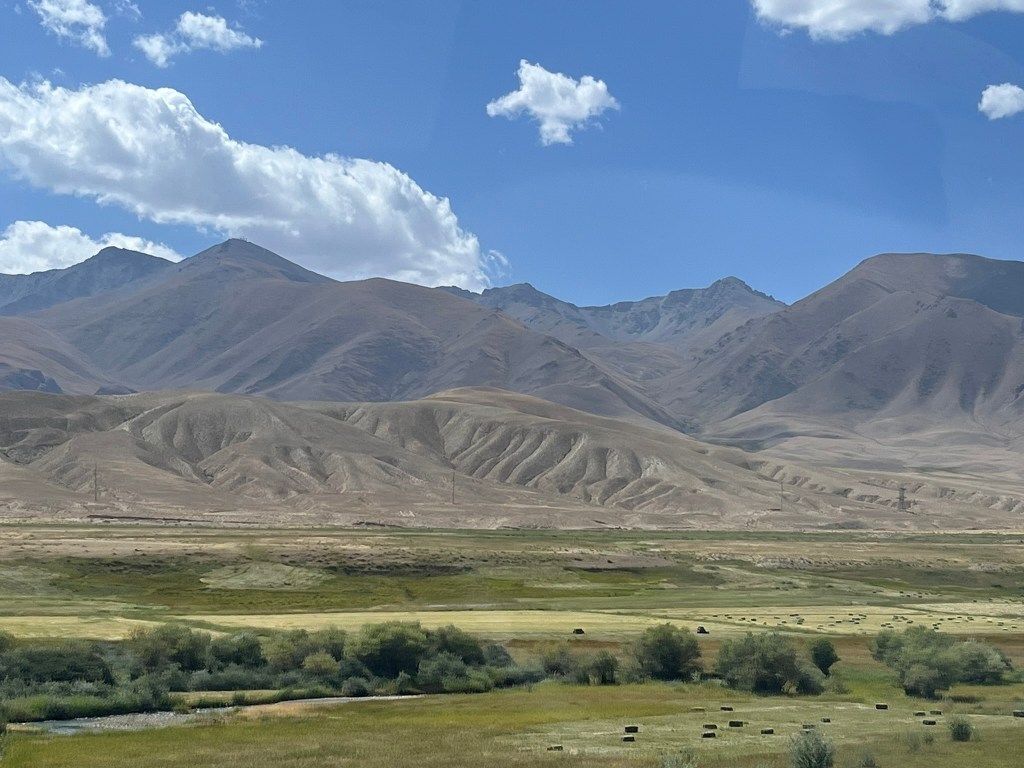
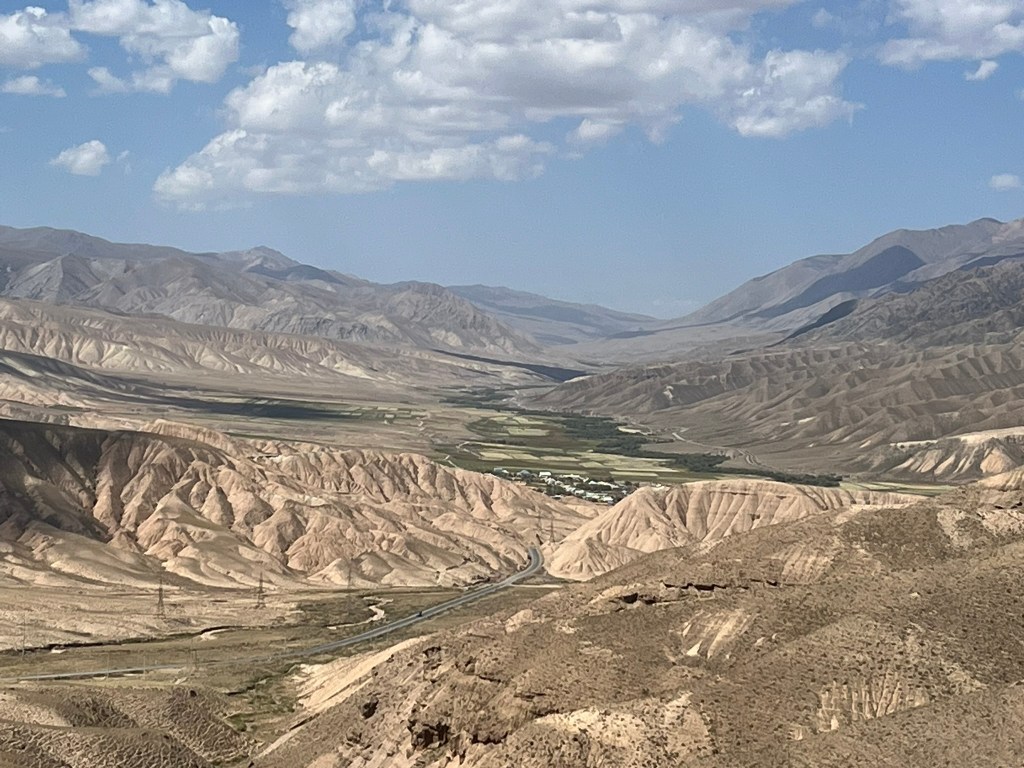
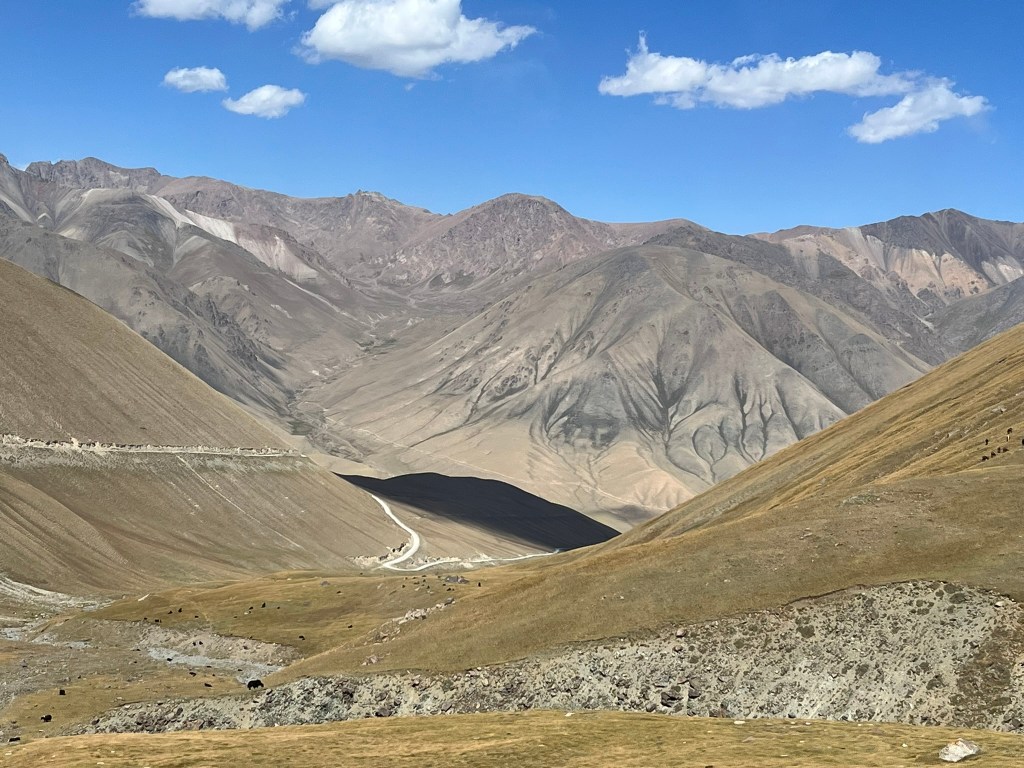
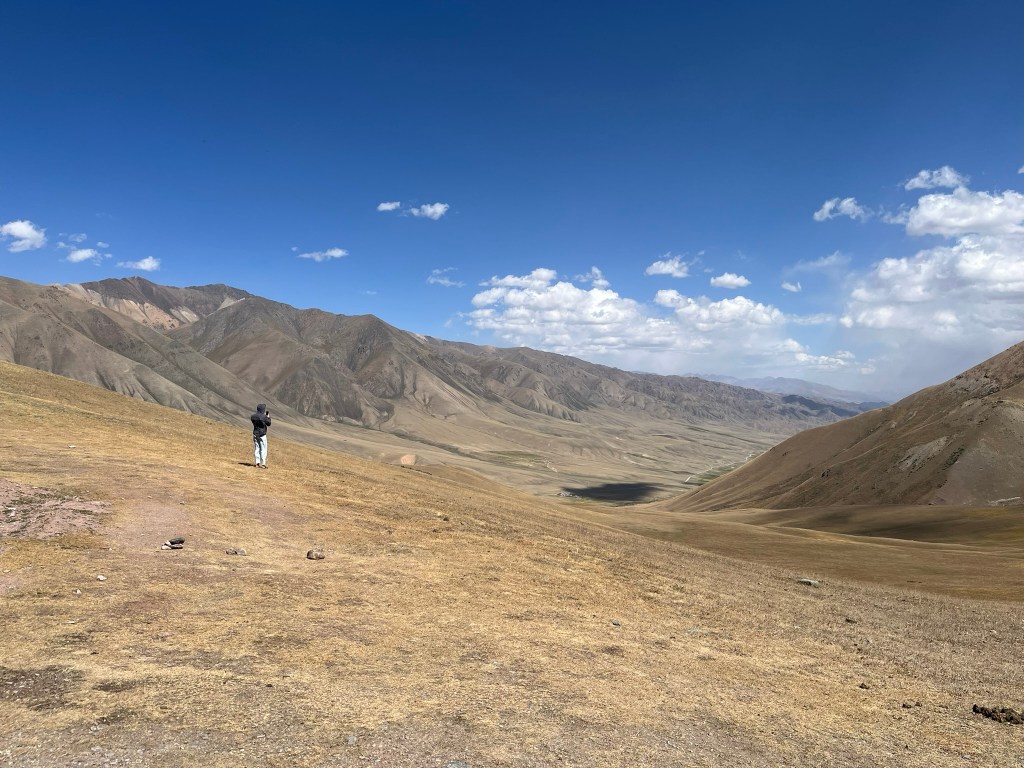
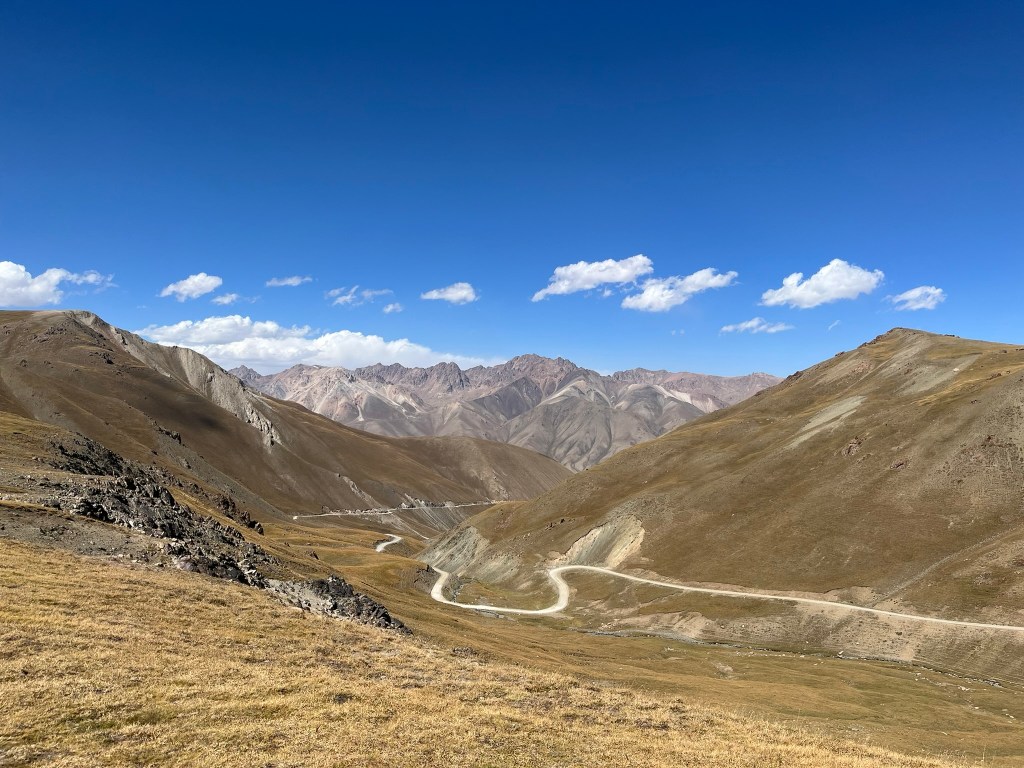
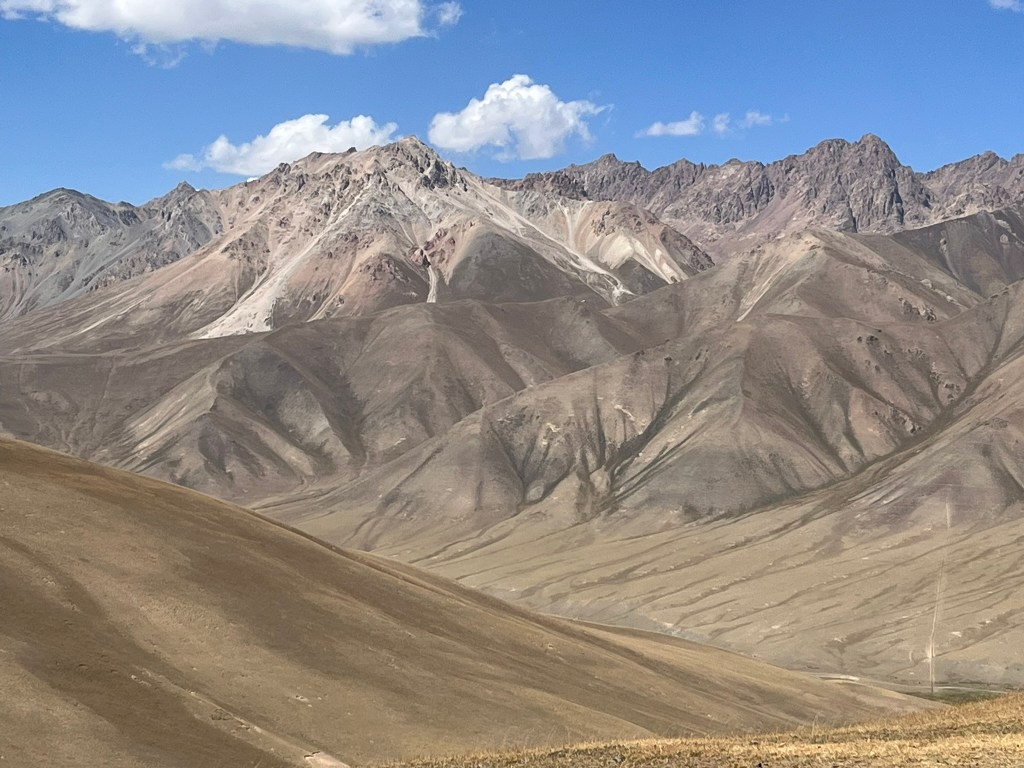
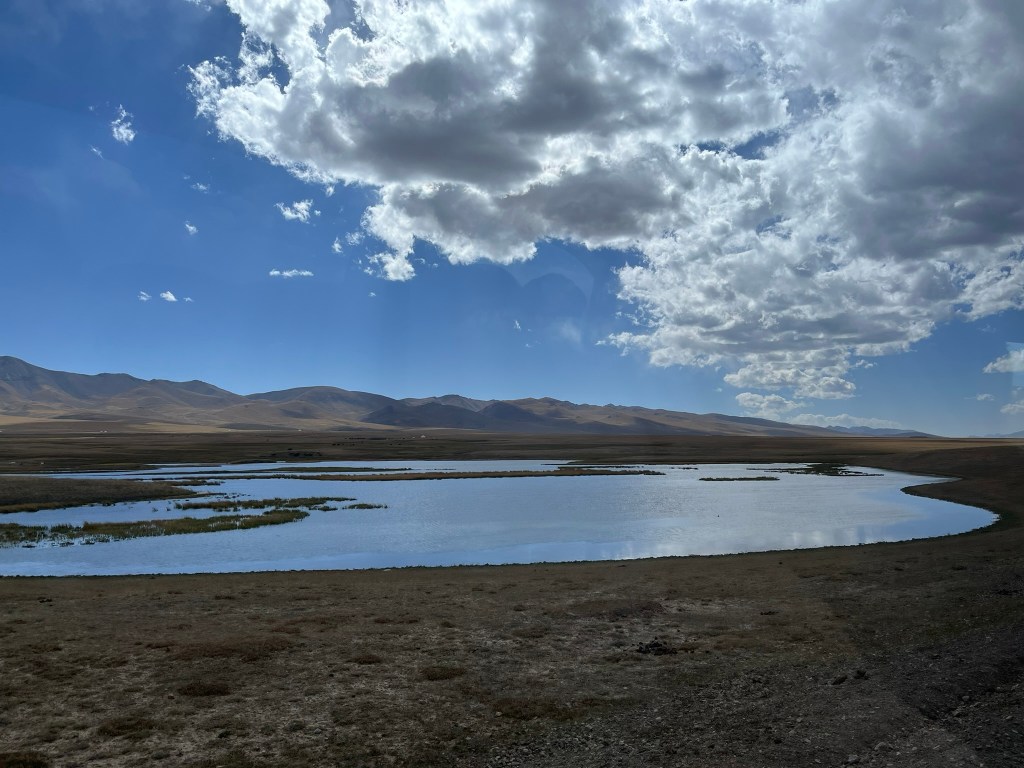
The drive to Son Kul lake is incredible and easily a highlight of the trip. The landscape is ever changing and the views looking back at the road we had slowly made our way up were brilliant. We had lunch by a stream just off the main road and our guide encouraged us to each have a shot of cold vodka to thin our blood and prepare us for the higher altitudes we were approaching. We stopped at another view point which was so windy that it was difficult to stand up and impossible to breathe when facing into the wind. A bit earlier we had seen 2 cyclists slowly making their way up the mountain pass and I’m really not sure how they were going to cycle through that strong wind.

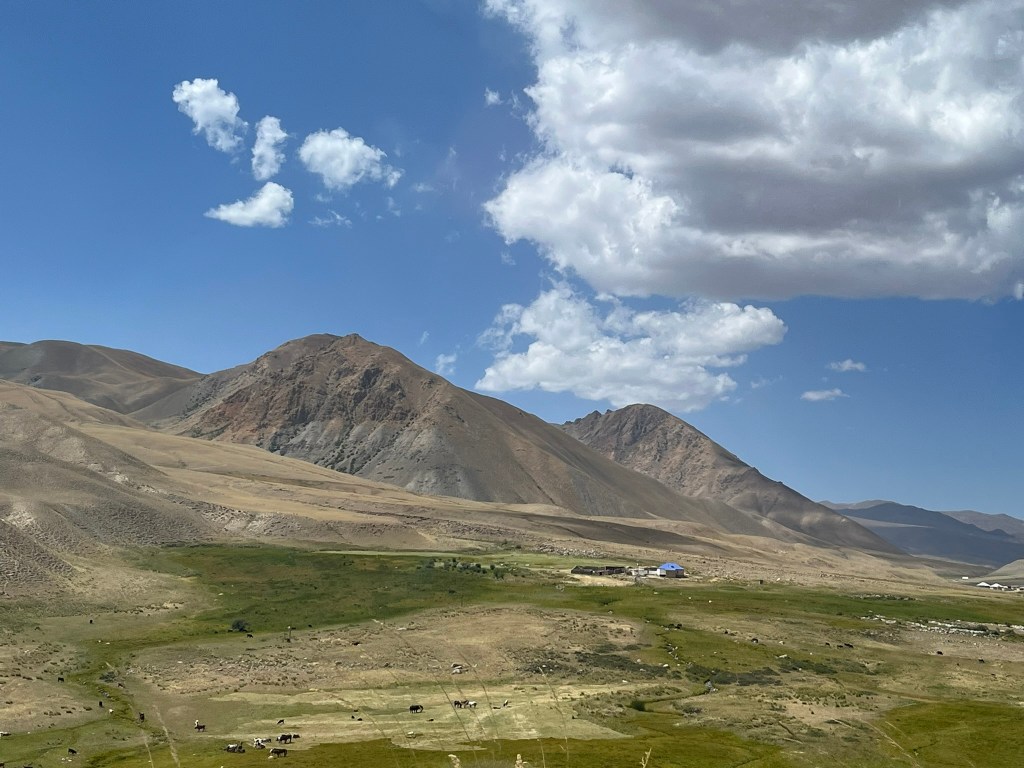
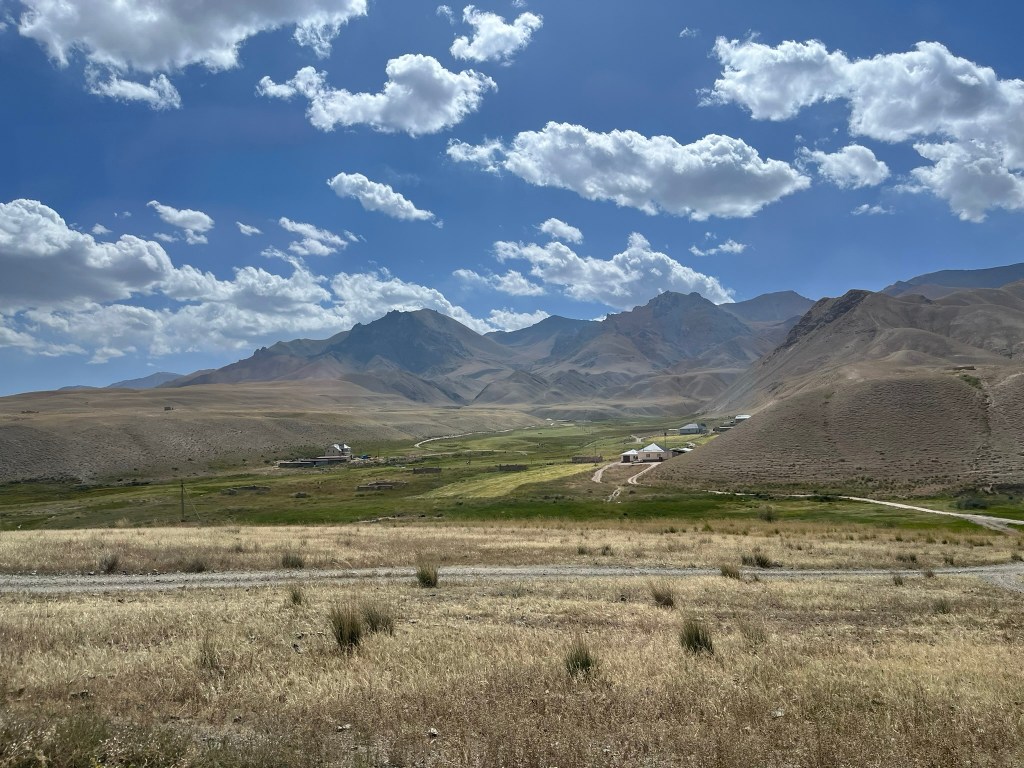

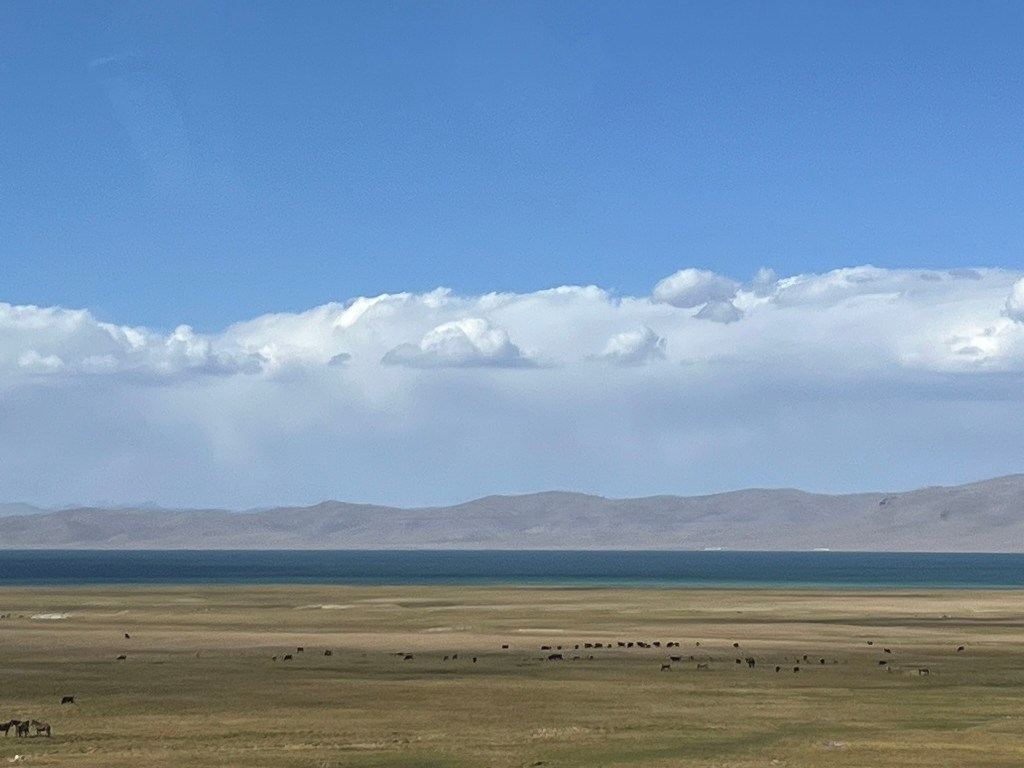
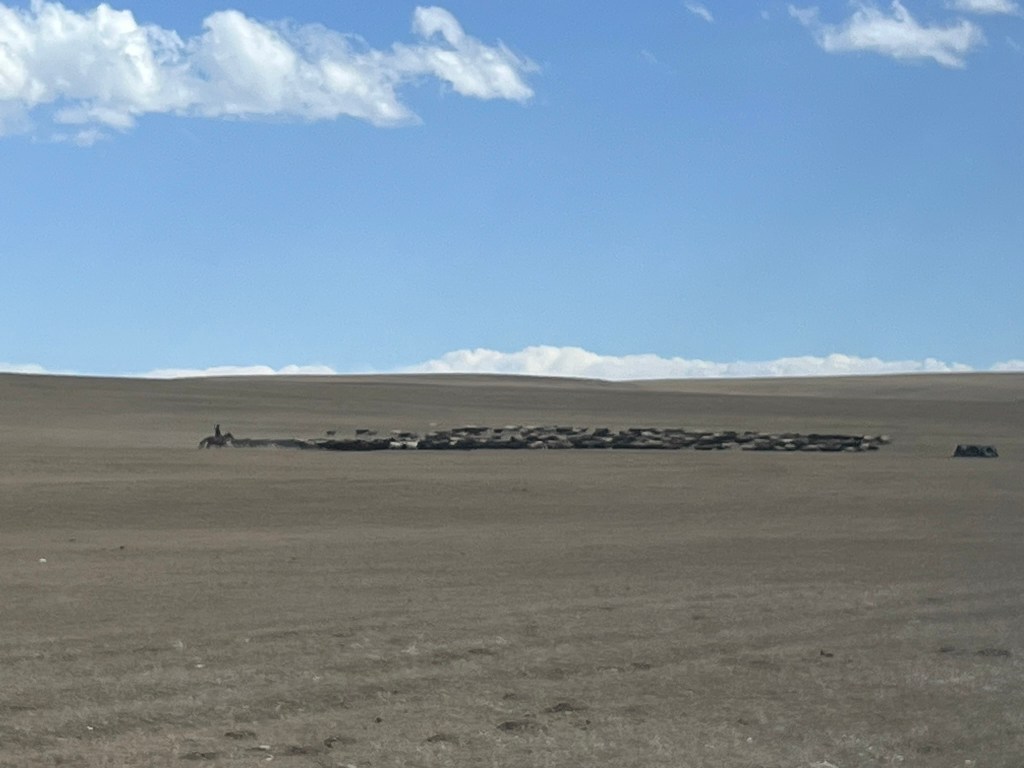
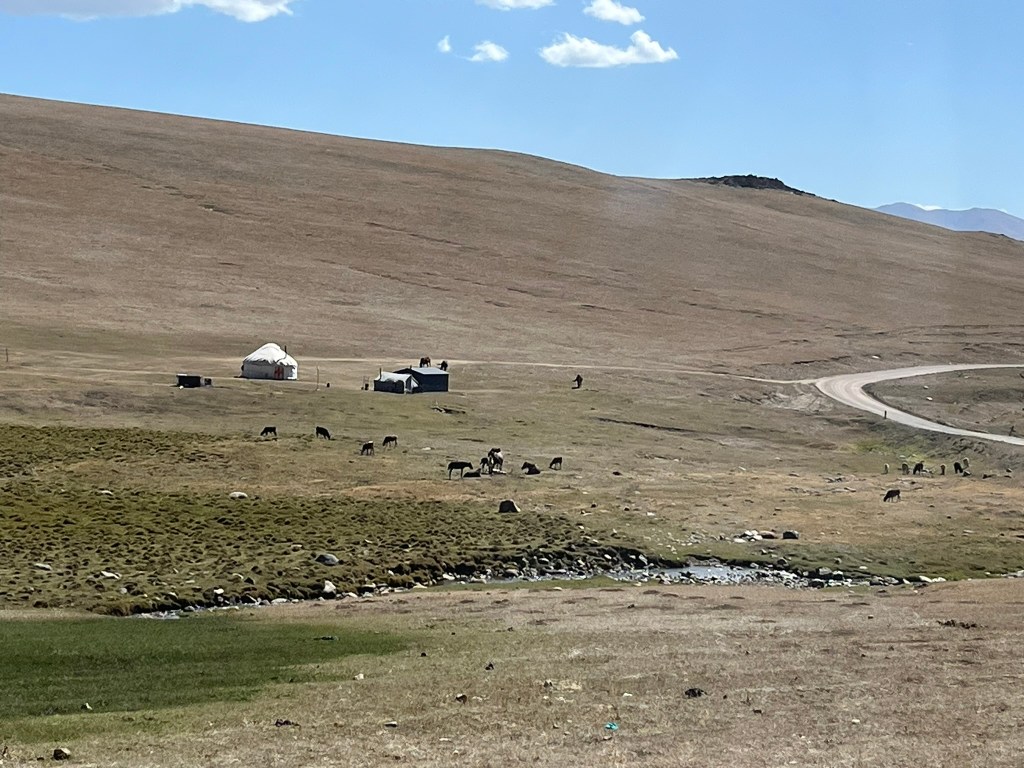
All along the route we saw grazing herds of cows, horses, yaks, sheep and goats. Sometimes you could spot the shepherds on their horses, following their herds but most of the time it seemed like the animals were alone. And there would be a yurt, here and there, to provide the shepherds shelter whilst they stayed up in the mountains searching for green pastures in the summer.
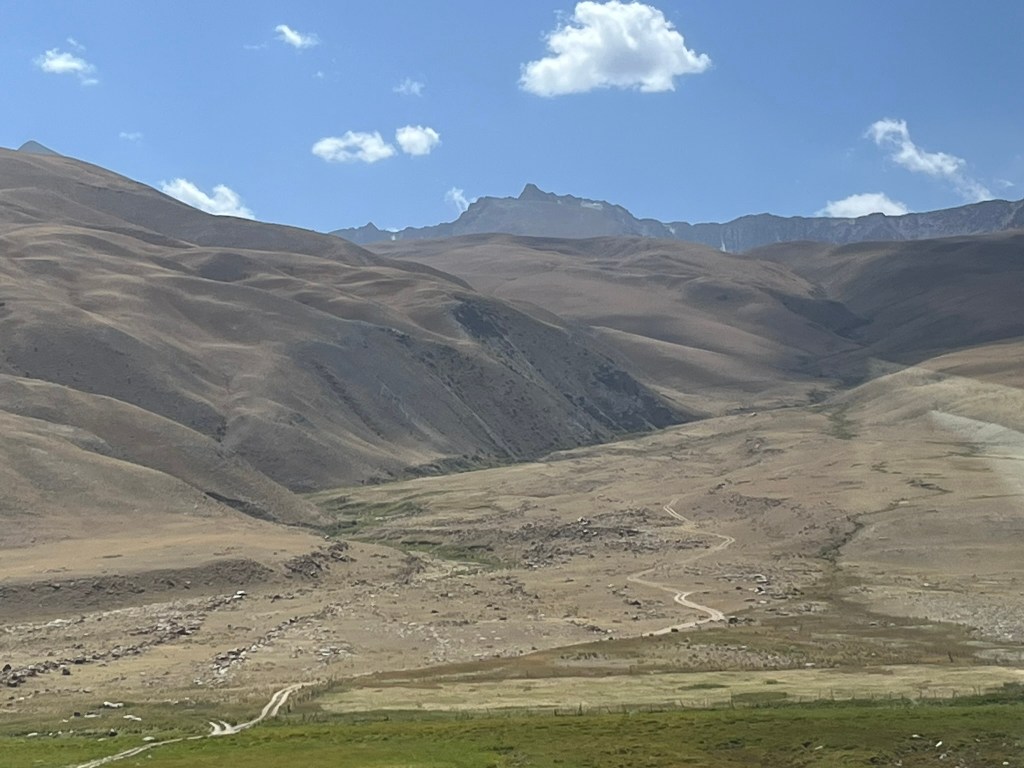
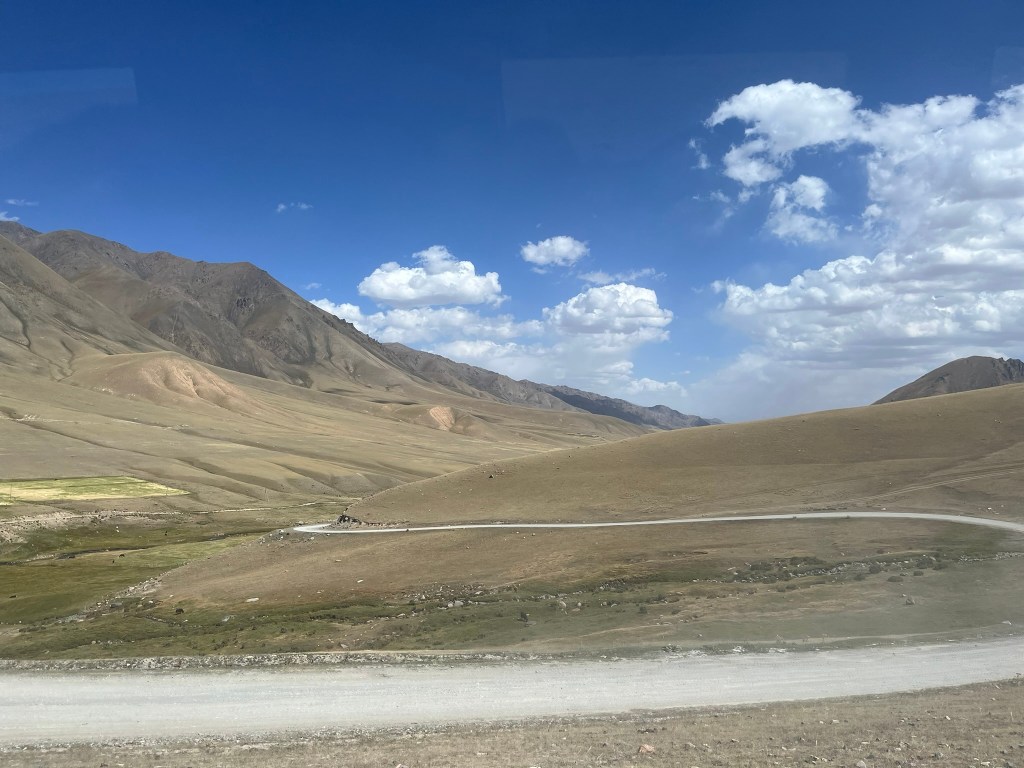
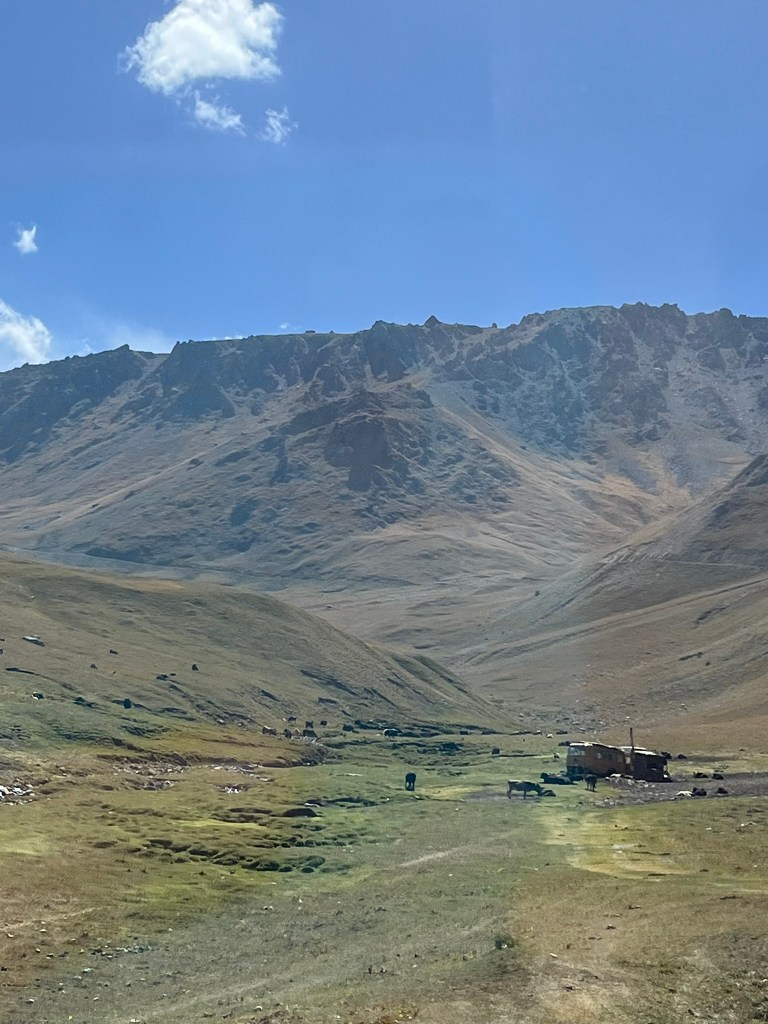
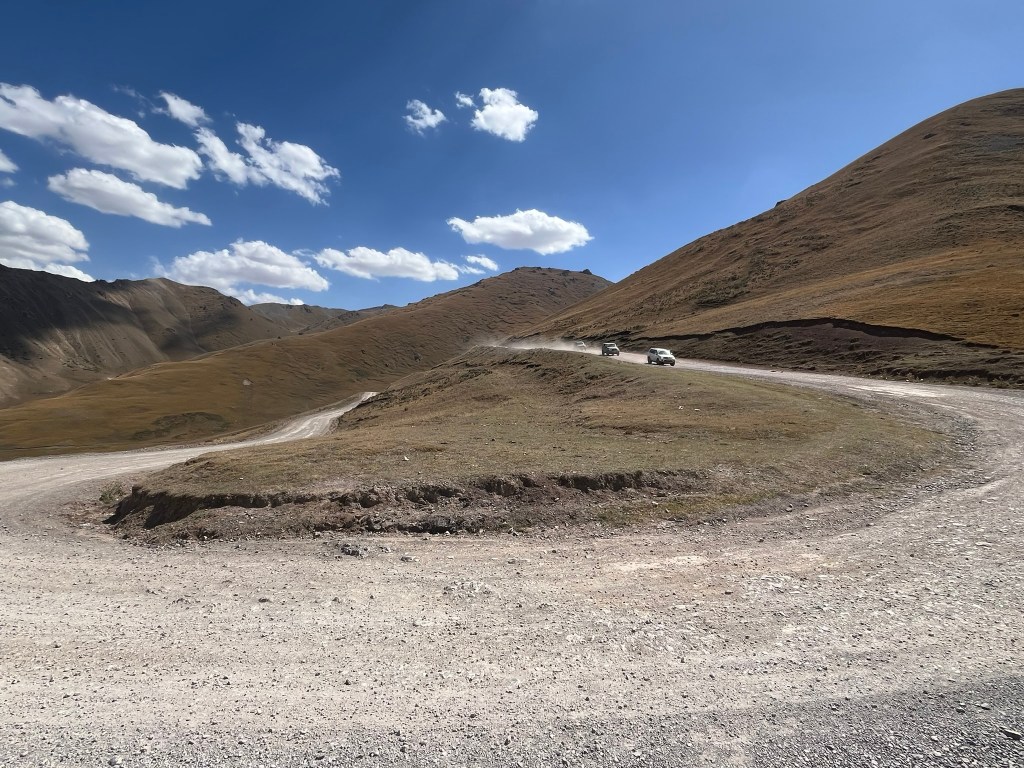
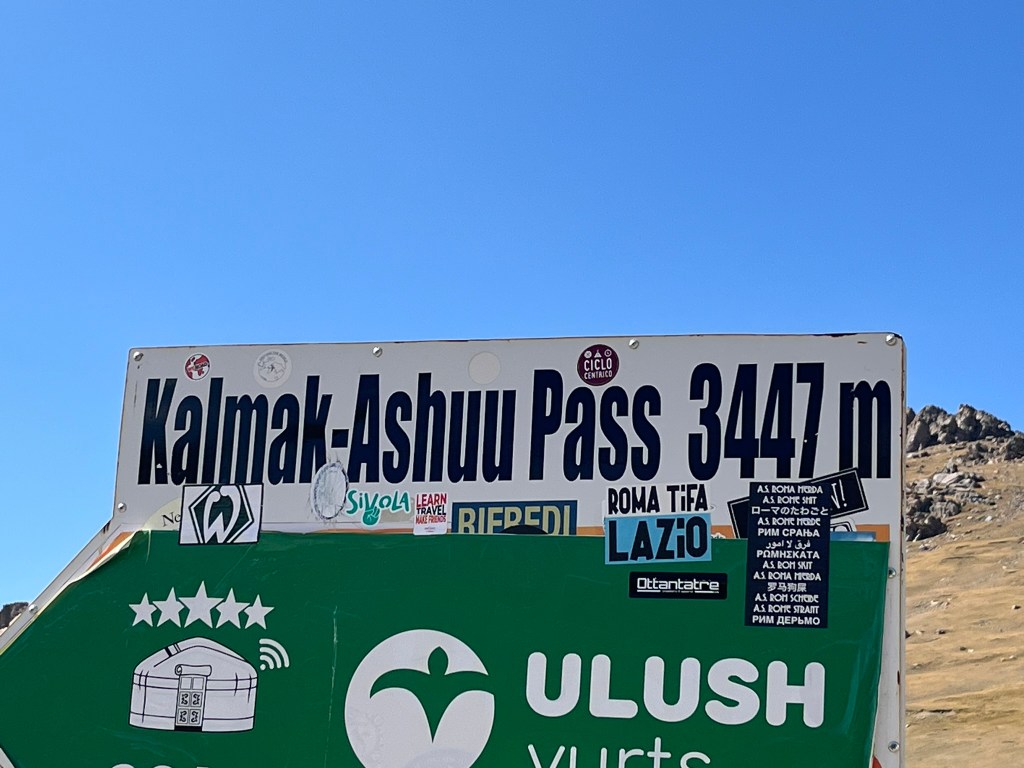
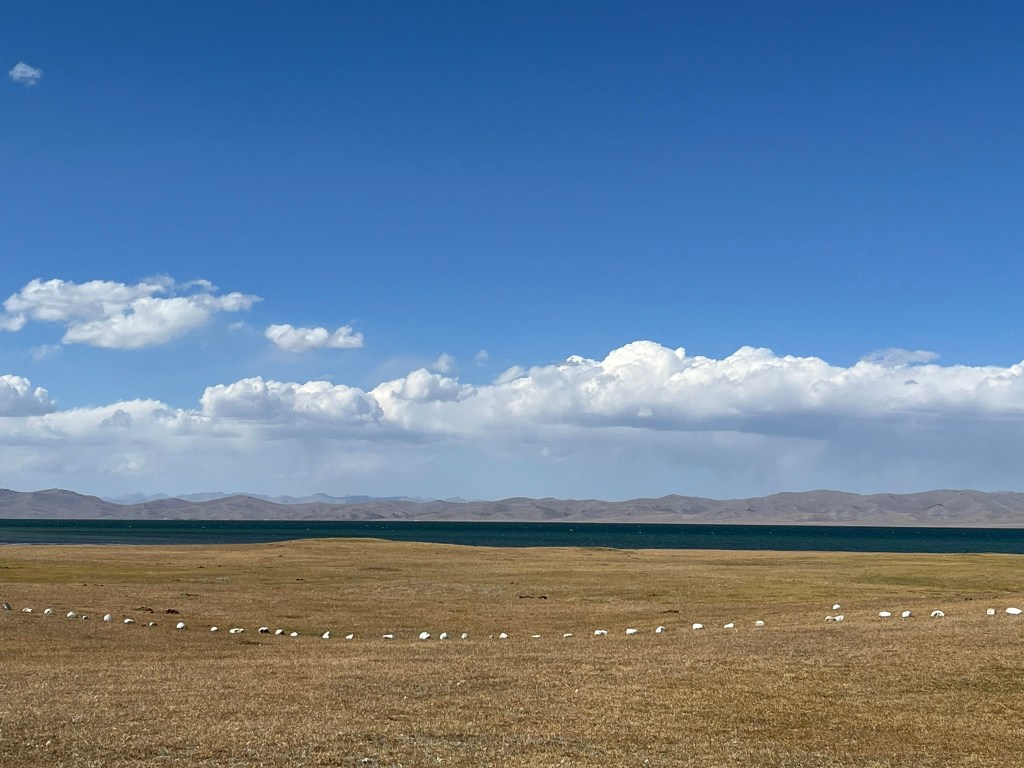
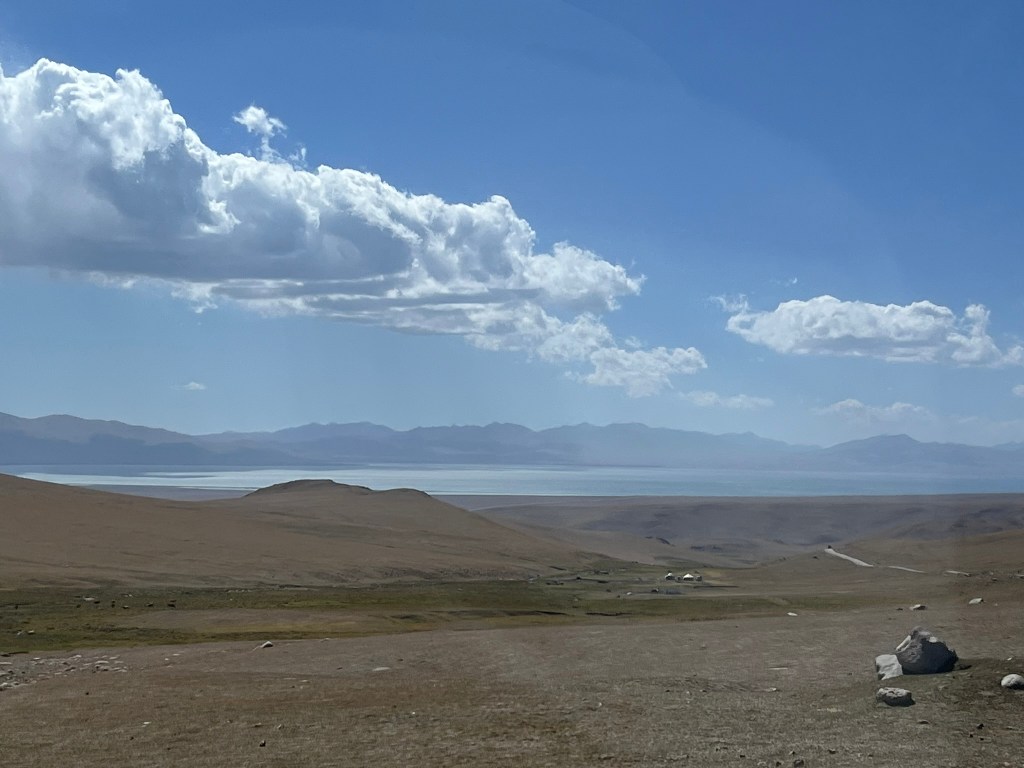
Our final stop before reaching the lake was at the pass, at an elevation of 3346m and the highest elevation we would reach during our time in Kyrgyzstan. We then started to head down into the tectonic depression in which Son Kul lake sits. Son Kul translates as ‘last lake’ and is the second largest lake in the country after Issyk Kul. The area surrounding the lake is a vast, high plateau. In the summer the lake shore is lush and green, and many semi-nomadic herders bring their cattle and yurts up to the area to take advantage of the fresh grass. In the winter, the nomads take everything down and move to lower elevations as the roads to the lake become impassable from heavy snow.
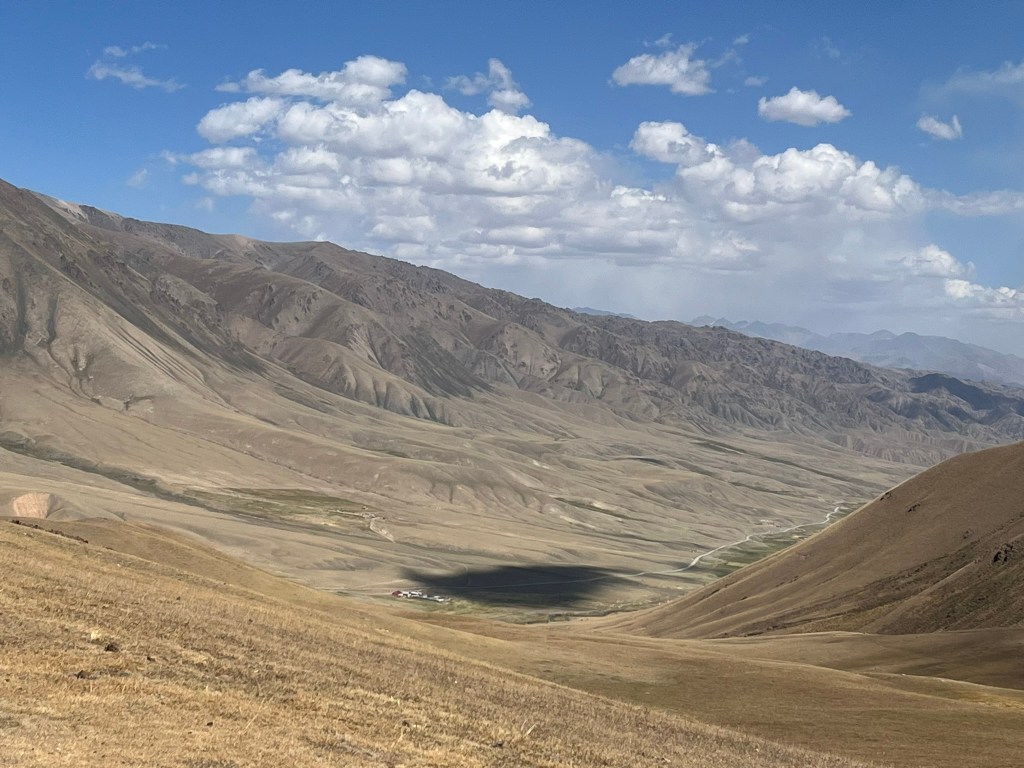
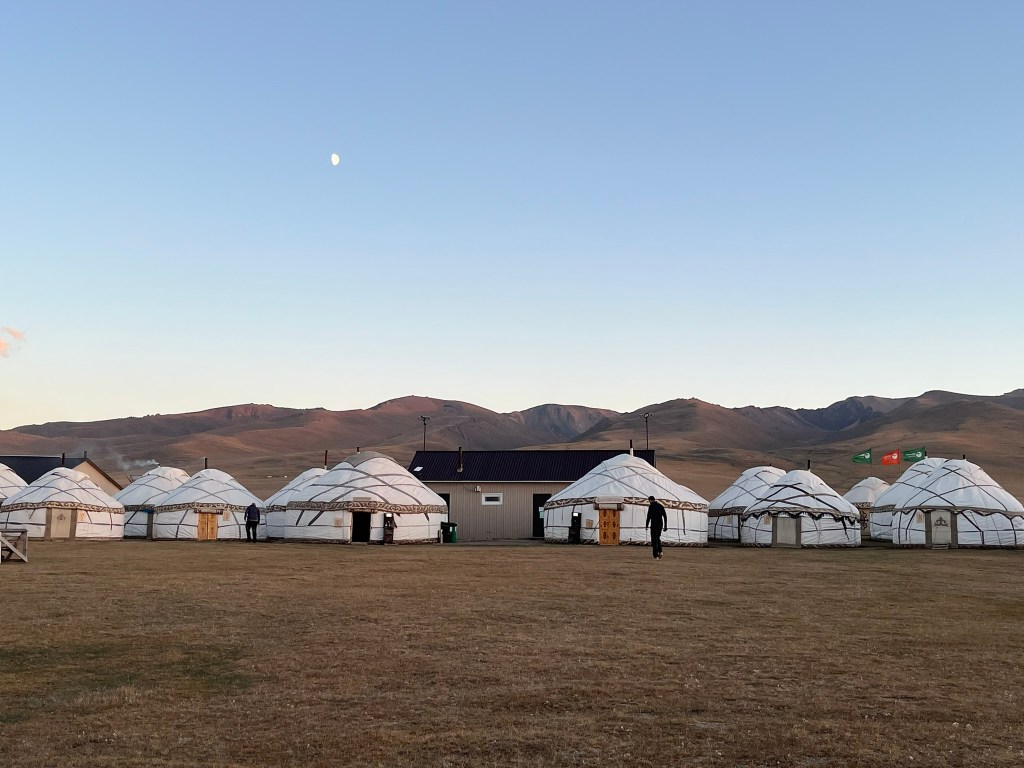
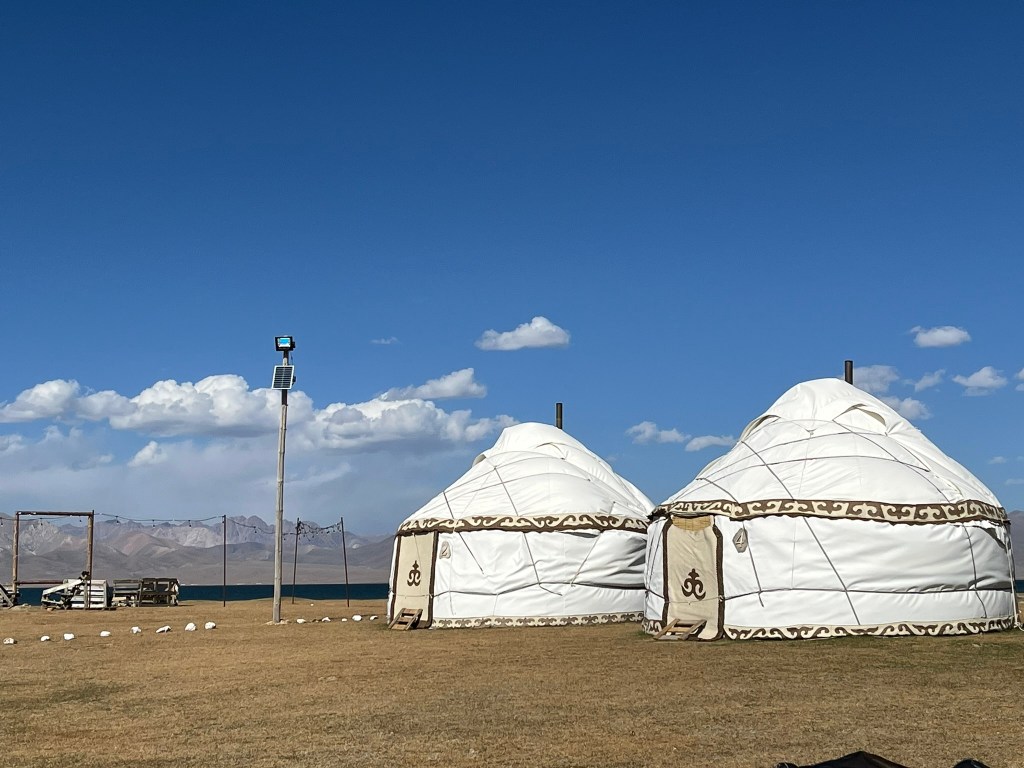
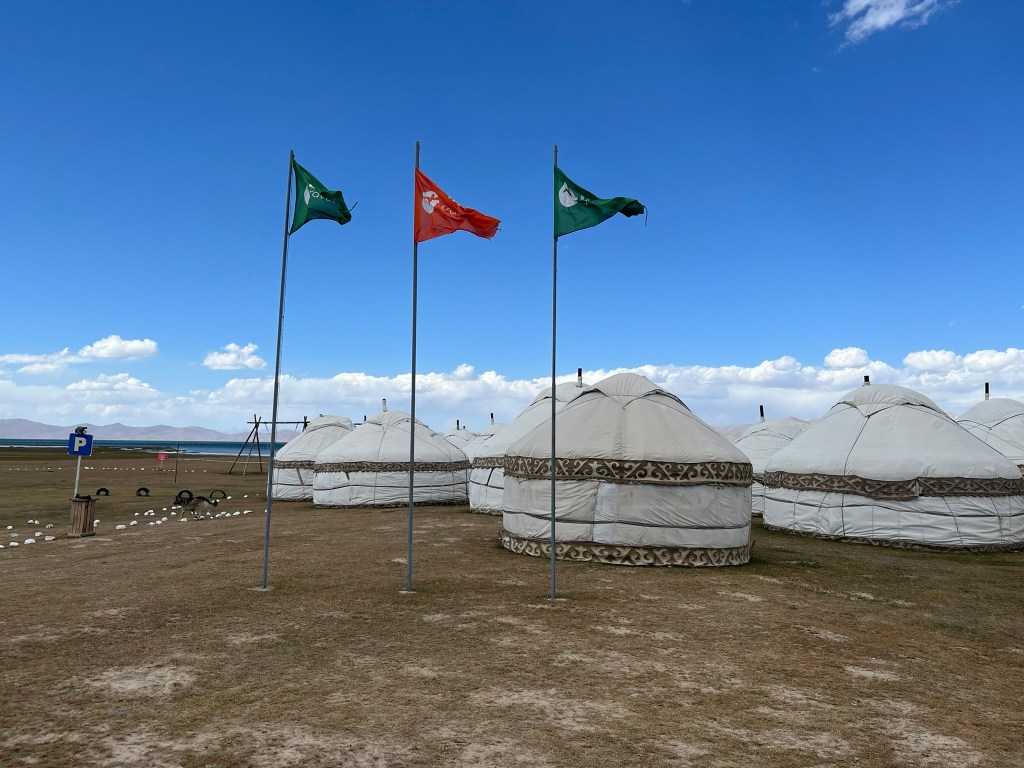
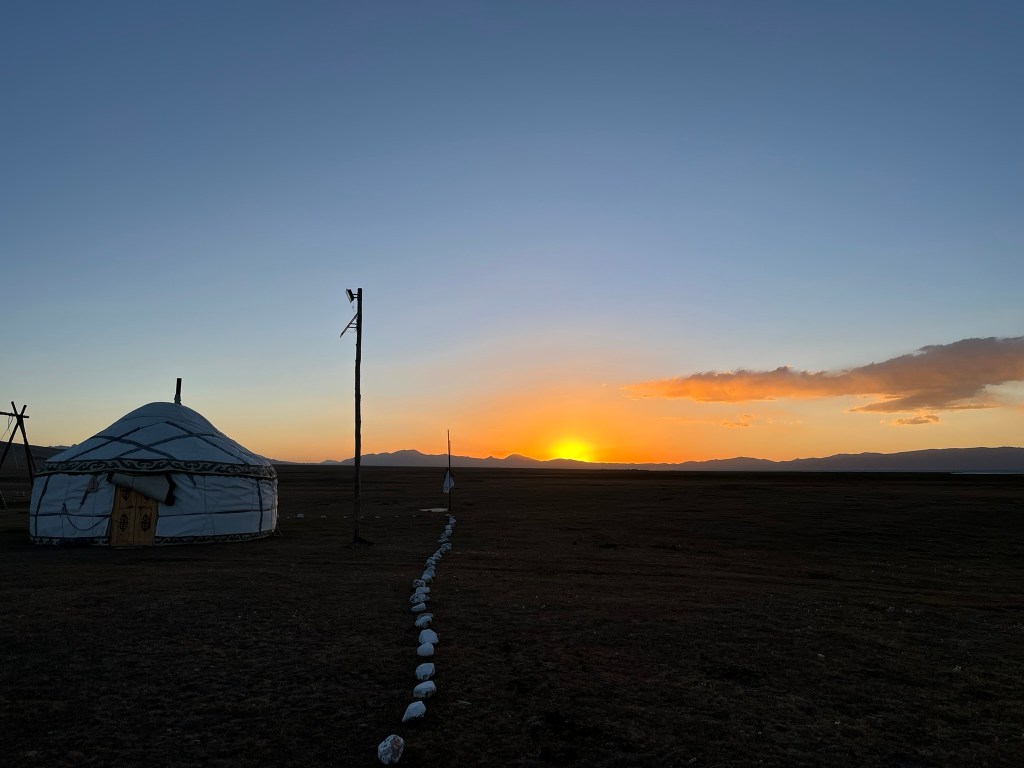
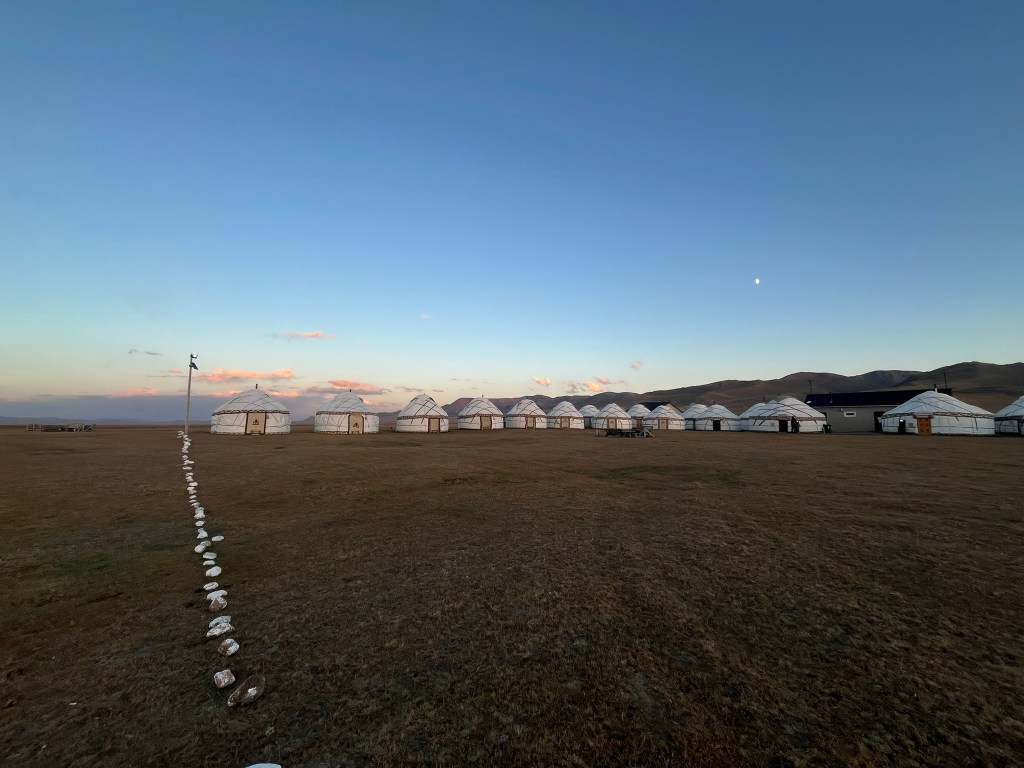
Our yurt camp sat right on the edge of the lake with almost nothing except scenic views in every direction. We arrived near the end of tourist season and had the camp to ourself. The owners said in the next few weeks they would be packing up the yurts and shutting up shop for the year. This camp was much more isolated than the one we stayed in at Issyk Kul lake. Other than a few other yurt camps by the lake shore, there are just grazing animals and a few shepherd yurts dotted around in the distance. My eSIM had no coverage and WIFI access was via a starlink satellite connection and not included. We had power via solar panels and this was only until 11pm and no hot water for the showers. That said the toilet facilities were still first class. The elevation meant it got much, much colder at night and we had to have a wood burning stove set up in the yurt for overnight. Considering we were in the middle of nowhere, it was pretty nice.


 Colette's Grand Detour
Leave a comment